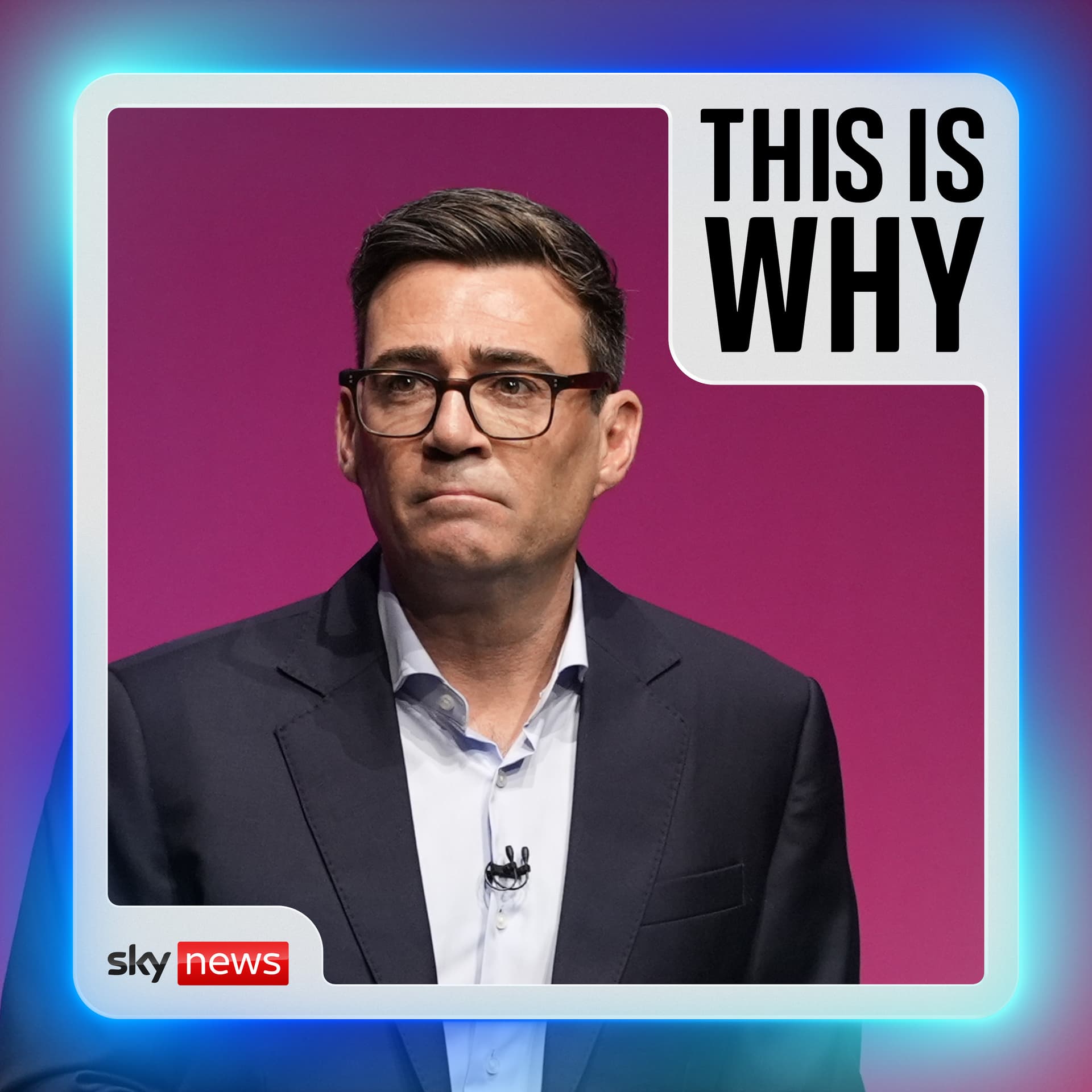

In short
The episode asks whether NHS performance under Health Secretary Wes Streeting is “good health” or just PR. It opens with Ed Conway’s “Stuff Matters” framing (economics via everyday objects), then focuses on NHS waiting lists, strikes, and political ambition. Guest Ashish Joshi (Sky health correspondent) cites data: elective waiting lists down by about 230,000 since Labour took office; overall waiting list around 7.4 million; Joshi argues the trend is reversing a 15-year rise. He notes junior doctors’ renewed strike over pay: a 29.8% offer, but BMA says it’s still over 20% behind 2008 levels and seeks assurances. Guest Roy Lilly (former NHS Trust chairman, health policy commentator) disputes “recovery”: he calls Streeting a “disaster,” citing underfunding, weak A&E, oncology targets missed (120/123 trusts), and limited “headroom” because ~1.5m join lists monthly. He also highlights winter/flu risk and chaotic NHS structural changes (merging bodies; integrated care board staffing redundancies).
Notable examples
18-week target unlikely if trends persist; cancer and cardiac delays; five-day strike.
Key claims
waiting lists are improving but not enough; industrial action threatens outcomes; Streeting’s judgment questioned regarding Prime Minister ambitions.
Written by AI. May contain mistakes. Listen to the episode to check what was said.
Chapters
Tap a time to open that second in VOAssessing Wes Streeting's Performance
0:43 to 1:38
Discussion on how to evaluate the Health Secretary's effectiveness.
“But how should the rest of us judge a health secretary?”
NHS Waiting Lists: Progress and Challenges
1:38 to 3:02
Analysis of recent NHS statistics regarding waiting lists.
“Later, we'll have the verdict of Roy Lilly, former NHS Trust Chairman and health policy commentator.”
Junior Doctors on Strike: Financial Discontent
3:02 to 4:15
Exploration of the reasons behind junior doctors' strike actions.
“We've got a waiting list of 7.4 million at the moment.”
Political Distractions and Leadership Ambitions
4:15 to 6:21
Examination of the political environment surrounding Wes Streeting.
“I opened my newspapers this morning to discover they're off on strike again for another five days.”
The State of the NHS: A Historical Perspective
6:21 to 8:05
Roy Lilly discusses the NHS's condition before and during Wes Streeting's leadership.
“Well, it might feel distinctly longer, but Labour have only been in power for less than a year and a half.”
NHS Funding and Future Projections
8:05 to 10:25
Discussion on NHS funding challenges and future outlook.
“over what is not yet even a year and a half in the job?”
Winter Preparedness and Ongoing Strikes
10:25 to 14:00
Analysis of NHS's winter readiness and the implications of ongoing strikes.
“Yes, they can say waiting lists are coming down, but the trajectory, it's almost flat, really.”
Evaluating Wes Streeting's Leadership as Health Secretary
14:00 to 15:40
Discussion on Wes Streeting's approach to handling health issues and his potential as a leader.
“I mean, I don't know how Streeting is going to handle this.”
Transcript
Automatic transcript. May contain errors.0:00Roy Lilley:Coming up, the Health Secretary, Wes Streeting, has denied he has ambitions to be Prime Minister, which is handy, as he's enough to be getting on with running the NHS. How does a banana trigger a CIA-backed coup? Do AirPods herald the arrival of a new global order? What do LED lights say about the future of humanity? I'm Ed Conway and in each episode of my new podcast Stuff Matters I take an object, crack it open and reveal the world-shaping forces hidden inside. This is economics told through the things we think we understand. Search Stuff Matters on your podcast app to listen and follow. No doubt if asked to mark his own report card Wes Streeting would say he's doing a damn fine job.
0:49Roy Lilley:But how should the rest of us judge a health secretary? Well, if success were measured in column inches alone, the amount written about Wes Streeting's leadership ambitions this week would suggest he's doing just fine. The problem for Mr Streeting is that, of course, it's not. Instead, far better to judge him on the promises he made. And there in black and white in the manifesto is cutting waiting lists. We've got fresh data out on exactly that. The NHS is on the road to recovery. Waiting lists are now down by almost a quarter of a million since we came to office, falling for the first time in 15 years.
1:24Roy Lilley:So we thought we'd take a bit of time and see whether the health service is being turned around. And with doctors about to go on strike yet again over pay, we'll be asking whether the Department of Health really is a springboard to Downing Street. Later, we'll have the verdict of Roy Lilly, former NHS Trust Chairman and health policy commentator. But let's start with Sky's health correspondent, Ashish Joshi. Look, we've had some stats out today regarding the NHS, which I suppose you can link directly to Wes Streeting's success or otherwise as health secretary. What have we been learning?
1:56Wes Streeting:We've been learning that Wes Streeting has had some success as the health secretary. When Labour was swept into power last July, Wes Streeting and Keir Starmer said they should be judged by their record on turning round and failing NHS. That was last July. The NHS waiting list is 230 ,000 patients lower than July last year. And this is hugely significant because Wes Streeting has been talking all the time since he's been the health secretary. Judge me by the waiting list. I will bring this waiting list down. But he hasn't had to contend with any industrial action. He hasn't had resident doctors going out on strike.
2:36Wes Streeting:He hasn't had a very difficult winter to cope with. but he has been talking about making efficiencies, clearing theatres to work round the clock, more diagnostics. All of this seems to have worked better because certainly as far as the figures are concerned, the elective waiting list, that big number, the one we always talk about, the number of people waiting for routine or planned care is coming down.
3:01Roy Lilley:Is that enough? We've got a waiting list of 7.4 million at the moment. Dropping 300 ,000 sounds to me like a bit of loose change down the back of the sofa. It's not making massive inroads into the waiting list, is it?
3:14Wes Streeting:No, it isn't. It's making inroads. But you've got to realise, Neil, that for years we've been talking about a waiting list that has been growing and growing. He's reversing that trend, or at least he has reversed that trend over the last 12 months. And that is hugely significant. All right. So when you're talking about millions of people, a few hundred thousand might not make a dent on that figure, but it will make a dent on those few hundred thousand people who are being seen in a timely fashion. So as a trend, it is going in the right direction. And then that's the key, because what was happening is every month more patients were being added to that list.
3:52Wes Streeting:And we know, we've talked about this so many times, if you're a sick patient and your treatment is delayed, then you will become even sicker and you will need more treatment. So it's a vicious cycle that needs to be broken.
4:04Roy Lilley:One thing that I thought had happened in the past 12 months, but clearly has not, was junior doctors or resident doctors, as they're now called, being satisfied with the amount of money that they earn. I opened my newspapers this morning to discover they're off on strike again for another five days.
4:19Wes Streeting:Yes, they are back out on strike because they said when the dispute was resolved, when West Streeting came into office, he sat down with the resident doctors and he gave them a 29.8 bump. Right. That pay rise, pay restoration. But what the BMA will say is, no, what he said is this is part of the journey. This is part of the restoration. We're still over 20 percent behind and we want that money. It doesn't have to be paid right now, but we want an assurance from the government that it will continue to give us our pay rise. So we are where we were back in 2008. So that amounts to over 20 percent, which, as we know, the government simply doesn't have.
5:01Roy Lilley:Yeah, I mean, I know what the health secretary will say about all this. I know what the BMA are saying about all this. I'm wondering what the public will say about another significant strike by resident doctors. But remind me, Ashish, our health secretary has been in the news an awful lot this week. And not necessarily because of the job he's been doing down at the department.
5:21Wes Streeting:No, for all the wrong reasons. I think West Streeting does not need this added distraction. And then this is this this plot that has been talked about to replace Keir Starmer as leader of the Labour Party. West Streeting has come out and said absolutely not him. Keir Starmer says he doesn't know where these leaks have come from, but he's had to apologise to his health secretary. A distraction that neither of them need right now, because at the moment, Labour, if you look at the polls, trailing behind reform and really not getting their act together as far as the electorate are concerned, with this huge mandate that they were swept in with last July.
6:01Wes Streeting:And West Streeting wants to focus on what's going on in the NHS. Is he behind this attempted coup? We don't know. He says he's not. Keir Starmer says he's pretty satisfied that West Streeting isn't. But certainly there is something very wrong in this toxic culture that they've been talking about at the heart of government and in Downing Street.
6:20Roy Lilley:Thanks, Ashish. Well, it might feel distinctly longer, but Labour have only been in power for less than a year and a half. How much could they have hoped to achieve by this stage of the Parliament? Roy Lilly is a health policy commentator, having been involved in the NHS since 1974 in a variety of roles, including trust chairman. Roy, let's rewind, if we can, to day one of this Labour government. Wes Streeting, the health secretary. What state was the NHS in when he entered the Department of Health?
6:49Ashish Joshi:Well, it was kind of in tatters, really, Neil. I mean, we'd just come through Covid, which had had a hell of an impact on the staff. And of course, we'd also forgotten that we'd gone into COVID after a period of pretty much flatline funding following the world banking crisis, which I know is a long time ago. But did these things affect the NHS over a long period? And for nearly 10 years, the NHS had had under 2 % of funding. It needs about 3.84 % just to keep its head above water. so we'd gone into covid and we'd forgotten that waiting lists were already at four and a half million and everyone was saying this is a record i can't believe it you know how's he got like this and also we had 40 000 vacancies amongst the nursing staff along comes covid all bets are off the government just throws money at the situation we struggle through and we come out the other side and along comes West Streeting and inherits an NHS that he said was broken, which was hugely demoralising for the staff.
7:55Ashish Joshi:I mean, they were trying to do everything they could to make sure it wasn't broken. So that was a stupid thing to say, but it was struggling, there's no question, and it's still struggling today.
8:04Roy Lilley:What is your assessment of how well he has performed over what is not yet even a year and a half in the job?
8:11Ashish Joshi:Well, look, to be honest, I think he's been a disaster. Streeting came in, he had one job. I mean, the government was elected on the basis of stopping the boats, fixing the economy and shortening waiting lists. As far as the NHS was concerned, I thought he would come in and have an absolute, resolute focus on cutting waiting lists. Well, he sort of started off by talking about it and then out of the blue, with nothing in the manifesto, nothing at all, he suddenly said, well, we're going to merge NHS England with the Department of Health. And there are reasons for that. There was a certain amount of duplication, mainly in the Department of Health, not in NHS England.
8:53Ashish Joshi:But merging those two, it makes sense. But that means the focus, the top team shifts. Then he said, well, we're going to have a 10-year plan. And, you know, 10 years means nothing, really, to people working in the NHS. And then it's only a three-year plan anyway, by the time it was published, because it will take us up to the election. On top of that, along came Lord Darcy's report and assessment of the state of the NHS, where he made it clear that it was underfunded, understumped, the buildings were falling down. I mean, it was a horrible report. So suddenly, on top of all the pressure of doing the waiting lists, we've got all the distraction.
9:33Ashish Joshi:And of course, the latest distraction is that we're going to lose half the staff in integrated care boards. And no one knows which half and no one really knows who's going to pay for the redundancy. So it's chaotic.
9:45Roy Lilley:But if you're listening to West Streeting this morning, I mean, the Department of Health are cheering the fact that waiting lists are coming down. But I suppose your point is that just not coming down far enough.
9:55Ashish Joshi:Well, look, you can't argue the fact that they are coming down, but only, you know, a tiny amount. But the fact is, first of all, we're going into the winter, which is always a bad time for the NHS. And secondly, if you look at the numbers, about 1.5 million people join NHS waiting lists every month. And about 1.5, 1.6 million people get fixed up and are off the waiting list every month. So there's hardly any headroom at all. Yes, they can say waiting lists are coming down, but the trajectory, it's almost flat, really. And there isn't the impact that there's going to have to be. If we're going to get back to the 18-week waiting list that the Labour Party have promised by the next election, if we keep this up, they stand no chance.
10:43Roy Lilley:And when you dig into the data and you look at specific parts of the NHS, the picture almost becomes more worrying. Accident and emergency performance continues to be weak. If you look at oncology, 120 of the 123 trusts in England are still not meeting the target for patients to be seen and receive treatment within, I think it's 62 days. I mean, that is an abject failure.
11:07Ashish Joshi:It is. And, you know, on a personal note, I had cancer myself last year. I had prostate cancer diagnosed out of the blue. And I'm very pleased to say I'm cancer free now. So I had a very good cancer experience. But as you say, a lot of people don't. and the thing is that you know time tired in cancer wait for no person and you have to get in you know as fast as you can to get cancer diagnosed to get a successful outcome but it's true of all of the specialties you know the the cardiac specialties they're swamped as well everybody's
11:42Roy Lilley:waiting too long for everything first things first roy great to hear that you're doing well but just in terms though of the nhs's preparedness for winter every year we hear from the nhs frontline look, things are going to be bad, things are going to be disastrous, we're just not ready, we're not going to be able to cope. This year, more of the same.
12:00Ashish Joshi:I saw the first draft of the winter plan back in June. So the NHS has been planning this for a long time. However, you would probably have seen in the more general news that in Australia they've had a horrendously bad bout of flu. And generally speaking, the flu season moves from Australia to here and the indicators of what happens in Australia is a very good indication of what's likely to happen here. And all the medics and the chief medical officer is predicting that we are in for a really bad flu season.
12:35Roy Lilley:We wait and see what happens this winter, but one thing that will sharpen people's minds about the health secretary are the ongoing industrial disputes. You know, he came in, awarded resident doctors a significant pay rise, and once again they're back threatening five days of strike action.
12:51Ashish Joshi:I mean, there was a time when doctors just wanted a career for life, but now the young doctors want a life and they want a career. And I understand that. And of course, we say junior doctors and we all think this is just the youngster out of university or medical school. They're not. These are very important people. And they do have pretty rotten time in some hospitals. You know, there's no 24 hour food. There's parking problems. There's rotic problems where they can't get time off and so on. So they work in conditions of poor. So the Department of Health have agreed a new 10-point plan to resolve that.
13:25Ashish Joshi:Very sensible plan. Thoroughly approve of that. It's not implemented everywhere yet, but it should be. And then, of course, we're left with the question of their pay. Now, they have an argument over pay restoration. They say that their pay has been eroded over time by inflation. There's an argument about how it's calculated. But whichever way you calculate it, you can see that it has been eroded.
13:45Roy Lilley:Everyone understands that. It's the five days of strike action that will inevitably lead to poor health outcomes and deaths that sticks in people's craw.
13:53Ashish Joshi:I mean, I remember when they first said that they were going to go on strike and it was a jaw dropping moment. Nobody ever thought doctors would go on strike. I mean, I don't know how Streeting is going to handle this. In my view, Streeting has been really almost mimicking what happened to Steve Barclay, the internal treat assessor that he had, who handled the first junior doctor strikes before the election. and Streeting was very critical of Barclay. He said, oh, you should negotiate. You should go to ACAS. You know, you should keep talking. And of course, everything he criticized Barclay for doing, Streeting has done himself.
14:28Ashish Joshi:He's been very belligerent and very tough. And that doesn't help. My view is he should go to ACAS. I think he's got to the point now where he probably can't settle this because everybody's dug in. And I think that going to ACAS, which are the independent arbiters of industrial disputes, might at least get them back round the table because nothing happens until you talk.
14:50Roy Lilley:Let's kind of get your final thoughts on Wes Streeting. And look, there are years of this parliament left to run. But I'm wondering, as of this point, on the record that he has shown as health secretary, do you think Wes Streeting would make a good prime minister?
15:04Ashish Joshi:No. No, I really don't. I don't think he has the mature judgment that's required to do that very difficult job. I mean, we've got a managerial-style Prime Minister now. He doesn't have that kind of charismatic personality that makes a Prime Minister. Streeting has, I think, the charismatic presentation and the articulation where people do listen to him and quite admire him. But if you actually look at the decisions he's made and dig into his judgment, I don't think he has the mature judgment that I would want to see in a Prime Minister.
15:38Roy Lilley:Roy, it's been a pleasure chatting to you. Thanks very much for your time. And that's your lot for this edition of The Daily. We are back again tomorrow. Till then, take care.
16:10crack it open and reveal the world-shaping forces hidden inside. This is economics told through the things we think we understand. Search Stuff Matters on your podcast app to listen and follow.
From the publisher
A tricky week for Wes Streeting was eased ever so slightly by the news NHS waiting lists have shrunk – if not by much.
But the health secretary will still be nursing his bruises a day after having to deny he was plotting to oust the prime minister.
If he really is in the waiting room hoping to enter Number 10 it would help if his NHS record was given a positive diagnosis.
Mr Streeting talks a good game – so what’s the true state of the NHS under his leadership?
Niall is joined by former NHS Trust chairman Roy Lilley and health correspondent Ashish Joshi.
Producer: Natalie Ktena
Editor: Mike Bovill