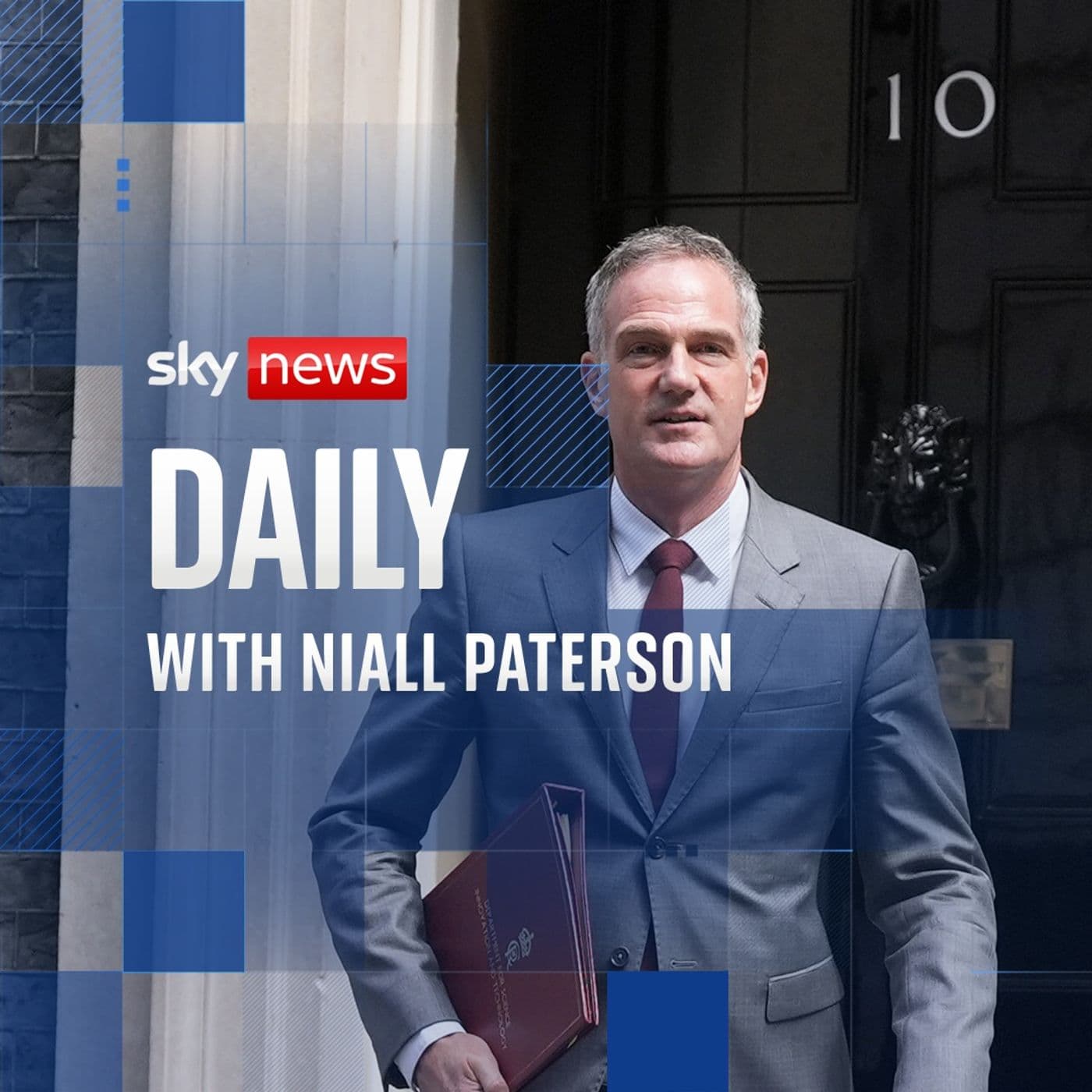

In short
The episode centers on a heated dispute involving UK Science, Innovation and Technology Secretary Peter Kyle and Reform UK leader Nigel Farage over the Online Safety Act. Kyle accused Farage of being “on the side of the predators,” specifically invoking Jimmy Savile, arguing Savile-style abuse would be enabled online and that scrapping the Act would put hundreds of thousands of young people at risk. Farage denies supporting Savile and demands apologies, but none are offered in the transcript. Kyle is portrayed as a Labour “rising star” (MP since 2015) focused on AI and cracking down on online harmful material.
Guests
Menil Patterson (host), Wilfred Frost (interviewer, colleague), John Craig (chief political correspondent), and Baroness Armstrong (former Labour Chief Whip; Kyle’s former special adviser).
Notable examples
Kyle’s select committee clash with Sports Direct’s Mike Ashley; the “Kyle Wilson Amendment” for a second Brexit referendum; Armstrong describing Kyle as calm, dyslexic, and shaped by personal trauma (loss of partner Vlas and mother).
Written by AI. May contain mistakes. Listen to the episode to check what was said.
Chapters
Tap a time to open that second in VOContext of the Controversy
0:08 to 0:41
Exploring the heated exchange between Peter Kyle and Nigel Farage.
“Make no mistake about it, if people like Jimmy Savile were alive today, he'd be perpetrating his crimes online.”
The Online Safety Act Explained
0:41 to 1:44
Discussion on the significance of the Online Safety Act and its political implications.
“You're going to stick to the fact that you said that Nigel Farage is on Jimmy Savile's side.”
Reactions to the Row
1:44 to 3:05
Reactions from various political figures regarding the exchange.
“The row began at the beginning of the week when Nigel Farage staged a news conference in which he announced that if reform were to form a government, they would repeal, scrap the Online Safety Act.”
Peter Kyle: A Rising Star
3:05 to 4:23
An overview of Peter Kyle's political journey and his role in the Labour Party.
“and he has since apologised for the fact that it didn't happen.”
Character of Peter Kyle
4:23 to 7:02
Discussion on Peter Kyle's character, his approach to politics, and his relationship with colleagues.
“Peter Kyle is, I think it's probably fair to say, one of Labour's rising stars.”
Political Strategy and Ideology
7:02 to 8:08
Insight into Peter Kyle's political strategy and his ideological beliefs.
“I think because the Labour Party will say, well done for taking the fight to Nigel Farage.”
From Adversity to Advocacy
8:08 to 14:05
Exploring Peter Kyle's background and his journey to becoming a prominent advocate.
“Yes, he's got the backing of the leadership, he's got the backing of Cabinet colleagues, but he's got the support of the party, it seems, and I don't think it's damaged him.”
Peter's Early Career and Work Ethic
14:05 to 15:06
Learn about Peter Kyle's early career, his work ethic, and his significant contributions to charity.
“And they eventually put him to work on finance.”
Personal Trauma and Resilience
15:10 to 16:52
Explore the personal challenges Peter faced, including loss and resilience during tough times.
“Oh, he was always good fun, always got a good sense of humour.”
Political Achievement Against Odds
16:53 to 17:38
Discuss Peter's unexpected rise to become a Member of Parliament for Hove.
“at the same time as well, was that three years later he becomes duly elected Member of Parliament for Hove.”
Show all 11 chapters
Friendship and Professionalism
17:39 to 18:48
Delve into the relationship dynamics between Peter and his friend, balancing professionalism with personal ties.
“I mean, am I wrong to detect that there is much, much more than just a professional relationship from all those years ago?”
Transcript
Automatic transcript. May contain errors.0:00Coming up on The Daily with Menil Patterson, he's the special advisor turned cabinet minister who this week accused Nigel Farage of being on the side of Jimmy Savile. So, who is Peter Kyle? Make no mistake about it, if people like Jimmy Savile were alive today, he'd be perpetrating his crimes online. And Nigel Farage is saying that he's on their side. I'm sorry. Not the side of children who are... I'm going to ask you to clarify. Do you honestly think to say Nigel Farage is on Jimmy Savile's side? Now, that's my colleague Wilfred Frost interviewing the Secretary of State for Science, Innovation and Technology, Peter Kyle, about the Online Safety Act and whether or not it might be repealed.
0:41It all got just a little bit heated. This is a major leap. You're going to stick to the fact that you said that Nigel Farage is on Jimmy Savile's side. Nigel Farage is on the side of turning the clock back to the time when strange adults, strangers, can get in touch via messaging apps with children. We have now asked to age verify the age in which people can have access to online content. And that's landed him in more than a bit of bother. Nigel Farage, of course, denies being in any way a supporter of the vile Jimmy Savile. Apologies are being demanded. None have yet been offered. Kyle himself, at will look, do not beat yourself up if this isn't a name you immediately recognise.
1:21But Savile aside, his star is very definitely on the rise. So as it's the weekend, we thought we'd take a bit of time to find out what makes this particular politician tick. A bit later, I'll be speaking to former Labour Chief Whip Baroness Armstrong. Kyle served as her special advisor. But we turn first to our chief political correspondent, John Craig. John, take us back to how this all started. The row began at the beginning of the week when Nigel Farage staged a news conference in which he announced that if reform were to form a government, they would repeal, scrap the Online Safety Act. Now, this is an act that's been a long time in development, partly because of the general election last year.
2:01It's something the Tories started to bring in, and then Labour inherited it and brought in. The idea really is to protect children from harmful material online. And the problem the reform have with it is that they say it's a gag on free speech, and that's why Mr Farage and his supporters want to get rid of it. It's the use of language by Peter Kyle and a certain comparison that he was drawing that I think made Nigel Farage reform and many others sit up and pay attention. What Mr Kyle was saying was that Mr Farage was on the side of the predators. That was the phrase he used. And Mr Farage took great exception to the mention of Jimmy Savile.
2:43Now, since this row began at the beginning of this week, of course, plenty of opponents of the Labour Party have recalled Boris Johnson's controversial attack on Sir Keir Starmer when he was Prime Minister, where he accused Sir Keir Starmer, when he was Director of Public Prosecutions, of failing to prosecute Jimmy Savile. Now, Sir Keir has always said that it wasn't his decision, it was taken by somebody else, and he has since apologised for the fact that it didn't happen. But, of course, this row this week has reopened the controversy over Jimmy Savile and whether or not Sir Keir should have prosecuted Jimmy Savile.
3:24Despite all of that, Labour is not backing away from what Peter Kyle has said. In fact, they're doubling down on it. No, the next day it was the term of Heidi Alexander, the transport secretary. She backed Mr Kyle. Mr Kyle is a man who feels things very passionately. I mean, one of the criticisms of Peter Kyle from his critics is he's an absolute zealot for AI, artificial intelligence. But he's something of a zealot also on tackling and cracking down on online pornography and harmful material there. He does get stuck in. There's no doubt about that. And he's not giving an inch to Nigel Farage on this.
4:05and there'll be plenty of his Labour colleagues will say, well done, Mr Kyle, for taking on Nigel Farage on this issue. What does it say, though, about Mr Kyle's relationship with the leadership of the party and indeed his place within the party, that Labour haven't simply backed him on this? I mean, they've repeated the accusation that he has made. He's in step with the leadership. Peter Kyle is, I think it's probably fair to say, one of Labour's rising stars. I mean, he's only been in Parliament since 2015. He was elected the same election as Sir Keir Starmer. Now, his background, if I can just give you a potted biog of Peter Kyle, he worked in charities before he became a member of Parliament.
4:49He also had a spell as a Labour special adviser in the Cabinet Office. He worked for a Labour minister called Hillary Armstrong, who'd previously been Labour's chief whip. When he won his hove seat in 2015, he only won it by 1 ,200. Now his majority is nearly 20 ,000, which shows what a good campaigner he is. Now, the other point I'd make about Peter Kyle is not long after he became an MP, he was on a select committee, Business Energy and so on, that great unwieldy title that Labour had at the time. And he took on, famously, in a select committee hearing, the boss of Sports Direct, Mike Ashley.
5:31They had a right old ding-dong. Getting a sense of your demeanour here today, would you describe yourself as a kind person? I think I can answer that, really. No, I don't want you to answer that, thanks. This is about him. Although I should also add that, having seen how authentic you are as an individual, I don't think you need to bring a PR person with you to events like this in the future, but anyway. Keith, if you could...
6:01But that was where he made his name. It was a great exchange. And people started to notice Peter Kyle, who at the time had only been in Parliament a short time. And then, of course, he had a succession of shadow cabinet posts. And I think his supporters would say he's been pretty successful in taking on, if you like, the pornographers, the online harm people, because he feels passionately and strongly about it. But the other time he really made a name for himself in opposition was over. Do you remember the Brexit debates when Theresa May and then Boris Johnson? Oh, yes. He teamed up with another Labour MP called Phil Wilson.
6:39Now, Phil Wilson was the MP who succeeded Tony Blair in Sedgefield. And it was called the Kyle Wilson Amendment. And it was basically a move to sort of not unpick Brexit, but it was all about a second referendum on the Brexit deal. That only narrowly failed to get through. But he made his name there as well. And I'd go as far as to say, I don't think this row has damaged Peter Kyle. I think because the Labour Party will say, well done for taking the fight to Nigel Farage. And it's possible that in a reshuffle later this year, he could get promoted to a more high profile job. Let's wait and see.
7:16I mean, John, how have you found him? I mean, Peter Kyle found himself in a little bit of a little bit of bother recently when he pitched up for an interview wearing jeans and a T-shirt. No, I am certain if he were meeting you for a chat, he would never be so disrespectful. I mean, I've seen that. I've seen him like that. He does. He does like casual clothing. I always remember. I hope he won't mind me telling this story. When he'd not been an MP very long, there was a Labour conference in Brighton and there was a great queue to get in. And Peter said to me, come on, John, I'll show you a quick way in.
7:46And he took me around to an entrance where we could get in without a queue. So he's always been a top man as far as I'm concerned. And just explain why you do not think this one is going to tarnish him. Is it because of the CV that he's got, because of the public position that he occupies, or is it simply that Labour has looked at the situation and said, right, we're supporting him, we're backing him to the Hill, this is going nowhere? Yes, he's got the backing of the leadership, he's got the backing of Cabinet colleagues, but he's got the support of the party, it seems, and I don't think it's damaged him.
8:19Mr Farage loves a scrap, But also he's discovered that so does Peter Kyle. First thing Nigel Farage did was say, I demand an apology. Well, where are we now? Towards the end of the week and there's no apology. OK, so let's put some of that to Peter Kyle's former boss. Baroness Armstrong was a minister in the last Labour government. He was her special adviser when she was Secretary of State for the Cabinet Office. Hillary, let's very definitely call you that for the rest of our chat. We've just been talking to our chief political correspondent, John Craig. He described Peter as someone up for a scrap.
8:54I mean, was that who he was when he worked for you? I think that's an exaggeration. What he doesn't do is run away from a struggle. But Peter's someone who always tries to find a way forward. He is a great negotiator and he really does try to find ways forward. He's never aggressive. He's never as explosive as I am. he is much more calm and measured and thinks his way through things so I don't see him as someone who's always out looking for a scrap that's not him what he is is someone who doesn't run away when he really needs to confront what he thinks is wrong. I mean using your very keenly attuned political antenna do you think that there will be much fallout from these comments Jimmy Savile the Online Safety Act and so on?
9:49I think that this is almost the first time someone has taken Nigel Farage on his word. He's been getting away with murder. He doesn't think before he speaks sometimes. And actually, people like the media love that. And he gets away with it. And I suspect it was the same about the Online Safety Act. Of course, anything to do with the Internet is challenging. It's relatively new. We're all working exceptionally hard to understand what its potential is, but also then to understand what governance will mean in regards to the Internet. and it is complex and pete has been exactly the right sort of person to tackle that because as i say he doesn't run away from anything and something might be complex and might be additionally challenging for him with his dyslexia but he still works exceptionally hard to get hold of the detail and he doesn't say things casually.
10:59And he's calling out Nigel Farage because quite honestly, Nigel goes for a headline. He doesn't think, what are the long-term, deep implications of this? And the deep implications of scrapping the online safety bill without having an alternative, and he admitted he didn't have an alternative, is to put many, many, hundreds of thousands of young people at risk. You've already mentioned, Hilary, his dyslexia, which I understand to be pretty severe. I mean, did that not have an effect on the way in which he worked? Or indeed, did it assist him in the way in which he worked? No, I had to be very careful.
11:42I came from a family of schoolteachers. My mum in particular. Same, same. Absolutely. Yeah, my mum was absolutely strong. on both my brother and I in terms of our spelling and our grammar. And so I used to have to reduce the use of my red pen when I got Pete because his notes were often ones which demonstrated his dyslexia. And I used to laugh to myself about what would my mum make of this? But what it meant was that he went away and worked often when I'd given up for the night. Pete, I now know, would go off on his own to read things because it took him a lot longer to read things than it did people like me.
12:29How would you describe him in terms of being a political operator? As you say, the time he was working with you was quite a bruising one inside the Labour government. He was never part of the friction. You've got to understand that about Pete. He's not somebody who looks for friction. He looks for ways of sorting out problems. He looks for ways forward. He was never factional in the party, but he was absolutely loyal to me and he was absolutely loyal to the prime minister of the day. And he wouldn't be insulted if you called him somebody who at that stage was absolutely a Blairite. But that didn't mean he was factional in the way he dealt with Gordon's people.
13:16You say not factional, but I'm wondering to what extent he was ideological, ideologically driven. I mean, a lot of the policy work that you've been talking about that he was doing back then, you can see traces of in what he is now doing in government. Absolutely driven by trying to improve opportunities, particularly for the most vulnerable. And Pete has been driven in that way throughout his working life. I mean, don't forget, he left school at 16 because it was a difficult time for him. And he sat in the offices of the body shop. He sat in those offices where he lived until they noticed him and gave him a job in the office.
14:04He was an office boy. And they eventually put him to work on finance. And they noticed him because he never complained. He got on with what he was asked to do and was always an enthusiastic worker. And it was him that Anita sent to Romania to set up her charity and her foundation after the fall of the Berlin Wall. And he learned an enormous amount about organising, about the charity world. And that was a very important part of how we developed what became the Charities Act. And it was very important in other pieces of work that we did. Yeah, I mean, it is quite something, isn't it? You leave school at 16 with no qualifications.
14:55You sit in the office of the body shop founder, Anita Roddick, with a CV with nothing on it until you get a job. You go all the way on then to get a doctorate and ultimately end up working in Parliament. Look, his work ethic is very clear. I mean, what was he like when he was not at work as a special advisor? Oh, he was always good fun, always got a good sense of humour. He really enjoys his social life and has very good friends. he still is very friendly with people he's known all the way through since university and now a whole other series of friends that he made when he was working for government and we all get together every now and again.
15:39His is a life that has been touched by significant trauma. He is an openly gay MP at a time when we're all rather used to that concept but back in 2012 he very unfortunately lost his partner Vlas And then within a handful of days, he lost his mother. That must have been an awful time for him. Yes, it was. It was. It was a very, very difficult time. And he got through it partly because of his own resilience, but also because of very good friendships and people who were able to go in and help him. And he was a young, bright lad in my terminology. and that was very sad. Peter was deeply, deeply in love with him, wasn't he?
16:24He was, he was, he was. And, you know, none of those relationships are without challenge and without, you know, thinking your way through it. And he used to talk to me quite a lot about all of that. But, you know, he was very, very fond of Lass and misses him enormously. What I find most remarkable, however, is, of course, despite that personal trauma the death of his partner, the death of his mother, the death of his close female friend, in fact, at the same time as well, was that three years later he becomes duly elected Member of Parliament for Hove. And let's be fair, that was not a seat he was expected to win, was it?
17:05No, no. And the toughest thing almost with being selected, always is in the Labour Party, certainly in those days, it was how did you get selected? And he managed to do that against all the odds. And then he basically, for two years nearly, we would meet every month and just craft the campaign and craft what it was he wanted people in the whole area to know him for. Just then describe the nature of your relationship, because I've been referring to him as a minister and even rather rudely as Peter throughout this. You've been mentioning him as Pete. I mean, am I wrong to detect that there is much, much more than just a professional relationship from all those years ago?
17:55Yeah, we're very good friends. And that doesn't mean we don't know how to be professional around each other. and we are but he has got me working i'm in my 80th year and they were looking at um digital inclusion or you know what needs to happen for people like me to be more comfortable using the internet so he said they needed somebody old somebody who wasn't somebody who wasn't a techie and somebody who knew about poor and vulnerable people and they came up with me so so i'm chairing the the committee on digital inclusion and we have a very professional relationship around that where i make demands of him and of the department, but outside of that, we're still very good and close friends.
18:53You are, I think it is fair to say, very, very proud of what Pete has accomplished. Oh, absolutely. Yes, absolutely. I think if we had more people like him in politics, our world would be a better place. Hilary, thanks very much indeed. And that's your lot for The Daily. For this week, in fact, we will see you again Monday. Thank you.
From the publisher
In an interview with Sky News, the Secretary of State for Science, Innovation and Technology caused controversy by suggesting Mr Farage was "on the side" of sexual predators like Jimmy Savile because of his opposition to the Online Safety Act.
Mr Farage described the comment as "disgusting " and demanded an apology.
But in a post on X, Mr Kyle went further, stating: "If you want to overturn the Online Safety Act you are on the side of predators. It is as simple as that."
So, who is the man behind the politician? Peter Kyle's meteoric rise through the Labour ranks has come despite a life-long struggle with dyslexia, as well as dealing with the grief of the unexpected death of his partner.
Niall Paterson speaks to chief political correspondent, Jon Craig, and the former Labour cabinet minister, Baroness Armstrong – who gave Mr Kyle his first job in politics.
Producer: Emily Hulme
Editor: Mike Bovill