
In short
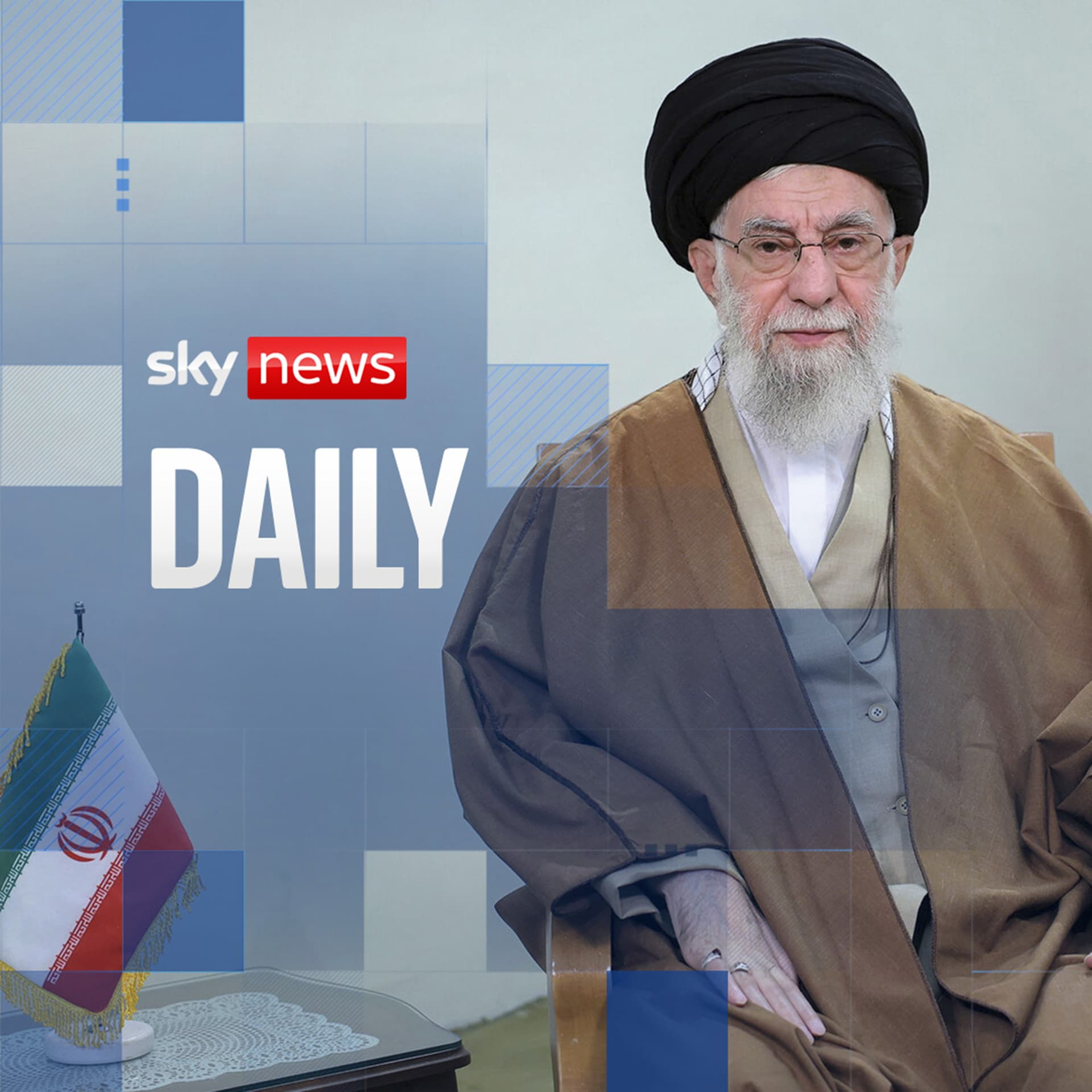
A Sky News Daily revisiting “Who is Ayatollah Ali Khamenei?” explaining how Iran’s Supreme Leader gained near-total control, his anti-West/anti-Israel worldview, and what his death or regime change could mean amid an escalating Israel–Iran conflict.
Guest backgrounds
Alex Vatanka, senior fellow and founding director of the Iran Program at the Middle East Institute (Washington, D.C.); born in Tehran, raised in Denmark; Iranian state media has attacked him as a possible Western intelligence collaborator.
Key claims
Khamenei became “accidental” Supreme Leader in 1989 at age 49 after constitutional changes; his anti-American “imperialism” worldview and the IRGC’s expanded role underpin Iran’s regional proxy strategy; he is described as a major obstacle to US-Iran normalization; nuclear weaponization is not evidenced recently, but his rhetoric increases nuclear sensitivity; Russia/China support has not prevented Iran’s strategic isolation.
Notable examples
IRGC “forward defense” via Hezbollah (Lebanon), Palestinian Islamic Jihad, and the Houthis (Yemen); US allegedly vetoing an Israeli plan to assassinate Khamenei; Khamenei’s claim Israel “won’t exist” and his “multi-generational conflict” stance; comparisons to Iraq/Syria/Libya for regime-change risks.
Written by AI. May contain mistakes. Listen to the episode to check what was said.
Chapters
Tap a time to open that second in VOKhamenei's Rise to Power
0:45 to 2:30
Exploration of Khamenei's ascent from a surprise choice to supreme leader.
“and its anti-Israel, anti-American foreign policy agenda.”
The Political Structure of Iran
2:30 to 5:00
Discussion on the structure of Iran's political system, including key players.
“how does that actually work in terms of governing society?”
Khamenei's Cold War Legacy
5:00 to 7:30
Khamenei's ideological stance shaped by Cold War influences and anti-imperialism.
“He didn't have any kind of significant religious background as such.”
The Evolution of Khamenei's Views
7:30 to 10:00
Examining Khamenei's political evolution and stance towards the West and Israel.
“And has those views changed over the years at all?”
Iran's Nuclear Ambitions
10:00 to 12:30
Insights into Iran's nuclear program and Khamenei's private views on weaponization.
“He was much more focused on domestic issues in the early 80s.”
The Role of Revolutionary Guards
12:30 to 14:05
The Revolutionary Guards' role in supporting Khamenei's ideology and actions in the region.
“So it wasn't the Islamic Republic that sort of came up with the idea of Iran having a nuclear program.”
Iran's Strategic Isolation
14:05 to 14:50
Explore Iran's current alliances and strategic position in the world.
“I mean, they're supposed to be in alliances, in Shanghai Corporation Organization, in BRICS and so on.”
The Impact of Khamenei's Potential Death
14:50 to 16:04
Discuss the implications of Khamenei's death for Iran and the region.
“that might have been able to shape Israel's calculations.”
Challenges of Regime Change in Iran
16:04 to 18:01
Analyze the complexities and historical context of regime change in Iran.
“Regime change is something that has been talked about, including by Israeli politicians too.”
Future Directions for Iran Post-Khamenei
18:01 to 20:16
Examine possible futures for Iran after Khamenei and the role of leadership.
“From the European perspective, because, you know, they're working for a diplomatic solution for this conflict to come to an end.”
Show all 11 chapters
Consequences of Instability in Iran
20:16 to 20:51
Discuss the broader regional and global implications of instability in Iran.
“And together, they can maybe steer the nation forward.”
Transcript
Automatic transcript. May contain errors.0:01Sky News, the full story first.
0:10Over 2025, every Friday, the Sky News Daily has been profiling a figure in the news, those who are making headlines, creating conversations. So during the festive period, we are revisiting some of those standout profiles, the ones that really got us talking. Back in June, Ayatollah Ali Khamenei, Iran's often reclusive Supreme Leader, surfaced to hit back at Donald Trump's demands for an unconditional surrender. Khomeini first came to power as president of Iran in 1981 and he was a surprise choice for supreme leader eight years later. But since then, with the help of the Revolutionary Guard, he's had almost complete control of Iran and its anti-Israel, anti-American foreign policy agenda.
0:51For this one, our correspondent Tom Cheshire took the presenting seat as we wanted to find out more about the accidental to absolute leader. Here's our return to Who is Ayatollah Khomeini?
1:06I'm Tom Cheshire and this is the Sky News Daily. Ali Khamenei has led Iran for 35 years. After conflict with Israel escalated last week, he firmly announced Iran would never surrender.
1:27But in the last week, Khamenei has lost several important members of his inner circle, including three advisers from the Islamic Revolutionary Guard Corps, the IRGC, the country's elite and hardline military force. The US is said to have vetoed an Israeli plan to take out Hamani himself, although President Trump ominously described him as an easy target and said, we are not going to take him out, at least not for now. Not massively reassuring if you happen to be the supreme leader. So who is Ayatollah Ali Hamani and how has he managed to retain his grip on Iran for the past four decades? Well, Alex Vatanka is a senior fellow and the founding director of the Iran program at the Middle East Institute in Washington, D.C.
2:09He was born in Tehran and grew up in Denmark and has been attacked by Iranian state media as a possible Western intelligence collaborator. Alex, thank you for joining us. I mean, just before we get into the Supreme Leader himself, can you explain a bit about how Iran works in terms of its political system? how all those different bits, you know, the leader, the clerics, the IRGC, how does that actually work in terms of governing society? So this Islamic Republic was born in 1979 as a result of a revolution that had many different factions in it. The one faction that sort of came out and prevailed over all the other factions were Islamists.
2:47They were the most organized and frankly, they were the most willing to use force, essentially to sort of put all the other opponents aside. And they have had two pillars in terms of how the system at the hands of the Islamists has run. One are the sort of clerics. You have the role of a supreme leader, has to be a religious person of a senior rank. And then you've had the revolutionary guards. These are men in uniform whose role to begin with was to protect the clerics, to make sure their domestic political opponents didn't get to them. The revolutionary the guards over the last 46 years has seen that kind of a mandate expand from defending the clerics against domestic opponents to becoming this ideological arm of the regime and really going out there in the world and spreading Khamenei's worldview.
3:35And we've seen that in the region certainly last decade or so. And what is that Khamenei worldview? Very much a legacy of the Cold War. Khamenei is a product of the sort of Soviet propaganda when it comes to his views on the West. I mean, he still talks in terminology of imperialism. United States is hell bent on, you know, subjugating peoples around the world and steal their resources. That's been sort of his mantra for the last 36 years as supreme leader. So he's been willing to sort of fight this fight for the US, and he's had the Revolutionary Guards essentially as his foot soldiers to do it.
4:13And for a long time, you could argue it worked, but obviously here we are at the brink of the United States, entering this Iranian-Israeli war. And I think if you want to really find a genesis for why we ended up getting to this point, you've got to go back to the worldview of Khamenei and the folks in the Revolutionary Guards who are executing, implementing his worldview for the last few years. Let's talk about the genesis of the man himself. You mentioned it a little bit there, the revolution. You know, he was a player within that. He was jailed. He was a supporter of the first supreme leader.
4:46Can you tell us a bit about that revolutionary history? Ali Khamenei was certainly in the inner circle of Ayatollah Khomeini, the founder of the Islamic Republic in 1979. But he wasn't very prominent before then. I mean, it was kind of almost by accident that he ended up in the inner circle. He was young. He didn't have any kind of significant religious background as such. He came from a poor, impoverished background from the city of Mashhad in the northeast, not from the border with Afghanistan. Afghanistan. So he wasn't in Tehran, and he came in in 79 when the Shah was fallen. And then being in that inner circle and having a number of personal traits helped him.
5:24One, he's a good speaker. He happens to be wearing a black turban, which signifies that at least he claims to be a descendant of Prophet Muhammad. He's first president from 1981 to 89. Then he takes over the role of supreme leader at the age of only 49. His sort of appointment as supreme leader was a major surprise to many. He was still young at 49. He was certainly not religiously qualified. In fact, they had to change the constitution because he wasn't an Ayatollah. He was a mid-ranking cleric. But you know what? The fact that he spent so much, both before the revolution and immediately after the revolution, being in the game, but not really having access to the hard power that he wanted, created this personal desire for him to prove everyone wrong, that he had something to bring to the table.
6:15So when he actually becomes Supreme Leader in 1989, he spends a few years maintaining a pretty low profile. He lets the other part of the regime take the center stage, the sort of state machinery, the technocrats, the government, and so forth. And instead, he focuses on building that relationship up with the Revolutionary Guards. So they didn't have much of a relationship before Khamenei became Supreme Leader. But once his supreme leader, there's a bond between Khamenei, the man, the supreme leader, who fears what he's seen as legitimate and has enough support in the regime, and the Revolutionary Guards, who had just come out of the Iran-Iraq war.
6:55They were equally looking for a mission in life. So they come together, they create this coalition. So they gamble on developing their hard power at home, and then increasingly over the years, spreading that worldview to the rest the region, which is exactly the kind of recipe that got us to where we are today in this confrontation between Khamenei and the Revolutionary Guards and Israel backed by the United States. When he came to power, as you say, young, not necessarily having that much authority, almost an accidental supreme leader, was he just a cold warrior when it came to the West in America?
7:28Was it more religiously influenced? What was he coming from? And has those views changed over the years at all? So he starts off before the revolution, kind of leaning very much to the left. If Khamenei had not been the son of a common cleric, he might have easily become a communist. He certainly had a lot in terms of his personal background that lent him to wanting to choose communism as his political calling, but he didn't. In the first few years of the post-Shah Iran, when he was president, as I said, from 81 to 89, he was more or less on the pragmatic side of the regime. He wasn't one of the craziest out there.
8:05There are a lot of examples of how, for example, he would speak against some of the more excessive members of the regime. But that pragmatic side of Khamenei over the last 36 years when he was supreme leader kind of faded away. And he has become the one single obstacle for Iran reforming its foreign policy. He's the one single obstacle that prevented any kind of serious normalization between US and Iran. Now, he would probably defend himself and say, we tried, we couldn't trust the Americans because the Americans always wanted to bring this Islamic Republic down. But I think his critics would say he didn't try hard enough.
8:45When you look at his sort of doctrine, this anti-Americanism and certainly his position on Israel and this idea that he was a leader, not just of Iran. In fact, oftentimes you would sort of think he didn't care about Iran as a country. He saw himself as a leader of Muslims all around the world, hence picking up the issue of Palestine as an ideological cause that has always been very close to his heart. So for these reasons, he ended up taking Iranian foreign policy after the Iran-Iraq war in a very different direction than he could have gone, because there were folks in early 1990s who were saying, okay, now the revolution of 1979 has run its course.
9:24The country is devastated. The people are tired of us. What do we do? How do we change course? How do we normalize our foreign policy so our economy can benefit and so on? Khamenei, unfortunately, chose not to go there. He wouldn't let anybody touch the issue of the United States. That was his red line because he feared that the United States ultimately wanted to bring him down. So for him, from his point of view, normalization meant a loss of his authority. Therefore, he was in the way and willing to pay the price in the sense of hurting Iranian nationals in the process. What about his views on Israel?
9:59After the assassination of Hassan Nasrallah, the leader of Hezbollah, he came out saying that Israel wouldn't exist for much longer. Not to begin with. He was much more focused on domestic issues in the early 80s. But we know as early as 1982, the Islamic Republic helps organize and create Hezbollah in Lebanon, later on the Palestinian Islamic Jihad. And so as Iran and the revolution settles down, the path that Khamenei chooses is one of supporting in time like-minded groups in the Arab world. I mean, the last few years, we've been referring to them as the axis of resistance, whether Hezbollah in Lebanon and the Houthis in Yemen.
10:39But if there's one architect behind that in terms of the ideological vision, that was a job that the Revolutionary Guards did famously behind the idea of a forward defense, that basically Iran should be out there in the region, create these proxies because they could act in defense of Iran. But it was Khamenei ideologically who was sort of supervising this and providing backing. So when you are someone as Khamenei has pretended to be an Islamic leader who aspires to create an Islamic civilization, as he says, but you happen to come from Iran, a non-Arab country, a Shia majority country, you have to sort of look for that common ground with the Arab majority in the Middle East and the Sunni majority in the Middle East.
11:25What do you look for? Well, I mean, the obvious one is Palestine. So you become the proponent of the Palestinian cause, even though Israel is a thousand kilometers away and you have no historical animosity with the Israelis or the Jewish people. But that issue of Palestine and fighting Israel So in Khamenei's mind is how you mobilize support for Iranian leadership in the Islamic world, in the Middle East and then beyond in the Islamic world. That has been his gamble. And he thought he could get away with it. And he has said repeatedly, it's going to be a multi-generational conflict. He has said repeatedly, I won't be there when Israel is defeated.
12:00But that is basically his worldview. And then the Israelis, after October 7th, decided that they weren't going to sit there and watched Khamenei and the Revolutionary Guards essentially continue that campaign against Israel. And they took the fight to him, first in Lebanon, Syria, and now to Iran itself. On nuclear weapons, what do you think his views are in private? Do you think there's been an evolution there? We have to remember the nuclear issue in Iran goes back to the late 1950s when the Shah was there. So it wasn't the Islamic Republic that sort of came up with the idea of Iran having a nuclear program.
12:36At some point, they decide on experimenting with weaponization, potentially, which the U.S. intelligence community collectively say they ceased to sort of experiment with back in 2003. As soon as U.S. went into Iraq, they kind of became scared. They were already in Axis of Evil. They dropped it. But they kept their nuclear program, but mostly as leverage. I've been covering Iran for 20-some years now. I have never seen proof that they were very close in recent years to weaponize. I suppose you could say the last week has proved that Iran has every reason for wanting a nuclear deterrent, even if you say there hasn't been evidence of that.
13:11But no one's attacking North Korea, are they? Or compare it to Libya, where, you know, Qaddafi gave up his weapons and ended up dead in a ditch. A lot of people in Iran, whoever the leader is, however hardline or reformist, will say, well, look, this proves why we need an independent deterrent. Look, we could have had a different situation if Khamenei had not adopted the language of Israel has to cease to exist or the United States has to leave the region. So the belligerent language that Khamenei for so long subscribed to is the reason why the nuclear issue became so sensitive, right? Without that, we have to look at it in the context of the politics of this.
13:53That didn't help. And, you know, over the years, I think he made some big mistakes. This whole banking on Russia and China to come and save Iran against the West, that turned out to be a mistaken gamble. Where is Russia today? Where is China today? Are they helping Iran? They've signed all sorts of agreements. I mean, they're supposed to be in alliances, in Shanghai Corporation Organization, in BRICS and so on. But when it comes to it, Iran is strategically alone. A few years ago, the Iranians decided to supply the Russians with drones and missiles. At a time when they could have decided, actually, we shouldn't do that, that will irritate the Europeans, we need the Europeans to remain sympathetic to Iran on the nuclear issue, they did the opposite.
14:36The European leaders have to deal with the nature of the Islamic Republic. They look at it not in terms of this conflict today, they look at it in the totality of the Islamic Republic, what it's done to its own people, to the region for the last 46 years. And that's why the leadership really is not getting much sympathy from those countries that might have been able to shape Israel's calculations. I mean, the US allegedly, according to reports, vetoed an Israeli plan to assassinate him. It seems well within their capabilities, given what has happened so far. And actually, Donald Trump saying, we know where he is.
15:07How much of a crisis would it be if he were assassinated, whether by Israel or the US? Very few people in Iran will miss him. In fact, if the death of Ali Khamenei is going to be the one factor you need to bring this war to a quick end. I bet you a vast majority, 90 plus percent in Iran would say, let's do it because the nation needs to survive. I don't know if we can assume that the death of Khamenei necessarily is going to make things much worse. If Israel, United States, the Iranian opposition that's waiting on the sidelines to go in, if they can give that bulk of the Iranian regime, including forces that are serving the Revolutionary Guards a way out, they would probably take that, I assume, as opposed to dying or seeking martyrdom just because Khamenei has been eliminated.
15:56Khamenei is 86 years old. He probably thinks martyrdom is the best thing that could happen to him at this point. That will be his historic legacy. Regime change is something that has been talked about, including by Israeli politicians too. Khamenei aside, his life, his well-being, but if there is an attempt at regime change? Is that when things become more dangerous? Tom, the quick answer to that is nobody knows. The proponents of regime change will say, it's a hated regime. As soon as you get rid of it, something much better will replace it. Those who are skeptical point to Iraq, point to Syria, point to Libya, point to years of American investment and Western investment in general in nation building that didn't result in much good and are raising the alarm saying, if regime change is going to happen.
16:44It's not going to come through military intervention from outside. But this notion that some folks have had that you attack Iran, people of Iran are going to rise up and replace the regime, that is not that realistic. When they are fleeing the city of Tehran following the orders of Israel, they're not going to have the capacity to sort of mobilize politically. We have lots of scenarios to look at. Syria, Libya, Iraq, so many failed states that have emerged in the Middle East over the last couple of decades. Iran could be just another example of that, or it could prove the trend wrong. It could actually turn into a transition that goes from religious dictatorship to something much better without bloodshed, but it requires planning.
17:28And that's my concern. Living here in Washington, D.C., I don't see the creative thinking. I don't see the Iranian opposition getting ready, training for taking over. And when I compare this to the period before the U.S. invaded Iraq in 2003, the U.S. and Europe, including the United Kingdom, spent a year plus planning for post-Saddam Iraq and still got it badly wrong. And here we are looking at Iran, the country that's three times the size of Iraq, twice the population of Iraq, much more complicated in many ways. And where is the planning? From the European perspective, because, you know, they're working for a diplomatic solution for this conflict to come to an end.
18:08If that is the case, and Iran goes on as it is with under Khamenei's leadership and the current regime, more or less, when he eventually dies, who do you think his success will be? And how do you think that will shape or reshape Iran over the years to come? It's really difficult to say what would happen because we have to remember this Islamic Republic and this whole idea of a supreme leadership, these are man-made concepts. There's nothing in the Quran or in religious Islamic text that creates justification for a role called supreme leader. It was created in 1979. Only two men have had the position.
18:44And there's been a healthy debate inside of Iran in recent years questioning the use of a supreme leadership. It's essentially, it has so much power vested in one man that it amounts to a dictatorship. Departure of Khamenei, regardless of how it happens, departure of Khamenei is an opportunity for Iran as a country to sort of have a hard conversation and say, you know what? The name of the country is Islamic Republic. The Islamic part in the shape of Supreme Leader Ali Khamenei and Khomeini before him for half a century dominated the system. and look where they brought us to. They haven't done much good for the Iranian people.
19:26Maybe we should drop the Islamic part. Maybe we should turn religion into something that individuals who want to practice their religion can do so in the private space. But in terms of politics of the future, let's focus on the Republican part and take it from there. Now, I'm not sitting here advocating for a Republican system. I'm saying that's one option. There are folks who have nostalgia for Iran before 1979. They think they can lead the nation into something much better going forward. They surely should have their voices heard. But there is a question mark whether they can get a majority of Iranians to back them up.
20:03But I think the notion that you have diaspora leadership right now waiting to go into Tehran and take over without any involvement of folks who have been serving in the regime who might defect in the future, that seems unrealistic. I think the best scenario you can imagine are members of this regime, including folks who have been serving the Russian guards, but who have come to conclude this regime's run its course, teaming up with a very capable and energetic Iranian diaspora opposition. And together, they can maybe steer the nation forward. And again, that would be the best scenario, particularly for Europeans.
20:38I mean, imagine an Iran in chaos. Just imagine the potential flow of refugees. and Iran gone, that means you will have anarchy. So there's a lot of stake here, not just for the Iranian people, not just for the immediate Middle East, but also countries further away in Europe. Alex, thank you so much for sharing your expertise. It's been great to talk to you. Thanks very much for listening. You can find all our Friday profiles just by scrolling back in your podcast app. They're also over on the Sky News YouTube channel if you fancy an extended video version of the episode. Stay warm, stay well. The Daily's back in the new year.
21:12Thank you.
From the publisher
Over 2025, every Friday, the Sky News Daily has been profiling a figure in the news – those who are making headlines, creating conversations. During the festive period, we’re revisiting some of those standout profiles – the ones that really got us talking.
In June, Ayatollah Ali Khamenei, Iran’s often reclusive supreme leader, surfaced to hit back at Donald Trump’s demands for an unconditional surrender.
Khamanei first came to power as President of Iran in 1981, and he was a surprise choice for supreme leader eight years later. But since then, with the help of the Revolutionary Guard he has had almost complete control of Iran and its anti-Israel and anti-American foreign policy agenda.
Sky's Tom Cheshire speaks to Alex Vatanka, founding director of the Iran programme at the Middle East Institute in Washington DC, about how Khamenei is viewed inside Iran and how his policies contributed to the current crisis.
Producer: Soila Apparicio
Editor: Wendy Parker