
In short
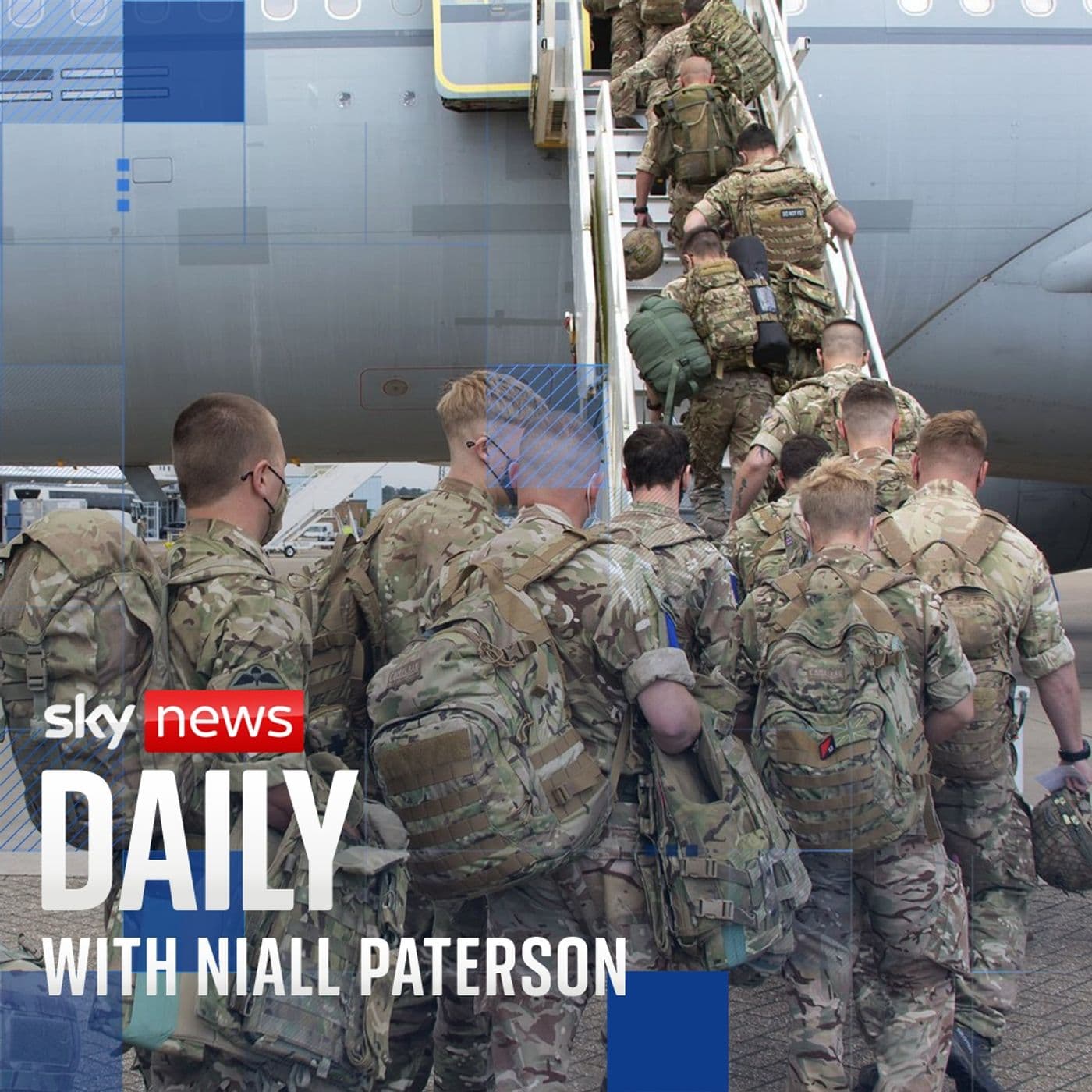
Britain’s growing military involvement in Ukraine and Gaza, and the risks of being seen as an active participant in wars.
Guests
Professor Michael Clarke, a UK military analyst.
Key claims
Ukraine’s use of UK/France Storm Shadow missiles to strike a Russian chemical factory in Bryansk is meant to publicly implicate European allies and reinforce European backing for Zelensky amid US uncertainty. Britain is also sending a small group of senior planners to Israel to help monitor a ceasefire, led by a two-star British officer working under US CENTCOM planning. The US-EU “wedge” over Ukraine is widening as Trump “zigzags,” affecting intelligence and weapons support. Deeper involvement could raise the UK’s risk profile, but doing nothing is worse.
Notable examples
Storm Shadow/Scalp identification; Tomahawk range and vulnerability; Kosovo 1999 (General Mike Jackson delaying an order to avoid UK-Russia confrontation).
Written by AI. May contain mistakes. Listen to the episode to check what was said.
Chapters
Tap a time to open that second in VOExploring British Military Involvement
0:30 to 1:26
Discussion on the level of British involvement in Ukraine and Gaza conflicts.
“Ukraine strikes Russia using British-made missiles.”
Impact of British Weapons in Ukraine
1:26 to 2:21
Analysis of the use of British-made missiles in Ukraine and implications.
“Now, obviously, we're not active participants.”
Ukrainian Strategy and European Support
2:21 to 3:10
Examining Ukraine's strategic messaging and European support dynamics.
“then we've learnt that storm shadow missiles have been used.”
US-UK Relations and the Ukraine Conflict
3:10 to 6:04
Discussing the complexities of US-UK relations amid the Ukraine conflict.
“They've been very specific in this case.”
Tomahawk Missiles and Military Support
6:04 to 8:00
The conversation about Tomahawk missiles and their significance in the conflict.
“It will get quite big end of this year into next year.”
Coalition of the Willing and Future Plans
8:00 to 9:10
Discussion on the Coalition of the Willing and Britain's commitment to Ukraine.
“But so far, he's turned around 180 degrees and he's now saying the opposite of what he was saying two weeks ago.”
Critique of British Military Strategy
9:10 to 12:16
A critical view of Britain's military strategy and past decisions regarding Ukraine.
“In reality, they don't think there's going to be a ceasefire deal any time soon and probably not ever.”
British Troops in Israel-Gaza
12:16 to 14:00
Examining the deployment of British soldiers in Israel and the Gaza conflict.
“gradually, if we'd given them all in one go, then the whole thing might have been a bit different.”
Exploring the Consequences of Military Involvement
14:00 to 16:49
Learn about the potential domestic and international fallout from military actions in Gaza.
“The most one could imagine, and again, I'm just guessing here, The most one could imagine is maybe a couple of special forces, soldiers on reconnaissance, possibly.”
Historical Context of Military Decisions
16:50 to 18:58
Understand the complexities of military orders and the importance of command structure through historical examples.
“But as far as possible, this government is putting us into more assertive positions with a degree of risk.”
Show all 11 chapters
Assessing National Security in a Changing World
18:59 to 20:26
Discuss the evolving threats to national security and the necessity for proactive strategies.
“If he'd been a gung-ho general, people thought he was a gung-ho general because of the way he was.”
Transcript
Automatic transcript. May contain errors.0:00How does a banana trigger a CIA-backed coup? Do AirPods herald the arrival of a new global order? What do LED lights say about the future of humanity? I'm Ed Conway, and in each episode of my new podcast, Stuff Matters, I take an object, crack it open, and reveal the world-shaping forces hidden inside. This is economics told through the things we think we understand. Search Stuff Matters on your podcast app to listen and follow. Coming up on the Sky News Daily, Ukraine strikes Russia using British-made missiles. British troops are deployed to Israel to monitor the ceasefire. So, just how involved are we becoming in other people's wars?
0:42How does a banana trigger a CIA-backed coup? Do AirPods herald the arrival of a new global order? What do LED lights say about the future of humanity? I'm Ed Conway, and in each episode of my new podcast, Stuff Matters, I take an object, crack it open and reveal the world-shaping forces hidden inside. This is economics told through the things we think we understand. Search Stuff Matters on your podcast app to listen and follow.
1:15Hi everyone, welcome back to The Daily. We're going to be taking a look at the level of British involvement in the two headline-grabbing conflicts of our age, Ukraine and Gaza. Now, obviously, we're not active participants. We don't have squaddies on the front line fixing bayonets, at least not yet anyway. But we are very much involved. On Tuesday, Ukraine launched an attack on a Russian chemical factory using storm shadow missiles, potentially made by the UK. Now, it's certainly not the first time such weapons have been fired. But it is interesting that Kiev let it be known it had made the strike using our kit.
1:53As for Israel-Gaza, the Defence Secretary has announced that members of the British military are being deployed to help monitor the ceasefire, which might be a bit of a surprise to you, given the Foreign Secretary said last week the UK had no plans to send any soldiers. So the question is, just how involved are we becoming in these conflicts, and what are the dangers in doing so? Let's get the views of our military analyst, Professor Michael Clarke. Michael, good to see you again. then we've learnt that storm shadow missiles have been used. What do we know? Usually for them, the general staff in Kiev are saying that storm shadow was used, amongst other munitions, to attack the chemical factory in Bryansk.
2:33And this chemical factory makes explosives, rocket fuel, which is critical. And, of course, this plant is important to Russia's war-making ability. And the fact is that the Ukrainians, A, are advertising the fact that they hit the plant, they often just leave it to your deduction who did it. And secondly, they're making it clear it was storm shadow. And that means it was either Britain or France, Storm Shadow or Scalp is the French version, it's the same missile. And so, in a way, they're implicating their European allies in this very deliberately. The Ukrainians have used these weapons before, but it's the identification of the kits, the material, coming from the United Kingdom or France.
3:10Why would they be doing that? They've been very specific in this case. And very often they say, yeah, we view storm shadow or they don't deny the fact that storm shadow has been identified by the Russians from the debris. But in this case, they did it immediately. And they are showing that they are using European weapons and that the Europeans are happy about that as a way of reinforcing the idea that Europe is behind Zelensky. Zelensky is on the back foot because America has flip-flopped yet again. Trump has flip-flopped to pressuring Zelensky and telling him he's going to lose this war and he needs to make a deal now.
3:43And Zelensky wants to show that the Europeans, as they say they are, are completely behind Ukraine in whatever comes next. So we are not going to be annoyed. There aren't British noses out of joint. I don't think so because, I mean, Britain has always made the point that we are fully supportive of Ukraine. We are the most forward leaning of all of the European powers on supporting Ukraine. We have been since February 2022. If you remember, I mean, Boris Johnson always had that phrase. I mean, Putin must lose. Putin must not succeed in this enterprise. Now, what that means in reality, we can argue about, you know, what does Putin losing actually look like on the ground and so on.
4:19But the idea that the Russians must not be seen to succeed in this naked aggression against a neighboring state that has exactly the same right to exist as they do. Aren't we at risk of driving a wedge between ourselves and the United States by being so obviously in assistance to the Ukrainians? I mean, the wedge is already there. And as the United States zigzags its way out of this war, and I've been saying this since March, that Trump is on a zigzag path out of the war. And as he gets out of this war, who he blames will be important. Whether he blames Zelensky and Europeans or whether he blames Putin will be quite crucial to how much support America is prepared to provide to Ukraine remotely.
5:00That is, you know, giving them intelligence and targeting information, allowing the Europeans to buy weapons to give to Ukraine. If they stop doing that, Ukraine would find it much harder to carry on. But rhetorically, as the Americans get out of this war, there is a wedge between the United States and the European powers. and the Europeans are being very determined at the moment, because it's our neighbourhood, it's our security we're talking about here, that we are supporting Ukraine. But that support will get more acute and more difficult to hold on to, and I keep saying the Europeans are going to have to be a lot braver in the future than they've been in the past if they're going to stick to this line.
5:37On the one hand, we want to coax and encourage Trump to take a European position, and occasionally the Europeans are successful in that, but every now and again Putin gets to him, And every time Putin gets to him, he changes his view and he goes to a pro effectively pro Russia stance and he beats up on Ukraine. And that that divergence, transatlantic divergence is getting greater all the time. And we don't know how big it will be, but I suspect it'll be a lot bigger than it is at the moment. It will get quite big end of this year into next year. And that is historically unprecedented. I mean, previous presidents have implied that they would go to war to maintain transatlantic unity.
6:15And this president looks as if he's going to give it away on a plate. Is this then to an extent about Tomahawk missiles in the sense that we had Vladimir Zelensky going to the White House again? He's made no secret of the fact he wants these missiles because they have a greater range. Is that what this is about? Yeah, it's the fact that, I mean, Tomahawks are very, very good and the Europeans have got nothing comparable to it. I mean, only Britain has got a few Tomahawks. Not enough for us to hand over. Not for us to hand over. We just have a stock for our own astute class submarines, our attack submarines.
6:44But the Tomahawk is, you know, 1 ,500 miles range. It's very hard to defend against because it stays very low. I mean, it literally can travel between 30 and 50 meters off the ground. So it's hard to defend against, and it's very, very accurate. It can go into that window as opposed to this window of a building. It can choose which window it hits in a building. And for that reason, the Russians really do fear the Tomahawk. It made its debut on the battlefield in the 1991 war against Iraq. And for a while, it dominated the news. It was a butt of jokes. was sort of chasing Saddam Hussein around the rooms of the palace.
7:16That was the way it was presented in cartoons. So it's a very old weapon made by Raytheon, but nobody in NATO has got anything else like it, and the Americans have improved it in general over the years. And when Donald Trump then said, as a way of pressuring Putin, how about I give 1 ,000 or 2 ,000 tomahawks to Ukraine? And that was a silly figure in a way. They were thinking in terms of 100 or 200. But he said, you know, how would that be? And the Ukrainians got very serious about this. And Zelensky went to Washington last week to talk about Tomahawks. But Putin had got to Trump first in this two hour phone call and it completely turned him away from the idea.
7:57So Tomahawks, for the time being, are off the table. Maybe they're off the table for good unless Trump reverts back again. But so far, he's turned around 180 degrees and he's now saying the opposite of what he was saying two weeks ago. Storm Shadow, is that the extent then of our kind of involvement, our direct involvement in this conflict? I mean, we saw reports in the past 24 hours that we have set aside£100 million for the deployment of troops at some stage to Ukraine. That's a separate thing, the idea of troops. I mean, again, we're trying to show earnest of our intent because the Coalition of the Willing, that this is all part of a meeting on Friday in London, again, a big meeting, called at short notice because the meeting last week in the White House went so badly for Zelensky.
8:38The Europeans scrambled together to say, look, we've got to show support. We can't just sit back and see Zelensky be beaten up again by the White House. And so the Coalition of the Willing is meeting on Friday in London. Macron is going to be there. Frederick Merz is going to be there. Starmer will chair it. And the 100 million commitment ahead of Friday, of course, is to show that we're serious. Now, what that may mean, we just don't know. But I mean, in theory, if there were a deal on ceasefire and there was something that the Coalition of the Willing could do to help monitor it, then we would want to be part of it.
9:09And that's what we're saying. In reality, they don't think there's going to be a ceasefire deal any time soon and probably not ever. And so this coalition of the willing, if it isn't to support the Trump plan, will actually in any case support Ukraine when the Trump plan fails. Aren't we just edging ever closer to being legitimately described as an active participant in this conflict? I mean, through Russian eyes, you could certainly make a very, very strong case that we already are. It's exactly what the Russians say. There's this phrase which, you know, I hear from some people in the UK. They say the Russians can't understand.
9:45How can we be doing so badly against a state that doesn't exist, right? Ukraine doesn't exist. They don't believe that. So how can we be struggling to subdue a territory that's not even a proper state? Answer, because NATO runs it, that the West is running Ukraine. Now that's rubbish, but it's what increasingly the Putin clique have believed for two or three years. So from their point of view, they are fighting the West. And from their point of view, the West is trying to subdue Russia as it's tried to do for the last 200 years. And that's why we're in this situation. After 2022, with the Russian full-scale invasion, February 24, 2022, there was no way back for Russia, no way back to where we were.
10:25And because of that, there's no way back for us either. We've got to take on a completely new security problem in Europe, which is that the Russians believe that they are at war with the whole of Western Europe. And Western Europe has therefore got to stand up to that because Russia will keep pushing until we somehow stop them pushing by some sort of force. It doesn't have to be a war, but it has to be something that they're not prepared to push any further, something they're not prepared to take on. And then maybe we can talk about the future of European security. But through our expanded participation in this conflict, haven't we, in a sense, unnecessarily painted a target on our back?
11:04And people do say that. I mean, I know from very distinguished experts and ex-military in Britain who say we made a fundamental error in 2014 by complaining about the takeover of Crimea and the third of the Donbass in the first Russia war against Ukraine. And we made the error even worse in 2022. We pretended that we could stop it. we pretended that we could somehow reverse it. And unless we're prepared to risk going to war with Russia, we can't. So in 2022, we should have accepted it. We should have said to Ukraine, look, I'm sorry, it's awful, but you're going to be conquered. There it is. And now most people in 2022 wouldn't have settled for that because what Russia did was so egregious.
11:41But there is a view, and it's not the most popular view, but it's certainly a serious view in Britain, that we made a fundamental error pretending to support Ukraine when actually we couldn't offer them enough support. And if we were if we made that decision to support Ukraine, then we had to make the decision then to give them full strategic backing for all that it would cost and give them that give them the ability to push the Russians back then and there. Instead of which we hoped we could contain it. We hoped a bit of a bit of this, a bit of that and a bit of the other would actually help.
12:13And here we are three years later. if we'd given Ukrainians the things that we've given them in the last three years, gradually, if we'd given them all in one go, then the whole thing might have been a bit different. But we are where we are. Let's turn our attention to Israel-Gaza and, of course, a different situation to the conflict in Ukraine. News has kind of almost slipped out under the radar, I would say, that we are sending soldiers to Israel to assist in the peace process, or at least to monitor the ceasefire. What do we know about that? It's a group of service personnel. led by a two-star, which is a two-star officer, which is in army terms a major general, senior, very senior.
12:50They are planners, and they're going to join the CENTCOM, Central Command Planning Cell, which has been set up in Israel under Brad Cooper. The CENTCOM commander, I'm sure he calls himself Brad Cooper, so he doesn't get called Bradley Cooper. Brad Cooper has set up this planning cell of 200 staff to try to stay out of Gaza, but to plan for what happens next, both civilian and military. And the British, apparently, they say, at United States request, have sent this group, and our two-star officer is deputy commander of this group. So it's commanded by an American. The deputy is going to be this two-star British officer.
13:22And the reason for that is that we do a fair bit of intelligence surveillance over Gaza and have been doing for a long time. We have the intelligence capabilities. We still have a very close intelligence relationship with the United States. We've got our listening posts in Cyprus, which look after things in the Middle East. and were quite good at logistics and at planning for peace processes because we've done that in different parts of the world. And I think the Americans, although they lose an opportunity to insult us, they actually, professionally, they respect the fact that we've done a fair bit of this over the years.
13:57Michael, is there any suggestion that we might be putting British forces on the ground inside Gaza? The most one could imagine, and again, I'm just guessing here, The most one could imagine is maybe a couple of special forces, soldiers on reconnaissance, possibly. But even if that goes wrong, I mean, it goes terribly wrong. I mean, what would be the consequences of a U.S. soldier, a British soldier getting killed inside Gaza? Yeah, they'd be huge. I mean, domestically, they'd be huge. Not as much in Britain because, you know, we understand our special forces are all over the place. They do, you know, they are the best in the world at the particular things that they do.
14:33And there's not many of them. I mean, our special forces is only about a battalions level. So it's only 500 or 600 troops. But my goodness, those who do the job, they do incredibly well. But it would raise a bigger problem in the United States because that would undermine everything that President Trump seems to stand for. And the people like Elbridge Colby in the Pentagon is one of the key deputies. I'm Pete Hegseth. I mean, they've stood by their isolationist stance. And the idea of American soldiers getting killed in Gaza is completely anathema to the view that they take. I mean, a lot of them are unhappy that Trump is this far involved in Gaza because the implications are if this piece begins to slip away, the Americans will have to do a lot more.
15:13And that's exactly what the MAGA Republicans don't want Americans to have to do. Let's just take a step back, though. And we look at the Israel-Gazza conflict and we are becoming more entwined with what is going on there. We look at what is happening with Ukraine and, of course, a meeting later this week, the Coalition of the Willing. We are deepening our involvement in that conflict. I mean, there are big risks in this, particularly for our own national security. I mean, Britain has been very forward-leaning on its security relationship with the United States for reasons that we can guess at.
15:46We've got a better deal on tariffs than our European partners. So they've got a 20 % general so-called reciprocal tariff. We've got a 10 % tariff. Keir Starmer seems to get on better with Donald Trump than many other European leaders. The military relationship is close. The intelligence relationship is very close. And sometimes, sometimes, the relationship between leaders is close. For all that Starmer is criticised for being too timid in the domestic sphere and in the economic sphere, he's actually quite assertive in the foreign sphere. I don't think he's particularly comfortable about it, but he's being much more assertive in foreign affairs, and particularly in this strategic instinct to try to stay close to America, even though it's pretty hard to stay close to Trump's America on many grounds.
16:28But the instinct is to try to back America as far as we can. Now, there comes a time when we have to assert our own decision. And those times are coming with Ukraine. You know, we are clear, as we said before. You know, the United Kingdom is very strong on supporting Ukraine. And there'll come a point at which the Americans say, don't do that or stop doing that. Or, you know, you're being foolish doing that. And so certain things we will have to and we are beginning to stand up for. But as far as possible, this government is putting us into more assertive positions with a degree of risk. There is a degree of risk in all of them, political risk as well as physical risk, for reasons that we can understand.
17:06Well, let's look back for a second, because as you say, we have had a long history of being involved from the site, be it in a peacekeeping role or through, as is happening with Ukraine, you know, supplying weapons, supplying intelligence and so on. Does it always go entirely to plan? Oh, no. I mean, nothing ever goes entirely to plan in the military. But if your planning structure is good enough, then you can adjust. And by and large, the military are pretty good at getting back onto track if they've got political backing. What tends to happen is that something goes wrong and politicians change the objective or they move the goalpost.
17:42The example that I was thinking of was General Mike Jackson in Kosovo. Just as an example of how close to things going incredibly badly wrong we can get simply just by merit of our participation in a peacekeeping force. Yeah, well, the Russians suddenly moved into Pristina Airport, which they shouldn't have done. It was it was, you know, they were just grabbing it on behalf of their clients. And the overall commander was Wesley Clark, American General Wes Clark. And Wes Clark ordered Mike Jackson to get into Pristina and throw the Russians out, which would have meant British troops fighting probably Russian troops.
18:19And Mike Jackson said, who's talking to his superior, yes, General, I've got your order. I will as soon as my capital tells me I can obey your order, I will do so. And the point is he was breaking the line of command and he was finding reasons not to obey an order from his direct superior because he was being ordered by an American to do something that would leave Britain in a difficult position. And so Mike Jackson, you know, he basically didn't disobey the order. He delayed it. He delayed carrying it out. Soldiers are quite good at doing that. He delayed carrying it out until he had got confirmation from his own capital.
18:52And that avoided what would have been a very nasty shooting incident. I mean, Mike Jackson showed good political strategic judgment. If he'd been a gung-ho general, people thought he was a gung-ho general because of the way he was. He had that sort of gruff manner. He was actually a very subtle thinker, actually. I suppose this is the question. Does deepening British involvement in what's going on in Gaza, what's going on in Ukraine, does that make you more worried about our future and our national security? Or does it make you more reassured in the sense that we are dealing with the problems that could be affecting us later on?
19:25I'm worried about our security future in general on several fronts. I'm very worried. I'd never thought in my lifetime that we would be this insecure and facing greater insecurity in the next five to ten years. So I'm worried about that. I am reassured that some of the things that the government is announcing, I think, are the right thing to do. But I come back to the idea they're doing it within the context of general instability. They're doing it in the context of greater insecurity. The worst thing you can do when you're insecure is do nothing. Of course, there's a danger of overreacting. or, you know, acting for the sake of it.
19:57But when things are slipping away, as they are across Europe in security terms, the worst thing you do is the frightened rabbit syndrome, just hope that it will get better. Hope is not a strategy. You've got to strategize for what you see in front of you. What we see in front of us requires the Europeans to take lots of different actions that we never thought we would have to this side of 2040, 2050. But here we are. I mean, that's what history does. Things, you know, speed up. The geopolitical wheels are turning very fast at the moment. and we are reacting to them. So I'm comforted by the fact that our government is reacting to them.
20:29I wish it was doing more in certain ways and so on, but I'm not reassured by the situation we're in, but I'm a little bit comforted by some of the reactions of the Europeans. My thanks to Michael and, of course, to you for listening. The Sky News Daily is back again tomorrow.
20:54arrival of a new global order. What do LED lights say about the future of humanity? I'm Ed Conway, and in each episode of my new podcast, Stuff Matters, I take an object, crack it open, and reveal the world-shaping forces hidden inside. This is economics told through the things we think we understand. Search Stuff Matters on your podcast app to listen and follow.
From the publisher
The possibility, however slim, that UK soldiers could be engaged in fighting in the Middle East follows Ukraine's very public revelation that British-supplied Storm Shadow missiles were used in a "massive" attack inside Russia.Less than two weeks ago, the foreign secretary said there were no plans to send troops to monitor the Gaza ceasefire - so is the UK being dragged into a situation it doesn't want to be in?
What is the extent of its role in these conflicts and what are the implications for our national security?
Niall is joined by Sky's military analyst Professor Michael Clarke.
Producer: Tom Gillespie
Editor: Mike Bovill