
In short
Communities in the UK responding to a record rise in religious hate crime, amid anger over immigration and fears of “them vs us.”
Guests/backgrounds
Lisa Holland, Sky News communities correspondent, reports on Sikh and Muslim community reactions after the 2024 summer of protests/riots. Pavinda Kaur, vice president of the Smethwick Gurdwara (West Midlands), describes Sikh-led patrols. Rabbi Josh Levy, co-lead of Progressive Judaism, discusses Jewish-Muslim interfaith security and dialogue.
Key claims
Hate crime rose to 115,990 offences (year ending March), with Muslim hate crimes up; recorded data likely undercounts. Protest rhetoric is seen as emboldening racist attackers. Communities say police security is necessary but not sufficient, prompting self-organized escorts.
Notable examples
Manchester synagogue attack; Sikh incidents in West Midlands (racially aggravated taxi-driver attacks; alleged rape in Oldbury); patrols escorting vulnerable worshippers; a journalist witnessing a man shouting a slur outside asylum-seeker hotels; Jewish-Muslim outreach after mosque/synagogue attacks; interfaith tea/iftar and rabbis-imams staying “in the room.”
Written by AI. May contain mistakes. Listen to the episode to check what was said.
Chapters
Tap a time to open that second in VORising Religious Hate Crimes
0:30 to 1:19
Discussion on the alarming rise of religious hate crimes and community responses.
“We meet the minority groups taking matters into their own hands and stepping up security.”
Community Perspectives on Safety
1:19 to 6:54
Exploration of feelings of safety among minority communities amid rising tensions.
“A summer of protests and riots laid bare the fact that many people feel furious about the levels of immigration to the UK, legal and illegal.”
Interfaith Dialogue and Community Cohesion
6:54 to 14:00
Rabbi Josh Levy discusses the importance of interfaith initiatives in fostering community bonds.
“It's all because people feel that the summer of protests, immigration protests, has emboldened those with racist views.”
Building Interfaith Connections
14:00 to 14:42
Learn about local communities fostering interfaith relationships through dialogue and shared experiences.
“You know, there are still local communities that are seeking to come together.”
Addressing Societal Pressures
14:42 to 16:00
Explore how societal pressures and nationalism contribute to fears in minority communities.
“And, you know, I'm really proud that through the last two years, there have been some incredibly good examples of communities that have continued to stay together.”
Investing in Community Security
16:00 to 17:07
Discuss the importance of security for places of worship and community cohesion.
“Just in terms of just feeling safe in this country, how can we make that happen when we are talking about communities that exist separately and come together for dialogue?”
Acts of Kindness After Crisis
17:07 to 18:37
Learn about the response of different faith communities supporting each other after attacks.
“We have to think about how do we invest in education?”
Expanding Conversations Beyond Faith
18:37 to 19:44
Examine the importance of including diverse identities in interfaith discussions.
“I think there is something really fundamental about those connections and those relationships.”
Unity Beyond Differences
19:44 to 20:11
Understand how shared interests can unite communities despite their differences.
“After the Manchester attack, for example, was both Manchester City and Manchester United wore black armbands with a thing that said, a city united.”
Transcript
Automatic transcript. May contain errors.0:00How does a banana trigger a CIA-backed coup? Do AirPods herald the arrival of a new global order? What do LED lights say about the future of humanity? I'm Ed Conway, and in each episode of my new podcast, Stuff Matters, I take an object, crack it open, and reveal the world-shaping forces hidden inside. This is economics told through the things we think we understand. Search Stuff Matters on your podcast app to listen and follow. Coming up, as religious hate crimes reach a record high, We meet the minority groups taking matters into their own hands and stepping up security. That's next. How does a banana trigger a CIA-backed coup?
0:43Do AirPods herald the arrival of a new global order? What do LED lights say about the future of humanity? I'm Ed Conway, and in each episode of my new podcast, Stuff Matters, I take an object, crack it open, and reveal the world-shaping forces hidden inside. This is economics told through the things we think we understand. Search Stuff Matters on your podcast app to listen and follow.
1:18There's an awful lot of angry people right now. A summer of protests and riots laid bare the fact that many people feel furious about the levels of immigration to the UK, legal and illegal. And where there's rage, there's often fear, particularly when so much of the division is characterised by talk of them and us. But is that fear justified? Well, recent statistics show that religious hate crimes are at a record high. And the attack on the synagogue in Manchester is still very fresh in the memory. There, the presence of security guards wasn't enough to deter the assailant. Sky News has discovered it's not just Jewish communities fearing for their safety.
1:58Minority groups across the country are taking matters into their own hands and looking after their own. We're not a vigilante, that's what you're asking, we're not vigilantes. We're in full support of the police, we're good people, we're just trying to do the right thing and support our community. We'll be hearing from one rabbi a little later about how dialogue between faiths can bring communities together. But we're going to get started with our communities correspondent Lisa Holland. Lisa, you've been looking into that summer of riots and protests and the way that it made various groups feel.
2:29The background to that is, of course, we have had some data on hate crimes that precedes the summer. Indeed, and we've been looking at how communities feel right now after a summer of events. But the latest data that we have showed that even before this summer and the impact of all of that, hate crime had risen. In fact, there are 115 ,990 hate crime offences in the year ending to March. Hate crime against the Muslim community is up significantly, but important to note as well that this data doesn't include offences that happened within the policing responsibility of London's Metropolitan Police so that those figures would be even higher.
3:09And also people also urge caution because, of course, this is recorded crimes and so much goes unreported. I suppose for a lot of people, you know, even if you haven't been the victim of crime, you may well perceive that you could be a victim. So you went out there into our communities to try and get just a snapshot of how people were feeling. I think that even amongst our team, my producer, Amrit Singh Mann, who is a member of the Sikh community himself, said that even he felt shocked by some of the comments that were made to us. We sat down with the vice president of the Gurdwara in Smethik in the West Midlands, which is one of the largest Sikh places of worship in the country, a lady called Pavinda Kaur.
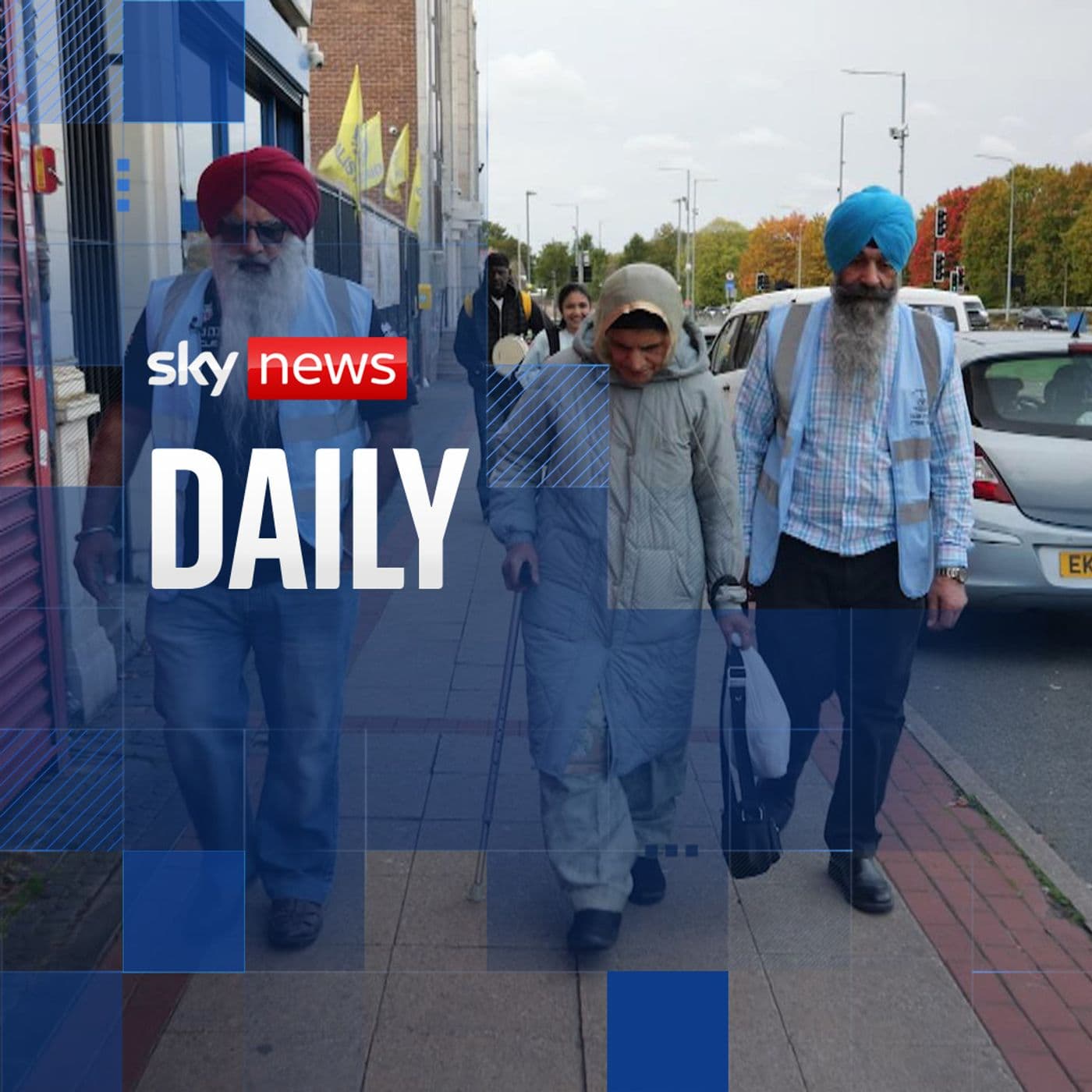
3:53She said that numbers in terms of attendance were down at the Gurdwara. And that was specifically because people weren't coming, because some people felt, some members of the community, the more vulnerable, perhaps more the elderly or some women, that they felt not safe in fear of being racially abused walking to and from the Gurdwara. It was remarkable, really, because we chatted with a particular lady who had come to the UK aged 18 from the Punjab in India. And she's now 76 years old. Very devout woman. She wants to go to the Gurdwara every day. She doesn't want that to change. But in the light of two significant events in the community and other racial abuse incidents, now they've set up patrols so that people from the Gurdwara offer to walk people home who may feel vulnerable.
4:50She said things had never been this bad and that she had never felt this unsafe. Where does this feeling of a lab safety come from? They feel that events this summer in the UK, and I'm talking specifically about protests outside hotels housing asylum seekers, of which we've seen obviously a significant amount, and this swirling unrest over the issue of immigration. And that is not to say, of course, that people with concerns about immigration don't have legitimate concerns. But specifically, there are some people who feel that those legitimate protests have emboldened others with more racist views to be more outspoken and aggressive within certain communities.
5:38On top of that, within the Sikh community, there have been two specific incidents, alleged attack against two taxi drivers and an alleged rape of a young Sikh woman specifically, which have obviously really distressed, horrified the Sikh community. And both of those incidents are being investigated by police in the West Midlands as racially aggravated. So this all ferments this kind of sense of fear and concern within the Sikh community specifically. It's the response, particularly in areas where there have been crimes against the Sikh community. There are patrols out in the street now as well.
6:16Yes, at the location of the alleged rape in the West Midlands in a place called Oldbury. Members of the Sikh community have come from across the Midlands and they come every day and have set up patrols along what is a busy main road where this incident happened. And they are out and about. They want to give a sense of security to people walking in that area. I did say to the patrol, do you feel in any sense that your presence here as a group, as a group of men, is in any way intimidatory? And they said no. They said they're not vigilantes. But again, it's really important to note that these patrols and the escort from the Goudwara service, it's all new.
6:59It's all because people feel that the summer of protests, immigration protests, has emboldened those with racist views. And specifically, the vice president of the Gurdwara said, before the summer we felt safe and now they don't. They feel unsafe, but they must also presumably feel that the police aren't there to protect them. Because isn't that their job? It is really hugely significant that these people within the Sikh community, they say they're not taking the law into their own hands, but they feel that they are, they're clearly feeling a gap because they clearly feel that there are measures that they have to take that people don't feel safe to walk about.
7:40What of other religions that you've been looking at? I would say that within the Muslim community, there's a really similar sentiment. That same question that I put to an imam at a particular mosque, do you feel that a summer of legitimate protests over concerns, general concerns about immigration have emboldened those with racist views? And again, the answer was yes. Some people feel that it's really hard to define what is a racially motivated attack. But I think that what we can really feel is that it's the first thing that comes to mind, let's say, for some people within these communities because of the kind of climate that we're in.
8:18We've talked an awful lot about the victims of the hate crimes and the response from these minority communities. But when you ask them, so who is ultimately making you feel unsafe? What do they reply? I do think it comes back to this point about people feeling emboldened. I think that's the only way I can kind of put it in the sense that perhaps people who had a racist view, who at one stage felt like they couldn't say what they wanted to say, who now feel that they can. It brings to mind something that I witnessed when I was down in Bournemouth one evening during the summer, a Friday night, covering protests outside hotels housing asylum seekers.
9:03And I saw a man walk past another hotel housing asylum seekers. At that point, I was just kind of parking my car. He didn't know that I was a journalist. And he used a very ugly four-letter word, shouting it at one of the asylum seekers, and he sort of spat towards the hotel. And then he carried on down the street to this other hotel where the protest was taking place. And I suppose it went through my mind, thinking, if you weren't out to go to that protest, would you feel able to do what you've just done? I think it's just this sense of people feeling that they can do it because the debate about immigration has been blown wide open this summer during these protests, which of course are legitimate concerns.
9:49But I think for some people it feels like it's changed the landscape of what they feel able to get away with. Let's just pick up on a couple of the things that we just heard from Lisa there and speak to Rabbi Josh Levy. He's the co-lead of Progressive Judaism. Rabbi Josh, great to have you with us. Let's start at the beginning. I mean, do you have any surprise that there are any number of religious communities up and down the country right now feeling pretty worried? Certainly, you know, there are people who are motivated by ill will and hate who are seeking to pull us apart from one another within UK society.
10:28And I think, you know, we also need to recognise there's also some really great examples of good practice and community cohesion and strong relationships as well. Tell me a little bit about your work between the Jewish and Muslim faiths. I think it's important to recognise that, particularly over the last two years, there have been real challenges for interfaith work in this country, pretty much unlike any that many of us have experienced in our careers. But those relationships do still exist. And, you know, And I think when we think about those who are motivated by hate, motivated by the desire to pull us apart, the reality is that the response to that needs to be security.
11:06It needs to be a legal response. But when it comes to understanding and connection and the trust between communities, the only way that we build that is through encounter, is through meeting each other and being with each other and understanding each other. So I think the really important thing about interfaith work is that it's not about trying to flatten difference. It's not about trying to say that we are all the same. It is about trying to find places of commonality. But really, it's also about that encounter with someone who is different to you and seeking to understand them and meet them as they are.
11:42And what we know is that where those encounters have been strong in the past, they're pretty resilient. But as we've just been discussing with Lisa, we had a summer chock full of anger. There was an awful lot of rage being displayed. and when that happens, you know, certain groups in this country do tend to feel marginalised and fearful. I mean, you are not in any way surprised, I would imagine, Rabbi, that there are other faith groups doing what the Jewish community has done for a number of years and having security at their places of worship. My whole professional life within the Jewish community, sort of 30 years, has involved there being security in my places of work, in my places of worship, you know, whenever there are events, celebrations, having to have security on the door.
12:26And so as a Jewish community, we're very aware of the fact that there are those threats to us. I think other faith communities also experience that. I think the reality is we're never going to be able to remove that security. That is an important part of being able to be safe. But what we can do is welcome people in, is have that security not be a barrier to relationship, but something that keeps us safe whilst also trying to be in relationship. That does mean, to some extent, trying to shut out the noise of those who are looking to divide us, looking to deal with things like the rhetoric on social media in very strong ways from government.
13:06But on a local level, making that commitment to be with each other and to meet each other and to seek to understand each other. And look, some interfaith work is as simple as sitting and having tea together. Some of it is the sort of side by side interfaith work where you work together on social justice projects or, you know, or come together to address something that's happening in your society. And some interfaith work is really naming difference and having that those difficult conversations, particularly where you are divided by, you know, things that are happening globally, as well as things that are happening kind of in your in your religious communities.
13:46How difficult have those conversations become, of course, over the two years plus that we have seen that conflict with Gaza? I don't think there's any doubt that for many people, interfaith relationship between Muslim and Jewish communities has been really incredibly complicated over the last couple of years. You know, there are still local communities that are seeking to come together. Many of our synagogues, for example, will hold an iftar during Ramadan and invite their Muslim neighbours and will continue to seek to have that sense of connection and relationship. But also at some level, you have to be able to and willing to be in the room to hear the hard things, to hear the impact of your community and the language that your community might use on the other.
14:32You have to be able to name the places where there are parts of someone else's community that are causing harm and pain. Interfaith dialogue is an act of will. It is being willing to stay in the room when things are difficult. And, you know, I'm really proud that through the last two years, there have been some incredibly good examples of communities that have continued to stay together. And particularly kind of at the level of rabbis and imams being in the room together to have those difficult conversations. Do you see what's happening on our streets and the fear which some minority communities are experiencing right now?
15:07Do you see that as a direct result of the return or indeed the rise of a pre-existing nationalism in the United Kingdom? That there is this sense of them and us amongst chunks of the British population? I think those kinds of societal pressures, I think, are not only about the things that they're about. You know, I think, you know, what we recognise, I think, is that there are all sorts of concerns that are being articulated around, you know, investment in public services, in terms of people's careers and housing, your ability to get a GP's appointment. You know, all of those things that contribute to, you know, how we bring ourselves into the world.
15:47I think one of the things that is absolutely true is that when we are tested, sometimes people's instinct is to blame it on the other or to be against the other as they perceive it. And so part of what we have to do is to ensure that we don't see each other as other, but see each other as other human beings, other British citizens, all of whom bring who we are into a multicultural society. Just in terms of just feeling safe in this country, how can we make that happen when we are talking about communities that exist separately and come together for dialogue? I think on one level, you know, one of the things we have to do is invest in security, in the safety and security of places of worship, of groups and buildings.
16:38And that's the important part of what we need to do. I think the second thing is, you know, we do have to address some of the rhetoric that happens within UK society, some of the rhetoric that is seen, for example, particularly on social media. You know, I think we can't underestimate the impact of social media in establishing particular tropes and rhetoric around people and around groups that are deeply damaging. And then the third thing is that we have to invest in community cohesion. We have to think about how do we invest in education? How do we encourage groups to come together? You know, can we find ways of enabling places of worship to host one another?
17:19Can local authorities be places that are hosting and bringing different groups together in different ways? You know, those kind of... This has got to be a real commitment together that what we're interested in is creating a cohesive society. The synagogue attack in Manchester is still, no doubt, forefront in the minds of many British Jews. I'm wondering, when that attack took place, did those of other faiths reach out to you? Absolutely. I received all sorts of emails from people from across the faith sector who wanted to reach out and check that we were OK. On a local level, I know that one of the things that happened was, you know, many faith leaders coming together to support that local community and the Manchester Jewish community.
18:06But perhaps as important was the fact that just, you know, people on the street wanted to support one another. So I went up to Manchester. I led a service in our community in North Manchester the next day. There in the synagogue were flowers that had just been dropped around by local neighbours who just wanted to show their love and support for the Jewish community that they care about and that they're in relationship with. And, you know, we shouldn't underestimate that actually, you know, those little acts of love and kindness are really incredibly important. You know, and similarly, you know, I think when the events took place in Southport last summer, you know, our local Jewish communities reached out to their Muslim neighbours as well when the mosques were under attack.
18:46I think there is something really fundamental about those connections and those relationships. It's important to recognise the vast majority of people are good and kind and want to get on with their neighbours. And there's an asymmetry here. And the asymmetry is that a small number of people who seek to divide us can cause a huge amount of pain and a huge amount of division. But the vast majority of us want to be in good relationship with one another. And we have to keep doing that work. We've talked an awful lot about interfaith dialogue. What about conversation with those of no faith or little faith?
19:22So I think, look, I think one of the things we are absolutely not very good at in this country is talking about our diversity to include as many people as possible. As people of faith, we're often in deep relationship with each other, but we're also people of ethnicity, people of education and background. and we have all of that kind of multiplicity of identities and finding spaces where we can make those connections is really important. After the Manchester attack, for example, was both Manchester City and Manchester United wore black armbands with a thing that said, a city united. And we may be divided by all sorts of things, but we can be united in a love of football or in a love of the fact that our communities are able to come together.
20:01So absolutely, I think some of those relationships are very strong at the point of faith leaders, But we also have to extend that beyond faith to other community groups as well. Thanks to Rabbi Josh, to Lisa and to you for listening. Lisa's full report is over on the website skynews.com. The Daily's back tomorrow.
20:37I'm Ed Conway, and in each episode of my new podcast, Stuff Matters, I take an object, crack it open, and reveal the world-shaping forces hidden inside. This is economics told through the things we think we understand. Search Stuff Matters on your podcast app to listen and follow.
From the publisher
A summer of protests outside asylum seeker hotels and a renewed debate about immigration have led to concerns British society is becoming increasingly fragmented.
And last week, figures released by the Home Office showed that religious hate crime recorded by police in England and Wales had reached a record high.
Some members of the Sikh community in the West Midlands have been escorting elderly people to their local gurdwara due to concerns about physical and verbal abuse.
What are the causes behind this rise in hate crime? How are minority groups responding, and what can be done to rebuild fragile communities?
Niall is joined by Rabbi Josh Levy, the co-lead of Progressive Judaism, and Sky's communities correspondent Lisa Holland.
Producer: Tom Gillespie
Editor: Mike Bovill