
 Ask ChatGPT


 This Is Why
23 Jun 2025 · 16m · 6 chapters
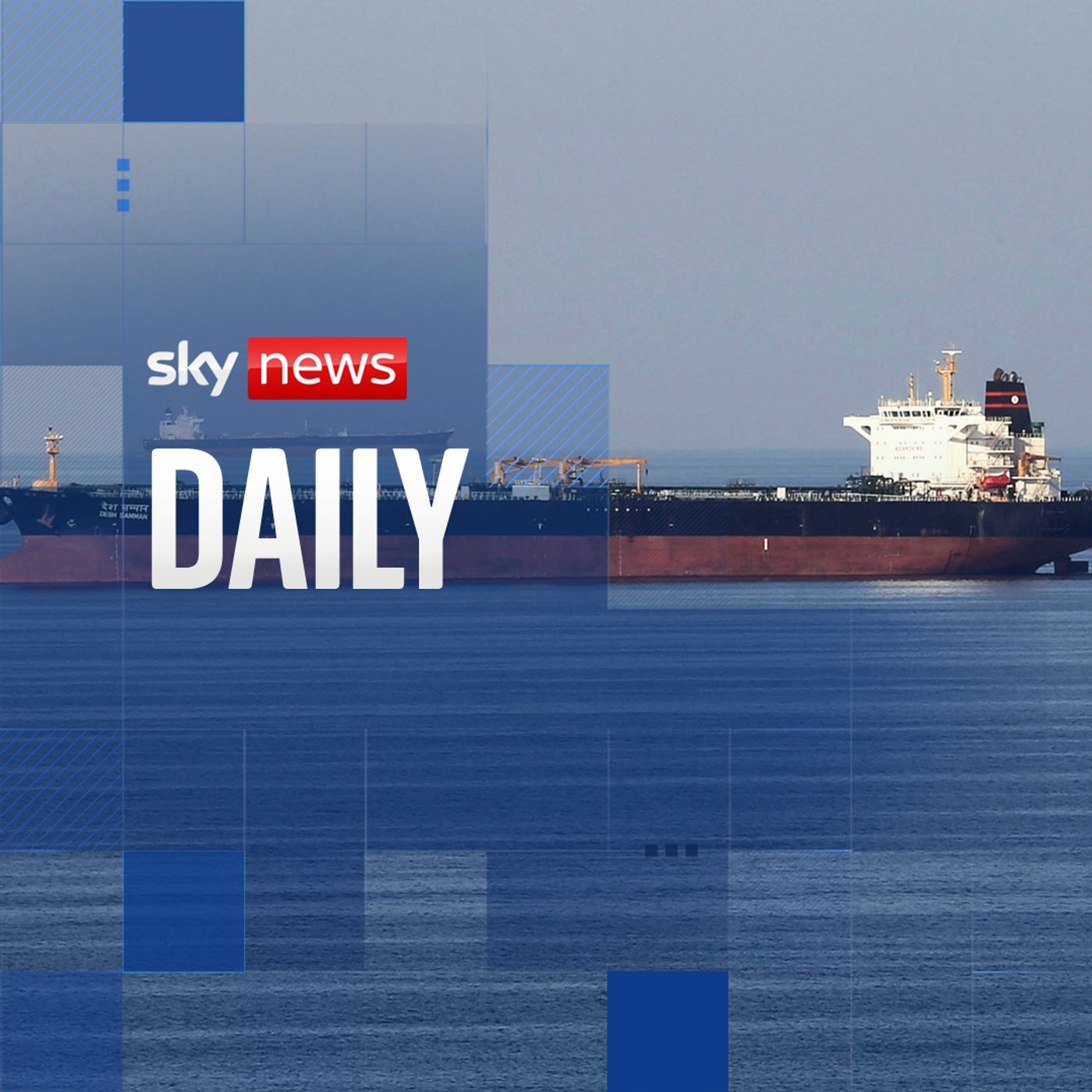
Iran’s threat/possible move to close the Strait of Hormuz and how shutting this “pinch point” would disrupt global oil and gas shipping, raising prices and worsening cost-of-living impacts.
Ed Conway, Sky News data economics editor; interviewed by Dominic Waghorn.
Conway is a long-time journalist and economics/data editor at Sky News, focused on geopolitics and economic consequences.
About a fifth of the world’s oil passes through the strait daily; Qatar LNG and Iran oil would be affected; fertilizer supply could be hit; markets may be complacent because a closure would be immediately noticeable and economically painful for everyone, including Iran.
UK gas imports via LNG tankers from Qatar; historical reference to Portugal briefly blocking the strait in the 1600s.
Written by AI. May contain mistakes.
Discussion on why the Strait of Hormuz is critical to global trade and energy supplies.
“What is it and what will that do to the global economy?”
Ed Conway explains the potential economic consequences of closing the Strait of Hormuz.
“Ed, I think for as long as you and I have been journalists, people like us have been gaming out what would happen, you know, if one of the great what-ifs of our time, would Israel attack Iran, actually did happen.”
Analysis of how the closure of the Strait could affect global markets and economies.
“threat, but one that hasn't yet crystallised.”
Exploration of historical instances of control over the Strait and the implications for global dependency on oil.
“investors out there are being overly complacent about this because we are in a scary moment, aren't we, at the moment?”
Discussion on how disruptions in the Strait affect global supply chains and economic stability.
“But that's led to obviously a major naval confrontation going on in the Persian Gulf.”
Learn about the vulnerabilities in the global economy related to oil and gas supply chains.
“Because they must be feeling incredibly lonely and isolated and completely abandoned by their allies.”

Get the gist, explore an idea or ask about something said.
 Claude
On This Is Why, what are the key points of this episode?
Searching your listeningAutomatic transcript. May contain errors.
0:00Dominic Waghorn: Coming up on the Sky News Daily with me, Dominic Waghorn. Iran is threatening to close the Strait of Hormuz. What is it and what will that do to the global economy? Over the weekend, the US took an unprecedented decision to bomb Iran, hitting three nuclear sites across the country. It's increased fears of a wider, unpredictable conflict across the Middle East. And the world is bracing itself for what Iran will do next. So how could they retaliate? Iran's parliament has approved a measure to close the Strait of Hormuz, a major global trade route. So why is this strait so important? This is Sky News data economics editor Ed Conway.
0:40Dominic Waghorn: Ed, I think for as long as you and I have been journalists, people like us have been gaming out what would happen, you know, if one of the great what-ifs of our time, would Israel attack Iran, actually did happen. I think crucial to that has been the possibility of the Strait of Hormuz being shut down. So tell us about why is it so important? Why is this preoccupying minds at the moment?
1:00Ed Conway: For as long as I've been a journalist, it's been one of those clever things you can say if you're at a dinner party in more peaceful times and you say to someone, well, the thing to watch out for, the thing to really worry about is if something happens to the Straits of Hummers. The Straits of Hummers is this kind of relatively narrow bit of sea that is the entranceway and the exitway for the Gulf. So essentially all of the shipping going in and out of the Gulf, so towards Saudi Arabia, Qatar, the UAE, all of these countries, and indeed Iran, has to pass through this relatively narrow point between Iran and I think Oman on the other side.
1:36Ed Conway: And as such, it is a pinch point within geography. And there's only a few of these places around the world where so much shipping needs to pass in order for all of the basic stuff that we depend on in our lives to actually kind of get from A to B. There is so much of the world's oil, about a fifth of the world's oil, goes through the Straits of Homoza on a daily basis. You've got tankers going in and out of there, pretty much everything from Saudi, just because that's where the oil fields are on Saudi, so they're in the east of the country rather than the west of the country. Same thing for a lot of liquefied natural gas that comes out of Qatar.
2:10Ed Conway: Same thing for all of Iran's oil. So if they close the Straits, in other words, they basically prevent shipping from going in and out, which is what people are talking about here, then essentially you're cutting off a massive amount of global energy supply and other things also like fertilizers because a lot of fertilizer comes from Iran and it would it would be disastrous like it would be seriously economically cataclysmic if that were to happen but it hasn't happened so far and it has never in you know in recent living memory ever happened and Iran has threatened it quite a few times in previous conflagrations but they've never actually done it so it's still a threat, but one that hasn't yet crystallised.
2:50Dominic Waghorn: And I have to stress, I guess, that the Iranian Parliament is not like the British Parliament. Whatever it decides is not that consequential. It's more of a rubber stamping institution. But just to go back over that debate that's run on for years, as you say, those who said at dinner parties, you know, that's the thing to watch. Was it more important in the past? I mean, has America sort of got more self-sufficient? Have other countries got more reliance on their own supplies of oil? Is it not quite as important as it was in previous years?
3:16Ed Conway: It's not quite as important as it was, I guess, for a couple of reasons. First of all, the US has surfaced, thanks to Shell Oil, as the world's biggest producer of oil and gas. It is one of the most underrated stories in geopolitics and economics of the last kind of couple of decades is they have become massive. That being said, you know, Saudi Arabia still remains the kind of, you can think of it as like the central bank of oil. They have a lot of oil within their various oil fields, which is relatively easily obtainable. Whereas in America, when you're getting shale oil and gas out of the ground, you have to really work to get that oil out.
3:52Ed Conway: It's not like you can just open a spigot and suddenly much more comes out. Now, that's not necessarily completely the case in Saudi. So the strait still matters. and even though we like to think that we've kind of transcended all of this stuff, we kind of think here we are in 2025 and oil doesn't matter as much as it used to, coal doesn't matter as much as it used to. Well, yeah, it's true that increasingly more of our energy is coming from renewable sources like, you know, solar and wind and a few other things besides. But oil is still the bedrock, you know. It's still the bedrock to how we get from A to B.
4:23Ed Conway: And if it were to get closed, it would be kind of disastrous. And I think the striking thing, it might well be that markets, you know, investors out there are being overly complacent about this because we are in a scary moment, aren't we, at the moment? But still, they don't seem to think it's going to happen right now. But blimey, if it did, we would all notice it.
4:43Dominic Waghorn: The Iranians have been developing a capability to do exactly what we're talking about, to shut down the Strait of Hormuz. They have high-speed boats. They've got waterborne drones. They've got all kinds of missiles. They could shut it down fairly quickly, and they've certainly contingency planned to do so. So let's just say, you know, we leave the studio now and they put that into action today. What do we see in terms of markets, global reactions? What's going to happen immediately, you know, today and then further down the line?
5:09Ed Conway: The oil price would shoot through the roof because suddenly that's a lot of your oil supply. I mean, Saudi, like I say, most of Saudi's supply couldn't get out there into the world. And that's enormously important for everyone. You know, we take Saudi oil here in the UK, particularly given the fact that we're not taking Russian oil anymore. you would see that having implications on broader economic metrics. So people would just get scared and they would be kind of selling off as a result of this. Because for all the talk about World War Three, what we haven't yet seen is an instant economic impact of all of this, all of this fear.
5:44Ed Conway: It would be very painful for essentially for everyone. And we've learned, haven't we, in the last kind of two, three years with what happened in Ukraine, what happens when energy prices suddenly spike, everything else goes up in price. And this would be another one of those occasions, because we get a lot of our natural gas, for instance, from from Qatar, that can't go through the straits anymore, as well. But it would also be bad for Iran. And I think that's the calculus a lot of people are thinking about right now, is that if Iran is going to keep itself going, and if it's going to be trying to raise money for whatever comes in future, it needs to sell oil, getting oil in tankers and shipping it across the other side of the world is a really kind of relatively cheap way of getting a lot of stuff across at once doing that via railways or by truck is just going to be incredibly difficult and even that alone would push up prices a lot more right so that's the thing is that the reason why this straight still exists as one of these pinch points everyone kind of fixates on is that it's not like we have an alternative that's particularly straightforward right now shipping still matters enormously that's a very long-winded way of saying it would be very bad and you would notice it bad for everybody bad for the iranians too bad for the very iranians as well yeah exactly i mean there is as you say there is can i give you by the way dominic here's my here's my quiz question okay you know you having said you wanted to talk about the strait of homers and me realizing that i couldn't just pass off my straightforward dinner party chat uh with you i went i went and looked up have a guess who do you think as far as i can work out There's only one nation which has effectively blocked the Strait of Hormuz.
7:14Dominic Waghorn: Who was that nation? The Iranians did do it very briefly in the 80s, and then the American Navy unblocked it. It was just a wee bit.
7:22Ed Conway: Who did it permanently? Don't know, I'm afraid. No, go on. Portugal. Really? When? Portugal in the 17th century. I think it was the 1600s. I guess they're kind of like Vasco da Gama period. they controlled large swathes of the world at that point, and the East Indies, and including around that area, so including the Strait of Hummers. That, as far as I can work out, is the last time, in the 17th century, is the last time the Strait of Hummers was actually long-term controlled and blocked and policed. And since then, no-one's really been able to crack it on a long-term basis, It's just because I think everyone realises it's so dangerous to global trade and just for the wider economy if and when something like that does actually happen.
8:10Dominic Waghorn: So let's assume that the Iranians have closed and the American Navy has, like Dinerod, tried to sort of unblock it. But that's led to obviously a major naval confrontation going on in the Persian Gulf. That could take some time to resolve. What happens next, do you think? Any number of directions, couldn't it? Well, it could be.
8:28Ed Conway: I mean, if I start with kind of the economics, which is kind of my speciality, it would be desperately unsettling. If you look at markets around the world right now, if you look at where prices are, they do feel like they're very high. I don't necessarily categorize it as a bubble, but they do feel very high. And it feels like kind of given the degree of instability right now, it looks quite vulnerable. And everything within markets depends on confidence and depends on how confident people are about the future. And right now, I think a lot of people are convincing themselves that Donald Trump isn't the kind of president who wants to just go around the world getting involved in lots of different wars.
9:03Ed Conway: He's a president that's very pro-growth. So notwithstanding the fact that he's waging a trade war at the moment, then he eventually will want to see the stock market go up. A lot of that stuff just kind of implodes if suddenly America is entangled in something. And this would be an entangling if you're kind of sending ships into the Gulf for a long time. And it would be very, very bad indeed. and I think there's a reason why everyone has stepped back from actually doing this, including the Iranians, despite threatening it and despite getting very close to it and despite kind of having mind trips out.
9:34Ed Conway: There's a reason why everyone has stepped back from the precipice on this because of all of the different pinch points around the world, it's quite hard to think of any that are quite as severe as this one.
9:46Dominic Waghorn: And this crisis in the Strait of Hummers, it wouldn't need to last very long then, would it, to start doing, I guess, almost irreversible damage economically? economically?
9:53Ed Conway: No, I think, I mean, if you take a step back and think about what is it that has helped contribute to the fact that stuff is, generally speaking, been getting cheaper over the years, I mean, maybe not in the last few years, given the cost of living crisis, but, you know, you're able to buy stuff from China very cheaply in a way that you couldn't do before. It partly is because you've got these big global supply chains that bestride the globe. And that is underpinned by a lot of shipping going from A to B all the time, bringing one component from one country, sending it to another place where it's assembled into whatever it might be, a phone or whatever else, and then sending it onto country C.
10:27Ed Conway: And if you're kind of messing with that, then it means everything starts getting more expensive. It's often a gradual process, but it means things get more expensive. And that is just one of the kind of indirect impacts of this. The direct impact is if a country like, you know, let's take the UK. So it may feel like a long way away from us. But where does a lot of our gas come from? It comes from Qatar. How does that gas get to us? It gets to us in a liquefied natural gas ship that comes from Qatar, goes through the Strait of Hormuz, and it goes around, maybe go via the Red Sea, but maybe it'll go via Africa.
11:06Ed Conway: If that's not able to get to us, then that is a big part of our gas supply, which suddenly isn't available.
11:12Dominic Waghorn: So people listening at home in the UK, they have grounds to be worried, not just in terms of petrol prices going up, but it could have an impact across the board in terms of what, you know, on the cost of living crisis we're already suffering.
11:23Ed Conway: Given that we're for swearing gas from Russia, the answer to that is partly to get a bit more gas from the US and it's partly to get a bit more gas from Qatar. Qatar is part of our answer for how we are going to keep our homes warm in the future and keep those power stations going, the gas-fired power stations that provide most of the power. And if that goes, that's disastrous.
11:47Dominic Waghorn: So basically, the solution to one crisis is making us even more vulnerable in another part of the world, which could also have an immediate effect on us, should this actually happen.
11:57Ed Conway: You know, what this reminds you of is, first, the interconnected nature of the world. Second, that a lot of the places that we depend on are either a bit unstable or quite close to places that are unstable. So we depend on these places. They feel like they're far away. It feels like when there are problems over there that it may not affect us directly. But in this case, it really does affect us. And it affects us much more directly because, as you say, because of what's
12:24Dominic Waghorn: happened over the last three or four years. So this is a terrifying prospect. And for that reason, we assume that all kinds of countries are saying to the Iranians, probably even the Americans in through back channels do not do this. But the Chinese, of course, Iran's big allies will be saying this as well. They buy more oil from Iran than any other nation. Of all the countries this could affect, who will be the worst affected? And how worried do you think China will be by the prospect of this possibly happening?
12:51Ed Conway: I think China will be very worried. They still depend on Iran and Saudi. They depend on Saudi as well for a lot of oil. They are very sensitive to the fact that that's a part of their economy that they really can't control. And if you think about China, you know this having been there, the idea of not being able to control parts of the supply chain is something that they do get kind of very nervous about. And they've been trying gradually to turn their economy to one which is less dependent on imported oil from the Gulf. That's why there's lots more electric cars in China than in most countries around the world.
13:22Ed Conway: That's why they're still burning lots of coal. It's because they want to kind of steer their economy away from oil. So I think China is very sensitive to this. And I imagine in whether their back channels or just openly will be kind of appealing to everyone thought to be doing this, don't do, don't press the button. But the rest of us are affected by it as well, just because, like I say, there is no country in the world that doesn't depend directly or indirectly on fossil fuels. And what you're doing if you're shutting off that strait is shutting off one of the most important supply chains for those fuels that keep most countries around the world depend on them.
13:57Dominic Waghorn: But as we said, you can't imagine the Iranians are feeling particularly generous to anybody at the moment, can you? Because they must be feeling incredibly lonely and isolated and completely abandoned by their allies. You know, the Chinese and Russians have said a few things, but they've hardly done anything to, well, they've done nothing to stop this happening or get any worse.
14:15Ed Conway: Yeah, I think the longer it goes on for, the more of a chilling effect it will have, and the more people will think about, well, how can we readjust ourselves? Think about it. If you're in boardrooms around this country and elsewhere, people will be saying to themselves, OK, this looks scary. How do we protect ourselves from it? There are no kind of, you know, switches that you can suddenly flick that mean that you are protected from this. And to some extent, the way we have run the global economy in the last kind of 20, 30 years has doubled down on this stuff rather than actually making it more safe.
14:49Ed Conway: We go for just-in-time delivery. So you're dependent on that ship getting there in time. We go for kind of, you know, concentrating a lot of your imports from a particular company, because it turns out they make it much more cheaply than everyone else. But if something goes wrong with any of those links, those chains, then you're in big trouble. Yes, it's made things cheaper in the short run, but in the long run, your kind of, your vulnerability is something going wrong is greater. And so, so far, I'm sure people will be having this conversation. But of all of the things out there in the global economy, this is probably one of the harder things to try to protect yourself from or adjust away from, because it's just like, it's the stuff of economic life is oil and gas.
15:28Ed Conway: And so if you can't get it, then that's pretty disastrous. Thank you, Ed. That's it for today. We'll be back again tomorrow.


