In short
The episode argues that the 25th anniversary of 9/11 has become “toxic” in New York politics, centered on whether Mayor Zoran Mamdani should attend the city’s main 9/11 memorials. Mamdani, the first Muslim mayor, faces criticism that his presence offends families and is driven by anti-Muslim sentiment; a petition with 100,000+ signatures calls for him to stay away. Guest Niall Stanage (White House columnist at The Hill) claims Rudy Giuliani is seeking publicity and that his attacks largely target Mamdani’s religion. Key context: Mamdani says the focus should stay on victims; he plans eight memorial events and has released Ground Zero air-quality documentation. Notable examples include Giuliani’s anti-Muslim remarks, New York Post hostility, and Mamdani’s affordability, rent-freeze, childcare expansion, and city grocery-store plans.
Written by AI. May contain mistakes. Listen to the episode to check what was said.
Chapters
Tap a time to open that second in VORemembering 9/11
0:49 to 1:48
Discussion about the 25th anniversary of 9/11 and the current mayor's position.
“See our seven-day return policy at Carvana.com.”
Controversy Surrounding Mamdani
1:48 to 2:49
Exploration of the controversy over Mayor Mamdani's attendance at memorials.
“But alongside the commemorations, there's been an argument over whether one man should attend.”
Political Landscape in NYC
2:49 to 5:01
Analysis of the political climate and the criticisms faced by Mamdani.
“I'm joined by Niall Stanage, White House columnist at US political website The Hill.”
Giuliani's Fall from Grace
5:01 to 7:18
Discussion of Giuliani's decline in public perception since 9/11.
“What, if anything, has the mayor been saying in response?”
Mamdani's Political Approach
7:18 to 10:30
Examination of Zoran Mamdani's political strategies and challenges.
“and one has to assume, despite the fact he was named Mayor of America by so many people at that time, when he talks about 9-11 these days, I'm not so sure people are listening quite as closely.”
Mamdani's Policies and Socialism
10:30 to 14:00
Insight into Mamdani's policies and the implications of democratic socialism.
“which is what he was really alluding to.”
The Rise of Democratic Socialism in NYC
14:00 to 16:00
Explore the implications of democratic socialism in New York politics.
“to go to work in a way that they might previously have struggled with.”
Mamdani's Approval and Political Landscape
16:00 to 19:40
Discuss the popularity of Mayor Mamdani and his potential future in politics.
“I mean, how has he done and how is he perceived to have done?”
Listener Engagement and Future Episodes
19:40 to 21:00
Engage with listener feedback and preview upcoming podcast episodes.
“And obviously that outcome, whatever it is, will be the sort of definitive judgment, at least up until that point, of his morality.”
Transcript
Automatic transcript. May contain errors.0:02Sky News, the full story first.
0:10New York's most powerful politician has been told to stay away from the city's 9-11 memorials. And this is why.
0:22Evening. Buyer's remorse. Buy a new car? I'll be moving in. Let's get started. Uh, sorry, I think there's been a mistake. I bought it from Carvana. You what? Yeah, great price. I even have seven days to love it or return it. So there's no... No, no buyer's remorse. More like buyer's rejoice? Ugh, I guess I'll let myself out. Congratulations. I mean it. Buyer's rejoice. Buy your car today on Carvana. Limitations and exclusions may apply. See our seven-day return policy at Carvana.com. I'm Sam Coates. And I'm Anne McElvoy. Britain has a new prime minister, and every day from 7.45am we'll help you make sense of the day ahead in just 20 minutes.
1:02That means taking you inside Westminster with our forensic insight, sharp analysis and the stories behind the headlines. From the battles in Parliament to the conversations shaping government. We'll set you up each morning for the day ahead in British politics. Hit follow and listen to Politics at Sam & Anne's wherever you get your podcasts.
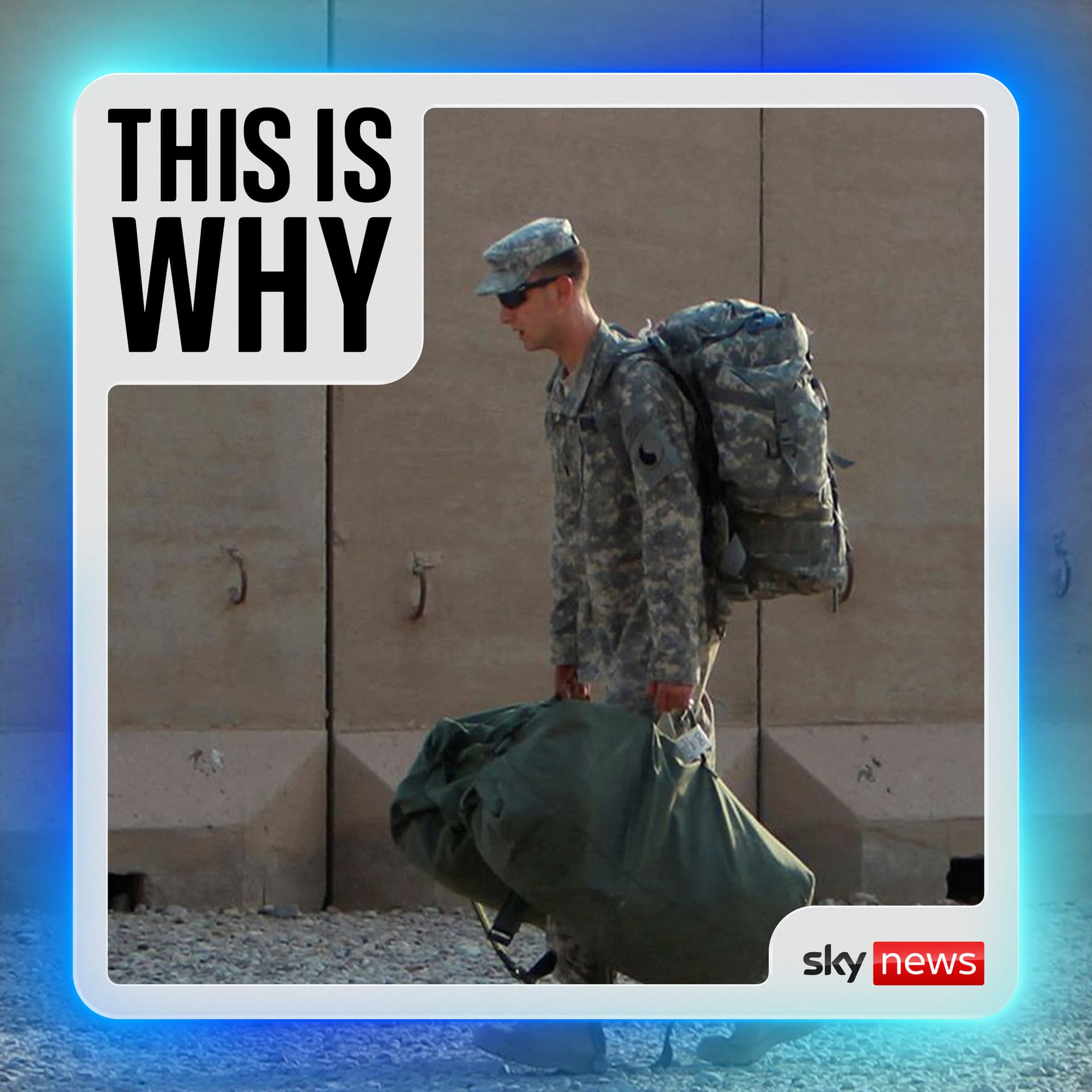
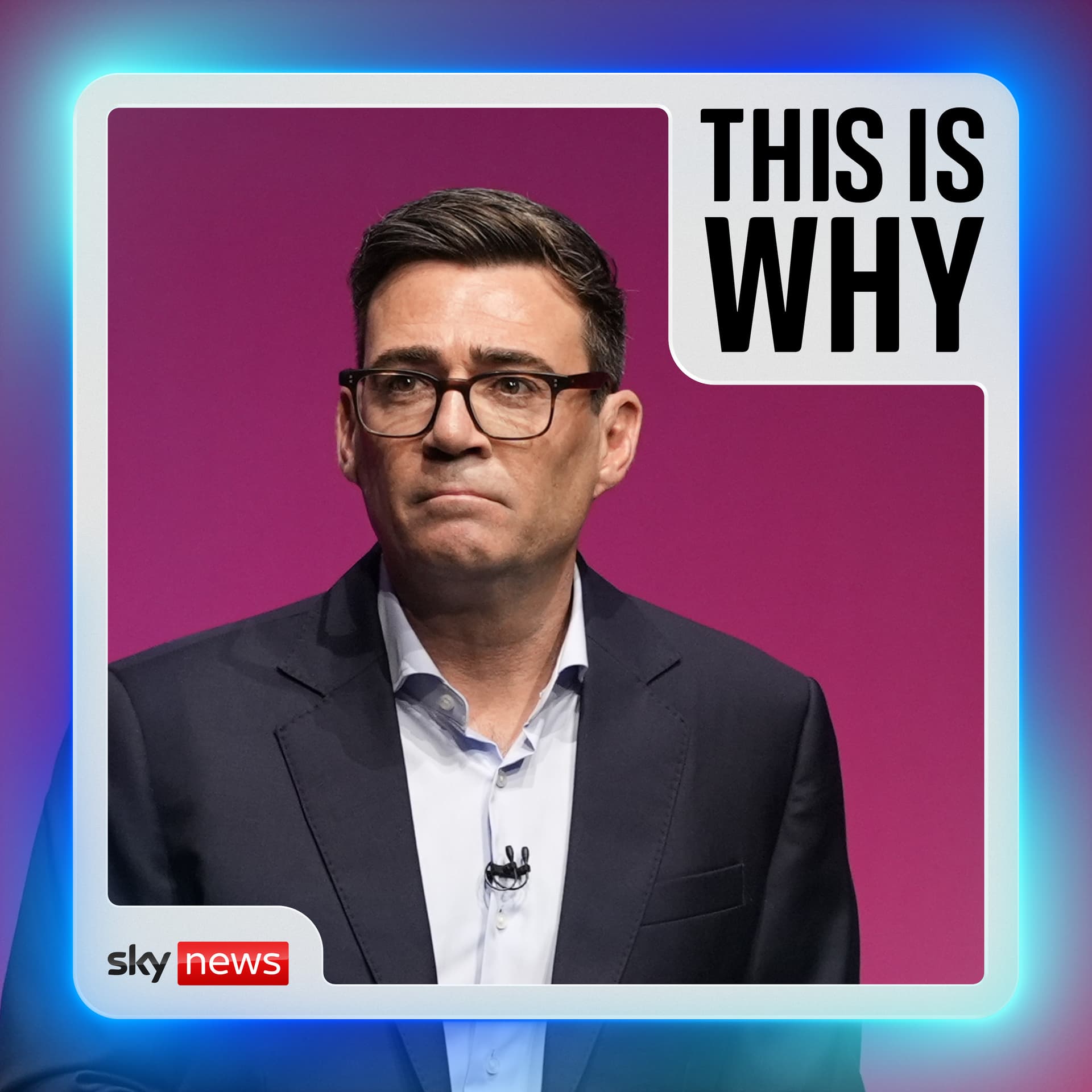
1:29It's been 25 years since 19 Al-Qaeda terrorists hijacked four passenger planes. Two were flown into New York's Twin Towers. A third hit the Pentagon. The fourth crashed in rural Pennsylvania. Nearly 3 ,000 people were killed as a result of that day. A quarter of a century on, New York is remembering them. But alongside the commemorations, there's been an argument over whether one man should attend. the city's own mayor, Zoran Mamdani, the first Muslim to hold the post. I want to speak to the memory of my aunt, who stopped taking the subway after September 11th because she did not feel safe in her hijab.
2:06His face calls to stay away from the main memorial service, with criticism of his politics and appointments accompanied by attacks on his faith. If he had a little bit of a heart, even with his views, he wouldn't go, you've got to listen to the families, you've got to listen to them, and they don't want him there. He stands in direct support of the movement that killed their children. That's Rudy Giuliani, New York's mayor when the towers came down. More than 100 ,000 people have signed a petition calling for Mamdani to stay away. But the Brie families certainly don't speak with one voice. Others have publicly supported him being there.
2:41And today, he did attempt. So who is Zoran Mamdani? What does this brow tell us about the man and the city he now leads? I'm joined by Niall Stanage, White House columnist at US political website The Hill.
2:57Niall, we find ourselves in what strikes me as quite a confusing situation. You have Rudy Giuliani, the mayor of New York during 9-11, saying that the current mayor of New York should stay away from the 9-11 memorial. What on earth is going on? Well, I think, to be perfectly frank, Rudy Giuliani is seeking publicity of a kind with these remarks. I mean, that is what he does quite frequently. Giuliani, from having been a somewhat heroic figure on 9-11 or certainly leading the city at that time, has become an increasingly ridiculous figure in the eyes of many, many Americans. He says that Mamdani attending 9-11 commemorations would offend him, Giuliani.
3:42He also went into a kind of diatribe, as the New York Post described it, of anti-Muslim sentiment. Now, it's worth noting the New York Post is critical of Mamdani on an almost daily basis. So when they're saying you're indulging in a diatribe, it's a pretty bad sign of just how out there you're getting. Is this something that has been bubbling under or was it Rudy Giuliani who kicked it off with what appeared to me at least to be some very pointed comments about Mamdani's religious upbringing? Zoran Mamdani is the 112th mayor of New York City. He is the first Muslim to hold that position. And so it isn't, to be fair, only Giuliani.
4:22I mean, we've a New York City councilwoman saying that Mamdani doesn't belong at the commemorations. It's not exactly clear why she believes that other than his religion. And a lot of the critics of Mamdani can't even really seem to settle on one argument against him. George Pataki, a former Republican governor, has cited Hassan Piker, a very controversial left-wing podcaster here. Various other people have suggested other reasons why they don't want Mamdani there. But I think it is worth noting, Neil, there was a poll recently that 74 % of New Yorkers, I think registered voters, do want Mamdani to attend the ceremonies.
5:01What, if anything, has the mayor been saying in response? He has been saying that he wants the focus to remain on New Yorkers and on the people who lost their lives. He has a total of eight events at least commemorating the 25th anniversary of 9-11. And he hasn't really got drawn into a kind of counterpunching with Giuliani. There is a separate issue where he has released a lot of documentation regarding the air quality at Ground Zero and in lower Manhattan generally around 9-11. Long story short, it would appear that the city authorities at that time knew the air was dangerous and concealed that.
5:40And of course, there have been a vast number of illnesses and unfortunately deaths from 9-11 related cancers and other illnesses. Is that then perhaps the source of the ire, the anger emanating from former mayor of New York, Rudy Giuliani? I mean, for those who weren't around at the time, it would be easy to forget just how central a figure, how totemic a figure Giuliani was in the minutes, the hours after those planes hit the Twin Towers. Yes, that's right. I mean, Giuliani became, I would say, the leading figure nationally in a way because the president, President Bush at that time and Vice President Cheney were, well, first of all, it took them a while.
6:22Bush did eventually go to New York, but they weren't there, as it were, on the scene, which Giuliani was. Giuliani, who had been a controversial mayor up to that point, particularly among people who thought he sort of exacerbated racial division, became a much more unifying figure for that period of time. And so anything that calls into question his role, yes, that is something that he's going to try to push back against pretty strongly. But as I say, I mean, frankly, it does seem to me like a lot of his criticism of Mamdani is based upon Mamdani's religion. And as we said, Giuliani has become, well, it puts it mildly to say he's become a less heroic figure.
7:07He's become a sort of figure of derision in many quarters in recent years. Why has that taken place? As you say, his political trajectory has been in one direction and it has been down. and one has to assume, despite the fact he was named Mayor of America by so many people at that time, when he talks about 9-11 these days, I'm not so sure people are listening quite as closely. No, that's right, they're not. Several years subsequent to 9-11, Rudy Giuliani made a presidential run and he didn't even get close to the Republican nomination. People who know him say that appeared to have quite a sizable negative impact on his overall outlook.
7:43But I think more recently, of course, he became associated with President Trump's efforts to steal the 2020 election. And he, you know, many of those efforts were fairly laughable. It was Giuliani who gave the now infamous press conference outside a landscaping company, which... Remember that? The Four Seasons. The Four Seasons, right? It appeared that they had maybe intended to do it at a Four Seasons hotel and instead ended up at this landscaping firm. there were other instances where there were very unflattering photos of Giuliani whose hair dye appeared to be sort of melting as he spoke and I guess the more serious element of this Neil is that there was a massive defamation finding against him after things he had said about two otherwise anonymous poll workers in Georgia where Giuliani had falsely accused them of all kinds of chicanery and there was a vast judgment against him in that case.
8:51The most excruciating period of politics that I can ever remember. I have to say as a government minister, never quite sure what the cabinet office did but just hold meetings. It's gone down like a bucket of sick. I kind of thought that decades of experience meant that you weren't swallowing this vapid... Oh, blimey! Hello and welcome to Electoral Dysfunction with me, Beth Rigby. Me, Ruth Davidson. Me, Harriet Harman. And me, Jess Phillips. Electoral Dysfunction, wherever you get your podcasts.
9:27But let's go back to Mum and Danny. For anyone who lives in New York, for anyone who ever has lived in New York, The events of 9-11, I suspect, live very, very long in the memory. How has he approached it in public life? How has he approached it since taking the mayoralty? He has been very much focused on trying to make it, I would say, as apolitical or non-political as possible. Now, it is true that one of the things his critics bring up is that he used to tweet years ago about the fact that basically mourning the deaths on 9-11 and the deaths in the wars that followed. To many people, that's not a particularly radical view, and certainly there's a whole debate one could have about the policy choices the United States made in the wake of 9-11.
10:16But I think it's fair to say that Mamdani does not emphasize in the same way the connective tissue between the losses on 9-11 and the loss of life in the wars in Iraq and Afghanistan, which is what he was really alluding to. Zoran Mamdani, it is a name that has slightly come out of left field for me, obviously after he made that historic win in the election for the mayoralty. And who is Mamdani? Well, he was a fairly obscure politician. He had been a New York assemblyman on the left. He was born in Uganda, came to the United States as a child, became a US citizen. He was a rank outsider when he first began running for mayor.
11:00Now, his advantage of a kind was that the frontrunner at that time was the former governor of New York, Andrew Cuomo. A lot of different constituencies have reason to dislike Andrew Cuomo. He wasn't a particularly popular figure. And it was Mamdani who really coalesced that anti-Cuomo sentiment. We should perhaps point out one of the curiosities of this system is that Mamdani initially defeated Cuomo in the Democratic primary for mayor. And then Cuomo decided he would run as an independent. And Mamdani then defeated him again in the general election. What was it that Mamdani did? What was the policy portfolio that he put in front of New Yorkers that gave him that historic win?
11:46I think there were two things. In terms of the biggest issue, it was almost certainly affordability. And I know that isn't necessarily the most glamorous or sexiest topic, but there was certainly a sense that New York, always an expensive city to live in, of course, had really become a city of the rich and that working people were really struggling very badly or with great difficulty in the city. So Mamdani certainly was somebody who put that front and centre. The other thing, though, in terms of the Democratic primary was the situation of Israel and its assault on Gaza. I mean, that has become a kind of moral litmus test within the Democratic Party, certainly in a large part of the Democratic grassroots.
12:34Cuomo was someone who was, I would say, very pro-Israel. And Mamdani was someone who was very critical of Israel's conduct in Gaza. And certainly in the primary, that made a significant difference. I suppose then that goes to whether or not the coalition of voters that he put together in New York was, in fact, particularly broad. What was the policy portfolio in detail that allowed him not simply to speak to the left of the Democratic Party, but to New Yorkers more generally? One of the most notable is that he is beginning the process of opening a city-run grocery store supermarket in each of New York City's five boroughs.
13:18Now, that is a reaction to expense and to also the fact that particularly in low-income areas, there are so-called food deserts where nutritious food is hard to come by. He has enacted a rent freeze on regulated apartments. I won't get lost in the weeds of New York housing rules, but it basically makes a certain number of apartments more affordable. And one final point, which has been very important, I think, he has enacted a very large increase in the funding for childcare, expanding childcare to three-year-old children and so forth, thereby potentially at least liberating the parent or parents of those children to go to work in a way that they might previously have struggled with.
14:03I mean, he has described himself in terms of being a democratic socialist. Now, I thought socialist was more than a dirty word in the United States. What does that actually mean when it comes to running New York? So it's a really fascinating point. The democratic socialists of America have got a lot of momentum behind them, I would say, within the past year or so. In fact, Mamdani's victory over Cuomo was the sort of the catalyst or the instigating factor within that. Subsequent to that, we've seen a number of candidates allied with the Democratic Socialists win Democratic primaries, on occasion displacing more moderate incumbent Democrats.
14:44Now, what does it mean? That becomes a much more contentious debate. The DSA does, as of quite recently, have a national platform that includes all sorts of rather controversial, to say the least, policies in terms of the judiciary, in terms of the power of the presidency. Now, Mamdani is being pretty emphatic that he does not, you know, support seizing the means of production or something. But the DSA is, you know, a pretty hard left organization. I don't think there's any question about that. And the office of the mayor of New York is not one without power, is it? No, it's not. I mean, New York City mayors have considerable amounts of power and they have, you know, we mentioned housing.
15:30They have considerable powers over education within the city of New York. There are specific New York City taxes, as well as New York state taxes, as well as federal taxes. Now, not all of these things can be done by mayoral fiat or edict. But it is a powerful position over a city that, after all, is the most populous in the United States with about nine million residents. It's report cards time now, Niall. I think Mandani's been in the job for what, around about eight months. I mean, how has he done and how is he perceived to have done? Well, there was a poll just last month where Mandani had 69 percent approval in New York City.
16:12Wow. Now, that is almost unheard of, particularly in these times where, much like in Britain, politicians are largely unpopular, particularly politicians who do hold power. I suppose the Conservatives would say, well, New York City is a very liberal city. That is true. But on the other hand, I'm not quite sure what Mamdani is supposed to do other than serve the people who elected him in the first place. and so far they are giving him a big thumbs up. I mean, he certainly wouldn't be the first politician to do it, but is it detectable that he has had to moderate himself now that he has achieved elected office?
16:53I mean, I think back to the first, I think, handful of days that he was mayor and that meeting with Donald Trump and the predictions of how that was going to go were awfully wide of the mark. Those two got on like a house on fire. Well, they did, but one of the curious things about that meeting was that Mamdani didn't really resile from the previous views he had expressed of Trump. It's true that the meeting was affable, but Mamdani has continued to be a pretty fervent critic of Trump. Mamdani has been pretty emphatic that he wishes to govern on the policy platform on which he was elected. When people come out and cite some particularly fringy democratic socialist belief, he will distance himself from that.
17:36And he's a very gifted political communicator. I think even his political opponents would accept that point. But it's not a scenario, to my mind at least, where someone was elected as a fairly radical or militant figure and has immediately tacked toward the centre. I don't really think he has done that. Look, popularity ratings that any politician, Republican or Democrat, could only dream of do suggest that whatever he's doing, the wider party might want to take notice of it. I mean, do you think that the success that the Democrats are having in New York is specific to that place or could it be translated across the country?
18:16That's a great question to which there's not an absolutely neat answer. I think on one level, New York is obviously a much more liberal, much more Democratic Party friendly place than most places in the heartland of the United States. You know, if he lived in Ohio and decided to run for governor there, I think he would face a very, very uphill climb. But the flip side is I do think that what Mandani represents in some part is a dissatisfaction with the status quo, a kind of left-wing populism that in some ways is capable of countering the right-wing populism as propagated by Trump and other people.
19:01I think the spirit of Mandani's politics is possibly replicable, but not every single policy is because most places in the United States aren't as friendly to left-wing policy prescriptions as New York City. How high can Zoran Mandani go in political office in the United States, do you think? Well, he can't become president because he wasn't born here, and that's one of the requirements for being president. I don't think he aspires to a higher office than the one he holds. He is a very proud New Yorker. The more immediate challenge, I think, is he will face re-election in 2029. And obviously that outcome, whatever it is, will be the sort of definitive judgment, at least up until that point, of his morality.
19:51So he will be naturally very eager to be re-elected, I assume. I think you might be right on that one. So, Niall, always great to see you. Thanks for your time. Thanks, Nick. And that's your lot for today, but do remember to get in touch. Tell me what you thought. Yesterday with Roland Manthorpe, we were taking a look at AI and the researchers who believe there's a 10 % chance it will wipe out all of humanity. Tracy emailed in, if this is such a big story or an absolute worry to the survival of humanity, then please tell me why these people, these companies, are allowed to continue manufacturing.
20:25It needs to be stopped at the highest level which we all know will never happen because it's about greed. Well, Tracy, that is certainly one take in events. If you have one, certainly send it in. Why at sky.uk And do keep your eyes peeled next week for a big episode of This Is Why, one for the defence geeks who should also check out our new recently launched Defence Insider app with Deborah Haynes and Michael Clarke. Have a great weekend. We'll see you the other side.
21:00I'm Sam Coates. And I'm Anne McElvoy. Britain has a new Prime Minister and every day from 7.45am we'll help you make sense of the day ahead in just 20 minutes. That means taking you inside Westminster with our forensic insight, sharp analysis and the stories behind the headlines. From the battles in Parliament to the conversations shaping government. We'll set you up each morning for the day ahead in British politics. Hit follow and listen to Politics at Sam and Anne's wherever you get your podcasts.
From the publisher
As America marks the 25th anniversary of the September 11th terror attacks, a row has erupted between the man who led New York through its darkest moments and the city’s current mayor.
Rudy Giuliani became the face of New York’s resilience following the fall of the Twin Towers, but he warned Zohran Mamdani to stay away from official memorial events.
Mamdani, the city’s first ever Muslim mayor, ignored his predecessor advice – despite being compared by Giuliani to the al Qaeda terrorists who carried out the 9/11 atrocities.
Is Giuliani’s ire racially motivated? What brought about the former Trump ally’s own fall from grace? And what have native New Yorkers made of Mamdani’s time in charge?
Niall Paterson is joined by Niall Stanage, White House columnist at The Hill.
Have you got a question for Niall? Email us: why@sky.uk