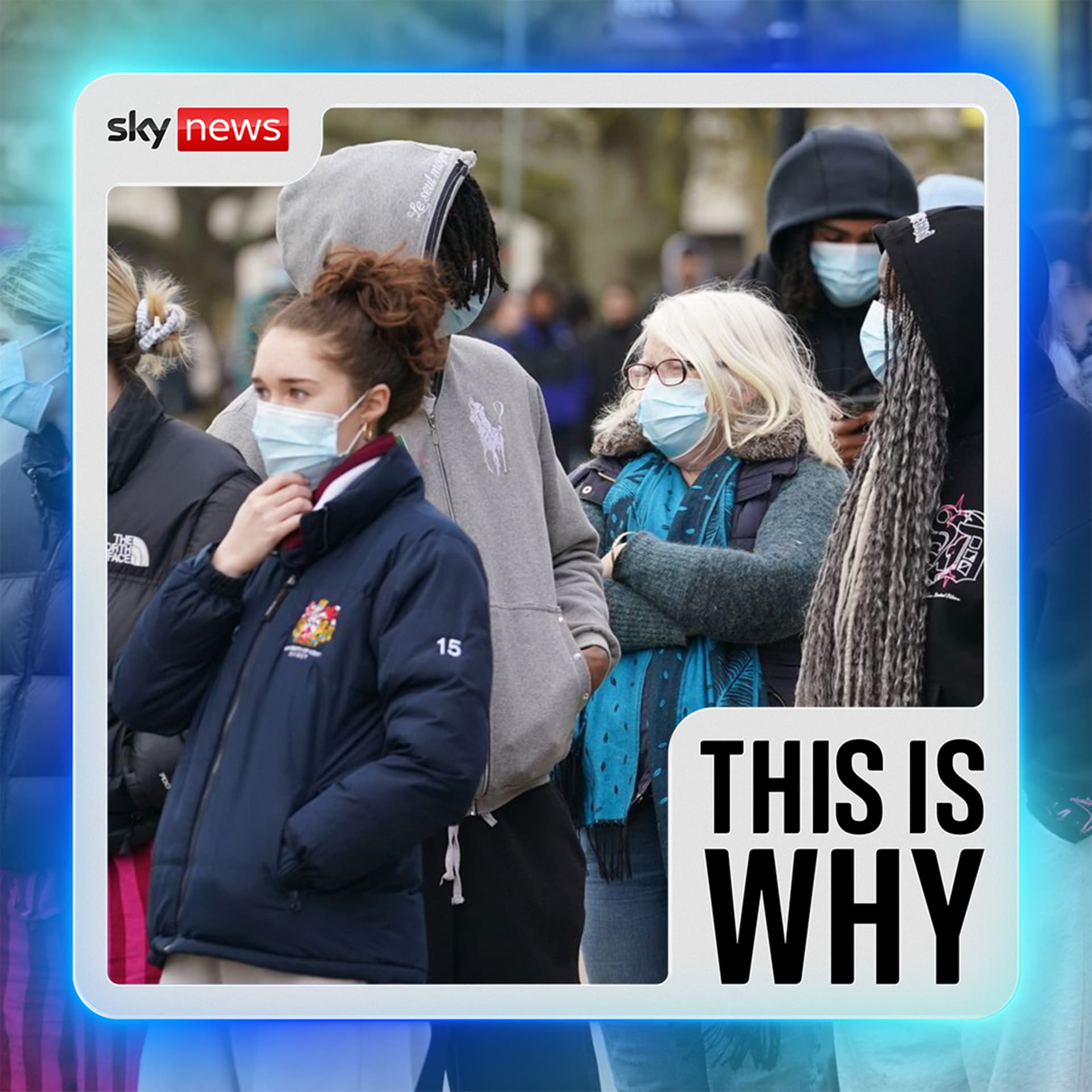

In short
A meningitis outbreak in Canterbury has killed two young people and hospitalized 11. The episode explains how fast bacterial meningitis and sepsis can become fatal, what symptoms to watch for, and why vaccination—especially MenB for older children/young adults—is still missing from the NHS schedule.
Guests
Dr Tom Nutt, CEO of Meningitis Now (charity campaigning for expanded NHS vaccination); Tom Clark, Sky News science and technology editor.
Key claims
Bacterial meningitis can kill within 24 hours; about 1 in 10 affected may die. Early symptoms can resemble a cold/flu, so urgent medical help is critical. Transmission risk is lower than COVID/flu, but close contact (kissing, shared drinks, close conversation in clubs) can spread it.
Notable examples
A personal story from the host—Lorna died within days after a weekend out. Two Canterbury deaths: a University of Kent student and a sixth-form student. Vaccination gap: MenB introduced for infants in 2015, leaving most over age 10 unprotected on the NHS.
Written by AI. May contain mistakes. Listen to the episode to check what was said.
Chapters
Tap a time to open that second in VOPersonal Story of Loss
0:28 to 1:30
Neil shares a personal story about losing a friend to meningitis.
“Today we're going to be talking about meningitis, as there's been a pretty serious outbreak in Canterbury.”
Current Meningitis Outbreak Details
1:30 to 2:44
Discussion on the outbreak in Canterbury and its implications.
“And why have most teenagers not been offered a vaccination against meningitis B?”
Understanding Meningitis
2:44 to 4:38
Experts explain what meningitis is and its symptoms.
“One of them we now know as a student at the University of Kent, and the other one a sixth former at a nearby sixth form college.”
Distinguishing Meningitis Types
4:38 to 6:42
Discussion on the differences between bacterial and viral meningitis.
“Everyone commonly associates meningitis with red spots on the arm which do not disappear when a glass is pushed against them.”
Treatment and Urgency
6:42 to 8:14
Exploration of the urgent medical treatment needed for bacterial meningitis.
“Nutt, just explain for me the difference between bacterial and viral meningitis.”
Vaccination Gaps and Importance
8:14 to 10:25
Discussion about vaccination gaps and the importance of getting vaccinated.
“Is there any form of treatment for the more serious bacterial form of the condition?”
Cost of Vaccination and Public Health Policy
10:25 to 13:58
Explaining the costs associated with meningitis vaccinations and public health policy.
“There's active research going on to figure that out, but we still don't really know.”
The Case for Meningitis B Vaccination
14:00 to 14:35
Exploring the importance of introducing the meningitis B vaccine for young people.
“I think that will only underscore what meningitis now are calling for.”
Understanding Meningitis and Its Causes
14:35 to 15:56
Discussing the causes of meningitis and the potential for prevention through vaccination.
“The devastation that happens when meningitis strikes is extraordinary.”
Advice for Young People on Meningitis
15:56 to 16:55
Providing guidance for young individuals on how to stay safe from meningitis.
“If you're a young person in Canterbury right now, you must be pretty worried.”
Show all 11 chapters
Guidance for Parents of Young Adults
16:55 to 17:53
Offering advice to parents on recognizing symptoms and acting swiftly regarding meningitis.
“Those vaccines are offered for a reason.”
Transcript
Automatic transcript. May contain errors.0:02Sky News, the full story first.
0:11A meningitis outbreak in Canterbury has killed two people. Everybody needs to know the symptoms, especially the young and the old. And this is why.
0:28Hi everyone, Neil here. Today we're going to be talking about meningitis, as there's been a pretty serious outbreak in Canterbury. Things may well change, but as we're recording this, two young people have sadly died and 11 are ill in hospital. Public health officials are trying to slow the spread. This is a disease that kills very quickly. One in 10 people affected may die, and the disease can kill people within 24 hours or less. And that's something I know only too well. The best part of 30 years ago, I was home from university for the Easter break. Thursday night, I went out with friends from school.
1:05By the weekend, Lorna was dead. Now, this was a girl I'd known since we were tiny. We went to the same primary and secondary. We even used to play the violin together. And then, in the space of just a few hours, she was gone forever. A life that never really got started. 30 years from now, I imagine the friends and family of those who've died in Canterbury will be wondering, what if? What could those lives have become if not cut short? So, what can we all do to identify meningitis early? How can we best protect ourselves? And why have most teenagers not been offered a vaccination against meningitis B?
1:42Dr Tom Nutt is CEO of Meningitis Now, a charity which is campaigning for the NHS to extend its vaccination programme. Hi, Tom. And Tom Clark is in the studio, our science and technology editor. Hi, Tom. We're going to begin with you, actually. Just bring us up to date. What is the latest from Canterbury?
1:59Tom Clarke:We know this is a large meningitis outbreak, and these happen from time to time. Most cases of meningitis are sporadic. They come out of nowhere. They tend to be very localised to one or two folks. This is a bigger outbreak, but it's happening exactly where we tend to see them, amongst young adults who are, after babies and toddlers, the most vulnerable group of people to meningitis. We've had 11 confirmed cases who were in hospital undergoing treatment for either the meningitis, the swelling of the membrane in the brain that can cause very severe illness, or sepsisemia, which can lead to sepsis, which again is a potentially fatal blood infection.
2:38Tom Clarke:Those two things can co-occur with meningitis, being treated for that, and sadly, two people have died. One of them we now know as a student at the University of Kent, and the other one a sixth former at a nearby sixth form college. And what the health authorities at the UKHSA are doing now, because this is a big outbreak, and it's clearly we've got some transmission going on, they will want to make sure they trace any contacts, people who were in the proximity of others who became ill, finding out who they are. And one thing they can do, although the risk of transmitting it, especially for someone who's actually sick with meningitis, is quite low, certainly compared to things we're familiar with, like COVID, the risk of transmission is much, much, much lower, but they will want to be very sure they haven't got any spread going on.
3:21Tom Clarke:So they're going to offer those people antibiotics to basically catch the bug before it causes a system-wide infection that would lead to hospitalisation. Dr. Knup, the figures may well rise, but two dead and 11 in hospital, and we wish them all well. How does that compare to previous outbreaks? How concerned should we be? So I think this does have the feel of being quite a big outbreak. It's certainly one of the biggest that I can remember. My charity, Meningitis Now, was founded in the 1980s in Stroud here in Gloucestershire, which became famous for local outbreaks. But by and large, the story of meningitis in the decades since then has actually been a good news story.
3:58There's been less and less disease thanks to the effectiveness of vaccines which are now available on the NHS in preventing disease. So to get a big cluster like this in Canterbury, I think, is pretty shocking and pretty unusual. Well, let's go back to basics then, Doctor. What exactly is meningitis and how dangerous a condition can it be? So it's the inflammation of the meninges, which is the membrane that protects the brain and the spinal cord. So when it comes to bacterial meningitis, which is what we're talking about today, around about one in 10 people affected may die and the disease can kill people within 24 hours or less.
4:35So what then? What then are the symptoms, Tom? What should people be looking out for? Everyone commonly associates meningitis with red spots on the arm which do not disappear when a glass is pushed against them. But as I understand it, you don't necessarily get that in every single day.
4:51Tom Clarke:Yeah, exactly. That's a very good sign. I think one of the most dangerous things about meningitis, but also sepsis, we've reported on that before, how difficult that is to spot because the early symptoms are quite often quite similar to a bad cold, the bit of the flu. As people were warning students, they even hang over the feeling of fatigue and heavy limbs and just not feeling great. But you can go downhill very, very fast. So it's something, if you're not keeping an eye on someone who's ill or they're not able to communicate themselves, it's something you might miss. And that's partly why it's so dangerous, is because the symptoms are fairly generic.
5:26Tom Clarke:I'm just going to quickly refer to the list. It's quite a long list. As you were saying, a rash that doesn't fade, especially if you press sit with a glass, sudden fever, severe and worsening headache, a stiff neck. So that's because of the meningitis, the swelling of the membrane around the brain, vomiting, a diarrhea, joint and muscle pain, bright lights causing a headache is another classic sign of meningitis coming on. Very cold hands and feet, seizures, confusion, delirium, extreme sleepiness and difficulty walking. I think the message very much is, but certainly for people in the area of this outbreak, keep an eye out.
6:00Tom Clarke:I think it's particularly difficult amongst young people, students, you So sadly, one of the reasons they are a vulnerable group is partly because of their age. People seem to get less prone to meningitis as they get older until they get into very old age or if they're immunocompromised. This is a bug that likes to party. It likes close proximity to people. So if you've got young people going to clubs, bars, et cetera, or again, living in accommodation, shared accommodation is another area where it might spread really well. So that's the reason that students in particular should be aware of this.
6:32Tom Clarke:I think it is important to say, though, it's still, it is not a reason for us to panic. It doesn't spread as effectively as so many other infectious diseases. Dr. Nutt, just explain for me the difference between bacterial and viral meningitis. And as well, I mean, Tom was talking there about the different strains of meningococcus. Just walk me through that. Well, that's right. There are many different kinds of meningitis. And that's why it can be a difficult disease for people to sort of comprehend and understand. um so viral meningitis and bacterial meningitis are passed in the air from person to person and indeed many of us will be carrying that uh those viruses and those bacteria at any one point in time mostly harmlessly how can that be how can we carry this virus this bacteria and it not have any effect on us well it's when it crosses the blood-brain barrier that it becomes a problem and that it causes disease uh so we'll have many millions billions of bacteria at the back of our nose and throat and they're nestled there fairly harmlessly.
7:29They'll come and go in different concentrations, but it's when they enter the body that they can cause infection and therefore cause disease. Viral meningitis is what's known as self-limiting. So in other words, you'll generally get better of its own accord, but bacterial meningitis is the fatal kind of disease. That can be caused by different pathogens, such as the pneumococcus or the meningococcus. We think in Kent we're talking about the meningococcus, which is why we're talking about meningococcal disease, The disease process is known as meningitis, which is when you get this inflammation in your brain and in the back and in your spinal cord.
8:03And it's vaccines that are really critical here because that's what people can do to help prevent this terrible and devastating disease. But what about for those who have not been vaccinated for whatever reason? Is there any form of treatment for the more serious bacterial form of the condition? Yes. So when bacterial meningitis strikes, the treatment is actually relatively simple. it's antibiotics administered quickly it's vital that if you suspect that meningitis has struck that you seek urgent medical help you need to treat meningitis as a medical emergency because the likelihood of getting a good outcome is increased by early treatment Tom here in the studio just explain I mean both of you have mentioned sepsis septicemia blood
8:43Tom Clarke:poisoning what is the link to meningitis so it's just like any other type of blood poisoning it's A bacteria gets into the sterile part of your body, in this case, your bloodstream or that membrane that lines the brain or the spinal cord. But when you get an infection in your bloodstream, septicemia, that is a medical emergency. What can happen with a bloodstream infection is your immune system effectively goes into a shock mode, freak out. And you can have very, very major implications of various organs of the body. And you can go from being really quite well to extremely ill very quickly. and it is often fatal.
9:19Tom Clarke:And if it's not, there are also often quite serious knock-on effects that you can have after sepsis, for example, a loss of limbs and things like that. So it's a very, very severe situation. There's something, it's quite bizarre. We were just talking there about this bug, the bacteria that cause meningococcal disease. They live on us naturally. We have somewhere between one in five to one in ten of us will have the bacteria living up in our nose all the time. It's really clever as well. Certainly meningitis B has a coating around it that looks just like the outside of our cells in our body as well.
10:01Tom Clarke:So the immune system struggles to recognize it. It just lives quite happily as what they call a commensal organism up our nose. What we still don't understand, and this is something despite knowing about the severity of disease for such a long time, why does it go from just being a harmless passenger to causing these very, very serious outbreaks? Is it a slight variation in the genetics of the bug? Is it something to do with the environment it's in? Is it something to do with the population in which it's spreading? There's active research going on to figure that out, but we still don't really know.
10:28Tom Clarke:So as Dr. Tom was saying just there, the best thing we do is be aware of the symptoms, especially if you're one of these critical age groups. And so there is a vaccine that covers most of these strains to ensure that you get your child vaccinated when those vaccines are offered. Dr. Nutt, most of the strains covered by vaccines. I mean, what is the level of coverage, the level of protection afforded by the vaccination program at the moment? I mean, is there an argument for not taking it up? I would say no. You just have to look at the devastation that's happening in Canterbury at the moment with two deaths and many more people seriously ill in hospital to know that vaccines do make a difference.
11:07I do understand that people do have some hesitation, particularly in an age where there is misinformation about the safety and efficacy of vaccines. Unfortunately, there is a gap in the NHS vaccination schedule at the moment. So infants will be getting vaccinations that can pretty much protect them against most causes of meningitis. But for adolescents and indeed anyone older than that, there is a gap, which is MenB. That vaccine was only introduced for infants in 2015. So for anyone over the age of 10, they won't have had that vaccine on the NHS. And sadly, that's why we continue to see deaths and disease in the student age group in the UK.
11:44Dr. Nock, are we at a point now where someone like me, who probably doesn't actually have any meningitis vaccination coverage just because of my age, I mean, is it the sort of thing that I should be going and paying for if I have the opportunity? So we believe that all those most at risk of disease should be given that vaccination on the NHS, which is why we're campaigning at the moment for students and young adults to get that MenB vaccination on the NHS. At the moment, if people want to get that vaccine privately, they can do so on high street and supermarket pharmacies. And indeed, if people want the information about that in order to make an informed choice, then there's information on the Meningitis Now website.
12:25In an ideal world, yes, I think we'd all be vaccinated against what is a terrible disease. But we do appreciate that you can't vaccinate everybody all of the time. The takeaway message is that vaccines are safe. They are effective. So we'd encourage, you know, whether you're a parent of a young baby or a parent of an early teenager, because of course there's a vaccine for meningitis called the MenACWI vaccination, which you can get in year nine or year 10 at school. We would absolutely encourage people to get those vaccines because they really, really do save lives.
12:56Tom Clarke:I'm going to jump in there. I've got a question with Tom as well, because it's a bit complicated, this story. So there's the ACWY vaccine that covers a larger number of meningitis strains that used to be pretty common. We'd have these sporadic outbreaks. Sometimes they'd be introduced from foreign travel and things like that. That vaccine was introduced, I believe, in the 1990s in the UK for young adults. It was very effective, reduced number of cases. Meningitis B was much harder to develop a vaccine. It took a long time to crack that for a vaccine to be invented against it, but it's an expensive vaccine, relatively expensive compared to your typical seasonal routine immunization type vaccine that we have in the UK.
13:41Tom Clarke:So the NHS, I think, were faced with this dilemma. We can't afford to give it to everyone, so they chose to give it to the most vulnerable, which were babies and toddlers. And that's the current situation. We don't yet know, and the UK Chesaire yet to tell us what strain of meningococcal bacteria was involved here. But if it turns out to be meningitis B, and it is the most common cause of meningococcal disease in the UK, I think that will only underscore what meningitis now are calling for. Shouldn't we think about seriously introducing the meningitis B vaccine for that year 9-10 school vaccination round?
14:17Tom Clarke:because it would protect those young people as they go into sixth form university and so on. I think that's the gap that Tom was referring to. And I suppose the question for you, Tom, is, again, if it does turn out to be meningitis B, is it a cost issue as far as you're aware? Yes, it is. It is a cost issue. So the government, through a body of professionals known as the JCVI, the Joint Committee on Vaccinations and Immunisations, they assess what they call the cost effectiveness of vaccinations and that's their way of judging whether the NHS should spend money on vaccines or treatments or therapies for treating people with illness and so in theory there is a fair process by which these things are assessed however we nonetheless think that that process has some flaws what we see is that young lives are being taken away here.
15:09The devastation that happens when meningitis strikes is extraordinary. The cost to economy and society is huge. We think it's a worthwhile investment to protect young people in their prime and essentially to prevent something that is preventable. I'll pick up there, Dr. Nutt. Do you think then that meningitis is a condition that can ever be eliminated? I think ultimately the answer is probably not. There'll never be no meningitis because it does have this multiplicity of causes. But I think the thing is the bulk of cases are preventable with vaccines and those vaccines are getting better all of the time as well.
15:45So I think we should be optimistic that one day, certainly in the UK, we may be looking at a future where lives are protected thanks to vaccines. But tragically, we're not there yet. If you're a young person in Canterbury right now, you must be pretty worried. But at the same time, you're also a young person and I can't imagine people are going to be quarantining or staying indoors. What's the best advice? What should they be doing right now?
16:09Tom Clarke:Of course, I think the best advice would be don't panic. This is not as transmissible a bug as flu or COVID or something like that. So don't panic. Let's be straightforward here. If you're kissing someone, you're going to be transmitting. If there's any exchange of fluids or sweat. Exactly. Sharing drinks, kissing, you know, in a noisy nightclub, talking up close to people, you're sort of effectively breathing into each other's faces. That's how this bug likes to spread. There was just one thing I want to pick on that Tom was saying about their campaign regarding vaccinations. I mean, that will only work and that will only be effective.
16:41Tom Clarke:And the vaccine is really effective if people take them. And that's the other thing we've got going on in the background. Before the pandemic, vaccination rates for that year 9-10 group was about 88%. It's now fallen to close to 70 % after the pandemic. We've seen that across the board with immunizations here in the UK. And it's just a reminder. Those vaccines are offered for a reason. They protect against things we've often forgotten about. We've often forgot how devastating this illness can be. Dr. Knuck, that's the advice for the young people. What about the parents of the young people? A lot of these symptoms, an aversion to sunlight, sore head, desire to hide under the duvet, that's your bog standard teenager, isn't it?
17:22The message for parents, I think, is just make sure that your children, particularly if they're away from home for the first time, are aware of the risks of serious illness. And as you say, the temptation is to sometimes to lock yourself away, sleep it off. But actually, when it comes to meningitis, that's one of the worst things you can do. So, you know, encourage your children if they're away at university or living away from home, you know, if they become ill, just tell their flatmate, tell them that they're feeling ill and they're going to have a little sleep and ask them to keep an eye out.
17:49Because looking out for your mates here could save a life. My thanks to Dr. Nutt and Tom Clark. And of course, to you for listening. For more advice, just head over to Meningitis Now's website or you can check out Tom Clark over on the Sky News app. Let me know your thoughts. Is meningitis something that's touched your life? Are you a student perhaps, worried because you've not had your jags? Get in touch on that or anything else that occurs, the email address, as always, why at sky dot UK. And why not give the podcast a follow if you haven't already? We're back again tomorrow.
18:28Thank you.
From the publisher
A school pupil and a university student have died in Kent and 11 other people are seriously ill following a meningitis outbreak.
Meningitis can kill a person in less than 24 hours if it is not treated quickly. But outbreaks like this have been rare in recent years. Vaccination programmes have helped but anyone over the age of 10 will not have been offered a vaccination against MenB by the NHS. However, it has been available to infants since 2015.
Niall speaks to Dr Tom Nutt from Meningitis Now and Sky's science editor Tom Clarke about why meningitis can be deadly, what the symptoms are, and why the vaccine is not free for teenagers.