In short
How Brexit shapes UK politics and economics, and what a potential Andy Burnham premiership would mean for UK-EU relations—especially amid stalled reset talks, lingering economic “drag,” and EU member-state hardening on immigration and youth mobility.
Guests
Anne McElvoy, Executive Editor of Political Europe; co-host of Politics at Sam & Anne’s. Background: long-time political journalist covering European affairs; based with a Brussels head office for Politico and frequent travel across Germany, Brussels, and Eastern/Central Europe.
Key claims
Starmer’s “reset” has been harder in practice; EU negotiations remain blocked by issues like tuition/youth mobility and visa arrangements; France blocked UK entry into SAFE weapons procurement; Europe still views the UK as needing a “tit for tat” and possibly an “apology tour.”
Notable examples
SAFE blocked by France; India and Japan trade deals; youth mobility rebranded as “experience”; Makerfield constituency (2-1 Leave) shaping Burnham’s constraints.
Written by AI. May contain mistakes. Listen to the episode to check what was said.
Chapters
Tap a time to open that second in VOThe Impact of Brexit on UK Politics
0:59 to 2:25
Explore how Brexit has influenced UK politics and leadership changes since 2016.
“Ten years ago, on the 23rd of June 2016, this country changed forever.”
Reflections on the Economic Consequences of Brexit
2:25 to 3:54
Discuss the ongoing economic challenges stemming from Brexit and differing perspectives.
“Anne McElvoy is Executive Editor of Political Europe and co-host of our sister podcast, Politics at Sam & Anne's.”
Current UK-EU Relations
3:54 to 5:50
Analyze the current state of the UK's relationship with the EU and the diplomatic challenges.
“You were crossing your fingers and hoping that something would turn up.”
Challenges to a Closer UK-EU Relationship
5:50 to 7:48
Examine the barriers and dynamics affecting a closer relationship between the UK and EU post-Brexit.
“I have a head office in Brussels for Politico.”
Andy Burnham's Political Stance on Europe
7:48 to 12:04
Understand Andy Burnham's position on Europe and how it reflects the broader political landscape.
“But come on, when we tried to get into a scheme called SAFE, a massive kind of weapons procurement scheme, which the UK is good, you have a strong defence industry.”
The Complexity of Burnham's Political Future
12:04 to 14:00
Explore the complexities of Burnham's approach to EU relations as a politician in a leave-supporting constituency.
“because I think it tells us a bit about where the country is as a whole.”
Burnham's EU Aspirations
14:00 to 14:55
Explores Andy Burnham's potential desires regarding EU membership and political strategy.
“You know, if you say I'm Andy Burnham, ideally in the future, who knows when?”
Podcast Introduction: Stuff Matters
14:55 to 15:32
Introduction to Ed Conway's new podcast, discussing various topics and objects.
“Do AirPods herald the arrival of a new global order?”
Influence of Europe on Burnham
15:32 to 16:54
Discusses how European examples influence Burnham's views on regional power and devolution.
“I just find it fascinating because Burnham talks an awful lot about devolution, regional power.”
Challenges of Post-Brexit Relations
16:54 to 18:03
Analyzes the challenges Burnham faces in establishing UK-EU relations after Brexit.
“And by that, I mean some sort of closer relationship with the European Union.”
Show all 12 chapters
Labour's Position and Burnham's Role
18:03 to 19:08
Evaluates Labour's stance post-Brexit and Burnham's potential role against reform parties.
“Do you agree with that assessment first?”
Burnham's Future with Europe
19:08 to 20:26
Speculates on Burnham's potential role in European foreign policy and his approach.
“There is that sense, I think, you need to have something that you're saying that is clear about the choice that faces this country.”
Transcript
Automatic transcript. May contain errors.0:02Sky News. The full story first.
0:10Ten years on from the Brexit referendum, Andy Burnham needs to choose his position on the EU very carefully. And this is why.
0:25How does a banana trigger a CIA-backed coup? Do AirPods herald the arrival of a new global order? What do LED lights say about the future of humanity? I'm Ed Conway, and in each episode of my new podcast, Stuff Matters, I take an object, crack it open, and reveal the world-shaping forces hidden inside. This is economics told through the things we think we understand. Search Stuff Matters on your podcast app to listen and follow.
0:59Ten years ago, on the 23rd of June 2016, this country changed forever. And Sky News is projecting that the UK has voted out. The UK electorate has taken the historic decision to withdraw from the European Union after more than 40 years. Now, since then, every prime minister we've had has either had to try and get Brexit done, not always successfully. Brexit means Brexit, means Brexit, means Brexit, means Brexit. Or to try and find a new relationship with the EU and hopefully one that gave a bit of a boost to the economy. We're going to take a really important leap forward in terms of the relationship, bring us closer to Europe.
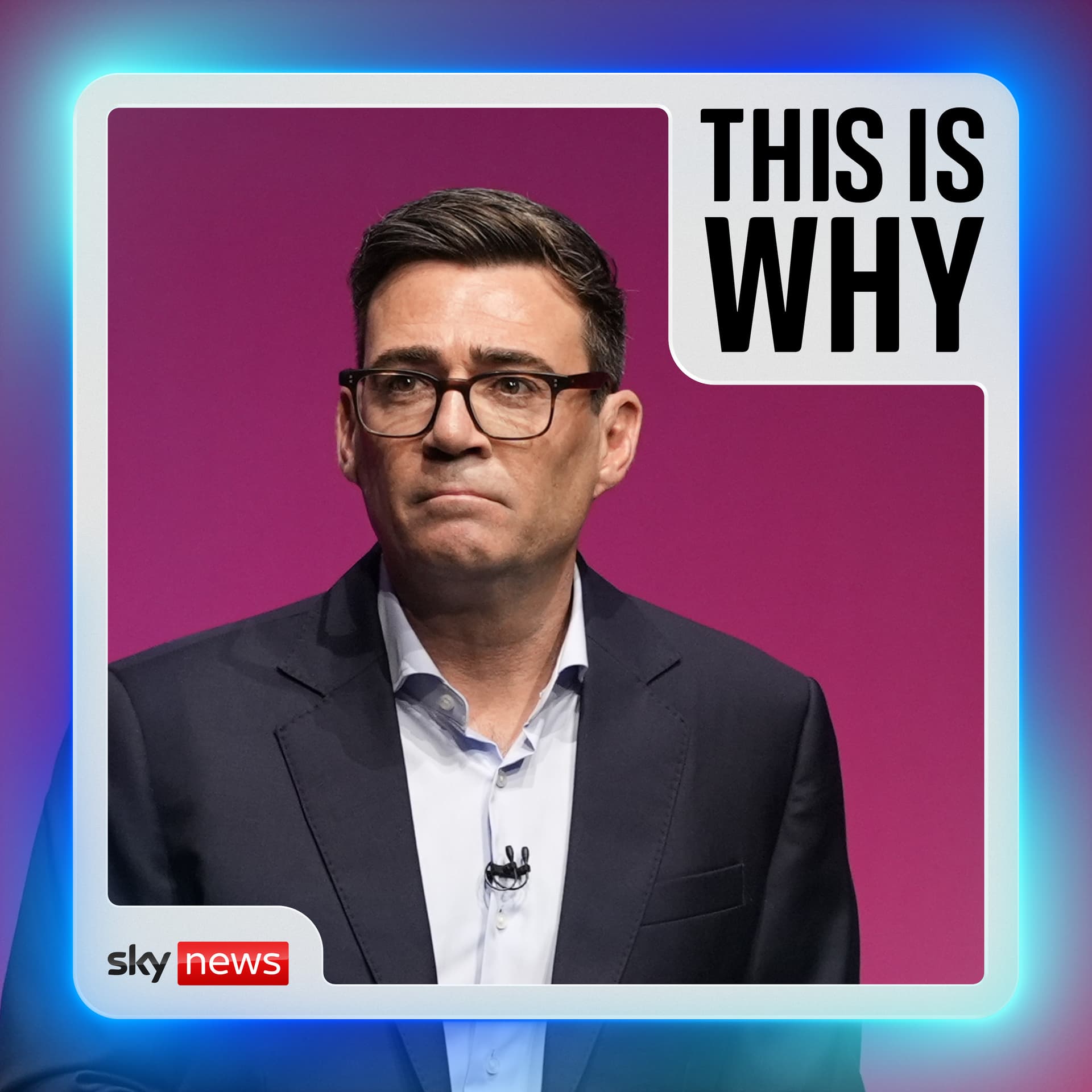
1:43It's really good for businesses, really good for the country. So that's what I intend to do. Keir Starmer had promised to hit the reset button with the EU and a big summit was scheduled for July. It was going to sign off on several UK EU agreements and kickstart further talks designed to move the UK economy closer to the EU's. But the summit was cancelled as soon as Starmer announced he was stepping down. So what about one-time Remainer Andy Burnham, if of course he actually becomes Prime Minister? His return to national politics came via the Makerfield constituency, a seat that voted roughly 2-1 to leave.
2:19So what relationship will he have with the EU? And what relationship does he actually want? Anne McElvoy is Executive Editor of Political Europe and co-host of our sister podcast, Politics at Sam & Anne's. Anne, welcome back to the podcast. Let's start with the bigger picture. Ten years on now from the referendum, has Britain fundamentally changed? I think in some ways Britain has fundamentally changed. And the events that we've seen this week, this high drama at Westminster, the sense that things are impermanent, that Prime Ministers are hoiked in and hoiked out, a lot of them in the Tory years, that was a direct result of Brexit.
2:57We've still seen, despite, I think, Keir Starmer coming in very much with a plan to put that aside. He said the government would show another face to Europe. I think in practice, he's found that harder. And he has found some of the backwash economically of Brexit is still there. And that has dragged down certain aspects of the economy by no means all. But I think generally speaking, that there is still a drag factor from Brexit. We've seen parties trying so hard to deal with it and still struggling with it a decade on. I mean, so when it comes to the economic side of the argument, I mean, there is a consensus that there has been a negative effect on the UK economy.
3:31but other factors have been brought in, the United States, wars around the world that make it very difficult to kind of put a figure on it. But one argument from the Leave supporters was that Brexit really wasn't given a chance because of Ukraine, because of COVID, because of weak leadership in Westminster. I mean, is that true? I think the argument, well, people voted for it, you should have done it better at Westminster. It is a bit evasive because unless you had a clear plan for what was supposed to happen afterwards, and you also had a clear political plan about how you're going to drive this through, knowing that a lot of people are going to disagree with it and a lot of political factions were not going to accept it, then you didn't really have a plan.
4:12You were crossing your fingers and hoping that something would turn up. And you still hear it. I heard Nigel Farage this morning under pressure on this point in an interview. And he said, well, Europe's still our largest trading partner. But he was quite dismissive of that. And he said, well, the world's a big place. You should be able to trade much more broadly. And that's true. But you can't simply wish that the world will open its eyes and say, we've really got to sign a big trade deal with Britain. We have, in fairness, I think this government has pushed some on. Rishi Sunat was very keen on the India deal that got over the line under Keir Starmer, some good legacy stuff there.
4:43The Japan one is really interesting because it's very much about defence and energy renewal, new tech stuff, good modern stuff we need to do. But it's not really replacing like for like some of the friction in our dealings with Europe. with Europe and trying to put a summit together, even to get a relatively limited number of things across the line on agri-products, on electricity tariffs, youth mobility, turn into these endless stories I've had the joy of covering. It was still inconclusive, to put it as positively as I could. I mean, one of the things that I am most struck by, and it's because we all lived through this, but like COVID, I think we have kind of repressed the memories of that time.
5:27I mean, Brexit consumed everything politically for so many years. Now it seems not to be barely registering at all. So how would you describe currently the United Kingdom's relationship with Europe? I think at the moment it's a standoff with a bit of a glaze of friendship or willingness to link arms. We have seen this government go out of its way to make sure that there were not awkwardnesses that there were in relationships in the past. That has made some difference. I travel a lot in Germany and Brussels. I have a head office in Brussels for Politico. I'm often on the road. I'm in Eastern, Central Europe a lot.
6:05So let's not forget, although the EU is very dominated still by the Franco-German alliance, there are other parts of Europe with whom I think we have good relationships in defence and security, particularly Poland there. But the fact is, Europe took this pretty badly. And there is still, and when I even talk to ministers in this government who are pro-Europeans to their core, they still find that when it comes to getting a deal across the line where it's a split, the difference, what are you going to do about tuition fees if you want more young people, youth mobility going to and fro? Can they really go back to having a sort of EU fees agreement, which was very low?
6:43So, well, that's quite a big concession for the UK to make. But there's terrible grumbling about it. The diplomatic corps in London, you know, is really, I found, very stuck on it. So I think what you get is a sort of, well, yes, we'd like to have you back. But quite often they would like an apology tour. And that's difficult for politicians, right? And A, because they don't want to often. And B, because their electorates are still, despite the opinion polls, you know, I think people are quite hedged. And I don't think they want to see the government going on its sackcloth tour to Brussels. I'm certain that they don't.
7:14But, you know, Keir Starmer was elected to Westminster promising a reset of our relationship with the European Union. And you looked at the quotes from senior European leaders the day that Starmer sets out his timetable for resignation. And they were full of warm words. I mean, at the very least, the personal relationship between our prime minister, the office of our prime minister and the leaders of our allies in the European Union, that at least has improved, hasn't it? It's improved largely because of Ukraine. Some European leaders are a bit more flexible and forgiving to the UK than others.
7:48But come on, when we tried to get into a scheme called SAFE, a massive kind of weapons procurement scheme, which the UK is good, you have a strong defence industry. We work very closely with Germany on that. They were very supportive of us coming in. And there's plucky Britain trying to do standby Ukraine. Germany is the biggest payer. France is very important. But in essence, it was blocked by France. and we're allies of Ukraine together. So I am not sure. I think they are good with Kyr. And they would certainly, I think, sign the leave in Cardiff. La Fonda Lyon, I think, was respectful. But when you look that the Commission has been playing hardball in Brussels on the UK-EU reset, had it been over the line by now, it would not have been postponed.
8:28It would have been a done deal. Andy Burnham, he's a pro-European. He wasn't going to undo anything. But now we have, in some ways, I think some people may say, I'm afraid this is an excuse to postpone this summer because you could just go ahead and sort of say, can you come to some arrangement about who's going to come? But in fact, you know, it won't get signed off. And the leverage then moves back to the EU side. And this has been a very tough and testing negotiation for the UK. So, yes, before the cameras and obviously when standing up to terrible things in Ukraine, sometimes a bit on standing up to Donald Trump, we're quite useful.
9:02But, you know, I think we're like the third wheel on the bicycle, frankly. This is fascinating to me because they were incredibly warm words. But from your conversations, and you will have a lot more of them with significant people in European capitals, it feels almost as if we haven't shaken off the pariah status that Brexit ultimately gave us in the first place. I think what they want to know is what are we trying to achieve by getting closer? Do they think it means that we want some advantages? And obviously there are degrees of this. There's some people who are like, well, you know, you guys screwed it up, but like, you know, we'll try to help you where we can.
9:39But they want a tit for tat. You know, they want to see that they gain something, which is why things like the youth mobility scheme, which then had to be rebranded as an experience by the Starmer government, which sounded quite odd, was in order to make the point that young people would be able to travel more easily, but it wouldn't add to the immigration totals, which the government was very scared of doing. And even at the last round of negotiations I happened to be writing about just before it all kicked off last week, the member states saying, actually, it's not the EU which issues visas.
10:09It's us. It's the Czech Republic. It's Finland. It's whoever. And both in Eastern Central Europe and some of the Nordics, you have countries saying, well, actually, there's some sectors of the EU. We don't want people in. We may be struggling in our service industry. So we'd rather the barista jobs went to our own people. If we think like that, so do today. It's not easy. And a lot of member states have different views on this. And the appetite to constrain immigration and even young people's freedom of movement has been hardening, even though it's a precept of the European Union. So you find in lots of places there are special arrangements, you know, where there are border checks.
10:47So I think there's just a hardening. And I think we're falling a little bit into that. So if there is this hardening, is there any appetite detectable by you for the United Kingdom to have a pragmatically, practically closer relationship with the institution without re-entering it? Well, there are lots of ways, aren't there? And I was always a bit more of a fan in that negotiation of what should happen around Brexit of things like the EFTA, the free trading bloc. But you have to have something to offer. If you're Norway, you get a really nice free trade agreement of the kind that I think a lot of people who were half inners, half outers would have thought could have been great for the UK.
11:22But it's a wealthy, sovereign fund country, very small population. It's a long way away. The immigration questions and the illegal who's looking after the channel boats questions don't arise. It's quite a long way to get to Norway. Geography matters here. So does what you've got to put on the table. So I think the UK probably, if you really tested Labour pro-Europeans and some Conservatives and others, Lib Dems certainly and Greens, they might still love to be in the customs union. Like, let's just get rid of a lot of the trade barriers. But I think there would be a price. You know, we would have to pay a fee for that.
11:54And that would be a big argument. So I think the terms and conditions could be quite onerous, but not impossible. All of which brings us to Andy Burnham and the road that he has been on politically when it comes to Europe, the European Union, because I think it tells us a bit about where the country is as a whole. I mean, rewind back to 2016. Andy Burnham, at the time of the referendum, I mean, he was very much a Remainer, wasn't he? Oh, yes, he was a Remainer, wasn't he? And I think since he was really, of the politicians that I've known, I would put in the very pro-European column. I had on another podcast, which I do with our mutual friend, Subcoats at Sky, Politics of Sam and Anne's.
12:30I had a little nugget this morning, I thought you might like. which was I was sitting at a dinner last night next to Morris Glassman. He's a Labour peer. He's seen as very much these days the right of the Labour Party. Blue Labour. Blue Labour. You know, socially conservative, very pro-Brexit. Can't bear any undoing of this. And he had a very mischievous line to me. He said, it was God's work on earth to make Andy Burnham the MP for Makerfield, which I thought was a very funny line. I mean, what he meant by it was, you know, Andy Burnham was going to get a reality check for how a lot of the country that is not places that he would find a lot of allies, the university cities, the prosperous parts of towns, the prosperous suburbs and leafy small towns.
13:11Until you go beyond that, there's still quite a bit of, I think, suspicion of what rejoining would mean. So I think he's going to drop it. 100%. But hasn't he been aware of that because of his time as mayor of Greater Manchester, that there are incredibly leave-supporting parts of that community, that he has always had to keep at the front of his mind? And he's never called to relitigate the Brexit referendum. He's not called to re-enter the European Union. You know, he does want a closer relationship with it, presumably, but not one which comes at the political cost of saying anything along the lines of taking us back into the European Union.
13:46But then if you go to Andy Burnham, you find he said most things at most times. He does have a reputation for being, shall we say, quite a flexible spine as a politician. I think he does have some things he would not say, he doesn't believe in. But I think he did. And I think probably I take your point about being mayor of Greater Manchester, but it is you can indulge your own views a bit more. You know, if you say I'm Andy Burnham, ideally in the future, who knows when? And I would like to rejoin the European Union. You then try and do it when you represent a very leave constituency at Westminster.
14:16And then people start bringing it up in every second interview. You tend to sort of clarify and I think more lightly away from it. But I do think probably if you scratched Andy Burnham, you would find someone who would be ideally would like it and that he would like to. He would maybe even try a more daring reset with the EU and throw a bit more on the table. But, you know, a couple of years out, probably from an election, two and a half years, I think he wouldn't want to be the only dominating story for him.
14:54How does a banana trigger a CIA-backed coup? Do AirPods herald the arrival of a new global order? What do LED lights say about the future of humanity? I'm Ed Conway, and in each episode of my new podcast, Stuff Matters, I take an object, crack it open, and reveal the world-shaping forces hidden inside. This is economics told through the things we think we understand.
15:32I just find it fascinating because Burnham talks an awful lot about devolution, regional power. I mean, many of the examples that he points to are examples plucked straight from Europe. So Europe has perhaps remained influential in his thinking, even if the European Union hasn't. Europe has been influential in his thinking. Yes. But, you know, what does that mean? I think when you say Europe, I mean, what is Europe? You know, the France where Jordan Bardella is marching in the polls on the far, far right with some pretty scary ideas, I think, also including he's only just stopped being very permissive about Russia's invasion of Ukraine.
16:06The last few months, they've kept it dialed down in that movement. But if you look at the four and more years before, you see a very different picture. I don't think they're particularly supportive of NATO, etc. So, I think when you say Europe, I'm just a bit cautious. If you're talking about how the Commission tries to hold together, hold the ring, hold on to negotiations with foreign powers like us, yes, I think we are still hugely – we still look to them, we're nervous about it. They influence trade deals. we haven't come to an agreement on our steel tariffs in Europe. So that is true. But I think Europe is in ferment.
16:40Let's not forget that we're not the only ones who are having a bit of a headache right now. I suppose what I'm flailing around blindly in the dark trying to suggest is, look, the economic realities are that right now we need as much cash and growth as we can get. And that to an extent has to factor in some sort of relationship with the European Union. And by that, I mean some sort of closer relationship with the European Union. But Andy Burnham, particularly because he's Makerfield MP, runs into the same problem that every Labour prime minister post Brexit will have, is how do you square the circle?
17:12How do you come up with a relationship with the European Union that is palatable to those who voted to remain within the European Union and palatable to those who voted to leave? We have actually a lot of industries that can work reasonably well with Europe. I think, you know, when you talk about goods, we don't have great services agreements with the EU, but we never had. I mean, you know, services have always been a weak point within the EU. It's a much more protectionist organisation in some ways. Agriculture, probably people have folk memories of endless arguments about agriculture and fish.
17:42But if you look to what's really what should be driving Britain in the future, whether it's, you know, AI, whether it's energy transitions and really making our economies more efficient, there are lots of ways. I think business in Europe quite likes, on the whole, whatever the political bunch of duty, they quite like doing business with the UK. I said on a German show yesterday when people were pushing back a bit, I said, well, why are there just so many German finance people in London? A lot of people within Labour are cock-a-hoop because of the result in Maker Fee, not just because Andy Burnham is making a triumphant return to Westminster, but also because it seems to suggest that the fight is not yet fully over, that the battle has not yet been lost to Nigel Farage and reform.
18:26Do you agree with that assessment first? Actually, I think they may have a point. We don't know. I've just come straight from an interview with big figure in reform, Robert Jenrick. Of course, reform is going to continue to hold the position. It has. It is intensely Eurosceptic, thinks that Europe was the cause of a lot of the UK's problems. People will have very different views about that analysis. But I do think that the reform slayer reputation that has attached quickly to Andy Burnham, it may be, there's a bit of Burnham hype, isn't there? It's early days, he's sort of swept Keir Starmer aside.
19:00But I do think Keir Starmer did have trouble articulating this very stark choice, which is likely to come down. You do need to see off reform and reform, how they may have had drop in their polar leads, but they're still leading way ahead of Labour and way ahead of the Conservatives. There is that sense, I think, you need to have something that you're saying that is clear about the choice that faces this country. And to that extent, you know, whatever we've talked about, we should rejoin Europe, half rejoin Europe, go into something with a different acronym. You do come down to very different views of the country from this government, certainly from Andy Burnham, whether he represents a Leave or Remain constituency, he is still Andy Burnham, and reform.
19:42And I think that is going to be, you know, what Labour is kind of in its hearts of hearts hoping for. They know that the other sort of magic Burnham stuff may not entirely come off, but I think they think he can take the fight to Farage and that he's probably a bit better and quicker in the verbal fisticuffs. So you could see for Labour, them thinking like, right, we can get off the ropes here. You know, we can go one more round and we might get better this time. And just finally, Anne, the capitals of Europe become very used to seeing the revolving door policy at number 10 over the past 10 years.
20:13What do you think Europe, the European Union, will make of Burnham himself? I think they're waiting to see, do they get an Andy Burnham who wants to be the face of British foreign policy and re-engagement? Is the job then farmed out in the more previous way to a foreign secretary? I don't think we know what he wants to do about that. Foreign has not, apart from Europe, been his bailiwick so much. He's quite a domestic politician. So I'm really curious, will I be seeing Andy Miles mounting up and I'll be bumping into him in some of the most beautiful and occasionally the backwaters of the wonderful continent of Europe?
20:48Well, when you do bump into Andy in one of those many members lounges that I'm sure you are a member at, pop back on the podcast and tell us all about it. You'll be the first to know or maybe after Sam Coates. After Sam, that's fair enough. That's fair enough. And always a pleasure. Never a chore. Thanks again. Brilliant to be with you. Thank you. That's a lot for today Do remember to get in touch with your thoughts On today's episode on Andy Burnham As Prime Minister and his plans for a future Relationship with the European Union And look, if you've got any ideas for future Episodes, send them over as well We'll be doing another based on your ideas Very soon Why at Sky.uk is the email address We're back tomorrow
21:34a banana trigger a CIA-backed coup? Do AirPods herald the arrival of a new global order? What do LED lights say about the future of humanity? I'm Ed Conway and in each episode of my new podcast Stuff Matters, I take an object, crack it open and reveal the world-shaping forces hidden inside. This is economics told through the things we think we understand. Search Stuff Matters on your podcast app to listen and follow.
From the publisher
A decade to the day since the Brexit referendum, the European Union has postponed a proposed summit to reset the UK’s relationship with Europe.
Following the fall of the Starmer premiership, Brussels will now wait and see what a new Labour leader – likely to be Andy Burnham – wants to achieve from any potential EU negotiation.
But as every prime minister over the past 10 years has discovered, trying to reshape those relations from outside the union is fraught with political danger.
Will a Burnham Number 10 seek to strengthen ties with Europe? Could he call for a customs union - and be willing to pay the price? And how will it be viewed by the Leave-supporting voters of Makerfield and the rest of the so-called “Red Wall”?
Niall Paterson is joined by Anne McElvoy, executive editor of POLITICO Europe and co-host of our sister podcast, Politics at Sam and Anne’s.
Have you got a question for Niall? Email us: why@sky.uk