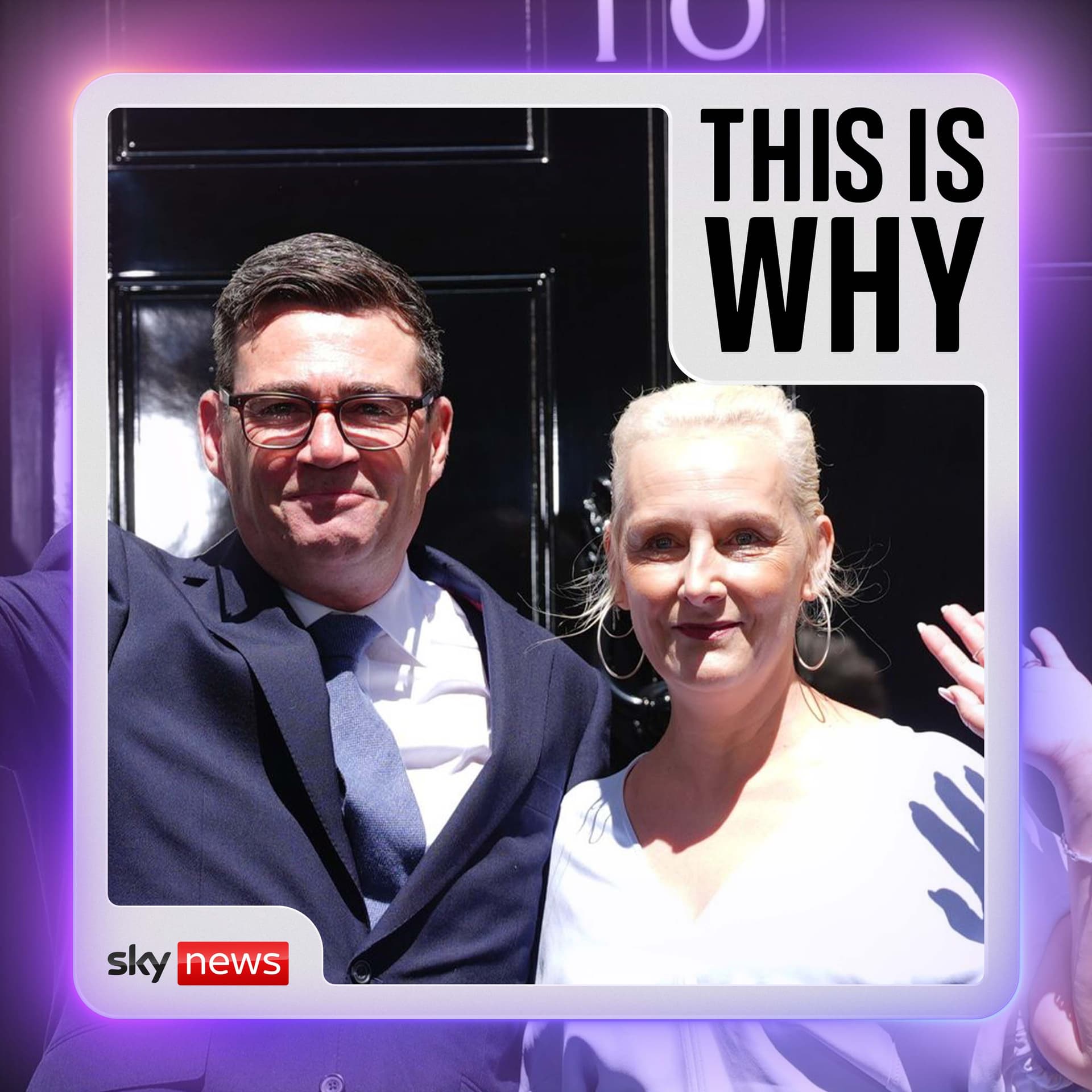

In short
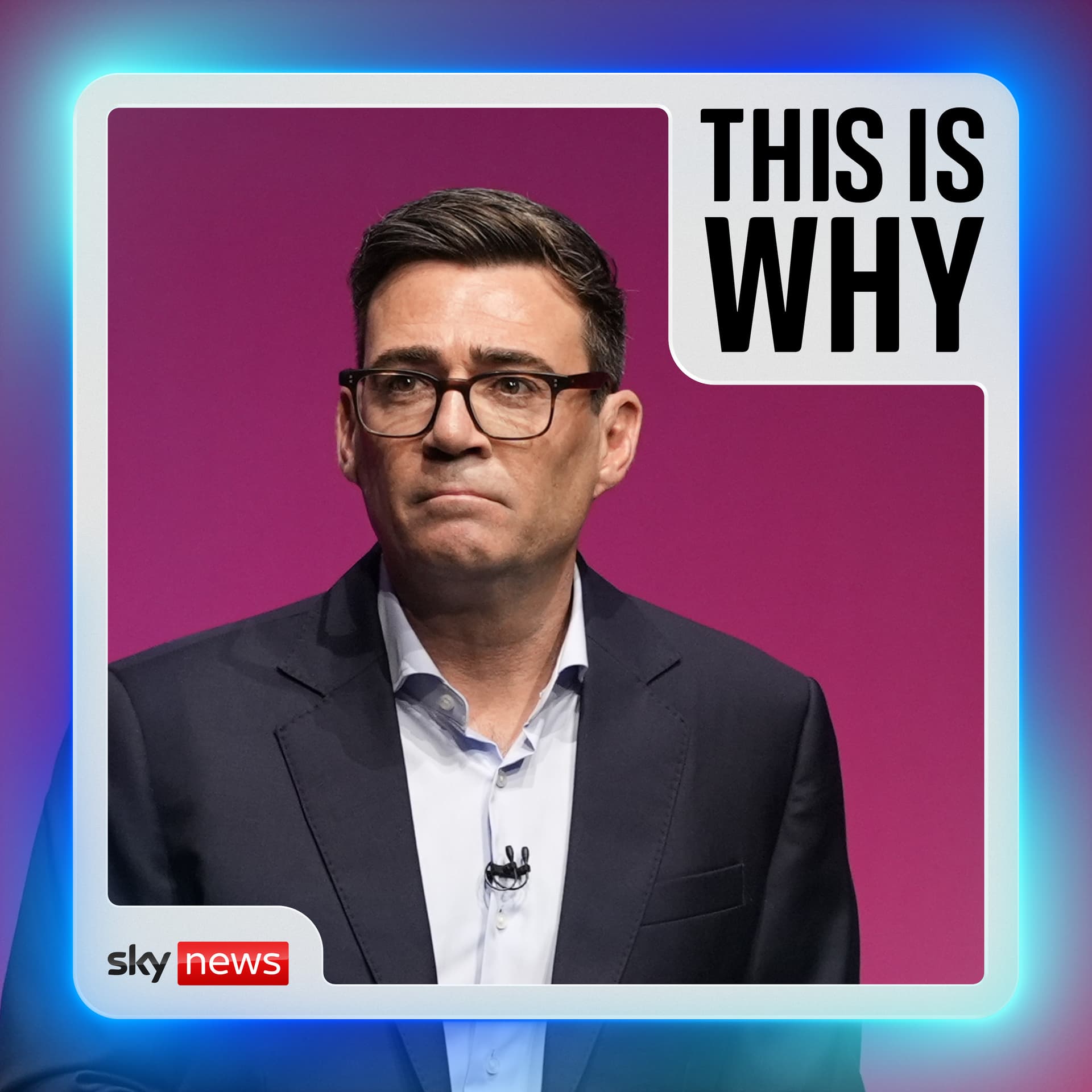
The episode is about Andy Burnham’s first 100 days as UK Prime Minister and how his early actions will shape public perception. It argues Burnham must quickly show competence (“hitting the ground running”) while delivering optimistic, crowd-pleasing domestic promises: a 10-year plan, a crackdown on homelessness, building more council homes, changing education and mental health support, tackling water and household bills (“breathing space”), and meeting fiscal/defence commitments. Key claims include that Burnham and allies planned a “coup” for a year, that he may overturn net-zero North Sea policy (“drill, baby drill”), and that he may shift on Gaza/Palestine.
Notable examples
comparisons to Blair’s 1997 Downing Street entry; “Freebiegate” as a warning; TUC speech emphasis on “hope.”
Guests
Ed Conway (host) and Sky News Chief Political Correspondent John Craig.
Written by AI. May contain mistakes. Listen to the episode to check what was said.
Chapters
Tap a time to open that second in VOAndy Burnham's Leadership Challenges
0:55 to 1:50
Discussion on Andy Burnham's recent appointment as Prime Minister and the challenges he faces.
“As I now pass the baton to Andy Burnham, I wish him every success.”
The Significance of the First 100 Days
1:50 to 3:25
Exploration of the importance of the first 100 days for a Prime Minister's perception and effectiveness.
“Just remember, we spoke mid-afternoon, so hadn't yet seen any of Mr Burnham's cabinet appointments.”
Team Burnham's Strategy and Plans
3:25 to 4:40
Insights into Andy Burnham's plans and the strategies of his team as he begins his term.
“That when the Blairs entered Downing Street in 1997, we learned pretty quickly they were Labour Party members who'd been bussed in for the event.”
Burnham's Key Pledges and Policy Directions
4:40 to 6:00
Analysis of Burnham's key pledges, including a 10-year plan and addressing homelessness.
“Mind you, Boris Johnson talked about 10 years and look what happened to him.”
Challenges in Implementing Promises
6:00 to 7:30
Discussion on the skepticism regarding Burnham's ability to deliver on his ambitious promises.
“Now, honouring the commitments on defence, that's going to be expensive.”
Public Perception and the Road Ahead
7:30 to 8:45
Examining how Burnham can shape public perception and garner support for his agenda.
“And I think back to when, you know, Keir Starmer was elected prime minister and the inaction of his first few weeks in government set a tone.”
Addressing Domestic and Foreign Policy Issues
8:45 to 10:00
Insights into how Burnham will handle pressing domestic and foreign policy challenges.
“How important is it that over the next 100 days, people get to know who Andy Burnham is?”
Factionalism Within the Labour Party
10:00 to 11:30
Discussion about the internal conflicts and factionalism in the Labour Party that Burnham must navigate.
“herald the arrival of a new global order.”
The Importance of Optimism in Leadership
11:30 to 13:00
Examining Burnham's optimistic messaging and its significance for his leadership style.
“Look at that list, all the old lefties like John McDonnell, John Trickett, and quite a few others.”
The Honeymoon Period: What Lies Ahead
13:00 to 14:03
Speculating on the duration and significance of Burnham's honeymoon phase as Prime Minister.
“And that's what Andy Burnham's been doing.”
Show all 13 chapters
Analyzing Burnham's Foreign Policy Challenges
14:03 to 16:44
Explore the challenges Burnham faces regarding foreign policy and public support.
“I imagine he will make a visit to Ukraine fairly soon.”
The Dynamics of Burnham's Honeymoon Period
16:44 to 17:48
Discuss the potential duration of Burnham's honeymoon period and its implications.
“problems in the NHS, if there's problems again on immigration, the small boats coming across the channel, if things start to go wrong, then yes, his honeymoon period will be brief.”
Reflections on Political Transitions
17:48 to 18:38
Reflect on the transitions of leadership and predictions for future political roles.
“Let me give you a tip about Keir Starmer.”
Transcript
Automatic transcript. May contain errors.0:02Sky News, the full story first.
0:11Andy Burnham's first hundred days will define his time as Prime Minister. And this is why.
0:23How does a banana trigger a CIA-backed coup? Do AirPods herald the arrival of a new global order? What do LED lights say about the future of humanity? I'm Ed Conway, and in each episode of my new podcast, Stuff Matters, I take an object, crack it open, and reveal the world-shaping forces hidden inside. This is economics told through the things we think we understand. Search Stuff Matters on your podcast app to listen and follow. The doors open. As I now pass the baton to Andy Burnham, I wish him every success. Thank you very much. One out and one in. Britain needs to show the world that we can regain our stability once again.
1:16And that is our challenge. Thank you very much, everybody. Andy Burnham is now behind that famous black door, hard at work. the UK's seventh Prime Minister in just over a decade. And of course, he will hope to last a lot longer than some of his predecessors. To do so, he needs to get off to a flying start, which might be a bit tricky, given everyone's about to fly off on holiday. The first hundred days often come to define a Prime Minister's time in office, or at the very least, the way that they are perceived in that job. So I sat down with our Chief Political Correspondent, John Craig, to find out what Team Burnham has planned.
1:50Just remember, we spoke mid-afternoon, so hadn't yet seen any of Mr Burnham's cabinet appointments. Let's start with the bigger picture. Andy Burnham, is he ready for this? Is he ready to be Prime Minister? He said he was in his speech on Friday when he was crowned Labour Party leader. I have a plan, he said. Well, we learned a little bit about his plan from his speech in Downing Street, but he's not had long. And it's only about a month since he won the Makerfield by-election. Now, his close confidante, Louise Haig, did let the cat out of the bag a bit in an interview a week or so ago when she said that Mr Burnham and his allies had been planning the coup for a year.
2:35A lot of Keir Starmer's allies were very cross about that. But he's had to move pretty fast. It's not as though he's been like an opposition leader who's had two or three or four years to plan for government. But as you say, John, we did get a flavour from Andy Burnham speaking outside number 10 to, well, frankly, a Downing Street that looked as packed today as it usually does the day after a general election. He did give us a bit of a hint that things were coming down the pipeline and coming quickly, a 10-year plan and the way in which he is going to pay for things. He reminded me, watching the greeting for Mr Burnham, a real euphoria.
3:13It did remind me, actually, of 1997 when the Blairs entered Downing Street, Tony and Cherie. The difference being, I think Andy Burnham seemed to know who all the people were. That when the Blairs entered Downing Street in 1997, we learned pretty quickly they were Labour Party members who'd been bussed in for the event. I thought it was really a really excited, ecstatic welcome for Mr Burnham. And then, of course, what was different from previous prime ministers arriving and leaving, he dispensed with the podium. And he just had a couple of microphones there and he spoke completely without notes.
3:51Now, quite a bit of his speech in Downing Street, where there were passages in it which were the same as those in his speech at the TUC, the Trade Union Congress HQ on Friday. However, as you have rightly pointed out, there have been a few little nuggets in that speech. For example, the 10-year plan, the crackdown on homelessness. That is a very bold pledge. The 10-year plan, well, that sounds almost Soviet-like, doesn't it? A 10-year plan. But when he said that, the thought occurred to me he wants to stay in Downing Street beyond the next general election. The polls have suggested that Labour's prospects of winning the next election have improved since he replaced Keir Starmer.
4:35But talking about 10 years, not just five years, that suggests he wants to stay in the job after the election. Mind you, Boris Johnson talked about 10 years and look what happened to him. And does it really matter that actually Andy Burnham has not had an awful lot of time to prepare? I mean, we are in this parliament because the great British public went to the ballot box at the last general election and voted for the Labour Manifesto in numbers sufficient to give Keir Starmer a landslide. What happens to that manifesto? Well, the manifesto, of course, is for a full parliament. There was an interview he gave about a week ago, a radio interview, in which he said, yes, I will stick by the manifesto pledges.
5:13He did say there was a little bit of room for changes on tax. Now, just looking at some of his pledges in Downing Street, he's talking about help with the cost of living. And he also said that he would set out some measures tomorrow, that's Tuesday, including how we pay for them. And then he went on to talk about helping more young people into work, changing the education system, giving them more support, more mental health support. These are all things that suggest money will have to be spent. He talked about building more council homes. And he talked about bringing the welfare bill down. Well, that, of course, will give him some money if he succeeds in doing that.
5:53But then, of course, Sir Keir Starmer and Rachel Reeves tried that. There was a backbench rebellion, and that never happened. He did talk about meeting our fiscal rules, honouring our commitments on defence, and to our international partners. Now, honouring the commitments on defence, that's going to be expensive. There's a£5 billion, some people think it's a lot more, black hole. That's a bit of a hospital pass that Sir Keir has left for him to sort out. So there are a lot of what you might call good news promises, but there will be a lot of scepticism about how he's going to pay for these things.
6:28Just in terms of that phrase that he has used a number of times now, breathing space, what exactly does he mean by that? Because if he means, I want people to have more money in their pockets to do with what they will, why doesn't he just say that? Breathing space, I suppose he's talking about making it easier for people to pay their energy bills and so on. I mean, one of the industries he said he's going to tackle is the water industry, which is in a shambolic state, and a lot of people will welcome that. But energy bills, water bills, all sorts of household bills. It all sounds very good, cutting people's household bills.
7:02It's not easy, though. He hasn't talked about things like benefits, the triple lock on pensions and so on. So let's see. We may learn more in the next 24 hours or so. I mean, one thing he needs to convince the public he is doing is hitting the ground running. And I'm just wondering if the timing is naturally unhelpful to that. I mean, he can't go off on summer holiday. Problem is, all MPs are about to and half the civil service. And I think back to when, you know, Keir Starmer was elected prime minister and the inaction of his first few weeks in government set a tone. and that will be something Brennan will want to avoid.
7:43Well, I think we're going to hear quite a bit from him. I guess once he's assembled his cabinet, he may well do a Downing Street news conference. He may well do some events where he does set out his policies. And yes, touring the country, most new prime ministers do that. They go to England, Scotland, Wales and Northern Ireland. He's talked about going to Aberdeen where, of course, the Tories won a by-election only a couple of weeks ago. And North Sea Oil, That's another issue where we likely see a change in policy because the Ed Miliband as energy secretary, of course, was a big, what his critics would say, a zealot for net zero.
8:21And of course, Andy Burnham, mainly, possibly mainly because, of course, the big trade unions like Unite and GMB and other trade unions are bitterly opposed to that net zero policy and stopping drilling in the North Sea. he is likely to overturn that policy and we're going to get a drill, baby drill from Andy Burnham. That's probably why he's going up to Aberdeen to announce that. How important is it that over the next 100 days, people get to know who Andy Burnham is? I mean, you've worked in Westminster a long, long time, John. I was there back when Andy Burnham was on the front bench. Plenty of people don't have a clue who he is anymore.
9:03Well, let me tell you a bit about Andy Burnham's history. He got elected to the House of Commons as MP for Lee in 2001, rose up the ministerial ranks, made the cabinet under Gordon Brown, had two cabinet posts, culture, media and sport, and then health, which is where he started to talk about fixing social care. And we're going to hear a lot about that. And then, of course, in protest at the Corbyn years, he decided he didn't want to carry on serving on Labour's front bench in opposition. And he went and became the mayor of Greater Manchester. But it was interesting. I was at his count. I was at the Makerfield count where he said in his victory speech, I always knew that one day I would seek to return to Westminster.
9:44So that was a giveaway, really, that had been contemplating this move for quite a long time.
10:02herald the arrival of a new global order. What do LED lights say about the future of humanity? I'm Ed Conway, and in each episode of my new podcast, Stuff Matters, I take an object, crack it open, and reveal the world-shaping forces hidden inside. This is economics told through the things we think we understand. Search Stuff Matters on your podcast app to listen and follow.
10:34Obviously, John, we can't name any names because right now Andy Burnham is inside Downing Street awaiting for a procession of politicians to come and show a bit of ankle to the cameras. But no matter who he puts in the great offices of state and elsewhere, there are going to be a lot of noses put out of joint. And this is a party, let's be honest, that has become known for factionalism, that has become known for infighting. That is a big problem for a new Labour Prime Minister. A wry smile came across the faces of cynics. Some laughed when he, in his five points, his five pledges, at his speech on Friday, number one was an end to factionalism.
11:11And on the very same day, this front page story in the Times was a big backlash over moves to put Sabana Mahmood in the Treasury and not Ed Miliband. Good luck with getting rid of factionalism in the Labour Party. My goodness. I think it was 30 or so Labour MPs who did not nominate him for the leadership. Look at that list, all the old lefties like John McDonnell, John Trickett, and quite a few others. So the hard left, if you can call them that, they are potentially going to cause trouble and possibly revolt on measures to toughen immigration rules, cut welfare benefits, and so on. and okay he is a popular leader at the moment but there will be those who will oppose certain things that he proposes to do no doubt.
12:00But in terms though of what he needs to achieve so much of what Burnham has been talking about is looking to the future about confidence about hope I mean so I suppose the job that he needs to do first is not change the country for the better but make the population believe that he can make the country better for them. Critics say that one of the mistakes that Sir Keir Starmer made in the early days of his premiership two years ago was to sound terribly gloomy and pessimistic about the state of the economy and the state of the country. Now, in his speech at the TUC on Friday, Mr. Burnham used the word hope nine times in a 28-minute speech, once every three minutes.
12:44And he has this phrase he's used a few times in the last few days, hope in every heart. Now, who is the politician who's best known for talking about hope? Bill Clinton. It helps, of course, that he came from a town called Hope in Arkansas. But it was, I mean, classic Clinton, giving people hope. And that's what Andy Burnham's been doing. I'm not saying he's a Bill Clinton, but it's a similar sort of approach, making people feel good, making people feel optimistic rather than pessimistic and gloomy. And all the talk about the breathing space, help with household bills and stuff, that's been optimistic.
13:20And it's been a very optimistic tone for Mr Burnham the last few days. Obviously, John, he wants to focus on the task at hand. He wants to focus on the domestic agenda. But how many times have we heard politicians say that? And in fact, frankly, including Keir Starmer, no matter what happens over the next hundred days, events elsewhere. They always grab a prime minister's attention and often to the detriment of that domestic legacy that they want. Well, in his speech, when he talked about defence spending, he also talked about support for our international allies. Now, he becomes prime minister at a time when the war in the Middle East is turning ugly again.
13:59There may well be emergency meetings that he will have to attend. I imagine he will make a visit to Ukraine fairly soon. You take the two big foreign policy issues at the moment. The House of Commons is absolutely united on support for Ukraine. But on the Middle East, of course, there are huge divisions on Palestine, Gaza, Israel, and so on. There's absolutely no consensus on that issue. Interestingly, a week or so ago, Mr. Burnham did talk about the Starmer government's policy on Palestine and Gaza being wrong. And so there's something of a U-turn coming on that. John, just to kind of wrap things up, how long, if at all, will the Andy Burnham honeymoon period last?
14:50I mean, we often talk at times like this when there's a transition of power of there being a honeymoon. But, you know, this podcast is about Andy Burnham's first 100 days. I'm going to gently suggest, you know, his honeymoon period won't last 100 days. You might get a very, very temporary bounce before you enter. But as soon as you're in there, you get on with the job. And unfortunately, the job brings criticism with it. It just naturally does so. Of course it does. But if he can come up with some crowd-pleasing announcements and popular policies, and then he will have a honeymoon period, if he can lower people's bills, whether it's, I don't know, petrol at the pumps, energy bills at home, water bills, if he can build, if he can perhaps make some progress on some of those pledges that he's made.
15:35There's no reason why he shouldn't get off to a good start. He's got to avoid making the sort of crass, bad errors that the Starmer government made. Remember, it wasn't just taking away money from pensioners into fuel payments. You remember Freebiegate, all those freebie suits, freebie glasses, Taylor Swift tickets and everything. That damaged Sir Keir Starmer. Don't make silly mistakes. I mean, it's just like football. Don't make silly mistakes. I mean, you'll know this, having watched the first few minutes of Scotland against Brazil, giving away silly goals at the beginning. That wasn't the match I was going to mention, John, to be honest.
16:14Don't make silly mistakes. Come up with some popular policies. He'll be treated like a rock star at the Labour Party conference in the autumn. He'll probably go to the TUC and delight them by talking about more investment in the North Sea and more drilling and so on. I think you may be being a bit unfair saying that his honeymoon period won't last a few months. I think it potentially will last a few months. But I suppose if we get to the autumn, for example, things start going badly, problems in the NHS, if there's problems again on immigration, the small boats coming across the channel, if things start to go wrong, then yes, his honeymoon period will be brief.
16:57If, however, he turns out to be a lucky prime minister, then he might do quite well. But it's a tough gig being prime minister, as everyone who's done the job will tell you. And all prime ministers eventually become unpopular. Tony Blair almost walked on water, didn't he, to start with. And then came the Iraq war and it all went horribly wrong. Hardly any prime ministers leave number 10 with their head held high. That's why I think Keir Starmer was particularly gracious in his speech in Downing Street. He said he leaves with good grace, wished his successor well. I have to say, I thought that was one of the least bitter valedictory speeches that I've heard of all the prime ministers who've gone in recent years.
17:44So, good start for Mr Burnham. Elegant departure for Sir Keir Starmer. Let me give you a tip about Keir Starmer. Go on. I think he might turn up as prosecutor of the International Criminal Court. There could be a vacancy there. And if, here's another, perhaps a suggestion rather than prediction, if Sir Keir Starmer were to go off to do that job, by-election Hoban and St Pancras, ideal for David Miliband to come back. Well, ladies and gentlemen, you heard it here first. John, if it all happens, we'll get you back on the podcast to talk about it. For now, thanks very much indeed. That's your lot for today, but certainly not the end of the politics on This Is Why.
18:26We will be returning time and again to Andy Burnham and his government over the next 100 days. So if you have any ideas for episodes, topics you would like us to cover, just get in touch. Why? At sky.uk. We're back tomorrow.
18:48How does a banana trigger a CIA-backed coup? Do AirPods herald the arrival of a new global order? What do LED lights say about the future of humanity? I'm Ed Conway, and in each episode of my new podcast, Stuff Matters, I take an object, crack it open, and reveal the world-shaping forces hidden inside. This is economics told through the things we think we understand. Search Stuff Matters on your podcast app to listen and follow.
From the publisher
"Everybody has a plan until they get punched in the face." Mike Tyson's infamous warning for his opponents could easily apply to the new occupant of Number 10.
Giving his first speech outside Downing Street, the new prime minister hinted at what his priorities will be – from easing the cost-of-living crisis to keeping commitments on defence spending.
But what happens when those plans make contact with reality? Can Mr Burnham's "Manchesterism" work on a national level? And will international events interfere with his domestic agenda?
Niall Paterson is joined by Sky's chief political correspondent Jon Craig to assess what might happen in his first few weeks and months in office.
Have you got a question for Niall? Email us: why@sky.uk