In short
Prince Harry’s surprise visit to Kyiv is used to argue the Ukraine war is at risk of being forgotten, and to assess battlefield momentum, UK/EU support, and how US politics (including Iran and Trump) affects aid and negotiations.
Guests
Sean Bell, Sky News military analyst; Sam Coates (Sky News) and Anne McElvoy (Politico) host.
Key claims
Little net front-line movement recently; Russia is losing more people than it can recruit (about 90,000 recruited vs 110,000 lost in Q1); Wagner/convict and other recruitment is drying up; drones now account for over 80% of casualties; Ukraine is adapting and striking deeper with homemade missiles (e.g., “Flamingo”); EU’s 90bn euro loan is blocked by Hungary (Viktor Orbán), but Hungary’s leader has since been defeated.
Notable examples
Maidan Square memorial imagery; possible Russian summer offensive; air-defence needs (Patriot/THAAD/Aegis); UK provides ~£3bn/year plus missiles like LMM and training for F-16 pilots; negotiations unlikely because Russia wants more Donbass and Ukraine won’t cede territory.
Written by AI. May contain mistakes. Listen to the episode to check what was said.
Chapters
Tap a time to open that second in VOReturning to Ukraine
0:58 to 2:14
Discussion on Prince Harry's visit to Ukraine and ongoing war importance.
“And yeah, for the first time in quite a while, in fact, we're going to be returning to Ukraine and it's more than four year war with Russia.”
Current State of the Conflict
2:14 to 3:14
Analyzing the current situation on the battlefield and public perception.
“has been to visit the Ukrainian capital, Kiev, urging, in essence, the world not to forget about the Ukrainian war.”
Military Dynamics and Casualties
3:14 to 5:48
Insights into military casualties and strategies on both sides of the conflict.
“So if you only read the media, you'll often hear, well, Russia is still on the offence or Ukraine is pushing back or whatever.”
Adapting Strategies in Warfare
5:48 to 8:07
Exploration of how warfare has evolved and the use of drones in modern combat.
“We can shoot down up to 90 % of the targets at striking our cities.”
Financial Aspects of the War
8:07 to 10:51
Discussion on funding the war efforts and the economic implications for Ukraine.
“I mean, the EU has been sitting on 90 billion euros worth of a loan blocked by Hungary, by its former leader, Viktor Orban, a supporter of Vladimir Putin.”
Negotiations and Peace Talks
10:51 to 12:54
Current status of negotiations and potential paths towards a ceasefire.
“The pilots are the difficult thing, so the UK is already providing that training now.”
Impact of Global Politics
12:54 to 14:02
Analyzing the effects of U.S. policies and international relations on the conflict.
“lots of pressure on Ukraine to surrender.”
Iran's Military Strategy and Impact on Global Politics
14:02 to 16:43
Explore how Iran's military capabilities are influenced by Russian support and its implications for US foreign policy.
“Now, it's no doubt Trump's priority will be winning the war in Iran.”
Lessons from Ukraine: Defense Preparedness
16:43 to 17:58
Discuss the importance of military readiness and the risks of inadequate defense planning in light of Ukraine's experience.
“We have got decades of underinvestment that will take time to address.”
Transcript
Automatic transcript. May contain errors.0:02Sky News. The full story first.
0:11None of us should forget about the war in Ukraine. And this is why.
0:24I'm Sam Coates from Sky News. And I'm Anne McElvoy from Politico. Downing Street drama, leadership battles and policy U-turns. We're on it before it breaks. We take you straight into the rooms where the real political conversations are happening. Smart Insight, clear analysis in your feeds by 7.45am. So you start your morning fully brief for the day ahead in British politics. Hit follow and listen to Politics at Sam & Anne's wherever you get your podcasts.
0:58Hi everyone, Neil here. And yeah, for the first time in quite a while, in fact, we're going to be returning to Ukraine and it's more than four year war with Russia. The reason being, the war is still going on and we shouldn't forget that, even if most of our attention is focused elsewhere. In fact, that is exactly the point Prince Harry wanted to make when he made a surprise visit to Kiev earlier. As a friend of Ukraine who believes the world must not grow used to this war or numb to its consequences. And yeah, there certainly isn't wall-to-wall coverage of the conflict any longer. Iran, Gaza, cost of living, you take your pick.
1:36There's a lot competing for our attention, but also for the attention of the US president, who, let's be honest, seems far less concerned with the pursuit of peace these days. Meanwhile, the killing continues on the battlefield. Russia's been losing more people than it can recruit. The first quarter of this year, they managed to recruit about 90 ,000, and they've lost about 110 ,000. So how is the conflict going? Is it in danger of being forgotten? And what exactly are the UK and EU doing to help? Here's our military analyst, Sean Bell. Sean, great to see you again. Look, as we sit down, we've learned that Prince Harry has been to visit the Ukrainian capital, Kiev, urging, in essence, the world not to forget about the Ukrainian war.
2:21I suppose the problem is, whilst the politicians may still be mindful of it, the public doesn't appear to be. No, it was very interesting seeing, even if you look at the websites of some of the big broadcasters, they used to have a tab on for Ukraine. That's disappeared off now. One of the pictures that we saw in Kyiv was him visiting Maidan Square. It's the independent square. Why is that important? Because I get very moved if you go to the French cemeteries, the wartime cemeteries, lines of crosses, each one a life. Maidan Square is flags, and they've just been put in handwritten notes. And every time I go to Kyiv, It's been half an hour there.
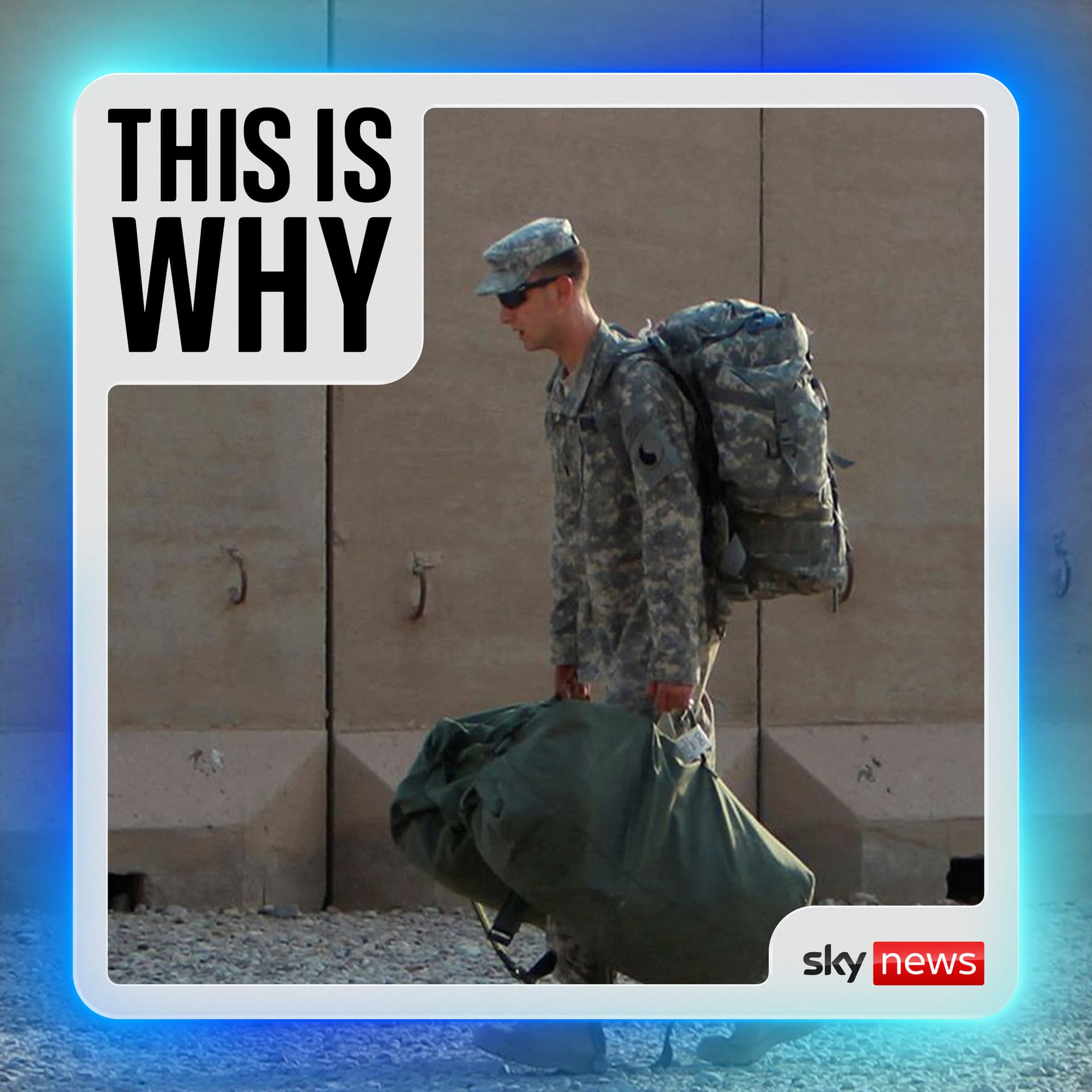
2:55I defy anybody not to be moved. And there is a very poignant picture of Harry walking through that stark reminder of the human cost of this war. Just bring us up to date with the conflict, because I think, you know, our attention has been diverted by events elsewhere. And I'm not sure that we really understand where the dynamic is, where the momentum is in the war. No. So if you only read the media, you'll often hear, well, Russia is still on the offence or Ukraine is pushing back or whatever. The big handfuls is that there's been very little net movement on the front line over the last month or two.
3:28What is interesting, I think, from my perspective, is that Russia's been losing more people than it can recruit. The first quarter of this year, they managed to recruit about 90 ,000 and they've lost about 110 ,000. Now, if you'll remember, we've been covering this for a long time now, haven't we? The Wagner Group, convicts being recruited, mercenaries being recruited from other countries. all those are starting to dry up now, and a lot more people are trying to evade the conscription. Why does that matter? It matters because if you're on the offence trying to push in, you eventually have to jump out of your trenches, charge at the enemy, you lose a lot more people.
4:01Now, Ukraine is suffering the same sort of way, but tellingly, not much change in priority in terms of land. The one caveat I would say is that most military experts believe that Russia was positioning for some sort of summer offensive. And if you're going to do that, you're going to take people from areas of the front line, focus them ready for a big push. Particularly if, as you suggest, they're having problems with conscription and just replenishing numbers in general. Exactly right. And therefore, the fortress towns, you know, which are the corner of the Donbass, there's been a lot of talk about it, but if that really is what Russia is trying to seek, if you look at it from a purely objective metric, it looks like it would take at least two or three years more to take those towns.
4:41And that is a gruelling war. How would you characterise the way in which this war is being prosecuted at the moment? Part of the answer to that question is it depends on seasons. If you go out there in the winter, it's brutally cold. There's no foliage. There's no coverage. There's no anything. So if you are now on the front line, it's very difficult to get cover. And therefore, drones can see you. In addition, if you've got an infrared camera on a drone, you stand out more against a snowy backdrop than you do in summertime. Now, all the foliage is coming back. The cover's coming back. So it does change with the seasons.
5:14I think Ukraine has been more effective at adapting itself. Back in the Second World War, it was artillery responsible for 80 % of the casualties on the battlefield. Today, it's more than 80 % are actually because of drones. And therefore, it's been a really successful campaign. But also, Ukraine is starting to strike deeper and deeper into Russia using its homemade missiles, famously things like the Flamingo missile that they're making themselves. The Ukrainian assessment of their own position, you always have to, for obvious reasons, take with a seller of salt. But Ukraine's foreign minister has said, you know, we have minimised the Russian advantage in manpower through the use of drones.
5:51We can shoot down up to 90 % of the targets at striking our cities. Ukraine's position is indeed the strongest it has been over the past year. I mean, just rate that assessment for me. The difficult thing about these assessments is that do you look at it tactically today or do you look at it the momentum? I was at Sky, what's it, a year into the conflict and we had a Ukrainian interpreter that used to pull me aside, buy me a coffee and give me a really hard time that I was so half empty about Ukraine's prospects. We're going to kick the Russians out. Now it's very difficult to see Ukraine getting rid of Russia out of its territory.
6:27It feels like what they've got to do is grind Russia to a halt and then maybe some sort of frozen line. And when you go to visit Ukraine, clearly I can't speak to all Ukrainians, but there's a prevailing view now that we just need to get the war stopped. We're not giving up our territory, but that doesn't feel a reasonable achievement. So if you change your objective from liberating your land, really unlikely, to a are we managing to stop the Russian advance, you might see that as success. But we are heading into, as you say, the summer fighting season where conditions are perfect for more, as you say, kind of kinetic activity.
7:05So would the strategy be resist, resist, resist until the winter and then hope by that point there might be something, someone to negotiate with? Well, what is fascinating, I inevitably get briefed by some military colleagues around this. And one of the things that you want to do is you don't want to take on your enemy's strength. I mean, the famous Prussian general of clouds fits always say, avoid your enemy's strength, strike at his weakness. I mean, I think I could have come up with that as a strategy. It's not difficult. No, but it might seem obvious. But if you end up on a battlefield, which is a slugfest, the bigger side will win.
7:37So Ukraine can't get itself trapped in a slugfest. So the challenge is, what can you put at risk of the Russians to make them think twice about continuing this? Because if all you're doing is making them pay the highest price possible for every step they take on the battlefield, the danger is Russia doesn't care about lives. So part of the advocate, could you put Crimea under pressure? Could you use your missiles to actually more effectively target the Russian oil and energy infrastructure? Force away to make President Putin think twice. OK, let's talk about support for Ukraine. I mean, the EU has been sitting on 90 billion euros worth of a loan blocked by Hungary, by its former leader, Viktor Orban, a supporter of Vladimir Putin.
8:17Now, he has actually recently been defeated in the Hungarian election. So just how important might it be? It's absolutely vital. One of the things of any war is that it costs a hell of a lot of money. Every time you launch a missile, you're basically throwing away a million dollars a time. Wars cost a lot of money. Now, Russia is able to fund its war because it pulls lots of oil and gas out of the ground and sells it. Yes, we may have stopped it selling it at quite the high prices. But the fact is that they still generate a lot of revenue. Where does the revenue come from for Ukraine? Ukraine is smaller.
8:47It doesn't have the same resources apart from grain. So this injection of money is absolutely vital if it is to keep the war effort going. So what will they be spending it on, do you think? Well, they've broken down. I mean, some of it is literally just paying for the troops and keeping them in kit. What is interesting is that there's lots of evidence that the sort of kit they're given, survival kit on the front line, isn't good enough. But their families buy it and send it forward because they're looking after Johnny. They're looking after their young man. But in terms of weapons, bullets, artillery shells, drones, missiles, and of course the big one is air defence missiles because the Russians have been sending a lot of, they've backed off a bit over the last few weeks, but long range missiles.
9:28There's only one way to solve that, is to put up missiles in defence. American missiles are generally the Patriots, the THARD, and the Aegis missiles, state-of-the-art, cost a hell of a lot of money. And of course, America's not providing them for free, therefore they've got to be bought. It sounds like a big sum of money. You get through it pretty quickly in a war. We haven't mentioned, though, what the UK is doing. I mean, what assistance are we providing at the moment? So the UK provides about£3 billion worth of financial aid each year. that's the headline. But if you look below that, for example, we were talking about missiles.
10:01There are light modular missile. LMM is one of the missiles that's built. I think it's in Belfast, but it is a much cheaper way of shooting down missiles and drones. That's an example of the sorts of thing that the UK is providing. In addition, the UK is doing a lot of training, so it still does training. I have to say it's quite a short period of time, but for people who've never served on the front line, it gives them the basics because frankly, you're at the You're most vulnerable in your first few days. But also we're providing flying training because we've given them F-16s, but I couldn't sit you, however talented, in F-16 and expect you to be anything other than an ocean-going nightmare.
10:38It literally takes years to get the pilots up and ready. So starting that process now, because when the war ends or freezes, Ukraine will need to develop its own credible airpower capability. It's easy to give them jets. The pilots are the difficult thing, so the UK is already providing that training now.
11:23Hit follow and listen to Politics at Sam & An's wherever you get your podcasts.
11:38I mean, if we're going to talk about an end to the war, we have to talk about somehow a ceasefire being brought about before peace even can be discussed. Is there anything going on at the moment in terms of negotiations between Russia, Ukraine, and presumably the Americans would want to be involved as well? So my understanding, the back channels are constantly active with looking at it, but it's hard unless both sides want to talk. And when you say both sides, we're talking Ukraine and Russia here, not necessarily, I mean, the Americans, the Americans don't seem to be that interested. No, but if the warring parties are Ukraine and Russia, unless both of them see benefit, is there more benefit in stopping the war than continuing?
12:16it. At the moment, Ukraine would definitely want the war to end. But Russia almost certainly sees itself on the front foot. It still believes that it wants to seize the rest of the Donbass. It still believes probably the briefings that President Putin are getting is that we're getting there, may take a couple more years, but we will get there. It's going to cost you a lot of lives. He doesn't care. It doesn't feel at the moment as if Russia has got any motivation whatsoever to call a halt unless Ukraine was to cede all the territory that Putin wants. Well, of course, then, of course, Putin will accept.
12:50So I don't think there's any basis at the moment for negotiation. The good thing is, if you remember before the Iran war, America was sort of putting lots of pressure on Ukraine to surrender. At least that pressure is backed off for now. And I think Europe is providing a much more robust support for President Zelensky. That is one outcome that has flowed from the Iran war. How has what is happening in Iran affected the Ukraine conflict? Well, there's several things. I mean, economically, and this seemed to slip by the radar of some of the news organisations, strangely, was that in an effort to bring down the price of oil, President Trump, who knows his popularity is sinking, goes, how do I increase the availability of oil?
13:28Well, I'll take off the sanctions off Russian oil. So all of a sudden, he didn't talk to the Europeans about this. And of course, why is that important? Because the central pillar of the European strategy against Putin, was he's losing money and eventually his economy will collapse. Well, my understanding is that by removing sanctions, Russia can sell its oil. It's making$150 million extra a day now because of that, because of the high price of oil and it's not sanctioned. The other one, of course, is that there's only a limited supply of missiles and bombs in the world. If America was providing him the lion's share of that technology to Ukraine, suddenly the war against Iran erupts.
14:04Where's your priority going to lie? Now, it's no doubt Trump's priority will be winning the war in Iran. That means that air defence missiles going to the Middle East will inevitably have impacted the number of air defence missiles. And the final bit I think is really interesting from my perspective is that despite the fact Iran's taken a pummeling from the air, they've been able to use ballistic missiles to strike surgical strikes against Al-Udid, a major airfield in the Middle East, and take out specific high-value targets. That means they've got to have satellite technology and real-time satellite technology.
14:36Provided by the Russians. And that has been the talk that Russians, because they have vested interest in prolonging the war in Iran, because actually it's actually been very good for them. You would have to imagine that that wouldn't be the sort of thing that would please Donald Trump. But apparently that information hasn't reached his desk yet. The balance here is that the relationship with Russia, we saw him welcome Putin with open arms and red carpet in Alaska. And I think this talks to a more profound issue here that Trump has, with his national security doctrine is now the Monroe Doctrine, is effectively saying we're going to look after the Western Hemisphere, our national interest.
15:12That's why we're interested in Venezuela, Cuba, Greenland. China is going to worry about the Eastern Hemisphere. We're not going to worry too much about that. If they could do something in Taiwan, that's up to them. Middle Earth, where you and I are sitting, suddenly becomes, if that's Russia's control, that's up for you Europeans to decide. But are we genuinely moving towards a world where NATO's significance backs away and we have to have some kind of pan-European defence force? The danger is, when we have the conversation, it sounds it's polar. Either it's the end of NATO or NATO full. I think there are different tunes you can play on that.
15:46Is NATO as credible today as it was before President Trump came in? And actually, NATO didn't exist. Would you invent it in the form it currently is today? I'm not sure you would. The threats for Europe are a European problem. I think it's much more important that we are a European heavy NATO, rather than hiding under the umbrella and none of us pay our dues. I think it's a much more robust model that needs to be developed. Let's face it, the war against Ukraine is on our continent. It's nowhere near America's. I think the worry is we've got decades of underinvestment in defence and people tend to sort of imagine it's just a question of going up from 2 % to 3.5%.
16:23If I can give you a sense that if you look at from the end of the Cold War to now, if we'd maintain that level of funding at the Cold War time, how much have we saved as a nation? It's about£1.4 trillion. So don't tell me that putting another£10 or£20 billion in the pot is going to solve that. We have got decades of underinvestment that will take time to address. And that's why there's major gaps. If I was Russia, I'd know that Europe is vulnerable, and therefore now will be the time. And I think that's why we're seeing all this increased Russian activity around us. I just suppose, though, are we finally starting to learn the correct lessons from what has been going on in Ukraine?
17:05And I'm just wondering if you think, by this point, we have finally woken up to that. Well, there are several of my military contemporary contemporaries who are privately angry at the moment because they think that the politicians are still tap dancing their way around we'd like to spend more money on defense but we're going to spend more on welfare and their view is that if you look at what happened to Ukraine they were not well prepared not their fault but they were not well prepared for war if you're not well prepared the only way you're able to fight it is by conscription creating large land armies and having a gruelling war of attrition on the battlefields.
17:41If we do not prepare properly, we are effectively signing up to the young men and women of this country going out and forming massive armies at short notice to go in a fight. That cannot be a credible answer. That will be incredibly damaging, incredibly dangerous. We've seen what happens in Ukraine. We have to find a better way. And for me, as a military guy, the most effective way of averting war is to prepare for it. If we fail to do that and recognise that, we have ourselves to blame if we get dragged into something awful like that's happening in Ukraine today. Sure. Always good to see you.
18:13Thanks very much. And that's your lot for today. Do let us know what you thought of today's episode and indeed if you've got any ideas for future editions of This Is Why. The email address you can reach me at directly, whyatsky.uk. We're back tomorrow.
18:44I'm Sam Coates from Sky News. And I'm Anne McElvoy from Politico. Downing Street drama, leadership battles and policy U-turns. We're on it before it breaks. We take you straight into the rooms where the real political conversations are happening. Smart Insight, clear analysis in your feeds by 7.45am. So you start your morning fully brief for the day ahead in British politics. Hit follow and listen to Politics at Sam & Anz wherever you get your podcasts.
From the publisher
Prince Harry has warned the world not to grow “numb” to Russia’s war in Ukraine during a surprise visit to Kyiv.
The former British army captain also called on the “American leadership” to honour its international obligations, a thinly-veiled swipe at Donald Trump.
The fighting rages on in Ukraine, while much of the world’s attention is focused on the war on Iran.
The US has been a key backer of Kyiv but is now distracted by a conflict of its own. So, what is going on in Ukraine and what are the UK and Europe doing to help?
Niall is joined by Sky’s military analyst Sean Bell.
Have you got a question for Niall? Email the show – why@sky.uk