In short
The episode discusses why Donald Trump publicly backed Irish reunification during a weekend visit to Ireland for the Irish Open. It argues his comments were “unprecedented noise” and not a change in US policy, because the Good Friday/Belfast Agreement governs any future referendum and requires a clear Democratic majority to be recognized by the UK Secretary of State. Reactions are contrasted: UK Prime Minister’s office downplays it; Micheál Martin largely ignores reporters; the DUP responds with jokes and treats it as “Trumpism”; Sinn Féin faces awkwardness because it had been protesting Trump as a warmonger/war criminal. The episode recounts the division of Ireland after independence and the Troubles ending in 1998. It also links the Cardiff meeting of SNP, Sinn Féin, and Plaid Cymru leaders to broader independence momentum.
Guests
Stephen Murphy (Sky News Ireland correspondent; recorded with his three-month-old son Max) and hosts Sam Coates and Anne McElvoy. Notable examples include Trump’s “killer question” about Irish unity, DUP Father Ted/Orange puns, and Sinn Féin protests on O’Connell Street.
Written by AI. May contain mistakes. Listen to the episode to check what was said.
Chapters
Tap a time to open that second in VOTrump's Recent Visit to Ireland
0:51 to 2:19
Discussion of Donald Trump's visit to Ireland and his comments on Irish reunification.
“Hi everyone, Neil here, and look, I'm just wondering if you had noticed that the US president paid a visit to Ireland over the weekend.”
Reactions to Trump's Comments
2:19 to 3:53
Exploration of the political reactions to Trump's support for Irish unification from various parties.
“This affects you, this affects Max, that affects everyone else who lives on the aisle.”
Historical Context of Irish Division
3:53 to 7:26
A historical overview of the events leading to the division of Ireland and the complexities of its political landscape.
“The situation is more complicated than that.”
Current Opinions on Unification
7:26 to 10:12
Discussion about public opinion in Northern Ireland regarding unification and the challenges ahead.
“on Irish unity in the future is in the gift of the Secretary of State for Northern Ireland.”
Implications of Scottish Independence
10:12 to 13:07
Analysis of how potential Scottish independence might affect the movement for Irish unification.
“Whereas in Scotland, any potential movement towards the second referendum still remains very much in the gift of Downing Street.”
Practical Considerations for Unification
13:07 to 14:01
Exploration of the practical implications and challenges of Irish reunification, including public sentiment.
“But I mean, as a Scotsman, you can tell me how you think how far away we might be from IndyRef2.”
The Complexity of Irish Reunification
14:01 to 15:06
Explores the nuanced feelings and challenges surrounding Irish reunification.
“particularly south of the border, is a soft support.”
Challenges for Unionists and Republicans
15:07 to 16:21
Discusses the opposing views of unionists and Republicans in the reunification debate.
“I mean, when the Republicans and when the reunification proponents talk about a united Ireland, what place is there in it for someone who feels avowedly British and would continue to feel like that post-reunification?”
Impact of Trump's Visit on Reunification
16:22 to 18:23
Analyzes the significance of Donald Trump's remarks on Irish reunification.
“And in terms of preserving that culture and identity, even though they now have been taken out of the United Kingdom and put into a united Ireland, and New Ireland, we don't even know what the country will be called.”
The Future of Irish Reunification
18:24 to 19:19
Speculates on the timeline and likelihood of a referendum on reunification.
“He's only three months old, and I just wonder, when he gets to be 18 years old, how much of his life up until that point do you think will have been spent thinking about these issues?”
Show all 11 chapters
Life and Political Concerns for Future Generations
19:20 to 19:50
Considers how upcoming generations may prioritize issues over reunification.
“I think we're still a very long way away and Max is most likely to be growing up here.”
Transcript
Automatic transcript. May contain errors.0:02Sky News, the full story first.
0:13Campaigners for Irish reunification have found an unlikely ally in Donald Trump. And this is why.
0:25I'm Sam Coates. And I'm Anne McElvoy. Britain has a new Prime Minister and every day from 7.45am we'll help you make sense of the day ahead in just 20 minutes. That means taking you inside Westminster with our forensic insight, sharp analysis and the stories behind the headlines. From the battles in Parliament to the conversations shaping government. We'll set you up each morning for the day ahead in British politics. Hit follow and listen to Politics at Sam and Anne's wherever you get your podcasts.
0:57Hi everyone, Neil here, and look, I'm just wondering if you had noticed that the US president paid a visit to Ireland over the weekend. If not, well, Donald Trump talked golf, he talked whiskey, and he had plenty to say on Irish reunification. You have Northern Ireland, then you have Ireland, and it would seem to me that one of the naturals of all time is put them together. That's only my opinion, but by the way, many people agree. The President was in Ireland for a visit built around the Irish Open at his golf course But he's left behind a debate that goes well beyond the 18th hole Meanwhile, the leaders of Sinn Féin, the SNP and Plaid Cymru have been meeting in Cardiff All three devolved First Ministers now come from parties that want their countries to leave the UK That's certainly striking, but it doesn't tell us how people would vote Or how we would even get to a referendum Our Ireland correspondent Stephen Murphy was following Trump's visit Just a heads up, for our conversation, he brought his three-month-old son along too.
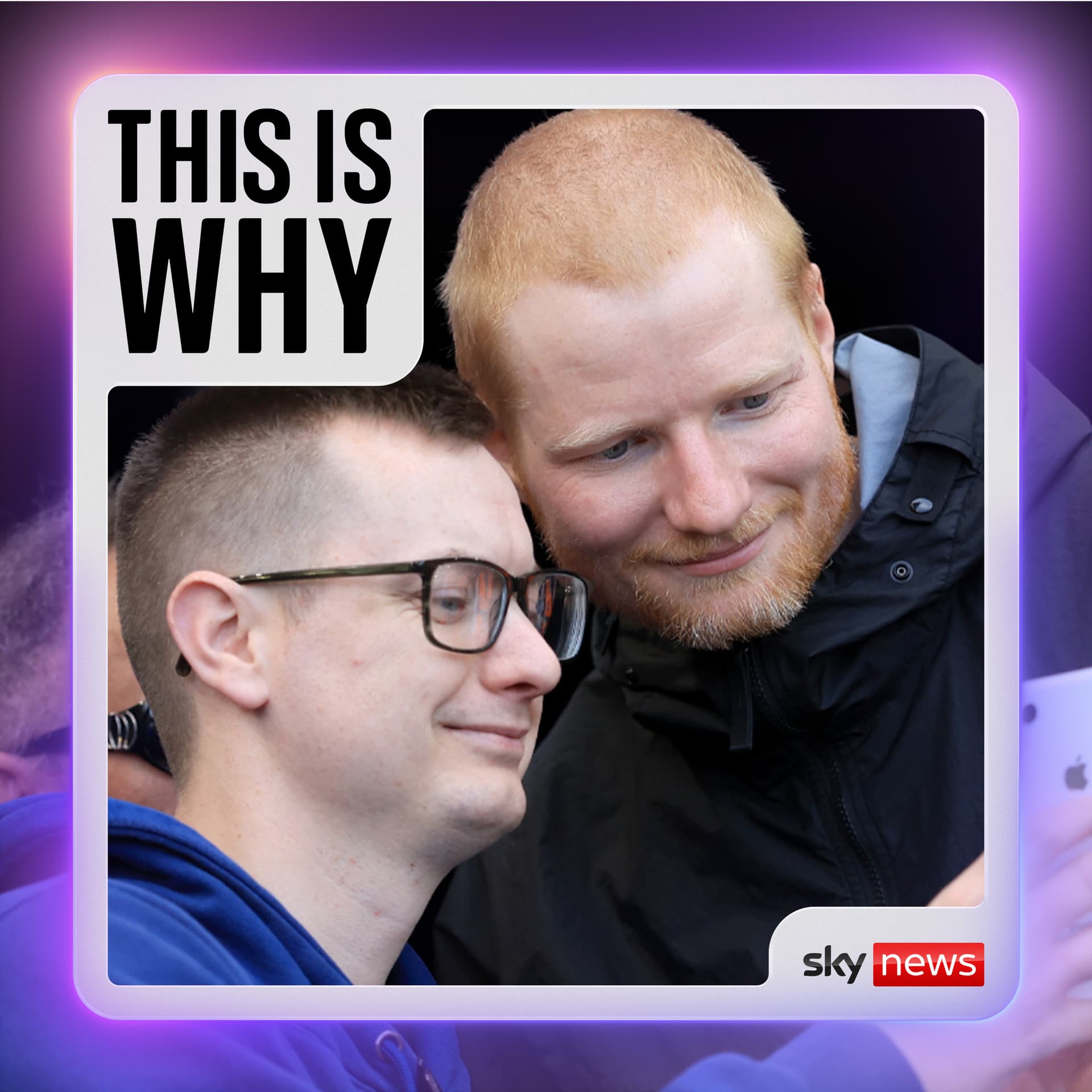
2:00Stephen, always good to see you, although I think we should say at the beginning of the recording, you are not alone today, are you? Oh, we're never alone, but no. I'm technically on a day off, but obviously wanted to speak to you, so we're joined here today for his views on Irish unity by baby Max. Apologies about that, but look, we'll crack on. We certainly will. I mean, we are talking about the future of Ireland. This affects you, this affects Max, that affects everyone else who lives on the aisle. What exactly did Trump say? And how's it gone down? The first thing to say is this was not a state visit.
2:28It's not something that was supposed to have any major political significance. He's basically here to watch golf at his resort. He said this ages ago. We didn't think he'd actually turn up. He had to get some courtesies out of the way, some niceties, you know. So he joined the Irish president initially and then had a bilateral with Neil Martin, the Irish Taoiseach or prime minister. And it was in the press spray, as our American colleagues call it afterwards. The questions I managed to get the first one, It was about Iran. And the answer was fairly anandine. We thought this was going to be one of his more restrained performances.
2:56But then one of our colleagues asked just his thoughts on Irish unity. He later described it as a killer question. But I tell you, it wasn't framed as a gotcha. It was just, Mr. President, what are your thoughts? He prefaced it by saying, I don't want to get into any trouble. And then proceeded to do exactly that. Studs up, all in. Never has a US president expressed such clear, unequivocal views, support for Irish unification. And of course, he's sitting beside a man who was the head of one of the governments bound by the Good Friday agreement, who was just sitting quietly listening to his guest spouse, essentially and implicitly the breakup of the United Kingdom, the other country bound by this agreement.
3:29Micheál Martin's face, as you can imagine, was pretty deadpan. Donald Trump just kept going. He kept going, saying it would be a great thing. It would be fantastic. He said it's going to happen sooner at some stage, so effectively describing it as inevitable. And it may as well happen now. And he held forth on that for quite a long period of time. And there were one or two actual guests. I know it's a bit of a cliche, but behind us, where the diplomats were, there were one or two gasps for all of this. So what's been the reaction? I mean, look, I mean, people tend to think of Ireland as binary.
3:55You're either in favour of you or not. The situation is more complicated than that. It is, of course. And it's been really instructive to see how the political parties and the governments have responded. Because on the one hand, an intervention like this, which is historically unprecedented by the most powerful man in the world, the holder of the highest office in the world, essentially should be dynamite. It should be something that governments are now scrambling to react to. But it's been funny because a calm strategy right across the board seems to be playing it down. Just play it down. Number 10, we got straight onto them.
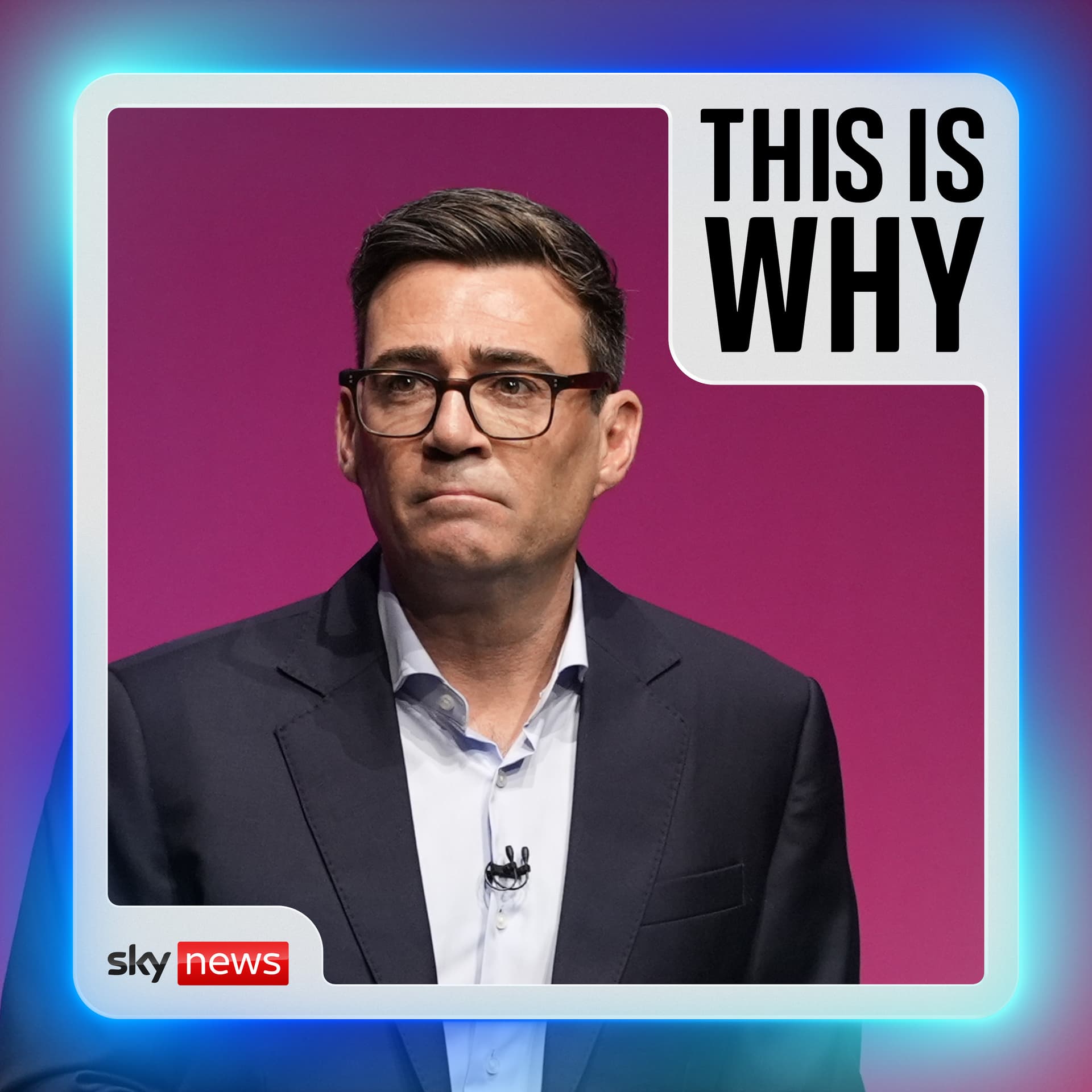
4:20They just pointed back at Andy Burnham's previous comments that at the moment a referendum is off the table. They wouldn't go any further than that. Seems like a bit of a cop-out, but probably the smart play in terms of dampening the story down. Micheal Martin, when he emerged from the meeting, he simply ignored us. And Micheal Martin very rarely does that. We said, Tisha, Tisha, can we ask you about those comments? He goes, I'll see you later, guys. Jumped into his car and drove off. Next port of call, right. What are the DUP saying? The DUP, not probably, it's fair to say, known as the most humorous players on the political stage.
4:48So DUP, Democratic Unionist Party in Northern Ireland, staunch supporters of the union, to put it, my hoodlake and remaining in the United Kingdom, of course. So what was their reaction? Nearly all of their reactions were peppered with humorous references, you know, to the punning on the whole orange thing, to comparing it to an episode of Father Ted. They were clearly of a mind that, look, if we come out with fire and fury to the president of the United States, This kicks it on for another new cycle or two. Instead, let's just play it down as a Trumpism, something that you would come to expect from Donald Trump.
5:20And then what about Sinn Féin? I mean, this should have been the biggest PR coup for living memory, really. Awkwardly, Mary Lou MacDonald, the leader, was traveling back from Paris at the time, so we didn't hear initially from her. Even more, and this is so ironic, a couple of miles away, a huge protest at Dublin City Centre. Who's there waving all their flags? Sinn Féin, because they think Donald Trump is a warmonger. Some of them think he is an actual war criminal. So you had Sinn Féin members and some elected members in that pod in the middle of O 'Connell Street, waving their flags with around them some very, very foul-mouthed placards protesting Donald Trump.
5:52And they had to pivot to, oh, what's he done now? He is now our central figurehead for Irish unity. It put them in such an awkward position. And I interviewed one of the TDs, that's an Irish MP on the street. I said, look, yeah, obviously, you know, a stop clock is right, you know, every now and again. But we still think his foreign policy is abhorrent and we still want to protest against him. And if Trump heard that, of course, he'd be like, well, what do I have to do to win these people over? Well, look, Stephen, you know as well as I do, to look forward, you've got to first look back. Just explain the history here.
6:19How did Ireland end up divided? And how did the northern part of Ireland end up British? Well, I mean, you absolutely do not have enough time in this podcast to go through the 800 years, etc, etc. But at the time of Irish independence, following the War of Independence against British rule, then there was the Civil War. What we ended up with were six counties in Northern Ireland, and they remained essentially British territory and the rest became what was then the Irish Free State. It's now Ireland. Some people call it the Republic of Ireland. Its official name is just Ireland. So there's a Protestant, a Unionist majority ever since the creation of Northern Ireland.
6:53That has changed. Demographics have changed a lot. And for the first time ever, we have a First Minister, Michelle O 'Neill, who is obviously from a Republican background and we have First Ministers in Scotland and Wales. For the first time ever, all three parts of the United Kingdom, Northern Ireland, Scotland and Wales, have first ministers in favor of independence. And that's another story. That led, obviously, from 1969 onwards in what we call the Troubles, a period of strife that killed three and a half thousand people. That was brought to an end in 1998 by a peace deal. It's called the Good Friday Agreement.
7:19I'm sorry if you can hear Max offering his views here. It's also known as the Belfast Agreement because in Northern Ireland, you can't even agree on the name of the agreement. And essentially, the power to call a referendum on Irish unity in the future is in the gift of the Secretary of State for Northern Ireland. So in other words, the British government. Okay, so if we take Donald Trump at his word, He says it's going to happen eventually. If you went to Northern Ireland today and asked people, I mean, what is the view? What are the polls telling us? I'll say no, there's still not a majority there.
7:48And the language in the agreement is left a bit vague. And I think that was probably a deliberate thing by the architects of the agreement. It is when it becomes obvious or clear or apparent, I'm paraphrasing here to the Secretary of State, that there is a majority, then he is obliged to call that referendum. But there is no specific qualification for what that is. Nobody knows. Is it 20 opinion polls in a row? Is it 20 elections in a row? Nobody really knows what that is. Polling in the South in Ireland would indicate a majority in favour, but it's probably a soft majority because we don't know what it would look like.
8:17We don't know what it would cost people down here. Much like the Brexit referendum, people wouldn't really know what the ultimate shape of the country afterwards would be. So effectively at the moment, there is no data that would suggest Donald Trump is correct to say that effectively this is an inevitable outcome. Look, this might sound a bit dark, Stephen, but in Northern Ireland, in Ireland, if you are a Sinn Féin supporter, does that necessarily mean you immediately support independence? If you are a Catholic living in Northern Ireland, does that mean that you naturally must support independence?
8:48Necessarily, but it certainly would divide along those lines generationally. Yes, that's true. But I mean, when you look at the demographics of Northern Ireland, you look at the younger generation, they don't even remember the Good Friday Agreement, let alone the dark days of the trouble. So if you ask them what their top priorities are, it'd be pretty rare that they would say the constitutional question would be right up there. They care about the same things that many young people care about down here, which is lack of housing, lack of economic opportunity in Northern Ireland. And we just find that the further you move away in time, and this is perfectly understandable and perfectly natural, from the time of the agreement in 1998, people's priorities simply change.
9:23People reach what they call the peace dividends and have what we would maybe regard as more normal priorities. As already mentioned, we are seeing the leaders of the SNP, Sinn Féin, and Welsh Nationalist Party, Plagg Cymru, they're all getting together in Cardiff. All three First Ministers now come from parties that want to leave the UK. What difference do we think that might actually make to the campaign for Irish unity? I think it's a bit early to tell at the moment, because I believe this is the first so-called independence talks that we have ever seen between the leaders of those parties. So, I mean, if you're Andy Burnham and you're looking at this, So you're thinking, well, what real ramifications or impact do we have?
9:58And Neil, you know that the mechanisms for triggering any potential Indy Ref 2 in Scotland is very different from what Northern Ireland is. And that's simply because in Northern Ireland, it is strictly laid down and governed by the terms of the Good Friday or the Belfast Agreement. Whereas in Scotland, any potential movement towards the second referendum still remains very much in the gift of Downing Street.
10:28I'm Sam Coates. And I'm Anne McElvoy. Britain has a new Prime Minister and every day from 7.45am we'll help you make sense of the day ahead in just 20 minutes. That means taking you inside Westminster with our forensic insight, sharp analysis and the stories behind the headlines. From the battles in Parliament to the conversations shaping government. We'll set you up each morning for the day ahead in British politics. Hit follow and listen to Politics at Sam and Anne's wherever you get your podcasts.
11:09What did you make of the fact that Donald Trump was very, very happy to talk about Irish unification, but when pushed about Scotland's independence, he just decided to completely ignore it? Yeah, I asked him actually. I think I was the reporter who asked him about that. he gave me the weirdest look. It was a bit of a snort of derision and marched on. When he came back, I decided to go with a different tact and asked him, well, is all this sort of pontificating about Irish unity? Is it a way of getting back at London? Because he is very unhappy with the UK government at the moment and has been really since Keir Starmer was in office.
11:42And at the start of the year when we saw the beginning of the conflict in Iran and what he perceived was a chronic lack of support from one half of the special relationship. I asked him, are you disappointed with the UK? Now, he didn't really address it as Donald Trump is wont to do. He sort of pivoted to immigration and North Sea energy, which is one of his bugbears at the moment. But there is a theory here that the reason he is going on so much about Irish unity right now is because A, he likes to play to the audience, and he thought that this would go down very well in Ireland, and B, that it could be a subtle dig at the UK government for a lack of support on a range of issues.
12:15If Scotland were to gain its independence through another referendum, another independence campaign and Scotland this time voted the other way to the way in which it did the last time. What would that mean for Irish unification? I think it would certainly give it massive impetus because if Scotland voted for independence, you're talking about obviously the end of the United Kingdom as we know it. Having granted in this hypothetical situation the people of Scotland their democratic mandate to gain independence after such a vote, it would be very, very difficult to see a world in which they would be able to reasonably deny the people of Northern Ireland a chance to go to the polls to see if they wanted to achieve Irish unity.
12:49Again, under the terms of the agreement, it would still need to be clear to London that there would be a majority in favor of independence. So that might delay things for a while. But certainly, I think any one element of the UK splitting away, I mean, you could see a sort of Yugoslavia-type situation. The dominoes will start to fall. Certainly, it would give massive impetus in that situation. But I mean, as a Scotsman, you can tell me how you think how far away we might be from IndyRef2. I think we are a distance away from it. Let me just put it like that. largely because Andy Bonham said exactly about Scotland what he has said about Ireland.
13:22But I was there in 2014 covering that referendum campaign. And the thing that struck me at the time, as someone who grew up in Scotland with a background hum of discussion about independence, was that perhaps for the first time, actually, during that campaign, people were talking about the substantive changes that would have to take place. You know, would be in a currency union, what currency would you use and so on. I mean, how much of the debate around Irish reunification looks at, for example, what would happen with pensions in Northern Ireland? What would happen with healthcare in Northern Ireland?
13:54How much is based on the practicalities? There have been polls where they have actually put out some potential real-world consequences of the vote. Because as I've always suspected, a large portion of the pro-unity vote, particularly south of the border, is a soft support. Because many Irish people instinctively think that the reunification around will be a good thing. But when you could try to drill down to things, for example, like, okay, well, we'll have to lose the tricolor. Why? Well, because to a million people in Northern Ireland, the tricolor is symbolic of IRA funerals and elements of Republican terrorism.
14:24You know, if you're creating a New Ireland, you'll have to ditch the flag. People didn't respond well to that at all. You will have to ditch the national anthem, you know, a Ron Navien, the soldier song. It's a pretty militaristic anthem here in Ireland. and again, would not represent a New Ireland where you're trying to incorporate around a million people who identify as British. So there was some polling done that put out some hypotheticals like maybe you'd have to move the capital, maybe the parliament would be in Belfast, not Dublin, things like that. It was all responded to really negatively.
14:52And that's why I think a lot of the support south of the border for unification, once you start drilling down to the nuts and bolts of what a New Ireland would actually look like and the changes that would be required and changes that we saw in places like Germany and people don't like it. And it will take a long time, I think, for people to start getting used to the idea that it is not just a case of tacking on Northern Ireland to Ireland, and that's the end product. It would be seismic change. I mean, when the Republicans and when the reunification proponents talk about a united Ireland, what place is there in it for someone who feels avowedly British and would continue to feel like that post-reunification?
15:31You see, that's the thing. That's the great unknown about this. they're just so diametrically opposed, aren't they? I mean, if you're a unionist, you want to be in the union. You don't want to be in a new union with a different country that you regard to be a foreign entity, a foreign body. And when you try to say to somebody down here who is staunchly Republican, well, if you get your way, and if the British government at some point in time calls this referendum, which would trigger a referendum from the Irish government also, you know, how about having an Orange Order march down O 'Connell Street in Dublin every summer?
16:01And you should see the look on their face. So it's very hard to sell it then to the unionist community in Northern Ireland that they will have a place, that they will be able to preserve tradition, culture and national identity, even if they are taken out of the United Kingdom against their will, but by democratic mandate for the majority and try to persuade them that they will be welcomed, like truly welcomed. And in terms of preserving that culture and identity, even though they now have been taken out of the United Kingdom and put into a united Ireland, and New Ireland, we don't even know what the country will be called.
16:34They may not want the country to be called Ireland. There are so many great unknowns in the debate, and polling has touched on some of them, but these are all really good questions that you're asking, and most people here do not have solid answers to many of them. Donald Trump is back in the United States, having said what he said, the meeting in Cardiff taking place, all done and dusted as well. How much closer, Stephen, if at all, are we to Irish reunification as a result of the Trump visit? We're not. We're not. And people should be under no doubt about this. And this is, you know, what I've been trying to get across on Sky News coverage throughout the weekend, that this is a huge amount of noise.
17:10It is unprecedented noise. It is huge PR for the nationalists, for the Republican side here on the island of Ireland. Does it move the needle substantively? Not a jot. Why? Because of the Good Friday or Belfast Agreement. It is bound. It is on a bit of paper, almost 30 years old, that has saved probably countless thousands of lives, if you look at it in that perspective. The USA was heavily involved in producing that peace agreement under Bill Clinton. Now, we all know how the Trumps feel about the Clintons, but nonetheless, the United States was heavily diplomatically invested in that peace agreement.
17:43And it still is. It's a guarantor of that agreement. So Donald Trump may shoot from the hip. He may express views that possibly other Irish American presidents held privately. Joe Biden, I don't think we really need to ask what he would be in favor of, for example. But that does not mean that this is now official US policy to lean on the United Kingdom to basically split itself up. So it is as clear as day, and Andy Burnham can be reassured by this and knows this, and it's probably why he's off jogging on a marathon as Donald Trump is hammering home and doubling down on Irish unity, until such time as it becomes clear that there is a clear Democratic majority in favor, he does not even have to think about calling a referendum.
18:23Let's just quickly talk about Max. He's only three months old, and I just wonder, when he gets to be 18 years old, how much of his life up until that point do you think will have been spent thinking about these issues? If you listen to Sinn Féin, there will be a referendum on this very issue and potentially seismic constitutional change and the end of the United Kingdom by the time this guy is starting primary school, because they say by the end of this decade, it's going to happen. No one else that I speak to consistently on this issue agrees with that. I would say Max stands a very good chance of reaching college age before we actually are in a position where this is a realistic prospect.
19:01I cannot see the British government taking this decision and then obviously the Irish government following suit to even put this out to vote. And that's before we even dig into, as I say, the softness of the support for actually the mechanics of United Ireland. I cannot see that happening, at least for a decade, maybe more. I could be wrong. I don't know, Max, what do you think? I think we're still a very long way away and Max is most likely to be growing up here. We're in Dublin, most likely to be growing up concerned about the housing crisis and economic matters and things like that, which really do seem to be more to the fore of Irish voters' minds at the moment.
19:37Having said that, Donald Trump has done his best to really reignite the debate. Well, look, Max, first and foremost, I'm so sorry that I have been stealing your daddy away from you for so long. Stephen, I'm always available for childminding. You just dropped me a line. Thanks very much indeed mate Thank you and apologies for the unorthodox surroundings
19:58And that's your lot for today but do let us know your thoughts Is Ireland about to reunite? Will Scotland get its independence? What even of Wales? Why at sky.uk is the email We're back tomorrow
20:12The most excruciating period of politics that I can ever remember After Zay as a government minister Never quite sure what the Cabinet Office did, but just hold meetings. It's gone down like a bucket of sick. I kind of thought that decades of experience meant that you weren't swallowing this vapid... Oh, blimey! Hello and welcome to Electoral Dysfunction with me, Beth Rigby. Me, Ruth Davidson. Me, Harriet Harman. And me, Jess Phillips. Electoral Dysfunction, wherever you get your podcasts.
From the publisher
It was a hole-in-one for the republican cause – the US president using a trip to his golf course in County Clare to lend his weight to the fight for a united Ireland.
The timing couldn’t have been better for the first ministers of Northern Ireland, Scotland and Wales, as they met to discuss further cooperation in the campaign for independence.
But despite Donald Trump’s insistence that he would “love to see” a united Ireland – even if that means the break-up of the United Kingdom – Westminster should not worry just yet.
Niall Paterson has been speaking to Sky’s Ireland correspondent, Stephen Murphy, about why there is not as much of an appetite on either side of the Irish border for reunification as you might expect.
Have you got a question for Niall? Email us: why@sky.uk