
In short
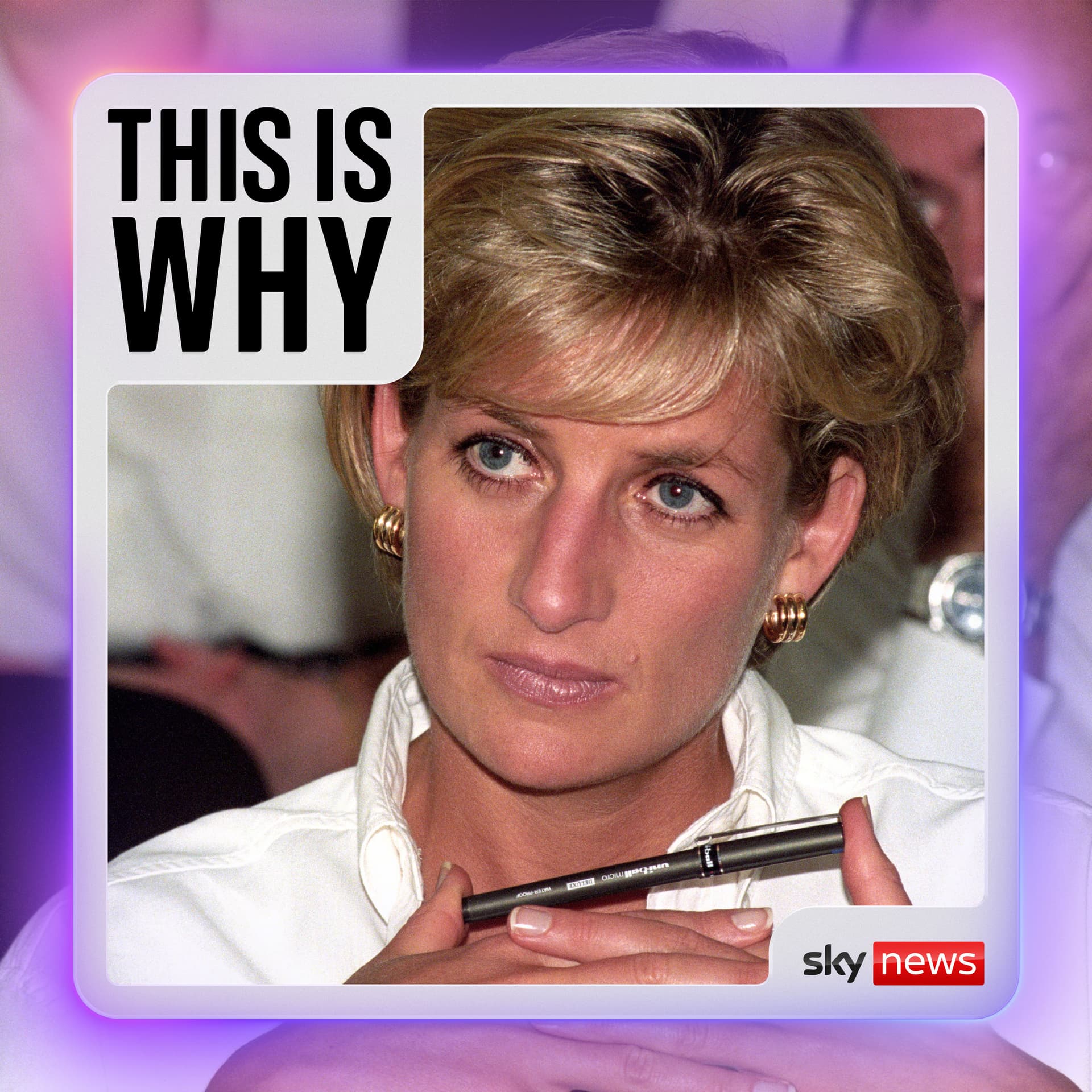
The episode discusses Charles Spencer’s Diana memoir and why it remains on sale after a major factual error. The book incorrectly says Piers Morgan was editor of the Daily Mirror when photos of Princess Diana were removed from her gym. Spencer has apologized for the job-title mistake but maintains that Morgan “snarled” when told he couldn’t attend Diana’s funeral. Morgan has called in lawyers and says the defamatory claim should not be sold; the hosts expect future editions to be corrected rather than the book being pulped.
Guests
Helen Brown, culture writer for The Telegraph, who argues memoir fact-checking is often under-resourced and that publishers may prioritize quotable revelations and newspaper serialization.
Notable examples
Salt Path memoir controversy, Lance Armstrong’s memoir and doping revelations, and Mick Jagger’s memoir money dispute.
Written by AI. May contain mistakes. Listen to the episode to check what was said.
Chapters
Tap a time to open that second in VORecollections and Memoirs
1:04 to 2:14
Discussion on the subjective nature of memoirs and the importance of accurate recollections.
“to know that two people can leave the same conversation with completely different recollections of it.”
The Piers Morgan Controversy
2:14 to 5:00
Analysis of the factual errors in Charles Spencer's book about Diana and the subsequent legal action.
“Because I suppose we're talking about two things.”
Fact-Checking in Memoirs
5:00 to 8:24
A deep dive into the fact-checking processes and the responsibilities of authors and publishers.
“hour by hour, day by day in the jobs that we do, and the seeming lack of caution that applies to book publishers, kind of confuses me a little bit.”
Power Dynamics in Memoirs
8:24 to 9:50
Exploration of the impact of power dynamics when writing memoirs and the implications for accuracy.
“And I think publishers can probably get so excited.”
Motivations Behind Writing Memoirs
11:05 to 14:00
Discussion on the reasons why people write memoirs and the emotional resonances they seek.
“The most excruciating period of politics that I can ever remember.”
Analyzing Earl Spencer's Diana Book Controversy
14:00 to 16:00
Discussion on the implications of factual errors in memoirs and public perception.
“I mean, again, what do you think Spencer might have got for forgiving the story?”
Public Interest in Royal Family Memoirs
16:00 to 18:20
Exploration of how societal interest in British royalty has shifted over time.
“He has thrown maybe Earl Spencer's wider credibility into question, and it'll just be changed moving on.”
The Changing Role of Books in Society
18:20 to 19:20
Insights into how books are perceived and their role as gifts in contemporary culture.
“I think the biggest majority of biographies, autobiographies and memoirs are sold as Christmas presents and birthday presents.”
Transcript
Automatic transcript. May contain errors.0:02Sky News. The full story first.
0:11As Errol Spencer has been discovering, recollections may vary, but facts do not. And this is why.
0:26I'm Sam Coates. And I'm Anne McElvoy. Britain has a new Prime Minister and every day from 7.45am we'll help you make sense to the day ahead in just 20 minutes. That means taking you inside Westminster with our forensic insight, sharp analysis and the stories behind the headlines. From the battles in Parliament to the conversations shaping government. We'll set you up each morning for the day ahead in British politics. Hit follow and listen to Politics at Sam and Anne's wherever you get your podcasts.
1:03Hi everyone, Neil here, and look, I've had enough run-ins with my mother over the years to know that two people can leave the same conversation with completely different recollections of it. I'm usually the one with the more accurate version, obviously. But that naturally subjective insight is part of what makes a memoir worth reading. We want somebody's memory of a life, including the bits nobody else could have seen. Charles Spencer's book about Diana wrongly placed Piers Morgan as editor of The Mirror when photographs were taken off her at a gym. Spencer has apologised for that assumption, but stands by his claim the journalist snarled with annoyance when he was told he couldn't attend the funeral.
1:44Piers Morgan has called in the lawyers. Well, we are going ahead with the legal action, despite his apology. Apology's fine. If you want to apologise, fine. I don't care either way. What I care about is that this book does not go on sale containing this defamatory lie. For the record, my mother has yet to involve her solicitor in any of our disagreements, though that might be about to change after this podcast. Helen Brown writes about culture for The Telegraph. Helen, how big a cock-up is this? Because I suppose we're talking about two things. The idea that Piers Morgan growled when he was told he wasn't going to go to the funeral, and, of course, the factual error that's made its way into the book, that he was responsible for the publication of those photos.
2:28I mean, I think we can say that recollections may vary about tone of voice between two highly emotional men, you know, a moment of extreme, extreme emotion three decades ago. I think we all might have, you know, our memory can play this sort of game of Chinese whispers with ourselves. You know, we tend to exaggerate things. So the tone of voice, OK, we can let that go. But I think the crashing factual error about what Piers Morgan's job was at that time, that's quite embarrassing. And Piers Morgan is absolutely right to call it out. I think he's, you know, he's been quite cool. He said, I'm not being a victim about this.
3:02But Earl Spencer calls himself a historian. This is a historical inaccuracy. It's quite a big cock up, isn't it? Yeah, it really is. And I suppose it begs, well, it begs any number of questions, but predominant amongst them, you know, What is the fact-checking process for a memoir of this type? Absolutely. And it's a messy area. I mean, as a journalist, I'm really not allowed to make any mistakes. And I'm always hugely grateful to the fact-checking departments of newspapers. I mean, the Financial Times fact-checking department is so spectacularly accurate that if I'm writing about a pop single, you know, they will come back to me and say, oh, you've said that this song was released in 1979.
3:44we found it was released as a German B-side in the October of 1978. You know, I mean, and that's something that, you know, very little import, very little weight, and they will come back with that. Memoir can be a little more fluid. We can't expect publishing houses. They just don't have the resources to do this. And in fact, oftentimes it's on the author. So often authors will actually employ a fact checker. I've just looked at the rate at that, about 40 or 50 quid an hour to pay somebody to fact check your work. So it's quite steep. In some cases, you might get a publisher to, you know, split some of the difference, go 50-50 on you.
4:18But if you're the ultimate expert on something, so you're, you know, you're an expert in the history of the harpsichord or something, you've spent, you know, the past 30 years combing the records for every detail about the genesis of the harpsichord. There's no way that we can employ someone to spend 30 years double checking all of those manuscripts for you. But I think fairly obvious facts of public record, births, deaths, who was in what job at what time, we ought to be able to trust you. And there is an extent to which, yes, we can't expect the publisher to be accountable for that, although they should probably be applying a smell test.
4:53But, you know, if you mess that up, then that is on you. And ultimately, it will reflect on your credibility. The parallels between the journalism and the caution that you and I have to display hour by hour, day by day in the jobs that we do, and the seeming lack of caution that applies to book publishers, kind of confuses me a little bit. I was going to say it's overwhelming. I once had a very successful singer-songwriter talk to me during the Me Too allegations. She came out and told me about a marriage during which she had felt coercive control throughout the entire marriage. The newspaper's legal department were very unhappy with this, even though it was in her own book.
5:30So that's interesting. She'd written about it in songs and in a book. But when she discussed it with me in an interview, the newspapers legal weren't happy. We then went so far as getting her ex-husband to write us a legal document saying that he wouldn't take legal action against her, that yes, his recollections of some of the events vary, but he did hold his hand up to a degree of coercive control that he was not aware of being coercive control at the time, even then the newspaper's legal department wouldn't go with it. But in the same singer-songwriter's book, she was allowed to put it all in.
6:02So there is this gulf in terms of the caution that we display in journalism and publishers display in at least this particular corner of publishing. But if you name someone in a newspaper article generally, or an institution or something like that, you generally have to afford them a right of reply. When it comes to something like this Diana book by Earl Spencer, well, he doesn't. Yes. No, I mean, we, you know, I'm, you know, I'm used to writing that little boilerplate line, you know, whoever it is has been contacted. They don't have to get back to you. I just did a big story and a boundary dispute.
6:36I spent ages actually emailing and phoning everyone back. I didn't get the people to comment, but I absolutely given them that opportunity. And you would think that in a case of people at this high level, but I mean, you know, someone like Piers Morgan, we all know when he was in those jobs. You know, my kids who are terrible at Googling, despite being Gen Zs, they could have done this. They could have fact-checked this. Is there perhaps a broader problem, though, with publishing memoirs in general? I mean, Penguin's been here before, haven't they? We've covered it on the podcast. I mean, the Salt Path came out, was billed as a factual memoir, an accurate kind of account of events, and it turned and it was absolutely nothing of the sort.
7:17Absolutely. And again, I actually reviewed that book and interestingly, I failed to pick up, you know, the husband's miraculous recovery from the condition he's accused to have because I wasn't well informed about that. So even as a reviewer, you can't be expected to, you know, know all the details of everything. But I did include a line about, you know, it sounded a bit fishy how they lost the house. And that didn't appear in the published review of the book. And I suspect that was a legal omission. There's another interesting case when Lance Armstrong published his memoirs about his huge success in cycling.
7:51Then obviously it turned out that, you know, he's taking performance enhancing drugs and some readers actually attempted to sue him in California. In the end, it was thrown out of court. But, you know, we as a reader, you know, we do have to take a lot on trust. We cannot be the expert. The downside for these people, someone like Earl Spencer, he's got quite a lot to lose, I would say, by making these kinds of mistakes. I mean, we've already seen the argument, the dispute he's had with the king. You know, again, it throws into question his recollection of those events, doesn't it? So it's your own credibility that you're laying on the line when you do this.
8:28And I think publishers can probably get so excited. Oh, this is a tiff with Piers Morgan. They think they've got a juicy headline. They can see that translating into sales when they should actually be maybe being a bit more careful. We are, and rightly, being quite lighthearted about this at this point. You know, we look at the people who are involved in it, King Charles, Earl Spencer, Piers Morgan. These are all figures of influence. But if someone in a position of power writes a memoir and makes reference to someone who does not share that position of privilege and power, I mean, the power imbalance there would suggest that actually, I mean, you can get away with quite a lot in a memoir if you want to.
9:06Yes, exactly. I mean, you know, I have spoken to relatives, you know, of people who've written memoirs who have been deeply upset by the way they have been portrayed. And you really don't get that right of reply. It's incredibly painful, I think, to be written about inaccurately. And, you know, in this case, this is two guys with an awful lot of power and an awful lot of platform. So Piers Morgan can call it out. I don't think it's going to get pulped, but future editions will be corrected. But yeah, in the main, I think it's incredibly difficult, especially in some of these misery memoirs. And we have a long history of misery memoirs where the relatives have contested what has been said about them.
9:44People in the salt path have, you know, contested what has been said about them. It's really unpleasant. And there's not an awful lot they can do about it, except for speak out to their intimate circle. And if these books do become huge, then, you know, they can go to the newspapers. And I think, you know, it's interesting. It's very British of us, isn't it? in that British readers didn't enjoy the story of the salt path so much as they enjoyed the story of the lie of the salt path. And, you know, I think, you know, journalists like me will now be on the lookout for anyone who wants to put their hand up and say, I was misrepresented in my son, ex-wife, you know, cousin's memoir.
10:22I think, you know, those are the stories.
10:38Evening. Buyer's remorse. Buy a new car? I'll be moving in. Let's get started. Sorry, I think there's been a mistake. I bought it from Carvana. You what? Yeah, great price. I even have seven days to love it or return it. So there's no... No, no buyer's remorse. More like buyer's rejoice? I guess I'll let myself out. Congratulations. I mean it. Buyer's rejoice. Buy your car today on Carvana. Limitations and exclusions may apply. See our seven-day return policy at Carvana.com. The most excruciating period of politics that I can ever remember. I have to say, as a government minister, never quite sure what the Cabinet Office did, but just hold meetings.
11:16It's gone down like a bucket of sick. I kind of thought that decades of experience meant that you weren't swallowing this vapid... Oh, blimey! Hello and welcome to Electoral Dysfunction with me, Beth Rigby. Me, Ruth Davidson. Me, Harriet Harman. And me, Jess Phillips. Electoral Dysfunction, wherever you get your podcasts.
11:44Helen, I want you just for a second to try and put yourself into the mind of Earl Spencer and others who write books of this type. I mean, in your experience, why do they do it? There's a whole host of reasons. There's the obvious wanting the money. I mean, And many people will comment on, you know, Earl Spence as sort of having complained about his sister's life being, you know, laid out for public consumption only to kind of go and hawk it in the public bazaar. Sorry, Helen, just on that. I mean, how much money could we be talking? Millions. Millions for some of these people. I mean, the most famous example of somebody making a lot of money from a memoir and then having to hand it back was Mick Jagger famously had to hand back the money from his memoir because he couldn't remember everything that happened to the Rolling Stones.
12:29he went to Keith Richards, asked Keith Richards if he could borrow the Keith Richards diaries. Keith Richards like, you know, told him exactly where to go. He was going to write his own book. And when he did write his own book, of course, he famously referred to Mick Jagger's tiny Todger. So there's an unhappy bit of fallout. But yeah, you know, a lot of people really, really do have, you know, I think lots of people have important stories to tell. And the memoir is, I love what's happened to the memoir in recent years. The process of memoir, somebody looking over their life, learning those lessons, crystallising those lessons into beautiful sentences that resonate with readers.
13:10You know, it's incredibly powerful and successful. So it's a beautiful form and it is a literary form. Nobody is going to be accurate. But a lot of people have a story to tell. They have lessons to pass on. They are often looking at slivers of life. You know, you might be looking at sort of the history of your neurodivergence. You might be looking at the history of, you know, what it's like to be a single mother or, you know, illness memoirs. You know, I've just been through a long cancer journey. I've actually steered away from cancer memoirs. It was the last thing I wanted to read about when I picked up a book, but I saw they were incredibly popular on the chemotherapy ward.
13:42So people are looking for these things. And to be honest, they're not always reaching into them for the factual truths, but for the emotional resonances, which they can find when somebody has spent, you know, decades exploring it and then honing it into these thoughtful sentences. There is also another incredibly lucrative revenue stream that emerges from the memoir these days, and that's the newspaper serialisation. I mean, again, what do you think Spencer might have got for forgiving the story? And let's not forget this, the absolute beautiful detail in this story to the Daily Mail, which is currently chasing his nephew for several million pounds.
14:16Yeah, we are probably looking at six figures, aren't we? I The Run of the Mill journalists like me, it's often incredibly frustrating how much you'll get paid for those things. And, you know, oftentimes they sell a lot more than the books. Now, a lot of politicians' memoirs, very few people actually pick up those complete books, but do want to skim through the edited highlights in a newspaper and newspapers will get a lot of headlines out of them. I mean, lots of the memoirs are written with that in mind. These are the headline moments and that's how they'll run. So people will construct a memoir around the kind of the quotable grabby bits that can be stuck onto the front page of the Daily Mail and other websites under some sort of salacious headline.
14:59I mean, publishers are looking for the revelations even before the book's done. Yes, for sure. For sure. They'll be thinking, you know, OK, this is this is the serialization section. Yeah, yeah, yeah. Does that not rather increase the risk that the finished product might be more fantasy than nonfiction? I don't think it necessarily increases that risk. There might be sort of, you know, can you get all of this story into this section? We are looking at this being a quotable chunk. But again, those are the moments when, you know, as me as a journalist, I'm wondering, well, if you knew this was what was coming, why weren't you checking?
15:35Why weren't you running a fact check on that? Let's stick with the example of El Spencer's Diana book and what we think might happen next. I mean, as things stand, I believe El Spencer has apologised. We believe that future editions will be amended, but book at the present. It's not heading to be pulps, we don't think. We don't think so, no. I think, you know, Piers Morgan's, you know, cleared the record. I think he still is taking legal action. I think he's looking at donating that money to the King's Fund. He's called out this mistake. He has thrown maybe Earl Spencer's wider credibility into question, and it'll just be changed moving on.
16:12Well, just on that then, I mean, when we have such an obvious and glaring factual error in a book such as this, when you have a figure with a public platform, as we both mentioned, as substantial as that of Piers Morgan, does that one factual error mean you have to read everything with a slight scowl on your face and an inquisitive mind? I think it's going to depend on the person, you know, and I think we respond to memoirs as we would to an individual in the rest of our lives. It's how we respond to people in general, isn't it? So, you know, I think everyone is going to react differently to that mistake.
16:46Like, I mean, the wider truth that Princess Diana was treated appallingly by the press, I think, isn't called into question. So it depends if you're the kind of reader who wants to focus on how shocking it was that those pictures of her in the gym were published. Whether you're the kind of reader who thinks, well, you know, I'm particularly concerned about Piers Morgan. The wider truth is that an editor of the Daily Mirror at that time did run those pictures, and he's absolutely correct in that. So, you know, you can take the Earl Spencer's wider message about press intrusion into Princess Diana's life.
17:22It is true. Those events occurred. The man he names as responsible is not the guy who did it. What do you think, Helen, the publication of Spencer's Diana book actually tells us about the British public and their fascination or lack thereof with the royal family? rewind 15 years in my career. Diana was never off the front pages of a couple of the newspapers. That has significantly changed. And I just wonder, are we as bothered as we were once upon a time? I really don't think we are. I've got teenage children. They were really interested in the story of the salt path. Isn't that interesting? I wonder what that says about maybe the democratisation of media, that anybody can be a celebrity.
18:03They're sort of like, oh, we don't really care who Piers they kind of know who Piers Morgan is, but Princess Diana, it is a memory to them. I mean, I think there's a section of the Daily Mail reading population who will, you know, again, they'll gulp down those serialisations. I think the biggest majority of biographies, autobiographies and memoirs are sold as Christmas presents and birthday presents. So you kind of think, oh, she liked Princess Diana once I'll get this for Christmas. I've read some statistics years ago about, they're the least read books because people just give them to, people buy them, give them as gifts.
18:37Oh God, what are we going to get Uncle Jeff? Oh, he went to that Robbie Williams concert. We'll get him the Robbie Williams book. He's never, you know, it turns out he was dragged along by some mates from work. He doesn't like Robbie Williams. He's never going to open that Robbie Williams book, but it's a nice hardback. It's going to sit on his shelf for the rest of his life. I don't think the Royals occupy, I don't think books occupy quite the same place, unfortunately, in people's lives. Although I'm hoping it's coming back. I had a chat with Richard Osman the other day, and he was saying the pendulum of culture is definitely swinging back to books.
19:05But I don't think the appetite for the big royal memoir is there. Also kind of suspect, maybe there's a loss of appetite for some of the score settling that's maybe gone on in this book as well. We're all kind of looking for some good news stories, aren't we? Yeah, we certainly are. Helen, thanks so much for your time. Really appreciate it. Pleasure. That's your lot for today, but do remember to email us your thoughts The last time we covered Charles Spencer's book, plenty of you got in touch, including Diane. She says, throughout history, these fringe aristocrats have tried to rock or replace the monarchy.
19:38Is this another example? And anonymous emails, why should the world not know the truth? Indignation from Buckingham Palace cannot expunge the facts. Why at Sky.UK is the email. We are back tomorrow.
20:02I'm Sam Coates. And I'm Anne McElvoy. Britain has a new Prime Minister and every day from 7.45am we'll help you make sense of the day ahead in just 20 minutes. That means taking you inside Westminster with our forensic insight, sharp analysis and the stories behind the headlines. From the battles in Parliament to the conversations shaping government. We'll set you up each morning for the day ahead in British politics. Hit follow and listen to Politics at Sam and Anne's wherever you get your podcasts.
From the publisher
Recollection may vary, but the facts do not.
That’s something that was lost on Princess Diana’s brother in his new book about his sister’s life - which managed to squeeze in a mistake about Piers Morgan amongst its bombshell claims about the King.
The former Daily Mirror editor is now suing Earl Spencer and calling for the book to be pulped. So, what checks take place when a memoir is written? And why does the format allow people to publish unproven claims?
Niall is joined by the journalist Helen Brown, who writes about culture for The Telegraph.
Have you got a question for Niall? Email us: why@sky.uk