
 Ask ChatGPT



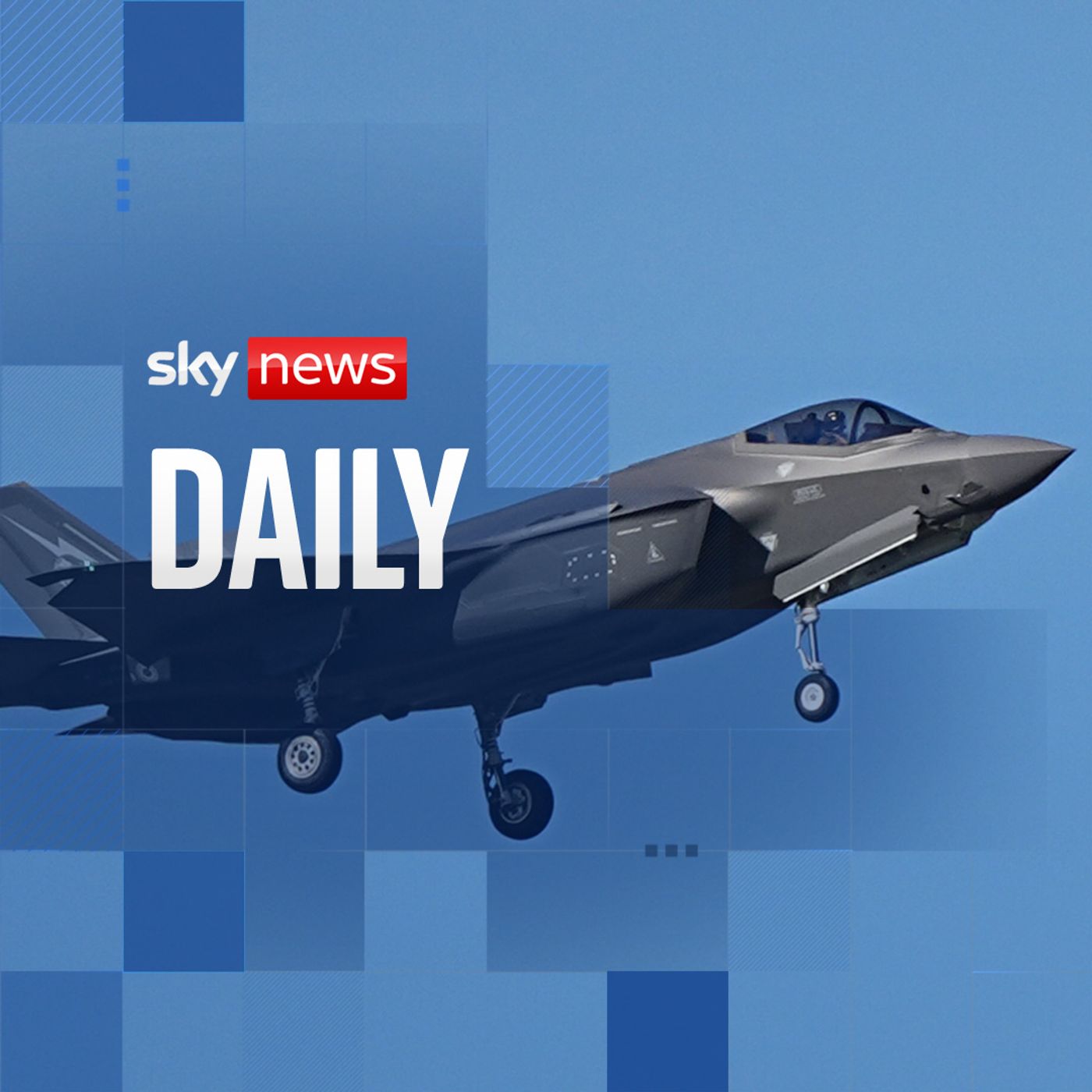
The UK’s planned purchase of 12 nuclear-carrying F-35A fighter jets, why it’s happening, what the jets can do, and how it fits NATO nuclear sharing and defense spending goals. It also briefly warns about online sadistic groups targeting vulnerable children.
Dr Thomas Withington (award-winning expert in air defence and security).
The jets add tactical nuclear delivery capability to the RAF, reflecting heightened European threats since Russia’s 2022 invasion of Ukraine. “Nuclear-capable” means the aircraft can physically carry heavy nuclear weapons and has command-and-control safeguards (including concepts like Permissive Action Links) to prevent accidental detonation. The UK’s role connects to NATO nuclear sharing using US-supplied B61 bombs (with Germany cited as an example). The move is described as a significant nuclear capability strengthening in a generation and a return to Cold War-era missions (e.g., WE-177/Tornado), though with US-supplied weapons raising custodial questions.
F-35A Alpha models; US B61 nuclear bomb; NATO nuclear sharing (Germany mentioned); Cold War “Protect and Survive” civil defense; Russia reportedly considering tactical nuclear use in Ukraine.
Written by AI. May contain mistakes.
Discussion on the UK's purchase of F-35 jets for nuclear capabilities.
“Online sadistic groups are targeting vulnerable children.”
Exploration of the capabilities and historical context of the UK's nuclear-capable jets.
“The F-35 stealth jets, which can carry nuclear warheads.”
Analysis of how the UK's new jets fit into NATO's nuclear strategy and relationships.
“And these new aircraft and our capability is a riposte to that threat.”
Discussion on public and political reactions to the UK's shift towards nuclear preparedness.
“we're having a completely different conversation when we talk about the UK and its defence systems.”
Considerations on the future of defense spending in the UK amid changing threats.
“And it's certainly the most serious I've seen since the Cold War.”
Explore the UK's preparedness for nuclear threats and the importance of public awareness.
“We want our kids going to a good school and we want our streets safe.”
Discussion on the alarming risks that online groups pose to vulnerable children.
“The Sky News Daily will be back again tomorrow.”

Get the gist, explore an idea or ask about something said.
 Claude
On This Is Why, what are the key points of this episode?
Searching your listeningAutomatic transcript. May contain errors.
0:00Online sadistic groups are targeting vulnerable children. The sheer amount of potential victims is astounding. It's a very real threat and it is here in the UK. It will always shock me. A young boy could commit such awful offences. Some of the content has been the worst I've ever seen. Parents need to be aware of what can happen on these sites. Find The Calm on Sky News YouTube. Hello, it's Sarah J. Me on the Sky News Daily today. Coming up, why is the UK buying nuclear-carrying fighter jets? Online sadistic groups are targeting vulnerable children. The sheer amount of potential victims is astounding.
0:49It's a very real threat and it is here in the UK. It will always shock me. A young boy could commit such awful offences. Some of the content has been the worst I've ever seen. Parents need to be aware of what can happen on these sites. Find The Calm on Sky News YouTube. Sir Keir Starmer announced to his NATO allies that the UK is buying new jets. The F-35 stealth jets, which can carry nuclear warheads. It's a sign of the government's increasing defence spending and it's been called the most significant strengthening of the country's nuclear capability in a generation. So what exactly can these jets do and will they help prepare the country for the challenges that lie ahead?
1:39Here to help us understand is Dr Thomas Withington, an award-winning expert in air defence and security. Well, Dr Thomas Withington, thank you so much for joining us on The Daily. I'll call you Tom for the purposes of this, because this is a very informal chat about something extremely serious. We're hearing a lot about these new fighter jets, 12 of them. What exactly is it that we've bought? Well, what we've bought are 12 very advanced F-35A Alpha models. and the reason for the procurement of these aircraft the purchase of these aircraft is to enable those planes in part amongst other things to be able to deliver tactical nuclear weapons should that ever be required and heavens forbid it ever is but it's essentially an additional capability for the royal air force but having this additional capability is very interesting because it takes the RAF back to a capability that it maintained until the immediate years following the Cold War.
2:46It was a force that really, since the intervening years after the end of the Second World War, up until the end of the Cold War, a few years beyond that, was able to deliver nuclear weapons from the air. And so the intervening years saw the RAF abandon that capability. But now it's going back to that capability. And it won't surprise your listeners to learn that that is a reflection of the heightened threats, the serious strategic situation we find ourselves in in Europe. And these new aircraft and our capability is a riposte to that threat. Yeah, it's a real hark back to a different era almost, isn't it?
3:28You've explained a little bit about what they can do but how is it that they work what makes these jets different essentially during the cold war used to hear people talk about nuclear capable aircraft but what that effectively means is an aircraft that is capable of delivering a nuclear weapon which these new planes of the uk is going to acquire can do now that means a number of things from a technical standpoint. Firstly, it means that the aircraft can physically carry that weapon. Nuclear weapons, by virtue of using fissile materials like uranium and plutonium, both of which are materials that are incredibly dense, make nuclear weapons very heavy.
4:10So the aircraft has to have the physical power to be able to lift that weapon and convey it a certain distance at certain speeds to its intended target. But beyond that, beyond the physical capabilities of the aircraft, it also refers to the fact that the aircraft has the necessary command and control systems in place to be able to deliver and then probably detonate that nuclear weapon. Now, that's an important factor because by their very nature, the very destructive power, Nuclear weapons are something that you don't want to go off accidentally for very understandable reasons, but also you want to make sure that they only ever detonate when they're intended to.
4:57Now, there's a number of safeguards that are in place to do that, that countries around the world who have nuclear weapons use. The Americans have a thing called Permissive Action Link or PAL, military love acronyms. And PALs are a series of alphanumeric codes that are entered into the weapon either before a mission or during the mission that effectively allow that weapon to become live to be able to be used in anger. There are a lot of other safeguards in place, but the aircraft that deliver these weapons or anything that delivers these weapons, submarine or whatever it might be, have to have these very strict command and control systems in place installed within them to enable these weapons to be used safely.
5:40So that's another dimension to the design and the performance criteria of these aircraft that the UK will acquire. It's quite the pivot for the UK, isn't it? I mean, it feels like within a couple of weeks, we're having a completely different conversation when we talk about the UK and its defence systems. How does this fit in with our role within NATO? Well, it brings us into the NATO nuclear sharing arrangements. I mean, we already declare our Trident missile-based nuclear deterrent to NATO. So should NATO need to use nuclear weapons for whatever reason, then the Royal Navy's Vanguard-class submarines and their Trident missiles become part of that response or part of that plan.
6:27But NATO also has these nuclear sharing arrangements with a number of nations, which would basically deliver US-supplied nuclear weapons. So in this case, the B61 nuclear bomb, that's the actual weapon, would deliver those weapons under NATO guidance using their own aircraft. So how that works in practice, for instance, I believe Germany is one of the nations that is part of the NATO nuclear sharing arrangement. So their aircraft would deliver these US-supplied weapons against NATO-nominated targets. And from what it sounds like, I mean, there's still a lot we don't really know about this new arrangement with the aircraft that we're procuring.
7:08But what I imagine is that the UK becomes the latest country that is an addition to these NATO nuclear sharing arrangements and the countries that already make up that coterie of nations. This is a significant strengthening of nuclear capability. It's been described as the most significant strengthening of the UK's nuclear capability in a generation. this is hugely significant isn't it yeah i mean i think i maybe would be tempted to take some of the hyperbole out of that perhaps it is a significant step and then it's a return to a mission that the raf had before the rf had the we 177 nuclear bomb which it could deliver from its tornadoes now an aircraft that's now retired amongst other platforms and so it was already a force that could perform the tactical nuclear mission.
8:00So in a sense, it's a return back to the status quo ante. It's a resumption of that mission, albeit with new aircraft and with new weapons. The key difference here is that in the Cold War with the WE-177 and the tornadoes, the RAF owned both of those capabilities. It was an RAF weapon delivered by RAF aircraft. Things are slightly different here in the sense that yes there are AF aircraft but they will be US supplied nuclear weapons. So that then raises questions about what are the custodial arrangements regarding that setup? Where will these weapons be stored? There's a lot of questions here that still need to be worked out.
8:42It feels like a massive change in direction for the UK. To you does it feel like a proportionate change in direction? It feels like only a matter of months ago when we were talking about defence spending, the government was talking about cyber security being the biggest threat to the UK. Now we seem to be talking about nuclear weapons. The nuclear threat in Europe is very clear and it's very apparent. And I think that's been the case really since the February 2022 invasion of, or second invasion of Ukraine by Russia. And bear in mind, Russia did reportedly consider using tactical nuclear weapons at one stage in that conflict and was apparently talked out of it by the US and China.
9:24I mean, I spend a lot of time up in the Baltic and this sense of threat is very, very apparent. It's how I imagined West Germany and the inner German border felt during the Cold War. And I think the nuclear threat to the UK and the nuclear threat to Europe is very, very real. And it's certainly the most serious I've seen since the Cold War. And I do remember the years of the Cold War. I remember living with the nuclear threat being very present. So it feels like a return to that. And I think it is an appropriate response on behalf of not only the UK, but NATO more generally. This change of policy then, it has been seen by many as being reactionary.
10:07But in your mind, has it been on the cards then for some time? Oh, that's a really good question. So it's very hard to say whether this has been a sort of long-standing plan. It is possible that it has been discussed since relations with Russia deteriorated and tensions increased. The war in Ukraine shows no immediate signs of ending. The political situation in Russia shows no immediate sign of changing for the better. and therefore you have to be credible regarding your adversary, in this case Russia, to sort of send the message that as NATO we're deadly serious and we're prepared to have all the capabilities we need, including the ultimate capability, which is nuclear weapons, to deter any further aggression by Russia against the NATO area.
10:58And NATO is a defensive alliance at the end of the day. So I think from that perspective it made sense. Yeah, it's worth talking about Donald Trump and his feelings about European contributions to NATO. There is the feeling that the need to keep the US president on side has prompted allies to agree to an increase in defence spending and national resilience to a new target of 5%, which Donald Trump has long talked about 5 % of GDP by 2035. How do you think this will affect the UK's relationship with Donald Trump? I mean, I think what this does indicate is that European nations are very serious about the Russian threat and are very serious about preparing themselves for that with or without US assistance.
11:43One of the arguments I often make to people is we hear a lot of one way traffic, if you like, from the US that Europe needs to do more to strengthen its defences. It can't ride on the coattails of the United States. I often push back against this and say, well, actually, the US is as dependent on European security as we are on the US. It's a complete symbiosis. If you take the US trade with the Baltic alone, it's Westonia, for instance, I think 2024, it was worth a billion dollars per year. And that trade relationship is protected by European militaries. So the US needs Europe as much as we need the US.
12:20But this does show an important signaling of intent that Europe is getting very serious about its defense. And crucially, I think it's interesting your question concerning Donald Trump, because assuming that this is going to be a U.S. supply deterrent, they're going to be U.S. supplied aircraft. This does tie in the U.S. into European security. It gives the U.S. a skin in the game, which is very, very important. And it's buying U.S. kit. So, you know, it does show that the Europeans are serious about having a transatlantic security relationship underpinned by things like the F-35 and the supply of these B61 nuclear weapons.
13:04As we've been reflecting, European and UK defence is evolving. Tom, what do you think we could expect when it comes to defence spending over the coming years? I mean, this is being seen as a big pivot today. But looking at the longer term picture, what are your thoughts? You know, 5 % is a significant amount of GDP and it will take some time to get there. One of the things I've been thinking about this for a while is that this will require some difficult decisions. And the reason it will require that is because, firstly, we have in Europe, All of our populations, for understandable reasons, are concerned about all elements of government spending, whether that's health spending, education, whatever it might be.
13:51So it's very, very difficult to start saying you're going to increase defence spending at the expense of other things. We're all voters, we're all taxpayers. We like the potholes in our roads being filled in. We like to get a GP appointment. We want our kids going to a good school and we want our streets safe. They're not negotiable things. They're just as important. And because of that, I think one of the things Europe needs to think about far more is how do we get far more collaborative in our defence procurement? Because the more we work together, the less expensive things become. And it's something that I do hope politicians explore in more detail in the coming years.
14:27Let's make that 5 % really count. And let's make sure it's not done at the expense of all of the other government services that we all depend on at the end of the day. Tom, as we stand today, how ready do you think the UK is for the nuclear risks that we expect the country to face? When you heard the news about the government's procurement of these nuclear carrying fighter jets, how did you assess our readiness? I think that's a really good question. It depends what you mean by readiness. And I know that's a very kind of academic answer. If you mean population resilience, that's a very difficult one.
15:09I think we have to be very, very honest with the UK population about how serious the threat is. And it's very serious. So I think, you know, the governments, it's not just governments, but as a society as a whole across Europe as well, we need to talk about this. And we need to do it in a very frank and adult way that we face an unprecedented threat to our way of life because that's what this is. But it also reminds me of back in the Cold War, we had lots of things like civil defense programs, many of which were ridiculed as being, well, if there's going to be a nuclear war, realistically, what can you do to protect yourself?
15:49You may not remember this, but I remember reading documents, there was one called Protect and Survive, that sort of told you if nuclear war is going to look likely, whitewash your windows because it will reflect heat blast and hide under the table with loads of cushions on top of you and you'll have a good chance of survival. I mean, you know, this was not World War II. I mean, this would be nuclear war and your chance of survival would be probably quite slim. So a lot of those efforts were widely ridiculed. But I think part of that resilience is not ever getting into that situation in the first place.
16:27And by having the conversation, you demonstrate a readiness to tackle these subjects. And you're signaling again to your potential adversary, look, we're serious about this. And hopefully that gives your adversaries second thoughts and time to pause to say, well, yeah, let's avoid this too. And by having that as the basis of the discussion, hopefully you start to have a more productive conversation about easing tensions across the board. Tom, thank you. A really thoughtful, insightful and sobering conversation. Thank you so much for your time on The Daily. Really appreciate it. And that's it for today.
17:02The Sky News Daily will be back again tomorrow.
17:08Online sadistic groups are targeting vulnerable children. The sheer amount of potential victims is astounding. It's a very real threat, and it is here in the UK. It will always shock me. A young boy could commit such awful offences. Some of the content has been the worst I've ever seen. Parents need to be aware of what can happen on these sites. Find The Calm on Sky News YouTube.


