
In short
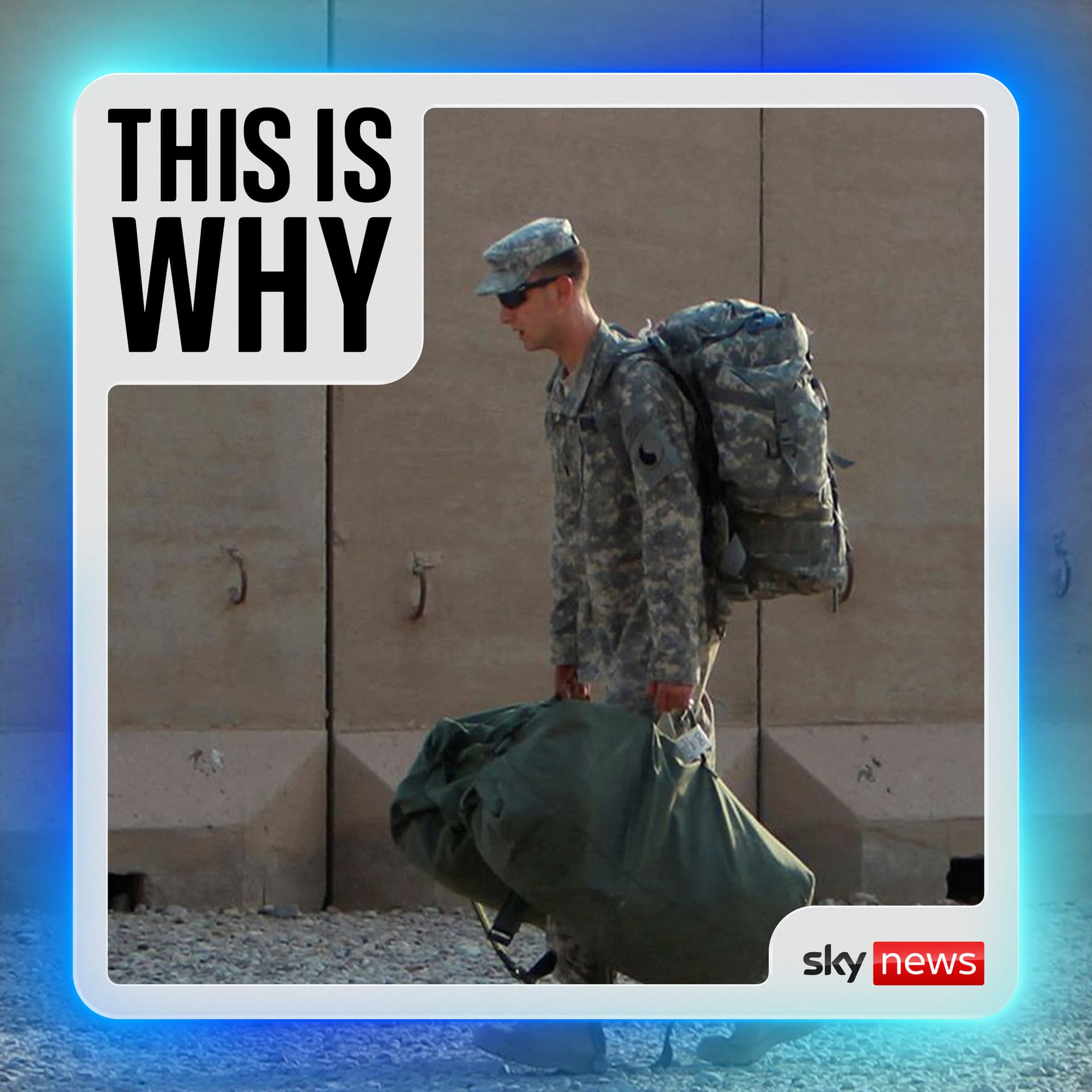
Why the US says it has completed withdrawing troops from Iraq, despite the US fighting Iran, and what that means for Iraq’s security against ISIS and Iran-backed militias.
Guests
Rob Clark, defence analyst; served in Iraq and Afghanistan. Deployed to Basra in 2008 with the infantry, during the tail end of the British/American Charge of the Knights operation; later focused on training and mentoring Iraqi forces.
Key claims
US troops left Iraq in 2011, returned in 2014 to fight ISIS, and now the mission has ended. Trump says Iraq doesn’t need the military; oil companies will expand partnerships. Withdrawal is driven by Biden-era plans to remove forces by Sept 2026, with US repositioning to Jordan. Iraq can deter ISIS militarily but struggles with air defence and intelligence; major political challenge is managing Iran-aligned Popular Mobilization Forces (PMF), which are largely not disarmed.
Notable examples
Basra deployment; ISIS “defeated militarily but not ideologically”; PMF embedded in Iraqi governance/economy; Patriot air defence redeployed to Jordan; Iranian proxy pressure on Saudi oil infrastructure.
Written by AI. May contain mistakes. Listen to the episode to check what was said.
Chapters
Tap a time to open that second in VOAmerican Military Presence in Iraq
0:45 to 2:10
Discussion on the timeline of American military involvement in Iraq and recent withdrawal.
“Electoral Dysfunction, wherever you get your podcasts.”
Rob Clark's Insights on Iraq
2:10 to 5:20
Rob Clark shares his experience in Iraq and the dynamics of military operations.
“Obviously, everyone's aware of the war in Iraq, the American and British-led war in Iraq to al-Saddam Hussein in 2003.”
Current Challenges in Iraq
5:20 to 7:40
Analysis of the current security challenges facing Iraq after U.S. withdrawal.
“You know, ISIS were never really defeated.”
The Role of Iranian Proxies
7:40 to 9:50
Exploration of the influence of Iranian-backed militias within Iraq's political sphere.
“What they can't handle is the big political questions surrounding the Iranian proxy militias, which is going to be a huge conflict within the Iraqi government itself going forwards.”
Future of Iraqi Defense Capabilities
9:50 to 12:20
Discussion on the capabilities and weaknesses of the Iraqi military post-withdrawal.
“What they lack significantly is that intelligence picture, that intelligence estimate.”
American Withdrawal and Its Implications
12:20 to 14:03
Examination of the implications of the U.S. withdrawal from Iraq in the context of regional stability.
“and always have been, and likely always will be.”
US Troop Withdrawal from Iraq
14:03 to 16:10
Discussion on the implications of the US troop withdrawal from Iraq under the Trump administration.
“Yeah, I think the Americans are in a bit of a hard place really regarding Iraq, particularly under the Trump administration.”
Reflections on Service in Iraq
16:26 to 18:49
Exploration of personal experiences and the long-term impacts of military service in Iraq.
“I get asked this quite often, to be fair, and it's a shame because the two are very separate.”
Transcript
Automatic transcript. May contain errors.0:02Sky News, the full story first.
0:11America's withdrawal from Afghanistan ended in disaster. Iraq can't afford to repeat. And this is why.
0:21The most excruciating period of politics that I can ever remember. I have to say, as a government minister, never quite sure what the Cabinet Office did, but just hold meetings. It has gone down like a bucket of sick. I kind of thought that decades of experience meant that you weren't swallowing this vapid. Oh, blimey! Hello and welcome to Electoral Dysfunction with me, Beth Rigby. Me, Ruth Davidson. Me, Harriet Harman. And me, Jess Phillips. Electoral Dysfunction, wherever you get your podcasts.
0:56The American military says its withdrawal from Iraq is complete. And your first thought might be, hold on a second, I thought that happened years ago. Well, it did. American troops left in 2011, eight years after the invasion that removed Saddam Hussein. Then in 2014, they came back at Iraq's request to help fight Islamic State. That mission has now ended. Donald Trump set out his view back in July, sitting alongside Iraq's Prime Minister Ali al-Zaidi at the White House. Well, we don't think we need the military there anymore. It's a very big operation. and what we do have is the oil companies are all going in now and they're doing partnerships with Iraq and they're getting along very well.
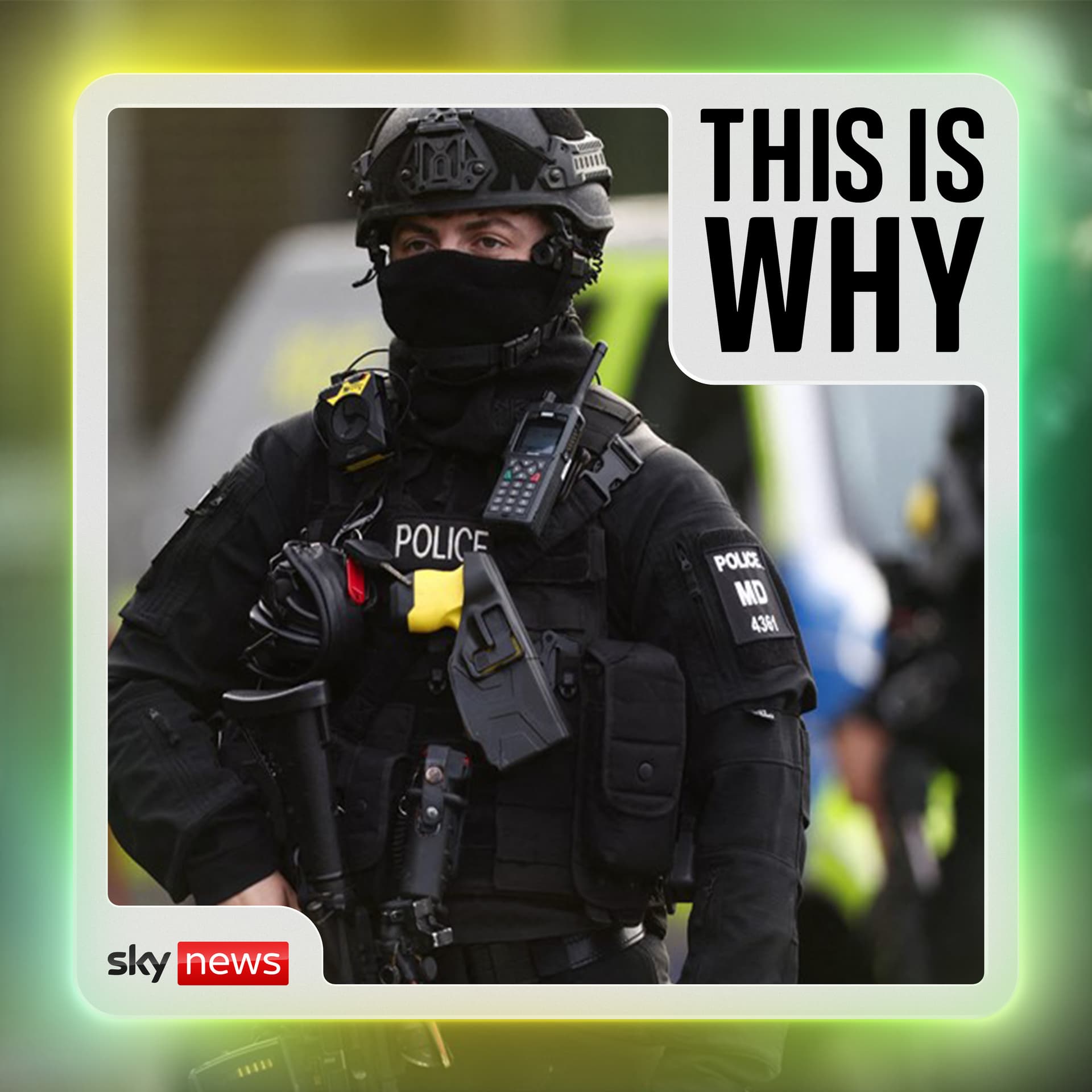
1:40Iraq's government welcomes the withdrawal, but Islamic State still has fighters there, not to mention the powerful armed groups backed by Iran, who, of course, just happen to be at war with the United States. Rob Clark is a defence analyst who served in both Iraq and Afghanistan. Rob, for someone hearing this news, listening to this podcast and going, hold on a second, I didn't realise the Americans were in Iraq. What have they been doing there? I mean, so it's important to note from the beginning that the Americans, and others including the British and other allies, have been in Iraq almost continuously since 2003.
2:15Obviously, everyone's aware of the war in Iraq, the American and British-led war in Iraq to al-Saddam Hussein in 2003. That concluded in 2011. Then there was the three-year break, on and off. And then in 2014, the United States led the US-led coalition against what was then the Islamic State in Iraq and Syria, ISIS, which I think most people have heard of and were aware sort of the last decade. they took enormous swathes of Iraqi and Syrian territory due to the internal fracturing within those countries. And then really the last sort of seven or eight years since then has been mainly a training, mentoring, some intelligence sharing and where needed some actual ground strikes as well, particularly by special forces.
2:58So it's been this pattern of almost a quarter of a century nearly of unbroken primarily American military involvement in Iraq. Where does your own experience fit into the story? You were in Iraq yourself, weren't you? When were you there and what were you doing? So I deployed in 2008, six weeks after basic training in the army. I was in the infantry. We deployed to Basra. It was at the tail end of the Charge of the Knights operation, which is basically the final British and American-led mission to oust, finally, the Iranian-controlled, Ba 'athist-aligned Shia militias in Basra in the south. Just explain Ba 'athist for me.
3:33So the Ba 'athist regime was basically from the 1970s and 1980s onwards, the predominant political faction that controlled Iraq and also affiliated with neighbouring Syria as well. And that was obviously the Saddam Hussein regime. Now, that was ousted by the Americans, the British in 2003. And then for about four or five years, the British and the Americans were engaged in pretty gruelling counterinsurgency operations in Iraq, losing many casualties. The British lost 179, the Americans just under 4 ,000. So this was a very sort of high intense counterinsurgency campaign, which tailed off by the time I arrived in Iraq in 2008.
4:08And by that point, it was primarily training and mentoring the Iraqi forces to take over their own security responsibilities. And the fruits of that really we can see now fulfilling today, you know, 15 years later. When you were there, though, did you ever anticipate that this would be a military operation that would last so long? I mean, in your mind back then, what would a successful conclusion to this operation have looked like? It's a really good question. I don't think anyone who deployed in that time, you know, during the so-called global war on terror, really envisaged that we would still have forces, you know, 15, 20 years later.
4:43I think in terms of what a successful outcome would have looked like at the time, it was always for the Iraqi government of the day to handle their own internal and external security arrangements. Now, fast forwarding 15 years later to the present day, it's even more fragmented and even more challenging for the Iraqis. They're in multiple struggles with the Iranian controlled militias in Iraq. They have the Iranian regime themselves to deal with. We have the escalating war in the Middle East between the United States, Israel and Iran. And it's the remainder of its proxies. And now we also have the renewed ISIS campaigns as well.
5:22You know, ISIS were never really defeated. They were defeated militarily, but as an ideology and as a political movement, you know, they just sort of went to ground for a few years, building up support. Why it matters today is ISIS have notoriously, you know, sought to exploit internal division and weakness politically in countries. And now we have this power vacuum where the US have left their remaining bases. and it's the question going forward I think for Iraq is are they going to be in a position to you know secure their own security going forwards particularly with ISIS. All of which begs another incredibly important question why on earth now why would the Americans choose to leave Iraq even in the diminished numbers that they had when they're at war with the country slap bang right next door?
6:07Yeah so I mean this has been a product really of about two two and a half years in the making under the previous administration of Joe Biden, they agreed to withdraw all US forces by September 2026. It's been known for about two and a half years. So they've incrementally increased their withdrawals over the last sort of 18 months or so. But crucially, it's not a case of the United States completely abandoning Iraq or the Middle East. They are repositioning the vast majority of their forces in neighbouring countries, particularly in Jordan. So when we come to the current conflict with Iran in the Middle East and the Straits of Formos and the control there, a lot of those forces are actually being repositioned to basically better defend and prepare against, you know, that escalating situation now.
6:52So it's actually quite an interesting time in that sense for force repositioning with the United States. I'm just a bit confused as to whether the judgment is, you know, Iraq is ready to take control of its own security or the United States has done as much as it's willing to do. I think there's definitely a degree of both. I think there was always going to be a shelf life for the American support, particularly politically for Iraq, given the legacy, given even the current administration under Donald Trump was elected under this idea of no more, you know, forever wars and to bring forces home or at least out of conflict zones.
7:26But I think there's a positive sound note regarding the capability of not just the Iraqi government under the new al-Zidi government this year, but also the Iraqi security forces. Look, they are probably quite capable of deterring ISIS attacks or ISIS advances, territorial advances. They can handle that. What they can't handle is the big political questions surrounding the Iranian proxy militias, which is going to be a huge conflict within the Iraqi government itself going forwards. You know, notoriously, Donald Trump almost vetoed the previous prime minister for being seen as too strongly aligned with Iran.
8:02So now the Iraqi government have got an incredibly tight position to balance where they have to be forceful against the Iranian proxies and stand up to Iran, but then also not to completely distance themselves away from the American support, which they are still reliant on going forwards. Rob, if you can, compare and contrast the Iraq that you saw up close and personal when you were deployed there with the Iraq of 2026. Oh, I mean, it's light years ahead. I think the difference when I was in 2008, there was still a sense of hopelessness. There was still this sense of it was very much a broken country, very fragmented.
8:35Sectarian violence was absolutely destroying the country. But more importantly, the violence in Iraq then was destroying, like I say, not just the country, but the sense of a future going forwards, a civil society, a strong economy, the foundations for a successful functioning society. Now, those building blocks have absolutely been put in place. it's up to the Iraqi government to actually ensure a strong civil service can continue whilst dealing with the security situation it's going to have to grapple with. So it's in a much more optimistic position, but I think the challenge is they're still there for sure.
9:07Rob, things have changed though with the Americans going. I mean, imagine for a second you are an Iraqi general heading into the office tomorrow. What could he do today that he can't do tomorrow as a result of the American withdrawal? There's clearly going to be weaknesses and capability gaps with the Americans leaving and they're the areas that the Iraqis are going to be struggling with. So in particular is air defence. Patriot battery missiles have been redeployed almost certainly to Jordan. Now these were really, really important for the Iraqis, particularly given the ongoing situation with Iran in the Middle East.
9:36But air defence in general is a key capability weakness in Iraq. More importantly than that though is the intelligence picture. So whilst the Iraqi army and the Iraqi security forces, broadly speaking, are quite good at conventional warfare and, you know, keeping a hold of internal security. What they lack significantly is that intelligence picture, that intelligence estimate. Now, the Americans have said that they will carry that on in some form going forwards. And I think they will, because obviously a strong Iraq is in everyone's interest, not least the United States, particularly vis-a-vis Iran.
10:07So I think they can count on that, but they're going to have some serious gaps going forwards. And I think a big test coming up will be, you know, any sort of renewed ISIS offensive for the Iraqis to actually intercept that. Like I said, ISIS have basically gone to ground over the last few years, but they're picking up a bit more support and they will absolutely seek to exploit this power vacuum. So for the ability for Iraq to deal with that in the next sort of six to 12 months, I think is going to be really, really important. And you've got to imagine there will be plenty of people in Baghdad and elsewhere thinking back to 2011 and the American withdrawal, only for forces to have to return a handful of years later.
10:44I mean, what makes this time different? How much do we know about the Iraqi capacity to defend itself? It's actually broadly quite good regionally in context for the threats that Iraq face internally, mainly internally and externally. I mean, the Iraqi government itself in the last 12 months has suffered enormous internal domestic upheaval. or the elections last year that carried on into this year. You know, it's a period of about three or four months where it didn't have a functioning government. But the Iraqi security forces themselves have actually continued to train and equip, supported from the Americans still.
11:13And it's important to note, like I say, the Americans will continue supporting from afar. So I don't think the situation is as bleak as people may first, or indeed I first thought. Sure, but let's try and flesh out if we can the Iranian dimension to all of this. I mean, Tehran is cheating from the rooftops that the Americans are pulling out of Iraq. Why is this such a big deal for the leaders in Iran? Well, I mean, look, this comes after a six or seven-month campaign where the Iranian leadership has been, you know, absolutely decimated, in particular its military leadership. In the last 18 months, two years, we've seen their proxies, Hezbollah, almost completely dismantled and decapitated in Lebanon and Syria.
11:51We've seen Hamas reduced to an absolute military shell of its former self, again, another regional proxy. The Houthis are really only the last remaining Iranian proxy military force in the region, and they have their complete own agenda, different to the Iranians. So there's often conflict there between the two. That leaves the Iranian-controlled militias, particularly the Popular Mobilization Forces, which is, you know, a collection of militia groups and tribal identities aligned to the Iranian leadership more closely than they are to the Iraqi government, and always have been, and likely always will be.
12:24Now, just like many of Iran's proxies, they have their own motives, they have their own internal sort of agendas. But the PMF are the most closely aligned with the Iranians. So much more than Hezbollah, much more than Hamas, much more than the Houthis. So that's why they're incredibly useful to the Iranians and almost intrinsic. A lot of these forces hold very prominent positions in local politics, in governance, in the economy. You know, it's not just a case of these are people walking around with small arms, intimidating local politicians. They are absolutely embedded into the Iraqi civil society and state infrastructure.
12:58So when we talk about they're going to be disarmed, I can't see it happening because they are so vast. They are so well controlled by the Iranians. And that control is still very much a prominent feature. It's not been weakened by the current conflict with Iran. If anything, it's been emboldened and strengthened. So the ability for Iran to still maintain control in Iraq through its proxy militia forces is huge at this time where the majority of Iranian proxies have been, like I say, virtually decimated in the last two years. The question is how strong the new Iraqi government will come down on them going forwards.
13:32I think there's going to be a grace period. Like I say, I think they've been given until next June to disarm. I can't see that happening without conflict. I don't think that necessarily means it's going to be a return to some form of civil war scenario, but it certainly makes the internal security system a lot more challenging and fragmented. So again, I just find myself struggling to see the logic in an American withdrawal at a time when, you know, some of these groups said, we are holding on to our weapons because the Americans are here. Yeah, I think the Americans are in a bit of a hard place really regarding Iraq, particularly under the Trump administration.
14:07Like I said, they campaigned on this idea of ending forever wars, of bringing American forces home, or certainly repositioning them away from conflict zones or zones of chaos like the Middle East. So there's been an immense amount of pressure on Donald Trump to continue what was agreed upon, you know, two and a half years ago under the Biden administration to withdraw from Iraq. That didn't mean it had to happen now. And I think, interestingly, there's a separate question whether the Americans could have delayed this or certainly sought to have Iraqi support to delay this troop withdrawal until the Popular Mobilisation Forces had disarmed fully.
14:40Like I said, that was supposed to happen at the same time concurrently, and it hasn't. It's about 80 % at least of them haven't actually disarmed. and I think now that the American forces aren't going to be there, it's going to be really, really hard for the Iraqi government to press that on their militia forces, like I say, without having great internal power structure vacuums and the security challenges that will come with that. And coming back to your question about Iran and how important this is for them, they will absolutely seek to squeeze that because look, even though the Americans have withdrawn their military forces from Iraq, they still have enormous energy and economic interests there.
15:13We can see the Iranian-controlled Iraqi militias have already begun targeting Saudi Arabian oil pipelines and infrastructure to the south of them. So the ability for them to attack American infrastructure in Iraq and their economic interests is obviously quite heightened.
15:33I'm Sam Coates. And I'm Anne McElvoy. Britain has a new prime minister, and every day from 7.45am we'll help you make sense of the day ahead in just 20 minutes. That means taking you inside Westminster with our forensic insight, sharp analysis and the stories behind the headlines. From the battles in Parliament to the conversations shaping government. We'll set you up each morning for the day ahead in British politics. Hit follow and listen to Politics at Sam and Anne's wherever you get your podcasts.
16:10When you look back at your own service in Iraq and you recall the conversations, the many conversations you all have had with colleagues and friends who have been serving there in whatever capacity in the years since, what do you feel that you and your comrades actually achieved? I get asked this quite often, to be fair, and it's a shame because the two are very separate. So we can see now in Iraq in 2008 when I was there, it was very much this feeling still within the Iraqi population of hopelessness, of despair. The sectarian violence at that time, it absolutely gutted the Iraqi population. And the security situation that the British and the Americans did have in Iraq internally enabled things like the Iraqi security services to develop, to be equipped, to train.
16:57It was a very long process. I don't think anyone imagined how long it would take. And we're in a situation now where it does look like, fingers crossed, the Iraqi government and the Iraqi armed forces can take control of their own security. Rob, what would a prolonged conflict, you know, we keep hearing from Donald Trump that he can sort this out in five minutes, it never seems to materialise. What effect would a prolonged conflict with Iran mean for Iraq's future prospects as regards its security? If it's prolonged, so we're talking into next year onwards, we hear lots of speculation that it may come to an end by the end of this year.
17:34I think that's hopeful at best. If the Iranians manage to outlast the American appetite for a quick finish, the effect on Iraq is one of two outcomes, really. It's they will continue pressing their popular mobilisation forces, one, not to disarm, two, to take up arms or continue taking up arms against the Saudi Arabian oil infrastructure to put pressure on America. and then also more worryingly for America will be to start issuing attacks against American interests, which is still in Iraq, particularly the oil infrastructure. Now, that will obviously have implications for the Americans, whether they come back in, whether they increase their strikes on Iran and it escalates the war in general, but also the effect that will have on the Iraqi economy, which is just showing signs for the last year or two of quite strong recovery.
18:19They're in a position now where they're incredibly vulnerable, where they can either develop far more quickly in the next couple of years because of the oil revenue and the security situation internally, or it can destabilise massively. And if it destabilises because of continued Iranian pressure on the militias vis-a-vis America, then like I say, it'll have pretty catastrophic effects for Iraq. So it's undoubtedly Iraq want the conflict with the United States and Iran to draw to a close fairly rapidly. Rob, great to have you on the podcast. Thanks so much for your time. Pleasure. Thank you. And that's your lot for today but do remember to get in touch with your thoughts whenever we cover matters defence on the podcast we always have plenty of them so email me why at sky.uk We'll be back tomorrow.
19:22and deadly. It takes a look inside one of the darkest corners of the internet and the disturbing community that exists there, exploring how young people can be drawn into it and the devastating consequences that can follow. It's a story that's difficult to hear, but one I think is really important to understand. You can find The Comm on the Sky News app, website and YouTube channel.
From the publisher
Since the fall of Saddam Hussein more than two decades ago, the US has had a near-continuous military presence in Iraq... until now.
The last troops have been withdrawn, ending a process started by Joe Biden and endorsed by Donald Trump. But the timing of the departure has been questioned - with the US still at war with Iran.
According to Iraqi security experts, the withdrawal could give Tehran and its proxies free rein, while also risking a comeback from the Islamic State terror group.
So, why have Americans decided to leave Iraq now? And what will it mean for the future of the country - and stability of the wider region?
Niall Paterson is joined by Sky's military analyst Robert Clark, who served in the British military in Iraq and Afghanistan.
There is more exclusive analysis and content on the conflict in the Middle East on the new Sky News Defence Insider app.
Sky News Defence Insider is a subscription app designed for audiences seeking deeper insight into defence, security and global affairs.
Download and subscribe here.
Paid subscription required for full access. UK only. 18+. T&Cs apply.