In short
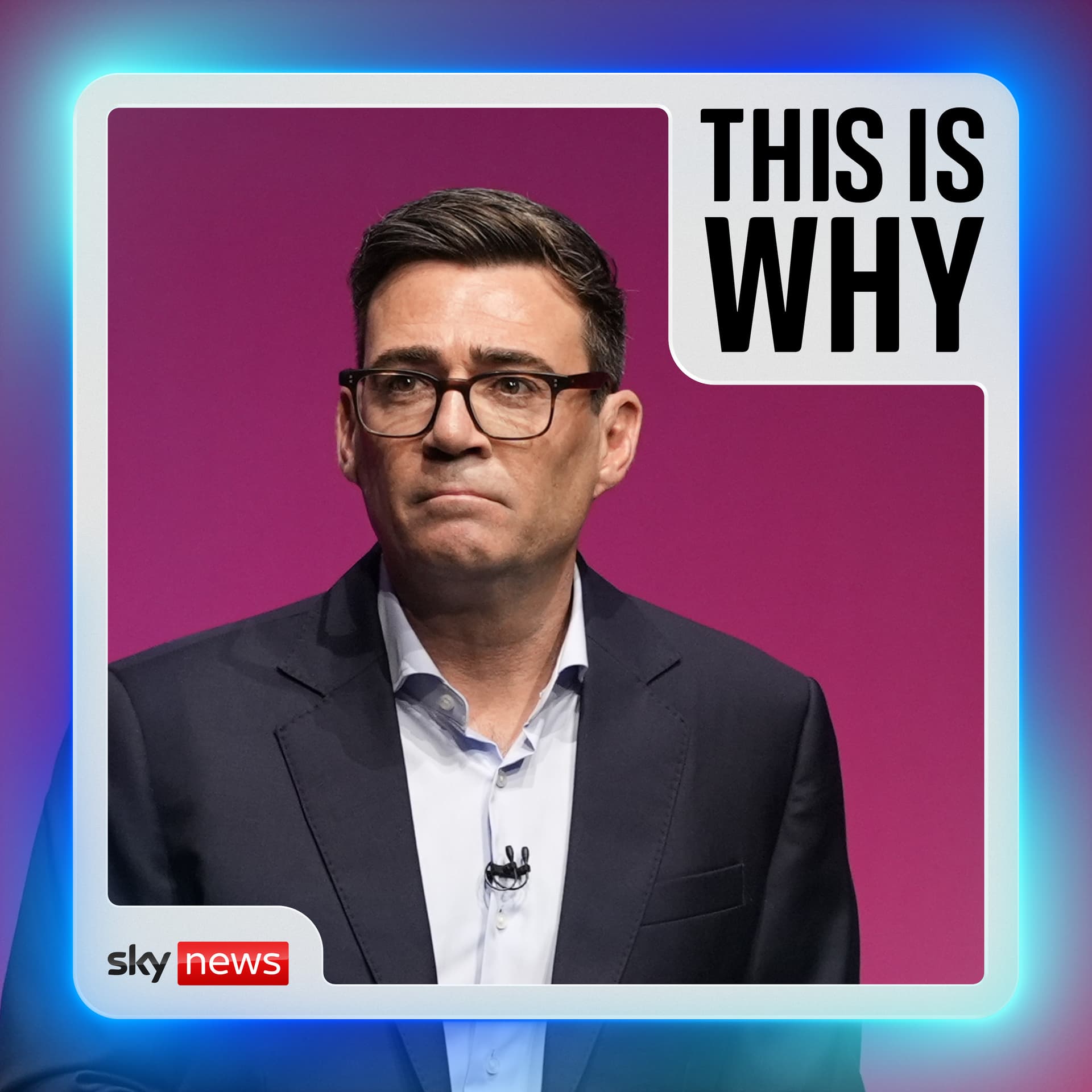
The episode explains why Andy Burnham’s Labour leadership is seen as “third time lucky,” and what his “Manchesterism” will mean for governing the whole UK, including early cabinet choices, faction management, and priorities versus Reform UK.
Guests
Aubrey Allegretti, Chief Political Correspondent at The Times. Background: long-time UK political reporting; interviewed on Burnham’s path from MP/minister to Greater Manchester mayor and Labour leader.
Key claims
Burnham’s appeal comes from uniting Labour while retaining a distinct regional identity; it’s harder to balance competing Labour factions from Downing Street than from Manchester. His Hillsborough campaigning shaped his politics and aligns with Keir Starmer on the “duty of candour” law. He’ll likely avoid early tax rises and focus on cost-of-living measures, devolution, and energy/bus support.
Notable examples
Burnham’s “King of the North”/COVID stance against top-down restrictions; Greater Manchester business growth; Hillsborough law drafting with Starmer; cabinet speculation: Shabana Mahmood as Chancellor, Ed Miliband as potential Foreign Secretary, and possible returns for Streeting, Heidi Alexander, Angela Rayner, Louise Haigh, and Lucy Powell.
Written by AI. May contain mistakes. Listen to the episode to check what was said.
Chapters
Tap a time to open that second in VOAndy Burnham's Political Landscape
0:11 to 1:12
Discussion on Andy Burnham's rise within the Labour Party and his vision for politics.
“How does a banana trigger a CIA-backed coup?”
Who is Andy Burnham?
1:12 to 2:24
Aubrey Allegretti details Andy Burnham's background and political journey.
“Andy Burnham there promising a different kind of politics after being formally confirmed as Labour leader.”
Burnham's Political Strategy
2:24 to 4:32
Analyzing Burnham's political strategies and challenges throughout his career.
“Aubrey, great to have you with us on This Is Why, your debut performance, and what a day I suppose to do it.”
The Impact of Hillsborough
4:32 to 6:28
Exploring how the Hillsborough disaster influenced Burnham's political stance and advocacy.
“He is somebody who's been sort of, I suppose, criticised for twisting in the wind politically.”
Burnham's Beliefs and Identity
6:28 to 8:21
Discussion on Burnham's personal beliefs and their influence on his politics.
“And Keir Starmer almost sort of picked this up when he became prime minister.”
Burnhamism: A Governing Philosophy?
8:21 to 10:38
Debate over whether Burnham's regional policies can translate to national governance.
“But I think people like a politician who has sort of deep personal feelings and a story to tell.”
Cabinet Assembly and Political Battles
10:38 to 12:34
Speculation on Burnham's cabinet choices and the political dynamics at play.
“And I'm just wondering if there might be an analogy in there.”
Balancing Political Appointments
12:34 to 14:00
Discussion on the balancing act Burnham faces in appointing his cabinet.
“on who's going to be around the cabinet table yet, have they?”
Cabinet Dynamics and Role Assignments
14:00 to 16:48
Discussion on potential cabinet roles and the balancing act within Labour.
“who won't necessarily disrupt a lot of the what's called treasury orthodoxy and potentially could be much more pugnacious on things like benefit cuts.”
Factionalism and Burnham's Leadership
16:48 to 19:55
Exploration of Andy Burnham's stance on factionalism and past criticisms.
“Now that could be a recognition that the writing was on the rule for Keir Starmer and trying to sort of try and find a way through under a new leader.”
Show all 11 chapters
Burnham's Political Priorities and Challenges
19:55 to 22:54
Analysis of Andy Burnham's political priorities and the challenges he faces as leader.
“But actually, we have yet to see much of the detail about how he's going to win back these voters.”
Transcript
Automatic transcript. May contain errors.0:02Sky News, the full story first.
0:10Andy Burnham has seemingly united the Labour Party, but inside Dining Street he can't keep being all things to all people, and this is why.
0:22How does a banana trigger a CIA-backed coup? Do AirPods herald the arrival of a new global order? What do LED lights say about the future of humanity? I'm Ed Conway, and in each episode of my new podcast, Stuff Matters, I take an object, crack it open, and reveal the world-shaping forces hidden inside. This is economics told through the things we think we understand. Search Stuff Matters on your podcast app to listen and follow. We are united and we put the power that comes from that unity at the service of people and places who have been waiting too long for politics to let them hope again. That's what we're going to do, everybody.
1:09We're going to give them hope back. Andy Burnham there promising a different kind of politics after being formally confirmed as Labour leader. On Monday, he'll become Britain's next Prime Minister, completing one of the more remarkable political comebacks in history. Because ten years ago, Burnham looked like a man whose moment had passed. He'd served in the cabinets of Tony Blair and Gordon Brown, lost two Labour leadership contests, and was preparing to leave Westminster altogether. But it was in Greater Manchester that he finally became the politician he'd struggled to be nationally. Visible, emotionally fluent, fiercely regional And apparently rather more certain about what he believed Andy Burnham is still kind of in the place where he's having his caking and eating it He's saying he wants to be all things to all people Whilst being distinctively Andy Burnham It's not quite clear what sacrifices he is willing to make And there is the problem, or at least the test It is much easier to embody several competing versions of Labour from Manchester Than it is from behind the big desk in Downing Street So who is Andy Burnham?
2:13What is the Manchesterism he now wants to bring to the rest of the UK? And once the difficult choices begin, how different will he really be from Sir Keir Starmer? Aubrey Allegretti is Chief Political Correspondent at The Times.
2:29Aubrey, great to have you with us on This Is Why, your debut performance, and what a day I suppose to do it. But before we look forward, you've got to first look back. Andy Burnham, who is he? What in his upbringing made it a necessity that he would end up as a Labour politician and indeed in a couple of days a Labour Prime Minister? Andy Burnham's been on a very long path to this moment when you consider that his first leadership bid stretches back 16 years ago and that he's been an MP going back even further than that. He was born in one of the Liverpool suburbs of Aintree, but his father, a telephone engineer, took a post in Manchester, which is why he's sort of hailed as being sort of more associated and from there rather than Merseyside.
3:14And he's obviously spoken about some of his big political heroes in the past being people like Neil Kinnock and Margaret Beckett, who represented sort of big post-industrial towns in the north. And it's really sort of through trying to champion those areas that he's earned this moniker as the King of the North. He had served as an MP for some time, including his cabinet as health secretary. And we know that that's driven a lot of his frustration with one of the big policy areas that he's talked about wanting to grapple with, which is social care. He's also, of course, been a sort of big leading figure as a metro mayor.
3:49So he's had quite a lot of pronouncements on Labour in opposition and in government as well. He has the sort of benefit of both, therefore, being outside of the tent and being able to criticise it with some detachment without taking responsibility for the national government's policies, whilst also having been a figure sort of closely associated with the party. Take us back to that time when he was a Member of Parliament and specifically when he was a minister in both Blair and Brown's governments. How was he viewed back then? Because I recall him as being popular, well-liked, but not necessarily considered the most heavyweight of the new Labour politicians.
4:27Yeah, I think that's right. I mean, he was effectively a government loyalist and rewarded with a series of promotions. He is somebody who's been sort of, I suppose, criticised for twisting in the wind politically. He made reference to that in his first speech as Labour leader today. He didn't quite explicitly mention the joke, but it went that there is a sort of Blairite, a Brownite, a Corbynite, and a Milibandite who all walk into a bar and the barman says, hello Andy, what are you having? In reference basically to how his political allegiances seemed to switch depending on the leader that he was working under at the time.
5:02And in some ways, that was an effective political strategy. It meant that he did remain at the top end of the Labour Party for quite a long time. But it was in 2017, really, when Labour seemed to be consigned to the wilderness years under Jeremy Corbyn, that he left and decided that he'd be able to exercise much more power as the mayor of Greater Manchester, which he has done to relatively good effect. It's seen massive sort of business boom there. There's been lots of investment and growth as well. Manchester's sort of outpaced lots of other regions in the country. And so it's that kind of micro-success, not to diminish the importance of the area, but it's that success in that sort of regional area that Burnham is now trying to replicate on a much larger scale.
5:44As you say, he certainly, you know, around the time 2015, 2016, struggled to define himself politically. But, you know, certain events seem to have shaped him quite fundamentally. and one of those was Hillsborough. Just explain that. Andy Burnham has been a big campaigner for the Hillsborough families and it was he working actually with Keir Starmer in I think 2017 who both tried to draft an original version of the Hillsborough law which effectively placed a duty of candour on public officials to tell the truth. That was obviously because in the aftermath of the Hillsborough disaster there were multiple cover-ups and state failures that compounded the weight for justice that families of the 97 victims had to face.
6:27And he sort of tried to make it his raison d 'etre. And Keir Starmer almost sort of picked this up when he became prime minister. It was, if you like, one of his biggest passion projects, which was facing real threat by the end of his leadership not to have become law, because the campaigners and victims' families felt that it didn't go far enough. So there was real concern. And Andy Burnham had been effectively sort of on these campaigners' side, saying that the bill wasn't tough enough and he worked with Keir Starmer behind the scenes over the last couple of weeks to try and get it into a place where it was acceptable to the families.
7:01And that was where we heard the first contribution of Andy Burnham from the backbenches, where he was talking about how he'd been working with Keir Starmer to try and make this law. It hasn't yet got there, but it is probably the one piece of shared common ground that Andy Burnham and Keir Starmer have, given there's been quite a lot of bitterness between them over the last few months. Look, what about his personal beliefs? I mean, Andy Burnham is Catholic. I mean, he says that he isn't particularly religious, but that the teachings of the church, the social teachings kind of underpin his politics.
7:35I mean, do you see any evidence of that? Absolutely. I mean, we obviously learned from Tony Blair's government when Alistair Campbell famously said, we don't do God, that sometimes there is a sort of reticence on behalf of voters to see religion mixed up in politics. And you haven't often seen prime ministers that keen to talk about their faith. And there's been, you know, sometimes an effort to kind of bring the state and religion together in a way that is quite unique in sort of international comparisons, considering the UK is, I think, one of only two countries in the world which has spaces in its legislature reserved for members of the state religion.
8:15Those being the bishops that sit in the House of Lords. I think the only other country where that's the case is Iran, where they have clerics. But I think people like a politician who has sort of deep personal feelings and a story to tell. And in Andy Burnham's case, anything that he can do to sort of show that he's got a grounding that goes beyond the political makes him more distinctive and it makes him more believable. So I wouldn't be surprised if we hear more about that. As mayor of Greater Manchester, we've heard it called a couple of things, Burnhamism, Manchesterism. Do you see a coherent governing philosophy or just a handy catch-all for all the things that Andy did whilst he was mayor?
8:54I mean, you speak to different people and you get variations of those different answers. So on the one hand, they say you have somebody who became a real sort of figurehead, not just for the city, but that's how he earned his sort of moniker, the King of the North. They point to the sort of huge attention that he got during the COVID pandemic when he was sort of fighting against the almost sort of top-down kind of imposition and the frustrating lack of financial support that was being given to places in the tier that Manchester was put into. They say that he earned this slogan that he campaigned on, Our Andy, he's for us.
9:30But then there are lots of critiques from the other side of the spectrum of people who say that actually what he did was sort of allow huge development in Greater Manchester, which kind of brought in lots of private investments, but with relatively sort of little public return, and that he's been able to reap the economic rewards and benefits of something that was already starting to happen in the UK. So between those two things, he's got to now navigate how he can change Manchesterism into something that befits the whole country. Because you even hear it from MPs who say, there are lots of rural seats that Labour picked up at the last general election who are concerned that he's going to, if you like, sort of forget that there are large pockets of poverty and deprivation in the South.
10:13That includes in the South West. So he's still got a lot of convincing people to do that. He can be, as he described, MP for all regions and nations in the UK. Yeah, just in terms, though, of the successes, I mean, what's your assessment, Aubrey, of how much of that was down to him? Undoubtedly, Andy Burnham has been a remarkable cheerleader for Manchester. But the thing about cheerleaders is they stand at the side of the pitch and they don't tell the players what to do. That's someone else's job. And I'm just wondering if there might be an analogy in there. I genuinely think he's got a sort of record to be proud of insofar as the economic growth of Manchester has far outstripped a lot of other regions in the UK.
10:50And he's also done it with a sort of relatively small political team. He was a real sort of figurehead who led Greater Manchester through the sort of economic boom that it's been through. I think when you look back to one of his Greater Manchester mayoral campaigns, he won literally every single award in Greater Manchester. And so that was a recognition of the fact that there was a sort of real deep respect, affinity, maybe love is going a little bit too far, from people that just felt like he was on their side. That's what he is trying to replicate. It's not just about the economic successes.
11:23It's about giving people the hope and the belief that you are the person that is standing up for them, that has been missing on the sort of national political stage that he has managed to cultivate quite uniquely on a regional level.
11:43How does a banana trigger a CIA-backed coup? Do AirPods herald the arrival of a new global order? What do LED lights say about the future of humanity? I'm Ed Conway, and in each episode of my new podcast, Stuff Matters, I take an object, crack it open, and reveal the world-shaping forces hidden inside. This is economics told through the things we think we understand. Search Stuff Matters on your podcast app to listen and follow.
12:18Andy Burnham is now leader of the Labour Party and will shortly be Prime Minister. And one of the first jobs you've got to do and got to get right is assemble your cabinet. Now, there has been furious speculation about who is going to end up where around that cabinet table. But as I read it, I mean, no one's got anything definitive on who's going to be around the cabinet table yet, have they? That's right. I mean, I think to a certain extent that is because these plans are still taking shape. And it is yet to be seen whether or not this is all some fantastic kind of sleight of hand, whereby Andy Burnham's very small cadre of advisers have managed to keep this information to themselves.
12:55And Andy Burnham was at great pains on Friday morning to say in his speech, there is a plan, I am ready, or whether actually it will betray a sort of real rushedness on behalf of Burnham and his allies who thought that they might have the whole of summit in order to assemble their team, have much more thorough access talks with the civil service to start to try to prime them for what they wanted to do, how and when. And that, I think, is still yet to be seen. But undoubtedly, there are big sort of political battles going on behind the scenes. And Shabana Mahmood, the Home Secretary, seems to be being touted as the most likely contender for Chancellor.
13:35Andy Burnham's allies say that they have successfully kind of killed off the idea that Ed Miliband could go into the Treasury to replace Rachel Reeves, who is obviously seen as being much more from the left of the party. He's a big sort of ideologue who has big grand ideas about rewiring the state and potentially even sort of reshaping how the fiscal rules work in practice, even if he's not rewriting them. Whereas Shabana Mahmood is somebody who is seen as much more sort of steady as she goes, who won't necessarily disrupt a lot of the what's called treasury orthodoxy and potentially could be much more pugnacious on things like benefit cuts.
14:15I mean, does Burnham start with a blank sheet of paper or does he have to keep some of the old guards within the cabinet? There are kind of two tiers within the cabinet when we're talking about this big rush for jobs. There's the four main posts known as the great offices of state, which are prime minister and chancellor. And then there will be a balancing act. So if Ed Miliband doesn't get the role of chancellor, is the sweetener for him to be made foreign secretary, which in and of itself, I think, could cause problems. I've already heard some unhappiness from Labour MPs over the last few days who are frustrated, for example, recalling his stance on not joining David Cameron in backing airstrikes in Syria when Ed Miliband was leader of the opposition back during the coalition government.
14:56Then there's the role of Home Secretary, which Yvette Cooper, who's the current foreign secretary, might be favoured for if, again, then Shabana Mahmood move out of that post. Once you've cleared those sort of big four offices of state, then it's a bit easier to sort of see where the lie of the land is. Where Streeting, who had previously been touted for one of those big roles, well, some of his allies think that he might just return to being health secretary. Ditto Heidi Alexander, a big fan of Andy Burnham's, who was a cabinet minister calling for Keir Starmer to go and for that transition. Well, she could go back to being transport secretary as well.
15:30And then you've got people like Angela Rayner, who were only pushed out of the cabinet in September last year over unpaid stamp duty. Well, she's eyeing up a return to housing secretary. So it could in some ways sort of look and feel quite similar, especially when you consider that people like Louise Haig and Lucy Powell, who were both also forced to leave their jobs, well, they also want to return to the cabinet. So it's not clear that actually the sort of top is going to look that different, even if it does feel different. I mean, he says that he's not going to punish MPs for having differing opinions.
16:00You know, he says that he can bring an end to factionalism. I mean, given how many Labour leaders we've seen go over factionalism over the years, do you think he stands a chance? It's a bit rich, frankly, of Andy Burnham to have sort of sat there and said that now is the moment for the party to pull together. After he's just stabbed Keir Starmer in the back. You just hear from so many of Keir Starmer's supporters that they felt undermined from him on so many occasions. And at really sort of excruciating, embarrassing moments, particularly party conference in 2025, which is when the media's attention is sort of most heightened and looking for critics of the leader.
16:39and they also feel as though even if it wasn't Andy Burnham directly then a lot of his outriders have been doing this for some time. Louise Hay, the former Transport Secretary who's now tipped to serve as Chancellor of the Duchess Langpasta which is effectively the most senior Cabinet Office Minister sitting at the kind of nexus of all the government departments she said in an interview a couple of weeks ago that they had effectively been planning for this eventuality for a year. Now that could be a recognition that the writing was on the rule for Keir Starmer and trying to sort of try and find a way through under a new leader.
17:13But Keir Starmer's critics, I think, would say, well, that just proves that there has always been a sort of faction or a rump of the Labour Party that's been working against us. And I know so many Labour MPs are really sort of bitter, frustrated and unhappy at Keir Starmer's ending. One or two of them have even said to me, we are not averse to challenging Andy Burnham himself in future. I think that is very low likelihood. but it speaks to just how frustrating and angry they are. What then will be his priorities as soon as he gets the keys to number 10? I mean, clearly he wants to be distinct from the Keir Starmer government that went before him.
17:47So possibly not straight out of the gate, you know, raising taxes. I think that's right, yeah. I mean, when you think back to July 2024, so many of the mistakes that Labour has used to making now are related to the sort of pessimism with which they came into office, talking about the£22 billion black hole and that filling up basically three or four months of speculation between the election and the budget being held. Some of the big first movements on the winter fuel allowance being cut for most pensioners by making it means tested. And then Labour's first big budget being used to raise taxes, including on national insurance for employers, which wasn't in the manifesto.
18:24That was the sort of mood music which kind of came to create the backdrop of Labour's first four months in power and really eroded a lot of Labour and Keir Starmer's popularity. Under Burnham, I think they're astutely aware of that. They want big, punter-friendly announcements on the cost of living, and they can include cuts to energy bills, more free bus travel for younger people, and then some more sort of intractable issues that show whose side he's on, like more announcements on devolution. If we are brutal about it, the reason that Andy Burnham is soon to become Prime Minister is Labour leader and Keir Starmer is not is that Labour MP saw the writing on the wall, that at the time of the next election, they were going to get absolutely stuffed and most likely by reform.
19:06I mean, what does Andy Burnham bring to the table in the battle against Nigel Farage? Yeah, you're absolutely right. I mean, the first rule in politics is learn to count and usually that's applied through the prism of winning votes in Parliament. A huge set of local elections and national elections in Wales and Scotland, where frankly, Labour was pretty much trounced and Labour MPs were fearing for their jobs down the line. The biggest threat to them does seem to be reform, where Nigel Farage's Reform UK party is still leading in the opinion polls. It came top in the local elections. It came second in Wales and, you know, did very well in Scotland where it wouldn't necessarily have been expected to do so.
19:43Andy Burnham gave a little bit of a reference to it on Friday in his speech where he was talking about not out-reforming reform and effectively kind of not making some of the same mistakes in terms of pandering to the rights that the Labour government has made. But actually, we have yet to see much of the detail about how he's going to win back these voters. A lot of reform's popularity comes from the fact that they are almost harnessing the same appetite for change that Keir Starmer successfully rode the wave of in 2024. It was a dissatisfaction with the status quo. It was a frustration with political elites.
20:18And Keir Starmer was the biggest A and other, get the Tories out candidate. I'm really interested to fast forward about two or three years to whenever the next general election is and look at how much Andy Burnham can still position himself as the change candidate at the next election, despite potentially having been Prime Minister for longer than Keir Starmer is. He will, by I think implementing Labour's 24 manifesto with a few sort of tinges and hints of his own policy, be able to go on a much more bold, ambitious and radical platform that looks at potentially things he's nodded towards in the past, like changing the voting system towards proportional representation.
20:55That is something that used to be reform policy. There is not actually a huge amount you need to do in order to sort of signpost to Labour reform-minded voters to back you and to sort of be on your side. I'm just wondering, though, I mean, can the King of the North become Prime Minister of the whole country without losing the identity that got him there? It sort of speaks to what is his identity and how much can it be forged. And there's been a real sort of battle for the soul of Andy Burnham over the last few weeks where people are starting to worry that Shabana Mahmood being touted by Chancellor means that he is prepared to sort of sacrifice a lot of the principles that they thought that he already held.
21:34Now, allies of Burnham say, OK, look, it's just pragmatism and we need somebody that can retain the confidence of the markets. But it's a big test very early on of how much he's committed to stick to his principles. Now, Andy Burnham likes to circumvent the sort of traditional media routes, right? He's been doing a lot of stuff where he's just talking to kind of normal voters and putting it on his Facebook page, where he's doing Instagram Q &As and Reddit Q &As without necessarily having to use the sort of traditional lens of media scrutiny. And that means that he can kind of come across as quite authentic.
22:09But he is still avoiding a lot of difficult trade-offs. And I hear a lot from foreign office sources about how concerned they are about his first weeks in office when they think that the war between Iran and the US could significantly escalate. They say, what is Andy Burnham's stance? What are we going to be doing if the US decides to take much greater provocation and start striking civilians in Iran? Andy Burnham is still kind of in the place where he's having his cake and eating it. He's saying he wants to be all things to all people whilst being distinctively Andy Burnham. it's not quite clear what sacrifices he is willing to make.
22:45We didn't hear anything in that speech about the realities of the situation he finds himself in fiscally or politically. He's just kind of driving forward in one direction but not acknowledging the wider sort of buttresses around him. Well, do you know what, Aubrey? One thing is certain. You are going to be a very busy boy over the next couple of years so we will let you get back to it. Aubrey, it's been a pleasure chatting to you. Thanks for your time. Thank you so much for having me. It's going to be a wild ride. And that is your lot for today on This Is Why. Remember to get in touch with your thoughts, why at sky.uk.
23:16And if you like what you heard, why not give the podcast a follow or even just scroll back in the feed to see what you might have missed. There's also a This Is Why playlist over on YouTube. Hours of entertainment for you there as well. Make sure you have a lovely weekend. We're back the other side. Till then, do take care.
Read the full transcript
23:40How does a banana trigger a CIA-backed coup? Do AirPods herald the arrival of a new global order? What do LED lights say about the future of humanity? I'm Ed Conway, and in each episode of my new podcast, Stuff Matters, I take an object, crack it open, and reveal the world-shaping forces hidden inside. This is economics told through the things we think we understand. Search Stuff Matters on your podcast app to listen and follow.
From the publisher
Cabinet minister, Manchester mayor, ‘King of the North’ - Andy Burnham has held plenty of positions during his political career. But the next will be by far the most significant.
The Makerfield MP is poised to take over as prime minister on Monday, after finally succeeding at his third attempt to become Labour leader.
But who is the man behind the former Blair-era minister turned mayor of Manchester? How did his upbringing shape him and what underpins his politics?
Niall is joined by chief political correspondent of The Times, Aubrey Allegretti.
Have you got a question for Niall? Email us: why@sky.uk