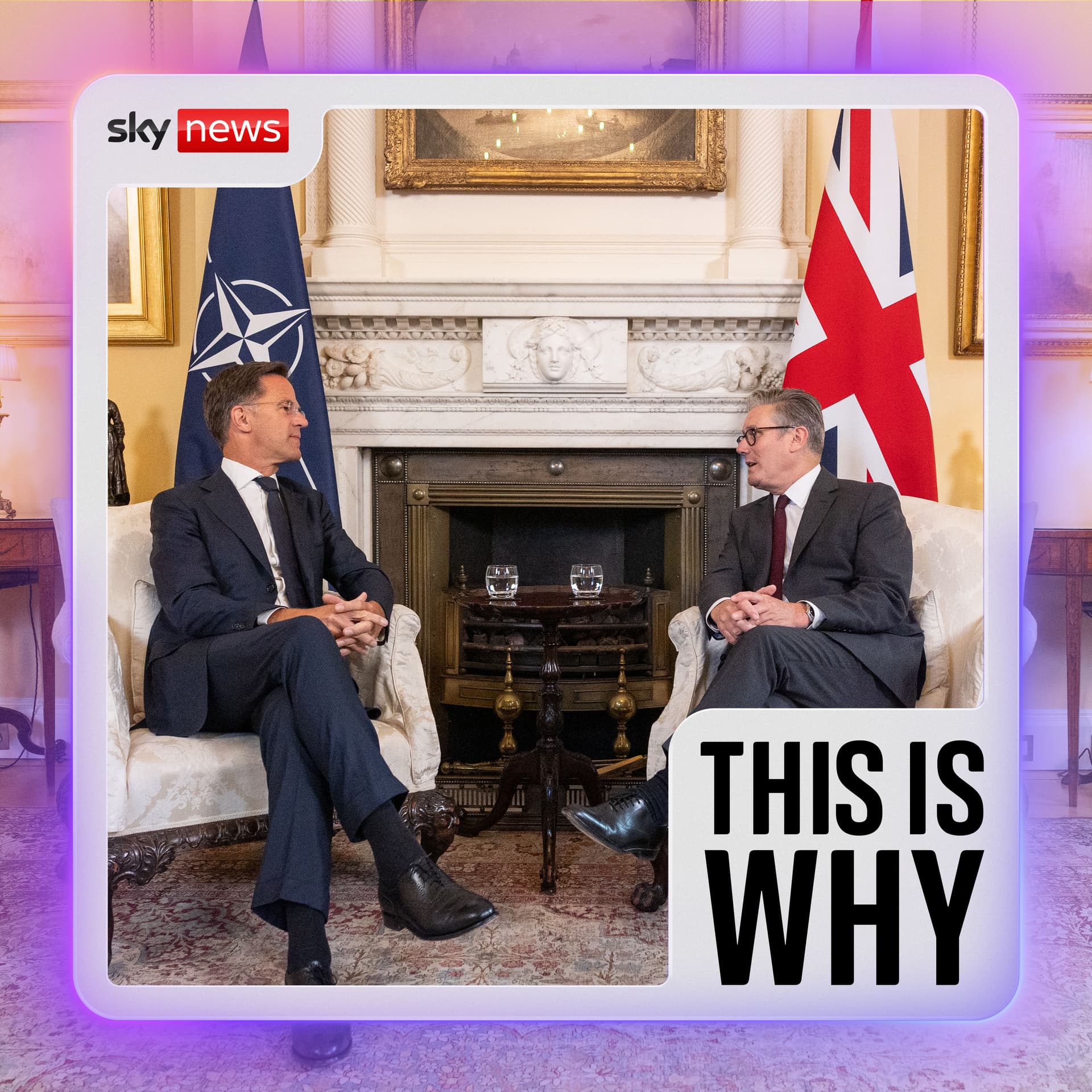

In short
NATO’s behind-the-scenes planning for a “life without the United States,” driven by Donald Trump’s political stance that American troops may not defend Europe if Russia attacks, and by concerns about lost US logistics and intelligence.
Guest backgrounds
Professor Michael Clarke, Sky Defence and Security Analyst; author/analyst on defence and security.
Key claims
Trump can’t formally withdraw the US from NATO under the 1949 Washington Treaty, but politically he could effectively detach US support. NATO would not immediately lose troop numbers on paper, but would lose US “backup” capabilities: satellite-based intelligence, engineering, strategic/tactical air transport, and rapid logistics. Europeans would need a decade to replicate US capabilities. NATO would likely split into Northern and Southern European blocs with different priorities.
Notable examples
NATO artillery standardization (155mm); interoperability via shared systems like F-35s; logistics challenges moving “half a million troops.” Ukraine is cited as a model of rapid innovation (90% developed and produced domestically). UK role described as “strategic guarantor” via naval/air backup and a second-echelon force by 2032–2035, contingent on spending plans.
Written by AI. May contain mistakes. Listen to the episode to check what was said.
Chapters
Tap a time to open that second in VONATO's Preparations for a US Withdrawal
1:00 to 2:26
Discussion on how NATO is planning for a future without US military support.
“And with all the speculation about where the world is currently heading, i.e.”
Understanding NATO's Structure and Function
2:26 to 4:37
An explanation of NATO's organizational structure and its operational mechanics.
“Professor Michael Clarke is Sky's defence and security analyst.”
The Implications of Reduced American Influence
4:37 to 7:53
Exploration of how a diminished US role would affect NATO's capabilities and dynamics.
“If you're going to move troops around, let's say, you know, half a million troops in an event of a war, you need to move from northern NATO to southern NATO.”
The European Defense Landscape Post-US
7:53 to 10:51
Discussion about how European nations are adapting to defend without US support.
“The professionals in the Pentagon, they know how much NATO matters to America.”
UK's Role in a Changing NATO
10:51 to 13:12
An assessment of the UK's military contributions and future role within NATO.
“European NATO is going into a Northern and a Southern group, which have different agendas, different priorities.”
Challenges to Military Readiness in NATO
13:12 to 14:02
Examination of industrial capacity and readiness challenges facing NATO countries.
“We have had the Strategic Defence Review, but we haven't had the spending plans that go along with it.”
NATO's Defense Challenges Without the US
14:02 to 16:30
Discusses NATO's industrial and military capacity challenges and the shift in European defense responsibilities.
“between the Ministry of Defence and Treasury with Downing Street sort of holding the ring.”
Trump's Impact on NATO and Europe
16:30 to 18:05
Explores how Trump's presidency has accelerated Europe's defense preparation timeline and the future of US-European relations.
“Michael, we started this podcast with you saying, yeah, it's going to take a decade for us to get to a place where we'd be happy without the United States involvement.”
Listener Feedback and Closing Remarks
18:05 to 19:12
Responds to listener feedback regarding a previous episode and summarizes discussions on NATO and US support.
“The long-term real America values its relations with Europe, but does see that that relationship must evolve in the coming one or two generations.”
Transcript
Automatic transcript. May contain errors.0:02Sky News, the full story first.
0:10Hi there, it's Mark Stone here, co-host of Trump 100, the Sky News podcast all about US politics. And for the second time in seven days, I've spoken to the president in a phone interview and I asked him all about the UK-US special relationship. How special is it? He is pretty scathing. We had a bit of a back and forth as well about whether he's spreading fake news, about why he thinks it's up to him to lecture the UK about its problems. If you want to know what he said and how the latest phone call played out, why did we speak to him? How did we speak to him? You can listen to Trump 100 wherever you get your podcasts or you can watch us on YouTube.
0:48Just type in Sky News Trump 100 into YouTube. Looking forward to having you join us. Thanks. Bye bye.
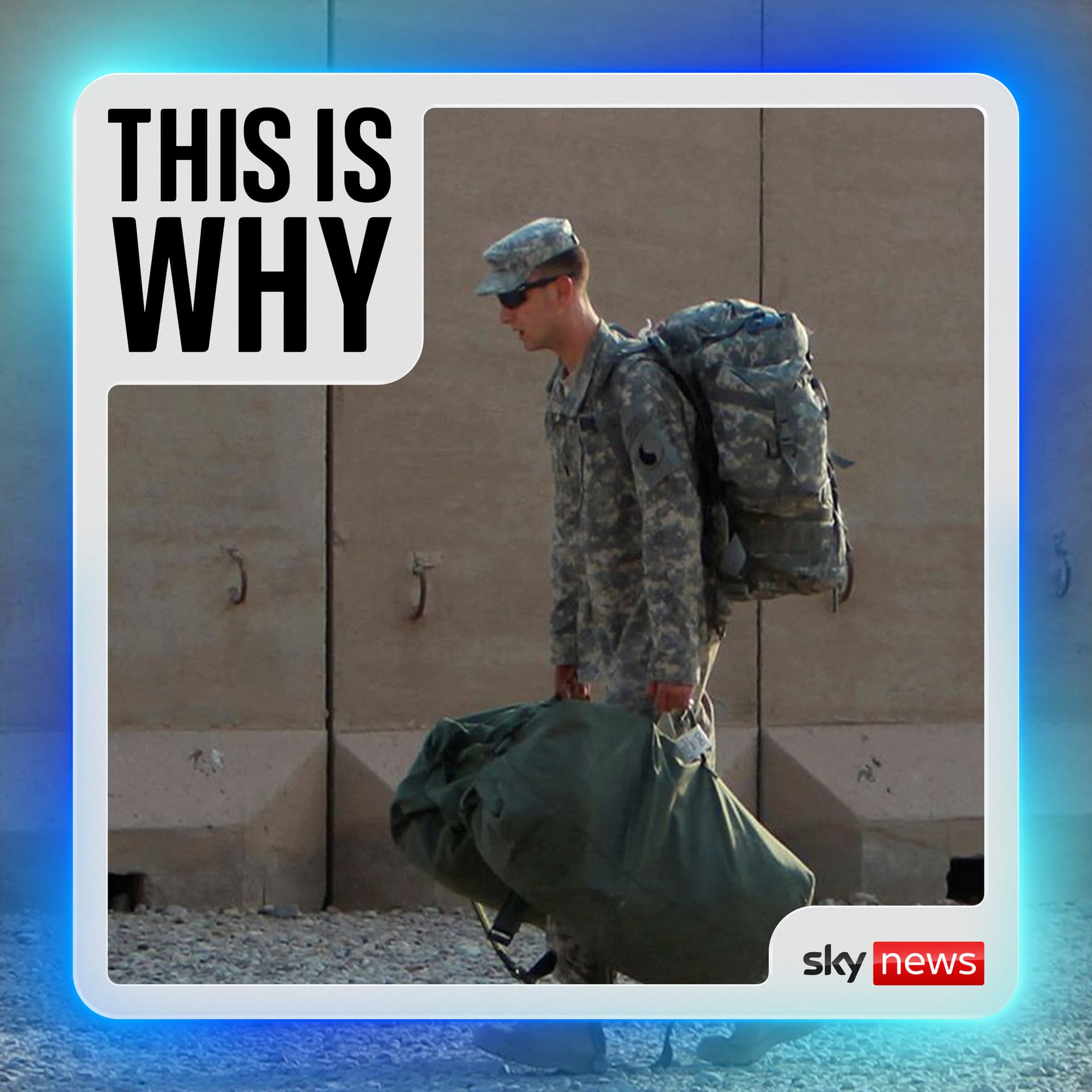
0:59NATO is actively preparing for a life without the United States, and this is why.
1:16Hi everyone, Neil here. And with all the speculation about where the world is currently heading, i.e. to hell in a handcart, we thought today we'd take a closer look at NATO. specifically what it might look like in future. Because for all that we're told, we should take Donald Trump seriously, but not literally. He's been very clear time and again that the US might not be around for the long haul. And I have to tell you, I'm very disappointed in NATO. Very. Because I've always said NATO's a paper tiger. So NATO is now planning for the day the Americans pick their ball up and head home. It's mostly been taking place behind the scenes.
1:52It's certainly not been reported widely, but it is happening. and NATO's 31 other members are working out ways to fill that big Trump-shaped hole. That includes the UK. So we are the strategic guarantors of the North Atlantic through the Navy and for Northern Europe, air and sea. So it's a different role. Can we perform it? No. So what would NATO look like without the might of the US military? What can be done to reduce reliance on by far its biggest contributor? And shouldn't we have cracked on with this process a lot, lot sooner? Professor Michael Clarke is Sky's defence and security analyst.
2:32Michael, I suppose we can start with a reminder. What exactly NATO is and how it operates currently? Yeah, well, it's the most impressive alliance the world has ever seen by none. It's existed since 1949, works by consensus. It started off with 12 members. It's now got 32 members, which includes most of the European states, not all of them. And then in North America, of course, the United States, Canada, Iceland. And there is a sort of political side and a military side. So the political side is the North Atlantic Council, which is all the defence chiefs sitting around, or it can be all the heads of state or heads of government sitting around it.
3:09So it's the political heads. And then there's a military side, the military committee, which are usually deputy service chiefs who are meeting fairly permanently. And as an organization, it's both very impressive and very annoying. It's full of holes and it's full of foolishness because you've got to find jobs for 32 different countries. They've got to be given a job in Brussels at the headquarters. And the headquarters is now very big. But in reality, NATO has very few forces it can call upon. The Supreme Commander has a little group of defense forces, his own defense forces, to defend the organization itself of a couple of thousand people.
3:45What he then does is he has to ask all of the members for their forces. The members pledge their forces to NATO, and then he has to say to them, we agree by consensus that our forces will do this, this, and this. One word that I've heard often talked about in relation to NATO is interoperability. The idea that our militaries can sync up. Just explain. Yeah, I mean, what that means is that all of the members of NATO are on hopefully a convergent path to use the same system. So, for instance, NATO artillery is standardized at 155mm. Also something as simple as the size of the rounds that go in your gun.
4:20Exactly. And then more importantly than just the calibers you're dealing with is buying equipment standardized. So more nations in NATO are buying F-35s as aircraft. So they're operating the same sort of aircraft. And then really importantly, and this is what there hasn't been enough of, is logistics. You know, NATO actually having the ability to have common logistics. If you're going to move troops around, let's say, you know, half a million troops in an event of a war, you need to move from northern NATO to southern NATO. It's very difficult to work out how you're going to get them there in the modern European landscape.
4:53Look, Michael, we have all spent decades assuming that the United States is the backbone, the linchpin of NATO. I mean, how seriously is NATO taking the prospect of US withdrawal? Last year, it didn't take it seriously enough. It thought it was a danger. This year, it is assuming it has, in a sense, happened. Because whereas Donald Trump, he cannot withdraw the United States from NATO constitutionally, because NATO is governed by the Washington Treaty of 1949. And in 2023, a congressional bill was introduced, co-sponsored by Marco Rubio, which meant that only a two-third Senate majority could renounce the 1949 treaty, and that won't happen.
5:35A two-third Senate majority to get out and they do want to happen. So Donald Trump cannot realistically take America out of NATO constitutionally, but politically he already has. Because politically, he's made it pretty clear that American troops aren't going to be helping the Europeans if they get into a fight with Russia, which is looking increasingly likely, they won't do it. Unless the Russians were stupid enough to attack American troops in Europe directly, then American troops, it is generally assumed, will be staying on their bases. So if we imagine Donald Trump going kind of a step further than he has already, being inside the club, but, you know, not paying his dues, goes further than that and withdraws.
6:12What does NATO look like? What does it lose as a result of the departure of the American? It doesn't lose numbers in the sense that it doesn't lose numbers of troops, and it doesn't lose huge numbers of aircraft and ships. It's pretty good on those things, on paper. But what it cannot replace is America's backup. So it's America's logistics, America's intelligence, its satellite intelligence, all of which at the moment, NATO is totally dependent on American satellite intelligence. It's American engineering, transport, strategic and tactical air transport, the ability just to move people around just a few miles by air.
6:47The Americans have everything in high numbers. And when it comes to backup, the Europeans will take a decade to replicate that. So that's what they would really, really miss. No doubt about it. I mean, without the United States, the Europeans can produce fighting forces, but they'd be far less efficient now than they would be in, say, eight or 10 years time if the Europeans are prepared to spend the money to replace what they would lose with the Americans. OK, let's just imagine a doomsday scenario. If the United States were to withdraw tomorrow, what would be the first thing that we would lose?
7:20I think the first thing we would notice would be transport, probably, the ability to move equipment and people around. And then the second thing you would notice, and the thing that's most important, would be intelligence. I mean, specific battlefield intelligence as to what is going on. Again, there's a bit of it, and you could do it in the old-fashioned way. So you'd be doing it with people on the ground. You'd be doing it with overflight, with drones and so on. But whereas the Americans have got all this stuff on a day-by-day basis from their satellites, if that was lost, then that would be a considerable problem.
7:52There is also this issue that Trump might want to punish the Europeans by withdrawing certain things, but they might not withdraw that because the Pentagon knows that NATO is very much to America's advantage. The professionals in the Pentagon, they know how much NATO matters to America. And I think that there'll be a big push in reality for the Americans to maintain some of the backups and then let the symbolic things, you know, troop withdrawals or whatever it might be, or equipment withdrawals, let those happen. Because ultimately, they're less important than all the intelligence and logistical backup.
8:23Some reporting suggesting that already European leaders and NATO as a specific and distinct organization are already beginning the preparations for a life post-United States involvement, certainly at the level that it currently enjoys. I mean, what are they doing? You're absolutely right there, Neil. Nobody's talking about it. It's not in the newspapers. But on the gossip circuit, as it were, where I hang around, all the Ministry of Defence in the big countries are conducting exactly that exercise. How do we get on if we lose everything that the Americans provide? Of course, the answers are very sobering.
8:57So they're all thinking about it. And they were not doing that over a year ago, but they're all doing it now. And they are, as we're drawing up relatively informally, a list of all the things that are most important that they must invest in next. And so that is happening. Let's talk some of the specifics then. How far away in your mind is Europe from being able to defend itself in a serious, sustained conflict? I mean, which countries need to step up? I mean, without the United States, Europe naturally splits into a northern and a southern group. So you've got the northern group. So the Scandinavian countries are all very strong, particularly on anything connected with their defence against Russia.
9:33The three Baltic states, Estonia, Latvia, Lithuania, Poland, Denmark, Netherlands, Britain, Iceland, Canada. Canada is very interested in integrating itself much more into the North Europeans and leaning away from the US for reasons we can imagine. And then Germany. And Germany has done more than anyone else, rather confusedly to start with, but now with some real urgency to bring itself back to the position it ought to be in, which is the centre of European defence. So you've got that northern group of states, about 15 or so states, who look a bit like the original NATO in terms of their determination, their ability to spend, their ability to do things efficiently.
10:11France is a different case because France is both northern and southern. You know, France has got an Atlantic frontier or an Atlantic coast and a Mediterranean coast. So France is a very pivotal country and, you know, it's got different attitudes. When you look at the other states further south, then you're looking at the Balkans, at Italy, at the Iberian Peninsula. They've got a much more laissez-faire attitude towards NATO. They don't worry about the Russians as much as the rest of us do. They have more issues with Mediterranean security, terrorism, immigration. And so their agenda of security is different to the Northern agenda.
10:44And what is happening is that NATO is naturally splitting without the Americans as a unifying factor. In fact, the Americans as now as a disunifying factor. NATO is naturally splitting. European NATO is going into a Northern and a Southern group, which have different agendas, different priorities. And I think that, I mean, NATO won't collapse, but it will look very different, I think, in four or five years' time to the way it looks now. What about our military and our contribution to NATO? What will the United Kingdom be doing? I mean, we're talking about preparing for conflict at a time when, again, it's being reported that the Air Force, the Navy and the Army are being asked to find three and a half billion pounds worth of savings.
11:26Well, on paper, we're going to play a different role in the future of NATO to the one we played in the past. In the past, during the Cold War, we had the British Army of the Rhine, 60 ,000 troops, 60 ,000. Just in one of our armies, of the number of armies that we ran in those days, when we had 180 ,000 troops instead of the 70 ,000 that we now have. And we had a forward deployed air force. The RF is a tactical air force. And we have the Navy as backup. And so the idea is Britain was on the front line in every sphere of NATO, in the Arctic, in the Mediterranean, on the central front, in the air.
11:54We were on the front line in every bit of NATO in those days because we were the European leader of NATO. More than anyone else, Britain had created NATO. You know, the Americans were the driving power behind it, but British diplomacy was the driving force behind the whole thing. So we took that as a matter of commitment. Now, the way we say it is that we're reserved to NATO. We don't have big forces. So the big ground forces are Poland, Germany and Finland. Those are the big numbers in Northern Europe. And what we provide is a second echelon force, a very specialized force who will go there after 30 days, maybe after 10 days, maybe after 90 days, but will go to plug a gap, go to do a job, go to retrieve a situation, difficult, dangerous stuff.
12:37But we won't be there on the front line on day one. Our army won't. Our Air Force will, along with the Navy, will provide a strategic backup. So we are the strategic guarantors of the North Atlantic through the Navy and for Northern Europe. air and sea. So it's a different role. Can we perform it? No. No. Okay, right. So how do we get there? And how long does it take us to get there again? Because we have occupied that position. We have. Indeed we have. And to get there is laid out in the Strategic Defence Review of last year. And we get there by 2032 to 2035 if we get on with it. But we've not got on with it.
13:12Wait a minute. We have had the Strategic Defence Review, but we haven't had the spending plans that go along with it. Yeah, the Defence Investment Plan, which is the plan which says what the government is going to spend over the next 10 years to actually put in place all the things that the Strategic Defence Review, which they agreed with, says has got to happen. We'd want to be getting on with it then, wouldn't we? Yes, we've wasted the first of the 10 years. We're now wasting the second of the 10 years, which is why there's such a crisis in the politics of defence at the moment. because George Robertson and just all of the chiefs and all of the previous defence secretaries are now speaking out in unison, leaning on Downing Street to say, you're just wasting the time.
13:51The time we've got is little enough to put right the problems that we've got. And you're wasting the time because you cannot, as it were, reconcile your desire, what you say, with what the Treasury will go along with. And there's this big battle at the moment between the Ministry of Defence and Treasury with Downing Street sort of holding the ring. But we all know, and Keir Starmer has said, both to the Liaison Committee and to the Munich Security Conference. I was there at the conference. I heard him say it. You know, that he will have to make decisions on spending, but he hasn't made them yet.
14:18Okay, this was going to be a question about the UK, but I suppose it also applies to our European allies. If we want to get going with this, getting ourselves onto a war footing, do we have the industrial capacity, the manufacturing base, to get on with the job and get on with it? Now, if we want to get ourselves up to the levels that we would need for a NATO to survive without the United States. In legacy terms, there's not enough of it in any of the big countries. If you're looking at our ability to build ships quickly, you can only ramp it up by 10%. You know, you can't ramp it up by 100 % or 200 % because there aren't enough shipyards that are capable of building warships, for instance.
14:54And our lack of warships at the moment is really extraordinarily difficult and embarrassing. The good news on all of this is that increasingly, defense is also about new technologies, about small medium enterprises. And we're very well off for inventive SMEs. They really sort of feed up from the bottom in some of the new technologies. And you look at what's happening in Ukraine. Ukrainians have made astonishing moves in this direction. In four years, from having a defense that was completely open to Russian attack, they're now beginning to turn the tide, at least on the battlefield tactically, not pushing up too far, but they are beginning to turn the tide and 90 % of all of their new innovations, they develop themselves and they produce themselves.
15:36So there's some good news in here if we have the defence investment plan, which will give these companies some certainty that there's a decade of investment that they can build around. This is where I start to get pretty worried because deterrence is a big part of any kind of defence policy and it depends on credibility. At the moment, does Europe have that credibility in terms of its defence without the United States? That's a good question. We don't know because deterrence is a matter of perception. It's what your opponent thinks might happen. It gives the opposition the thought that if they get their act together in five years' time, then maybe this is the moment before they get their act together when we can put a big hole in NATO's solidarity.
16:18Now that the Americans are detaching themselves, this is the moment, President Putin might say to himself, this is the moment we can really kick NATO right down the steps for a generation, which no other Russian leader has been able to do. Michael, we started this podcast with you saying, yeah, it's going to take a decade for us to get to a place where we'd be happy without the United States involvement. I mean, honestly, just strictly between you and I, I mean, we should be worried about the Americans pulling out and probably should be doing everything we can to make sure they stay within the alliance.
16:49Yeah. I think there's two ways of thinking about this. One is to say, look, we can't keep the Americans in Europe forever. There is a sort of glide path for the next 30 or 40 years, whereby the United States is going to concern itself much more with the Indo-Pacific. That's where its real objectives are going to lie. And we've got to get used to that. And the Europeans have said that for years. Yes, we're on a glide path. We've got to adjust. And they'd said it, but they didn't mean it well enough. What Trump has done, quite usefully in a way, in a way, is he's turned that glide path into a cliff edge.
17:16He's made it happen all at once. Now, that means the Europeans have got to now take on board all the things they thought they had a decade to worry about. They've got to worry about them now. this year. And I think it's also true that we shouldn't overemphasize the power of the MAGA Republicans. I mean, we don't know how long MAGA Republicanism will last in the US. It might not go beyond 2028, but it might go another eight years beyond that if there's a MAGA successor to Donald Trump, which is entirely plausible. Nevertheless, the sympathy for NATO within Congress in general is really quite high.
17:47Not among the MAGA Republicans. They despise us. They just despise the Europeans on every level. But in Congress, the sympathy for the Europeans and NATO is quite high. The sympathy within the American public for NATO is remarkably high. Without sort of sounding complacent, we shouldn't assume that MAGA republicanism is the long-term real America. The long-term real America values its relations with Europe, but does see that that relationship must evolve in the coming one or two generations. And I think we've got to stay focused on that while we live through this immediate crisis of dealing with this President Trump who gets more and more quixotic as the days go by.
18:26Fingers crossed we all do live through it, Michael. Thanks very much indeed. That's a lot for today. Remember, you can get in touch with the team directly. why at sky.uk is the email. And we've had this from Bob all the way from Texas about a previous episode where we were discussing boots on the ground inside Iran. General Sinek Carter, former head of the armed forces, was our guest. Bob says this, as an army veteran who spent a short amount of time in both Iraq and Afghanistan, this is something I'm very interested in. Your guest provided wonderful insight and I wish many more Americans could hear that viewpoint.
19:02Thanks, Bob, for getting in touch. the rest of you, why at sky.uk to tell us your thoughts on today's episode or provide us an idea for a future one. We are back again tomorrow.
From the publisher
Another night, another post on Truth Social from Donald Trump criticising NATO. As other leaders try to persuade him to stay in the alliance, plans are being prepared in case the US goes through with its threat to walk away.
At the same time, the UK government is in a muddle on defence spending – with criticism from current and former military chiefs - but no decisions yet on how and when to boost budgets.
Niall and Sky's military analyst Professor Michael Clarke debrief on what a post-Trump NATO might look like.
Have you got a question for Niall? Email the show: why@sky.uk