
In short
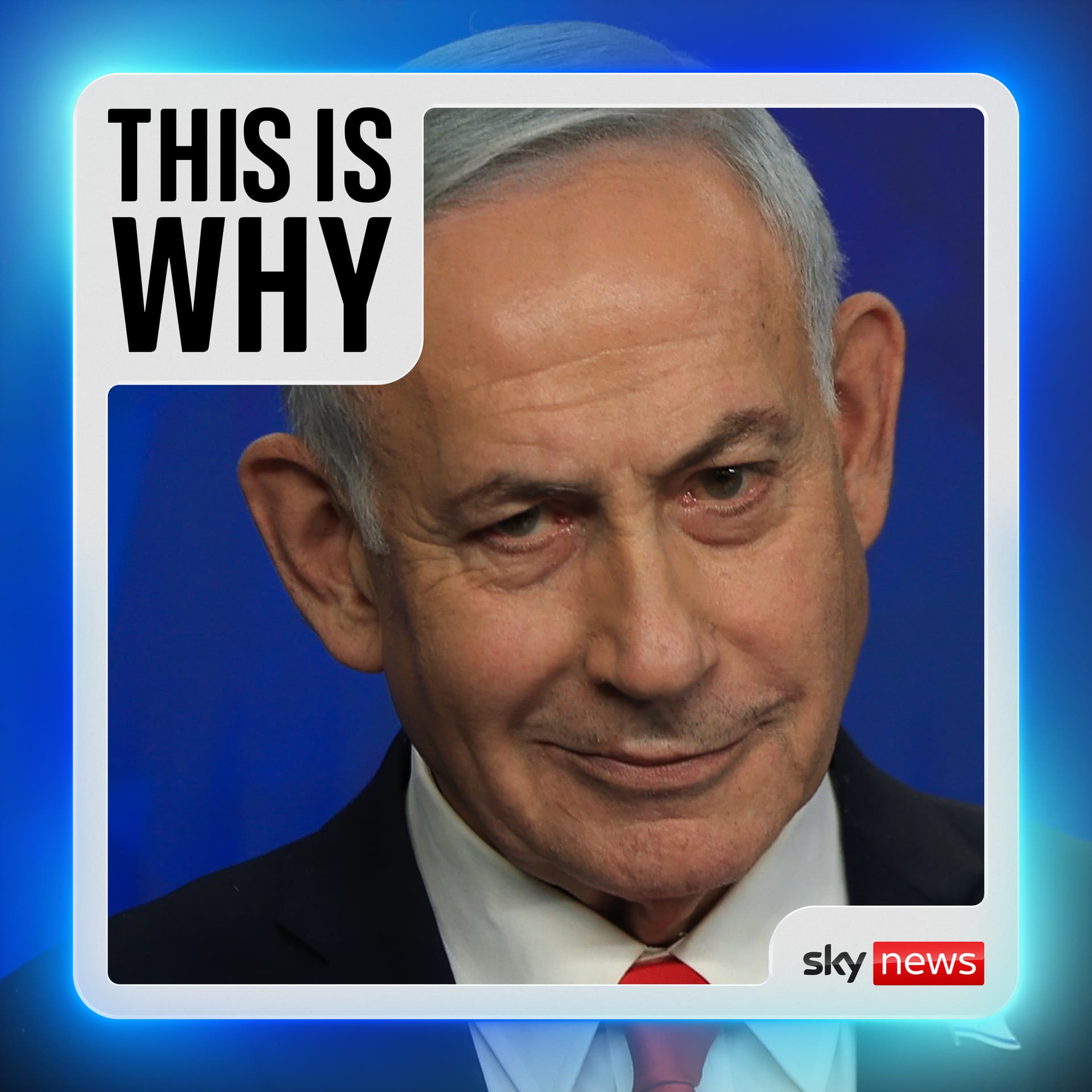
The episode argues that peace in Gaza will not happen under Benjamin Netanyahu, despite Donald Trump’s claimed success on a proposed Hamas-Israel deal.
Guest
Dr H.A. Hellyer, Middle East analyst and senior associate fellow at the Roussi Think Tank.
Key claims
Gaza remains an occupied territory since 1967; Israel controls about 70% of ground areas (aiming for 80% and eventually full control). Netanyahu rejected a 15-point peace plan, contradicting Trump’s public claim that Israel was delighted. The guest says Netanyahu’s stance is driven by elections (Israeli October election and US midterms) and by a preference to maintain control rather than truly disarm Hamas.
Notable examples
Netanyahu’s social-media video to Israelis saying Israel won’t leave Gaza; Netanyahu’s instruction to expand Israeli ground control; reliance on international law/ICJ that Israel must depart; US leverage not used over the past three years.
Written by AI. May contain mistakes. Listen to the episode to check what was said.
Chapters
Tap a time to open that second in VOThe Current Situation in Gaza
0:54 to 2:45
An overview of the state of Gaza, control dynamics, and Israeli actions.
“Transcription by CastingWords pulls out bit by bit, and a new Palestinian administration moves in, backed by an international force.”
Netanyahu's Rejection of Peace Plans
2:45 to 4:42
Discussion on Netanyahu's rejection of peace agreements and its implications.
“When you look at the consequences of Israel's war on Gaza, It's a really depressing picture, and it hasn't gotten all that much better.”
Elections and Political Dynamics
4:42 to 6:36
Exploration of the electoral influences on Israeli politics and Netanyahu's strategy.
“And said so, you know, the day of or the very next day in a video that went out on his social media channels in Hebrew, he made it very clear to the Israeli public that he was not intending on Israel leaving Gaza.”
International Perspectives and Obligations
6:36 to 9:00
Analysis of international law regarding Gaza occupation and peace negotiations.
“election in October and that being front of Netanyahu's mind, he has to make a case in public.”
The Impact of U.S. Politics
9:00 to 11:00
Examination of how U.S. political landscapes influence Israeli strategies.
“It's like, well, you don't have authority to ensure that.”
Future Prospects for Peace
11:00 to 13:54
A discussion on the bleak prospects for peace in the Middle East under current conditions.
“Just search for it on your podcast app and follow.”
Trump's Leverage in the Israeli-Palestinian Conflict
14:00 to 15:11
Discussing Trump's potential leverage in peace negotiations amidst domestic political risks.
“He needs to get some sort of settlement from one of the conflicts that he is currently involved with around the world.”
Shifts in US Political Support for Israel
15:11 to 18:10
Analyzing the decline of support for Israel among Democrats and rising tensions in US-Israel relations.
“And yet we haven't seen that sort of leverage being used.”
Concluding Thoughts and Listener Engagement
18:10 to 18:21
Wrapping up the discussion and inviting listener feedback on recent episodes.
“But even Rubio, I think, is going to be leading a much more critical policy vis -à-vis the Israelis.”
Transcript
Automatic transcript. May contain errors.0:02Sky News, the full story first.
0:11Donald Trump thought he'd found a way to disarm Hamas and get Israel's troops out of Gaza. Benjamin Netanyahu says, nope, you haven't. And this is why.
0:26Hello, Ed Conway here. here is what might sound like a slightly random question. What do AirPods, bananas and a pair of shoddily made running trainers from the 1970s have in common? On the surface, not very much. But on my podcast, Stuff Matters, I will uncover the deeper stories behind each of them. You will see how together they tell a fascinating new story about the world we live in. The first full series of Stuff Matters is out now. Just search for it on your podcast app and follow.
1:26Transcription by CastingWords pulls out bit by bit, and a new Palestinian administration moves in, backed by an international force. All that was required was Benjamin Netanyahu signing it all off. Instead, you got Benjamin Netanyahu rejecting the 15-point peace plan.
1:46Oh dear. Now, normally that would be a difficult but fairly familiar bit of Middle East diplomacy. Except Trump had already declared victory. He said Israel had helped with the deal. He even said Israel was very happy with it. Now Netanyahu has directly contradicted him in public. The deal is in tatters and it's not a complete coincidence that Israel's Prime Minister is seeking re-election in October. So just how real is this split? Why is Washington allowing Netanyahu to say no? And what happens next for the people of Gaza? Dr H.A. Hellyer is a Middle East analyst and senior associate fellow at the Roussi Think Tank.
2:30Thank you so much for talking to us today. And I suppose a good place to start is with Gaza itself. I suspect that many people who are listening to this perhaps haven't paid as much attention as to what's going on there as they may have done previously. So what is Gaza like at the moment? Who's in control? Where are Hamas? Where are the Israelis? When you look at the consequences of Israel's war on Gaza, It's a really depressing picture, and it hasn't gotten all that much better. The Israelis continue to engage in, quote-unquote, kinetic action on the ground. There are still strikes. There are still killings that are going on.
3:09Of course, it's much less than what it was last year before the 20-point plan. But on control on the ground, there are two things I'd keep in mind. Gaza is an occupied territory. It has been occupied since 1967 by the Israelis. That occupation has never ended. It continues to be the case. On the ground control, the 20-point plan that was signed last year envisaged that the Israelis would be in control on the ground of around half and not the other half, that the Palestinians would be in control of the remaining sort of half. It's now about 70 % under Israeli ground control and around 30 % where Palestinians are quote unquote control.
3:56Okay, I say quote unquote because of course they can't control what comes in or out. And the Israelis have made it clear quite publicly that they intend for that number to shrink even further. And Netanyahu said as much very clearly a few weeks ago, he said, I'm giving instructions so that we have 80 % and eventually the full thing on the ground. So I think that's all important because it does actually play into why I think Netanyahu has said what he said vis-a-vis the new 15-point plan. Hesham, just explain what exactly is going on, because I am genuinely confused. I thought that we had a historic agreement.
4:30Donald Trump certainly announced it as such, and he claimed that Israel had helped draft it and were personally delighted by it. Netanyahu now says Israel rejects out of hand. How did we get from there to here? Very easily, because Netanyahu made it very clear, even when the 20-point plan was announced, that Israel was not going to leave Gaza. And said so, you know, the day of or the very next day in a video that went out on his social media channels in Hebrew, he made it very clear to the Israeli public that he was not intending on Israel leaving Gaza. And I think that every step that has taken place over the past year, a little less than a year, has borne that out.
5:15The scenario of them withdrawing from Gaza simply isn't on the table. And by the way, it's not on the table not simply for Netanyahu and not even just for his government, but I think is tremendously popular within the Israeli political spectrum. I also think that what's happening right now is frankly about elections. and two elections, actually, Israeli elections and American elections. The United States has tremendous leverage over the Israelis. I think that if they use even a little bit of it or even threaten to use a little bit of it, then we would see a very different picture. I think that Netanyahu is banking on the fact that Trump will not use this leverage or even threaten to use this leverage, considering that the midterms are coming up in a few months and he's already in a very difficult situation because of the Iran war and the Strait of Hormuz.
6:09So that's one election to keep in mind as we understand this. The second is that Israelis are also going to the polls in the coming months, and Netanyahu wants to position himself as Mr. Security, despite the fact that he oversaw the biggest destruction of Israeli security in its history, which was, of course, October 7th. So I think that it's all about the elections. I think it's all about positioning Netanyahu in a particular fashion. Notwithstanding your point about, you know, there being a forthcoming election in October and that being front of Netanyahu's mind, he has to make a case in public.
6:43And this plan on the table is supposed to disarm Hamas. Ultimately, that is what Israel wants. So what is he saying in public to justify this change of heart? I'm not sure that they do want Hamas to be disarmed, because I think more important than quote unquote disarming Hamas is maintaining control over Gaza. And look, Hamas is a terrible actor. That's not the issue here. But Hamas has made it clear that they will disarm. And they have said that they accept the plan, that they accept the 20-point plan, they accept the 15-point plan. But the plan envisages Israeli withdrawal to take place alongside that disarmament.
7:21The Israelis have said, we're not leaving, we're not withdrawing until we see a complete and total disarming of Hamas. To the point where it wasn't even just about heavy weapons, but even small weaponry, which Hamas wants to keep a hold of, at least for the interim, in order to protect against collaborationist militias that are in Gaza. But they've also agreed, I believe, to hand over those weapons in stages over to a Palestinian technocratic authority. Just on that point, I mean, doesn't Israel therefore have a point? Disarmament only means disarmament if you give up your weapons. Hamas handing over those weapons to other Palestinians probably doesn't look much like that to Israeli.
8:01I don't think that's what's going on, to be honest with you, because, again, the Israelis agreed to begin with that disarmament would take place alongside and in partnership with or, you know, at the same time as withdrawal. Also, other Palestinians, we're talking about the Palestinian entity that has been mandated by the Board of Peace. So it's not another militia. It's not an ally or something of Hamas. And also keeping in mind, Gaza is an occupied territory. The occupying power is Israel. This is not disputed territory between the Israelis and the Palestinians. This is an occupied Palestinian territory recognized as such, not just by the UK and the EU, but the entirety of the international community.
8:46So the Israelis are obliged to depart, actually, and they are obliged under international law. The International Court of Justice made that very clear. So for them to say, no, we're not leaving until every last weapon in Gaza is removed. It's like, well, you don't have authority to ensure that. But in any case, disarmament has been agreed to alongside withdrawal. Let's talk a little bit more then about the reasons underpinning the decision by the Israeli prime minister. I mean, how unusual is it for an Israeli prime minister, indeed for someone like Netanyahu himself, to so obviously and directly contradict the US president?
9:21It is unusual, especially when it comes to Trump. I'll say that there's rhetoric and then there's action. So you saw Netanyahu disagree with Biden and the Biden administration several times. But most of this was rhetorical. You didn't see a difference between the Biden administration and Netanyahu's government when it came to actual policy. So actions did not change in that regard. The Biden administration still supported and underpinned Israel completely. When it comes to Trump, Trump is the most pro-Israel American president, I think, in my lifetime, at least. And Netanyahu knows it. But having said that, he is thinking about his own electoral chances going forward and also the pressure that the Trump administration is under altogether.
10:09Also keep in mind, I think he knows, and I think everybody knows, that whoever comes after Trump is going to be less supportive of Israel than Trump, be it a Republican or a Democrat. So I think part of this is also laying down the groundwork for not just the next few months or the next year, but for the next five and ten.
10:36Hello, Ed Conway here. Here is what might sound like a slightly random question. What do AirPods, bananas and a pair of shoddily made running trainers from the 1970s have in common? On the surface, not very much. But on my podcast, Stuff Matters, I will uncover the deeper stories behind each of them. You will see how together they tell a fascinating new story about the world we live in. The first full series of Stuff Matters is out now. Just search for it on your podcast app and follow.
11:13Paints us a picture then of the electoral landscape as we head towards the election at the tail end of October. I think by my reckoning, this will be the first election that Netanyahu has faced since, what, 2023? Well, definitely since the 7th of October. That's definitely true. At the moment, frankly, it's unclear whether or not he has the electoral math to actually win. But Netanyahu is a political survivor and has regularly surprised people over the last two decades, frankly, when it comes to becoming prime minister. But the election is not as important as I think people are making it out to be.
11:49When you look at public opinion in the Israeli electorate, when you look at how most Israeli politicians outside of Palestinian Israeli politicians, the ways in which they look at the virtual annexation of the West Bank, the occupation of southern Lebanon, of southern Syria, you know, on all of these files, there isn't much difference of opinion at all. So if people are thinking that this election, if Netanyahu loses, would mean a completely different strategic outlook for the state of Israel in terms of how they engage in different policies, I think they'll be sorely disappointed. Are we perhaps all dancing on the head of a pin here in the sense that, you know, whilst and until Benjamin Netanyahu fully commits to a proper two-state solution, this peace plan is completely dead anyway?
12:39You took the words right out of my mouth. I mean, again, let's be honest here. Netanyahu has been trying to foil the idea of a two-state solution his entire career. And he says it very clearly. He says it very openly, very transparently. Yet so many of our politicians are keen to present the two-state solution as actually being viable with an Israeli government of this nature. I don't think that this is honest or transparent about the realities on the ground. The vast majority of Israeli politicians are not interested in a two-state solution, and there haven't been costs applied to the Israelis to force them to recognize that this is what is required in order for the relationship with the world to be on a sustainable footing.
13:31And I say this vis-a-vis the UK, the European Union, let alone the United States. And without a political horizon for the resolution of the Palestine question, I don't think you're going to see a sustainable peace emerge in the Holy Land more generally. Given all of that, it'd be very, very easy, I would suggest, to be rather pessimistic about any hopes for peace in this particular part of the Middle East. The only caveat to that would be, I would suggest, that Donald Trump badly needs a win right now. He needs to get some sort of settlement from one of the conflicts that he is currently involved with around the world.
14:11And given that relationship with Netanyahu, isn't it possible that this is the time that Trump uses all of that leverage, even if it is just through picking up the phone and having a shout down the phone at Bibi to try and move this process forward? at least a bit beyond the situation we have right now on the ground in Gaza? It's entirely possible. I would say that it carries domestic risks, considering where the Trump administration and MAGA derive support, especially from donors to the Republican Party and in the Republican Party at present. It's not a risk-free proposition in that regard. If we're talking domestic considerations in the United States, When it comes to the Israelis, we haven't seen that sort of leverage being applied over the past three years, despite the fact that this war has been incredibly destructive, catastrophic for the people of Gaza.
15:12And yet we haven't seen that sort of leverage being used. So I think he is likely to try to turn more on the Iranian file, which is a very difficult file for him to deal with, possibly on the Syrian file and the Lebanese file. Problem is that nearly all of these files, if not all of these files, also depend on Tel Aviv, on the Israelis. It's difficult to make progress without dealing with that particular factor. He doesn't just have to wait for Netanyahu's election. It's also in the midterms in the United States. And that just makes things more complicated and complex for him. If this is the moment that relations between the United States and Israel have truly begun to sour, that this is the beginning of the end for the kind of the superpower bromance as it was, what would be the signs of that?
16:01Where would we see the tensions emerging between Tel Aviv and Washington? I think that we've already begun to see those tensions, to be honest, because the way in which American politics functions means that it starts with public opinion, it moves to donors, and then it moves to policy. OK, when it comes to the Democratic Party, the public opinion aspect of this is over and done with. Perceptions of the state of Israel among Democratic voters is at an all time low and support for a more balanced policy on the Middle East is much, much higher. It's moved into the donor discussion. And that's why these primaries and other types of elections in the United States, including, for example, the mayor of New York, where Zohran Mamdani really swept to victory.
16:55They're very telling in that regard. OK, because that's past public opinion and it's pre-policy. OK, it's still within that sort of middle ground, but it means that there's a trajectory that's happening here. So that's very clear. But then there's also the Republicans. And there's a discussion within the Republican Party that is ongoing, again, for very different reasons. And frankly, not always for very, how shall I put it, very pretty reasons. You have the America first types that really see this as being an America first issue, that why are we giving all this money to another country? We should be spending that money in our own country.
17:31Why are we doing that elsewhere? And there's also a lot of outrage about just on a very human level vis-a-vis what's happened on the ground in Gaza. But it does mean that within the Republican Party, there are splits that are emerging. And I think that the America First aspect of this, I think, is the strongest portion. And I think that you will see that manifest in terms of a change when it comes to, you know, who Trump decides, probably between J.D. Vance and Rubio, who ought to be the next leader of the Republican movement. If it's Vance, I think you're likely to see that breakdown of the relationship much quicker than Rubio.
18:10But even Rubio, I think, is going to be leading a much more critical policy vis -à-vis the Israelis. Isham, it has been a pleasure talking to you. Thanks so much for your time. Pleasure is mine. Thank you. And that's your lot for today. Do remember, we're always in the market for your thoughts on what you've just heard. In fact, plenty of you got in touch in response to Friday's episode. a bit of a deep dive into Demis Hussibis. He's the Nobel Prize winning Brit who was the co-founder of Google DeepMind. In fact, he stepped down from Google just as we were hitting publish on it. George got in touch to say this.
18:43I wonder if dictatorships will use AI unethically. I would say that's a fairly safe bet, George. And Chris gets in touch to say, as someone who has the rare experience of working with the UK government on AI, what do you see as the role of government in shaping AI and the regulatory priorities, if any. I have to say, Chris, given the almost nuclear arms race that's going on between the United States and China when it comes to artificial intelligence, I don't think we're going to have much of a role at all. That said, there is the UK AI Security Institute, about which you can find more if you scroll back in the podcast feed.
19:18So do let us know your thoughts. Why at sky.uk is the email. We're back tomorrow.
19:27Hello, Ed Conway here. Here is what might sound like a slightly random question. What do AirPods, bananas and a pair of shoddily made running trainers from the 1970s have in common? On the surface, not very much. But on my podcast, Stuff Matters, I will uncover the deeper stories behind each of them. You will see how together they tell a fascinating new story about the world we live in. The first full series of Stuff Matters is out now. Just search for it on your podcast app and follow.
From the publisher
Some leaders have gone to extreme measures to save their jobs - but is allowing a deadly war to rage on indefinitely a step too far?
That is what many believe Israel's prime minister Benjamin Netanyahu is doing after he rejected Donald Trump's 15-point peace plan for Gaza.
The proposal was designed to end more than two years of war between Israel and Hamas - so why has Netanyahu rejected it? And can there ever be peace in Gaza with him in power?
Niall Paterson is joined by Middle East expert Dr H. A. Hellyer, a senior associate fellow at the Royal United Services Institute.
Have you got a question for Niall? Email us: why@sky.uk