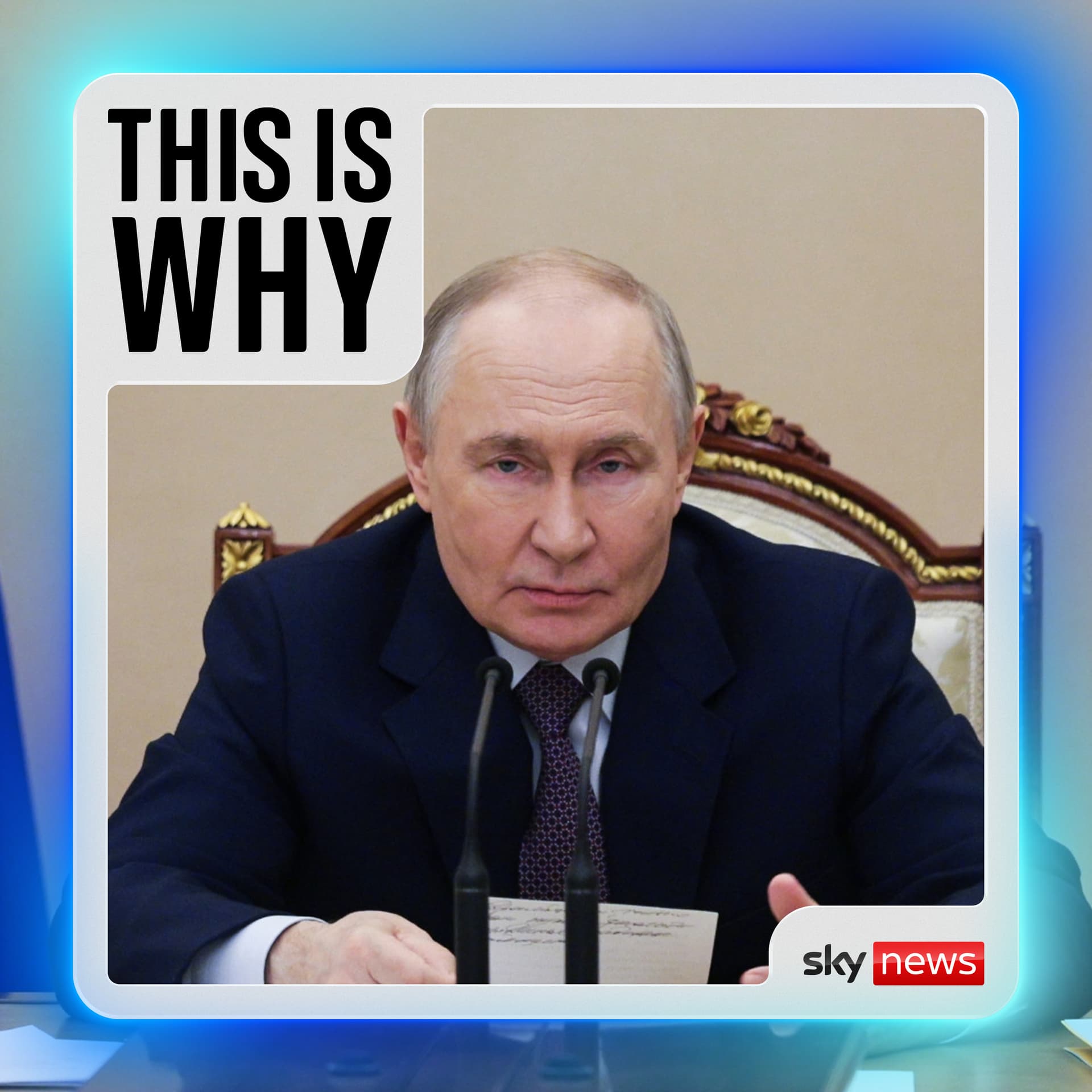

In short
Sky News argues Russia may be the “big winner” from the Iran war, using diplomacy with President Trump and energy leverage while avoiding direct confrontation with Iran or the US.
Guests
Blythe Bennett, Sky Moscow correspondent; Ivan (unnamed in transcript), likely a Russia-based commentator/interviewer.
Key claims
Trump and Putin spoke about an hour at Trump’s suggestion; Kremlin says it was “frank and businesslike,” with Putin positioning himself as mediator. Russia condemns Ayatollah Ali Khamenei’s killing but may share US intelligence to manage a “tightrope” between Iran (ally; drones supplied to Russia) and other regional partners (UAE, Qatar, Bahrain, Saudi Arabia). Putin benefits from higher oil/gas prices, potential long-term gas sales to Europe, and reported US consideration of easing sanctions on Russian oil.
Notable examples
Russia’s return to the Paralympics medal table after bans (gold medal; anthem played since 2014); state media shifting from criticism of Trump to praising Putin’s diplomacy.
Written by AI. May contain mistakes. Listen to the episode to check what was said.
Chapters
Tap a time to open that second in VORussia's Strategic Position
0:27 to 1:20
Overview of Russia's potential advantages in the Iran war context.
“In the last 10 days, the global political landscape has been complex.”
Trump and Putin's Conversation
1:20 to 2:54
Details about the recent call between Trump and Putin regarding Iran.
“in a dozen years since the Russian flag has appeared on a medal table at a Paralympics.”
Russia's Complex Alliances
2:54 to 4:00
Exploration of Russia's relationships with Iran and other Middle Eastern countries.
“He has to kind of negotiate a bit of a tightrope here because, as you say, Russia and Iran, very close allies, historically close, but also recently they've grown much closer over the course of Russia's war on Ukraine.”
Putin's Diplomatic Tightrope
4:00 to 6:29
Discussion of Putin's balancing act between Iran and US interests.
“And that seems to be the most important one of all for Vladimir Putin because of everything else it potentially influences, namely the war in Ukraine.”
Shifting Dynamics in the War
6:29 to 8:13
Analysis of how the Iran war could benefit Russia economically and politically.
“And in terms of the oil and the sanctions, I mean, obviously, as you say, no doubt that a surge in oil prices is going to be good for Russia.”
Perception in Russia
8:13 to 11:23
Examination of how Russian media portrays the Iran conflict and Trump's actions.
“Now, in terms of Ukraine, I mean, Putin is obviously going to be pleased that the rest of the world is temporarily looking the other way for the last few days, won't he?”
Putin's Long-Term Strategy
11:23 to 13:52
Insight into Putin's approach to international relations and potential future gains.
“It really all seems to be pivoting, doesn't it?”
Transcript
Automatic transcript. May contain errors.0:02Ivor Bennett:Sky News, the full story first.
0:11Ivor Bennett:As President Trump and President Putin hold talks, Russia could be using the Iran war to return to the world stage. This is why.
0:26Ivor Bennett:A short time ago, the United States military began major combat operations in Iran. In the last 10 days, the global political landscape has been complex. But as missiles and bombs break down on Tehran, has something been brewing elsewhere?
0:45Jayne Secker:I had a very good call with President Putin. We obviously talked then about the Middle East, and he wants to be helpful.
0:53Ivor Bennett:Russia has publicly condemned the killing of Ayatollah Ali Khamenei, Iran's supreme leader. But could they be using the war to their advantage?
1:06Ivor Bennett:Russia is profiting from a surge in energy prices, and Putin has opened the door to supplying oil and natural gas to European customers. customers and in a week that's seen Russia return to the sporting stage.
1:19Jayne Secker:So that is the first time
1:21Ivor Bennett:in a dozen years since the Russian flag has appeared on a medal table at a Paralympics. Could Russia be using the Iran war to come in from the cold? Blythe Bennett is Sky's Moscow correspondent. Let's talk about this conversation last night between President Trump and Vladimir Putin. What do we know of what was discussed? Who phoned who? How long did it last?
1:45Jayne Secker:So we're told that it was at Donald Trump's behest. He's the one who suggested the call. We're told they spoke for around an hour, which isn't actually as long as other conversations they've had. And times before, they've spoken for two, two and a half hours. But it's their first conversation of the year so far, their first in around two and a half months. And I think we shouldn't be that surprised. I think it was only a matter of time before the two chatted about Iran, given their differing positions and differing interests in what's happening there. In terms of what they talked about, so the Kremlin in its readout said that the conversation was frank and businesslike.
2:20Jayne Secker:Vladimir Putin expressed several thoughts aimed at a quick political and diplomatic end to the conflict and that a very substantial and useful exchange of ideas took place. And that basically is translation for Vladimir Putin trying to position himself as a mediator here and try to turn this situation to Russia's advantage.
2:40Ivor Bennett:So in terms of Russia's relationship with Iran, it's been complicated over the years, hasn't it? But at the moment, on paper, at least they are allies. So he's going to want to stick up for Iran, but equally, he's not going to want to alienate Donald Trump, is he?
2:53Jayne Secker:Yeah, that's exactly the issue Vladimir Putin finds himself in here. He has to kind of negotiate a bit of a tightrope here because, as you say, Russia and Iran, very close allies, historically close, but also recently they've grown much closer over the course of Russia's war on Ukraine. Last year, they signed a strategic partnership pact, kind of formalizing and deepening their relationship along several strands, including defense as one of them. That doesn't have a mutual defense clause, though, in it. So there's no obligation on Russia to come to Iran's aid if it comes under attack, i.e. in this case.
3:28Jayne Secker:But at the same time, Iran has given drones to Russia to help it wage war on Ukraine in recent years. And so there was this kind of question, you know, over the past week, is Russia going to return the favor here? Is it going to spring to Iran's defense? But what complicates matters for Russia and Vladimir Putin is that Russia has a lot of interests in the region here, as well as good relations with Iran. It has good relationships with the UAE, Qatar, Bahrain, Saudi Arabia, countries which have come under Iranian attacks. And also there's this burgeoning, blossoming relationship, even personal relationship that Vladimir Putin has with Donald Trump.
4:07Jayne Secker:And that seems to be the most important one of all for Vladimir Putin because of everything else it potentially influences, namely the war in Ukraine. So Vladimir Putin has to walk this kind of tightrope between these split loyalties and differing interests. He doesn't want to leave Iran in the lurch completely, hence perhaps why he's sharing intelligence on US positions there. But at the same time, he can't find himself in direct confrontation with his other allies in the region and also in direct confrontation with the US. So that solution he's found seems to be that supplying of intelligence to negotiate this tightrope.
4:43Ivor Bennett:Do you think this is a position that Putin is probably quite pleased to be in? You know, he is an arch diplomat. It's a tricky diplomatic tightrope. He's walking at the moment, but one slightly wonders whether he's relishing the challenge.
4:55Jayne Secker:Well, that certainly is coming across now. Initially, I think everyone was looking at this and saying this is a disaster for Russia, potentially major strategic blow. You saw in the first hours almost of this campaign by the US, the assassination of Iran's supreme leader. That followed the overthrowing of Bashar al-Assad in Syria, the capture of Nicolas Maduro in Venezuela. And in this case, too, Russia was sat on the sidelines, seemingly powerless to do anything about it, to do anything about the toppling of one of its closest allies. And the last thing it wants is regime change in Iran, because then there's the potential to lose a major strategic ally in the region.
5:32Jayne Secker:But now, fast forward 10 days on, here we are, and Russia seems to be the main early beneficiary of this war, because there are various upsides. There's the spike in oil price, which is bringing a much needed and timely boost to Russia's economy. There is the potential for new markets when it comes to selling Russian gas and oil. The Kremlin's already talked about seeing a significant bump in demand for its energy. Vladimir Putin has raised the prospect, tauntingly almost, of reselling gas long term to Europe. It says it's willing to do that if Europe wants to enter long term cooperation. Putin kind of said that with a wry smile on his face.
6:12Jayne Secker:And thirdly, now we're seeing already some easing of US sanctions on Russian oil sales and potentially more too, which again would provide a major economic boost for Russia just when it needs it. So, yeah, I think Vladimir Putin probably feels quite happy at the moment, actually. It's gone from potential disaster to actually quite a lot of upside.
6:32Ivor Bennett:And in terms of the oil and the sanctions, I mean, obviously, as you say, no doubt that a surge in oil prices is going to be good for Russia. And it's something he really needs for his economy, doesn't it? They must have talked about that last night, mustn't they?
6:45Jayne Secker:I think we can expect that they did. I'm sure the oil situation came up. I'm sure the US sanctions as well came up because it's quite interesting. actually, the line broken by the Reuters news agency shortly after the phone call finished was that the US was considering easing more sanctions on Russian oil. As I say, that happened just a few kind of minutes or within an hour after the phone call finished. So it suggests perhaps...
7:10Ivor Bennett:That seems such a coincidence, doesn't it? Yeah, exactly.
7:12Jayne Secker:I mean, mostly there is no coincidence when Russia is involved. Things do happen for a reason here. And I think this is the same here. You can probably expect that came into play. We haven't had any official confirmation of that. But you can sense already Vladimir Putin trying to turn this situation to his advantage, not just to preserve Russia's interest in the region, but also potentially to improve his relationship with Donald Trump and gain some leverage. So if, for example, he can ease the situation with global energy supplies, if, for example, he can persuade Iran to cease its drone and missile attacks, if also longer term, he can persuade it to come to some sort of arrangement on its nuclear program, then he will be doing Donald Trump a massive favour, that in turn, he might then use to his advantage when it comes to Ukraine, a kind of situation where it's like, look, if I scratch your back with Iran, and this situation, then why don't you scratch mine with Ukraine?
8:04Jayne Secker:And Ukraine did come up in this conversation. And you can just imagine Vladimir Putin trying to draw parallels between the two conflicts to try to turn the situation, as I say, to his advantage.
8:14Ivor Bennett:Now, in terms of Ukraine, I mean, Putin is obviously going to be pleased that the rest of the world is temporarily looking the other way for the last few days, won't he?
8:21Jayne Secker:Yeah, I think that's the other benefit. It's not just the oil price and the potential lifting of more US sanctions. It's also the fact that global attention has been diverted to the Middle East from Ukraine. We had those three rounds of trilateral peace talks, two in the Middle East, one in Geneva. No sign of those continuing again at the moment, because the US, of course, has quite a lot on its plate. But at the same time, it's not just the diversion of attention, and it's the diversion of military capabilities as well. All of Europe now and the US focused on Iran, the US focusing its assets and military capabilities there as well.
8:57Jayne Secker:And this all plays into Vladimir Putin's hands, of course, on the battlefield. And I think he probably couldn't be happier right now. Just when pressure seemed to be building potentially with the peace talk situation, now it's eased off again and plays into Russia's hands.
9:13Ivor Bennett:In terms of drones, though, that could be an issue. I mean, clearly, if Iran is needing to use the drones to protect itself or to launch attacks on neighbouring countries, that potentially could affect Russia's supply line.
9:25Jayne Secker:Well, no, not anymore, actually. Yes, Iranian drones were supplied to Russia in the early stages of the war. But since then, Russia has built up a drone industry of its own. It's been quite proud to show that off, actually. About six months ago, there was a big report on the Russian drone industry from the television channel here, state funded, that's linked to the Ministry of Defence. It's the army television channel, as it were, that did a big report on how Russia has kind of domesticated its own drone industry and pumping these drones out based on the Iranian design, but now they've been developed here.
10:01Jayne Secker:And so it doesn't really need Iran for its own military capabilities anymore.
10:06Ivor Bennett:Ivan, what do people in Russia think of the war in Iran? Is it getting a lot of coverage? What are people's thoughts?
10:12Jayne Secker:It is, yeah. And the coverage has been very negative towards Donald Trump. When we first saw Trump return to office and all those early contacts with Vladimir Putin and the favourable light that Russia was cast in by the US administration, there was lots of talk about how Donald Trump was the peacemaker. He's the only one that sees sense. He's the only one that appreciates Russia's position. That seems to have flipped now. The past week of coverage here on state media has been very negative towards Donald Trump. There were accusations of the US launching a treacherous attack. One of the most prominent news anchors here accused the US of wanting to reopen Pandora's box with its bombing of Iran.
10:53Jayne Secker:And lots of talk about how, you know, he's just all the US presidents are the same. Clinton, Bush, they all launched their own military campaigns, despite saying they wouldn't. And Donald Trump is the same. That's the kind of flavour we're seeing now. But actually, interestingly, in the last 24 hours, as the kind of situation has turned more to Russia's advantage in the wake of this phone call, it's not so critical anymore. It's kind of more praising of Vladimir Putin and his negotiation of this diplomatic tightrope that we're talking about and how the situation could come to their advantage.
11:24Ivor Bennett:It really all seems to be pivoting, doesn't it? And also, in the last week, we've seen Russia back on the sporting stage in the Paralympics, won their first medal since 2014. Putin must be quite pleased at how it's all going.
11:35Jayne Secker:Yeah, I think the Paralympics is really interesting, actually. Seeing the first, it's not just any medal, there was a gold medal. So we've had the Russian anthem played at Olympics and Paralympics for the first time since 2014. Because, of course, Russia was banned initially over a doping scandal and then laterally over its invasion of Ukraine. Now, the International Paralympic Committee has sought to play down Russia's return as, you know, it's just a sporting gesture. the athlete at the top of the podium was just an individual athlete. That's what it claims the crowd saw. But others don't see it that way.
12:08Jayne Secker:Ukraine, for example, sees this as purely political, the start of Russia's rehabilitation on the world stage. And no matter which way, whether you support it or not, it's hard not to come to the conclusion that Vladimir Putin's strategy has kind of worked here. His strategy all along has been to kind of to try and outlast everyone else, to basically wait it all out. He believes that if Russia doesn't do anything, sticks to its guns, doesn't show any sign of weakness. Eventually, it might take time, but eventually the other side will blink first and back down first. And that seems to have happened here.
12:40Jayne Secker:And so even with Russia not making any sign of compromise on the battlefield or ending the reason for its ban in the first place, it has been allowed to re-enter competition. And that is quite amazing. And I think Vladimir Putin is banking that that's going to happen everywhere else as well.
12:57Ivor Bennett:And bringing it back finally over to this conversation between Putin and Trump, we know that Trump is influenced by the last person he spoke to. It would be fascinating, wouldn't it, to know, you know, if Putin was dripping poison in his ear, whether this conversation potentially could change the course of the war with Iran.
13:14Jayne Secker:You know, I think these conversations are always fascinating, and I'd love to be on the fly on the wall when these chats are happening. We've seen over the past 12 months, so many conversations where afterwards Donald Trump's kind of approach has changed quite wildly, back in favour of one that supports Russia's point of view. I think the situation here is out of Russia's hands, what happens in the Middle East, but it can still influence it. But I think it's more about what happens elsewhere and in the context of Ukraine and his wider relationship with Donald Trump. But what you can bet is Vladimir Putin, he is the master kind of opportunist.
13:46Jayne Secker:He always seeks to use the situation to Russia's advantage. And we're already seeing that here. There are short term gains, but there could be long term ones as well, depending on how Donald Trump sees Russia's support and how then that potentially translates into what the US does when it comes to peace talks on Ukraine.
14:06Ivor Bennett:Thanks, Ivor, for joining us. Well, for more about Russia and the war in Iran, head over to our website, skynews.com, and do get in touch with your comments on today's episode and your ideas of things we should be covering in the future. Why at Sky dot UK. That's it for today. We'll be back again tomorrow.
From the publisher
After a phone call with Vladimir Putin, Donald Trump announced the US could ease oil sanctions on some countries to combat the rise in prices brought about by the Iran war.
It wasn’t clear whether Russia would be included, but such a move could signal a significant shift for the country, which has been isolated since the start of the war with Ukraine.
Could Russia be finding its way back to the world stage – after years as a global pariah?
Jayne Secker is joined by Sky's Moscow correspondent, Ivor Bennett.
Have you got a question for us? Email the show – why@sky.uk