
In short
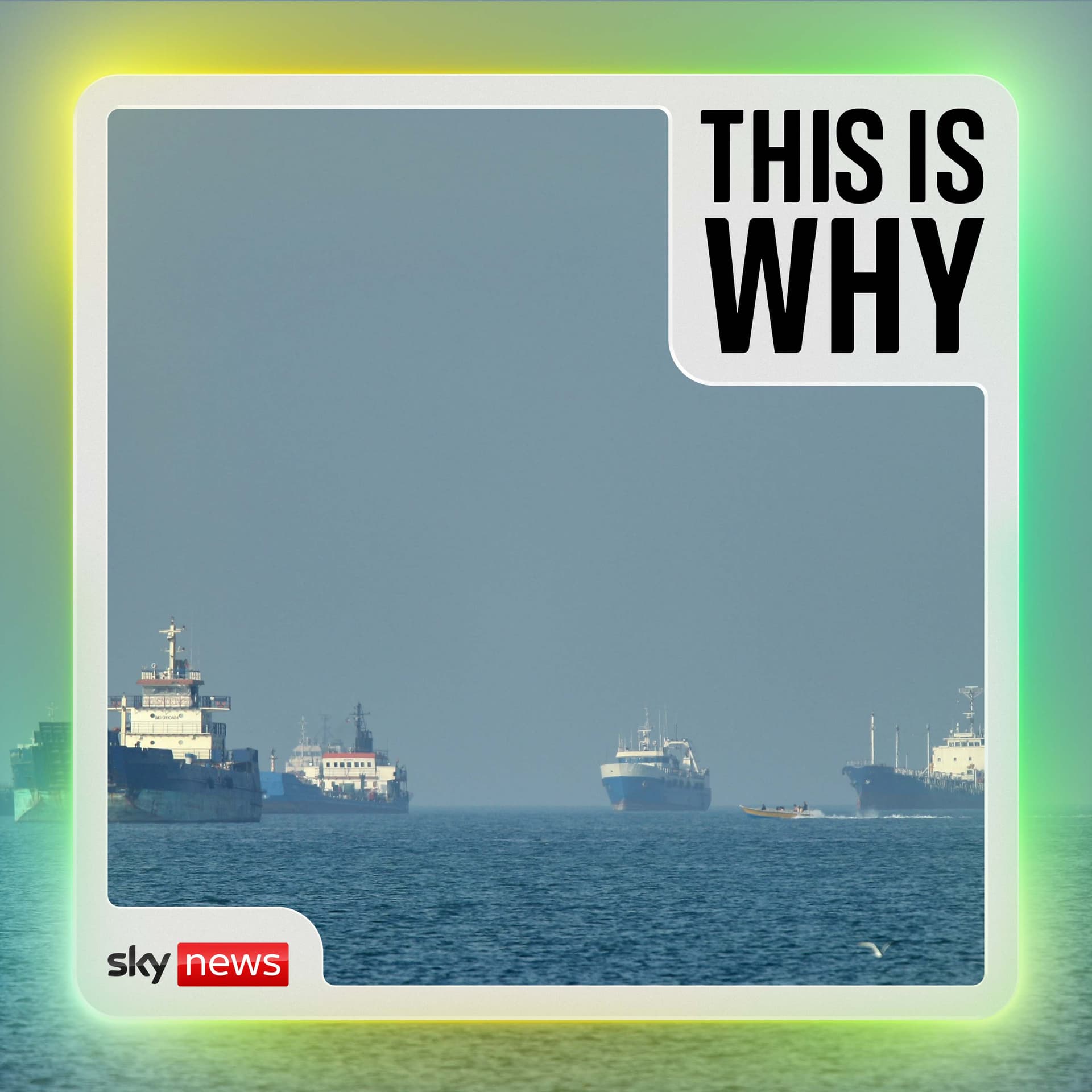
Whether reopening the Strait of Hormuz is feasible and secure after Trump’s Iran memorandum, and what “open” really means given mines, escort needs, and Iran’s leverage.
Guests
Sean Bell, Sky Defence Analyst (military background; discusses war-games and conflict strategy).
Key claims
The strait wasn’t a major issue before the Iran war; Iran’s current control and the 14-point plan’s sanctions/unfreezing focus changed leverage. “No tolls” language may persist but could become disputes over “fees” vs “tolls.” Mine clearance and traffic deconfliction won’t be instant; reports of long timelines may be exaggerated, yet guarantees are impossible. Iran can threaten closure via mines/fast patrol boats/anti-ship missiles, and insurance/escort requirements may linger.
Notable examples
Up to 5,000 Iranian mines (unknown southern count); a 2-mile-wide chokepoint; U.S. naval escort around Oman (only ~10% of routine traffic); Saudi and UAE pipeline alternatives to reduce dependence.
Written by AI. May contain mistakes. Listen to the episode to check what was said.
Chapters
Tap a time to open that second in VOUnderstanding the Strait of Hormuz
0:51 to 1:30
Exploring the significance of the Strait of Hormuz and recent developments.
“Listen daily wherever you get your podcasts.”
The Deal with Iran
1:30 to 2:26
Discussion on Trump's memorandum of understanding with Iran and its implications.
“And handily enough, Donald Trump has just signed a memorandum of understanding with Iran that he says means the oil will now start to flow.”
Military Perspectives on Hormuz
2:26 to 3:18
Military analysis on the safety and security of the Strait of Hormuz.
“I mean, as a military guy, let me paint a slightly different story.”
The Conditions of Negotiation
3:18 to 4:26
Examining the political conditions surrounding the negotiations with Iran.
“When you say the Strait of Armour was not an issue, I mean, basically you mean, well, it was open and tankers were able to get through.”
The Role of Military Strategy
4:26 to 4:57
Analyzing the military strategies involved in the region and their outcomes.
“I've heard a couple of people talk about the ceasefire on the 8th of April, which was, I think many people saw that was the moment America woke up and went, we can't win this militarily.”
Iran's Control Over the Strait
4:57 to 6:15
Discussing Iran's current influence and control over the Strait of Hormuz.
“That would have left the rest of the leadership going, oh, hell, what's going to happen here?”
The Importance of Shipping Safety
6:15 to 8:00
Exploring safety measures and the challenges of shipping through the strait.
“So I think this is one of the fascinating parts of this deal because America has said it's completely unacceptable to have Iran charging tolls at the Strait of Hormuz.”
The Risk of Conflict
8:00 to 8:50
Highlighting the potential risks of military conflict in the region.
“And all of this is designed to match the Iranian effort.”
The Future of the Strait
8:50 to 10:00
Speculating on the future implications for the Strait of Hormuz and global economics.
“Just imagine the carnage that would be wreaked in that region if one of those ships was to be sunk and that oil spread across.”
Regional Stability and Strategies
10:00 to 12:00
Discussing regional strategies to ensure stability amidst tensions.
“I'm Ed Conway, and in each episode of my new podcast, Stuff Matters, I take an object, crack it open, and reveal the world-shaping forces hidden inside.”
Show all 14 chapters
Reducing Dependency on the Strait
12:00 to 14:01
Exploring alternatives to reduce dependency on the Strait of Hormuz for oil exports.
“Iran is incentivised to get the Strait of Hormuz open.”
Middle East Security Strategies
14:01 to 17:40
Explore how Middle Eastern countries are adapting their oil transport and security strategies.
“And so if I was one of the Middle East countries, you're not short of money, but you need that straight to be open.”
The Consequences of U.S. Actions
17:41 to 19:06
Discuss the implications of U.S. diplomacy and military actions in the Middle East.
“It's because domestically this is just getting really difficult for him to endure and he needs to find an elegant way out.”
Global Instability Ahead
19:07 to 19:55
Consider the potential global instability resulting from current geopolitical tensions.
“One of the things I think has been fascinating is watching the body language at the G7 of some of the international leaders.”
Transcript
Automatic transcript. May contain errors.0:01Sky News, the full story first.
0:11The reopening of the Strait of Hormuz will not be as simple as Donald Trump claims. This is why.
0:35deep dive into the day's top stories with NBC News' trusted journalist. It's a fresh take that's sharp, thoughtful, and it's informative, bringing you closer to the headlines and conversations that are shaping our world. From the front page to the zeitgeist, here's The Scoop from NBC News. Listen daily wherever you get your podcasts.
1:01Let's be honest. If before this year you'd never heard of the Strait of Hormuz, You certainly have now. Hi everyone, Neil here, and today we're going to be doing another one of your suggestions for topics to cover on This Is Why, and it's the turn of Gary Brown. He emails,
1:25Thanks Gary, and plenty more of you in fact in the inbox also asking about the straits' security. So that will be our focus for today. And handily enough, Donald Trump has just signed a memorandum of understanding with Iran that he says means the oil will now start to flow. It's a very strong deal. Nobody knows what it is, but it's very strong. And most people seem to be very happy. Though in typical Trump style, he doesn't seem 100 % convinced that Iran will play ball. It's a memorandum of understanding. And if I don't like it, we'll go back to shooting at them, dropping bombs on their head. So how can the Strait of Hormuz be made safe?
2:02What's to stop Iran pulling the same trick again? And as Gary asks, what's the alternative to passing through the Strait? Sean Bell is Sky's defence analyst. Sean, lovely to see you again. Good news all round, by all accounts. Donald Trump's got a deal. There's a signature on a bit of paper somewhere. Presumably that means we are just moments away from the Strait of Hormuz reopening. Well, yeah. I mean, as a military guy, let me paint a slightly different story. Please do. You know, I've been involved in conflicts in my military career all over the place. And one of the things we regularly say, you go to war as a means to an end.
2:39It's not an end itself. You don't go to war for the sake of going to war. You create the conditions for a political solution to come about. You are talking about putting someone in a very uncomfortable position so that the negotiations go your way. Exactly. We don't know what President Trump's end state was, but the 14-point plan is the first time we've seen a manifestation of what good looks like, because otherwise Trump would never have signed it. And I think what's fascinating in that plan, the core issue, which was nuclear, doesn't feature very widely. As previously covered on this podcast.
3:08And one of the centre stages is the Strait of Hormuz, and that was not an issue before the start of the war. So it's really bizarre that people are claiming credit for putting out a fire that they started in the first place. When you say the Strait of Armour was not an issue, I mean, basically you mean, well, it was open and tankers were able to get through. Yeah, and even worse than that, if you take us back to sort of February the 27th, the day before President Trump launched, you had a prior state in terms of Iran. Their economy was in all sorts of trouble. There were uprisings on the street and the Iranian government must have been very worried about its own future.
3:41Now you wind the clock forward to today, most of the points in that peace plan were about financial palliatives. It was unfreezing assets. It was easing of sanctions. And this strange$300 billion fund, I still don't quite know what that's about. But all of those are meant to be helping Iran. It's not helping the Middle East countries who actually were attacked along the way. Iran now has control of the straight-off homies. Whatever is written, you can't put that genie back in the bottle. And they've had the onslaught from the world's superpower and it hasn't subjugated them. What a change in fortunes for the Iranian leadership.
4:15Before we get into the Strait of Hormuz, I mean, is the problem with the analysis just simply the fact that, you know, the Iranians were not as on the back foot as you would want them to be in a negotiating process? That what is on the table right now is as a result of Iran still holding a fair few cards and the Americans clearly losing interest in an ongoing campaign. I've heard a couple of people talk about the ceasefire on the 8th of April, which was, I think many people saw that was the moment America woke up and went, we can't win this militarily. So we've got to find another way. I would argue, actually, this war was lost on the 2nd of March, because on the 1st of March, 24 hours into the campaign, you'll remember that the American-Israeli strikes wiped out the leadership, Hayatole Khomeini and all the leadership.
5:01That would have left the rest of the leadership going, oh, hell, what's going to happen here? If the Americans had stopped at that stage, you've got the context of uprisings, you've got the leadership weakened. Now that might have incentivised to take them more seriously because you've got the threat of a big threat. The fact that America didn't, it continued with an operation. And I'm not being smarter after the event here. When I was in the military, we used to run war games around this. I have played Iran in those war games. How did you go on? Well, what you look at is like Cloudsfit's always said, don't fight your enemy's strength, fight his weakness.
5:32So we were always pulverised by the conventional military, but the straight-up Hormuz was the area that you knew you had a strangled hold on the throat of the umbilical of the global energy supplies, and that's what you leveraged. This is not a surprise that this played out this way. The question is, how on earth does the American military, who would have done exactly the same thing, how did they get duped into taking military action, which would have ended up exactly where we are today? Am I right then to say that as a result of the 14-point plan, one of the biggest changes, if not the biggest change, to the management of the Strait of Hormuz is that as a result of the negotiations between the United States and Iran, Iran now has a role to play in the managing of the Strait of Hormuz that it didn't possess before?
6:15So I think this is one of the fascinating parts of this deal because America has said it's completely unacceptable to have Iran charging tolls at the Strait of Hormuz. But Iran's been using different language and it does appear that that language will endure beyond the 60 days because they're effectively saying, no, no, we're not going to charge tolls. But this is one of the busiest shipping lanes in the world. We've clearly got to deconflict these massive tankers,$100 million a time. There's only a two-mile-wide narrow gap. We need to coordinate that. An administration fee of some sort. No, exactly, a fee.
6:48And we'll talk to Armani's because we share the strait with them. And, of course, all of a sudden, that spectra, what do you mean by fees and when do they suddenly become tolls? And I think that's going to be a major issue going forward because the Iranians are not going to let that slip. When we say a particular waterway, the Strait of Ormuz, for example, is open, what does that mean? There has to be a level of confidence in those who are passing through it that you're going to be able to do unimpeded. No, I agree. And there's so many layers to this. First of all, there's a minefield there. A literal and a figurative one.
7:20Correct. And the question is, Iran has up to 5 ,000 mines. We don't know how many are in the southern part of the strait. We believe there's about a dozen. Most of my military colleagues who know about mine clearing say it's not a difficult operation, but it will be helpful to know where they are. So the question is, is the Iranian authority going to actually be helpful? One of the things that caught my eye about the agreement is, of course, that the American blockade will take up to 30 days to disappear. And you went, hang on a minute, I make a radio call to the boss of the ship and within two hours he's gone.
7:50So why does it take 30 days? Now, part of it appears that there's no trust between the Iranians and the Americans. And therefore, if they're dragging the heels about coordination of traffic out, then America will keep some of the blockade in place because that hurts the Iranians. And all of this is designed to match the Iranian effort. And so therefore, that's why at face value, you'd think this would open in a heartbeat. It won't. The question is, some reports today are talking about up to six months to clear the mines. My understanding from experts in this field that say actually it'd be less than 30 days to be able to clear those.
8:20And it isn't in Iranians' interest to lay hundreds of mines in that area. So it's almost certainly that'd be relatively quick to clear that. But it is one thing, though, isn't it, to say that we are clearing the mines. It is another thing entirely to say the Strait of Hormuz is entirely free from mines. I mean, can they guarantee that? How would they do this? Well, no, it's an interesting point. I think this is all about if there was a mine and if a ship did get blown up. The last time we had a major ship that got, you know, basically dispelled all its oil out, $100 million worth of oil. Just imagine the carnage that would be wreaked in that region if one of those ships was to be sunk and that oil spread across.
8:59It would be a disaster, not only for the Middle East, but also for Iran. So it actually isn't in Iran's interest for them to – the very threat that there might be something there is all about intent. So when Iran says the strait is closed, all of a sudden the insurance market will not allow any of the ships to flow. So practically speaking, there's a bit of bluffing going on here that actually I don't have to do anything if I'm the Ayatollah. I just have to go, no, the strait is closed. And most traffic will not go through without a military escort. America's been providing that military escort for the last few weeks in the southern, just around the coast of Oman.
9:36But it's only about 10 % of the routine traffic. It's not a sustainable model.
9:49How does a banana trigger a CIA-backed coup? Do AirPods herald the arrival of a new global order? What do LED lights say about the future of humanity? I'm Ed Conway, and in each episode of my new podcast, Stuff Matters, I take an object, crack it open, and reveal the world-shaping forces hidden inside. This is economics told through the things we think we understand. Search Stuff Matters on your podcast app to listen and follow.
10:25you have to believe that at least for a period of time tankers would not wish to go through the strait without some form of military escort it can't be entirely provided by the americans in fact i would suggest that the americans don't want to be involved in doing that at all i think trump's actually said that so who does well that i'm not entirely sure that a military escort will be required. And part of that is if you put any military vessels involved, that will concern Iran. And all of a sudden now you raise the spectre that something goes wrong. The one consistent line we're getting out of America is this is a performance-based approach.
11:02So you prove you do this, then we'll do that. There are some pretty significant carrots for Iran in this deal. There's also the threat of big sticks. But quite frankly, I just cannot see America are returning to conflict if Iran misbehaves because we're getting closer to the midterms. It's a 60-day window, two months closer to the midterms. Is it really feasible that President Trump will plunge the world back into chaos, oil prices going back up, Americans paying more than$4 a gallon for their fuel? I just don't see it. True, but at the same time, 60 days sounds like an awful long time, but it really isn't.
11:38And given the fact that the Americans are clearly maintaining a naval presence there, that would suggest that the Iranians might not be as entirely candid about where the mines are. The whole process drags on. And in 60 days' time, we're not looking at full reopening of the Strait of Hormuz. We're looking at another round of negotiations. We could be. A lot of it, I think you have to look at incentives. Iran is incentivised to get the Strait of Hormuz open. Their economy is on its knees and they need oil and they need oil exports from Kargai and that's their main area of offload. They've got to get it through the Strait of Hormuz.
12:12I mean, the beauty about this arrangement is that both sides are massively motivated to get the Strait of Hormuz open again. Have we, in a sense, then perhaps been lucky up until this point that the Iranians didn't realise that they could control the Strait of Hormuz quite so easily? It won't surprise you that many of my military colleagues have been asking exactly that. If we can do war games and that's how it ends up, the Iranians would have gone, surely years ago, would have gone, actually, we can bring ourselves out and hold the world hostage. Most military analysts seem to believe that that's because the Iranians would never have trusted that America didn't have an answer.
12:45And the challenge is ultimately you've got some buried fast patrol boats, you've got anti-ship missiles, you've got drones, you've got mines. But all of those can be taken out. They can't be properly protected. What Iran has done is hidden them very, very well. But you'll be aware that when we've talked about Hezbollah, that the Mossad have been very good at infiltrating. So actually, Iran would never have been quite sure whether America actually knew where all this stuff was. So if you play that card and you're wrong, suddenly all of your leverage is destroyed. As it's turned out, they were forced to go down that route.
13:17And I suspect they're quite surprised that they've still managed to stand. Now they are in the position where they can control the strait almost whenever they choose. That's put them in a very strong position. Isn't this a situation where it is actually probably down to the Gulf states to sort this one out? They are the ones with the most direct kind of financial link to the problems that have been going on since the Iran war started. They've taken potshots from the Iranians at various points. They are the ones with most to lose if this doesn't get sorted out. So can we conceive of a role for them, you know, your Qatar's, your Saudis and all the rest of it, in actually bringing the strait to a state of security where people can go through?
14:00I think there's another option. Go on. And so if I was one of the Middle East countries, you're not short of money, but you need that straight to be open. How do you reduce your dependency on the straight? Now, Saudi Arabia has already done that by building a massive pipeline all the way across to the Red Sea. So I can offload my oil in the Red Sea rather than east. UAE is building a pipeline south so it can bypass the straight-up Hormuz. Now, it's not so easy for the liquid broken gas and stuff like that. But let's face it, when you've got as much money as most of the Middle East countries, I will be looking to mitigate that risk and stop actually this becoming an issue in the future.
14:36It doesn't protect you then. How do you protect yourself from the attacks? Now, up till now, the way you do that is to offer military bases for America and they provide you an umbrella. How well has that worked? America didn't tell, by all accounts, the Middle East it was going to do this. So I think they'd probably be justified in being a little bit hacked off with that. And secondly, despite having the best missile protection systems in the world, in Patriot, Thard and Aegis, a ballistic missile from what effectively is a third world country, at least military from Iran, some of them got through and has caused a lot of damage for Qatar, five years worth of repairs.
15:13So I do think they'll be scratching their heads and going, how do we find a more robust security environment? And does that involve America? It sounds like Gary asked an incredibly opposite question. So he is right that there are other options for these oil-producing nations other than sticking it on tankers and shipping out that way. I mean, why have they not investigated this before now? If you look at the geography of the region, I mean, you'd have to spend a hell of a lot of money. They are awash with money. And therefore, how do you protect that? How do you find other ways of offloading? And therefore, that's why Saudi has built an oil pipeline to the west.
15:45It's why UAE is looking at other options. Most often they'd be, why would we bother? Because we can offload onto ships. I think the more interesting question for me is those security environments, because how do you protect yourself against Iranian attack? Israel's got this golden dome, a protective shield. The harsh reality is the ballistic missiles are very difficult to shoot down. They're very accurate and they're very fast. But now you extrapolate that question here, we in the UK have no protection against those sorts of missiles. So, you know, Iran has been as a third world nation firing loads of these missiles.
16:16Russia, our principal threat, is not a third world nation. And therefore, if they were to fire a single missile this way, we'd be completely vulnerable. That's the lesson I think we should be taking from this. We've talked about the literal minefield of the Strait of Hormuz. Let's talk about the figurative one and imagine a set of circumstances in which ship captains, insurance brokers have the confidence that ships can now pass through the strait. if a British flag vessel passing through gets stopped by an Iranian boat, what happens? Who's responsible? Who steps in? It's a tinderbox. That's the trouble.
16:52And you remember there was a load of piracy going on, wasn't there, a year or so back. That was solved by putting a few special forces onto each of the vessels. It doesn't cost you much to do that. With guns. And as soon as these fast patrol boats approach, they get shot up. there might not be very good rules of engagement around that and it might not be morally or ethically right but you're in the middle of nowhere nobody's recording it it solved the problem in a heartbeat now whether or not some of the oil tankers now have to have some form of defensive capability on board I honestly believe that's not the answer because ultimately if you're trying to defend yourself you then get into initiative to attackers and there's lots of you know anti-ship missiles that could be used or whatever ultimately you've got to solve this at its source, Trump walking away now, is not because he's solved the problem of the Middle East.
17:41It's because domestically this is just getting really difficult for him to endure and he needs to find an elegant way out. If you look at those 14 points, most of them look like America's capitulated rather than Iran. Totally. But we find ourselves in a situation where the Iranians have discovered just how much power they actually wield. And given they've done this once, what is ultimately to stop them from doing it again, particularly if the taps are not turned on quite as quickly as you'd like in terms of that$300 billion fund, wherever it is coming from. I think that's the big issue because you can't put the junior back in the bottle.
18:18Now that Iran has demonstrated it can close the straits, it can continue to do that. But our success, whether it's American or British or whatever, trying to depose, get leaders out the way, whether it's in Iraq, whether it's in Libya, hasn't been that good because you can't cut off the head of the snake, put a McDonald's on every street corner and give women the vote and suddenly declare success. It doesn't work like that. It doesn't. Iran has its own way of running a country. It has got oil. And how do we use that carrot and stick? The stick clearly hasn't worked. But we're going to see the Trump administration claiming this is victory, that the Strait of Hormuz has been reopened through diplomacy rather than necessarily at the end of the barrel of a gun.
18:57But we shouldn't forget that, which we discussed when we started. You know, the Strait of Hormuz was not an issue before the Iran war. It is an issue now and it will continue to be an issue for a long, long time. One of the things I think has been fascinating is watching the body language at the G7 of some of the international leaders. Because Trump, that press conference that he gave at the end, he's famous for doing rambling press conferences. But that was just full of contradictions. And there was lots of rolling of eyes of the leaders behind him sort of going, you got yourself into this mess.
19:30We've now got to deal with it. And I do think there are some profound implications for this, not least of which, how can you criticise Russia for invading Ukraine when America doesn't go to the United Nations, doesn't go to the Middle East, just does its own thing? And what message does that send to China about its ambitions in Taiwan? So I do think we potentially are looking down the barrel of a really unstable world for the next few years. Sean, thanks very much. Thanks once again to Gary for suggesting the Straight Up for Moose as our topic for today. Do remember, you can get in touch with your thoughts on any of our episodes or, like Gary, suggestions for the future, why at sky.uk.
20:11And if you like what you heard today, you might want to listen to yesterday's episode with Professor Michael Clarke, our other defence analyst, talking about the Russian frigate that took potshots at a couple of British pensioners crossing the Channel in their yacht. If you want to find that, just scroll back in your podcast app or go and have a look for the This Is Why playlist on YouTube. We're back again tomorrow.
20:42Hey, it's your ceiling vent, so I'm dripping. Could be the rain, could be the upstairs bathroom. Yikes. You could hire the guy your neighbour recommended, but I'm pretty sure that's just his cousin. Do we know if he's licensed or does he just own a ladder? Listen to your home. Go with Thumbtack. Upload a photo or voice note and we'll diagnose your project and match you with the right pro for the job. Thumbtack. We know homes. Hire the right pro today. As the day wraps up, get the scoop on what's been happening with Here's the Scoop, a new podcast from NBC News with me, your host, Gasmina Sugian.
21:20We'll take a deep dive into the day's top stories with NBC News' trusted journalists. It's a fresh take that's sharp, thoughtful, and it's informative, bringing you closer to the headlines and conversations that are shaping our world. From the front page to the zeitgeist, here's The Scoop from NBC News. Listen daily wherever you get your podcasts.
From the publisher
End the war, get the oil tankers moving, and the world’s economy returns to normal. It sounds easy. It really isn’t.
Donald Trump and the Iranian regime have signed a Memorandum of Understanding in the hopes of bringing the four-month conflict to an end.
But the key objective of allowing global shipping to pass freely through the currently Iran controlled Strait of Hormuz is far less straightforward than it may appear.
From the threat of minefields to a change of heart over military action, it could take months – if not longer – for the region to return to normal.
Niall Paterson is joined by Sky's military analyst Sean Bell.
Have you got a question for Niall? Email us: why@sky.uk