
In short
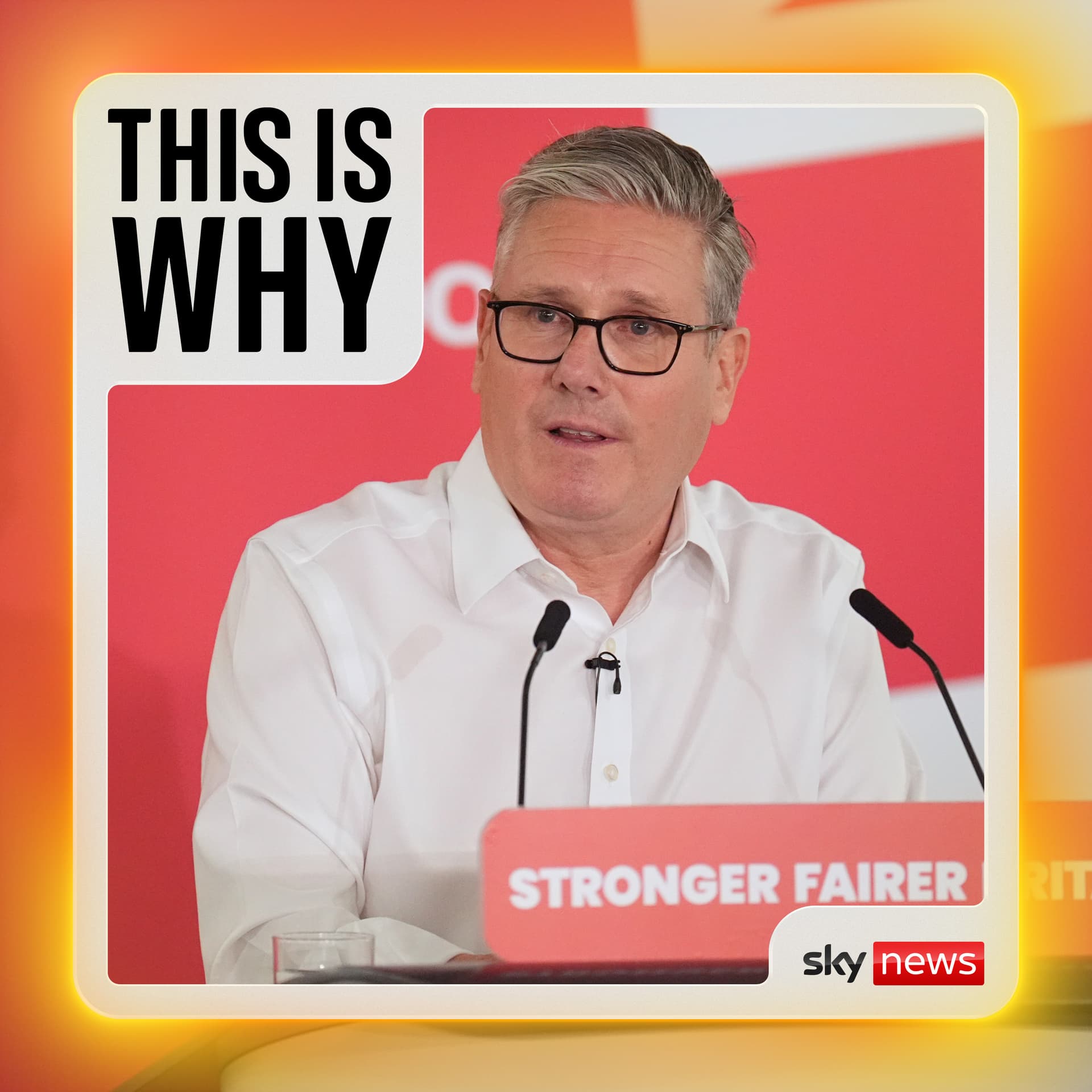
After Labour’s election defeat, the episode explains why replacing Prime Minister Keir Starmer is difficult, focusing on Labour’s leadership rules, internal thresholds, and the likelihood of a challenge before the next general election.
Guest backgrounds
Lucy McDade, Sky News political correspondent, discusses Labour Party procedures and named political figures.
Key claims
Starmer has taken responsibility but is unlikely to resign soon; Labour leadership contests are harder than Conservative ones because challengers must secure public backing from MPs (no anonymous nominations) and reach an 80-MP threshold. Even if appetite exists, not enough MPs are willing to challenge him publicly, so he’s “safe for now,” but not necessarily safe for the next general election.
Notable examples
Andy Burnham (blocked from standing in a by-election because he isn’t an MP); Wes Streeting (Health Secretary with thin-seat risk, plotting but not openly challenging); Angela Rayner (HMRC investigation over alleged tax issues; says Starmer has “one last chance”); Ed Miliband (left-leaning, linked to Burnham); Al Qans (veterans minister, defence-focused, questioned on experience).
Written by AI. May contain mistakes. Listen to the episode to check what was said.
Chapters
Tap a time to open that second in VOUnderstanding Starmer's Situation
0:45 to 1:58
Exploration of Keir Starmer's challenges following recent election results.
“And as we all continue to pick apart the results of last week's elections, speculation has inevitably turned to Sir Keir Starmer's future because those results were an unmitigated disaster.”
The Process of Triggering a Leadership Contest
1:58 to 4:50
Detailed explanation of how Labour MPs can initiate a leadership contest.
“But does that mean that he's safe for the next general election?”
Navigating the Leadership Contest Rules
4:50 to 6:10
Discussion on the rules governing leadership contests in the Labour Party.
“Because the General Secretary of the Labour Party is a woman called Holly Ridley.”
Potential Triggers for Starmer's Replacement
6:10 to 7:45
Examination of scenarios that could lead to Starmer's resignation.
“And I think those are one of the dominoes out of many, that once they fall, everything else does.”
Key Contenders for Labour Leadership
7:45 to 12:10
Overview of potential candidates who may replace Keir Starmer.
“I almost think biggest blow to the prime minister, to any prime minister really, is when the first cabinet minister comes out and says, I'm resigning.”
Left-Wing Influence and Future Candidates
12:10 to 14:00
Discussion on the left-wing candidates and their implications for Labour's future.
“I mean, she would have popular appeal with the party and, you know, her backstory, working class single mother and all the rest of it really plays well for Labour.”
Debating Keir Starmer's Future
14:00 to 15:36
Discussion on the potential leadership changes in the Labour Party and Keir Starmer's position.
“And when we talk about Cabinet splits, he is somebody that I think it's fair to say feels that the Labour Party has lost its way, is going in the wrong direction on certain policy.”
Public Perception of Politics
15:36 to 17:26
Exploration of how politicians are viewed by the public and the impact on voter behavior.
“So a part of me wants to put it out there that I think Keir Starmer is safe for now.”
Transcript
Automatic transcript. May contain errors.0:01Sky News, the full story first.
0:30Fully brief for the day ahead in British politics. Hit follow and listen to Politics at Sam & An's wherever you get your podcasts.
0:43Anyone looking for a quick and easy way to replace Keir Starmer as Prime Minister might need to think again. And this is why.
1:00Hi everyone, Neil here. And as we all continue to pick apart the results of last week's elections, speculation has inevitably turned to Sir Keir Starmer's future because those results were an unmitigated disaster. And yeah, he has taken personal responsibility for the drubbing. That doesn't mean he's going to resign any time soon. I take responsibility for not walking away, not plunging our country into chaos as the Tories did. A Labour government would never be forgiven. And that's the thing. Starmer's tenure as PM has been so bumpy that if he'd been a Conservative, you'd have expected the removal vans outside number 10 a long time ago.
1:37But Labour have different rules, different processes. And so while there undoubtedly is appetite for change, Labour doesn't get through leaders quite as quickly as the Tories. The truth is, I don't think enough MPs want to come forward publicly and say they don't have faith in Keir Starmer. I think Keir Starmer is safer now. But does that mean that he's safe for the next general election? Lucy McDade is Sky's political correspondent. Lucy, lovely to see you. Let's start with the contest itself. Yeah. Who can stand to be the next leader of the Labour Party? Well, it has to be an MP. So somebody who is already elected to a seat and attends the House of Commons.
2:18So among those Labour MPs, it has to be a Labour MP. We've got more than 400 of them who technically could actually do it. Yeah. And of course, there are some people who would like to be Labour leader who are not currently MPs. But if you are a Labour MP, how does this contest get started? So for a Labour MP to be able to start a contest, there are a number of ways. So one of them, and this is what we are seeing play out at the moment, but effectively, they have to go to, it's called the National Executive Committee. It's effectively Labour's ruling body. They're like the bosses. An MP has to go to them.
2:52They have to say, I want to trigger a leadership contest. And then the process gets going from there. Ideally, that Labour MP going to the NEC, they would have to have the backing of 80 MPs. And how difficult is that for any member of the parliamentary Labour Party? Well, I suppose what they would do in the first instance, and I think this is what we've got going on at the moment, is they would effectively have a chat to their colleagues, see who is up for backing them. And the threshold, it's technically it's 20 % of Labour MPs. There are more than 400. So it's 80 MPs, 81, including themselves, which let's be honest, that's a lot of people.
3:32And when you look at over the past few days, the number of MPs that have come out in public, criticising Keir Starmer, 80 is a huge number to reach. And the really critical thing here, particularly with the Labour Party, is that these MPs can't do it anonymously. So when it comes to the Conservatives, for example, they can nominate a different candidate to be leader anonymously without putting their name down in public. So for Labour, the threshold is pretty high because you've got to be pretty confident as a Labour MP to put your head above the parapet in this situation and nominate somebody else.
4:04So assuming that someone is successful and getting 80 of their parliamentary colleagues to sign up. What next? The National Executive Committee, the NEC, comes in. There's been a bit of misunderstanding, I think, of the Labour rules. And I'm not surprised because I've had to scrub up on them myself. What happens? They go to the NEC, trigger a contest. The NEC then sets out a timetable. And in that time, this MP that's gone to the NEC and other leadership challenges, that's where it gets interesting because that's where we see the competition forming. they have to gather the support of those ATMPs.
4:40And we're not talking digital signature, tick a box online. We're talking a pen and paper on a form that gets submitted to the General Secretary of the Labour Party. And we're getting into the weeds a bit here, aren't we? Because the General Secretary of the Labour Party is a woman called Holly Ridley. You probably haven't heard of her before unless you're a dedicated member of the Labour Party. but she's the person who those forms have to be submitted to. Once she gets all of the candidates, all of the forms in place, remember each one has to have the backing of 80 Labour MPs, that's when the ballot paper comes out with all of those names on.
5:16It's worth noting at this point that Keir Starmer's name would go on automatically. He doesn't need to go through this process of getting the backing. And it's then that voting starts. There has to be a two-week window before the voting starts. But yeah, it all gets going. Let's just try and break this down because I know you said this was a labyrinthine election process and we're already slightly lost in the maze. So the PLP, the group of Labour MPs in the Commons at the moment, they have the first stab at picking a leader and then what happens? So they're the ones that you have to get on board first.
5:52They're the ones that have the first go, if you like. But then it goes out to the wider Labour Party. of course, just as important, really, in this process. And you've got unions and party members. Unions, you know, we can't ignore just how important they are to a Labour leader. I mean, Keir Starmer has already lost the support of some Labour-affiliated unions. And I think those are one of the dominoes out of many, that once they fall, everything else does. It strikes me that this process, Lucy, is set up so that you don't have a revolving door at the top of the Labour Party. Am I right? Yeah, absolutely.
6:26And the reason I laugh in response to your question, I mean, because one of the points that, you know, people like Keir Starmer and people that support Keir Starmer are saying is that we don't want to end up like the Conservatives. I mean, the Conservatives went through prime ministers, particularly towards the end, an awful lot, didn't they? So this process, the Labour one, is notoriously quite difficult. I mean, even just getting to that 80 MPs of support is seen as a very difficult task. Interestingly, the rules for nominating a new Labour leader have changed. So since Keir Starmer came into number 10, Morgan McSweeney, and I'm bringing up another name now, but Morgan McSweeney was the Prime Minister's former chief of staff.
7:10So his behind the scenes right hand man in Downing Street, he actually changed the rules where it used to be you could only challenge the Prime Minister. So you could only kind of trigger a leadership contest to the NEC at autumn conference, which is in September, October, usually every year. Now you can do it all year round. So it's actually easier to do it than it once was. Are there other ways in which a leadership contest might be brought about? I mean, this is the formal process, but I'm sitting here pondering, you know, if half the cabinet resigns en masse, then at that point, surely Keir Starmer's tenure would be untenable.
7:44Yeah, and there are a number of ways that Keir Starmer could be replaced. I almost think biggest blow to the prime minister, to any prime minister really, is when the first cabinet minister comes out and says, I'm resigning. You've seen it with Boris Johnson. You know, once the dominoes start falling, that's when it really matters. At the moment, you know, you've got some backbench Labour MPs coming out saying that they don't support Keir Starmer. Does Keir Starmer lose sleep over that? I mean, it's not ideal. But when you're in small handfuls of numbers, it's not that big of an issue for him.
8:16But when his cabinet, once the first person goes, others then will follow. These are people that Keir Starmer meets with every week. They're carrying out the agenda of the Labour government, working on the NHS, working on house building, working on transport, important policy. If they don't have confidence in him, then it's very difficult to see how a prime minister can stay imposed. And then that's when it comes down to the Prime Minister thinking, I've got no choice now but to step down.
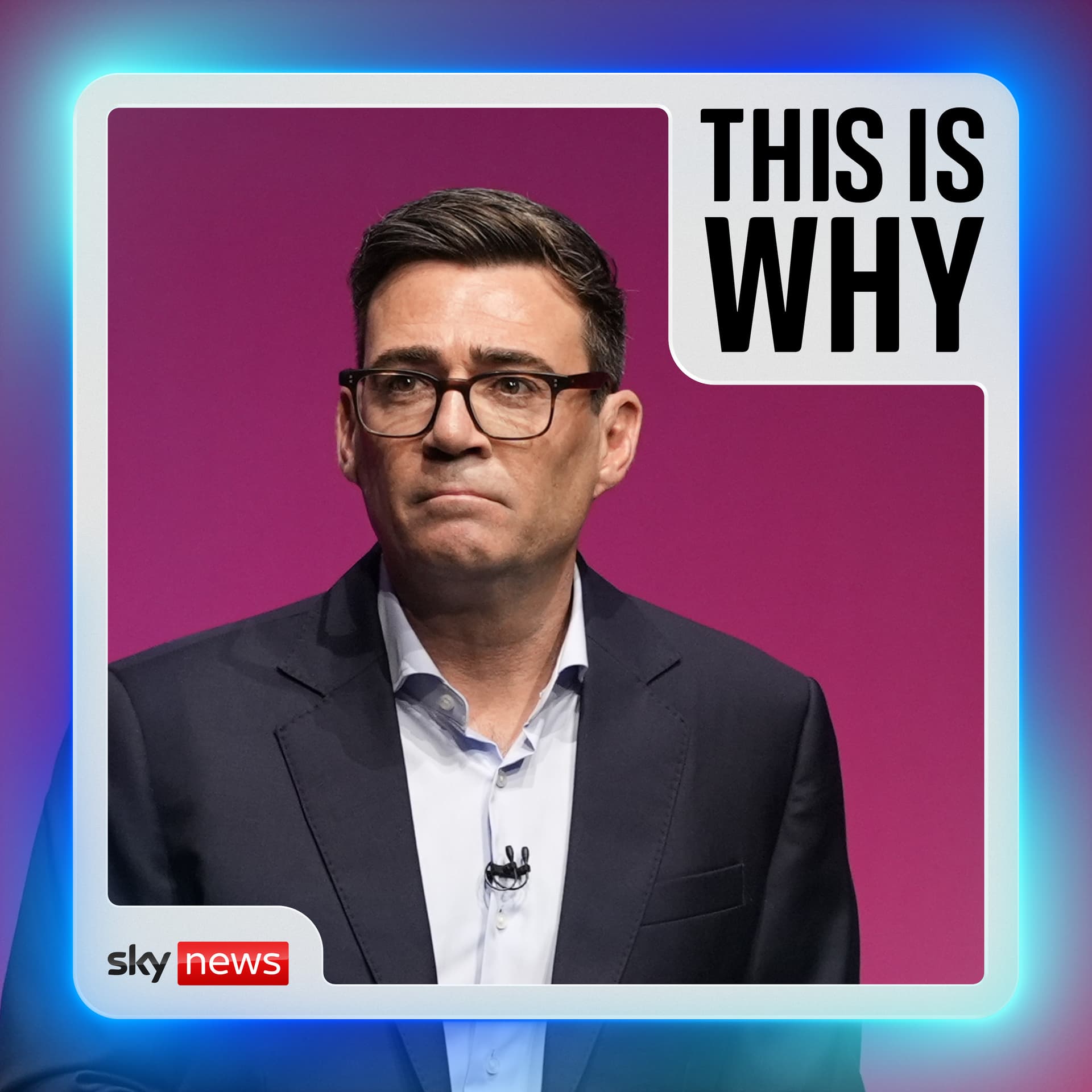
9:33OK, Lucy, runners through the runners and riders. I mean, we've already mentioned the maid of Greater Manchester, Andy Burnham. And the fact that he's not an MP is presumably the biggest barrier to him getting the job. Yeah, this is where it gets juicy, isn't it? Because we've been talking for weeks and months about leadership speculation and there have been some specific names circling. Andy Burnham is the obvious one. Mayor of Greater Manchester. Crucially, not an MP. So we saw a by-election in Gorton and Denton, didn't we? Earlier this year. And it was widely speculated that Andy Burnham would stand in that election.
10:12He would get the seat, he would become an MP, and that would be the beginning of his path to being prime minister. But it was the National Executive Committee, that ruling body again, that blocked him from standing. So he at the moment doesn't have a path back to Westminster unless he becomes an MP in the next few months or whatever. So he has got a number of hurdles effectively that he needs to jump over before he can even become an MP, let alone become prime minister. It's worth saying that there are a number of MPs that want to be able to make that happen for him. Okay, so what about one of Sir Keir Starmer's closest cabinet colleagues, well, certainly one of the most senior ones, Wes Streeting over at the Department of Health.
10:53I mean, he's talking a good game, but he's also sitting in a pretty wafer-thin majority. Yeah, he is. And I mean, that's the other thing that we've got, you know, to talk about here is that actually a lot of these MPs have thin majorities and aren't necessarily guaranteed to keep their seats at the next election. But Wes Streeting, as you say, currently health secretary, currently running the NHS, effectively trying to bring down waiting lists and all sorts, his name has been pretty much at the top of the list for some time now as somebody that wants to take over from the prime minister. His team, you know, certainly don't deny that that's what he wants to do.
11:28But we haven't seen West Streeting in public be at all critical of the prime minister, really. He's very keen to be seen as somebody that's backing him. But would he launch a contest if it was triggered? Yes, I think he would. But again, the key here is that he isn't willing at the moment to put his head above the parapet. But he is clearly plotting behind the scenes. There are MPs that say he's kind of bumped into them in the corridors of Westminster, trying to see if he would have their support should a contest be triggered. The problem maybe with Wes Streeting is that people say, well, he might have the support of the public, but he wouldn't necessarily have the support of the party.
12:07He also doesn't really have the support of a lot of MPs. What about Angela Rayner then, former Deputy Prime Minister? I mean, she would have popular appeal with the party and, you know, her backstory, working class single mother and all the rest of it really plays well for Labour. But she's got a couple of tax issues. Yeah, one of the obstacles, the challenges that stands in Angela Rayner's way. So we saw her fairly recently, wasn't it, resign. She was deputy prime minister in Keir Starmer's cabinet, in a really senior role because for so long she has been seen as such an important character to have in the party.
12:44it was reported that she had effectively bought a second home on the seafront in Brighton and underpaid stamp duty. And whatever the ins and outs are, obviously incredibly controversial, but particularly so for a Labour politician. She ended up coming out standing down. She's being investigated by HMRC. That isn't over yet. That's hanging over her. That's the issue here. She has very slowly been trying to stage a bit of a comeback. I think what's critical that we mention here is that over the past few days, she's staged a bit of an intervention. She's come out and said that, you know, Keir Starmer needs to look at these local election results, realise that something needs to be changed.
13:22And she's kind of said to him, Prime Minister, you've got one last chance. There are question marks over whether or not that's her launching a leadership contest. I think she's keeping her options open at the moment. She wants to see Burnham come back to Parliament. But I think she's widely seen as somebody that one day could put her name on the ballot paper if she had the backing. Are there any names that we haven't mentioned so far that we should be keeping a closer eye on? I think so, yes. So looking back at Cabinet, you've got Ed Miliband, for example, who's energy secretary, but a big figure in the Labour Party, more to the left, former leader.
13:56It's critical because he's more to the left of the party. Okay. And when we talk about Cabinet splits, he is somebody that I think it's fair to say feels that the Labour Party has lost its way, is going in the wrong direction on certain policy. So could be seen as somebody that would regain the trust, not just of MPs, but of Labour Party members and voters across the country. But what is being reported as well, he is a backer, I think, of Andy Burnham. So say Andy Burnham doesn't clear the obstacles that he needs to, to get back into Westminster. Who knows? Maybe Ed Miliband might kind of be sat at home one night in bed thinking, I think this is my opportunity to do this and kind of save the party.
14:42One other name that sometimes floats around Westminster, I don't know if anyone will know him, he's fairly new, is Al Qans. Now he's a veterans minister. And he's kind of from this wing of the party that have, you know, military history that are really focusing on this big question at the moment, not just in the party, but let's face it, in the kind of the country about where we are in terms of our military capabilities, spending on defence. And he's kind of seen as somebody who gets it, who's got a great personality, who would be a good communicator. It's whether or not he's got the experience.
15:18And again, has he got the backing? And I don't know, it's difficult to say really. So what's your best guess then? Where are we going in the next few hours, days, weeks? From my end, it does feel like there is, if not an inevitability, then close to an inevitability that Keir Starmer will be gone at some point. Yeah, and you've said it really well there, because what you've said is before the next general election, not in the next week or the next two weeks, because I don't think enough MPs want to come forward publicly and say they don't have faith in Keir Starmer for all of the reasons that we've just mentioned.
15:53So a part of me wants to put it out there that I think Keir Starmer is safe for now. But does that mean that he's safe for the next general election? By all means, no, because the challenges are going to keep coming his way. MPs are constantly waiting for him, you know, for other mistakes that they can come forward and say something. So I think he's safe. But the key word there is for now, because whether he leads the party or not into the next general election is a whole other thing. One thing's for certain, none of this desperately turns on the public, does it? Oh, no, no. I mean, that's the thing, isn't it?
16:28You can kind of, you know, I do in my job, you know, get stuck in the Westminster bubble. And actually, when you leave, and you speak to people who, you know, go about their daily lives, not following every single development in politics, as I said earlier, it doesn't matter what party they're from, they see politicians as all the same. I mean, even Labour won the general election going through that campaign, talking about cleaning up politics, talking about being a bit more authentic, being honest and open with people. And actually, you had Keir Starmer today saying that he has spent the past two years maybe not being honest enough with people.
17:03And so people are voting for parties like Reform and the Greens because they are fed up with Labour and the Tories that we've had for so long for a number of reasons. So Labour really needs to think about this. I don't think they are doing themselves any favours by being stuck with this infighting that we are seeing. It's a bit depressing for people, isn't it, who feel like there is no hope anymore. You can see why they're turning to people like Zach Polanski and Nigel Farage, who claim that they are different from the rest. Do you know what? It will be fascinating to see how this one turns out.
17:34Lucy, great to talk to you. Thanks very much for listening. Do get in touch with your thoughts on today's episode or indeed any suggestions you have for future topics we should be covering. Why at sky.uk is the email. We're back tomorrow.
17:58I'm Sam Coates from Sky News. And I'm Anne McElvoy from Politico. Downing Street drama, leadership battles and policy U-turns. We're on it before it breaks. We take you straight into the rooms where the real political conversations are happening. Smart Insight, clear analysis in your feeds by 7.45am. So you start your morning fully brief for the day ahead in British politics. Hit follow and listen to Politics at Sam & Anne's wherever you get your podcasts.
From the publisher
Despite a disastrous set of local and national election results, the prime minister has vowed to carry on regardless. But dozens of Sir Keir Starmer's Labour MPs have now called on him to resign – or at least set out a timetable for when he will leave Downing Street.
Surely choosing a replacement – or even triggering a leadership contest – should be straightforward? However, even though there are any number of potential challengers, the PM could well be safer than you think.
Niall is joined by Sky’s political correspondent, Lucy McDaid, to discuss the Labour leadership election process, how it differs from the Tories and what needs to happen for Starmer to be ousted.
Have you got a question for Niall? Email the show: why@sky.uk