In short
Whether UK laws should be changed to allow clinical use of MDMA (ecstasy) to treat PTSD in military personnel and other trauma-exposed groups, and the political/regulatory barriers to research.
Guests/backgrounds
Thomas Moore, Sky News science correspondent; General Sir Nick Carter, former chief of the defence staff (former senior military advisor to the government). Hosts are Sam Coates (Sky News) and Anne McElvoy (Politico).
Key claims
PTSD affects about 1 in 10 Iraq/Afghanistan veterans. Early trials suggest ~70% may no longer meet PTSD criteria after MDMA-assisted therapy. MDMA is not for self-medicating; it’s proposed as medical-grade, tightly controlled dosing plus psychotherapy. Stigma and UK Home Office regulation make research expensive and slow; a gram can cost researchers ~£10,000 vs ~£40 street price.
Notable examples
a veteran describing tube noise triggering battlefield panic; planned Cambridge Psychedelic Research Group study at Addenbrookes Hospital with up to 60 veterans/war correspondents/first responders using three-session protocols (preparation, 8-hour dosing, integration).
Written by AI. May contain mistakes. Listen to the episode to check what was said.
Chapters
Tap a time to open that second in VOThe War on Drugs and Its Impact
0:42 to 1:31
Discussing the implications of strict drug laws on military personnel with PTSD.
“So you start your morning fully brief for the day ahead in British politics.”
MDMA as a Potential Treatment
1:31 to 2:29
Exploring the emerging evidence for MDMA as a treatment for PTSD in veterans.
“There's a growing body of evidence suggesting that MDMA, yeah, ecstasy, the same drug linked inextricably to club culture could be a very effective treatment for post-traumatic stress disorder.”
Understanding MDMA's Mechanism
2:29 to 3:43
Explaining how MDMA affects the brain and aids in therapy for PTSD.
“Just explain why one of the most senior people in our military is asking the government to change some of the most significant laws around illegal drugs.”
Clinical Trials and Therapeutic Context
3:43 to 6:11
Detailing the clinical trial process and therapeutic settings for MDMA use.
“And it increased feelings of euphoria, the trust, the bond with other people on the dance floor, that kind of stuff.”
Overcoming Stigma and Regulatory Challenges
6:11 to 8:28
Discussing the stigma surrounding MDMA and the regulatory hurdles for research.
“So I think there was the impurities that made it very difficult for people who wanted to use ecstasy at the time.”
The Future of MDMA in PTSD Treatment
8:28 to 14:04
Speculating on the future of MDMA prescriptions for PTSD in the UK.
“So how is it proposed that those who are going to be given MDMA are given the MDMA?”
The Future of MDMA in Treating PTSD
14:04 to 16:45
Exploring the potential for MDMA to be prescribed for PTSD and the shifting regulatory landscape.
“Can you genuinely see a time in this country where MDMA is prescribed for post-traumatic stress disorder?”
The Efficacy of Psychedelics vs Antidepressants
16:45 to 17:17
Discussing how psychedelics may offer better long-term solutions for mental health compared to traditional antidepressants.
“because you can have maybe one or two doses of some psychedelics and there's a very, very quick response, very quick response improvement in their mental health.”
Transcript
Automatic transcript. May contain errors.0:02General Sir Nick Carter:Sky News, the full story first.
0:11It's illegal, it's classy and it's better known as ecstasy. But a former head of the armed forces wants to give MDMA to traumatise soldiers. And this is why.
0:24I'm Sam Coates from Sky News.
0:26General Sir Nick Carter:And I'm Anne McElvoy from Politico. Downing Street drama, leadership battles and policy U-turns. We're on it before it breaks. We take you straight into the rooms where the real political conversations are happening. Smart Insight, clear analysis in your feeds by 7.45am. So you start your morning fully brief for the day ahead in British politics. Hit follow and listen to Politics at Sam & Anne's wherever you get your podcasts.
0:56Hi everyone, Neil here, and we're going to start today by discussing the war on drugs, one of the longest wars we've ever fought in fact. Tough laws, strict controls, zero tolerance. But what happens when those same rules start getting in the way of treating the people we send to fight our actual wars? No one really talks about it. It's a massive, shunned, dark area where from my time in the military there is definitely people who have mental health issues who have PTSD but they can't talk about it.
1:32There's a growing body of evidence suggesting that MDMA, yeah, ecstasy, the same drug linked inextricably to club culture could be a very effective treatment for post-traumatic stress disorder. It does seem to help people in a way that traditional talking therapy doesn't. And there have been early trials which suggest that after going through treatment, 70 % of these military veterans no longer meet the criteria for post-traumatic stress disorder. Now, a former head of Britain's armed forces, Sir Nick Carter, is openly questioning the law. He says it makes it incredibly hard and incredibly expensive to conduct further research.
2:13So, should the rules change, or are they there for good reason? Thomas Moore is our science correspondent. Before we get started, just a warning. We will be discussing drug use, depression, and suicide. Thomas, we have covered some stories on This Is Why, but this one, I'm fascinated by it. Just explain why one of the most senior people in our military is asking the government to change some of the most significant laws around illegal drugs. Yeah, you'd expect him to stick firmly to the law, right? But he is calling for a big change in the regulation over psychedelic drugs. This is General Nick Carter, former chief of the defence staff, the most senior military advisor to the government back in the day.
2:59And he's saying that military veterans are not getting the treatment that they need when they come back with post-traumatic stress disorder. And that affects about one in 10 people who served in Iraq and Afghanistan. And at the moment, they get lots of talking therapy and it just doesn't work. But he's been attracted by the potential of MDMA, an illegal, a psychedelic drug. But there's pretty good evidence now that it can break through and help people overcome the trauma that is in their brains. So just remind people what MDMA is. I mean, I suppose most people would perhaps know it by the street name, ecstasy.
3:38It's commonly been used in clubs since the 80s, really. Yeah, for sure. It was a rave drug, the party drug. And it increased feelings of euphoria, the trust, the bond with other people on the dance floor, that kind of stuff. People began to see, scientists began to seize on the way that it sort of brings out that feeling of trust in a therapist and that it can help unlock that brain to help people get through, to deal with the underlying trauma, to break through the fear that is normally a barrier. It's very hard for people who don't have PTSD to understand how a very loud noise on the tube, for example, can suddenly bring back a visceral feeling that they're under threat, that they're back on the battlefield and being shot at.
4:26you know we've spoken to one veteran who was in exactly that situation and he ended up on the floor of the tube it is an overwhelming physical response but the source is within the brain the idea is that mdma can help remove that fear and with the help of a therapist process that underlying trauma just to be clear we're not talking about circumstances in which say for example the ex crisis. We are talking about using it to help facilitate the existing treatments that are already out there. For sure. So we're not talking about people going down the street and buying drugs and self-medicating. That is not what this is about.
5:09It is done with medical grade MDMA under the guidance and the support of not just a psychologist or a psychiatrist, but also there's medical help there too, should there be any side effects. So this is under very, very tight control but with that tight control when you know what you're taking and the dose is regulated that's really important too then it does seem to help people in a way that traditional talking therapy doesn't and there have been early trials which suggests that after going through treatment 70 percent of these military veterans no longer meet the criteria for post-traumatic stress disorder.
5:49So the trials that have been ongoing have, by the sounds of it, have not just been, you know, positive, they've been incredibly positive. Yeah, I mean, there are many medical drugs where if it was 70 % effective, wow, you wouldn't think, just get it out on the market. But there is this long lasting stigma over these drugs because of their history, which I'm sure we're going to. Yeah, well, that's kind of where I was heading next. Because, you know, I was out clubbing in the 90s 2000s and it wasn't just that people were being warned that you didn't know what was in your pills because it came in pill form it was that there were other effects that the drug could have on the body particularly around dehydration you know many people who are clubbing in those days know of people who are hospitalized as a result yeah and there was a big media campaign against ecstasy a lot of that was to do with the fact that people didn't really know what was in the pills and it could have been cut with anything.
6:45So I think there was the impurities that made it very difficult for people who wanted to use ecstasy at the time. But this has a history that goes back to the 1960s. If you think about LSD and all these psychedelics were part of the counterculture back then. But wider society blamed these drugs for kind of moral decline, social unrest and so on. So it was Nixon then as president launched this war on drugs, made them illegal and effectively shut down scientific research. And there had been some research which looked quite promising at the time, but it just became impossible to do once they were made illegal.
7:22So how much do we understand about why MDMA makes people more open to the talking therapies that are available to them? Yeah, it's a really good question. So the feeling is that they repair brain circuits. So what happens in depression or PTSD is that brain circuits, particularly in the prefrontal cortex, which just lies behind the forehead, it's the command centre of the brain, that those brain circuits become damaged. And that would normally, that command centre would normally deal with other regions of the brain that deal with mood, motivation, fear, reward. So you can understand how if you break that, those links with other parts of the brain, things like depression or post-traumatic stress or addictions might become an issue.
8:08And the feeling is that psychedelics, including MDMA and psilocybin from magic mushrooms, heal those brain circuits. So they don't rewire the brain, but they do fix those brain circuits. So you have potential for much more normal brain patterns. But it's the combination of the drug with the therapy that helps embed those. So how is it proposed that those who are going to be given MDMA are given the MDMA? They're presumably doing it in a clinical environment. Yeah, so we were given access to a special room at Addenbrookes Hospital in Cambridge. That's where the Cambridge Psychedelic Research Group is going to be doing this study on up to 60 military veterans and war correspondents, actually, as well as first responders.
8:53So people who are through their jobs are exposed to some horrible trauma and those scars can become lifelong and overwhelming. So they're going to be doing this research once they get the funds together. It's the charity supporting wounded veterans that is going to be funding this. But the idea is that there are three sessions. The first one, you meet your therapist. You kind of talk through what you're going to expect. The second section is where you'll be given MDMA. That session can last eight hours. You'll be in a room that's got a comfortable bed. There's a nurse there. There's a therapist too.
9:29And the idea is that if the person needs support during their experience, that there are people there to help them. If it becomes overwhelming, they can take a break, but then go back in. And then after that, possibly the following day, there will be what they call an integration session where the therapist tries to help process what's been going through. But it is very much a journey between the person with the PTSD and the therapist too. Things do appear to be changing just tonally when it comes to the use of these specific types of psychedelics in clinical environments. And we're not the only ones looking at this.
10:07Yeah, it looks like they're breaking through the decades-long stigma over these drugs. Now, the problem has been that whereas the MHRA, the medicines regulator, normally regulates clinical trials of medicines, it's the home office that regulates illegal drugs. And they're not used to dealing with scientists coming, saying, we want to give this drug to people. yeah, we'll do it under close supervision. So the Home Office has been very suspicious, but that's beginning to change. And the government has proposed changes to the regulations to make it easier for researchers to do this kind of research, in effect answering Sir Nick Carter's demand that these regulations should be changed.
10:52Because the problem at the moment is that they have to jump through hoops. There's so much red tape, and this drug has to be obtained in very strict circumstances. So it's really expensive. So for example, a gram of MDMA, which can cost 40 quid on the street, can cost a researcher 10 ,000 pounds. That much? So you can see why there is a great problem in doing this research on the numbers of people that are going to be needed to provide the answers. But the, if not a brick wall, but the barriers that those behind this study have encountered in the Home Office and elsewhere across government, that's all to do with the politics though, isn't it?
11:29It's not the Home Office looking at the evidence and making a judgment on that. No senior politician wants to be associated right now for whatever reason with decriminalisation or legalisation of illegal narcotics. That's very true. And we're not talking about decriminalisation here. It would still remain an illegal drug, but there would be an exemption for medical use. So it still needs to be given in very strict circumstances. For example, you can now use S-ketamine. It's a derivative of ketamine, the anesthetic, but it's only available under very tight control in private specialist clinics for treatment of depression where other treatments fail.
12:13And you can imagine that the same kind of idea would work with psilocybin or with MDMA. So this is not going to be something that your GP is going to be handing out for sure.
12:32I'm Sam Coates from Sky News.
12:34General Sir Nick Carter:And I'm Anne McElvoy from Politico. Downing Street drama, leadership battles and policy U-turns. We're on it before it breaks. We take you straight into the rooms where the real political conversations are happening. Smart Insight, clear analysis in your feeds by 7.45am. So you start your morning fully brief for the day ahead in British politics. Hit follow and listen to Politics at Sam & Anne's wherever you get your podcasts.
13:08How game-changing has it been for those who've been through this process? Oh, it's massive. You know, people who have had suicidal thoughts or even attempted suicide over many years, unable to leave the house, have been through several rounds of talking treatments, CBT and various other forms. Cognitive behavioural therapy. Yeah, that's right. With no effect. It really doesn't touch the sides. But they've been through one or two sessions with MDMA and they kind of see a future now. And that's a game changer because that means that they can start having a relationship with their family again. They can think about getting a job, leaving the house, It turns everything around for those who've been lucky enough to be involved in the clinical trials so far.
13:56And having known, having worked alongside people who've been in exactly that position, you know, I really hope that some good can come out of this. But given what we were just talking about, about the politics, genuinely, despite the clinical empirical evidence that this may well be life changing for many, many people. Can you genuinely see a time in this country where MDMA is prescribed for post-traumatic stress disorder? Yeah, I can actually. I think the ground is shifting really rapidly now. And if the Home Office does relax the regulation so that researchers can do this kind of these clinical trials, get the answers, prove that it is safe and effective, then I think the medicines regulators will go, yeah, you know what, this meets the grade for a medicine.
14:47And the Home Office will go, OK, let's relax it and use it for medical use. In the States, I think there is also a shakeup because President Trump has lent into this. driven by Joe Rogan, the podcaster, who said Ibogaine, which is a hallucinogenic drug that's derived from an African shrub. He's been really advocating for that. In fact, he texted President Trump. And so Trump pops up and says, right, I'm going to sign an executive order demanding that medical regulators review these psychedelic drugs much faster than they That's not going to happen with Nick Carter here, I presume. It might take a little bit longer.
15:34We're much more cautious in the country. We don't have President Trump in charge, who's going to sort of shake the tree in the same way. But I think if you've got people of General Nick Carter's calibre coming forward and saying, my boys and girls are not getting the treatment they need, then I think people within the Ministry of Defence and in government, who has been, he has been advising in the past, will go, maybe he's got a point. Just finally, though, hasn't there been a trend of late when it comes to medical health to move away from the prescribing of drugs that actually there have been other therapies developed that don't rely so heavily on antidepressants, on the full range of drugs that are brought?
16:18It just feels like this is kind of the old school way of thinking about dealing with mental health problems. I would challenge that, Neil, because I would say antidepressants only work in about half of people. They have some pretty grim side effects. And when people stop taking them, maybe 80 % of them relapse. So the drugs we've been using for mental health disorders really haven't worked very well. And I think that's why people are saying, well, you know, we should be taking a look at psychedelics because you can have maybe one or two doses of some psychedelics and there's a very, very quick response, very quick response improvement in their mental health.
17:01And that can be long lasting. So you might only need treatment with psilocybin or MDMA, for example, every six months and not live day to day having to take a pill that's not doing much and make you feel pretty rubbish. Fascinating stuff. Thomas, thanks very much. And that's your lot for today. Do remember to get in touch with your thoughts. Why at sky.uk is the email. We're back tomorrow.
17:35I'm Sam Coates from Sky News.
17:37General Sir Nick Carter:And I'm Anne McElvoy from Politico. Downing Street drama, leadership battles and policy U-turns. We're on it before it breaks. We take you straight into the rooms where the real political conversations are happening. Smart Insight, clear analysis in your feeds by 7.45am. so you start your morning fully brief for the day ahead in British politics. Hit follow and listen to Politics at Simon Annes wherever you get your podcasts.
From the publisher
The party drug ecstasy is usually associated with packed nightclubs and panicked politicians talking about the dangers involved in taking it.
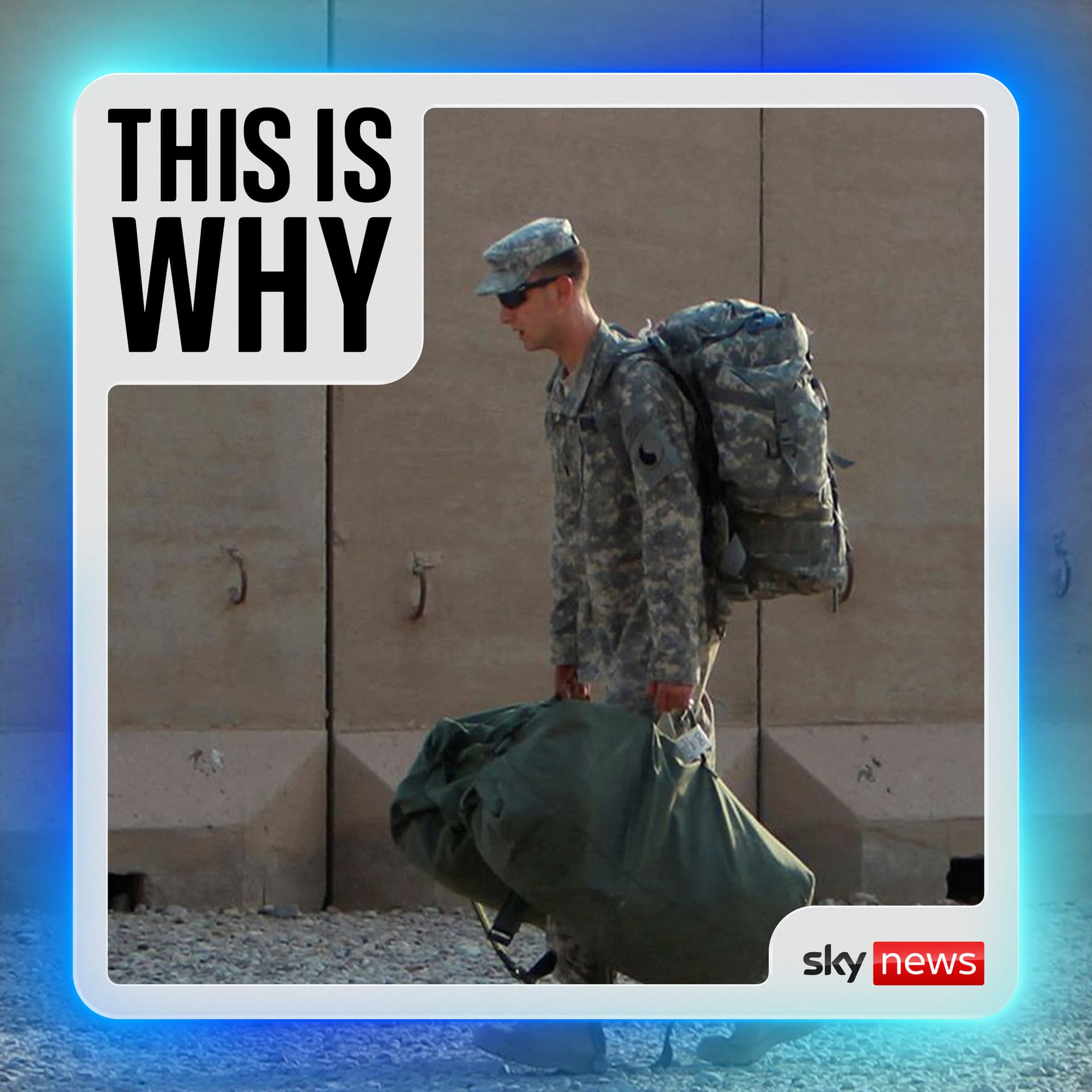
However, a former head of the UK’s armed forces believes the drug’s active ingredient, known as MDMA, could be key to treating veterans suffering from post-traumatic stress disorder.
General Sir Nick Carter is now calling on the government to relax restrictions in order to reduce the crippling cost of clinical trials. What evidence is there to suggest this treatment could be effective and what’s been the reaction from the few former soldiers who have benefitted so far?
Niall is joined by Sky’s science correspondent Thomas Moore.
Warning: Contains references to drug taking, depression and suicide.
Have you got a question for Niall? Email the show: why@sky.uk