
In short
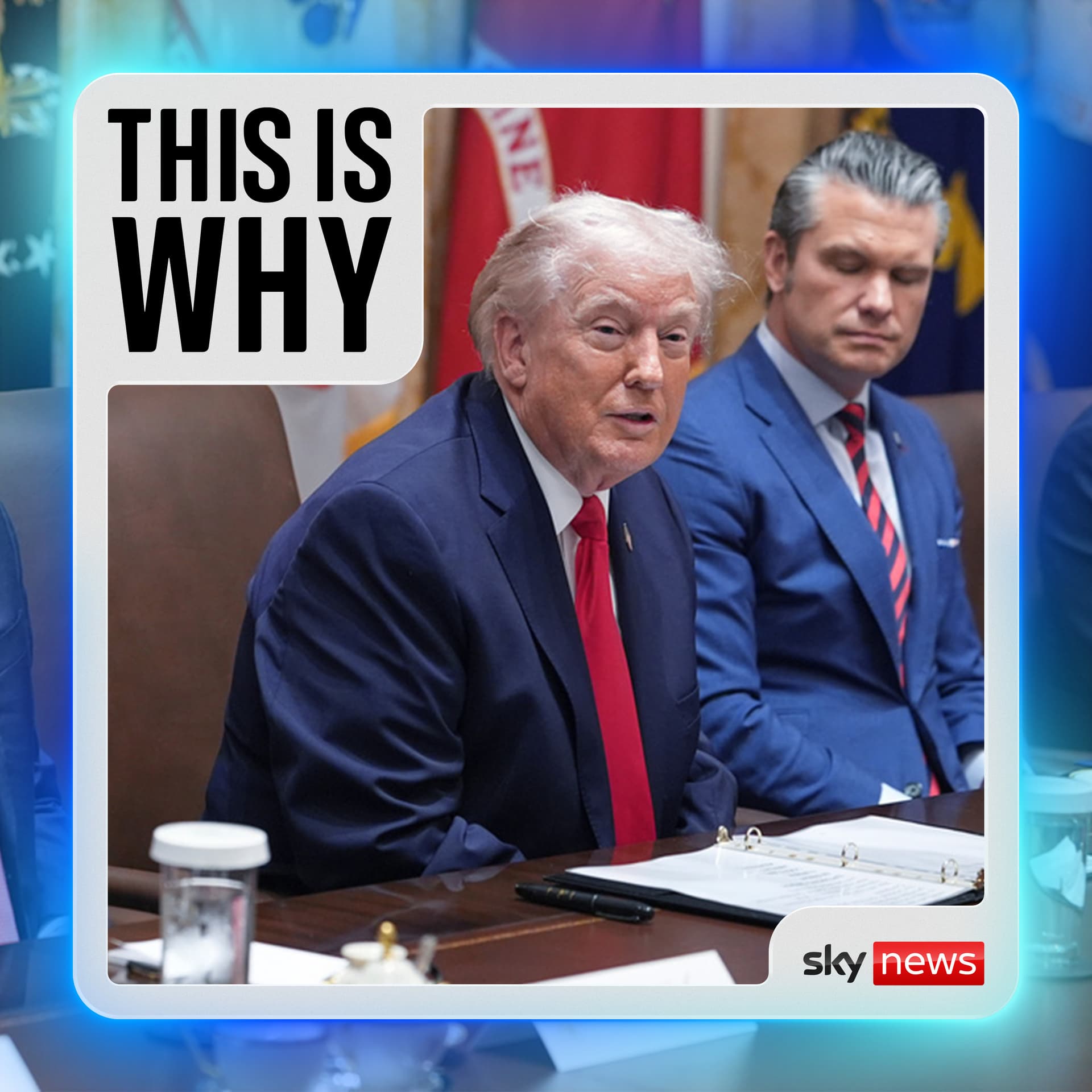
Anthropic’s dispute with the Trump administration over AI used in US Defense Department systems, centered on “red lines” against autonomous weapons and mass surveillance, and what this signals about splits among “tech bros” and the future of AI governance.
Guests
Roland Manthorpe, Sky News technology correspondent.
Guest background
Journalist covering technology; interviews AI executives and explains major AI firms and their products.
Key claims
Anthropic is a top-tier AI company (valued around $380B) behind Claude and Claude Code; Claude Code allegedly writes ~90% of code internally. Anthropic had a $200M Trump-era Defense contract but sued after being labeled “supply chain risk.” The Pentagon wants an “AI-first warfighting force” and says Claude is too embedded to remove quickly (about six months).
Notable examples
Claude layered on top of Palantir’s Maven; reported AI involvement in Venezuela (Maduro) and Iran; Pete Hegseth memo pushing AI-first warfare; Huawei-like “supply chain risk” designation.
Written by AI. May contain mistakes. Listen to the episode to check what was said.
Chapters
Tap a time to open that second in VOAnthropic: The AI Company You Should Know
0:29 to 1:30
An overview of Anthropic, its significance, and its recent conflicts.
“Today we're returning to look again at artificial intelligence.”
Claude: The AI That Writes Code
1:30 to 3:47
Discussion on Anthropic's AI product Claude and its implications for software development.
“So are you welcoming the arrival of our robot overlords?”
Dario Amadei and AI Safety
3:47 to 6:20
Insights into Dario Amadei's vision for AI safety and the ethical considerations involved.
“And in a way, this is why when you meet someone in AI, they have a slightly wild staring look, a little bit like the one that I've got right now.”
Anthropic's Contract with the US Government
6:20 to 8:13
Exploring Anthropic's contract with the Trump administration and its boundaries.
“Didn't they actually have a kind of an impact team before they even had a product?”
The Fallout with the US Government
8:13 to 10:46
Detailing the conflict between Anthropic and the US government over red lines.
“So autonomous weapons were literally a missile that can think for itself.”
Debating Autonomous Weapons
10:46 to 14:00
Discussing the ethical dilemmas surrounding AI in warfare and decision-making.
“because Pete Hegseth wanted to be able to use this AI in any way that they saw fit, any lawful way.”
Tech Bros Response to Government Actions
14:00 to 14:48
Explore how tech firms like Anthropic are reacting to government designations.
“And since then, Dario de Amadei has given a series of statements where he essentially says, I'm unhappy about this.”
Divisions Within the Tech Community
14:49 to 16:36
Discuss the differing alignments of tech companies with political powers.
“for want of a better phrase, is this the point that they begin to fall out with Donald Trump?”
Concerns Over AI and Trust
16:37 to 17:13
Examine the ethical concerns surrounding AI and the trust placed in tech CEOs.
“really critical of Anthropic, you might say something like, you think that AI is going to be so powerful that our future can only be secured because you're in charge.”
Transcript
Automatic transcript. May contain errors.0:02Sky News, the full story first.
0:11Anthropic is the AI firm you've never heard of that's bigger than Coca-Cola. It's also just had a massive falling out with Donald Trump. And this is why.
0:28Hi everyone, Neil here. Today we're returning to look again at artificial intelligence. And I suspect that I'm like many of you when it comes to AI. I've dipped my toe in using chat GPT, occasionally co-pilot in the office, but I am really not across what you might describe as the cutting edge. For example, have you ever heard of Anthropic? No, me neither. Which is strange because it's worth more than Lloyds, Barclays and NatWest combined. And until very recently, it was helping power parts of the U.S. military's AI systems. But now it's had a spectacular falling out with, guess who, the U.S. government.
1:06AI giant Anthropic is now suing the Trump administration. We're seeing just how involved Anthropic's AI has been in the highest levels of the Defense Department. So Microsoft now getting involved here, throwing its support behind Anthropic. It appears that ethical concerns are at the heart of the road, because it turns out some people just aren't entirely comfortable with the idea of AI running autonomous weapons. Killer robots. Killer robots. Yep, and everything you can imagine. So are you welcoming the arrival of our robot overlords? And more seriously, what does Anthropic tell us about where AI is heading?
1:43Roland Manthorpe is Sky's technology correspondent. Roland, really good to see you again. Great to see you. We're talking AI again. This company, Anthropic, I am ashamed to say that before I entered the office this morning, I had never heard of them, and I probably should have, shouldn't I? No, that's totally normal. Yeah? Yeah. Honestly, I reckon three months ago, hardly anyone had heard of them, which is crazy if you think about it, because this is one of the three and a half most important AI companies in the entire world, shaping the future. And they've kind of sprung out of nowhere. As of right now, I mean, you say they're a big company.
2:18Yeah. I mean, how big is big? Valued at 380 billion. But really, I think it's less about the value. It's more about their position as being one of, if not the leading AI company. So they really are on the cusp of the future. I mean, incredibly important, fascinating company. Tell me about the product then. Claude. Interesting name. Claude is just chat GPT, basically. It's like a more neurotic chat GPT. It's a little bit more thinky, a little bit more intellectual, fewer bullet points. But the real product that has taken them to the forefront is a product that is used for software development called Claude Code.
2:56Because, you know, in this area, I think there's a massive gap between just regular people using stuff occasionally and what software developers are doing with this. Right now, inside Anthropic, Claude Code is writing 90 % of code. Okay, just so we're all clear here, when you talk about computer programmers writing code, we mean the men and the women who write the instructions that computers follow in software, like apps or operating systems and so on. The software engineers there do not write code anymore. They oversee AI agents which are writing code. Claude Code itself is written by Claude Code.
3:32So the AI is creating itself. And this has all happened in the last maybe four months that we have seen this unbelievable explosion in AI being able to write code. And Anthropoc is the forefront of this. And in a way, this is why when you meet someone in AI, they have a slightly wild staring look, a little bit like the one that I've got right now. And they're trying to convey that they're seeing something simply unbelievable. I'm trying to wrap my head around this. So their product is created by itself. Yeah, it's largely written by itself. And then it enables them to write lots more products, many, many, many more products, all using this AI system.
4:16And then other companies are using it too. And it's very common now that I'll meet a software developer and you say, oh, how much code are you writing? And they're like, I mean, none. my job now is giving the agents tasks and getting them to write code think about how we are surrounded by things that are on software like we've got our phones my laptop this is software everything is software here right that just gives you one insight into the power of this stuff and if you think well if ai can do that that is really really really important and this is where anthropic is really leading. It's like widely regarded as the number one product for software developers.
4:57I mean, that sounds like the stuff of nightmares for people, you know, AI, in essence, taking over. So what has Anthropic done about that? And what is the role of its main founder, Dario Amadei? They are the most concerned about safety, AI safety. Dario Amadei has sort of led this, and a fascinating guy. So he was a scientist and he moved into AI. And then he found himself working at OpenAI, the makers of ChatGPT, and he was leading one of their products. And then no one knows exactly why, but he had some kind of fallout with Sam Altman, the boss of OpenAI. And it seems roughly that he didn't believe that Sam Altman was a responsible steward of AI, that he could really be trusted with this incredible power.
5:38And I think the thing that you've really got to understand about Dario Amadei is that he truly, truly believes that superhuman AI will be here incredibly quickly. That in the extremely short term, we are going to see the creation of an entity that is more intelligent than every human in the world put together. And this thing will be able to do almost anything at a superhuman level. And if you get into that mindset, if you think, right, this thing is going to arrive and it's going to arrive any time soon, then yeah, you would be incredibly concerned with safety. And he set up Anthropic to be the responsible AI company.
6:20Didn't they actually have a kind of an impact team before they even had a product? They were anticipating what their product could do before they released it onto the market. They've got an in-house philosopher to think about Claude's, the constitution of Claude. They think about the soul of Claude, of how to teach this thing to be a good actor in the world and some of it can sound almost ridiculous when you say it like that yeah but again like if you get into their mindset that this alien intelligence is going to arrive and it's going to be super humanly powerful well like yeah i mean you'd be thinking really seriously about how do we teach this thing to behave properly sorry so you're telling me this ai model is having ethics lessons it's sitting down and doing classes and morality this is a huge part of what they do.
7:05And actually, all the AI companies take this extremely seriously. So it's not just them, but Anthropoc have kind of led on this and have made it a huge part of what they do. And one of the things that they've identified is that AI, this superhuman entity, could be incredibly powerful for autocratic governments. And so actually, they have been very keen on working with the Department of Defense, now the Department of War in the US, precisely because they say they want to defend America against the autocratic threat of future AI. Well, look, we've got this ethical, in inverted commas, AI company now working with the US government.
7:43Just explain exactly how that began. They had an arrangement with the Biden administration and then they entered into a$200 million contract with the Trump administration. And this was to provide, essentially, the Department of Defence kind of quite widely with Claude and to layer that on top of their existing tech. And I guess the important thing is they went into this arrangement with two red lines, two things they basically wouldn't do. One was autonomous weapons and the other was mass surveillance of US citizens. Just explain both of those. So autonomous weapons were literally a missile that can think for itself.
8:18Killer robots. Killer robots. Yep, and everything you can imagine. See, I was told never to mention Terminator 2 and Skynet when we were talking AI on a podcast again. If you're talking about robot wars, then I might just have to. Yeah, it's mad, isn't it? We've gone from so quickly for these being like silly worries that you didn't need to think about to actually things that seem incredibly realistic. To say, as far as I'm aware, there are no autonomous killer robots being used in war. And that is not a practical application right now. But it is totally something that is worth thinking about.
8:53And yeah, this is in a way what their big argument with the Department of War was all about. That and mass surveillance. Let's deal with what it has been used for so far. I mean, the Department of War has been using AI now in some of its, well, let's call them what they are, combat missions. I mean, it was involved in Venezuela with President Maduro, wasn't it? Yeah, it was involved in the abduction of Nicolas Maduro. We know it's been reported that it's been involved in Iran. The exact details of this are much scarcer than you might think reading the reporting. We really don't know exactly how Claude is being used.
9:27But the thing to understand is that it's being layered on top of another kind of sort of older version of an AI system. It's run by a company called Palantir, called Maven. So the US is definitely using very powerful AI. And then it's putting Claude on top of that to give it this kind of extra conversational interface. And it's hard to say exactly what it's being done. But I think in a way, if you want to gather the importance of this, there was a memo put out by Pete Higseth, the Secretary of War, to all senior commanders saying that he wanted to become an AI-first warfighting force. That's what he says.
10:03What he does is that even after this disagreement with Anthropik that I know we're going to get on to, they hang on to Claude. They say it's so deeply embedded in our systems, it's going to take us six months to get it out. And we want to keep it and use it. So we don't know exactly how it's being used, but clearly they value it incredibly highly. So let's go back to those red lines. As you say, no mass surveillance of US citizens, no autonomous weapons. One presumes those were written into the contract. So explain the falling out and how bad it has gotten between the government of the United States and one of the biggest companies on the planet.
10:37It's unclear exactly how this began. And there's been a lot of speculation about it. But just on the facts that we know, they were looking to renew the contract. And at this point, the question of these red lines came up. because Pete Hegseth wanted to be able to use this AI in any way that they saw fit, any lawful way. And Anthropic couldn't seem to come to an agreement with them about that. They wanted to maintain their red lines. And a negotiation went on in which it sort of seemed that they must surely come to an arrangement, right? Because they both actually do want to work together. Yeah.
11:12But they were unable to. and at that point, Pete Hakeseth and Donald Trump declared Anthropica supply chain risk, which is a designation that is used for dangerous companies involved in the supply chain for the American government. It's only ever been used against foreign companies. The name you might be thinking of is Huawei. There's been a lot of controversy about Huawei and Chinese technology being used in US government supply chains and the same in the UK. They were using the same measures they used to strip out Huawei against an internal company, Anthropic. And for a brief period of time, it seems as if this measure would mean that any company that worked with the US government would not be able to work with Anthropic.
11:53So think about what that means. That means that basically Google, NVIDIA, every company that gives them their tech, wouldn't be able to work with Anthropic. It was basically a death sentence. But on the face of it, this looks like more a response by the US government based on a fit of pique that Anthropic wouldn't do what they wanted to do, rather than a substantial evidence-based assessment of them as being a risk to the United States. Yeah, it's hard to separate out the chaotic, noisy, aggro way that this all happens, with sort of furious tweets being sent out, with the substance. And the substance, I think, is a really sort of profound debate that it's probably really good that we're having some form of it now because it's only going to get more important as technology gets bigger.
12:43And the substance is that who is the right or what is the right organisation or entity to take charge of incredibly powerful technology? Is it a private company or is it the government? And there are strong opinions on both sides. And then the other question is, are autonomous weapons, are we okay with that? Are we okay with mass surveillance? These are the questions I think it poses. But on the topic of autonomous weapons, take the other position. Why wouldn't it be a good thing to have a machine that can think billions of times a second more than we can, that can anticipate more quickly than we can, which can take in various sources of intelligence and information in real time and make a decision?
13:26Why would using those in preference to humans be a bad thing necessarily? Well, the funny thing is, is that actually Anthropic and the Department of War agree on this. They agree that these things are, well, if not good, then at least inevitable. Actually, this red line is less about ethics than it's sometimes been made to seem. What Anthropic is saying is our take isn't ready for that yet. We don't need to use it because it's just simply not capable of doing this at the moment. What the Department of War is saying is we want to be able to try this and experiment with this. And we don't want to run up against your red lines.
13:57and also autonomous when you get down to it is quite hard words to find you know is is a drone that can keep going after it's lost contact with its operator is that autonomous because we'd like to use your tech to experiment with that and we we don't want you telling us to stop what to do so yeah to be honest is that i think whatever you think about those weapons the truth is that they are coming how has anthropic responded to this designation by the u.s government then things did get very tense for a while. And since then, Dario de Amadei has given a series of statements where he essentially says, I'm unhappy about this.
14:33I'm going to express the most American of all rights to disagree with the government. And we are going to sue to stop the supply chain designation. But it's not personal. I've got an animus against the Trump government. And in fact, I look forward to working with them in the future. Is this then the moment that the tech bros, for want of a better phrase, is this the point that they begin to fall out with Donald Trump? I mean, we have seen some of the other biggest players in Silicon Valley coming in behind Anthropic, haven't we? Yeah, but at the same time, almost the moment that the supply chain designation was issued, OpenAI dashed in to make a contract with the Department of War and basically agreed to a lot of the terms that Anthropic said they couldn't agree with.
15:14I mean, they've added a bunch of safeguards, but they want to be there with the Department of War. I'd say that this isn't a case of the tech bros as a unitary mass falling out with the government. I'd say it exposes splits within tech. There are different groups within tech and some of them are more aligned with Trump and some of them are less aligned. The funny thing about the conversation in tech right now is that worldly discussions like what's going on in Iran almost pale into comparison to this thing that I mentioned. You've got to put yourself in their headspace. If you really think that a superintelligence is going to arrive next year, then you'd be looking at these debates as part of preparation for some incredibly different future rather than something that matters in its own right.
16:02And I really think that's the framing here. When you've got Dario Amadei himself saying that within a year to five years, half of all white collar jobs are going to be gone. and at the same time, as you and I have both pointed out, this is perhaps the most ethical, safety conscious firm working in the AI sector. I don't see how those two things meet up, frankly. That on the one hand, this is a man who anticipates the biggest single change to the labour market that we have ever seen. And on the other hand, says we're a safe pair of hands. Yeah, and I suppose if you were being really critical of Anthropic, you might say something like, you think that AI is going to be so powerful that our future can only be secured because you're in charge.
16:49That you're the good guys come to save us all. I'm not sure that's a kind of great mechanism for us all to place our trust in, just a few tech CEOs. But in a way, doesn't that go to the conversation that we're having here? Who or what is the right entity, the right body to take charge of this incredibly powerful technology? We're in the foothills of working this out. It would be nice, however, if we were closer to the summit. I know, it's going to be a bumpy journey, that's for sure. Roland, thanks for all the reassurance. Great to have you back on the podcast. Oh, any time, any time. Anthropik's argument with Washington isn't really about one company.
17:25Instead, it's about where those red lines are when AI meets war. The technology is advancing at light speed. The rules that guide how we use it, rather less so. Remember to get in touch with your comments. I promise I won't be showing any of them to AI. Why at sky.uk. And any ideas for future episodes, send them over too. We are back again tomorrow.
From the publisher
One of the world's most valuable AI companies is suing the US government after it was designated a "supply chain risk" by Pete Hegseth's Department of War.
It's an unprecedented legal fight – after Anthropic refused to allow its technology to be used for mass surveillance or autonomous weapons.
Now, other tech giants – including Google, Microsoft and Apple – have swung their support behind Anthropic. Why has this dispute happened and what could it all mean for the future of AI?
Niall speaks to Sky’s technology correspondent, Rowland Manthorpe, about the potential consequences.
Have you got a question for Niall? Email the show - why@sky.uk