
In short
The episode argues the UK should be more concerned about Iranian retaliation after Iran’s missile attack on Diego Garcia, claiming Iran can threaten Europe psychologically and potentially the UK, while UK national air defence is limited.
Guests
Professor Michael Clarke, a defence analyst (expert on air/missile defence and UK/NATO posture).
Key claims
UK government assessments say the UK isn’t targeted, but Clarke says Britain lacks national ballistic-missile defences since Bloodhound was retired in 1991. He argues Iran’s ballistic missiles are likely within ~2,000 km (open specs), making London probably out of range, but ranges could be extended and Europe could be hit. He also warns Iran could use proxies (Hezbollah, Houthis) and state-inspired terrorism/cyber attacks, with critical infrastructure security “patchy” in the private sector.
Notable examples
Diego Garcia missile attack; Bloodhound (1958–1991); Type 45/Sea Viper and Aster missiles; RAF Akrotiri (Cyprus) and US bases (Al-Udeid, Al-Jafir, Al-Dafra); possible “super dirty bomb” discussion; Houthi threat to close Bab-el-Mandeb.
Written by AI. May contain mistakes. Listen to the episode to check what was said.
Chapters
Tap a time to open that second in VOUnderstanding Iranian Aggression
0:11 to 1:40
Overview of Iran's missile capabilities and the UK's current defense stance.
“Iran poses a much greater direct threat to the UK than previously thought, and this is why.”
Ballistic Missiles and Their Range
1:40 to 4:28
Discussion on the range of Iranian ballistic missiles and their potential threat to Europe.
“Michael, let's start with those ballistic missiles, which at the very least we know were pointed in the direction of the US-UK based on Diego Garcia.”
The State of UK Air Defense
4:28 to 7:27
Analysis of the UK's air defense capabilities against potential Iranian missile strikes.
“But if you take those out of the equation, if you said that Iran launched weapons, let's say against Akutiri in Cyprus, which is within range, or against the UK homeland and nobody else reacted, what can we do about it?”
Iran's Nuclear Threat
7:27 to 8:49
Exploration of Iran's nuclear capabilities and the implications for the UK.
“gets through the air defences, and essentially makes the capital unlivable?”
Iran's Unconventional Warfare Strategies
8:49 to 11:39
Insights into how Iran uses terrorism and cyberattacks to exert influence.
“Of course, we used to say that an attack in Europe can only come from Europe, meaning the Soviet Union.”
Cybersecurity and Infrastructure Vulnerabilities
11:39 to 14:00
Discussion on the UK's critical infrastructure and vulnerability to cyberattacks.
“Should we therefore not be as concerned as we might have been in the past about the use of proxies, the Houthis, Hezbollah and so on?”
Assessing Vulnerabilities in UK Infrastructure
14:00 to 15:44
Explore the susceptibility of UK's critical infrastructure to unconventional warfare.
“I mean, how susceptible is our infrastructure to these unconventional kind of forms of warfare, to disruption, the power net, communications?”
Iran's Potential Retaliation and Global Implications
15:44 to 17:52
Discuss the potential consequences of Iranian retaliatory actions following US threats.
“His third point is that we don't have much of a defence, but we rely on the fact that A, they don't really want to do it.”
The Need for Enhanced Air Defense in the UK
17:52 to 19:10
Understand the urgency of improving air defense in response to new threats.
“Iran is still talking in incredibly bellicose terms about this.”
Transcript
Automatic transcript. May contain errors.0:02Sky News, the full story first.
0:11Iran poses a much greater direct threat to the UK than previously thought, and this is why.
0:24Iran launches a missile attack on Diego Garcia after Keir Starmer lets the US use British bases for Hormuz strikes. Iran certainly isn't holding back. Not that those ballistic missiles hit their intended target of the Chagos Islands some 2 ,400 miles away. But if we had, well, it would mean we are not quite as far away from Iranian aggression, as we'd previously thought. In fact, Israeli defence officials went so far as to say on Saturday that continental Europe could be hit and potentially the UK. So what's the British assessment? For the time being, the mood amongst government appears to be, move along, nothing to see here.
1:05We carry out assessments all the time in order to keep us safe, and there's no assessment that we're being targeted in that way at all. But of course, it's my job to ensure that British interests, British lives are always uppermost in my mind. What we need here is de-escalation. So can Iranian ballistic missiles truly hit targets here in the UK? How might we defend ourselves against them? And if Tehran truly wants to do us damage, doesn't it have many other ways in which to do so? Our defence analyst, Professor Michael Clarke, is back on the podcast. Michael, let's start with those ballistic missiles, which at the very least we know were pointed in the direction of the US-UK based on Diego Garcia.
1:48How close did they get? Do we know? We don't know, no. One of them we know fell short, and another was shot down by an American aircraft, but we don't know where the shooting down took place. So I remain to be convinced about this. The easiest explanation is that the Iranians pointed a couple of ballistic missiles to Diego Garcia to try their luck. And whether they got there or not, they've had the effect they might have wanted in any case because it's created a sense of alarm in Europe and in the United Kingdom, the idea that the Iranians can threaten anybody because in the present mindset that they're in, they think their backs are to the wall and they'll do anything they can to survive.
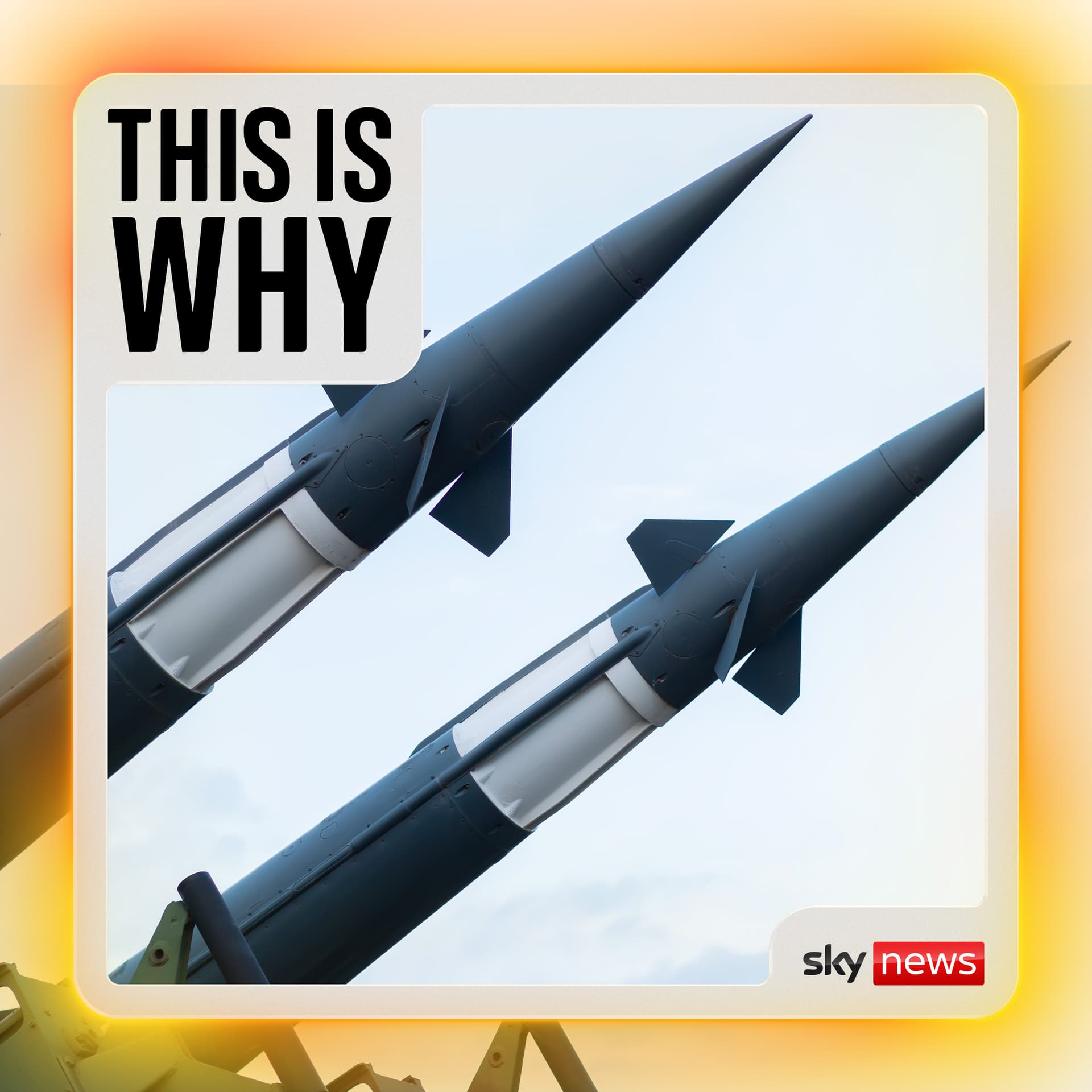
2:25If you look at the ranges, all of their missiles from the Fatah 110 with a short range, I mean, 300 odd miles or 500 kilometers up to the longest range, everything stopped at 2 ,000. So the longest range missiles like the Qaram Shah and so on, were tested and declared at 2 ,000 kilometers. And the Iranians did that, we thought, for a political reason, which is that that included Israel. So Israel was always within their range, but not Europe because they didn't particularly want to alarm Europe. That is officially the case. If you look at the specifications of any of these missiles in the open literature, it's 2 ,000 kilometers.
2:58One of the missiles, the Gada 110, is a two-stage missile. So the first stage falls away, that's liquid. The second stage is solid fuel, much more sophisticated. If they created more solid fuel in the capsule in there, maybe they could have extended that particular, the Gadot 110. But how far could they have extended it to 4 ,000 kilometers? I don't know. And if they did, it won't have been too many of the missiles, I'm guessing. It would maybe a handful, I'm guessing, of the Gadot 110s might have been converted to a longer-range version. So for the time being at least, when Tehran says it can strike London, we should take that with, if not a pinch of salt, maybe even a cellar of salt.
3:37Yeah. Even at 4 ,000 kilometers, London is not really within range. If you look at Rome would be in range, Berlin will be in range, Paris not, London not. And I don't think there's a substantial threat here to European cities, but it's created the psychological threat that the Iranians are now able to range outside their region with their ballistic missiles. Presumably, though, it has sharpened minds in, for example, the Ministry of Defense, the German equivalent, the Italian equivalent. I mean, the Iranians would dearly love to possess an item of weaponry that could reach this far. If they ever did develop it, what could we do to stop it?
4:13Do we have the capability? It depends. If a weapon was coming from Iran towards Britain, it would be passing over a lot of allied states who have different levels of air defence. Everybody has their version of air defence. We have very little, in fact, almost none. So there's a fair chance that our allies would shoot it down. But if you take those out of the equation, if you said that Iran launched weapons, let's say against Akutiri in Cyprus, which is within range, or against the UK homeland and nobody else reacted, what can we do about it? The answer is very little. Cyprus is more defensible because you can have a ship off Cyprus, a Type 45 destroyer of the sort that's there now, or is arriving there, the Dragon, which has got on it the Sea Viper missile system with Aster missiles.
4:56If you wanted to protect the UK, the only thing we've got would be the Type 45 destroyers. You'd need a sort of fleet of 10 or 15 of them, you know, ranged around the South and East Coast, all with, you know, pointing the missiles outwards, as it were, incoming ballistic missiles. So we don't have, you know, iron dome style capability, more tinfoil hat? No, nothing like. The one we did have was the Bloodhound, right? The Bloodhound missile. And that is so old that I had an Airfix model of it. And we had that all the way through from the late 50s through to the end of the Cold War. It was not bad, actually.
5:27And we had them around the East Coast defending our V-bomber bases. They were there to defend, point defense, of our own nuclear deterrent. But that's how old it was. I think it came into service in about 1958, and it didn't go out of service until 1991, the Bloodhound. And that was a defense against ballistic missiles as they then existed. Since then, we haven't had one. And so what we have by way of defense is just incidental to what the forces deploy. So the Type 45 has a defense system to protect it against missiles coming in against other ships. And the Army has its own sort of Star Street missile to protect its own forces on the ground, which is just a tactical missile.
6:03So we have bits of air defense. But in terms of national air defense, we haven't had anything since 1991. And the point is, if it was a single ballistic missile or two, there's a chance if you had the right stuff in place or if you had typhoons in the air with their meteor missile, you might just be able to catch it. If somebody sent 10 or 12 or 15 at us, I mean, probably most of them will get through. That's the way it's been for many, many years. And it's never really bothered the government. Because until recently, the only power that would have those missiles and we think the desire to use them would be Russia.
6:35And if we got into a war with Russia, it would automatically be such a big war, such a consequential war that we fall back on our nuclear deterrent, which is there and does work. And the Russians would know that. So the sense was, because any war that would put our homeland at risk would be a big war, we're automatically into the biggest of big weapons. But technology is such now, and our adversaries are such now, that smaller powers, rogue states, can develop ballistic missiles, which can affect our bases in the Middle East, and possibly, possibly, in the future, our homeland. So far, we've been talking conventional weapons.
7:10You mentioned nuclear there. I don't want to be alarmist. As things stand, we believe the Iranians do not have that nuclear weapon capability, a warhead on the top. But they do have radioactive material, don't they? Could that be mounted on a ballistic missile, targeted at somewhere like London, gets through the air defences, and essentially makes the capital unlivable? It's possible. Yeah, super dirty bomb. One thing we should realise, anything with a range of 4 ,000 kilometres is going to have a very small payload. To get the range, you can't carry very much. And So the payload would be very little.
7:44And there wouldn't be much point in creating a dirty bomb from a very small warhead. If you want to have an impact with a dirty bomb, you need it on a ship or in the back of a truck. If somebody's thinking about a radiological attack, which is what it would be in Britain, and we've worried about this for years with the jihadist threat, and believe me, there's quite a lot of measures against this. So somebody sailing up the Thames in an old boat, which suddenly explodes and puts a lot of nuclear junk over the capital. That's been thought through as an eventuality for the last 20, 30 odd years. So we do have measures to prevent that.
8:21And that's the way a radiological device would be delivered, not by a missile. Just to finish with the ballistic missiles. I mean, if Iran did possess the capability to strike us and decided to do so with a conventional weapon, I mean, wouldn't that be strategically suicidal given our place in NATO? Wouldn't that be the point at which this would turn into a broader conflict, thanks to the obligations that our fellow NATO members have? Yes, that would be regarded as an attack on one as an attack on all. It would be an act of war, and Article 5 would then apply. That would be an attack in Europe.
8:53Of course, we used to say that an attack in Europe can only come from Europe, meaning the Soviet Union. But in the case of 2001, when the jihadists attacked America from Afghanistan, NATO said, right, that's Article 5 because one of our members has been attacked in an act of war. And it was on that basis that NATO went to Afghanistan, whereas they didn't go to Iraq in 2003 because that was a foreign war. Nothing to do with NATO. So if Britain were attacked in this sort of way that we're talking about, then that would be an Article 5 issue for NATO, no question. If the United Kingdom, as things stand, is not a kind of a viable target, where else would they currently be planning for an attack?
9:31Like RAF Akrotiri on Cyprus, clearly going to be one of those. The other bases are any base, this is what they've said, and it is what they've done, any base that the Americans also use or which could be construed as part of America's network of bases. So what you're looking at is the big one is Al-Udeed in Doha, in Qatar, to the west of Doha City. There's Al-Udeed, there's Al-Jafir, which is the naval base in Bahrain, which is where the U.S. Fifth Fleet is, but that's also the British base there. And then there's Al-Dafra in the United Arab Emirates. That's a base that we use, but it has been targeted.
10:08And then there's the base in Saudi Arabia. And that's not really been targeted, but that would be a big one as well. I mean, there are British service personnel at all those bases, and another one at Duckham in Oman. So would the strategy be to try and wipe out British assets that are at these bases, or would it be to try and pull us in to a broader conflict with Iran? Yeah, I'm not sure it would be to pull us in, but it would be to indicate that nobody is safe from Iranian vengeance. I mean, now they're in a very vengeful frame of mind. And I mean, this has always been an extraordinarily unpleasant government.
10:47They have been seriously underestimated by the United States who thought that they were a paper tiger. And in a way, they are a paper tiger, but a paper tiger can be very disruptive. and a paper tiger can get lucky, which is what they're aiming to do. And they have been serially underestimated by the White House. And they would want to prove that their anger and their vengeance, you know, is important. Because one of the things they want to do is, in the jargon, reestablish deterrence. For the last two years, their power has diminished and diminished and diminished since the 7th of October attacks of 2023.
11:21You know, their proxies have been eliminated or diminished. And they've been diminished. and they want to re-establish the idea that people ought to be frightened of them. Deterrence, people ought to be frightened of the anger of Tehran. And so they have a motive, however self-destructive this may be in the long term, of making other people fearful of their vengeance. Should we therefore not be as concerned as we might have been in the past about the use of proxies, the Houthis, Hezbollah and so on? Well, I think we've got to think about that. The Hezbollah is still operational and the Israelis think now that they have got to settle it once and for all.
11:57The Houthis have said that they will join in this war on behalf of Tehran, but they haven't so far. Now, there's two views on that. One is that they're too weakened by American bombing of last year, up to November last year. And the other is, no, they're being subtle. They're keeping their powder dry. And there will be a moment when Tehran activates them and they'll start to close the bottom of the Red Sea at the Bab-el-Mamdeb Strait. I don't know which of those is true. It may be a combination of both. But interestingly, the Houthis are an unused weapon that Tehran certainly could get them to do something, I think.
12:28The Houthis themselves, they do take their orders from Iran. What about the other kind of unconventional forms of warfare? Iran has had, as we both know very well, a long association with using terrorism as a means of exerting its influence. Yes. I mean, Iran is a state that creates state-inspired terrorism, is what it's thought, it's what it's termed as state-inspired terrorism. And all of the security services are on higher alert throughout the West for Iranian plots. And undoubtedly, the Iranians are trying to generate some of those plots. And they're pushing in terms of cyber warfare as well.
13:03They're quite good at that. They're quite good at cyber attacks. And there's been reportedly quite a lot of attempted Iranian-inspired cyber attacks in the West. Genuinely, how concerned should we be about a domestic terror attack that has been orchestrated by Tara? I don't think we've got to be too alarmed about it, but there's no justification yet for raising the terror level from where it is now to take it up one notch. I mean, when we do, if you take it up a notch, it means that an attack is very likely and then it goes up to critical, meaning that something's happening in the next 72 hours.
13:34We're at the sort of middle, the number three out of five at the moment of the levels. I don't think there's anything that I'm aware of that would take us up to number four. If there is, then that would indicate that the Iranians or somebody is able then to put quite a lot of plots in hand. I think the security services, the impression I get at the moment is that in Britain, they feel reasonably confident that they're on top of the problem. You've mentioned cyber attacks already. I mean, how susceptible is our infrastructure to these unconventional kind of forms of warfare, to disruption, the power net, communications?
14:11How safe are those? I think the answer is very patchy. We've got 13 areas of critical national infrastructure that the government has defined, like transportation, communications, power generation, governmental defence, and so on. 13 of them. Most of them, of those 13, are not under the government's control. Most of them are in the private sector. And when you look at the private sector, and when I talk to some of the people at the National Cybersecurity Centre, occasionally when I meet them and so on, and I say, you know, how worried are you? And they say, well, it's patchy. We're pretty good on some areas, but we know, particularly in the private sector, there are areas that are really poor.
14:44And our health service has been caught out a couple of times because its computing material or computing hardware is so old and harder to defend. Whereas we've got very strong defenses in the financial sector. I mean, they're very up to date and they are pretty secure. So it is variable, but undoubtedly you don't have to look very far in British society to work out where the vulnerable areas are likely to be. I mean, I was scratching my head this morning when I read that the prime minister has said it explicitly that there is as yet no assessment that mainland UK is being targeted by Iran. Is that accurate or is that just a reflection of the stuff you were just talking about, about where we are in terms of the classification of the terror threat?
15:26I think so, yeah. I mean, Steve Reid said the same yesterday. Steve Reid, he's the housing secretary, isn't he? He said, first of all, there's no indication of a desire. And secondly, we don't think they can do it. And I tend to agree with those statements. And then the third thing he said, and if they did, we've got all our defences in place. That's no, Mr. Reid, we don't. I mean, I think that's the point. His third point is that we don't have much of a defence, but we rely on the fact that A, they don't really want to do it. And B, we are probably, we are probably out of range. Given the fact that Donald Trump has almost literally just said, just as we were coming into the studio, said that, you know, the war is now winding down.
15:59I mean, should we feel more comfortable as a result of that particular assessment from the White House? Well, we might. We were very alarmed, what, 48 hours ago when he issued the latest threat that was going to take the war into completely uncontrollable territory. And who's to say it won't swing back the other way? Just explain why, why he was taking it into kind of uncontrollable territory. Well, if he was serious about, from midnight tonight, hitting power generation plants around in Iran, and there are 400 and odd of them, he could have chosen lots of them. And the Iranians then said, and seemed to mean it, we will hit back at power generation in the Gulf and desalination plants, which would be an absolute disaster for the Gulf.
16:36Desalination plant. Desalination because, I mean, so many Gulf societies need desalinated water. Oh, so does water with the salt take out? Yeah, exactly. The only source of water, really, is seawater. So it has to be desalinated. And that's not just for drinking purposes, but for all of their own food processing, industrial purposes. The whole society, of course, runs on clean water. Desalination plans are a real vulnerability for all of the Gulf societies. So that would have taken the war into completely uncontrolled territory from tomorrow onwards if he'd gone through with this threat. He says he's holding off for five days.
17:08We'll see. I mean, before his announcement, about 20 minutes before that post came through, I said, I think you'll back off this because it's just, it's too uncontrolled. I mean, even without having advice from people who know what they're talking about, and he clearly doesn't get advice from people who know what they're talking about. But his own common sense, his residual common sense should have told him that this was not a sensible path to go down. So he's veered away. But overall, I mean, given that he flip-flops every day, I think he's looking for a way to declare victory and leave sometime in the next couple of weeks.
17:41And that will leave the Strait of Hormuz to somebody else. It will leave the devastation of certain parts of Iran. It will leave all sorts of problems in the Gulf. Everyone else will have to clear up the mess. Where then does it leave the United Kingdom in terms of a direct attack here or abroad by Iran? Iran is still talking in incredibly bellicose terms about this. It leaves the United Kingdom with a very sharp perspective that our defences cannot go on this way. I mean, we've said that again and again. But one of the things that our defences must have is more air defence. Now, you can't defend the whole country.
18:17Nobody can defend the whole country. Israel is much, much smaller than Britain. And the Iron Dome system, so-called, can't defend all of Israel completely. So that can't be done. But you have to have defense of certain key things, as we used to during the Cold War with my old Bloodhound Airfix model, defended our key military sites in the southeast of England as they existed then, and London. We have to have more air defense. We have to have plans to do that. It's always been put on the back burner because it is so expensive. And we've always decided that it wasn't a big enough priority. But now we know we live in a world in which comparatively small powers, not just the superpowers, can threaten our integrity as a country, can threaten our territorial integrity with ballistic missiles.
19:01That's the world that we're moving into. And so we've now, we've known for 20 odd years we've got to take it seriously. But now we've got to do something about taking it seriously. We've got to move beyond the intellectual appreciation that that is a new threat and decide what we're prepared to commit to countering it. Michael, thanks very much indeed That's a lot for today If you want more, Michael Clarke and of course you do why not scroll back on your podcast app or take a look at the playlist over on YouTube for This Is Why and do remember to get in touch with your thoughts on today's episode or indeed anything that comes to mind you can email me directly why at sky.uk We're back again tomorrow
From the publisher
Last week, Iran tried to target the joint US-UK military base on Diego Garcia – more than 2,000 miles away in the Indian Ocean.
That attack failed but it led an Israel military spokesperson to suggest London could be vulnerable to an Iranian ballistic missile strike.
With Keir Starmer now allowing the use of British air bases for US operations against attacks in the Strait of Hormuz, is Iran capable of direct retaliation against the UK?
What is the state of Britain’s air defences? And what other means does Tehran have at its disposal to threaten us?
Niall speaks to Sky’s defence analyst, Professor Michael Clarke.
Do you have a question for the podcast? Email us: why@sky.uk