
In short
The episode discusses why UK efforts to tackle antisemitism have “fallen short,” focusing on how attacks and hate incidents have intensified since Hamas’s Oct 7, 2023 attack on Israel. It cites the Golders Green arson of ambulances run by a Jewish charity in North London, alongside the fatal Heaton Park synagogue attack in Manchester.
Guest
Dr Dave Rich, Head of Policy at the Community Security Trust (CST), a national charity protecting British Jews from terrorism, antisemitism, hate crime, and extremism since 1994; he works with police and government and runs security, victim support, and education/research.
Key claims
recorded incidents spiked—CST recorded 3,700 antisemitic incidents in 2023 (over 10/day); rhetoric is becoming normalized and more public, with social media and mainstreaming of conspiracy theories driving it. Notable examples include Heaton Park, Golders Green ambulance fires, and global attacks (e.g., Bondi, US Jewish museum attacks).
Written by AI. May contain mistakes. Listen to the episode to check what was said.
Chapters
Tap a time to open that second in VORecent Attacks on Jewish Community
0:45 to 1:53
Discussion of recent antisemitic attacks and their impact on the community.
“It's not the first time the community has been attacked, and it certainly won't be the last.”
Impact of the October 7th Attack
1:53 to 3:18
Exploration of how the October 7th attack has changed the landscape for Jewish people.
“Dave Rich is Head of Policy at the Community Security Trust, a charity which protects British Jews from terrorism and anti-Semitism.”
CST's Role in Community Safety
3:18 to 5:34
Dave Rich explains the role of the Community Security Trust in protecting the Jewish community.
“as much as we and the police and others were working very hard to try and prevent it.”
Normalization of Antisemitism
5:34 to 8:00
Discussion on how antisemitism has become normalized in contemporary British society.
“Many more people are being exposed to antisemitism who never really directly encountered it before.”
Security Measures in Jewish Spaces
8:00 to 12:20
Overview of the security measures in place at Jewish schools, synagogues, and community centers.
“The strange thing about it and the irony about it is that we know from loads of opinion polling that most people in Britain don't feel this way.”
Living with Security Awareness
12:20 to 14:00
Discussion on the impact of growing up with security in Jewish life and community.
“this security because they know there's a danger.”
The Impact of Antisemitism on Jewish Identity
14:00 to 14:39
Explore how the rise of antisemitism affects the visibility of Jewish identity in Britain.
“not just a Jewish community life, but contribution to an involvement in the rest of British society as very much, you know, we are British and Jewish and those two things are not at all separate.”
Navigating Fear in Public Spaces
14:39 to 16:28
Discuss the hesitations Jewish individuals face in expressing their identity openly due to fear of backlash.
“And it's kind of squeezing down that space for a kind of open and confident Jewish community life and Jewish way of life that we've grown very used to.”
The Mainstreaming of Antisemitic Narratives
16:28 to 17:53
Examine how antisemitic ideas have shifted from extremes to the mainstream, particularly through social media.
“Dave, I'm wondering in your mind what is the biggest driver of this rise in anti-Semitism?”
Transcript
Automatic transcript. May contain errors.0:02Sky News, the full story first.
0:13To be British and Jewish right now is to be fearful. And this is why.
0:26Hi everyone, Neil here and today we're going to be talking about anti-Semitism because once again there has been an attack on the Jewish community here in the UK At this time round, four ambulances owned and operated by a Jewish charity were set alight in Golders Green in North London Fire! Fire! It's not the first time the community has been attacked, and it certainly won't be the last. You read the news and it does affect you, but you're like, well, that's still far away. And then it happens at your front door and you're like, OK, well, how safe are we in London? And there is recognition inside government of the rising levels of concern.
1:06After all, the Jewish population in the UK has been targeted time and again. Anti-Semitism has no place in our society, and it's really important that we all stand together at a moment like this. Expressions of solidarity, of support, are no doubt welcome, but they are just words. And whilst anti-Semitism in the UK certainly predates the October 7th attack on Israel by Hamas, it does also feel like a bit of a turning point. So I think for a lot of Jewish people, something changed on that date. It was like the temperature dropped a few degrees in this country. So how are Jewish people feeling after yet another attack?
1:45How safe are Jewish schools and synagogues? And is everything truly being done to stamp out anti-Semitism? Dr. Dave Rich is Head of Policy at the Community Security Trust, a charity which protects British Jews from terrorism and anti-Semitism. Dave, look, another week, another anti-Semitic attack. I mean, given your position, when you hear stories like what's happened in Golders Green, Is there any part of you these days that's in any way surprised? Look, there's always been the danger of racist attacks against Jewish people. We've always known that's there. But the last two and a half years, really, since the attack by Hamas in Israel on October 7th, 2023, which led to a huge spike in anti-Semitism, in anti-Jewish hate crime across the country, not just in Britain, but in many countries around the world, people in the Jewish community have been living with this.
2:41This has become a, if not daily, then weekly experience and occurrence. Either people have been victims themselves of anti-Jewish harassment or abuse, or people they know have family members and so on. Then in October last year, there was the fatal terrorist attack at the synagogue in Heaton Park in Manchester. And that really brought home the severity of this to a lot of people outside the Jewish community. but I don't think anyone in the Jewish community was surprised that that sort of thing had happened because we'd seen it happen in lots of countries around the world. And we knew that it was only a matter of time in a way, as much as we and the police and others were working very hard to try and prevent it.
3:28Then you have something like the incident in Golders Green overnight on Monday, where they're setting fire to ambulances. and I think a lot of people in the Jewish community and well beyond it actually just looks at that and thought you know is there no depth to where people will go is that really the level of hatred that they would even set fire to ambulances because these ambulances are run by a Jewish voluntary organization that meanwhile provides medical care to anyone who wants it You know, they serve whoever needs their help, Jewish or not. And it just was an indication, I think, for a lot of people of this is where we've got to now.
4:12And I think for a lot of people in the Jewish community, it just has felt relentless. And this is the latest thing. Without wishing to appear that I'm suggesting that anti-Semitism did not exist in the UK prior to the October 7th attacks. In your mind, that was the point at which we really did see domestically a significant uptick in the sorts of incidents you're just describing. Like you say, anti-Semitism, it's always been around and it's always been a kind of a danger, but a marginal issue in Jewish life in this country. The Jewish community in Britain has built an incredible life, very well integrated, contributes hugely over centuries, really.
4:57And the anti-Semitism was always manageable. On October 7th, I mean, look, the numbers bear it out. these spikes in recorded hate crimes against Jewish people. Our organization, CST, we take reports of anti-Semitic incidents from people across the Jewish community. And 2023 was the worst year we'd ever had by miles. And most of those incidents were after October 7th. And that's continued at that level since then. So I think for a lot of Jewish people, something changed on that date. It was like the temperature dropped a few degrees in this country for Jewish life. Many more people are being exposed to antisemitism who never really directly encountered it before.
5:40And it's not just them, but it's their children at school or at university, or they're coming across it in the workplace, or if they have a hospital appointment. I mean, in parts of British society where this was just never an issue. And I think that's what's really changed is this sense that it's kind of got out of control, and it's affecting people's lives in a way it never really did before. What sorts of incidents have been reported to you? So last year we recorded 3 ,700 anti-Semitic incidents across the UK so that's more than 10 a day and this is a small community there's only about 300 ,000 Jewish people in the whole of Great Britain.
6:18Now obviously the worst incident was the attack on the Heaton Park synagogue that left two people killed. That's by far the worst anti-Semitic incident we've recorded ever and we've been doing this work for over 30 years but most of them are not violent most of them are not like that most of it is ordinary jewish people going about their lives and some stranger sees that they're jewish and just shouts abuse at them or threats at them in the street for no apparent reason just because they're jewish or it's it's anti-semitic comments and conspiracy theories and stereotypes that people are saying, whether it's online, whether it's in school, whether it's at work, it's verbal abuse, it's graffiti on synagogues and on Jewish schools, hate mail, like the full range of how many different ways can people who have this prejudice find a way to express it, either to directly threaten and harass Jewish people or just to broadcast it to the world because they can't keep it within themselves.
7:21And that's one of the other things that's changed is... There always used to be quite a strong taboo against expressing anti-Jewish racism. You know, after the Holocaust, it was frowned upon. And there was always a feeling that even if people had this bigotry inside them, they knew better than to say it out loud. And I think nowadays more and more people are saying it out loud because for whatever reason, it's a more permissive environment or the taboo has changed. Or social media is a place where you can just say anything as horrible as you like. and get away with it. So it's like those protections are broken down as well.
7:59Would you then, Dave, go so far as to say that anti-Semitism in the UK has become normalised? I think it is becoming that way. The strange thing about it and the irony about it is that we know from loads of opinion polling that most people in Britain don't feel this way. All the opinion polling shows us across the population as a whole, this is actually one of the least anti-Semitic countries there is. And yet the public expression of anti-Jewish prejudice and stereotypes and conspiracy theories is much more common than it used to be. And it's coming from sometimes quite high profile people, from people from different parts of society and where there's no real cost to it.
8:39And that is what allows it to become normalized. And I think there's a sense amongst a lot of Jewish people that if this becomes normal, and especially if more violent language, more hateful language about Jews becomes normalized with no kind of consequence, then it's no surprise you start to get more violent attacks as well, because the rhetoric leads to the action. That kind of makes sense. From my own perspective, I think that the Community Security Trust itself speaks to, you know, the lived experience of the British Jewish community. For those who don't know what the CST is and what it does, just explain for her.
9:18So we're a national charity and we protect the Jewish community from anti-Semitism, hate crime, terrorism, extremism. We work very closely with police and government, whichever party is in government. We're apolitical and we work right across the whole of the Jewish community, really to try and provide the necessary security protection, support for victims of hate crime and the education, the research, the understanding of the problem. so that Jewish people in this country can carry on living a positive, confident, and safe Jewish way of life, however they choose, however they wish to express that.
9:59And we seek to work with partners from across society to tackle racism and prejudice across the board, really. This is our kind of contribution to that. We've been a charity since 1994, but the Jewish community has been doing this work for a very, very long time, well before then. It may surprise people to know that. But there is a very long standing threat of terrorism faced by Jewish communities, not just in Britain, but around the world, whether that's from neo Nazis, whether it's from Islamist extremists, whether it's from hostile states like Iran, or from other sources, that threat's been there for a very long time.
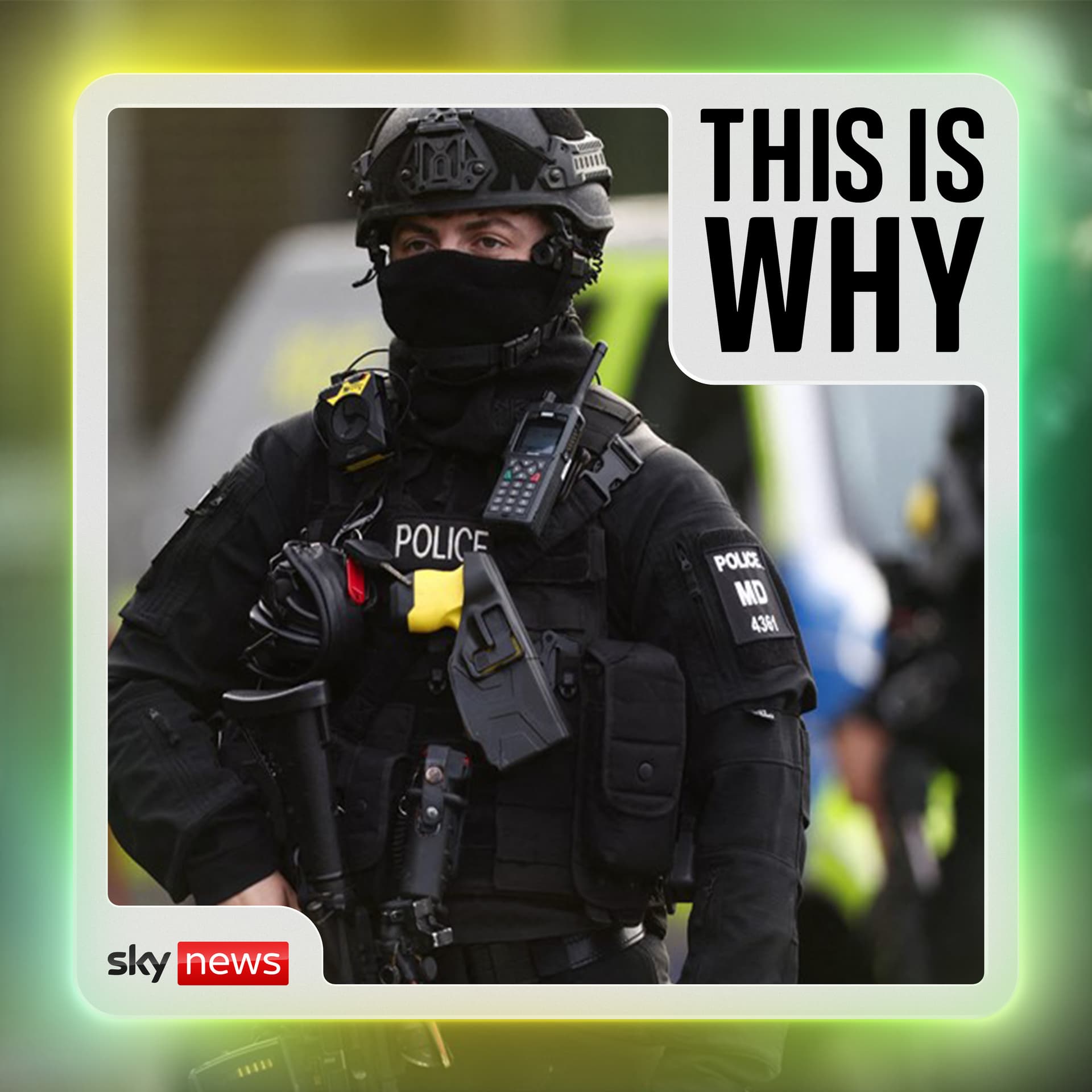
10:38So the Jewish community's sort of self-defense mechanisms and structures to protect against it, and try and find ways to reduce it as well in a proactive way, that's also been there for decades. What sort of security do the places where British Jewish people meet require? I mean, I've heard it said before, if you go to a synagogue, if you go to a Jewish school, if you go to a Jewish community centre, every single one of them will have security of some order. Yeah, very much so. And this security will be a combination of kind of physical protections in terms of gates and fences and cameras and so on.
11:19And security guards, the British government now spends£28 million a year paying for commercial security guards from private security companies to guard Jewish schools, synagogues, community centres and other buildings. And this is a reflection of the fact that there is a very real terrorist threat. And of course, the problem with doing security against terrorism is you never know where and when it's going to strike. So you have to have security everywhere. On top of that, we at CST have around two and a half thousand trained volunteer security officers who protect Jewish community events. We have a very active Jewish community.
12:00There's a very positive Jewish life here. So there are loads of Jewish community events. There are loads of buildings. They all need protecting. So we work very closely with the police, with our own volunteers and the commercial guarding paid for by the government to give this kind of wraparound protection. It may seem like an awful lot, but people in the Jewish community want it and expect this security because they know there's a danger. Not just here where we saw in Manchester, we saw in Bondi in Australia where 15 people were shot dead at a Hanukkah party. In the United States, there have been fatal attacks at the Jewish Museum in Washington and in other places.
12:38And you can look across Europe as well in years gone by. So this is something every Jewish community around the world has to have nowadays. What is it like for someone to grow up going to a school that has a security guard, who goes to a place of worship that has a security guard, that when there are those community events, there is a security guard there. That must shape you in a certain way. Look, obviously it has an impact. It must do. In terms of the awareness that anti-Semitism is there, but then Jewish people have that awareness anyway, partly because they experience it directly, partly because we have that collective memory of not just the Holocaust, but most Jewish people in this country are from families that arrived here one, two, three generations ago, fleeing persecution somewhere in the world.
13:34I mean, all of my great grandparents came here from the Russian Empire under the Tsar when there was a huge wave of anti-Semitic pogroms. It was violent attacks on Jewish communities. Most Jewish families have that in their memory, their family memory. The one thing I would say is that as well as that awareness of security and that concern about anti-Semitism, it hasn't prevented the Jewish community here from building a very, very vibrant, active and outward facing life, not just a Jewish community life, but contribution to an involvement in the rest of British society as very much, you know, we are British and Jewish and those two things are not at all separate.
14:24I think the fear at the moment is that because we've had this relentlessness, this kind of oppressive atmosphere of anti-Semitism for two and a half years, more and more Jewish people are increasingly frightened about showing their Jewish identity publicly. And it's kind of squeezing down that space for a kind of open and confident Jewish community life and Jewish way of life that we've grown very used to. When you say that, you know, essentially Jewishness is being hidden or concealed, in what ways? I think it might be that someone who perhaps wore a Star of David necklace, Star of David being like the Jewish equivalent of a cross, might not wear it now or might keep it always tucked inside their clothes.
15:14Having said that, there are also people who've bought one for the first time because they're quite bloody minded about it and want to show that they're not scared. it might be someone starts a new job and just doesn't tell any of their new colleagues that they're Jewish because they just don't want to they don't know what they might get back in response and they don't want to risk a negative response so it's these kind of quiet sort of turning inwards that is happening across parts of the Jewish community where there's a fear that if you show that you're Jewish publicly or if you let people know you're Jewish you just don't know what you might get back.
15:51And I think that uncertainty, that really eats away at what Britain is all about. It eats away at the kind of diverse society that people are trying to build and that exists in our country where everybody should be able to show who they are and express their identity. You know, a lot of workplaces in recent years have developed a philosophy of bring your whole self to work and everyone's identity is celebrated at work. I think for a lot of Jewish people actually, the lesson of the last two and a half years has been leave your whole self at home actually and don't actually engage with that. And that's very sad but that's people's lived experience.
16:32Dave, I'm wondering in your mind what is the biggest driver of this rise in anti-Semitism? I think in general there are narratives and ideas and language that used to be confined to the political extremes and that are now very, very mainstream. I think the rise of conspiracy theories as a way of understanding and explaining the world brings anti-Semitism with it because people blame Jews for all sorts of things. We cannot ignore the role of social media in driving a lot of these narratives. There are things that people are saying about Jews, are believing about Jews. It used to be it was only neo-Nazis and extremists, Islamists, you know, and the far fringes of society.
17:19This sort of thing would only be, it would be cranks and weirdos, frankly, who would come out with this in the past. And now it's utterly mainstream. And because they're doing it on mainstream social media platforms where the algorithms drive this stuff and circulate it, it gets huge, huge audiences. and that is part of the bigger breakdown in political discourse where there's so much anger, so much hate, so much division and frankly so much nonsense that gets taken as fact. And so tackling the anti-Semitism is really part of a much bigger picture of kind of how do we fix our public discourse.
17:57Look, clearly a lot of issues were raised on today's episode so if you have any thoughts you can send them direct to me, the email address why at sky.uk. Just let me know what you're thinking and if you have any ideas for future episodes. We're back again tomorrow.
From the publisher
Four Jewish ambulances were set on fire in North London on Monday morning, in the latest incident to be treated as an antisemitic hate crime by the police.
Sadly, it is just a further example of the increase in violence towards the Jewish community in the UK since the October 7 attacks in 2023.
The Jewish charity, the Community Security Trust (CST), said that last year saw the second-highest annual total of anti-Jewish hate incidents on record.
So, does the Jewish community feel antisemitism has become normalised in the UK, and what can be done to help Jews feel safer?
Niall speaks to Dr Dave Rich, Director of Policy at the CST.
Have you got a question for the podcast? Email us: why@sky.uk