
In short
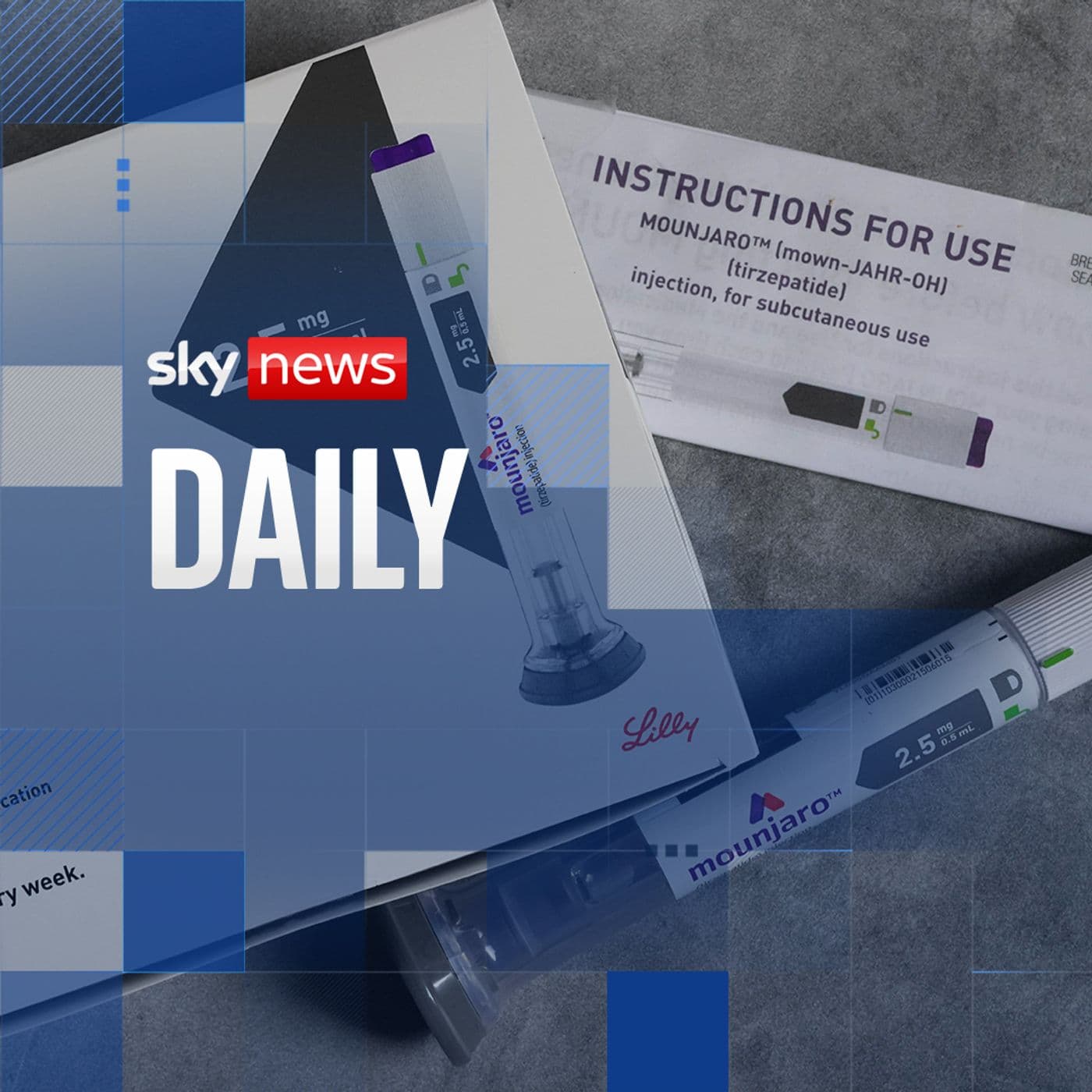
England’s NHS rollout of weight-loss drug Mounjaro (from 23 June) is severely limited, creating a “postcode lottery” and delaying treatment for eligible patients.
Guests/backgrounds
Thomas Moore, science and medical correspondent for Sky News, reports on an investigation using Freedom of Information requests to all 42 NHS integrated care boards; he also discusses a patient case with Gary (Southampton).
Key claims
NICE deemed Mounjaro safe enough for GP prescribing, but most integrated care boards aren’t providing it. Funding is capped for only some eligible patients (BMI 40+ plus conditions), and NHS England says full rollout could take 12 years. Obesity is linked to major diseases and reduces life expectancy; stigma and “self-inflicted” assumptions affect decisions.
Notable examples
Gary (25 stone, four weight-related conditions) was told his GP won’t prescribe it; he’s largely housebound and frustrated. NICE calculations: 97,500 eligible in year one, but NHS England funded about 22,000. Private access: over a million people reportedly obtain it via private pharmacies (~£150/month).
Written by AI. May contain mistakes. Listen to the episode to check what was said.
Chapters
Tap a time to open that second in VOThe Weight Loss Wonder Drug: Munjaro
0:30 to 1:12
Discussion on Munjaro's potential in addressing obesity and NHS prescribing issues.
“Coming up on The Daily with me, Neil Patterson.”
The Obesity Crisis in the UK
1:40 to 2:51
Exploration of obesity statistics and health implications in the UK.
“See our seven-day return policy at Carvana.com.”
Understanding Health Inequality and Access
2:51 to 4:36
Analyzing how economic disparity affects obesity rates and healthcare access.
“And we're going to be hearing more of Gary's story a bit later on.”
NHS's Struggle with Munjaro Rollout
4:36 to 7:42
Examination of NHS's challenges in providing Munjaro treatment to patients.
“How many people can we then say are dying from or with obesity?”
Gary's Story: A Personal Account
7:42 to 11:45
Profile of Gary, a patient struggling with obesity and access to Munjaro.
“and we're going to give you an extra three months, so six months in all, to actually get your head around it, find the money and sort yourselves out.”
Cost vs. Benefit of Weight Loss Drugs
11:45 to 14:03
Discussion on the economic implications of prescribing weight loss medications.
“And yet the one drug that could actually deal with the underlying problem, his weight, the NHS would not prescribe.”
Challenges in NHS Weight Loss Drug Rollout
14:03 to 17:40
Learn about the difficulties the NHS faces in providing weight loss drugs and the implications for patients.
“So many people are going to be waiting an awfully long time for treatment.”
Transcript
Automatic transcript. May contain errors.0:00Hello, Ed Conway here. Here is what might sound like a slightly random question. What do AirPods, bananas and a pair of shoddily made running trainers from the 1970s have in common? On the surface, not very much. But on my podcast, Stuff Matters, I will uncover the deeper stories behind each of them. You will see how together they tell a fascinating new story about the world we live in. The first full series of Stuff Matters is out now. Just search for it on your podcast app and follow. Coming up on The Daily with me, Neil Patterson. It's been hailed as the weight loss wonder drug and a big part of the solution to our obesity epidemic.
0:37But the vast majority of NHS care boards in England aren't prescribing Munjaro. Why? Getting ready for college comes with a lot of decisions. Choosing classes, finding housing, planning for the future. Paying for college shouldn't be the stressful part. Earnest private student loans help students and families pay for school with low rates, zero fees and flexible repayment options. so you can feel good about what's next. Get started today at earnest.com slash go. Loans made by Finwise Bank, member FDIC, and are subject to credit approval. Terms apply.
1:16Evening. Buyer's remorse. Buy a new car? I'll be moving in. Let's get started. Sorry, I think there's been a mistake. I bought it from Carvana. You what? Yeah, great price. I even have seven days to love it or return it. So there's no... No, no buyer's remorse. More like buyer's rejoice. I guess I'll let myself out. Congratulations. I mean it. Buyer's rejoice. Buy your car today on Carvana. Limitations and exclusions may apply. See our seven-day return policy at Carvana.com. We have a big problem with obesity in this country. So the idea that there was a drug that could help millions shed the pounds certainly got my attention.
1:54Not least because all the clinical evidence suggests that Manjaro really is the wonder drug we've all been waiting for. The problem is, many are still waiting for it. Manjaro was meant to be rolled out across the NHS in England from the 23rd of June for those with the highest clinical need. But a Sky News investigation has found it's only available in eight out of England's 42 NHS integrated care boards. accusations of a postcode lottery and frustration on the part of those who desperately need it. The surgery told us basically that if we want the drug we need to change to another surgery but they're not supplying it.
2:33Why? There's no reasons why. They're just not supplying it. Gary weighs 25 stone. His GP won't, can't prescribe it. I see people walking along and carrying shopping, doing things, I can't do any of that. when if I had the drug and lost some weight, I possibly could do it. I know I could do it. And we're going to be hearing more of Gary's story a bit later on. But he was speaking to our science and medical correspondent, Thomas Moore, who's back on the podcast. Thomas, we'll deal with your investigation in a moment, but just put it into context. How big a problem do we truly have with obesity? So in the UK, there's about 15 and a half million people living with obesity.
3:15If you look at England, and most of our conversation is going to be about England, just because of the way we've done this research. It's about 26 % of adults who are obese, and then there's another 38 % or so who are overweight. And that can put you at risk of many other health conditions. Are certain demographics more prone to obesity, or just to being overweight in general? I mean, it's a really important part of health inequality in the UK and in other countries too, in that if you come from a less well-off background, you're much more likely to be obese. And part of that is because you can't access healthy food because it's more expensive, because you live in an environment where there may be many more fast food establishments.
4:01And also you can't afford the gyms, the access to sport fields and all this kind of stuff. So your odds are stacked against you if you live in some environments. And there are real world impacts as a result of this obesity epidemic, Well, most notably for the person who is overweight in the first place. 100%. I mean, if you look at the health impact, so there's 200 different diseases which are related to obesity. If you just look at cancer, about 5 % of cancers are related to obesity. Then you've got heart disease, type 2 diabetes. I mean, the list just goes on and on. And it is something that the NHS is extremely concerned about because it takes roughly three to 10 years off your life expectancy.
4:43so for you it really counts. How many people can we then say are dying from or with obesity? More than 30 ,000 a year. That sounds like an epidemic to me. Yeah absolutely I mean this is not just a disease that affects how you look it is a disease that kills. So at this point enter stage left weight loss drugs. Now we've talked about these often enough on on the podcast before you've described them as a game changer has it has the game change? Well they are incredibly effective drug. So if you look at the two drugs, so there's Wego V, that was the first on the market after a Zenpik, the same drug, but used in a slightly different way.
5:21If you use that, then you'll lose about 15 % of your body weight in a matter of months. If you're using Munjaro, which is the newer drug, it's 20 % of your body weight. It just falls off because it changes the way your body reacts with appetite, but also changes the way you think about food. So people who suddenly their cravings just fall away and they're able to think much more clearly about what they're eating rather than just thinking where the next meal is. Remarkable drugs, and certainly they are out there and they are being used, but you got your Deerstocker detective hat on and started looking into the provision, and it is worrying, isn't it?
5:56It is, yeah. So if you look at who's getting the drug at the moment, it is basically those who can afford to pay. Around 150 quid a month for these jabs, it's not cheap. And some people are really scrimping and saving, going without holidays, borrowing money from relatives just to get hold of these drugs. They are desperate to get hold of them. On the NHS, it's hardly anybody is getting them. And the problem has been in the past that you had to go to a hospital weight loss management clinic. There aren't many of those. There aren't many doctors or nurses working within them. And the waiting lists were just huge.
6:32Most people just didn't get access. but with Munjaro, Nice, the body that decides on how drugs are going to be used in the NHS said it would be safe enough to offer this through GP and in theory a lot of those barriers would just fall away because a GP surgery is on most people's doorstep much easier than going to a hospital and probably the first person that you would go and talk to if you had concerns about your health because of your weight exactly, so the idea was that you would be able to get Munjaro on a regular basis perhaps with supportive services like diet and exercise, encouraging you to be healthy in the way that you lose weight too.
7:09So you could set yourself up the rest of your life in a healthy way. But we've done this research. It's called Freedom of Information Research. To all 42 of the integrated care boards, these are the bits of the NHS that look after all primary care. Those are the GP services and commission pharmacies and all this kind of stuff. So they're the ones who are the gatekeepers to this drug. and they have told us the overwhelming majority are not providing this drug as of June the 23rd. I thought they were told to. Exactly. So NICE said back in December, you've got to provide this drug and we're going to give you an extra three months, so six months in all, to actually get your head around it, find the money and sort yourselves out.
7:52But only a handful actually did so by June the 23rd. and we asked another question on are all the patients who qualify and that's people with a body mass index over 40 plus four weight related conditions like high blood pressure diet type 2 diabetes and so on are they all going to get it and about half have said no we're going to put a cap on it so it's not just whether you need it clinically but whether you're lucky enough to fall within the group that is actually going to get funding for treatment why because it is the The demand is so high, the numbers are so high, and the NHS effectively can't afford the upfront costs.
8:32This is a transformational medicine. And we know from social media that everybody knows about this drug and there is a clamouring for it. The clamouring presumably comes from those people who have the money. They can go off and buy on the private sector. Do we have any data on that? Yes. So, I mean, this is really a drug which is available on the basis of ability to pay. So if you can afford it, you get it. Go private. And there's more than a million people who have got it through private pharmacies, largely online. But on the NHS, it's very rarely used. And what we found with this research is that the NHS, the rollout has been mismanaged and it's been grossly underfunded.
9:16One specialist that we spoke to, he has seen the calculations done by NICE. We've seen that document ourselves. 97 ,500 patients were eligible for treatment in the first year of the rollout. But according to him, NHS England only provided funding for a fifth of those, so around 22 ,000. So you can see a massive shortfall in the funding for the number of people who actually qualify for treatment under the rules. You've met someone who has been going through this, Gary. Tell me a little bit about him. Yeah, so Gary lives in Southampton. He is 25 stone. We saw him trying to climb the stairs and he could only do a few before he was really out of breath.
10:02And this is your daily life now, isn't it? It is. Exactly. But they won't pay for the drug? No. Not at all. Is that common sense to you? No, it makes me angry.
10:20He has four medical conditions related to his weight, so he qualifies for treatment. And he's largely housebound, or he can go out in his car, but he can't walk far from his car, and he's really lost a lot of confidence from that. Now, he piled on the pounds when he had a medical condition that put him in hospital for quite a while, and after that he found it very difficult to move around. He's in a desperate situation. Completely. When he heard that Minjare was going to be available from GP surgeries on June the 23rd, he rang up his GP and said, I qualify, right? So can I have it? And he was told no, flat no.
11:01And what's more, they thought that it would be at the autumn at the least before it would be available in that area and that there was no guarantee then that he would even qualify because the goalposts might change. And just on that, the reason he's not getting it right now is a decision taken by that group you called the Integrated Care Board. So this is the bits of the NHS that look after care across a region, across an area. What effect would it have had on his life, does he think? Well, he was taking something like 13 tablets a day for all the different medical conditions that he had. I mean, it was like a mini pharmacy.
11:37We saw he and his wife were counting out the tablets into a box because it's the only way he'll keep on top of it all. And yet the one drug that could actually deal with the underlying problem, his weight, the NHS would not prescribe. And that, for him, it seemed maddening. He was desperately frustrated. And he follows the same kind of picture that I'm getting from a lot of people I talk to. They are desperate for this drug. They don't feel they can find any other way of dealing with their obesity. But whilst you have people on the healthcare side complaining there's just not enough money to go around to spend on this drug, I mean, Gary is a perfect example of the money that is being spent, I would argue, needlessly, unnecessarily, because he is chronically obese.
12:20The health costs of obesity for the NHS,£6.5 billion a year. That's an awful lot of nurses. It's a lot of nurses. It's a lot of operations. But the payback would be quite quick. So if you start treating with these drugs, it reduces the risk of heart disease by 20 percent, deaths from heart disease by 20 percent. So you can see that if you start treating people for a few months, you get a very quick impact on their health. And more than that, wasn't Gary building an extension? So this is the bizarre thing. So he qualifies for government benefits because of his disability, lack of mobility. He managed to get a grant from the council towards building an extension to his home because he can no longer get up the stairs.
13:09So he needs to have a bathroom and a bedroom downstairs. And yet the NHS won't spend the much lower cost of Munjaro that would actually deal with the underlying problem. It's madness. What is NHS England seeing? They don't recognise the figures that I've been giving you, that the consultant gives, on the number of patients who they have provided funding for. They said that we issued guidance and provided funding in March to all integrated care boards to support treatment costs, enable the scaling of services and provide wraparound care, including digital support services. So that's basically to help people understand what's happening to them, to lead a healthy life, the diet, the exercise and all that kind of stuff.
13:56NICE and NHS England agree there are 3.4 million people in England who qualify for treatment. But NHS England says it's going to take 12 years to roll out the drug to all those. So many people are going to be waiting an awfully long time for treatment. Some of them will be dead. Quite possibly so. We know that around half of people with severe obesity and at least three medical conditions related to their weight will be dead within 10 years. It must be incredibly frustrating for the doctors that you have spoken to knowing that there is this tool at their disposal, but that they just can't use it.
14:34I mean, they find it soul destroying. But for the first time in their careers, they've got a drug that is transformational, can really deal with obesity. The problem is that it's a public purse and we know it's being stretched in all kinds of ways at the moment, even within the NHS. So they understand that, but they do believe that if you spend, you gain. The problem, though, is it's an upfront cost and the NHS doesn't always see the savings, if you like. It's part of the problem that there is still this general perception that obesity is not a disease, as it is recognised by medical professionals now, but is instead self-inflicted.
15:13It's stigma. And that exists within the medical profession, within the bean counters who are making these judgments over who will qualify for treatment and how much they will spend on it. It exists from over decades. It's difficult to shift, though, Thomas, but largely because, you know, people do know if you don't eat as much and you do exercise more, you stand a better chance of being healthy. That's the old way of thinking, the eat less, move more. and that doesn't necessarily work. So science now shows that between 40 and 70 % of the risk of obesity is determined by a gene. Now, it doesn't mean that if you get the wrong genes from your parents, you'll necessarily become overweight or obese, but it does mean it's going to be much harder to shift the pounds.
15:58I think certainly doctors working within weight management now are much more understanding of that and they really kick back against any suggestion this is the patient's fault. It's not. But how do we, as a nation, take obesity more seriously when there is, again, this deeply ingrained view that actually, even if it's not a cure for obesity, everyone would do better to get up, do 10 ,000 paces a day and eat less? For some of these people, they are actually too heavy to safely exercise. it's to do with the food industry the ultra processed foods it's in the everyday diet for for millions of people i mean wes street in the the health secretary has talked about shifting from treatment to prevention from hospital to community and in some ways these weight loss drugs are exactly that but there needs to be some long-term thinking about well what else makes people at higher risk of of obesity and so much of it is to do with the food that we're eating What's your bet?
17:01What's going to happen with the provision of these sorts of drugs on the NHS? I think there is going to be a continued challenge while they remain relatively expensive, I guess. £150 a month for so many people adds up to a big number for the NHS. Now, if you start getting generic treatments, they're not branded anymore, then the price will fall dramatically. If you find that you can be given the same effective treatment as a pill rather than a jab, again, that becomes much cheaper. So all these things, as there's more competition, more drugs coming onto the market, the price will fall. But the sheer number of people who are obese will always be a challenge for the NHS.
17:39Thanks, Thomas. And you can see his full report on the website. And if you're listening on Spotify and are taking Munjaro or want to take Munjaro but can't get hold of it, do let us know your thoughts in the comments. The Daily's back tomorrow.
17:58Ed Conway here. Here is what might sound like a slightly random question. What do AirPods, bananas, and a pair of shoddily made running trainers from the 1970s have in common? On the surface, not very much. But on my podcast, Stuff Matters, I will uncover the deeper stories behind each of them. You will see how, together, they tell a fascinating new story about the world we live in. The first full series of Stuff Matters is out now. Just search for it on your podcast app and follow.
From the publisher
Mounjaro was meant to be rolled out across the NHS in England from 23 June for those with the highest clinical need.
However, a Sky News investigation has found it is only available in eight out of 42 NHS integrated care boards, prompting accusations of a "postcode lottery".
Many providers will not make it available until autumn, while nearly half of NHS boards said they will cap the number of people they treat due to a lack of funding.
Our science and medical correspondent, Thomas Moore, joins Niall Paterson on the Sky News Daily podcast as he investigates how the shortfall will cost the NHS and wider society.
Gary, who weighs 25 stone (159kg) and has several obesity-related conditions, speaks to Thomas about the implications of being told Mounjaro is not available in his area.
Producer: Emma-Rae Woodhouse and Emily Hulme
Editor: Mike Bovill