
In short
The episode argues the world must urgently respond to a new Ebola outbreak in the Democratic Republic of the Congo (DRC), now spreading to Uganda, because it involves a less familiar “Bundibugyo” variant, porous borders, weak detection, and reduced aid funding.
Guest backgrounds
Ashish Joshi is Sky News health correspondent. Yusra El-Baghir is Sky News Africa correspondent, reporting from Johannesburg.
Key claims
More than 300 suspected cases and at least 80 linked deaths; Ebola spreads via body fluids and contaminated objects (not airborne). This variant is slow to detect, contact tracing is incomplete (no confirmed “patient zero”), and there are no vaccines ready for this strain. International surveillance should prepare for imported cases, not a COVID-style pandemic.
Notable examples
UK had four imported Ebola cases since 1976 with no local transmission; WHO asked neighbors not to close borders; Rwanda closed its border with Goma.
Written by AI. May contain mistakes. Listen to the episode to check what was said.
Chapters
Tap a time to open that second in VOUnderstanding the Ebola Outbreak
0:55 to 1:41
Overview of the Ebola outbreak and its urgent implications.
“Yesterday, I declared a public health emergency of the international concern over the Ebola outbreak in the Democratic Republic of the Congo that has already spread to Uganda.”
What is Ebola?
1:50 to 3:06
Detailed explanation of Ebola, its symptoms, and treatment.
“Let's speak to our health correspondent, Ashish Joshi, and our Africa correspondent, Yusra El-Baghir, joining us from Johannesburg.”
The New Strain of Ebola
3:15 to 3:50
Discussion on the new strain of Ebola and its implications.
“It depends on the health care systems involved as well.”
Transmission and Containment Challenges
3:53 to 4:28
Exploration of how Ebola spreads and the challenges of containment.
“It spreads through contact with body fluids, blood, and also through contaminated objects.”
Origins and Cultural Factors
4:29 to 6:01
Investigation of the outbreak's origins and cultural challenges in containment.
“I mean, Yusra, what do we know about the origins of this particular outbreak?”
Regional and International Response
6:02 to 7:48
Examination of the regional and international responses to the outbreak.
“And this variant, we've been told by World Health Organisation officials, is very slow to detect.”
Funding and Infrastructure Concerns
8:19 to 13:00
Analysis of the funding challenges and infrastructure issues affecting the response.
“Ashish, we have had this declared an international public health emergency, which I imagine is to do with the significance, the import of this particular outbreak.”
Preparedness and Future Implications
13:24 to 14:00
Discussion on outbreak preparedness and the challenges posed by this outbreak.
“Downing Street drama, leadership battles and policy U-turns.”
Understanding the Ebola Outbreak Preparedness
14:00 to 17:30
Learn about the current Ebola outbreak's context, preparedness, and challenges.
“I suppose, Ashish, the one saving grace here is that we have been here before.”
Global Implications of Local Outbreaks
17:30 to 17:53
Discover why international outbreaks can affect global health and safety.
“Because ultimately, if you have failing health systems who aren't supported, then it comes back and it comes back hard to impact all of us around the world.”
Transcript
Automatic transcript. May contain errors.0:02Yousra Elbagir:Sky News, the full story first.
0:10An Ebola outbreak in Africa needs an immediate global health response. And this is why.
0:22I'm Sam Coates from Sky News.
0:25Yousra Elbagir:And I'm Anne McElvoy from Politico. Downing Street drama, leadership battles and policy U-turns. We're on it before it breaks. We take you straight into the rooms where the real political conversations are happening. Smart Insight, clear analysis in your feeds by 7.45am. So you start your morning fully brief for the day ahead in British politics. Hit follow and listen to Politics at Sam & Anne's wherever you get your podcasts.
0:54Hi everyone, Neil here, and we are starting the week with some pretty worrying news coming out of Africa.
1:00Yousra Elbagir:Yesterday, I declared a public health emergency of the international concern over the Ebola outbreak in the Democratic Republic of the Congo that has already spread to Uganda. More than 300 suspected cases of Ebola have been identified so far. It is a brutal virus, often ending in a painful bloody death. At least 80 have been linked to this outbreak. And it is so contagious, we could soon be looking at figures significantly higher. Cue the international response, or at least that's what you'd expect. But the DRC, well, it is a part of the world which can be very tricky for international aid organisations to operate within.
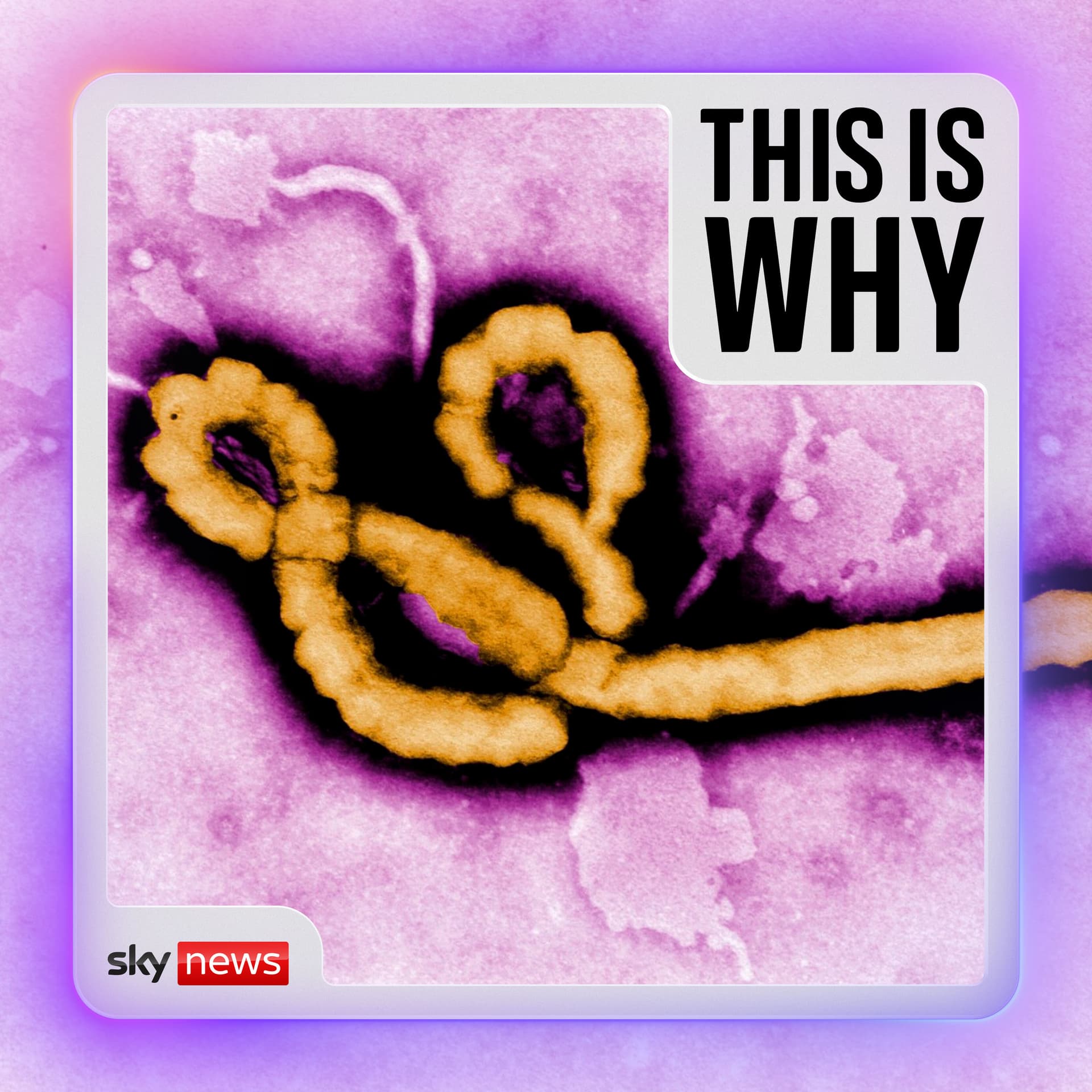
1:38And this isn't a problem that we can ignore. Western countries, they don't understand that when Africa is affected, they are also at risk because people are flying every day. Let's speak to our health correspondent, Ashish Joshi, and our Africa correspondent, Yusra El-Baghir, joining us from Johannesburg. Let's just start with Ebola itself. What is it? Ebola is a serious infectious disease. It's caused by a group of viruses, some viruses we've known about in the past, big outbreaks in Central and Western Africa. So it's a disease predominantly which affects the internal bleeding, the organs, but it starts off like a really mild fever, muscle ache, dehydration, all of the usual symptoms you'd expect from a viral infection.
2:30But it can develop very quickly into something much more serious, internal, external bleeding, and then attacking the organs, leading to organ failure. and then sadly in a lot of cases because of the high mortality rate does lead to death. So is it necessarily fatal? It's not necessarily fatal. If it's detected early enough, there are interventions because essentially it's a virus. There are antivirals, there are therapeutics. You can have intravenous drips treat you for the dehydration, the vomiting. But once it becomes progressed, then it's much, much harder to treat, right? If you have internal organ failure, essentially, if you're bleeding out, then the chances are that you won't be able to be safe.
3:13But it needs early intervention. It depends on the health care systems involved as well. But all of this, like most outbreaks, most diseases, early intervention. You've got to spot the signs. You've got to treat the signs. But what I need to stress about this particular outbreak, we've had Ebola outbreaks on and off for the past 15, 20 years. But the problem with this one is we have known strains. We have the Zaya strain, we have the Sudan strain. This one is a new strain, which is much more unfamiliar. OK, so now this wasn't picked up in time and there are no vaccines for this strain. That's what makes this outbreak particularly concerning.
3:53OK, so how contagious is this? How does it actually spread? It spreads through contact with body fluids, blood, and also through contaminated objects. like bedding or needles, for example, and in rare cases through contact with infected animals like primates or fruit bats. So not airborne? It's not airborne. I'm glad you said that. It's not like measles. It's not transmissible through the air. It's not a virus which travels on droplets or anything else. But it is very infectious, and that's why we've had so many big outbreaks in the past. But that's when you're in contact with contaminated tissue or blood or body fluids.
4:27Let's bring in Yusra at this point. I mean, Yusra, what do we know about the origins of this particular outbreak?
4:32Yousra Elbagir:I mean, that's what makes this so dangerous and concerning, Neil, is that we don't know who Patient Zero is. They haven't been able to find the earliest case. They found that the earliest suspected case was at the end of April. But they haven't been able to do the contact tracing needed to be able to find out exactly who was the first confirmed case of this strain of Ebola. And that obviously raises a lot of concerns and increases the risk. But there's also the fact that this is happening in an area where gold mining is very common. So there's densely populated towns around these gold mines, including Bunia, which is the capital of Ettore province, where there have been cases as well.
5:15Yousra Elbagir:So you've got a spread of people, not just across the region, but also to neighboring countries. and then you have this inability to be able to track down who the first case was, to be able to identify as many cases as possible and contain the outbreak. But a lot of people have been going to witch doctors, to places of worship, to spiritual healers, and that, again, is one of those cultural community-level issues that is going to make this outbreak hard to control. Yeah, and in particular, given what Ashish was saying, this is not like measles, this is not something that is necessarily incredibly easily transmissible.
5:51But if you're ignoring the medical advice and you're continuing to work, to socialise, to be around other people, that's where things get really, really tricky really quickly in the DRC.
6:01Yousra Elbagir:Absolutely. And this variant, we've been told by World Health Organisation officials, is very slow to detect. So there's a six to eight hour window where viruses can be identified and detected. But they're saying that the period of time it takes to actually confirm a case of the Bundibhajao variant is longer. So you've got people who are exposed or moving in the world who may have the virus and haven't had the symptoms or have been confirmed to have the virus. But then you've also got very porous borders. You've got a lot of that kind of community education work not happening anymore because we've seen these funding cuts, not only to the end of USAID, but also funding cuts to the UN and to smaller NGOs who do this work to try and contain these kind of outbreaks.
6:47Yousra Elbagir:Also, when you've got an area that survives on gold mining, you know, a lot of people are going to want to keep working because their livelihoods, their survival, is built on them mining and mining as much gold as they can. So it's a lot harder to get people to stay at home and quarantine or go to a health facility where they're concerned about essentially being trapped. Clearly, efforts aren't being made on the ground to contain this particular outbreak. But you've made the point. I mean, the borders are particularly porous. We have seen cases across the border in Uganda. What do we know about that?
7:18Yousra Elbagir:I mean, we've been told that the case in Uganda, one of the cases is being quarantined at the moment near the capital. And we've also been told that the other case, a Congolese man died from Ebola. And we've seen reports that his body was sent back to the DRC. Now, the strain, the Bundabujau strain actually comes from a Ugandan district, which the virus is named after in Western Uganda, close to the border. So there is an awareness from the Ugandan authorities that they really do need to contain this as soon as possible. And then we've also seen the World Health Organization come out and actually ask neighboring countries to not close their borders so that there can be a coordinated regional response.
7:56Yousra Elbagir:Rwanda has closed its border with Goma, the city in eastern DRC that's held by M23 rebels. They're taking no risks. But when you've got a town like Goma that's held by rebels and disconnected from the rest of the country, they could really suffer from not having that coordinated approach as well. So it needs to be dealt with on a regional and almost like a continental basis. You can't just deal with this as a localised outbreak. Ashish, we have had this declared an international public health emergency, which I imagine is to do with the significance, the import of this particular outbreak. Yeah, what it means, it's signalling to the international community that this is an outbreak, we're worried about it and we need an international response.
8:38So it's not a pandemic, it's regional, it's localised. But what we do know from previous outbreaks, including the pandemic, which, you know, when I was covering the pandemic, there was an epidemiologist who stood up and said, this is the worst nightmare. This is the runway disease. And what he meant by that was you have an infected patient gets on a plane and travels abroad and that's it. It becomes international. That is probably not the situation we're dealing with here. what we're dealing with is a regional outbreak as Yusra was explaining migration patterns suggest that workers go between different countries cross land borders and that's why it's important but why it's been declared an international emergency is because it's up to the rest of the international community now to set up its own surveillance programs right so where you have anyone presenting with any of the symptoms which are Ebola like then that triggers the international response so So it's telling the international community, we're worried about this.
9:36You need to be worried about it too. But it's not a pandemic in the same sense that the COVID pandemic was. OK, but given what Ebola is, you'll forgive me for picking up on the word probably there when you were referring to this being a regional kind of outbreak. I mean, have we seen Ebola make it to the United Kingdom before? We have. Since 1976, there have been four cases of Ebola in the UK, but no local transmissions. These were all imported cases. These were health workers who went to the region back in 2014. I think was the last time you had a health worker, a nurse who went out to Sierra Leone to work with the big outbreak there.
10:11And she became infected and brought back Ebola as an Ebola patient here, but quickly identified, isolated, treated in hospital and full infection control in place. So we don't have local Ebola. We've had cases where it's been imported through health workers who've travelled to regions like Central and West Africa to work with patients there. But I've got to imagine that our public health officials are mindful of what happened in the past and have taken steps to at least prepare for that eventuality. Absolutely. In international surveillance, it's been raised by the WHO. So that means the international community has an obligation.
10:45All right. There are protocols which kick in. The border officials will be on alert for flights coming in from that part of the world. but doesn't necessarily mean that all passengers coming in from Uganda or the DRC will be screened medically. But it does mean that the international community is now on alert for imported cases. I mean, Yusra, I saw you nodding along there. I mean, what is the extent of the international input into the controlling of this outbreak so far? I mean, who's actually running the show?
11:14Yousra Elbagir:Well, the World Health Organization stepped in after reports started surfacing online. So again, some weeks after the first suspected fatality. But we've now seen the U.S. Center for Disease Control say that they're going to be involved. They're saying that they're sending technical support teams to the DRC, but also to Uganda, which is, I think, is going to be a very welcomed addition to the technical expertise that's required on the ground. We've also seen the national health minister arrive in Bunya, in Itori province yesterday, and try and kind of trigger this move of people to these treatment sites that they've set up.
11:54Yousra Elbagir:But we are speaking to local journalists and being told that they're really restricting filming in some of these treatment sites that they've shown up at hospitals and they've been turned away. So there's an effort from the Congolese government to really control the optics around this while they try and contain it. I mean, I'm wondering, because you've already mentioned the United States kind of withdrawing from its global support, at least through USAID, that means by which it did pump billions into corners of the world. With the involvement of the Centre for Disease Control, I mean, should we be concerned that there aren't the buckets of cash that we have had in previous outbreaks standing by ready?
12:32I mean, how much of an impact could that have?
12:34Yousra Elbagir:Yeah, we should definitely be concerned. And I think the WHO is concerned about the funding issues. And that's why they've moved to declare this global health emergency so quickly, because they want there to be as much money funneled to this as possible. But without USAID, you don't have the funding, but you also don't have the infrastructure, which was one of the key things around the Ebola response, the US-led Ebola response, is that it created infrastructure and it created protocol that people could kind of fall back to and also that community education that's so important. So the fact that we are already seeing a lot of donor fatigue around issues in Africa, We're seeing the DRC continue to be impacted by conflict.
13:15Yousra Elbagir:So there's a lot to think about at a time where there's very little resources to deal with all of these compounding elements that make this outbreak extremely concerning.
13:35I'm Sam Coates from Sky News.
13:38Yousra Elbagir:And I'm Anne McElvoy from Politico. Downing Street drama, leadership battles and policy U-turns. We're on it before it breaks. We take you straight into the rooms where the real political conversations are happening. Smart Insight, clear analysis in your feeds by 7.45am. So you start your morning fully brief for the day ahead in British politics. Hit follow and listen to Politics at Sam & An's wherever you get your podcasts.
14:10I suppose, Ashish, the one saving grace here is that we have been here before. We did have that outbreak in West Africa in 2014. Are we better prepared as a result? Well, every time you have an outbreak like this, questions are raised about outbreak preparedness. We are drilled, we are better equipped, we have better infrastructure. But the sort of areas that Yusra has been describing are so remote and so rural and there are so many other complications. We're not dealing with one cluster. And that's what makes this outbreak particularly difficult for the WHO. They're talking about a number of clusters.
14:46They don't know how many people are infected. You don't have laboratories near the epicenters. You can't test everyone. Most people, if they're dying or if they're sick, they might not even make it to a healthcare facility. So there are too many unknowns and too many variables for this particular outbreak. And that goes to the heart of the problem here. Well, isn't the thing that we most desperately need right now is a vaccine? I mean, how far away from that are we? Vaccines are always being worked on. And then vaccines have to go through clinical trials, peer reviews. It takes a while to get a vaccine from the laboratory into the arm of an infected patient.
15:22They will be working on vaccines, right? This isn't a completely unknown strain. The strain has been known about. There have been outbreaks before. But that's what's caught everyone there on the ground by surprise. They weren't looking for this particular strain. They were looking for previous strains which have caused outbreaks in the past. So to answer your question, there will be a vaccine in the pipeline. Is it ready to be deployed right now? I doubt so. I mean, do you get the impression that we have been quicker to deal with this particular Ebola outbreak than we were more than 10 years ago?
15:53Yousra Elbagir:We're dealing with a different variant, right? And even looking at the outbreak of this specific variant, the first outbreak in 2007 to 2008, it was on record 149 cases and at least 37 people killed. We're now dealing with more than double that in a much shorter period of time. We need to accept that we actually don't know much about this strain. So I think time will show us how bad it is. Ashish, let's just end with just a little bit of reassurance. noting as both you and Yusra have said just how horrible an affliction a condition an illness this is how concerned do we genuinely have to be in this part of the world about what is taking place in DRC in Uganda and presumably potentially other parts of Africa very very soon okay so there are two levels to this answer as an individual you don't need to be worried at all I would say because If you're not going to have any contact with anyone from that region, any infected patients, the risk to you is almost zero.
16:54But on another level, as a global citizen, you should be very concerned about international outbreaks of deadly diseases, because as an international citizen, we know. As a human being. As a human, exactly that. We know now because of the lessons learned from 2020, the world is an interconnected place. Nobody would have worried right now about a fish market in Wuhan had we not had the pandemic. We need to make sure that the global health systems all support and work together. And when we have an outbreak like this in Central Africa, that the international community can mobilise and support. Because ultimately, if you have failing health systems who aren't supported, then it comes back and it comes back hard to impact all of us around the world.
17:39Let's all keep fingers crossed. Ashish Yusra, thanks very much. That's a lot for today. Much more about the Ebola outbreak available on the website skynews.com and do get in touch with your thoughts or indeed if you have been affected by this Ebola outbreak. Why at sky.uk is the email. We're back tomorrow.
18:06I'm Sam Coates from Sky News.
18:08Yousra Elbagir:And I'm Anne McElvoy from Politico. Downing Street drama, leadership battles and policy U-turns. We're on it before it breaks. We take you straight into the rooms where the real political conversations are happening. Smart Insight, clear analysis in your feeds by 7.45am. So you start your morning fully brief for the day ahead in British politics. Hit follow and listen to Politics at Sam & Anne's wherever you get your podcasts.
From the publisher
A new strain of Ebola virus has been declared an international public health emergency by the World Health Organisation.
More than 300 suspected cases have been identified – with at least 80 deaths reported. The outbreak is mostly confined to the Democratic Republic of the Congo, but two cases have already spread to Uganda.
Plus, a number of American citizens have also been exposed to the virus.
Niall speaks to Africa correspondent Yousra Elbagir and health correspondent Ashish Joshi about exactly what Ebola is and why the wider world should care about the outbreak.
Have you got a question for Niall? Email us: why@sky.uk