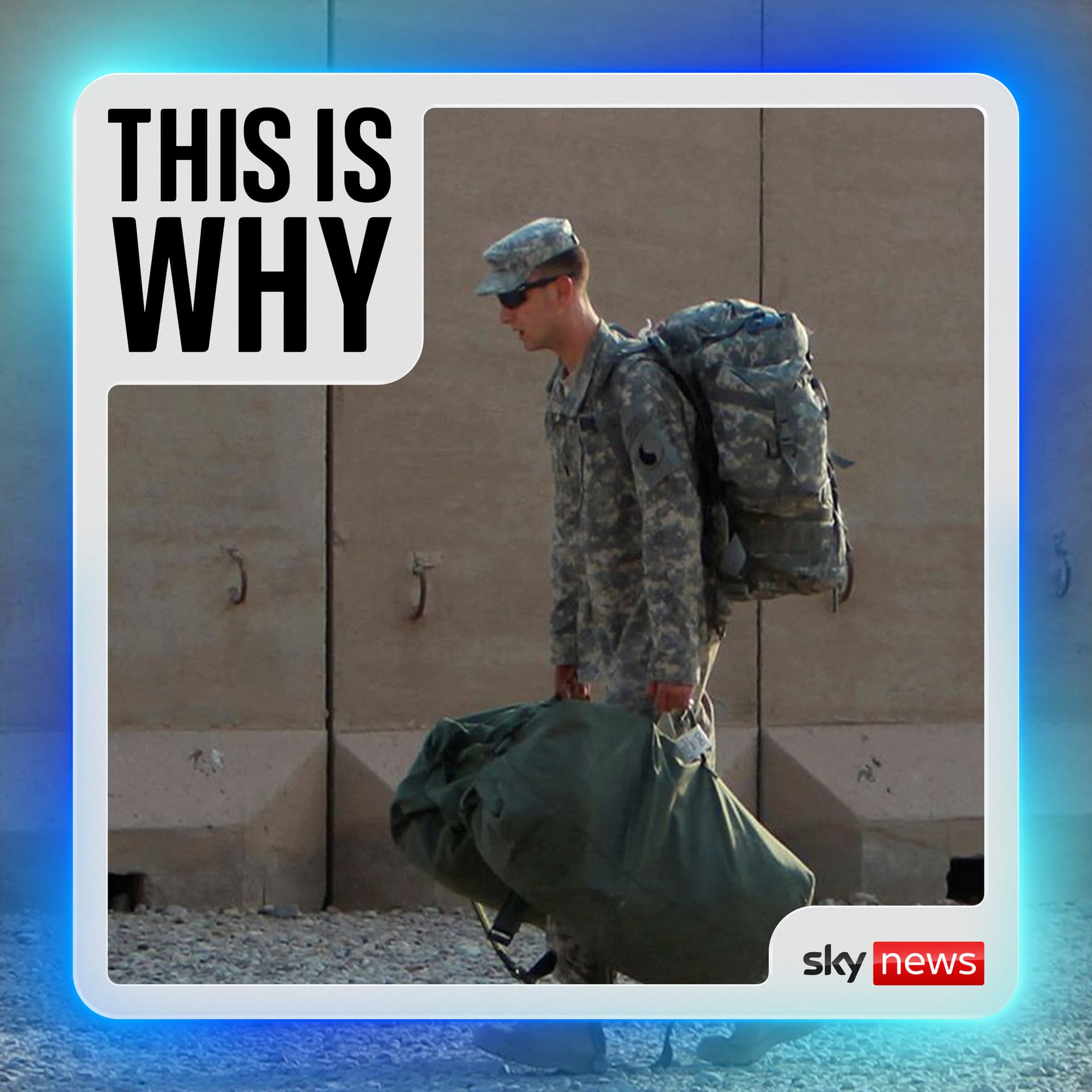
In short
Trump’s decision to shorten US–South Korea joint military exercises (11 days to 5) after South Korea declined to join US action against Iran, and how this signals conditional alliance security and complicates Seoul’s diplomacy and readiness.
Guests
Professor Ramon Pacheco-Pardo, Professor of International Relations at King’s College London; expert on international relations and alliance politics.
Key claims
The change is mainly political, aiming to pressure Seoul and support Trump’s goal of renewed dialogue with Kim Jong-un. South Korea views unilateral US moves as damaging because alliance dialogue is normally constant. Seoul welcomes diplomacy with North Korea but is wary. The wider region (Japan/Taiwan) may fear reduced US commitment, prompting debates about greater autonomy and even nuclear options.
Notable examples
US–North Korea summits as media “theatrics”; South Korea’s desire for transfer of wartime operational control from US command; South Korea’s “wait and see” stance on Iran.
Written by AI. May contain mistakes. Listen to the episode to check what was said.
Chapters
Tap a time to open that second in VOContext of US-South Korea Relations
0:24 to 0:55
Discussion on the US's role in South Korea's security and recent tensions.
“Here is what might sound like a slightly random question.”
Trump's Military Strategy Changes
0:55 to 1:58
Analysis of Trump's decision to shorten military exercises with South Korea.
“We have 39 ,000 soldiers over there guarding you from Kim Jong-un, your next door neighbour, and you're not going to help us on a very easy military operation in Iran?”
Political Implications of Shortened Exercises
1:58 to 4:22
Exploration of the political signals and implications of Trump's military decisions.
“Professor Ramon Pacheco-Pardo is Professor of International Relations at King's College London and a career expert.”
Trump and Kim Jong-un's Relationship
4:22 to 6:17
Insight into the evolving relationship between Trump and Kim Jong-un.
“On top of that, I think that there's also the theatrics of this, the two previous summits that we had between Donald Trump and Kim Jong-un, plus the third meeting that we had as well.”
Reactions in South Korea
6:17 to 8:34
Discussion on how South Korea is responding to Trump's decisions and their implications.
“Because obviously it is a bit more complicated than it perhaps first appears.”
South Korea's Strategic Dilemma
9:35 to 14:00
Analysis of South Korea's security strategy amidst US unpredictability.
“Here's what might sound like a slightly random question.”
South Korea's Strategic Position Amid US Withdrawal
14:00 to 18:06
Explore South Korea's cautious stance towards US involvement in global conflicts and its implications for regional allies.
“But it's not going to openly side with both of them because at the end of the day, this is a war that was not necessarily provoked by Iran.”
Prospects for North Korea and US Relations
18:06 to 18:21
Discuss the potential success indicators for Trump's relationship with North Korea and what it means for US security.
“But at least if you don't see more tests of these long-range missiles, I think many Americans would say, well, yes, the threat is on South Korea, the threat is on Japan.”
Transcript
Automatic transcript. May contain errors.0:02Sky News, the full story first.
0:10The US is supposed to be South Korea's security guarantee. Donald Trump has just reminded Seoul that, in his world, guarantees come with conditions. And this is why. Hello, Ed Conway here. Here is what might sound like a slightly random question. What do AirPods, bananas and a pair of shoddily made running trainers from the 1970s have in common? On the surface, not very much. But on my podcast, Stuff Matters, I will uncover the deeper stories behind each of them. You will see how together they tell a fascinating new story about the world we live in. The first full series of Stuff Matters is out now.
0:51Just search for it on your podcast app and follow. We have 39 ,000 soldiers over there guarding you from Kim Jong-un, your next door neighbour, and you're not going to help us on a very easy military operation in Iran? That's strange. Hi everyone, Neil here. Right, okay, a couple of things to get us started. First, that number isn't right. America has around 28 ,500 troops in South Korea, not 39 ,000. But the message, well, that could hardly be clearer. The United States protects South Korea from Kim Jong-un. South Korea wouldn't join Donald Trump's military campaign against Iran. So Trump has taken an 11 day exercise, one designed to prepare both countries for a North Korean attack and cut it to five.
1:41Now he says this is also about his relationship with Kim, and maybe it is an attempt to get the two men talking again. But if you're sitting in Seoul, you're entitled to wonder whether your country's security has just become a bargaining chip in a completely different war thousands of miles away. Professor Ramon Pacheco-Pardo is Professor of International Relations at King's College London and a career expert. Ramon, what has actually changed in terms of this joint military exercise? Well, the main change, obviously, is that the exercise has been shortened, which means that South Korea and the US will have less time to conduct joint manoeuvres.
2:25It seems that they have also been scaled down, but we're not sure about this, and I doubt we will get that information. How significant then would that be in military terms? Is this primarily a political signal from the White House or does it actually genuinely affect readiness on the peninsula? I think it's more political, but the exercises have been taking place for decades. But it is true that the exercises take place for a reason. There are changes in planning from the two allies. There are changes in the capabilities of North Korea, or the capabilities of South Korea and the US as well. So this is why we have regular exercises.
3:07Plus, on top of that, we know that South Korea wants the transfer of the operational control of the joint military forces in case of war, which is currently under US command. And one of the ways of achieving this is by showing its readiness. So the shorter the exercises, the more difficulties for South Korea to achieve this very important goal from the perspective of the current government. So when you look at the timing of this particular announcement, and indeed the way in which Donald Trump actually announced it, what is your assessment of what it is he is trying to achieve? My impression is that he sees a dialogue and a potential agreement with North Korea as a goal, a foreign policy goal that he can achieve.
3:51Obviously, things are not going well with Iran. Russia's invasion of Ukraine continues. So there are foreign policy matters that the Trump administration can look at, that Trump can claim he has solved. and one of them could be potentially having an agreement with North Korea, where let's say, for example, North Korea agrees to stop its long-range missile tests. And Trump can claim that this is a victory for him, for the U.S., that he's bringing security for the U.S., peace to the Korean Peninsula. On top of that, I think that there's also the theatrics of this, the two previous summits that we had between Donald Trump and Kim Jong-un, plus the third meeting that we had as well.
4:37The three of them were big media, especially television spectacles. As we all know, world media was there. And I think President Trump likes this on top of the potential objectives he may want to achieve. So what is then the state of the relationship between Donald Trump and Kim Jong-un? I mean, at times it was pretty fractious. He now speaks incredibly warmly of the man. So what's the truth, do you think? As far as we know, we see a cordial relationship between the two leaders, between Trump and Kim Jong-un. And I think Trump sees Kim Jong-un as someone he can have a business type relationship with, someone who he can negotiate with.
5:21And that's something that the US and the Trump administration has not still been able to achieve with other leaders. And I think on the North Korean side, there is this belief, on the North Korean leadership himself, that sitting down with the U.S. president and negotiate directly with him is a foreign policy victory, a diplomatic victory, because North Korea is sitting down, talking face to face, to the country that remains the most powerful in the world. So there's this important element. And I think that's why from the North Korean perspective, there's this respect to an extent for Donald Trump, because he has been the only president willing to do this.
6:03Now, we cannot tell you that they are friends, very stretch of the imagination. But I think both leaders see the possibility of having this business type relationship and being able to reach an agreement that both of them can sell us a victory back home. Can we focus then a bit more deeply on how this has landed in Seoul? Because obviously it is a bit more complicated than it perhaps first appears. I mean, first, how significant is it that the Americans did not brief the South Koreans that this was going to happen, that this decision did apparently come out of the blue? I think that's very significant because the relationship between the two countries for decades really has been based on constant dialogue.
6:42And whenever there was a difficult decision to be made by any of the two sides, particularly by the U.S., we saw consultation taking place. Now we saw during the first Trump administration that this already happened. after Trump had his first summit with Kim Jong-un in Singapore. He unilaterally announced that he was going to cancel the upcoming exercises that were also going to be taking place in 2018. So this is not the first time that Trump does the same. And obviously South Korea doesn't like this because the exercises take, as you can imagine, months of preparations. As I said, from a South Korean perspective, the more exercises, the better.
7:20And more generally, because South Korea believes that there should be a dialogue between the two allies, very much like we see here in Europe with NATO, for example. And obviously, this hasn't happened. This came out of the blue. So South Korea didn't receive well at all the fact that this was a unilateral decision and it was not consulted previously. Or from what we know, they didn't even know this announcement was going to happen. Still, isn't it the case that President Lee, South Korea's president, does want more engagement with the North? And on that basis, he might not be 100 % opposed to the sort of de-escalation that Donald Trump is driving at.
8:03Yes, I think that if this leads to a summit between Trump and Kim Jong-un, this is country welcomed by the current South Korean administration. They do want the dialogue between the US and North Korea. They do want dialogue between the two Koreas. they think that diplomacy, including US North Korea diplomacy, is the way to deal with North Korea. So if this eventually leads to a dialogue, we are going to see, at the very least on the South Korean side, this is going to be welcome. But at this point in time, we don't know whether diplomacy is going to take off, not even continue. So that's why there is this wariness within South Korea.
8:43But yes, if this leads to a summit and then between the US and North Korea, then the two Koreas can have their own meeting. Potentially, I think that each and beyond the current South Korean president is going to be welcoming this move by the US administration.
9:06Evening, buyer's remorse. Buy a new car? I'll be moving in. Let's get started. Sorry, I think there's been a mistake. I bought it from Carvana. You what? Yeah, great price. I even have seven days to love it or return it. So there's no... No, no buyer's remorse. More like buyer's rejoice. I guess I'll let myself out. Congratulations. I mean it. Buyer's rejoice. Buy your car today on Carvana. Limitations and exclusions may apply. See our seven-day return policy at Carvana.com. Hello, Ed Conway here. Here's what might sound like a slightly random question. What do AirPods, bananas and a pair of shoddily made running trainers from the 1970s have in common?
9:46On the surface, not very much. But on my podcast, Stuff Matters, I will uncover the deeper stories behind each of them. You will see how together they tell a fascinating new story about the world we live in. The first full series of Stuff Matters is out now. Just search for it on your podcast app and follow.
10:12I suppose, though, there is a more fundamental question for the political leadership of South Korea, and it is. I mean, what does South Korea do when a country it relies upon for its security begins acting, you know, unpredictably, irrationally even? What we see in South Korea is that the debate is very similar to the one we're having in Europe. The US continues to be by far the most important security partner, a crucial economic and political partner, but obviously has become less reliable than it was a few years ago. And obviously this could carry on beyond Trump. So in South Korea, there is a debate about how to maintain a strong alliance while at the same time building autonomous capabilities to be able to deter North Korea and also China.
11:00South Korea obviously also sees China as a potential threat. So what we see here is that in South Korea, there's a general agreement that the alliance has to be kept, maintained, and it has to be nurtured as much as possible through military relations, economic relations, etc. But at the same time, South Korea needs to increase its spending in its own military capabilities. Now, of course, it is always more difficult to divine what they are thinking in North Korea. But what do you imagine is going through Kim Jong-un's head? I mean, he has just been given a gift, a big gift, without being asked for anything in return.
11:37Yes, we don't know, as you say, what is going on inside North Korea, but we do know that North Korea doesn't like to be dependent on China and Russia. So obviously it's dependent economically on both of them. Also, you have the military transfers, technology transfers now coming from Russia to North Korea. But North Korea has always tried to diversify its diplomatic and economic relations. and it has been very difficult because of the sanctions that the country is under. And these sanctions are only going to be removed realistically if the U.S. agrees to do so, right? Because if the U.S. says we want to remove the sanctions, we know that other countries will follow, including South Korea and Japan.
12:17So from a North Korean perspective, if you want to have a stronger economy, then it actually needs a better relationship with the United States. So that's why I think that North Korea welcomes this move to the US. Also, as you say, the US hasn't asked for anything in return. At the moment, from what we know, Trump is willing to meet with Kim Jong-un without preconditions. And this is what the State Department has actually said a few days ago. So this is a gift for North Korea. Of course, Donald Trump did explicitly link his decision to cut the exercise from 11 days to 5 to South Korea's decision not to join the American action.
12:58against Iran. Explain South Korea's decision not to get involved, as so many other countries did not do, at least in the initial stages, and whether or not South Koreans feel that that was the correct decision at the time. I think that the South Korean position is not difficult to understand because it's very similar to the one we have here in the UK and other European countries, which is, we don't want really to be part of a blockade of the Strait of Humus. If there's going to be a multilateral mission to make sure that the waters of the strait remain open. South Korea is willing to participate, but so far we haven't seen this type of mission.
13:39South Korea supports diplomacy. South Korea has sided with the part of the criticism of the U.S. on Iran and their agreement that they want to pursue nuclear weapons. But obviously, South Korea also understands that this war was started by the US and Israel. It's not going to criticize any of the two for starting this war. It's not in a position to do so. But it's not going to openly side with both of them because at the end of the day, this is a war that was not necessarily provoked by Iran. So what we see here is that the South Korean position is wait and see, really. And I think South Koreans feel this is the right decision.
14:21And insofar, they know they cannot openly confront the U.S. by any stretch of the imagination. They cannot openly criticize the U.S. But at the same time, South Korea, which has really supported the U.S. in Iraq, in Afghanistan, in Vietnam, in many of the wars that the U.S. has waged in the past, feels that this one is better to try to sit it out, especially since no other country other than Israel and the U.S. and the countries in the Middle East itself are actually involved in this conflict. I do wonder what Japan, other allies that America has in the region, will be thinking, looking at what is just taking place with South Korea.
14:59I mean, for goodness sakes, what on earth must Taiwan be thinking right now? Yes, yes. What is coming out of Taiwan and Japan that they are not happy. So, for example, from a Taiwanese perspective, they may be thinking, well, if this exercise is not taking place, what happens if China launches a strike on Taiwan? What might the U.S. say? It may go to Taiwan and say, well, you didn't help us when it came to Iran, so why should we be helping you to deal with China? Same with Japan, right? Because any conflict, obviously, in Taiwan would affect South Korea, would affect Japan, would affect all countries in the regions directly or indirectly.
15:33Do you think, Professor, that this part of the world has fully grasped that Donald Trump is doing what he said he was going to do, that they are withdrawing to their own hemisphere of influence and that this is a part of the world that they will not have the same level of involvement with that they have historically? I think they do. I think they took a very realistic approach from the beginning. We shouldn't forget that Japan and South Korea were two of the first countries to have a summit when Trump took office, when they came to South Korea shortly after the election. And they have been increasing their military spending.
16:08They have reached agreements to invest very heavily in the U.S., Taiwan as well, as a way to keep the economic relationship and with it, the military relationship with the U.S. in a way that is more beneficial for the US, it has to be said. So I think they do understand this. I think that you see in South Korea, for example, the nuclear debate is part of this discussion about how to deal with a US that is withdrawing from the region. When you are confronting China, North Korea and Russia, obviously nuclear weapons are more taboo in Japan, but there are also voices about the possibility of South Korea developing nuclear weapons and Japan would really have to go next.
16:47So this would have been unthinkable a few years ago. And now because the US, as you say, is withdrawing more towards its own hemisphere, then you see the discussion is more about how do we increase our own capabilities and how they act based on this. but also the more transactional approach towards the relationship and alliance with the US, which involves, for example, all this investment that I mentioned previously in the US. If we assume, just for a moment, Professor, that there is method rather than madness in Donald Trump's approach to North Korea, how would we gauge if it had worked? What would success look like for Donald Trump in a broadening of its relationship with North Korea?
17:36I think it would be North Korea basically stopping, cancelling its long-range missile tests. North Korea not conducting any nuclear test. And I would say a degree of openness in North Korea to receive US investment. So I think that's how he would define success. And I think there would be Americans who would agree with them. I mean, they know North Korea isn't going to give up nuclear weapons anytime soon, if ever. But at least if you don't see more tests of these long-range missiles, I think many Americans would say, well, yes, the threat is on South Korea, the threat is on Japan. But isn't really on the US?
18:16From their perspective, they could realistically think that this is not the case. Ramon, it's been a pleasure chatting to you. Thanks for your time. That's your lot for today. Do get in touch with your thoughts, as indeed plenty of you did following yesterday's episode. We were focusing on Russia's threats to the UK after British-made missiles were used by Ukraine. Phil says this. Why does Russia feel the need to start on the UK despite Ukraine using drones provided by the UK? It's not the UK flying them, and if the UK weren't supplying them, they'd only get them from another country. Kathy Moore has a rather different take on everything.
18:53I don't support it. Putting us in danger. Nothing to do with us. Why at sky.uk is the email address if you want to get in touch with me directly. We're back again tomorrow.
19:11Hello, Ed Conway here. Here is what might sound like a slightly random question. What do AirPods, bananas and a pair of shoddily made running trainers from the 1970s have in common? On the surface, not very much. But on my podcast, Stuff Matters, I will uncover the deeper stories behind each of them. You will see how together they tell a fascinating new story about the world we live in. The first full series of Stuff Matters is out now. Just search for it on your podcast app and follow.
From the publisher
Donald Trump is threatening to scale back US military commitments in South Korea - at the risk of wider instability across Asia.
At the same time, the US president reaffirmed his “good relationship” with North Korean leader, Kim Jong Un. So, why is Washington apparently willing to change its approach to diplomacy and security in the region?
In this episode of This Is Why, Niall Paterson is joined by Professor Ramon Pacheco Pardo to examine the shifting balance of power on the Korean Peninsula and what a reduced US military presence could mean for their allies across the Asia-Pacific.
Have you got a question for Niall? Email us: why@sky.uk.