
 Ask ChatGPT



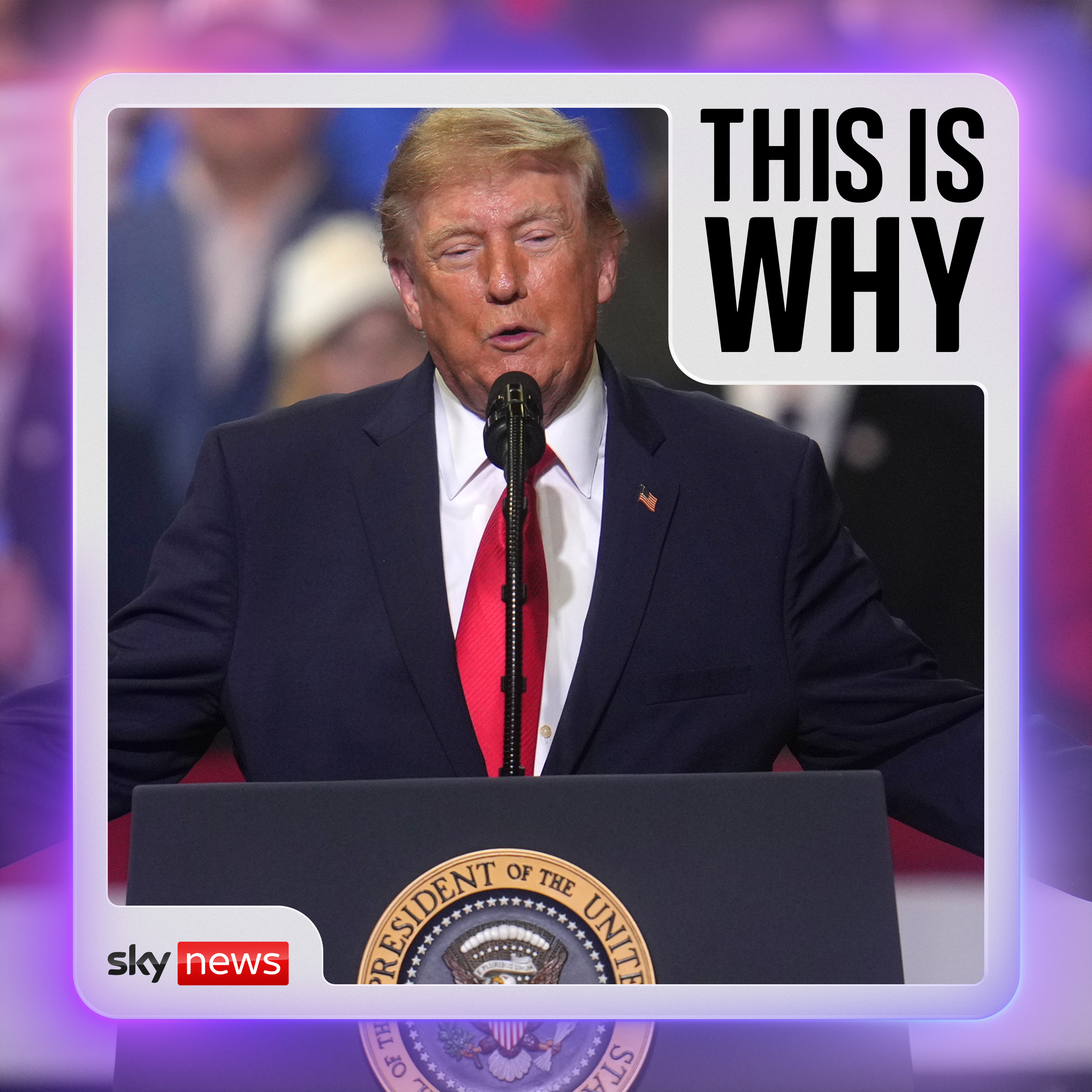
The episode explains why many Ukrainians are angry about Donald Trump’s statements and proposed actions: he says Ukraine needs a new president, claims an “energy ceasefire” is in effect, and has struck a deal with Vladimir Putin to buy Russian diesel.
Danara Halilova, an independent journalist in Dnipro. Background: she describes commuting during wartime, including train delays and evacuations due to potential Russian drone attacks.
Ukrainians view the diesel deal as appeasing Russia and rewarding Putin; they also see Trump’s call for Zelensky’s removal as foreign interference in domestic politics, especially since elections are prohibited under martial law.
her Lviv-to-Dnipro train delayed five hours and evacuated three times; she notes constant sheltering anxiety, disrupted sleep, and fireworks/plane sounds triggering fear.
Written by AI. May contain mistakes.
Discussion on Trump's remarks about Ukraine needing a new president and his deal with Putin.
“I suggest they get a new leader who can make a deal.”
An independent journalist shares her experience of daily life and challenges in Ukraine during the ongoing conflict.
“And we had like three evacuations of the train because of potential Russian drone attacks.”
Discussion on changing perceptions of President Zelensky and the impact of corruption allegations.
“When I saw this news, I wouldn't say I was surprised because I think it's not the first time President Trump has been doing quite controversial things.”
Exploring how the war influences daily activities and mental health of Ukrainians.
“And I think that's the kind of position that Ukrainians don't like and don't agree with.”
Insights into safety measures and the psychological effect of constant threat from attacks.
“My perception of my friends and colleagues, I think, has definitely changed more to the negative side.”
Discussion about the realities of living with constant danger and its impact on sleep and mental well-being.
“the bleeding and to save someone's lives so for example I always have a tourniquet in my bag and I really hope I won't have to use it, but not.”
Explore the challenges faced by Ukrainians living under constant threat.
“It's like, it's not those kinds of bombs that hit the frontline cities.”
Learn how the ongoing conflict is reshaping priorities and life plans in Ukraine.
“I mean, how much room is there for the things that, you know, I would say, you know, are the mainstays, are the reasons to live?”
Understand the acceptance of a long-term war with Russia among Ukrainians.
“And they're now doing it because they feel that like they only have today and like when, if not now, basically.”
Discuss the implications of the narrative around Ukrainian invincibility during the war.
“I'm just learning to live with that fact and like still choosing Ukraine as a place to live because I actually, I have, I'm quite privileged.”

Get the gist, explore an idea or ask about something said.
 Claude
On This Is Why, what are the key points of this episode?
Searching your listeningAutomatic transcript. May contain errors.
0:02Sky News, the full story first.
0:12Donald Trump says Ukraine needs a new president. Ukrainians have other things on their minds. Keeping the lights on, getting some sleep, surviving another winter. And this is why.
0:34You know what I suggest? I suggest they get a new leader who can make a deal. Because he could have made many deals that for some reason he'd ever does. Donald Trump has been making plans for Ukraine. Again. He's declared an energy ceasefire was in effect. Both Russia and Ukraine stopping their attacks on power and fuel facilities. The trouble is, Vladimir Zelensky says he knew nothing about it. And as for Russia, well, they carried on anyway. Trump's also struck a deal with Putin to buy Russian diesel and decided that Ukraine needs a new president. Meanwhile, our guest today has simply been trying to catch public transport.
1:14So my train was delayed for five hours, which is actually not so bad. And we had like three evacuations of the train because of potential Russian drone attacks. So we were just sitting there in the field. If you think about it, it's just crazy, you know. Five hours late, three evacuations, and that counts as not so bad. Now, we regularly cover Ukraine on the podcast, the battles, the tech, the geopolitics, but rarely do we spend much time hearing about the day-to-day, about the business of getting on with life while the war keeps going. With another winter coming, I spoke to independent journalist Danara Halilova in Dnipro to find out how much more Ukrainians can take.
1:57Danan, it's lovely to have you with us on the podcast. There's an awful lot being said right now about Ukraine, and a lot of it coming from, in fact, Donald Trump. He suggests that Ukraine needs a new president at the same time as doing a deal to purchase Russian diesel with Vladimir Putin. How does that land with you? When I saw this news, I wouldn't say I was surprised because I think it's not the first time President Trump has been doing quite controversial things. when it comes to Ukraine. But I would say that I was quite angry and I think a lot of other Ukrainians felt the same. And I also saw it on social media.
2:36There were a lot of posts, not only from Ukrainians, but I think a lot of from Americans as well, saying that this deal doesn't make sense and it's just appeasing Russia and just rewarding Putin for all the authorities his army is doing in Ukraine. and especially this thing about like high fuel prices also kind of doesn't make sense to me because of like America's war was around as well. It's now been discussed a lot in Ukraine. So I think that's very concerning development, I would say. Of course, we both know as well as each other that Donald Trump and Vladimir Zelensky have not always got on.
3:17I mean, I remember that meeting at the White House and the Oval Office, but the fact that he is suggesting directly and obviously that Zelensky needs to be removed as president. I mean, is there anyone in Ukraine who would agree with that right now? I think some people would agree because, of course, the rating of Zelensky is not 100%. Of course, not all people support him. But I don't think, in general, people kind of treated these words seriously because also we know that the elections in Ukraine are prohibited. as long as the martial law is in force. I can't even imagine how we could organize this during the war.
4:00And I think a lot of people kind of already accepted the fact that it's unlikely we will have elections before any ceasefire happens. But I think it's a very actually strange thing to say to an independent country that we need to change our president. So yeah, I think this statement was also angry at a lot of Ukrainians because it feels like he knows better what kind of president we need to have. And I think that's the kind of position that Ukrainians don't like and don't agree with. Yeah, and there can't be many people who enjoy it when another country's leader interferes in your own domestic politics.
4:42But I do wonder how you, your colleagues, your friends, how you talked about Zelensky at the start of the war and how you view him now, how that might have evolved over this period? I think it definitely changed. I'm a journalist, so a lot of my friends are also journalists and also people working in culture, education, these kind of spheres. I would say even most Ukrainians, including this kind of people I'm friends with, were really amazed at how Zelensky handled the situation in 2022 and how actually effective his communication was and his international work. And I think a lot of people were expecting him to just flee the country and kind of give up on Ukraine.
5:26And when it didn't happen, I think a lot of people felt proud and they felt that this is the kind of president we wanted to have when the full-scale invasion just happened. But I think over time, also a lot of problems appeared internal in Ukraine in terms of politics and defense industry and economics. and I think especially after all this investigations into corruption in the government and including those around the president's office, like including basically the friends of Zelensky, long-term friends. Yes, he's the president. I think a lot of people respect him, but we expect him to do more about the corruption and about all the allegations of misconduct in his government.
6:15And I think a lot of people are not satisfied with the way he's dealing with it. My perception of my friends and colleagues, I think, has definitely changed more to the negative side. But again, I don't see how we can have elections now and like replace him. So it's a very complicated issue, I think. Donara, I will be completely honest. We often cover Ukraine on this podcast, but generally it tends to be who is in the ascendancy and the military side, what is happening internationally about the supply of weapons. What we often don't focus on is what everyday life is like for Ukrainians at the current time.
6:55So I'm just wondering, how much of your week is framed by the fact that your nation is at war? How much of your life is in the shadow of this, well, at times seemingly never-ending conflict? Yeah, it's a good question. And I think I would speak for most people living in Ukraine, though I consider myself kind of on a privileged side because my hometown is still free. I have a home. My family is fine. Like, you know, comparatively, I'm not comparing, you know, my situation to thousands of people who love their homes or who live now in frontline areas. But, for example, I just was abroad for like a work trip in Europe and I was going back.
7:39So yesterday I was on a train from Lviv to Dnipro. And now, because of the constant attacks on railway infrastructure and basically targeted attacks on trains, railway travel has been so disrupted. and we have constant delays and we have constant evacuations when we are actually like forced out of the trains and we have to basically find a way to hide from a potential drone attack somewhere in the, I don't know, in the forest or in the field. Like it's just crazy. So my train was delayed for five hours, which is actually not so bad. There has been like even longer delays. And we had like three evacuations of the train because of potential Russian drone attacks.
8:24So we were just sitting there in the field, like, you know, in the greenery somewhere and just waiting for this risk to end. And I think now, like a lot of people have already got used to it. But if you think about it, it's just crazy, you know, shouldn't be like this. And I think trains used to be, for me, I think the safest way to travel in Ukraine. And now it's really actually horrifying. You know, we in this country know a thing or two about delays when it comes to train journeys, but it's usually because of a signaling error at Croydon, rather than the fact that the Russians are about to try and blow up the train.
9:04So I suppose what I'm trying to get at is, you know, everyday life is continuing in Ukraine. People are going shopping, people are going out, but there is what, always a little voice in the back of your head telling you you need to be a little bit careful. Yes, exactly. I mean, I think it's just, you know, already kind of a constant mode and very like looking for any risk and any possible danger. And that's actually what is very noticeable when I go abroad, because there I react to every single, you know, like unexpected noise with like a flinch. And, you know, like I really understand how traumatized I am only when I'm going abroad.
9:42Give me an example of that. When I go abroad, every time I'm like a little bit tense when I see planes in the sky. because we don't have planes now in Ukraine and all this like traces in the sky. If you see it in Ukraine, it means a missile has been shot down or a drone. Also, any kind of like gathering of people puts me in this like very tense reaction because for me now gatherings mean potential danger because if there are more people, more people could be, you know, wounded or dead in the attack. Fireworks are the worst, actually. Fireworks are the worst. Yeah, and I've been a couple years ago in the UK for this holiday.
10:27I'm sorry, I forgot the name. Bonfire night. Yes, yes. And it was just horrible. I was sitting at home just waiting for it to end. And I could only imagine how refugee Ukrainians who fled the frontline areas felt abroad when they hear fireworks. It's just horrible. So, and I think all this like small kind of everyday things show how much the war has affected us, especially now because Russia has intensified attacks in the daytime. So, it's not just, you know, overnight attacks. And now you just have to be careful constantly when you're like commuting to work or just walking, I don't know, to your gym or to a cafe, like sitting in a cafe with your friends.
11:12because all of these things are still happening. We're still living normal lives, but of course they're not normal and we have to always be very alert. Sometimes even when I sit somewhere in a new place, I always check surroundings and I try to think where it would be better to hide if there is an attack because I understand there should be no glass. it should be somewhere like two balls before the street a lot of rules how to do it properly and how you should lie down how like you know all this and I just constantly repeating all these rules in my head not to forget them as well a lot of people now have like tourniquets in their bags these things that help you to stop the bleeding and to save someone's lives so for example I always have a tourniquet in my bag and I really hope I won't have to use it, but not.
12:14I mean, how often are you and your friends heading to the shelters? Yeah, it really depends on where I am because also not everywhere we have sufficient shelters. Like, for example, I live in Dnipro and I live on the outskirts and we don't have any shelters here. so for me the only way to you know to shelter is to go to a room in my house doesn't have any windows or to like a basement but it's also like not a proper shelter and a lot of people in kiev also struggle with this because for this number of people and this dense population they also don't have enough shelters and for a lot of people the only shelter is the metro station but for example they have to walk there like 20 minutes and if if it's a ballistic missiles they reach Kyiv in several minutes.
13:05So you don't have, actually, you don't have the time to go to shelter. And even sometimes it's even safer to stay inside, especially if it's a ballistic attack. But in Kyiv, I think, like my friends, they go to either like proper shelters or just, you know, to some places in their house. They consider shelters like almost every day because of how constant this jet-powered drone attacks have become in Kyiv like for the last in the last couple months. Even that must have an effect on people. The idea that you will never have more than a couple of hours of uninterrupted sleep, that must actually genuinely have real physical and mental impacts.
13:48Definitely. I mean, I feel it myself. I think generally like mental health of people around me has really deteriorated and physical as well. I mean, just this night I woke up because of like several modified Russian aerial bombs hitting the city. It's like, it's not those kinds of bombs that hit the frontline cities. It's kind of like modified bombs slash missiles that have been like using recently, I think testing them in the Dnepro area. So I woke up because of that. and I also couldn't fall back asleep for two hours because I was very anxious because of this and I think that's the reality of most people in cities that are regularly targeted by missiles or drones so yeah, your sleep is constantly interrupted but you're supposed to do the same things that all the other people are doing in their peaceful countries, you're supposed to have a career, you're supposed to work, you're supposed to care for yourself and your family, I don't know, like be a useful part of the society and so on.
14:56How does that work, Dinara? I mean, how much room is there when your country is at war with Russia, of all things? I mean, how much room is there for the things that, you know, I would say, you know, are the mainstays, are the reasons to live? You know, making plans, meeting your friends. Did I even say falling in love? oh yeah that's a very you know also a complicated question because i feel that in the first couple of years of the full-scale invasion people were mostly waiting for it to end and they believed that the work would be over soon so they kind of like postponed their like big plans for the life and for the family for the career until like the better times and there was like always this talk of like yeah we're gonna do it later we're gonna do it when the war ends but i think now like in the last uh couple of years of the war uh people just switched to to this like mentality that we have to leave right now because like tomorrow is not guaranteed like we maybe we won't have tomorrow and i think more people are like uh deciding to have a child or i don't know to buy house or to change their career or to maybe, I don't know, make their dream come true that have been always dreaming about.
16:17And they're now doing it because they feel that like they only have today and like when, if not now, basically.
16:36have you found yourself changing were you in that group of people who thought you know what first couple of years there's going to be an end to this war are you now in the category that you know we don't know when this is going to end so it's get busy living or get busy dying i would say i I also have had the same kind of change in my mentality and my perception of the war. I think I've been just trying to accept this horrible, horrible fact that the war, in general, not this stage of the war, but the war with Russia in general, might not be over while I'm still alive. Because I generally think Russia will try to attack over and over again if nothing changes inside Russia.
17:21You think it is perfectly possible there could be some level of conflict, some level of war between Ukraine and Russia for decades to come? Yeah, I think so, because we've seen it in the history that I think just like Russia is constantly in wars to protect its own government and its own regime. And while the regime is still there and it's still the same, and I don't think actually Putin is the only one responsible because it's not just Putin. He just embodies all these imperialistic views of Russians. and I think as long as this regime is there we will have a risk of them invading us again because we are their neighbors and they have always been hating us so I think I've just been accepting this reality that yes, this stage of the war will end and it must end there will be some kind of ceasefire but after this ceasefire if Russia is not stopped and the regime is still the same and the West doesn't put enough pressure on it and it can rebuild its industry they will attack again and it will start all over again.
18:26So I think I'm just, you know, I'm just learning to live with that fact and like still choosing Ukraine as a place to live because I actually, I have, I'm quite privileged. I have an opportunity to live abroad. My part of my family now lives abroad because of the war, but I don't want to. And I want to stay in Ukraine. That's why I've been kind of learned to accept certain things in life, including a chance to, you know, to die at any moment, basically. Do you still detect the same willingness to fight Russia amongst your fellow Ukrainians that there was at the beginning of this conflict? I really don't like now when people use this word like invincibility a lot, and like talking about invincible Ukrainians, like just surviving no matter what.
19:19because yes though it's true but it's also it feels like you know it feels like a reason to abandon us it's like oh if you're so invincible then like you don't need help and then you will survive no matter what but i also don't think it's guaranteed because we are just humans and our like resources are limited and the longer it goes on the harder toll it is on us most ukrainians still ready to endure whatever this war means not to give up not to give up more of our territories which is showing incredible strengths of moral strengths but also we really need help we're not just invincible godly creatures, we're just humans and we just don't have any other choice Well, Donara, it's been great to talk to you.
20:17Thanks so much for taking the time and do stay safe. Thank you for having me. And that's your lot for today. But do remember to let us know your thoughts. Where does Ukraine go next? What chance of any presidential elections? And what on earth is Trump up to? Why at Sky.uk for your feedback. We're here again tomorrow.
Donald Trump just loves a long-running feud, and in recent days he’s returned to an old favourite.
America’s mudslinger-in-chief is calling for Ukraine’s wartime president Volodymyr Zelenskyy to be replaced – after he criticised the US diesel deal with Russia.
But as Vladimir Putin’s war rages on, elections are perhaps the last thing on the minds of Ukrainians. So, how do people in the war-torn country really feel about Zelenskyy? And what is the reality of everyday life following more than four years of conflict?
Niall Paterson speaks to Ukrainian independent journalist Dinara Khalilova about the ongoing trauma being inflicted on the country’s people.


