
 Ask ChatGPT



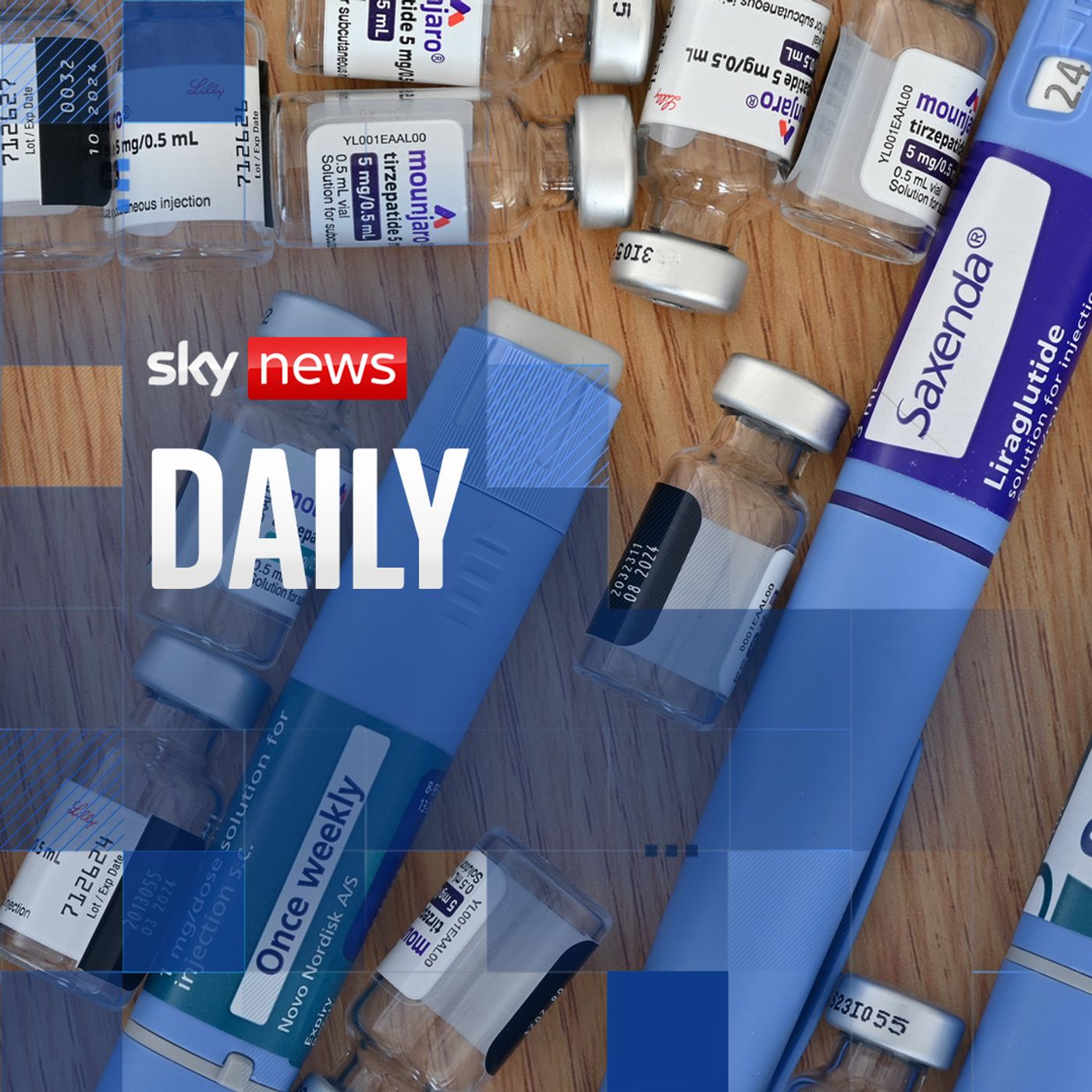
Sky News Daily discusses whether weight-loss “jabs” (GLP-1 drugs such as Mounjaro/Munjaro and Wegovy/Ozempic) are a “wonder drug” or carry serious risks, focusing on a regulator-linked signal for pancreatitis.
Lorna, a former entertainer and businesswoman (dancer/performer/fire eater in Marbella and Ibiza) who developed acute pancreatitis after private weight-loss injections; Thomas Moore, Sky News science correspondent.
MHRA data links these drugs to pancreatitis inflammation of the pancreas; pancreatitis can cause severe pain and, in acute cases, death. MHRA says it’s not proving the drugs “cause” pancreatitis, but is investigating and asking for more Yellow Card reports.
Lorna reports sudden severe stomach pain, hospital treatment for five days, gallbladder removal, and long-term digestive problems. MHRA figures cited: 181 pancreatitis cases with Mounjaro and 5 deaths; 113 cases with Wegovy/Ozempic and 1 death. General population rate cited: ~560 cases per million annually, commonly from gallstones and alcohol.
Written by AI. May contain mistakes.
Discussion about the prevalence and concerns surrounding weight loss jabs.
“Coming up on the Sky News Daily with me, Neil Patterson.”
Lorna shares her experience with weight loss drugs and the pain she suffered.
“with our science correspondent Thomas Moore.”
Lorna discusses long-term health effects and her recommendations against the drugs.
“But then just as quickly things changed.”
Thomas Moore provides insights on pancreatitis and its relation to weight loss drugs.
“Okay so let's turn now to our science correspondent Thomas Moore.”
Discussion on the risks and benefits of weight loss drugs based on expert insights.
“Okay Thomas just run us through then pancreatitis what exactly is it inflammation of the pancreas but it can prove fatal in some circumstances.”
Examination of societal views on weight loss drugs and their accessibility.
“So in light of this data from the MHRA, what is the advice from the regulator itself, from the drugs manufacturers, from the GPs, and of course from Professor Thomas Moore himself?”
Learn about the financial impact and accessibility of weight loss injections.
“people these are really expensive over 100 pounds a month that is within the means for others and And they are seizing that.”

Get the gist, explore an idea or ask about something said.
 Claude
On This Is Why, what are the key points of this episode?
Searching your listeningAutomatic transcript. May contain errors.
0:00I'm Adele Robinson, a correspondent for Sky News, and I wanted to give you a recommendation for when you finish this podcast. I've made a documentary for YouTube called The Calm, Online, Sadistic and Deadly. It takes a look inside one of the darkest corners of the internet and the disturbing community that exists there, exploring how young people can be drawn into it and the devastating consequences that can follow. It's a story that's difficult to hear, but one I think is really important to understand. You can find The Calm on the Sky News app, website and YouTube channel.
0:30Thomas Moore: Coming up on the Sky News Daily with me, Neil Patterson. Wonder drug or malign medicine? A link's been shown between weight loss jabs and pancreatitis, a potentially fatal condition. So what does that mean for you? I'm Adele Robinson, a correspondent for Sky News, and I wanted to give you a recommendation for when you finish this podcast. I've made a documentary for YouTube called The Comm, Online, Sadistic and Deadly. It takes a look inside one of the darkest corners of the internet and the disturbing community that exists there, exploring how young people can be drawn into it and the devastating consequences that can follow.
1:04It's a story that's difficult to hear, but one I think is really important to understand. You can find The Calm on the Sky News app, website and YouTube channel.
1:14Thomas Moore: Weight loss drugs, they are everywhere these days. I mean, if you're not on them, you'll probably know someone who is, either to shed a few pounds or for their original purpose, of course, treating diabetes. all of which makes the warning from the regulator a bit of a concern. The Medicines and Healthcare Regulatory Agency, the MHRA well they've published data linking the jabs to pancreatitis inflammation in essence of the pancreas. That can cause severe pain and in rare cases death. So in a little bit we're going to get the medical perspective with our science correspondent Thomas Moore. But we're going to start the podcast today with Lorna.
1:52Thomas Moore: She's a former entertainer and a businesswoman. I used to be a dancer and a performer and a fire eater and I used to dance in Marbella, Ibiza and obviously having children in my 30s meant that the weight went on. I didn't do all the exercise anymore. I became a mum. Hormones, age and the weight just piled on. The weight gain was affecting my confidence, it was affecting my mental health, it was making me feel unattractive. So, you know, I was just desperate to lose weight. Lana contacted her GP who said her BMI, her body mass index, wasn't high enough for weight loss drugs on the NHS. So, like many others, she contacted a doctor online and went private.
2:36Thomas Moore: And initially, the drugs did exactly what they said in the tin. The weight did come off. I was losing sort of three to four pound a week. And I think in four to five, six weeks, I'd already lost my first stone. So I was actually really happy with the results. And I didn't feel like there was any side effects at all. you know I felt amazing. But then just as quickly things changed. I went to bed absolutely fine completely normal and then two o 'clock in the morning I just woke up with horrendous pain in my stomach. It was like someone who just stabbed me in my stomach and it came from absolutely nowhere.
3:13I literally went to the bathroom and I collapsed on the bathroom floor and it came in waves every 10 minutes for sort of like four hours and it got to five o 'clock in the morning and I had to ring 999 and obviously get help because at this point honestly I was in so much pain I was crying I was sweating I was being sick and I had no idea what it was.
3:36Thomas Moore: Lorna was found to have acute pancreatitis she was treated in hospital for five days but continued to live with the effects for a long time afterwards. This carried on even after I came out of hospital it carried on for another couple of months where I was completely bedridden and then they did do a scan and they did end up removing my gallbladder to prevent any further pancreas attacks so the whole thing from start to finish was six to nine months of being in you know a disabled position where you You can't move, you can't drive, you can't, you know, go out anywhere. And then not only that, it also affects you because when they remove your gallbladder and it affects your pancreas, it then affects your digestive system.
4:24So my digestive system now to this day doesn't work. I've got to look at everything I eat now. It's caused a long-term medical, you know, health problem for me, which is worse than being overweight or obese, in my opinion.
4:39Thomas Moore: Now she certainly wouldn't recommend anyone ever taking them. And I'm constantly going around saying don't do it, it's just not worth it. It's not worth that risk, it's not worth doing something that affects your bodily functions that work. You're damaging something that you need and giving yourself long term medical problems. Okay so let's turn now to our science correspondent Thomas Moore. I mean, Thomas, look, listening to Lorna there, she's clearly very concerned. She's clearly in an awful lot of pain. And she believes that the drugs did lead directly to her pancreatitis. So what are the experts saying?
5:21Thomas Moore: What's the MHRA saying? There's something called the Yellow Card Reporting System here in the UK. So any health professional and even patients themselves, if they develop something odd while they're taking a drug, they can fill out this form and send it into the MHRA. and they collect that data so they can spot trends particularly on drugs which are new with clinical trials they might have been tested on just a few thousand before they get their drugs licensed and sent out into the wider world but it's then that you start getting hundreds of thousands or in the case of these weight loss drugs many millions of people taking the drugs so rarer side effects can crop up and indeed you have a good idea on what the risk is of side effects when you are taking them.
6:04Thomas Moore: So let's just be absolutely clear here, the MHRA is not at the point of saying weight loss jabs cause pancreatitis? Very much not. We know that these are being linked to this inflammation of the pancreas. There is something there that they're noting, they want to take a closer look at it, they're asking more people to make these yellow card reports and tell them if they are developing not just symptoms of pancreatitis but any potential side effect while taking these medications because they are still relatively new they are very powerful and with every strong drug there are likely to be the potential of side effects.
6:47Thomas Moore: Okay Thomas just run us through then pancreatitis what exactly is it inflammation of the pancreas but it can prove fatal in some circumstances. Yeah that's right so the pancreas is the the organ that releases insulin. We know these drugs do target the pancreas and with pancreatitis that is an inflammation within the pancreas and that you start by developing a very sharp severe pain in the centre of your stomach. It can radiate round to the back. You can get symptoms like a fever and so on and you do end up going to hospital. Now some people do develop acute pancreatitis. This is a very sudden onset, very sharp, and about 5 % of people will sadly die.
7:33Many others, they just need oxygen and fluids and they will recover on their own. But other than that, there is no specific treatment for pancreatitis, but they do need to start a supportive treatment to make sure that they're under medical care as soon as possible. So they need to go to hospital.
7:49Thomas Moore: So clearly a condition that all of us would wish to avoid if at all possible. So what is the data saying about this, in inverted commas, link between weight loss jabs, diabetes drugs and pancreatitis? What figures do we have? So the data shows that there have been 181 people developing pancreatitis while also taking Munjaro and five of those people have died. With Wegovi and Azempic, they're the same active ingredient in those ones used for treating type 2 diabetes and one is for for weight loss but there have been 113 cases of pancreatitis and and one death so these are relatively small numbers for the well over a million people within the UK who are now taking these drugs but nevertheless they are significant enough for the medical regulator to look further to see whether there is some way that they might be able to reduce that risk.
8:50Thomas Moore: Yeah and I'm assuming the medical regulator will also be looking at what the prevalence is of pancreatitis amongst people in the general population who haven't been taking these drugs. I mean do we know that? And that's a really important point to make Neil because there are people who aren't taking these drugs who do develop it every year. So the rate is about 560 cases of pancreatitis per one million of the population. So the most common cause is gallstones. They account for about 50 % of those cases and alcohol accounts for about another quarter. So it does happen completely unrelated to these obesity drugs.
9:27Thomas Moore: It suggests to me, Thomas, that there is reason for concern but not out and out panic, at least while the MHRA and others are doing their work. But already we are hearing from the medical professionals that they think that these side effects can be ameliorated, can be reduced? Yeah, look, I mean, this side effect did come up in the clinical trials at a rate of about one in a hundred, something like that. And it's now that it's gone into wider use that they're really beginning to bottom out those figures. They do stand up. So this is something that we're looking for. And it's possible that these are having an impact on the pancreas that you don't want to happen.
10:06And that's why the MHRA, the medical regulator, is collaborating with another part of the NHS called Genomics England. And they're the ones that do an awful lot of the genetic testing. So they're looking at the genes of people who are developing this huge issue while on these weight loss drugs to see if they do have genes that make it more likely they will develop this issue and that might mean that some people in future might told that maybe you shouldn't take these drugs or maybe you should try a different drug if there's a difference between Minjaro and Wegovy for example or indeed some of the new ones which are coming down the track.
10:45So they're trying to shape the prescribing to account for this risk because they know the benefits of taking them for some people are extremely strong but they do want to reduce any potential risks that they can.
10:57Thomas Moore: So in light of this data from the MHRA, what is the advice from the regulator itself, from the drugs manufacturers, from the GPs, and of course from Professor Thomas Moore himself? On all of those, it would be to stick to the reason that these drugs have been licensed, that they have been shown to be beneficial and safe in people with high obesity. We're not talking just a few pounds overweight, we're talking about people who are living with obesity who have tried are the ways of losing weight and have failed. They are transformational in those situations. They lead to very rapid weight loss of about 15 to 20 % of body weight within a matter of months with all the health benefits that come with that.
11:40For people with type 2 diabetes it reduces the blood sugar levels and indeed independent of all that there is research showing that it not only reduces the risk of heart disease, cardiovascular disease by 20%, but it also reduces deaths from cardiovascular disease by 20%. These are profoundly powerful drugs that can be transformational for some people, but there's not something to dabble in if you don't need them.
12:09Thomas Moore: Okay, but just in terms of, you know, mass prescription of anything, and we saw this with the COVID vaccinations. In fact, you and I've talked about it in the podcast in the past. I mean, isn't it just a simple truth, Thomas, that when you have any form of pharmaceutical, any form of medication, they will come with the risk of side effects. And when you have mass prescriptions such as this, you are going to see it in the wild. Yes, and it is a balance of risk and benefit with all medicines. And you don't want to take something that might have a risk of serious side effects if the benefits for you are not that great.
12:43And that really comes down to a distinction of how overweight you really are.
12:49Thomas Moore: Well, of course, Thomas, we have been speaking to the drugs companies that produce these jabs in the UK and of course they say patient safety is their top priority whilst acknowledging that all drugs have side effects but their advice is pretty clear speak to medical professionals before and during taking these drugs as they can advise on potential risks but do you think people will and do you think people might even think twice about taking this quick fix this wonder drug that they see that allows them to shed pounds without the effort really yeah in many ways these drugs have kind of made that leap at the school gate haven't they where they're kind of getting over that shame of of being on on medication for something like this people do want to look their best and to a certain degree we do live in that world where celebrities want to be the slimmest possible selves on the on the red carpet we all want what they want and that's that's the way that these drugs have wormed their way into into society and of course the easy access of these medications from some online pharmacies where they're not doing the kind of good checks that should be done before people prescribe these drugs then you can see how access is there and people are seizing it because although for many people these are really expensive over 100 pounds a month that is within the means for others and And they are seizing that.
14:14Thomas Moore: Thomas, thanks very much. And as always, if you like what you have heard, give The Daily a follow. It should be just a click on your podcast or your audio app. We're back again tomorrow.
14:28Online sadistic groups are targeting vulnerable children. The sheer amount of potential victims is astounding. It's a very real threat, and it is here in the UK. It will always shock me. A young boy could commit such awful offences. Some of the content has been the worst I've ever seen. Parents need to be aware of what can happen on these sites. Find The Calm on Sky News YouTube.


