
In short
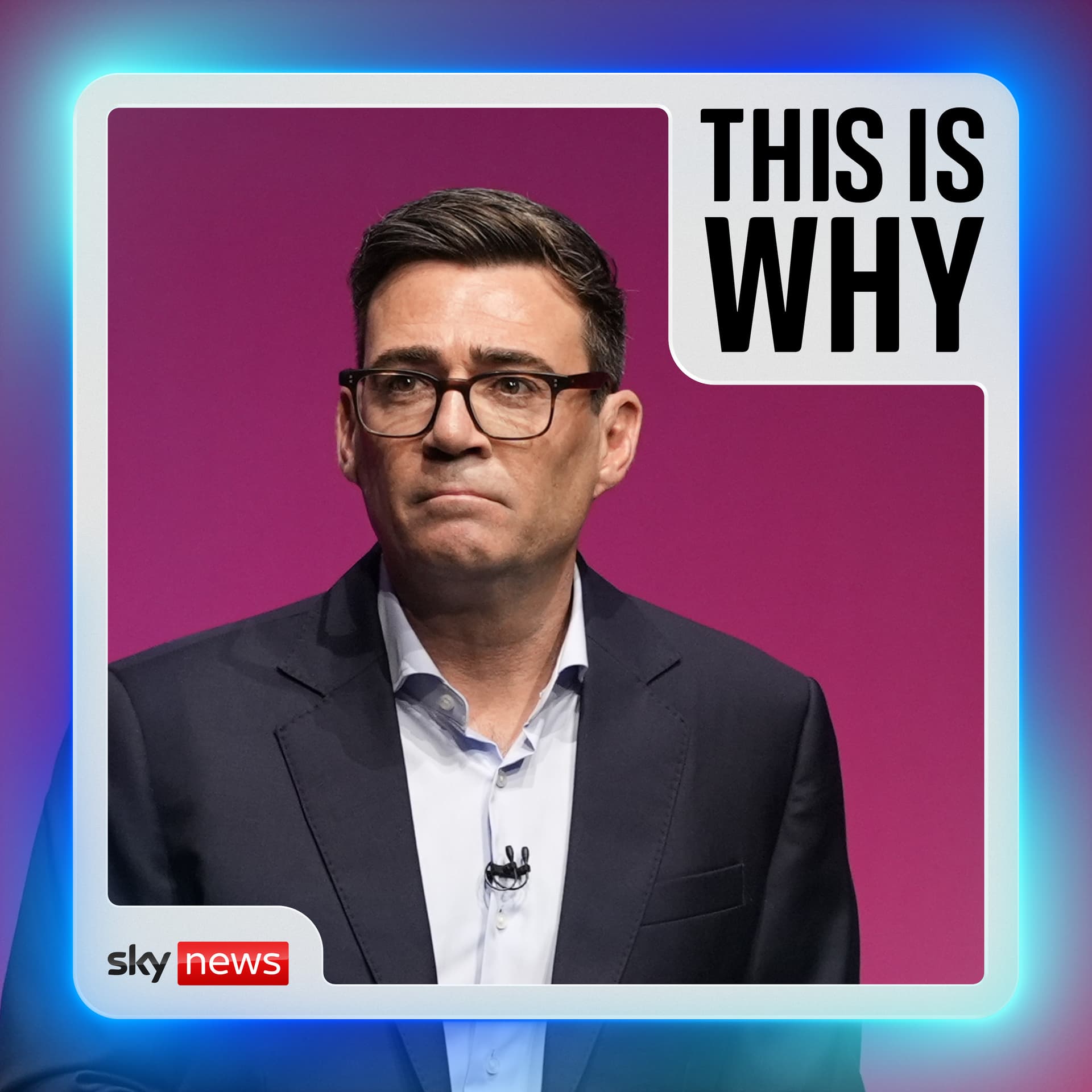
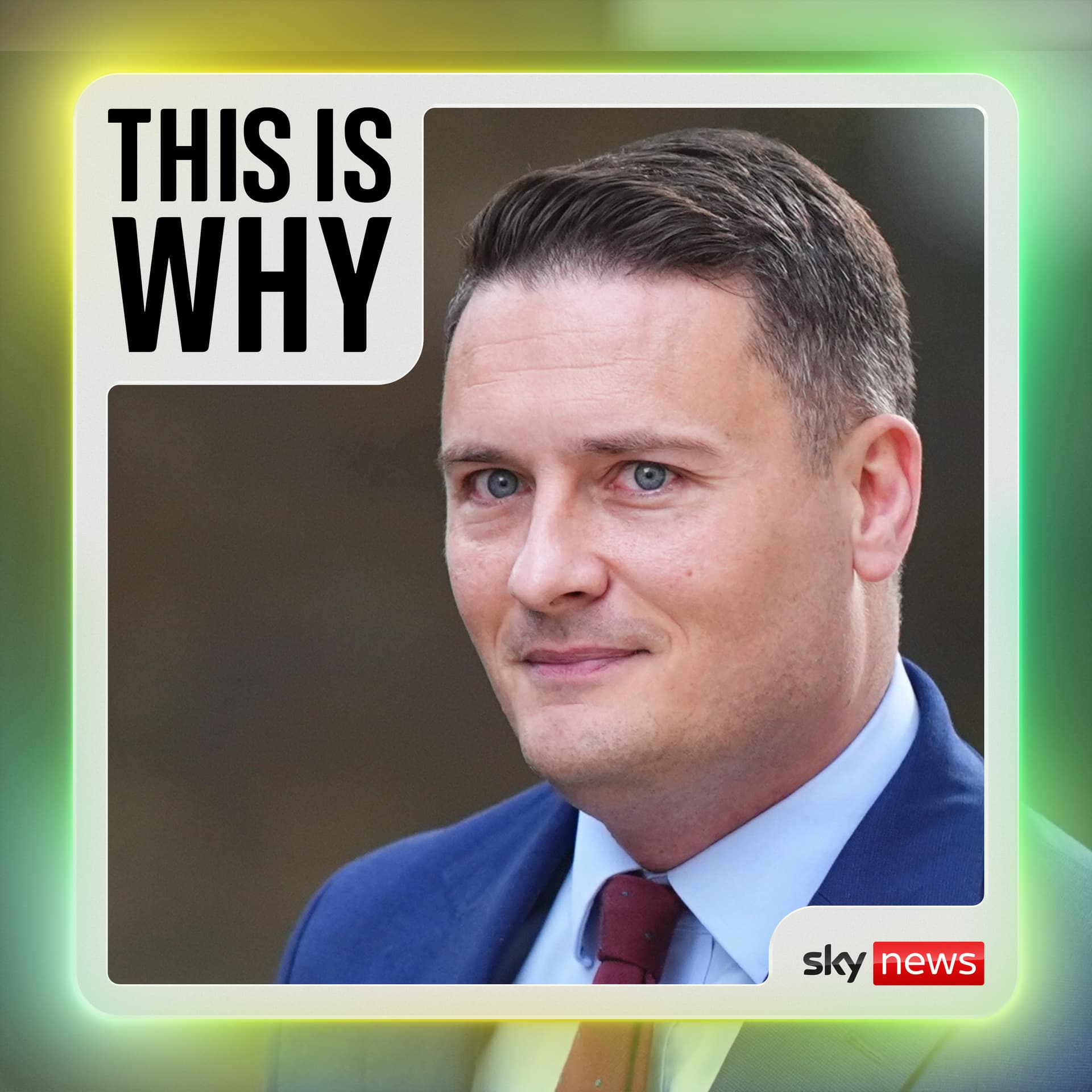
Wes Streeting’s resignation as UK health secretary, and the claim he’s prioritising ambition over the national interest rather than challenging PM Keir Starmer’s leadership. The episode argues he avoided triggering a leadership contest to dodge “opportunist” accusations, while positioning himself to back Andy Burnham later.
Guests
Rob Powell, Sky News political correspondent; Ashish Joshi, health correspondent (contributor segment); Neil and Luke are hosts (Sam Coates and Anne McElvoy are referenced as hosts).
Key claims
Streeting’s two-page resignation letter criticises Starmer’s premiership but does not announce a leadership challenge; allies say he has the 81 names needed. His ambition is questioned due to long-standing PM aspirations and links to Peter Mandelson.
Notable examples
resident doctor strikes and NHS policy churn (Darsight Review, Cancer Plan, abolition of NHS England, Maternity Task Force, HIV Transmissions Plan, Women’s Health Strategy); puberty blockers decision; WhatsApp messages with Mandelson.
Written by AI. May contain mistakes. Listen to the episode to check what was said.
Chapters
Tap a time to open that second in VOWes Streeting's Resignation and Ambition
0:42 to 4:15
Discussion about Wes Streeting's resignation and the implications of his ambitions.
“Hi everyone, Neil here and Luke, just for clarity, we are recording this late Thursday afternoon.”
Wes Streeting's Background and Rise
4:15 to 6:28
Exploring Wes Streeting's background, career path, and motivations.
“And now he sees an opportunity to do it.”
Divisive Perceptions of Streeting
6:28 to 8:11
Analyzing how different factions within the Labour Party view Wes Streeting.
“So that part of him, you know, you could look at all that and go, wow, he's the real deal.”
Streeting's Political Strategy and Challenges
8:11 to 10:28
Discussion on Wes Streeting's political strategies and the challenges he faces.
“So for them, he sort of represents almost everything that they dislike about Keir Starmer as prime minister and more.”
Streeting's Health Brief and Criticism
10:28 to 14:00
Examination of Wes Streeting's role in health policy and the criticisms he faces.
“You know, we've got a prime minister who is now routinely derided for mentioning the fact that his father was a toolmaker.”
Strikes and Doctor Relations
14:00 to 14:30
Discussion on the impact of strikes settled by Wes Streeting and the ensuing doctor relations.
“You're right about strikes as well, resident doctors.”
Political Ambitions and Criticisms
14:30 to 15:30
Analyzing Wes Streeting's political tactics and his standing within Labour.
“There was the decision he made over puberty blockers as well, which plays into the huge, quite vicious debate over trans too.”
Leadership Contest Dynamics
15:30 to 16:50
Exploration of West Streeting's chances in a potential leadership contest against Keir Starmer.
“And do you take the fight to reform by calling them some kind of evil English nationalist party?”
Streeting's Political Positioning
16:50 to 18:14
Discussion on West Streeting's political positioning and the implications for Labour's future.
“And I think if there is a left-wing candidate on the ticket, he's going to find it very hard.”
Wes Streeting and Identity
18:14 to 19:30
Considering Wes Streeting's identity and its implications for leadership.
“your pitch is probably that it is too much of a risk to kind of roll the dice on someone that has a very different vision of how the government and how the economy should be run.”
Show all 12 chapters
Critiques of Streeting's Leadership Aspirations
19:30 to 21:09
Criticism of the potential effectiveness of Wes Streeting as a Labour leader.
“The fact that in a few days, weeks time, we could have our first openly gay man running the country.”
Potential Upsides of Streeting
21:09 to 22:22
Analyzing the potential benefits of Wes Streeting's leadership style and approach.
“And then the second one, which I think is the unknown, but it goes to what we're talking about in his record as health secretary, is whether as prime minister, he is someone that can actually make things happen.”
Transcript
Automatic transcript. May contain errors.0:02Wes Streeting has resigned from government, but he hasn't challenged the Prime Minister for the leadership. This is why.
0:30So you start your morning fully brief for the day ahead in British politics.
0:34Rob Powell:Hit follow and listen to politics at Sam and Anne's wherever you get your podcasts.
0:42Hi everyone, Neil here and Luke, just for clarity, we are recording this late Thursday afternoon. There are a lot of things moving right now. But for reasons which will be clear to many of you already, we are going to be taking a closer look at One West Streeting. Of course, he's the man Keir Starmer trusted to turn the NHS around as health secretary. But there's always been a lingering suspicion that Streeting's ultimate ambition was to be Prime Minister.
1:07Rob Powell:But you do want the top job one day, don't you? I'll get lost. This is like, I find this, anyway, it's such a redundant, irrelevant question. Well, it certainly seems like he's had a change of heart. Around 1pm, he published a letter he'd written to the PM saying he'd lost confidence in Starmer's leadership and was therefore resigning as health secretary. His allies have been briefing that he's ready to lead, which is the one thing Streeting hasn't said. So what's going on? And what do we actually know about the man himself? Our political correspondent, Rob Powell, is back on the pod. Rob, you know, whenever you and I sit down to discuss matters political, I always come in with briefing notes galore, questions on sheets of paper, as long as my arm.
1:51Today I've just come in with a letter, a resignation letter and a corker of a resignation. Yeah, exactly. You want to walk us through this? Because although we were expecting it, we didn't know what the tone was going to be.
2:00Rob Powell:Yeah, it's more than just a blow everything up, resign, start a leadership challenge. It's long, two A4 pages in it where Streeting says that he told Keir Starmer yesterday that he had lost confidence in his leadership. And then it essentially goes through in quite brutal, grisly fashion, all the reasons why he thinks that Keir Starmer can't be prime minister anymore. Talking about where we need vision, we have a vacuum, where we need direction, we have drift. So it is all the criticisms that have been levelled at Sir Keir Starmer, you know, most obviously in months gone by by the opposition, but increasingly in the last week by those within his party, distilled down into a pretty lacerating letter taking apart the premiership of the man that brought West Streeting into his cabinet in the first place.
2:54Lacerating it may well be, but I'm having a closer look at it. And I can't find the paragraph in the letter, Rob, where he announces that he's going to challenge him for the leadership of the party and the position of prime minister. It's not there.
3:05Rob Powell:It's not there. And allies of West Street are making very clear to us today that that is on purpose. It's not just been missed out, that he is not triggering a leadership challenge. And I would say arguably the most important paragraph of the letter is the last but one where he talks about how what needs to come next is a battle of ideas, not of personalities. It needs to be broad and it needs the best possible field of candidates. Now, that's interesting because up until now, you have had West Streeting allies going over the top and resigning and saying we need a rapid contest. Now, what that was code for was not Andy Burnham.
3:44Rob Powell:We want a rapid contest where Wes Streeting can stand. Andy Burnham can't because we all know that Andy Burnham would probably beat Wes Streeting in a contest. And I think the kind of catch 22 that Wes Streeting has got himself into in the last day or two, which is why we have ended up with this letter. And it is why we have had a day or two, I think, of him not going over the top is because the biggest criticism politically of Wes Streeting is that basically he's putting personal ambition over the national interest of the country. That he's someone that has wanted this job forever. And now he sees an opportunity to do it.
4:19Rob Powell:So he's basically going to blow the government up in a bid to get it. to avoid that accusation, he doesn't want to be seen as the one that blows this up and triggers a leadership contest. That's why he hasn't done it now. He basically wants someone else to do it, or he wants the prime minister to stand down, because he knows that if he does it, everyone will just accuse him basically of being a complete opportunist. The other thing that's quite clever about that paragraph, and I think this is where you get into the realms of seeing this letter, not as something that comes from a place of strength, but actually something that comes from a place of relative weakness, is that it does give him an off-ramp to basically back Andy Burnham.
4:57Rob Powell:He has basically said, rather than trying to, as many people would see it, stitch it up in the short term and block Andy Burnham out of it, he's saying we need people like Andy Burnham in this leadership election. I'm sure he will fight this tooth and nail, but in the back of his mind, he must know that the polling among the Labour membership puts Andy Burnham way, way, way above him. And there may well be a time in the weeks and months ahead where fighting Andy Burnham, he might reach the conclusion that he can't do it. And actually, maybe he would quite like to keep a cabinet job. So this gives him a way to fall in behind Andy Burnham without looking like he's blowing everything up and just trying to seize the top job himself.
5:33Rob, let's just try and work out exactly how we got here, or rather how Wes Streeting got here. And where's he from originally?
5:40Rob Powell:I grew up in the East End of London, Tower Hamlets, Stepney, on a council estate. So, you know, he did grow up in poverty. He's written quite a long memoir that I've started reading in the last few days of preparation for this. So look, he has got a pretty compelling backstory. The first of his family to graduate from university, he went to Cambridge University, was head of the student union, president of the student union there. He moved on to be president of the National Union of Students as well. He doesn't have a sort of gilded, easy route into politics. He has overcome massive challenges before.
6:15Rob Powell:He's written as well about how a few years ago he was diagnosed with kidney cancer when he was only 38. And that was a big motivating factor towards him in his politics, but also in how he told his story. So that part of him, you know, you could look at all that and go, wow, he's the real deal. I think what makes people more suspicious of him, though, is that he has never been shy about his ambitions. There's a brilliant clip that circulates online quite a bit when MPs were being asked in 2018 who they want to see as prime minister in 10 years time. He's the last person on it. And he sort of grins and says, probably me.
6:50Rob Powell:That kind of soaring ambition has always been there, which is why people viewed him with a little bit of suspicion. There is also, I think, among the left, they see him as latest polished incarnation of Blair era politics. He is on the right of the Labour Party. You wouldn't put him alongside the kind of factions that are coalescing around people like Andy Burnham or Angela Rayner or Ed Miliband. He is very firmly on the right. I think that's why people see him as a sort of continuation of the kind of Morgan McSweeney-esque political dynasty. Morgan McSweeney, Keir Starmer's former chief of staff, out in his ears because of the whole Mandelson fraggle.
7:26But the interesting thing, of course, about that is whose pals with Peter Mandelson? None other than Wes Streeting.
7:33Rob Powell:Yeah. And I mean, you sense that he knew that was a weak point and he was trying to get in ahead of it and get in ahead of the Mandelson files being released by proactively releasing his own WhatsApp messages between him and Peter Mandelson to try and kind of put some distance between him and Peter Mandelson. But look, on the left of the party, the types of people that desperately want Andy Burnham back but are looking at Angela Rayner and Ed Miliband if he isn't able to get back, they view Wes Streeting with absolute disdain. There has been briefings saying that if West Streeting triggered a leadership contest in the short term and won it, then MPs from the left would attempt to bring him down as prime minister.
8:11Rob Powell:So for them, he sort of represents almost everything that they dislike about Keir Starmer as prime minister and more. I think they see him as more polished, more of a politician than Keir Starmer ever was. And also, I don't think they feel like they can defend him on the basis that they can with Keir Starmer of going, he was a human rights lawyer. This is what motivates him. I don't think they even have that amount of faith in West Streeting. So look, he is a divisive politician. For those in other parts of the party, though, you know, they see him as basically able to communicate what Labour stands for and what this Labour government's mission would be in a way that is far, far more compelling.
8:48That is one of his absolutely, undoubtedly, a pretty broad range of tools that he has at his disposal. It is his ability as a communicator to get the message across that I think perhaps has kept large chunks of the left of the Labour movement, if not necessarily on his side, then not directly opposed to.
9:04Rob Powell:When you're faced with someone like Nigel Farage, you feel like you want to have someone that can potentially take the fight to him in a better way than Sir Keir Starmer can. I mean, I think there's a difficulty there in that by appointing someone like Wes Streeting, if Wes Streeting became PM, the criticism of that in terms of the fight with Farage is that you have got basically another man from the south, from London, to try and defend against Nigel Farage in traditional Labour constituencies in the Midlands and north of England, which are turning rapidly to reform. And you've also got someone, and this is the sort of, you know, the accusation that comes from backers of people like Andy Burnham and Angela Rayner.
9:39Rob Powell:You've got someone that looks more like, looks too much like a politician. You know, I saw it pitched by someone online earlier that there is no criticism of Keir Starmer to which the answer is West Streeting. So their argument is that most of the things that make Keir Starmer not the right politician to take on Nigel Farage are all there in West Streeting as well. The counter to that, he is a better communicator. He is someone that can maybe roll with the punches and think on his feet a little bit more than Sir Keir Starmer can. He is someone that lives and breathes and feels politics, the same politics that Keir Starmer actively hates and detests.
10:13Rob Powell:So maybe he is in the best place to take on Nigel Farage in that respect. When you look at the polling and when you look at just the sense amongst Labour members, they would feel that Andy Burnham would be a better person to do that. And that is what is, I think, causing West Streeting to pull back. You know, we've got a prime minister who is now routinely derided for mentioning the fact that his father was a toolmaker. You've got Angela Rayner also lurking in the wings, who makes great play of her working class upbringing and is routinely mocked by the right for precisely that. When it comes to West Streeting, you know, on the one hand, you know, he does have an authentic working class story, but he styles himself as a technocrat.
10:52He is a politician. He is a career politician. I mean, you might argue all the way from his time as president of the NUS.
10:59Rob Powell:Yeah, and I think that's the big weak point in the street in cell. And that is ironically what has stopped him from launching this leadership bid right now. It would be a politician's move, wouldn't it, to try and trigger an immediate leadership election where your biggest rival was not able to stand. He has realised that actually he is in a difficult spot because even if, say, an Angela Rayner ticket or Ed Miliband standing, he may have support amongst the parliamentary party, amongst MPs. But amongst Labour members, when that vote eventually went out to them for a ballot, he must know in his heart of hearts that he would really, really struggle to win it.
11:47I'm Sam Coates from Sky News.
11:49Rob Powell:And I'm Anne McElvoy from Politico. Downing Street drama, leadership battles and policy U-turns. We're on it before it breaks. We take you straight into the rooms where the real political conversations are happening. Smart Insight, clear analysis in your feeds by 7.45am. So you start your morning fully brief for the day ahead in British politics. Hit follow and listen to Politics at Sam & Anne's wherever you get your podcasts.
12:22And Rob, I'm just going to ask you to pause there for a second because obviously the brief that he has become most closely associated is, as we've already been discussing, the health brief. Our health correspondent, Ashish Joshi, has sent this over, his appraisal of his time in that particular role.
12:36Rob Powell:Hi Neil, yes. Look, the first thing Streeting did when he came in was try to resolve that long-running doctor strike and he very nearly managed to do that. They called off their industrial action only to go back out and strike later. Now, he certainly has energy. It feels like there was a new policy or health directive almost every week. My health inbox has never been busier. We've had the Darsight Review, the Cancer Plan, Abolition of NHS England. Now, that's huge. The Maternity Task Force, the HIV Transmissions Plan, the Women's Health Strategy. And these are just the big ones. There have been so many others.
13:14Rob Powell:So even his critics would have to accept that West Streeting has energy and was certainly invested in his brief. The question is, will people feel let down now he's put his personal ambitions ahead of the promises he personally made to all these people about finally fixing the NHS and especially about delivering justice for the bereaved families affected by those maternity scandals? The very fact that he is walking away from something so crucial as the health brief, something that by his own nature should have been a kind of long term reform plan that he was shepherding through, not just for the NHS, obviously, but with social care that we are still waiting for the reform plan.
13:57Rob Powell:And it's a difficult look, right, especially when the main criticism that he gets incoming is that he's someone that puts personal ambition over the national interest. You're right about strikes as well, resident doctors. Whilst, yes, he settled the initial round of strikes within weeks, I think it was. The criticism of that was they basically settled them by giving doctors exactly what they wanted. Then they would come back for more, which, of course, they have. And actually, his approach since then towards resident doctors has been a good deal punchier. So I think relations between him and doctors unions, medical unions, have frayed somewhat recently over that.
14:30Rob Powell:There was the decision he made over puberty blockers as well, which plays into the huge, quite vicious debate over trans too. And I think a lot of people that saw him as someone that they felt that was on their side, I think were felt let down by that as well. And that, of course, is quite a significant block that sits on the left of Labour who would have been feeling that. Rob, what's your view of whether or not West Streeting is any good at politics? I go back to the letter. This is the letter in which he resigns from government, but doesn't challenge the prime minister openly for the leadership.
15:02But we know what he's up to. And he says this. He's identified there is a problem in the fact that nationalists are in power in every corner of the United Kingdom, including a dangerous English nationalism represented by Nigel Farage and Reform UK. I mean, two points to make. I mean, it's a peculiar type of English nationalism that gets seats in the Senate, the Welsh Assembly and the Scottish Parliament. But on top of that, if he wants to be prime minister, he's going to have to take the fight to reform. And do you take the fight to reform by calling them some kind of evil English nationalist party?
15:36Rob Powell:Given the criticism of him and his potential weak point as being seen as just another London politician, it's not a great look. I mean, the better solution is obviously to acknowledge why people are turning to reform and try and fix the reasons why people feel completely let down by the main two parties. I'm still intrigued about whether he has the 81 names that he needs to trigger this leadership contest. His team, Allies of Streeting, swear blind that he does. I was talking to an MP that's known as a loyalist Starmer the other day who said they were phoned up by someone in the street in camp to canvas them, which would suggest that if they are kind of reaching into people that are out and out Starmer fans, then they maybe are less confident in the numbers than they think.
16:18Rob Powell:I think as well, there was maybe a miscalculation on the streeting side that he thought Starmer would have gone by now or would have set out a timetable by now. I think I've spoken to people in government that are surprised by the stubbornness and resolve that Starmer seems to have shown in the last few days to stick in the job. And some even maybe tentatively suggesting that if that stubbornness and resolve had been shown a little earlier in his premiership towards several policy areas that were subsequently U-turned on or blown up, then maybe he wouldn't be in such a bad position that he finds himself in now anyway.
16:49Rob Powell:To get elected as prime minister, he will need to find a way to make Labour members back him. And I think if there is a left-wing candidate on the ticket, he's going to find it very hard. So you can make an argument that for all of the sort of political genius that's ascribed to him, actually, he's found himself in a relatively weak position. And that is why he has been forced to give himself this off ramp to potentially stay in government, stay in a job, albeit under a left wing leader. What then do you think will be his pitch to the broader Labour Party and therefore the country? I'm really struggling because, you know, if he's got a load of bright ideas, has he just been keeping them to himself for the past two years of this Labour government?
17:33A Labour government which has been characterised by a lack of preparedness for the role of running the country.
17:39Rob Powell:I think you can pick out a few moments where you are maybe getting an indication of some of his thinking. One is potentially on the EU, where he went a bit further than the government line and seemed to suggest that at some point the UK could rejoin a customs union with the EU once again. something that I guess would go down quite well with the left of the party. Actually, he's talked about his approach to tax and putting up capital gains tax in line with income tax as well, which is, again, something that would maybe appeal to the left of the party. He would pitch himself as someone that was a reformer rather than a revolutionary, if you like.
18:13Rob Powell:And I think when you are running against, say, an Andy Burnham or you're running against an Angela Rayner, your pitch is probably that it is too much of a risk to kind of roll the dice on someone that has a very different vision of how the government and how the economy should be run. And that's where Andy Burnham points around, we can't be in hock to the bond markets come into play. So I think his pitch is probably that he would bring maybe more stability and less of a break, but that he would essentially be able to be a better voice, a clearer voice, a stronger voice for what Labour's doing.
18:48Rob Powell:If you had a West Streeting premiership, it is the choice that would mean a more similar agenda to what we have had before, albeit it probably would be sold in a much more radical way. So you would have a lot more talk probably about policies that tend to poll quite well, like employment rights reform and the Renters' Rights Act, things like that. But they would be sort of approached and sold in a very different way. Whereas I think if you had an Andy Burnham and Angela Rayner coming in, I think you would have quite a different policy platform that would be being pursued. In all the discussion that there has been about West Street leadership ambitions, that the hacking and the politicking going on behind the scenes, the manoeuvring and all the rest of it, the one thing that I genuinely have not seen mentioned anywhere is his sexuality.
Read the full transcript
19:34The fact that in a few days, weeks time, we could have our first openly gay man running the country. And I think that's a really positive thing for this part of the world.
19:43Rob Powell:Yeah, yeah, I agree. It reminds me also of when Rishi Sunak became prime minister and actually his ethnicity wasn't brought up at all. And I think I remember him even giving a speech saying, you know, I'm even prouder that it's not a big deal anymore. But I mean, more broadly, the events after the last three or four days is, you know, I've been about 10 years in Westminster now. So had David Cameron go, had Theresa May in and out, Boris Johnson, Liz Truss. When we were getting a steady drumbeat of resignations, I just did think to myself, wow, how are we back here again? You know, it is a failure of politics, right?
20:20Rob Powell:It's a failure to, I guess, put the right people in and to make the right decisions for the long term. If West Streeting is the answer, what is the question? If West Streeting is the solution, what is the problem? Because, you know, there have been any number of divisive figures running the Labour Party or coming close to running the Labour Party in the past. What is it that would be achieved by replacing Keir Starmer with Wes Streeting? I think the only answer to that is basically someone that can sell what Labour is doing in an era of populist politics, someone that can kind of punch through in a spiky enough way that can actually land some of the stuff that Labour is doing.
21:03Rob Powell:because I think many of the flaws that Keir Starmer has, you can also identify in West Streeting. The one that you can put your finger on is that question of being able to kind of almost get in the trenches with Nigel Farage and Zach Polanski and duel it out and be prepared to duel it out and not feel like you are better than dueling it out in a way that sometimes it feels like Keir Starmer is. That's one. And then the second one, which I think is the unknown, but it goes to what we're talking about in his record as health secretary, is whether as prime minister, he is someone that can actually make things happen.
21:38Rob Powell:You know, this criticism of Leave as being pulled and nothing happening, whether actually he is someone that has got sort of the energy and the brass neck, I guess, to force his political agenda through Whitehall. I heard a brilliant description from one journalist when they were talking about the new cabinet secretary. I think she was described as like someone that could march agenda through Whitehall, like a panzer tank division. That sort of sense that it is someone who is almost as energetic, confident, ambitious, and maybe even, you know, enough of a kind of an annoyance that can actually bend Whitehall and bend government to his will.
22:18Rob Powell:I think that could potentially be the upside to West Streeting as well. But I think that as it stands, it is a bit of an unknown. Rob, I've just checked on my phone and Sir Keir Starmer is still Prime Minister, so we will let you get back to the job, Rob. Thanks very much indeed. Thanks. Thanks very much for being with us. Do keep eyes out for our sister podcast Electoral Dysfunction, Beth Rigby and the rest. They will be taking a close look at what's been going on in Westminster and what is coming next. That will be on your feed very, very shortly. And do let us know what you think about the current state of British politics.
22:52Why? at sky.uk. We're back again tomorrow.
23:22So you start your morning fully brief for the day ahead in British politics.
23:27Rob Powell:Hit follow and listen to politics at Sam and Anne's wherever you get your podcasts.
From the publisher
On Thursday lunchtime, Wes Streeting resigned from Sir Keir Starmer’s government. The now-former health secretary said he had “lost confidence” in the PM’s premiership – the first cabinet minister to jump ship.
But what he didn’t say (yet) is that he will challenge Starmer for the Labour leadership – and with it, the keys to Number 10.
So, why hasn’t Streeting fired the starting gun on a contest his critics say he’s been desperate to fight? What sort of leader might he eventually be, and what’s his track record in government?
Niall is joined by Sky News’ political correspondent Rob Powell.
Watch Wes Streeting’s appearance on Electoral Dysfunction with Beth Rigby here.
Have you got a question for Niall? Email us: why@sky.uk