
In short
Podcast Summary: This Week in Startups - Episode E2103
Episode Overview
Title
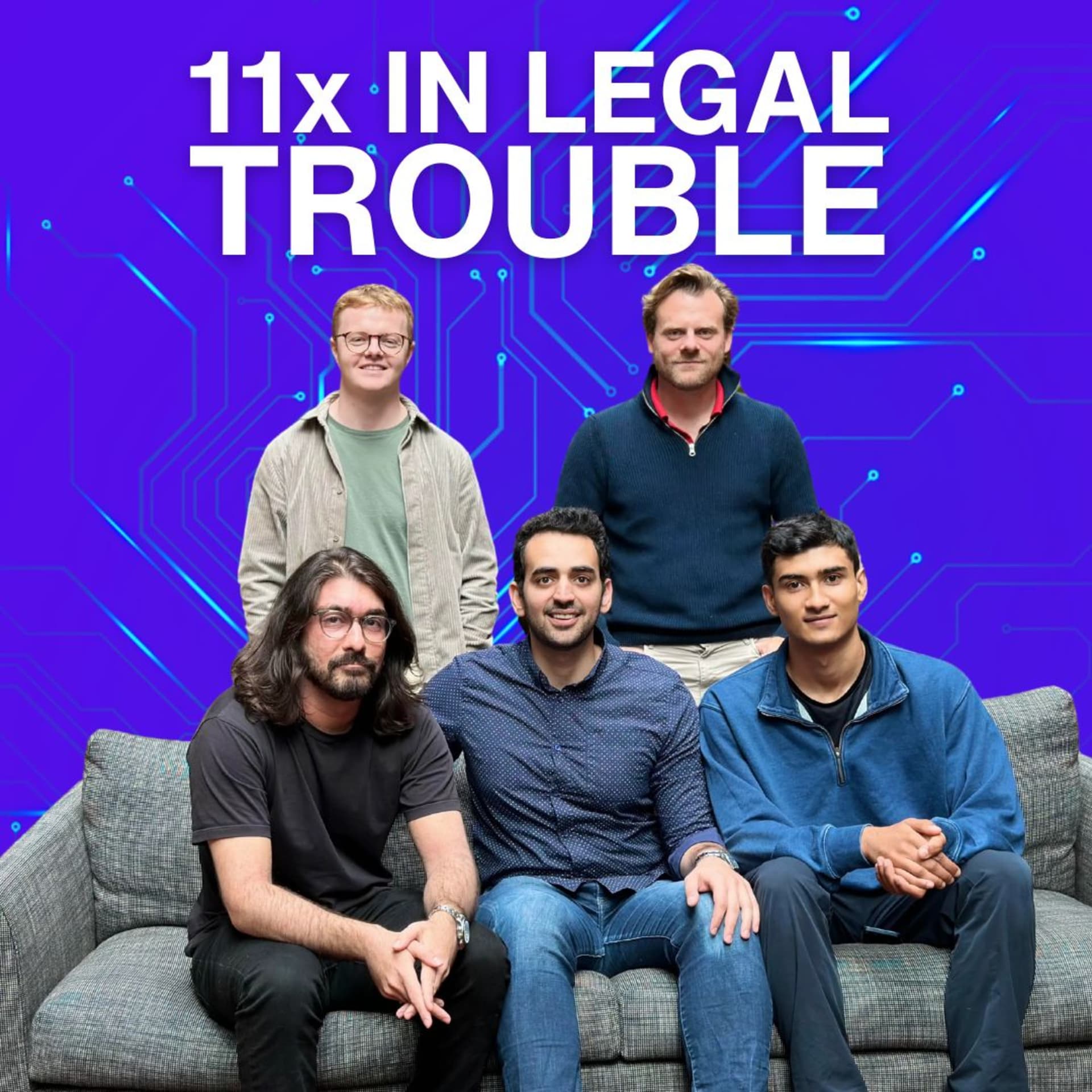
11x in Trouble and China's AI Acceleration
Host
Jason Calacanis
Co-Hosts
Alex Wilhelm and Lon Harris
In this episode, Jason, Alex, and Lon discuss several important topics affecting the tech and startup landscape, including the controversies surrounding the startup 11x, advancements in Chinese AI technology, and effective sales strategies for startups.
---
Key Topics
- Controversy Surrounding 11x
- Background: 11x, an Andreessen Horowitz-backed startup, faces allegations of misrepresenting revenue and improperly using customer logos on its website.
- Key Issues:
- Misuse of Logos: 11x allegedly used logos from companies like ZoomInfo and Airtable, despite these companies not being actual customers after trial periods.
- Revenue Reporting: Allegations indicate that 11x converted one-year contracts into trials, inflating their reported annual recurring revenue (ARR).
- Accountability: Discussion emphasizes the need for transparency and better processes in early-stage startups to avoid misrepresentation and maintain accountability.
- China's AI Acceleration
- Rapid Development: The hosts explore how companies like DeepSeek and Xiaomi are quickly advancing in AI and electric vehicle (EV) technology.
- DeepSeek's Advancements: DeepSeek has released several powerful AI models, including reasoning models that compete directly with leading platforms like OpenAI's GPT-4.
- Xiaomi SU7: Xiaomi's new electric vehicle, the SU7, is compared to a Porsche, showcasing China's aggressive push into the luxury EV market, often at lower price points than their Western counterparts.
- Sales Strategy Insights - The 4-Persona Framework
- Framework Explained: The discussion covers a sales strategy that involves identifying four personas within a potential customer:
- The person with the pain point (user)
- The person with the budget (financial decision-maker)
- The person with authority (who can approve the purchase)
- The person who will actually use the product
- Mega Hit Products: When one person embodies all four personas, it can lead to faster product adoption and revenue growth, as exemplified by the SaaS company Wiz.
---
Key Takeaways
- Transparency is Crucial: Startups must prioritize transparent and ethical practices to maintain credibility, especially when dealing with investors and consumers.
- Rapid Innovation in AI: The accelerating pace of AI development in countries like China presents both competitive challenges and opportunities for startups globally.
- Effective Sales Strategies: Understanding the dynamics of buyer personas can significantly enhance a startup's sales effectiveness and overall growth trajectory.
---
Episode Structure
- Timestamps:
- 0:00 - Teaser
- 1:27 - Introduction of co-hosts
- 3:23 - Discussion on new set design
- 8:09 - Chat about GameStop's Bitcoin strategy
- 25:10 - Allegations against 11x startup
- 32:56 - Importance of transparency and accountability
- 42:31 - Insights on Chinese AI advancements
- 55:09 - Commentary from Israeli VC Gili Raanan on effective sales strategies
- 1:04:26 - Founder Friday March Pitch Madness announcement
---
Sponsorships
- OpenPhone: Offers a business phone system tailored for startups.
- LinkedIn Ads: Provides a promotional credit for first-time ad campaigns.
- Brex: A financial solution designed specifically for startups, offering significant FDIC protection.
---
Conclusion This episode of *This Week in Startups* offers valuable insights into the evolving landscape of startups, especially regarding ethical accountability, global competition in AI, and strategic sales approaches. The discussions are relevant for founders, investors, and anyone interested in the fast-paced world of technology and entrepreneurship.
Written by AI. May contain mistakes. Listen to the episode to check what was said.
Transcript
Automatic transcript. May contain errors.0:00Let's talk about 11x the startup backed by Andreessen Horowitz. TechCrunch put out a story about this In this case, one of the Things that they covered was the Misuse of Customer logos, essentially 11x, according to ZoomInfo, kept using Their logo for at least four months On their site It's AI dialer And sales calls, and they spent four Months demanding they stop, they said And they're threatening legal action Over this Oh, it's hard for me to believe that for four months, somebody from Zoom was angrily emailing any member of the team at 11x and that person didn't communicate to the website team.
0:43Hey, pull this logo like that. That to me is not a satisfying explanation on any level. This Week in Startups is brought to you by OpenPhone. Streamline and scale your customer communications with OpenPhone. Get 20 % off your first six months at openphone.com slash twist. LinkedIn ads. To redeem a$100 LinkedIn ad credit and launch your first campaign, go to linkedin.com slash thisweekinstartups. And Brex, the financial stack founders can bank on. Unlike traditional business banking solutions, Brex has no minimums and no transaction fees. And you get 20 times the standard FDIC protection. Get the business account trusted by one in three startups at brex.com slash banking dash solutions.
1:27All right, everybody. Welcome back to This Week in Startups. He's Lon Harris. He's Alex Wilhelm. We're going to do This Week in Tech. I heard in two weeks, Alex, together. I was talking to Leo Laporte. You and I. I added you to my calendar invite, just so you know. We're both going to do it on, I think it's April 6th. We're doing it on a Sunday. So you and I will be making, we'll be bringing Twist to Twit. To Twit, yeah. We're just going to drop the S and show up. That's going to be hilarious. Hilarious. Now, we just got to get Molly Wood to show up. We'd have the, it'd be great. This Week in Tech, This Week in Tech by Leo Laporte.
2:02He was the godfather of podcasting, along with Dave Weiner and, of course, Adam Curry. He tried to hire me away in the early This Week in Startups area. You remember that? Oh, I didn't know that. That's great. Yeah, he tried to poach me. Oh, I actually didn't know that story. I didn't want to move to Petaluma, so I turned him down, but yeah. Okay, Petaluma. Oh, beautiful. Having been there a bunch of times for Twit. Lovely. not my scene not a knock on Napa Valley yeah but it's just you're an LA guy you're an LA guy I didn't want to go I didn't want to go too small town for for the for the cosmopolitan Lon Harris exactly anyway long story short April 6th tune in uh twist on twit drop the s and Alex and I will be there uh talking shop with our guy yes Neil Laporte who you know really did inspire a lot of us he was a radio guy who then started doing tech TV and G4 TV Kevin Rose got inspired.
2:55That's where Dick came from. I got inspired. That's where Twist came from. A lot of people inspired by Leo Laporte, who was just the radio guy who figured out how to do live streaming. And he has done so many episodes of Twit every Sunday. I think he does it at 2 p.m. Pacific time. And it's just a great roundup show. Wanted to thank the team for painting my shelf. As you can see, guys, I have a new set. Beautiful blue. Beautiful blue. and we're going to be suiting up here. We're going to be taking the job seriously because we want to make clips that look extraordinary. And let's face it, like our clips look okay and the clip team's doing great, but we really want to be tight, tight, tight, 4K all the way, all day and beautiful.
3:40And you know how I got these colors, Lon? Ask me how I picked the colors. How did you pick out those beautiful colors? Thank you, Lon. Look at those empty bookshelves. It's coming to Austin. It's going to be on this road trip. It's all in boxes. All in boxes. It's great. So over the Christmas holiday, I was in New York. I had Christmas. Oh, no, sorry. Thanksgiving holiday. I had this little holiday in New York. See, my family had my three daughters with me. I'm a girl dad, like Kobe. And they were going to do this color analysis. So there's a color analysis that Korean people use. You can look it up online.
4:17And they have a storefront or they have an office in like Midtown Manhattan. And we went to do a color analysis. Turns out my colors are these blues. And so I'm leaning into my blues and my greens. And my wife and the team here just spent weeks and weeks dialing in this beautiful blue. And I'm getting the lighting right. I'm just taking total ownership of set design for myself. But I got the color analysis done and my daughter's got it done. It's really interesting. They put these little swatches on you and then they move them back and forth. And the guy from CNN, yeah, there it is. So this is like a color analysis.
4:55So I did what you're seeing here, where you sit there and they do this color analysis where they put these different colors in front of you. Ron, red's not your color. No. Not your friend. Really? It's not? No. The last time I wore this shirt on this show, my mom wrote me and was like, that shirt looks great on you. What it is is red is not good on anybody, almost anybody, because it creates too much flushness in your face and everything. But this, what do you have on there? You have black or is that like a gray? a navy blue navy this is uh a blue green uh athletic shirt that i like because it breathes beautiful it looks good on you that color might be working there the red maybe creates too much vibration anyway putting all this aside it's a very cool thing and it actually works uh and so shout out to them and uh yeah you can go get your color analysis there's like a bunch of people who do this anyway that's how i got the the blue colors here a little announcement for this week in startups.
5:47We do it live Monday, Wednesday, Friday, 12 p.m. Texas time, 10 a.m. left coast time, 1 p.m. right coast time. I got it right. Okay. I decided, I made a decision. I was talking to Leo Laporte about politics. And it's like ruining every conversation about tech and startups, right? It just, it finds a way to inject itself, right? Like we're all sitting here and we want to jump on the signal story, I bet, because that's the crazy story of the week. And there's a lot, There's a tech angle. There's a tech angle, obviously. Here's my announcement. We're going to focus on founders, startups, how to build your startup, how to build your team, how to work on your product, and how to really absolutely adore and study your customers.
6:31We're going to talk about big tech, obviously, because that affects little tech, right? And then we're going to talk about technology. But I'm going to backload. We're going to do OT, twist OT. I just came up with that right now. That's the overtime. where we will just go YOLO at the end of the show about political topics, about all this other nonsense, pop culture, et cetera. So if you listen live, you'll get OT. But if you get the podcast, we're not going to keep inserting this stuff into it because it's maddening. We can't talk about tariffs every week when we've got so much other great content.
7:06So let's get right to the great content. If you want to do the overtime, go to YouTube, search for this week in startups go to x follow twi startups we're also streaming on tiktok and instagram so there's right now between zero and three people on each of those platforms please go search for us and follow us any thoughts on twist overtime and my one thought yes is i feel like even though the you know the money angle we're not like desperate for the cash like a lot of other creators there is like this would be perfect for like a patreon or like you could have those youtube subscriptions where people kick in like an extra buck or two a month to like subscribe and then it's like if you subscribe then you'll get the extra 20 minutes like ben shapiro does this right exactly you're like caleb hammer that financial audit channel i like he does the post show but you got to be a member five bucks a month and then you get to see the post show and that's where they delve into all the tea you know all the like all right so two ideas there we got twist over time we got twist over time pro what do you think alex i i think it's a really good idea and in fact when you said i bet you guys want to talk about the signal story i looked at the docket and what's interesting is that we don't have it in there jason because i i felt like i don't know if we could add much that would actually move the ball forward because i think every angle in that story it being such a bombshell yeah that it's been lights been shot in there from every possible side, we could go over some stuff, but I don't know if we can really move the ball forward for founders.
8:34So I like it. I want to ask a question though. So I always try to find something that we can all kind of laugh about to start the show. And love a little laughing. Yes, please. Yeah. And so when GameStop announced that they're going to become a Bitcoin treasury company, I found that to be intrinsically hilarious. And so I stuck it in the intro section. Is that too far away from the founder focus? No, I think that this is an interesting commentary because, you know, founders aspire to be public companies and founders fail and they have to pivot. So I do have a take on this. For those of you who don't know, Michael Saylor, friend of the pod, invited him on a million times.
9:11He hasn't come on. He begged to come on. And then when I invited him on, he unfollowed me. Do we reach out again? I haven't reached out to him recently. I mean, I'll keep reaching out to him. I would love to talk to him. I don't have a personal problem with Michael Saylor. I think he's doing the most audacious betting strategy I've ever seen in public markets. I don't know why more people are not talking about it. It is audacious and insane and brilliant, depending on if Bitcoin hits, let's call it$500 ,000. If Bitcoin never hits$500 ,000 or it crashes, it'll either be a modest success or it'll be a complete disaster.
9:51And everybody will say, who didn't see this coming, right? So it's got basically three possible outcomes. If Bitcoin goes down to$30 ,000 a coin again, and he gets liquidated or some craziness happens and the stock collapses and it trades at 80 % of the 500 ,000 Bitcoins he owns, people are going to go, well, we all saw that coming, didn't we? He's speeding into the turn. Of course, he flipped the car. Founders, every time you miss a call, you're losing an opportunity. And we all know, customers are busy. And if you don't pick up, somebody else will. They're going to move on to the next product or service that is not yours.
10:32So with open phone, you're never going to miss another call and you're not going to lose track of who followed up with you. It's the number one business phone system. It's the one I use at my companies because it's built for entrepreneurs. 15 bucks a month. What a deal for open phone. You get a dedicated business line and that lets you keep your business and your personal life separate. Plus, you get AI powered call transcripts and summaries. So you never forget something in the call that you needed to follow up on. Maybe there's action items. Maybe your customer wants you to follow up with pricing or a feature set.
11:07You're going to know exactly what was discussed and what to do next. Also, you can set up automated messages to ensure no customers left hanging. And OpenPhone works through an app on your existing smartphone or computer. And this makes it easy to manage your calls from anywhere, whether you're on a desktop, you're on vacation, you're a remote worker, you're on your phone, you're in the car, you're at an airport. It's just easy to manage. So here's your call to action. OpenPhone loves This Week in Startups. OpenPhone loves startups. They love founders so much that they're offering 20 % off your first six months when you go to openphone.com slash twist.
11:42That's O-P-E-N-P-H-O-N-E dot com slash twist for 20 % off for your first six months. What a deal. And if you have an existing phone number with another service, OpenPhone will port those over at no extra charge. Thanks again to our friends at openphone.com slash twist for supporting independent media like this week in startups. If it hits 100, 200, 300, under 400 ,000, he's going to look like, wow, that was a really good trade. He figured out how to triple people's money in a time period where it doubled, right? And he basically has to double from here to hit breakeven because he's trading at two times, I believe the valuation is roughly two times.
12:23So if it was two times, he has to hit like, I don't know, Bitcoin has to hit like$150 ,000 for him to have the valuation of Mr. MSTR, is his stock term, for him to be like at one-to-one. Is the value of the company equals the value of the Bitcoin? Something like that. Ballpark. And there's a bunch of websites that show you the net asset value, NAV, to the valuation. So what is it now? It's one point. I was trying to find it for you, Jason, but I ended up on this chart here. And I'm not entirely sure where I'm supposed to look. So if you've seen this and you know. This is net asset value, right?
12:59So he has 500 ,000 coins. And at 500 ,000 coins, at 80 ,000, right? Five times eight is four. So we know it's got to be something like the value of the company is 40. The value of his Bitcoin is 40 billion, correct? Yes. The value of his company, if you were to look at a stock ticker, right now might be 80 billion. I'm taking a guess right now. I don't follow a data deck. You're so close to nailing this without even having the numbers, Jason. I found the data point in the chart that I showed for a second. And according to msdr-tracker.com, the finest of all resources, the NAV premium or NAV premium is 1.93x today.
13:42Okay, fine. So he's trading roughly at double the value of the coins. It's$80 billion company,$40 billion. I think because it's in a publicly traded company and you don't control the Bitcoin, he should be trading at 0.8. If you believe he's trading at 0.8, the value of the company is like$35 billion or something in that range. So I believe he's doubled the value on the public state of SOC. So essentially, if Bitcoin was worth$160 ,000 a coin, I think the valuation makes sense. Let's put it all aside for a second. The company, Mr., which is short for, they call it Mr. MicroStrategy, right? Short for MicroStrategy.
14:17MicroStrategy existed for, I think, 25 years as a public company. It's been a long time. And as a public company that had a software product that is now, I would say, I don't want to say failing because it's hundreds of millions in revenue, but it's stepping down. It's deprecated. This happens from time to time, right? You have some big successful thing that deprecates over time, BlackBerry, you know, whatever it is.
14:41So he started buying Bitcoin inside of that company. Now the company has this huge resurgence. Other people are watching this and he is goading people, encouraging people. or running a Ponzi scheme, depending on how cynical you are. It's a little, yeah, he's pumping. He's pumping hard. It's definitely a pump. At a minimum, it's a pump. You can call it a Ponzi at max if you want. Right. Right. So at a minimum, he's pumping. And then the cynical, so, you know, an objective person says he's pumping. A cynical person say it's a Ponzi. I say there's also peer pressure now. So what he's been doing is this peer pressure.
15:16And this is where I, this is where, I don't want to say distasteful, but this is where I get red flags, concerns. When you start humping and peer pressuring people to the extent he is. So he had just in recent history, he's been telling people like, how much will you respect GameStop as a Bitcoin maxi? How much Bitcoin do they have to buy for you to respect? Did you see that survey that he did today? That's a massive amount of peer pressure. he's trying to goat the ceo of gamestop into buying more and being part of the bitcoin again you could be a cult whatever so he says what's the minimum amount of bitcoin gamestop needs to buy to be respected by bitcoiners 50 million just larping 250 million uh mr starter kit 1 billion tesla tier 3 billion king moon so 47 percent of people want him to do 3 billion 30 percent want them to do one billion put those two numbers together you got 77 78 78 78 of people doing this full court press press but of course the people following michael saylor and voting on these are bitcoin people who are desperate for more people to buy in so their prices go up we're not saying this is a a poll that is representative of the national view on the maxi view the maxi this is the maxi i do think the three billion dollar number is very interesting because i looked at GameStop's cash holdings at the end of their most recent quarter, around$4.8 billion in cash, Jason.
16:47No debt, really. Turns out that at today's prices is$55 ,000 Bitcoin, if they spent all of it. Okay. Which would be 10 % of the Bitcoin he owns. And then he personally owns like 20 ,000 Bitcoins or something in that range, maybe 17 ,000 or something, which is the, of course, huge conflict of interest I've explained here before. No matter what happens with MSTR, he will have taken his Bitcoin, which I think he said he owned on average for like 10 ,000 a coin. Yeah. Every thousand dollars, it goes up. He makes$20 million. If every 10 ,000, he makes 200 million. Every hundred thousand, I think he makes 2 billion.
17:23So no matter what he does, he's going to personally make essentially hundreds of millions to billions. That is such a conflict of interest that he disclosed it in a tweet and said before he moved MSTR. And I retweeted this tweet. it's like an ancient tweet from the 2020 era i think uh you can find it maybe um i've retweeted it it's basically he said he informed the board that he owned these before he went on the strategy that was his cya right if you have a conflict now people are saying it's not a conflict it actually is a reason to believe that he believes what he's saying but it's a conflict because you know like say i don't know a president or something you know if you were owned a certain number of coins and you put them in the treasury, that'd be good for you.
18:10Here, some have asked, this is dated... October 28th, 2020. Yeah, 2020. Let me read it and let's see what it says. Some have asked how much BTC I own. I personally hodl 17 ,732 Bitcoin, which I bought at$9 ,882 each on average. I informed MicroStrategy of these holdings before the company decided to buy Bitcoin for itself. Okay. So, Alex, you know what that is, that tweet. Yeah, that seems like CYA. Don't sue me. Yes. Don't sue me, bro. I told the board and he, you know, as if he's not in control of the company, right? And he's not in control of the strategy. Pretty clear he controls the company.
18:50I, you know, I don't know the exact governance, but he's, he's, he's, he's the CEO. He's on the board. I don't know how many shares he owns. I don't know if he has super. Or is he just the chairman? There's some strange names they have inside of the org, but like, let's be honest. If you think about micro strategy, do you even know the name of the man who runs the software division? No. No, I couldn't tell you anybody. He's the executive chairman and co-founder of MicroStrategy. So who knows what level of control he has over it, but he wants to make sure people know, hey, it is a conflict. He's admitting there, it's a conflict.
19:23And it's a serious enough conflict that I have to inform the board and make sure I get their approval. Because if he didn't, and he did it covertly, that would be like SEC or like the classic SEC. I don't know about this new SEC. you know come down on them with a bag of bricks pressuring gamestop into it i think it's a great move for gamestop to put every dollar they have into this all right so because gamestop has no business right yeah i mean gamestop's got to do something because it's like going to the mall to buy a physical copy of a video game is just that that's done that model's not coming back so they need they need something else to do this is the if you're watching the video this is the gamestop announcement from their investor relations page.
20:05It reads in full, GameStop today announced that its board has unanimously approved an update to its investment policy to add Bitcoin as a treasury reserve asset. So they are going to do this in some capacity, hence the Saylor tweet. Jason, the thing that I'm curious about, just bringing this back to founders, is simply, have you heard of any non-public company putting Bitcoin on their balance sheet? And as a follow-up, if a launch accelerator back to company said, Jason, we're going to buy a Bitcoin to have on our balance sheet and just cash. What would you say to them? Hey, founders, I want to share with you an experience I love.
20:43It's when I get an ad that is relevant and not some nonsense. Like the other day, I got an ad for a fund management platform and it was like a new one I'd never heard of. I clicked on the ad because, well, I manage four venture capital firms. We scheduled to call with them. And it was amazing. How did this happen? Well, I was on LinkedIn because I like to share links from the podcast, The Speaking Startups, right on LinkedIn. In fact, we live streamed to LinkedIn three days a week and we get a great audience over there. And I happened to be presented with this fund management platform and it was a direct hit.
21:16Like, I mean, talk about hitting the bullseye. If you're in business and you're making a product or service, it's really hard to find customers in the business to business space. And doing B2B advertising is hard, but LinkedIn makes it so easy because, you know, their tools let you target people by job title, industry, company size, and more. So this fund management platform obviously was looking for people in venture capital who had a fund size and a number of people, maybe 10 people, maybe 50 people. And they found me. They got me. They split the arrow, boom, right on target. And there's two things you really need to know about LinkedIn going into 2025.
21:48First, they broke a billion members and 130 million of those billion are decision makers and 10 million of the billion are C-level executives like myself. Where can you get to those people? It's really hard. And the second thing you need to know, LinkedIn makes an impact. B2B markers report two to five times higher return on ad spend or ROAS, return on ad spend. You should know that acronym. Compared to other social platforms, 79 % of B2B markers say LinkedIn is the best platform for paid media. LinkedIn is going to let you build the right relationships. It's going to drive results and you're going to reach your customers in a super respectful business environment.
22:22It's not a place where people are dancing around, saying inappropriate things or debating politics. Nope. LinkedIn equals business. Business equals LinkedIn. Start converting your B2B audience into high quality leads today. We'll even give you a handy$100 credit on your next campaign. Go to LinkedIn.com slash this week in startups to claim your credit. That's LinkedIn.com slash this week in startups. Terms and conditions do apply. If it was less than 5 % of their holdings, I'd be like, strange, but okay. You know, I do see frequently companies with a large treasury buy treasuries, buy municipal bonds of short duration.
23:00So because you need the money. So if you buy two-year treasuries, one year, whatever, and you can get three, four, five percent on$10 million, you get an extra$500 ,000 into the company. You have to pay tax on that interest typically, unless it's a non-taxable muni bond. I've done that in the past myself. When I did that, I had to go to my, you know, board and say, hey, I'm going to put of this$15 million we have, seven and a half of it into bonds we can't touch for, you know, between one and three years or one and two years. And they're going to roll every quarter off and every quarter they mature and we get that money, whatever.
23:33And it was nice. We had like, you know, at some point, you know, maybe it was 50K a month in interest coming in. So it's just nice when it winds up being five more developers for your team that are being paid for by the interest. But the VCs don't give you the money and investors don't give you the money to be a hedge fund manager. So they're giving it to you to grow a business that goes 100x. That's the problem here. But for GameStop, if they can't come up with a good idea and the best idea they have is to follow Michael Saylor and the Trump administration down this crazy crypto rabbit hole, which I think is going to blow up inevitably.
24:11And when it does blow up, it either can be the total risk of ruin, look up risk of ruin. When you have a bankroll, you have to be careful to avoid the risk of ruin. That means you don't put all your money on one bet. You need to be able to weather the storm. Risk of ruin is what happens in poker when you take your entire bankroll. If let's say you were a professional poker player with a million dollar bankroll and you play in a million dollar buying game. People with million dollar bankrolls play in$25 ,000 buying games and they limit themselves to four buy-in. So the most they can lose in a single session is 10 % of their bankroll.
24:45And if you wanted to play a million dollar games, you'd want to have a$10 million bankroll. So you're not putting more than 10 % on the line. Anyway, risk of ruin, interesting concept for people to know. But if you were pivoting, you don't have any ideas. And if I was a shareholder in GameStop, let's say I was the co-founder and i own 10 i'm watching these folks for years try to get out of the retail game and they don't have a thesis and they can't get out of it sure why not let's talk about 11x the startup backed by andreason horowitz uh tech crunch put out a story about this some of the notes included that the company had customers signed one-year contracts with a three-year three-month break and that it may have been misreporting revenue uh after customers had broken essentially they turned their annual context into trials.
25:29An employee said that they were kind of massaging the numbers. They may have left some logos on their site too long after they weren't really customers. The company has pushed back, Jason, but I want to start with that and get your feedback. Okay. So it's all alleged, right? Yes. And the allegation... The platform is denying the TechCrunch report. That's important to point out. So the company made... The company made... They had customers. sign a one-year contract with a three-month breakup clause. This turned the annual contract into effectively trials. This is not in and of itself anything problematic.
26:12When I do one-year contracts with people, I'll have a 90-day ad. I'll sign a three-year contract with somebody with a 90-day ad, a 30-day ad. What it means is I just have to give you notice so we can off-board, and then that company doesn't have, if they had dedicated some resources to it, let's say, you know, an account manager or, you know, a contractor to work on your thing, you just have 90 days to let that person go and to inform them, hey, you know, we're going to just offboard you, whatever. So that in and of itself, not a problem. But when you start using the logos of customers and you start using weird terms, contracted ARR, car, this is a very abused number I have been getting and I have had situations, I'm going to make an amalgamation.
26:55and the founders told me they had this amount of revenue. And what they meant is the contracted revenue. And then the contracted revenue didn't match the money coming into the bank account. When you're dealing with any type of investor who is, let's call it a smart, thoughtful, any of these words you'd like to use, Alex, any smart investors who say, what was 2024 revenue? What is 2025 projected revenue? give me a chart of monthly revenue. I have FedPeoples. Then give me a chart of contracted revenue. And I said, no, no, no, no. Who's your accounting firm? I want the actual accrual-based accounting where you take your 12-month contract.
Read the full transcript
27:40Let's say they paid it in advance. They gave you $100 ,000 in advance. It's$10 ,000 a month. You give them a discount of$20 ,000. I want to see hundred thousand divided into 12. And I want to see it, you know, put into each month that the service was delivered and we know that it could get canceled. So if you have churn, which people do typically five, 10, 15 % churn a year, um, some people have negative churn, which because people are adding, uh, to their existing contracts. So you have the same number of contracts long, but you go from 10 people to 50 people in your Slack account. So you're paying five times as much.
28:13So 10 % of people, you know, leave the product, but then 50 % of the people, you know, 10X, their usage of it. You get all this math and fun with numbers. Just fun with numbers is a very dangerous game because if you're selling shares of a company and you confuse a person buying the shares, then you will get a knock on the door. Hello, SEC here. We would like to talk to you about a special term called securities fraud. You never want to hear those words, by the way. Those are not good words. Is that not coming up on the microphone? Oh, it absolutely is. We can hear the SEC. Hello? Lon? Alex? Is the SEC here?
28:59Yeah. Just a scary moment. I remember opening the door and somebody... Oh, really? You've had the SEC knock on your door for security? I've been served. You've been served. Boom. And I look at this piece of paper. Got the SEC logo on it when I pull it out of the back. That's no good. whoa you don't have like yeah exactly just sit down breathe you got you had to go in your box of documents stacked in the powder room and start going through them no this isn't mar-a-lago what is this what is this turns out i had somebody on the pod they were telling me we had invested in the company were telling me what incredible prospects they had they didn't have their accounting dialed in perfectly.
29:46They ran out of money. It was during a down market. Nobody, no white knights come to the rescue. The SEC had somebody tip them off that not only the company claimed to be profitable or break even, but then they are out of business because they couldn't make payroll. And then they submitted, Jason's an investor. The person was on the podcast, you know, 30 days before this whole thing blew up. Oh, wow. And they said the following things. So the SEC says, we would like every correspondence. We would like this, like this. I got to hire, I kid you not, an$1 ,800 an hour attorney. It's the most I've ever paid.
30:28You start getting into this level. So now - $30 a minute? That's wild, yeah. That's 50 cents a second. When founders ask me what corporate cards did they use? I tell them Brex, B-R-E-X. That's what all founders use. And when founders ask me, where should they store their cash? Well, think of Brex. Why? Because it's specifically built for startups from the ground up. And that's going to help you take your dollars further, and it's going to protect your cash while extending your startup's runway. How do they pull this off? Well, they offer startups the best parts of checking, treasury, FDIC insurance in a single powerhouse account.
31:08Knowing everything about your money is non-negotiable. Nearly 40 startups fail because they run out of cash. And 100 % of startups can't afford to make financial mistakes. Don't I know this? You know who founders call when they're running out of money or they make a mistake? They call me and I have to deal with it. If you need the best of the best because you're doing something big with your startup, Brex's banking solution is going to get you 20 times the standard FDIC protection through program banks. Also, they have the ability to send money worldwide at lightning speed. So here's your call to action.
31:42Very simple. Brex is used by one in every three startups in the United States. Let's get that up to one in two. Get the financial stack that founders trust at brex.com slash banking dash solutions. Once again, brex.com slash banking dash solutions. thanks again to our friends at Brax who make a great product that we use every day I mean I'm trying to think of when I've lost they come into the office set a briefcase down, take a sip of water you're already out that's a car payment you're out five grand I bought this guy a tomahawk steak every ten seconds that guy was eating Wagyu for a year anyway, happy to pay it shout out to
32:32I'm like, they're like, you have no exposure. Don't worry about it. Then I get the$30 ,000 bill for my no exposure. I pay the, I give, I buy a Prius to my attorney's son or daughter or their housekeeper got a Prius on JCal. Yeah. Happy to pay it. So happy. I'm not grimacing at all here. I'm not in pain. No. And I'm like, okay, well, did they clear me? and they're like, oh no, they don't do that. What happens next?
33:04Just what you're seeing here is a shrug. I'm doing a shrug in front of my beautiful blue shelves. Yeah, it's just a shrug. It's just like - They don't tell you. They leave you on the hook indefinitely. There could be another knock. Hey, remember we talked to you 10 years ago about the startup? Turns out, oh, we pinched this person. We would like to talk to you again. That's the problem, I think, with how the SEC is run respectfully is that they have so much power and they have a very important mission and they're very principled people, but man, they need to be a little more interactive, you know, and like maybe wrap things up so I'm not sitting here sweating bullets.
33:45I don't know. I think they might want an environment where people feel like on edge and scrutinized, you know, like they don't have that many agents working. The way to enforce these rules is to make everybody feel like you could be being watched at any time. Yeah, well, they did also tell me if I didn't get the paperwork to them in time, I was going to go to El Salvador to stay in a camp. So that's what you get for your tweets. I was going to be going to a camp. I want to go back. I want to go back to contracted ARR, Jason, or CARR versus ARR. My understanding of this is that contracted ARR includes future annual recurring revenue that has not yet manifested as cash.
34:24so my question is if if i signed up for you know jason's sass product on a monthly account say yeah i haven't paid yet for some of the arr you might count if you presume that i'm not going to churn if i'm monthly so to me that actual distinction between carr and arr is a little muddy can you in idiot turns explain to me because i was trying to prep and i couldn't quite think the way most people do it, and this is a term that I've only seen the last couple of years people lean into. Any contract sign, I sign a 10-year deal with you for$100 ,000 a year, I have a million in contracted revenue. So now my contracted revenue number, which was 9 million, is now 10.
35:08Now, what are the chances you stick around for another nine years and 11 months? I What this does is it incentivizes the team of sales executives. I think if you have an incentive, if you show me an incentive, I'll show you a result, right? I'll show you an outcome. This is not the incentive you want. You don't want your team to start playing fun with numbers. There's a pipeline report. The pipeline report is how much is the contract's worth? So now you've got salespeople. They have a pipeline report. So there's 100 possible customers I'm in active discussion with now, Lon, and each one of them is worth a million dollars.
35:48They have 100 million in pipeline. And then there's the people who sign contracts and how much revenue that will generate this year. OK, great. So now I can look at those two numbers. 100 million in contracts. You signed one of them in the first quarter. You signed one each quarter. You signed four of the 100. So we know that 100 million in pipeline results in 4 % on average in closing. So now we judge you. You have a 4 % close rate. So either those 100 million in the pipeline, you didn't actually qualify. Qualify means they can afford the product. It would be like me saying, you know, a bunch of people come on the lot and they look at the Corvette and they all want to test drive it and they all look at it and say they're interested in it and I convert 4 % of them.
36:35Maybe the people that were there, not for a Chevy Corvette, they were there for a Chevy. I don't know what the Volt. I don't know what the lowest Chevy is. I'm going to be a driver Corvette. Anyway, putting that aside, then you could look at the contracted. So now you start getting into the fun with numbers on the contracted out. You follow me here? Those$4 million contracts are$40 million. So now the sales executive, when they go into their review and they want to get a raise or whatever, I had$100 million in pipeline. it resulted in 40 million. I'm closing 40%. You close 4 % of the names. You close 40 % of the dollar value per year.
37:13But actually you said you were going to have a billion dollars. So you're still at 4%. So people get into weird fun with numbers and then they start playing games to build the pipeline up or to build the contracted when in fact, you actually need to know just how much money you're making every month. That's why subscriptions are the truth. The subscription business model, it really does give you a center of gravity as an investor, as a team, as a board. So just look at the monthly, quarterly, and yearly numbers of money into the bank account. I go directly to the accounting firm. So when we're on the board of companies and they're giving all these presentations, say, hey, you know, to somebody on the team, make sure you talk to the accounting firm, you know, once a year, once every six months, if you can, if they'll give you the contact info and just check the numbers, check the numbers.
38:02I'm trying to weigh Jason, the reporting, which comes from two people, Dominic Medora Davis and Marina Timkin, who are both very serious people and they're not, they don't report for a lot of things and the company's response. So in this case, one of the things that they covered was the misuse of customer logos, essentially claiming customers that may not have been the right customers to claim for example zoom info uh used 11x and this is a quote from the company um well actually no they used it for basically it looks like a month and then 11x they trialed it and then oh it was a pilot there you go and then the 11x according to zoom info kept using their logo for at least four months on their site on its AI dialer and sales calls.
38:52And they spent four months demanding they stop, they said. And they're threatening legal action over this. And then the company's response, 11X said, just to be fair here, 11X said, we have never claimed customers we did not have. The customers named in the article paid for, used our product for a period and then churned. We regret not having better processes to remove logos from our website more promptly. but they said uh that they told them over a multi-month period to stop doing this we spent the last four months demanding they stop displaying our logo and falsely counting us as a customer the spokesperson said so to me even if you're willing to go the carr stuff is just accounting nuance and maybe it's a little more aggressive it's kind of inside the normal realm of normalcy to me that shows either incredibly poor internal organization or too much rule bending for my tastes the appearance of impropriety is impropriate i keep saying this on a range of subjects to people um just if it appears to be inappropriate it is just take that philosophy in line right i have to say it is hard as an outsider who knows nothing about these companies and has not been part of any of these interactions it's hard for me to believe that for four months somebody from zoom was angrily emailing any member of the team at 11x and that person didn't communicate to the website team hey pull this logo like that that to me is not a satisfying explanation on any level obviously they're in a slack room somebody sent that message this it was deliberate it wasn't just like oh we don't have a good process another way if you can take the time to put the logo up you can take the time to take it down could take it down exactly so they had the procedure to put it up, but they didn't have the procedure to take it down.
40:42Doesn't make sense to me. Doesn't make much sense. Doesn't, yeah. Then there's Airtable, which they also had on their site for a while. Airtable told TechWrench it wasn't a customer and never gave 11X permission to use its logo. Airtable conducted a quote, very short trial of the product. And yet as of March 21, 11X was still claiming Airtable as a customer on its website. So to me, it's hard to say that all the accounting stuff should be obviated as a concern here because there seems to be a pattern of, I would say, lax management. So I guess what I'll just say is this. Everyone's going to give early-stage startups a little bit of breathing room to be bullish, to be enthusiastic, to go fast, to try stuff.
41:21Shout out people who are building stuff from the ground up. But if your last round was 50 million, I think Andreessen led it. You're no longer a scrappy startup with one or two people. You need to behave like a real company because you're almost a scale up at that point. I mean, just the fact that we've spent 15 minutes of it on This Week in Startups and TechCrunch wrote an article like, is it really worth it to keep the logo up for whatever number of months and then just create the appearance of impropriety? The founder, whoever the CEO is, has to be fired. I mean, just accountability wise, we live in an age where there is no accountability.
41:57I do think like there is something to be said for just owning your mistakes. Please just own your mistakes, folks, man. It's just, we made a mistake. We'll do better. I just want somebody to say, will somebody say that? Anybody on any topic, just say, you know what? Eh, could have done better. I say it all the time. I say it all the time. Could have done better. I would change my behavior there. I would refine how I said something. You know, I'm always like trying to just be a little bit better. Anyway, let's keep going here. All right, Jason. You want to talk about Chinese AI. There was a great piece in Bloomberg digging into a diffusion of AI technology across China in the wake of DeepSeek and also a deluge of releases from leading Chinese companies in the tech space.
42:47I had been keeping tabs on this, but I hadn't actually quite noticed how many big things had dropped. So just to give people a little taste, in the last couple of weeks, Alibaba dropped qwq32b this was a new 32 billion parameter reasoning model that was quite good and cheap uh also ernie x1 and ernie 4.5 dropped from i think it was baidu that was a new reasoning model and a new foundation model and then alibaba's former subsidiary and i'm not quite sure how the corporate ownership there works today uh they came out with a cool new way to train models more inexpensively and also use a mix of homegrown and nvidia chips to do so So the AI market in China is cooking.
43:25Yeah. The way I would position this is in the same week, we have Grok dropping stuff. I think ChatGPT dropped some image stuff that's going viral today. They baked in basically like a Dali type image generator into the main ChatGPT. So you can request images right from the main interface. I have an example. Oh, okay. Go ahead. I have an example of Jason and I. So I'll bring it up. Oh, hey, look at that. So I uploaded a picture, a still from Twist to test this out. And you guys are the film guys. Studio Ghibli. Ghibli, thank you. It's Miyazaki. The Princess Mononoke, Spirited Away. Okay, question.
44:05Are they paying Studio Ghibli for the rights to this opportunity? I'm sure they are not. I'm sure they are not. I mean, this is such a copy. This is if it's Studio Ghibli's iconic style, I assumed that they're making money from it. That was my assumption. That is I I don't have I don't think there's a lot of basis for that assumption. I don't think I've heard about a licensing deal. And I honestly feel like Miyazaki would have put the kibosh on a license. Yes, I think that's absolutely correct. He's not an A.I. fan. I think this is a lawsuit then. And one that they will win. Because an iconic style like this that confuses the user.
44:48I'm the user here. I know Studio Ghibli. My kids have watched their movies. Sure. I know that this is something that people have made money from in the past. There are people who've made like a South Park character generator. And South Park released that themselves. So you can, in fact, copyright an iconic style. You can copyright that. Well, we're going to find out in the court of law, but I will say though, that I did do Jason a little bit dirty because it made him look like a grandfather. It does. Yes. It is what it is. It doesn't have to be perfect right now, but I do think they should. It's pretty good.
45:23I mean, it's recognizable in that style for sure. Why wouldn't they pay them for a license and have an exclusive? Why wouldn't you reach out to them and say, hey, we want to do this. It would be a business opportunity. If they, for every time they do this, I think Studio Ghibli should get like a buck or 10 cents. it's like 10 cents yeah i think i think their argument would be how is this different from an artist watching their movies and then teaching themselves how to draw like that because an artist doing it is going to not be doing it at scale and not confusing the public um and then this is an opportunity for studio ghibli to make money from their ip so derivative works and ip like this it should be uh the opportunity should be given to the ip holder so if you made it one that was disney princess you know um then the disney princess opportunity should be disney's i think we would all agree uh yeah of course and here to make a twink ghibli yeah so i i shared this relatively whimsical tweet from sam altman just to point out that he is very aware of the trend so it's not like this is something that open ai is trying to like pretend isn't happening i mean in fact his is his avatar on X now?
46:37Yes, now he has Studio G. No, I think he paid for it. This is the exact same as using ScarJo's voice. It is literally the exact same. You're taking somebody's IP, like, you know, Michael Buffer owns his catchphrase. What is it? Are you ready to rumble or something like that? Let's get ready to rumble. Let's get ready to rumble, yeah. That's protected IP. Like, it's his brand. He owns it. now I can say let's get ready to rumble here describing his thing or I can make a joke about it on Saturday Night Live but if I started doing it at the beginning of every NBA game or the beginning of any episode here I should pay some license to him for that since he did take the time to trademark it you can't trademark styles so I think that they paid for this if they didn't they should well we'll we'll find out i don't see any news about that exact point i guarantee i guarantee studio ghibli will be in touch with them uh let's um just talk a little bit about chinese um the pace at which they're going yes there's no reason for an american to use any of these um products coming out of china because their security concerns and they're not hosted and easy to use and you have a hosted free version you can use anytime called gemini or grok or ChatGPT.
47:56So the fact that they're copying stuff at an incredible pace and doing some of their own innovations, let's give them credit for that, it doesn't really matter all that much. It just shows that everybody all at once is making apps, like in the previous thing, or everybody all at once is making websites, or everybody all at once is making movies. We should expect that. The question becomes, at some point, will these free options, if they are flooded free, open source with the MIT, you know, whatever. License. License. Will they then have downward pressure on pricing? So I don't see Americans going and using these things because like who's going to go seek them out or whatever.
48:37But I do see them creating downward pressure because if you're a developer, and I did see a developer saying this in a forum recently, why would I pay this amount for this many tokens from ChatGPT if I could install this on five M4 minis, or I could buy two NVIDIA cards and run it on a local PC. So this is where you do start to see downward pressure on pricing. I think some of these models will be good enough to do things like, let's say, the Studio Ghibli thing. Studio Ghibli would partner with ChatGPT or their team would pay to use Gemini's, you know, backend or an AWS or an Azure version of this.
49:21But if somebody who's a developer at Studio Ghibli says, you know, I can set this up and stand it up for ourselves on an open source server here, and we can do it for a hundred grand instead of giving a million dollars a year in licensing fees or whatever to pick your hosted version and we can save the 900 ,000. Here we go. And as Derek is saying in our chat room, we do this live three days a week for those of you listening to the pod and you're part of the replay gang in the pod. You know, Derek says, hey, age of abundance. And that's what's happened. There is another corollary to this. Type in, if you don't mind, we'll pull up Xiaomi's website, which I think, yeah, I don't know where to find it.
50:01I think it might be mi.global. It is. Okay. Now, Xiaomi makes incredible vacuums, electric toothbrushes, scooters, camping lanterns. Have fun going through their website, right? Yeah, this is insane. Like, go to Lifestyle for a second. Air compressors, sunglasses, luggage, routers, photo printers, hair clippers, scales, massage guns, anything. Sunglasses? What is this company? what Chinese companies do, just like Sony might. If you go to their massage gun page, did you know Xiaomi, who used to make your Android phone, has massage guns? Okay. That's like the Zera gun that I use. That's incredible.
50:49Shout out to them. Awesome gun. And they just knocked it off. Now, are some people going to buy these in China? Of course. I would like you to, now it's not on their website. I don't know why, but type in Xiaomi SU7 ultra yeah i know i know where we're going with this su7 ultra well the wikipedia page for the su7 show people what we're working with here i'm gonna pull it up now and you're going to be camping gear or massage guns lawn or smartphones the ambition of chinese companies has been unleashed. And if you go look at this car, this Xiaomi SU7 car, it's a luxury version of the Porsche. I forgot what Porsche named their four-door.
51:43Not the Panamera. Is it the other one? It is the Panamera. I think you're right. Yeah. It's not the SUV. This is like a four-door sports car. People are losing their mind about Xiaomi's cars. They're making a range of cars now. This is a phone company. Let me say that again. Xiaomi Auto. Xiaomi Auto, which is XiaomiEV.com. We pull that up. Which people know is spelled X-I-A-O-M-I EV.com. Long pull that up. Well, I just point out that the SU7 Ultra we just showed on screen opens at 530 ,000 RMB, which is about 73 ,000 USD, which is not that much for a car this is a 300 000 car in america if you were to you know buy it uh this we're getting to like a level of oh my lord i don't know that's and that's the that's the ultra i don't know what the su7 goes for these cars are being sold at some de minimis amount of profit right um and uh Obviously, the other main company in this regard is BYD.
52:59And BYD has - It's seven stars at 30 grand USD. There we go. Okay, thank you. Here we go. This is like next level. This is a phone company 10 years ago. It's now making cars that will rival Germany, America, and Japan. And these cars are cheaper. I don't know that they're better. They're certainly not safer. But if you are living in Brazil or, you know, in Germany or in Africa or Singapore, maybe this is the right car for you. Maybe this is half the price. And so the copying now is getting faster and better. We had TK Travis from Uber on all in a couple weeks ago. And he was talking like he said, I can't understand.
53:48I can't overstate how quickly this all occurs. And that was his experience 10 years ago, building Uber in China. They can copy so fast and so great that they will create downward pressure, which then of course makes more choices for customers. And you're not going to need as much money. I just want to say to underscore Jason's point about DeepSeek's really rapid rise in the AI game to make the point about Xiaomi getting into cars. I put together a timeline just for our notes, but I'm going to share it here because it's pertinent. So I didn't realize that it was only back in last May that DeepSeq dropped V2 of its foundation model family.
54:23Then September was two and a half. December was V3. That was the real kind of breakout moment for DeepSeq, I think, in the AI community. Then they dropped R1, their reasoning model, in January. That's the one that blew up globally. In March, they dropped an improved V3 and R2 was supposed to be coming quickly. So inside of one year, we could go from DeepSeq V2 to R2. That's insane. And I think it's very bullish, not for the price of AI models, not for the price of AI inference you can charge commercially, but for the impact of AI technology writ large. And if I was a startup that used AI models in my tech, I would be stoked because everything I build is going to get 5 % better a month for the next couple of years.
55:03And that's just a great technology tailwind to have underpinning your products. um i want to jump to this israeli vc uh gilly ronnan yeah i think it's probably uh i'll look it up it's probably gilly ronan that sounds right he um i guess was an investor in whiz he was on invest like the best a really cool podcast that i've been on from patrick o'shaughnessy uh and And he explains really how unique Wiz was because they were selling into, we talked about sales earlier in the program, how they were selling into four different personas and that those four personas were actually one. Let's just do 30 seconds from Gilly.
55:50When you sell a product, you're going to face four personas. The person that has the pain point, that has the problem, the person who has the budget, the person that has the authority, the person that would actually use the product. Now, as a startup, if those four personas map into a single person in real life, that's a mega hit. Okay. So if we were to look at something like, I don't know, HubSpot, right? It's a marketing solution. You might have a marketer on your team who is on the front line, who does email marketing and builds your mailing list and does marketing online, and they need a CRM.
56:40Okay. They have to go to their CMO who has the budget and say, hey, can I buy HubSpot? And they got to do a little justification there. Then the CMO has to either have the authority or they may have to go to the CFO. I'm sorry. Then the person with the budget has to go to a person who is the IT manager who manages SaaS software at the company and say, hey, can we install this solution and put our customer's data in? And then, oh, well, the customer data is already in these three different places. So yes, but we've got to build a bridge to do that. And then finally, who's going to actually use this?
57:16Well, there might be another person who is in the sales team who has to use HubSpot to send out their mailing to come join a webinar, right? It could be four different people have to get involved. Now, what he says here is when you have a mega hit, a mega hit, and I've never heard anybody frame it this way, so that's why I wanted to bring this up. A mega hit in the business, like Wiz, is that the person who has the pain point was this security person, a developer of some type, who also had the budget to buy it because they were the one installing it, 0.3, and they were going to use it every day.
57:56And that means the product ramped very quickly. We were talking about Wiz on this program and on All In a week or two ago and just saying, how did they ramp so fast? You guys can pull up the chart of the revenue, or Wiz's revenue over the years. We were stunned when we talked about it here, Alex, of just how quickly Wiz had gotten to 100 million and whatever it had gotten to. This is an incredible insight that I have never seen framed in my 30 years in the business that I have heard, of course, you have to get consensus in the sales process and there's multiple people, but I've never heard of like, oh, there's a product that, boom, you can just buy.
58:34It is the equivalent in consumer. We see this all the time. You need to get a ride, you download Uber, and you buy it. Now, in some cases, a kid might need to get a ride, so they have to get their parents involved and get their credit card to set it up, so there's just two people involved in the decision. You do see that in consumers sometimes. A kid wants Disney +, parent has to sign up for it. Maybe there's a technical person in the family who has to put it on the TV, so you have to get three people in the family to, you know, one person's good at installing it. But this is a very interesting framing that I'd never seen, and here's the chart of the with revenue.
59:06Alex, tell us that and then we'll go to you. This is from Sakura and essentially just shows them ramping. I think they did a hundred million ARR in 18 months and then they scaled to, I think it was a half billion and they were looking to hit a billion this year in ARR. And then they were going to go public before Sundar Pichai, CEO of Google, somehow thought it was the right thing to do to remove what would have been the hottest IPO of like the last 10 years and instead bought the company for a paltry$32 billion, ruining my fun and taking away my good newsletter fodder. Thanks. Pull up the fastest to a hundred million.
59:37It's in the Slack chat room. Got it. Another really good image to take a look at. You know, people were really amazed by how quickly Shopify and Slack had, you know, gotten to a hundred million in revenue. And then whiz just boop straight up. I think there'll be a moment in time where there'll be a consumer product that goes right to a hundred million in a day or a month. Yeah, we're getting closer to that. Yeah. This is SaaS products. I wonder if somebody were to release a really cool product like Tinder or, I don't know, Chess.com all at once as opposed to iterating and it just caught fire or went viral.
1:00:14It'll happen. I mean, I think we've seen exponential growth like that all the time. I remember the era when it was like posting a video and will a video get a million views in one day? and like now that's it get a million views in 45 minutes if you play your cards right and you are a k-pop act or something so let's just go to show how much the bar is changing i mean the old you know have a million arr raise a series a just feels about as archaic as a buggy whip now one thing i would add is gilly does say if you watch that whole clip uh that like not every successful company needs like all four of those personas to map onto one person it's just when it does.
1:00:51It's like this magic formula. Like there was one guy. People talk a lot about ICPs or ideal customer profiles. Yes. And when I was at Crunchbase, we actually had a number of different ICPs at the time that they were kind of going after out of a sales perspective. Is it possible to have like too many ICPs in question? Because it feels like in the Wiz example, they discovered that they felt they had four, but they really had one and that was a turbocharging element. So how far down should you boil that? Yeah. So the concept, between the ideal customer profile is that that's one, it's single. Okay, got it.
1:01:25And that there are other customer profiles, of course. So for something like Crunchbase, people didn't know this, but I had built that business like 20 years ago, we called it Venture. There was VentureSource, VentureWire, and we did VentureReporter. And we would sell for 500 bucks a year the ability to go into this database and see all of the people who had raised money in the management team. And we did a little interesting thing. We had a V card. V card was this like thing you could click on. It would add it to your address book. So this is 20 years ago. I did 25 years ago. I did this in 2000.
1:01:58I created this little database and we had sold like a thousand people. I paid us$500. You had a half million dollars in revenue for it. And it would turned out salespeople all wanted this. And what they would do is they would sit there all day and we told them they could download up to 20 V cards a day for 500 bucks. and there were people who bought four of these, gave it to four different salespeople and they hit the limit every day, including weekends. And they're like, can we just buy the entire database? We're like, no, we don't want you spamming everybody in here, but people were doing it to get the email addresses.
1:02:31So salespeople for Crunchbase is one of the ways they sell it. If you were to pull up Crunchbase and they probably have a sales page or if you just typed in Crunchbase for salespeople or account executives, there's probably a landing page that sells them on it. And it says, hey, you can find people who've just raised money, et cetera. And then there's VCs and then there's people at corporate development offices. So you work for corporate. Yeah. So finding new prospects. Yeah. There's like literally a landing page for this customer. I'm going to guess. Oh yeah, here we go. For prospecting, for investors, for - Market research.
1:03:05Enriching your own database. Enriching your database. So exactly what you said. So, you know, one of these is the ideal customer profile. And that would be the one that you go after first and you spend most of your time on. And then you, of course, you go down the line, right? People, the ideal customer profile for Uber, blah, was, and for Uber at the early days, was a CEO or a VC, a finance person, somebody with a six-figure salary who traveled. That was your ideal customer profile. You get the CEO VC who does two trips a month. They need to get picked up at the airport. Those are big ticket items.
1:03:39And you know they're gonna be driven to the airport, driven from the airport and their destination to their hotel, driven from their hotel back to the airport and from the airport at their home, back to their homes, four rides of 150 bucks each, $600 every month,$7 ,200 a year, just for that one monthly travel. That doesn't count when they go to dinners and want to have a glass of wine. So that's another 50 of those, you know, so 100 rides there and those are$50 rides. So that's another, you know, you start to get into like, how much is that CEO worth? A lot. Worth a lot. You know, they're spending literally 2 ,000 a month.
1:04:12They're worth 25 ,000 a year minimum. That's a Prius. Sorry. I think everything now comes in Prius size measurements. You know a Prius is 30, but yeah, it's close to a Prius. You're right. It's upwards of a Prius. So that's what you're doing with ideal customer profiles. We should talk about Founder Friday before we get out of here for today. We've got the Founder Friday bracket ready to go. We have 16 companies. So just to give everybody a little bit of background here, we're doing a Founder Friday city-based bracket March Madness competition. we had founder friday events happening all over in cities around the globe not just america okay uh 16 of these cities picked a winning startup from their community those 16 are now competing in the this week in startups look at this march pitch madness uh bracket and i've got uh i've got a little bit of info i've got the log line for all 16 of these companies wow look at this we have Houston, Boston, Austin, Quincy, New York, Philadelphia, Zurich.
1:05:13Zurich versus Florianopolis, Brazil. Brazil, Sydney, Arlington, Chicago, Denver. Yerevan, Armenia. Armenia, Los Angeles, San Francisco, and Portsmouth. And Portsmouth. They're very excited in Portsmouth. I saw a few tweets from them today. They're fired up. We're going to see each of these pitches for two minutes on This Week in Startups. And then I pick the winner. I've got all the videos. So if you want to watch the pitches on Friday's show, we absolutely can. I also have just like a very quick description of all the companies if you'd rather do it that way. Well, I think the way to do it is these are two-minute pitches.
1:05:48We've got not everyone said we've got two-minute pitches from, I believe, 14 of the 16. Nice. So what we should do is on Friday's show, Monday's show, Wednesday's show, Friday's show, four shows, 16. We just have to do two brackets a show or something like that to get to the next round. We could do two matchups per show and that would take us four episodes. Yeah, so we do four matchups per show, two minutes each. Four times two is eight minutes. Eight minutes of duration, we do it in 15 minutes per show. Why don't we have Lon and I each assign one of us, one of the two companies that's going up against each other.
1:06:26And then why don't we also help kind of pitch them and then Jason can kind of... But one issue with that is Monday and Wednesday show, I will not be here because I'm driving to... That's okay. I can do it with Alex. Yeah, yeah. I trust you two to do it in my state. I mean, we could also try to go faster. We could dedicate a half hour to it and do eight of them and just, boom, get through it Monday, Wednesday, and then have the excitement for Friday or something. So why don't we start Monday? Okay. Today's? Today's Wednesday. So we'll take Friday off and then we'll start this Monday next week. Okay.
1:06:57We have Friday off? What do you mean we have Friday off? No, I mean, we're doing a show on Friday. We won't do this bit on Friday. Well, we could start on Friday, maybe. And we'll see how much show we have. Let's get started. And then I'd be around. Yeah, I'm here on Friday. So let's start Friday. We'll just get started immediately. This is great fun. We could do this twice a year or whatever. All these companies are going to get a great promotion. Go to founderfridays.tech is our website. What is Founder Fridays? You get six founders around a table, no more than six. I'm locking this in. It has to be six going forward.
1:07:32and then you have to start a new pod. So you could have multiple pods, but I want a leader per pod. So let's just make sure we communicate this with Ray, who's managing with us and whoever Maddie and Corinne from our team or I think are doing this as well. We want to lock it into six, always six. We know that's what works because six people can go around the table and talk for 10 minutes about their startup, their wins and their losses, their wins and fails. That's the format of a Fowler Friday. You can do it every Friday. You can do it every other Friday, but we're doing first Fridays is what we want you to commit to with six founders.
1:08:04You could start with two. The format is, it has to be this. You go around a table, you talk about your wins and your fails, one or two minutes for each. Then you have the remaining seven minutes in your 10 minute allotment for the other five people to give you feedback on your wins and your fails. I think the best way to do it is to go around the table, two minutes each, wins and fails, wins and fails, wins and fails. Everybody writes that. Then anybody in the six, you go around the six again, they ask people and they give their best advice to the other five people. Pick one of them that you can give great advice to.
1:08:37So for example, Lon, let's say you had a startup and you had a fail. Give me a typical fail. Oh, I, uh, you know, I, we, our runway is down and I didn't let go of any people. So now I'm behind the eight ball. Got it. You're running out of runway. Perfect. Let's say you have a fail. Alex, what would your fail mean? I did not properly manage my cybersecurity risk and I just leaked half my customer's information thanks to a leaky AWS database thing. Perfect. Okay, so you got a cybersecurity issue, you got a runway issue. Now I'm in year three as an entrepreneur. I got hacked and I had less runway.
1:09:14I say, after we go around the first 10 minutes, you know, one and a half, two minutes each, I say, you know what? I have a cybersecurity expert who helped me. and we did, and I hired this crisis PR firm. Here's how we handled it. I'll put you in touch with them. You take out your laptop, you go do the intro right then and there. Boom. You've now taken something that's really hard for Alex. Then Lon says, I don't have a lack of runway. You say, well, how many employees do you have? You have seven. Great. Wanted to put four of them onto an hourly basis for 10 hours a week each, starting next week, two weeks from now, you give them a little bit of runway and you tell them, hey, I can only keep you for 10 hours a week.
1:09:48Is that okay? If not, I understand. And then you've extended your runway from two months now to seven. And now you have the time. You'll hit break even and then you can raise money. I did this. It's hard to do. And you get that encouragement. That's what I'm looking to happen here. If you want to sponsor a pod as a lawyer, accountant, cloud company, you go to the founderfridays.tech site. You pick what city you want. You wind up on River. River is our platform we're using to do this. If you have a podcast or a community you want to build, I think somebody is going to, instead of taking a podcast and building a community about it, I think somebody's going to just start by building a community.
1:10:26I think somebody will be like, I want to create a community of vibe coders and they create a vibe coding community on river. I'm not going to do this. I don't have time, but you know, ours is for founders who have existing companies. So start a founder Friday chapter has to be six people has to be one hour. You have to report back. The reward you get is you get to be on the program. So we're going to start having also cities come on the program every two weeks and talk about their biggest lessons. So long, I think this should be a pre-produced package. They can either come online or we can just have them do a video where they say, you know, hey, wanted to let you know these were the three biggest challenges we had and here's how we handled them and we just play that video for a minute and then we respond to it or they can just give it to us in text and we respond to it or they can come on the show, have three founders come on the show.
1:11:12They explain their problems and how they solved each other's problems. But I want to kind of, I want to know the top 1 % of the audience. That's the goal of Foundry. more excitement to come. More excitement to come. I love a bracket. I have my college women's basketball bracket filled in, so I'll do another one. Lon, thank you for putting us together. Yeah. Yeah, yeah. And we really, I mean, we put a lot of thought to do it. This bracket is seeded. Like, we didn't put the numbers on it. We don't want to hurt any feelings, but we really thought out how this is organized to create the best competition.
1:11:42Let's also put this in the docket at the top of the docket so people can see it this week in startups.com slash docket. You can do the docket along with us. Also, launch, Launch Accelerator's 34th cohort is starting in mid-April, and we're still taking applications you can apply at launchaccelerator.co. Launchaccelerator.co. It's going to be in the notes. How does it work? Just like Y Combinator, Techstars, or any other accelerator, we give you 125K. We work with you for 14 weeks. We introduce you to hundreds of investors. We help you with your pitch. We help you with your growth. We tell you how startups are made.
1:12:14You get exposure to a bunch of speakers, and hopefully you raise money. of the people who want to raise money, 60, 70, 80 % of people who intend to raise money, raise money within the accelerator or within like six months of graduating. So we have an incredible hit rate of people being able to raise money because we accept people who are kind of trending that way. 5K a month in revenue, 25K a month in revenue, product in market, product market fit, heavy, light, somewhere between those two. And then we help you grow it. we introduce you to founders. We have something called the Whisper Network, which is a database we created where you as a founder can come in and say, I would like an introduction to this person, or I want to sort the database by investors who invest in consumer products versus SaaS or SaaS versus consumer and marketplaces.
1:13:03You click who you want an intro to, and we automatically send those and we track how we're doing that. I was inspired by Alexis Ohanian, who created Cerebro, where he tracks all the work he does for his startups. Now, we don't track every tweet we do, whatever, but we're just tracking how many intros we can do for you. We probably do, on average, for each of these accelerator companies, 100 or 200 intros. These are warm intros. They turn into meetings often, and then sometimes meetings, if you've got a compelling product, will turn into investment. Our mission is to support founders and inspire innovation.
1:13:38Thank you, Lon. Thank you, Alex. follow Lonz, L-O-N-S, on Twitter, follow Alex. And unfortunately, I have one more character, 25 % less efficient than my guys here. I'm at Jason. How dare you? I blame your parents. Disappointing. Should have been named Bob. All right, everybody. We will see you next time. Bye-bye. Bye.
From the publisher
OpenPhone - Streamline and scale your customer communications with OpenPhone. Get 20% off your first 6 months at www.openphone.com/twist
LinkedIn Ads - To redeem a $100 LinkedIn ad credit and launch your first campaign, go to linkedin.com/thisweekinstartups
Brex - the financial stack founders can bank on. Get the business account trusted by 1 in 3 US startups at brex.com/banking-solutions.
Today’s show: Jason, Alex, and Lon dig into the controversy around 11x, the Andreessen-backed startup accused of misrepresenting revenue and using fake logos, and what that says about early-stage accountability. Then we break down China’s dual-front blitz in AI and EVs: DeepSeek’s open-source model rivals GPT-4, and Xiaomi’s $30K SU7 is a straight-up Porsche clone shaking the EV market. Finally, we unpack the “4-persona framework” that helped Wiz rocket to $100M+ ARR faster than anyone — a must-know concept for any founder looking to build, sell, and scale like a beast.
Timestamps:
(0:00) Episode Teaser
(1:27) Introduction of co-hosts Lon Harris and Alex Wilhelm
(3:23) New set design and color analysis(5:43) Announcement of "Twist OT" and potential Patreon model(
8:09) Gamestop's Bitcoin strategy and Michael Saylor's influence
(10:15) OpenPhone - Streamline and scale your customer communications with OpenPhone. Get 20% off your first 6 months at www.openphone.com/twist
(14:26) MSTR and their shift to Bitcoin
(17:01) Michael Saylor’s conflict of interest
(20:40) LinkedIn Ads - Get a $100 LinkedIn ad credit at http://www.linkedin.com/thisweekinstartups
(23:09) Investment strategies for company treasuries(25:10) Allegations against Eleven x startup
(30:35) Brex - the financial stack founders can bank on. Get the business account trusted by 1 in 3 US startups at brex.com/banking-solutions.
(32:56) The importance of transparency and accountability in startups
(42:31) Chinese advancements in AI technology and ChatGPT features
(55:09) Insight from Israeli VC Gili Raanan on successful startups
(1:04:26) Founder Friday March Pitch Madness bracket competition
(1:10:26) How to start a Founder Friday chapter and community
(1:11:21) Bracket competition and Launch Accelerator's 34th cohort
*
Subscribe to the TWiST500 newsletter: https://ticker.thisweekinstartups.com
Check out the TWIST500: https://www.twist500.com
Subscribe to This Week in Startups on Apple: https://rb.gy/v19fcp
Follow Alex:
LinkedIn: https://www.linkedin.com/in/alexwilhelm
Follow Lon:
LinkedIn: https://www.linkedin.com/in/lonharris
Follow Jason:
LinkedIn: https://www.linkedin.com/in/jasoncalacanis
Thank you to our partners:
(10:15) OpenPhone - Streamline and scale your customer communications with OpenPhone. Get 20% off your first 6 months at www.openphone.com/twist
(20:40) LinkedIn Ads - Get a $100 LinkedIn ad credit at http://www.linkedin.com/thisweekinstartups
(30:35) Brex - Get the business account trusted by 1 in 3 US startups at https://www.brex.com/banking-solutions
Check out Jason’s suite of newsletters: https://substack.com/@calacanis
Follow TWiST:
Twitter: https://twitter.com/TWiStartups
YouTube: https://www.youtube.com/thisweekin
Instagram: https://www.instagram.com/thisweekinstartups
TikTok: https://www.tiktok.com/@thisweekinstartups
Substack: https://twistartups.substack.com
Subscribe to the Founder University Podcast: https://www.youtube.com/@founderuniversity1916


