
In short
Podcast Summary: This Week in Startups - Episode E2124
Episode Overview In this episode of *This Week in Startups*, Jason Calacanis is joined by Lon Harris and Alex Wilhelm for a lively discussion on various topics ranging from the anti-work movement to copyright issues surrounding AI, as well as insights on startup funding challenges. The show also features a special segment with Kevin Bondzio from StreamFog, discussing the future of ads in livestreaming.
Key Themes & Discussions
- Anti-Work Movement
- Jason's Perspective: Jason expresses fascination with the anti-work community on Reddit, where some advocate for a work-free life. He labels it as a mix of communism and work-life balance principles.
- Anarcho-Syndicalism: Discussion includes a user's post about being expected to be on call 24/7 at work, contrasting capitalist meritocracy with the beliefs of anarcho-syndicalists who argue for worker-centric leadership.
- Startup Graduation Rates
- Seed to Series A Transition: Alex presents data from Carta indicating that only 15.5% of seed-funded startups from Q1 2021 made it to Series A, a stark decline from previous years.
- Factors Influencing Decline: Jason speculates that the current economic environment, founder profitability, and a larger number of startups competing for fewer resources contribute to this trend.
- Copyright Issues & AI
- OpenAI's Copyright Land Grab: The episode discusses a report from the Copyright Office that raises concerns about AI companies using copyrighted material for training.
- Industry Impact: The discussion emphasizes the need for AI companies to establish licensing agreements with content creators to ensure fair usage and support the media industry.
- Saudi Arabia's AI Ambitions
- National AI Strategy: Saudi Arabia has launched Humane, a company aimed at advancing AI technologies and services, echoing a similar strategy by the UAE.
- Importance of Local Control: The discussion underlines the significance of controlling AI technology and data, particularly in local languages and contexts.
- Y Combinator's Stance on Antitrust
- Support for Antitrust Measures: Y Combinator submitted an amicus brief in support of antitrust actions against Google, advocating for the breakup of monopolistic practices that hinder startups.
- Gary Tan's Comments: The team questions the mixed messaging from YC's leadership, which appears to walk back calls for the breakup of Google after initial support.
- StreamFog Interview
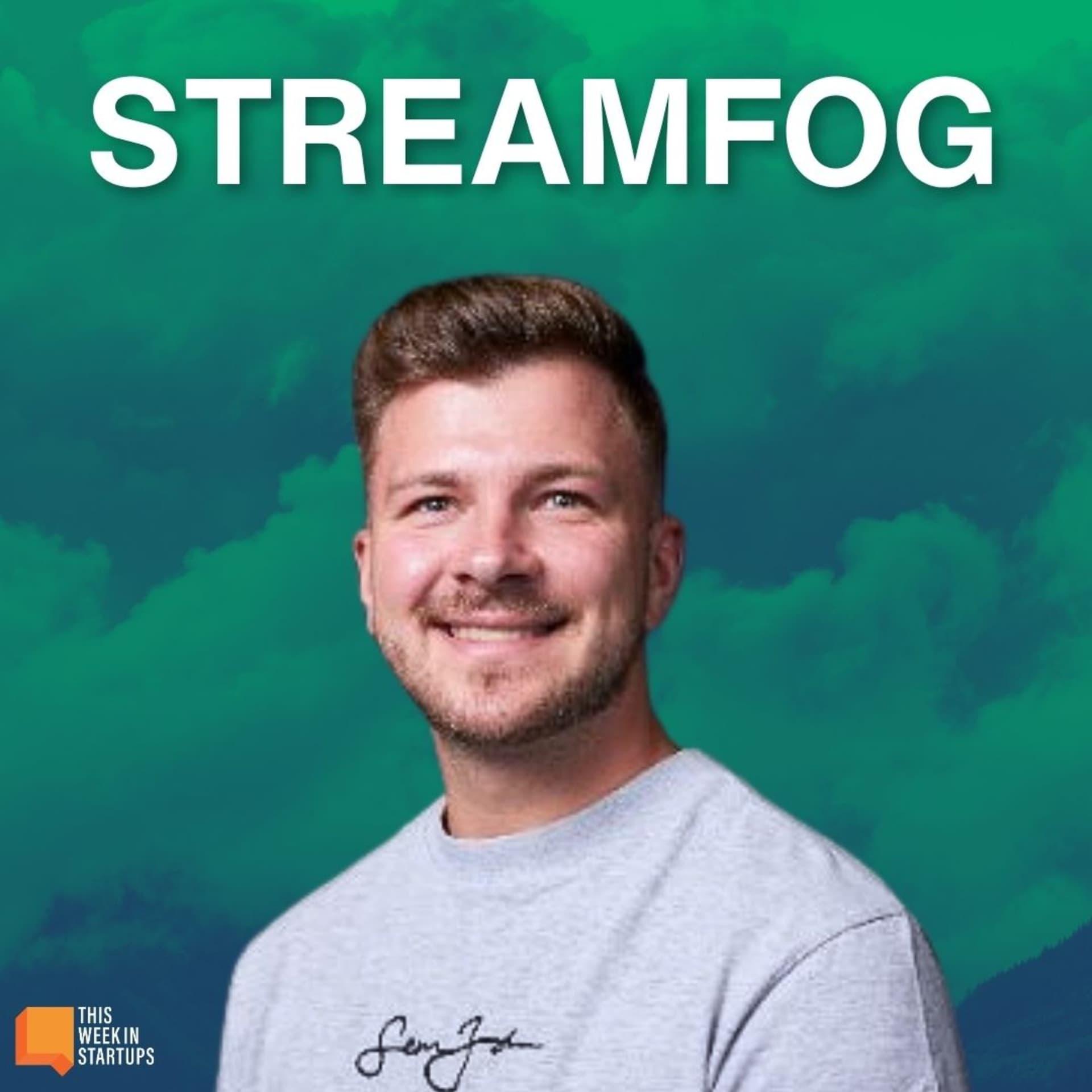
- Innovative Advertising Solutions: Kevin Bondzio presents StreamFog, a platform using augmented reality to integrate ads into live streams without disrupting viewer experience.
- Market Opportunities: Discussion about potential strategies for scaling the business, including affiliate marketing and providing a marketplace for creators and brands.
- Perplexity's Valuation Surge
- Recent Funding Announcement: The AI search company Perplexity has announced a new funding round aiming to raise $500 million, increasing its valuation to $14 billion.
- Growth Metrics: Perplexity reportedly achieved a growth rate of 6.3x year-over-year, showcasing strong performance in the AI sector.
Key Takeaways
- Work-Life Balance: The anti-work movement highlights a growing sentiment against traditional work expectations and the need for better work-life balance.
- Funding Challenges: The declining graduation rates from seed to Series A point to a more challenging environment for startups.
- Copyright and AI: The importance of navigating copyright laws becomes more crucial as AI technologies evolve, necessitating fair licensing agreements.
- National Initiatives in AI: Countries like Saudi Arabia are investing heavily in AI to control the narrative and technological advancement in their regions.
- Creativity in Advertising: StreamFog represents innovative approaches to integrate advertising into content seamlessly, which may redefine how brands engage with audiences.
Conclusion This episode presents a mix of current trends and challenges facing startups and the tech industry, delivering insightful analysis and forward-looking perspectives on critical issues affecting entrepreneurs and innovators.
Written by AI. May contain mistakes. Listen to the episode to check what was said.
Transcript
Automatic transcript. May contain errors.0:00I'm too old for this. and I'm too cynical and set in my ways. I just believe in capitalism. I don't believe in unions. I think that there's union leaders who fight for folks to get the same amount of pay. I believe in meritocracy. Everybody should fight for their highest salary possible. But if you set this up like this, I'm going to retire. I think the anarcho-syndicalists would probably want guys like you to retire. They would. They would want to retire me, literally like a replicant. They're aiming to get rid of the - Capitalists. Yeah, the upper echelon of capitalists and instill workers as the leadership rather than owners.
0:37Got it. And they'll be called, what would you call a worker who becomes a leader? What was that? It's like a fee or something? Like a boss. This Week in Startups is brought to you by Coda. Coda empowers your startup by bringing words, tables, and teams together. Strategize, plan, and track goals effectively with all your valuable data in one place. Go to coda.io slash twist to get started for free and get six free months of the team plan. LinkedIn Jobs. A business is only as strong as its people, and every hire matters. Go to linkedin.com slash twist to post your first job for free. Terms and conditions apply.
1:09And Northwest Registered Agent. Starting your business should be simple. With Northwest Registered Agent, you can form your entire business identity in just 10 clicks and 10 minutes. From LLCs to trademarks, domains to custom websites, they've got you covered. Get more privacy, more options, and more done. Visit northwestregisteredagent.com slash twist today. Hey, everybody. Welcome back. This Week in Startups, 2000 plus episodes, thisweekinstartups.com, TWIstartups.x. You can find us on Instagram, Twitter. With me again, Lon Harris and Alex Wilhelm. We're here three days a week, Monday, Wednesday, Friday, right about noon, Texas time, 1 p.m.
1:44East Coast, 10 a.m. Left Coast. We go through the top big tech, little tech, venture capital, and capital markets. And we'll take a detour now and again into a little politics, a little media. And of course, Founder Lessons is where we score our points. We put points on the board, unlike the Knicks in game three. But we'll make up for game four tonight. I was supposed to go to New York for game four, but I'm doing something at Austin University tomorrow night with Dave Rubens. Yes. Let's go Knicks tonight. I didn't go to game four. and I'm a little bummed about it, if I'm being honest, but it looks like the series might go five, six, seven, eight games and seven is the max.
2:25So I might go to a later game. We got a big docket because what we do, folks, is you can go to thisweekinstartups.com slash docket. We get all your stories. We look at how you're replying to us on X where, you know, the intelligentsia are talking about tech. But just to kick us off, there was an interesting discussion going on on Reddit. And this was in my favorite group, which is called Anti-Work. This is a group of individuals who believe that you should have maximum free time. There's no such thing as lazy. It's kind of a little bit communist and a little bit work-life balance. So you kind of get hardcore people who believe humans should not have jobs.
3:09Like straight up, there should be no work. The only work you should do is like raising your family, hunting and foraging for food, apparently, et cetera. And they kind of resist modernity. And then there's also just people who are in jobs, not careers, hate work and just want to vent about work. But this was an important one. So let's let's cue this one up, Lon. Yeah. So it's a user called Crimson, like C3 Crimson. I'm calling them Crimson. I think notably here, they've tagged themselves. You know, there's Flare in Reddit. They've tagged themselves as an anarcho-syndicalist. So they, in the shortest description I can give, they're basically an anarchist who thinks that trade unions should be the vehicle that liberates American workers.
3:50So this would be, you know, just like you were describing a person who believes that we need to liberate people from work and that their labor is being abused, exploited, and stolen in general. And what is that category called again? They're an anarcho-syndicalist. That would be anarcho-syndicalisms. So it's like you're - So anarcho-anarchist. Anarchist. Syndoclism being - Being like you believe in trade unions and that that's how workers should be uniting. So, Lon, just very limited government and then worker-based unions as the quantum of government, essentially? Yes. Okay. That would be the primary political organizing tool, not a overarching federal government.
4:33They're anarchists. They don't want that at all. Workers unite based on trade unions. Yeah. Okay. So I thought this is interesting. I will say when I had a little micro flare up of unionism at one point in one startup, I had a meeting with the leadership and I said, I'm too old for this. and I'm too like cynical and like set in my ways. I just believe in capitalism. I don't believe in unions. I think that like there's union leaders who fight for folks to get the same amount of pay. I believe in meritocracy. Everybody should fight for their highest salary possible. But if you set this up like this, I'm going to retire.
5:14Well, I think the anarcho-syndicalists would probably want guys like you to retire. Yeah, I don't think you're - They would want to retire me. Literally like a replicant. They're aiming to get rid of the - Capitalists. Yeah, the upper echelon of capitalists and instill workers as the leadership rather than owners. Got it. And they'll be called, what would you call a worker who becomes a leader? What was that? It's like a B or something? Like a boss. Well - And they become the boss. It's a world without bosses, ideally. Wow, okay. This particular post was not about anarcho-syndicalism. They're a remote employee and supervisor for a human services agency in Pennsylvania.
5:54They leave their work cell turned off after work and on weekends to preserve work-life balance. An admin recently chewed them out via email and said that their work phone must be turned on and with them at all times. Now, the OP is saying this makes them feel that they are expected to be on call 24-7. They don't feel like they're being paid enough to meet that expectation. And they don't feel like that was initially sold to them as this is a 24-7 on call all the time job. They're saying this is a massive deal breaker to them. And so the original post was seeking for advice. How do I go back and say that I'm not willing to be 24-7?
6:34They did follow up by saying the management has now confirmed they are expected to be 24-7 on call, but that it can be a rotation. So not everybody has to be on call at all times. They could make a schedule where some of them are on call some days and some of them have other days off. It's an important discussion, especially for entrepreneurs and setting expectations. The reason this person was a bit upset is because their expectations changed. And so I'm going to give you some language to use as a founder when you have to change expectations with your team. And that would go something like, Alex, I know that when we hired you, we did not specifically address this.
7:16But starting in Q3, in seven weeks, we will be moving to an expectation that you're available to our caseworkers off hours. What this means is you need to have your work phone on. and if somebody calls, we expect you to respond within an hour or two. There can be mistakes that are made and if you are absolutely not available because you're on a rafting trip and there's no cell phone service, we'll either get you a satellite phone or we will make sure somebody's covering your phone number. And so that's the communication part. So this would have been, if level set previously, less of an issue or a non-issue.
7:59But it really does depend, I think, on your compensation level, and it depends on your line of work. Because in the line of work we're in, we do have founders who will text us and email us at three in the morning, having something between a panic attack, a manic episode, inspiration, or a chaotic moment in their life, right? Founders are a unique group of individual. They own typically 40 % of their company along with a co-founder, or if they're a solo founder, maybe 60 % or 70%. So they're well compensated to have this level of stress, which is they do not, like CEOs, Tim Cook, something happens on tariffs, literally he's being woken up.
8:46Somebody, his security team gets a phone call, literally he's got 24-hour security. Somebody, Eddie Q calls, says, wake him up. Trump's in whatever. Here's the latest news. Literally, a security person comes and knocks on his horse and wakes him up, just like the president. Compensation equals that possibility. And so if you're making, and I'm going to pick a number, in the United States, the average salary is somewhere in the 50, 60 range. And if you took the average salary and you said you're below the average salary in the United States, you would be an hourly employee, most likely not management.
9:23in most places. This isn't legal advice, but you can look it up. You would be entitled to overtime. And then this falls into a gray category. Is it overtime? Because you're not working. So no. So what happens is you have to make the deal. And the deal to be made here is very simple. We're going to create an, if these people are paid under$60 ,000,$70 ,000, you say, hey, we're going to have an on-call schedule. There are 10 of you. Each person is going to be primary or secondary on two weekends. We're going to rotate it every five weekends. Primary gets the phone call, then the phone, if you're using like open phone, will ring the secondary.
9:58If, you know, it's a second or third phone call, whatever, and the person's not available. As compensation for this, we're going to give each person who's primary four hours of paid time off, whether they get called or not. And if you do four hours, you know, you're compensated. And if not, hey, you got three, four hours of paid time off. So if this happens 10 times a year or 20 times a year that you have this weekend and you're on call, you could earn up to five to 10 extra vacation days, one or two weeks. This is the way to do it properly. Founders, I know you're swamped. You got a ton of stuff to do on your plate.
10:35You know, there's a lot of chores. You got to juggle your priorities. And that's why I want to tell you about Coda. That's what I use to keep everything under control. It's an all-in-one platform, and it's going to consolidate documents, spreadsheets, and apps you have running into a single scalable workspace with an amazing UI. So Coda is going to help you set all your OKRs, you know, that's objectives and key results, and you're going to get access to hundreds of templates for tasks like setting priorities and mapping dependencies. At This Week in Startups, we use Coda every single day for important projects like the Twist 500 and Founder University.
11:09Why do we use it? Well, because we have all these portfolio companies who have tons of information and they submit updates. And the beauty of code is it's so flexible. We can use it for everything from tracking those companies to tracking their pitches to board updates, and it all can live in one place. And we don't get software overload. We don't have 20 different SaaS products that everybody needs to learn. They need to learn how to use one. So instead of juggling all these different tools, you got one platform and the whole team is super organized. It's really intuitive. The workflows are seamless and getting more powerful by the day.
11:42So here's your call to action. Coda empowers your startup to strategize, plan, and track goals effectively. Take advantage of this limited time offer just for startups. Go to coda.io slash twist today and get six months free of the team plan. That's coda.io slash twist to get started for free and get six months of the team plan. And then you could even say to people, here's the schedule, pick which weekends you want to be on call. And there might be some people say, this is the greatest deal ever. I want two extra weeks vacation. Can I get as much on-call time as possible? So you kind of flip it into an opportunity.
12:19Now, some other people might be like, you know what? I like to turn it off Friday, five o 'clock. I got kids. I got meditation, whatever. I read a book. I don't know. Tim Ferriss told me something. Andrew Huberman, whatever. I got a cold plunge. Therefore, I need these 48 hours for my mental health, my preference, and then you do that. So these are the ways to handle it. But I will say, if you view your life as a career, you're a real estate broker, or you are a venture capitalist, when you get that phone call, and I'll end on this point on the weekend, that is a timing moment of your career. And it is a competitive advantage to be available and to take it seriously.
12:57I get probably five of these a week, 10. They take typically three to seven minutes to dismiss. They typically come in the form of a text or an email or a Slack message, not a phone call. If it's a phone call, something's really screwed up. I'd say one out of 20 is a phone call. 19 out of 20, somebody emails me, term sheet fell through, CTO is quitting, we got a lawsuit. And I can say, great, we'll process it. I set up a time for us to talk and looking at it, here's my initial reaction. Boom. My job. That's the job of any venture capitalist. If you're a real estate broker and your client calls you and says, hey, I saw this home.
13:32I really want to see it. And they text you on a Saturday afternoon and you wear their kids at their soccer game. You look at your phone, you go, if I respond first, maybe I get this business. If I respond on Monday morning, 9 a.m., maybe I don't get this business in your best interest to do it. So I wrote that. Of course, somebody said, so your position is you got to stay 365, 20, whatever, be on call all the time. No, there's like, realistically, how often does this happen is the question. Now, if it was a call center and you're doing like, I don't know, sure, a microphone's call center and you're getting a call every hour, well, then you should be staffing it with full-time people or some other process.
14:10So I'll stop there and get your reaction, Alex, or questions. Yeah, just a couple of things. So first of all, I looked it up. Human services workers in Pennsylvania make a median salary of about 40. So this person could be making 50, say. So we're not talking about an incredibly well-compensated position to start. Nope. I think, Jason, you nailed it with the expectation setting, schedule splitting, and letting people have a little bit of flexibility. My spouse and her career has to do on-call weekends, like for example, the weekend we just had. And she gets paid extra for that. It's not voluntary, it's mandatory, but they definitely negotiate it in advance and get all that sorted out.
14:43There's a small fee, but it's not for every hour of the weekend. It's a fee that's negotiated for the weekend. It's a per-child-seen fee. The medical world, Jason, is a weird place. Okay, so if you have an engagement, you get paid for that engagement. You have to be around. And okay, great. She went to the hospital both days this weekend. Then I got to do solo childcare, which by the way, didn't get paid for world. Come on. Anyways, I think you raised a really good expectation setting. You're happy Mother's Day. The last thing I'll say is I read a lot of the developer forums out there. And a lot of developers will occasionally work at a company that has a on-call system, like, you know, tracking the pager in case the servers go down.
15:20PagerDuty is a company that supports that. Indeed. You might even wonder where they got the name from because it's their duty to have the pager. I'll just say this. Those are also divided up based on who's on call to make sure it doesn't burn people out. And we're talking about higher paid careers in those two cases. So if I was earning 50, I would expect at least the same courtesy given my lower comp points, Jason. So I'm kind of on your side here, but I also think that this company that Crimson works for, Crimson, didn't handle it well and just kind of like poor internal management. You can't just tell your people suddenly, oh, you can never turn this phone off and then just drop the ball there.
15:53So absolutely. Poor management. And Lon, Comrade Lon, I'll go to Comrade Lon. I think this is a real, it really comes down to incentives. If this person felt incentivized, for some reason, it could be money. It could be the opportunity to move up. It could be just love of the game. Like they're working on a project they really care about. If they felt incentivized, it wouldn't, I don't think, be that big of an issue to keep their phone on them and to check in. Like I check in with you on the weekends. We were talking about that. That's where we do our best work. We were talking about that graphic design project and like some other stuff we want to do for social media happens every weekend because I'm compensated enough to work at this job.
16:31I'm motivated. I love the show. I want to make a better show. It's not misaligned incentives when we powwow on a Sunday evening about the show. But if I was being paid a lot less or if I felt like the expectations were out of control in other ways, I would feel less incentivized and I would be like, oh, I got to check in on Sunday. It's a chore. So I think to me, that's what this feels like in the employer needs to do a better job of however you incentivize it, motivating this employee to want to go the extra step and check out was like an interesting part of it. So you you didn't set the expectation, then you chewed out.
17:07It's like, that's kind of like, you know, you're setting up complete failure in the relationship there. Now, if you did set it up, and this was the third time the person like blew off the client, you could, as a manager, listen, there's two sides to every story. I don't know what chewing out means. The person could have been incredibly appropriate and delightful, but it could have been felt as chewing out. because the level set wasn't there. If they said to them, listen, John, this is the third time you didn't pick up a client call. The last two times, we lost the client. They fired us. And then this time, we don't know.
17:44That's going to cost the company$100 ,000. And if this happens again, we're going to have to let you go. And you're going to have to really give some consideration to it if you want to hear it or not, because we can't afford to lose clients because the company is, we lost money last quarter and we're trying to get back in the black right now. So there's a way to handle this that isn't like chewing out. And some people like candid talk equals chewing out. If you have people in startup land, I'm going to bring it back to startups, who consider radical candor, shout out to Kim who wrote the book at Google, they consider radical candor chewing out, which like a government employee, which is I think a government position, like they're already in a toxic relationship, I'll be honest, a unionized relationship.
18:30It becomes very toxic very quick. Management is against labor. Labor is against management. Everybody is like, you know, being petty. You really can't have that radical candor. And so you need to set a culture and say, hey, we're going to just speak candidly at all times. And you can speak candidly to me. You can say, as a boss, you should have told me about this. You know, I wouldn't have taken the job if you did. You should be able to have that, you know. conversation. You can say, you know, I think I maybe I need to look for another job if you expect me to be on call every weekend. This is a little too stressful for me.
19:04I can't enjoy my life. So maybe it's time we part ways. It's a two way street that candidness. Okay, let's get back to the talk. Let's go ahead and talk about graduating from seed to series A. This is the thing, Jason, I've been tracking since my time at Crunchbase News. I call it just graduation rates. If you raise one round as a startup, how often and how long does it take you to reach the next? And one thing we talk a lot about here on the show, seed state startups, of course, Jason, because you're an investor in a bunch of them. And we care a lot about the pass through rate to series A. And well, the numbers don't look particularly good.
19:35I have some data here from our friends over at Carta, shout out to Peter Walker from their data team. And if you take a look at this chart, if you're watching the video, I'll quickly explain years are on the left and time passes as we go to the right. And you can see how many companies from a particular cohort done by quarter and year reached a Series A round after raising their seed. As time goes along, Jason, you'll note that more companies raise their Series A, unsurprisingly. Data goes up and down over time. The thing that stands out to me is a deterioration in the rate at which companies are graduating from seed to Series A in the last couple of years.
20:11And the most shocking data point Carter actually highlighted, which is that if you look at Q1 2023 seed rounds, those that are now two years old, only 15.5 % of companies in their database that raised a seed two years ago have raised an A, which is, Jason, far below the highest watermark ever set, which was 2002 Q3, when 40 % of seed stage companies have raised an A in eight quarters. I was blown away by this. I'm curious, one, your reaction, and two, what do you think is driving the filter? Yeah, 2020 when that happened, which was peak Zer. All right, we all know if you're a founder, or even if you're on a small business, you're thinking about your company 24-7, 365 days a year.
20:53That's the life of a founder. This is not clock in, clock out, nine to five gig for you as the business owner. So when you're hiring, you want a partner that's as equally as committed as you are. And that's, of course, LinkedIn Jobs. LinkedIn Jobs is like your co-founder. They're going to make it so simple for you to post your jobs for free on LinkedIn, where there are 1 billion members. You're going to be able to share what you're posting and actually keep all the promising candidates organized in one place. And also LinkedIn is going to help you quickly write a job and get it in front of the right people, whether you want to post for free or use some promotion to get it in front of even more qualified applicants.
21:35So do me a favor. Don't take my word for it. I mean, you should. I know what I'm talking about is where I find my great people. But just understand that 72 % of small businesses using LinkedIn said that it helped them find the best candidates. So find out why more than 2.5 million small businesses already use LinkedIn for hiring. So here's your call to action. Post your job for free. Why wouldn't you do it? It's free. F-R-E-E. That's a good price. LinkedIn.com slash T-W-I-S-T. Once again, that's LinkedIn.com slash TWIST to post your job for free. Terms and conditions do apply. So when you look at this chart, the red is they haven't, right?
22:17A very small number have, and then you go to pink and you go to this orange. Yeah, you can see that in 2002, it was at its worst. So that looks like it's eight, nine, 10, 11 quarters, right? For 2022 companies pulling through. Pull through is another way for graduation rate. Now, we don't expect it to be more than 20, 30%, right? So if you invest in four, you put$100 ,000 in four different companies and one of the four in the seed round makes it to series A, you will have paid$400 ,000 essentially for your equity in that company. That's a nice way to think about it. If you're pre-seed like we are, this is even less.
22:58This would be half of the amount, right? So very few pull through. But if you're pre-seed, like you're running an accelerator, you are investing at but a$1.7 million valuation as Y Combinator, Techstars, or ourselves, the Launch Accelerator, or in our Founder University program, even$1 million. So we will expect 40 % of our companies, we track this statistic, we expect 40, or we've seen 40 to 45 % of people coming out of our programs on average make it to another round of funding that is at a higher valuation. And I think we say over a hundred head in total investment. So if somebody puts a 10K check in and doubles the valuation, maybe we discount that.
23:44So it might be 25, 50, or 100, I think we said, as like a minimum benchmark for what we call pull through or graduation. Not to A, but to at least a round that's a higher round because people do multiple notes, et cetera. The carded data is but one subset. So caveat, caveat, caveat. Other issue here at play is that founders are getting to profitability quicker and don't need to get an A. They could do, and there's a seed complex out there where you can do bridges and notes, and it isn't as much about hitting that perfect Series A. You could have companies like Calm or FitBot in our portfolio that don't do a Series A for many years.
24:27They might do one or two notes or none and just do a secondary because they're so profitable. In the case of FitBot and Calm, both consumer subscription applications, they were so profitable they didn't need to. I've also seen this with companies like ToneBase, another one of our, that's a web-based subscription for learning how to play musical instruments and specifically classical. I've seen a lot of these companies where I'll offer them additional investment and they say no to me. All three of those were not interested in raising additional money or selling secondary because they were growing so nicely.
24:58So there's a little bit of that in there, what I call the alicorns. Unicorns, or in my mind, unicorns, flying over rounds of funding because they got Pegasus wings. Really nice trend. What this means also is the number of startups could have increased. So if you have a larger number of startups, but the same number of Series A investors, it's harder to kind of get that Series A. So you would do something creative like another seed round, another convertible note, and you just push it out, push it out, and try to reach profitability. If we had more M &A, which over the weekend, I'm not going to say which company, we were informed one of our portfolio companies was getting bought.
Read the full transcript
25:37This is a great transaction, apparently. We'll see the devils in the details, but another great transaction for us if it goes through, and it looks like it's going to. So the wrath of Lena Kahn ending, and the Trump M &A bonanza begins, which I would just say is a Republican M &A bonanza and hopefully less regulation on M &A. We need to let M &A rip or else we will not have risk capital at work. Let it rip, President J.D. Vance. I mean, Trump. I don't think either one of those is in charge. Now, Jason, I want to ask you about Series A benchmarks because when I was learning venture capital, it's pretty simple.
26:19You wanted to have a million in ARR and then you could raise Series A. Clearly, those times are behind us. I was curious if rising Series A expectations are impacting seed, pull through, or graduation rates. Of course, yeah. It's two or three million is going to be the number of revenue, amount of revenue. Yes, yes, exactly. So I went around the internet and I found some stuff about this. So Valor VZ says two million plus ARR, Founder Institute was about 2.4 million ARR. And the thing that I'm trying to sort out is how fast you have to be growing at, let's say two or three million ARR to raise a Series A.
26:51Because I saw numbers from 200, 300%. I'm curious, like, what do you see out there amongst your winning companies that are making it to Series A? Yeah, ideally doubling. So 100%. Yeah, if you're going from a million to 2 million, then a VC can look at it and say, wow, it's not an accident in all likelihood. Got it. Then look at the quality of the revenue. We've talked about that many times here. Are a lot of people churning? Do they have an incredible sales team that can sell sand to somebody in the desert? And now that person's like, yeah, I don't need any more sand. You got me once, but I'm not going to renew.
27:23So you got to look at the quality of the revenue. But people are looking at the early stages on small numbers for triples, ideally. A double would be fine. And what that means is they probably have a theory. We're going to give you five or 10 million. You're going to add these two or three critical executives. You're going to invest in these one, two, or three areas. And then we can increase that slope, which is what venture capital is for, is to increase the growth rate. Startups are meant to grow. and they're meant to grow like rockets, not helicopters or airplanes. If you've got an airplane and it's flying and it's gaining altitude, Lon, that's fantastic.
28:04Great, but we all know it's gonna get to 40 ,000 feet and then that's the tolerance of that vehicle. In venture capital, the tolerance is getting to orbit. You wanna be able to get to space and you need that critical velocity to do it. The critical velocity is jet fuel and that jet fuel, it's not for airplanes, for rocket ships. So the question then becomes, Jason, if we now understand the Series A benchmarks and we say that the seed companies are struggling to graduate for a variety of reasons, are they simply just not meeting the Series A benchmarks? And is that why they're stuck? No, a lot of them are meeting it.
28:39I think there's just not enough VCs to go around. And the VCs only have 10 dance cards. So if you have a lot of these funds getting really big, they have to put bigger numbers to work. And then there's other people to come in and fill that gap, specifically SPVs. So we talked about the company that makes human robots over and over again here. I don't mean - Figure. Figure, yeah. And listen, I wish the founder tremendous luck and I was on his side with the BMW issue. So this isn't like a Palmer Lucky situation or Zuckerberg situation. Don't start clipping me and trying to get me in trouble here.
29:14But they're raising money according to what I've read in SPVs at$38,$39,$40 billion pre-revenue or pre-any significant revenue. Those would be the red flags that people would see in a market where optimism trumps reality. And that's fine. Investors are willing to create reality for this massive optimism. Founders are allowed to capitalize on that. But man, that can create a lot of distance and a big bubble between things on the opposite. And so that means like a VC firm doesn't do that round. And the VC firm would be looking at it saying, well, what's the IPO going to be? Or who's going to buy this for how much?
29:52And what's their theory going to be? They're going to look at those two exit potentials and then they'll work backwards. And they might give you credit for year three or four's revenue, but they might not give you credit for year 30's revenue because there's no room for a return for their LPs. Founders, if you're serious about raising money, you need to set up your business the right way. Tight is right. And it all starts with having a registered agents. Investors simply won't fund your business if it isn't structured correctly. Before a VC can wire you the first dollar, they're going to check, is your company incorporated?
30:25Is it in good standing and compliant? Missing a filing or losing your status? I mean, it's just going to be a deal breaker for the VC. It's like you're not taking things seriously. And that's what happens during due diligence. That's when a VC makes sure they're not making a mistake by giving you investment dollars. And hey, angels do this as well. And that's where Northwest Registered Agent comes in. For just$39 plus state fees, they act as your registered agent. They handle all the paperwork, they keep you compliant, and they make sure investors see you as a serious business that's worth funding.
30:58In just 10 clicks and 10 minutes, your business is officially set up and investor ready. Northwest handles filings, they protect your privacy, and they ensure that you never miss a deadline. These are the chores that you don't want to have to deal with. You need a partner and Northwest Registered Agent is that partner. Thousands of founders trust Northwest because they keep businesses in good standing. And with their expert corporate guides, you get real support. You don't get bots. You get real people on the phone. So here's your call to action. Very simple. Easy peasy, lemon squeezy. Don't let bad paperwork cost you your next funding.
31:32Go to NorthwestRegisteredAgent.com slash twist and get your business investor ready today. For just$39 plus state fees, you can set up your company the right way, fast, private, and compliant. Go to NorthwestRegisteredAgent.com slash twist today. That's the thing that's troubling to me in this whole space right now. And that some entrepreneurs, you know, and they're allowed to do this, if there is willing buyers of securities at a fair market price. We are selling to willing buyers of the current fair market price. Is the figure fair market price$40 billion? Who's to say? The buyers are willing to pay it, therefore that's the fair market price.
32:17Literally, that's the definition of a fair market price. But if the VCs and what we'll call the Sharps, the people who are really good at placing bets, are opting out at that level, that tells you one of two things. The VCs are wrong or the other market participants are wrong. Who do we think is wrong in this equation? Sequoia, Andreessen Horowitz, or a bunch of people who are high net worth individuals putting money into an SPV with a 5 % or 6 % load-in fee? Yeah. People have been doing it for 50 years? People who backed Apple, Google, etc. Or the people who, you know, they YOLO'd a bunch of crypto and decided, hey, let's see if I can YOLO one more time.
32:56Sometimes the YOLOs are correct, as we've seen. Other times they're not. Overall, I feel like the industry is getting, is in the process of coming out of a brutal four-year struggle with COVID. Literally, if you look at what the industry venture has gone through, it's kind of like having some kind of COVID. And now you're coming out of it. M &A is happening again. Again, funding's happening again. We're seeing weird things. Weird things always happen. So when you see weird things, that's actually a sign of a healthy environment. Some people get a little too frisky. Some people are too conservative.
33:33That's actually, as long as transactions are occurring, that's good. But my Lord, I just hope we're not in the long COVID situation where venture has long COVID. It's just constantly not able to hit the strides it hit previously. We need to get more numbers on the board, more IPOs, more M &A. Let's talk about copyright. Right. So we have confirmed news that the president has fired Shira Perlmutter, the head of the U.S. Copyright Office. Her office put out a report recently casting doubt on the rights of A.I. companies to use copyright protected information to train their models. So the report didn't didn't say that what a lot of people who work in A.I.
34:16or invest in A.I., they basically want the government to give carte blanche. There's no copyright protection for training your models. It's fair use. And the Copyright Office did not quite go that far. So they said this report potentially harms the argument that tech companies can just hoover up all the published information in the world and use it for whatever purposes they like. the wording is specifically copying expressive works from pirate sources in order to generate unrestricted content that competes in the marketplace. That would mean, you know, meta and other companies that use these, you know, sort of big pirated archives like LibGen, or we talked about the pile on another episode, these massive troves of already stolen material.
35:01They've been sort of sucking that up and saying, well, we didn't go violate copyright. We just use this third-party collection of copyright restricted material, this report is basically saying that's not okay, and it's out of step with copyright law. So that could be a big obstacle to training these models moving forward. I just want to say this report, pretty good. It's long. I didn't get to read every word this morning, so I think it was like 100 pages or something. But if you're curious about how AI works, generative AI works, copyright history, different arguments. It's pretty even handed.
35:35So I would really recommend everyone take a look at it. There's a link in the docket. We'll also put a link in the show notes that go up on YouTube and so forth. But definitely just take a peek. I had to really narrow down what I wanted to pull out for today, Jason, which is the quote we just went through. But I'm curious how much heat you think this puts meta under it. Because famously, they were known to use LibGen for their AI model training. This seems to me to be an inside job. I think there are a lot of people, you know, the way our government system works here in the United States, for those of you outside of it, is you give donations, you get access, and you back.
36:09Money plays a big role in politics here in the U.S. You back your candidate, whether you're giving 100 bucks to Bernie Sanders or you're giving 10 million to a super PAC for Biden or Trump or whoever, Clinton. So money buys access, and entrepreneurs and corporate interests have more money than individuals. This is the nature of our system. So it is part of political speech that, you know, well depocketed sources can do this. Who's depocketed? Obviously, Meta's depocketed. Obviously, Google's depocketed individual venture capitalists, et cetera. And the law is the only backstop to this. So what needs to happen here is because special interests are fighting to break copyright, it, which I encourage them not to do because it will have so many second and third order impacts that you cannot predict, like people will stop making content that would make your thing.
37:07It's much better for these companies to pay a licensing fee. If the opportunity is as great as it appears to be, then you should do what some firms have been doing. Microsoft and ChatGPT, OpenAI, have licensed content from people and paid a fee to do so. You two gentlemen can go do your race right now in a GTP, an LLM to find the deals they've done. But we remember, you know, like some magazines had actually done licensing deals for them. Those deals are going to need to be done at scale. And those deals present an opportunity. The opportunity being when you open up your LLM to say, we have the rights to Reddit.
37:45And other people don't. So you could, you know, if you're a Grok, come out and say, hey, we're Grok, pay 30 bucks a month. and you get Reddit, Twitter, Disney, and Shimon & Schuster and the Wall Street Journal. And then ChatGPT or Gemini could come out and say, hey, and you can use our services and you get X, Y, and Z. This could be a competitive advantage for each. And then you could explicitly say, tell me what Reddit users are doing. Tell me what Disney films, you know, make me a short film with every time Boba Fett has appeared in a Disney film. those cool features tell me every New York Times article that mentions Bob Dylan and make me a timeline and give me the songs mentioned in it and make a playlist out of that with Spotify.
38:34Like these are really interesting queries I just came up with off the top of my head. Those should be used in the branding of LLMs in the future, and they will. And that is the brilliant way for this to emerge in the United States. and then you could buy red. You could buy Quora and you could have that forever just like Elon bought Twitter and it's now part of XAI. Nobody else can use Twitter. He will defend that. Sam Altman, I think Reddit did a deal. Am I correct that Reddit did a deal with Google? There is a Reddit OpenAI partnership from last year and also there is the Google Reddit search deal that Reddit discussed in its earnings post IPO.
39:10Jason, you're dead on. Just to answer your question though, so OpenAI partnerships include Washington Post, Axios, Future, Hearst, Time, Reddit, Axel Springer, et cetera. So quite a number of them. And those are non-exclusive, as I understand. I don't know on a per deal basis, but I do believe most of them at least are not by my knowledge. Also keep in mind that Times is suing OpenAI over this issue. But what's interesting is that the copyright office came down, I would say a little bit generously on the side of, if you're taking in information for training and then using it internally, 100 % clear, or if you're going to take in data to train and don't allow it to be copied, as in the prompts can't spit out the original, probably okay.
39:49That's, I think, pretty fair, Jason. But if the political climate is so sharply opposed to what I would say is a very reasonable middle ground here, what should founders know and do? And then also, do you put any truck behind the argument that if we do have strong copyright protections here in the US, contra AI training companies, we're going to lose to China? Or is that just kind of fear-mongering? We will win because we will be able to put pressure on China and block those models for copyright violation. If a Chinese company tried to operate in the West and sell Microsoft Word, we would block and sanction that company in Italy, Africa, India, and the United States, South America.
40:30And by the way, Chinese companies have tried to do that. And Microsoft, as but one example, wound up being able to sell their products in China and block Chinese pirates from doing this kind of stuff. And this will make our industry stronger ultimately. So it is ridiculous to say, because the Chinese are stealing intellectual property, therefore we should be able to. It is ridiculous to want to protect your intellectual property in China, and then at the same time say that other IP holders in the United States shouldn't be because we won't win the AI race. We will actually win the AI race. We will slow down to speed up.
41:06If it turns out that licensing Axios and licensing the Washington Post and giving Washington Post$10 million a year or five people giving them$10 million a year, they can then hire more journalists. They can then do more projects. Those projects then will accrue to U.S. companies directly in real time. So imagine$50 million, divide$250 ,000 in total compensation for the most extraordinary journalists in the world. That would top, top pay for like 40-year, 30, 40-year vets with master's degrees, et cetera. Now you're talking about four for every million dollars, 50 million. You're talking about 200 of the pop-flight journalists filing, I don't know, every, let's say 220 pieces a year.
41:58They're doing one piece every two weeks. Now you've got 4 ,000. And that's from one publication. Extremely rich, detailed analysis and research pieces in our archives in real time. Smarter search results. Better way to take on Google. Not a bad way to go about it. Go ahead, Lonnie Donnie. And to flip it, I mean, I think if we say there's no restriction, you can feed all the history of published work into AI and use it to create any new thing you want. I think that creates an existential crisis for media, writers, journalists, publications. In general, we still, I think everybody or most reasonable people would agree, you want to have both.
42:38You want to have the ability to use AI and generate AI outputs. And you want to have people still doing the original writing, researching, and reporting that some people are doing now. You don't want to create, we can't have the AI be the only writers. I think that doesn't really make sense. And so we need to do something to protect the media that we already have. And I think we're watching it shrink down to a nearly, you know, like minimum size to function. And I think that there's a real danger of that. And so creating an AI ecosystem that still provides in some way for there to be income for journalists, and even if it is being licensed by AI companies, that's virtuous.
43:19We need something like that because clearly the ad market alone is not enough to fund the journalism that we need to function as a democratic society. Yeah. And created by humans is a company we've invested in that is going to work on creating clearinghouses. Here you can see on your screen, the AI rights licensing platform for books. And they're starting with books. So you can put your book in there. And then you can get paid by each LLM. They do the clearing. You can pick the number of years, how much of the book they're allowed to put in there, how much they're allowed to quote. You want books to be written.
43:52if people get paid 50k on average to write a book you know like real authors no i mean i got paid a million but you know like because i have a big following and that's kind of how books are done right now you know based on your following and celebrity status yeah yeah i think if you've yeah it's it's it's even more than celebrity it's do you have distribution so celebrity without distribution equals nothing in this new world it's celebrity um like kelly worstler she's got like 2 million followers, you know, she writes a book about design, she can get paid a lot of money for that book because, hey, you know, she got some, you know, number of followers.
44:32So she's like super popular. Now imagine, you know, she writes her book about design, how much she could get from each of the language models for like, let's say it's a coffee table book. Well, if you have a beautiful coffee table book of beautiful Italian design, and they took all those original pictures and there's 200 beautiful pictures on 100 pages in the book with captions and it really makes a great point think about how great that could be to have in your llm when people ask about modern design italian and you can pull up the high-res photos with a link to the book to buy it so that can all be in the terms we could do very granular licenses alex where you say you could have a full res image you could have up to three images for free if you want 10 images and a thousand uses it's five dollars per thousand if you want all of it and you want a hundred thousand user queries returned you could literally price it per query returned and quoted if you use one of these language models go ahead and do a search your line and say what does the wire cutter think the three best coffee machines are three best coffee grinders over the years and do that into your favorite three LMs and be ready to pull it up.
45:46Alex, while he does that, I will tell you a story. I paid for the New York Times for many years. The number one reason I did was because Wirecutter. I'm a consumer of products. I trust Wirecutters. I love the guy Brian. I tried to buy Wirecutter. New York Times bought it. Behind a paywall now. Yes, it is. Consumer Reports. Behind a paywall. Also ask Lon and Consumer Reports. Three best coffee machines. Alex, you have a New York Times subscription, I assume, paid maybe. Okay. If you would be so kind as to pull up those two pages, what you will find is Alex Wilhelm pays for New York times. He's going to pull up best coffee grinder.
46:20He's going to pull up best, uh, coffee machine. He'll show those two pages in a moment for Mark or Lon. Do you pay for chat GPT? I do. Okay. Do you pay for New York times? No. Okay. Perfect. So we have a chat GPT person and we have a New York times person and chat GPT person. So Lon, just pull up your pages and share them what did it tell you were the number one two and three according to those two sources from chat gpt chat gpt is going a little slow but uh at the number one coffee machine is the breville barista express number two is according to this is this is chat gpt citing wire cutter perfect uh here i'm supposed to get what it is yeah breville barista express is number one.
47:02Number two, Philips 1200 series. Number three, DeLonghi La Specialista Arte Evo. And then it goes on from there. I'm going to share the clawed ones in just a second here. So Alex, what does it say on the actual page? Is it relatively correct? I'm going to need you to specify, they have like 16 different sections here. So, best programmable drip, simple drip, budget drip, portal. I think the drip. Just do the drip. But I would also add But ChatGPT also says, I don't have access to Wirecutter's articles due to restrictions. So I'm sharing some highly regarded coffee machines and grinders from the past few years recommended by experts and enthusiasts.
47:43Okay, so it knows now. Now, I have that one, the Technovorum. I have bought both of those. Those are great machines. I had the top one at the office. I had the second one in, you know, whatever, at home and in the ski house. Beautiful, beautiful. Expensive, but great. Claude notably did go to actual Wirecutter and Consumer Reports and pulled because it can search the web now. So Claude actually lists here are Wirecutter's top coffee maker recommendations and consumer reports. And then the same thing for the grinders. So it says Wirecutter's top three are the OXO Brew 9 cup coffee maker. That's a great one.
48:20I had that for a while. The Bonavita Enthusiast 8 cup drip coffee brewer and the Breville Bambino Plus. Perfect. So what you'll find from this, if you do it yourself, is it generally gets it right. And it generally means you don't need a New York Times subscription anymore. Grok also was able to search and actually pulled the real one. So if it searches and it links to the page, that would feel more like a Google search, which would be okay. And a Google search might actually put it there in the snippet up top. The point being, you now can just cancel your subscriptions. The consumer reports, and we'd have to do a better study here.
48:59But this is at the key to the lawsuit from the New York Times to the OpenAI is that they're end running and they're confusing consumers and then consumers don't need to subscribe. I literally am exhibit A for this. I did not renew my New York Times because I was like, I can get this information for my chat GPT subscription. And there you have it, folks. I think this will keep happening. And then people have to put their stuff behind a paywall because of this unfairness. and um you know to sam altman's credit open ai is respecting and fixing things now the entire industry must unite as one and set the terms with each llm they need to write a legal letter to google they need to write a legal letter to claude meta grok etc they need to inform them we are a consortium of people who have content that is valuable here's how we want it presented here's how we want you to do Robotics.
49:56And content people are so dumb and they're so disorganized and they're so mean that they don't know what a slam dunk case this is. And this is why the New York Times is not falling for it this time around. The New York Times has been screwed in the past, but now they have a subscription business. When you have a subscription business, you need to look at what the music industry and Disney has done. These two organizations will sue you into oblivion. Music industry, a hundred times more than Disney. Disney, a hundred times more than New York Times, but New York Times, now that they're a subscription business, they know there is no fair use.
50:31In their mind, the music industry believes there's no fair use. That's ridiculous and absurd. And they have taken that position with YouTube. So when you watch the reaction videos I've played here before, they will try to stop reaction videos. They will try to keep them from getting monetized. YouTube came up with a great system called content matching, content ID. If you're dire straits and somebody, the Daily Doug, reviews Dire Straits, and he talks about this, how sometimes even though he's doing criticism, they will try to stop him from doing valid criticism on a song. And he's interrupting the song five times, so it's not like you're getting the CD for free.
51:10He's interrupting it constantly. I mean, I suppose you could edit it down. But they will sometimes take his advertising revenue, I guess, or if he has no advertising on it, but you have to fight for that. And sometimes he doesn't fight because he's already got one strike against him and three strikes are out yeah channel i mean that's the problem like content id i agree it's a it's a it's a brilliant solution big picture to this problem the the issue is that on a you know because it's it's it's it's iding so much content per day there's a lot of false positives it tends to really lean on the content owner's side so you know for like honest trailers we couldn't even include like a five-second snippet from a movie where they're singing a song or we'll lose our entire video, even though, you know, we're making fun of it.
51:54We're not just playing the song and listening to it. And they can take your advertising revenue. The whole video would then belong to the owners of that copyrighted song that we played, you know, a three-second segment from. And what if you had three, you played five different songs from five different movies? Yeah. Any one of them could claim it and steal the money. And even to an even more granular, We did, years ago, we did a parody of Mary Poppins and we rewrote all of the Mary Poppins songs. But because one of our parody songs sounded too close to the original Chimney Sweeper song, they dinged us.
52:28And we had to come up with a new parody Chimney Sweeper song that sounded less like the original Chim Chimney. So anyway, Get Together, this is an amazing moment for content companies to get paid. It's an amazing moment for the language models to create a sustainable, fair system. the only way you'll get technologists to do the right thing in my experience when it comes to content is to do what the music industry did is which is hold the line and you just have to be relentless never drop the suit never compromise go after every single infringement now that sounds crazy because i have complained about the music industry and their approach before but i think that's how you get their attention they clearly got sam altman's attention and now he's like doing these things.
53:14And if you ask for Disney characters or to do stuff with Disney characters on chat, GPT, it's stopping. So if you were to ask it to make you a Star Wars, you know, short video of, you know, Darth Vader fighting Darth Maul, I think Sora is not going to let you do that. It's really fascinating how specific it is now. Like last week for All In, there were some parody videos of like, you know, a member of the All In team is the Pope or whatever, and that's allowed. But you can't make something that ChatGPT thinks is making fun of the person. So, like, dressing them as the Pope is okay. But if it was like, make them the Pope, and there's ketchup dribbling down the front of their Pope outfit and on their face, it'd be like, no, no, no.
53:56Can't do that. That's over the line. That's too mean-spirited. Okay. But Jason wants the media business to aggregate, to kind of, like, maybe collectively bargain, perhaps as some sort of, like, union against the major AI companies. Not one of those. no it's got to be lawsuits it's got to be capitalistic i'm just poking no but i mean i get your point but it is the difference is the content companies love unions let me say that one more time content companies love the unionization of content employees you know what happened one of the major content i want to say farms but you know major online publishers said to me when, you know, all these, I guess, Vox and Business Insider and BuzzFeed, they all went unionized, you know, all those unions.
54:44I don't know. Were you ever dragged into that, Alex, to be a union? No, but I was, I'm in favor of media unions, so I've raised my hand to take part in one before. Great. I'm in a union. Biggest mistake ever for both of you. You know why? I'm in the Writers Guild. No, but that's fine. That's like for the, uh, for movies and TV, but I'm talking about for these content ones. The owners of those businesses were laughing at you, Alex. You know why? Somebody like you should get paid more than the average. And what they said was, these idiots. This is literally what they said to me, like, you know, late night bar kind of situation.
55:16These idiots, like, they have no idea how much money they're saving us. And when an all-star like yourself says, hey, I deserve a raise. Listen, I'm bringing all this traffic. Or Molly Wood. Or, you know, Kara Swisher. Pick somebody. Walt Mossberg. they would get paid five times ten times what a rank followed they would say oh you know we wish we could pay you more but you know it's against the union guidelines we wish we could give you oh you want more days off we would do that but it's the union they loved it loved it the reason why i'm i'm only a 90 capitalist maybe 95 is that i i take a ding to support my uh my friends but let's not get into you would take a pay cut and be like let's say you were not an entrepreneur now because you went an entrepreneur so you voted with your dollar yeah you're telling me like a younger alex would be like pay me 10 less so that like other people who don't drive the results i have when i was managing crunch based news and i was really advocating to get a couple people some reasonable comp increases i offered to take a pay cut to make it up my lord i mean i take care i take care of my people i don't know man my god i mean but there's the corporation who's but when When you're running a team at a corporation, you often can't take care of your staff that's underneath you as you think you should.
56:30And so you have to really go at it with every tool you have to grind the money out. But again, not about me. I don't know. Now I'm like, this has sent me into a total tailspin. I know, I know. I am a capitalist, but I'm also a person who has been broke before. All right. Okay. We're going to office hours. We're going to talk about something that I'm very excited about, Jason, which is what if you're a live streamer, as we all here are live streaming, but you really wanted to be a frog or perhaps Darth Maul. Well, then you need some cool AR tooling. There was something called Snap Camera that got taken off, but don't worry, streamers of the world.
56:59There's a startup called StreamFog, part of Launch Accelerator 34, that is making all this possible and more. So please welcome to the program. It's Kevin Bonzio. Kevin, hey. Hey, how's it going? Hello, sir. How are you? Where are you calling in from today? Austin, Texas. Austin, Texas. I've been there. Local guy. Great. Are you coming tomorrow to hang out at the office with us? We're having a little founder day. Did you know about that? I know, and I will be there, of course. Oh, I will see you there. we'll be having some Stubbs barbecue, perhaps. Love that. Alon and I scouted Stubbs on Friday.
57:29It was good. Man, that pork rib was no joke. Yeah, the pork ribs are very good from Stubbs. Yeah, I recommend it. And also that fried okra. I was, mm-mm-mm. But fried okra does not travel. I had to throw it away when I got home. No, yeah, you got to have that fresh. So, Kev, maybe you could show us what you're working on. You know, pictures worth a thousand words. And then tell us what's working. What are your wins? What are your fails? What's working? What are the blockers in your startup? Yeah, so my name is Kath. So in content creation, Jason, and you know it as basically being our ideal customer, product placements and ads play a crucial role in monetization.
58:04But the implementation can sometimes be disruptive. If you have a full screen banner or even a clip playing, some viewers will just hover the YouTube timeline to skip it or be on their phone, right? and we basically think that StreamFog uses augmented reality to place those ads organically as part of the content in a natural way. That's kind of our idea. And you already said it, so I can showcase it to you basically. So as you can see, I can keep talking. I have an organic way of just interacting with you and the viewer just still sees an ad placement. And that's kind of how we think ads and video streaming should work in today's world.
58:45For those of you who didn't see, an Uber Eats just flew by Kev's face, and it was distracting but not debilitating for the stream. Lon, Alex, if we did this during this week in startups, would you be appalled or think it's fun if an Athena assistant ran in and took some notes? Would you be like... I mean, I think these things always come down to context. You know, if it's a serious show for doing a very serious segment and then a goofy animated character shows up and dances around behind me, not appropriate. But I do think, depending on the vibe of the show and the hosts and the kinds of things you're talking about, something like this could be really fun and a great way to do an ad that's not only not distracting, like takes over the whole show and then the content stops, but it's not, you know, like it feels organic.
59:38It feels like it's part of the show and not like this thing that's interrupting the show that you have to get through in order to get on the other side of it, which I feel like is the vibe of so many ads. Especially if it replaces an ad that I'd have to skip. Otherwise, like if Kev said, Alex, listen, you can see this ad live while I'm talking to you, or I can stop and put a full screen Pizza Hut ad, I'd definitely take what he just showed. That said, Uber Eats Kev sends me so many push notifications randomly trying to sell me booze that I never want to see that particular animation again. Thank you.
1:00:08That's a great note. There should be a setting for people who are sober to not get pitched on booze. That's such a good idea. But isn't it strange too? I feel like for so many years we were told the algorithms are so smart. They're so advanced. They know everything about you. Isn't it weird that the algorithms don't yet know after years of presuming that Alex is sober? Well, an algorithm might actually know he's sober, have figured out that sober people will binge and getting them back in the fold. That's horrible. I hope it's not that. I think it is, actually. It might be. I'm not saying you're wrong.
1:00:48Remember, the algorithms are indifferent to outcomes. They're indifferent to anything but an outcome. The algorithm is indifferent to anything but success. Success is defined as increased orders. Yes. If you want to increase orders, getting a person who is sober to fall off the wagon could be a daily 12-pack. It might be that I learned that. In fact, we were just talking on Megyn Kelly about how the algorithm at Meta was taking deleted selfies or selfies that weren't published. Oh, right. Yes, yes. And then for young girls or women, then feeding them beauty products based on the selfies they either removed or didn't publish.
1:01:29In other words, I publish a selfie and it's like, oh, I have bags under my eyes. Great. Here's like some cream that theoretically removes the bags under your eyes. It was targeting girls who deleted selfies with. I presume Kev is not trying to knock me off the wagon here. So I'm really curious about the split in your business, because when I was just learning about StreamFlog, I saw you guys offer the service for free and then you can buy certain assets. So I thought, OK, cool. Kind of a simple freemium business model. But now the focus that I learned more really does seem to be about creating this new ad format.
1:02:01So can you just tell us how much progress you made on having this be a product that is in the market versus a cool demo that you just showed us? Yeah. So maybe let me start by saying we have like a creator tool for mostly Twitch streamers. They can use AR effects to just have a more interactive content and that is and will stay for free. So they can just have fun. We love them being engaged. But we have like kind of the other side of that marketplace or the B2B side where we allow marketing agencies or brands to run these campaigns on Twitch and we recently started doing that on YouTube as well.
1:02:30So we have these two sites where the creator side is for free but the interesting part is we can offer these creators now sponsorships so we kind of act like a marketplace where we build both sides of that marketplace simultaneously and now every creator can not only have these fun goofy effects but say hey actually I want to sell my camera space as a billboard and earn more revenue in an organic non-disruptive way. So So that's kind of our idea. We monetize directly the kind of the business enterprise side. Creators can use it for free and even earn money. Do you have the Uber Eats coming to you and saying, here is an affiliate code.
1:03:05Any new accounts open, you get a hundred bucks. And then you go to streamers and say, hey, we made this collateral. If you run it, every time you get somebody, you're going to get 75 bucks. We're going to get 25. Are you interested? Have you thought about that? Like affiliate network dynamics? A hundred percent. And we already have two affiliate campaigns running right now. Uber Eats was like a one-off campaign where an agency came to us. Here's the campaign. Here's the four creators that needs to run it. And we acted just like a tech platform that created technology and the visuals for that. So we were kind of like just bought as a technology at that point.
1:03:36But we also run affiliate campaigns with others. Does it have to be a live stream? Or can you go to my previous videos that were posted and in some way put a layer on them? So if I did a deal with Budweiser, Bud Light, you could go. Like if I'm Dylan Mulvaney, you could go to every previous TikTok I did and somehow insert it in there. I guess it wouldn't be possible. You have to repost the video, but it'd be kind of cool, you know, if that was possible. It's a great question. So we right now integrate with OBS and mostly live streamers, but we ran our first YouTube campaign last month. And we're now looking at, okay, how would this work with YouTube, right?
1:04:12Do you as a content creator upload your video? And then we can add those after automatically. we're now looking into this YouTube market how will it look like for a video that was pre-recorded? I think actually... sometimes closing the loop is a really interesting concept to get the flywheel going. So here, you know, you had the one-off from Uber Eats, but what would you say is the open affiliate product that has the highest commission rate? Is it still credit cards or an E-Trade Robinhood account? Do you know that answer? It's a good question. I heard that in the gaming area, there's these like energy powders that have great commission base.
1:04:52Perfect. So let's take the energy powder as a concept. Here's what I think would be an interesting test for you, since we're doing office hours here. You make a relationship with one of those. You say, hey, listen, I got this thing. You're going to get not only the affiliate, but you're going to get some shine, right? You're going to get some CPM campaign. I'm wondering if you would hire us to go and do these campaigns with influencers on their streams. but we will also for this fee flip their best of and then we'll make shorts for you and then we will run advertising of the shorts against their audience and retarget them and then we will share the results with you and it will be a win-win-win situation the streamer doesn't have to do any additional work because we're doing all the clipping of those videos and posting them with them.
1:05:47You don't have to do any additional work. You outsource it all to us and we'll get you more sales and more eyeballs on yours and we'll do it exclusively with you. So we'll give you 12-week exclusive. We won't do any other energy products. We have 20 different streamers we work with. We're going to get as many of them involved as possible. And then we win because you used our tool. We want you to be a Lighthouse customer. And then we want to obviously generate revenue because we're a startup. We need revenue to raise more money. It'd be like a very interesting packaging where you sell them a group of 20 people and you get some cpm you know it's just uh you say hey five hundred dollars per streamer up front you know so we need ten thousand dollars for that we need ten thousand dollars to run the campaign and then we want whatever percent of the sales what do you think i think that's a great idea and like as you said like these these um brands and campaigns often want to have this full all-inclusive solution so that would actually be a great upsell potential at that point so anything with your business that you need help with Now, you're in the 34th accelerator class.
1:06:46I'll see you tomorrow. So we'll have some barbecue. We'll talk some more. But just here for the sake of the audience, anything you're struggling with, any blockers, anything confusing in your business as the founder? I have one particular question. When we run these campaigns, the brands are pretty happy. The creators are happy. And we can measure, in absolute terms, engagement range. But for us, I'm always trying to say, okay, how do we actually do a fair one-to-one comparison with traditional formats, right? and I always come back to the idea of, do we have to run a case study, like a very official blind test to run this or are there other ways to really show them the benefit like really in numbers?
1:07:22There are firms that will go do recollection kind of things. So if you've ever been on a website and it's like, hey, will you take a survey for us? And it's like, hey, you know, we're just doing some advertising surveys and like they do a post survey. Hey, did you see any of the following advertisers on this website? and like Samsung did some campaign and it's like Apple, this, this, this, and Samsung. And they're just trying to see if it lifted that. Those are like for when people are spending millions of dollars, maybe tens of millions of dollars with a publication, et cetera. You're outside of that.
1:07:54People are going to do this for the vibes and you can come up with your own metrics, which are, you know, we know, we have a list of a hundred streamers and we approach all hundred on your behalf. 40 of them that, you know, who are in the top category said no, because they want five to$10 ,000 in advance. So we'll manage that relationship for you if you want. But of the 60 that didn't want an advance, we were able to hit 37%. So we hit 37 % of the top 100 streamers. And so you had a 37 % saturation rate, or completion rate. And so you're making up this metric, but of available, so of available top 100.
1:08:32So it's not the 100, it's the available 100, who do these type of deals. You know, we got you 57%. So you can kind of come up with your own metric. And I think reach is always the issue with these. So this is where it gets really compelling. You know, you could then make a super cut of 10 different, oh, this would be great. So let's say you land the 37 streamers out of the 100, but they represent 37 of 60 available. Let's say it's 35 of 70 that are available. So you have 35 % of overall, you got 50 % of what's available. Then you say, we made a super cut for you. This is a seven-minute reel of the best moments of those 35 with your product that you can put on your website, 20 seconds each, 10 seconds each.
1:09:18And we'll also do marketing for that. So you're creating this extra collateral for them. And you say, hey, you can use these clips on your social media for one year. And then they have to come down. And you can put up to$1 ,000 in boost against each one. And whatever you spend in boost, you just have to share it with us so we can share it back with them. And if you boost, you know,$10 ,000, we just want 10 % of that going back to the streamer and us. So that's where like, if somebody wants to do a deal with me, I'm working on a celebrity deal, micro celebrity deal with somebody for GLPs, right?
1:09:52I've been taking these GLPs to help me lose weight. So now somebody wants to do a deal with me to do this. Basically, I think what my people will negotiate is, hey, if you spend a million dollars on advertising, it's 15 % back to JCal for appearing in those. So it's 150K. Let's say those ads really perform and they do 5 million of them. Whoa, whoa, yum, yum for JCal. Maybe it's 750K is my fee. But that makes sense because they wouldn't run extra ads if it didn't. So there's just a ton of opportunity there. And I think owning a vertical is also great because then you can replicate it. So is gaming the one you want to go after?
1:10:25Is it dating? Is it consumer goods? Is it product them back is people who are doing what's that called muck muck bang that's where they eat a lot of food on camera i've seen that yeah yeah i didn't look at you for any personal reason when i said muck bang i've never done people don't want to watch me it's like an attractive person eating it's not like oh is that what it is you're beautiful to me lon it's not it's not just you watch somebody eat it's watch somebody charismatic and charming eat not yeah watch a big tubby guy Kev, don't grow a beard. Jason doesn't like that. What do you think? What's the ideal vertical for you to really get the ball rolling here?
1:11:03For us, we've been doing all kinds of stuff right now. We haven't focused on one particular area because that's maybe also another thing. We work a lot with agencies and those agencies are often spread across different verticals. So we're offering that tool and they cross-sell us, which is for us very nice reoccurring revenue stream and we've been working. That's efficient for that relationship, but it's inefficient for raising prices and your offering, right? So I would, you know, I think a homework assignment might be to find an area unique to you, like a secret. And then you've got this secret weapon.
1:11:35You don't publicize it. You don't talk about it publicly. You don't put it on your website, but you secretly build your little consortium. We mentioned video games here, but it could be stock traders. It could be fashion, whatever it is. You get your little collective going and say, hey, we would like you to be part of the secret collective to do this and then you can market them. So you get a little community going, maybe you start a group chat with them or you just try to start those relationships. But it feels like you're onto something here. Most people want you to sell a platform fee and charge for just the software, but kickstart this and get it going.
1:12:10I think maybe having little networks where you can bring them volume because I'm perceiving what will happen in year two of this business, which is you're doing a bunch of one-offs. It's not profitable. You're losing money on each customer. One of the great things about this week in startups, as an example, is we got up to at 1.6 days a week during peak Zurb because we kept selling out. And I told the AdSales team, oh, if we sell out, just add another day. Problem with that was it burnt me out. But we had something scalable here. I sensed that I just can't do as many. We could be five days a week again, no problem.
1:12:42But we're doing three days because I don't want to burn out. So we're leaving money on the table. But you want to get to that point where you've productized it enough that you can take orders. and they are profitable orders so you're sustainable. It's a great point. You actually said what we are experiencing. We have these one-off projects that show product market fit. People are willing to pay, but it's about really scaling it and making it profitable in every transaction. Alright, you'll get there. Keep grinding and we'll see you tomorrow in Austin for our Tuesday founder jam session. It's the jam session where we start here in Office Hours.
1:13:17Alex is like the light version of a jam session. Imagine, you know, 11, 12, 15 companies in a room each going through their product and then helping each other and what they're struggling with becomes really dynamic. You're going to have a great time tomorrow and we'll see you at 10 a.m. tomorrow in person at our offices at the Capital Factory. Shout out. Thank you so much. Okay. Thanks, Kev. Jason, I want to throw in streamfog.com. I forgot to say that in my intro. I just want to make sure I gave them that shout out. affiliate links? Cause I feel like he could do a pretty decent test with those, like, like a regular ad where you just read.
1:13:53With those powders, those are affiliate. Yeah. A little guy holding up a sign telling you the website and then you just compare, contrast. There's a little guy, get us more than just a person saying it out loud, because I really do feel like that's one area. Seeing the link, reading it might have a bigger impact than just hearing a person say it out loud. Yeah. I want to throw in just one tiny thing. perplexity, the AI search company, the latest bit of news that dropped just before we went to air today, Jason, is that they are raising another$500 million at a valuation that could be$14 billion, up$5 billion from$9 billion last November.
1:14:28That's quite a lot of capital. I just wanted to throw a question. Is there a revenue number, by the way, associated with the firm? So perplexity's CEO, Arvind Srinivas. I think Arvind Srinivas, yeah. We should have him back on the program. You should have practiced that. Sorry, Arvind. 100 million ARR. That was announced about a month ago. So the company is theoretically at 140X ARR multiple. It's a hot company. Ridiculous, but there was just this talk of Apple maybe talking to them. Eddie Q said, like, he thinks search is moving to maybe, and I think he name-checked in his thing, perplexity that he had met with them.
1:15:04So that is a little bit of catnip for investors. Oh, there's an Apple purchase perhaps. The question that I have is just, you know, why, why do you think they need another$500 million? They've raised a billion now in a couple quarters. If this deal lands where we think, well, straight up just that. Yeah. I mean, if you can raise and everybody's raising, you want to be opportunistic. They probably also want to invest in not their own infrastructure because there should be plenty of that available to them, but perhaps they want to do some infrastructure. That would be a great way to raise money because investors love investing in infrastructure because they consider that a defensible, even if it's not, but they do consider it defensible.
1:15:40And you can ask for a big number and a big valuation if you were going to buy, let's say the 500 million was going to be 300 million in data center and H100s. You'd be like, hey, listen, we want to get those because we think it's a competitive advantage. The other one is maybe they have new products or services they want to invest in or explore. Why not build a cash position if AI is this hot? Also dissuades other people capital as a weapon dissuades a competitor from emerging all right well i appreciate that i was just curious because i'm like wait half a billion again um i was thinking acquisitions the other possibility somebody came to them a sovereign wealth fund they met at an event and they're like we really would love to be involved and you say okay yeah well you know do you have a ticket size and they said yeah you know we like to put in 500 million as our ticket size okay would you like to join the board as an observer and it could have been opportunistic that way yeah could to be that opportunistic in that they think the market's hot and their revenue growth is good so why not arvin did say 6.3x growth year over year so like clearly this thing is scaling million to 100 million it's pretty pretty good time to raise is when you have performance i am curious about if they're going to have their sort of breakthrough moment because even even now with me spending all day in this world and thinking about and using all these like you see the one that the we went to just now to do our consumer reports.
1:16:55It was, I used Grok, I used Claude, I used OpenAI. Google Gem and I would have been fourth. So perplexity, they've got ground to make up. As good as the product is, people just, it's not top of mind, even for me. And there's a Google Labs, I didn't, I forgot to put it on the docket, but I was playing with this weekend. There's a Google Labs for like a new LLM first chat thing, which we'll talk about on Monday. I know what you're talking about, yeah. day. So I think the big question for that company would be is how defensible is it? And I remember they were using other people's LLMs and then Sam Waltman said they wanted to do a search engine.
1:17:32They had done a search engine at some point. I don't know whatever happened to the ChatGPT search engine. You can still use it. I use it all the time. Oh, okay. Yeah. So I guess there's a search engine from ChatGPT and when you're doing a format, like a design, like Naver's comprehensive of search design or the design we did for Mahalo. The design can take you only so far, but there are people who are addicted to perplexity. I do hear some individuals who just love the perplexity response, but they don't have distribution, so they have to fight to build that distribution now. Meta and Grok have this incredible built-in, you know, in the language model, and I don't know why Reddit doesn't have that yet.
1:18:11The fact that Reddit doesn't have the Grok-like feature where you can press on a thread and have it summarize the thread is like, What are they doing over there? That is a really good thing that they do now on X. I see people pinging Grok all the time. I wonder what percentage. All the time. Every thread. It's such a coup. So I wonder what percentage of Grok queries come from people on X asking it because on one hand, hella distribution, native usage. Hell yeah. Also not cheap probably to run all those queries. Hell can't be. They have a certain amount of infrastructure, so they might as well use it.
1:18:41True, true, true. But even like I posted the perplexity, it's in Twist taping if you want to take a look. Like even the front page, when you first go there, it looks exactly like chat GPT and chat GPT is already a name brand. If you think about like the kids are like, oh yeah, I'm on chat GPT all day. Like how do you compete if you're basically doing a similar thing? And it looks the same. Hard to change consumer behavior. Yeah. Hard to change. I think the results look different. I think they were, you know, using a much more rich result on mobile specifically to, to do it. But you know, it's, it's, this happens every time we have a new vertical, there's an Instagram and then there's the 20 other sharing apps that nobody remembers.
1:19:17There's the Pinterest, and then there was this next, and 20 other social shopping sites that nobody remembers. So it is who can find a unique, sticky way to acquire customers and keep them. So those become the two things. How do I acquire customers, and then how do I keep engaging them? Saudi Arabia announced Humane, which is owned by the PIF, the public investment fund. They're going to, quote, quote, operate and invest across the artificial intelligence value chain as a unified operating company. So what do we actually know about Humane? They're going to offer services, products and tools powered by AI, including data centers and infrastructure, AI models, including a high powered Arabic LLM that's in the works.
1:20:00And it's going to bring a lot of government help to make Saudi Arabia a more of a center for AI. Here's the quote. Humane will also streamline various data center initiatives, procure hardware, and accelerate the adoption of AI technologies. All right, Jason, this is just a contra G42 Emirates strategy, right? But what it is, is if you believe that controlling the LLM in your native language and in your geographical region is important, you would best be served as a nation state to control it and to invest in it. So that's, I think, what we're seeing here is, do you want Sam Altman, Microsoft, Google coming into the region and saying, we're putting up data centers, we're going to control the language model, as we just talked about in the previous perplexity segment?
1:20:56Okay, people are doing their searches, who controls it? You know? Okay, well, he who controls the result controls society, right? Like, this is, the results could have dramatic impact on the society, and that you probably do not want to leave up to another nation state. If you look at the impact of Google or Facebook globally, Facebook would be the better one because Facebook was used in a bunch of revolutions. It was used politically. It was used subversively. It's used culturally. TikTok would be another example. So if you draw that parallel, yeah, you're going to want to probably not have TikTok controlling what people think about, I don't know, what's the number one political issue they had impact on?
1:21:45Gaza. Probably Gaza. Sure. So if you're in the United States, do you really want the Chinese impacting how your populace, especially young people, feel about geopolitical issues? I'm putting aside how you feel about Gaza or Israel or the whole conflict. Just do you want them doing that? The answer is no. All right. Google lost a monopoly case last year about its search market share. There's now the remedies part of the case, Jason, when we figure out what the government's gonna tell Google to do to fix this problem. Amicus briefs, friend of the court briefing. Essentially, you send in a letter expressing your views with a little bit more context.
1:22:21It's a way to weigh in. Y Combinator, the famous startup accelerator, weighed in on the Google antitrust case. So what did they say? Well, generally speaking, my favorite quote was, YC supports plaintiff's proposed remedy package as a whole. Essentially, Reddit, sorry, Y Combinator made my argument, which is that startups should love antitrust because it prevents major companies from crushing huge parts of the market. Then Gary Tan did go on Twitter X later on and did say that they're not directly calling for Google to get broken up, maybe as a later on penalty, but he's like, look, YC backs companies.
1:22:56These companies are taking up all the market and they're being unfair about it. I thought it was a surprising position for a tech leader to take, given that there's often a anti-antitrust vibe, Jason, from folks with love like yourself. And why isn't Gary owning it? I mean, this takes substantial work to create this document and substantial cost. This was done at a cost of millions of dollars, a million dollars. Some legal group was engaged by Y Combinator to explicitly say that Google should be broken. And now Gary's back walking it back, that makes no sense to me. This is a premeditated expense.
1:23:37This took 12 months, six months at a minimum, more likely 12 months to create this in my mind. And I can't see a law firm doing this for less than seven figures. So Y Combinator took their management fees, million dollars in management fees in six to 12 months of time to create a, how many pages is this report, this brief. It was hundreds of pages, I think. The amicus brief itself is, and I'm scrolling through it now, everyone bear with me, only 14 pages. Oh, it was only 14. Okay. This is only 14. Maybe that changes it. Maybe it was a quarter million dollars, 500. Maybe they did it in three to six months.
1:24:13But this is an explicit act that requires engaging a law firm. And to make a very thoughtful argument, they must have had hundreds of hours of meetings. My point is, this isn't a tweet. This is a legal paper. yes yes i mean it could i i my my own you know take on it would be like my guess would just be that it's political for him and that he doesn't want to be seen as somebody who's publicly attacking google even if the organization i mean it is a it's a fine line to walk for certain he made the decision right he's the ceo so why would you walk it back it's probably there was probably in probably somebody from google is like hey why did you do this you know yeah i mean that that is what i'm thinking it's political for him personally to sort of be like hey this is what as a organization we sort of aligned this way but it's not me being an enemy of google i don't think this is a good position for an incubator to take just put it out there and he probably regrets doing it you think that's why he's walking walking it back a little bit probably negative reaction and probably people were like, I'm trying to have a partnership with Google.
1:25:22I'm trying to collaborate with Waymo. We're trying to, you know, get investment from Google Venture. I don't know what, but you know, it just, it feels like too sharp elbowed. I would say maybe damage control for VC companies that are working on Google deals right now. It could be, yeah. Maybe they're like, now maybe Google's like F by comedy. Right, yeah. And now it's going to have blowback on their portfolio account. that's exactly what I was thinking how hard is it to be pro-antitrust as a startup investor when you're trying to sell your companies to the big companies you're antitrusting against like that's a really thin that's not very wide feels like you know like you're what this is is the equivalent of like you go in the prison yard and there's like you know five big guys and you're like gonna walk up to one and that you know just recently got jumped Google got jumped by the DOJ and like the person's on the ground and you're like yeah f this guy and you come in the teeth but like the person's already on the ground they're getting beat up and you just pile on this is like a pile-on move yeah my combinator wants to join the latin kings it's literally like it's not like you do this if you did i'll tell you what i would respect it if you did it and there wasn't an antitrust case you said i believe that these are antitrust these are behaviors i think are anti-competitive, which I did.
1:26:47I said I thought it was anti-competitive to put Google local above Yelp. And I was very clear about that. This is my belief. You don't have to like it, but I don't think Google should be able to put the one box. I complained about the one box as well back in the day. I said, I don't think they should be able to put the one box at the top and take the number one coffee maker off Wirecutter and put it in the one box. I think they should ask for permission for that, or that's what the ads are for. and I don't know whatever happened to the one box experiment I think it's gone and now it's the LLM but the point is this feels like a pile on it feels like there's some weird agenda here that maybe wasn't well thought through and just own it or don't like maybe withdraw it so you know what we put it in you know but the whole thing was saying they should be broken up that they support the breakup and now he's saying they don't support the breakup I want to be super clear that they support the overall remedies package as a whole and they do note later on page 12 an effective remedy order should, in our view, also include the government's proposed contingent spinoff requirement for Google's Android platform.
1:27:48So what they're saying here is maybe you don't pull that trigger first, but that should be on the list. And then Gary is saying, let's not break up Google. So you could thread the needle and say that... It's a two different statement. It's not threading of the needles. They said they support it. The judgment said to spin out Chrome, and then they're saying spin out the store. So that's the breakup. Either you are for the breakup, Gary, or you're not for the breakup. You file an amicus brief. That's a serious thing to do. You ask for a breakup. Now you're saying you don't want the breakup. I'll be honest.
1:28:19Breakup is good for startups. Breakup is good for startups. Obviously it is. Unless, you know, you spin it out and then that new boss is even more cutthroat. Maybe they'll have sharper elbows. So there is the risk of that too. Like if you were to spin out Android, maybe Android would be more cutthroat with startups. If you were to spin out Chrome or maybe Chrome comes up with their own paid ad system and they're going to charge more for it. So everything, you don't, be careful what you wish for. You spin out YouTube, maybe YouTube becomes a really powerful presence in the world or Android becomes a really powerful presence that says, you know what, we're going to just make our own apps.
1:29:00That's actually the perfect example, Alex. Android spins out. The new CEO of Android, he says, you know what? you see i put the word she in there to get virtue signaling points along she says uh i thought you said for the youtube ceo previously was a woman yeah very much a lady new ceo of chat gpd um you spin it out and she says you know what all these like apps you have out there oh there's a fitness app or there's this you know what we're going to build a better version and put it free on your desktop we are going to sweep through we're going to make our own game studio. When you buy an Android phone, it's going to come with so much free stuff, you never have to buy an app again.
1:29:39That's our new value prop. And yeah, we're going to lower the fees in the app store to 10%, so it'll be a better deal for you. But we are going to compete with what's in the app store. What if that happens? That's a distinct possibility. What if Google made their own Maps functionality? Or maybe Google made their own email functionality? That would be tricky. Well, they did it very slowly. and you know uh that apple was very very clear about this at some point they said you know we have notepad and we still promote evernote we have them at our keynotes we very slowly add features to the notepad app it's considered like a basic app if you're a power user you're not going to use notepad and then they're like but we had it they had it do you notice they added collaborations to Notepad last year in 2023?
1:30:23When did they add collaborations to Notepad? I think it was 23. Really? 15 years after Collaborate and Word and Google Docs and Evernote, collaborative document sharing, they added it 10 years, at least 10 years after Google Docs, which was bought, by the way. That was how Google got into the sharing space. Okay. Apple will boil you alive slowly. Anyways, I can't find that directly Jason but we should wrap anyways we're back on Wednesday we're back on Wednesday see you next time bye bye bye everybody
From the publisher
Today’s show: Jason, Lon & Alex are back with a spicy Monday episode of This Week in Startups. Jason goes off on unions vs capitalism, we dig into why fewer seed startups are making it to Series A, and look at OpenAI’s quiet copyright land grab. Plus: YC says Google should be broken up (then kind of walks it back), Perplexity’s wild $14B valuation, and Saudi Arabia wants its own national AI. We wrap with an Office Hours chat with Kevin Bondzio from Streamfog on the future of AR ads in livestreaming.
*
Timestamps:
(2:38) Why Jason’s obsessed with Reddit’s anti-work community
(10:30) Coda - Get started for free at https://coda.io/twist
(12:21) Seed Stage Graduation rates
(20:43) LinkedIn Jobs - Post your first job for free at https://www.linkedin.com/twist
(26:11) What’s going on with Tech M&A?
(30:04) Northwest Registered Agent. Form your entire business identity in just 10 clicks and 10 minutes. Get more privacy, more options, and more done—visit https://www.northwestregisteredagent.com/twist
(33:50) What’s going on with the Copyright Office?
(37:24) Licensing and competitive advantage in the AI era
(48:28) AI and the future of subscription-based content(56:42) StreamFog wants to change the way creators advertise
(1:14:13) Perplexity’s mega-valuation gets even mega-er
(1:19:13) How Saudi Arabia just became an AI startup
(1:22:05) Y Combinator pokes it’s nose in the Google antitrust case
*
Subscribe to the TWiST500 newsletter: https://ticker.thisweekinstartups.com
Check out the TWIST500: https://www.twist500.com
Subscribe to This Week in Startups on Apple: https://rb.gy/v19fcp
*
Links from episode:
Check out Streamfog: https://streamfog.com/
Check out Peter Walkers post on “Graduating from Seed to Series A” https://x.com/PeterJ_Walker/status/1921288778192200087
Learn about the HUMAIN here: https://www.spa.gov.sa/en/N2316474
*
Follow Kev:
LinkedIn: https://www.linkedin.com/in/kevin-bondzio/
*
Follow Lon:
*
Follow Alex:
LinkedIn: https://www.linkedin.com/in/alexwilhelm
*
Follow Jason:
LinkedIn: https://www.linkedin.com/in/jasoncalacanis
*
Thank you to our partners:
(10:30) Coda - Get started for free at https://coda.io/twist
(20:43) LinkedIn Jobs - Post your first job for free at https://www.linkedin.com/twist
(30:04) Northwest Registered Agent. Form your entire business identity in just 10 clicks and 10 minutes. Get more privacy, more options, and more done—visit https://www.northwestregisteredagent.com/twist
*
Great TWIST interviews: Will Guidara, Eoghan McCabe, Steve Huffman, Brian Chesky, Bob Moesta, Aaron Levie, Sophia Amoruso, Reid Hoffman, Frank Slootman, Billy McFarland
*
Check out Jason’s suite of newsletters: https://substack.com/@calacanis
*
Follow TWiST:
Twitter: https://twitter.com/TWiStartups
YouTube: https://www.youtube.com/thisweekin
Instagram: https://www.instagram.com/thisweekinstartups
TikTok: https://www.tiktok.com/@thisweekinstartups
Substack: https://twistartups.substack.com
*
Subscribe to the Founder University Podcast: https://www.youtube.com/@founderuniversity1916


