
In short
Podcast Summary: This Week in Startups - Episode E2135
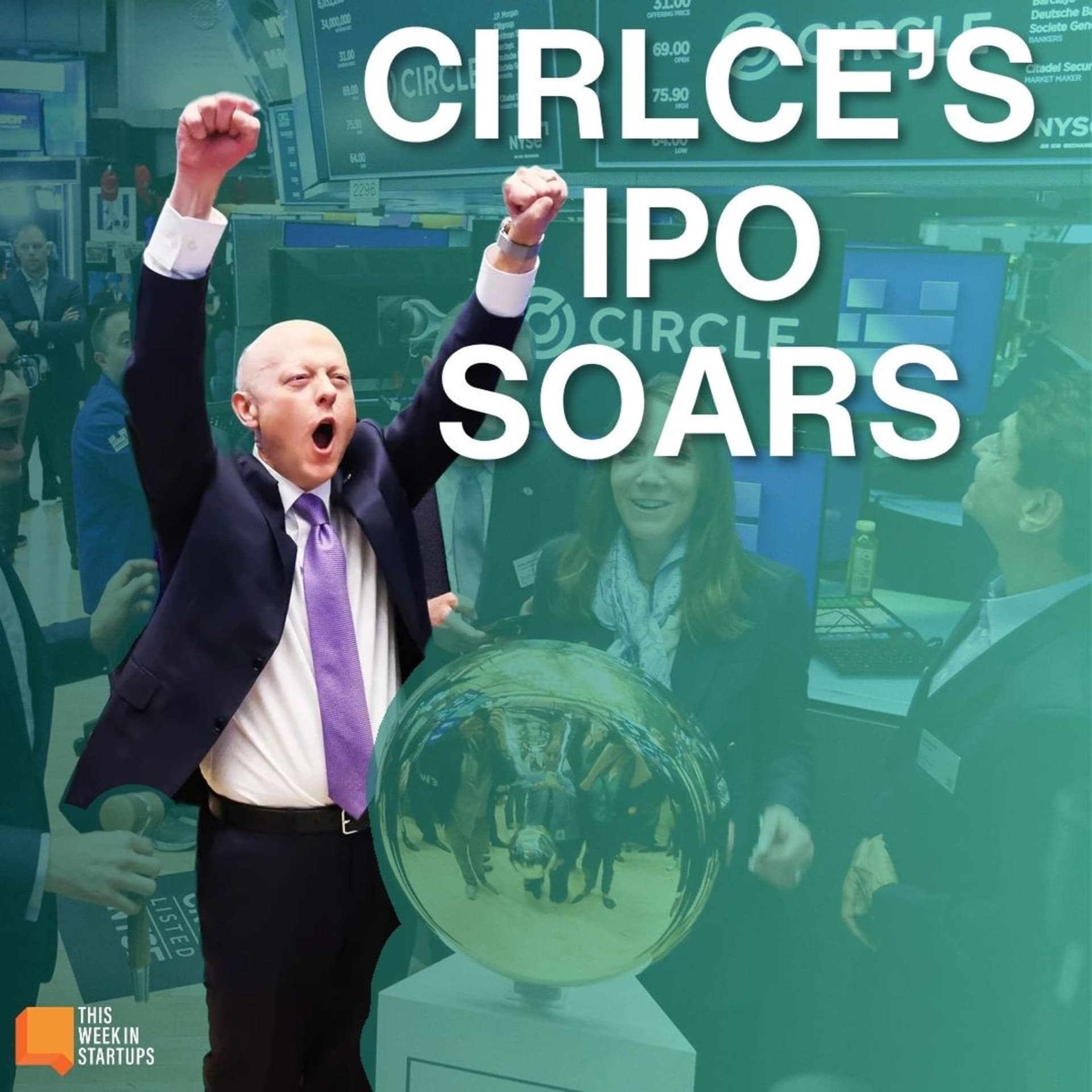
Episode Title Circle’s IPO Soars, The Future of VC and Cursor’s Crazy Growth
Episode Description In this episode, Jason Calacanis and Alex Wilhelm discuss multiple stories shaping the tech and startup landscape, including:
- Circle's explosive IPO and its implications for crypto regulation and public market sentiment.
- The potential for tokenized venture capital funds to enhance liquidity and transparency in startup investing.
- The rapid growth of Cursor, which achieved over $500 million in ARR in just six months.
---
Key Topics Discussed
Circle's IPO Surge
- Initial Public Offering Details: Circle, an American stablecoin company, initially expected to price its shares between $24-$26 but opened at $69 and soared to $107 within days.
- Market Implications:
- The success of Circle's IPO is seen as a positive sign for public market sentiment toward crypto.
- Highlighted the importance of crypto regulation, noting the previous hesitancy of companies to go public due to regulatory uncertainty under the SEC.
- Jason emphasized the significant demand for shares (25x oversubscription), indicating that Circle left considerable money on the table by not pricing higher.
Tokenization of Venture Capital Funds
- Concept Explanation: Discussed the idea of tokenizing venture capital funds to improve liquidity and transparency.
- Investors could buy and sell their interests in funds, indirectly allowing access to early-stage investments.
- The need for compliance with regulations concerning KYC (Know Your Customer) for potential investors was highlighted.
- Potential Issues: Concerns regarding complex structures and the challenge of ensuring that all parties are compliant with regulations.
Cursor's Growth Trajectory
- Rapid Success: Cursor's reported ARR skyrocketed from $100 million to over $500 million in just six months, indicating explosive growth in demand for AI-driven tools.
- Market Comparison: Compared Cursor's growth to historical tech successes like Google, underscoring the current internet landscape's growth potential.
- Investment Opportunities: The episode suggested that Cursor may be poised for an IPO if growth continues at the same pace.
Other Notable Updates
- Windsurf and Anthropic: Discussed the controversies involving Windsurf and its relationship with AI companies, including Anthropic's refusal to serve certain clients due to competitive concerns.
- Rippling vs. Deal: Examined the ongoing legal disputes and ethical dilemmas in the startup landscape, including the alleged unethical practices within companies.
Key Insights
- Crypto Regulation: The evolving regulatory landscape is crucial for the future of crypto IPOs and overall market health.
- Market Demand: There is a growing demand for innovative investment vehicles, particularly those that leverage blockchain technology for venture capital.
- Growth Metrics: Current growth rates in tech companies show that the market is more favorable for technology investments than in previous years, suggesting a robust recovery and potential for sustained growth.
Conclusion This episode provides in-depth insights into the fast-paced world of startups and technology, highlighting the significant shifts in IPO sentiment, investment strategies, and the impact of regulatory environments on market dynamics. The discussions illustrate a vibrant startup ecosystem poised for innovation and growth, with implications for investors and entrepreneurs alike.
---
Additional Resources
- Subscribe to TWiST500 Newsletter: [TWiST500 Newsletter](https://ticker.thisweekinstartups.com)
- Follow on Social Media:
- [Jason Calacanis on X](https://twitter.com/Jason)
- [Alex Wilhelm on X](https://x.com/alex)
Sponsors
- [LinkedIn Jobs](https://www.linkedin.com/twist)
- [Coda](https://www.Coda.io/twist)
- [Sentry](http://sentry.io/twist) (use code TWIST)
---
This summary encapsulates the discussions and insights from Episode E2135 of "This Week in Startups," providing a concise yet thorough overview for those interested in the latest trends in the startup and tech industries.
Written by AI. May contain mistakes. Listen to the episode to check what was said.
Transcript
Automatic transcript. May contain errors.0:00I think this is like a moment in time. this shows to me two things actually three number one jeremy allaire is an incredible entrepreneur he builds real businesses i've known him through three different businesses bright pove etc number two it's about crypto regulation so uh david zacks the czar of crypto uh and sec and this administration want to make clear rules under gary gensler it was you know our way or the highway unclear. I think people were unlikely to go public because they were a little bit nervous. What if it gets unwound? And so in fact, Circle was going to go out via SPAC two years ago, three years ago.
0:41They chose not to, I think because of the regulatory environment. So that's number two is the crypto regulatory environment. Number three is public markets. There's not enough opportunity for the dollar. this week in startups is brought to you by linkedin jobs a business is only as strong as its people and every hire matters go to linkedin.com slash twist to post your first job for free terms and conditions apply coda coda empowers your startup by bringing words tables and teams together strategize plan and track goals effectively with all your valuable data in one place go to coda.io slash twist to get started for free and get six free months of the team plan and sentry your team should be focused on shipping features not chasing down bugs new users get three months free of the team plan which covers 150 000 errors go to sentry.io slash twist and use the code twist hey everybody welcome back to this week in service i'm your host jason kelly canis with me again alex wilhelm we got a huge docket yes sir uh for the press and everybody wanting to aggregate my opinion on recent events on Twitter with some friends of mine and the president.
1:51I am going to demure Alex from commenting because all that's going to do is get aggregated. Friend of says X, Y, and Z. Yeah, my opinion doesn't matter. This falls under the umbrella though, Jason, if you're kind of 72-hour Trump, what we've talked about on the show a number of times. So wait a little bit and see what happens. I'll just, I said this before we started, but I'll just say this. It was once again, a very interesting and fun day on Twitter. And I have not had that much fun on social media in some time. So I do appreciate everyone providing the popcorn for us. But Jason, we have a lot to get to in the startup realm.
2:27And I thought we'd start with a couple of updates from Wednesday's show. Some big things have happened and I just want to make sure we kind of close the loop on a couple of stories. Let's do it. First up, Circle, the American stablecoin company, previously a startup, tried to go public via SPAC back in the day, went public this week. And I got to say, I am blown away by the results. For folks who don't recall, it was initially looking at a$24 to$26 per share range, Jason, back up to$27,$28, went out at$31, and then it opened at$69, closed yesterday at$83 per share. And then today, it closed at 107.70.
3:04And what I'm blown away by, Jason, is just the scale of the growth in value here. I mean, I've never seen an IPO of this scale go up so quickly so much. It's mind-blowing to me. Bullish for IPOs, bullish for stable coins, bullish for crypto. Seems like a big win, but I wanted to ask you, if you were an investor in this company and it listed at 31, how peeved would you be that it didn't price higher? This is a classic issue. When you do an IPO. You're offering the public to buy shares in the company. The public bought shares in the company at$31 a share. And then the market price for the shares is now$100 or apparently 107.
3:43So this means, and it was 25X oversubscribed. What this means is they left$70 per share on the table. So if they raised$1 billion, they could have raised roughly three times that, four times that almost, if they had priced at$100 a share. Now, it's hard to know that that was going to happen, but with 25 times the demand for the shares, you did know that this was going to really ramp up. And this is where having an auction for shares or a direct listing of a small number of shares without raising money is a better option. So what's a direct listing? You put the shares up, but you're not selling any shares at that time.
4:27You're just saying, hey, the shares can trade. Then you make an offering, right, Alex? And so Spotify, when they went public, they just went public. They started trading the shares. And then if they wanted to raise money, they would do it later when they got the market clearing price. If Circle had done that, they probably could have issued their shares at$50 to$100 a share later this week. So they did leave money on the table but i think this is like a moment in time this shows to me two things actually three number one jeremy allaire is an incredible entrepreneur he builds real businesses i've known him through three different businesses bright pove etc and he's just been one of these you know incredible you know entrepreneurs with a long track record so number one jeremy is what this is about number two it's about crypto regulation so uh david sacks the czar of crypto and sec and this administration want to make clear rules under gary gensler it was you know our way or the highway unclear i think people were you know unlikely to go public because they were a little bit nervous what if it gets unwound and so in fact circle was going to go out via spack two years ago, three years ago, they chose not to, I think because of the regulatory environment.
5:50So that's number two is the crypto regulatory environment. Number three is public markets. You know, there's not enough opportunity for the dollar. So everybody wants to own the Mag7, everybody wants to own, you know, these great companies, you know, that are right behind the mag 7 coinbase robin hood uber doordash you know that airbnb that whole cohort let's call it the class of uh 2010 sure and um yeah pent up market demand for uh you know these products and so we had core weave and core weave has done pretty well post uh ipo i believe that their stock has run up as well. And eToro as well has done well post IPO price.
6:38So, I mean, the way that I framed this was it's three for three for technology IPOs this year in the US. And they seem to be doing increasingly well, which is very, very bullish. But for the for the nerds out there, Jason, who are really into crypto, I came up with a new useless metric, which is what percentage of USDC circulating stable coins is Circle now worth? And it turns out they have about$61 billion in circulating USDC stablecoins. And their market cap is now about$20 billion, which means that they're valued at about 0.3 stablecoin AUM as a ratio. And that seems a little high. Yeah, that is actually a very interesting metric because what you're saying is how they don't own that value, right?
7:25The value of the stablecoins is money that was given to them that they have put on chain that they own treasuries for. but by doing a percentage the market cap is hey how much could we value what's the value of those stable coins of those deposits essentially sure so the deposits are making four or five percent a year so that you're giving them credit for six years worth of you know revenue coming in but they split it with some of the markets where they're at so maybe it's really like net two or three points. So you're giving them, in that case, if it was net two, you're giving them like 10 years or 20 years of revenue.
8:04Credit, yeah, that does seem extremely high. Obviously, it's overvalued right now, like Palantir is all overvalued. You do have these moments. That doesn't mean I would short the stock. It just means this would not be the entry price where I would buy in if I was making a trip. Yeah. And, you know, these things happen. Things spike up in value when there's scarcity and they're a scarcity core weave is probably another one of those where i don't know what their price to sales ratio is right now um or their earnings but you know price to sales is a pretty good way to look at these businesses and you you really do need to look at these crypto businesses with the fresh fresh metrics and fresh eyes the the problem with stable coins or the thing to be aware of is they are dependent on the return rate of treasuries of bonds of whatever devices, they're putting that money in very predictable 4 % or 5%.
8:57What if it goes down to 1 % again? What if it goes down to 2 %? Yeah. Or zero. I mean, we were Zerp for a long time. It's interesting to me, and this is just inside baseball, but currently Jerome Powell over at the Fed by not cutting rates is really throwing a huge bone over to Jeremy Allaire and Circle. And by the way, if you want more from Jeremy Allaire, we had him on Twist episode 2004, Jason, that was September 6th, 2024. Really fun chat with them in a kind of pre-IPO context, if you want to go back a little bit. I think you're dead on though about crypto regulations and regulatory kind of certainty being key here because we also saw today, this afternoon, that Gemini announced that they have filed privately to go public.
9:41If you don't know Gemini, it's kind of like Coinbase, kind of like Kraken. It's a consumer crypto exchange, does a lot of business. probably best known, Jason, for having the Winklevoss twins behind it. They're best known for their early Facebook era, but they've really had a crypto second act, if you will. Now, we don't have any numbers here because this is a confidential filing, but they made noise about it, which gives a lot more credence to them actually going out because in March, we heard they were preparing a filing privately, but it wasn't really from the company. It was more like the Journal and Bloomberg and such.
10:11But now they're really pushing forward. And I'm not shocked to see this drop right after Resaw Circle do so well. Clearly, they were watching this and hoping that it was going to go well to push the button. All right. We all know if you're a founder or even if you're on a small business, you're thinking about your company 24-7, 365 days a year. That's the life of a founder. This is not clock in, clock out, nine to five gig for you as the business owner. So when you're hiring, you want a partner that's as equally as committed as you are. And that's, of course, LinkedIn Jobs. LinkedIn Jobs is like your co-founder.
10:49They're going to make it so simple for you to post your jobs for free on LinkedIn, where there are 1 billion members. You're going to be able to share what you're posting and actually keep all the promising candidates organized in one place. And also, LinkedIn is going to help you quickly write a job and get it in front of the right people, whether you want to post for free or use some promotion to get it in front of even more qualified applicants. So do me a favor. Don't take my word for it. I mean, you should. I know what I'm talking about. This is where I find my great people. But just understand that 72 % of small businesses using LinkedIn said that it helped them find the best candidates.
11:27So find out why more than 2.5 million small businesses already use LinkedIn for hiring. So here's your call to action. Post your job for free. Why wouldn't you do it? It's free. F-R-E-E. That's a good price. linkedin.com slash TWIST. Once again, that's linkedin.com slash TWIST to post your job for free. Terms and conditions do apply. But we could see another pretty big IPO here in the States. So I'm just hyped. It feels great. Yeah, it's great. You know, I think these marketplaces have shown that there is a market for people who want to trade stocks, cryptocurrency, other financial devices, shorts, whatever.
12:12Obviously, I'm a long-term shareholder of Robinhood, never sold a share in it. And I think it broke$70 a share. It's at an all-time high right now. $74.88. It's worth$66 billion, which actually leads me to my question for you, because Coinbase is currently worth$64 billion, which sets up a really funny split screen between those two companies. Now, they started off different places. Robinhood was zero-cost consumer trading of equities. That moved into crypto. Coinbase, of course, started off with a crypto base, and it's been moving into other products as well. But they're worth the same now in terms of their market cap.
12:43So if you had a dollar, which one would you pick? Yeah, I mean, I'm team Robinhood, but these are great contemporaries. So you might be looking at a Amazon, Google, Microsoft, Apple, Meta kind of situation here. These are all great companies. I don't know enough about Gemini to know if it's a great company like Robinhood or Coinbase. I don't suspect it's as good as those companies yet. What makes Robinhood very special is Vlad is an incredible product guy who keeps adding products to the mix. And so I think they have many different products, including their credit card, which now has millions of people on the wait list.
13:21I have never sold a share. We distributed those shares from our first fund at, I think,$12 or$14 a share. I probably should have held those shares and distributed them two years later or distributed half and half because then we would have gotten credit for, you know, on our books. But I, you know, I did tell everybody when we distributed them, I'm not selling just as a one piece of data for you and making your decision. And then people who were LPs in that fund, I talked to a couple of them who didn't sell and, you know, that's a four or five X difference, right? More, you know, five X difference, six, six X difference that would have made that fund, which was close to 5x on paper and 1.2 or 3x dpi already and there's still a bunch of different assets in that first fund of mine i think it would make the fund like maybe double that right like and so you know this is um the nature of venture but these things going public when you see all these companies go public what you're seeing is a bunch of venture capitalists get their wings you know and a bunch of lps get distributions and then it's up to the people who are lps in these funds to decide if they keep them or not.
14:29I wouldn't sell a share of Robinhood ever. I mean, I think the amount of assets they have under management and the way they keep releasing great features to me makes it a huge winner. Stablecoins, you probably saw Uber. Dara was talking about maybe having, using stablecoins for currency fluctuations between their different markets. So I think the idea would be, you know, if they have dollars in South America, in europe in euros etc in japan wherever you know do you keep them in yen or do you move them into stable coins do you move it into dollars at some point and this will reinforce the value of the u.s dollar so we're going to see many more ipos and i'm hoping the regulatory frameworks around crypto continue to become really tight and regulated tightly so that we don't have people losing their money.
15:21I was just in Singapore, as you know, and I'm talking to a lot of people in Dubai, Singapore, about the possibility that venture funds will become tokenized. So Jason, tokenizing a venture capital fund, what would that look like in practice? Let's say we have a$10 million fund. It's Alex's first fund, and I decide I'm going to put a million dollars into it, and Mike Savino decides he's going to put a million dollars into it. David Sachs puts a million in, Chamath puts a million in, et cetera. So you got 10 people each own a million. Let's say one of those people says, you know what, Alex has done great.
15:56He invested in Robinhood. And it's, you know, we think this has, we think the value of his fund went from 10 million and the Robinhood shares have gone up 50X and Robinhood makes up 10 % of the fund. Therefore, it's like a 5X fund on paper. I'm willing to sell you my million dollars in that fund, knowing that million represents 10 % of the fund's Robinhood holdings. And I'm just going to write down all the rest of the holdings or put those at zero, but there's a winner in the fund. So I'm going to sell my million dollar position, which is going to be worth, you know, whatever you could debate it, but let's say 5 million.
16:32I'll sell it to you for four or three. Well, we have that destiny publicly trading open end or closed end fund that has SpaceX in it, right? And every time spacex news comes out if people want to have access to it they buy that destiny fund because it's a quick way to instantly get access to it well then it would be a way if i had uber in that first fund or robin hood or whatever it is from breakout those people could you know maybe cash in some chips and then people who wanted access to that pre that early stage fund that early stage startup could get in and it would then create a market for a market clearing price for a fund, which would then mean I'd have to release a little bit more data or people would have to be more speculative.
17:20And then I would have to put some rules on it like I need to approve who that LP is or we need to know who that LP is and they need to, I don't know, be an American citizen or have a certain net worth or we have to have their driver's license. We have to know they're not on a terrorist watch list. We have to know our customer KYC, right? So there have to be some rules of the road. But if anybody out there is working on this, it's not clear on regulations who can do this in the world, but there are definitely markets where people could do it. So you have to be thoughtful about it is the long story.
17:54It's so interesting to me because I see a couple of things that could get a little silly. Like, for example, let's say that the fund hasn't called all of its LP capital yet, but I'm an LP and I I want to sell my theoretical allocation of the total fund. And that only happened after all the capital calls, because then I could sell my interest and then not do my later capital calls and wiggle out. And that would get a little dicey. But my question is - That would have to be in the smart contract, right? That if you haven't completed it, you could only sell interest in the smart contract of the called capital.
18:24So if you had a million and you had 500K called, you could only sell that 500K. You couldn't sell the other 500K. This to me seems a little bit complex when we have venture capital funds that are already publicly traded, like Molten Ventures over in the UK, which shows that you can have a more liquid valuation set on a venture firm. But what are they selling when that company's public? Are they selling the management fees and the returns to the GPs? I think that's what they're selling. I think it's actually the assets, but I'll double check that and get back to us on Monday because I haven't actually looked into Molten for a couple of years, so I'm a little out of date.
18:59But that is one way to go about this. I always get a little concerned people want to tokenize something, Jason, because it sometimes can be a little bit more complexity than value. But if you're talking about it with that many people, I presume someone's thought this through. I think it's the next big innovation in venture capital would be, you know, if venture funds are going to exist for 15 years, as opposed to just like, you know, 10 to 12, because that will, you know, then maybe it would be good that they could trade. So maybe you can't trade them until year five, but, you know, year six on you could.
19:31So then you could leave the fund open for 20 years and allow people to trade in and out of it. So if you had Stripe in there and you were a 13-year investor in Stripe, 14-year investor in Stripe, or 12-year investor in Uber, 13-year investor in SpaceX, you wouldn't have to do secondary transactions of selling the shares. You would just sell the share in the fund and people would know the fund has this in it. I think it would also be fun for there to be like i would take that fund and i would have all of our holdings be public and i would release like quarterly statements maybe of those companies and what we've invested in so it'd be kind of like an index fund where you know i told you i bought that k debt the korean defense fund and boy that's up like 30 and you know i bought like a quarter million dollars worth of it just because i bought korean defense fund that sounds interesting oh Wow.
20:20All right, founders, I know you got a lot on your plate. Running a company means you have endless tasks. You're juggling priorities all while trying to hit your KPIs, right? You got to keep the train moving. And that's why I love Coda. It keeps my world under control. It's the all-in-one platform. And it's going to consolidate all your documents, all your spreadsheets, and most important to me, apps into a single scalable workplace. The user interface and the product's amazing. I use it for something like twist500.com and for Founding University. It's intuitive. It's powerful. And it's going to make all your workflow seamless.
20:53It gets stronger by the day. Coda empowers your startup to strategize, plan, and track goals effectively. So take advantage of this limited time offer just for startups listening to This Week in Startups. You're going to go to coda.io slash twist and get six months free of the team plan. once again that's coda.io slash twist to get started for free and get six months of the team plan for f-r-e-e your favorite price yes yeah i think i bought it at 28 a share and it's at 36 or something 37 and it's up a total of 74 so far this year if you bought it at january 1st that's incredible yeah i bought it like whatever three or four months ago i think people are starting to realize that like defense contractors outside the u.s are going to do quite well um you know and there's a bunch of them.
21:39Anyway, that's this is my thinking is like, there's going to be some very interesting opportunities. And then maybe the ability to tap into markets, where, you know, somebody sitting on a billion dollars of crypto, 100 million in crypto, but they say, you know what, I want to slowly move my crypto wealth over to startups over to real estate, I'm not in the real estate game. But if somebody was in the real estate game, and they tokenized, you know, their thousand apartments they owned across the u.s in a real estate trust or something and it was tokenized and you could buy in and out of it that person could then use different coins to buy it or they could get loans against their coins to buy into it so there could be some very interesting ways that money could flow and even programmatically maybe you say you know i just as my crypto wealth grows i want to move 10 of it into startups so if my bitcoin if i got 100 million in bitcoin and i bought it at 50k and now it's 100k it's worth 200 million okay that 10 that was 110 million of the 100 million is now 20 i want it to automatically buy into and buy more shares of these venture funds or real estate funds so that i stay in that you know private asset, alternative asset world, more balanced, right?
22:59So you could do interesting programmatic things. Oh, I just want to say I'm so blown away that I've heard you say both tokenization and programmatic on the same show without you casting dispersions on crypto. I've also come around a little bit on crypto in the last 12, 18 months. It does seem to be these companies are maturing. I just glad we're past the NFT boom and kind of some of the silliness where there's utility, there's value where there's value, there's business. I'm fine with that. All right. Let's keep moving on. So on Wednesday, we talked a little bit about Windsurf, the coding service.
23:31They got cut off by Anthropic and they threw a very polite public fit about it saying, Hey, we want to give them money. We want to use their models. They've cut us off. And what we didn't have at that point in time, Jason was Anthropic's response. The good news is that we now do. and the gist is that they want to basically work with people for the long term and because OpenAI is broadly expected to be purchasing Windsurf that deal still hasn't closed oddly I don't know what's going on there it's a little weird that everyone's been talking about it for this long and it hasn't reached the sign dotted line yet but they're basically saying we're not going to let an OpenAI thief use our stuff so it is what we thought it was a competitive point but I just think that it underscores platform risk for foundation AI model companies in a way that I don't think people were thinking about before.
24:21But as Anthropic, as OpenAI develop their own cloud code and codex tooling, there could come a time when they don't want to serve competing companies that are building on top of them. And I wonder if Anthropic is going to regret this decision later because it's poisoning the well a little bit for commercial AI models, in my view. I think what's actually happening here is that there was probably an auction and Anthropic had the chance to buy Windsor. and they didn't clear the bid. And they said, okay, well, if we were the home team and we helped you get here and OpenAI is outbidding us, well, we reasonably need to not empower you.
25:03And we have this like one chance to extract some pain from our suffering that we didn't get to buy the company. So we're going to do it. You know, it's like there may be a little bitterness from Anthropic that they weren't able, this is all speculation speculation this is don't reblog i don't have inside information here i'm literally just speculating on what typically happens right the board of windsurf obviously would do their diligence and their duty to all shareholders by creating a marketplace if open ai was part of the acquisition marketplace so was google so was grok so was you know microsoft and obviously anthropic and amazon so they all had a chance at buying this i'm certain and probably anthropic was like you know what does jared caplan who's the chief science officer was like yeah their value comes from our model or some significant comes from our models so what are we doing here you know and uh yeah so everyone loves claude man i mean Claude's coding abilities get consistently high marks across the internet.
26:13People want to use it. And another company that does is Cursor. We'll talk about them in detail in a second. But I found it interesting that Anthropic, while talking to TechCrunch at their event about this decision, cited Cursor as a long-term customer of theirs. So I went back through the Cursor, which is the product made by any sphere, but we call them Cursor because it's easier. They raised some of their earliest capital from OpenAI. Okay. which just goes to show how how intertwined everything is here it's kind of no conflict no interest yeah i mean things grow and people place bets it happens all the time you know i'm an lp and other funds those funds might invest in a competitor to a company i'm working on a company i'm working on might pivot into a business that they're already investing in and yeah you know bad feelings happen and you know but all's fair in love and war and startups so So here we are.
27:06On that point, one last final question about this, because I've been trying to figure out what the advice for founders here should be. Because on one hand, you're not going to get cut off by Anthropic unless you're a big name and something goes awry. But at the same time, if you were picking a way to go about building your startup and you have closed models and open source models, would this Anthropic windsurf beef push you more towards the open source side? Of course, of course. Yeah. Yeah. Or being multi-model. Ah. so you know if you were building you know a product you would want to just be multi-model for sure absolutely and then we can swap out models as as needed as they improve that makes a lot of sense to me so essentially you just don't want to be have you don't want to have platform lock-in effectively correct okay yeah that makes a lot of sense to me yeah and i think they probably have the ability to move it over but you know who knows if they're ready to do that under what time frame and this is why you have a an agreement and a long-term agreement so So if Windsurf was being built off of Anthropics products, you would probably want to have a two-year contract, a three-year contract to avoid this kind of thing happening.
28:11So who knows if they're on a month-to-month contract, a quarterly contract, but that's what a two-year contract would do. If this was a two-year contract, they couldn't be cut off, right? Or else they would have a legal action they could take. So yeah, this is complicated stuff. Or there used to be a break clause that got them money or something other than, you know, having their API access snipped and then having to go tell their users, sorry. All right, moving on. One last update from some recent news. Jason, we've been covering the Rippling spying saga. Alleged spying? Sorry, the alleged Rippling spying.
28:43Thank you. Rippling is an American. Don't want Alex to get sued. What logo is right there, man? Yeah, I'm not Alex. I'm this week in startups. Yes, okay. Yeah, sue Jason, not me. Rippling is an HR tech and payroll giant. recently raised a Series G at about a$17 billion valuation. Deal in the same space was worth at $12 billion. Just giving people context about the companies. The background here is that earlier this week, Deal tried to create two bits of news, Jason. They said that one Rippling former contractor, now employee, had done something slightly untoward. Fair enough. And also that they'd reached the$1 billion ARR milestone.
29:22Rippling came right over the top of that with new allegations. And I want to get your take on a couple of things. There's some stuff in here that I would say is not surprising. Rippling writes in its new suit that Deal was regularly bragging about new hires bringing secrets from other companies, that I think the CFO said that he maintains, quote, spies at other companies, and that Rippling was behaving poorly. None of that's kind of a shock given the other allegations that they have said. But something that did catch my eye was this. And I'm going to quote from the suit here. So again, I'm not saying this.
Read the full transcript
29:52This is what has said. Around April 23rd, 2025, just two days before the financing was scheduled to close, this is their Series G, a quote, tier one investor, quote, in a position to know about Deal's response to Rippling, contacted a very senior partner at Rippling's Series G investor. That person claimed Deal would, quote, soon be hitting back with material information against Rippling in this litigation and urged the investor to delay until Deal's response came out. all right founders let's be honest how much time is your team wasting on debugging your products if you're like most startups it's too much time and that's where century comes in it's a real-time error monitoring and tracing platform so you know exactly when something breaks where it happened and most important why no more 1am slack threads or digging through endless logs to figure out what's going on.
30:45Nope. Now you're going to meet Sear, Sentry's new AI debugging agent. Like a new engineer who already knows your entire code base, Sear finds the root causes of the issues 94 % of the time, and it's getting better every day. Here's your bottom line. You're going to ship faster. Your team isn't going to drown in bug alerts. And instead of grinding through your logs, your developers are back to building great product. Here's your call to action. New users get three months free of the team plan. That's going to cover 150 ,000 errors. Go to century.io slash twist and use the code TWIST. That's S-E-N-T-R-Y dot IO slash twist.
31:25Which to me is a bit of a surprise because if I was an investor in deal and this had gone down, I would be trying to back away from the company to a degree, just given the ethical lapses that are alleged to have happened. I was surprised that an investor would try to scupper Rippling's own round and then perhaps hope that that wouldn't get out so question for you is is that sort of school dudgery school dudgery normal in venture circles because this seemed more underhanded than i mean if it was two friends and we worked together and we went to business school together and i was helping them out and just giving them a heads up like hey deals got their own response coming you might want to just hear that because it's coming out tomorrow that wouldn't be dirty that would be helping your friend out right ah so there's a possible um that would be maybe how yeah that person might explain it now if you had met at a trade show and you've been at conferences and you knew each other and you know you were at i don't know andrecen and i was at sequoia or spark or kotu yc you know all these shared backers whatever and i said hey you know uh you might not want to drop that wire and sign that term sheet until you hear the full story because you know i've seen it and it's pretty gnarly brother uh and you were doing it to sync the funding you would be there are some legal concepts around trying to uh impede the other person's ability to do business uh but it would be very hard to prove i think i'm not a lawyer but yeah generally yeah it would feel like it all feels a little dirty and backhanded and backroom unless it was like hey we were you know fraternity brothers or sorority sisters and i was just trying to let you know like hey just heads up here you know and yep you you make your own decision as to what level of risk you want to take because obviously the person who is doing the series g knows about this lawsuit they know all about it they just don't know the response so he's just saying hey just hey the response is coming um yeah but it does feel like yeah maybe this has gotten so bitter that we're just going to have a hundred of these little updates until they settle um and then i think the big winner here is that both of these companies now are probably going after something very significant so there's the big prize therefore people are behaving badly allegedly and sometimes when there's a big prize people get petty or they lose their ethics and morals and and do crazy things uh yeah so i've seen this kind of thing before when you have two competitors who are dogged and aggressively going after each other.
34:17And yeah, I've gotten emails, you know, uh, or back channels during the Lyft Uber days during that. That's what I was thinking. Yeah. Yeah. I mean, there's this, you know, Robin Hood and everybody else, whatever, you know, I've had these calls. I had one time somebody calling me trying to just character assassinate you. Oh, this person is a bad person for these reasons. And, you know, it's like literally another VC calling me to sort of badmouth the founder that we were investors in. And I think we were it was during a funding round because we were going to invest more. So, yeah, these kind of shenanigans can happen.
34:49So the way that I'm reading this very, very selfishly is that all the complaints by venture capitalists about, quote, hit pieces is just them projecting contained guilt for them bad channeling on the back channels versus, you know, doing it in public. um one more little detail from this case though jason because this can be true both yeah yeah it's true so apparently deal um had a agreement with a startup accelerator not named but there's only so many out there and i know it wasn't launched because i'm pretty sure you would have told me uh that essentially deals stole their crm which rippling describes as its trade secret customer database containing confidential and valuable non-public information about customers they just took it they took the accelerator crm yeah so part of the part of the the new allegations from rippling is that there's other companies that have been harmed in similar ways so if dl went to yc or tech stars the allegation would be they downloaded their crm but it could be the public list of companies on like yc's list of companies and tech stars are listed on their website but that's why it says what are you stealing confidential and valuable non-public information is the key key bit from so that means on the internal on book face which is yc's internal they scraped book face is going to be the allegation if it in fact is why if it is yc yeah if it's yc then there would be that they scrape book face which might have the email addresses and you know whatever yeah and it's what's the board's responsibility here uh in terms i mean if they find out about it they have to investigate it okay yeah and that's where that's where it stops or what would you investigate it and then depending on what the investigation shows you have to take action so you do an investigation you hire an outside counsel they investigate did you steal this what happened they find out who stole it and then they say okay that person has to go and we have to inform the company that we took the data from that we've deleted it and come to some settlement with them so you can have all kinds of crazy things that occur you know in a harassment or a case you would have something similar they would do an investigation oh this person harassed another person in the company or fired them for no reason.
36:57And yeah, or this person stole something or they were putting personal stuff on their corporate credit card. I've seen that one happen where somebody was putting stuff on their personal credit card. They shouldn't. A little investigation occurs and then you say to the person, okay, yeah, you're being fired or you're being demoted. You can take whatever action the outside counsel says you should do. So that's where lawyers make a lot of money because these investigations tend to cost 100K, 250k just to do them wow so now you got a 250 i've been in the middle of it many times by many times a few times actually i take it back a few times well i'm curious to see what the board eventually does in this case it to me again with the allegations just being allegations still but if they are proven um i would hope that the board would move to replace leadership to rebuild the moral integrity of the company all right tell me about what's going on with cursor fastest growing startup of all time maybe fastest growing startup of all time we have talked about this impending funding round several times on twist i'm glad to kind of bring it to a conclusion first of all one it's more money than we thought it's 900 million not the 500 we have been discussing and the valuation is a little bit higher than i anticipated it's a 9.9 billion dollar i presume post supply 9 billion free plus the capital to call it 10 uh thrive lead and recent excel and dst were in there all that blah blah blah who cares it's another ai round what matters is this cursor says that it's now not at 300 million ARR, as was reported.
38:19It's now above 500 million in annual recurring revenue, going from essentially 100 to 500 in six months. 100 to 500 in six months. So that would be doubling every month, basically. You went from 100 to 200 to 400. No, less than double, 50 % a month. Went from 100 to 150, 225 to 325. Yeah, it's like 50 % growth month over month. It's crazy. it's absolutely insane that would be like 10 growth every week something in that way week 10 growth is crazy but from a nine figure base i mean if it stays for a paid product like 10 would be fast for a free photo sharing app yes to do it for a paid product is bonkers this is bonkers so it's spreading like wildfire it's kind of like slack spread like wildfire yeah but i wanted to go back and get some historical context on how fast is this growth because one of the best IPOs ever.
39:15And going back to different ways to go public, Google went out via a reverse auction, and that went so well that no one ever tried it again. But I went back to their S1 and I pulled their numbers and Google went from 19 million in revenue in 2000 to 86 in 2001. Two, and this was the key moment for them, 350 in 2002. Yeah, four times, yeah. But that's still so much slower than what we're seeing from cursor here. So I think this goes to show one, that AI driven tooling for highly paid professionals is something that companies will just pay for. And also, I think it shows how much bigger the internet is today.
39:49I was about to say, like 2000, there was probably 500 million people online and now there's 4 billion. It's 10 times as many people online, probably. And probably three times as many developers and they probably all have corporate cards now and they weren't allowed to buy this stuff. This is combining the virality of consumer with a subscription model, which it's kind of like Netflix or Disney+. When we saw Disney +, come out, it really grew fast for that first couple of years in terms of the membership, especially at$8 a month. Yeah, it's awesome. And this company could be going public. So Cursor, if it does this again, if it gets to a billion in revenue, they should go public.
40:32I mean, I think so. There was an interesting story in, I think it was Reuters a couple of days back that said that Windsurf and Cursor have negative gross margins. I don't know if they actually meant negative gross margins or negative operating margins. I would be shocked if they actually had negative gross margins. But there's an interesting kind of split screen here that we can draw. So we've talked about Anthropic, the Foundation A model company, $60 billion, reportedly at a$3 billion run rate now, 20x recurring revenue, more or less. What's interesting is Cursor,$10 billion,$500 million, also 20x.
41:05Yeah, that's a trend. Growth just seems so cheap to me, given their pace of growth. Is the market just concerned that they're not going to keep growing this fast? 20 times top line is pretty juicy, but appropriate if you're growing, if you're doubling year over year, tripling year over year, et cetera. So you're getting a big premium there because when it becomes a public company, it will be 20 times earnings as opposed to top line, right? So, you know, sometimes people conflate the profit with the top line, you know, sales. So sales here is 20 times sales, not 20 times earnings. So at some point, the quality of this revenue, is it profitable, is going to be the question.
41:45Now, we don't know how much compute is being used by each of these players. What if, you know, like YouTube or other businesses, you know, they were in a J-curve or Uber where they're selling rides for less than the right cost and they're losing money every ride? You know, that J curve could be what's driving some of this revenue growth. They could be selling$100 bills for 50 bucks right now. And they need to fill in that gap. And that gap would get filled in by people becoming addicted, the price of compute going down, and maybe their ability to charge going up. And that's the J curve, right?
42:20You invest and you lose money, lose money, lose money. Then you stop having to invest money and you're growing, growing, growing, and then wildly profitable because the costs stay fixed. Yep. and you're raising your prices and it's growing viral and you don't have to pay people to download the uber app because they're just getting invited to uber teen by a friend or you don't have to get somebody to know what cursor is because the other four developers that they know are like saying to the two developers you don't use cursor are you an idiot and the and they get pulled in without an advertisement whereas the first couple might have needed to get hit with an advertisement yeah so these are going to be incredible businesses the business is strong.
42:59Venture has a bright future. The wrath of con is over. And I think DPIs are going to spread through the heavens and America is going to win again. All right. Now I know we have to go, but before we do, let's just take one quick look at poly market. Now I have pulled what I think is the juiciest single chart I've ever seen on poly market for us. There's a great market that they're running discussing what's going to happen with interest rates in the US. Jason, You and I pay a lot of attention to the labor market and the price of money. And if you take a look at this chart here, this is about the Fed decision in September.
43:35Now, we're at the furthest edge of this particular market on Polymarket. So the dollar volume here is much lower than for the June decision or the July decision because there's multiple Fed meetings coming up. But what I really appreciated about this is if you look at the chart, you see a lot of movement in the last couple of days. And two things happened that really shook the numbers here. One, ADP dropped a very small drop report, if you will, saying that employment growth was very low. And so people said that, hey, there's a higher chance of a decrease by September in the federal rate as a response to that.
44:07Then today, the BLS dropped a different data that was much more positive about the labor market. And you can see how they swapped yet again. So this to me shows that the poly market betting is incredibly responsive to news events on a very sober basis. I think it's pretty good to see, you know? Yeah. Yeah, I mean, there's the majority chance is no change. And the second most expected outcome is a 25 % decrease, 39%. No change, 57%. So most people believe the Fed's not going to do anything in September. And like the July and June numbers are even lower. It's like 98 % and 80%. So basically with the GDP report, there's some projections that GDP is going to be like 4%, 3.8 % in the second quarter, far from a recession, which is two negative quarters of GDP.
44:57So what this means is no rate cuts. There's not going to be free money. So stocks are not going to go crazy because the economy is healthy and GDP strong. Yes. So in one case, you get cheaper money because the economy is weaker. In the other case, you get consumers and enterprises that are strong because the economy is strong and they have more money to spend. As a startup, both of these things can be helpful. On one side, you got great consumers who want to buy Cursors products, who want to buy DL or Rippling, and they're adding employees because the economy is strong. On the other side, you get free money, which means you can invest in starting new companies because you're in a ZERP environment.
45:35So I think what we're looking at is the former. We have a strong economy. Therefore, don't expect the rates to come down. We're not going back to that, which means homes and mortgages and car loans and all that stuff is going to be expensive for some time. Yep. So hopefully you're buying everything in cash, everybody. Jason, I know you have to go. We're back on Monday with even more twist. It's going to be a blast. Bye, everybody.
From the publisher
Today’s show: Jason and Alex dicuss stories shaping the tech and startup world: Circle’s explosive IPO and what it signals about crypto regulation and public market sentiment, the potential for tokenized venture capital funds to bring liquidity and transparency to startup investing, and Cursor’s extraordinary growth—scaling to over $500M in ARR in just six months.
Timestamps:
(0:00) Episode Teaser(2:25) Circle’s IPO is Soaring and What This Means for Tech(10:21) LinkedIn Jobs - Post your first job for free at https://www.linkedin.com/twist(12:00) Is Tokenization the Future of Venture Capital?(20:20) Coda - Empower your startup with Coda’s Team plan for free—get 6 months at https://www.Coda.io/twist(22:40) Oh, THAT’S Why Anthropic Cutoff Windsurf(27:06) Can the Rippling - Deel Saga Get Anymore Bizarre?(30:22) Sentry - New users get 3 months free of the Team plan (covers 150k errors). Go to http://sentry.io/twist and use code TWIST(34:08) Cursor Just Keeps on Winning(43:10) Polymarket: What Will Jerome Powell Do?
Subscribe to the TWiST500 newsletter: https://ticker.thisweekinstartups.com
Check out the TWIST500: https://www.twist500.com
Subscribe to This Week in Startups on Apple: https://rb.gy/v19fcp
Follow Alex:
LinkedIn: https://www.linkedin.com/in/alexwilhelm
Follow Jason:
LinkedIn: https://www.linkedin.com/in/jasoncalacanis
Thank you to our partners:
(10:21) LinkedIn Jobs - Post your first job for free at https://www.linkedin.com/twist
(20:20) Coda - Empower your startup with Coda’s Team plan for free—get 6 months at https://www.Coda.io/twist
(30:22) Sentry - New users get 3 months free of the Team plan (covers 150k errors). Go to http://sentry.io/twist and use code TWIST
Great TWIST interviews: Will Guidara, Eoghan McCabe, Steve Huffman, Brian Chesky, Bob Moesta, Aaron Levie, Sophia Amoruso, Reid Hoffman, Frank Slootman, Billy McFarland
Check out Jason’s suite of newsletters: https://substack.com/@calacanis
Follow TWiST:
Twitter: https://twitter.com/TWiStartups
YouTube: https://www.youtube.com/thisweekin
Instagram: https://www.instagram.com/thisweekinstartups
TikTok: https://www.tiktok.com/@thisweekinstartups
Substack: https://twistartups.substack.com
Subscribe to the Founder University Podcast: https://www.youtube.com/@founderuniversity1916


