
In short
Podcast Summary: This Week in Startups - E2113
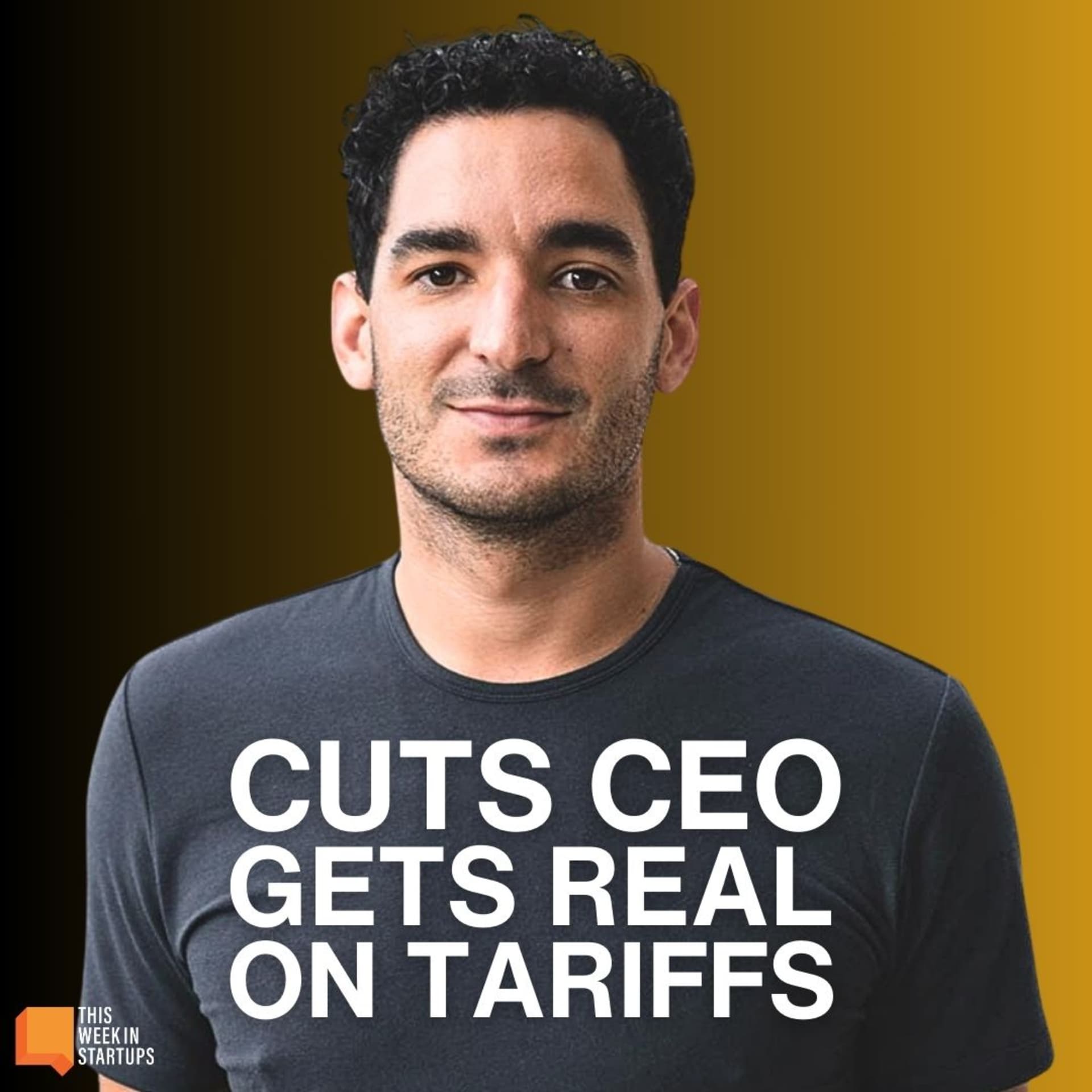
Episode Overview Title: Cuts CEO Talks Tariffs, Figma's IPO Buzz, and a Nerd Crawler Update Host: Jason Calacanis Guests: Lon Harris, Alex Wilhelm Description: This episode dives into the latest news in startups, technology, and policy issues affecting the business landscape, including Figma's surprise IPO, the impact of new tariffs on e-commerce, and conversations with the founders of Nerd Crawler and Cuts Clothing.
Key Topics Discussed
- Impact of New Tariffs on E-commerce
- Tariffs Overview:
- New tariffs from China are causing major headaches for e-commerce companies, with potential job losses looming.
- Discussion on how tariffs are not just financial burdens, but can also be seen as embargoes due to their high rates (up to 245%).
- Concerns that without resolution, many businesses may not survive the next 60-90 days.
- Expert Insight:
- Steven Borrelli, CEO of Cuts Clothing, discussed the direct consequences tariffs have on inventory and pricing.
- Suggests that the average consumer remains unaware of how these tariffs will affect product availability and pricing in stores.
- Figma's IPO Announcement
- IPO Details:
- Figma has filed for an IPO following the cancellation of its acquisition by Adobe, which involved a significant breakup fee ($1 billion).
- Despite market uncertainties, Figma aims to go public, marking a positive sign for startup exits.
- Market Context:
- The episode highlights the broader implications for the IPO market, noting the potential for recovery as companies like Figma make their moves.
- Nerd Crawler - A Comic Book Marketplace
- Startup Introduction:
- Interview with Christopher Tong, founder of Nerd Crawler, a marketplace for comic book art and collectibles.
- Rapid growth: Nerd Crawler has seen a 30% month-over-month increase in order volume since joining the Founder University and Launch accelerator.
- Business Model Discussion:
- The platform aims to provide creators with a better revenue opportunity compared to traditional comic book sales.
- Innovation in the comic book space by curating and auctioning unique comic art directly to fans.
- Patreon vs. Substack
- Competition Analysis:
- Discussion on how Patreon is adding new features to compete with Substack, which has gained momentum in the creator economy.
- Concerns about the sustainability and profitability of creators on these platforms, with many only making minimal revenue.
- General Business Insights
- Advice for Startups:
- Emphasis on the importance of clear roles in marketplace dynamics to drive growth.
- Need for robust infrastructure and support for small businesses faced with the challenges of tariffs.
- Market Sentiment:
- Current market trends show volatility, with significant impacts from tariff fears causing declines across major indices.
- Call to action for entrepreneurs and policymakers to address the ongoing uncertainty and develop a clearer strategy for the future.
Conclusion This episode provides a comprehensive look at the intersection of policy, technology, and entrepreneurship, offering insights from experienced founders and industry experts. The discussions underscore the ongoing challenges faced by startups in navigating complex market dynamics, particularly regarding tariffs, and highlight the resilience and innovations emerging within the startup ecosystem.
---
For more insights and to keep up with the latest developments in startups, subscribe to the TWiST500 newsletter and follow This Week in Startups on various social media platforms.
Written by AI. May contain mistakes. Listen to the episode to check what was said.
Transcript
Automatic transcript. May contain errors.0:00And that's what the average consumer doesn't realize. they hear tariffs and like, oh, it won't affect us. But, you know, 45 % of the world's production is still China. And so, you know, you'll see Walmart not be able to stock the shelves in 90 days if this continues. Are you hearing from your contemporaries in this e-commerce group chat and CPG chat, hey, I'm going to need to start laying people off and pausing in the next week or two because that's what I'm hearing. Yeah, it's one, it's either going to affect your growth or your revenue because the inventory you have that is not affected by the tariffs, you'll need to extend that runway or you're going to have to eat tariffs and that's going to cause your bottom line to just get destroyed.
0:46This Week in Startups is brought to you by Pilot. Focus on your product. Let Pilot handle your bookkeeping. Pilot provides the most reliable accounting, CFO and tax services for startups and small businesses. Head to pilot.com slash twist and get$1 ,200 off your first year. LinkedIn jobs. A business is only as strong as its people and every hire matters. Go to linkedin.com slash twist to post your first job for free. Terms and conditions apply. And Notion. Notion combines your notes, docs, and projects into one beautifully designed space with AI built right in. Try it for free today at notion.com slash twist.
1:20All right, everybody, welcome back to This Week in Startups. I'm Jason Calacanis. We've been doing this show for 14 years, and I am more excited today than I've ever been to host this show for founders, for investors, and for people who are passionate about technology. I'm here with two of my besties, Lon Harris, who I've known for closer to two decades than one, and Alex Wilhelm, who has been on the show, and we did This Week in Tech. Shout out to my guy, Leo Laporte. Yes, sir. When Alex was 30 pounds heavier and had hair. yeah yeah yeah there's there's a video of the day jason and i met in person it's a twit interview or show from early 2016 and i look like a man who's about to stumble into rehab definitely not the tight is right disciplined crisp alex yeah dad alex that we see today i'm so proud of alex getting sober not an easy thing to do staying sober even harder congratulations on your amazing Thanks, man.
2:17I am so excited today because I know that Alex's grin can mean only one thing. Somebody filed to go public. Who was it? Yes, sir. It's Figma. Ladies and gentlemen, the company that Adobe tried to buy and then failed and then had to give a free billion dollars to has filed to go public. Sadly, Jason, this is a private filing. So we only have the fact that they have filed. But here's the thing. I'm kind of blown away. Given the market chaos, given the concern in the exit markets, given people saying, hey, we're going to hold off for a bit. here is Figma going forward and doing something that surprises me and makes me very, very happy.
2:50I'm flat out stoked. I think this is great news for everybody. Great. Awesome. Give us the broad strokes. Of course, I already know Figma was going to sell for$20 billion to our friends at Adobe. There was a huge breakup fee. It might've been$500 million or something. You'll check. I'm sure. And then they couldn't do that. So they did a tender offer so their employees could cash out some shares. Don't remember the valuation there. What happened? You know, give us the broad strokes of the numbers. Yeah. So almost sold for 20 billion. That deal was called off. It was a billion dollar breakup fee.
3:23So a huge slug of capital for a private company. Then they did a tender offer, 200 million dollars at a, I'm sorry, a tender offer at a 12.5 billion dollar valuation. So less than Adobe offered, but still a relatively sizable number. We don't know what valuation they're targeting in this IPO. But we do know that as of July of last year, their ARR was about 700 million and they were tracking towards a billion at the end of the year. So this is going to be a really, really big debut. This is going to be a deck of corn IPO. And I think it just goes to show that, well, we have talked a lot about M &A and the importance of it to recycle capital in the startup game.
3:56If a big deal falls apart, it is not a death knell for those investors. They might just have to wait a little bit longer. And so if you want to know who's going to win, the most active investors, Jason, in this deal were Index, Kleiner, Greylock, Sequoia, Durable Capital Partners, and Entries and Horowitz. So lots of big names that are going to make a lot of money. Great. Awesome. The DPI getting distributions for paid in capital has been incredibly low. So congratulations to the LPs and of course the employees and Dylan, the CEO. Here's a clip of Dylan on the program seven years ago. But on their firm we talked with uh was Greylock and John Lillian in particular and uh John John was like very transparent I mean he's like a very direct guy and uh he's like look like and and to be clear he was correct uh he says with a lot of compassion but he was like I really like you guys like what you're doing I think there could be something here but like I don't think you know what you're doing yet you're not qualified and and to be fair like we totally didn't agree um and not just from like a like business standpoint which i mean we're all learning all the time but also from like a strategic standpoint yeah like we just didn't have the right strategy at that point i have a question i wonder if the billion dollars in breakup fee from adobe is taxable or not now the company i'm sure had a bunch of losses that carry forward so even if you know let's say you know uh figma during its you know first decade lost some amount of money.
5:27Most startups do. That would not be uncommon. Then maybe if that was actually considered income or I don't know how you structure it, they probably would have to pay corporate tax on it. But those forward-looking losses would be accounted against it. But now put yourself in Adobe shoes. This thing gets blocked. Obviously, Figma is a potential competitor to Adobe in so many different spaces. Adobe gave them a billion dollars. They bought out a bunch of their employees, you know, the company did, making the company stronger. And now they're going to be a fully operational competitor in the public market.
6:04So this is fantastic for competition, even though I would have let this deal go through because it's so de minimis. And there's going to obviously be Canva on one side, on the prosumer side, you got Figma on this side, and then you have the new entrant, which is AI. And there are going to be 10 AI companies that really are AI first, attacking Figma. Lovable, we had on the program. They do designs. Squarespace, shout out to my friends at Squarespace. They have a website builder that uses AI. This technology is AI designing your website and talking to it is the future. So it's not like Figma and Adobe are not going to have endless, endless amounts of competition, but this is great for the market.
6:48Klarna on hold, Figma going for it. And if you have any confusion, on they call it that they filed um secretly confidentially right so you're like oh it's a secret they're confidentially filing the filing isn't the confidential part the details right yes the the terms less people are like are we breaking some news you say confidentially filing this is top secret don't tell anyone what you heard about but the ipl market will be back uh And Lena Khan is taking a victory lap, I think, over the Facebook case that's going on. I'm sure we'll talk about that a little bit today. But what else do we have in the news?
7:26So as far as I can tell, just to answer your question, Jason, I believe merger termination agreements, monetary transfers are ordinary income for corporations. Got it. There you go. All right. Next up, Hammer Space is a startup that just raised$100 million. This company is interesting, Jason, not because it is building either chips to run AI or AI models, but because it's one of these companies that sits kind of inside the data center, if you will, and helps companies handle massive amounts of data that go into AI compute workloads. So essentially what they've done, by the way, Altimeter was in this deal, jam and ball, we've had him on the show, fantastic guy, what they do hammer space is they do hyperscale NAS, which is network attached storage, and a lot of other fancy things to essentially allow companies instantaneous access to their data.
8:16And therefore, they can have more efficient GPU throughput. So more efficient AI compute, lots of data handling for companies that want to do it. And I think it's super, super duper cool. I love seeing companies build the picks and shovels for the gold miners. In this case, quite a lot of capital into a cool company. One of the big challenges when you're doing these large AI jobs is obviously moving data onto the GPU, off the GPU, from one GPU to the other, load balancing it, et cetera. and the integrity of that data. So as an industry breaks out, like we're seeing all kinds of picks and shovels and enabling technology gets invented.
8:55If you were to look at, let's see, the last big revolution. Mobile? Mobile. And you look at apps. Man, the number of app economy related companies that weren't actually building the apps or the phones or running the app store were incredible. App Store optimization, managing people's logins and their phone books for social networks, all these things got abstracted. So there's always a lot of great investments around there. So congratulations to them. Looks like these would probably be a great Twist 500 company. Have you considered them for Twist 500, Alex? If you're a startup founder, you've got a million things that you're worrying about at this moment.
9:39You know what you shouldn't worry about? Your bookkeeping. Your bookkeeping should be perfect. And you should have a partner who makes sure it is so. And that partner is Pilot. It's the industry standard. Pilot is the largest accounting firm out there built for startups. They know how high the stakes are. And that's why companies like OpenAI, ScaleAI, and Airtable trust them with their books and have done so since day one. When you use Pilot, you're going to get a dedicated team for everything you're doing from booking to taxes. And now, you know, listen, if you need that CFO level guidance, they're going to give you that.
10:11So you can stay focused on what matters, building your team, building your product and delighting your customers. You should not be stressing over spreadsheets with your P &L and all this nonsense. You want accurate financials delivered on time every time. And you want to be compliant with your taxes. You don't want any last minute surprises. And when it's time to raise your neck round and you're scaling up, Pilot CFO Services team is going to help you plan and grow with confidence. Startups that use Pilot tend to raise a bigger Series B and a bigger Series C round than the average startup. Why?
10:43Because when you're buttoned up from the start, everything gets easy. Focus on your product. Let Pilot handle your bookkeeping. This week in startups, listeners get$1 ,200 off their first year. Just go to Pilot.com slash twist. That's P-I-L-O-T.com slash T-W-I-S-T. Absolutely. I haven't gone into enough detail yet to actually say yes or no, but they remind me of a company we just talked to, which was Tailscale. We had them on the show. I think it was yesterday with the episode aired. And what they're doing is building essentially a kind of enterprise grade VPNs to allow once again for quick data transfer.
11:14And so it seems that the data business is not just who can hold the most and then sift it for you, but who can move it around the fastest, the most efficiently and the most securely as well, because we do live in a hyperscaled compute world. So quite a lot to say here. I also love seeing a nine figure round to kind of get it off the quarter. So good news for everyone's venture numbers. Lon, tell me, since you're our media guy, tell me about Patreon and the new product offering there. Yeah, they're getting into the streaming game is what it seems like. A new Patreon feature is going to allow creators to stream theoretically 24-7.
11:45The company raised$155 million at around a$4 billion valuation back in 2021, but they've seen paid subscriber growth slow. Yes. So this is sort of obviously a way to make it stickier, to goose more participation, more time on site, you know, get creators excited about using Patreon again. They're probably not directly competing with Twitch. Instead, it's more an attempt to invest in creator-friendly video products, more akin to, we're thinking, something like a substat, which also sort of has added a video component. And also bear in mind, Patreon, they're kind of in the same general field as OnlyFans, where they're allowing you to build a community of your followers, of your fans.
12:25Do they allow adult content? Exactly. Patreon does or doesn't? They do not. That's the big dividing line is OnlyFans. Most of the creators on there who are building big communities on OnlyFans are doing it with risque content, sort of, you know, sexuality. Patreon is not that. It's focused on, you know, more. Alex, how are you? How's your OnlyFans doing? Haven't heard you talk about it much. It's really been a disappointment. It turns out my feed pics just don't sell and I'm too bald to really get any of the men who like hair to show up. I just think that this is Patreon trying to stay relevant.
12:56I mean, Substack has been so active in adding creator focused services to build out from its initial base of the written word. And Patreon, I think just risks falling behind somewhere. And yes, they do have that, as Lon mentioned, Tiger, you know, Zerp 2021 era evaluation to deal with. But let's just pretend that doesn't exist. And just think existentially, they need more juice. I showed some charts a second ago that just shows that the company's growth in a lot of ways from what we can tell from third party data has slowed down. And Jason, a mid-sized, unprofitable, low growth Patreon's worth like 250 million, maybe.
13:29So they have to find something else here. Competition is brutal. One thing I noticed is Substack is really coming on strong now in terms of their offering. I always thought, you know, anybody who has a million dollars or more revenue would immediately leave. You know, like maybe you get to 2 million, 3 million. You're giving 10 % of that to somebody like Substack. It makes no sense because you can fire up Ghost, you know, a competitor and pay zero. And I think, correct me if I'm wrong here, you would know Substack is 10 % plus the 3 % stripe fee. lost the 3%. Yeah. So, you know, if you could go on, go ghost, you're actually saving 10%.
14:13At what point does somebody like, who's the guy who was at the New York times who covers social media? Casey, Casey Newton. Now with the platformer, he was a has platformers own publication. You know, I used to subscribe to his, I stopped because it was like, he got too personal, like going after like personal people's personal lives. When publications do that, I stopped supporting them. And I did the same thing with Eric newcomer. He was a friend of the show, but he started getting very personal again about you know about some specific friends uh like david sacks or whatever yeah i got i got a few names in mind yeah i mean when it's when you go after somebody's personal life i don't like it yeah i think keep it professional um to the extent you can but i used to pay for both those i don't pay for either one right now just my own little uh protest there when they when they get after people's personal lives but i would think somebody like that, when you hit 250 paid to them, you would say, I could hire a full-time operations person and a full-time salesperson, or basically that's three hires in newsletter land.
15:13Average salary, 80K, you can hire three people and stand it up. So I'm surprised that people haven't, and you have to wonder why. Why would you pay 250 grand to Substack? Well, Substack keeps coming out with new features and there seems to be um i think in people's mind the belief that the network on substack will get you 10 more revenue right or maybe five percent and i think actually that's come to pass so i think i was wrong in my initial assessment because i'm too close to the problem right a publisher yeah i'm like why would you do that i've been looking at it i turned on subscriptions on Twitter.
15:53So now you have Twitter subscriptions. You and I have been talking about turning on YouTube subscriptions. Yeah. Patreon, where we keep all of our mailing lists because MailChimp was so expensive for like low volume usage. I was paying 50 ,000 to MailChimp. Now I pay like, I don't know, maybe 300 a month or something. And I'm like, why do we still have a list on there? Get it off of there. Stop paying. It's free to have a mailing list. And sure enough, you know, you have Patreon. this like um shattering of of all these subscriptions is really challenging i think and sam harris is a great example sam harris was originally on patreon patreon started getting into the censorship game they started picking who would get to have a patreon or not right sam was like i'm gonna roll my own and he did that five or six years ago he rolled his own but then i noticed he's taking subscribers on sub stack now so i don't know if he moved or he added that I think he added it so that he could do it.
16:49So what's going to happen now, I believe, is people are going to do subscribers on multiple platforms. Oh, yes. And the reason I believe that's going to happen, and then somebody will build a piece of software that reconciles membership across multiple. I want to back that business. So if you're an entrepreneur and you can come up with a layer, we were just talking about this company that my friend Brad Gerstner invested$100 million in, or the consortium did. I will incubate this company. Take all my subscribers from Twitter. I'll turn on Substack subscribers. I'll turn on YouTube subscribers.
17:27And yeah, I'll start a Patreon. But I want to know that if anybody's on any of those, that I have them in a centralized CRM. This would be an incredible business. CRM for folks to sort of consolidate all these and match them. Yeah, one place where a creator could sort of manage all of their various communities. I think that makes a ton of sense. I mean, I think especially like for me looking at Patreon, I think the biggest issue for them is it's just it's so easy to make a Patreon and get started, but it's not sticky. It's not something people stick with. It's too hard and people give up. And so such a small percentage, I pulled this up from ChatGPT if we want to pull it up.
18:06There's a very small percentage of people who are on Patreon who are actually active. They say creators earning$5 ,000 or more a month is 1 % or less. Creators earning$1 ,000 a month is only 2 % to 5%. So the long tail, a majority of creators on Patreon are earning under$100 a month. And that's just not enough motivation to keep going. And so I think that's what stuff like streaming and like you were mentioning, all the sub stack bells and whistles and new features. I think it's less about the audience and it's more about the creators themselves and getting you excited to come back and make something new next week and the week after and the week after and to not give up after a month.
18:46I currently pay for on Patreon. And by the way, the Patreon app has gotten better. The Substack app has gotten really good. It's confusing as hell. And I'll get to that in a minute. But I just want to give my notes for Patreon first. Patreon's app along the top has like a nice little strip of your subscriptions and then it makes like a meta feed. But the sorting of the feed is not very good. It doesn't work like a podcasting app where you understand it. And they allow people to put all kinds of different posts. Sure. Whereas, you know, like my main consumption is podcast player kind of thing. So it's a bit confusing for me to know what I've listened to.
19:21What should I listen to next? But I have the Video Archives podcast. Quentin Tarantino. Yeah, and Roger Avery. And Roger Avery. It's fantastic. If you're into movies, highly recommend. All right. We all know if you're a founder or even if you're on a small business, you're thinking about your company 24-7, 365 days a year. That's the life of a founder. This is not clock in, clock out, nine to five gig for you as the business owner. So when you're hiring, you want a partner that's as equally as committed as you are. And that's, of course, LinkedIn Jobs. LinkedIn Jobs is like your co-founder. They're going to make it so simple for you to post your jobs for free on LinkedIn, where there are 1 billion members.
20:05You're going to be able to share what you're posting and actually keep all the promising candidates organized in one place. And also, LinkedIn is going to help you quickly write a job and get it in front of the right people, whether you want to post for free or use some promotion to get it in front of even more qualified applicants. So do me a favor. Don't take my word for it. I mean, you should. I know what I'm talking about. is where I find my great people. But just understand that 72 % of small businesses using LinkedIn said that it helped them find the best candidates. So find out why more than 2.5 million small businesses already use LinkedIn for hiring.
20:44So here's your call to action. Post your job for free. Why wouldn't you do it? It's free, F-R-E-E. That's a good price, linkedin.com slash TWIST. Once again, that's linkedin.com slash TWIST to post your job for free. Terms and conditions do apply. Then I subscribe to Lawfare. I love Lawfare because Trump does all kinds of illegal crazy things. Trump, there's a bit of Lawfare against him. Like he does something that'll escalate some stuff from a misdemeanor to a felony. And you get these great lunatic lawyers, like former prosecutors. And they're awesome. and they'll do 45 minutes on the latest case.
21:29And it really, you know, they were going to, they had this like little segment they would do, Trump's trials and tribulations based on those six or seven active trials he had before this next term. And it was really a great way for me to realize the public has no idea what's going on and what these cases mean. And I had such deep, incredible knowledge. When I was on All In, I could actually explain to people the New York case and they were like, oh, this New York case is nonsense. And I was like, no. in New York City falsifying business records. And I gave the case of why the falsified business records was like a really valid case.
22:01Yeah. Even though Letitia James definitely said when she was running, hey, I'm doing this because I want to get Trump, da, da, da. And that was not wise because it made it appear like this was an unjust lawfare case. So somebody like Sachs could argue, oh, it's lawfare. But in fact, they explained really in detail that New York has a history because they're the finance capital of the world. Sure. they want records to not be fraudulent because they want people to trust businesses in New York and Wall Street specifically. SDNY, the Southern District of New York, infamous for bringing these kinds of cases.
22:36They're the Wall Street prosecutors. Right. And they're like, what is this even case about? Like they always tried to dismiss it. And I was able to actually go into the nuance and say, falsifying business records is a crime. And it should be. Of course. Yeah. We all agree that's an important thing to make okay i saw that free now um has sold to lift and i saw this story and i said oh what is free which i think is what we all said yeah what is free i don't know what apparently this is an eu taxi app um and it's selling to lift for 197 million which means lift for the first time has rides outside of the u.s so as these two failing companies tie to each other they'll sync even faster.
23:16Alex, is there anything to add to this new story? Brina is not a good name for a rideshare app because it sounds like a discount thing or I'm going to get a good deal on stuff. It does not sound... This is what happens when you have a bunch of copycats. Yeah. The last era of the copycat game is as they sync, they merge together and increase their velocity to Davey Jones' locker. I'm going to take the other side of this one. I'm going to, because I feel the need to provide some balance here. So a little history to start. First of all, Union Square Ventures, back to a company called Halo back in the day, that later merged with MyTaxi.
23:56Then Dandler and BMW put some money into it. They ended up owning the thing. So this is kind of a startup story. But what matters here is for Lyft, this is a billion dollars in yearly bookings. It's a lot of market share in Europe. And I believe it's also adjusted EBITDA positive out of the gate, Jason. So it's not a profitability hit. It's expanding them and bringing more stuff into their orbit. If you're a Lyft and you want to survive, maybe you still sink, but I can't fault them here. They really needed to have more than one market. Europe makes sense. Why not just buy into an existing functioning platform?
24:28I mean, it's a dick count bounce. It's a fine thing to do. It's kind of like the TechCrunch story, sadly, where TechCrunch got bought by that company that's got all the Ziff Davis stuff. and it's just like, okay, a bunch of stuff is failing. Regent, yeah. We'll just put it all together, you know? And, you know, the house of brands, you know, putting this all together. There's probably a lesson in here. I don't know the details of it, of the original company, Halo, which I remember, and MyTaxi, that kind of stuff. Those companies were probably too early. Didn't have, you know, the perfect timing.
25:05And then when Daimler and BMW start buying stuff and you have two different people trying to, who are corporations trying to compete with some other assets. It's like throwing together four different restaurants that have nothing to do with each other. Right. All operate differently and then making them into like a food court or something. It's the camel being the horse designed by committee thing. Correct. Yeah, it's destined for failure. Anyway. Investors kind of agree with you. I was expecting this to trade up on the news, but Lyft's actually down a little bit today and they're worth about 11 bucks a share down from a 52 week high of around 19.
25:43So not looking good for Lyft, sadly. I want them to succeed. So I'm going to root for them here, but yeah, I can't really dispute chasing. You know how expensive it's going to be to ship all those big fuzzy pink mustaches to Europe? They haven't used those in a thousand years. Yeah, you're behind the times, old man. All right, lightning round. Hit me with two sentences. I'll give you my lightning reaction. Alex, you do one. Then Lon, you do the next one that you like best. will do lightning round all right uh open ai is building a social network likely focused around photos it's not clear if this is going to be a big social push or really something for open ai members to share tips and tricks but i think jason that everyone's going to want to have their own source of information that is not available to the internet and so it's a smart move from open ai uh yeah you can see this in sora already if you log into sora with your chat gpt login if you of the paid version as you make images in sora um there is a feed that shows uh people who are using it right and so um it's kind of cool you know when you're looking at the images it just has the person's name there all they have to do is put comments under it and a reshare button and you're off to the races so this will work will it compete with threads instagram etc etc no because it's not going to be a place where people talk about politics inherently right going to be a place where people post their own images but it will be a new space where people make funny interesting images the one thing i did notice when i was in sora and then we'll go on to the next one um is that sora um was an awful lot of ip infringement so sora is behind a paywall right now it's not open right you can do all these interesting things with the video um oh there it is thank you um is that your login or is that just the is that an unlogged in this is my personal uh chat gpt account into sort of first look yeah if you zoom in you'll see it has likes and it has comments so if you click on one of those and if you scroll up see if you see hey so um go ahead go down and does it show you who liked it and are there any with actual comments and then do you see any that have um you see any of these yeah if you scroll down do you actually see who had the likes or who had the comments no it just says 907 up here and we have some information about it and uh you can and you can see the prompt all right so anyway literally they could turn on those features at any moment in time to share features and it will be gangbusters for usage on there but when you do look at your sora if you take a look there do you see any copyright infringement of like people making uh disney characters etc i see the scream ghost i see a lot of people trying to steal from uh ancient artists and i do see pinky and the brain done in an evil style so yes we have ip infringement yeah so there's a ton of ip infringement there which is why it's still behind a paywall they want to put the ip infringement behavior on the users the second that's public and the users are sharing ip infringed characters created by it and they're monetizing it it's going to be lawsuits like crazy and so if you are yeah if you are um so they're basically building a service that trades on celebrities names yeah and other ip names it's going to be a disaster well in the section 230 of it all is like they're it's they're publishing i mean they're yes creating the you're creating the ip infringed material in their platform if you were doing it with an llm on your desktop and then you decided to post that to instagram then it would be up to the person who's being infringed to give the notice and then take it down.
29:21Be more likely. Give me the next one. If you're a startup, you need to use Notion. I want you to head over to notion.com slash twist and sign up for free right now. The product is getting better every day. We're running the entire investment team, the entire podcast, and the entire sales team on Notion. These internal tools have taken us from being chaotic and having things on people's hard drives, in documents, in spreadsheets, and putting them all into one place, including a database that now has thousands of startups, the ones we've invested in and the ones who want to partner with us. We basically have a CRM.
Read the full transcript
29:57Now, I was pitched as a venture capital firm on all these vertical tools for managing my limited partners in the fund, managing our startups, managing our deal flow. And it turns out that the CRM system, with its gorgeous note-taking, with perfect document sharing with gorgeous project management is better in Notion than solutions just for very narrow things we were doing. And it worked so well that we canceled two or three other SaaS products. Now, when somebody is looking for truth in our organization, they go into Notion, they find it. It's simple, it's powerful, and it's gorgeous. I love the desktop app.
30:34I love the mobile app. You can do any workflow or business model inside of Notion. Notion.com slash twist to get started for free. Again, Notion.com slash twist to take the first step towards an organized, productive work and life today. I do want to talk about Timu. I think this is so fascinating. So after tariffs and all the tariff mania of the last few weeks, Timu, the Chinese e-retailer, completely shut off their Google shopping ads in the U.S. So that happened on April 9th. But that's not that surprising. The interesting thing that happened is, almost overnight, their Google app rank absolutely collapsed.
31:09I think they went from number three or four, where they usually ranked it down into the 40s and 50s, almost instantly. So it's a real indication of T-Move's traffic, not organic at all, all really based on paid customer acquisition and this massive, massive ad spend that they were doing. And as soon as they shut that off, they sort of vanished. I have the off-ramp for Trump and tariffs in relation to T-Move. Well, thankfully, he watches the show. absolutely right into camera here's trump's tariff timu off ramp if i'm donald trump alex if i'm donald trump here's what i want you to do buy once is buy once buy america buy once buy american b-o-b-a boba boba buy once buy american not just a t boba american boba korean want americans to bubble buy once buy america buy something that's high quality pay two three four times as much for it but have it for 10 times longer so we're going to ask american crafts men people so we ask american crafts people to be part of the boba movement and we're going to save people money long term by investing in better products investing in craftsmanship and investing in america and not buying cheap dangerous disposable environmentally unfriendly products from timu in china if you this is why i should have taken a job in the administration because i would have saved him yeah this is not saying i was offered i could have been part of it i chose not to be instead of being part of the administration i am now an outside observer trump can save the entire trap tariff brouhaha and win versus china by appealing quality the environment and america so buy once it's a really interesting concept isn't it by american that's what we're trying to do right and bc by craftsman right by craftsman I have my Contigo.
33:35You guys see me carry the Contigo. Oh, we see the Contigo. Contigo lasts forever for 25 bucks. I don't use paper cups. I'm not like these other girls out here using paper cups. I'm demure. Okay? So demure. So demure. So mindful. So respectful. So respectful of the environment. Anyway, we have a guest, don't we? We do. We have two guests. We have two guests. All right, let's get to the guest. Let's start with Nerdcrawler Lawn. This is a company that I think everyone here on the show is super excited about. It is a comic book marketplace. We are going to talk to Christopher Tong, the solo founder.
34:08Let's bring him up. Christopher, hey. This company came to, I believe, our founder of University. They pitched me. And sometimes I hear an idea and I'm like, this is such a good idea. I have to invest immediately, if not sooner. And I get nervous that I'm going to lose my ability to invest in the company. I get nervous. And then I say to myself, not only do I have to invest, but I have to build a position. Tell us a little bit about what you're building, why I'm so excited about it, and which of our programs did you come to? How did you find out about our little venture outpost here called Launch?
34:43Yeah, sure. So Nerdcrawler, or hey, I'm Chris. I'm the founder of Nerdcrawler. We are the fastest growing marketplace for top comic book creators and sellers to auction rare, comic sketches, published comic art, signed comics, and other one of few products to super fans. So think eBay, but curated just the best of the best from comic creators. I started this in 2024. And since then, we've helped over 190 sellers or over a million dollars in sales. And our monthly order volume is growing 30 % month over month. We were part of Founder University, actually, when I was doing like 2k GMV a month. And now we're doing over$100 ,000 in GMV.
35:19But then from FounderU, I joined Launch. The Accelerator. Correct. I joined the Accelerator Launch. I quit my full-time job. You did? I did. Congratulations. So at Founding University, it was a side hustle. Correct. Were you even incorporated? No, it was like through an LLC that I had done. And then you guys were like, you better be a C-Corp. So we taught you something about that. You're a first time entrepreneur. You're a solo entrepreneur. Lon, we have a rule in the Founding University. We want teams. We always want two or three co-founders. Just like Y Combinator or Techstars, always looking for multiples.
35:52But if the idea is so compelling and the founder is so compelling, which we saw here, incredible execution, incredible idea, incredible founder, we'll say, you know what, we'll go with the solo founder. We just know as a firm, we're going to need to add a little support there, right? Right. And so if we add a little support, hopefully that will help. And one of those support moments that came up was you were an LLC. LLC is just a little technical thing here on This Week in Startups on a tactic basis. That's a partnership. And then you pass through. So if you're taking an investor like me, then I have to have units in it.
36:25If I own, let's say, 10 % of the partnership, then if the partnership makes$100 ,000 a year, you have to distribute$10 ,000 to me. I have to pay taxes on it. Now it complicates everything. I made the same mistake. Weblogs Inc. was originally an LLC because we want it to be profitable and only pay one-time tax. So for a partnership, when you have an LLC, like a law firm, you only pay tax one time. When you're a corporation, you pay tax twice. You're going to pay corporate level, then you do a distribution, you get your distribution, your dividend, you have to pay tax on that. Double taxation, not fun.
36:57So here's Chris's progress to date, showing how his wild 2024 came to be. Just bringing it back to the nerd crawler discussion here. 1.2 million GMV at the end of last year. That's super impressive. How's growth been in 2025? Yeah. So the big thing is like orders are starting to take off. So, you know, you normally think Q4 is when all of the sales for an e-com business would start, but month over month, orders are now going 30%. It feels like we're really starting to hit something. And then with category expansion into things like signed comics and prints, we just continue to grow, which feels great.
37:32This is, you know, whenever you know somebody who has some like deep secret, like there's a theory, Alex, that like every founder has a secret. I don't know who came up with the secret theory of startups, but the secret theory of startups is every great founder every great business has a secret and the secret here as told to me was the people who draw comics the artists they get to keep their original drawings that's theirs they own it ah the character wolverine is owned by marvel quite obviously right and so when i was talking to chris in the other day i was like explain this to me he's like i was like how much do they get paid and chris is like much they get terribly terribly and i'm like explain it to me so if i was going to draw a comic for one of the top 10 comic companies and i drew the page and i was just the person who draws it because there's also somebody who colors it i think correct yeah so i draw it what would i get paid by i don't want to pick any specific one i just want just generally a top 10 comic for a top 10 comic slash comic book label what would I as an artist get?
38:44It's probably below$300 a page. What? Regardless of the higher up you go, it's probably close to that$300, but the page rates are lower than you would... And how many pages in a comic? 22. And the expectation is you'd probably get the book done in about four to five weeks for the publisher. And then you're trying to do multiple books at once to pay your rent and buy$30. I just want to go through the math there. 300 times 22 is 6600 for the drawings right then the coloring they get paid a i'm sure a lesser fee than that yes so that adds another let's say a hundred dollars a page maybe for the the 22 colorist yeah colorist now you're like eight grand and then somebody wrote it yep they got paid as a writer where's a writer get paid for the script of a comic i you know that's a good question um that's not your business yeah that i'm less familiar with but you know the higher up you go like the big names because they have folks like Jeff Loeb who's the showrunner of Daredevil.
39:42He'll write books and so he gets paid more than the upstart kid. They probably get paid 50 grand to write a comic though, right? Or something like that. 25. Even Kevin Smith is not making that when he was writing comics. Yeah, that's exactly right. So they get paid a pittance. A comic book then costs something to the effect of 10k to put together an episode. I think that sounds reasonable. What do you call it? An issue? An issue. So 10k an issue. How many issues in a season of a comic book? It depends. So like, ideally like 10 to 12 if no one is late. Okay, so let's put it at 10, easy for math.
40:12So it's 100 ,000 to stand up the IP, basically, maybe 120 to stand it up and then you got to print it. So if they make a, and then they probably make, what does a comic book sell for today? Five bucks? Right now it's like $4.99,$5.99. Yeah. Okay, so retail takes a couple of bucks of that, maybe half of that. So they're probably making$3 per comic. For them, to break even on a comic, they need to sell, if they sold, let's say,$50 ,000, they'd be at$150 ,000 in revenue. Is it going to sell$50 ,000 to break even? Does that sound about right? Yeah, that sounds about right. Yeah. Which is really a small number.
40:51I mean, it's not a giant number, but you just have to have a somewhat loyal following. It's a bit like the film industry, too, where a huge book that sells massive can make up power law business. Other issues that don't do as well. It's a mutual fund. So that's why DC, there's tons more Batman titles than there are smaller characters because that's harrying the weight for a lot of experiments and smaller runs. So for somebody who does this and makes, you know, if they're drawing comic books for a living, they might make 50 or 100 ,000 a year in total? Yeah, like the top, the big people. So they're basically making, they're a wage slave, as we say in the business, right?
41:30And you really get into where it becomes insulting when you've got a guy like, you know, Steve Ditko, who he's drawing Spider-Man for years. He's creating so much of that world and so many of those characters really defining what we now think of as Peter Parker or Spider-Man, what that looks like. And yet he was getting paid piecemeal for all of this work. But Marvel owns Spider-Man and all the villains and everything. So he's not making, his estate's not making money for all these Sony movies. So what I love about what Chris is doing here is you're basically given the ability to double or triple their revenue you a year.
42:04And in fact, a lot of them are already using tools like Shopify to sell direct to consumers, but they weren't getting distribution or they weren't capturing the true value of the work. And so even on our own platform, we've had some issues or moments where we've 5x earnings on one sketch cover or one piece of art. Notably, an artist was like, the money allowed me to throw my daughter a birthday party. And so that stuff is fantastic. Yeah. All right. Listen, great job on the business. The sky is the limit. It's a marketplace. We love marketplaces here. I've done pretty well with Thumbtack, Uber.
42:38Anything you're struggling with now as we wrap? Anything that's challenging? I would say, Jason, your background with marketplaces, you talked about quite a few. We're at 1 million GMV, growing really fast. What are some things that you saw that allowed a marketplace to break out and hit that 10 million GMV or market shift to 50 million GMV? Yeah. So supply, demand, supply, demand. You have to build a team where one group is solely responsible on supply. And then one individual is solely responsible for demand. So you as the CEO can meet with them and yell at them. I'm sorry, inspire them to grade.
43:15Right. Of course. But demand excellence. What happens in a startup is if people don't have a clear lane, they're like oh you know i was working on getting a couple more artists but you know then i i was doing an ad test for demand and but i did a little bit of both and you know everybody is like you know the peanut butter getting spread then you have to set aggressive goals i want you to meet with 10 artists i want you to reach out to 10 artists a week i want you to get on the phone with them i want second calls i want to hear why they will do it why they won't and by the end of the year, I want to have an extra, if you're doing 10 a week, 50 weeks, 500 meetings, I want 250 artists on here.
44:00And of those 250, I want every single one of them to have sold three pieces. So I want 700 people. Now, wait a second, who's responsible for the selling of the pieces? Oh, that's the demand side, not the supply. So one person got those artists. Now the other side has to make sure that those artists have the register ring. So now you put another person on, get somebody to buy that. Okay, well, what is it going to take to get somebody to buy it? Well, maybe they put up the wrong prints. Maybe they didn't frame the prints. Maybe they didn't take good pictures of the prints. Maybe we didn't SEO the prints.
44:34Maybe we didn't pick the right artists, whatever. Or maybe we need to buy ads. Maybe we need to do some PR, some marketing to get people to know that this is possible. Maybe they need to do some blocking and tackling like, hey, this is Spider-Man. We've got some Spider-Man here. How come we are not finding the Spider-Man group on Facebook or putting these tags properly on Instagram or doing a TikTok around Spider-Man and the different characters and the marketplaces and you could own this? So that's really what you have to do is get those two pieces dialed in. Yeah. I love that. Awesome. Get back to work.
45:06All right. We'll see you soon. Bye. Take care. This thing's going to be a billion dollar company. It's a great idea. Billion dollar company. I think what it does so well, you know when you would go to old school comic book conventions? I'm sure you know. A lot of times in New York, the Roosevelt Hotel. Right. Artist Alley used to be like the prime attraction where you could go and meet comic book artists. He could do that. He's taking that exact experience and putting it online at the exact time that comic book conventions are getting redirected to movie promotion and Hollywood PR. doing any number of objects on there he started with the artwork but he could do a cameo he could have you he could make the three of us into a super startup team and yeah and you could pay five hundred dollars to make alex and what's his superpower you and what's your superpower my superpower your ability to eat tacos my ability to that's a challenge all right uh i want to talk i do love tacos let me do this one up you know we've been trying to make sense of the tariff policy uh and obviously that's a moving target not easy to do no but what we really want to understand is the people who are being impacted by it and what it's like to run a startup that is directly impacted by trump's tariff policy the trump tariff tornado let's see so um you know i i love these cut shirts uh everybody knows that i met steve i I think when we were both in Saudi, I think we met for the first time in person.
46:36But introduce our guest, Alex, and let's get started. So Stephen Borelli went viral over a tweet calling out essentially the impacts of tariffs on his business, discussing how rapidly they're coming to the fore and their scale. We'll pull up his tweet in just a second. But Jason, we wanted to have him on to learn more about how people are dealing with not just the scale of the tariffs, but how quickly or unquickly they're being put in place and taken down again. Stephen, welcome him in. How are you guys doing? Happy to be here. Steve, do you go by, good to see you. Do you go by Steve or Steven?
47:09Steven. Steven, we met. Is that correct that we met when we were both in Saudi? Yeah, we met. You were wearing cuts too, so I know you're a loyalist. I'm a loyalist. I love cuts. They have great t-shirts. Really well, you know, very flattering. They're nice looking shirts. Nice looking shirts. Nice looking shirts. Also a nice bomber. You got a nice bomber jacket. I like the bomber jacket. And also very affordable, I might say. So tell us about the tweet you posted. Tell us about what's happening in the business. You know, the discussion on All In and Here has been, of course, we want to have redundancy in our supply chain for pharmaceuticals.
47:49We want to make sure we have semiconductors here. You know, we want to be able to build ships in case we get into war. Everybody agreed on that. And then the thing people didn't agree on was, do Americans want to sit in a literal sweatshop making T-shirts, or is that better to be done in another part of the world where they're developing a middle class and they really want those jobs? As far as I can tell, we're at the lowest unemployment of our lifetime, 4%, and nobody wants to work in a clothing factory in America. Am I correct in my assessment here? And then tell us about your post and why you posted it, because I'll be totally honest.
48:35I had two other people when I asked how these things were impacting the business. They said two different people said to me, I don't want to talk about it publicly because I'm afraid of retribution from the Trump administration. Let that sink in. Are you think Donald Trump likes to get revenge on people? He is. So, I mean, tell us the post. And do you fear retribution? And then what's going on in the space? Yeah. So I've been on group chat with, you know, many founders that represent billions of dollars of sales. and we're all kind of screaming it from the mountaintop of, hey, we've already ordered inventory.
49:13A lot of it's coming from China or other countries with heavy tariffs. And the 145 % now, 245 % is not really a tariff as the average person understands it. It's really an embargo because no business can obtain that margin hit to their bottom line. And so you're stuck with inventory you've already paid for that's sitting in your warehouse, but you can't sell it. And so what a lot of business owners are doing is saying, hey, let's go to a different country. But because there's so much uncertainty of where to go, it's causing chaos in businesses. And my prediction is if this goes on for 60 or 90 days, a lot of businesses won't make it because they won't have inventory to sell at a profit.
49:55Or they're just going to have to slow down massively. So they let their inventory last them instead of 30 days, it'll last them 60 days and their revenue will go down. And so there's a lot of repercussions that's happening underneath the surface. And I think the biggest thing I want to get to, these tariffs are going to hurt American jobs. You know, graphic designers will get cut, production managers. A lot of American jobs are at stake if the tariffs don't get solved. And, you know, even a month is too long, in my opinion. This needs to be adjusted in one or two days. Has there been any response to your thread thus far, Stephen, from the administration?
50:30Has anyone reached out? Because you tanked a lot of folks in there. I'm just curious how responsive the government is to X posts. You know, I did get one prominent figure in the White House reaching out saying, hey, we're working on this. From the White House's standpoint, I did feel that they were listening to me. They were made aware of, OK, this is going to hurt small businesses and medium-sized businesses in the United States, and we have to keep that into consideration. So I am hopeful that they're listening, but I'm also a little bit nervous as, you know, you know, the debate between China and the U.S.
51:09is going to be, it could take a while. So at Cuts, we're really preparing. If this negotiation goes till June, what do we do? Okay. So you are going to have to pay 150 or 250 % every time Cuts clothing lands in, I'm assuming Long Beach, or I don't know where your stuff comes into. Where does it come into? So that's an also important note. So there's a 321 de minimis law, which is if it's under$800, you can import, you don't pay tariffs. That goes away May 2nd. So we come into Long Beach, and this is why this rule is really going to crush companies like Cuts is, not only are you having to pay the 145 % tariff, but you're also adding in that 30 % tariff that you weren't paying before.
51:53Got it. So you were shipping directly from China to me. When I order 10 shirts, as long as it's under$850, you're in that de minimis? We're shipping them to Mexico in bond. And then on a daily basis, they're shipping over the border to you. Got it. And you had no warning any of this was going to happen in this fashion. And so you had no way to plan for this. Yeah. When Trump was picking up steam, we started to move a lot of our production to Vietnam. But stuff like that, this is another big point. You can't just pick up and move overnight. It takes time. To move production facilities, it could take as long as six to nine months.
52:36So if he makes an announcement today, we're all left wondering, what do we do? So do we move it out of Asia and go to the Western Hemisphere? We're looking at places like Dominican Republic. But again, the time it's going to take for us to move versus the effects of trying to sell items at 145 % is really damaging for small businesses. Are you going to just pass this on to consumers like they're instructing you to? The administration's position is kind of like, hey, Americans have gotten used to cheap clothing. I'm not saying yours is cheap. I'll say the word affordable because you actually produce high quality shirts is one of the reasons I picked them and they're not cheap.
53:18I think your shirts are 50, 60 bucks I pay for them. Am I right? Yeah. 50, 60 bucks. So we at 145%, there's no passing that to customers. That's the part people don't understand. It's an embargo. We're not going to sell those items. Because people just won't won't pay two and a half x what they currently cost yeah okay it that that think about a jacket that you have it's a hundred you know it's a fifty dollar jacket two and a half times that the msrp has got to go up too much where the demand would just be shrunk where would you put the msrp to make the same profit level ish you know ballpark so for a t-shirt if it was we would have to sell it at 80 90 bucks to get the same profit mark god you basically got to double it.
54:04And now I guess the major concept, if there is a concept behind these tariffs, is people in America want these jobs. You've been running cuts. This is a very successful company. I think you have hundreds of thousands of customers, I'm going to guess, and you sell millions of products, millions of items a year. Am I ballpark, correct? Ballpark, yep. Perfect. So this is a vibrant business. You must have, and you've been doing it for what, five, six, seven years? Yep. Right around there. So you've been at this almost a decade. You know what you're talking about. You must have considered at some point making it at those sweatshops, those factories in Los Angeles.
54:46I know these because when I lived there, I knew people who were in the schmats of business. They told me they had illegal aliens working there off the books, all this kind of stuff. It's a little bit of a gray market or underground market. Am I correct in describing what my friends told me was happening in downtown LA? I don't know that I would call it sweatshops, but it's 30 years behind where Asia is right now. Got it. Back in the 80s, a lot of the, about 90 % from the 80s to now has left LA. And so the factory supply chain and the machinery is so outdated that the yield that it takes to make one shirt in the United States, It's you can make five in Asia.
55:30So I'm all for, and that's what I wanted to clearly say in my post, I'm all for bringing manufacturing back to the United States and being a part of Trump's mission. But it's going to take, just like China does, grants or government programs to build that infrastructure. But if it's done the way it is now, hey, you just have to move. Okay, so this is important for everybody to understand. And it would take, you know, I think at a minimum quarters, but probably low years to build out the capacity to make T-shirts, to make clothes the way they make them in Vietnam and China. You're going to need a couple of years to build out those factories.
56:07You're also going to need what I would think would be hundreds of millions of dollars in factory equipment to service Americans, maybe billions. And that money's got to come from somewhere. And there's not an entrepreneurial base that wants to invest in that. Therefore, and then there's finally the people to work in those factories. So my understanding was it was undocumented, dare I say, illegal aliens. I'm not sure what the politically correct rule is in terms of how we describe people today, but undocumented workers, non-U.S. citizens are the ones who are currently probably working in these sweatshops.
56:47and maybe I can't even call them sweatshops, factories. What's the reality of workers? If you did have the new machines, what type of workers do you need to maintain those new machines? And what education level do they need to have in our Americans wanting those jobs? Yeah, that's going to be the tricky part. You know, when I did talk to the administration, I think this would be, you know, if we did want to bring in more, like you've talked about an all-in, these are jobs that we could get people to get their green cards, but I don't see a lot of current Americans wanting to do these jobs. So I do agree with you.
57:23Because there would be minimum wage jobs. Yes. Minimum wage. Minimum wage federal, like eight bucks an hour or whatever it is, seven and change, or like LA minimum wage, which probably is 15. Yeah. That's why places like LA probably wouldn't be able to exist. Because even in that, that minimum wage would be too hard to compete. So you got to put it in. I don't know who actually uses the federal minimum wage. I'm to put it in a place where people probably also don't want those jobs. So is there any realistic path for clothes to be made in America that you see? It would take billions of dollars of infrastructure.
57:59And then you'd have to create a alliance of companies that said, hey, we're going to help do this. But then you'd have to grant them, you know, call it like a discount on federal funding. Similar to what China does. China will give grants to the businesses to subsidize it. That's what would have to happen for it to get off the ground in the United States. All these e-commerce companies, if I could just say one thing, we're living the American dream. Cuts was started, bootstrapped, didn't raise a ton of money. And we've sold hundreds of millions of dollars. We employ hundreds of people. E-commerce is the lifeblood of the American dream today.
58:38We started with$50 ,000 that I saved up when I was living at home. my plea to the administration is just remember us. I'm a free trade guy myself. So you're beating my drum here, if that makes sense. So I'm really glad you're making noise about this because my gosh, we don't need to have embargoes on trade with some of our largest partners suddenly. It just doesn't make a lot of sense to me. And that's what the average consumer doesn't realize. They hear tariffs and like, oh, it won't affect us. But 45 % of the world's production is still China. And so you'll see Walmart not be able to stock the shelves in 90 days if this continues, which I don't think it would because it would just cause too much pain for, you know, some of the way bigger businesses.
59:18So we're but 10 weeks out from store shelves being impacted. I've been told by a number of people that layoffs are scheduled in the next week or two for companies in your zone. I'm not saying you're planning layoffs or furloughs, but it would seem to me if you can't inventory, are you hearing from your contemporaries in this e-commerce group chat and CPG chat, hey, I'm going to need to start laying people off and pausing in the next week or two, because that's what I'm hearing. Yeah, it's one, it's either going to affect your growth or your revenue, because the inventory you have that is not affected by the tariffs, you'll need to extend that runway, or you're going to have to eat tariffs, and that's going to cause your bottom line to just get destroyed.
1:00:07I mean, 145%, it eats into almost all your margin. When do you think we'll start seeing the first of the layoffs? If this isn't resolved. I would be willing to bet in a week, you start to see it with some of the bigger companies. Wow. And really, it really starts after May 2nd. It's literally what I heard. Literally, your intel is the same as mine. People are saying there's layoffs coming in the next week if this doesn't get resolved. There's a big date coming up, May 2nd. 321 goes away May 2nd. So like a lot of Walmart is direct imports from China. That can still happen now. And this is the de minimis rule.
1:00:46Yes. It's rule 321, but in the industry they call it 321 because that sounds cooler. Yeah, it's the de minimis, under$800. And if we were going to get rid of that rule, would not the more thoughtful way to do it to say on this date, in six months, 12 months, somewhere a number between six and 12 months would be easily or more easily absorbed by the industry. Yeah. Yeah. I think that's the biggest thing that if I was planning this and I know that, I don't know how this goes into the negotiation, but give manufacturers six to nine months to plan and just, and put the tariff at 400%, make it so clear that you can't do business in these countries and just tell us what to do.
1:01:32Every time you change it day-to-day, it produces a ton of uncertainty and uncertainty makes businesses very hard to run. This is so poorly executed and it doesn't need to be this. I don't understand where the wind comes from doing something so poorly executed. And it's so disruptive to small businesses, which is my wheelhouse. Small to medium-sized businesses is the business I'm on. Those are the businesses I know best. This is so disruptive for them and it's so unnecessarily disruptive. You would just need a six to 12 month thoughtful plan to be able to not lay off people, to not have chaos, to not have empty store shelves that I hope the administration listens to the people who voted for them.
1:02:15And I think it needs a nuanced approach. It seems like there's competing priorities. And if he got in the room with, you know, e-com founders and said, hey, what's this coalition? How do we achieve my goal? Let us know what you're trying to do. And then allow us to provide some insights so the economy just doesn't get trash and Americans don't lose their jobs. Yeah. Big layoffs coming, folks. Steven, Cuts is amazing. I highly recommend everybody go to Cuts, C-U-T-S dot com. Get the black t-shirt. It is a workhorse. Even, I'll tell you something so great about those shirts, and shout out to wherever they were made, if they were made in China.
1:02:50These shirts are such a bargain at 50, 60 bucks. I wear them. And then when I, you know, because listen, I can afford to, I rotate them out. I have a stack that I use for working out. This morning I worked out when I did my kettlebell workout at the ranch. i was wearing a cut shirt from four years ago you know how long i've been a customer you see my orders as a vip customer yeah i bought the vip thing because i buy shirts listen i don't want to flex or anything like that but i buy them you know a dozen at a time and then i take the other dozen and i move them to my workout stack and the other ones are the ones that i wear on a crisp you know if i'm going out socially i want a crisp shirt you know when they fade after i've washed them 30 40 times that you get a lot of use out of these they go in the workout pile and then after that i go they go into the donate pile i kind of keep track of this i got a system you think 50 for a t-shirt it's a bit crazy not if it lasts you a hundred wears i think you're how long do you have these shirts maintain not get the bacon collar and maintain the crisp blackness that i could wear it to the club i could wear it out on a saturday night under a blazer i mean we we uh test them.
1:03:55We have 17 dryers that we put them through to check for fading and pilling. And that's one of the staples with cuts is we want things to last. And so one more misconception about things made in Asia is people think that, oh, made in the USA is better quality. That couldn't be further from the truth. The machinery that they have there is so advanced to be able to have that quality and to do it at an affordable cost that the quality that you're getting for 50 bucks is so much better than anything we could do here. And I was getting trolled on Twitter and saying, oh, it's a dropshipping business, shitty quality.
1:04:30It's a completely opposite. All right. Listen, Stephen, I really appreciate you being honest about all this. We're all Americans. We're all in it together. Let's work towards making American businesses successful with predictability. Thank you, Stephen. Everybody go buy a cut shirt. Go support them. Cuts Clothing. Love you guys. Cuts Clothing. Is it cuts.com or you got cutsclothing.com? Cutsclothing.com. Sorry about that. I thought you had cuts.com. Cutsclothing.com. Go there now and support a small, medium-sized business by buying a couple of shirts. You're going to love them. All right. Thanks, Steven.
1:04:59Hey, thanks, guys. All right, Jason, just before we go, back in December, we had Varun Mohan, the founder of Codium, which was making the Windsurf IDE. And big news from CNBC as we're wrapping the show today, OpenAI is in talks to buy it for about$3 billion. So we're going to go ahead and put that in the newsletter today. but we do love seeing Twist 500 companies in the news and here's two of them and a 10 figure transaction. Love that. And yeah, I see that open AI 3 billion to acquire AI coding startup Winsurf. Also just now these tariff fears are hitting the market again. So NASDAQ off 4 % at the taping of this show on Wednesday.
1:05:41Oh my Lord, S &P down 2.84 and the Dow Jones almost 2%. The VIX up uh 12 almost 12 it's just makes no sense what we're doing here folks um somebody's got to get through to the to trump himself and just let him know this kind of chaos is not going to be good for anybody and you're playing with you know the thing i really object to here alex about this whole thing is they have not communicated to the american people to entrepreneurs and to the rest of the world what success looks like what is the goal here like where are we trying to get to how many jobs and you know i gave you that homework to do of like uh how many jobs uh we're trying to create i'll save that for uh friday unless you want to just give it to us real quick but no there's a lot we have we have lots of material on the domestic ship industry labors uh degrees the impact of the chips act community colleges technical roles i got a package for you jason so Let's give it some time.
1:06:44Let's give it some time. We'll talk about that on Friday. We'll see you all next time on This Week in Startups. Bye-bye.
From the publisher
Today’s show: Jason, Alex, and Lon discuss Figma’s surprise IPO filing following its $1B breakup from Adobe, OpenAI’s quiet push into social networking through a Sora image-sharing feed, and how sweeping new China tariffs are wreaking havoc on ecommerce companies—impacting jobs, supply chains, and pricing. Plus: the Substack vs. Patreon battle heats up, Lyft expands internationally, and we talk to the founders of Nerd Crawler and Cuts Clothing about how policy decisions ripple through startup land. A packed show with insights founders can’t afford to miss.
Timestamps:
(0:00) Tariffs impact on ecommerce and CPG(2:22) Figma files to go public and Adobe's billion-dollar breakup fee(6:48) IPO market, competition, and Hammerspace's $100 million raise
(9:34) Pilot - Visit https://www.pilot.com/twist and get $1,200 off your first year.(11:32) Patreon's new streaming feature and Substack's growth(19:08) Jason's experience with Patreon and Substack apps(19:33) LinkedIn Jobs - Post your first job for free at https://www.linkedin.com/twist(25:58) OpenAI's new social network and Temu’s Google Shopping ads shutdown(29:24) Notion - Try it for free today at https://notion.com/twist(37:11) Nerdcrawler's business model and comic book industry economics(42:33) Marketplaces, scaling challenges, and tariff policy impact on startups(47:29) Steven Borrelli's viral tweet on tariffs and administration response(50:26) Effects of tariffs on costs, supply chain, and American manufacturing(57:56) Infrastructure, investment for US production, and potential layoffs(1:02:34) Closing remarks, endorsements, and quality of Cuts clothing(1:04:25) Addressing misconceptions about Asian manufacturing(1:05:00) OpenAI acquisition of Codium and market impact of tariff fears(1:05:52) Critique of tariff policy communication and domestic job creation discussion
Subscribe to the TWiST500 newsletter: https://ticker.thisweekinstartups.com
Check out the TWIST500: https://www.twist500.com
Subscribe to This Week in Startups on Apple: https://rb.gy/v19fcp
Check out:
Nerd Crawler: https://nerdcrawler.com
Cuts: https://www.cutsclothing.com/
Follow Lon:
Follow Alex:
LinkedIn: https://www.linkedin.com/in/alexwilhelm
Follow Jason:
LinkedIn: https://www.linkedin.com/in/jasoncalacanis
Thank you to our partners:
(9:34) Pilot - Visit https://www.pilot.com/twist and get $1,200 off your first year.
(19:33) LinkedIn Jobs - Post your first job for free at https://www.linkedin.com/twist
(29:24) Notion - Try it for free today at https://notion.com/twist
Great TWIST interviews: Will Guidara, Eoghan McCabe, Steve Huffman, Brian Chesky, Bob Moesta, Aaron Levie, Sophia Amoruso, Reid Hoffman, Frank Slootman, Billy McFarland
Check out Jason’s suite of newsletters: https://substack.com/@calacanis
Follow TWiST:
Twitter: https://twitter.com/TWiStartups
YouTube: https://www.youtube.com/thisweekin
Instagram: https://www.instagram.com/thisweekinstartups
TikTok: https://www.tiktok.com/@thisweekinstartups
Substack: https://twistartups.substack.com
Subscribe to the Founder University Podcast: https://www.youtube.com/@founderuniversity1916


