
In short
This Week in Startups - Episode E2148 Summary
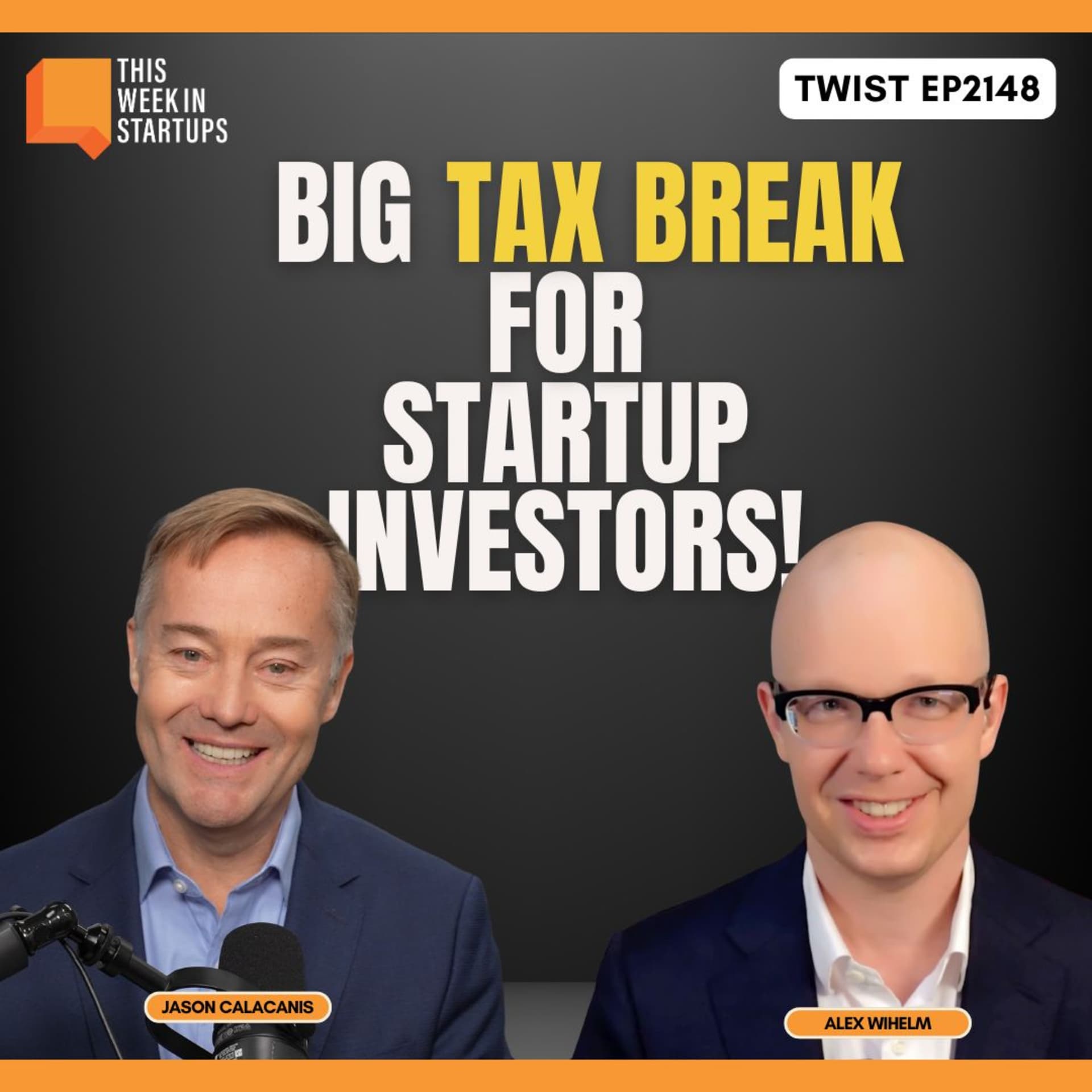
Episode Overview In this episode, Jason Calacanis and Alex Wilhelm discuss the revitalization of startup exits, the expansion of Qualified Small Business Stock (QSBS), and the implications of Robinhood's innovative approaches. They also cover political developments, particularly Elon Musk's "America Party," and the potential changes at TikTok. The episode is packed with insights on how these topics impact founders and investors navigating the tech landscape in 2025.
Key Topics Discussed
- Startup Exits
- Q2 2023 saw a significant uptick in exits, totaling $67.7 billion, marking the highest activity since 2021.
- Exits are crucial as they enable venture capitalists to provide distributions to limited partners (LPs), fostering further investment.
- The discussion included the implications of recent acquisitions, such as Superhuman being bought by Grammarly.
- Qualified Small Business Stock (QSBS) Expansion
- QSBS allows investors in C-corps with under $75 million in assets to avoid capital gains tax on gains from their investments after holding for specific periods (50% after three years, 75% after four years, 100% after five).
- The expansion of QSBS is projected to cost the government an additional $17 billion over ten years, raising questions about its long-term impact on startup investment.
- Robinhood's Tokenized SPVs
- Robinhood is exploring tokenized stocks, which could democratize access to private investments.
- Concerns were raised about the implications of moving towards a 24/7 trading environment and the potential disconnect between tokenized assets and actual equity.
- Political Landscape and Elon Musk's America Party
- The conversation touched upon Musk's potential political ambitions, emphasizing fiscal responsibility and government efficiency.
- Jason argues that a new political entity could reshape American fiscal policy, drawing parallels with historical precedents in Germany.
- TikTok's Future
- TikTok is reportedly preparing to release a new version of its app, internally referred to as 'M2,' amidst ongoing discussions of a forced divestiture or ban in the U.S.
- The implications of these developments on user engagement and data privacy were highlighted.
- M&A Activity and CoreWeave's Acquisition of Core Scientific
- CoreWeave's acquisition of Core Scientific for around $9 billion was discussed, notably how market perceptions of Core Scientific's value impacted investor confidence.
- The deal exemplifies the challenges and opportunities in the AI compute space.
Key Takeaways
- Exits are Vital: The increase in exit activity is a positive sign for the startup ecosystem, indicating a recovering market.
- QSBS Benefits: The expanded QSBS provisions encourage angel investment in startups, but the overall fiscal impact remains debated.
- Innovations in Trading: Robinhood's tokenization initiatives could mark a significant shift in how private investments are accessed and traded.
- Political Impacts on Business: The emergence of new political parties and platforms could have far-reaching implications for fiscal policies and tech innovation.
- Ongoing Uncertainty with TikTok: The evolving situation with TikTok underscores the complexity of international trade and digital privacy.
Final Thoughts This episode captures the dynamic interplay between technology, politics, and investment, emphasizing the need for founders and investors to remain agile and informed in a rapidly changing environment. As the tech landscape continues to evolve, understanding these developments will be critical for success in 2025 and beyond.
Written by AI. May contain mistakes. Listen to the episode to check what was said.
Transcript
Automatic transcript. May contain errors.0:00If people who are already making a lot of money, if you give them the ability to invest more and you make it easier for them to invest more, it's actually better for everybody. That's hard for people to get their heads around because they're like, wait, that person's already rich. Bezos is already rich. Why should Amazon and Andy Jassy's already rich? You know, the people who work at Facebook, Zuckerberg's already rich. Why should they be able to buy more companies and make their company bigger? Well, if you look at it as, hey, we're all Americans and that company is a global company that's making money around the world.
0:31It's giving an advantage to our country. That's why we have the lowest unemployment of our lifetimes. That's why the country has done so well. Yeah, it's just hard for, I think, people on the bottom sometimes or really highly educated people, as I wrote in my piece on my Substack the other week with Generation Xi. For that socialist bent, I think it's really hard when you have$200 ,000,$300 ,000 in student loans and no job prospects because your degree means nothing to employers. It's pretty hard to buy into capitalism, right? This Week in Startups is brought to you by Oracle. Oracle Cloud Infrastructure, or OCI, is a single platform for your infrastructure, database, application development, and AI needs.
1:16Save up to 50 % on your cloud bill at oracle.com slash twist. OpenPhone. Create business phone numbers for you and your team that work through an app on your smartphone or desktop.
1:45All right, everybody. Welcome back to This Week in Startups. I'm your host, Jason Calacanis. With me, Alex. Well, I have been on the road, Alex. I'm back in the office in Austin, in Singapore. Then I went to LA for a little family vacay, did the Disneyland thing, Disney World, no, Disneyland. Disneyland's in LA. And then went to San Francisco, take care of a little business. Then went to the CO2 conference in Santa Barbara, back to LA for the launch of Tequila, back to Austin for three days. Then I went on our yearly whitewater rafting trip on the Snake River. And here I am. I am back in Austin for a week.
2:24This has been the most I've ever traveled. I am so sick of traveling and living out of a suitcase that I'm actually happy to be back in what is actually not been a super hot summer here for Texas standards. Well, it's been absolutely blistering up here in the Northeast. So maybe we stole all your heat. But yeah, there's nothing quite like unpacking the suitcase and realizing that you don't have to use it again and you can put it in the closet or wherever you put it. And you're like, goodbye to you. I'm home now. I would like to be home for a little bit, but I got to go to New York. I'd see my dad and my family.
2:55So I'll be in New York next week. Or I got to go to San Francisco for the graduation of the LA, the launch accelerator class. Then I got to go to New York. So no rest for the weary. The travel continues, but hopefully I'll ground myself for 30 days at some point. I was doing really nicely with not traveling and being a homebody, but we got a huge docket. God, things have been crazy. Tons of tech news. We got a lot to talk about in terms of venture capital, AI exits. I also wanted to talk about qualified small business. You know, we were talking about this big, beautiful bill, which I think they renamed to something.
3:30I heard that they renamed it. But anyway, I think everybody knows it by big, beautiful bill. One of the things in it that's actually been good for startups is QSBS, qualified small business stock. We'll talk about that. and TikTok I see is back in the news with their reboot. Anything else on the docket that we're gonna talk about today? Yeah, so the biggest financial news this morning in the technology world, Jason, is that CoreWeave is gonna buy Core Scientific. CoreWeave, of course, was an IPO earlier this year. We talked about it on the show, a kind of ad nauseum. And then there was a couple of things that you threw in that are pretty interesting.
4:03One is a service called LuxMapping, which is a really fun play on the phrase, LuxMaxing. and then also you found a neat way that people are using a multi-AI model setup to turn AI onto AI code and generate hopefully stronger code and fewer bugs. So we'll get to all that. But first, I have to ask, there's a brand new political party and I see you have the flag behind you right there. So I presume you're waving your flag for the hashtag America party. There's the American flag, America party. Yeah, I mean, interesting turn of events. Obviously, I talked about it on All In last week, or we talked about it.
4:42Looks like nobody in either party is taking fiscal responsibility for the balance sheet of America. We thought there was a chance that the Republicans would maybe have a little austerity. And no, au contraire, mon frere, they are not being the responsible party either. Everybody just wants to spend our way into oblivion. I guess there's some claims that there'll be all this incredible revenue generated. But just first principles, I think if you're going to be involved in politics, picking a side is not great for business. I think probably people have seen that over and over again. You just wind up alienating one side.
5:24Michael Jordan famously said, like, Republicans buy sneakers, too, was his quote back in the day when they asked him to pick a side. But there is an interesting platform I think Elon could build on. Number one, energy, like unlimited energy investment. Number two, fiscal responsibility. Three, government efficiency. Pro-natalism sounds like a good one. parents, you know, maybe funding for more babies, funding for healthcare for parents, time off, all that kind of good stuff that would maybe increase that. And then I think recruitment, part of immigration. So if you were, and I'm no expert on politics, but if you were to capture, I don't know, two or three seats in each house of representatives, the Senate, maybe you can get five or six of those.
6:18Maybe it's easier to get five or six of those with$100 million each investment cycle, give 20 people 5 million each and flip five of them and then have them hold out for fiscal responsibility and just say, hey, listen, this is just the way we're going to vote and kind of Tea Party-esque. Or I don't know if you remember Grover Norquist used to have this tax pledge. I will not add any new taxes. And he got people to sign for it. So I tweeted this publicly. I told Elon, like, you should just have everybody sign an agreement that they're going to balance the budget. And just if they sign that agreement that they're not going to increase the deficit, they're going to balance the budget.
7:00They get support, financial support, promotional support from a group of people in the America party. So I like I don't think they have to run their own presidential candidate. That's not going to help. But I think winning a couple of Senate seats is possible and maybe a couple of House of Representative seats. And maybe that helps. I don't know. What do you think? I think the House of Reps is the easiest target, just given that they're smaller polities and there's just more races to go after. So you could better kind of pinpoint if the New America Party wants to take on the Senate, that's going to be pretty contentious, I think, in terms of current political fault lines.
7:38But on the balanced budget point, Jason, there's actually a great historical precedent for this. If you look at Germany, they for a long time had what was called the debt break. German, I'm going to butcher this, everybody, but they're schuldenbrims. And the idea was you could not have deficits that were greater than 0.35 % of GDP. So they essentially wrote into their constitution, we can't do that. And yes, they did change that recently because they want to give more money to Ukraine and so forth. But you can actually write that into law. the question that I have is if we want to do the pronatals and things, and if we want to do the deficit reduction things, we're going to have to probably go against the Grover Norquist pledge in some areas.
8:16And I wonder how the math will square up, but I don't think anyone's exactly stoked right now with how things are going. And so I don't mind a little, a little stirring the pot. I'm curious to see how much money Elon will put into this though, because he's put a lot in before and said he was going to dial back. So I'm not sure. It's an inconsequential amount of money to spend for him. And if it makes us energy independent and balances the budget, I think those are things that are going to, I would estimate 20, 30 % of the country will support those two specific things in a like very meaningful way.
8:53Like get engaged in it. So it could be a game changer. And I'm rooting for him and the whole process. I'm rooting for the energy stuff. I was so disappointed in the one big, beautiful bill act, which I think is the final name, that it added tax incentives for coal usage. And I'm just, it struck me as a little bit bass-ackwards, as they say. And I just think we could be a little smarter than that, Jason. Yeah, I mean, we don't, you don't need to be a climate denier or believe the planet is on fire to not want to burn coal or have sustainable energy. Sustainable energy just means it's cleaner. You just don't have as much pollution.
9:30So does anybody want pollution or are kids breathing in coal? You know, like there's other countries like China that are getting ahead of this. Why wouldn't we try to get ahead of it? And it's also it's cheaper, too. So maybe the free market will figure it out. Maybe the incentives, you know, although helpful, the basic free market has made it so solar is the cheapest thing to install now. And my understanding is firing up a new coal plant is more expensive than installing a new solar plant and batteries. I don't want to ruin your day, but have you taken a look at your cloud computing bill lately?
10:11They probably give you some kind of deal to start, but over time, those bills start to add up. Well, our friends over at Oracle Cloud Infrastructure want to help you cut your cloud bill in half. Yes, that's right, 50%, while you're getting better performance at the same time. OCI is a next-generation cloud designed to work with any application, including AI. It's faster, it's more secure, and you can do it for less. We're talking complete cloud infrastructure and services, regardless of your specific setup or workload. And OCI costs significantly less than other clouds, with a span of 50 interconnected cloud regions and more than 150 OCI services apiece so you can access your cloud from anywhere and keep your prices consistently low worldwide.
10:55So join modal, Skydance Animation and more innovative AI tech companies who upgraded to OCI and saved. See if you qualify for half off at oracle.com slash twist. That's oracle.com slash twist. This offer is only for new US customers with a minimum commitment. I don't know if you saw this, but there is a new Tesla supercharger station. Somebody can search for it and throw it up on the screen here. There's a new Tesla supercharger that is 100 % solar and battery powered. In other words, there's 84 stalls, I think I read, that are off the grid. A supercharging station, think about this, that is completely off the grid.
11:39So here it is. Cheat up for us, Alex. So Tesla has launched a thing called the Oasis supercharger. Essentially what it does is it just uses power from the sun and batteries that Tesla already builds to create something that does not draw from the existing power grid. The idea here, Jason, as far as I can tell, is that this is a way to ensure that the energy going into your EV is not from a coal power plant. And so you're kind of closing the - And if you scroll down there, yeah, if you scroll down, there are some pictures of it, I think. And it was, there you go. So giving people the visual here.
12:10What you'll see is like, it is giant. and you see that solar farm behind it for those of you watching on YouTube. It actually, I thought it would be more solar than that. It looks like a couple of acres, maybe two acres of solar. It's like a parking lot, like a football field or two maybe to power all those batteries. So man, that must be a lot. And the battery power, maybe show the other photos. The battery packs don't look like that much. There's the solar and the battery there. So if you open that one and you make it a couple of times bigger, yeah. look at that. I don't know. Miserable color.
12:45But yeah, it's not that big. And honestly, we have a lot of space in a lot of markets, Jason. If you fly over the United States and look down, you can see space. So to me, this is fantastic. I wouldn't mind copying and pasting this, I don't know, 50 ,000 times around the nation. Wouldn't that be a project? I mean, if you think about what that would do, and this was the power, this was the potential of EVs and why I think the local standards were so great. In California, we were moving towards a world where the incentives were so strong to get an EV, the incentives were so strong to put these superchargers up that we could be living in a world where we don't burn oil and we don't have pollution.
13:23Just that reason alone. Forget about what you think of global warming. Just not having to rip stuff out of the earth and damage the earth and burn oil and put pollutants in the air. When I first moved to Los Angeles, I guess that was 2002, so 23 years ago, there was still fog. I saw this fog over the valley and I was like, wow, it's always foggy over there. They're like, nope, that's smog. And I was like, wow, that's terrible. It's like this low hanging cloud. And they're like, oh, it was much worse. And I was like, it was. And I looked it up online, man, the smog cloud over the valley in, and this is where somebody could pull it up, in the 70s and 80s, it was like this yellow haze over, you know, like Studio City and those areas because they're surrounded by mountains.
14:14And the fog cloud over there was so gross. And literally in our lifetime, it cleared out, basically. There just wasn't as much emissions on that big yellow cloud. Yeah. I mean, on a hazy day, LA was looking like that all the time. If you need a visual representation and you're on the audio version, just imagine like 2008 Beijing, essentially. Basically, it looks like Beijing. Yeah. All right. So let's get to the docket here. I know we've been having a lot of exits and we're tracking this ourselves and been talking about it here, but let's talk about what's happening here in terms of exits. And exits, of course, are super important for founders because if venture capitalists can give distributions to LPs, those LPs will invest in the next fund and that next fund will invest in your startup.
15:02So here we go. Exactly. Yeah. So first of all, the headline here, everybody is good news. If we take a look at exits, this Jason is a chart showing the exit value and number of deals of US backed, sorry, US venture backed startups. And as you can see, the far right column is the most recent and it is the largest since 2021. That means that we just had the best result of quarterly exits here in the US for VC-backed startups since essentially peak ZERP. And sure, we're not back to where I think people would want to be and we're not near all time highs, but steady progress over the last three or four quarters, I think is a really positive sign.
15:39And to put this into numerical terms, Jason, the amount in dollars of VC-backed exit activity in Q2 was$67.7 billion, according to PitchBook. As always, I'm curious if this is going to be enough to actually shake things loose or this is kind of an amuse-bouche for LPs, but certainly a positive sign. Yeah, it's definitely a positive sign. We had Superhuman, one of our portfolio companies, get bought by Grammarly last week. You did a great interview with a special guest. And so I think we're going to continue to see more and more of these kind of exits on a regular basis. Companies, I guess, Superhuman was reportedly 30, 40 million in annual revenue.
16:19Those kind of companies, maybe they don't want to keep going and they're not ready for an IPO yet. They need to maybe 10X revenue from there. But if somebody wants to put five of those things together and then double the revenue in a year or two, well, then you got an IPO there. So there's going to be a lot of singles and doubles. Singles and doubles make the world go around. And this is fantastic for the industry as well as the IPOs we've seen. So the IPOs is the interesting thing, because I think we've been talking more about IPOs this year than we did last year. But at the same time, according to Kyle Stanford, a pitch book analyst that I've known for a long time, he says that public listings remain on track for the fewest completed in any year over the past decade.
17:01So even though we've seen Chime, even though we've seen CoreWeave, even though we've seen Circle, also eToro was in there earlier this year, and we're looking forward to Figma for sure. It's just not quite the volume that we all wanted to So here's hoping that that changes in the back half of the year. But if we're doing this well, Jason, without IPOs, my read is that Nixon, you know, doubled the IPO cadence and we're going to have a rollicking back half of 2025. And then everyone can calm down and relax and stop worrying about exits. The number of people who filed for exits is tremendous. So we're seeing the strongest ones with the best stories, I think, go out first.
17:36Circle, Chime, eToro, and CoreWeave, those all have really good stories. Either crypto with new crypto regulation or AI and the AI infrastructure boom, or FinTech, which, again, is related to regulations, I think, as well. So that's really good for the industry. Now, business software would be really good to see some business software companies come out as well, maybe at some point. And we'll say, or consumer tech, maybe, you know. But Stripe is obviously sitting there in the wings. That would be the big one. SpaceX, I don't expect those to come out anytime soon, but everybody else, yeah, maybe we'll see some more.
18:15And perfect time for a fintech company to go out after what we saw with Chime and Circle. Robinhood has had an incredible run. And so - Yeah, it's kind of nuts. Like I've said on the show before, I've never sold a share of the company. And then I keep looking at my portfolio and it just, I don't know what it's at today, but it had broken$90 a share, I think. I think it's over a hundred. Let me double check. Is it really? 92, 92. Oh no, it did. Oh, sorry, it was like 90. No, yeah,$100.88 was the 52-week high there. I wasn't wrong. Yeah, it did at some point break$100, yeah. And I think they have this new, I don't know if you saw this story, tokenized stocks, where you can trade stocks, which I don't understand exactly what that is.
19:03But I guess, did you read that story and do you understand what it is? Yeah. So there was, okay, so tokenization is taking real world assets, Jason, and putting them on the blockchain, essentially giving them representation up in the Web3 world. and there was discussion about Robinhood offering people access to open AI equity. Open AI was pretty miffed about that because private companies often have rules about who can trade their stock when and so forth. It turns out that what Robinhood had done was find access to open AI stock via an SPV, a special purpose vehicle, and then tokenized that. And I'm of two minds here.
19:41I don't know which one's correct, Jason. On one hand, I love to see innovation and people having access to more assets. On the other hand, at some point, you're financializing a bit too hard. And I think tokenizing an SPV, which we don't know if it's a layer one or layer two SPV, struck me as slightly disconnected from actual equity. But I'm curious, your take. Your business can't miss phone calls. It's that simple. Every missed call is a missed opportunity. And what if these calls come in when you're busy, right? After hours, it's the weekend. Maybe you're out skiing or you're whitewater rafting like I was last week.
20:16Well, with open phone, there are no more excuses. It's the best phone system for teams because they streamline all your customer communications, bringing text, calls, and everything else together in one phone box on an app, on your desktop, on your phone, wherever you like to work. And your team is going to share one phone number, creating a truly collaborative system, which means faster response times for your customers. And now there's Sona, S-O-N-A, OpenPhones' AI agent that handles all of your calls 24-7. For customers and clients, your business is always available. And for your staff, Sona is keeping accurate call summaries and details so they can follow up without missing a beat.
20:55OpenPhones is offering Twist listeners 20 % off your first six months at openphone.com slash twist. That's O-P-E-N-P-H-O-N-E dot com slash twist. OpenPhones. No missed calls. No missed customers. I mean, if they have an SPV and people understand what they're buying, then you're basically allowing the public markets to have access to a token, which represents a percentage share in that. It's very weird because it's like its own little float, I guess. and that could lead to weird behaviors in that there might be so much demand for that that it disconnects from reality and that little float is trading much higher than the actual shares.
21:41So could that then trade at a trillion dollar valuation because the public is interested in owning it so much that they're willing to pay three times as much. But I think this is a step on the way to, Two, it's clearly a step on the way to private companies being tradable, which is one of the reasons we started the Twist 500 was for us to start to get a hold on what are the top private companies, which 500 out of the 20 ,000 that exist are the creme de la creme, the top 5 % or so. And then maybe we'll invest in those with SPVs or try to get access to those. And so that's something I've been looking at.
22:23To trade them freely on a blockchain is really interesting because it could trade 24 hours a day. So if you follow that string, then OpenAI could trade 24 hours a day. X.ai could trade 24 hours a day. Stripe could trade 24 hours a day. But Robinhood, I guess, would, they have an after hours market, would trade, you know, during market hours plus a little bit. But this would be like a global market where anybody could buy any stock anytime in any company. That's going to be pretty freaking cool, I think. It's going to lead to a need for a lot of education. because consumers are going to need to understand what can happen when you do have a 365-day market for a company that is not obligated to give you any information.
23:12Can I show you something that I saw that I don't think we've actually talked about on the show? There's a new company called Jarzy. It just came out. I think they raised some money. It's kind of like Equities in Jason or Forge Global. But what they've done is they've actually created an interesting kind of information marketplace here that I think is worth looking at. So if you look at my screen here, this is the Jersey interface. I did some back and forth with them to figure out how this works, because how can you possibly invest in SpaceX? Well, it turns out they're purchasing stocks on the secondary exchanges, and then they're tokenizing them and then creating these little assets you can buy into if you want.
23:47And then they kind of give you some opportunities, headwinds and so forth. But I really do think that because people are not going public, because we have new financial technologies, and because people want to invest in companies that are between household names before they go public. The demand's gonna pull forward the market solutions to the point in which we see more stuff like this. Maybe it's fine. I think we're gonna have more open AI Robinhood disputes though as more companies try to tokenize and trade assets that are not really supposed to be that liquid. And the SEC is gonna have to get involved at some point.
24:19We'll see which, if Americans are trading in this and what rules come about there because that's the SEC's mandate is to protect consumers. I believe that's their mandate, like orderly, a trustworthy marketplace and protecting consumers is their mandate. So does this... It seems reasonable. It seems reasonable, but we're now in the no crying in the casino phase. We went from, you can't do anything under Gary Gensler and yeah, come in and tell us what you're planning on doing. And then we'll either file a claim against you or tell you to do what's on the website. So there was no reason for you to come in here, you're basically like, it's a trap to now, yeah, launch a meme coin.
25:02No crying in the casino. If you bought the meme coin because Malay's sister or cousin decided to do one or Eric Trump decided to do one, YOLO, you're the idiot in the casino who decided to play poker with the big boys at a table with a rigged game. So here we are, folks, buyer beware. I think it's, you don't know what you're buying. You could be buying common shares that are far behind a preference stack. So in a company that is a private company valued at$3 billion that has, I don't know, 3 billion shares in this hypothetical example, and you're like, okay, the shares are worth a dollar. I'm gonna pay$1.50 for it because I think it's gonna go 10X from here.
25:47And it turns out you bought common shares and the company has a 3X liquidation preference and the first billion shares, the company gets sold for a billion and those preferred shares have that preference stack and they just take all the proceeds from a sale and you get$0. And you bought somebody out who had common shares as an employee at a 50 % premium at a$4.5 billion valuation. They ran, they knew their common shares were underwater because they had inside information because they worked in the sales department or they were privy to the Friday meetings. And this is where you're going to get tons of lawsuits.
Read the full transcript
26:23So it's great that people can have more access. I think that is great to democratize it, but we're going to need some rules of the road. Yeah. Jason, can you explain liquidation preferences for folks out there who may not be super aware of the intricacies of dealmaking? Yeah, sure. You decide you want to raise money. This is Acme AI, and it's worth$3 billion. and the company has, I don't know, 300 million in revenue and it's trading at 10 times that, you say, hey, the company's losing though a ton of money. It's losing$300 million a year. You're putting tons of, you're losing a billion dollars a year.
27:03You're putting all these servers in. You're paying for a bunch of stuff. And what happens is maybe somebody who is gonna give you that billion dollar investment in the company. They say, okay, I'll give it to you, but I want to get back$2 billion at a minimum. If not, if it's greater than that, my shares, then I'll just take my percentage ownership, which would be like, I don't know, 25%, if it was 3 billion pre, 4 billion post. But in the case that it sells for less, I just gotta get 2 billion. So let's say the company sells for 3 billion. Well, they put the billion in, they own 25%. So it sells for 3 million, so they should get 750, right?
27:42They own 25%, nope. They get their 2 billion. Now there's a billion left. And if they had been participating in that, they also get their 25 % of that billion. So now they get 2.25 billion. Or it could just be, depending on your structure, they just get 2 billion. Now everybody else shares the 1 billion left. There might be other investors. There might be employees. So you see a$3 billion sale, but the cap table actually shared in 1 billion. And this is where we have to explain to our LPs when these things happen, here's what actually happened. You read a headline number. here's what actually happened.
28:16And we may not know about that. If you invested through an SPV and you had no information rights, you don't know. You don't know all those details. The board knows those details. That's why we, when we own over 5 % or 10 % of a startup, we like to at least have a board observer seat. If we own over 10%, at least a board seat, it's kind of reasonable. And sometimes even if we have a board seat, we just say, hey, you know what? We're going to send an associate. We'll send an analyst. They're just going to be off camera at the board meetings. as an observer. So we'll just, we'll drop down to an observer seat.
28:47We don't need to vote on anything just so we know. And we have that. And that's why information rights become such a contentious issue. If you don't have information rights, you're basically making bets at a poker table and you only know one of your cards. Like imagine that disadvantage in a Texas Hold 'em game. You don't even know your whole cards or you know one of your two whole cards. Really hard to play. Yeah. Given my recent poker results, I don't think that would actually make me much worse, but hey, what can you do? Jason, can we talk about AI just for a hot second before we move on? Yeah.
29:19I think there's some interesting stuff here to discuss. So I want to show you a chart of how much money has gone into basically AI deals as a share of overall deal making. Because I think the trend here is pretty clear. And what we have here is a chart that goes up to the right, if you're on the audio version of the show. But essentially the share of deal value that AI startups command has reached roughly two thirds now. And we're seeing roughly about a third of the deals, according to PitchBook's Q2 data, be in AI startups. So it seems that really it's feast or famine out there. AI startups are raising enormous rounds and everyone else is kind of struggling.
29:55My question for you was, does this chart match your expectations of the data? Does this track with what you're seeing out there? Not everyone can be a financial genius like yours truly for busy people keeping track of every dollar you spend on top of everything else you have to worry about. Well, it can get overwhelming. This leads to blind spots. You don't realize how much money you're shelling out for basic stuff. Well, Monarch money acts like your personal CFO. This is not a budgeting app. It's your financial command center for all your accounting and investments. Monarch pulls all of your accounts together so you know exactly where you stand without jumping across endless tabs and screens on your laptop, on your mobile phone, switching between apps.
30:36It's going to accurately chart your net worth over time by syncing your Monarch app to your investments, a Zillow estimate of your house, your credit cards, your loans, and more. You can even visualize your budget as a Sankey diagram. You know Sankey. Another feature I really appreciate is the ability to sync your finances with your partner. And there's no need to schedule awkward check-ins. You just pull up the app and see who's spending what. So get in control of your overall finances with Monarch Money. Use the code TWIST at monarchmoney.com in your browser for half off your first year. That's 50 % off your first year at monarchmoney.com with the code TWIST.
31:13So the definition here matters. Is it a company working on an AI product or a company using AI to build a product or a company with AI features in their product? The clear definition here is, I guess, the devil is in that detail, and we don't know that. but 100 % of companies are using AI to run their company, then you got to think 80, 90 % of products have AI-like features for their customers, whether it's a video game, making AI characters, or AI backgrounds, or it's your SaaS software providing some AI to train you or use customer support. So there's that spectrum, you know, and this is why I think a lot of the SaaS companies are looking and saying, how do we make our company appear and not cynically, like correctly, be positioned as an AI company?
32:10So you had a company like Superhuman. Was that an AI company? Yes. He was, all the features that were coming out were AI based. Was it perceived as an AI first company, probably by most sophisticated people, but they had to explain to people, we're not just a more elegant email product. We're not just a luxury software for email. We're an AI email client where we analyze all your emails. We make responses for you. We draft them. We categorize them by email, all that kind of good stuff. Whereas a company coming out of Y Combinator or our accelerator or getting funded, they might come out as the AI email product, right?
32:51So all these old companies now have to reposition themselves as AI first. That's my best advice. If your company is part of the last generation, whatever we call that generation of companies during ZERP, you just got to reframe it as an AI first company, rebrand it maybe even, so that the market perceives it correctly as AI first. I think Gen Zurp is a perfectly fine way to phrase that. And then Jason, just to show you that same kind of data, but in a more global context, this shows the percentage of dollars invested into AI deals, again, with the same caveats, around the world over time. And as you can see, both North America, which is the US, and Europe, which is the EU, are by far and away putting the largest share of their venture capital dollars into AI.
33:43And I think that's pretty bullish for those two markets, frankly. And I worry about the rest of the world that's not investing as much in those products because they do seem to be the future, at least according to venture cash flows that we're seeing. But this chart, I thought, was particularly illustrative of changing markets and how they're diverging from one another. Yeah, the North American market has the most adept, skilled technologists, the most aggressive founders, and they tend to be the most innovative. And then Europe tends to be second most, and the rest of the world might be fast followers.
34:15This is where you'll see, I don't know, Uber or Coinbase or LinkedIn start in the West and then get copied around the world. And you might have Grab in Asia or another company, copy what was done there, and then compete. So it's not surprising to me. Generally, you have more, I don't wanna say, let's see, how would I say this about the entrepreneurs? You have more seasoned entrepreneurs, more aggressive entrepreneurs, entrepreneurs who have done it before. They're just gonna be a little more cutting edge. Now, China does have moments. Japan does have moments. um australia has moments where they might actually create something truly unique in the world canva comes to mind as something or jira you know things that were unique in the world at their time at those times that came out of another location uh korea with neighbor you know japan um had some super apps and some really interesting um gaming that or social media that that was very innovative and that Americans sometimes copied.
35:21But generally speaking, the innovation has happened here and has been copied quickly. Fast followers in Europe because of the English language and the proximity, I think, and the entrepreneurs being fluid between those two markets. Then you have a language difference in Japan, Korea, and China, but Australia also same language, Canada, same language. So you'll see because of that, it's very easy to transfer the concepts into another market. Whereas in Japan, the culture is so unique and sticky. The language is so unique and sticky that it doesn't always translate. In fact, Japanese entrepreneurs, the big criticism of them right now.
35:59And the reason they're, I think, a little more, they have a nice moat is because the culture is so unique and the behavior is so unique. The technology, the society is so unique that what they build doesn't exactly translate into the American market very easily. yeah and just for reference the japanese population 125 million california is what uh 40 so it's about three californias if you want to put it into into those metrics all right jason let's talk about qsbs this was a really fun uh policy dive for me because i've never had to deal with it so i didn't actually know it in enough detail uh but for folks who don't know it's called the qualified small business stock exemption or just qsbs in kind of the lingua franca.
36:41And it was expanded in the one big, beautiful bill act. So Jason, previously, QSBS allowed investors in a C-corp specifically that had assets of less than$50 million at the time of their investment to, if they held their stock for five years, not pay capital gains tax on up to$10 million of the value of their investment. So essentially it was a bit of a loophole is a derogatory term, but a perk, a benefit for people who invested into smaller companies to not pay capital gains tax on potentially some of their gains. Now, it's been expanded in a couple of ways. First of all, instead of having to wait five years now to earn this benefit, you can now avoid capital gains tax on 50 % of your holdings at three years, 75 % at four years, and up to 100 % at five years.
37:28Also, the cap has been raised from 10 million to 15 million, and even better, that will go up over time with inflation. And one last thing that I saw that changed in the bill is that companies can now have up to$75 million in assets instead of 50 at the time of the investment to give their investors this access to a tax benefit. I think that there's going to be a lot of people on your group decks who are very excited about this. It's certainly a benefit if you are an angel investor or you're an LP in early stage companies. Now, if you're investing in Mira from OpenAI's$10 billion company, that doesn't count, right?
38:06because if they raise a billion dollars, they have a billion dollars in cash. It's kind of hard to argue that company's worth less than 50 million. But if you invested in Coinbase, if you invested in Uber, Airbnb, in that first couple of years, well, it wasn't worth more than 10, 20, 30, 40 million dollars. Therefore, you got this little incentive. If you put in, I don't know,$100 ,000 and it turned into 10 million, you wouldn't have to pay those federal taxes on that first 10 million in gains. But you had to hold it for five years. So you think about the timing of this. You have to really thread the needle.
38:45When you make the investment, it's got to be a tiny enterprise, under$50 million in value. They have to file and say, hey, the CFO of the company or the investors have to make a note on a piece of paper and say, yes, this company is worth under$50 million. It qualifies for QSBS. If you were to start the company and buy a billion dollars in servers, you can't claim it's under 50 million. So this wouldn't work for XAI or CoreWeave at a certain investment level. But it would work for a software company or a social network, et cetera, marketplace. If you hold it, then you get this incredibly generous.
39:24If you were to save, I don't know, 30 % on your capital gains tax. And I think it's just the federal tax. If you save that money, you can save a couple of million dollars. It's not, it's kind of like a little pot sweetener. It's not enough to drive people to become angel investors, to become LPs and seed funds, but it's certainly nice. And it does come up in our world. Hey, was that a QSBS company? Fantastic. My first$10 million in gains. And typically it's like a gain of a million dollars. So you're talking about somebody saving low six figures in the average case or high eight figures. It's not as juicy as it sounds.
40:08It's nice. It does, I think, drive people. If they got rid of it, I think you'd lose 20%, 30 % of angel investors. So there are, I would say, one out of five people who consider this like a driving force for them, and it got them off the benches. And we should be thinking more and more about this. Now, I could understand socialists. I've been watching this Socialism 2025 conference. Somebody's like taking all these clips from these wacky socialists in this conference, talking about like taking over the means of production and getting rid of the state and seizing people's assets and stuff like that.
40:43I can understand this being triggering because it's like, well, you're an angel investor. You make a ton of money and then you don't pay tax. What about somebody who's working at McDonald's or Starbucks? Should they have to pay taxes? The truth is, when you look at the actual amount of tax coming in, those people don't pay tax. Like, they pay almost nothing into the overall budget of cities, states, and government. So if you're actually looking at the numbers, it's inconsequential to the budget, the amount of money being paid by baristas, as just an example, or Uber drivers. Whatever taxes they're paying, it drives nothing.
41:17It doesn't pay for anything in the budgets. It's 90 % of the taxes are paid by the top 10 or 20%, depending on the region you're in. And it's kind of interesting concept here for people to think about. They did add if, oh, and that thing with like, you have to hold it for five years. Okay, but what if the company gets bought early? What happens if they get bought three or four years after? And now they've made a little concession there. So I guess this is like one of these tiny things in these giant bills that whoever lobbied for it, I don't know who is lobbying for this, maybe the National Venture Capital Association or somebody lobbied for this heavily and got it, but it's kind of how our system works.
42:04It doesn't make an impact on my life, I'll be honest. I would still do what I do with or without this. Yeah, so Senator John Thune was one of the people behind it, but the thing that I'm trying to sort out, and I don't actually have a dog in this fight particularly, Jason, so don't think that I'm setting you up here, But the change in the cost of QSBS is about$17 billion, according to the Joint Committee on Taxation. So QSBS was going to cost about$45 billion over 10 years. Now it's going to cost about$62, just to kind of put it in perspective. Do you think we're going to get enough people to do more angel investing to make it worth$17 billion in extra spend at the national level over the next decade?
42:45I guess it's probably the value tradeoff. Probably. And the people who make that money or the people who save that money, my view of them is they go invest it. So these are like the most frisky gamblers in the space. So if somebody like me were to save money on QSBS or some seed fund, do they just take the money and then like some Italian rich family, you know, redo their castle and hoard the money? No, they go invest it. They're frisky. They're going to go find the next Airbnb. They're going to go do the next investment. So I think even with the savings, you got to ask yourself, how many more companies get built?
43:26I would say it's like 10, 20 % more companies get built because of this. 10, 20 % more money gets invested. And then these people are frisky recyclers. They go spend the money. So if it's 10 or 20 % more, that's cheap. Cheap then. Cheap twice the price. I think that's kind of why this thing, I believe this came out during, I don't remember exactly when this came out, but I think it came out during Obama. So we can actually look that up of when did QSBS, what's the, when did QSBS start? Let's see. Oh boy. When did it start? Let's see. Enacted in August, 1993. Wow. I didn't realize it was that old.
44:13So I guess this has been around since 1993. Well, what have we seen since 1993? An explosion in the technology sector, venture capital investment, and the United States still is the absolute apex. Just to go back to the numbers to make the point, Jason, in the second quarter, there was about$102 billion invested by VCs around the world. The US got 70. So there's probably some connection between favorable tax treatment and activity. I'm glad you think it's worth it because it's not cheap. with a$70 billion bill over the next 10 years. But if it's worth it, cool. So if you want more Coinbases, Ubers, Airbnbs, CoreWeaves, XAIs, OpenAIs, if you want more of those, then you want policies like these.
45:01If you want bigger companies, you want more Facebooks and Metas and Apples and Teslas, Amazons, you want to have more M &A. So you have to just decide, as uncomfortable as it is, I think, for some people, to make this, to swallow this bitter pill. If people who are already making a lot of money, if you give them the ability to invest more and you make it easier for them to invest more, it's actually better for everybody. That's hard for people to get their heads around because they're like, wait, that person's already rich. Bezos is already rich. Why should Amazon and Andy Jassy's already rich?
45:38You know, the people who work at Facebook, Zuckerberg's already rich. Why should they be able to buy more companies and make their company bigger? Well, if you look at it as, hey, we're all Americans and that company is a global company that's making money around the world. It's giving an advantage to our country. That's why we have the lowest unemployment of our lifetimes. That's why the country has done so well. Yeah, it's just hard for, I think, people on the bottom sometimes or really highly educated people, as I wrote in my piece on my Substack the other week with Generation She. I think, shout out to Lon who came up with that term for me.
46:13for the, for that socialist bent, I think it's really hard when you have 200,$300 ,000 in student loans and no job prospects because your degree means nothing to employers. It's pretty hard to buy into capitalism, right? All right. Let's talk about TikTok really quick, Jason. I just want to touch on this so everyone's up to date. We've discussed the, man, what is it at this point in time? The potential forced sale of TikTok or the ban of TikTok. As everyone recalls, this came to a head January 19th and 20th when TikTok went dark for a couple of hours. Divestiture, I think is what your divestiture.
46:50Is that the word? Divestiture? That is the word. Yeah. Thank you. Hashtag Monday. Yeah. The forced divestiture of TikTok or its ban in the US. And essentially the latest is that Donald Trump has once again given a reprieve this time. I think it's 90 days. Previously it was 75, but we're still in limbo about what this is going to look like. The good news for everyone out there who cares is that according to the information, TikTok is getting ready to release a new version of its app. Now, internally, TikTok is called M apparently, and the new version is going to be called M2 because apparently no one over there has creativity.
47:24But they're going to have to drop this app potentially in September. And the way that I understand it, people are going to have to re-download a new application. So it won't just be an update to TikTok. My thought here is TikTok is one of the few companies with enough brand pull to actually get their user base to install a new application, but it still won't be easy. And I don't think we actually have this deal tied up as much as people hope so far. Thoughts? Okay. So the concept here is that TikTok is willing to divest because that's been the big question. So if they have a plan, that means they're taking our threat seriously, that it's going to be removed from the app store, and that the Chinese government is willing to let it go.
48:10That's kind of the, I guess, the bigger information here. The fact that there's actually a plan to get people, to get the product divested and in the clear and away from the Chinese Communist Party, that seems like evidence that this is going to happen. I don't think they would do all this work if it wasn't going to happen, which I think is this deal is now being done as part of the larger trade deal that Trump's trying to do, which means the Chinese government values the trade deal more than the spyware inherent and the influence inherent in owning a social network like TikTok. That would be my read on it of what's happening here.
49:01I think that's fair. Also, this month, Trump said the quote, we pretty much have a deal with China on the matter, which implies that at least things are moving forward. Though I'll just say, Jason, until the CCP signs off on this deal, it's not done. So I have progress moving forward, but we don't have a bow on it yet. And trade negotiations have proved this year to be a little bit back and forth. So, you know, chickens, eggs, counting, hatched. Yeah, it's this is like multiple extensions. There was that January 19th deadline. Then there was an extension. Then there was another extension. So I don't know how you can give this many extensions.
49:41I thought he was allowed to give one, President Trump. Whatever it is, this it's untenable for us. I've said this a million times on the podcast. It's untenable for us to not have reciprocity. If we can't have Facebook, Instagram, Twitter, whatever it is in YouTube, freely available in China, they shouldn't be able to have TikTok here. And if they're unwilling to divest it, it tells you everything you need to know because that means the massive hundreds of billions of dollars in value unlocked by it is not as valuable to them as the spying ability that it provides them. knowing where every American is, having access to microphones, camera rolls, location data, and who knows what else, the ability probably to turn on the microphone or the camera covertly probably exists or to inject other spyware.
50:35That kind of software exists in the world. So why wouldn't the Chinese government be able to do it in certain circumstances? I'm sure they would. and just even knowing like, hey, this senator has two daughters and those two daughters are in college and they love TikTok and they're uploading videos constantly. And yeah, now we know where they are. They are with their mom or dad in Cabo at this location. I mean, I know this sounds crazy, but wasn't Bolton targeted or who was in the first Trump administration one of his military guys was being targeted by iran to be assassinated gosh lawn says it was bolton uh actually lost producer claude to verify that if we can yeah yeah that we gotta ask claude because there were two it was bolton and then there was another guy who lost i guess trump took away his security detail and that was a big part of the um rule about that is that it came out that Iran was going to murder a couple of, or had assassination plans.
51:40So now - Yes. The - Yeah, go ahead. The Biden administration offered a$20 million reward for information on the Iranian that was charged to plot to kill John Bolton, who, by the way, was a Trump administration official. So the Biden admin was actually running defense for the preceding administration. Got it. So now we look at this and say, okay, if you were going to assassinate, god forbid you know some i don't know a cia agent a navy co a senator a president a former president who around that person so now you're like okay the daughters in this hypothetical if bolton had two daughters okay the daughters don't have it on their phone they've been warned to take it and delete it off their phone but uh i don't know they invited their friend or the nanny has it and they know who the nanny is.
52:30And then they know the nanny's in proximity to this other phone because they have spyware on it. And now you know exactly when this person goes and plays golf, you know where they're gonna be on the golf course and boom, just like that lunatic, the second person who was trying to kill Trump was on that golf course on the next hole before they caught him. Like, how do you think these things occur, folks? They occur because bad actors can get a pattern on somebody. And once they have the pattern, The pattern doesn't have to be the principle that you're assassinating. I mean, why do I know so much about this?
53:01I watch too many spy thrillers, but this is how they get that kind of information. I know this because I had a friend who was, I would say, which elite force, but like a Navy SEAL, not a Navy SEAL, but one of those like top elite forces. And he said they had so much Al-Qaeda interest that he had to stop using Facebook. He had to, I was like, why are you unfriending me? What happened? Like, where's your Facebook? and it's like, oh, we had to turn ours on. Everybody had to turn them on private. This is during the Gulf War. This is years ago, like 10 years ago, like 15 years ago, like early days.
53:35They all had to turn off their Facebook profiles. They had to delete connections. They had to take all their pictures down. It was like a whole thing in the military because those assets were worth, like my friend, as an asset, he told me he was worth 15 or 20 million to America because of how much they had trained him over a decade and how many there were of him in the world and what they did. So there was some estimate they were worth$10,$20 million each. A Navy SEAL might be worth$50 million to the United States as an asset that they track and all the work that goes into getting those elite players.
54:10These other adversaries want to kill those people or compromise them, both of those things. So, yeah. I think a lot about this in the context of my brother, who's a major in the army. and like, you know, he has a ranger tab. The army's put a lot of money into him and he's probably valued on some spreadsheet in that way. It's interesting to think about. I like that framing. Last question on the TikTok point though, Jason, just what's it worth? People are saying 40 to 50 billion. We now also know that ByteDance, the company that owns it, was valued at 315 billion in a secondary offering. So a lot of money here, a lot of moving parts, questions about legality of delays, but here we are, new app coming, probably gonna see this happen.
54:50you can probably keep tick tocking everybody you can keep whatever it is you do on tick tock you won't be stopped and that's nice for folks out there who care a lot including us because on twist we are now uh we're streaming on tick tock we're doing tick tocks we're we're out there cool now we're well yeah we're we're experimenting on it and uh yeah there it is all right so uh poly market today's poly market jason is a fun one i am a big old fan of the philadelphia eagles as i'm sure i'm sure you know uh they are my nfl team and i've been supporting them for fly oh yeah okay go birds baby uh and i was browsing through the polymarket website and i found my favorite chart that i've seen in recent weeks which shows that according to the sharps over on polymarket well the philadelphia eagles are currently leading the predictions for becoming the next super bowl champion in 2026 and as you'll know there's been 6.6 million dollars wagered on this thus far which So it's quite a lot.
55:48The thing that I'm scared about, though, is that we're not beating the other teams by much. As you can see, their betting is actually pretty tight here. What's your team? I guess the Giants, technically, because I grew up a Giant fan. Let's see if we can find. Yeah. Let's see, where are the Giants? That would be the last. Last. One percent. Jets. There's the Jets. Yeah. Oh, literally dead last. Dead last. They're dead last. You should take a bet on that. That'd be a huge one if you won. Well, this is interesting. In the Build Back Better Act, again, related to startups and all of these things, if you're placing an investment, and these are investments in polymarket or these other prediction markets are considered investments, not bets.
56:33So as investments, you would not get hit by this new gambling tax. I don't know if you saw that, where they're going to put a tax on gambling winnings. And so it used to be you just netted out. Okay, I made$100 ,000. I lost$90 ,000. I netted$10 ,000. I pay tax on$10 ,000. Some convoluted way to pay more taxes on your winnings, and you don't get to net out all your losses. So, you know, if you you you might have to pay more than you actually made. And there's a whole bunch of back and forth on it. But there's some speculation that the prediction markets are excluded from this. And then the casinos would then take the brunt of this with their big players who have to net out their earnings.
57:16This would affect people who are high stakes poker players. I know a lot of them who are playing in like the Triton and stuff like that. My friend Jason Kuhn and others, Phil Hellmuth. with like they have very complicated accounting, but it's actually, they have a very complicated life in that they have to track all their gambling, winning wins and losses, and then they don't get to carry losses forward. Like it's just in that calendar year. So that's kind of a bummer too. I would think that the losses would carry forward. So if you lost 100 ,000 one year, won 100 ,000 the next year, you could carry forward the losses maybe a couple of years.
57:52But I guess we don't want to encourage more gambling. That would encourage more people to gamble, wouldn't it? So here, I guess we're going to disincentivize people from gambling. There's a bunch of... The heart and soul of all of this is the free market. Should people be able to gamble? Should people be able to buy crypto? Should people be able to invest in startups through tokens or venture funds and become accredited? I think we have to, as a society, just go with what the majority of people believe. and want the will of the populace. And I think the will is people want choice for women when it comes to reproductive rights.
58:32They want cannabis legalized. They want gay marriage and they want to be able to place wagers, bets, investments, gambling, however you want to frame it with their own dollars with some basic rules of the road. And so all of this is related. It's all the same thing. startup investing, polymarket and prediction markets, wagering, price picks, all this stuff. I do$100 to$500 a game on the Knicks when the playoffs are going on, if I remember in time for the game. I just like to have a little skin in the game. And I probably do it 30 times. I've done it maybe 30 times. So maybe I've done it. Actually, it's a lot, a couple thousand, maybe five or 10, maybe I bet five or$10 ,000.
59:20and I like it. It makes the game more enjoyable to me. All right. So just to close things off from my end today, Jason, CoreWeave, a company we've talked about a lot, a NeoCloud with a focus on AI compute and public earlier this year did very, very well. That's going to come into play here. Is going to issue about$9 billion worth of shares to purchase Core Scientific. Core Scientific was a company that was big on the crypto mining space and like many other players in that industry is pivoting towards AI compute. And what's interesting here is that Core Scientific and Core Weave had already come to a deal that was going to be a relatively long, expensive transaction involving Core Weave leasing space from Core Scientific, but paying for some CapEx.
1:00:05And it was one of those tricky financial deals that makes a lot of sense if you're two particular assets. And now they're going to be brought together. What I found interesting about this deal and why I think it's newsy for us is that usually when someone announces they're going to buy a company, the price of the company that they're buying goes up if it's public because they offer a premium. In this case, and I was curious why, Core Scientific tanked. And that's a weird one. So at current prices, the 0.1235 shares of CoreWeave stock that you'll get each share of Core Scientific is worth about 20 bucks.
1:00:43But the company, Core Scientific, is now trading for about$14 a share. So what explains the investor pessimism there? I think it's simply that they don't think CoreWeave is properly valued and they expect that the value of CoreWeave stock is going to go down. And given that the transaction will be priced at the end, but their unit conversion of stock to stock will not change, they're betting that CoreWeave is going to lose 30, 40, 50 % of value between now and when this deal actually concludes in Q4. But I love seeing deals. CoreWeave market cap,$76 billion. It's pretty huge. Revenue is like a billion dollars a quarter, something like that.
1:01:23So$4 billion. So yeah, it's trading at quite a premium. And I don't think they're making money. I think they're losing money, so there is no price to earnings. This is all quite speculative for now. And if you felt your stock in Core Scientific was based on more reality, they're doing 80 million a quarter. So call it 350 or something like that. Yeah, you might want to sell now. And that's probably what you're seeing is, yeah, it's down 13%. And this is where when you have a high market cap, you want to use that high market cap to buy other assets. So that's what this shows here is CoreWeave has an advantage here because of that huge market cap.
1:02:10They can go buy things, especially private things. And then you don't have a choice as an investor in a private company other than to say, like, I don't agree with this. you generally get dragged along with the majority of shareholders, which tend to be the biggest investors plus the founders. So yeah, it is a, this is why some people ask for cash, right? And to buy, for CoreWeave to buy this other company would require billions of dollars in cash. And yeah, that's not going to happen. When you have a giant market cap, buy stuff, you know, buy stuff. Yeah. Do you think the Grammarly superhuman deal falls under that, admittedly in the startup side of things, private stock, a lot of value there?
1:02:54I don't have the details of it. And so I shouldn't say anything yet because people assume I have the details. I was on the rafting trip and I haven't talked to Raul, but my guess is these things tend to be all stock deals. Although we did see Grammarly raise a bunch of money, I think. And then I think Grammarly is going to buy five of these things and take them public. If that happens, if they were to buy five or 10 assets that are all growing and that have loyal user bases that are loved and they take it public, yeah, that could be a great company. It would be kind of like the IAC. I think somebody should do that for consumer apps as well.
1:03:32So if you were to buy apps, like a collection of subscription apps, I subscribe to FitBod, which we're investors in, Steezy, the dance app, we're investors in, Calm, obviously. And people, you probably subscribe to a couple of consumer apps that aren't already public, like Spotify or Netflix. If you were to take a group of those together, there would be some common infrastructure like accounting, like marketing, like PR, like corporate, human resources, all of that could be done by one group. And then all you'd have left is product and tech. And when an innovation happened from one, it could apply to the other.
1:04:18So I think these roll-ups, given how vibrant the market is and how great of an idea that is, I would like to see, and how much inventory there is out there. This could be like a really interesting IAC wrap up or Penske Media has bought a bunch of assets. And so IAC has a bunch of, and then Match.com, I think bought a bunch of, which is part of - The dating services. Yeah. That was part of IAC. They spun it out. So there's Match.com, The League and Tinder, all of those assets are one giant company, I think. And they have like legal as an example, as one consolidated group to protect all their patents, right?
1:04:58Match Group is what it's called now. Yeah. Thank you. Go ahead. I'm just laughing at that. I'm on their list of brands and they have so many. This is kind of incredible. I didn't realize there were so many sub brands in the dating space just for the U.S. market for straight people. Crazy. Democratic people meet. Divorced people meet. Interracial people meet. J people meet. Latino people meet. LDS Planet. There's so many. Who knew? J-Date. There were all of these. There was a vertical for everything. I'm trying to figure out what the market cap of this is. It's Match Group. MTCH is the, I guess that's their ticker.
1:05:36And it hasn't done particularly well. It looks like it was - 7.8 billion. And at its peak during the Zerp era in 2021, it was trading at$160 a share. It's now 30. so it's down 80 % since then. That's pretty gross. It's not shocking. Did you see the news that Bumble is laying off a bunch of its stuff? I forget that this came out when you were on the river. I did see that actually. But it does seem that the dating space, Jason, is kind of cooked. I don't think it's going well. I don't think anyone's happy with it and so, I mean, look, if you're a startup founder and you have a great idea for a dating service, probably right now is a great time to do it because no one likes what's on the market.
1:06:20Yeah, that actually might be counter way to look at this. If everybody's frustrated with the current product offering and they find it painful, that means there could be a better way. Some people might say there must be a better way, must be a better way to trade crypto, must be a better way to find an apartment to rent or to go on vacation, must be a better way to get a car, must be a better way to get food to your house. So yeah. All right, everybody, for This Week in Startups, I'm Jason Calacanis. You can follow me, x.com slash Jason. He's Alex Wilhelm, x.com slash Alex. And cautious optimism.
1:07:00Dot news. Dot news. Dot news. We'll see you all next time. Bye-bye.
From the publisher
Today’s show:
Startup exits are heating up with $67.7B in Q2 activity, QSBS just got a major expansion, and Robinhood is pushing boundaries with tokenized SPVs. In this episode, @Jason and @alex break down what it all means for founders and investors, plus the rise of Elon’s “America Party,” TikTok’s potential reboot, and why SaaS startups must rebrand around AI to stay competitive. A must-watch for anyone building, investing, or navigating tech in 2025.
Timestamps:
(04:29) Jason’s thoughts on Elon Musk’s America Party
(10:05) Oracle - Try OCI and save up to 50% on your cloud bill at https://www.oracle.com/twist
(15:02) M&A keeps heating up and why a big fintech IPO could be on the way!
(20:00) OpenPhone - Streamline and scale your customer communications with OpenPhone. Get 20% off your first 6 months at https://www.openphone.com/twist
(26:32) Unpacking liquidation preferences for non-experts
(29:11) AI companies are soaking up the majority of investment dollars but what does that really MEAN?
(30:02) MonarchMoney - Get 50% off your first year by going to MonarchMoney.com and using the offer code TWiST
(36:26) Why Jason’s group chat will love the QSBS expansion but it’s not really that big of a deal…
(46:27) TikTok seems poised to make a deal… Why Jason thinks they do pose a national security threat.
(59:22) Why is CoreWeave picking up Core Scientific, and is now a good time to sell your shares?
Subscribe to the TWiST500 newsletter: https://ticker.thisweekinstartups.com
Check out the TWIST500: https://www.twist500.com
Subscribe to This Week in Startups on Apple: https://rb.gy/v19fcp
Follow Lon:
Follow Alex:
LinkedIn: https://www.linkedin.com/in/alexwilhelm
Follow Jason:
LinkedIn: https://www.linkedin.com/in/jasoncalacanis
Thank you to our partners:
(10:05) Oracle - Try OCI and save up to 50% on your cloud bill at https://www.oracle.com/twist
(20:00) OpenPhone - Streamline and scale your customer communications with OpenPhone. Get 20% off your first 6 months at https://www.openphone.com/twist
(30:02) MonarchMoney - Get 50% off your first year by going to MonarchMoney.com and using the offer code TWiST.
Great TWIST interviews: Will Guidara, Eoghan McCabe, Steve Huffman, Brian Chesky, Bob Moesta, Aaron Levie, Sophia Amoruso, Reid Hoffman, Frank Slootman, Billy McFarland
Check out Jason’s suite of newsletters: https://substack.com/@calacanis
Follow TWiST:
Twitter: https://twitter.com/TWiStartups
YouTube: https://www.youtube.com/thisweekin
Instagram: https://www.instagram.com/thisweekinstartups
TikTok: https://www.tiktok.com/@thisweekinstartups
Substack: https://twistartups.substack.com
Subscribe to the Founder University Podcast: https://www.youtube.com/@founderuniversity1916


