
In short
Podcast Summary: This Week in Startups - Episode E2133
Episode Overview In this episode of "This Week in Startups," Jason Calacanis and Alex Wilhelm discuss significant developments in the tech and startup sectors, including Grammarly's substantial funding round, advancements in brain-computer interfaces, and a noteworthy licensing agreement between The New York Times and Amazon.
Key Topics Covered
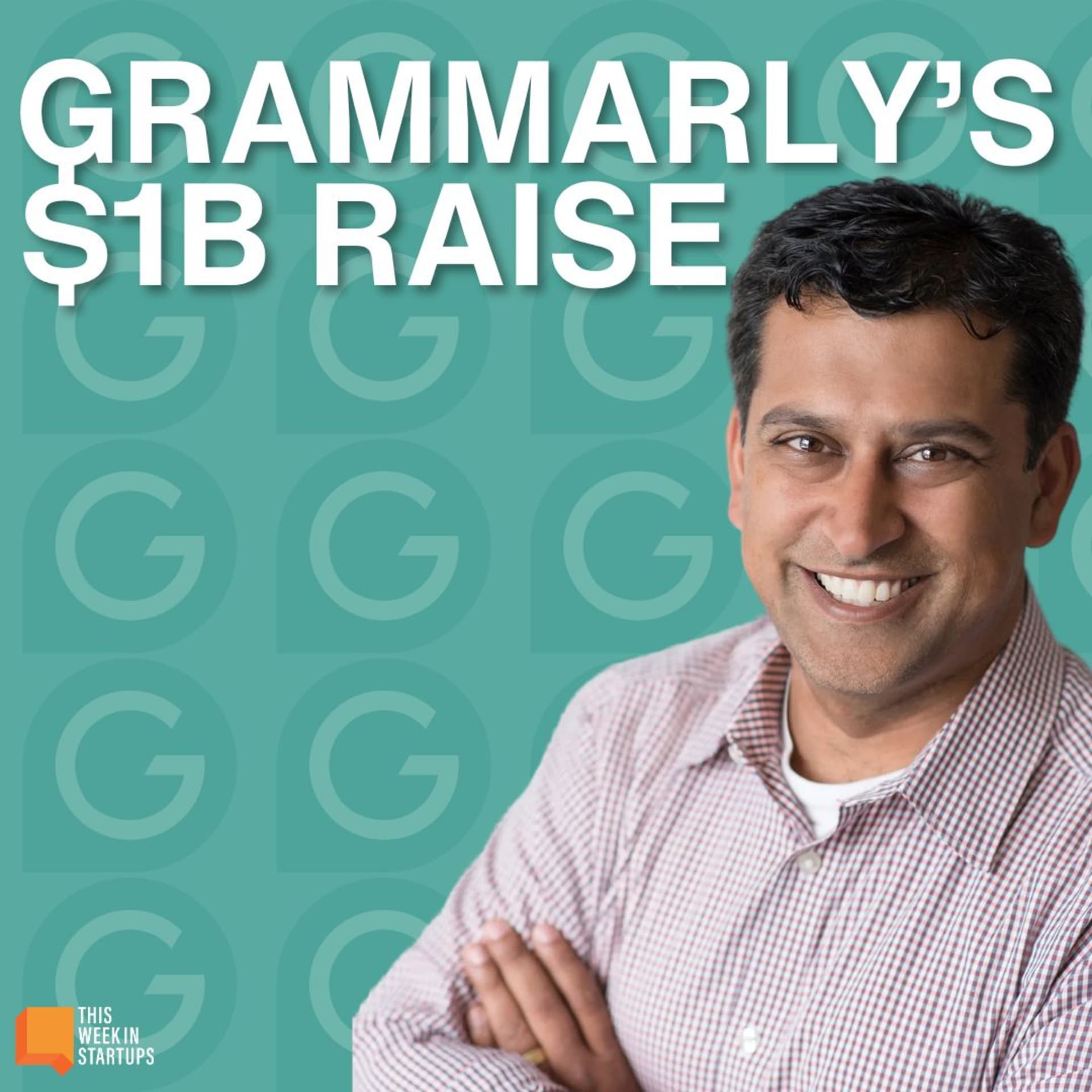
- Grammarly's $1B Funding Round
- Investment Source: Grammarly has secured a $1 billion investment led by General Catalyst.
- Purpose: The funds aim to propel Grammarly's AI initiatives and enhance its offerings for enterprise clients.
- Market Position: Discussion on why Grammarly holds significant value in the SaaS market, including its reported annual revenue of over $700 million, indicating a robust business model.
- Brain-Computer Interfaces (BCIs)
- Emerging Competitors: Four companies are now in the BCI space, including Neuralink and Paradomics.
- Technological Advancement: Paradomics successfully conducted its first brain implant in a patient, showcasing the growing momentum in neurotechnology.
- Future Potential: Discussion on the implications of BCIs for individuals with neurological conditions, positioning it as a futuristic technology akin to self-driving cars.
- The New York Times and Amazon Licensing Deal
- Nature of the Deal: The New York Times has signed a deal allowing Amazon to utilize its content AI for summaries and training models.
- Strategic Insight: This move illustrates the evolving relationship between traditional media and technology companies, raising questions about IP rights and fair compensation in the era of AI.
Additional Discussions
- AI and Intellectual Property: Concerns about AI-generated content and the potential for celebrity and creator voices to be used without permission.
- Market Dynamics: Reflections on the current state of the SaaS market, particularly regarding how companies like Grammarly must adapt to changing economic conditions.
- IPO Landscape: Updates on upcoming IPOs, including Chime and Circle, signaling a shift towards increased liquidity in the tech sector.
Notable Quotes
- On Grammarly's Value: "700 million is plenty of revenue to go public."
- On BCI Potential: "If there are four people working on it, it can make a person who's paralyzed eventually walk... it's incredible."
- On The NYT and Amazon: "This is a way for them to say to OpenAI, look, this is the value that you stole from us."
Key Takeaways
- Grammarly’s Future: The investment represents confidence in Grammarly’s business model and growth trajectory, potentially setting it up for an IPO.
- Neurotechnology's Rise: BCIs could fundamentally alter our interaction with technology and provide solutions for numerous medical conditions.
- Media and AI Licensing: The NYT's licensing deal with Amazon may set a precedent for how media companies monetize their content in an AI-driven landscape.
Conclusion This episode encapsulates pivotal changes in the startup ecosystem, particularly the intersection of AI, media, and emerging technologies. The discussions highlight not only the potential of these innovations but also the challenges they present in terms of intellectual property and market strategy. As the tech landscape evolves, companies that adapt and leverage these changes will likely thrive in the coming years.
---
For more insights and updates, consider subscribing to "This Week in Startups" and check out related episodes for deeper dives into specific topics discussed in this episode.
Written by AI. May contain mistakes. Listen to the episode to check what was said.
Transcript
Automatic transcript. May contain errors.0:00They did their first insertion of their brain computer implant and then took it out again with the patient that was undergoing brain surgery surgery already to prove it out. But this means that there's now four companies that have done this Neuralink, Precision Neuroscience, Synchron, and Paradomics that are all working on brain-computer interfaces. Is this the next self-driving project? The thing that's currently in a lab, but in five to ten years we're actually going to get to use? Because I want one of these. This sounds awesome. I don't know when this comes to civilians or soldiers or body hackers, but if there's four people working on it and, you know, it can make a person who's paralyzed eventually walk or, you know, a blind person see or, you know, any kind of these neurological diseases.
0:48I mean, it's incredible. This Week in Startups is brought to you by Oracle. Oracle Cloud Infrastructure, or OCI, is a single platform for your infrastructure, database, application development, and AI needs. Save up to 50 % on your cloud bill at oracle.com slash twist. Squarespace. Turn your idea into a new website. Go to squarespace.com slash twist for a free trial. When you're ready to launch, use offer code twist to save 10 % off your first purchase of a website or domain. and notion notion combines your notes docs and projects into one beautifully designed space with ai built right in try it for free today at notion.com twist hey everybody welcome back to this week in startups alex jason we're here i'm in singapore he's uh in providence rhode island crazy trip i came out here for a speaking gig and to do some meetings meetings going very well Word got out that I was here because I made it public.
1:44I spoke at a university this morning. I spoke for the Singaporean government's economic development council tonight. What's going on here? Oh, we did a meetup. This was a This Week in Startups and All-In meetup. There is a concept of a hawker booths of food. Okay. It's very hot here and humid. like 95 degrees hot and 100 humidity i mean like dripping and sweat hot uh and so um on saturday night we just for an hour and a half two hours a bunch of fans showing up like literally 100 people showed up nice we i emailed our mailing list i tweeted we're gonna have a public meetup uh the folks at river ray set it up uh-huh and a bunch of fans came and i bought from booth number eight tons of saute including mutton which is really good interesting you know they're just like those little sticks the skewers and uh people went crazy for it and uh yeah i took a hundred selfies apparently and i bought a bunch of coconuts for folks and so it's been that kind of an event but it's a really interesting place it's like hong kong if you've i don't know if you've ever been to hong kong i've not london or new york okay yeah yeah so in the same way like hong kong and New York and London became centers of the world.
3:08Singapore is like the center of Southeast Asia. And you have people from India, Australia, New Zealand, Hong Kong, China, America, everywhere here. And doing commerce, there's 6 million people here. I got to see Balaji and he's doing his network state thing here. That's right. Which is in Indonesia, just like over the border. So I went to see him. He's got like 200 of his like tech bro type, you know, crypto people hanging out, building stuff. It's, yeah, there's a lot going on over here. It's pretty exciting. I do want to start though with something that's a little interesting. So we've talked a lot about AI and IP and all this, and Google had their big IO event, dropped some new models, including Veo3, which is blowing up.
3:52And a company apparently put together a video, and I want everyone just to listen to this to see if you can catch something that may be a wee bit familiar to fans of the show. So here we go. Listen to this. Okay, we're listening. Yep. I'm the CIM. And my budget is bloated by a few million. I have no idea. And that, my dear friends, is not actually Jason Calacanis. That is some random AI avatar who sounds, I thought you were exaggerating i thought the tweet was fun but i thought you were exaggerating you're not that's actually you it is literally me so somebody from google was like is this has jason done so many ad reads on his podcasts that when you ask ai to make uh you know like an enterprise software ad it just uses jcal maybe or the person who uh posted this i think they were just doing like a test video i don't think it's for an actual product i think this is like a fake thing so i I have a feeling I could be being trolled and baited into talking about this, but there is engagement bait.
5:02Yeah, it might be engagement bait, but who knows, whatever. But there is a right to like privacy or celebrity voices and stuff like that that you do have. And this celebrity privacy kind of concept is very clear. If the public is confused, you're in trouble. and the so if this was a real thing which i don't think it is um yeah yeah yeah and if it was and somebody actually used this in an ad like it would be quite actionable and actually people have taken clips of me and put me into an advertisement talking about something you probably see that with joe rogan sometimes he'll talk about like a supplement and a supplement company will then take him and put him into something uh elon and shamath have had it happen with crypto currency scams where they're like, hey, I'm offering my latest crypto, go here.
5:53And this is one of these issues that's going to happen over and over again, as will it will happen to you, Alex, and it will happen to everybody where they'll take your voice, call your spouse and say, or mom or dad, and hey, I'm in Spain and I got arrested and I need to send money to this big and drive working wire money to this place. Those scams have been going on for a while. now they're going to be powered by AI. These tools are pretty close to indistinguishable. That sounded machiney, but if you weren't paying attention, you probably wouldn't have caught it, I don't think, right? No, no, I don't think so.
6:28But also, here's an interesting question. So this is a video. If you're listening to the audio version of this, there's a video that goes along with the audio you heard. And it shows a clearly non-JSON man using the JSON voice, which to me would make it easier to say that there's no confusion because clearly it's not you so i wonder if there's an audio versus video component it was a white guy like sort of but if you weren't paying attention you would think it was me but in all these cases it generally gets settled and the um thing you've probably seen is the following ad has celebrity voices and then they go into a celebrity voice so i think you can make a parody if you're not confusing the public but it's uh image rights is the concept where celebrities have the right to monetize their images yeah image and personality rights uh the right of publicity is a state level legal right that allows individuals to control commercial use of their likeness name and other identifying characteristics yeah i mean and there's been a ton of these lawsuits recently this is the backbone of name image and likeness deals with sports sports athletes because otherwise you could just take them and then clone them i am less worried about being cloned myself jason but i do think that everyone who is uh is very prominent is gonna have a problem with this though this is a great segue because uh a big news item for a couple of twist 500 companies is that udio udio maybe and suno the two ai music generating companies give them a prompt you know give me, I don't know, Benson Boone in the style of Dire Straits or whatever, and they'll kick out a song for you.
8:05They are actually working with the labels right now, Jason, to come to some sort of agreement about royalties. This would go in kind of exchange of lawsuits we talked about on the show before. I'm not surprised to see that they're coming to the discussion table here. My question is just, will the UDO and Suno business models work when their central cost of revenue goes up quite a lot. What happens in this industry is the music industry is extremely coordinated. There are a couple of different groups. There's like the people who own the mechanical rights, the lyrics, the songwriters, the performance, and there's different studios, Warner Brothers, Sony, which owns Columbia Records, and they all basically hit you from all different sides, multiple lawsuits, and then you're put into the position to having to settle.
8:54and the settlement is typically like how much money have you raised we'll take that plus 50 it gets really gnarly because once they have you having infringed you will never be able to recover peloton got themselves in trouble because the teachers were teaching and the music was in the background if you remember that one and man it was a very painful settlement i have been involved with startups who've had to go through this the music industry does not play around I think they will demand 80 % or 90 % of the revenue generated from these startups and millions of dollars in settlements for back infringements.
9:32And it is absolutely brutal. The thing I'm seeing in the marketplace is people are actually having musicians record chords and different types of music. And there are royalty-free licenses to music. So you will not allow people to make prompts like dire straits, but you could say, give me, you know, blues or guitars or finger picking guitars, you know, in a raspy voice. You'll be able to describe it otherwise. Hey everybody, it's 2025 and AI is officially everywhere from medicine to self-driving cars. If AI hasn't hit your industry yet, well, you know, it's coming fast, but AI needs serious computing power.
10:21So how do you stay competitive without breaking the bank? And what if you could cut your cloud bill in half? That's right, 50%. Well, it's time to upgrade to Oracle Cloud Infrastructure, or OCI as we call it in the industry. OCI is blazing fast, and it's a secure platform designed to handle everything your startup needs, including your infrastructure, databases, apps, and of course, AI and machine learning. And what about all these savings? Well, compared to other cloud providers, OCI costs 50 % less for compute and 80 % less for networking. And that's some serious savings. Thousands of businesses have already upgraded to OCI, including Vodafone, Thomson Reuters, and Suno AI, who we had in the pod last year.
11:02So here's your call to action. Oracle is offering to cut your current cloud bill in half if you move to OCI for new US customers with a minimum financial commitment. But act fast. This offer ends march 31st so see if your company qualifies at oracle.com slash twist that's oracle.com slash twist yeah and i think that'll be one of the settlements but uh that will happen or or one of the workarounds there is stock music that people will use for exercise videos now as but one example so you can buy royalty-free stock music for your podcast for your movie etc and And yeah, so that's the workaround here, but this is going to be absolutely insane.
11:46And they'll take equity as well in the companies. And I think that happened with Spotify, right? Yeah, exactly what I was going to get to, Jason. So I think they might be able to get away with paying a little bit less because they're essentially going to give up a chunk of their flesh to the labels in these discussions. So if you go back in time to 2008, as you just said, Spotify got its deals in part because it gave up single digit amounts of equity to a number of labels. And according to Music Business Worldwide, who had kind of some old accounting documents, Sony got 6 % of the company at the time.
12:16Now that got diluted, but Universal got five, Warner got four, and a group called Merlin that does indie rights distribution, as far as I can tell, got a point as well. So these equity packages, if you will, could be quite large. So we're talking maybe 10, 15 % of these companies, but if that lets them keep operating, okay, I can see that. but I mean if I'm an investor like you know Andreessen led the last UDO round and Lightspeed led the Suno Series B I mean you had to see this coming so I presume that I mean we predicted it, it would absolutely happen yeah you know sometimes people go for this like beg forgiveness, you know don't ask for permission I would say that's a very bad strategy when it comes to IP law for founders listening this is an area where you don't want to F around and find out because what you will find out is that The music industry has incredible lawyers and they will make an example of you and they will just grind you down forever.
13:16And basically you will have to shut your company down in all likelihood. I wouldn't be surprised if these companies get shut down based on this. It's interesting to see how consumers are reacting. I have a chart pulled up here of Google trends, interest data over time. And if you're watching the video, red is UDO, blue is Suno. and these are relatively stable so there was a spike uh towards the beginning or sorry early prior 2024 jason and since then interest has been flat but sustained so to me this shows that they definitely are on to something but i could not find any recent data points about oh we've added x number of users or x million songs or whatever so i wonder if they're at a bit of a plateau as they sort out the licensing side of things and then if it works out and they don't die as you said they can hit the gas pedal and uh and really make some progress but you know we've we've talked about these because they're fun and cool but i do get sent fewer tracks in my group chats than i used to when these were new i do i will say yeah i i think they these tools will be used by professional musicians and that's where it gets actually really interesting is does this money flow like sampling down to the people who inspired it and do they have like essentially citations so that is unclear from all of this and that will be the sort of next shoe to drop and then will these artists you know if you do something in the nature of taylor swift does any of that money actually make it to taylor swift does it go to the music label there's a lot of questions here and do they have to approve it so depending on how they do their contracts these contracts used to be when you when they buy the music they own it in perpetuity in any medium or or a format now or in the future but this isn't a format this is a transition thing so you know there i don't know if the music industry is going to be able to exploit this without getting permission from the artists that's going to be the really interesting issue and i wonder if you could going back to my favorite band and artists you know dire straits and mark knoffler i wonder if you created a couple of new tracks that were as good as sultans of swing or better than brothers in arms or whatever it is would mark knoffler and dire straits have to approve that because it is their body of work i guess and um yeah super interesting well it comes down to who owns the masters versus who owns the songs and then who owes the recording i mean there's a lot of the music industry is very difficult financially if you haven't looked into it just just poke around a bit and you'll see why we're talking about this on this front though jason last week um just as a update for everybody the new york times secured an ai deal with amazon and this surprised me because as we know uh oh new york times has sued open ai and microsoft over copyright infringement and so to see them go land a deal with amazon's ai arm alexa a couple things so the deal is going to provide summaries of times content inside of amazon products like alexa and then also provide information to quote, train Amazon's proprietary foundation models.
16:18Wow. Yeah. That's incredible. Yeah. Now what, what Amazon foundation models I hear you asking? Well, what a great question. It turns out they have a bunch. So here is a screenshot from their late 2024 dump of the latest Nova models, including Jason, Nova Micro, Nova Light, Nova Pro, Nova Premier, Nova Canvas, and Nova Real. I had never heard of any of these. this is the first i'm hearing of i've never heard the nova name and these are in-house models that they're making with their own team uh and i guess they're offering them through aws i'm gonna guess um absolutely so we knew this was coming and i they've also invested in a bunch of companies i don't know if they were in anthropic or um but they've invested in yeah yeah they're one of anthropic's biggest backers if i recall correctly i think they put in several billion more uh yeah it was 4 billion more this March.
17:13So they have a lot of money in that company, but also I think much like Microsoft has money in open AI, they also have their own models as well. And then also Google has the Gemma open source group. So there's quite a lot going on here, but I'm just, I'm curious why the times did this. It does feel to me like they were leading the charge and now they're almost hedging their bets in a way. No, no. I think they want to do licensing deals for their content. They just want to get paid for it and have controls. So I think this is a way for them to say to open up AI, look, this is the value that you stole from us.
17:49Amazon is willing to give us this level of deal and you just took it. So now they're proving in the market the value of their content to a language model. So I'm assuming this is a nine figure deal and I'm assuming it's a five to 10-year deal. And if that's the case, I wonder what this would be in terms of the overall mix of the Times' revenue eventually, because we had talked previously about, gosh, the New York Times has got, are they past 10 million subscribers or something like that? Some extraordinary number. I wonder if this could eventually be some significant double-digit percentage of their revenue, which would give them the ability, let's say this became eventually licensing deals like this, 20 % of their revenue, 30 % of their revenue.
18:36That means they could theoretically hire, if they put it all into journalists, maybe they can hire twice as many journalists. Yeah. So your numbers are incredibly close. So the Times closed Q1 of this year with 11.66 million subscribers total across all of its platforms. And what I found was interesting is that they actually have a line item in their earnings called affiliate licensing and other. So I presume we're going to see all of this Amazon money flow directly into that, which means that we'll be able to track pretty closely how much money actually comes in from this partnership, because that was only 63 million in the last quarter, 64 million, which is about 10 % of its total revenue.
19:13So if this does double in size, I mean, that solves the times growth problem because they only grew 7 % in Q1. Now they do pay a dividend, they're healthy, but 7 % growth is never where any company wants to be. So this buys them four to eight quarters of growth, which is awesome. Yeah, I mean, their expenses are probably growing at 7 % year over year. People are expecting 2 % or 3 % cost of living, raises, their real estate might go up, whatever costs go up. So yeah, this is a slow growth company, and they probably do need these opportunities. And I'll tell you, the truth is, these language models should be excited to pay a license to a content company.
19:53OpenAI, if they're willing to give Johnny Ives$6 billion for God knows what, and they're willing to buy the cursor competitor Winsurf. Winsurf. Yeah, yeah, yeah. It just shows. They're willing to pay 20 people at Johnny Ives' company, whatever it is,$6 billion. $300 million apiece. But they need to steal. Yeah, they need to steal the New York Times' content. No, of course not. All right, founders, let's talk about your website, huh? It might be a little bit of a sensitive subject. You might be a little embarrassed about it. Let's fix that right now. If you're launching something new, give your brand the refresh it deserves.
20:30You're working so hard on your company and your website looks terrible. Do what I do, use Squarespace. It's the all-in-one platform to make a stunning professional website. and it's ridiculously easy to use. It's going to work for everything. If you're selling products, it's got all that e-commerce built in. If you're selling services, it works perfectly. And they have a new AI product called Blueprint. Want more control? Well, of course, you can choose one of the award-winning templates and use the intuitive drag and drop tools to make it your own. Easy peasy. Squarespace equals the most functional and beautiful website on planet Earth.
21:06Go ahead. Squarespace.com slash twist to get a free trial And when you're ready to launch, go to squarespace.com slash twist to get 10 % off your first website or domain purchase. That's squarespace.com slash twist. Pay people what their content's worth and then build a trusted relationship with them. And you can even ask them, hey, we're seeing a lot of queries around cooking. Can you make more cooking content? Right. That would be a very world positive way to look at this. I know, you know, things we say on the show make it back to Sam Altman. And so somebody sent him this, like, Sam, just, you've got a$350 billion company.
21:46Carve out 10 % of your revenue every year, which would be a billion, right? They're going to break$10 billion. Just carve out 10 % of your revenue to build the content base. And, you know, if a billion dollars, you could give 10 million to the New York Times, 10 million to the Washington Post, 25 million, whatever it is. They'll put it to good use. They will. And then you could even extract exclusives from you. You could say, hey, I want you to do more science and technology reporting. I'll give you another 10 million to hire, you know, 50 journalists for 100K each and some managers. We'll give you an extra 10 million if you give us an exclusive on just 50 great journalists, 100 great journalists doing science, technology, whatever.
22:26This could totally solve the problem we have in, you know, journalism to increase the investment and say, hey, as part of that, we want fact checkers. And we want all the stuff put in the semantic format. When you're a customer, then you could make demands. And you could say, hey, instead of giving this money to the New York Times, we also are offering it to the LA Times and the Washington Post. And the three of them are then competing to provide additional science technology. And now the whole industry could come back. This would be a great way to fly in the face of what China is doing, which is stealing content and ip we could show people and there's a important thing you know when i'm on this trip here in singapore i'm getting like some really interesting feedback which i'll save for a little later in the show because i don't want to go into politics and take it too hard of a term but i'm getting a lot of feedback on the united states in the last five months from folks and it's not pretty this you know could be a way for us to set an example for the planet so great story yeah it's a great pickup um can i just show you how different uh some views are in the industry are to yours just because look i'm a writer you and i make podcasts i'm on your side here just financially but here's here's nick clegg uh about fairness oh that that too but i'm just trying to say that i'm biased but uh nick clegg who previously was uh met his head of yeah anyways no seriously this guy 100 nick clegg uh bleep that out obviously but nick clegg and just like the meta guy right oh it's gonna kill the ai industry bull it um and if that's true then he should go work for facebook for free well i mean stock options back he doesn't work for free why should we amen to that this of course is about the uk's current debate about ip licensing the uk is in kind of a weird spot stuck between the us and the eu trying to figure out its own economic path wants to have an ai industry gonna sort out what's gonna happen but that is one perspective from you know nick was at meta for a while and that is in the ai game so i just don't i just don't get why i have to respect their ip if they're not going to respect mine it just so ridiculous i mean facebook if you if you went on to instagram and you scraped all the instagram profiles i know this because companies try to use the facebook data they send legal letters constantly for their ip their ip is their social graph you can find countless lawsuits about people using the Facebook profile data, you know, the Instagram data, just, and that's for like, just to tell you top level, like here are the people on Instagram who are car enthusiasts who are into Corvettes.
25:03So if, if this is true, that Facebook should be able to build their LLM without compensation. Okay, great. So then I can, should be able to build a social network and a social graphing an llm based on scraping instagram's data you do that you took if you took 10 000 instagram profiles the top 10 000 and made a database and sold that to people and let people query it they would sue you you know till the end of the earth and they have it's almost like turnabout's fair play or to quote uh the former senator mb romney uh sauce for the goose is sauce for the gander all right let's move on uh grammarly jason this actually uh came out last Friday.
25:38We didn't get to talk about it. I knew you'd want to hear this. So Grammarly, couple of important things. One, Grammarly is the AI assisted grammar checker. You're a big fan of it here at launch. We all have a license to it. And we have the CEO, Shashir, on the show because it merged with Coda, which we use to build the Twist 500 database. An interesting matchup. We were curious about why they were coming together, what they were going to build. But today we're talking about something a little bit different. General Catalyst was the investor behind both companies, which we thought was probably why they came together because, you know, one of their major shareholders liked the deal.
26:12Now it turns out GC has a thing called the customer value fund, which pulls from its major funds. But what it does is it provides capital to its portfolio companies without taking an equity stake in return. They get quote, a capped return linked to revenue generated from the capital. So essentially this is like revenue based financing, which we've heard about ad nauseum five years ago, but they're going to put a billion dollars into Grammarly under this rubric, which is a huge amount of money. And the idea here, as far as I can tell, is the go-to-market motion for Grammarly works. You can put money in, you get more money back.
26:49They want to do product work with their money, with the, you know, code a deal to build this AI future writing platform thing. So they're going to use general catalyst money to keep growing at the same time. Win-win, Jason, or risky? I'm curious what your experience in the industry tells you about this deal. Yeah. So number one, these two products are two of my favorite products in business. I legitimately pay and use both of these products daily. So shout out to the teams at both of them. And I think they probably came together because, as you said, they were both portfolio companies of GCs. And so SaaS is a difficult business and maybe they thought, hey, we could put these two companies together and have a stronger company.
27:31This will help increase the value of the company that GC has already invested in. So if they have some LPs who want to get a return on capital, you get the double benefit. You're loaning them money instead of having them take the money from a bank. So it's all in the family. And then you increase sure equity state without adding more shares to the company and selling shares to other investors. So GC, if they own 20%, let's say they own 25 % of these two companies, they don't want another person to come in and own another 25 % and dilute them down to 20 by issuing new shares, the same number of shares in the company, you give them this revolving credit line, I guess.
28:14And who knows the terms of how you can tap it? It might be up to a billion. There's a term called covenants. and the covenants are things you have to you know live up to so in a venture loan you have to keep a certain amount of revenue a certain debt to revenue ratio etc in this case i wouldn't be surprised if they said hey you can pull down 10 million but then you have to show the results of it you have to keep your customer acquisition costs here so it's a big number yeah i think it could work now you you checked with them do they have 700 million in revenue for grammarly Yeah. So they announced this number.
28:52They said we have, I think, annualized revenue of more than 700 million and they're profitable. So I reached out and I'm like, month times 12? ARR, quarter times four. And profitable is, and I say this with nothing but love to startups, a flexible metric at times. So I wanted to kind of dig in. And they were like, we have nothing to add past our blog post. So I'll interpret this for everybody. But you did check the facts. Yeah. Yeah. Well, I mean, we had the facts. We just wanted to go one layer below, but they're being tied to the chest with it. So my thought of this is simple. 700 million in revenue, no matter if it's ARR, quarter times 12, four, whatever, is incredibly impressive.
29:30This is an at scale business. It's IPO ready. Profitable, I don't care if it's on a cash basis, a gap basis, an adjusted EBITDA basis, whatever. It means that the company is healthy. So we have a very large, healthy company. And that to me undergirds why they would get up to a billion dollars in this sort of like non-equity capital assistance, which is essentially a loan, by the way, I guess. That's what it is. You can think of it that way. That's what it is. It's a revolving credit line. It's a loan of some type. It probably has some conditions on it. And I don't think it's one of these things where they actually put a billion dollars into their bank account.
30:04Yeah. Usually when you have these things, you can tap them. so you pull some down and then when you pull it down that's when the interest starts all right if you're a startup you need to sign up for uh notion that's right n-o-t-i-o-n notion.com slash twist to sign up for free right now why because your whole company should run on notion my entire company runs on notion we've built all these tools to run our venture firm to run our production for our podcasts inside of Notion. And we don't need to have developers, but we can build databases. And those databases now have thousands of startups in it, and we can put all kinds of information in there.
30:45Everything in one simple place, wikis, document sharing, note-taking, project management, all powered by AI now. We just upgraded to the AI. It's awesome. Everything in one space, simple, powerful, beautifully designed on your mobile phone. Get started for free, notion.com slash twist. To start for free, I'll say it again, third time. You gotta do it right now. Notion.com slash twist to take the first step for getting organized and productive and having all the chaos in your life make sense. That's what it does. You go from chaotic to flawless with Notion.com slash twist. So you wouldn't want to pull the billion dollars down on day one and be paying 10 % on that or 12 % on it or whatever it is, because that would be that you'd have to service it at a very large rate.
31:29It'd be$10 million a month or something. You'd be crazy, right? 12 million a month that you'd be paying back just to sit on it so you pull down 25 million you do some huge egg campaign uh and then you make that money back and then you pay it back you know that kind of thing so great great uh to see this and i think this is a sign of strength in the sas market which is a interesting yeah it's a sign of strength in the sas market that the number of seats at companies because of static team size because of the layoffs we We talked about the 3 % at Microsoft on, we had a big debate about like, is management going away?
32:06And, you know, my position on all in this past week was like, I think management and these layoffs, you know, are coming to white collar. They're happening right now. Management is using AI tools and everybody's doing more work. Everybody who's working right now in business sees AI replacing people or making people bionic. if that's the case then if you're a grammarly and you were selling into microsoft just as an example and they laid off three percent now you have three percent less revenue from microsoft so you need to come up with new ways to charge which means either raising your prices per seat or moving off the per seat model and moving to a consumption model which people really didn't like the consumption model they liked the you know per seat model because it was like oh i can kind of put this against a person's salary and I'm going to spend 5 % of the person's salary.
32:57So if the average person at Microsoft is getting a hundred thousand, we spend$5 ,000 on the tools they use. It almost seems like, yeah, a chef might spend 5 % of their salary on the knives and cutlery and equipment they use, right? It kind of makes sense, but I'm a little worried about the SaaS companies with that headwind of, hey, our customers, we can't land and expand if the companies we sell into are contracting. Yeah. Right. This is a TBD, but it's great to see a company like this. We wouldn't be surprised if next year we see them file. 700 million is plenty of revenue to go. I would love to see that, but I have one last intra-venture capital thought here.
33:39So we've talked on the show pretty much three times a week about the lack of liquidity, not enough DPI from investors back to LPs. You'd like to put it under the umbrella of the wrath of Khan. Here's my question. If General Catalyst is going to give Grammarly, let's just call it $50 million blocks for the sake of simplicity, put that capital into them and then receive back pretty quickly that capital plus some, does it return the gains on that to LPs? Could it? Is this a way that it could unlock faster returns yeah it's basically a way for those lps to make a different type of return and there are some people who like to be in corporate credit and there's some people who like to be in venture and they tend to be the same people so they probably went to their lps and said does anybody want to also have this as a vehicle to return x amount of money corporate debt and corporate credit which i think is what this would technically be turned into corporate credit.
Read the full transcript
34:39And they could pay it back over time. They could have warrants. So it could be non-equity, but there could be an opportunity for Grammarly to say, we would like the option to give you equity instead of cashback. But either way, it's done from a position of strength, it seems. And these companies are so big, not yet public, people are starting to see an opportunity. So there is a lot of talk about SaaS roll-ups right now and venture companies working on SaaS roll-ups. There's firms that are specifically designing funds for this or taking over companies because maybe the company's been around for 10 years and the founders don't want to work on it anymore.
35:23They're exhausted and the company's not growing quickly. So this private equity style takeover by venture capitalists who have very large funds is the other shoe that's dropping at the same time. So you're describing, though, the rolling up of software companies themselves. There's another model out there that's burgeoning in venture. And TechCrunch just talked to Elad Gil about this because he's invested in some companies that are doing this. But essentially, instead of just backing vertical SaaS companies, going after vertical SaaS companies that also then purchase the end user companies. So if you make, I don't know, software Jason for barbershops, just actually buying barbershops, employing AI and SaaS technology to make them more efficient, boost their effective operating margins, taking that cash and then buying more and repeating the playbook, which to me really blends the line between startups, venture capital and private equity in a way that I'm, that sounds great on paper, but I wonder if we'll manifest in the style of returns people like.
36:21Because once you buy buildings full of people doing stuff, you're going to be doing a lot more just day-to-day management. And I wonder if venture companies have the muscle to do that sort of on-the-ground work. This services business thing, there's, God, I forgot what they're called. But MBAs were creating these funds that were kind of like opportunistic funds where they would get a bunch of money to go buy a classic business from some real entrepreneurs in the middle of America. HVAC businesses. is the canonical example yeah the canonical example of these so does not surprise me that folks will want to roll up sas companies and put hoda and grammarly together maybe you grab an air table or i don't know asana which i think is already public but you know seeing a bunch of those being put together and then sharing customer acquisition costs sharing design and making more Efficiency.
37:14IAC did this. Barry Diller did this in a previous life, and IAC brought together all the travel companies, Expedia, et cetera, bookings.com, VRBO. That was one roll-up. The other roll-up was all the dating sites, and then that got spun out into its own match.com, I think it's called. So these kind of roll-ups exist when a market hits some sort of maturity, and then going and buying real-world assets and combining them with the software makes total sense. The whole argument about startups or venture capitalists buying real-world businesses to apply an AI or a SaaS model to them to make them more efficient actually, to me, really resonates in one particular way, which is that I have long thought that business software is too cheap.
37:58Because you talked earlier about Microsoft employees, call it 100, call it a 5K tooling budget. That means that any individual product that you purchase for them has to be a fraction of that budget for tooling. So call it 1K that you might be able to access per employee. well that means that you know most of their comp is effectively their comp is just a huge multiple of their software spent and that to me always always felt that the software that people were buying was too cheap like we couldn't run without slack and we probably pay 15 bucks a month for my individual slack seat something like that yeah insane like it should cost you a thousand dollars because it's that important to me well then there's always like is there another solution out there that you can get if it was a thousand dollars i would use the open source one there's an open source version of slack and i would put my own server up so there is a breaking point where buy or build does come into uh people's thinking so that's why i like the idea of saying okay we can't get the full value for our software because it's too cheap to make so we're getting screwed on price essentially yeah so what if we just go buy the business and then get the upside so that resonates with me i i just think that venture capital funds have gotten too large for their underlying asset market and so to see this happen is not a surprise but it's not going to be easy.
39:11It is another way to put more money to work. Yeah. All right. Autopilot. Jason, we have talked a lot about these companies that allow you to mimic someone else's portfolio, be it a hedge funder via their 13F filings, or perhaps a favorite politician who does very well in the public markets. One of them is called Autopilot. They're a very cool company. I know them very well. Yeah. Very impressed to discover the other day that they have reached$750 million in AUM, asset center management, kind of, but the way autopilot actually works is that your money stays in your Fidelity or Robinhood account, whatever, and then they just execute trades for you.
39:48But it means they have now three quarters of a billion dollars in linked funds that are tracking these portfolios. And that to me is starting to smell like actual market share. Because once you get to a billion in AUM, in my view, you've kind of proven market demand for this. And with their business model of charging just quarterly or annual payments to track a fund, it's a pretty recurring, easy business. So I'm kind of in love here. And I wanted to get your take on if this number is as big as I think it is. No, it's not a huge number. And they don't actually custodian the stuff. I just sent you a link.
40:20They've been tracking my trades that when I was publicly doing them on J trading and they were using me in their marketing. So I had to tell them like, Hey, pump the brakes. And I guess they still have a page up with my name on it. Cause I, yeah, I, I don't like people to use my image to promote their products, but they're a nice group of people actually went to the next game with them and what they do is um you can like copy the trades of michael burry from uh you know the the big short uh fame or nancy pelosi's trades you know people who put their trades out there of course you wouldn't be trading them exactly in real time um it's a decent idea but um i think their idea is to have people pay to subscribe so you would pay me a subscription fee which i don't like i don't want that heaviness on me that you're following my trades.
41:06You could also, I could, somebody pitched me on creating an ETF for J trading. Like you can create your own exchange trading fund. But then again, I don't, I already have people like following me into startup investing from the syndicate and from our funds. I don't want to like do that for day trading as well. And then have people lose their money or whatever. Would you pay 30 bucks a quarter to track Nancy Pelosi's trades? Because $400 million of the$750 million is tracking Pelosi. Yeah. So I don't think they make any money on that number. So if they were making 1 % or 50 basis points on it, that would be interesting, I guess.
41:41They would be making$7.5 million a year and they could keep growing it like Wealthfront has a certain amount under management. So AUM, if you were getting paid for it, would be cool. But no, I wouldn't. I'm a big fan of like you are like index funds and advise people to not do this. but there are people who like to trade and, but I think they need people to actively participate who are explaining their trades while they're doing it. But I think it's a small market. So I think it's, it's going to be challenging for them to figure out an actual business model. But they're very good. This team over there is incredibly good at social media.
42:16So they have the Nancy Pelosi tracker that they do. Yes. Yes. Let's see if I can follow it up. Yeah. And it's not like disclosed. So they, it's like a very interesting thing we talked about. I think last week or the week before doing viral things like that. The thing Cyan Bannister was doing a showing her iPhone usage. Right. And so these little viral hooks like the Nancy Pelosi tracker or whatever, they can help you get customers and get attention, but you still have to build a really core, strong business. Elsewhere in this space is a company called Dub that is similar and backing autopilot just to give some venture shout outs here.
42:54incline ventures group nomad ventures and uh your friends over at craft jason also part of the autopilot uh capital base all right um let's talk really quickly about brain computers uh we didn't get to this the other the other week but simbaphore did drop some news that neural link which makes the kind of brain computer insert thing they say has closed 600 million at a nine billion dollar valuation there had been reporting about a 500 million dollar round at 8.5 seems that that went well but even more recently a competitor to neural link called paradomics which i know about because neom the saudi arabian city city project thing yeah invested in them okay scratch your head about that one uh anyways they just for the first time in may just announced this they did their first um insertion of their brain computer implant and then took it out again with the patient that is undergoing brain surgery already to kind of prove it out.
43:52But this means that there's now four companies that have done this Neuralink, Precision Neuroscience, Synchron, and Paradomics that are all working on brain computer interfaces. Neuralink is the most famous, of course, but there's four of them now, Jason. Here's my thought bubble. Is this the next self-driving project? The thing that's currently in a lab, but in five to 10 years, we're actually going to get to use because I want one of these. This sounds awesome. I don't know when this comes to civilians or soldiers or body hackers. But if there's four people working on it and it can make a person who's paralyzed eventually walk or a blind person see or any kind of these neurological diseases, I mean, it's incredible.
44:41And for those of you watching the video, I just pulled up a image. It's a chart from Neuralink from their February blog post showing the number of monthly hours of independent brain computer interface usage in 2024 for their first three implants, I believe. So it's three gentlemen, Noland, Alex, and Brad. And Jason, as you can see, the chart goes up and to the right. So these people that got these implants are using them more often. Independently. So BCI is brain computer interface. Am I correct? Okay. So it says here that the top user, Noland, is using it for 350 hours a month for the last three months up from, yeah, I guess when he got it in January, February, using it for 50 hours a month.
45:25So that means he's learned how to use it, wants to use it, comfortable to use it, I guess. But 350 hours, that's 10 hours a day? Yes, that's what I was going to get to. is 10 hours a day is essentially all the time. Because otherwise you're sleeping, using the bathroom, whatever. There's some other stuff you do during the day. But 10 to 12 hours a day, that's essentially your waking, working hours. So to me, that's full time. That's impressive. I would love this for dreaming. I would love to... I mean, speaking of LLMs hallucinating, imagine you had this and you were like, I would like to have a dream about being Indiana Jones tonight.
46:04Or I would like to dream about my life and what's possible for me. I'd like to have a dream, you know, to do creative things. I know it sounds crazy. It was this awesome Catherine Bigelow movie. I don't know if you ever saw it, Strange Days. If you haven't, you should watch it and we should talk about it next week. We'll have Lombach on the show and talk about Strange Days. It was a brain-computer interface. Oh. And you could record and replay other people. So if I was in Singapore, I could record my trip for my first person. you could then wear my helmet of me at that hawker you know getting the satay and you could experience eating the satay just by wearing that and playing essentially that movie and i won't spoil it for you with strange days but it's essentially people doing crimes while wearing these helmets and then people playing it back and all kinds of weird stuff occurs um every permutation yeah yeah but if we get to that point i'm shorting every airline stock there is because if i can just put on a helmet and go eat the best hot pot you know i'm i'm gonna stay home or you could like experience going on a you know uh seal team six you know and go whack osama bin laden yourself and have that experience of like flying in landing i mean forget about call of duty can you imagine yeah you could play that back like that is literally possible or i could ski down you know uh everest or something like there was somebody who you know boarded or skied down some part of everest like they could record the experience and then you could experience it like whoa or alex honnold the guy who climbs without a rope imagine experiencing that the past past no no no no no take you on that one but what i care about mostly is i i'm trying to remind myself every day that the future that i thought a lot about when i was a kiddo is kind of here like private space industry is going is going to be a real thing voyager technologies is going public they're working with airbus on starlap a private space station we have functional ai we have brain computer interfaces we have self-driving cars no i don't have a hoverboard yet but like a lot of stuff is kind of getting its way here and i'm trying to remain optimistic and excited about it while we deal with the ins and outs of the daily news cycle.
48:24So that's kind of, I wanted to bring it up really under that umbrella that this stuff's awesome. And we should be pretty excited. Like we should be jumping up and down, man. Brain computer interfaces are real and they're not good enough yet. They're still experimental, but it makes me very, very happy to see. All right, Jason, let's talk about some IPOs really quick. We have some news for some major liquidity. First of all, Chime, the American neobank that raised a roughly$26 billion valuation. back in 2021 has declared its first actual IPO price range. And they are targeting a 24 to$26 per share price, which would put their valuation according to the information.
49:05I did not get time to actually recalculate this myself, but they say that puts them at between a 10.3 and$11.1 billion valuation. We had heard, Jason, they were looking at an$11 billion price tag. So my guess is they're going to try to raise this range at least once before they list, but they would be worth at 11 billion, 5.3 X their Q1 revenue annualized. And I pulled the numbers, new bank, the very high performing South American neobank is four and a half X it's Q1 revenue annualized. So they're going to get a slight premium to new bank at their current valuation, which all things considered it's a down IPO, but it still seems pretty healthy to me.
49:44thoughts. Incredible. Yeah. No, I'm a new bank shareholder, one of the venture firms I was in at some point a couple of years ago, shipped me a bunch of new bank shares. I looked into it. Warren Buffett loves this company. These new banks are crushing it. Yeah, I'm holding it. It's$12 a share or something, and it's worth$40 or$50 billion in growing. So we got Chime setting their valuation range. Circle is going to be going out. And do we have any other ones that are going out or? Well, the circle thing is really interesting because not only are they going to list very soon, and I'll talk about dates in a second, but they just increased the size of their IPO.
50:19So they were going to sell 9.6 million shares. Now they're going to sell 12.8. And also they raised their range from 24 to 26 to 27 to 28. Back of the envelope math, it brings their valuation up to 6.8, 6.9 billion up from 6.2. Bullish for stable coins shows institutional demand for it. So I think that's pretty good. And then finally, Voyager Technologies, the company that I mentioned earlier, Jason, it's kind of a roll-up of space technologies. And then the Starlab partnership with Airbus, they're going to list at a$1.6 billion valuation, we think. And Circle is going to go public this week, and then Voyager and Chime next week.
50:55So by June 12th, we should have all three of these companies through the IPO cycle public. I know. Wow. And we had all this M &A, We had two DoorDash acquisitions, two OpenAI acquisitions, and one Salesforce acquisition, a big one. Is it enough, though? My question is just this. Let's say we get these three IPOs out. We had CoreWeave earlier. We've had a number of exits. Has enough value been unlocked that VCs have had a cool drink of water after a long walk in the liquidity desert? Or is this still just an absolute dusting? There's going to need to be a lot more IPOs. I think SpaceX and Stripe and all these other major things are going to need to make their move for one of those two, probably.
51:42I think Stripe more likely. But they keep doing these secondary shares. So I think a lot of the shareholders in those ones specifically could get liquidity if they wanted. But the public can't participate in these things, and the public really wants to participate in these things. So I think that will be a big boost for confidence when Stripe goes out or SpaceX or Starlink if they were to spin it out. I don't have any information on any of those things. But what I like about all of these is these are all sub$10 billion valuations. Very significant companies, but these are companies that are priced like private market companies we saw over the last 10 years.
52:24So, you know, and then we just talked about Grammarly and Coda, you know, maybe it's time to start saying, you know what, this inventory has been 10, 15 years in the market. Start putting two or three of these companies together, consolidate the management, lower the costs, increase the earnings and get these companies public so that, you know, people can participate in the next generation of great companies. And we really do need to see M &A in, you know, a lot of this mid-market space. The fact that Lyft and DoorDash and Uber and, you know, Grab, where I hung out with the Grab founder, Anthony, when I was here in Singapore.
53:04The fact that all these companies are still independent, you haven't seen, like, the next wave of major consolidation there is weird to me. I would very much like to see, like, Pony AI and WeRide and some of those Chinese companies merge with Uber or DoorDash or whatever. We could see so much more interesting stuff happening, which would allow things to move even faster and solve even bigger problems. And this is what I said about the Grammarly general catalyst deal the other day in the blog. I can't read this out loud because it involves profanity, Jason. But the gist is, if you want access to capital, you could go public and then have a liquid currency.
53:41And then you wouldn't have to rent capital from your private market backers who are supposed to be equity investors. So I'm on board with you here. I just don't see why a company with$700 million in revenue, a potentially, what,$10,$12,$13 billion market cap when it goes public, needs to operate like it's still getting an allowance. Yeah. I mean, I think even if they were public, they might have a credit line. That's not atypical. We don't really, a lot of times when we're on the outside, we don't know what they need to accomplish to get public or feel confident about it. It's probably having predictable growth is the other piece.
54:18So you have top line revenue, then you have the predictability of the revenue, which is critically important. And I guess in their case, they wanted to also get towards that profitability. So I wonder if money losing companies could go public into this market. Could Uber losing money go public today? I don't know. That's another issue. How profitable do you need to be? How close to profitability do you need to be? Can we turn that bit of advice back on the early stage? because I think a lot about revenue predictability in a SaaS context, as in SaaS has a lot of it. And also, as you said, in a pre-IPO context.
54:54But when you're a seed stage company, pre-seed stage company, how predictable is your revenue and how much do investors care about that? I'm actually not sure. So I'm just kind of curious. Oh, yeah. I mean, when you're on a small number, let's say you have a thousand customers and they're paying you$5 ,000 a year each and you're at 5 million. And then you release like a VIP part of the product and it costs a million dollars a year and you start going after big customers, like all of a sudden one customer could increase your revenue 20 % and then one of them cancels, your revenue can go down 15%.
55:26So this actually kind of thing happened to Slack. If you remember, Slack was working on these seven-figure deals, was like a big push for them, seven and eight-figure deals. They were trying to get people to pay$10 million for Slack. I don't know if they ever did that, but they were definitely getting people to pay low millions. Like I think a Twitter or whatever might be paying a million or 2 million to have slack in their organization which when you think about that versus buying and building like why wouldn't if it's a million dollars or once it gets past a million dollars you got to think well maybe i could put three developers on building our own and make something proprietary and better which is what google does right google has their own facebook has their own so back to that earlier pricing conversation but yeah it's it can be lumpy you have a small number of customers you lose one one of them doubles their spend and takes you national because a lot of times you're in pilots we actually saw that with core weave didn't we like didn't core weave have a what they had one customer who was 60 of the spend yes and i was like whoa what happens if they're it was the it was the most extreme revenue concentration we've ever seen except for syribus systems who mostly sells to g42 and they had actually even worse revenue concentration But I mean, there's only so many hyperscalers in the world, Jason, who had this much need for compute power.
56:47So I think it's going to be lumpier for them. But I appreciate the context about startups because when you don't have a lot of customers, maybe having lumpy revenue is good because it means you've got a new big customer, which implies that you're doing something right. But maybe that's not as attractive later on when you're going to go public. But I just like to think about what startup founders need to have to reach that next milestone of funding or milestone of maturity. So I appreciate that. Yeah. Talking to customers is always what investors do. You know, you start talking to the top two or three customers and understanding them and those customer references do drive the deals.
57:21What's going on with Lauren Powell and Johnny Ive doing an interview in the FT? I saw that go across the wire and I saw that on the docket. What's going on there? All right. So, uh, Lauren Powell jobs, um, has invested in some of Johnny Ives work, not a huge surprise given their long ties to the Apple empire, let's say. And they gave an interview to the FTA talking about technology. And I just pulled out the two quotes that I think are the most interesting. So Johnny Ive, for more context, uh, he's working on his design collective called love from, he had a project with open AI that eventually became called IO.
57:58that's what was sold to open ai for six and a half billion and johnny ive is now going to work with sam altman on design and such you and i were generally bullish on this because it's about two percent of open ai's value so why not take a flick take a flyer on this etc anyways i've said in relation to humans plus devices and i quote many of us would say we have an uneasy relationship with technology at the moment i'm guessing this includes screen addiction and the harms caused by social media, whatever the device is, driving its design is a sense of we deserve better. Humanity deserves better.
58:31And like on one hand, yeah. But on the other hand, Johnny, where did you get all of your money? Was it from iPhones? Yes, but I think he's actually throwing Zuckerberg and social media under the bus, which they didn't participate in. They were trying to do something for families, for iMessage, smaller groups. So I think he actually, they have a leg to stand on there, which is, and they also put in the screen time tools. So it's not like you see, it's not like you see Zuckerberg being like, Hey, by the way, you've been using Instagram a whole bunch. You want to slow it down and here's what you've been doing and how much time you're wasting on Facebook and Instagram.
59:10So they, and they, they never liked Zuck and they never liked, you know, the, you know, the way they were tracking people for advertising and they created all this technology inside the iPhone to block and kind of stick it to Zuckerberg. I think that's kind of what he's doing. That's how I read that statement. What did Lorraine Howell Jobs have to say? Alright, so she said after noting that technology is very, very cool, so she's not a downer here, but she did add, we now know unambiguously that there are dark uses for certain types of technologies. You can look at the studies being done on teenage girls and on anxiety and young people and the rights of mental health needs to understand that we've gone sideways.
59:49Certainly, technology wasn't designed to have that result, but that is the sideways result. I'm sympathetic to this. Jason, you've got older kids than I do. I've been talking about this like crazy. And I think she's also going after Zuckerberg and specifically Instagram because those studies were about Instagram. So this to me seems like a setup. The two of them are going after Zuckerberg and the addiction of social media through those devices, I wonder if they're going to do something that is maybe a little more stripped down and maybe pushes you to make better use of your time. What if the device through AI pushed you to make good use of your time?
1:00:32So let's talk about good use of your time. And that would mean spending time with other humans, going outside. The things that I should do more. Educational content. Okay. catching up with old friends. You look at Apple's cohort of applications. What do they focus on in their products? Journaling was that recent product. Meditation, breathing, your health, your heart rate. You know, sharing of photos, making these emoji characters to share them, FaceTime. So they always felt like bringing people together, making people more human, making them more creative, creating equanimity. I wonder if like the device in question, you know, with Steve, with Johnny Ive that he's doing is going to be something more stripped down.
1:01:21That's an AI that points you to things that are better for you and takes you away from things that are worse. So if it said to you, hey, you know, you've been spending a lot of time on your on your social media. Yeah. What do you think about maybe setting up a dinner with somebody? Or can we give you some ideas of things that you might be interested in? You showed some interest in these two stories. Would you like to pursue that and do something more educational? In Southeast Asia, all these countries are turning off video games for kids at 6 p.m. China was big on that earlier. Indonesia is doing it.
1:01:59I mean, it's becoming like a thing here because they had the addiction problem. and they can pass laws in a more extreme way. But I'm super for this Texas law and making kids be 16, 17, 18 before they use social media. So I get the sense that they're doing this discussion with FT strategically around the new device that they're working on and trying to protect Steve Jobs' legacy, that this wasn't an iPhone issue. This is a social media Zuckerberg. That's my read. I really, that framing is much better than mine and I appreciate it. I'll just say this. it does put a lot of pressure on what the device eventually is and what it does because this is if you criticize before you release you're saying uh you know it's a put up or shut up moment and so that's sure i have higher expectations now for what this device is going to be so i think that's important um they think they have the goods i'm sure and uh i think this puck idea that is listening to you and doing all the stuff i just have one thing to say the puck i don't like this idea i I don't like the idea of wearing pendants or pucks and recording your day.
1:03:03F*** that. You can bleep out the Fs, please, Chris. But I hate this stuff. I hate the idea that people are going to want to record everybody. I just got these meta glasses. We talked about it on a previous show. These lights need to be blinking red. And same thing for these pendants. And the puck, the same thing. I don't like any of it. All right. So those two are saying, f*** this up. You're saying, f*** the puck. which means that we're going to have no friends at all by the time this is over with i don't care why should this week be any different no uh we're gonna we're gonna let everyone go but just before we do a last note perplexity is reportedly talking to samsung jason about a potentially huge tie-up samsung could put money into the current perplexity round and also potentially ship perplexity as the ai of choice on its hardware starting next year if this happens a big contra Google move.
1:03:55We have our eyes on everybody. And Jason, I just want to ask, are you going to be back in the States for Wednesday's show? Are we going to be at our regular time? Are we going back to Texas time? All right. So on Wednesday, folks, we'll see you then at the usual time. Until then, I'm Alex.
From the publisher
Today’s show: Jason and Alex discuss the hottest tech and startup news: Grammarly secures a massive $1B investment from General Catalyst to fuel its AI ambitions and expand into deeper enterprise offerings; a DARPA-backed brain-computer interface startup emerges as a serious Neuralink rival, signaling renewed momentum in the neurotech space; and The New York Times signs a licensing deal with Amazon, suggesting that traditional media may be starting to find common ground with large language models.
Timestamps:
(0:00) Episode Teaser(1:26) Jason's take on Singapore's regional cuisine(5:50) Why founders should get permission first and more lessons from Udio, Suno, and Spotify(10:07) Oracle - Try OCI and save up to 50% on your cloud bill at https://www.oracle.com/twist(15:54) The New York Times and Amazon signed a landmark AI deal: what's in it?(20:18) Squarespace - Use offer code TWIST to save 10% off your first purchase of a website or domain at https://www.Squarespace.com/TWIST(25:36) Why is Grammarly worth so much money?(30:14) Notion - Try it for free today at https://notion.com/twist(39:15) How does Autopilot make money?(43:03) So how long until we all have a computer in our brain?(54:43) How much does revenue predictability really matter?(59:26) Laurene Powell Jobs and Jony Ive go FULL DOOMER(1:03:35) Perplexity, Samsung, and the rest...
Subscribe to the TWiST500 newsletter: https://ticker.thisweekinstartups.com
Check out the TWIST500: https://www.twist500.com
Subscribe to This Week in Startups on Apple: https://rb.gy/v19fcp
Links from episode:
Udio: https://www.udio.com/
Jason’s Stolen Voice: https://x.com/Jason/status/1928995534276088151Autopilot: https://www.joinautopilot.com/
Follow Alex:
LinkedIn: https://www.linkedin.com/in/alexwilhelm
Follow Jason:
LinkedIn: https://www.linkedin.com/in/jasoncalacanis
Thank you to our partners:
(10:07) Oracle - Try OCI and save up to 50% on your cloud bill at https://www.oracle.com/twist
(20:18) Squarespace - Use offer code TWIST to save 10% off your first purchase of a website or domain at https://www.Squarespace.com/TWIST
(30:14) Notion - Try it for free today at https://notion.com/twist
Great TWIST interviews: Will Guidara, Eoghan McCabe, Steve Huffman, Brian Chesky, Bob Moesta, Aaron Levie, Sophia Amoruso, Reid Hoffman, Frank Slootman, Billy McFarland
Check out Jason’s suite of newsletters: https://substack.com/@calacanis
Follow TWiST:
Twitter: https://twitter.com/TWiStartups
YouTube: https://www.youtube.com/thisweekin
Instagram: https://www.instagram.com/thisweekinstartups
TikTok: https://www.tiktok.com/@thisweekinstartups
Substack: https://twistartups.substack.com
Subscribe to the Founder University Podcast: https://www.youtube.com/@founderuniversity1916


