
In short
Podcast Summary: This Week in Startups - E2172
Episode Overview In this episode of *This Week in Startups*, Jason Calacanis and co-host Alex Wilhelm discuss various hot topics in the realms of technology, artificial intelligence (AI), and startups. Key highlights include discussions on Tesla’s Optimus robot, Anthropic's significant fundraising round, and an insightful guest interview with Runbin Dong, the founder of Scale Social.
Key Discussions & Highlights
- Robot vs. Human Violence
- Street Incidents: A viral video featuring a Unitree robot confronting a man on a moped raised concerns about robot-related violence.
- Waymo Harassment: Instances of harassment towards autonomous vehicles were discussed, suggesting potential future regulatory implications for individuals harassing self-driving cars.
- Anthropic's Mega Fundraising
- Funding Round: Anthropic closed its Series F round at $13 billion, with a substantial post-money valuation of $183 billion.
- Market Position: Jason emphasized the strength of Anthropic's products, particularly their Claude AI model, which is widely regarded for deep research.
- Tesla’s Optimus Robots
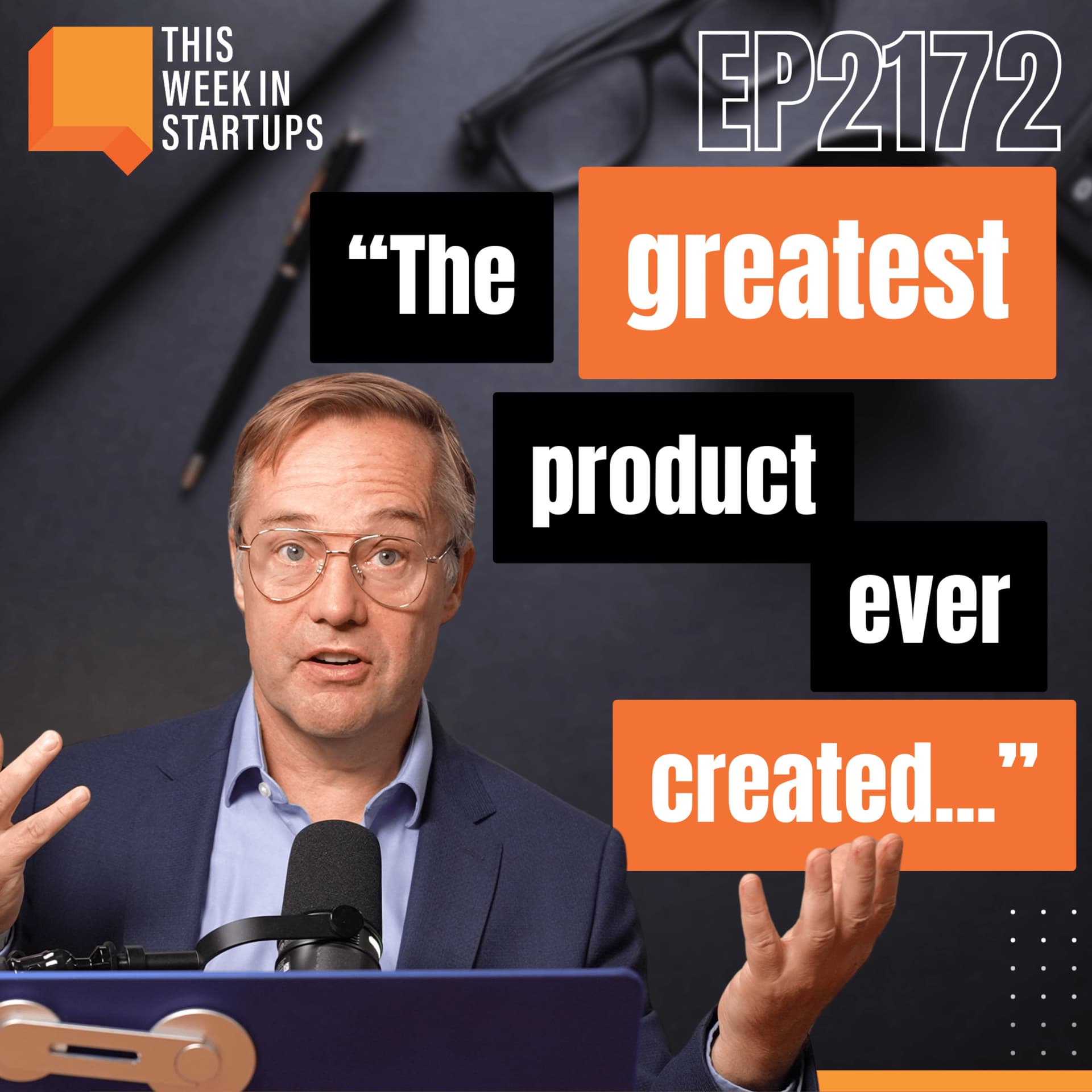
- Future Predictions: Jason predicts that Tesla’s Optimus could become the most significant product in history, ultimately overshadowing Tesla's car division.
- Elon Musk’s Vision: Discussion surrounding Musk’s focus on Optimus and the potential of Tesla’s factories to produce robots at scale.
- Apple’s AI Developments
- Open-Source Models: A debate on whether Apple is being underestimated in the AI space for its development of open-source models.
- Market Strategy: The conversation examined Apple’s approach to integrating AI into their devices and its implications for market share.
- Grok AI Model
- Emerging Success: Grok’s coding model gained traction, with impressive usage statistics suggesting it is becoming a hit in the market.
- Interview with Runbin Dong of Scale Social
- Business Concept: Scale Social uses QR codes in local businesses to facilitate authentic video testimonials from customers, enhancing marketing efforts.
- Operational Insights: Dong discussed the operational challenges faced in building the business and the importance of community engagement.
- Monetization Strategy: The service offered to restaurants involves a subscription model, with performance metrics shared to demonstrate ROI.
Key Takeaways
- Curiosity is Essential: Throughout the discussions, Jason emphasizes the importance of staying curious and adaptable in the entrepreneurial landscape.
- Understanding Market Dynamics: The conversation on AI and Tesla illustrates the broader implications of technological advancements and their potential impact on various industries.
- Authenticity in Marketing: Runbin Dong’s insights into Scale Social reflect the growing demand for genuine customer experiences in digital marketing, emphasizing the power of word-of-mouth.
Closing Thoughts This episode of *This Week in Startups* encapsulates the dynamic and rapidly evolving tech landscape, underlining the critical intersection of innovation, human behavior, and market trends. The discussions provide valuable insights for entrepreneurs, investors, and tech enthusiasts alike.
---
For more episodes and insights, subscribe to *This Week in Startups* on various platforms and join the conversation on social media.
Written by AI. May contain mistakes. Listen to the episode to check what was said.
Transcript
Automatic transcript. May contain errors.0:00I did a tweet today. I believe Optimus is going to be the greatest product ever created by humanity, including the wheel in this, obviously. It is going to be the most successful product in history. And people will forget that Tesla ever made cars.
0:23This Week in Startups is brought to you by AWS Activate. AWS Activate helps startups bring their ideas to life. As you build and scale your business, Activate credits grow with you to support your changing needs. Apply to AWS Activate today and receive up to$100 ,000 in credits. Visit aws.amazon.com slash startups slash credits. Squarespace. Turn your idea into a beautiful website. Go to squarespace.com slash twist for a free trial. When you're ready to launch, use offer code TWIST to save 10 % off your first purchase of a website or domain. And Monarch Money. Get control of your overall finances with Monarch Money.
1:09Visit monarchmoney.com slash TWIST for half off on your first year. All right, everybody. Welcome back to This Week in Startups. It's your boy, Jason Calacanis, and my co-host here, Alex Willem. How are you, Serge? Have a good weekend. Oh, fantastic. Tons of time with the kids. Last ice cream stop of the summer. and we bought Ada a little balance bike. So it was honestly amazing. Jason, before we get started though, I have a request from everyone who's a Twist fan, Twist listener, even the occasional Twist enjoyer. If you go to getperspective.ai slash share slash twist, there is a little survey that our dear friend Lon put together and we would love to hear from you about how the show is going, what we can do better.
1:50And we are collecting all of this feedback so we can make the best possible podcast for y 'all. That's getperspective.ai. slash share slash twist. Okay. Another way to do this would be to do thisweekinstartups.com slash survey and then have that redirect to it. Just make it a little easier for us. Actually, it turns out there's a type form or a survey that our old survey is there. So let's clean this up in post. But yeah, another good way to do it. And we'll put it in the show notes as well. Surveys do help. Tell us what you love. Tell us what you want to see more of. Okay. Did you see this video that's going viral?
2:26We have violence in the streets. Autonomy is not going to come without a price. We are already having robots attacking people in China, and we have people attacking Waymos in the United States. Play the video. All right. So first up, this is a video from China. Producer Long thinks this is staged, but yet it's very, very funny. It's a Unitree robot accosting the man on a moped. And Jason, you just can't make this stuff up. Enjoy. how do i get one of these unitries oh my god you just run them with like a joystick right and this guy's dressed up yeah so the unitree has a little backpack on in like a jacket and this guy on his moped looks so confused as the robot comes up and tries oh now it's boxing the bike oh my god it's he put boxing gloves on it can i get one of these robots how much does it cost can somebody get me one of these i want to bring it to the all-in summit next week and start harassing people with my robot.
3:22All right, now on the Waymo front, Jason, people are having various reactions to robots around the world, and I would say that self-driving cars count as a robot. So here we have from Austin, and the subtitle here is Austin Transplants harassed Clanker downtown. So here is the clear. Yes, we'll talk about that in a second, but here are a couple of gentlemen accosting a Waymo, and it's kind of sad. They're just being kind of mean to it. They're standing in front of it. they're hitting it they're making faces at it i think they're using the force to just hold it in place like there's a passenger in there they're holding a human hostage that's terrible i mean this is um this is going to become an issue folks because as these things become more prevalent people are going to f with these things in new york i guarantee it and waymo just got their permit for new york and um you know watching these guys what i noticed was there's a there's a rail crossing back there.
4:20And so not only they effing with the Waymo, they're effing with the passenger. They're also creating a serious safety hazard. I don't know if that's in the train tracks or not, but this could become like an issue here. And there's going to need to be a law that if you F with a self-driving car, talking about regulations, that there's some ramification to impeding a car. Now they're in the middle of the street. I don't know if it'd be jaywalking or whatever. But if this does become a trend, there is another video that went viral in San Francisco this past week of a bunch of folks jumping onto a Waymo and doing backflips off of it to the point which a cop had to be called because a bunch of drunk people decided, and I don't know what this is like, this is modern cow tipping.
5:06That's our first, I think, breaking news story. Do we have a breaking news story here? I mean, it's as breaking as you can get on a podcast with a set recording time. About an hour or two ago, Anthropic, the American foundation AI model company, best known for competing with both XAI and OpenAI for all that AI market share, announced that it closed its Series F, Jason. Now,$13 billion was the total raise. We had heard five originally, then reports were out that it was gonna grow to 10 billion because of outsized interest. Turns out the number is 13, $170 billion pre-money valuation, $183 billion post-money valuation, More money, higher price than expected.
5:45Very bullish for the company. Yeah. Some of these companies are crushing it in AI. They found revenue streams and their products are extraordinary. You know, Claude is what I use in my perplexity browser. I talked about that before. And I bounce between the LMs. But man, for deep research, Claude is really undefeated, I think. When I do deep research, man, it shines. and these browsers. And did we get on the Claude browser yet? The Claude for Chrome extension has not approved me yet. I'll talk to Lon about that because I really want to test it live. We need to email it. And show it off on the show.
6:24They did only give out a thousand keys. I think it's a little bit right now, Jason, like the rollout of Robotaxi with Tesla. I think they're probably picking and choosing a little bit. And no shame to that. It's a new technology. I'm not annoyed, but it's not like a general beta we can opt into. But the things you're outlining are why Iconic Fidelity and Lightspeed, you need three lead investors to fill out a$13 billion round, took the plunge here. But also, Jason, I want to point out that a lot of the reporting we've seen about how fast Anthropica's grown, the company went ahead and confirmed.
6:52So they did say, yes, we're at about a billion ARR to start the year. We crossed 5 billion in August. And then here's the other thing that really kind of blew me away. Cloud Code. Now, this is their command line interface agentic AI tool. My brother-in-law who writes a lot of code explained to me why using the CLI matters. A little bit opaque to me, but what's really cool for investors and for the general public is Claude Code has now reached a$500 million run rate in, well, it reached general access in May. So not that long. The company is just firing on all cylinders, which combats, I think, the kind of AI doom and gloom we've seen in the last couple of weeks since GPT-5 came out.
7:29People have been pretty negative. Even my neighbors are asking me about this. So I think this Anthropical Round kind of pushes back against the sad narrative that's been forming across AI for the last, I don't know, 10, 20 days. Which we should get curious about. The sad narrative seems to be based upon a massive amount of spending and wondering when that money gets paid back. Not something you need to worry about. These are people who could afford to lose the money, right? Like, you don't have to worry about, like, meta adding a bunch of servers or Microsoft or Google or XAI. Like, they can afford it.
8:06And their investors can afford it. Some of them have war chests of cash. What else are they going to spend on? A stupid dividend? That's dumb. That's not a bet on the future. That's betting against yourself. That's saying, I have no more ideas left. I'm just going to give shareholders money instead of putting it to work on something else, right? Now, buying back your shares is different because that means you think the shares are underpriced and you want to penalize the market and let them know, hey, I think our shares are underpriced. So some combination, but the dividends is what I really have a problem with because giving people a buck, a share, when you got a$500 share or a$200 share, like, okay, fine.
8:46But who's in it for that? Who's in it? Who's in Microsoft or Google or Apple for the dividend? Like some wonks. I'm in it for the rush of a new product or service. I would have rather seen Apple, for the love of God, release a car or some new product that inspires me. But we should get curious about this because the other thing that people are underestimating is the impact of these robots. We did a goofy thing about this robot. I'm gonna go, we're gonna circle back on the docket if you don't mind. Not at all. If you could tell me a little bit more about this robot, I know you had some other videos of it, but I did a tweet today.
9:27I believe Optimus is going to be the greatest product ever created by humanity, including the wheel in this, obviously. It is going to be the most successful product in history. And people will forget that Tesla ever made cars. In another 10 or 20 years, people are going to say, remember the company Sony? They used to make rice cookers and hot blankets. heating blankets and uh no that was i think the first product was a rice cooker and a heating blanket what did you think it was the walkman well i was just thinking back to like the 90s and i was like people but i think are the walkman yeah i realized while bantering that i was off by a couple of decades anyways keep going rice cookers blankets fantastic this could be like we could be sitting here thinking like all these incredible cars ev revolution self-driving all a footnote.
10:23These robots are going to become the best-selling products in the history of humanity, and they're going to change the world more than the internet.
10:39When you're busy all day at work, like us founders and investors are, well, one of the easiest things that you're going to let slip through the cracks? Your personal finances. So many smart people are running their own companies, but couldn't tell you what's going on with their investments or even name all their different accounts. Well, Monarch Money, it's a quick, easy to use personal finance tool that's going to get rid of that fear you have in the back of your head. It's going to make you more confident about your nest egg and tracking your goals. I'll be candid with you. I'm worrying about all these funds I've invested in.
11:13I'm j-trading. I got stocks. There's a lot going on in my world. And I need a fast, simple solution for my personal finances that isn't going to melt my brain after a long day. Make it simple. And Monarch Money has done that. They help me keep track of what's coming in, what's going out. So stop leaving money on the table. You might not need to keep track of every dollar, but ignoring your finances, hey, that could cost you big down the road. So use the code TWIST at monarchmoney.com for half off your first year. That's 50 % off your first year by going to monarchmoney.com and using the offer code twist Okay, so jason first of all, give me um, you said 10 years or 15 years?
11:56What's the timeline for this this change? I think we should put a little bit of a barricade around it here Well, I think people are going to start realizing this in Two years I think right now we see the robot kind of goofing around just like i don't know 10 15 years ago we saw like drones goofing around we saw the darpa self-driving product goofing around we saw the ev1 from i think chevy was the first ev that they leased to people and then destroyed them because the oil industry giant conspiracy whatever like things start as toys and then they become real and this robot You can tell it's a toy because the applications are doing a prank on the street and scaring somebody.
12:42Or boxing demonstrations, as I'll show you right now. Observe. Look at this. Not very intimidating, but I guess technically impressive. If you're watching the audio, listen to the audio version. It's a unitry robot doing some martial arts. Are we sure this is real? Not as well. It says, Jason, right there, not generated by AI. so it has to not be because you can't lie on the internet. I mean, we're watching this do Tai Chi and I think we're both having the same reaction, which is why they put the footer there. This does not seem real. But then, you know, when somebody like Dana White, who is one of the great, you know, innovators of our time, who I would love to interview at some point, I don't want to play blockjack with him.
13:28I mean, I don't know if I can stand those stakes, man. I watch him play blackjack. He goes, what does he play? Play a hand per hand. It's gotta be tens of thousands of dollars. And I see he plays multiple hands at a time. And there was a video on the internet that I just saw this weekend where his wife like comes to him. It's like caressing his shoulder at the table, whisper something to his ear. He kind of shakes his head. Yeah, you're right. Cause he went South for a million with like a bad beat on like some splitting tens or whatever the hell happened. Um, but anyway, the guy's a billionaire.
13:58He can, he'd afford to do and he likes to get the rush from the blackjack. I get it. Better he'd do that than other bad pursuits. But here it is. This went viral last week. So again, things start as toys. People get curious and then the world changes. So in this video, we have two of the little robots and this time they're going to box against one another. And as I said in the pre-show, they're not going to knock you out yet, but they do seem to be slowly improving. Jason, that's just not very intimidating to me. You know, that's not, I'm not scared yet. Yeah, what if we had a blade pop out of the keel?
14:34I am afraid of being stabbed, yes. I need one of these immediately. Can somebody get me one of these? I don't, what do these things cost? Like 10 grand, five grand? 16 to 21, I think was what Lon pulled for us. So not that much money. I mean, like about as much as a really good four-wheeler for your ranch probably. Yeah, because somebody contact them and ask them if they would let me have one next week to play with at the All-In Summit. I'd like to show up at All-In Summit with this and just start walking around with it on stage and having it do crazy stuff. Things start as toys. Okay. Then people get curious and then technologists adapt the technology and the platforms to do things in the real world.
15:11We saw, we had on the show just a week or two ago, these pincher robots doing folding laundry. Sincere AI and it was, I forget the name of the actual product, but it's S-Y-N-C-E-R-E is that company. Jason, I want to ask you about Optimus itself though, because we talked on the show quite a lot about figure and the other companies that are also pursuing this vision, lots of capital, lots of progress. And I think some of them got started before the Tesla Optimist project. You're framing this not just as a humanoid robots are going to become this very common, very powerful thing, but that Tesla's Optimist in particular.
15:44So you have different friends than I do. What are you hearing about the Optimist in particular that gives you so much enthusiasm? Well, you know, when Elon says the future of the company is Optimist, And you see him get into what I'll call warlord mode. He's not doing politics. You don't hear him talking about politics anymore. But you do saying him like, oh, he released version four of his master plan. He says 80 % of Tesla's value will be Optimus. I think it's going to be 99%. I think all the other products will be like merch or like secondary products. Even self-driving. I mean, I think, I said this before.
16:25I do think like a dozen people are going to get there all around the same time. And so, and then there's a giant world out there, but there's something about this product and the factories that Elon is able to build. There is no human on the planet who knows more about factories and building factories than Elon Musk. Now, there might be other people who've built more factories, but not the most advanced factories. I'm talking about a singular individual who I watch over 20 years, build his first factory, build the next factory, build the next factory, build the next factory, buy the largest like stamping machines.
16:57If you look at those stamping machines he used to build the Cybertruck, which wasn't the hit people thought it was going to be, but what he learned from using those giant pressing machines, somebody can look it up, the giant pressing machines. I saw them in person, actually. He showed them to me when I visited. These pressing machines, and I'm not sure what they're called, but Producer Claude will get in under 10 seconds, obviously, because Producer applause. Brilliant. Um, yeah, the giga press is what they call it. It's actually a German company that makes them that he sourced them from. And then he challenged them as my understanding to make a bigger one and then to make a bigger one.
17:35And I think he ordered them or ordered them in advance. Um, well, this is public knowledge. Um, those here's a video of the model S this is going way back in time, Jason. Uh, this is back to 2012 to see how long they've been doing this, but here is an example of some of the pressing machines they used to make a model S, cars. So really part of the game for a while. Yeah. And they've, they've kept going, they've kept going, they've kept going. So what I think is going to happen is he's going to make an optimist that understands the real world because of the self-driving experience, which is what, but one AI experience.
18:10Ah, I see. And so that combined with all that knowledge, plus the XAI knowledge, plus the factory knowledge means he's going to be able to make robots to make robots. and we could be sitting here in another five years and he's got a factory or maybe even converted the tesla factories some of them adapted some of them to make optimists at scale and then to have optimists understand the real world because all the teslas have mapped out the entire world and understand everything in it and then you just take what he learned there from you know their dojo computer or whatever and they have colossus that computer and i think like dojo might have been shut down or it's been deprecated to work on new things.
18:49But you just think about what he learned standing up Colossus, which Nvidia said was the greatest, um, like feat they've ever seen. Like Jensen was like, I've never seen anybody do something like this. Like it was unbelievable how quickly they did it. Yeah. And Tesla did disband the dojo team. That was in mid August. I'm trying to pull up the, um, the earnings call. I don't quite have time, but, uh, if I recall the Tesla earnings call did discuss Optimus Ramp. And they were discussing, I think, something like it showing up in the earnings late next year, which isn't that far away because it's already Q3.
19:21So we're thinking about four quarters away from actual revenue. Jason, you're thinking in two years, eight quarters, we'll see it impact our lives. All I'll say is this. Hell yes, faster, please. I am so tired. Elon, frequently late, but never wrong. Like that's, you know, he basically gets it right eventually. So everybody's mocking him or pulling these clips and making these like clips of his claims about robo-taxi. Sure. He was too optimistic about that. Maybe he's too optimistic about optimism, whatever it is. Like he'll figure it out. I think the timeline for robo-taxis is like one to three years, depending on the city, the regulation to take the safety driver out.
20:04If you want your business to succeed online, it has to stand out. And that's why you need a beautiful world-class website. The good news is you don't have to hire an expensive designer anymore, nor do you need a bunch of developers. No, Squarespace has all the tools you need to claim your domain and start building your company. Hey, maybe you got a product to sell. Maybe you want to show off some samples of your work. Maybe you've got a new service you're providing. Well, Squarespace is the all-in-one tool you need for your business to grow and flourish. And they offer beautiful templates. Maybe you want to start an online course or you're scheduling appointments for people.
20:40Maybe you're generating client invoices. All of that is built into the product. Everything you create with Squarespace is pre-optimized to show up in search engines as well. So you don't need to hire some expensive SEO person. Nope, they're building your meta descriptions. They're setting you up with an auto-generated sitemap and the SEO is done before you even get started. Plus there's a new AI powered feature. It's called Blueprint, which makes it easier than ever before to customize your website and make it really pop. So check out squarespace.com slash twist for a free trial. And when you're ready to launch, go to squarespace.com slash twist to get 10 % off your first website or domain purchase.
21:16That's squarespace.com slash twist. I now, these Tesla bulls are like making me into some like Tesla Q, anti-Tesla. I'm like, guys, I own the first Model S ever made. I own the 16th Tesla ever made. They're in my garage, you know, 20 feet away from me right now where I'm sitting. I'm the biggest Tesla fan in the world. And it's just you have to be realistic of like it took five or six years for Waymo to get approved in each city and to figure out all the edge cases. And he's doing this probabilistic model, which means it's going to be able to navigate anything, anytime, anywhere. But in the short term, it's not going to understand like, oh, the 290 or the 405 has this exit closed in the way that Waymo does with a deterministic model.
22:05and then they're all like freaking out, but they all make videos incessantly. Then they're quoting it. Guys, I believe in Tesla, obviously, but I do think every single person who's doing self-driving is gonna take one, two, three years, one to three years to get approved in each city. And I don't think Waymo is gonna be able to like snap their fingers and turn on New York either. Maybe it takes Waymo 12 months in New York. Maybe it takes them six months, whatever. no shame in the safety driver game we'll get there when we get there folks um and that's not me talking my uber book you know uber is going to be just fine um but i do think optimus is going to shock people when he does figure it out and maybe it's version five maybe he's on version two right now or three but they will figure it out and i i'm trying to think of an area in the world where This doesn't have a dramatic effect on everything, a dramatic effect on everything on the planet.
23:05I could see optimists. There could be a million optimist robots working at Amazon in a very short period of time. And Alex, looks like we have a question from our live audience. If you don't know, we do the show live. You get about 20 % extra show and you get to hear us do technical things and pull up stuff from producer Claude. But there was a question, I think, from the audience. Yes, here it is. So could there be a world where you can get in trouble for interrupting autonomous driving? And how would that work? Yeah, it would work like anything else. A ticket. You would get a ticket. So some places like drinking in public is not allowed.
23:47You get a ticket. And you pay a fine. um yeah and just like you would probably get a fine for lifting the gate on a railroad or you know when i first moved to santa monica uh i was there actually i was in it was before i moved there i was there with a rent-a-car i was late for a lunch i parked on one side of olympic boulevard and the lunch was on the other i parked i got a spot i jump out of the car i walk across the street whoop whoop oh really that's the sound of the police i get pulled over by santa monica good we see a driver's license you're jaywalking i said i'm jaywalking you get for jaywalking i say you give tickets for jaywalking he's absolutely he said you're from new york because i had the accent back then and i literally handed my thing and i said i am so sorry sir i am born and raised New York.
24:43It's my first or second. It was my second time in California. Nobody told me. If people told me that jaywalking wasn't a thing here, I looked left. I looked right. I looked left again. There were no cars anywhere. In New York City, we play Frogger. Guy laughed. He gave me the ticket anyway. He said, well, now you're not going to forget. Here's your ticket. I didn't pay. Thanks. Well, no, of course not. But I do. I say, throw around the garbage. I'm paying this. Goodbye. Bye. Somebody's looking it up right now. I'm going to get dinged for the fine. But do you think that a fine is going to be enough of a negative incentive to stop kids from doing things that are disruptive?
25:24Because there are fines for, I believe in Providence, like unmuffled motorcycles and cars and doing donuts in an intersection to make a lot of noise to annoy everybody. We have a police force here. We pay a huge chunk of the city budget for it. And every night at an intersection near my house, it is like I'm at NASCAR. And so I think we need bigger fines. Like I should be allowed to hunt you with a paintball gun. And I think we should expand that to people who abuse self-driving cars. It's easier. You don't have to take your paintball gun out. All you got to do is talk to your neighbors and set up a camera and then just submit the video to the police on a USB drive via certified mail.
26:02put your complaint in give the driver give the license plates and say this is my first this is my second and then the police once you've documented it the police take action i know this from past experiences i won't talk about here but having had situations where i documented stuff with the police and sent it by via u.s certified mail and sent it via fedex and then followed up with a follow-up i haven't heard from you this is my second follow-up hey this is my third follow-up would like to hear from you this is my phone number because now they have to cya because if that car spins out and kills a person or a dog or plus property damage and then you have given it to them i know police because i come from a cop family uh extended family especially you once somebody is documented it i mean you got to cross your t's in your eyes or it's going to be on you whoever opened that envelope whoever took the report does not want to get dinged all right but not quite as fun paintball info, what can you do?
Read the full transcript
27:03All right, Jason, next on the docket, Clement from Hugging Face, a company that you and I both know as an online repository of open source AI models, argues that Apple is not, in fact, a complete dud in AI, as we have said on this show, I think about 1 ,400, 1 ,500 times, but instead is actually doing quite well. Now, the argument here is that because Apple's put out a couple of targeted models, usually made for on-device AI inference that they're not falling super far behind. A couple of recent examples are Fast VLM and Mobile Clip 2, the second generation of that. I have notes about these models for us, but I'm just really curious, is it enough for a major technology company to build models for a niche use case and to seed the market for general purpose AI, or is Apple making a strategic error here?
27:53And I'm a little bit torn, so I kind of wanted to get your perspective on what's the best way for Apple to approach this? You know, number one, Hugging Face is a great company. I love that. Such a great company. Yeah, it's so great that they're like, you know, organizing all this. And Colmant has found his voice on the x.com platform, so I highly recommend following him. I'd love to have him on the pod. I've invited him. He's just told me he's very busy. So we need to get that, not producer Claude for this, but producer Oliver, let's get that worked out. Open source is a huge advantage if you're behind.
28:30I believe the stuff Apple's working on is open source. I could be wrong, but I believe these are all open source models that they're doing. And if they are in fact open source, that makes a lot of sense to me because if you think about what's in Apple's wheelhouse, it's creatives. that's their biggest strength so photographers video editors graphic designers that's their wheelhouse right it was originally the creative computer if you were a business person you had microsoft office windows here apple you know creative do that now it's the two platforms do business equally well maybe not video games equally well but they do um you know almost everything equally well but you give the advantage to apple for creatives it is the standard right i just want to back up what you're saying here jason i knew that the open elm model for them a small language model was open source, but I've just confirmed that both mobile VIT and fast VLM are also open source.
29:26So yes, Apple has been using a lot of small targeted open source models, but open source. So Apple makes money through elegant, beautiful hardware devices. If those devices are so sought after and they get more features and more functionality, then people don't switch off of them and they get locked into that ecosystem. There's a duopoly in the United States and the world of Android and iOS. And iOS, I believe iOS is up to, are they up to 60 % market share in the US now? It was like a big moment maybe five years ago when they tipped over to become top market share. And what this showed was price was not the determining factor for a smartphone purchase.
30:15People did not care about price. They cared about features. They cared about design. They cared about the velocity of it, ease of use, the family features, all that kind of stuff. And they've just built a better operating system. So what's their market share up to now? I'm curious. In the eyes now.
30:34We're all familiar with AWS, Amazon Web Services. That's the cloud platform that powers so many of your favorite brands. But do you know about AWS Activate? That's their program for startups, where they provide up to$100 ,000 in AWS credits for all startups. Whether you're backed by an investor or you're bootstrapping, money is time to keep innovating, time to delight customers, and time for you to keep gaining traction. You need runway, and AWS's Activate is going to help you with that runway. We hear this story from so many of our founding university companies. They're finding product market fit, the words getting out about their product, just a little boost.
31:12finding some savings here or there to get a little extra time can be the difference between getting traction and bringing in revenue or, hey, let's call it what it is, running out of money, okay, and shutting down. AWS knows this. That's why they've created the ultimate toolkit for early stage startups looking to boost growth. With AWS Activate, you're going to get up to $100 ,000 in AWS credits, hands-on support and training, plus exclusive discounts with some of our favorite companies and tools. So start getting the support you need at every stage of your startup journey. To learn more, visit aws.amazon.com slash startups slash credits.
31:50That's right. aws.amazon.com slash startups slash credits. According to StatCounter, July 2025 data, iOS has 59 % market share in the US. So just under 60. And it gyrates month to month, Jason, but call it just under 60%. Well, thanks to Producer Claude for finding us that source. Producer Claude is very, very fast. And thanks to our friends at Anthropic for that. We covered them in the news as well, but they also make great stuff just for us on the show. Fantastic. And we'll give you a discount code later. You can get 50 % off all their stuff. They gave us a nice discount code to share. So this is brilliant on their part.
32:29If the community of open source and startups and other folks start working on mobile VIT and open ELM and those things get an edge like the Chinese ones have, you know, this could put developer momentum and ideas into that project. And then they don't need to make money off of this. They don't need it to be proprietary. they need to know how to integrate it perfectly into their iOS and Mac OS. Ah, okay. I disagree. I think on both counts, Jason. And here's why. One, I think Apple's growth era from hardware is behind it. We've all seen us reach peak smartphone. I don't think people are going to start buying more laptops.
33:20My iMac that I've had for a couple of years is fantastic. Don't need to replace it. So I do think they're hunting for software-based growth. This is why they've been focusing on services. So in the future, I wouldn't be shocked if Apple's subscription consumer offerings had some AI components to them that's useful. And then the other thing is, I really do think you're right. If we're going to keep smartphones the way they are today, then building small models that you can run at the edge to do on-device inference processing are useful. I just think that the row of apps era of smartphones is fading and that companies that have a stronger general AI model they can use to build a more compelling OS from the ground up, kind of like instead of adding, you know, AI to Salesforce, what if you built Salesforce with AI from the ground up?
34:02I think that second class of future smartphones is going to be better. And I think Apple runs the risk of making essentially a better Google search and getting crushed by a perplexity, if that makes sense. Okay. So a bet is emerging here. A bet is emerging. So based on what you're saying, you believe the app interface is going away. Don't disagree that people will spend more time in the chat interface or the voice interface. I think we all agree with that. Apple and Alexa and Siri and all these things were kind of like the false start or the tip of the spear there. That's now being wedged open.
34:35Sure. I think I would have to set odds with you. Okay. So what are the odds that a new entrant takes 10 % of the smartphone market away from Android and iOS? in seven years based upon an AI-first phone. So it's a very specific kind of bet here. So - Repeating this back to you, new entrant, so not Android, takes 10 % of the smartphone market away from the combined iOS and Android share. Right. And this would be predicated on AI-first phone. And this is a seven-year wager. Oh, I'm going to go 100%. Okay, you got 100%. Okay. 100%. Okay. I'm going to take the other side of it. I think it's just really hard to crack this habit in seven years.
35:25So we'll put that in the docket and put it in the calendar. I'll put it under a hundred bucks. And here we go. There's another Hyundai I'm going to win from Alex, man. At this rate, I'm going to go broke. No, my wager here is optimistic because I want this. So I'm kind of betting for the thing that I want. I'm trying to manifest. Thank you, Jason. I needed that Zoomer, that Zoomer phrase. Okay. All right. I, the one thing I'll say is I, I, I agree with you that it's possible that, is it Apple one that I pay a hundred bucks a month for now? $1 ,200 a year for my family. So between the five of us, I guess I'm paying 20 bucks for, you know, music and everything.
36:06I mean, I pay for everything. Yeah. If they added like AI photo editing to that and that was part of it. Sure. I do think that the reason they're investing in this stuff is to get people addicted to making images and videos that you cannot make on the current generation of phones and laptops. So I'll take the opposite. Ah, OK. what they're trying to do is break and to antiquate to antiquate to make to purposely make all of our devices obsolete because they cannot run these ai models efficiently enough to get the value and then the next 20-year cycle of laptops or a 10-year cycle of laptops laptops and phones will be based on having enough power to run these models.
36:56And that to me sounds like a good bet, but there's two ways for them to win. Well, that's why Apple's worth several trillion dollars. They're not playing single lines here, Jason. They're running multiple bets. But I just think that Apple has been too conservative. I mean, even if they made Siri fantastic, even if Siri was every bit as good today as OpenAI's ChatGPT voice mode, I would still be worried about them because I don't think they're going to be able to actually rethink their smartphone designs. We've been talking about folding phones for years from Samsung and Apple is rumored to be working on one for the future.
37:31Well, blow me over, ladies and gentlemen. Excellent. Finally, my iPhone can have a crease in it. That's what I've always wanted from iPhone Cupertino. Well done. They're kind of fun. I have my Pixel 9 fold and I find it fun. It's 10 to 20 % of my mobile phone usage. I'm lucky enough to have the budget to play with, you know, to have two phones. Because I feel like I need to, as an investor, understand the latest and greatest. I always keep an Android phone. I always keep an iOS phone. Hey, speaking of innovation and new models, Grok's coding model I saw was breaking out. So how do we keep up with this, folks?
38:07I mean. Well, you listen to This Week in Startups, ladies and gentlemen, where we keep you informed. All right. So on Friday on the show, we were talking about Grok Code Fast 1. And Jason, I said, look, the data's early, but it does appear to be a hit. People seem to be using it. The gist here, folks, is that it's very, very fast, high tokens per second, and incredibly low cost,$1.50 per million output tokens. Over the weekend, we saw the model absolutely become enormous. For a while, Jason, it became the number one model on open router. And keep in mind, they were talking about over a trillion tokens processed over an open router per week.
38:41So quite a lot of usage volume here. The thing is, I wanted to frame this in a way for folks that it made more sense. Because if I tell you, Jason, 200 billion tokens yesterday, it's a little fuzzy. What does that mean? So I ran the math on how much revenue that is to put into brass tacks for folks. Now, there's a couple of assumptions in here. I tried to figure out for a coding model, what is the average ratio of input to output tokens? Because that matters for the overall profit mix. And basically, we're going to run a 75-25 output to input ratio. So it's three to one. All right. So per every 100 billion processed tokens on Grok Code Fast 1 using that split, it works out to$117 ,500 in revenue.
39:25So if they did 100 billion tokens per day, that would be about$120 ,000 in revenue, which is a lot less than I expected, I think, doing the math. and then I ran the math again, the same usage breakdown, same 100 billion tokens for Claude Sonnet 4 works out to$1.12 million because that model costs about 10 times as much. Now, when I ran the math last night, Claude, sorry, Grok Code Fast 1 had done just under 400 billion tokens. And so that was about a half million dollars in revenue for XAI. A breakout model, massive usage, but it's so cheaply priced, they're kind of undercutting themselves was my takeaway.
40:02way. Yeah, I think when these new technologies come out, one way to get people's attention, and I think I said this on Friday, is to be disruptive in pricing. And, you know, that was Airbnb and Uber's model, disrupt the pricing. And yeah, that's clearly what they're doing. I guess we have a guest today. Do we have a guest? We probably have them waiting here and listening to the show. Maybe we should have our guest on. Yeah. All right. So next up, we're going to talk to Scale Social. Now, this is a company, Jason, that you are actually a little bit familiar with because they went through Founder University back in Cohort 10.
40:37And what they do is they put out QR codes at local businesses that people can scan, and then they upload a video of them saying they enjoyed the place that they're at. Then Scale Social takes that, makes it into an automatic, socially ready clip, and then it runs it as a geo-targeted social advertisement, creating a flywheel to bring in more people, to get more testimonials, to create more advertisements. I love it. Please welcome to the show. It's Runbin Dong. Hello from Iceland. Thank you so much, Jason. From Iceland, where there's nothing to do but work on your startup. You're in Siberia. We're on a 10-day trip.
41:11Yeah. Oh, no, you're on vacation. It's beautiful, beautiful here. Yeah. You know, when I heard the idea for what you're building, and I'm not sure when I heard it, I was like, this is brilliant because doing an advertisement for your product or service, you know, that can work. But in my own lived experience, you see me using that woke language, Alex, my lived experience, okay? I do love it when you go full of woke, because I know it's driving your friends nuts. In my lived experience, I get a lot of information about places I want to visit in Japan or New York or LA in short videos now to the extent to such an extent that I have on my Instagram and TikTok accounts and I've started to make these public things to do with kids in Austin Austin bakeries Austin steaks and barbecue.
42:14But what you're building is trying to find people who authentically went to the business, had a great experience, and start a flywheel going, and then use that as advertising. This is so complicated and nuanced and takes a lot of work that I don't think the sushi restaurant or the barbecue joint or the laser tag, they're not going to have the time to do this. So maybe you could tell us a little bit about how it's worked thus far and then what's in it for the person who writes the reviewer makes the short do they get compensated how do they get compensated walk us through this maybe show us yeah absolutely um this idea actually came out of my experience delivering dumplings door-to-door so you were a dumpling delivery guy yes shanghai dumplings the crab and pork ones those are ones i like um made by my mom so okay very good yeah i spent my career in corporate but um had a chance to build a handmade dumpling business with my mom um she was a retired uh restaurateur and we wanted to keep her busy and we eventually sold the business but one thing that just kept coming back is why is it so ridiculously difficult to market your brand authentically.
43:35Food influencers were a thing, but to your point, they could be paid. And the magical moment was when our customers were actually text and or, you know, send us videos of their own dumpling making experience. And so we're like, why can't we build a solution that does exactly that at scale? And I think it's very nuanced from that perspective. So having the operator mindset helps a lot. And do you wind up paying the reviewer and how do you engage the reviewer? That's, I think, the little nuance. I'm curious about how you tested that or started that process because I might find it a little weird, you know, to get an email from the restaurant or from you, hey, you wrote a review on Yelp or Google, would you make a video or you find their video?
44:25How does all that contact with the individual work? Yeah, so that was actually one of the biggest challenges early on. I think a few things happened, COVID and Toast, and how Toast tabs and ordering through QR codes became a thing in the restaurant industry. And so when we thought of our solution, we said, okay, well, can it be QR code-based? Because people are already very familiar with it. And two, can we make it so lean whereby there's no app download. So it's essentially a web app. And we've designed the entire experience to be just three screens. We've had internal battles about making more features.
45:05And ultimately, we just come back to this, okay, it works. Okay, so remember then, when I'm in a restaurant, I see the little code, it's on the table, I'm eating my dumpling, my pizza, whatever it is. And I go, this is fantastic. And then I scan it. And then do I record a video inside the restaurant? I'm just trying to think through the actual consumer process here. That's exactly it. So you scan the QR code and we'll prompt you to share your experience. You will literally take photos and we'll show the phone videos inside the restaurant and immediately we evaluate your content live using AI and we'll be able to prompt you on whether it's a great quality content.
45:41Maybe you can try again, but ultimately they will get a perk right away from the restaurant. It's instant gratification. You studied BF Skinner, genius. So what is the reward? A cocktail, an extra dessert? What is it? So it could be anything that the restaurant owner wants to give out for that location. It will be a free side, a free drink. Turns out giving away alcohol is illegal in certain states. Okay. Two for one might work, but okay, got it. So that's their compensation. And you tell them, hey, can we use your video in our promotions for our restaurant. And Scale Social owns that copyright.
46:19They effectively give us the data. And one thing that we are super interested in is analyzing all of that contextual data and giving additional insights back to the operator. There's just so much data. How much do you charge and how do you charge the restaurant? What's the sales pitch there? I'm always interested in, we got the consumer side, but now you got the business side. You're creating basically like a marketplace for testimonials. So brilliant, so much work. How do you charge the restaurant? We know how you paid off the user. They got a free dessert, whatever. Fantastic. Worth it for them to do a little testimonial.
46:58They probably enjoy being on video. What is the restaurant? Do they just pay a SAS fee or something or they pay per video? How do they pay? It's a SAS fee. So for quick service restaurants, it's$1 ,000 per location per month. And for full service restaurants, So a proper dining experience is$2 ,000 per month per location. You know what I love about this, Alex, is that this is a founder who knows their worth. Okay. Two out of three people are going to say that's too expensive. But the one out of three are going to say, okay, sounds great. Let's go. $12 ,000 a year,$24 ,000 a year. Yeah, we make$3 million here.
47:33If you can get us 10 % more, you're an idiot for giving us this tool. Okay. So let's beg the question then. If you're going to charge premium, you got to show them the goods. How do you handle analytics and showing ROI to these small business owners? Because I know if you run a small business, you pinch a penny very, very tight. Absolutely. So our ideal customers are franchisor brands in quick service and full service. So there are proper marketing teams in place. And one of the historical challenges for this segment is imagine you're a subway owner. As a franchisee, you're contributing about 3 % of your top line revenue to the franchisor brand that goes into a marketing fund every single year.
48:17And you constantly are wondering, what are you doing for my location? You could run TV ads for all you want, but how does that translate to my specific business in Pittsburgh, Pennsylvania? We helped them bridge that gap because we could take that video and literally land it in that three, five mile radius of that location. Love it. So you use TikTok or you use Instagram stories? What's the most effective for restaurants? So we're all channels across Facebook, Instagram, Google search display. And we also have a fairly proprietary relationship with one of the largest ad exchange networks in the world.
48:56So they serve up billions of ads. That gets us into the long tail of advertising thousands of super local websites. Can you show us some stuff? Give us a little tour of, or maybe show us a couple of videos that performed well. Absolutely. So we have tons of super personalized videos on our website. This is due for a huge upgrade as well. But what you'll notice is this is very TikTok-like. There's not a lot of filters being applied to it. and it showcases a lot of people. And this is where our algorithms are actually teaching us something new. When we first started the business, we're like, oh, we should show burgers and pizzas.
49:36Turns out people don't care. They don't care about burgers and pizzas. They care about seeing other people. But the magical moment that comes back is when one of our clients literally texted me on WhatsApp. It's like, hey, guess what? Like I had a customer who came in the door saying that they saw their neighbor in one of your reels. Wow. That's powerful. What I also noticed here is I'm looking at Mizuki on the top right. It's an Asian restaurant. Good food, great people, an epic hibachi. And then there's like people are having fun. They're smiling. They're writing stuff on fire. My kids would love to come to this.
50:16And when I see that, I'm going to get interested. I'm going to get curious. and um you are doing all of the classic like putting a logo and doing good cuts so there's post-production being done here either by ai or you know maybe tweaked manually but you have that source material to work from yeah that's right and we collect um on average about 100 pieces of content every month so how long does that take to get to that pace because I presume, Runben, that not every restaurant sees such quick uptake from the QR code. It's like, what's the QR code hits the tables to you have enough to do an ad for them?
50:56What's that lag like? Yeah, so we actually baked in a 14-day free onboarding period, right? So again, understanding the operator's mindset. They don't want to pay for something until it's up and running. During those 14 days, this is where we designed the QR code. We literally shipped these cards to their front door. We handle everything. and so all they have to do is to put it up so here i see campaign performance july 2025 this is like a dashboard and you can see the person got 345 000 in reach uh they got 1100 clicks their click-through rate was 0.32 and wow they got 17 orders you do close the loop as alex was saying and restaurants must be over the moon huh they are in fact this is a unique client we started working with them in July.
51:49So we're two months in. Their general manager just got a company-wide shout out because her store performance is up 104 % year over year compared to the same period last year. And it's unique because they don't do any online orders, even though we still got 17. We absolutely optimize for people to visit their physical location. So this is right outside of a college campus and also inside of the food court. in a mall, which is historically very difficult as a business. And look at this amazing pitch from Gamma.app, one of our partners, a beautiful, beautiful deck. Gamma app is amazing. So tell us a little bit about the program.
52:35Which one did you go to? I think you went to Founding University, yes? Absolutely. How did you find out about Founding University? Which cohort did you go to? F10, 11, 9? It was the past, the previous cohort. So 10. Just summarized, yep. So you went to F10. Tell everybody how you found us and what the program was like and why you chose to do it. So my co-founder, Kit, is based in Seattle, ex-Amazon. And she had met Lucas at one of a local event. And so we got the word from the event and we applied right away. great experience overall. We just learned a ton through the programming and it also gave us enough space to just keep building and getting traction from a revenue perspective.
53:25So it was a really nice, healthy balance whereby the programming isn't overwhelming. It's sort of like, hey, here are the guardrails. Here's what you should really listen to and dial into. And by the way, we're not going to take up your time in really building your business and traction, right? And so So that balance was actually critical because we literally accelerated our revenue through that. This is an important note, Alex. When we built the program, as a former founder myself, and I'm a founder now, right, building this venture firm with this early pre-accelerator founding diversity and accelerator launch accelerator, which was like YC or Techstars.
54:00What we learned was we don't want to burden the founders. We want to be wildly efficient. founders, a founder's most precious resource is their time. And after that, it's their money. And so, you know, we try to do something on Monday night, you learn some content, we'll have a partner, a speaker, et cetera. And then on Thursday, we have you get together with a pod and we, you know, have like a round table discussion with 25 other founders. And we kind of go like deep into the granularness of the business and you get to hear other founders and what they're struggling with and also how they're succeeding.
54:35This makes it not lonely. Being a founder is lonely. And going and finding 25 other founders to spend your time with, that would be a full-time job in itself. So we basically pop up a little, what they would call these mastermind groups, and we do it all for the very low price of$500. And if you come all 12 weeks and don't burn the seat, you can request to get your 500 bucks back. We encourage people if they don't want to take it. They can just give it to us and that helps us run the program. But we have 300 people come to this program, 300 teams, and we pick the teams with great track records, product velocity.
55:10We like builder founders. So you had two founders, Rundin, yeah, in your company? Three. I have a technical founder as well. So you have a technical co-founder. How'd you meet them? So Paul, my technical co-founder, he was introduced through a VC friend. Oh, amazing. So you networked into finding them. And then what's your skill set other than being awesome and visionary? Oh, this is actually the crazy story. I built my career in product and healthcare. So I've worked on telemedicine platforms, genetic testing startups. And this is sort of a, I can't get rid of this idea kind of passion. Whereby, you know, the dumpling was just exceptional at all.
55:54See, this is one of the keys, Alex. And for my editorial director, Air Director Lon, we're rewriting, making like a 3.0 of the curriculum. Charlie Cuddy, Jackie, Kelly, we have so many people who've contributed to this giant curriculum. And I'm going to actually teach the next one myself personally. And we're breaking it down into like the 12 most important components. And why do people start startups is one of the initial things I'm going to talk about. And you have the personal experience and vision, itch you need to scratch. This is one of the key things. Sometimes a founder just is so obsessed, a founder obsession with something like dumplings.
56:41And then they want to honor somebody like their mom. This is so powerful as a concept. Now, you would look at this and be like, oh, it's a SaaS tool for small businesses. Who cares? You know what? Runebin cares. And that's all that matters. The fact that you care means when you come to work every day, you don't need the motivation. I love doing the show because I like hanging out with Juan, I like hanging out with Alex. I tolerate producer Oliver. He's getting his act together. I mean, it's tolerable. He's working. He's a work in progress. More work to do. So, okay, now to my team, you met Lucas.
57:19He got you into the program. Fantastic. It's competitive to get in. Like 10 % of people get in, then another 10 % we invest in. So from application to funding, it's 1%. Every week, we ask people to send in what they accomplished that week. Remember Elon saying, Alex, what did you get done last week? Five things, baby. Five things, right? Now the government's not doing it anymore. R.I.P. Doge, I guess. this concept of what did you get done last week was something Elon and I talked about just when we were kids, when we were both 30 years old in the early 2000s, of just startup cadence. Like, can you get something done in a week?
57:57For the love of God, just get something done. And you had to send in those reports, just send them in. And then the fact is we read them. And the fact that there's somebody else reading it and giving you some feedback, even if it's just a attaboy, attagirl, atta they, them, whatever it is, whatever you're into, it's fine with me. I'm really proud of the work you've done. Getsocialscale.com is the URL. And Rune, anything I can be helpful with as we wrap up here? Any question you might have or blocker you have that we could share with the audience to help everybody learn together? Yeah, I do actually.
58:33I've been thinking about that. So as we fast forward this concept, say three years from now, in effect, what we're doing is we're digitizing word of mouth marketing. And so we are building the core infrastructure for that to happen. And the way I like to think in analogies, it's almost as though we're building the stripe for authentic marketing. we're having to really educate our clients because we're trying to create an entirely new category do you have any advice for companies like ours that's really trying to control the narrative and creating that narrative and category in the in the meantime as we build a company absolutely fantastic question some people manifest the market to exist that didn't exist before airbnb would be one of them the idea of couch surfing like unless you were a weirdo on Craigslist, you didn't know what that was.
59:32Getting in another person's car, taking a ride share from Sidecar, Lyft, or Uber was, Alex, as you know, that's a big jump for people to make. There's a bell curve of people adopting technology, which Alex will pull up in a second. And there's a group of people who are called early adopters. Some people will refer to them as the vanguard, tip of the spear. Now, these people, they love new technology because they see it as an advantage because in the past, they've used new technology and they've experimented with it to solve a problem and had a good experience. Then there's a group of people who are laggards.
1:00:08They're not innovators. They're the other side. And then there's the late majority. In some cases, that might be your sibling who buys a Tesla 10 years after yours did. They hear you talking about it. It could be the early majority, the late majority, but the innovators, that 2.5%, those are the ones that will just try your product because they're so enthusiastic. And not only will they try it, they'll give you 50 good ideas, they'll pay for it. I buy everything. I buy the pixel fold. If I use it and I like it, great. If I don't, it goes in a draw, I sell it, I gift it, whatever. I don't care.
1:00:45I consider it a cost of doing business. The laggards in the late majority, they are going to hand ring forever. And so you have to teach your team to sort these people. And the way you've done that is by having a bar pricing. And hey, you've also studied your customers and realized they're savvy. They don't want to pay for it while they're learning. So you gave them that 14 day trial. Very savvy. don't waste your time on people who don't want your product or don't understand it yet focus on and identify where your most innovative people are and what they've used in the past the people who will love your product are people who've used toast what a great thing i heard you say earlier if they use toast that means they knew what a qr code was you don't have to explain it.
1:01:38They know the value of it because now they don't have to have as many waiters, which are hard to find. You just need runners. Runners don't need to speak English. Runners don't need to be charismatic. They need to run the goddamn mozzarella sticks before they get hard to the table. That's why they're called runners. And that toast revolutionized restaurants where you could have three runners and then one manager come over and say, oh, how is everything? Oh, yeah, great. And, you know, you also got rid of this trying to flag down a reader. The people using toast understand efficiency. They understand customers.
1:02:15They're customer obsessed. So is there another equivalent to toast? It might be the person who puts a cold brew tap in their restaurants, right? Some people might put a cold brew tap in their restaurants or a kombucha one, which means they're part of the vanguard. They're the innovators. They want to try new things and delight customers. So it's really that simple. Canva is the perfect example of a market that manifested itself. They manifested Photoshop for people who don't want to learn Photoshop and spend$1 ,000 on Adobe. No offense to Adobe's suite of products, but they're complicated and they're for professionals.
1:02:57So they said, what about the other 95 % of human beings? Let's manifest that. So what I do think you need to think about is the next group. After you perfect this group, you don't want to get the team distracted. But you as the founder should be thinking, what's another big ticket item that a personalized recommendation from somebody in your town would get people to buy? Well, if you did it for a car company, there's new car companies out there. One of them is called Scout. Another one's called the Grenada. If you had the people who own these cars making videos and you convert somebody, this thing's got a$10 ,000,$20 ,000, these costs$100K.
1:03:41Man, if you get them to do this, you could ask them for$24K a year. Plus, you could say, we'll do$100K consulting for you to help you get this going. You could give us your client list. We could email the client list. The clients could get a special backpack or a piece of merch for doing it. And we would like you to give us$1 ,000 in affiliate fee,$3 ,000 in affiliate fee every time one of these go. What if you sell 10 a month? Now you got a$500 ,000 client. So just start thinking big ticket. What about colleges? People want to know about colleges. Oh, I chose to go to UT. I chose to go to this college.
1:04:20And I made some videos about what it's like. Those high paid colleges, they might pay for something like this. and they might give you, like they give a spiff to people who get full fare Chinese students or Singaporean students, they will give them like five or 10K, these brokers, every time they land something. So I just want you to start thinking about that. You just telegraphed a deal that we're working on. It's RV campers. Oh, smart, smart, smart, smart, smart. Well, here's the thing. I've been at this for a while. And if I seem like I'm really smart, you don't need to be smart. You just need to do a lot of meetings and listen and get curious to go full circle from the beginning of this.
1:05:00You don't need to have 160 IQ. You just need to talk to people with 160 IQs or people with 100 IQs who are gritty. It doesn't need to be pretty, but it does need to be gritty. Runben, I'm so proud of you. I'm so excited to be on the cap table. Sky's the limit here. Get back to work, okay? Thank you. You got it. I salute you, sir. It's been another amazing episode of This Week in Startups. Today's Tuesday. We had the day off, but we got the Wednesday show coming. We got a Friday show coming. Incredible stuff coming. God, I love my job. I love doing this because it's never, ever boring to talk to founders.
1:05:41Before the show, you weren't even here yet. Renbin and I were just talking about League of Legends in China. I mean, it's just founders are such dynamic, interesting people. They never fail to be an espresso shot to the brain. Absolutely. And they, you know, the biggest thing for me was, you know, when he when he went through that diligence thing just this weekend, I was writing to my team about the purpose of the diligence to keep it in mind and make sure we communicate it to founders. And then what a great testimonial. I'm joining your syndicate so I could put 5K into startups because that's like the minimum I think we do is like you put like as little as 5K in which you'll never get on the cap table of a startup unless you can write a 50K, 100K check.
1:06:18they just wouldn't take your check but with the syndicate.com we'll have 20 people put in 5k or 100 we'll have you know 200 people put in 4k whatever it is and we'll put 800k into a promising startup again 80 % fail 90 % fail so only bet and invest money you can afford to lose but he was like hey if you diligence us this much and you've helped us this much hey the inventory uh at the syndicate.com um you know it's probably pretty good if you are an accredited investor the syndicate.com You can go sign up. Kelly and Maddie are running that and they do a great job. And we now have a 50 person investment committee.
1:06:56We call it the deal committee, Alex. I haven't disclosed this publicly yet, but 50 of the most engaged members of the 11 ,000 person syndicate, of which I think 4 ,000 have made an investment, now meet every week. They sort through three or four companies a week, I think, two or three, four, depends on the week. And then they will do pre-commits. And then we decide whichever one gets the most pre-commits, we'll send to the rest of the syndicate. And then I asked them to give candid feedback. We put that together and then we give it an aggregate to the founders if they don't make it through the deal committee.
1:07:31And so they get some good feedback and they know when to come back. Right. I love that. Also, I've dropped by a couple of the syndicate hangouts and done some talks with them. Super nice people, Jason, and just the nicest. Producer Oliver just found my internal message. And I don't think I have any spelling errors here because sometimes I write these when I'm like running around the ranch, smoking a cigar and shooting my gun or cutting the grass. But here, pull it up. On a Monday, on Labor Day, when you're supposed to work. That's why they call it Labor Day, folks. Hey, who was here at nine o 'clock last night preparing the docket?
1:08:05That's my guy. It was me because I'm having a third child and I feel poor. Anyways, here's the intern. Sorry, that was not supposed to be a stopper. Jason, explain to what's on the screen here. Okay, this is our Slack. There's me from probably 15 years ago with my hands up. It's a very iconic picture of me taking at, I think, Gnome Decks. Remember Chris Perillo back in the day? Yep. Huge nerd, a nerd ball, as we say, is the technical term. And he, you know, like does Star Wars characters. But he used to do this like nerd conference. I don't know, it was Geek Con or something. And he asked me to speak, and I spoke at it up in Seattle.
1:08:44And that's me going like, what the f**k? so i use that as my uh internal flag which is me so in wtf and it says at here our dd process due diligence at seed is twofold one educational for pink and red flags insurance accounting contracts we are educating folks on what will happen in series a rounds the punk rock successful founders choose speed over being accounting nerd sorry mike savino who is my internal accounting nerd my first boss uh he's a general partner at the firm to identify major red flags for discussion. I am missing found with 35 % vested interest in a major lawsuit so we can advise them how to fix them.
1:09:18That's it. That's why we do the due diligence process, not to slow things down or back out of a deal. We don't want to back out of deals. When we have conviction, I saw this thing. It's a great clip of, um, not Charlie Munger, um, Warren Buffett. Warren Buffett. And he said, you know, you can talk yourself out of deals. If you know, it's a simple business to pull an oil from the ground, you get a 35 % coupon, you know, when you got your thing and it's like, you don't have to be like a genius you know they're like they're like statler and uh lon help me out here statler and from the muppets baldorf they're like statler and waldorf and you know they kind of sit up there and they answer questions once a year and it's kind of a little bit of a shtick i like it and he says listen i don't need to be a genius to know that if you got this shell thing and it's a layer after layer of free money and you drill down and you take it and this is like smart people and the person's an engineer running the company and they give you a 35 % coupon.
1:10:16There's not some diligence. I don't want to block the deal. You just make the investment and the diligence is the diligence is what it is. And I just saw this week and I was like, I got to remind my team. And I just ran to my Slack and just put this in here. Cause I, the job of leadership at the end of the day, Alex is to repeat yourself over and over again. So people really understand why you're doing things. We do this thing here this week in startups three days a week so that we can help founders and find founders and geek out and change the world. We'll see you tomorrow. We'll change it a little more.
1:10:50This week in startups, he's x.com slash Alex, cautious, optimism.news. Throw him a hundy, please, folks. He's got a third kid on the way. We'll see you next time. Bye-bye. Bye.
From the publisher
Today’s show:
Find out why it’s important to “get curious,” and more deep founder insights on a new TWiST.
Jason and Alex are back with a look at Robot vs. Human violence spilling out into the streets, Elon Musk’s vision for humanoid robots, and a reconsideration of Apple’s open-source AI models. Is the hardware giant not getting enough credit for its smaller-scale innovations?
Plus Grok has another hit model, AND a chat with Scale Social founder Runbin Dong about the importance of knowing your worth.
Timestamps:
(0:00) Robot vs. Human violence in the streets! Is anti-clanker behavior inevitable?
(05:13) Producer Claude’s company Anthropic is growing FAST, raising BIG money
(09:21) More on why Jason is convinced Tesla’s Optimus robots are the future
(10:35) Monarch Money - Get 50% Off Monarch Money, the all-in-one financial tool at www.monarchmoney.com/TWIST
(11:50) Show Continues…
(20:00) Squarespace - Use offer code TWIST to save 10% off your first purchase of a website or domain at https://www.Squarespace.com/TWIST
(21:19) Show Continues…
(23:31) Ask Jason: Should you get a ticket for messing with an autonomous vehicle?
(27:04) Is Apple not getting enough credit for its open-source AI models?
(30:30) AWS Activate - AWS Activate helps startups bring their ideas to life. Apply to AWS Activate today to learn more. Visit aws.amazon.com/startups/credits
(31:55) Show Continues…
(38:08) Grok has another hit AI model… how can anyone even keep track of this?!
(40:27) Runbin Dong of Scale Social stops by from ICELAND
(42:54) How Runbin’s job delivering homemade dumplings inspired his startup
(47:05) Why founders need to know their WORTH when pricing their products
(59:21) Jason’s advice for companies that are creating their own category
Subscribe to the TWiST500 newsletter: https://ticker.thisweekinstartups.com
Check out the TWIST500: https://www.twist500.com
Subscribe to This Week in Startups on Apple: https://rb.gy/v19fcp
Follow Lon:
Follow Alex:
LinkedIn: https://www.linkedin.com/in/alexwilhelm
Follow Jason:
LinkedIn: https://www.linkedin.com/in/jasoncalacanis
Thank you to our partners:
(10:35) Monarch Money - Get 50% Off Monarch Money, the all-in-one financial tool at www.monarchmoney.com/TWIST
(20:00) Squarespace - Use offer code TWIST to save 10% off your first purchase of a website or domain at https://www.Squarespace.com/TWIST(30:30) AWS Activate - AWS Activate helps startups bring their ideas to life. Apply to AWS Activate today to learn more. Visit aws.amazon.com/startups/credits
Great TWIST interviews: Will Guidara, Eoghan McCabe, Steve Huffman, Brian Chesky, Bob Moesta, Aaron Levie, Sophia Amoruso, Reid Hoffman, Frank Slootman, Billy McFarland
Check out Jason’s suite of newsletters: https://substack.com/@calacanis
Follow TWiST:
Twitter: https://twitter.com/TWiStartups
YouTube: https://www.youtube.com/thisweekin
Instagram: https://www.instagram.com/thisweekinstartups
TikTok: https://www.tiktok.com/@thisweekinstartups
Substack: https://twistartups.substack.com
Subscribe to the Founder University Podcast: https://www.youtube.com/@founderuniversity1916


