
In short
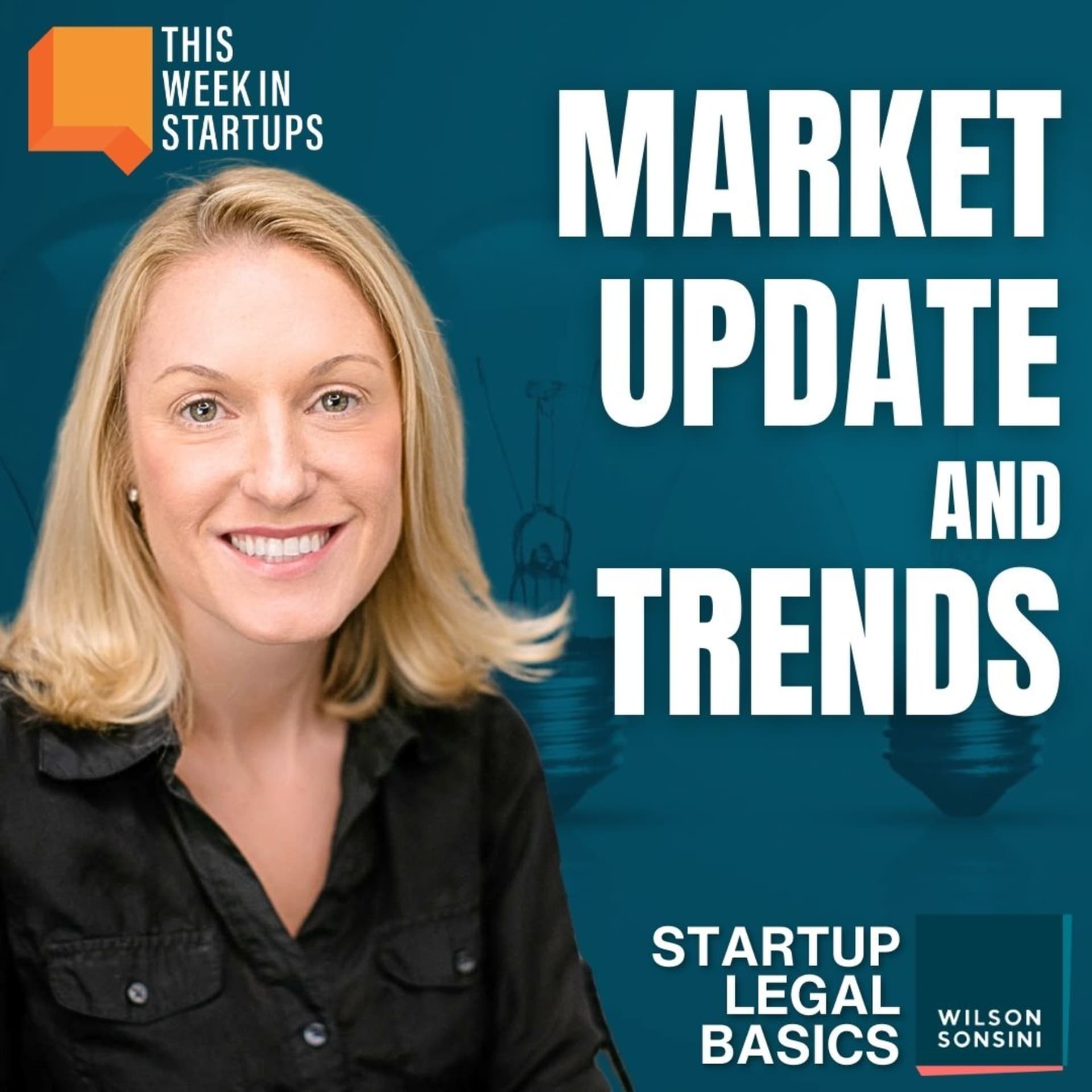
Podcast Notes: This Week in Startups - Market Update and Trends w/ Becki DeGraw
Episode Overview In this episode of "This Week in Startups," host Jason Calacanis interviews Becki DeGraw, a partner at Wilson Sonsini, to discuss the current state of the startup market. They analyze the effects of economic changes on fundraising, deal structures, and the overall M&A landscape.
Key Topics Covered
- The current state of the startup market
- The shift from 2021’s valuations to today's structured deals
- The rise of down rounds and pay-to-play provisions
- VC and founder psychology during challenging fundraising periods
- Predictions for the M&A landscape in 2025
Key Takeaways
- Current Market Dynamics
- Perfect Storm Situation: The startup landscape is influenced by record fund sizes raised during 2020-2022, followed by a significant slowdown in deal flow, particularly in late-stage investments.
- Excess Dry Powder: Venture capital funds have substantial uninvested capital waiting to be deployed, creating pressure to find investment opportunities.
- Valuation Challenges
- Struggling to Meet Valuations: Many startups are failing to grow into their inflated valuations from 2021, leading to a surge in down rounds (when a startup raises capital at a lower valuation than before).
- Investor Protection Mechanisms: In response to challenging conditions, investors are implementing protective legal provisions to safeguard their interests.
- Down Rounds and Pay-to-Play
- Understanding Pay-to-Play: This mechanism requires existing investors to participate in new funding rounds, or risk losing their preferred stock status. Failure to participate often leads to punitive conversions to common stock.
- Communication Strategies: Founders must approach existing investors transparently to discuss new funding rounds and the implications of pay-to-play structures.
- M&A Landscape Predictions
- Mid-Market Activity: The episode predicts a potential resurgence in mid-market M&A activity as smaller companies become attractive targets for acquisition, particularly in light of current market conditions.
- Regulatory Challenges: Large tech companies face significant hurdles due to increased regulatory scrutiny, making it difficult to execute blockbuster acquisitions.
- Talent Wars and Acqui-Hires
- Investor Concerns in Talent Wars: New startups, especially in AI, heavily reliant on key individuals raise concerns for investors about a startup's valuation and stability if that talent leaves.
- Legal Protections: Investors are increasingly seeking legal protections, such as preferred stock redemption clauses and stockholder consent rights over acqui-hires.
Notable Quotes > “A lot of companies have not, I'm using air quotes here, grown into their valuations.”
> "The psychology of the VC side is so perplexing to founders, but yet so obvious if you're on this side of the table."
Additional Resources
- Wilson Sonsini: [Website](https://www.wsgr.com)
- Startup Basics Episodes: [Link to Episodes](https://thisweekinstartups.com/basics)
- Follow Becki DeGraw on LinkedIn: [Becki's LinkedIn](https://www.linkedin.com/in/rebecca-degraw-639bbb62/)
- Follow Jason Calacanis:
- [Twitter](https://twitter.com/Jason)
- [LinkedIn](https://www.linkedin.com/in/jasoncalacanis)
Conclusion This episode provides valuable insights for founders and investors navigating today's complex startup fundraising environment. Becki DeGraw's expertise highlights the evolving legal landscape and the need for adaptive strategies in a shifting market.
Written by AI. May contain mistakes. Listen to the episode to check what was said.
Transcript
Automatic transcript. May contain errors.0:03Hey, everybody. Welcome back to This Week in Startups. I'm your host, Jason Calacanis. We do a series called Startup Basics? Why do we do this series? Very simple. I get asked the same questions over and over again. And the answers to those questions are often the same this year as they were last year. Sometimes they change. And sometimes the changes are where startups, founders, investors can make huge mistakes or find huge opportunity. One of the areas we like to talk about is legal. We also talk about accounting, HR, AI. There's a lot of different topics, but legal is one that is dynamic. There are tried and true strategies that you have to get right.
0:40And then there are new opportunities and changes in the law. So we are extremely lucky. Becky DeGraw is back to do legal basics with me. She's a partner at Wilson Sincini, and she works with startups, a lot of my startups, and has helped me on a lot of fun adventures in startup land. We will save some of those to protect the not so innocent. Yes, thanks for having me, Jason. Always good to be back. Thisweekinstartups.com slash basics. You can see Becky and I doing this now for, gosh, five years or so. Let's talk about the market because it's always good when you talk to your service providers and your partners, they see it across many clients.
1:21And then there are many different divisions. So you might see a division that maybe wasn't getting a lot of attention. Patents all of a sudden get a lot of incoming. Or you might see IP lawyers all of a sudden get lit up and they stop working on Disney stuff and they start working on LLM stuff. So here we are. What do you think is happening in the market today as far as seed stage Series A startups are concerned? First, I might take a step back and say, let's look at the overall backdrop of the ecosystem. I feel like we've kind of had a little bit of a perfect storm of what has led us to this point, which then influences all the types of firms and different things that we're seeing.
1:58So when I think about the ecosystem, I think about it, right? We've got the fund, the investor side, and we've got the company side. On the fund side, funds had record-breaking years for raising larger and larger funds, right? Beginning in 2020, 21, even 2022. But then the world changed and deal flow slowed down, especially in the later stage, B and beyond. And the seed in the A, it stayed pretty consistent. but it was really the B &B on stage that went like crickets in 2023, in the first half of 2024. Finally, like around the second half of 2024, we started to see little sparks of life. And this year, man, they're back.
2:35Our growth equity is back this year, which is great. But we still have some excess dry powder, right, on that side, because things did slow down after they raised these huge funds. Why did the funds get so huge, I guess, is question one, when we look back at that moment in time. I have a lot of areas. I'm sure you have some facts. And then how does that change the game on the field today? Yeah, right. When you have so much excess supply, larger than it ever had been before, you're deploying that into the market. But then when the world changes and everybody's like, oh, I'm taking a backseat, I'm hitting the brakes on even my normal cadence of deployment, it really slowed down.
3:18It really meant that the dry powder kind of just keeps piling up. And with now, I think this is where kind of the perfect storm is coming into play and why we're seeing more movement is deployment schedules, right? You can't just take money and hold it forever. You got to start investing it. And then a lot of the funds are behind on their deployment schedules. Everybody's looking for that next best company. And on the company side, you know, we kind of had the 2021 heyday, right, where valuations were crazy and the amounts of money that companies raised were crazy. They had these big war chests of this cash.
3:57So they were sitting on the sidelines too during this period. And even for a longer period of time, because right, a lot of those companies, like in 2020, when things started looking a little south, VCs came in and said, hey, guys, we need to prepare for the worst. We need to cut. We need to slow down on growth, hit the brakes, all of these things. Well, a lot of those companies did, and they haven't come back to the market. Well, guess what? They're coming back to the market because even with a war chest over a few years, you're going to run out of cash and you're going to need to come back. Right.
4:29And those companies had set records for their valuations. Many would argue that they were given a little too much credit for work not yet accomplished. So if you're saying, hey, this company did 10 million this year, we project it's going to do 30 next year and 120 the year after, and the company goes from 10 to 15 to back down to 12, and then maybe has an up year now to 14, VCs are going to look at that company much differently. And then you have a bunch of legal terms. And these are protective provisions. They're ways for the last investors to make sure, hey, if I'm going to invest at a billion dollars and you really want that valuation and 100 times your top line revenue.
5:05I'll give it to you to win the deal, but there needs to be some structure. Let's talk about what the VCs did right there in creating the structure, but what that causes to happen in a boardroom where in the scenario I'm talking about, you got 100 times revenue, but you doubled revenue over four years and you had a hard time getting there. Okay, now you're at 50 times revenue and maybe the market says your company's worth 30 or 20 times revenue, or maybe it's worth 10 times revenue because you're slow growth. Yeah, I think that's exactly right. You know, a lot of companies have not, I'm using air quotes here, grown in to the valuations.
5:39And in that heyday, valuations were sky high. Like they weren't measuring the right metric then. And the company still hasn't grown into it. So what happens, right? We are starting to see more down rounds than we've ever seen before. We're seeing a lot more structure coming into place. And, you know, one of the things that's really interesting, or I find interesting, at least, because there's not a lot of plain vanilla stuff going on, which makes my world fun. A lot of people are like, oh, my gosh, this is too much. But it actually is kind of fun and interesting because it's stuff we haven't seen before.
6:15You know, a lot of the companies doing like a down round or doing like a pay to play, like the company itself is actually doing fine. It may not be a rocket ship. It's just somewhat of a correction from those 2021 crazy days. People gorged a bit. And now they've got to take the medicine. They've got to go on a diet. They've got to slim down and trim down. And the structure, let's make a composite here of this story. Okay, we got this company. It's called Future AI. I hope that's not the name of an actual company, but Future AI. You know, it's going to change the world. and.tech. And futureai.tech now has this kind of structure and they say, well, we need more money.
6:59We can't get that valuation. So our attorneys advise us to do a pay for play. Now they've got to go to all the existing investors and break this news to them. How do you advise them on how to do that and how to do it in a way that results in a good outcome for everybody or the best outcome possible in a difficult situation? I don't think that any of the companies that are going to the board and having that conversation that the board is surprised by it, right? Like people have been watching the market every quarter and every quarter. I mean, so when I represent companies, I'm in the boardroom listening to what's going on.
7:35And it's been, when do we have to raise? Not like being opportunistic about it, but because everybody's kind of sitting on the sidelines up until this year. This year, we're seeing a lot more activity, but it has been hesitant to go back to the market for fear of we're not gonna get the terms that we want. And some of that is resulting in insiders, your existing investors coming to the table and saying, all right, I know we're not gonna be able to go out and raise the round, the next round at a valuation that's gonna be really acceptable to any of us. Let's us bridge the company. And when you have the insiders putting more money into the company, that's usually where we see the pay to play coming into play because I don't want to be the only one around this table helping the company.
8:27I want everybody else to come back too. And we're seeing a lot of those, what I would call bridges, to get the company to hopefully the next spot. And this is kind of on the... When I think about the types of companies that are out there right now, I think of them in terms of the haves and the have-nots. This is on the have not side, right? Like I haven't grown into my valuation. I'm having a harder time getting my next fundraising. I'm not seeing that hockey stick growth. Maybe I'm, you know, tracking along here and there, but not. It's not a breakout. So there's not people knocking the door down saying, I heard you tripled revenue.
9:04So then the pay to play mechanism is, hey, we had five angel investors, two seed funds and two venture funds. you go to the nine people, you say, you own this percentage each. And let's say it's, you know, 10 % on average, each of these 10 players, we're going to raise 2 million. You're each on the hook for 200 ,000. Or if you don't participate, here's the medicine. What is the medicine in that sort of situation? Or what's the range? Or is there a standard medicine that they get asked to take? Okay. You owned 10%. You refuse to participate in this 2 million race. You wouldn't even put 200k in therefore your 10 is now worth what yeah so before i would say pay to plays were so infrequent that there wasn't a standard or plain vanilla version that's not necessarily the case today i i caught myself using the term oh that's a plain vanilla play to play and i'm like wait a minute.
10:06Like pay to plays are not plain vanilla ever. Like how did I just say that? Which will tell you just how frequently we are seeing them. So in a plain vanilla play to play, I would say what that is, is that you're going to get converted to common on a one-to-one basis. You lose your preferred stock right. You maintain the same percentage on an ownership basis, other than future dilution, because it's a one-to-one conversion, but you're just foregoing your preferred rights. But we're seeing all kinds of variations on that right now, right? So you can adjust that conversion ratio. You can say for every 10 shares of preferred, you're only going to get one share of common stock or whatever that number is.
10:51I saw one the other day that was 50 to 1, 5-0 to 1. Wow. That is punitive. So it basically means, hey if you owned 10 of the company in that situation you're going to own just a fraction of one percent now yeah 0.2 percent or something exactly correct so you're now basically you're done with the company you have some modest idiot insurance that if they thread the needle you might get half your money back or your money back and this is where people who don't participate in a pay-to-play are essentially done with the company they've they've written their hand they've written it off. They've written it off to a zero.
11:29And what complicates this is sometimes the fund you're in, and this is where understanding where you sit and where your fund sits, the performance of that fund sits with that investor. If you were in our first fund, which was 5x on paper, if you didn't sell your Robinhood, it would be like an 8, 9, 10x fund. Although we distributed at 15. And I told people don't sell. I never sold the share myself personally, and it's at 110. But interestingly, with that fund, I now look at it differently now that it's in the black and we are now, okay, we're just trying to get to that, you know, four or five, six X if we can with the existing shares.
12:06If you came to me with that company, I'm not in a panic over the result anymore. And this is something I didn't actually, what's the word when you manifest something or you understand it innately? Yes. Like I now understand it innately. I understand it conceptually. Now Now I feel it in my bones, which is I'm good on fund one. I'm halfway there on fund two. Fund three, I got a lot of work to do. Fund four, we're still deploying. And the psychology of the VC side is so perplexing to founders, but yet so obvious if you're on this side of the table that you have a portfolio approach and that's distinctly different than a founder.
12:45Yeah, I think that's exactly right. And we're coming up against a number of resistance from investors when it comes time to pay to play transactions. It could be exactly what you just talked about. It could be, I have different investors across the funds, and I have no money left to even put in a small amount from this fund that made this investment 5, 8, 10 years ago. I just can't. I can't. I don't even have anywhere to come up with the money to be able to participate. You have those types of things going on. I think the other thing, if you want to kind of get into the investor psyche, right, is like, there's just been a lot of a lack of exit generally.
13:32Right. M &A hasn't been that great. Sure, there's been M &A activity, but most of them are fairly mediocre. Right. There haven't been the blockbuster returns. We haven't had the WhatsApp. We haven't had the Instagram, the YouTube, all of these, you know, in the old days, a billion dollar,$10 billion acquisition,$20 billion was a big deal. That's a BFD. It's a big freaking deal because all of that rains down on the LPs who then, their confidence in what they're doing and backing VCs and funds increases. So, hey, they'll take their full allocation in the next fund, or they'll take double their allocation of the fund or they'll add a fund to their portfolio of fund managers.
14:14What I saw when I went out to raise fund for my first three funds, I raised like, okay, this is easy. I felt like, you know, some very lucky early young NBA player who won a championship early. And then it's like, oh, I only existed during an upmarket. Now I actually have to do real work. I have to really explain this. And that's the level of pressure the VCs are under. So when you wonder, hey, why isn't my VC participating in this round? They've got this billion dollars under management. Why would they give me another 10 million? Well, if you peel back the onion, you look at it, it used to be that LPs were like, hey, things are going great.
14:50I don't need to know the details. Let's have lunch. You know, whatever. Let me know when you launch your growth fund. Let me know when you launch your crypto fund. Remember those days? Yes. To, hey, can we do a portfolio review? I want to know about these three companies. And those three companies are typically the ones that are a disaster. And I tell my founders, you didn't break out our reserve capitalists for the top 5 % of performers. If you were my LP, would you fund your company now? Or do you have to get new, you have to sell this story to a new set of investors? And that's where founders, I think, can have some sympathy and empathy for their venture partners.
15:23And then venture partners certainly have a lot of empathy for their LPs. But I guess this whiz, this whiz acquisition, Figma going out, Circle going out, Canva is going to go out at some point, some secondary happening, you know, with the classics like the Stripes and the SpaceX's. But I feel like we might go into a renaissance of M &A by the mid-market. The big companies like the Mag-7, I think, man, both administrations, the last one were super anti. This administration feels half anti, like just on this censorship space. But this is where politics actually matters. Where the rubber hits the road for our community is Lena Khan was blocking everything.
16:06And now I think they kind of have spooked the Mac 7. You don't see Amazon trying something big. Apple never did. Google used to. I'm just not seeing those big swings. But we did see DoorDash buy two companies in Europe. We saw Uber buy three companies, make a couple of investments in startups. OpenAI bought two companies. Stripes bought a couple of companies. So maybe, is my theory crazy that the mid-market might be where we'll see these single and doubles now? That's what we're thinking. There is, there's just so much more regulation, so many hoops, so many more, so much more uncertainty that's brought to the table when you start getting with the Googles, Amazons, Metas of the world, right?
16:51Like it just is harder to do those deals. And it's very costly just to do the deals in the first place. But then it's like, okay, I get the other side to agree. We get finally to final agreement. And then I don't know if the deal is going to go through or not. And those types of deals, there's breakup fees, right, that are going to be negotiated because the target doesn't want to be left at the altar. And if it is like, I need to be made whole or get something out of this. So, I mean, they're very costly for those huge companies to go after. It's a billion dollars for Adobe, right? They had a billion-dollar breakup fee buying Figma, and then Figma comes out and it's worth 50, 60, 70 billion.
17:30And Adobe got a penalty of a billion dollars because somebody in the EU, I think it was the UK, was the one who was actually the blocker there, said, we can't have this happen. I was just wondering, you have offices, I guess, in Europe and the regulators there, They seem to have a finer sift that they're putting these deals through, no? I mean, they all do. So it kind of depends. You can get past the U.S. and then you'll have trouble in the EU, or you could get past the EU and then have trouble in the U.S. So it really is a difficult regulatory environment for the ultra-large companies to try to navigate.
18:14I think there's a real opportunity here for somebody to stand up to this machine that is blocking these M &A and say, we're going to go for it. We're going to buy five companies and we're going to try to get five through. And you may block two, but we're going to try to get three through. I think that's maybe what Google's doing here is that Google's like, hey, we should at least try. because like what is the stock buyback going to do? They need to make some bold bets and ideas and this is a way to catch up or to find an edge. I really think also the introduction of an IAC-like company and I don't know if you've seen this but some of these SaaS companies, 10 million in revenue, 25 million in revenue, they become interesting to private equity firms who look at them and say, hmm, SurveyMonkey, Zendesk went private.
19:02I think some of them look at it and go, there's an opportunity here to take this private or, you know, quietly retool it, put it with some other assets. Are you seeing that kind of M &A occur and the take privates? And what does that tell you about the market? Not as much. I mean, we see it here or there. But I do think the kind of what we were talking about before, the mid-market, we're seeing a lot of activity there. Our M &A team is very busy. it's just not those wow blockbuster deals yet is there an upper bound where you think it kind of on a dollar basis that triggers regulators you know obviously if it's in the same space if it's doordash buying you know uber buying doordash or doordash buying lyft you would say okay these things are kind of similar maybe that's good maybe that's bad but is there a dollar amount where it seems people are like, it seems like the low single digit billions, people seem willing to try and they seem to get through.
20:05Sometimes, sometimes they do. But even on the smaller dollars, like the technical threshold to get you into antitrust is quite low. So maybe that has to be revisited. They bump it every year by just a little. It's now 410 million. We came up from 397. It's not realistic. It's not really helping. Yeah. I mean, I think that's what the last developer into Meta got, you know, four-year deal with their signing bonus, which is, was an interesting moment of time. These moments in time for Talent Wars, what did you think of that? When you saw talent, you know, going for tens of millions,$100 million packages reportedly or more, or these acquires where you leave the company behind, but we're taking the management and we're giving them a billion dollars in consideration.
20:58Those kind of were weird too, yeah? Oh yeah, absolutely. And so I spent about half my time representing companies and half my time representing investors. We are getting lots of questions in terms of how do I protect myself on the investor side? How do I protect myself? Particularly, right, there are a lot of new startups and particularly in the AI space that the company is really dependent on one person. And that one person is having the valuation skyrocket when there's nothing there other than that one person. What do you do? If you're an investor and you're investing at a billion dollars for a seed round, right?
21:44Or more, some of the other ones that are out there right now. And what happens if that talent gets swept out? So some of the things that we've seen here include a preferred stock redemption clause. Oh. So if the founder leaves, that forces the company to buy back all the preferred stock at some multiple greater than one time. I've seen that in a couple of these high-flying companies. Another one that I've seen is you add a preferred stockholder consent over acquires specifically. Exactly. Because the way acquihires are structured, if an individual or even a couple of individuals leave, that may not trigger your liquidation waterfall.
22:28It's not going to unless there are substantially all the assets of the company go along with it. So, you know, put a protection in place that either says an acquihire is going to trigger the liquidation waterfall or I want a preferred stockholder consent right over an acquihire. We have this equivalent in other industries of the key person. It used to be called key man, and it's key person now. And the key person insurance was literal insurance. If something happens to that person, God forbid, and when I had to get key man insurance back in the day, they were like, do you scuba dive, fly in helicopters, and do you go to Burning Man?
23:08And I'm like, well, I go to Burning Man, but I parachute in. Is that okay? And the guy spit out his coffee. He was like, what? I'm like, it's once a year. I just parachute. I mean, sometimes I do a second jump, you know, and then he's like, you're joking, right? I'm like, totally joking. He's like, I even get some things like this where people do like a key person. But this is an interesting one. It's a protective provision that is essentially trying to accomplish the same thing. Hey, you got us to invest. You lobbied us to invest at this sky high valuation. We're doing it because of you. Is it reasonable that if you leave the company, we can get our money back somehow, or maybe the unused portion of the money or have the option to sell back shares before as the first money out.
23:50Because that's the key. You can't have non-competes in California, but people could have contractual rights to their shares in a company. Am I correct in understanding that? Yeah, yep. If you sell your company in California, we may be able to attach a non-compete for a short period of time. But that's only in connection with the sale of your company. If you're just not, which wouldn't help with these talent worry issues. If I'm at company A and fill in the blank, big company wants to steal me away and pay me lots and lots of money, I can leave and I can go work for that company. I don't have any restrictions on doing that.
24:28But there may be things that you could do that say, hey, if you leave, you're going to get hit with X, Y, or Z as penalties to encourage folks to say, I haven't seen a lot of that happen yet, like at the individual level. It really is like at the company level so far, other than, right, like you're not, you're going to stop vesting and you're not going to get your bonus and those types of things, which are normal anyway. Yeah, there's a very interesting thing that happens. I think in Jurassic Park, he said, nature finds a way, I think was the quote, something like that, where, you know, if our industry is not allowed to buy the companies, well, what is a company at its core?
25:12It's the people and the IP and there's a corporate structure. So life finds a way. That was the quote, life finds away. So M &A finds a way. It's just, you know, we figure out what the asset here is, but it does feel like maybe that's calmed down. Chess pieces have, you know, moved around. But man, such an crazy time. And every time something weird happens, your attorneys are going to see a lot more than you do, and they're going to have a lot more experience. So that's why Becky's my attorney. And she's awesome. Thanks to her team at Wilson Cincinnati. As far as I'm concerned, best in the business.
25:47Thanks, Jason. Go to WSGR.com and all of these episodes of Startup Basics. All right, thisweekandstartups.com slash basics. Thanks for listening and more from Becky to come. Thanks for having me. It's been great. Always.
From the publisher
Today’s show:Wilson Sonsini Partner Becki DeGraw returns to Startup Legal Basics with Jason to break down what’s happening in today’s startup market. From excess dry powder on the VC side to companies struggling to “grow into” their valuations, Becki shares what founders need to know about deal terms, pay-to-play provisions, and the shift from the 2021 heyday to today’s more structured environment.
- Why down rounds and structured deals are becoming more common
- How “pay-to-play” works (and why it’s showing up so often now)
- The psychology of VCs vs. founders during tough fundraises
- What the M&A landscape really looks like in 2025
- Legal provisions investors are using to protect themselves in today’s talent wars
Whether you’re a founder preparing for your next round or an investor navigating tougher terms, this conversation will help you understand the new realities of startup fundraising.
*
Timestamps:
(0:00) Becki DeGraw joins Jason for Startup Legal Basics
(1:12) The “perfect storm” shaping today’s startup market
(4:30) Companies struggling to grow into 2021 valuations
(6:31) Why down rounds and structured deals are rising
(8:59) Pay-to-play explained: what happens if investors don’t participate
(15:43) The mid-market M&A wave vs. big tech acquisitions
(20:37) Talent wars, acqui-hires, and protective legal provisions
*
Check Out Wilson Sonsini: https://www.wsgr.com
Check out all of the Startup Basics episodes here: https://thisweekinstartups.com/basics
*
Follow Becki:LinkedIn: https://www.linkedin.com/in/rebecca-degraw-639bbb62/
*
Follow Jason:
LinkedIn: https://www.linkedin.com/in/jasoncalacanis
*
Follow TWiST:
Twitter: https://twitter.com/TWiStartups
YouTube: https://www.youtube.com/thisweekin
Instagram: https://www.instagram.com/thisweekinstartups
TikTok: https://www.tiktok.com/@thisweekinstartups
Substack: https://twistartups.substack.com


