
In short
Podcast Summary: This Week in Startups - E2139
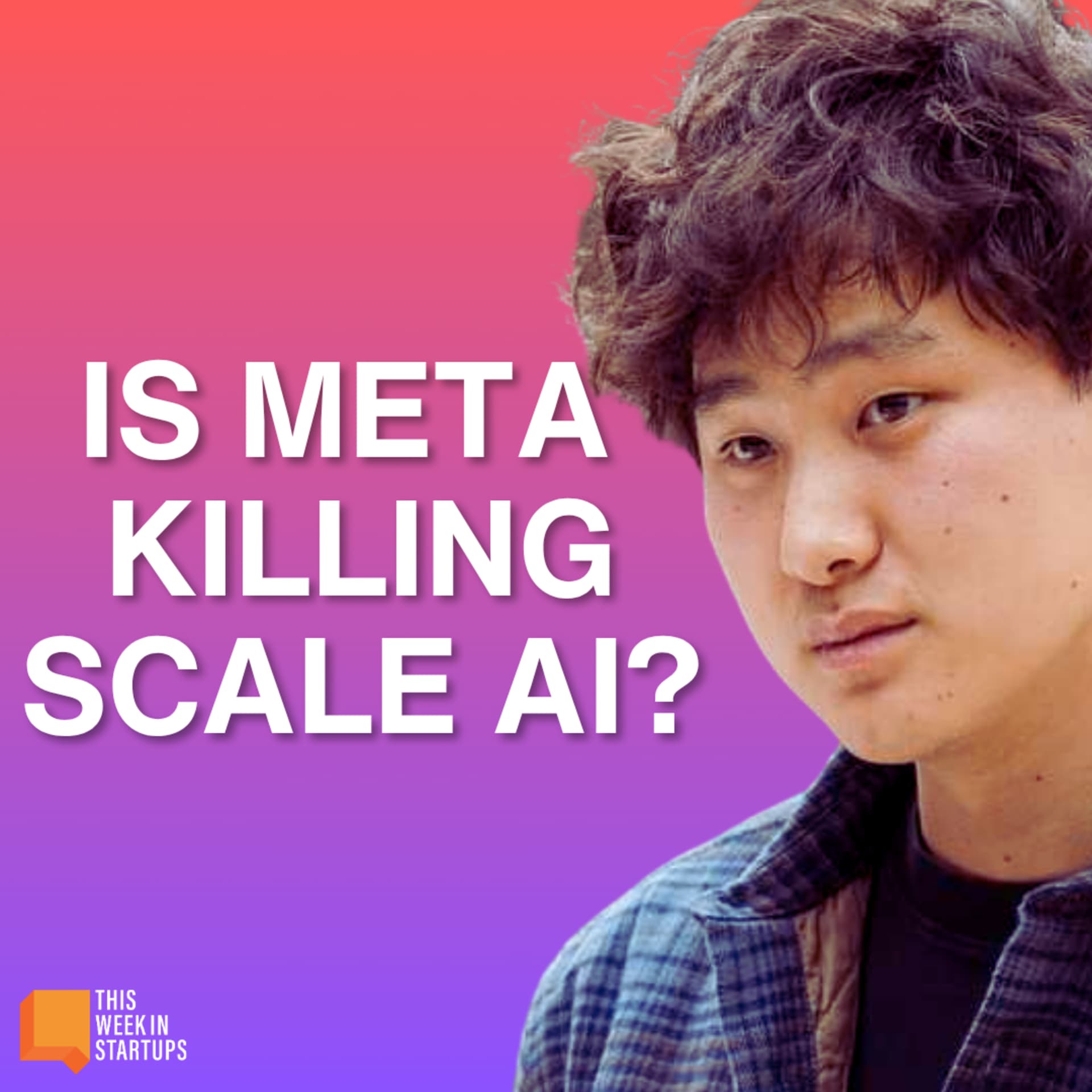
Episode Title Meta, Scale, and the Future of AI Labeling: Did Zuck Just Kill a Category?
Episode Overview In this episode, Jason Calacanis and Alex Wilhelm discuss Meta's acquisition of a 49% stake in Scale AI and its implications for the AI ecosystem. The conversation explores the potential anti-competitive nature of the deal, the reactions from competitors, and strategic advice for startups navigating this shifting landscape.
Key Topics Covered
Meta's Acquisition of Scale AI
- Overview of Deal: Meta acquired a significant stake in Scale AI, leading to speculations about its future.
- Concerns from Competitors: Companies like Google express concerns about Meta potentially monopolizing Scale's resources and infrastructure.
- Shift in Demand: Startups such as Labelbox, Turing, and Handshake report increased demand as customers look for alternatives to Scale AI.
Implications of Vertical Integration
- Smart Vertical Integration vs. Anti-Competitive Overreach:
- Smart Integration: Aligns with business growth and efficiency.
- Anti-Competitive Concerns: If Meta restricts Scale's offerings to external clients, it could harm competition.
- Advice for Startups: Founders are encouraged to leverage the situation by hiring ex-Scale talent and enhancing visibility through SEO and media outreach.
Tactical Advice for Founders
- Hiring Practices: Encourage hiring ex-employees from competitors to gain insights and leverage existing relationships.
- Content Marketing: Suggest creating SEO pages that highlight competition against Scale AI to attract potential customers.
- Engagement on Media Platforms: Encourage participation in podcasts and discussions to establish credibility and attract attention.
Broader Industry Insights
- AI Doomerism: Discussion about the rapid advancements in AI and concerns regarding ethical implications and misuse.
- Startups and Government Contracts: The conversation also touches on how the Navy is seeking to engage more with startups and expedite the procurement process.
Managing Capital and Growth
- Raising Too Much Money: Discussion on the risks associated with raising excessive initial capital and its correlation with long-term success.
- Navigating Investor Relations: Founders should focus on maintaining product-market fit and understanding their customers before pursuing larger funding rounds.
Ethical Considerations
- Securities Fraud: Jason emphasizes the importance of honesty in fundraising efforts, detailing a recent incident where a founder faked a term sheet, warning against such unethical practices.
Key Takeaways
- The Shifting Landscape of AI: Meta's acquisition of Scale AI is reshaping the competitive landscape, prompting startups to capitalize on the resulting opportunities.
- Strategic Hiring and Marketing: Startups should focus on strategic hiring and effective marketing to position themselves favorably in a competitive market.
- Ethics in Startup Culture: Honesty and transparency in dealings with investors are paramount to maintaining integrity and avoiding legal repercussions.
- Cohort Analysis: Founders should conduct cohort analysis to evaluate customer engagement and product usage to inform future business strategies.
Episode Links and Resources
- [OpenPhone](http://www.openphone.com/%E2%81%A0twist) - Streamline customer communications.
- [Vanta](https://www.vanta.com/twist) - Compliance and security solutions for startups.
- [Pilot](https://www.pilot.com/twist) - Accounting services tailored for startups.
Conclusion The discussion in this episode provides valuable insight into the implications of major industry shifts, the importance of strategic moves for startups, and ethical considerations in the fast-paced world of technology and investment. Jason and Alex share tactical advice to help founders navigate the complexities of a competitive landscape.
Written by AI. May contain mistakes. Listen to the episode to check what was said.
Transcript
Automatic transcript. May contain errors.0:00And they rewrite it. they would literally go into the answer and change the answer and polish it and they would send that to two finance people and then look for okay is it clean right you do a double blind kind of situation yep that's what scale ai was doing all this time and they were making more and more money from it so now the question is is meta going to just turn that off and just say we're not going to provide that to other people we're just going to use it for our own needs and that would make sense for them to do it but it would also be super anti-competitive and i'm sure this i don't know what's going on with mna we talked about it i think last week on friday maybe even and you know as i said i just look at the game on the field everything's all these things are happening so maybe they're just going to get a pass but that would be a thing to look at did zuckerberg buy this to kill it This Week in Startups is brought to you by OpenPhone.
0:57Streamline and scale your customer communications with OpenPhone. You can 20 % off your first six months at openphone.com slash twist. Vanta. Compliance and security shouldn't be a deal breaker for startups to win new business. Vanta makes it easy for companies to get a SOC 2 report fast. Twist listeners can get$1 ,000 off for a limited time at vanta.com slash twist. And Pilot. Focus on your product. Let Pilot handle your bookkeeping. Pilot provides the most reliable accounting, CFO, and tax services for startups and small businesses. Head to pilot.com slash twist and get$1 ,200 off your first year.
1:31All right, everybody. Welcome back. This week in startups, he's Alex William. I'm Jason Calacanis. We do this Monday. We do it Wednesday. We do it on Fridays. And we have a ton of startup, big tech, little tech, everything in between news. And I am still on the road, Alex. I'm still on the road. I've just given up you going back to Austin. I think you went to Texas. You had some barbecue played some poker and now you're like you know what i'm going to asia i'm going back to california you know here's the thing it is brutally hot in the summer and your kids get out of school the first end of may first week in june i think somehow related to the heat and then they start up again in early august which is crazy you're like wait we're starting school in august that school started in september au contraire mon fryer it starts in august so uh did a week in singapore that was great i've got you know we talked about my feelings about singapore um thinking about bringing founder university to asia at some point yeah so that was like my little exploratory trip went back to los angeles spent some time at lashify the company i'm on the board of beauty company and the family was out for two weeks doing a little vacay and seeing friends we have a lot of friends in los angeles from our decade living there yeah did the disney thing that was great then i went up uh to see some friends up in um palo alto lost a ton of money playing cards i'm playing bomb pots with chamath and my friends uh and uh got to see my friend's ai company and spent some time there on saturday he's crushing it actually i i have a picture of that and i gotta say jason i did not know that all of our discussions about rocking and enjoying the march uh kind of around the ranch had led you to this level of muscling i i didn't realize you'd gone wwe and less nerdy so uh yeah at xai uh on saturdays you know we we push code we get the new models out grok 3.5 and then uh we we uh we lift we lift but i met a bunch of great team members over at xai i spent the day there with elon and some friends that's all about that's the original from roman roman's a great guy working on cool stuff over there at x and xai and uh man they're crushing it it's just amazing the pace at which ai is moving i was i can't really talk too much about the meetings i sat in and yeah the stuff i saw there but you know going to an office on a saturday and seeing the lot full and seeing people there till eight o 'clock at night building the future i am so enthused about the future of ai and and also So I'm dipping a little bit into AI doomerism.
4:11Like I am really glad at the work they're doing. And then I'm a little bit concerned about how powerful this stuff is and maybe the wrong people getting their hands on this with not great intent. I actually now understand why so much time and care was put into open AI original mission before they became closed AI and a corporation when they were like a nonprofit. Yeah. And I understand why some of these people are doomerous. You know, it's like. it's moving at a pace that I have never seen. And I've been in the tech industry for 30 years. Without breaking confidence, what can you tell me about the pace of improvement that you're seeing?
4:49Is this multi-agent frameworks? Is this just smarter models with more context? Like, which direction are you seeing this progress? I think it's everything. And I think the agentic stuff is super interesting because there's a lot of agentic stuff going on. And this is all public knowledge, but that you actually don't see. So there's one thing for us, you know we've been working on some agentic stuff here and we're like oh how can we look at what people are talking about in these different communities and surface interesting stuff you know you'd call that curation previously so could we have a bot doing that constantly and putting it into our group chat and telling us hey here's an interesting startup maybe we could source an interesting founder in the build in public you know groups you know we track on the web looking for cool founders anyway long story short um i was like they're doing some stuff with agentic that you don't see and they are looking at some of the world's hardest problems and they have you know groups of agents trying to solve those problems in like a competition kind of thing which is all public knowledge like that's like a thing but to actually see people doing it and how it's working and they're how thoughtful their approach is to it it just makes me think grok is you know i know it's top whatever it is four or five in a very competitive race you know i think they have a really significant chance of being the winner um you know whether they're in the final two three four you know depending on how you judge these things but you know let's say it's pretty safe to say final four i think everybody would agree you know in that final four i i think you know the combination of um the social asset they own in twitter combined with colossus and their ability to build big iron and infrastructure very quickly all of it's just really inspiring um that was the pitch that antonio gracias made uh last year when we were all hanging out together up in uh was it napa was it sonoma one of the two napa yeah he was like look you know without proprietary data there's no value in an ai model essentially was his argument And so we're kind of seeing the fusion of it.
6:51Just backing up what you said, though, Jason, you said top four, top five. It's interesting to look at where Grok sits today. This is the old kind of legacy LM Arena user interface, but it's pretty good. And if you take a look here, you see Google, OpenAI, and then right there is Grok. And right there, yeah. What you don't see here is much from meta in this top list. One DeepSeek, you know, a little bit from other companies. Yeah, Claude's there. Yeah. Get GPT, Gemini. Yeah. I mean, those would be my final four. Yeah. I think, you know, if you go open source, you kind of have to go slow to go fast.
7:23So, you know, but to think we're living in a time when five giant, four or five giants in technology have all decided this is the prize and we're going to work towards it. And then thinking about job destruction or displacement, that's the thing that's got me i don't want to say staying up at night but i am i keep teetering between it's manageable and it might not be manageable i'm sorry to be a doubter at the start of the show but when i saw people burning the waymos they were calling the waymos during the you know riots disturbances whatever ice raids plus riots you know i don't want to make this a political show here but during those disturbances when the bad actors were lighting the waymos on fire they summoned those waymos there to light them on fire so let's think about that for a second people were like i'm angry yeah how can i displace my anger robotic taxi they didn't burn the police cars you know when the lakers win they find a squad car they flip it over and light it on freaking fire yeah they weren't lighting i didn't see a police car on fire i'm sure oh they did see one get like rocks thrown on it whatever but i they decided they would call a deliberate act on their phone they signed up the waymo app and told them come to us and the waymos came to them yes like um what are the what are the uh animals that will like go on like a sacred march to their death lemmings well that's lemmings going off a cliff yes that's but that's not a real animal in the world but like do the elephants slowly walk to like some sacred place to lay down and die you know uh lemmings are real by the way are lemmings a real thing okay sure you just be doubting my like elephant graveyards thank you producer editorial director so the elephant graveyard you know i felt like they were like these stoic creatures marching towards their death and then so going back to the pace of ai you got to think there's people at waymo right now and of course tesla doing their uh you know dry run you know very safe very small if you're running a business every missed call is losing you money if i need a plumber i'm not waiting for someone to get back to me.
10:01Of course not. I'm just going to call the next number on my list, right? I got a plumbing issue. But with OpenPhone, you'll never miss an opportunity to connect with your customers. Why? Well, OpenPhone is going to streamline and scale your customer communications. Say goodbye to voice jail. Nobody wants voice jail. Everybody wants the voice, the human. If a human's not available, how about an AI agent that can be set up in minutes by your friends over at OpenPhone and you to handle calls after hours. Hey, it's two in the morning. Here's our AI agent. We're going to grab the new lead while you're sleeping.
10:35OpenPhone is a no brainer. See why over 60 ,000 businesses like mine trust OpenPhone. OpenPhone is offering Twist listeners 20 % off your first six months at openphone.com slash twist. If you have existing numbers with another service, OpenPhone will port them over at no extra charge. OpenPhone, no missed calls no missed customers in all oh and by the way i got to drive in a tesla cyber cab that was the other big thing i did on saturday i took three rides in a cyber taxi or the latest build of the cyber taxi software and um yeah it's good it's better than my model y with the hardware four and it was really tight i have to say like the the things i've talked about before where it's hesitant or it you know jitters a little bit you know going to a stop sign pulling out coming out of a driveway making a left turn all of those kind of things it made a u-turn at one point that was it was kind of a brooklyn u-turn i gotta be honest it was like yeah i'm gonna make a u-turn bang just did it and i was like okay this is what i'm looking for in a in a driver so i think uh tess is gonna have great success i think they're going based on the reports i'm saying i don't have any inside information here but based on the reports i saw of people trying to find those in austin yeah they've um i think they are going to do something safe and small in austin and take their time which i am in favor of i actually think they should have a safety driver i think they have safety drivers remote and in the passenger seat i saw a picture today i don't know what the reality is but june 22nd is the launch date in theory for the tesla robotaxi thing they said it might move but they're they're driving around so yeah no i'm just saying i'm i'm excited to see what they come up with and jason just a point of clarification were you in one of the new two-seater cybercams that were shown on earlier or a okay you were in a traditional tesla with new software i was in the model y that they're using and the model y that they're using is uh for that specific uh robo taxi so their cyber cab which is a two-seat thing robo taxi is a generic term so i was in the cyber cab not the robo taxi wait okay i was in robo taxi not cyber cab cyber cab is the design of the two-seater that looks like the cyber truck right that's how you remember it it's cyber that's the cyber one that's not out that's not what the test is going to be um it's model wise you know the juniper release of the model y which is really beautiful uh we got a lot on the docket i think we got to get some docket going here so yeah i'm uh i'm in um right now i'm in uh uh santa barbara for a big banks conference uh i'm not speaking out i'm just a guest here but that was really nice of them to invite me uh i would say who because i don't know if it's a public thing uh and then saturday i got to go down to la for the launch of the all-in tequila they're having a little launch party then finally i get back to austin finally get back to austin for three weeks on the road man too long on the road i i hate being gone for more than two days i don't know how you're holding together for three weeks but points to you um all right let's talk about some stuff.
13:43So first of all, I have a package of questions for you, Jason, about startups and best practices. There's a really cool company called PostHog. And the recent news item is that they raised a$70 million round led by Stripe. That's kind of to the side. What's really interesting about this company is how it's kind of breaking all the rules that startups are often going against. So as I was just digging through their materials, it's all very public, but they are an open source software company, but they also offer very generous hosted free tiers. They don't do outbound sales. They like to cut prices, not raise them.
14:17They do monthly pricing with no lock-in and they don't really seem particularly interested in upselling you on pretty much anything. This cuts just dramatically against traditional SaaS growth techniques. And so I'm kind of curious, when should startup founders following the post-hog approach and go against conventional wisdom? great question so yeah i see this post hog yc back startup raised 70 million uh by stripe it's very interesting that stripe keeps investing in companies i think that's like uh an underreported on fact that they are kind of like a venture capital firm at this point i wonder how many companies they've invested in now you know we could pull up that data but it's it's definitely i think low dozens like maybe a dozen or two i would guess like maybe it's 15 or something that we know about 10 or 15 um so this is all in the category of uh business model innovation so when vcs say you know hey how is this innovative well you could say it's a new technology it's gps it's consumer gps it's built into your phone and now uber can go find you doordash can go find you you can go find your doordash or etc uh you can use maps it all makes sense right that's a technological innovation not a business model innovation uh a business model innovation comes when something that was extremely uh was priced in one way is delivered in a different way with a different business deal so let's think of one um if you were to buy enterprise software uh and that would be before cloud you had what was called client server so the instead of paying by seat you would pay for servers and a server had a certain amount of capacity so if you had a document management piece of software like google docs is today but they used to have like dedicated servers for that before google docs existed and and and microsoft word was in the cloud and all the stuff office in the cloud office 360 i guess they call it so what they would do is you'd buy a server and they say yeah you can have 100 people 100 lawyers can edit documents on it and store $50 ,000 for that.
16:29So you say, okay, we had 100 attorneys on there,$50 ,000, and it lasts for five years, and the server costs$50 ,000, so it's$100 ,000 all in between the hardware and the software. It's$1 ,000 per attorney, it's$200 per year, and you would just take out a calculator, and you'd do the math. Then they'd say, yeah, you know, and if you put a bigger hard drive in, and you double the memory, it's going to cost you an extra$20 ,000, but you can put another 30, you know, attorneys on, so you kind of do that math. And then they, you know, some places were like you just always have twice the capacity so if one goes down it's redundant then you had a revolution that occurred from mark benioff where he said hey it's all going to be in the cloud we're going to pay you just based on the number of seats and there was another business innovation which was instead of locking you in for two years pay as you go pricing so why would you i guess is your original question why would you do this kind of stuff well if you're coming in and there's incumbents and you want to F with them and you want to disrupt them, it's a really good way to do it.
17:26So when you see, I don't know, wireless plans come up and, you know, Verizon, you know, expensive, AT &T, super expensive. And then somebody's like, yeah, you know, we're not going to try to get you for$90. We're going to give you a family plan for$90 with five phone numbers. You're all in the same data plan. You pay as you go, whatever. And, you know, it's 20 bucks a person. But your coverage isn't great. So there's a little business model innovation there. that's all it is business model mission probably the best one that we've talked about here would be the epic pass you used to go skiing you could get a season pass at one resort so if you owned a home and you were you know going to deer valley you'd buy a season pass from deer valley vale resort said buy the epic pass and we'll just start buying up mountains anywhere and you could buy the local one for five mountains in utah the local one in tahoe for five mountains or you can buy the international one uh and uh all you can eat all you can eat pricing and all you can eat is the idea of a business model what did that do the mountains were filled up yeah then people spent more money on uh food on the mountain they spent more money on lodging at the mountain they spent money more money on rentals and it got more people into it because the big blocker in skiing was this is really expensive really expensive you know it's 200 300 per day to go skiing in america now now people in europe pay 50 japan pays 50 some places 75 100 a day so you don't even why would you buy a season pass you go 10 days you pay 500 but if you're paying 300 a day and it's 900 for a season pass or 600 you know it's usually in that range depending on block out dates you can be like hey if i if i do three days i'm in the black i do four days i'm in the black and that's how people do it then they subscribe they don't ski this year but they ski next year they ski the year after they don't ski for two years they just keep their subscription going that's the business model innovation i i really appreciate that but investors are often looking for a particular thing when their conception of the market and how startups should operate.
19:20So if you're going to cut against the grain, either in a technology sense or a business model sense, how would you go about conveying to investors that you're not being absolutely insane? For example, we're going to cut prices, not raise them. How do you get across their ick factor by you going against commissioners? You just ignore them. Yeah. VCs are, you know, if a VC is smart, they are going to look at the entrepreneur and say, tell me your thinking. Okay. Yeah. That's an interesting idea. Why do you want to cut the price in half do you think you can make up for it by having five times as many people and uh yeah when they started uber pool or lift line a lot of us were like is that a good idea because that five dollars a ride six dollars a ride and it was like yeah we're gonna try it the cities love it and it didn't work it's worth trying right all right founders i know you're building something amazing and you're gonna change the world and now hey the big logos they're taking your calls, right?
20:15But here's the catch. If you're not SOC 2 or ISO 27001 compliant, these deals won't close. Now, some of you are saying, I've never heard of those terms. Some of you are saying, I've heard of them, but I don't know what they are. And that's where Vanta comes in. They're going to be your partner and they are the all-in-one compliance solution that helps startups get audit ready. And that's going to build a strong security foundation for your company, what you want, but they're going to do it quickly and painlessly. Vanta automates the manual security tasks that slow you down and that streamlines your audit.
20:49So here's your call to action. Whether you're closing your first deal or you're gearing up for growth, Vanta is going to make compliance easy for you. Join over 8 ,000 companies, simplify your compliance and get$1 ,000 off at vanta.com slash twist that's v-a-n-t-a dot com slash t-w-i-s-t uh or uber bus right and then now they have this uh these routes in manhattan where every 15 minutes an uber bus goes by and it's five bucks you get it on and off and you give up the last you give up door to door which you gain uh 50 % discount and then everybody in new york city is talking about uber shuttle i haven't taken this but i'm going to do it next time in there just as you know for a little product market research the jfk shuttle which is being advertised all over the subway system in new york is i think 15 to go to jfk i'm looking at the page right now i don't think it has a listed price that i can see ask gemini or claude or grok or chat gpt i think it's 15 or you know our team should be uh checking that while we're here so lon or sergio or chris or oliver just feel free to dump the answer into a statement for us i think it was 15 i saw it might be 20 it was in other words like if uh an uber x would be 75 dollars an uber block would be 150 that's basically 25 one way oh 25 yeah so it's half price a third of the price yeah that i take that night day whatever that's fantastic Also, I got to say, when Uber Pool came out and Lift Line came out, if you were in your 20s in San Francisco, that was lifeblood.
22:30That was the best thing in the world. We were all broke. We loved it. RIP Lift Line and Uber Pool. I miss you a lot. I think with the cyber cab coming, the two seat, what they're reporting might cost 15, 20, 25K, eventually maybe 25K to start at 15 at scale. And I think they're going to scale it. you know that might be the kind of thing where it could go down to 10 bucks a ride or whatever seven bucks a ride again because those cars are so cheap uh to produce and they'll be utilized 20 30 times a day uh so yeah you you can ignore your investors or potential investors advice um i think you explain it to them and if they don't get it they don't get it you know it's it's just the nature of it if people don't get it you know some a great investor wants to hear your thinking have a great debate with you about it and then let you cook you know and so if steve kerr's like i'm gonna take 12 threes a game because they and you know i'm gonna let steph curry do that you know if you're the owner of the club you're like okay yeah you got a season let's see yeah maybe two seasons you're looking for a little innovation you know and that's why the three-pointer revolutionized the game and then that's why everybody's trying to get you know all five people to be able to shoot threes at a decent level and then that's why the volume of threes went up so business model innovation you can see something like that in the nba there's an innovation in nba and if you do that you have a really good chance to disrupt uh you know people who are incumbents so the reason really to do it is to f with incumbents and delight customers one of those two reasons um people thought it was crazy to even consider like spotify like why would the music industry ever want to support something like spotify when it was 99 cents a track and 99 cents a track was a steve jobs innovation that they were like why would we ever do 99 cents a track we want to force people to buy the album for 15 bucks to get the 12 tracks for a buck 30 each why would we ever do 99 cents a track people are just gonna snipe the best one so there's three different business innovations the cd going to yeah the cd going to spotify and then spotify going to all you can eat or cds going to 99 cents on app itunes and then to eventually uh you know being all you can eat and then they're also on youtube so when i was in singapore i was shocked that the cars you're allowed to in the dashboard led play video yeah i i mean you you i think that's illegal in all the united states yes and 100 of them had youtube playlists they were playing and so you're sitting there in the backseat watching a music video from youtube and i'm like yeah i was always wondering why these videos have a billion views it's because every cab in singapore is playing a youtube playlist number of videos Cabs in Singapore.
25:32I'm Googling that now. Six million people. I guess there's like 1 % of the people, so 60 ,000. There were 14 ,000 taxis and 46 ,000 other kind of chauffeurs in Singapore back in 2022. You put those together, that's 1 % is 60 ,000. I nailed it once again. Yeah, yeah, I know. It's a lot of folks. All right, let's take a big pivot here and talk a little bit about the Navy. So the story is that - In the Navy. Do you want to keep singing? No. Okay. I just never tell you Navy I think of the I think of the Village people Ah When I think of the Navy I think of my childhood dreams Of being a Navy fighter pilot That were foiled once By being too tall And far too blind Got it Ah rest in peace Alex's Navy dreams Anyways So the Navy's CTO Justin Finelli Is working hard To make it easier For startups to sell Into the Navy And this is A couple of things at once Jason So first of all They're trying to kill off The valley of death Which is the time between When the Navy orders Something from you And when you actually get paid for it, if it's too long, startups can't float essentially paying for someone else's product for too long.
26:32So that's very important. And also they're trying to get the overall time from kind of selling to the Navy to getting something approved down quite a lot. So one startup via went from request from proposal to deployment in under six months, which I believe in government terms is light speed. And, you know, we have a lot of defense companies on the Swiss 500, Vatten Systems, Castellion, Overland AI. There's a lot of names on there. But I'm curious, what can startups bring to the Navy in particular or the military as a whole that existing defense contractors can't? So where should startups be focused today if they want to sell into the DoD?
27:09Okay, that's a big question. So there's a business model and a payment to segue from the last story. The existing model is cost plus. So we get a contract with you and we just make a percentage on top of it. i hate that business model i'll tell you why in a second the other model is i make something i'm a technologist i make it better make it faster and i make it cheaper and you buy it and that allows me to make it better faster and cheaper and then you buy more of it and we just keep going when you do cost plus that never happens because your incentive is to make it cost more so the plus on top of it the percentage on top of it goes up as well because you want to increase your profits and your revenue right everything's got to go up and to the right yes there's two ways for it to go up and to the right charge more or sell more so there's the tension and what startups are great at doing bigger faster cheaper and you know smarter falls in there right what's smarter better smarter faster cheaper smarter better uh faster you know these are all the sort of variables that typically a technology product can beat an incumbent on and so if you look at the category of products that are getting chosen they tend to be in the drone category the new faster cheaper components or products that use off-the-shelf components so what happened with battery technology sensor technology over the years is people in ukraine can build really effective you know offensive and defensive measures and they can do it with commodity commodity um quad copter aka drone parts even though they're not fixed wing drones they're quad copters they get called drones as well so this is an admission from the navy that uh what do they call them the primes yeah defense contracting primes yeah yeah so the primes um are slow and expensive they want to go fast and they want to go cheap and they want better and that's the bet that america needs to make because our adversaries are now doing it uh this entire offensive uh action by iran by the israelis in iran that happened whatever number of days ago now five days ago six days ago when that happened it was or it's thursday night i think yeah so when that happened and we started hearing about it on wednesday and i remember i did that quite weird tweet are we really doing this when they empty the embassies it's like yeah it's happening we're not doing it but the israelis are they um they had boots on the ground inside of iran and they weren't sending f-16s in or any kind of complex stuff well i mean maybe it was complex but they were doing drones and small arms that they had snuck into uh iran over and tehran i think they snuck it in over a year and a half two years.
30:13If you're a startup founder, you got a million things to worry about. You got hiring, product market fit, customers, investors, board meetings. It never ends. And that's where Pilot comes in. Pilot is the largest accounting firm built for startups. They know how high stakes your finances are, right? The book's got to be perfect. And that's why companies like OpenAI, scale ai and air table trusted them with their books from day one with pilot you get a dedicated team for everything bookkeeping taxes even cfo level guidance and when it's time to raise that next round or scale up pilot cfo services team can help you plan and grow with confidence startups using pilot raise a bigger series b and c than the average startup why because when you're button down from the start, everything else gets easier.
31:06So focus on your product. Let Pilot handle your bookkeeping. This Week in Startups listeners, get$1 ,200 off their first year. What a generous offer. Go to pilot.com slash twist. Great domain name, even better product. The Ukraine attack on the Russian military base deep into Russian territory was a similar thing. They had been you know hiding stuff for six months there so uh that is the adversary or that's the theater that's how the theater will emerge and that's really plays into the strengths of nimble startups i mean people in ukraine are building these things in the field so if they're building in the field what can you build in a factory you know and the payment cycle is a really great innovation by the u.s navy so shout out to the cto justin on really understanding that startups have typically 18 months in revenue a funded one 18 months in runway a funded one and if you're gonna you know if these things take four or five six years um yeah the startup's out of business so i love the idea of we're gonna pay as we go we're gonna buy 10 million dollars worth of stuff we're gonna do 20 on signing 20 when you hit these milestones and so on and so forth and um A lot of, I think, VCs now are like, maybe we'll just build stuff and then show it to the military and then say, how many do you want?
32:28Right. And that's like an even better model. If VCs can just say, hey, we're going to make this stuff, whether you need it or the Israelis need it, you know, or Brazilians need it. I don't know what the rules are for startups. That would be a really good question. So we should have a defense investor on and talk to them a little bit about that. I don't know what the rules are for who you can sell to, but I like the Iron Man, Tony Stark, Stark industry style. He just said, we're going to make bombs. And if you want them, tell us how many. Well, we have a lot of allies around the world. I mean, Five Eyes, you know, Australia, UK, US as a collective, NATO.
33:05I mean, we have a lot of friends. And I think if you're building for the US, our allies tend to have access to things. I mean, the F-35 is not a single nation project, right? Yeah. We do have a question, though, from Vaish over on IG, because we're live on Instagram, everybody. There you go. He wants to know, Jason, what are your views on agentic AI applications inside of defense? And the first thought that I had, Jason, was, well, Palantir is doing fine. But I'm curious what you think. Yeah, agentic inside the military, I'm assuming you mean, like, on the battlefield. And that is, there are some United Nation laws against robotic, unmanned guns, weapons, robots.
33:46And I know that we have some agreements to not have those, but to have them for, you know, robots that are monitored, controlled by humans. taking a human out of a loop in a drone means the drone can make a mistake and land on a hospital like really bad i don't think any of us want to live in a world where you have optimist figure style humanoid robots or the dog one with a gun mounted on it we showed we've we've seen that on the show yeah we had the chinese one with the with the chinese had uh taken one of those robot dogs and just mounted an ak-47 type assault rifle on it you know if that thing was just like shoot people in a uniform that is an american uniform well you know that's not perfect uh and it's going to make mistakes the one i did see that was really interesting i saw a gun i should have put it on the docket um one of the producers will find it but it was a gun that will only fire when it has a drone like a quadcopter uh-huh and it's a hundred percent sure that you're going to hit it in other words your aim is perfect so imagine a rifle and you put it up and it's got computer vision and when you have it squarely in when you have the quadcopter squarely in the crosshairs it vibrates or it says okay to shoot or it just gives you the green light and you start firing but if it's not in the crosshairs there's no green light so you can't fire and i was like well that's interesting why don't they just make it so if you hold it up you just move it around and it says up down left right a little more right a little bit left and it just makes a like a sound yeah like you know uh one of those metal detector sounds increasingly higher pitch as you get closer to it and then when it's in the crosshairs it just fires itself i think the reason they don't have fire yourself is because of these agreements with the united nations there's definitely a continuum there from like you hold it it tells you when you're in the zone you hold it and it shoots when it's in the zone to he tells you where to put it in the zone.
35:49And at some point, Jason, I really do think you're just having a gun on an arm. But this is the brave new world that we're going in. This is not just drones, by the way, everyone. Don't forget Vatant Systems, one of my favorite companies, is building underwater drones. We also have drones that sit on top of the water. So warfare definitely is changing. One more question about the primes though, Jason, when I think about Electric Boat and Raytheon and these major companies that startups are taking on, I'm thinking about like literally building submarines. It seems like the shift in warfare has created a really great opportunity for smaller, cheaper, faster weapon systems like drones that we're talking about.
36:22So it does seem like the war fighting is moving towards the startup domain and away from mega systems like aircraft carriers. Am I right there? Well, obviously, yeah. I mean, everybody understands it's going to be smaller things. Yeah, 100%. And these hypersonics, I don't know. Oh, look, they found the smart shooter. Here it is. All right, I have the video. i'm pulling it up for us yeah uh so we can see this in just a second there yeah so if this is the one i think it is um i think this is like has the ability to if it's in the crosshairs actually fire uh there it is folks this is so crazy 95 hit rate um this ai weapon turns any rifle into a drone killer smash 3000 in action so he's looking through the site oh and uh bingo yeah it just tells you okay to shoot and kill and uh you take your shot so you're not wasting anything yeah that's pretty neat that's pretty neat stuff right there that's pretty neat also use you in friendly fire like if you should have gone up in the air the bullet comes down yeah that could happen too yeah that's probably why they're doing the test over the ocean they're doing that camp pendleton yeah i don't think the uh the fish are gonna mind uh uh too much all right jason alon had a question for you on this which is if you were a defense tech founder today what would you be doing to ensure that you're locking up some of this pentagon money that's up for grabs more marketing more pitching or just as you said earlier build it and they will come yeah it's not as simple as build it it will come it's hire people who've been in the defense industry number one to work at your company who know how to navigate it to hire lobbyists who know how to navigate it and three have vcs who have invested in the space i think all three of those which is to activate your network are the best advice it's really the similar thing you know if you were building a consumer or marketplace app or a software app and you talk to me and you're like hey i'm you know i'm wondering what google or microsoft or apple this person might be a part a partner or what we could learn from them or you know whatever maybe an acquisition yeah i can make the introduction there are people who spent 20 years at the defense department who are now running venture firms or work with venture firms so this is what investors provide money advice network money advice network man money advice network i'm not saying it just because it spells out man but man that's what they provide can cash advice network can so that that is the nature of i think what you would be looking for good question line.
39:03All right. So let's move on and talk about some big news that's actually relating to how startups build and go against incumbents. Jason, we rapped about the meta and scale deal. As everyone heard, it's a minority transaction. Meta's buying 49 % of scale and taking their CEO, the last remaining co-founder. The interesting kind of second order effect of that deal is that a lot of customers of scale are now looking elsewhere. Essentially, they don't want to go be a scale customer because they're Google or another competitor with meta Reuters had a great story up about this and maybe a good idea to explain what scale does since most people don't know about AI training and how deep this is going now yeah I was gonna yeah no worries uh so scale does a number of things it was most famous for data labeling helping companies get their data in an AI friendly shape it also does LLN evaluations I believe they do RLHF which is reinforcement learning with humans in the loop yes and this is all examples of this might be uh you remember like the silicon valley hot dog not hot dog uh app you know in the early days you would just have humans say what's in the photo they would type five items in the photo another human would type five items in the photo and if they got four of the same things and they said this is an orange you know and it's a it's a man eating an orange on a beach and there's a seal you know they would say okay great two out of two people are great we'll put those tags and it was called tagging back in the day you put tags on humans tag stuff on flicker and then people would use that flicker data or instagram data from those tags to train ai and do machine learning but there were also companies doing it then it became tagging was kind of easy so then with large language models what they started doing would be you asked a question about finance hey explain to me the rule of 72.
40:55Sure. They would look at it. And you know, when you're asked to give a thumbs up or a thumbs down, that's you giving some feedback that would go to with a thumbs down or people complaining about it, an expert in finance. And over time, it went from literally somebody who could tell you what was in a photo, which is like any human being who can use the English language and even poorly, and they don't really need to even be able to put full sentences together to being somebody who's a finance person who says that description is technically wrong because of these little nuance and they rewrite it they would literally go into the answer and change the answer and polish it and they would send that to two finance people and then look for okay is it clean right you do a double blind kind of situation yep that's what scale a i was doing all this time and they were making more and more money from it so now the question is is meta going to just turn that off and just say we're not going to provide that to other people we're just going to use it for our own needs and that would make sense for them to do it but it would also be super anti-competitive and i'm sure this i don't know what's going on with mna we talked about it i think last week on friday maybe even and you know as i said i just look at the game on the field everything's all these things are happening so maybe they're just going to get a pass but that would be a thing to look at did zuckerberg buy this to kill it Well, I don't think we even have to assign motive here, Jason, because it appears that it's going to die on its own.
42:21For example, Reuters reports that Google did$150 million of business with scale last year. They were going to do 200 million this year. That's going to go to zero. And a number of startups are reporting an influx of demand for their services, which were competing with scale before, because people don't just want to give meta, essentially their data to show them what they're training. So a company called Labelbox told Reuters that they're going to, quote, probably generate hundreds of millions of dollars of new revenue this year from customers leaving scale. Turing and Handshake also said the same thing.
42:51I pulled the list, by the way, of companies that are in the data labeling space. It's in the Twist 500 newsletter today. We're going to put a couple of these on the list. But my question for you is, if you're a founder and the incumbent, whoever it is, in your space stumbles or becomes less marketable or just less attractive, what's the best way to go out there and ensure that you're going to absorb that demand that's not going to peel off from there? I'm thinking like discounts or promotions. How would you go about it? I would hire previous salespeople who work there or previous employees to be consultants and tell them not to put their names on your LinkedIn page.
43:25So if I was another labeling company and five people had left Scale AI in the last year, I'd say, don't give us your database, but we'd like you to come be a consultant and tell us, hey, what would be great? Help us do business development, right? And so if somebody leaves a company, as long as they don't take the database with them, if they've got 10 relationships and their kids go to school together and they made a friendship with the person at Google who spends this money and has this contract and they go to the Warriors games together and, you know, they've had dinner at Miller and Lux a couple of times and had the, you know, the Tomahawk.
44:01Great. Fine. They might be able to win that client. So that would be how I would do it right off the top of my head. But, you know, you've got to be, you're going to have to rise and fall with the quality of your own company. You could put up a webpage, actually, now that I think about it. That says, you know, offering free consultations, off-boarding consultation and assessment and audit for people getting off of Scale AI or Scale AI alternatives. So when you type in like Slack alternatives or Salesforce or HubSpot alternatives, you get all the other SaaS products. And sometimes the SaaS products will put on their own web page, Salesforce versus Sales Hub competitor or whatever.
44:49And it's the Sales Hub, you know, web page, but they're doing a comparison of their two. Astoundingly, even though they did it completely objectively, did you know that Sales Hub actually turns out to be a better product? wow shocking i'm blown away by that unbelievable that they would find themselves to be the market leader it just was you know just it's objectively the truth so they decided to highlight it on their page and buy ads around it to send more traffic to it to drive the seo so yeah i would probably do that as well um and then maybe writing some blog posts and maybe doing some press hits on podcasts etc where you explain the space you explain the deal so making yourself available to journalists and podcasts.
45:31Podcasting is kind of the new journalism now or like the new place people look for information. So I would just go, hey, who's talking about this? Hey, we can provide a subject matter expert. Would you like the CEO of this company and this data labeling company to come on your pod? Boom. Well, I mean, when these three startups, Turing, Labelbox, and Handshake were in the Reuters story, they're the first place I went. Now, admittedly, I did go find another five, but I mean, that's a great way to get your name out there, build SEO. But my question is, what's the ethical line? We talked a lot about the deal.
46:02Don't steal the database. Okay. You don't steal the database. You'd never have anybody break their NDAs. I've been in meetings where people have offered me information and I just stop them. I'm going to stop you right there. Don't tell me anything that your previous employer would be upset at you telling me. Don't tell me. We have an investment in Uber. please don't tell me if you're doing something competitive with uber or disruptive to uber because like i had tons of people want to pitch me uber competitors or adjacencies i said whatever idea you have for an on-demand company they had it six months ago and they decided to move it down on their runway after getting to the 9 000 10 000 11 000 city which is more important than your idea to do you know uber for dry cleaning i mean i need uber for dry cleaning right now i'm wearing polo shirts i've been on the road for three weeks i need it twice a year i don't need it you know every day of my life like i do uber eats and and uber rides so i do miss that era though that that that era of consumer was so much fun if you were in san francisco like my across the hallway neighbor in my apartment building tried out every single possible uber for dry cleaning and uber for laundry because they all had amazing early discounts and he just cycled through them and he got essentially free service for like six months i hope they didn't destroy his laundry my favorite was luxe valet uh and i would pay for this again uh luxe valet would have a valet meet you at any location in san francisco and they were wearing a blue jacket and they would take my tesla and go park it in a parking lot for me and they would abstract whatever parking lot they were putting it in because they had rented a certain amount of capacity in parking lots at a discount so they would get 10 spots or 20 spots in this lot they pick up my car they bring it there then for an extra 10 bucks oh no for the same price they would then come and be waiting for me outside the battery or wherever and it could be different ends of the city so i could go to my office with my car then walk to the battery have you drink with somebody then have them bring the car over to the battery and i'm like for the same price it was like 30 or 40 and my parking was 20 so or it was 25 and then i would give a five or ten buck tip so it's like it was a wash but i got the person to bring me the car and they were basically losing 30 or ride yeah that's why i'm looking at this headline that i just pulled up because i was curious what happened to lux and jason from 2017 valet parking start of lux latest casualty if on demand bust and there was another startup called zerks that was doing kind of a similar idea and it pivoted to the enterprise which is a polite way of saying that our consumer business lost too much money yeah yeah and self-driving was coming and cars parking themselves is an inevitability and you know ride sharing is ubiquitous so can i can actually ask you a question about this because much hay has been made over the years about ubers essentially taking a loss on certain rides to drive demand subsidizing drivers subsidizing riders etc building a marketplace when does intelligence subsidy go from marketing effort to oh my gosh you're just torching capital like how do you as a founder does the customer come back a second or third time or are they just there for the free pizza so in the world of two for one my dad would never i was like dad you know i see all these places doing two for one entrees and we're not busy at 5 30 we get really busy at 6 30 7 30 he's like yeah those people will come in they will eat three loaves of bread put two loaves of bread in their pockets still the silverware and they'll complain they'll send their food back and uh there's their uh coupon it was a term for them that was derogatory but like coupon a-holes basically sweepstakes jerks kind of thing uh those two for one-ers is what kind of groupon eventually became and i i recognized that with groupon because there were all these stories that groupon killed my business people who had small businesses that were destined to fail would then be like i need to get more customers i'm scared it's my whole life is riding on this yoga studio this cafe so they would do something where they lose money to your point hey buy a cup of coffee get a cup of coffee free buy a croissant get a cup of coffee whatever it was they would construct the deal that they would lose money and then they would sell a hundred of them so now they'd be losing two dollars times a hundred they would lose two hundred dollars when they were trying to make two hundred dollars to make their rent and it would be a debt spiral yes if the customer yeah so the what you're looking at is cohort analysis are these customers going to stick around what's their lifetime value in the cohort so you have to make sure on the tuesday when you said we have yoga and you can come to this class for five dollars instead of 20 you track that cohort do any of them come back and is there any damage to the studio and do they write bad reviews on yelp or do they help and it turned out they would like write bad reviews so You get these cheap people who'd write bad reviews.
51:14You'd be like working against your business. That's how you do it. Cohort analysis. Great question. No, I really appreciate that. I think the phrase was extreme couponing. Yeah. According to what I can find. Sure. Frugality is good, but you don't want to attract customers that are going to give you the lowest margins and the most complaints. So I went through that on avoiding the two for one people because my God. Some places have ways of managing this. So if you gave unlimited iced tea, the cost is contained. You know, some people might go crazy. If you do bottomless mimosas and it's like, you know, champagne, that's sparkling wine, that's going to make you go blind.
51:52It's really cheap. And you buy it in like, you know, a two gallon bucket or something. Okay, fine. You know, so there are times you can, I think, work around it. But the problem is people in the industry during that time period, and perhaps now with AI, you know, if you're losing money on every search and you're providing massive amounts of compute, well, maybe those people would not actually use the product long term and they're not your ideal customer. so then the data coming in is sending you in the wrong direction so we're all doing these queries on a two what should be a 200 a month subscription for an elite multi-threaded incredible ai product that should cost 2500 a year and uh we start using it and they burn two thousand dollars a year for you and i using it and then we never convert to paid and all the data they got from us with searches that are from people who are not their customers so now you spend all this time thinking about somebody and trying to teach them yoga and they paid five dollars and they don't want to do yoga they're just there because i got a deal so that's the other thing is i think the data problem and that's why cohort analysis is so critical so many people just get customers and they don't think how did i source that customer we actually know where all of the people who come to founder university came from and we asked them in a survey and we asked them on the call when we do an introductory call with the founder how did you find out about our firm they say oh i listened to all in oh i listened to this week in startups oh do you listen to both yes i'm an this week in startups listener who started listening to all in i'm an all-in listener who then went to this week in startups i started jc speak at a conference i read his book figuring i saw him on cnbc and what that did over time was gave me the confidence to say you know who the best leads come from this podcast.
53:39The more I talk about startups and startup issues here, the more people find it, the more they apply. Or when somebody does want an angel investor to come to a program, they say, yeah, you should talk to Jason. That's what he does. So you have to study where your customers are coming from. Also, it's good to look at cohorts over time. Jason, you talking about this made me think of this chart from the Chime S1 filing. And what this shows is new cohorts of customers based on, I think it's a year and then quarters since first active. And what they're trying to show here, if you're listening to the audio version is essentially that their newer cohorts are having greater product attachments.
54:16So they're using more of Chime's products over time, but this is another way to take a look at cohorts and how profitable they might be. Because Jason, if they're having a higher attach rate, you can spend more, I presume on customer acquisition because each customer's LTV, long-term value, lifetime value is going up. Yeah, this chart is great. If you just take a moment and look at it, the X and Y axes are the number, X is the one that goes up and Y is the one that goes across? X goes horizontal, Y goes vertical. Okay, so the Y is the number of products used each month. One, two, three, or four.
Read the full transcript
54:50And then the quarter since first active goes from zero, four, eight, 12, 16, 20, 24, 28, 32, 36. So up to 36 quarters, which is nine years. It's a lot of years. And what you see is the oldest folks from Q1 of 2016 is the white line. and it took them years to get to two, but they started at two products or so, took them years to get to three, like literally took them 16 quarters, four years to get to three on average. But then you look at the people who have been using it for zero, one or two or three, four quarters, even four quarters, which is a year, they're getting out of the gate to three products.
55:26They're using three products in year one. And then now you're starting to see people get to four products in year two. What this means is they're not unsubscribing. They're not going to churn. And their efficiency in explaining their product and getting people to try the product and get value from it is going up. What that means is the quality of the revenue here and the quality of the startup and the management team is extremely high for Chime. Unless there's some gamesmanship going on here. And so always look out for that. Remember there was a bank. I don't want to say which one because I can't remember, but banks were signing people up for four accounts and they only knew about one or two.
56:08And then all those banking legislation came out and they were like, yeah, the people signed me up for a money market, a checking. I didn't sign up for that. I just wanted a savings account. They put me in these other things and then I started getting these fees for it. That's an example of an incentive. There was an incentive for people to try to get people onto more products and they use dark patterns or just straight up lying, cheating, stealing. I'm going to put them into two because they said they wanted to open an account. I was like, oh yeah, business savings, money market. And they said, yeah, I want a savings.
56:37And there was like, okay, they said, yeah, first. So that means all three. Like literally that was people's explanation of it. Now they were getting a$25 SPF or something for each one they did. So show me an incentive. I show you an outcome, people cheating. So you have to, as an investor, when I see that number or a public market investor, I be like okay how often are they using those products how much value are they getting from them which would be a little double click but this is a great trend line and that trend line most startups are not capable of doing that kind of analytics or most startups don't do that kind of analytics until they get later in their life because number one they don't have that much data okay number two they don't have a ton of resources as tools come out to do this kind of analysis cohort analysis and all kinds of metrics and they become easier to use and you have chat chpt and grog and gemini to teach you about it and an accelerator like ours teaches it people get better at it in fact we have a module uh at founder university teaching people about cohort analysis even though we know they're not going to use it because they're not even incorporated yet we just want them to know cohort analysis exists lifetime value exists you want to start doing it right from day one.
57:53And right from day one means in your database, when did they sign up? What was the source? Did they come from a Facebook ad or a TikTok ad? That could matter. Maybe the Facebook people stick around and TikTok don't. TikToks are transient. I have a friend, I think I mentioned it on a previous one, he has an AI app. And let's just say certain demographics, ages, genders, race, cities phone types android versus ios newer ios phones versus older android phones show radically different amounts of cancellations uh-huh and complaints requests for refunds bad reviews and also people who buy it and never turn it off and have huge lifetime values so all that granularity needs to be set up day one early in the life of your company no no it was something in the news i wanted to talk about did you see this story trending on twitter uh sorry i didn't put this on the docket earlier that somebody sent a fake email saying he had a term sheet to another investor to try to get them to do a term sheet a competing term sheet and they sent them a fake email that they already had a term sheet and then somebody was like this is securities fraud and i retweeted and i said you know i've told people this over and over again if you lie while you're selling shares you could actually have this happen so um think about that for a second i understand you want to get a term sheet but if you lie in the process of trying to incent somebody to get a term sheet i think technically that would be securities fraud right and so here it is yeah here's the tweet from from nick carter and just quoting the tweet here directly faking an email from a vc saying they're sending you a term sheet while raising is securities fraud, misrepresenting material facts in connection with a securities offering.
59:47And then Jason added on top, this is an important thing for founders to understand. And I brought it up, quote, countless times. Lying when selling shares in a company is securities fraud. And Jason, this is a great example of the fine line between startups being a little aggressive with the truth, a little bend, a little nudge, and breaking the law. But anyway, here's the original email. I guess this is the original email. We could just read the original email. hi Avi we should have circled back sooner after our last conversation got caught up in some internal discussions around consumer timing and had a few larger deals that needed immediate attention your round ended up getting pushed etc etc etc and then Emily NSF a well-known kind of venturish Twitter account says founders would rather commit securities fraud in public with the worst AI slop email ever instead of just working on finding product market fit but he says i'm attaching a term sheet for your series a the valuation reflects current market dynamics and we're prepared to lead so i guess the the thing that's got people trying to figure this out is you would ghost the founder then send the term sheet so it doesn't make any sense yeah yeah i don't i well also don't don't do this like don't do what this person is doing it's not what does this get you you know it's it doesn't make you look cool it makes you look like someone well in avi's replies avi patel's replies here if this is or if any of this is accurate i'm just putting a huge disclaimer here throwing myself in a palmer lucky like situation there's a bunch of people commenting looks like it was written by ai they just cold emailed your term sheet out of the blue lp's asking why they didn't invest that's the fake part so maybe it's all put on maybe but it's traced i no matter what the lesson here is one don't make it look like you're committing securities fraud oh here we go okay sorry to interrupt no please i'm looking in the replies if you look at the replies to his original one there's a reply from roy lee remember from the um cheating startup yes uh clearly uh who we had on the show the uh interview coding software that let you kind of cheat and he's like always talking about cheating he says good mental avi replies chess not checkers baby and then sean g replies yes fraud is chess so i think it's a bunch of precocious founders doing funny things that they don't realize and trying to get zoomers and boomers to reply which i just did so i guess it's all put on i but yeah it's not funny okay that's that that's that's the thing here like jokes are good yeah potentially committing securities fraud but maybe not but also maybe doing it is not funny like i look i love a joke i love a joke anything except for a highly regulated part of the economy where humor is not allowed like don't joke about workplace safety because people get killed and don't joke about securities fraud unless you want to become the next Paul Manafort.
1:02:54Okay, last one. Last one. Okay, Jason, a couple of options for you. How not to buy another company, how to shut down with grace, or quote, we almost killed our startup by raising too much money too early. Dealer's choice. I got to go with we almost killed our startup by raising too much money because I was talking to somebody today who raised$50 million and had a$300 million valuation and a really interesting discussion with him. First time founder, million in revenue like really great amazing and i said you know what if they paid 15 for that 50 million that means they uh if they want 50 million to turn into 500 which would be a 10x 15 of your company's got to be worth 500 it's 3 billion or 4 billion you know maybe a little dilution 5 billion and if they really want a 50x or a 20x like now you're talking about 10 or 20 billion you know how hard it is to build a 20 billion company, your$10 billion company would require at least a billion dollars in revenue growing at double a year in order to sustain that valuation.
1:03:58Like, you have to 1 ,000X and still be doubling every year. Like, this is incredibly hard to do. It's never really happened except for like GPT and Snowflakes. The list is tiny. All right. So this is from our dear friends over at r slash startups where we spend a lot of our time looking to see what people are talking about. And this is a post that I just, I really thought it came from the heart. And this person, KaleidoscopeFast7871, everyone knows them, was discussing how, Jason, they started off as a very scrappy company, but then things picked up. VCs noticed what they were working on. They raised a$3 million seed.
1:04:32Nice. And then a month later, a$9 million round. What? I think that goes to show that this is probably a 2020, 2021 era story. And then the funding, he says, made them dream big. but they got distracted. Instead of focusing on customer problems, they began to think bigger picture, get a little broader, hire some more people, et cetera, et cetera, et cetera. You know where this is going. They eventually launched, no one cared. And then over the next couple of years, they got back to their roots and they made things work out. But this is a story we've heard ad nauseum. So for founders, how to avoid raising too much too fast?
1:05:07Well, if you can get the money and you take it, I don't blame you. If it's at a good valuation and it's great investors, okay, it's reasonable that you took it what you do once you take it is you have to know do i have product market fit and to what extent if you have strong product market fit that means your product's growing without any marketing people are calling you on the phone saying god i love this product can i have more and they're emailing you i can't stop using your product would you you know uh can we uh do a deal with you whatever uh can you you're like amazon prime you know like perfect example i can't get enough of disney plus i can't get enough of netflix can you do another season of this you know uh daredevil sure you put it all together um if this is a company that obviously hadn't even launched yet so if you're pre-launch you should really be focused solely on not the money that's in the bank account, just getting a small number of customers to do this and to engage with your product and to understand your product.
1:06:15And if you're doing three or four different things, then you might get moderate success at three or four different things. You know what the biggest blocker to breakout success is, Alex? Moderate success. Correct. And I say this to people all the time. I've had this happen so many times in my career. I do something, it gets moderately successful. People are like, that's really great. What they mean is that's really good. But they say great because people like to be nice to founders. So you're getting all this input from the world. $3 million. 10 days later,$9 million. Everybody loves you. You get a TechCrunch story.
1:06:47You got a tweet. You put out a fake term sheet with an AI written email and you get a bunch of - Don't do that. You get a bunch of followers. All this stuff is happening. What's not happening is product market fit, understanding your customers. And what's great about this is the person's reflecting on it and learning. So this is my favorite type of founder to invest in. Somebody who, you know, figured it out, had middling success, moderate success, and then they figure it out and have big success. You know, Reportive, Raul's first company, was like, you know, it was like a cool tool that people loved and got bought by LinkedIn.
1:07:25All that's like super successful. But then, lo and behold, Reportive, people are addicted to that true product market fit with a certain group of people. Here we go. red swoosh interesting company they're sold for 30 million dollars by a little founder named travis then he did uber you know generationally defining company zip to a publishing cms platform for the new york times and other publishers and then tesla plus spacex boom so you know you start looking at second time founders third time founders who've been through this so great if you're one of those, Jason at Calacanis.com. Tell me about your next idea.
1:08:07Come to the accelerator. Love to meet you. So one last thing, and then we're going to close up for the day, but in a follow-up response from the same founder, he said that there's, he says essentially raising too much money doesn't correlate with success, but he also says, what I noticed is that second time founders when offered 5 million, 7 million as their first round, take two or 3 million. This tells you a lot. So is he correct that second time founders tend to take on a little bit less capital early? second time founders will self-fund the prototype they'll work for six months or they'll just raise from their friends and family like pass the hat 50k 10 people and they'll just quietly and not announce it everybody knows the risks they're taking they raise 500 at three four five six seven million dollar valuation then they go out for the seed when they have the product the first hundred customers first thousand customers for a consumer product they have some data they show it to them, they have a product they can play with.
1:09:01Why? It just makes more sense. It just makes more sense to go out at that time. Yeah. Yeah. Well, everybody, this has been another episode of This Week in Startups. We're back on Wednesday. We are back on Friday. We are always coming to you with the latest and greatest from the world of startups. We are here for founders. He's Jason. I'm Alex. This is Twist. We'll see you then. Bye. Bye.
From the publisher
Today’s show:
Meta just took a 49% stake in Scale AI, and the shockwaves are hitting the entire AI ecosystem. In this episode, @Jason and @alex unpack the deal’s implications: Google ($150M customer!) and others are fleeing Scale, worried Meta will hoard its RLHF infrastructure and cut off competitors. Startups like Labelbox, Turing, and Handshake are already seeing a demand surge. Is this smart vertical integration or anti-competitive overreach? Jason shares tactical advice for founders on how to capitalize when incumbents stumble—hire ex-Scale talent, build “Scale AI alternative” SEO pages, and hit the podcast circuit. Don’t miss this deep dive into AI’s shifting power dynamics.
Timestamps:
(04:01) Is Jason becoming an AI doomer?!
(9:52) OpenPhone - Streamline and scale your customer communications with OpenPhone. Get 20% off your first 6 months at www.openphone.com/twist
(13:47) PostHog, and when is it okay for founders to break the rules?
(20:56) Vanta - Get $1000 off your SOC 2 at https://www.vanta.com/twist
(25:50) Why the Navy is recruiting startups
(30:12) Pilot - Visit https://www.pilot.com/twist and get $1,200 off your first year.
(39:09) Did Zuck buy Scale in order to keep it from competitors?
(56:08) When does incentivizing customers turn into burning capital?
(1:04) How raising too much money could KILL your startup!
Subscribe to the TWiST500 newsletter: https://ticker.thisweekinstartups.com
Check out the TWIST500: https://www.twist500.com
Subscribe to This Week in Startups on Apple: https://rb.gy/v19fcp
Follow Lon:
Follow Alex:
LinkedIn: https://www.linkedin.com/in/alexwilhelm
Follow Jason:
LinkedIn: https://www.linkedin.com/in/jasoncalacanis
Thank you to our partners:
(9:52) OpenPhone - Streamline and scale your customer communications with OpenPhone. Get 20% off your first 6 months at www.openphone.com/twist
(20:56) Vanta - Get $1000 off your SOC 2 at https://www.vanta.com/twist
(30:52) Pilot - Visit https://www.pilot.com/twist and get $1,200 off your first year.
Great TWIST interviews: Will Guidara, Eoghan McCabe, Steve Huffman, Brian Chesky, Bob Moesta, Aaron Levie, Sophia Amoruso, Reid Hoffman, Frank Slootman, Billy McFarland
Check out Jason’s suite of newsletters: https://substack.com/@calacanis
Follow TWiST:
Twitter: https://twitter.com/TWiStartups
YouTube: https://www.youtube.com/thisweekin
Instagram: https://www.instagram.com/thisweekinstartups
TikTok: https://www.tiktok.com/@thisweekinstartups
Substack: https://twistartups.substack.com
Subscribe to the Founder University Podcast: https://www.youtube.com/@founderuniversity1916


