
In short
This Week in Startups - Episode E2127 Summary
Episode Overview
Title: Microsoft Layoffs, Immigration Blunders, & Office Hours with Jeremy Redman of Airfive Host: Jason Calacanis Co-Hosts: Lon Harris, Alex Wilhelm Air Date: May 16, 2023
In this episode, Jason Calacanis and his co-hosts discuss significant layoffs at Microsoft, the implications of U.S. immigration policies on the tech industry, and the performance of AI startups, particularly Windsurf and Klarna. The episode also features an Office Hours segment with Jeremy Redman, the founder of Airfive, who presents a new prepaid SaaS model.
---
Key Discussions
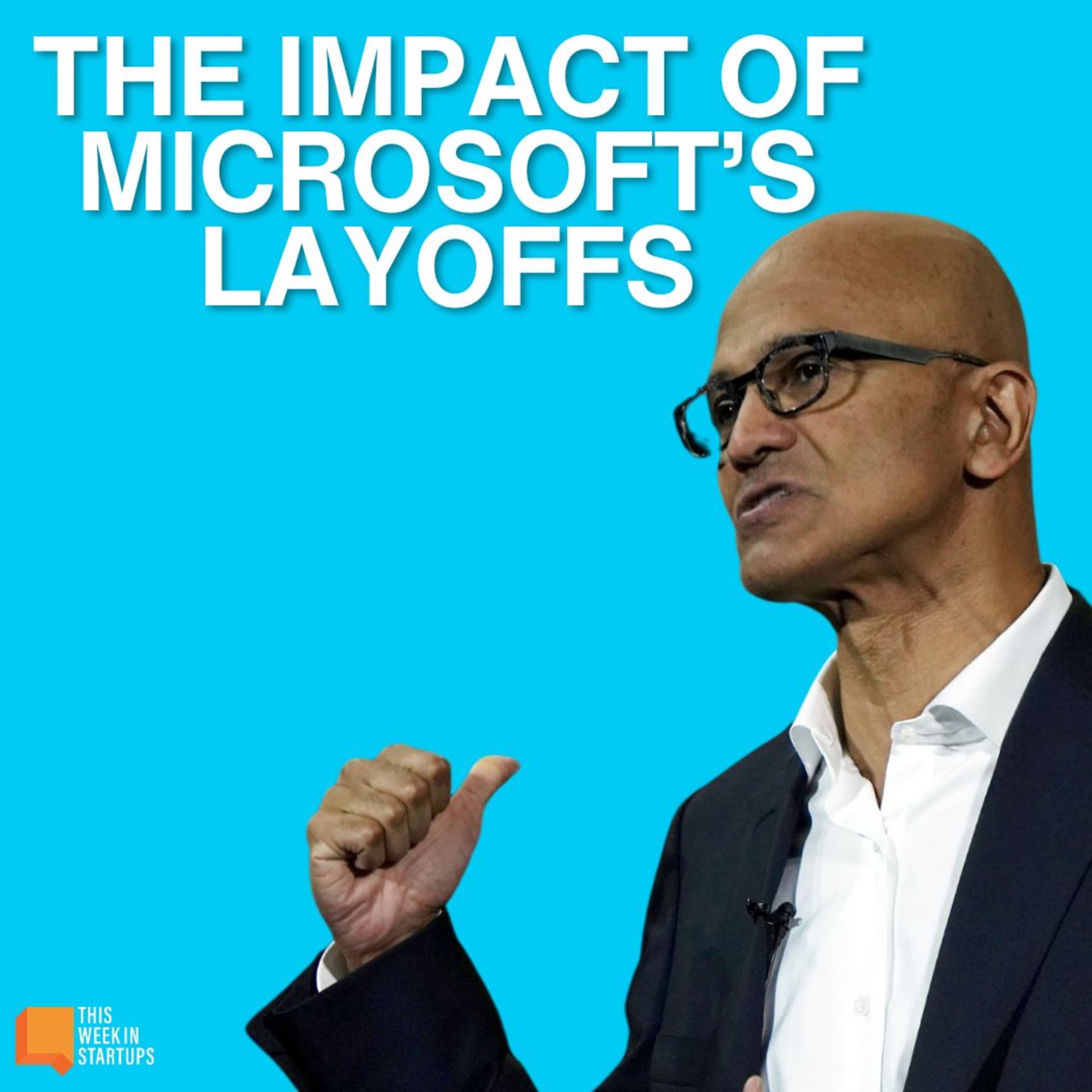
Microsoft Layoffs
- Layoff Announcement: Microsoft announced layoffs of 6,000 employees, about 3% of its workforce, despite reporting record profits.
- Impact on Talent Market: The layoffs highlight a significant shift in the tech labor market, raising concerns about the stability and morality of cutting jobs during profitable periods.
- Talent Management: Discussion on how management prioritizes profitability over employee loyalty and the implications this has on company culture.
Immigration Policy and Startup Innovation
- Challenge of Immigration: The tightening of U.S. immigration policies is presented as a risk to innovation, with an emphasis on the need for highly skilled immigrants in the tech sector.
- Quotes from Experts: Insights from industry voices, including a call to treat immigration as a talent recruitment strategy rather than a legal issue.
AI Sector Developments
- Klarna's AI Backlash: Klarna's attempt to replace customer service staff with AI led to quality issues, prompting a reconsideration of the approach.
- Windsurf's Potential Acquisition: The episode discusses Windsurf, an AI startup reportedly in discussions for acquisition by OpenAI for $3 billion, with a debate on whether they are selling too early given their growth potential.
---
Key Takeaways
Talent and Management Dynamics
- The Microsoft layoffs indicate a changing approach in tech where companies prioritize cost-cutting over employee retention, even amidst high profitability.
- The role of senior employees and their contributions to a company’s knowledge base is called into question, as many are let go for being "expensive".
Immigration and Innovation
- The hosts advocate for policies that would allow for an influx of skilled immigrants to foster innovation and maintain the U.S.'s competitive advantage in technology.
AI Trends
- The discussion reflects a growing skepticism about AI's ability to replace human roles, especially in customer service, indicating a need for balance in leveraging AI technology effectively.
Office Hours with Jeremy Redman (Airfive)
- Business Model: Airfive aims to automate customer support using AI, focusing on affordability for small teams.
- Go-to-Market Strategy: Redman describes a unique approach that involves creating simpler versions of existing products and leveraging an affiliate network for distribution, aiming to reach smaller businesses often overlooked by larger SaaS providers.
---
Notable Quotes
- On Immigration: "If we make it harder to get a visa to come build here and to hire here, we are literally handing the baton of technological leadership to places where those people would have come from."
- On Layoffs: "This will have a very deep impact on the bottom line if we can show the markets, hey, we're doing more with less.”
---
Episode Links and Resources
- Airfive: [airfive.com](https://airfive.com)
- Klarna: [Klarna's AI Customer Service](https://www.klarna.com)
- Windsurf: Discussion on potential acquisition by OpenAI.
---
Conclusion
This episode of This Week in Startups provides a comprehensive look at critical issues affecting the tech industry, focusing on the interplay between corporate decisions, immigration policies, and technological innovation. Through the Office Hours segment, listeners gain insights into a burgeoning startup and its strategies for carving out a niche in a competitive market.
Written by AI. May contain mistakes. Listen to the episode to check what was said.
Transcript
Automatic transcript. May contain errors.0:00If we make it harder to get a visa to come build here and to hire here, we are literally handing the baton of technological leadership to places where those people would have come from. like us technology companies would not be as strong if so many europeans weren't hopping united flights over from london and paris not even just europeans i mean you know indian people and people from china south america all around the world i was just thinking about a couple of the companies in particular but to me this is seeding our competitive advantage as the technology and startup capital of the world that is a mistake that is stupid a huge mistake i want more companies ourselves in the foot.
0:38Yeah. This Week in Startups is brought to you by Atlassian. From MVP to IPO, Atlassian for Startups provides your team the right tools to plan, track, and collaborate on work. Head to atlassian.com slash startup slash twist to see if you qualify for 50 free seats for 12 months. Fidelity Private Shares. If you want the all-in-one equity management platform, Fidelity Private Shares has you covered. Visit fidelityprivateshares.com and mention this podcast for 20 % off your first year subscription. And Google Gemini. Unlock the power of AI with Google Gemini. Experience the next generation of artificial intelligence.
1:15Gemini, Google's most capable AI model, is designed to transform the way you work, create, and innovate. Try it at gemini.google.com slash canvas. Hey, everybody. Welcome back to This Week in Startups. I've been for 14 years. My Lord, I'm exhausted. It's Friday, May 16th with me, Lon Harris and Alex Wilhelm. We're going to go through big tech. We're going to go through little tech. We're going to do it office hours. If you're passionate about tech, startups, finance, media, all that great stuff, you're in the right place. Let's get started, gentlemen. You can find us on YouTube, X, Twitter, LinkedIn, all those great places.
1:52Just search for This Week in Startups. Alex, I had asked you to just keep track of IPOs by month. You're keeping track of that. yeah i have an ipo update for us today and i will have charts for us on monday of all the last 16 months of ipos i think perfect so we're going to keep track of that for you because exits are critically important i have had now three or four discussions ever since trump sort of wound down the tariff turmoil or the trade turmoil whatever you want to call it uh 4d chess all of a sudden mna is back so here we are people are starting to think about ipos etc so we're going to get that dialed in for you as an audience, because it's important when you're running a company, you're going to start having to evaluate these offers and make decisions.
2:34Lon, the war between talent, technology, and management is raging. It's a little bit of a cold war and a standoff, but it is now becoming a full-blown, at least on TikTok and the socials, X, blue sky is falling. This is going to become an outright war because something happened just yesterday or the day before microsoft which has record profits am i correct alex record profits at this moment in time yes record profits they've uh done layoffs and riffs before decided to cut three percent of their staff six thousand people this is not a small action three percent seems like a small number but six thousand is a large number of highly paid individuals.
3:24This is a lot of software engineers. It's a lot of project managers, a lot of really interesting titles. And this comes on the heels of other layoffs and return to office by Uber, Amazon, Google, Meta. There's something happening here, and I think we know what it is. The deal between lawn management and talent. I'm going to say talent in our industry. Management and talent, owners of the business responsible for the bottom line, the talent that helps them execute on the vision has been, hey, if things are good, things are good. We're making money. We're profitable. Just relax. There's nothing to worry about because we're massively profitable.
4:08We're printing money. Au contraire, mon frere. Things are going smashingly for Microsoft and they're doing 6 ,000 people just hit the bricks. I just pulled the data for you on Microsoft's profitability to put this into context for everybody. In their most recent quarter,$25.8 billion worth of net income, Jason, up 18 % year over year. That's nearly$10 billion a month in profit and apparently not enough. So these layoffs, we don't have the data about all of them, but we do know about the layoffs in Washington state, which is where Redmond is, which is where Microsoft is based, of course. And Bloomberg put together a chart here showing what got cut.
4:48And if you look at this, Jason, the very top category is software engineering. And then there's a variety of different management roles, product management, business program management, that sort of thing. Now, we've talked a lot on the show about how companies are trying to get flatter, trying to get more into founder mode, have the founder and CEO more in the details. From that perspective, Jason, I can understand having PMs and other roles that used to sit in between the CEO and the ICs lose some of their primacy. But I was shocked at just how many of these cuts in Washington state from Microsoft in this riff were software engineers because what does Microsoft make?
5:20They make fricking software, you know? It strikes me as a very different era in tech. Gone are the days when Google was warehousing talent. Today, people don't want talent. And you tweeted a post from Blind indicating that apparently a lot of senior people were cut because they were the most expensive. So not only did we not want SWEs, maybe we don't want senior folks in general. Yeah, Lon, maybe you could bring up and give us a little color commentary here on what was on blind for people don't know blind is one of these anonymous social networks for people to vent at work they tend to be like a back channel and i think in order to post to at microsoft.com you have to register with them within at microsoft email which seems like a very dangerous thing to do right you know on microsoft and you're on blind and i catch you i think that's a snap firing but okay um yeah that that's a little bit weird but So Alex, you look up how you get how you're able to post a blind.
6:14I want to know that mechanic there. But all right. So we do have some of these tweets from blind. They tweeted layoffs are happening at Microsoft around three percent. Here's what our users are saying. So this top tweet, can we start unionizing now or do we want to get screwed some more? And a lot of people are sharing, you know, like DM them for referrals to other employers, DM for ByteDance TikTok, DM for Amazon referral. This one says, laid off after nine years. I was a UX designer in Azure. Pretty wild. Still processing the news. It's been confirmed that they cut 3 % of the workforce, around 6 ,000 people.
6:47I'm not going to look for a new role right away, but I appreciate everyone offering referrals in this thread. Other people are talking about how desperately bad the job market is. So, yeah, people are sharing, commiserating, and they're not happy here. earning$600 ,000 a year would result in good enough savings to not scramble for a new job. Yes. Unlike those less fortunate. Got to boost the share price. That's the key one that I teed off of when we were in our group chat or in Slack. This is really interesting. $600 ,000 total comp employees. People are wondering, who gets paid$600 ,000? Isn't that like the CFO's salary or like a management salary?
7:25That's total comp. So if you started with Microsoft and you had a four-year grant and Microsoft shares doubled since that time, you might have been given$250K salary and$100K a year or$200K a year in stock grants, but they could have doubled. So now you've got people making$600 ,000 a year. I got to think that there's some bean counter somewhere looking at this saying, hey, the company is going to function perfectly well on with 97 % of the talent. Obviously, it will. And we don't care what the signals in terms of loyalty to the to the team. And this will have a very deep impact on the bottom line if we can show the markets, hey, we're doing more with less.
8:14We're growing 10 percent a year or whatever they're growing while cutting 600K salaries. I mean, it's a level of getting fit in austerity. it is very appealing to shareholders and it's very disturbing to rank and file i gotta think if you're at microsoft right now and you see a 600k nine-year vet sitting next to you get walked out the door you gotta be perplexed unless the person was really the bottom three percent of performer but if they were jason wouldn't that imply that microsoft's you know internal people controls were terrible because why would you have a bottom three percent performer he was making$600.
8:51So either the company screwed up or they're just telling their staff that they should not expect to work at this company for more than a couple years because they'll get too expensive. That's just brutal to institutional knowledge, keeping senior staff who are critical. To me, it feels a little self-defeating for a company that's profitable, Jason. Am I just being too soft-hearted? Yeah, I would say the truth probably lies between the two. In each of these individual cases, when this happens, they go to each team, Alex, and they say, we want to tighten up here. you've got a 200 person team. Tell us the five people who are the lowest performers.
9:25And that person then says, oh, well, I can give you the 10 % of lowest performers because there's one in 10 people in every team who are pretty annoying. I'm going to say on average to the managers who they're, call them the trouble child. You know, the person who just is not dialed in, not getting it done. So for managers, they're always looking for an excuse to cut the bottom person. It's almost, I don't know about you, Lon, but you've been in charge of 10 or 20 person teams before. Sure, yeah. You know, number 19 or 20 on that 20 person team, you're like, that's the person who shows up late, leaves early, you know, is breaking my chops.
10:04Almost never do you have a 20 out of 20 like all-star team. If you're shipping a product or building a company, you need to be organized. and you know that Atlassian has exactly what you need to streamline your work and to crush your goals. You're going to need a system and Atlassian is the system for startups. Atlassian for startups is packed with all the tools that you need. Jira, that tracks every single task, every sprint, every bug you have in your startup. Confluence, that's for team collaboration and documentation. And my favorite, oh man, we use this all the time, Loom, Atlassian software helps companies like Canva CloudFair, Rivian, and my launch.
10:46It helps us grow. It helps us innovate. And it creates a sense of common organization within your startups. I want you to check out Atlassian for startups. Eligible startups get up to 50 seats. That's right. You heard it correct. Not five seats. Add a zero, 50 seats for free for one year. Head to Atlassian.com slash startups slash twist for complete details and eligibility. Thank you to Atlassian for making great products that I use every day. Right. I would say, yeah, it's once you get to 12, 15 or more that a group of that size, there's always going to be a few stragglers. Like you're aware of the parabola of I've got a few incredibly strong people here.
11:25I've got mostly pretty good people, very capable, good workers. And then I've got my two or three at the back of the bus. Yeah. Jack Welch was like just cut 5 % of people a year. And most management theory kind of believe that I believe it was Jack Welch the GE who was just 5%. And there's something to be said for that. I do think I have been on high performing teams where, you know, if I look at my investment team at launch right now, as an example, just a bunch of people just tightened up, got a little bit tight right now. Yes, I can picture their faces. And I can tell you like, you know, these three or four people are very impressive to me right now.
12:00Out of those three or four people who are the most impressive, like two of them are recently impressive to me. So I kind of feel like I've got an all-star team right now. I don't feel like, Maybe there's a couple of people I think who could, you know, increase 10 % or 20%. But I don't feel like we got any duds on the investment team who are not working hard and not committed. Absolutely not. I'm looking right into capital. There is nobody on the investment team right now I would count. Yes. And so, but the reason I'm bringing that up is you can do that, to your point, you said the number was 12 to 15.
12:32Yeah. I think it's 11 exactly. I think we're right there. I do think if I added five more people, suddenly I would be in the same position. I did have a question here for you guys. Now, we heard just this week Klarna, they had let go of a whole bunch of their customer service people and replaced them with AI. And now they're sort of backtracking a little. They're like, we maybe were a little aggressive. We're having some low quality issues. And do you think there's any chance that companies, I think Microsoft seems to be going pretty gradually. Three percent is a fairly reasonable number, I think.
13:02Do you think there's any chance that companies might get overzealous trying to replace their coders with AI and then we might see a backtrack in a few months or a year or no? Not from what I'm seeing. You know, when I see people applying AI to different business sectors, the reason the corner story became the corner story was because he was like, wholesale, we're down 700 people out the door. Right. And everybody was like, what? like why wouldn't you cut 10 % see how it goes cut 20 % see how it goes you know you would maybe taper off and just see if you can reallocate people but he came out with the grand pronouncement and then this one so I wonder if the Klarno thing was a bit performative in some ways Alex where maybe that was like I want to be the AI first CEO you know and I want to I'm not saying candor, but I want to get cred for that.
13:56This sounds silly that a CEO, and I don't know the CEO of Klarna all that well, and I'm not accusing him of anything nefarious. However, you see CEO behavior. I mean, leaders of companies can be a bit narcissistic, bombastic. It's like virtual signaling instead of virtue signaling. Well, it is virtue signaling to shareholders, venture capitalists, your board. And one of the great ways to virtual signal to the market is say, hey, we're going to demand performance. We're going to have people come. Dara did that, and the stock's at an all-time high. Yeah. Again today, the stock hit an all-time high.
14:38And you're still here. It's a miracle. I mean, maybe. Bye. There he goes. Oh, no, we're breaking up both cameras now. I want to just add a tiny nibble to this Klarna thing because I think it's pretty important. I think Jason, you make a really good point. If you're a fintech company, you probably want to have some AI pixie dust on you. So I totally get that point. But in an interview with Alex Kantrowitz from Big Technology that came out today, in fact, Klarna CEO Seb said essentially that they're handling more customer service work to AI, but they're hiring humans for the higher end problems.
15:10So I think we're seeing a bifurcation of how AI impacts jobs versus it's all or a retrenchment. So I think that's just a little bit of nuance there for the folks listening. Yeah, I think that makes sense. And I always go back to that Satya Nadella quote from a few months ago where he did that interview and he's talking about, it's not replacing people with AI, it's AI and people working together to make something better than you could do before. And I think if CEOs maintain that philosophy, we're going to be okay. AI first all the way. If you're not starting with AI and you're trying to solve a problem in your company, you're making a mistake.
15:43Every job rec should come with, why am I not doing this with AI? I had this conversation with Freeberg yesterday on our AI basics. Go to this week and start up such basics. All right. I want the soundboard, Lon. No. Let's start with a little piece of candy here. I know it's not the most important thing, but I like a little visual candy. You said you added it last minute. So that to me sounds like a good setup. Yeah, it's this really cool custom soundboard that Eleven Labs has going. It's a soundboard and a drum machine and an ambient noise generator all at once. And it's basically a text to sound effects model.
16:23Here it is. So yeah, we got this video from Eleven Labs showing off their new infinite soundboard, the SB1. Okay. Now with the ambient preset, we have sounds like light rain and heavy rain. And maybe the sound of waves as well. Okay. And these have all been generated by just describing the sound and having our model generate the sound effect. So let's say I want to add a new sound to this ambient soundboard i am going to ask for uh wind the sound of rain hitting the roof of a tent roof of a tent and i'm going to click generate and the model is going to give me four sound effects that have been created completely from scratch that i can choose from scratch and drop into my soundboard.
17:13This is wild. I'm going to listen through these generations.
17:19And when I find one that I like, let's go for number four. I can add it to this button here. So now I can trigger this sound effect in my soundboard and I can also loop these sound effects. So I could have this sound effect looping around on rotation with the sound of waves as well. you can imagine this being really nice for a guided meditation or perhaps you just want to have some nice ambient signed while you're working and to help you focus yeah i think that's good i yeah i mean what's interesting about this is there were people who would use sound libraries and uh make money making these tracks previously and work for com.com or you know do uh you know a CD of meditation, et cetera.
18:10And now to be able to do it that quickly is just wild. I mean, you're talking about, you know, that might've been a week's work for a sound engineer to work on a project or an app. And now it's just done instantly. I wonder how they train that. I think one of the things these generative music startups need to disclose or figure out because they will get in trouble is where they got these sounds from on the open web, because sound is different than, you know, just text. Like, you might be able to figure out where that came from. And so there are sound libraries. I hadn't thought about this. Like, it doesn't seem like these guys were out doing field recordings.
18:51Maybe they were. Maybe. I mean, it's possible. But it's more likely that they found archives of previously recorded sound effects and used that as their training. I'm guessing. I don't have that data, but I'm guessing that's what they do. Or there's a sound library that you can license for a hundred grand and take all, and they own it. And they're just like, yeah, feel free to train it. And that would be the right way to do it. I bet you they disclosed somewhere on their website where they got these things and how to do it because you're just inviting a lawsuit. If you went on the open web and you just found rain on a tent, and then you could bring it back to somebody else.
19:25That's like a very specific thing. I don't think the AI understands the difference between rain on a tin roof versus a tent, unless it had a very specific object. So if I said rain on, you know, a Tom Ford suit left, you know, on a, you know, Adirondack chair, like would it be able to do that and actually understand something specific like rain on a wool coat? I'm generating that exact text. Guys, I made an account. I'm generating rain on a Tom Ford suit left on an Adirondack chair. So when this is done, we'll see. We'll see. This is one of those cases where it's like AI plus humans is going to be super magical because it's like, imagine if you were making like I've been in this situation.
20:11Like if you're doing production and you need the sounds of like there's a thunderstorm outside, normally you would need to go pay money, find it in a sound library somewhere, license it to be able to do that instantly and like put it in your scene or your movie or your TV show. Like overnight, it may it changes the game for all that. this advertisement is paid by fidelity private shares all right founders we all know cap tables due diligence and of course managing investors is a huge headache but there's a very simple solution for you today we're talking with kristin craft an old friend of mine and she works at fidelity private shares a new group over at fidelity you've heard of fidelity before and they have a mission to help startups simplify equity management they're going to save you money They're going to give you better service.
20:58Welcome to the program, Kristen. Thank you so much, Jason. It's great to see you again. Yeah, great to see you as well. Maybe just from a product perspective, what are you trying to accomplish with the product? So Jason, we are super excited about our CapTable Management and Data Room platform. We want to make it super simple for founders and startup operators to manage all sort of ownership and equity in the company and essentially prepare to raise. We want to make sure that everybody goes into these fundraising conversations well prepared, they're ready to share their cap table, and that they're ready to go through due diligence as they're trying to close their round.
21:35So from a product perspective, that is where we're laser focused. And that product is really well built, really strong attention to detail in the way that Fidelity is known and beloved for. So if you want an all-in-one equity management platform, Fidelity Private Shares, they've got you covered. Visit FidelityPrivateShares.com. That's one word, no spaces, no dashes. FidelityPrivateShares.com. And hey, mention This Week in Startups. They'll give you 20 % off your first year subscription. Once again, FidelityPrivateShares.com and tell them that you heard about it here on This Week in Startups. do you guys want to hear it do you want to hear the you want to hear what what ruining my tom ford suit yeah that's okay six thousand dollar suit i mean what was the line from uh by the way what was the line from arrested development it's like yeah the guy in the six thousand dollar suit is really gonna hold the elevator come on come on who's that guy he's the guy that's more or less will arnett will arnett yes he he was a trust fund nepo baby joe bluth yeah joe bluth great shout out to that new show okay let's hear my tom ford suit let's see if this works generation race number one it's pretty good no that's a hugo boss let me see the next one okay
22:47it's a j crew that's like off the rack let me get the next one that's the tom ford yeah they got it all right i mean it does actually sound like i'm gonna be honest it does sound like the pitter patter of rain ruining a fine garment Yeah, I agree. Not a fine suit, but a garment. I mean, shout out to 11 labs. I have so many. I mean, I have like five more I want to do that are incredibly specific and obnoxious that I'm not going to do. I want to point out that this is why I think people are so excited about what we call voice AI generally, but probably just sound AI. I just think that we kind of forget how much we use audio in our day-to-day life as humans, as people in the workforce.
23:30It could be enormous. And also they made a really great consumer facing tool here. It's easy to use. I didn't have to give them my credit card number to sign up to play with it. I'm not saying it's a chat GPT moment, but I can see this driving a lot of interest into 11 labs from a lot of new sources. So points to them. Great idea. $3.3 billion was the last valuation for 11 labs. And I'm seeing revenue reporting somewhere between 50 and 90 million ARR. So doing quite well for itself. Let's go with your next story, Alex. What do you got? I'm taking Windsurf. So last year we talked to the guys behind Kodium.
24:00They rebranded to Windsurf. We talked about that relatively recently. The big news here is that they dropped three new models and they're called the SWE family, which stands for software engineer. And Jason, the argument that they're making is that AI models that are great for just writing code are only doing a fraction of the overall work. They say that developers do things across different services digitally. They have their work patterns. And so the idea is building AI models that can do a bit more than just generating code and running, say, a unit test on it. And so they dropped three models, SWE1, Lite, the regular one, and then a mini version.
24:38And so the idea is to essentially take AI models in a more agentic context and have them do a lot more for developers. I think this pairs nicely with our Microsoft story that we started with about where they're cutting staff at the company. And I think this just goes to show that while we do discuss humans plus AI doing quite a lot, it does feel like the balance is moving in one direction as I watch technology advance. Thoughts? Okay. So Winsurf helps developers write code faster. Agentic means agents. So now they have agents going out and doing things autonomously on behalf of developers and or human beings.
25:16And OpenAI bought this because it's an important category, perhaps the most important category, you know, in AI, because it's the one that has the finite data set. It's going to make the best impact. Developers are expensive and we're in a war with talent. So even the OpenAI team, if they have access to Windsurf early, just the purchase of it for$3 billion, right, which is 1 % of the market cap of OpenAI right now, if it made all the developers, let's just say they bought it and they didn't release it and they just used it for internal use only, they would need to make open AI 1 % more valuable to pay for the cost.
25:59And this is when we get into the yum yum land of M &A. We've been talking about the Rathalena Khan, and I told you there's like a little stuff brewing here. Here's where an acquirer has a thesis. And the thesis can lead to extraordinary outcomes for founders, investors in that company. I just gave a thesis, which is you would never think of. We buy this thing. We give early access to our developers. If they're 1%, they make the company 1 % better because of it. Oh my God. So here we go. They're making much faster progress because they are a dedicated team. They probably have a significant earn out for hitting milestones.
Read the full transcript
26:39And this is going to just make OpenAI, the company go faster and it's going to make everybody who uses it. So this seems like, yeah, pretty um pretty interesting so the thing that took me by surprise though is i thought the windsurf deal was kind of locked up with open ai because everyone reported roughly three billion dollars kind of a done deal actually i don't think it's officially closed yet and so i'm actually kind of watching windsurf go its own path forward here it was everyone's reported it that it's going to happen in the works nearly done three billion dollars but they're doing that it's in talks It's like it's not, we're not, yeah, it's not finalized.
27:17Wait, wait, if it's not finalized, I got a piece of advice here. They made an agreement. That was a week ago to buy it for$3 billion. But it's not, and OpenAI had looked at Cursor, we knew that. And two days ago, the New York Times reported OpenAI in talks to acquire Winsor. That's a big difference. Bloomberg said a week ago that OpenAI reached an agreement to buy Winsor. now it's open ai's and talks i'm gonna go ahead and advise the team at uh windsurf to stop negotiations leave this deal raise a billion for masayoshi san or whoever uae saudi elon elon's got a billion dollars windsurf needs to go talk to three other people because i think they can add i don't know they might be able to add uh 3x this should be a 10 billion dollar deal I think they're selling way too early.
28:12This is a big mistake. Listen, I'm not trying to make the check go up for Sam Altman. I'm just saying pretty clear based on the reporting and based on what I'm seeing here that this company could do better than 3 billion at this moment in time. This is a big category. What is Purser making in revenue? I think the last number we heard was 200 million ARR or 300 million ARR, depending on the reporting. Winsurf is at roughly 100 million plus or minus. and for folks out there who want more on this company, episode 2064 here on Twist from last December is when we had Faroon, the CEO, on. Jason, can I just take a victory lap really quick here?
28:47Sure, please. I'm going to just go ahead and just pull this up. This is my blog. I said, do the deal, but not for$3 billion. How about$5? I like that you're going for a higher number, but I just feel like selling for 30X ARR right now, growing this fast, is just almost like a dereliction of duty. I don't know who's the investor in this company, like who's on the board and who the investor is, but I guess sometimes getting a quick win is good, but this might be an Instagram, YouTube-like situation where, you know, in 10 years, this company could be worth a hundred billion. Like, so what are we doing here?
29:17This is one of the biggest prizes in AI. I would say, you know, if you were going to pick the top 10 prizes in AI, robotics and the humanoid robot is one, self-driving is one, biology, drug discovery, that whole sort of category is one. and uh this is one if we're going to talk and probably military applications is another yeah this is one of the biggest prizes i think the perkins general catalyst green oaks founders fund those are that somebody's got to get on the horn here and block this immediately but if you're general catalyst and you put the last money in last august 3x in eight months you know general Capital Catalyst is like one of these mega multi-billion dollar funds.
30:02I think they are, this is a great moment to be in in our industry. So many companies are developing powerful new AI apps that are going to radically improve your productivity, but Google has been off to the races. They got a new product, it's called Canvas. And this platform comes with Gemini 2.5 Pro model baked in. It's vibe code ready. Ideal for control freaks like me who have ideas and want to see what they look like in practice right away. So you can go from a rough concept to an image or even a functioning website in just minutes with a few prompts. You know how like you build a website for a project you're working on, you don't touch it for three years?
30:43I want you right now to go use Canvas in Gemini 2.5 Pro. And I want you to go say, make this website better. Here's my goals. We're talking about rich, robust, fully functioning prototypes near instantly. Gemini Canvas is reinventing front-end development. So if you got some ideas and you want to turn them into documents, code, or prototypes right now, get your vibe code on Gemini Canvas with the Gemini 2.5 Pro model. Visit Gemini.com slash Canvas to see for yourself. When you can see very clearly the path to a$10 billion company, And when you see that, like I saw that with Uber and Robinhood, it became pretty clear.
31:26Like you don't see that with every company, you know, you see, okay, yeah, I could see this getting to a hundred million in revenue. I could see this getting to 500 million in revenue, but if there's 16 to, I've heard the number 15 million and 30 million as the number of developers in the world, I'll pick 20 million as just an easy bogey here. You know, these things are going to make each developer 10 % more effective and developer being 10 % more effective on an average salary of 100 ,000 globally is$10 ,000. $10 ,000 times 2 million would be 10, wait, 2 ,000 developers at 10 ,000 per developer is$20 billion.
32:05And if you were to double that, you know,$40 billion. And the TAM here is enormous. And also the whole future is going to run off software right so like it's these trends aren't going to slow down 40 billion in value even if you only claim 10 of that that's 4 billion in revenue yep so i what i did here in this back of the envelope calculation is what a lot of um is what we call bottom up tam we we study this in our accelerators tam total addressable market you can say you know what's the market for you know a co-pilots and you could say okay well um this is the number of players. Here's what they're making.
32:45They're growing at this percentage. That's one way to make the TAM. What I did was I did a bottom-up TAM of using a different variable. The implied efficiency created per year, per developer, how many developers, average salary. So the value creation is at least a 10 % lift. It might be 25 % lift per year, per developer. A 10 % lift on their salaries is a market value of$30,$40,$50 billion, maybe$100 billion if it was 20 % lift. So then how much of that could the cursor market capture and the windsurf market? Yeah. Deal off. Best advice, deal off. Go for the gold. And here's the thing. These founders, go ahead and sell$100 million in secondary each.
33:34Tell General Catalyst, tell Founders Fund, they got the money, call Brian Singerman. Hey, Brian, I need$50 million. My two co-founders, they need$50 million each. We're going to go buy our NetJets cards and our ski houses, and we're done here. Next story. Well, let's talk about Cohere. So they're an enterprise AI startup. They build AI models and tools to index corporate data for AI use, and also software to help customers build their own AI agents. So they're growing quickly, but they dramatically missed some early revenue projections. It looks like the information reported that their projected revenue, 450 million in 2024, 1.8 billion in 2025, and they projected 4.3 billion in revenue for 2026.
34:19Tripling, tripling, tripling. Got it. Right. However, the actual IRL ARR only hit 35 million in March of 2024 and 70 million in February of 2025. A pretty big gap. They're showing just how hard it is to make these kinds of projections in the frothy world of AI. So they're valued at 5.5 billion when they raised 500 million last July and a six billion dollar valuation at 70 million ARR in February. that's around an 86 times AR multiple. Yeah, if you were to look at what the market's trading at, if you pulled up HubSpot or Palantir, these are two very hot companies that have subscription models. You know, what are they trading at?
35:03Those are the two hottest. Palantir has left reality. That's a meme stock. So we'll take that one off the table. But if you were to look at... HubSpot, 12.67 % on a price sales basis, Jason. That's trailing. AR is a little bit more aggressive, um but that's the number for that right now so call 13 times their top line sales four times that equals their market cap that's called price to sales so that would be yeah 120th of this 13x trading revenue jason sorry i must have spoken okay so that's you know eventually these private market valuations will run into a public market and a re-underwriting as my friend shaman would say you have to re-underwrite it.
35:46And when you re-underwrite it, and Warren Buffett or Bill Ackman or pick your public market investor, when you get re-underwrited, they're going to say, okay, yeah, this is what it's worth. But that's the no crying in the casino. You're making a bet. We just talked about the previous company, Winsurf. They're making a bet too. So maybe this group had the chance to sell at a crazy valuation and didn't. And oh, they should have taken it. So they are trying to sort of paint a picture that it's not quite as bad as it seems. The company told the information that while its early estimates were obviously overly optimistic, they're now seeing hockey stick shaped revenue growth that they anticipated before they just think it was maybe happening a little later than usual.
36:31So that's at least the smiley face they're putting on it for the moment. And I reached out to the company because we do that now. we have a lot of emails going back and forth with founders and such. They sent us a link to a Reuters article and said, we can't comment further, but read this. And that piece noted that they had crossed roughly 100 million ARR as of May. So plus 30 from February, Jason, feels very strong to me. Yeah. So, all right. Well, that's breaking news here on This Week in Startups. There was a great post from our friends over at Wired Magazine going through some folks who work in the legal immigration profession, discussing how there is more pushback from the administration about H-1B visas.
37:09This is a story that I wanted to bring up because one, Jason, over on your other show, you did have the president on, pushed him on high school immigration. And he said, staple those green cards to those diplomas. You and I virtually high-fived over the idea. And now we're seeing kind of the opposite. Now, this is not shocking, but I did see in that piece, a tweet from your friend, Mr. Peshman from Pear VC that I thought was particularly apropos to the current moment. I want to just talk about this. So our friend from Paris says too many pair of VC founders are getting their visas challenge and it's downright absurd.
37:41Entrepreneurs build America. So let's open the doors for innovators, not shut them. I am, I guess a little surprised given how prominent we have seen technology people be in the administration that there hasn't been a longer grace period for high school immigration, especially for founders of startups than we're currently seeing and i'm just curious jason are you seeing this show up at founder you at the launch accelerator or on your group chats that i'm not part of so those are two information sources i don't have an example of a founder not getting a green card uh or into the country i have heard one or two i want to bring a developer i'm trying to bring somebody in from canada they're kind of like in the canadian way station So there should be a little more discussion about this from our friends who are in the administration.
38:28I'm not going to say like, I'm not going to call people out by need. You all know my friends who are in the administration. I think it's a delicate balance inside the MAGA party. They all know, with the exception of maybe Stephen Miller and Steve Manning, who are like, generally seem like lunatics to me, I'll be totally honest, like when it comes to this issue. I mean, they seem to like literally want to deport 15 or 20 million people and drag them out of the country at an expense of 20, 30,$40 ,000 each. And people who have kids in schools here who are cleaning bathrooms, picking cherries and washing dishes and just incredible human beings living the American dream.
39:07It's just abhorrent and ridiculous and impractical. And you could come up with a million ways to describe how stupid it is to how stupid, cruel or impractical it is to drag 15 million people that we brought into this country. And when I say we, I mean America. We have to own that fact, whether it happened under Clinton, Bush, Obama, Trump won with plenty of people who came in under Trump won or Biden when a lot of people came in. You can't make this a partisan issue. We're a country of immigrants. This country let people in across the last five, six, seven presidents since the 80s. The Republicans were the biggest proponents of immigration and NAFTA.
39:49NAFTA, am I pronouncing that correctly? NAFTA. NAFTA. NAFTA, North American Free Trade Agreement. We don't talk about it anymore. NAFTA. Why don't we talk about that anymore? NAFTA was this whole EU before the EU. The Republicans wanted an open border in the North and the South. They were the proponents and the architects of it. And everybody else just executed on it. So putting it aside, fight for this skilled immigration. And there's a very simple way to frame it. If you want to get everybody on board, America has to own, if it is a mistake that we let so many people in, we have to own it. And we have to deal with it in a gracious, intelligent way.
40:27And the most gracious, intelligent way and thoughtful way to do it, an economically sound way to do it is to say, if you're contributing to our society, here's 10 years of taxes you need to pay and a path to citizenship and behave yourself like everybody else. Don't commit any crimes. And if you stay on the straight and narrow and you pay some taxes 10 years from now, whatever, we'll get you the green card. We'll get you citizenship. Just do the right thing. And then for everybody else, hey, if you're going to come here and create jobs, go get the Trump gold and get the Trump gold card. And you get you get three thousand extra miles on United.
41:02Yeah. And none of us want to live in a society where secret police are rounding people up on the streets and forcing them into vans and shipping them off to other countries. Like I'm not in danger of being deported. I was born and raised in America, but I don't want to live in that. I want to say that I think we're losing a little bit of the start of focus here, which is that if we make it harder to get a visa to come build here and to hire here, we are literally handing the baton of technological leadership to places where those people would have come from. Like, U.S. technology companies would not be as strong if so many Europeans weren't hopping United flights over from London and Paris.
41:39Not even just Europeans. I mean, you know, Indian people and people from China, South America. all around the world. I was just thinking about a couple of the companies in particular, but to me, this is seeding our competitive advantage as the technology and startup capital of the world that is a mistake. That is stupid. A huge mistake. I want more companies here. Shooting ourselves in the foot. Yeah. It's all about framing. I literally was having this discussion with high-profile people in and around the administration and I just said, frame this as talent recruitment and job creation and you're done.
42:11Talent recruitment's great. Frame it as asylum you know and everything else and it's just going to become bedlam just we want 1 million incredibly highly qualified people per year who create jobs to come to this country the number is 1 million i've decided 1 million that's it everybody could i mean a million people who create jobs and you have to create jobs and if you don't if you want to come here and you create 10 jobs on average you can stay if you create less than 10 jobs in five years hit the road yeah the end create some economic value or, you know, that's it. You can't stay. All right.
42:49Now that we've gone through the key news stories of the day, we are going to go to office hours. And today, Jason, we're talking all about email, customer support, and the world of AI and how they all come together at a company called Air 5. This is in the Launch Accelerator cohort number 34. And we're talking to Jeremy Redmond, who's doing his second round of Launch Accelerator work. Please welcome Jeremy to the program. All right, Jeremy, welcome to the program. What was your first company? I'm trying to remember. Yeah, it was V1. Do you remember that? The no-code app builder. Yes, I do remember that.
43:24Yes. What was your first cohort that you were in for V1? LA-18. Okay. That was when we were in person in San Francisco. Every Thursday, we'd go get burgers and yeah. You want to know what's funny? I was the very first. I had a visit to San Francisco where we first met the week before COVID hit. And it was like, I think you actually announced as like the COVID launch or something like that. It's like one of the presentations, which I thought was funny. And that was the last in-person one. And so like when I came, I think a couple of weeks later, like maybe a month later, we were the first fully remote cohort.
44:10Wow. All over Zoom. Crazy. And so tell us about the new company. Give a little pitch here, elevator pitch, a really simple sentence and tell us what you're working on now. Yeah. So Air5 is an AI assistant that automates customer support email. So small teams can focus on growth. pretty amazing. This is an incredibly competitive space. Why are you going to win this space in the face of so many competitors who want to attack customer support with AI? Yeah, so I didn't even want to build this. So I wanted to use some of these competitors of which you speak. So we were going to use Intercom. And Intercom got real expensive really fast.
44:58I think it started the entry price was like 150 bucks a month. And then you start every response was a dollar. And you're like, this is getting beyond my control. And then every response that they generated that sent to our customers, it was from Intercom's AI fin. So they're really servicing enterprise based companies. And a lot of the other competitors are doing that as well. So we kind of swoop in there and get the freelancers, the small teams, solo founders, and kind of build a suite of products to support them. Got it. And so this is a tried and true competitive strategy. We're going to make something simpler, easier to use, more affordable for SMBs.
45:45if you were to look at a product like Salesforce, considered like the gold standard in managing a sales team, you could come in with a lightweight version that's not, what does Salesforce cost per salesperson today? Is it like 2 ,000 a person or something? I mean, it's like 50 grand to set up, right? Like that's the thing with Salesforce is you need then a Salesforce engineer. Yeah, the whole thing's super expensive. And then you look at, I remember we used to set up mail servers and then MailChimp came along and it was cheap. and then Beehive came along and you could pay a flat rate fee and have your own domain name and then Substack is free, but they take 10 % of your revenue.
46:21Anyway, infinite options available. So that's a great strategy. What's the go-to market strategy for somebody trying to create something that's easy to use and super affordable? What is the pricing? And then I'm assuming the pricing is so low, you can't have a sales team out there selling it, yeah? Yeah, that's great. So, and that actually dovetails into two of my office hours questions. So our go to market strategy is somewhat unique. When we see competitors in the market space that, like you said, small team support is somewhat inundated with a lot of solutions. I mean, you could use Airtable for a similar thing.
47:00So what we do is we see those companies with products, we will then build a simpler version of that product. Like, we built a lovable clone actually called likable. And we delivered it to our community. So what we do is we will do an Airtable clone, which we did. We do a cold email clone, which we did. We do a build your landing page clone, which we did. And then we distribute those to our community, which we have about 2 ,800 affiliates that then go sell that. And they've brought in over half of our revenue to date. Wow. And then we just gather feedback and then build the next thing with the next competitor.
47:50And we knew that - Oh, wow. So this is a strategy of not just doing the email responses and competing with Intercom, but just going down the SaaS stack, creating simpler, cheaper versions and using this affiliate network to distribute it and get feedback on how to make the product better. So you're basically building a SaaS killing platform. Yes. So like with this whole inundation of like vibe coding, you can spin up something open source and customize it or something from scratch or vibe code something with cursor or likable, which everyone can find at likable.co. So tell me, what is the question you have for me?
48:31I totally buy the strategy here. I think offering these things for free, collecting data at this stage, since you seem to be pretty good at it, giving some money to the affiliates is a great idea. You've got this really interesting concept around that. Maybe the affiliate network is the business for other and selling that to startups. I would be interested in that. if there was an affiliate network that sold tickets to events or got people to apply to founder university. I mean, that sounds very interesting as a distribution platform that you built for yourself or just getting a bunch of up and coming businesses to get a suite of products for one price.
49:07I don't know. There's something interesting here. Yeah, I feel like we do. We bounce around and a lot of it is around this business model. And this is the first question. So we have, we give our customers an option. They can pay one low monthly fee. So you can start on Air 5 for$16 a month and get going. And then we distribute it, like you said, we have the initial hundreds customers for every product right away. But you can use our prepaid usage-based model. And that starts at$25. So what we're realizing with our customers is 80 % of people will go for the usage-based pricing. And I think you've spoke about this before, but I think everyone's feeling a little bit of subscription fatigue.
49:55And it becomes how much can you get predictable cross-sells and upsells. But I don't know. I believe in that strategy. Our customers believe in buying that strategy. If you can get 2 to 4 years of revenue upfront, that's amazing. Usage-based. But I don't know how to sell that to investors when they all expect just an MRR figure. So what's the way you would polish that? I think you have a secret. So there's a theory in startups. I have a secret, right? The secret I've learned is, oh yeah, people will actually stay at another person's house and they're not the people who stay at five-star hotels.
50:36They're young people or adventurous people who stay at Airbnb, stay at bed and breakfasts already, or they couch surf on Craigslist. So you kind of know this secret. The founders of Airbnb knew this secret that there were people on the underground who would trade vacation homes or let people stay in their home if they could stay in their home. And there was like a house swapping kind of thing where you would come to New York and I would go to Paris and you stayed in my apartment, I stayed in yours. We vetted each other and it was all done on Craigslist, right? So you have a secret. Now, most investors, if they're thinking, you know like robots or like this does not pattern match the mrr arr turn formula that we have created who gives a fuck about those investors you don't want those investors anybody you want the visionary investors who are like tell me more i'd like to consider myself in the non-consensus you know peter tl michael moritz group which is hey and bill girly what if it works what if your crazy idea works so as you've explained it to me i'm so excited about it because i'm like yeah what if this works and i was talking to another founder and um they were in what space they were in a space where people would buy a piece of software or a piece of sas software for an event and they might use it for a year or two and then you know you kind of churn and i said well what if you sold them this on a 50-year basis and you memorialized everything You know, let's say I'm not going to, it's not this, but I'll make up thing.
52:05Like, let's say it was just like a tribute website for a funeral, right? And instead of selling them per month, per year, you just said, pay$500 and we will keep this memorial on the internet for 50 years. 10 bucks a year for 50 years. Pay us 500. You never have to worry going down and you can put in the email addresses of your kids. They can put in their kids' email addresses and their phone numbers. and it's a family legacy, a tribute to Lon, who we worked with and loved dearly. He went too early. I can't believe I died. Sorry, Lon. Is that why you're so pale tonight? Yeah, exactly. It's the lighting.
52:42It's the lighting. I work a little bit on the lighting. So anyway, a new revenue model. And I told her, you know, like, it's so much cognitive dissonance, this monthly bill and the subscription burnout, that paying once. The guys over at 37 Signals came up with a Slack competitor where you pay one time a thousand bucks. I'm sure you know about it. and you basically pay for yourself for one time. I think there's a lot of people who are open to this concept. You figured it out. You've got the passion for it. Let's go for it. Let's hope 19 of 20 investors don't understand it. That means you're onto something.
53:12If the people who are doing cookie cutter investing don't understand it, you don't need them. They're the people who would be like, do what has already been done. We're looking for something that has a small chance of working, but if it does work, changes the world. So I love it. I love the idea of you selling a hundred dollars in credits and use as you go. The reason I unsubscribed from MailChimp and I like literally, we still had one person holding onto their MailChimp account. And I didn't realize it was costing us 500 months, 6 ,000 a year. I was like, get off of that immediately. It was me.
53:42It was me, Alex. God damn it. Now we know I killed him and that's why he's got the Memorial page. I joked him out. God damn it. That's my six times. I didn't know we were done with MailChimp. We're on Bento now. We switched over to Bento folks. Which one? I do inside streaming through Bento now. That's what we set up. Bento, Beehive. There's a bunch of free options there. So all this legacy stuff, if MailChimp just said to me, hey, pay us 500 as you use it, it'll keep working. Great. I would have done it. But, you know, so you're onto something. I love that you're onto something new. I'm going to tell you, hold the string and see where it leads you.
54:20Anyway, Jeremy, you got a great company. Can't wait to see in person. Where are you based now? Los Angeles. And what's your traction like, Jeremy? Oh, dude, way to get that in. Way to get that in. We just got going in December, this last December, and we're about to hit 800K in revenue. Wow. Wow. And we are gunning. We are gunning for a million dollars in revenue in quarter two. Perfect. So before you graduate the accelerator, how are you doing in the, what was it, week six or seven in the accelerator right now? Week two. It's only week two? Or three or four. No, week two pitching investors. Oh, week two pitching investors.
54:58Oh, we have those week zero, whatever. And how's it going with the investors? Bianca doing a good job? Erica doing a good job? Bianca and Lucas, Lucas, I guess, isn't hands-on with that accelerator piece that's more the founder of you. I don't know how you do this, but you find the greatest young founder-friendly talent I've ever come in contact with. Shout out Bianca. She's the best. Shout out Bianca. I don't know how she stays so positive all the time. I could tell you. I could teach you this. So, I literally can teach you. I had a realization when we were trying to hire talent, and I looked at the problem we had from first principles.
55:43We, as an early stage fund, have a lot of people coming at us with ideas. Like, upwards of 20 ,000 applications for funding. Second only, I think, to Y Combinator, which has 45 ,000 applications. And that's because of the two podcasts, right? I say founder of university. I say, hey, launch.co slash apply, 100 applications come in. We got to sort them. So I said to myself, okay, I need an army to sort and meet with folks. So I need to create a system. Remember, systems above goals. The goal is to back enough founders to find another Uber, Robinhood, and have those outlier power law investments pay for all the other ones.
56:21and you know on a philosophical basis i want to be super helpful to founders and i'm passionate about innovation all that stuff but on a pragmatic basis we need to hit a 200 300 400 x company for every hundred we invest in because we want to have a three or four x fund okay great the math is the math so we have to sort through a lot of companies we have to meet with a lot of companies how do you do that we had uh this concept of an introductory meeting what's an introductory meeting we tell people, hey, we got your application, would love to meet you, and do a quick Zoom, which we can record, and share with the rest of the team if it's a really interesting company.
56:59And I said, what's the most efficient way to do that? 20-minute introductory call, 10 minutes of you pitching us your product, five minutes of you asking us questions, five minutes of us asking questions, and then we can both mutually agree on, should we do another call? And do we want to, is there any way we could work together? And so I said, how do we get to 100 of those a week? Well, you need people who can do five of them a day. Some people do eight a day and still have energy on the sixth, seventh, eighth one. So I then just said, I want to have people when they apply for this position of researcher, then they become analysts and they become associates.
57:36I want them to just do a couple of calls and record the calls and then just show me the video. And then instead of hiring people based on what fancy degree they have, I just look at their energy on the video. because the experience of a founder is the person having that conversation with you. Now, they have to be intelligent. They have to be bright. They have to be hardworking. They have to be disciplined. But they also have to be engaging on camera, right? In that Zoom call, the actual work of a venture capitalist at an accelerator or pre-accelerator is doing 500 calls a year, 1 ,000 calls a year with founders and checking in with them and whatever.
58:15So I optimized for that. And you're experiencing that, which is, I tell them, hire people with enthusiasm. And if they're not fired up with enthusiasm, fire them with enthusiasm. Oh, that is that, you know, I am so lost all the time. I ask you for advice or hear your answers because it's, I sit there and I'm like, how does he, how does he come up with this? Like, I am actually beside myself with that answer. I've never heard that ever. if you i've talked with on my google sheet it's 180 vcs right a lot of associates um and they don't think the same way they're not trained the same way it's really like how do i climb the ladder and become a principal or a partner and you kind of feel that with launch you really do uh double click on the right things with these people and they are they are just absolutely stellar well Well, and, you know, we try to be like, if you think about what you need as a founder, like you need a quick answer and you need to make sure that we understand your company.
59:22And one of the things I realized early on was I started letting founders review us. So we send them an email 48 or 72 hours after we do a meeting and then it goes automatically into our Slack with the rating for each person. And it's public to the whole company. I got really bad ratings. You did. I did. And it was the same piece of advice over and over again. Jason didn't understand our business. Jason, you know, and what it is, is I process things very quickly. So people felt like I didn't hear them out enough and I didn't understand their vision. You got there faster than they could verbalize it.
59:55Exactly. So that's like being a chess player and you're just like, yep, I win. And it's like, but we're four moves in. It's like, yeah, you made a mistake and here's how it's going to end. That's not what they want to hear. You know, it's like a master Jedi with their Padawan or something. And they're just like, yeah, I just took off your two legs and your arm and, you know, game over. You got to like kind of slow down to speed up. So I just slowed down and I asked very simple questions and I started pacing the founder. Founder had high energy, was going fast. I go high fast. If they're going slow, I just ask them.
1:00:24And then I added something to the script when we meet with founders, Alex, very simple. At the end of every call when they pitch, I wrote the script for myself and then I trained everybody. Hey, Jeremy, may I repeat back to you my understanding of what you're doing here in the business to make sure I understand your vision? Yes, you can. Okay. So you're building a business that makes a more affordable version of common mission-critical SaaS products, and you're coming up with a new way to distribute it with these 2 ,800 affiliates. And at the same time, you're using a different business model that makes it easier and frictionless for people to give you money in advance of them using the product.
1:01:14Do I understand your vision correctly, Jeremy? I'd walk away with, how's this guy? How did you take... Do you remember that? That is so good. You know, like... Yeah, that feeling you have is the feeling we all want to have, whether it's a friendship or a business. Alex wants me to be able to say to him, Alex, you know, it's great working with you. I know you care about your kids greatly, spending time with them. You love your wife. And you really care about journalistic integrity and fairness because you would even sacrifice your own salary when you were at TechCrunch to help the team. I was...
1:01:45And cautious optimism. you know really does embody what your passion is which is to write every day and communicate these complicated topics like he knows i understand what makes him tick because i listen to him you know and i can do jason jason shows up to work every single day to make more money so we can play high stakes poker on television basically yes i haven't been on high stakes poker tv in a while i gotta go back all right listen jeremy you're awesome wait can i ask you one other question please and it was the one thing i wanted to learn while i was here at launch Okay. Initially on week zero, we had a, what are your challenges?
1:02:22And the one thing I came away with right there on the spot was I can come up with good answers, right? Like I can come up with good answers. I eat, sleep, breathe the business, right? It's second nature. The thing that I would love to hear from you as the world's greatest moderator would be, how do you ask great questions? Okay. How do you ask quick questions? You got to listen to the answer. You'll listen to the previous answer and then you form your next question. So it's always about proactively listening. active listening is a concept uh it's interesting to say proactive there is a concept called active listening in therapy and in um the cia and fbi and profilers active listening which is you're really thinking what the person's saying how they're saying it why they're saying it but when you go from there yeah i love it thank you jeremy that was my only thing 200 prep that's that's my jason's dead on but i i undergird that with by doing more prep than anyone else will do and when i talk to founders for like 200 interviews and such you can always tell the moment they realize that i cared enough to do the prep work and then they get so much happier they just light up i feel like i definitely get that sense from you the way you geek out about s1s only wants to make me go public you know every time i hear that you get excited about it i'm like oh i'd love to feed that excitement you know that's the only goal for us so it really comes across air5.com and like likable.co are the two websites that I have up from you, Jeremy.
1:04:00Just want to give a moment a shout out. Go there. We're launching the likable.co today. And we'll see you all next time on This Week in Service. Bye-bye. Great job, Jeremy.
From the publisher
Today’s show: Microsoft lays off 6,000 employees despite record profits, signaling a ruthless new phase in big tech. Jason, Lon, and Alex discuss what it means for the talent market, why tightening U.S. immigration could cripple startup innovation, and whether AI startup Windsurf is selling too early as OpenAI circles. Plus, Klarna’s AI customer service backfires, IPO momentum returns, and Office Hours with airfive founder Jeremy Redman pitches a bold new prepaid SaaS model.
Timestamps:
(0:00) Episode Teaser(2:40) Why ex-Microsoft staffers are talking smack on Blind(10:08) Atlassian - Head to https://www.atlassian.com/startups/twist to see if you qualify for 50 free seats for 12 months.(15:58) Checking out ElevenLabs’ wild new AI soundboard(20:28) Fidelity Private Shares℠ - Visit https://fidelityprivateshares.com! Mention our podcast and receive 20% off your first-year paid subscription.(24:02) What is Bottom Up TAM and why it isn’t dirty like it sounds(30:10) Google Gemini - It uses AI to help you write, code, and create in one interactive space. Try it at gemini.google.com/canvas.(33:52) Cohere missed revenue estimates but things aren’t THAT bleak!(37:01) Why America NEEDS highly skilled immigrants(43:12) Working the “I Have a Secret” strategy with Jeremy from Airfive
Subscribe to the TWiST500 newsletter: https://ticker.thisweekinstartups.com
Check out the TWIST500: https://www.twist500.com
Subscribe to This Week in Startups on Apple: https://rb.gy/v19fcp
Links from episode:
EleveLabs Sound Board: https://elevenlabs.io/sound-effects/soundboardLikable: https://likeable.co/airfive: https://airfive.com/
Follow Jeremy:X: https://x.com/thejeremyredmanLinkedIn: https://www.linkedin.com/in/thejeremyredman/
Follow Lon:
Follow Alex:
LinkedIn: https://www.linkedin.com/in/alexwilhelm
Follow Jason:
LinkedIn: https://www.linkedin.com/in/jasoncalacanis
Thank you to our partners:
(10:08) Atlassian - Head to https://www.atlassian.com/startups/twist to see if you qualify for 50 free seats for 12 months.
(20:28) Fidelity Private Shares℠ - Visit https://fidelityprivateshares.com! Mention our podcast and receive 20% off your first-year paid subscription.
(30:10) Google Gemini - It uses AI to help you write, code, and create in one interactive space. Try it at gemini.google.com/canvas.
Great TWIST interviews: Will Guidara, Eoghan McCabe, Steve Huffman, Brian Chesky, Bob Moesta, Aaron Levie, Sophia Amoruso, Reid Hoffman, Frank Slootman, Billy McFarland
Check out Jason’s suite of newsletters: https://substack.com/@calacanis
Follow TWiST:
Twitter: https://twitter.com/TWiStartups
YouTube: https://www.youtube.com/thisweekin
Instagram: https://www.instagram.com/thisweekinstartups
TikTok: https://www.tiktok.com/@thisweekinstartups
Substack: https://twistartups.substack.com
Subscribe to the Founder University Podcast: https://www.youtube.com/@founderuniversity1916


