
In short
This Week in Startups - Episode E2144 Summary
Episode Title
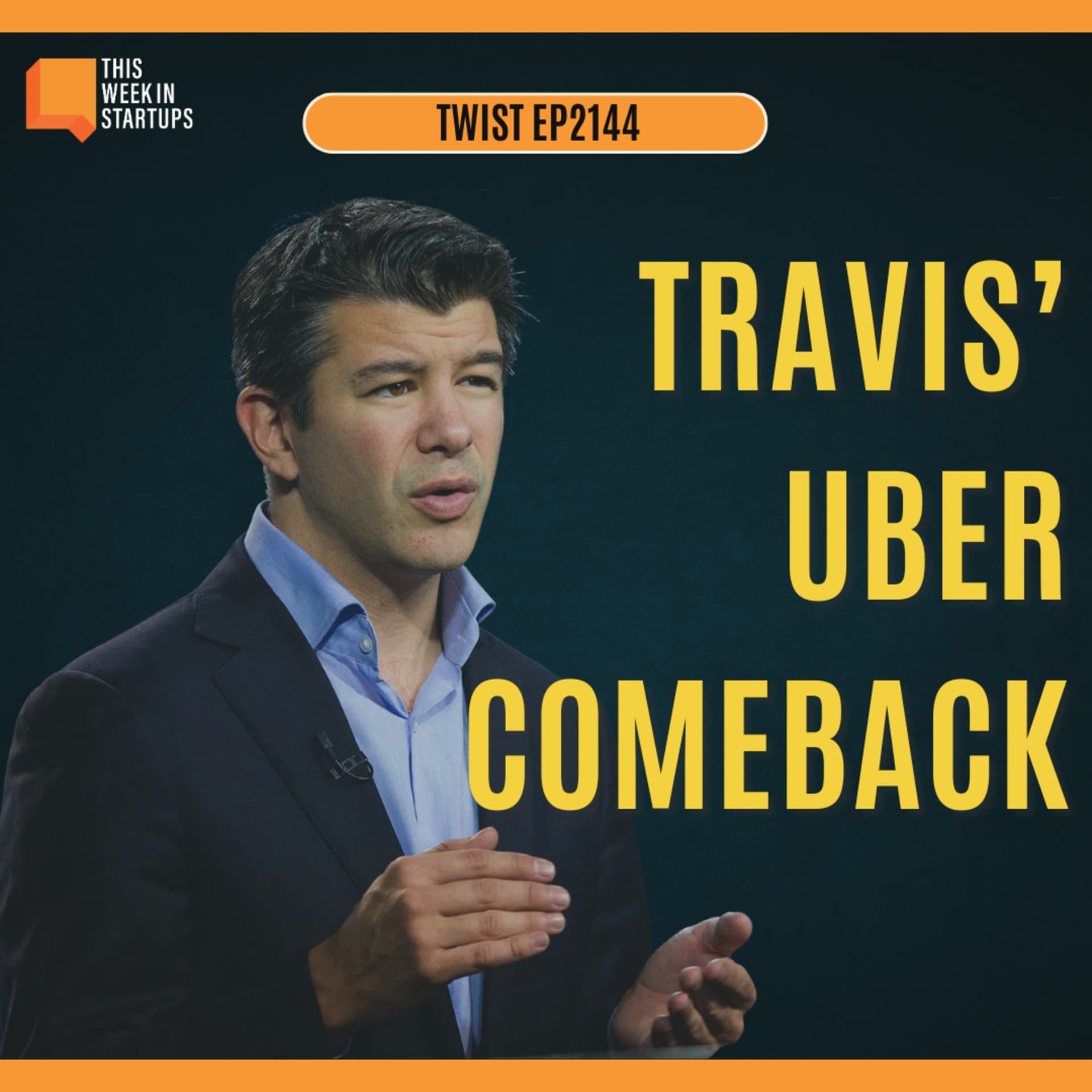
Travis’ Uber Comeback, AGI’s Stakes, Meta’s $100M AI Hires & Prediction Market Gold Rush
Host
Jason Calacanis
Co-Host
Alex Wilhelm
Episode Overview
In this episode, Jason and Alex cover significant trends in electric vehicles (EVs), advancements in artificial intelligence (AI), the burgeoning prediction markets, and a potential comeback for Travis Kalanick at Uber. They provide insights into market dynamics, company strategies, and the future of transportation and AI technology.
---
Key Highlights
- EV Price Wars and Global Tariffs
- Overview: The emergence of inexpensive, high-quality electric vehicles from companies like Xiaomi could disrupt traditional Western automakers.
- Implication: Concerns over a global tariff war as countries may impose high tariffs to protect local manufacturers.
- Travis Kalanick's Potential Return to Uber
- Details:
- Travis Kalanick, former CEO of Uber, is rumored to team up with Uber to acquire the U.S. arm of Pony.ai, a self-driving technology company.
- Discussion on the dynamic between Kalanick and current Uber CEO Dara Khosrowshahi, with Jason expressing a belief in the potential benefits of Kalanick’s strategic vision.
- Food Delivery Innovations with Drones
- Key Innovations:
- DoorDash's initiative to develop mega-drones for food delivery is highlighted as a peek into the future of food logistics.
- Discussion on how companies are racing to innovate delivery solutions that could encompass groceries and other items.
- The Current State of Autonomous Vehicles
- Tesla's Rollout Strategy:
- Tesla’s cautious approach to its safety driver rollout indicates the need for extensive testing.
- Jason emphasizes that the autonomous vehicle sector is only in its early stages, suggesting that significant advancements may take several more years.
- Artificial General Intelligence (AGI) and Microsoft-OpenAI Negotiations
- Definition and Importance: Jason and Alex discuss the ambiguous boundaries of AGI and its implications for OpenAI's ongoing negotiations with Microsoft.
- Key Points:
- The definition of AGI is crucial in determining the future of OpenAI's partnership with Microsoft.
- Concerns about the potential pitfalls of Microsoft's strategic investments in OpenAI and the risks of litigation surrounding AGI definitions.
- Meta's AI Recruitment Strategy
- Meta's Talent Acquisition:
- Meta is aggressively hiring top AI talent, reportedly offering salaries up to $100 million to attract key personnel from other firms, including OpenAI.
- Jason and Alex comment on the implications of this talent movement for the competitive landscape in AI.
- The Rise of Prediction Markets
- Market Dynamics:
- Jason discusses the growing interest and investment in prediction markets like Kalshi and Polymarket, particularly for their potential to provide real-time insights and forecasts across various industries.
- Future Outlook: Prediction markets may replace traditional methods of forecasting and could democratize access to information regarding market predictions.
- Founder Rapid Response
- Question: Can you be a great founder if you dislike cold sales?
- Advice: Jason emphasizes the importance of founders engaging in sales, encouraging them to develop a systematic approach to selling or to delegate this task to skilled salespeople.
---
Conclusion This episode delves into the rapidly evolving landscape of startups, technology, and how strategic decisions will shape the future. With discussions ranging from the implications of global tariff wars to the intricacies of AI advancements and recruitment strategies, listeners are offered a comprehensive view of current trends impacting the business and technology sectors.
---
Resources and Links
- TWiST500 Newsletter: [TWiST500](https://ticker.thisweekinstartups.com)
- Follow Jason Calacanis: [Twitter](https://twitter.com/Jason) | [LinkedIn](https://www.linkedin.com/in/jasoncalacanis)
- Follow Alex Wilhelm: [Twitter](https://x.com/alex) | [LinkedIn](https://www.linkedin.com/in/alexwilhelm/)
- Find out more about Superpower Membership: [Superpower](http://superpower.com/twist)
Written by AI. May contain mistakes. Listen to the episode to check what was said.
Transcript
Automatic transcript. May contain errors.0:00What you'll find is the build quality is pretty amazing. This is why the tariff wars are upon us. I think a lot of the EU, the United States, they're all like, yeah, you're not going to be able to sell this in America without a 100 % tariff or a 50 % tariff, or it will wipe out. When I say wipe out, I mean wipe out all European car manufacturers, all American car manufacturers. It would be devastating. And that's why places like Korea don't allow these things to be imported. This Week in Startups is brought to you by Superpower. Visit superpower.com slash twist to get$50 off your membership. This offer is only for the first 100 twist listeners who sign up.
0:39Lemon.io. Hire pre-vetted remote developers, get 15 % off your first four weeks of developer time at lemon.io slash twist. And Pilot. Focus on your product. Let Pilot handle your bookkeeping. Pilot provides the most reliable accounting, CFO, and tax services for startups and small businesses. Head to pilot.com slash twist and get$1 ,200 off your first year. All right, everybody, welcome back to This Week in Startups. I am your host, Jason Calacana. He's been doing this since 2010. Oh, my Lord. Holy crap. Yeah, it's a long time. And my co-host, Alex Wilhelm is here. How are you, Alex? I'm good.
1:16It wasn't 10 ,000 degrees today in the Northeast. It actually rained a little bit. So everyone's coming out of their hiding and no, it's nice. We have, heat has been an issue in the country, but in Austin, we're having a very nice summer. It has not been hot for Austin standards. It's been in the nineties, which I love, but not over a hundred. Cause when you have bulldogs, no bueno when it hits a hundred. Oh yeah, yeah, yeah, yeah. Tough for them to stay cool. Don't they have to pant a lot to kind of like get rid of the heat? That's it. They have five ways to dissipate the heat, panting with their tongue and then their four paws.
1:48You never want to pour water over a bulldog cause it will quickly, their fur will get hot and then they're just wearing a hot, wet blanket. But if you pick them up, my understanding, you can check with your vet. If you put their feet in cold water, their paws will cool them down quite quick. And I've done this a couple of times when they get overheated, put a little ice in the bathtub, put a little water in the bathtub, just up to their ankles and put them in there. And then all of a sudden they're nice and cool. And eventually they lay down in the ice cold water, cool them right down. All right.
2:18There's your bulldog tip of the day and let's get into it. Lots in the news, including my captain. Oh, captain, my captain. My boy, Travis is in the news. I want to start there. Yeah. So this is a story that I did not see coming. My favorite type of news story, but for context, Travis Kalanick, a former co-founder of Uber, former CEO of Uber and left the company under slightly acrimonious terms around eight years ago. Well, now he might be teaming up with Uber yet again, because Uber may help him purchase the U S arm of Chinese self-driving company, Pony.ai. And I love this for like 17 different reasons.
2:58Before you talk though, Jason, I want to say Pony.ai stock did go up 12 % on the news and Uber picked up a couple points as well. So the stock market seems to like it. What was your first thought? Well, you know, I've been speculating for a long time that Travis might come back and become the CEO of Uber. This speculation is just wishful thinking on my part. I have no inside information. Dara's done a fantastic job. So it's no dig to him. But eventually, I think the founder should come back, Steve Jobs style. I obviously was the third or fourth investor in Uber and an investor in Cloud Kitchens.
3:31And I have no inside information on this. This was a surprise to me as well. And I have not talked to Travis since. So lest you think any of this should inform your investing, don't because there's nothing here. But I will say it's anybody's game, the self-driving space. And if Travis has cloud kitchens cranking like he does, there is an opportunity here. And the opportunity is fairly obvious to provide self-driving cars in order to deliver food directly from their kitchens. And DoorDash also has these aspirations. They're running their own drone delivery. Now, I don't know if that's public knowledge, but I've heard this over and over again from multiple competitors.
4:20So maybe you could somebody, producer Oliver, that's where you have a chance to shine. So there have been reports that DoorDash wants to get into that business. It is public. OK, great. They are indeed. And yeah. So DoorDash is making their own drones, I understand. And Zipline has their own relationships. We've talked about that countless times here. And in fact, I'm sure Zipline is in the Twist 500. We should have the founder back on the pod because I'm friendly with him. On the screen, if you're watching the video, that is the DoorDash drone, Jason. It is a beast. I think that's because chicken sandwiches weigh quite a lot.
4:56And if you want to order 17, got to have a big drone. I love it. That's not the reason. If you look at the zip line one, it's smaller. I think the reason is they're probably envisioning a world in which groceries get delivered as well. And I think the DoorDash drone is going to be also for delivery of groceries. So you got to keep that in mind. Currently, Zipline, I believe, is eight pounds is their design. I'm not sure what that design, but it looks like more, right? So you have to think beyond just burritos and chicken sandwiches. You could actually get to the point where your milk, your cookies, et cetera, like 10 items get delivered.
5:37And that's going to change the world. most people live in a city and they'll get served by that serve robotics which is a publicly traded company i understand yep uh and so that's the little four-wheel robot anyway this is all coming fast and furious the future is coming it's going to be here and i think the um i think the tesla rollout has answered a lot of questions. And I think the question was, how far behind are they? How far ahead are they? What's their timeline? And I think the timeline is what I've said here, which is no shame in the safety monitor game. It should take six to 12 months in each city having safety drivers.
6:26So no shame in the safety driver game. I'd love, and I think we've seen now with the rollout in Austin, that they're going to have safety drivers in there for some number of months, rides, et cetera. And that's the way it should be done because there's lots of edge cases. Twitter right now is filled with even the small test. The amount of scrutiny Tesla is under is absolutely fantastic. That kind of scrutiny from haters, Tesla Q, short sellers, that's what makes the team get really focused on the edge cases. So they're under a massive microscope. So be it. Is it fair? Is it unfair? Who cares? It is what it is.
7:02And I think what we're going to see is they'll iron out those features, but it's anybody's race right now. Volkswagen, Pony, WeRide, DoorDash, Zipline. It's going to be 20 people and it's going to take so long for this to play out. I think we're in the second inning. It's not the first inning. The first two or three years when people were preparing this technology, supervised FSD, Waymo, you know, pilot cities. Now we're in the second inning, getting a little more serious, going to have an impact on revenues, not this year or next, but maybe in 2027. And that'll be like the third or fourth inning.
7:43The end of this decade is the third or fourth inning when we actually will see the numbers become material to one of the players. Probably not Google, perhaps not Uber, definitely not Tesla, but they'll start to become material for maybe serve and pony AI. We'll start to see those companies reach some level of revenue that is decent. So you've touched on every angle of the story, but the one that I was thinking about the most. Okay. And that is why Uber would put up, I presume the capital for Travis to buy pony.ai's us operations. Uh, is that a hedge? Is that them simply having something in their back pocket, Jason, in case their partnership program don't work out?
8:23Are they worried about Tesla coming into the game and taking away their market share? Yeah, great question. And a couple of good theories, actually. Dara is a statesman. Dara is a statesman. London was pretty pissed off at Uber, if you remember. And Uber was going to get kicked out of the UK. Somehow he pulled a rabbit out of the house, smoothed things over. Waymo was going to run over Uber. Somehow he figured out how to make a partnership. Dara is the ultimate soft power partnership statesman. He could run for president. If he did, I would run the campaign. Dara is an exceptional, exceptional executive in this regard.
9:03If Travis was going to go out and raise money, he can raise money from any number of sources. What this does is it creates a deeper relationship. There already is a deep relationship between Cloud Kitchens and Uber. And what I would say is this sets up the eventual acquisition of Cloud Kitchens, Pony and Uber into one company. If that happens, now you've got a really great, formidable number one player by far. Yeah. And DoorDash will be the loser in that one. So he'll yeah. Shout out to our immigrants. They do get the job done. And Dara is an immigrant. Yeah. Like like many of our great founders here in the United States.
9:42So anyway, I'm really excited about it. Incredibly smart move by Dara. If it's true, maybe they pop in a quick 500 million into it. Maybe some sovereign wealth funds, maybe some other investors, private equity. They all get involved. And, you know, Travis is an exceptional, exceptional executive. and he thinks very big. If you've built what's now almost a$200 billion company, as you mentioned earlier, Uber is at its all-time high. He's thinking about the chess board and then the backgammon board and the tennis court and wakeboarding, all concurrently. He's not playing 4D, 5D chess. He's playing 20 different games at once.
10:27He's a master strategist and has a resiliency that is only matched or surpassed by Elon, in my estimation in terms of resiliency and effort. These are just the two top executives pound for pound in the world right now.
10:46Founders are all about performance. That's how we do it. That's why founders are optimizing every part of their startup, whether it's your CRM, your cap table, your hiring process. But when's the last time you optimized yourself, your health, your mental well-being. Well, now there's a way for you to monitor all this and manage it better. It's called Superpower. I am obsessed with this company. I've gifted it to like five of my family members and team members already. It's the ultimate founder health membership, and it keeps high performers at their peak. You do full body testing across 100 plus biomarkers.
11:20You can do it today. Just visit superpower.com slash twist and get$50 off your membership. This is only for the first 100 twist listeners go get your superpower membership today you're going to love this product gorgeous interface gorgeous workflow because better help equals a better founder which means a better business better outcomes you're going to be happier in life i wish i had this 20 years ago but i'm going to use it for the next 20 30 40 50 years whatever i get on this planet i'm going to be a subscriber to superpower.com slash twist there goes my last question which was what will he do with cloud kitchens if he takes over pony.ai's u.s operations that i think you just said the answer is why not do both?
11:57So there we go. Yeah. Yeah. This is, and I did say countless times on this show that there'll be massive consolidation on the road to what I think is a$10 trillion prize. I think all of this put together is going to be, you know, somewhere in the order of$10 trillion, which would mean, you know, at three or four times sales, is probably three or four trillion dollars in market cap. So, or yeah, so you could see, you know, an Apple, an Amazon, a Meta, an NVIDIA level player in this space. And if you put DoorDash and Uber together, that's 300 billion maybe. So that means there's a 10X, a 20X in this space.
12:41So you'll start to see some massive consolidation and it's going to be fragmented on the hardware. You know, what's really interesting about that, Jason, is if you add up the value of all non Tesla automate automakers, the dollar amounts not that big. But our view is that the self-driving market is going to be that big. And I think that's the power of asset light businesses that are less cyclical than literally stamping out doors and making F-150s. Yeah, I mean, the car business is a race to the bottom. The network based marketplace business is, you know, two or three players and, you know, high margin.
13:17So if you need to own some of the hardware in order to make it happen, so be it. But it'll be commoditized. The commodification that's going on, I saw Xiaomi had a big launch, I think, today of one of their new cars. Xiaomi is a handset manufacturer that decided to go into the car business. And car aficionados are freaking out. There are two things right now in the car industry that people are losing their minds over. One is the new Corvette Zora, which is like a ZR1X, I think is the name of it. It was codenamed Zora. It's a supercar. Hypercar is the category. 1 ,250 horsepower for 200K or something.
13:54That one is blowing people's minds. And the other one is Xiaomi. And I'm going to get that Zora, but I'm going to get myself a supercar, hypercar at some point here. Yeah, that's the other big one is Xiaomi. And I don't know if we have the brand name, but we can pull it down. Yeah, it's the YU7. And Jason, what I'm about to show is their page on Weibo, which is kind of like the Chinese Twitter, Chinese X, if you will. And this shows what I think is the most interesting milestone. They claim to have sold over 200 ,000 of these YU7 cars in three minutes. And then that number went up to nearly 300 ,000 in an hour.
14:30Now, deposits versus purchases, I don't know. But demand for this thing is absolutely off the charts. Y-U7 is what it's called? Yes, sir. Would be good to show it. Let's see if we have a picture of it because it did launch today. And the price has undercut the Tesla Model Y. Yeah. So I guess this is not the super fancy hyper car. Not hyper car. They have one that is like a real sports car, kind of competes with a Porsche or a Corvette. Yeah. It's called the SU7 Ultra. And that one just beat its own record around the Nürburgring. And if you're not familiar with the Nürburgring, it's a semi-open famous racetrack in Germany out in the woods.
15:11And it is long as hell and super technical and difficult. A great place to test road cars. Setting to record there is kind of like the equivalent of Elim Arena, but for car makers. I don't know what Elim Arena is, but it is the number one place where they do these. And I think the Model S Plaid hypercar is the current winner. And I think the Corvette's just beating it now. Like literally this week, it's on the track. um so y u7 is the model y competitor let's see what that looks like okay there's your frunk okay pretty big yeah it's got like a airport roller bag in there yeah it's kind of good looking jason i think i like it yeah
15:55scroll ahead to the uh interface in the interior because that's where these things really shine It's got 400 miles of range and it's$35 ,000. So it is priced very low. And you look, it's an exact ripoff in the interface is the exact ripoff of the Tesla, which is crazy when you think about it. Like they literally copied exactly. Yeah. Beautiful interior. Yeah. Yeah. Let's take one more look at it. See what we can find that's different. Just the screen here. Uh, here we go. Yeah. Let's see the cockpit. Yeah. Here's a better shot of it. And then they're going to turn around here and show us the back, which looks fine.
16:38Yeah. I could put two car seats in that. What you'll find is the build quality is pretty amazing. This is why the tariff wars, um, are upon us. I think a lot of the EU, the United States, they're all like, yeah, you're not going to be able to sell this in America without a hundred percent tariff or a 50 % tariff, or it will wipe out. when i say wipe out i mean wipe out all european car manufacturers all american car manufacturers it would be devastating and that's why places like korea don't allow these things to be imported uh just way too cheap i also think there'll be some safety standards that they don't reach build quality to start but we said the same thing about uh the products coming out of japan and then eventually they exceeded so all right there you have it folks a lot of big news going them.
17:24Yeah, Kia was a joke when it came out. Now it's not. All right. One of our favorite things in the world, Jason, is keeping track of what's happening. You and I both love a wager, a bet, a gamble. And that's why prediction markets have always been kind of up on our list. There's some big news from both Calci and Polymarket that I want to touch on today. First of all, Calci raised$185 million at a valuation of around$2 billion. That's an enormous amount of money at a very high valuation. And don't forget, they've also partnered with Robinhood. So they're doing quite well, as far as we can tell. And then the other item is that Polymarket, their arch competitor, is reported to be raising as much as 200 million at at least a billion dollar valuation.
18:00And I believe Founders Fund is pipped as the lead investor there. So we're about to see this Uber Lyft kind of competition between these two well-known companies go insane because they're about to each have nine figures of extra cash on hand, which I think is going to lead to a lot of innovation and advertising. But I do worry about burn a little bit when I see two competitors raise this much money so quickly? You know, we're in a different era. These are asset-like businesses. I don't think they're trying to do what Uber and DoorDash did or Lyft and DoorDash, where they're losing money on every transaction.
18:32And I think the Polymarket valuation is misreported. I'll leave it at that. Yeah, Polymarket's a big company. These things are becoming... I think these things will replace in some ways expertise or augment it. The idea of like listening to a journalist or a podcaster or a news reporter or a newspaper kind of predict the future or try to report the news. There's a group of people who are going to just say, like, why would he even bother reading this story or listening to, you know, whatever it is, Fox Business, CNBC? I don't need to hear somebody pontificate on what's going to happen in this election, in the sports event.
19:18I can listen to it if I like the commentator. I'm just going to look at the poly market. I'm just going to look at Cal sheet. I'm just going to look at these prediction markets, and I'm going to start there. So starting with what the Sharps, the most skin in the game individuals think will happen, is where people are going to start. So these things are going to really change the world.
20:08to make an impact at your startup. And they can work right now at competitive rates. These are skilled, handpicked devs with a minimum of three years of on-the-job experience. And just 1 % of applicants are accepted into their program. Lemon.io isn't just recruiting you the top talent that's out there. They're helping you integrate them into your team. If anything goes wrong, Lemon will find you a replacement developer ASAP. And many of our launch founders and founder university companies have staffed up with lemon.io and we always get the best feedback. So go to lemon.io slash twist and find the perfect developer or even a tech team in less than 48 hours.
20:48And twist listeners get 15 % off their first four weeks. Stop burning money. Hire developers smarter. Visit lemon.io slash twist. And there was one, if you look up in trade, the idea of a prediction market is 20 plus years old. In trade was something that VCs used to share information on. And it went away. Maybe you have to look at the Wikipedia page, but it was a web-based trading exchange whose members traded contracts between each others on the probabilities of various events occurring. They had to exclude US traders in 2012. They suspended all trading in March, 2013. So this thing in the early 2000s, you know, and it started actually in 1999, I guess.
21:39Maybe when did it start? Yeah, it says found according to according to intrade.com. It was 2001 that was founded in Dublin and did take part in the 2008 2012 US elections and was known for its accuracy in those events. Here's my question, though. We have a Polymarket segment coming up and I go through Polymarket on a daily basis to keep tabs of what people are interested in betting on, predicting, whatever phrase you want. Sometimes though, I'm a little surprised that there's analogs elsewhere in the market. We talked the other week about the NBA finals and how Polymarket was essentially handicapping that event.
22:17Well, we also have sports betting that has odds. There's things about the Fed and so forth. People are also making bets on Fed movement in other parts of the market. So what I kind of like about these isn't that they're always creating new territory of information, but they're bringing what used to be relatively spread out information into a single location. I think that's great for people who don't have access to, you know, expensive financial information or every betting platform, for example. Yeah, it's just a start. These things are going to get bigger and bigger, and they're kind of acting in real time now.
22:52So that is one of the nice things about them. Whatever's happening in the world, they will pop one up for. And there are infinite applications for these from the entertainment value of them to people who actually have skin in the game and need to hedge some outcome. So if you lived, I don't know, somewhere during fire season, instead of buying insurance, you know, maybe you buy a contract and, you know, what's the chances that there are huge fires in this area, Santa Rosa, right? Or, you know, Napa. What are the chances there's a major fire that burns over 500 acres in Napa? It's a, whatever it is, a 5 % chance.
23:37Okay. Your house is worth a million dollars. You decide, you know what, every year I'm just going to put$5 ,000 on that outcome happening. Eventually I might hit it. If I don't hit it, great. My house didn't burn down and I just don't get insurance. So there's going to be really interesting concepts like that. Maybe you do this for your car. Maybe you do it for other situations like that, right? All these insurance concepts might be able to be done by prediction markets and it's a really exciting future. Yeah, so prediction markets then become sports betting, economic markets, insurance replacements, and a way to get rid of CNBC all at once.
24:18How can you not love it? Yeah, I mean, we don't have to get rid of CNBC. It just becomes a tool for CNBC, right? And I think that's what you're starting to see is people mentioning it in news stories like we do here, right? In fact, that's why I wanted to do the deal we did with Polymarket. We have a deal with them here and then All In has a deal with them. And part of the deal is they'll pop up markets for us, or we have a fast track to making markets with them. And that's really good for us. So we could create a market right now on the chance that, you know, who does the most rides in ride hailing, you know, or the chances that Travis buys Pony AI.
24:55We could literally make a prediction market for that. So you could bet on the public stock Pony AI. You can't, you might be able to trade secondaries in cloud kitchens. I don't think they allow it, but theoretically you could, and you could create a poly market. So imagine that if you had three of those bets going, it's all different ways to hedge and understand the world better. I just love that this exists. What I really love about it for young people, for commentators, for journalists, for people who are hosts of shows is you have to up your game. You really have to be thinking in bets and understanding possible outcomes.
25:32So I just think everybody's going to get much smarter. I think it makes you smarter. I'm learning stuff from Polymarket. I picked a market for us today, and I was trying to think, what is something that Jason loves? And I know you and Lon, producer Lon, are big fans of movies, and I'm a big fan of Formula One. And I happen to find a Polymarket that makes everyone happy. So if you take a look at this right here, people over on Polymarket are making bets about how well the upcoming F1 movie with Brad Pitt is going to do in its opening weekend. Not aggregate performance, not total box office, not lifetime sales, not ranking on Rotten Tomatoes.
Read the full transcript
26:06Just open weekend. Open weekend. Very simple, very easy to find out. And to my surprise, after I looked through this data, which if you can't see the video here, there's currently a 52 % chance that it opens and does more than 55 million in its first weekend. 35 % of people think 51 to 55, and then 11%, 46 to 51, and then below that's a little bit lower. But what's interesting, Jason, is that this is contrary to what the market currently thinks. I looked into it, and according to reporting from Variety, the insiders in the film industry think$30 to$40 million worth of ticket sales in the first weekend.
26:40Polymarket folks are saying, actually, it's going to be higher. So we're going to have a fun test here of who's right. But everyone's thinking this movie's going to do quite well. I pull the list of the largest opening weekends in the U.S. this year and 55 million would put it ranked at seventh. So not bad. Yeah, I think this is where you can start to wonder why. Right. Why does the film industry think it's going to do worse than this market and then how this reconciles? So there could be some reconciliation of this wager bet prediction market that causes that kind of difference. And so it might be how they record the weekend, if they're including Thursday, Friday, Saturday, international versus domestic.
27:29Who knows? But that's the devil's in the details. You got to get into that. You know, I guess the box office has been terrible. People don't go to the movies anymore. but F1 is, you know, riding a really hot wave. So it has some sort of endemic audience. So that's, I guess what you're betting here. I mean, if I was going to take this, I would go with, I think I'm taking the under. So I might take the, the first couple of categories like under, maybe, maybe I put the bet on 51 million and under. So I would take like 51 and under, and I guess that takes you down to 47 and under. I would take some combination of the under.
28:10I don't think it's that strong. The odds are quite great because people only are giving it a 2 % chance to come under 43 million in the first weekend. There is, by the way, on the Polymarket page, if you're curious, a lengthy rule section that breaks down the exact length of the weekend and so forth. If you want to get deep into it, I'm just glad that people are making wagers on my interest, which makes me very happy. It's kind of interesting when you look at it. Minecraft movie,$162 million opening. Lilo and Stitch, which is IP. Captain America, IP. How to Train Your Dragon, IP. Thunderbirds, IP.
28:44Mission Impossible, IP. Final Destination Bloodlines, IP. So we take all those together and everything is IP-based. IP-based isn't like, you know, these are sequels or based on a video game with a big following. now is f1 ip-based or not i think it is right i think it is yeah i think it falls under that bucket yeah like minecraft does right so it exists in the world with a fan base so that would argue that it's going to do well i don't know how big it is that actually might be how i'd back into this how many minecraft players are there versus how many people in america what how many people play minecraft versus how many people watch f1 in america and then you might be able to figure out How does the, how do those two things relate?
29:30Right. That could be very interesting. And then you could do it with the Barbie movie. Like how many people buy Barbies every year or have bought Barbies in the last three years. There's some sharp person in the world who is doing this, who works at a movie studio. And then there's an even smarter person who works at home and hangs out on Reddit or in the poly market forums also doing this. So to the point, there's like a career of being a sharp ear and figuring out what you could correlate with these things. Yeah.
30:05If you're a startup founder, you got a million things to worry about. You got hiring, product market fit, customers, investors, board meetings. It never ends. And that's where Pilot comes in. Pilot is the largest accounting firm built for startups. They know how high stakes your finances are, right? The book's got to be perfect. And that's why companies like OpenAI, ScaleAI, and Airtable trusted them with their books from day one. With Pilot, you get a dedicated team for everything. Bookkeeping taxes, even CFO level guidance. And when it's time to raise that next round or scale up, Pilot's CFO services team can help you plan and grow with confidence.
30:48Startups using Pilot raise a bigger Series B and C than the average startup. Why? Because when you're buttoned down from the start, everything else gets easier. So focus on your product. Let Pilot handle your bookkeeping. This Week in Startups listeners, get$1 ,200 off their first year. What a generous offer. Go to pilot.com slash twist. Great domain name, even better product. Seeing some investors become the world's best investigative journalists. I mean, every short seller does reams of research, right? Hindenburg or someone else drops a report. It's in-depth. And all that would go to making the prediction markets more accurate to give us a better view of what's going on in the world.
31:28So shout out Polymarket for all that they do. We love taking a look. Jason, I want to talk a little bit about OpenAI and Microsoft. They're in an interesting tiff right now, and I'm hoping to talk about what founders should think about strategics. Just for folks who don't know, right now, OpenAI, the famous AI foundation model company, is trying to rejigger its corporate structure. Essentially, Jason formed a public benefit corporation so that way it can eventually go public. There's a stumbling block called Satya Nadella, the CEO of Microsoft, who not only wants a large equity chunk in that business, but also wants protections for his own company.
32:01Not a surprise given the money he's put in. But the current sticking point is not so much the equity stake. It's more about the definition of AGI. Now, that matters because in the initial OpenAI Microsoft contract, once AGI is reached by OpenAI, AGI being artificial general intelligence, then they don't have to get their technology to Microsoft anymore. Otherwise, they have to share it till 2030. And so as the two companies are trying to sort out this marital dispute, you might say, there's actually a really tough problem of figuring out what AGI is and when have you reached it and jason i don't think anyone has the perfect definition of what agi shouldn't that be in the contract agi is in the contract the definition was sufficiently squishy that microsoft was worried about that at the time but they decided that one they were behind enough in ai that they were just going to do the deal anyways and also keep in mind a couple years ago agi wasn't this thing with a three to five year timeline, it was, uh, well, maybe in 2200, we'll have it.
33:06So it's kind of bitten them a little bit. So what is the definition? Is the definition in the contract been released or discussed, uh, by anybody leaked? I have not seen any language leaked about the formal wording about a definition of AGI, but I do have some notes from Satya about how he thinks about it that might provide a little bit of context so i mean human level intelligence and the ability to learn uh and understand as if you were a human is what most people say there's also super intelligence which is like a new term people are throwing around you know this is going to be very easy for i predict depending on what's in the contract um and if anybody has the contract please send it to us or send it to me jason at calicanis.com I'm curious what exactly it says in the contract, because the devil would be in the details here.
33:58And if it does come down to that definition, that would take years to litigate. That would be like an unprecedented legal case. So if that does happen, I think Microsoft can run out the clock here and cause massive damage to open eyes ability to flip. And when they say public benefit corporation, which want to make sure people are aware of what that is. It's just, it's a corporation. It's not a nonprofit. It just means it has a stated mission. And it's no different than a for-profit. Shares will trade, publicly traded. It's essentially a virtue signaling for profit. If you want a virtue signal, start a B corporation.
34:43You can look it up online. But essentially, you state a mission, I don't know, to index the world's information, to make it freely available to people. And then the board has to take that into consideration along with the shareholders. It means nothing. It was a clever way for, I think, OpenAI to put a little shine on this and maybe say, oh, well, we're still going to be a benefit corporation. We're not going to, you know, just like a nonprofit. A nonprofit is distinctly different than a for-profit or a benefit corporation. A benefit corporation is exactly the same as a for-profit with that little tiny nuance.
35:19nuance. It has nothing to do with a nonprofit. They have a certain amount of time to do this. What happens if OpenAI cannot flip to a for-profit? Because wasn't the Masa deal somehow connected? Because he was going to invest some tens of billions of dollars that they need, but that would require them to be a for-profit. Yeah. So I think there's an enormous amount of pressure on the two companies to come to a deal. And look, there's been a lot of reporting about tensions between the two businesses already. This is just one layer on top of it. And by the way, Jason, the journal reports that to declare AGI, the OpenAI board just has to do so in quote, good faith.
36:02Now, Microsoft could respond with a suit, but there's not some like iced out formal definition that I can see from the reporting that would say, here's the definition you have to meet. So this seems like a pretty big miss on Microsoft's part back at the negotiating table years ago. But if they don't let open AI convert, and if the relationship falls apart, then I guess Microsoft just gets access to their tech through 2030, and then they walk away from each other. They have access to the weights and the whole model, so they don't need open AI. They get that. Oliver's saying here, the two companies reportedly signed an agreement last year stating open AI has only achieved AGI when it develops AI systems that can generate at least$100 billion in profits.
36:44Is that a quote, Oliver? Or is that, hmm, that's a tech quote. My understanding of that, there's a higher level of AGI called sufficient AGI. And that is predicated on the ability of the systems to generate enough money to essentially repay Microsoft, which is a slightly different point than the AGI point, which is the technology shifting point. So there's actually two different competing definitions, but we're not at AGI yet. I think the idea of having another layer above that is today about as far-fetched as AGI felt three or four years ago. So I would put it in that bucket. Let's stick to my point here for a second.
37:16This is in that story from TechCrunch? This is what I was referring to. OpenAI can also declare a higher tier of AGI called sufficient AGI when its AI systems are financially capable of paying Microsoft the future profits to which it is entitled. That I believe is the same$100 billion milestone that TechCrunch is reporting. Okay. So OpenAI can decide they hit AGI if they generate$100 billion in profits. They're at$10 billion in revenue. they're at zero billions in profit they are negative to make a hundred billion in profits would be they would probably need to have i don't know if they had a 50 margin they would have to be at 200 billion they'd be 20 times they're not going to grow 20 times anytime soon that's a colossal amount of revenue huge so they're not going to hit that so then there's somewhere which we don't have another definition of agi that's in that contract is that am I correct in my understanding?
38:12Starting at the lower tier, OpenAI's board can say, we've reached AGI, the requirement is good faith, and at that point, they don't longer have to share technology with Microsoft. The higher tier is when their systems are able to generate some enormous amount of money. TechCrunch is$100 billion. The journal says the ability to repay Microsoft all of its future profits. Essentially, these are escape hatches for OpenAI to break free from its ties to Redmond. But I don't think we're going to see either one broached, breached, broken through. Because my guess here, Jason, is that this is a lot of spitting on each other in public to kick the tires on a deal they're going to land in private.
38:47Like, do you actually think there's a chance that these two companies cannot find a deal that works for both sides? Well, Satya Nadella, he makes this point I see in the notes here. Us self-claiming some AGI milestone, that's just nonsensical benchmark hacking to me. The real benchmark is the world growing at 10%. So he's putting it on, and this was on the quantum, what podcast is this? I forget his name. It's the Duwarkes podcast. Duwarkes podcast. So I guess he sees this coming and he is sort of getting ahead of this negotiation and saying that publicly. Wall Street Journal says the contract only requires that OpenAI's board to clear AGI in good faith, though Microsoft could easily sue the company in response, risking a drawn out legal battle.
39:38Okay. So to be more clear here, I think the clearest way to say this is OpenAI can do it anytime they want. Good faith is a very squishy term. So they will probably do that at some point, and then Microsoft will sue them. There's also this nonsensical, massive amount of capital that could be a massive amount of profits that could also trigger it. Since that's not going to happen, this is going to come down to one person claiming it, the other person not claiming it. And based on what Satya Nadella has said here, he's not going for that definition. So he's going to wreak havoc on open AI is my prediction.
40:15He's going to slow roll this. He is going to scuttle them in order. This is what a cutthroat person would do. A cutthroat person, would, and Satya is one of those, this is a pretty significant competitor they have, and he will make their lives miserable, sue them, block anybody from investing, claim all kinds of interference, and not allow them to get away with it. They will try to get away with it. And then the question is, does this become so distracting over the coming years that it will give Microsoft and consequently other competitors the ability to beat OpenAI, who has run away with it in terms of consumer adoption.
40:58So I think that's what's going on here. I would have bet you$100 you were going to say, look, they're going to sort it out. This is just them picking a fight in public. Okay, so that actually makes further interest. No, there's no upside to picking a fight in public. The upside is in winning whatever the AI race is worth. So if you put it through that lens, Microsoft's biggest competitor is OpenAI. Microsoft's biggest competitor is OpenAI. Everybody's biggest competitor is OpenAI. If everybody goes to OpenAI to solve every business problem, every search, they're competing against Microsoft Office.
41:32They're competing against the hardware platform Apple has with their new Johnny Ive product. They're competing against every piece of SaaS software in the world. That's what AGI would do. Therefore, his most strategic mission is to win AI. Therefore, he has to beat OpenAI. What's the best way to beat OpenAI? It's to have all their technology, build parallel technology. So you've got all their innovations plus your own, then starve them from compute while you build up your compute. Force them to try to raise money to keep up with the compute race. And then they can't keep up with the compute race because you just blocked Masa from investing.
42:15So what Microsoft should do is sue anybody who wants to invest in open AI and say, this company is stealing from us. They did something untoward. And then that might scare Masa from investing in it, right? All right. Well, that is very Machiavellian. And Satya is a person that I have known historically a little bit. Always very nice in person. I've never done a deal with him. So I'm going to take your word on that, Jason. But I want to loop this back to startups because I'm curious what the lesson here is. Because when they signed this deal, it was strategic. People were very excited about it.
42:52Do investments from strategic partners into startups often go wrong? Clearly on a lower scale, but like, is this a common situation to be in? The only reason for a strategic to invest in a startup is to own their business eventually. And because they see them as a threat. Okay. That's it. People will delude themselves into thinking that there is some kumbaya, you know, future world in which everybody gets along and splits revenue as this contract tried to do. This was something Sam needed to do desperately to get money and to get compute power. He did it. It is a mess. And it's all. And then he did the same thing with the corporate structure.
43:37He needed bucket loads of money. So he did a nonprofit. So now he's got to fix that mess. He then had a mess of a board who was missionaries and he had to get through that and get and win a power struggle internally and all his co-founders left to start competing products. So he's got three battles he set up here, one with the people who funded the nonprofit, one with the co-founders of the company and the board who wanted to do a mission driven company, one with the state attorney generals to make this a for profit. and then one with Microsoft. I mean, he's battling four or five things that rock the foundation of this company.
44:17And at the same time, he's built this incredible skyscraper on top of this foundation. Now, does that mean the skyscraper is going to fall? It's quite possible that any of these could be, I don't want to say like it would kill the company, but it could make it impossible to flip into a for-profit. They might not be able to flip into a nonprofit or it might be massively costly. What if they have to give the nonprofit all the profits up until some grand number, or they're in litigation with Microsoft and become so distracting that something comes out in discovery? I mean, it sounds crazy, but this is a distraction that even Sam Altman, and this is an amount of convoluted structure that even Sam Altman might not be able to navigate.
45:04And he's really good at navigating these things. Clearly, he's a dealmaker. So, yeah. But then again, success tends to solve all problems, but it didn't for YouTube, right? YouTube had to sell. So you look at the YouTube situation, they had massive amounts of lawsuits, they were not able to get out from under those, they wound up selling the asset, and then it was Google's job to settle these. Maybe that's what happens here. I don't, there's not somebody who's capable of buying a$350 billion company right now. Maybe Apple, maybe Nvidia, Microsoft, maybe they could. The top four or five companies.
45:33Yeah. See, I like that. That would be an audacious deal between two parties. By the way, great moment for a poly market. Will Microsoft and OpenAI resolve this deal before August 31st? I would take the other side of that one. But on the point about there being quite a lot of competition in the space, we do have some news from the Meta side of things. Meta, of course, is a social network company and also owns now a VR business and an AI business. So Meta is building a, quote, super intelligence team. Jason mentioned that term earlier in the show, and they are out in the world trying to hire people that are well-known AI researchers, the best of the best, essentially.
46:08Well, they have snagged three people from OpenAI's Zurich office. That's Lucas Baer, Alexander Kolasnikov, and Shahua Sai. And as far as I can tell, Justin, I was trying to really nail this down, but I'm like 90 % sure, that's the entire OpenAI Zurich office. So they essentially just, they hired these three people. Originally, the three were from Google DeepMind. They stayed with OpenAI for a bit. And now the three are going to their third company, Meta, to work on the super intelligence team. There's been a lot of speculation in the market about how much money Meta is willing to pay for this talent.
46:41And people were saying, hey, we've heard of this$100 million number. Maybe these guys got it. Well, Lucas Baer did a tweet or an X post, if you will. And he says, yes, we are joining Meta, but no, we did not get$100 million sign-on. I'm sorry. I was hoping they were going to, but they have publicly confirmed the transfer of talent over to meta kind of a coup is my read jason i think this is quite a good result for for zuck um i maybe i i guess the question is um are you know are these truly a players or not um and will they truly make a difference it is talent talent is moving because talent might have been mispriced last year uh given what uh Zuck is willing to pay now.
47:27So almost everybody's contract is mispriced right now. So that means either people have to renegotiate with their current employer or get a competing offer to do it. The question I would have is for these three individuals on their LinkedIn, how long were they at DeepMind at Google? That's their AI subsidiary. How long were they at OpenAI? And then how long are they now that they're at meta? That second piece of data is the key. Were they open AI for a year, for five years? If it's four years, they're fully vested. If it's two or three years, they're two thirds vested, et cetera. So looking at this, just looking at one of them, Alexander was at Google for six years, eight months, obviously did really well.
48:12He's a member of the technical staff. Um, and he was a staff research scientist at deep mind. He's only been at opening eye for seven months. Same thing with Lucas bear, seven months, six years, four months at Google on the deep mind team. So these people are moving person. Uh, is a five months. So this is super interesting. They all spend five, six, seven years at deep mind. They've only been at OpenAI for five months. And that is super interesting. They were, yeah, wow. Not much. Not much. So, and they came as a team? They came as a group and they're leaving as a group. Interesting. They must be just besties over in Zurich.
48:55Just three nerds, really good at AI, enjoying chocolate, you know. I guess, you know, this is the thing. DeepMind was based in Europe and I think there were a lot of people, yeah, based there. Interesting. Interesting that Zai, who is in Zurich now, went to Nanjing University and Peking University, where he got his PhD. Two incredibly well-known and prestigious. That's like Harvard and Stanford, if you need a comp. Chinese PhD, right? And this is like what we need to keep in the United States. So this race is international, as you can see. And yeah, there's going to be a lot of talent moving around.
49:39I wonder if this is like, this is like the world's smallest union because these three left DeepMind to open AI together and they're leaving to Meta now. Did they just have like a pact between the three of them? Like we only go as a group. If you want one, you get all three. They probably are working together on some projects. So if we were to look up like their names in papers, that's, you know, I think what I heard Zuckerberg is doing. He's looking at people's research papers, finding people's name in research papers, getting the email addresses, contact information, WhatsApp, phone numbers, whatever.
50:15And he's personally reaching out to them to discuss these things. So we're talking about a small cohort of low hundreds of people who are in these research papers, who are leaders in this. All right. So you pulled up Lucas Bayer, who got poached by OpenAI, spent five or six years at DeepMind. And this is Google Scholar that shows his citation. So what we can see here in the top right in this chart, if you're watching us, is how many times he was cited. And you'll see who he was cited with. And if you look on the right underneath that graph, who are the top two people? the other two people that he's joining meta with his besties yes so jay and alexander are i guess the people who have collaborated with him a bunch and what you're seeing here is he works in vision so these are vision it looks like um everything he's done lots of uh uh articles here uh and vision models so this means this is the vision team from open ai they probably worked on um um what's the uh open ai vision product uh there's sora and then they released their new yeah studio ghibli thing yeah so this is sora these this is probably members of the sora team and so they have it folks if you want to understand where to find these people go to google scholar go to linkedin you can see the background this is what a recruiter is doing for zuck and uh mira who also was doing sora remember she left to do her own startup there was just news, she raised$2 billion at a$10 billion valuation.
51:54Is that right? Thinking machine labs. Yeah. Okay. So now you have her leaving and this is an amazing way to frame all this, Alex. If you build a mental model,$10 billion in market cap was just created by Mira, right? Yep. Perplexity has got tens of billions of dollars in market cap. Meta has decided that their next trillion dollars in market cap is going to come from this. All of that opens up stock and future equity that people can start claiming now. So it's almost as if we went from, if you thought about it in a real estate way, okay, we had a certain number of acres in Manhattan. Now, what if Manhattan became 10 times bigger?
52:40Now you've got 10 times as much land to divvy amongst a small group of people, these PhDs, who are extremely valuable. People are starting to realize the market opportunity is bigger than people anticipated. Zucks realized that. Mira's realized that. Investors have realized that. Now all that equity is sitting on a cap table. So Mira's got to go, okay, what do I have to give these folks? I'll give them 1 % of her new company. What's her new company called? Thinking Machine Labs. Great. So this would be a good opportunity to pull it up if there's a webpage. So if she's got Thinking Machine Labs, let's say she wants to give, she created a cap in the cap table, a 20 % equity pool.
53:17Let's say she wants to get 10 of these great scientists here. She might say, okay, 10 % of the pool is going to go to the top 10 people I can find. That's a hundred million dollars in equity. Each, each point is worth a hundred million. What's X AI worth. They combined it with Twitter and they put it at a hundred billion dollar valuations. I think I read they were raising at. So if that's a hundred billion, and half of it was Twitter and half X slash Twitter and half of it was the new company. That's 60 billion. Each point of market cap, there was worth 600 billion. So maybe they're offering, I don't know, 20 bips to everybody.
53:51That equals$120 million in equity. So everybody in the space is worth$100 billion in equity. 100 million. 100 million in equity. You know what that meant? Like 10 years ago, you know what these people were worth? They were worth a million dollars each. Yeah. Now they're worth 100X. It's an insane amount of money. And it's predicated on everyone being right that these companies will all stay worth as much as they are because Thinking Machines is only a startup now with an illiquid stock. So its market cap is not quite the same. But I love your point. And I think it just goes to show that Meta's not nuts to go out there today and use all their capital to get these people.
54:26Not crazy at all. It makes total sense that we're living in a world where this small group of talent who can make an impact, you know, it reminds me of it's Hollywood. If you go to Hollywood, and this is why Michael Ovitz was coveted by Marc Andreessen and Ben Horowitz when they started Andreessen Horowitz. They were thinking about developers and CEOs the way Ovitz thought about Steven Spielberg, the director, Michael Crichton, the author, and Tom Cruise and other actors, Tom Hanks, et cetera. They looked at them as like these incredible assets with a very small, finite number of them that could actually make Jurassic Park, that could actually make Mission Impossible, whatever movie it was.
55:13And that's what we're seeing in our industry. And that vision existed 10, 20 years ago for talent. But now I think it's manifesting because of this massive. And people have to make a bet. Is this film that I'm doing that I have points actually going to pay off? In the case of Jurassic Park, it did pay off. All those actors and screenplay writers, directors, they all had massive upside in the eventual product. One thing we've talked about, Jason, is how we're going to have like the world's best driver and that's going to train the AI models. And then everyone's going to have access to that best person.
55:44Just as kind of a corollary, I think we're seeing the individuals at the absolute furthest end of the talent and impact spectrum see their relative earnings compared to the top performers go up. which kind of feels like a similar thing, like a concentration of economic value at the apex of labor and maybe less elsewhere on the curve. During this transition, definitely the concept of people who understand machine learning and who can build large language models and train them as a small number of people right now, that will not be a small number of people, uh, forever. If you are in computer science right now, you know what to study, just get in there and start building because this is a 10-year story, folks.
56:25We'll be sitting here 10 years from now and there'll be a bunch of graduates going, man, I should have done that. Yeah, you should have. Do it now. Now is the time. If you want to stand out, internships are great, but everyone's competing for the same thing. I think the best thing you can do to get a job right now is to somehow go viral on Twitter with an interesting project because every single potential employer will see you and they might reach out to you directly. You'll have access to the CEO versus the junior person on the HR recruiting staff that doesn't even know your name. So don't, don't go through the front door.
56:54These folks are not going to, yeah. If you've got this kind of skill level, build products with your friends and start a company and email me and apply to founder university or accelerator. That's the other thing that's great here is any of these people, those three people could have left and raised$50 million, a hundred million dollars with an idea. So they probably explored that. Maybe they didn't want to be founders and they just decided, and I've been meeting academics who are starting companies now, first time founders who spent their time getting their PhDs and who are academics have no idea how to run a company.
57:28So we'll see. It's going to be very interesting to watch. Should be quite entertaining. I know this is going off base here from our last topic, but I was talking to, I'll keep this very generic. I was talking to the syndicate yesterday. I did a presentation for the meeting and such. Yeah. This is thesyndicate.com for people who don't know. I have an angel syndicate. It's got 11 ,000 members. 4 ,000 have done a deal. We've done 300 deals. We share our deal flow with them and we're increasingly sharing their deal flow with each other. So it doesn't compete with AngelList, but just my little curated club of investors.
57:59One thing that surprised me was how much people wanted to talk about improving the connection between academia and business. And I thought this has been, you know, we've been talking about companies coming out of Cambridge for so long that you think that it would be a solid issue, but they talked a lot about the pipeline problems of getting people off of tenure track positions and so forth and into industry. So if you're seeing academics do more of this, maybe something's breaking loose. Maybe the ice is finally cracking a bit. Cause I think we could use a lot more of our ivory tower talent out, you know, kind of fighting in the streets.
58:30This is, um, the investors are interested in that talent because of this specific opportunity. We've seen it before. Nanotechnology, material science, 3D printing. We had a moment where investors were like, you know what? I want to invest in a 3D printing company. I want to invest in nanotechnology. Where are the nanotech founders? And it was like, yeah, there's like 50 people who have written papers about nanotechnology. And literally investors would go look at those papers and then go meet those people and say, hey, is there a commercial application for this? And they'd be like, I don't know.
59:01I'm just writing papers. And then you have to make a decision. Do you want to leave, license it, et cetera? All of these universities have IP departments that license out their innovations, and then they can make significant money on it. I'm curious what the largest amount of money, MIT or Stanford, I wonder what the largest amount of money they made doing technology transfers, the category. There must have been some interesting technologies that came out of those labs that wound up in a license that generated massive amounts. And usually they license it out 5%, 10 % for a royalty or something, as opposed to getting equity.
59:39So you negotiate a royalty. So if the companies are really successful, they just have to keep paying for that license indefinitely. And then the devil's in the details of how much you pay for that. You know, surprisingly, the answer to your question is not imminently findable. But I'm going to mark that down and bring that to us next time we do a show. Because I want to know that. And I want to know that in detail. Because I think that's a really interesting place. I think they're pretty promiscuous with it. In other words, I don't think that they try to extract as much value as they probably could.
1:00:09If they were really trying to extract value, they would start their own venture firm or have some venture partners in there. And then, but, you know, instead the endowments partner with venture firms, give them money and they probably have some connective tissue there, right? If Stanford's endowments in a dozen venture firms, probably, they probably tee them, we'll do introductions between their top talent and those firms. And then they make the money there because it's not their best skill set or use of time. I don't know, man. UChicago, my alma mater has$10.4 billion. I think you could crack off a bit of that and invest.
1:00:44They also have a business school and they have a great economic. I mean, come on. That does seem like a missed opportunity. They invest in venture firms. So the question is, would they want to have a venture firm internally that's seeded things, et cetera? And I think they've made the decision. It's like, it's too much in the weeds and they should just let the capital markets figure it out because they're more aggressive. So ring, ring, ring, universities are lazy. Huh? News at 11. Like, come on now. I did a pitch competition at U Chicago at Booth when I was undergraduate and my team won good times.
1:01:16There are so many smart people and now it's easier to start a company. So I think even if that was the right perspective 10 years ago, Jason missed opportunity. If they're not doing this, the first university venture fund that's run by professionals and invest in their students is going to be. also creates a little bit of a problem if the venture firm actually hits a google and then those venture capitals make a billion dollars each everybody who like gave them the money and seeded it is really upset this is why corporate venture has a problem like if you're in intel like you're getting a salary why are these people getting all this upside i'm not that's why they tend to spin them out but you know is what it is uh all different ways to do things do we have any founder questions?
1:01:57Yes, we do. We actually have one that I'm really excited to bring up because this one really resonates with me. All right. So pulling from our dear friends over on the entrepreneur subreddit, Jason, this is a founder who has built a business that people want, but is struggling with one key point. I'm just going to read a little bit of this for everyone listening in. I have a killer business setup, but I hate sales help desperately needed. I've been at this for two years. I go to sleep every night beating up myself for not being capable of pushing myself to sell. My biz is in the payment processing niche.
1:02:31Every deal I make, I can get between a hundred bucks a month to 10 ,000 bucks a month. All I have to do is sell, sign, set it up and boom, I make money. My issue is that I hate sales with a burning passion. I really hate cold sales. That's really like where you get the massive amount of rejection, that first email, that first call and call. Yeah. So for this founder, how do you get over yourself, get over your anxiety and go out there and be shameless? So founder led sales are important early on because you learn about your product and how the market perceives it here. He seems to have product market fit already to some extent.
1:03:07If it was really strong product market fit, people would be ordering it online. If there was no product market fit, he would not have said this key sentence. I can make anywhere from a hundred dollars a month to$10 ,000 a month in just one deal. So obviously there's some product market fit here. Um, and he actually says that all I have to do is sell signs, set it up and boom, I make money. Um, but he hates the cold sales problem. That's because when you do cold sales, if you're not qualifying the leads or you're in that process, it's going to be nine out of 10 people, 99 out of a hundred, depending on how qualified they are, are going to be like, please stop bothering me.
1:03:44I don't want to do this. There are people who love that rejection. They take it as like a badge of honor. Now he says later in his thing here, I can sell warm leads easy. I have always worked those jobs. Um, so what he needs to do is learn and take the same enthusiasm he had for creating his product to creating a replicable sales product, a sales process. And that process should be, here are the people who I have sold to go find me more like that. You could do that with an Athena assistant, go to athenawow.com, hire one, have them set up the leads. You could do that with AI. There's AI solutions to start doing this.
1:04:22Or you could hire a college grad for about 50K a year to sit next to you and do these first calls. You write them a script, you tell them what to do and you tell them, listen, it's going to suck. but every time you do sell somebody i'm going to give you a 500 commission whatever the first month is i'm going to give you the first month up to a thousand dollars whatever it is and if they stayed a month six you know we'll have a customer support person and a customer success person they get month six so you get a thousand dollars when you sell it they get a thousand dollars in month six so you set up an incentive and then you see an outcome so this person just needs to understand that their chores suck.
1:04:59Nobody likes doing chores. There's some dishes in my sink here. I got to put them in the dishwasher. Nobody likes doing that. It sucks. But eventually you train people, you know, maybe your kids or you get a, you know, a housekeeper and you teach them how to do it and it's off your plate. So, so to speak, that's all they have to do here. Look at it as a challenge, just like building your product was a challenge. Get people who really do a good job at it and move on. It's chores, it sucks, and you'll get through it. And just take yourself out of that product. Do the first 10 and you'll be fine.
1:05:34Hiring sucks. Salespeople are difficult people to manage. At least the effective ones. Effective ones are a pain in the ass. The more effective, so here's the correlation. The better you are at sales, the harder you are to manage. It's almost a perfect correlation. As the sales number comes up, the salesperson has more opinions, They have more chutzpah. They have more dexterity. They have the better ability to communicate. They have a better ability to communicate with each other. Uh, therefore they're going to treat the customer in the same way they treat you as your, as their boss. Why can't this be better?
1:06:08Don't you want the solution? Don't you want me to succeed? Don't you want this product? They're going to use that same chutzpah, that same zeal, that same convincing energy, uh, against you as the leader of the company. So when you have one of these people and they're difficult, embrace it. Congratulations. You did it. You found a great salesperson. Go find two more and then tell them upfront, my Lord, you're so great at your job and you're so difficult to deal with. Isn't that funny? And then just laugh about it with them and go get a beer. Uh, and just, cause the other option is they sell 10 % as much, 20 % as much, and they're easy to get along with.
1:06:45And then they're so easy to get along with. They don't want to bug the customers to, you know, sell them something. These are unique individuals in all the world. Learn to do this and you'll unlock it. And also salespeople that are that good, full employment, any market, any economy, if you can actually sell, I had a lot of friends that were working in tech sales back in the 14, 15, 16, and they did, they did great. And it was lovely and fun to see them succeed. All right, everybody, this has been another amazing episode of This Week in Startups, thisweekinstartups.com slash docket. If you want to see us building the docket, follow us on TikTok, Twitter, all the other places and cautiousoptimism.substack.com.
1:07:28Am I correct with the URL? Sure, or cautiousoptimism.news if you're so inclined. Oh, you have the.news. Very nice. I have the.news. And you can subscribe to Alex's amazing newsletter. We'll see you all next time. Bye-bye.
1:07:44Thank you.
From the publisher
Today’s show:
EVs are igniting a global tariff war, and Xiaomi’s shockingly cheap, high-quality electric cars threaten to obliterate Western automakers, sparking fears of a manufacturing wipeout. In today’s brand-new TWiST, Jason and Alex dive into the EV price war, Uber’s rumored plan to team up with Travis Kalanick on a self-driving takeover, and DoorDash’s mega-drones giving us a glimpse of the future of food delivery. Plus, Tesla’s cautious safety driver rollout shows we’re only in the early innings of the autonomous revolution, a consideration of Meta’s talent shopping spree, AND a new edition of Reddit Rapid Response. Don’t miss this deep dive into the future of cars, delivery, and AI.
Timestamps:
(02:24) Guess who’s BACK at Uber? On the Travis Kalahnik-Pony AI deal.
(10:43) Superpower - Visit superpower.com/twist to get $50 off your membership. This offer is only for the first 100 twist listeners who sign up.
(17:24) All the huge opportunities for Kalshi, PolyMarket and prediction markets
(19:44) Lemon.io - Get 15% off your first 4 weeks of developer time at https://Lemon.io/twist
(25:37) TODAY’S POLYMARKET: How well will Apple’s “F1” do at the box office?
(30:03) Pilot - Visit https://www.pilot.com/twist and get $1,200 off your first year.
(31:58)What actually IS AGI? And why does it matter for the Microsoft-OpenAI negotiation?
(45:57) Inside Meta’s massive Superintelligence shopping spree: maybe it’s not so crazy to pay AI experts $100M?
(01:05:15) Reddit Rapid Response: Can you be a great founder if you hate doing cold sales?
Subscribe to the TWiST500 newsletter: https://ticker.thisweekinstartups.com
Check out the TWIST500: https://www.twist500.com
Subscribe to This Week in Startups on Apple: https://rb.gy/v19fcp
Follow Lon:
Follow Alex:
LinkedIn: https://www.linkedin.com/in/alexwilhelm
Follow Jason:
LinkedIn: https://www.linkedin.com/in/jasoncalacanis
Thank you to our partners:
(10:43) Superpower - Visit superpower.com/twist to get $50 off your membership. This offer is only for the first 100 twist listeners who sign up.
(19:44) Lemon.io - Get 15% off your first 4 weeks of developer time at https://Lemon.io/twist(30:03) Pilot - Visit https://www.pilot.com/twist and get $1,200 off your first year.
Great TWIST interviews: Will Guidara, Eoghan McCabe, Steve Huffman, Brian Chesky, Bob Moesta, Aaron Levie, Sophia Amoruso, Reid Hoffman, Frank Slootman, Billy McFarland
Check out Jason’s suite of newsletters: https://substack.com/@calacanis
Follow TWiST:
Twitter: https://twitter.com/TWiStartups
YouTube: https://www.youtube.com/thisweekin
Instagram: https://www.instagram.com/thisweekinstartups
TikTok: https://www.tiktok.com/@thisweekinstartups
Substack: https://twistartups.substack.com
Subscribe to the Founder University Podcast: https://www.youtube.com/@founderuniversity1916


