
In short
Podcast Summary: This Week in Startups - E2136
Episode Overview In this episode of *This Week in Startups*, host Jason Calacanis and co-host Alex Wilhelm discuss current trends in startup valuations, the slowdown in venture capital investment, and the innovative AI sales tool from CustomerIQ.
Key Topics Covered
- High Valuations for Y Combinator Startups
- Y Combinator (YC) startups are raising capital at exceedingly high valuations despite relatively low Annual Recurring Revenue (ARR).
- The implications of this trend are significant for both investors and founders.
- High valuations may lead to inflated expectations, with discussions around metrics like paper gains vs. DPI (distributions to paid-in capital) as indicators of a startup’s success.
- Venture Capital Slowdown
- VC funds are returning to pre-ZIRP (Zero Interest Rate Policy) pacing, indicating a market reset.
- Data shared by Megan Reynolds shows a significant increase in the time between VC funds, moving from 29 months during the boom to an average of 31.5 months recently.
- Investors are becoming more cautious and selective, resulting in longer fundraising timelines for startups.
- Insights from Jason's Singapore Trip
- Jason shares observations from his travels, particularly about the startup ecosystem in affluent regions like Singapore.
- There’s a shift in sentiment among affluent families who are concerned about returning to the U.S. due to visa and business uncertainties.
- This may lead to startups opting for foreign headquarters while targeting U.S. markets, impacting the flow of capital and talent towards the U.S.
- AI Market Trends
- Discussion on the rapid growth of generative AI companies and the challenges they face, such as user churn.
- The need for companies to achieve product-market fit early to minimize fundraising time and focus on growth.
- The success of companies like Mistral, a French AI startup, highlights the evolving landscape where local alternatives gain traction over U.S. companies.
- Office Hours with CustomerIQ
- Sean Steigerwald, founder of CustomerIQ, demonstrates their AI sales agent, Quinn, which automates email follow-ups and manages CRM data.
- CustomerIQ focuses on revenue teams, providing contextual assistance to enhance sales processes without sending emails automatically, ensuring user control.
- The discussion also touches on the importance of context in AI and data privacy practices.
Key Takeaways
- Product-Market Fit is Crucial: Startups achieving product-market fit early can secure better valuations and spend less on fundraising.
- Market Dynamics are Shifting: Investors are becoming more selective, and startups may need to adapt strategies to secure capital.
- AI Innovations: AI tools like CustomerIQ represent a growing trend towards automation in sales, enhancing efficiency without compromising user oversight.
- Global Opportunities: Startups may increasingly consider international markets for growth and investment, particularly in regions with favorable business environments.
Important Links
- [CustomerIQ Website](https://www.getcustomeriq.com/)
- [Squarespace Offer Code: TWIST](https://www.Squarespace.com/TWIST)
- [Fidelity Private Shares](https://fidelityprivateshares.com)
Social Media
- Follow the podcast on Twitter: [@TWiStartups](https://twitter.com/TWiStartups)
- Follow Jason Calacanis: [@Jason](https://twitter.com/Jason)
- Follow Alex Wilhelm: [@alex](https://x.com/alex)
This episode provides critical insights for entrepreneurs and investors navigating the evolving startup landscape, especially in times of valuation inflation and VC caution.
Written by AI. May contain mistakes. Listen to the episode to check what was said.
Transcript
Automatic transcript. May contain errors.0:00so important data here for entrepreneurs to consider the most important things here are that if you get product market fit early, you're going to be in great shape. Because if you get product market fit early, then you need to raise less capital and you own more of the cap table and you spend less time fundraising. People who don't have product market fit have to convince people, create arguments, as opposed to just showing their data and saying, talk to my top three customers. If your top three customers are over the moon, it's all going to work out. This Week in Startups is brought to you by Squarespace.
0:37Turn your idea into a new website. Go to squarespace.com slash twist for a free trial. When you're ready to launch, use offer code twist to save 10 % off your first purchase of a website or domain. Fidelity Private Shares. If you want the all-in-one equity management platform, Fidelity Private Shares has you covered. Visit fidelityprivateshares.com. Mention this podcast for 20 % off your first year subscription. And Inbound. Connect with visionary leaders like Dario Amode and Amy Poehler at Inbound 2025, September 3rd through 5th in San Francisco, the epicenter of tech innovation, and transform your business strategy for the AI era.
1:12Use code TWIST10 for 10 % off your general admission ticket at inbound.com slash register. Valid through July 31st. All right, everybody, welcome back to This Week in Startups. I'm your host, Jason Calacanis. With me, my co-host, Alex Wilhelm. How are you, Alex? Happy Monday. I'm tremendous. I can't tell you how glad I am to be back at work. This was a busy weekend, and nothing feels better than focus and time. Oh, very nice, very nice. I guess it's been a slow news week, so we'll see if we have anything on the docket that we can get to. I'm sure people have a lot of questions for me. Yeah, but first though, Jason, you're in LA, so we're coming here an hour later, but you wanted to talk a little bit about what you've been up to with the family, he said.
1:49Oh, well, no, I was just telling you, I went directly from Singapore to Los Angeles to do a quick Disney trip with the girls. That was quite nice. I got to do, I guess it's going to become a yearly tradition now to go there. And we had like, you know, the in-laws and, you know, friends from LA when we lived here. So we had 10 people. Oh, man. But we did this VIP tour thing again. And oh my Lord. So I did a little of that speaking gig money and put it towards the VIP tour. My speaking fees in Singapore go directly to my Disney adventure. But yeah, it was quite nice to take a day off. And then of course my phone is blowing up because everybody's asking me, Hey, where's the episode of the other podcasts?
2:35And I was like, yeah, refer to my tweet. I'm taking a beat. So we'll get to the news that we have in front of us here. there's so much going on it's almost hard to process it i see we have a lot going on in the venture space um and then a lot of people talking about early stage startups and their valuations which people listening to this week in startups are going to obviously really care about i know we're going to do an office hours at the end here but i had a great trip to singapore i don't know if we like recap the trip at all we talked about the tokenization of venture funds last friday but We had a short time frame because of housekeeping, if I recall correctly.
3:16Oh, yeah. Housekeeping kept knocking on my door at the hotel I was at when I first landed here. Well, my jet lag's good now. I'm sleeping. I've been trying out this Whoop. The founder of Whoop sent me the Whoop 5. Very interesting device, by the way. Now, I got comped out on it, so it's not like I paid for this. So take the review for what it's worth. Full disclosure, my old journalistic ethics. But it's actually kind of like an addicting device because it gives you like your stress, your energy, like your preparedness. It's much better than the Apple Watch's native software, obviously. But I kind of like my eight sleep sleep data a little bit better, but overall, a bit addicting.
3:52And I'm starting to see a double fisted friend. When I was in Singapore, you know, people there are pretty affluent, right? It's kind of like a Hong Kong, New York, London scene. So people are paying a decent amount for rent. And if you're there, you're probably making a pretty penny uh and there's zero capital gains tax in singapore by the way so if you if you were running a venture for you might want to real estate i mean whoa they were talking about that i was like wait i'm sorry one more time is that what you said zero percent capital gains is what i was told i looked it up it seems to be the case uh i think that's why i like the um the one of the facebook co-founders, Eduardo.
4:35Yeah, Saverin. Saverin lives there supposedly. Maybe he wanted to take a different route. He's been there for a long time, maybe 15 years. I don't know when the Facebook IPO was. But he had to pay an exit tax. So when you leave the United States, they make you settle up as it were. So if you had$10 million in Facebook shares and you went to Singapore, as I met somebody who was there who had just given up their citizenship. and so you know the other thing when i was in singapore the super interesting alex is i was talking to a lot of parents now these are uh people who are in typically uh mixed race or multi-ethnicity multiple um what would be the way to say it i mean a lot of people in singa multiple nationalities perfect but also mixed race whatever so multiple nationality um couples so you know one person's from america but lived in dubai was educated in london and now lives in singapore another person's from new zealand but grew up in japan and china and now lives in singapore like these are the one percent of the one percent of elites who travel the world doing commerce their children unlimited money resources and ability to move around the planet and live where they want to and um you know multiple passport holder type people right yep their kids they were saying don't want to come to america for school they're concerned one of them was concerned and their kids were in school and the talk in their class was hey hey, maybe we don't leave the country, America, to go on spring break or go see our parents over Christmas because what if we can't get back in?
6:23Yep. Maybe the parents have to come see them, you know, in Boston at Harvard or something because they're afraid they're not going to get back in. So it's like a real palatable frustration, fear, and even maybe on the margins, a little bit of anger or disappointment. And then on the trade basis, not understanding what's going to happen with trade for their businesses and that their businesses are looking at other options for trade partner. So I was, you know, sort of really taking pause on that because as somebody who travels the world on a regular basis, when I was in Dubai, Doha, Riyadh, Japan over the, you know, previous five years, it was always, oh, you're American.
7:08oh that's amazing my daughter is going to school you know in berkeley or oh my son is going to go is there on vacation and he wants to go be a ski instructor in tahoe like these are the conversations that were happening just you know the last five years not the last five months so there's something definitely happening in that regard but the reason this you know sort of applies to startups i think is a lot of these startups are going to not come to the u.s they're deciding to go to dubai or riyadh or singapore uh or australia or stay in europe or whatever but generally going to really super friendly places to business that and still attacking the u.s market right still going after u.s customers but just from a different hq which means different investors which means different employee bases not being based in the u.s i just look at that and i was It's like, hmm, I need to bring Foundry University, our startup program, to Singapore or Japan and the Middle East and maybe start capturing some of this energy if we're going to balkanize the startup communities and people are not going to come to the U.S., the best and brightest talent.
8:21Maybe it's time to create funds with foreign LPs, with foreign structures, foreign tax brackets, et cetera, and just domicile that. And then I just started thinking about that and I was like, wait a second, you know, I'm a, I'm not going to pop myself up here, but I'm a modest player in the startup ecosystem. And I'm thinking, you know, I fund a hundred companies a year, 50 of them wind up, 60 of them wind up, 60 of them wind up going on to get more funding. So, you know, you know, some of these companies, two of the companies I think are in the S &P 500. I think Robinhood's about to be put in the S &P 500.
9:01So two of my first hundred. bad news it didn't get put in and its stock went down and everyone's very sad okay so it was on the bubble but anyway you know right there yeah right there right so i mean i'll probably have two of my companies in my first hundred bets being the s &p 500 robin hood and uber that's kind of mind blowing maybe i'll do that again you know maybe in the next 100 i'll hit another two who knows it's anything's possible well jason we all know you do need more money i think about you every day and i think to myself jason calicanis he's just running out yeah so anyway what i just came to this conclusion of is there's a large number of deep pocketed individuals outside the world and future deep pocketed individuals who are just not interested in america anymore and that made me sad all right founders let's talk about your website i know disgraziad you're ashamed of your website.
9:57I know. Well, it's time to clean it up. Give your brand a quick refresh with Squarespace. That's the all-in-one platform that makes building a stunning, professional, gorgeous website ridiculously easy. Doesn't matter if you're selling products. Doesn't matter if you're offering services or, you know, if you're just showcasing your portfolio. Squarespace gives you everything you need to grow. They've got this great new AI product. It's called Blueprint. it. You got to try it. You just answer a few questions and you get a fully customized website in minutes. Personalized layouts, on-brand visuals, and voila, you're done.
10:34I've been using this product for over a decade. Check out squarespace.com slash twist for a free trial. And when you're ready to launch, go to squarespace.com slash twist to get 10 % off your first website or domain purchase. Once again, squarespace.com slash twist. And then I thought, wait a second, And I'm talking about doing, spending whatever energy I have left as, you know, in the third act of my career and likely final, you know, see what happens with life extension. But, you know, if I'm in my third act here and it's going to be the last act of me, you know, in terms of professionally, I'm actually thinking like, maybe I spend half my time on things outside the US.
11:12This should be concerning to folks. And it was certainly concerning to me. So I'm just putting that out there. I'm going to write a blog post about it on my sub stack and just, but I think the opportunity means there's going to be a lot of opportunity for founders who, if you're not getting funded in the U S I think you can get funded quickly in Dubai, Riyadh, Doha, Singapore, you know, Australia, like maybe there's other startup markets. If you, you could equally get funded as you might in San Francisco. I want to, I want to stay on this theme though, because this actually dovetails well with both the YC conversation we're going to have given its centrality in the San Francisco, therefore US market, Jason.
11:55But just before we get into that, I want to point out that the discussion about people staying in their home markets and not coming to the United States to do business and so forth is not idle. It's happening now to some degree. So Mistral is a French foundational AI model company. We've talked about them on the show a couple of times, part of the Twins 500, and they've made a number of pretty cool agents and apps and so forth. Anyways, the reason why I have them on the docket today is that according to, I think it's the FT, Mistral has, quote, secured new contracts worth hundreds of millions of dollars.
12:26And that's going to help it raise probably about another billion dollars this year. What are these deals? Well, they're multi-year agreements with what I can tell is mostly European companies. So here we are seeing kind of the leading sovereign EU AI player absorb quite a lot of local business because, back to your point, I don't think the United States and US companies and US technologies have the same trustability, you might say, as they did six, 12 months ago. Now, in this case, it's helping this company grow that we care about, but those contracts could have gone to probably an American company two years ago.
13:00Yeah, they're not a major player. There's some protectionism, I guess, in Europe and the people want to use the local homegrown product. It doesn't make sense to me that these customers would use what is probably an inferior product, not the most competitive product. So I wonder what's going on there, right? Like, or maybe people are just testing it, but they only have 100 million worth of revenue, Mistral? Is that correct here? They're supposed to get to about 100 million this year, yeah. Oh, it's supposed to get to 100. So looking at that, combining it with the breaking news about OpenAI hitting 100 times that, I think that kind of tells the story maybe, which is the people who are using Mistral and they secured all these new contracts worth hundreds of millions of dollars.
13:52It's probably people sampling it and they could cancel it. So, you know, when you see hundreds of millions of dollars in contracts, always as journalists or as an insider, former journalist, you would look at it and say, you know what? That might be a five year deal that goes for, you know, five to 10 to 20 to 40 to 80. Or maybe they made the estimates of what those contracts are worth. So you have to take it with a, I don't want to say a grain of salt, but in context to this isn't going to the bottom line this year, perhaps. If they said they have hundreds of millions, a hundred millions going to come in here, that might make sense.
14:28The company, though, really agrees with you. They said that, quote, sovereignty is not our core business. But the company did say that in the last hundred days, it tripled, and in particular, in Europe and outside of the US. So they're trying to be not the EU's protectionist, like, you know, welfare beneficiary. They're trying to be a global competitor with open source models and agents. I just think that they're just seeing a lot of local demand because people have a little bit more faith and trust in them than perhaps a Microsoft or something similar. So I think they're playing it straight. But I do agree, though, Jason, we need to be cautious about these long term bookings because I don't know if a company came to you and said we have a five year contract.
15:04How many years of that are you going to give them credit for today? Two? Probably. I guess you'd have to look at the details in the contract and what the cancellation is. Most of these things have a three to six month out. So with three months notice or six months notice, you can cancel the contract. None of them would ever be like locked in. I wonder if even an NVIDIA contract for the most sought after product in the world right now, like H100s, would those even be guaranteed or not? Like maybe you have, you know, till three months out to cancel it. Like I said, when you order a car, you know, there's a point at which you can't return it, or you order a hotel room, there's a point at which you can't return it.
15:45In business, I would say it's usually a yearly contract. You get a discount for just doing the year. You can cancel with three months notice or six months notice within that year. So if you got to month six and you decided to cancel, you earliest you can get out as month nine or month 12, in which case you're just going to use it for the rest of the year. But it is interesting that they're saying people are looking to them because they don't want a U.S. product. That's kind of what they're saying is they're getting an uptick in European folks who want it. Yeah, a nice tailwind, if you will. But they still want to compete and sell everywhere.
16:15I mean, if they're going after the foundational market space, it does seem like that is becoming quickly commoditized, indistinguishable. you know they're kind of all leapfrogging us when you look at the poly market for who's going to have the best model uh which we could pull up right now i i notice it keeps changing so you know open ai and i think i think open ai and google gemini keep going back and forth as the most expected best model on the benchmarks and so here we have yeah this is the which company has the best AI model at the end of 2025, Jason. I picked the furthest timeframe that I could see.
16:58This market has about$900 ,000 in volume. So not the most, but not zero. And wow, Google has a 51 % chance right now. Open AI is in second place. XAI, 16%, Anthropic, 8%. And no, Mistral does not even make the betting, but Alibaba, Meta, and DeepSeek all get a couple of points each. So there you go. So this is like very interesting to look at because the people who would participate in that kind of a market are people with an ed. It's one of the things I love about Polymarket. Shout out to my friends at Polymarket. They are capturing that 900 ,000 are people who are deep insiders on betting. People who really are either working on the models, work with the models.
17:46you know some developer in ukraine who's looking at it going you know what uh some developer in sydney who's looking at it going you know what i think based on my firsthand knowledge it's going to be either gemini or open ai i use this stuff every day and i know their release schedule i mean this is by the end of 25 somebody might even know the release schedules right and so that's why this is so valuable to look at it's either going to be one of those two companies 85 percent i think if you put the first two together something like that was it 84 oh 74 put together so you know and then xai right behind them and in third place so you put those three together now you're looking at 90 so it's like it's a three horse race right now yeah mistral's not in it currently even met is not in it that's fascinating too with all the open source what mistral does a lot of open source work too and so we're actually seeing jason mistral and meta the two open source kind of what i would call leading lights apart from anything coming out of china really not perform as well as we might have expected because if you think about what we were saying six months ago we were saying you know maybe this open source stuff is going to be the the winners and doesn't seem to be the case yet at least i'm a little surprised it would make sense that the closed products with lots of backing those three have the most backing and the most hardware would do the best the open source ones don't have as much iron it's exception of meta but even meta i think it's behind on iron so and they're open source so they go slow to go fast and slow is smooth smooth is fast i think that's it the marines or something when they're cleaning their guns are yeah lacking or something so interesting uh you know i'm interested to see when people start betting on an open source model to win the day.
19:41This advertisement is paid by Fidelity Private Shares. All right, founders, we all know cap tables, due diligence, and of course, managing investors is a huge headache. But there's a very simple solution for you. Today, we're talking with Kristen Kraft, an old friend of mine, and she works at Fidelity Private Shares, a new group over at Fidelity. You've heard of Fidelity before. And they have a mission to help startups simplify equity management. They're going to save you money. They're going to give you better service. Welcome to the program, Kristen. Thank you so much, Jason. It's great to see you again.
20:14Yeah, great to see you as well. Maybe just from a product perspective, what are you trying to accomplish with the product? So, Jason, we are super excited about our CapTable Management and Data Room platform. We want to make it super simple for founders and startup operators to manage all sort of ownership and equity. in the company and essentially prepare to raise. We want to make sure that everybody goes into these fundraising conversations well prepared, they're ready to share their cap table, and that they're ready to go through due diligence as they're trying to close their round. So from a product perspective, that is where we're laser focused.
20:50And that product is really well built, really strong attention to detail in the way that Fidelity is known and beloved for. So if you want an all-in-one equity management platform, Fidelity Private Shares, they've got you covered. Visit fidelityprivateshares.com. That's one word, no spaces, no dashes. Fidelityprivateshares.com. And hey, mention This Week in Startups. They'll give you 20 % off your first year subscription. Once again, fidelityprivateshares.com and tell them that you heard about it here on This Week in Startups. Yeah, we'll see. In the meantime, the corollary to the story, everybody, is that OpenAI, about 45 minutes ago, announced via CNBC that they have reached the 10 billion ARR threshold.
21:32Jason, I'm not going to lie. I did not think that OpenAI, best known for, of course, for ChatGPT and the O series of reasoning models, was going to be this big, this fast. I knew it was growing quickly, but I didn't expect this data point for everybody, 3.7 billion in revenue last year. Jason, of course, that would put them at a higher ARR number at the end of 2024. But did you expect to see 10 billion this soon? no no um and i'm wondering how much of it is enterprise versus consumers that's like kind of the key here is how much of it is people just you you know startups who are raising a bunch of money big companies throwing jobs at it or the uh second pillar of their stool which is consumer subscriptions we did have that information previously from last year so do you have it handy by chance is it 50 50 is it 70 30 i don't have that exact split but i do have the most recent business announcement from them is that they went from 2 million paying business subscribers in february to 3 million i think it was last week 3 million and they business people pay 40 bucks a month or something it's 120 million a month at a minimum so that would be 1.4 4.4 billion yeah um i will say though cnbc did add that the 10 billion arr figure according to open ai includes uh consumer chat gpt business products and its api but does not include licensing revenue from microsoft and large one-time deals which makes sense as it's an arr number but i do like they gave that clarification so we can mostly trust that this is a reasonable annual recurring revenue figure versus just kind of a run rate statistic.
23:19I like that. Yeah, it's pretty impressive. I do think we're going to see the consumer products are going to be free. I think that the idea that consumers are going to pay for this, that could be a short-term thing. People used to pay for the Netscape browser. Yeah. They don't pay for their browser anymore. So I don't think subscription revenue will be a thing. I think subscription revenue is a thing right now because these are expensive products to run, to operate. But as they get cheaper to operate, there's no reason Apple, Google, or Facebook would ever charge for them. They'll just include them in their free product.
24:02So then what does the pro get you? Like it might be the pro is kind of like getting extra storage from iCloud. cloud the pro could be i don't know having your badge on twitter x i don't i'm not sure what the pro version of all this is but i think you're going to get 99 of 100 queries that'll be capable of being done by a free service that's advertising based which could be the third leg of the stool i wouldn't be surprised if in the next year or two sam maltman says we now have an advertising product, you put in your URL, you put in what your product's about, and we present it to users and you pay us a dollar cost per click.
24:43And it's just integrated into the text. If you use the free product, you have to see an ad before you use it. You have to watch a video before you use it. Or, you know, on the sidebar, there's links or in between your answer, there's links. You have to click a link to see an interstitial and then you get your result. Yeah, actually, that would work. I just figured out the new model. While you're waiting for your results, you have to wait 15 seconds or 10 seconds. You have to watch a video commercial while your result's doing. And just like the five second skip, that would be the perfect model for a free version of ChatGPT.
25:15Just enough friction to make you pay if you want, or just enough friction to monetize with an advertisement, but not so much that it ruins the experience. I dig it. And backing up your thought there, Jason, don't forget they hired Fiji, the um former ceo of instacart she is previously not only of instacart but also of meta which makes money off advertising and under her tenure instacart made a lot of money off advertising inside of its application so quite a lot of bona fides there on that front uh i found the number by the way 75 percent of open ai's revenue last year is was thought to be consumer that's an extrapolated stat not a hard one from the company but even if it's directionally accurate i think it's fair to say that the company is still a majority consumer business, which I think makes the revenue seem a little bit less solid, given what you're saying about the potential for disruption there.
26:04But at least for now, it's working. I could see, you know, like I was thinking the other day, like how many of these things am I actually paying for? Maybe I need to cut a couple, like if I'm paying 30 bucks a month for five of them, I think I'm paying probably 1800 a year. Sure, a business person is not a lot if you're and for somebody who covers it as an investor, There's not a lot, but even I was thinking like, yeah, maybe I'll cut the bottom two. Do I need to have that? Or maybe I'll get a backup account that I share with the entire team on one common email address, you know, so we can sample it once in a while.
26:35What's going on with the venture funds slowing their pace? Because I think this is also kind of an interesting trend if we're going to get into it. I think Wednesday we're going to have our first VC roundtable on the show. Is that right? We are. I'm starting to work on that actually right after this show. We're going to get the outline pulled together. so everyone expect a fun episode on Wednesday. Okay, so venture fund investing pace. Here we are talking about a chart shared by Megan Reynolds. Regular viewers of the show Jason will recall that she came to the 2024 liquidity summit. We shared her talk in episode 2008.
27:09If you want to go hear how she discusses the LP side of relationships in the venture game, and that's because she leads both talent and capital formation over at Altimeter. All right, all that said, she shared a very interesting chart showing the time between funds and you're going to pull up this chart here jason and just give everyone a quick overview if they're on the audio it's a time series chart tracking data from 2005 to 2024 and it shows how many months between funds from the same firm and it gives a middle 50 interval and then also a median number and it breaks this data into three categories, the kind of like olden days from 2005 to 2013, then the acceleration through COVID, which was 2014 through 2022, and then the last couple of years.
27:57And just to kick you off here, Jason, I ran all these numbers into a sheet and the average for the first era was a 45 month gap between funds. Then that fell to a 29 month gap in the accelerated COVID era ZERP period. And then most recently, it's come back up to 31.5. I'm curious what you see in this data. It's fascinating. I think people used to raise a fund and they were methodical deploying it over three or four years from 2005 all the way to, it looks like, sorry, the chart just went off the screen. Oh, I'm sorry. I was, don't worry about it. I have the chart on my notes here. so just looking at it in my notes here if you look at or maybe leave it up so the audience can see as i as i sort of sportscast it but if you look from 2005 all the way to 2014 that goes through the great financial crisis right and uh and uh right up until things started to boom and you have the average i'm looking at the average dots which are in the middle and it starts in 2005 with 49 months to deploy a fund right that's after the dot-com bust and then we see 52 36 42 41 46 47 45 48 and then all of a sudden a sudden drop to 36 months to deploy a fund in 2014 so that's an interesting 10-year cycle there of where people were taking you know 40 some odd months three and a half four years i've always thought three years of primary investing was the the right timing between funds, maybe four.
29:36Then we get into sort of Zerp, it's getting really hot in here kind of era. And oh my Lord. You know, here at This Week in Startups, we try to keep founders just up to speed on all these trends in AI and marketing, but we can't do it alone. But you're also going to need to connect in person with your colleagues and partners and innovators, there's no substitute for in-person. So if you want to connect with visionary leaders and personalities like Dario Amodi, Victor Ripperbelli, Dharmesh Shah, my friend, and more, your chance is to do that at Inbound 2025. That's right, the epicenter of tech innovation that will help you transform your strategy as we approach the AI era.
30:21It's happening this year from September 3rd to 5th in my old hometown of San Francisco, California. It's a rare chance to really immerse yourself in San Francisco's unique venture ecosystem where new companies can quickly evolve into billion-dollar unicorns and beyond. Use the code TWIST10 at checkout to get 10 % off your GA ticket at inbound.com slash register. Inbound.com slash register. That's inbound.com slash register in 2022 there was a 20 month and in yeah 20 if you look at 2020 2021 2022 that kind of tells the story 23 24 and 20 months between raising funds you've got numbered sequential funds that's wild that's wild that means in 20 you were going back to your lps every you know and a half three years it's just crazy um and now we're back up to 34 it looks like um so reversion to the meme mean um or the meme reversion to the meme um but yeah zerp was not thoughtful and then what happens is there's a very practical thing that happens here alex if you concentrate all your bets in a two-year period versus a three or even better four-year period if you take four years, then if there was a boom or a bust that happened, you might have two years of boom, like peak ZERP, and then two years in the trial.
31:50Or you might have just rid the last four years of the boom up, but at least the first two years might not be what would have been as unreasonable. Or you could have gotten lucky. All four years are deployed at the bottom of the market, like we are, I think, over the last year or two, and then boom, it all comes back and you're a hero. Or the 2009, 10, 11, 12, 13, 14 vintages that were just Airbnbs, Coinbases, Ubers, etc. Lots of juicy stuff in there. The compressed timeframe then just really makes your venture funds bets incredibly concentrated on a time basis, which is worrying to me. But I want to go back to the 2014 point.
Read the full transcript
32:31We saw a pretty rapid shift from a 48-month median deployment time to 36. That's a 25 % decline in one year. And honestly, 2014, kind of to me, is the start of the unicorn era. Companies staying private longer, raising more money. And so I wonder if some of the decline in time between funds was simply the ability of firms to write larger checks that were growing faster than their proximate funds were. So let's say you can write$100 billion check instead of 50, that's 2x. But if your funnel goes up by 30%, you know, incrementally from one, fund two, fund three, you could end up burning through your fund faster.
33:07And that can work well if it's all going into Coinbase, or it can go pretty poorly if it's all going into WeWork. So I'm curious to see what the new normal will be. I don't think we're going back to 52 months like we saw in 2006, though. So for founders, though, Jason, we are seeing funds take a little bit longer to invest. I'm curious, what does this mean for on the ground folks, If you're out there raising a pre-seed seed or series A, how should this change or just impact your thinking about how you approach the capital markets? You know, a lot of times founders, I find, get too obsessive with the market conditions and what's going on in VC land.
33:42And they tend to start blaming the VCs as opposed to looking at what they're doing. And that is reasonable. If you're not having people throw money at you, you're probably like, well, the VCs just don't understand. It's like somebody who writes a great screenplay and is a director and you're quitting Tarantino and nobody will make your movie. And then you're like, you know what? I'm going to put Pulp Fiction and True Romance aside. I'm going to work on this little more narrow thing Reservoir Dogs and I'll prove it. You got to do your Reservoir Dog. It's up to you as a founder to get that prototype built in today's market.
34:16In the vibe coding 25, the roaring vibe coding 20s, you kind of got to get your product to market. You kind of got to get to 5K a month in revenue. you kind of got to get to 10 customers giving you 500 bucks a month or 100 giving you 100 whatever it is and uh have two or three people you know grinding on it uh based on sweat equity there's very few jcals and y combinators out there taking flyers on teams i'll just be totally honest about it everybody's waiting to see who hits a million two or three million in revenue nobody wants to do the hard work of you know i write i think our firm is writing 60 25k checks this year and maybe 30 125k checks and we'll do 10 you know 250k c checks something in that range and so you start doing the math on that like most people don't want to bother running an accelerator or a pre-accelerator that gives you your first friends and family check because it's hard really hard uh other than that creates a lot of work yeah well if you're if you have a pool of capital?
35:21What's a better life if you're trying to do a lifestyle? And maybe you just ask your friends, what are you investing in? And can I put 250, 500K into what you're investing in? And so for founders, just know where you're at. If you got the first 500K check from a seed fund, the other two 250K checks are going to quickly follow because you got that person as an anchor and they've got conviction. And you've got, in that case, 250K in revenue, 500K in revenue. and they're just going to, you know, zip, zip, zip. If you're before that and you're trying to pitch the same group of people, you're probably not going to get them unless you're a second time entrepreneur.
35:59So then you have to get the customer. So focus relentlessly on customer, product market fit. It'll all work out. And if it doesn't work out on this startup and you run out of cash and you don't get product market fit, well, then you're going to be better the second time around. And you'll be able to get product market fit faster with less resources. And that's the key. Can you get product market fit? How fast and for how little money and overhead can you get to product market fit? Okay, we're doing this a little out of the order I had in mind, but that's too good of a corollary to bring up the data from Andreessen's.
36:39We just can't pass it up. So Andreessen Horowitz dropped some data looking at companies both in their portfolio and companies that they had seen and gotten enough information from to include inside of their kind of bucket of data, if you will. This is all anonymized, but we're talking about the path to series A, Jason, and we're trying to figure out the revenue benchmarks for high quality, if you will, for both enterprise and consumer AI startups. Now, this is under the umbrella of, are startups growing faster today than ever before? And I think also to your point about why a lot of investors want to see some traction because companies are growing so quickly.
37:16Why not wait for some? So here's a bit of data from Andreessen about revenue benchmarks for enterprise gen AI startups. And just sports casting folks out there, this shows three different quintiles, quartiles, the bottom, the median, and then the top. And it shows revenue growth at six months after monetization and 12 months. So if you're a median enterprise gen AI startup, after six months, Jason, of selling your product you have about 700 000 worth of arr and at month 12 2.1 at the top quartile it's 2 million arr at six months and 5.3 million uh at the 12 month point and if you are in that top quartile you raise your series a just seven months after your seed round okay so let's pause there before we get to the the amount they raised afterwards so getting to 500 700 or 2 million in revenue in just six months is absolutely fantastic so anybody who does that is a winner so this data is a subset already these are people who got to revenue remember probably 80 of startups never get to revenue and i would say 90 of startups never get to 500k in revenue so this is like literally the top 10 or 5 of startups you know coming out of y combinator launch accelerator tech stars etc antler so the bottom quartile here is in fact like the 90th quartile the 90th percentile in startup land so just so we don't neg them so yes good point jason yeah because this is uh and and as you can see um one the bottom group goes two and a half two just over yeah two and a quarter or two and a half two and a yeah two and a half times in from six to 12 months so they're growing at a nice pace uh the 0.7 triples to 2.1 and the two million two and a half to 5.3 in other words they um they grow their revenue pretty briskly between that six and 12 month period which is indicative of product market fit that we just talked about the first six months you get product market fit but it's it's light it's loose and then something happens between months six and 12 and that's that's not that's not month six or 12 of the startup that's month six after launching so let's assume they spent a year in the lab with unpaid trials going through an incubator so this would be month 18 and month 24 is probably from the incorporation date or when they started writing code and doing customer research is probably what we're looking at here it might even be like 18 months in the lab with free customers etc so it might even be 24 and 30 months something in that range is what we're talking about here but these things are growing quickly and Andreessen has made a bucket of people who are in the top 10 percent what's very interesting here is the time to series a I think you would agree is that if you're a fast growing startup a top quartile raises their series a in seven months after launching revenue so about seven months and they launched in month 18 or 12 you know they're getting that series a you know by year end of year two very impressive and then 13 months from the bottom and nine it's very interesting yeah the thing that i that really struck me though jason if you look at this chart i'll take it down in a second but it shows how much money they raised these companies before their series a and there's an inverse correlation between pace of growth and time to series a and capital raised so the companies that grew the fastest and raised the most quickly reaching that series a milestone raised in this data set 2.3 million 4 million for the median and 5.5 million for the bottom quartile so essentially the companies that are raising the least are growing the fastest which surprised me because frankly there's because money is useful.
41:23Okay, tell me why. Doesn't surprise me. Having less resources makes you scrappier and they needed less resources. So they spent less time raising money because they were making more from customers. So that's the best part of the data. That last column is the best part of the data. Everything, you know, is like as expected for me. The last row is super confirming of a trend that I was monitoring and talking about for the past year or two, which is the breakout companies now that really figure out revenue are raising much less and they don't need to raise as much. And this confirms that. Now, I don't know if this is based on 10 companies or a hundred.
42:05It would be really nice to know the denominator here and how they got to it. I think they're trying to be a little bit aloof from the data so they can share it. So important data here for entrepreneurs to consider the most important things here are that if you get product market fit early, you're going to be in great shape. Because if you get product market fit early, then you need to raise less capital and you own more of the cap table and you spend less time fundraising. People who don't have product market fit have to convince people, create arguments, as opposed to just showing their data and saying, talk to my top three customers.
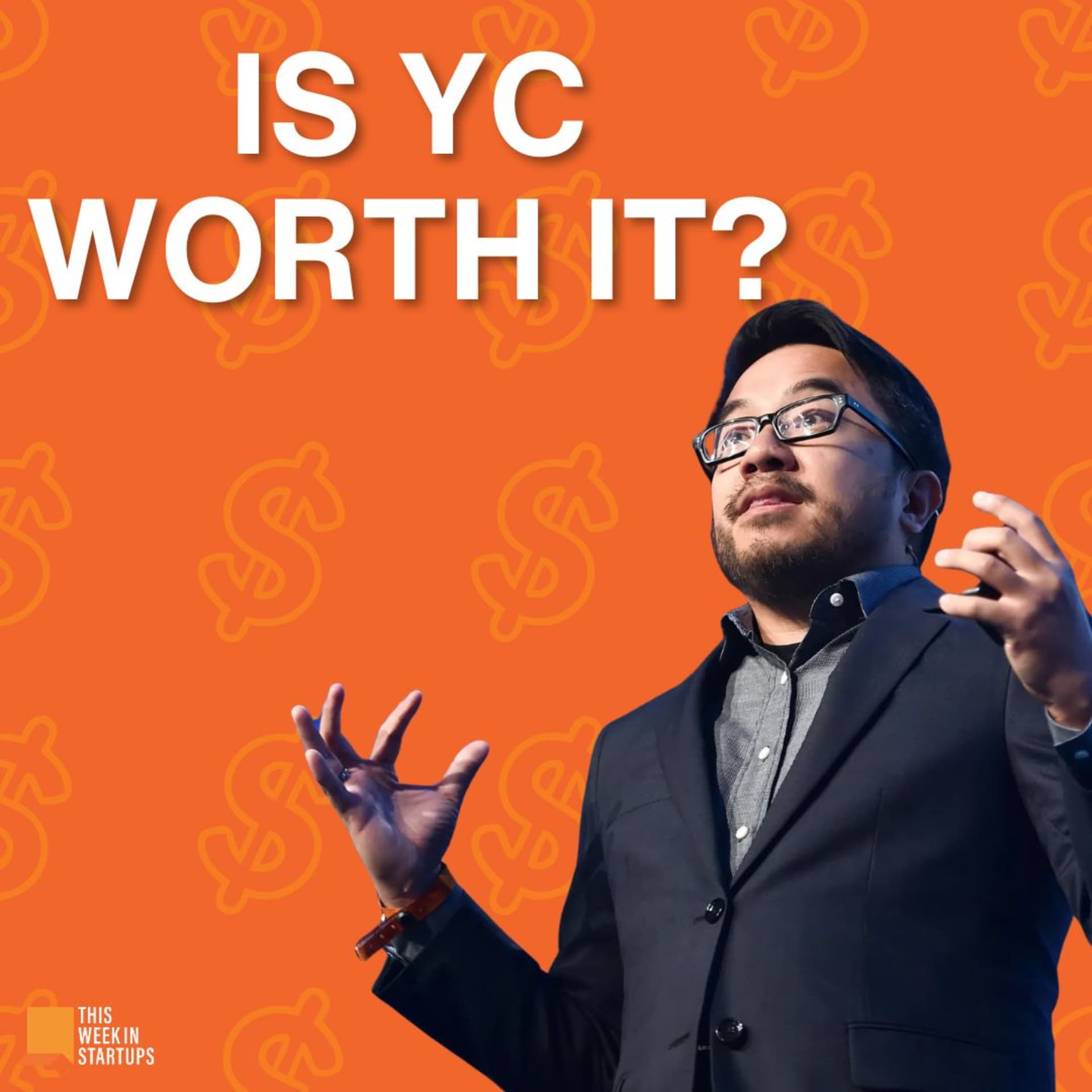
42:41If your top three customers are over the moon, it's all going to work out. Before we go to the customer, let's just do the YC thing real quick. Ah, yes, let's do that. Because that's the kind of button on all of this. Yes, we actually had a really great kind of coordinated link of data points today. All right. So Nicole Wiscoff from Wiscoff Ventures posted some very interesting data over on the Twitters and Gary Tan did respond. We have quite a lot to discuss here, Jason, But here is the data she put out. She grabbed some data from the Y Combinator Spring 2025 batch. And then she looked at a number of non-YC pre-agency companies from around the same era.
43:19And she found that from the YC cohort, the average round size, 3 million. Average cap on their safe notes was about 25 million. And their average ARR, just over 100K. For non-YC pre-agency companies at around the same time, average round size, 2.4 million. smaller average valuation cap on their safe 15 million much lower and their average arr was 290 000 much more uh there's a lot of nuance to this data jason but did any of that surprise you when you saw it no not at all uh what y combinator has done is what harvard has done they've created incredible brand that people are willing to um pay for value or proceed value you can make a big debate there um this data of course is uh probably friends it follows the absolute trend i see which is non-yc companies with traction versus yc companies with traction you're going to get essentially here half the price for triple the performance which is 6x leverage but let's just call 5x leverage on every dollar invested this is why a lot of folks have opted out of the yc game because there are a lot of dentists and a lot of folks coming to Y Combinator Demo Day who are, you know, maybe not as entry price discerning.
44:42And the majority of unicorns in Silicon Valley did not go to Y Combinator. They didn't get backed by Sequoia and they didn't get backed by me. That's just the nature of how big our market is. So going, and I would say a percentage of Y Combinator companies I know historically don't clear market. So they try for$25 million on the valuation cap, but Nicole might never meet them because they give up trying to raise money or they raise a small amount at a smaller valuation and they don't make their way to the seed funds. In other words, this data is kind of skimming the cream of two different groups, I think.
45:19So let's put that in there. Yeah. Just like the Andreessen data we were just discussing, we're talking about companies that Andreessen cared about or invested in. So we're already looking at a pretty rare circle yeah so i think and if y combinator accepts one percent of startups and companies that get to 25k a month in revenue i would say you know in the non yc precede and seed co's that would equal one percent of startups that were formed you know in the united states so this data is about the one percent of startups in the seed ecosystem and uh it is correct you you will pay 5x net net on the valuation to the arr performance now but you know listen there's uh airbnb who went to y combinator so people are hoping of the 500 companies or i'm not sure how many they're doing a year now maybe their cohorts have gotten smaller again so okay so there's three cohorts now instead of two i think and i think they're doing 250 per or 200 per so if they're doing 250 per and they're doing three that's 750 so it was at 500 it would be good to know that number um because uh for y combinator or tech stars or us we're doing a large amount of bets knowing that our pull-through rate is going to be 50 60 70 i bet you know of yc companies maybe 60 70 % actually wind up raising around.
46:50That statistic is the one you really need to look at. What this means is if you get accepted to Y Combinator, go. If you get accepted to launch, go. If you get accepted to Founding University, go. Antler, Techstars, I don't know the other top accelerators out there. I suppose it's probably a steep drop off from there. But if you can get into one of these programs, they act as a filtering mechanism for people like Nicole. People like Nicole do not have a big enough staff to sort through the 20 ,000 applications we get, the 50 ,000 that Y Combinator gets, the 40 ,000 that Techstar gets. Antler probably gets 40 ,000 or 30 ,000.
47:26It's just too much work to get through all those. So what you're looking for as a seed manager or a pre-seed fund is for somebody to just weed out people who who can't show up for 12 weeks in a row to an accelerator and have three co-founders, one of which is a developer submitting code who owns over 10 % of the equity on the cap table. That's what we do at our accelerator or at Founder University or YC or Techstars. That's what we all do. We curate a group of apples, you know, picked from the same orchard that aren't brews, that are shiny and new and don't have worms in them and we put them out you know uh and say hey look we worked with these apples these are these are some good apples how about these apples um but if you were a if you were a venture capitalist the best thing to do is to not is to go to demo day collect all the information do all the meetings and then wait one year to then go and meet with your favorite companies um because i guarantee you if you're raising a $25 million valuation caps, if this data is directionally correct, and I believe it to be, with 100 in ARR, it's 250 times revenue, right?
48:45So if you wait one year, that company will have spent that$3 million or much of it, they'll have gotten to 300K in revenue. And if they do a$25 million round, now they're still at 100 times or 90 times revenue, which is still extraordinary. And you can make, the same bet with three or four times the revenue. So stay in touch with the company, et cetera. I would, and these companies will get funded. So just pause and then do the funding after is my best bet. I think that's the best advice. Yeah. I agree with that from the venture perspective. I do want to say that Gary Tan, I want to give him his words here.
49:25He had a couple of different notes, but one that he said is that the vast majority of YC startups start with just an idea or with no revenue, meaning that they are younger at demo day age and the other startups raising similar rounds. So he thinks that the ARR comparisons that Nicole put up are a little bit specious, but we're always talking about in private markets, incomplete data. And so we're always doing our best. I don't think she's being at all malicious. I think Gary has a reasonable point, but no matter how you slice it, you're still paying quite a lot for not a lot of revenue. And just, if you want to hear more from Nicole Wiscoff, episode 2061 from last December, we had her on the show.
50:00She's a great interview. I would say his response about don't worry about YC 7 % equity take is a good comment. I tell people this about our accelerator or YC. Now, if it was 10 % or 15%, I would be a little bit worried because that's a large number. But any of these programs, that 7 % gets made up for in the valuation you get if you go raise money after, whether it's our program or his program or any program. and the ar comparison um you know that you know the vast majority of yc startups are just an idea with no revenue just an idea with no revenue 25 million is a pretty crazy valuation to ask for for just an idea with no revenue so i i think that doesn't make a lot of sense these uh results on the best in class for the companies that's tvpi so i would ignore this
50:57because that's paper gains not dpi i'm pulling this up for you right now jason i just had to make it make it big yeah so here i'm not sure who made this chart but uh maybe it's carta it's data maybe yeah this is not a good chart to go on because this is just paper gains and we just establish that YC gets you a higher evaluation that is outside to Garrett's own admission, like don't worry about the 7 % because we're going to get you a higher evaluation, then that means the valuations are inflated because of the Y Combinator reputation and justly so because they have a great reputation and they run a great program.
51:37What that means is the paper gains are not what you should be looking at when making a decision and evaluating them. You should be looking at the DPI and the distributions that actually got generated. Paper gains are inflated here by Gary Tan's own admission. He's saying, come to YC because we're going to get you a much higher valuation, five times more than a non-YC startup. If that actually is true, then these numbers based on TVPI would need to be divided by five or divided by three or something. And then you would be looking at much different numbers. And actually, I think if you did that, the top 10 % being 3X, that might actually be the actual correct number.
52:163X is great for a fund. Okay. 3X is great for a fund. All right. Now, Jason, I do want to get to our office hours today. We're getting back into this now that you're no longer over in Singapore. And so today we have Sean Stegerwald from Customer IQ. They were in Founder University cohort eight. They are in Launch Accelerator cohort 34. Please welcome Sean to the show. Sean, hey. Oh my gosh. Hey. You've got too much hair, just for starters. How dare you, sir? You look great. All right. So tell everybody what Customer IQ does and how it's going. Yeah, definitely. So we work with revenue teams to expand their capacity by automating email and CRM data entry.
52:59And it's going well. Most people hate both of those things, so they love when we solve them. Who would be the ideal customer for your startup? The ICP, as we say in the business, ideal customer profile. yeah ideally it's teams uh with large sales teams and they send a lot of quotes so they have a ton of that you know just action going on in their inbox it's really important for them to get them out quickly respond to people quickly and then follow up and those are our three things that our agent helps a ton with are people if i'm you know explaining the pro the product correctly, are people cool with automated communications with customers or do they like to have the AI kind of queue up the communications and tell you like, hey, this might be a good thing to send to that customer you signed six months ago and haven't spoken to since?
53:53Yeah, great question. So we never send without the user reviewing. It's all drafts. So what they love is that it's in the inbox and that's one of the unique things that we do. So we integrate directly with Gmail and Outlook. And for example, like my favorite part every morning, you get an email from Quinn is the name of the agent and says, hey, you sent 14 emails over the last few days where we expected a response and we didn't get one. So I left these drafts in the drafts folder and they just flip over to the drafts and they go through and they review them. And as they send them out, it gets better, but it's never sending as they make edits, it gets better, but it's never sending on their behalf.
54:30So I pay for Superhuman. Superhuman is doing drafts for me. Why would I use customer IQ if superhuman is doing that already? What's the difference between the two products? Now, I know the answer to this, but I'm giving you a softball. Yeah, sure. Superhuman, phenomenal if you're an email power user. And it's just like such a thoughtful interface over the email. We build an agent that lives in the inbox. So all of our users, they're either committed to or just still using Gmail or Outlook, the actual interface. Nothing about that changes. They keep using the same way. And then we're focused on revenue teams, which is sales and customer success.
55:07So what we build might not end up making as much sense to maybe support or product management or some of these other roles in the companies that we work with. And you kind of see that reflected in a bunch of different features that we show. You also have access to some unique data when you're drafting your emails, correct? Exactly. Yeah. So the two-pronged approach of integrating with the CRM and automating all that data in there means we have just amazing context of what should be written here, like what good looks like data that performs well in deals. And that kind of keeps expanding. And as the models get better, the context is the most important thing.
55:46So we help them automate a bunch of the busy work and what data gets put into that system. But in actual, like the actionable bits that the agent does in drafting, we can use that to do it even better. So if I have somebody in my Salesforce or my HubSpot, you're using that as part of the drafts. Yeah. Yeah. And just imagine like in Salesforce or HubSpot, a contact or an account record, ultimately those are like profiles of people that you're speaking to. And when you go to write emails or reach out or follow up, or you've worked some sales process, that profile really informs everything. And the models have this incredible intelligence and ability to write just like you and solve that blank page problem.
56:28but those profiles give it all the context. And so, yeah, that's what we use. Sean, I want to ask about the contextual AI engine that kind of underpins Quinn. Is this a model you guys change yourself? Is it a model you've built on top of? Curious about that. And then also just data privacy, because if you're inside of my email, you're inside of the absolute most critical information in my business. So how do you guys handle bringing in context to do this work without sacrificing some privacy for the user? Yeah, the context is really everything. And that engine we described is really like a really intricate rag format, just the system that we've created.
57:05It's a retrieval augmented generation. It's when we know we have a task to do and we need the LLM to go do it, what information can we pull in from those CRM profiles or past conversations, like little nuggets that have been saved along the way to make that really, really good. and uh so yeah we that's that contextual but that we talk about and it's what differentiates customer iq from just out of the box using gemini for example like in gmail if you ask it to write an email most people have experienced this it does definitely writes an email for you but it's not usually in your tone and style it has no knowledge of like this process or this deal so do you guys uh host a a da models internally on kind of on your own metal or are these the models that you're accessing via commercial APIs?
57:48Right now it's commercial APIs as we, yeah, we're early stage. As we start bringing out more and more larger customers, I definitely see a world where we are hosting open source models using that. And especially those get better. The magic is really in the context, then that can be, yeah, that's we to answer your security question, like that's the same software practices we've always used in software development. Yeah, we use AWS as our manage main backend follow all encrypted database practices. You go through Doc 2 compliance audits, all of that. Right. All right. So you went through Found University.
58:20You're in the accelerator now. Or you're in the next flash. You're in the accelerator now. Yeah, we're in right now. Yeah. So that's great. We just had a whole conversation about, you know, year one startups and getting revenue. You've got customers. You've got revenue. That's amazing. And you have questions for me. What's challenging? Any blockers? Any frustrations? Anything you need advice on? Yeah, definitely. There's a couple of things. One interesting, maybe even conversation to be had is we, this is my third company, third software company, first time ever in obviously an AI as most of what's usable today is pretty new.
59:00Yeah, pretty new. And one investor question we get, and also just thing we think about every day is usage and like think about monthly active users. is kind of a whole different world now where the vast majority of our users don't actually log in to Customer IQ. They sign up, they get set up initially, but then Quinn lives in their inbox and they kind of work alongside it every day. So I don't know if you have any advice around just managing that or thinking about it. Yeah, so there is a big question now. If companies are going to have less employees, then selling a per-seat basis that requires them to have less employees means you're empowering them to spend less money with you.
59:37Right. Right. So let's let that sink in. If you do your job, then 10 salespeople could come down to six because they're selling or five because you're selling twice as much because your product's so damn good. So you probably want to get some sort of a consumption or the amount of sales and how you improve it metric. Hard to do. I might be selling ads on a podcast and my book of business might be low millions of dollars. Alex might be selling, you know, HVAC solutions for, you know, campuses. And the average sales might be a$10 million contract per year. And it's a three-year contract for 30 million.
1:00:17So how do you reconcile that, right? It's three, two different groups, same type of person, but different ticket sizes, et cetera. So, you know, you have to find something that is going to like Salesforce. there's a third of people who will never use salesforce because what is salesforce course now like 3 000 a person per year i know there's a 500 a month per seat plan so yeah it's it's up there yeah well i mean that's six thousand dollars a year per salesperson that's why we don't use it um and so like doesn't make any sense and it's also cumbersome and whatever so you'll find who your ideal customer profile is who wants to embrace this you come up with a price maybe for their activity and the number of users the number of records in their crm maybe the number of active engaged customers so the more they engage customers and the more the customers respond the more you get paid so if you are in fact helping somebody engage in more customers maybe it's$500 a month plus, you know,$10 for every record in the CRM or every customer engaged.
1:01:25Or, you know, charging less than the value you provide is like one of the things startups do really well. So if Salesforce is$6 ,000, maybe we're charging, you know,$1 ,000 a year or$2 ,000 a year and maybe making it not necessary for them to have Salesforce. So I would get audacious here and think if this is how the future of sales is this really thoughtful, you know, agent working with you, maybe the agent is, you know,$50 ,000 a year. And either you want that agent in your 10 salespeople's email box or you don't. And you just go for the people who are selling those$30 million contracts, $10 million contracts, seven figure deals only, or six or seven figure deals only.
1:02:11And anybody who's not selling six or seven figure deals, like you should not use this product. And you just go straight for the high end and you help customize it for them and you give them a lot of attention. Or the other approach is you do what HubSpot did, which is it's very affordable. It's almost too affordable. It makes no sense how cheap HubSpot is. So congratulations on the success. If people want to get in touch with you, what's your email? In case investors, angels, seed funds, employee, potential team members, or most importantly, customers want to get a direct line to the CEO. What's his email?
1:02:45It's Sean at getcustomeriq.com. So the get part important, but Sean S-E-A-N. okay. Sean, I guess getcustomeriq.com. Continued success and really sky's the limit. I'm so excited that you went to Foundry University and the accelerator. I think it's like becoming a big pattern that we see people, Alex, over 12 weeks in the Foundry University and we see people who are taking it seriously and watching people work. This is like a great lesson for me in my life is when you watch people work, kind of hard to fake it. You can, kind of hard. So if you can like make a great steak and I watch you make it and then I take a bite, hmm, you know, like that, it's kind of hard to fake.
1:03:36I mean, you could have gotten lucky and made the perfect steak, but I doubt it. Okay, we'll see you all next time. on oh you know what alex everybody had a question for me where's the all-in episode we'll see you all next time on this week's startups bye-bye
From the publisher
Today’s show: Jason and Alex dive into why Y Combinator startups are raising at sky-high valuations with relatively low ARR—what does that mean for investors and founders? VC funds are slowing down and returning to pre-ZIRP pacing, signaling a reset in the market. Plus, in this week’s Office Hours, Sean Steigerwald, founder of CustomerIQ, demos his AI sales agent that lives in your inbox, drafting follow-ups using CRM context. It’s a deep look at early-stage investing, startup efficiency, and where AI is headed in enterprise.
Timestamps:
(0:00) Episode Teaser(2:09) Jason's Singapore trip recap and SoCal update(9:51) Squarespace - Use offer code TWIST to save 10% off your first purchase of a website or domain at https://www.Squarespace.com/TWIST(11:40) New rumblings from Mistral; is the French AI startup catching a tail wind?(19:40) Fidelity Private Shares℠ - Visit https://fidelityprivateshares.com! Mention our podcast and receive 20% off your first-year paid subscription.(26:23) VC investing pace is slowing... what does this mean for founders(29:42) INBOUND - Use code TWIST10 for 10% o your General Admission ticket at https://www.inbound.com/register (Valid thru 7/31)(33:33) Founders' guide to raising capital(36:31) Gen AI companies are growing FAST but are there concerns about churn?(42:46) Is YC still worth it? Debating paper gains vs. DPI as metrics.(52:18) Office Hours with Sean Steigerald from Customer IQ: managing active users and more.
Subscribe to the TWiST500 newsletter: https://ticker.thisweekinstartups.com
Check out the TWIST500: https://www.twist500.com
Subscribe to This Week in Startups on Apple: https://rb.gy/v19fcp
Links from episode:
Customer IQ: https://www.getcustomeriq.com/
Follow Alex:
LinkedIn: https://www.linkedin.com/in/alexwilhelm
Follow Jason:
LinkedIn: https://www.linkedin.com/in/jasoncalacanis
Thank you to our partners:
(9:51) Squarespace - Use offer code TWIST to save 10% off your first purchase of a website or domain at https://www.Squarespace.com/TWIST
(19:40) Fidelity Private Shares℠ - Visit https://fidelityprivateshares.com! Mention our podcast and receive 20% off your first-year paid subscription.
(29:42) INBOUND - Use code TWIST10 for 10% o your General Admission ticket at https://www.inbound.com/register (Valid thru 7/31)
Great TWIST interviews: Will Guidara, Eoghan McCabe, Steve Huffman, Brian Chesky, Bob Moesta, Aaron Levie, Sophia Amoruso, Reid Hoffman, Frank Slootman, Billy McFarland
Check out Jason’s suite of newsletters: https://substack.com/@calacanis
Follow TWiST:
Twitter: https://twitter.com/TWiStartups
YouTube: https://www.youtube.com/thisweekin
Instagram: https://www.instagram.com/thisweekinstartups
TikTok: https://www.tiktok.com/@thisweekinstartups
Substack: https://twistartups.substack.com
Subscribe to the Founder University Podcast: https://www.youtube.com/@founderuniversity1916


