
 Ask ChatGPT

 Today in Focus
19 Oct 2026 · 25m · 13 chapters
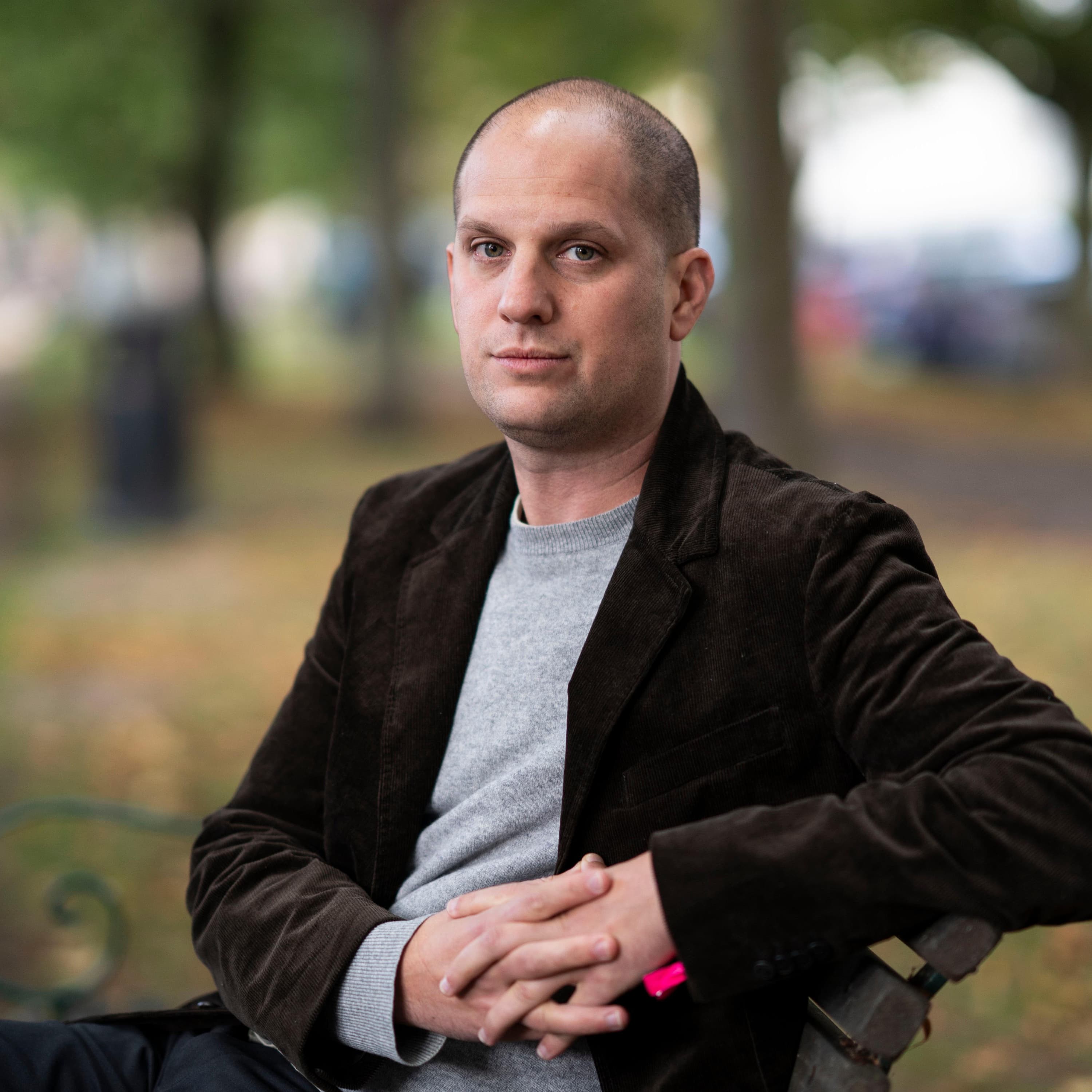
The arrest and 16-month imprisonment of Wall Street Journal reporter Evan Gershkovich in Russia, and how he was released in a prisoner swap after being convicted on espionage charges.
Evan Gershkovich is an American journalist (born in the U.S.; parents emigrated from the Soviet Union) who worked for outlets including the New York Times and the Moscow Times before joining the Wall Street Journal as its Russia correspondent. Host is Annie Kelly (Guardian).
Gershkovich was lured by an FSB setup during a meeting in March 2023, charged with espionage without torture, and treated as a “pristine package” for exchange. He says the case was fabricated and the swap was the real purpose. He describes LaFortovo prison as clean but psychologically punishing.
FSB storming a steakhouse meeting; Putin’s “catch traitors/foreign spies” remarks; the planned swap involving Alexei Navalny, David Whelan, and Vadim Krasikov; Navalny’s death derailing talks; Gershkovich’s 16-year sentence; release on Aug 1, 2024.
Written by AI. May contain mistakes.
The story of Evan Gershkovich's arrest by the FSB while reporting in Russia.
“He said he was a union boss for factories.”
Evan discusses his heritage and previous experiences with Russia before working there.
“Today in Focus, Evan Gershevich on life inside a Russian prison.”
Description of the environment for journalists in Russia and early protests against the regime.
“It's kind of like, you know, Russia is poor and difficult and gray.”
Overview of increasing government pressure on journalists and the political climate.
“The authoritarian creep was already well underway, and there's no illusions about that.”
Events leading up to Evan's arrest amid growing tensions between Russia and the West.
“That is, I think, the major inflection point.”
Evan recounts the details of his arrest and the immediate aftermath.
“The New York Times suspended its operations, Bloomberg shuttered.”
Evan reflects on the espionage charges against him and the political motivations behind them.
“who might have been triggered by something suspicious, arrest you, rough you up.”
Evan shares his realization of being part of a political maneuver in Russia.
“And that's when that moment comes into the relief of, oh, this was a setup for a very specific reason.”
A vivid description of the conditions and psychological challenges in a high-security prison.
“russian prison paint us a picture of what it was like inside what was like like so lafortevo is a kind of it's a contradiction it's the most high security prison in russia it's the fsb's house prison.”
Evan discusses his strict daily routine and how he copes by documenting his experiences.
“I might as well treat this as a reporting exercise.”
Evan describes the court proceedings and the farcical nature of his trial in Russia.
“It all feels like a real court case, but there's something off.”
Evan recounts the emotional journey surrounding the prisoner swap and his eventual release.
“It's excruciating to think of these two weeks.”
Evan reflects on his experiences and the state of Russia today, expressing hope for the future.
“And this book, This Cursed Beautiful Land, A Russian Story, is out now.”

Get the gist, explore an idea or ask about something said.
 Claude
On Today in Focus, what are the key points of this episode?
Searching your listeningAutomatic transcript. May contain errors.
0:00Evan Gershkovich: This is The Guardian.
0:08Today, the journalist locked up by Russia.
0:21As Evan Gershkovich walks into a restaurant in an eastern Russian city, he thinks he might be onto something big. I'm sitting with my back to the wall facing the dining room table. It's this American-style steakhouse that's kind of kitsch with these faux deer heads on the walls, sort of trying to be American, but not really. Opposite Evan sits his contact. He said he was a union boss for factories. My colleague had talked to him for four years. He had helped us with stories. He suggested he could help, but he would need to meet in person. It's March 2023. The war with Ukraine is over a year old, and Evan is the Wall Street Journal's man in Russia.
1:05He's writing a story about Putin's war machine. Evan knows this story is a risk. For him, but also he thought for his source. And I had told him, if you're going to bring anything, please only bring notes. Don't, At that point, I'm silly enough, still only worried about my source. The pair sit down and order lunch. The restaurant gets quiet. He brings papers on which he's drawn what look like, they really look like official tables of production figures. I start taking notes off of them, and that's when masked men storm in. The FSB, Russia's intelligence agency, had been waiting for this moment.
1:54And then they yell from across the room, I think we booked that table. And then they turn towards us and I see they're wearing masks. So then it's just sort of pure fear. Evan is surrounded. And as they're approaching, they say you're under arrest by the Federal Security Service of the Russian Federation, the FSB. He's handcuffed. His source disappears. Evan realizes he's been set up. They dragged me out into a van outside, put a hood over my head, take it off, and they asked who I worked for, say the Wall Street Journal, beat my midsection, take the hood off and say we're going to repeat the question.
2:35So then I think, oh my God, they think I'm a spy. They think this is espionage.
2:45This moment was the start of a 16-month ordeal for Evan and his family, as he found himself a political pawn in the power games, between Putin and the West. From The Guardian, I'm Annie Kelly. Today in Focus, Evan Gershevich on life inside a Russian prison.
3:10Evan Gershevich, welcome to Today in Focus. It's really, really brilliant to have you here. I read your book this week. It is such a brilliant piece of journalism. I wanted to ask you about your relationship with Russia. What was it like before you went to live there? And when you arrived in the country, was it what you were expecting? I was born in the U.S., grew up in the U.S., but my parents both left the Soviet Union in 1979 when this big wave of Jews were leaving. My mom left what's now St. Petersburg with her mom, and my dad left Odessa in Russian-speaking Ukraine with his family. and then they already met in the US and when my sister and I were born we were just Russian kids basically so I'm really Ivan or Vanya in my family and at home we spoke Russian we you know watched Soviet cartoons and movies we ate Russian food and my grandparents lived in Brighton Beach which is this part of Brooklyn that became a kind of like post-Soviet bubble but we only went to Russia once and that was it.
4:11Did you have a kind of idealized view of it you know the Russia of I'd say the opposite. It's kind of like, you know, Russia is poor and difficult and gray. And, you know, we went in 1999 when it was, I mean, a total mayhem, right? And the switch to capitalism wasn't going well. I was eight years old, but I remember my mom's friend was changing money for us. These two teenagers thought that she had put the cash in her purse and they stole it off her shoulder and ran away. So these images were very, you know, that was a really kind of shocking thing to see. And in that context, what made you want to go back?
4:46It was whim. It was a complete whim. So I kind of fell into journalism and ended up getting a job at the New York Times in New York. There were, you know, different reporters and editors at the paper who were suggesting, well, you have Russian. You know, Moscow has been this breeding ground for foreign correspondents for forever, really. I mean, what an interesting story. And the Moscow Times and English language news outlet there was this main kind of first launching pad. and they were looking for a reporter. So I applied and went. So you went to work for the Moscow Times and it was your first time being back in Russia since that childhood trip.
5:23What was it like working in Russia as a journalist at that time? I mean, it was a fascinating place to work at the time. I mean, when I arrived in Russia, the foreign press is treated like kind of quasi-diplomats in a way. And so when I'm there, we're reporting on whatever we want. Alexei Navalny, the late opposition leader, was drumming up these large protests. Really early on, I get there, and one of Moscow's biggest squares is just full of thousands of teenagers protesting the regime, and the riot police mostly let that happen.
5:54Evan Gershkovich: Taking to the streets to criticize what they call widespread corruption among the country's elite, the organizers say similar gatherings happened in about 100 towns and cities across this vast country. So there's this kind of feeling of there's potential for change here, I turned 26 a week after I moved there, reporting stories left and right. A lot of things are happening, meeting Russians my age. So it was a fun time. At the same time, it's paradoxical. The authoritarian creep was already well underway, and there's no illusions about that. Everybody understands that at this point. But it's kind of this mirage.
6:34Evan keeps reporting. Conflict is simmering in eastern Ukraine. about 100 fighters are dying on either side. Navalny's protesting. But things are changing. As Alexei Navalny, the most prominent Putin critic in the country, becomes a problem. Russia tries to shut him down. In the summer of 2019, the Kremlin decided not to allow anybody allied with Navalny to ballot in the elections, and that drew up huge protests in Moscow. But that doesn't work. And I think at that point, the Kremlin started deciding, OK, we need to, like, he's becoming too, despite, you know, our control of propaganda, just part of control of the political system, he's becoming too interesting.
7:18Evan Gershkovich: This incredible story, the most prominent Russian opposition leader is in a coma on a ventilator. Russia poisons Navalny with a Novichok nerve agent. to possible poisoning. The mission's botched. He survives, he's put into a coma, and Putin actually allows him to be flown to Germany where he's treated. He returns to Russia in the winter of 21. The leading critic of the Kremlin, Alexei Navalny, has been detained by police after returning to Moscow for the first time since being poisoned with a nerve agent in an attack he blames on the Russian authorities. He's immediately arrested, tossed into prison.
7:55his network of organizations get classified as extremist. Facebook, Instagram, Twitter start being fined for even mentioning him. And Russian media outlets start being branded as foreign agents. And one was even branded as an undesirable organization. That is, I think, the major inflection point.
8:23Evan, so as this pressure is building on journalists inside the country, the relationship between Russia and the U.S. is already getting much tenser as well, right, with these tit-for-tat arrests. So, Maria Butina, a Russian foreign agent arrested in the U.S.
8:40Evan Gershkovich: The Justice Department announced the arrest of a Russian woman on charges that she was angry about. He says it's a false case. She is a self-described gun rights activist with ties to the NRA. In late 2018, a Russian state TV reporter at Putin's end of year news conference poses him a question. He goes, why don't we do it like the Chinese do and just grab an American off the street and trade them for Putin? And Putin says, no, we can't just do that. If they violate the law, that's one thing, but we can't just grab Americans off the street. And two weeks later, Paul Whelan, a former Marine tourist, is arrested in a sting operation.
9:19Evan Gershkovich: He was arrested, charged as a spy. Russia's security service implied he'd been caught red-handed. And then there's other arrests. Trevor Reed, a Marine, Brittany Griner, WNBA player, they start stalking Americans, but it's not journalists. Were you worried that journalists would be next? When things start heating up and tensions with the West are growing, Sarah Rainsford of the BBC is kicked out. And then in February of 2022, you know, Putin launches this lightning strike on Kyiv, what was meant to be a shock and awe attack. And a week later, Russia decides to dig in. And it passes these absolutely draconian censorship laws.
9:58They called the invasion a special military operation. And they passed laws banning, calling it a war. for up to 10 years in prison, shut down the last remaining independent radio station, TV channel, so on, and all the Russian press fled the country. That was the writing on the wall. The New York Times suspended its operations, Bloomberg shuttered. And so that's the point where I thought it's better to watch and see.
10:31the war in ukraine gets worse but evan isn't in russia he's working for the wall street journal reporting from nearby belarus but really what he wants is to be inside russia so he goes back So I was doing stories about how life had changed for ordinary Russians, but also everything had to do with the war. It subsumed life in Russia. So I was also doing what we would call sensitive stories. So I went to a town that hosted an Air Force base and was seeing how life had changed. And it was, you know, talking to soldiers and their wives and their family, people, volunteers. We also reported a story about how Putin was getting his information from the front and making decisions about the war.
11:13And while he was publishing stories like this, Putin says something that catches Evans' attention. Right around that time, he addresses the FSB, which is Russia's domestic intelligence agency, and he tells them, next year we need to do a better job of catching traitors, foreign spies, and saboteurs. And although Putin is talking about spies and saboteurs, what he really wants is a deal, to get a Russian assassin, Vadim Krashikov, who is being held in Germany, returned to the country in a prisoner swap. But he needs more leverage, another American to make the trade work. And Evan starts to notice he's being followed.
11:57Then, in 2023, he walks into a restaurant in eastern Russia. It was 4pm, so the restaurant is half empty. It's sort of between lunch and dinner. and, you know, we sat down for a regular meeting, basically, until he pulls out these papers and shoves them into my hands. And that's this moment where, you know, the room kind of wobbles out of, you know, I think it's the first time I realised, oh, something's really wrong. FSB agents march towards Evan. They tell him he's being arrested and put him into a van and drive him away. And that's that moment of, oh my God, because it's not local police who might have been triggered by something suspicious, arrest you, rough you up.
12:42It's the FSB. So it's planned from on high. So I think what was happening was they were already luring me in. So you think it was a trap from the start? I think it was a trap from the absolute start. I mean, I think Putin was, you know, he had addressed the FSB and said, catch a spy. I think they were looking for Americans as valuable trade pieces. And then I think you also have a reporter running around doing reporting that... They maybe don't like. Well, they definitely do not like. And in the West, we might have called it brave, but also perhaps it's reckless. You know, it's wartime and we're doing sensitive military stories.
13:10And so I think that's when it kind of all hit home.
13:22So these officers arrest you, they cover your face, they put you in a van. You've got no idea where you're going or why. How are you feeling? It's really terrifying, but I think, you know, part of the coping mechanism is you're sort of just trying not to process it. But when they take me into the station, I'm assuming they're going to strap me to a seat like this, tie me up, put electrodes on my body. But in this case, I thought, well, maybe they want to know. If they think I'm a spy, maybe they want to know about this source. But if they want to know something and I have nothing to give them, it's going to be quite painful.
13:54Right. So you thought you were going to be tortured. But then what happens is they simply don't. They just tell me they're charging me with espionage. It's all very calm. And that's when that moment comes into the relief of, oh, this was a setup for a very specific reason. So it happens that quickly that when you realize how you're being treated, when you're first kind of brought into detention, you understood pretty quickly that this was, what, a prisoner swap? It was a more political move rather than the fact that you definitely were going to be treated like a spy. So, yeah, I mean, the first signals were, you know, I'm not tortured right away.
14:31They're not asking me anything about the source that I was meeting with or any other work I'm doing. I'm just brought to Moscow. But also when I'm brought to Moscow, you know, some of the FSB officials are joking like, you'll be able to write a book about this one day. Okay. You know, I'm not getting interrogated. And in my prison cell, I have a TV. And the second night in prison, I put on the news. And there's a host of a propaganda show saying, you know, cynical as it sounds. And he's talking about me. We've replenished our exchange fund. And in Russia, they call it an exchange fund. the group of foreigners they've taken to be traded.
15:03It must have been such a disorientating moment. It's disorienting, but it's helpful. So you can cope really quickly right away in the sense of, OK, they're going to be treating me differently. And I think it's important to understand how calculating the Russian state can be. So you understood. So I understood I'm being treated as this kind of pristine package.
15:29so you're almost immediately charged or you're facing charges of espionage you're sent to a russian prison paint us a picture of what it was like inside what was like like so lafortevo is a kind of it's a contradiction it's the most high security prison in russia it's the fsb's house prison. It's where they keep the most high profile inmates, the people they're investigating used to be the KGB's prison. And so during the Stalin era, that's where a lot of the torture and executions were happening. Now it's something of contradiction because it's the best run prison. It's the cleanest prison. And it's where a lot of Russians would say if they're going to go to prison, they'd rather be there.
16:08So the food's actually okay. The living conditions are okay. It's the psychological. It's the fact that the space is so small. The cells are tiny. How big? They fit two people. And so you have a bed running on one side, a bed running on the other. Only one adult person can fit standing up. So your cellmate, you're always with one other cellmate. So you can't stand at the same time. Exactly. You can't stand at the same time. Well, no, walking past each other. Exactly. So only one person can fit. That's how thin the space is. And then you can only walk up and down six or seven steps. You're only taken on one walk a day for an hour.
16:42And it's actually in a cell on the roof of the prison. So it's not outside. So that's the really difficult part. And not long after arriving at that prison, you get a cellmate. And I was really struck by that relationship in the book. What was he like? My cellmate is a kind of regular Russian criminal, quite imposing, tall, really strong, he's got tattoos. So I'm kind of scared of him at first. Pretty immediately, you know, he just kind of takes me under his wing, starts teaching me the ways of prison and showing me how he lives there, which is, you know, a really kind of strict way of living.
17:18Every morning we clean the cell. Every morning we exercise. You know, then we're reading all day. Then when we go on our walk, then we come back and we clean ourselves. We wash our socks to make sure the cell isn't smelling. And immediately you start writing about what's happening to you, don't you? I quickly got into this habit of working where I thought, you know, I can't change the fact that I'm here. I might as well treat this as a reporting exercise. So my friends really quickly in Russia passed me not just food, but, you know, pens and notebooks. So I start filling up my notebooks with reporting, basically, conversations we're having, FSB officials when I get to go to see them, prison guards, you know, the sights and sounds.
17:55So I treat my afternoons like work. So you've got this really rigid routine. Totally rigid. And that, you know, in the space where you're never leaving the space other than your one walk, your days are this like amorphous blob and that starts giving it some sort of structure.
18:14Weeks go by. It's like Evan is stuck in this endless loop of cleaning, walking, reading, and waiting. I had full access to information. I had Russian newspapers, the Russian TV, but also I'm getting letters from friends that are writing to me about the news, what's going on, and then also my Russian lawyers are visiting each week. And in the winter, there was this deal that started coming together. On the outside, Russian, German and American officials were trying to work on a swap. The journalist, Evan, and the Marine, David Whelan, would go to America. Russian opposition leader, Alexei Navalny, would go to Germany, while the Russian assassin, Vadim Krasikov, would go to Russia.
19:01But then, there's a problem.
19:04Evan Gershkovich: We've got some breaking news to bring you now. The UK and its allies have just confirmed that the Russian opposition leader, Alexei Navalny, was poisoned in prison. Alexei Navalny is killed in prison by Russia. The swap deal falls apart. Evan is stuck. When I found out that Navalny had been killed, I decided to tap out completely. I decided to, you know what, I don't know when the swap will ever happen. Maybe it's five years. And so I think, no more news. I don't want to know anything about the outside world. I'm living here now. Coming up, how Evan got out of Russia.
19:58Evan Gershevich is in a Russian courthouse, hundreds of miles from Moscow. He's facing charges of espionage. Alongside him are his lawyers. There's a judge. It all feels like a real court case, but there's something off. Russia always says we don't trade people until they're convicted. You know, it's a very formalistic system, very legalistic. They make everything look according to the rules. I mean, Putin, we all forget. He was a lawyer who finished law school, and I think it's part of how the Russian regime operates. The trial starts end of June. The judge says he's taking a six-week recess.
20:33going on my summer holiday, we'll come back in mid-August. Another sinking feeling of, okay, clearly swap talks aren't going well yet, I'm here for a while. But then a breakthrough. My lawyer comes to visit. And my lawyer says, I think the swap's happening. And this is out of the blue for you? It's out of the blue. She goes, I think the swap's happening. I go, what do you mean? Why is it happening? And she goes, well, yesterday I got a call from the FSB. And they tell me it's in everybody's best interest for this trial to end as soon as possible by Friday. They rush through to the end of the trial, and Evan is actually sentenced.
21:0816 years for spying. That moment of conviction is a dual feeling, because on the one hand, the quicker the better. I'm starting to go home now. On the other hand, that was this kind of moment where it sunk in. You know, I tried to stay level-headed throughout prison as a coping mechanism. Okay, I'm here on, you know, it's kind of like a reporting assignment. I'm going to be swapped. But then you hear 16 years and it sort of, it hits home. Oh my God, a journalist has just been convicted on a fabricated case for 16 years. And I felt both this burst of, I think the first burst of anger and deep sadness.
21:41Everyone is still playing along. Evan's taken away like he's about to start his sentence, but it's all a farce. Evan knows what's really happening. The swap is being prepared. But he does his part. He writes to Putin requesting a pardon. and two weeks go by. It's excruciating to think of these two weeks. Every day you think, oh my God, I'm going to leave. Eventually the pardon is granted. That moment when they actually come to your cell and say, you're leaving, is this incredible burst of pure joy. And on August 1st, 2024, Evan flies home. Finally they're back, back on US soil and into the arms of their families.
22:27And I don't even remember it at this point. I've seen the videos, you know, and the photos of me and my family meeting. But I just remember picking my mom up and then picking my dad up and talking to my sister and her brother-in-law. It was, yeah, pure joy, basically. Yeah, it's overwhelming.
22:55It strikes me as well reading the book that it's not just a memoir, it's a piece of journalism. You really did keep in that reporter space when you were inside and you've managed to kind of almost paint a picture of prison in Russia as being a kind of microcosm of the country itself. And I wonder now, now, like, how you're feeling right now about Russia, having gone through all of this? How have your views from that 26 year old arriving all those years ago? How do you feel about the country now? When I got arrested, it wasn't, you know, I call it shock, not surprise. It's not like I woke up and was like, oh, my God, turns out Vladimir Putin's regime is actually a bad regime.
23:32But it was shocking in the sense of, wow, they've crossed this red line with a journalist. And so I, you know, Russia, to me, is still this, you know, state that's up to no good in the world. I mean, it's subjecting its neighbors, Ukraine to horrific crimes every day, its own people to murder its opponents and jail teenagers for protesting the war for double digit sentences. I met people like that in jail. But it's still, you know, it's a complicated, vast place. And I'm partly Russian. My mom's Russian. I grew up, you know, so much of my family, spent my adult years of my life there. I met my girlfriend there, some of my best friends.
24:07And so to me, Russia is a place that I still hope, you know, one day after Putin's gone, maybe it can reform again. Evan, it's an amazing book and an extraordinary story. And thank you so much for coming to speak to us today. Thanks for having me. Appreciate it. That was Evan Gershevich. And this book, This Cursed Beautiful Land, A Russian Story, is out now. And that's it for today. This episode was produced by George McDonough and Guy Zafman and presented by me, Annie Kelly. Sound design was by Brian McNamara, and the executive producers were Sammy Kent and Khoma Khalili. And we'll be back later on with the latest.
24:58This is The Guardian.


