In short
A BBC “Top Comment” episode covering (1) Dare Market, a site that pays people to complete “dares” and post proof videos; (2) “industry plants” and fake hype campaigns in indie music; and (3) the viral JP Morgan “fish head/cannons” workplace-sexual-misconduct lawsuit that spawned memes.
Guests/backgrounds
No named guests in the transcript. Hosts Matt and another co-host interview Dare Market founder Isla Rose Perfito (29).
Key claims
Dare Market pays creators in USDC/USD for verified dare completions via an anonymous content-verification board; it claims moderation blocks life-threatening/illegal dares. The platform also allegedly collaborates with brands to manufacture viral “quests.” Music hype is often driven by marketing agencies using burner/fake accounts and paid influencers (trend simulation). JP Morgan denies the allegations; the internet meme cycle outpaces investigations.
Notable examples
Scientology “runs” (“dare market made me do it”); dares like panini-maker burns and gross challenges; Geese’s sudden ubiquity; Chaotic Good’s admitted campaign; JP Morgan lawsuit language about “fish head” and “cannons.”
Written by AI. May contain mistakes. Listen to the episode to check what was said.
Chapters
Tap a time to open that second in VOPandemic Memories and Hantavirus Panic
1:00 to 2:56
Discuss the recent hantavirus concerns and social media reactions.
“Yeah, I think I remember that life-changing historical event that we all lived through.”
Introduction to DARE Market
2:56 to 4:35
Explore the DARE Market website and its gamification of human behavior.
“They are watching hundreds, if not thousands of people all collectively say, sink that bitch.”
Scientology Runs and Community Challenges
4:35 to 6:00
Examine the rise of Scientology runs and how they link to DARE Market.
“Okay, so a month ago on Top Comment, we spoke about these Scientology runs where it's kind of like a competition to run through the front doors of a Scientology headquarters temple building and get as deep as you can.”
DARE Market Mechanics Explained
6:00 to 8:02
Understand how DARE Market operates and the nature of the dares offered.
“And people that do the dare basically then submit TikTok videos, Twitter videos, proving they did it.”
Safety and Moderation on DARE Market
8:02 to 11:46
Discuss the moderation and safety measures in place at DARE Market.
“Some of it could get dangerous and dark.”
DARE Market as an Advertising Tool
11:46 to 14:04
Analyze how DARE Market collaborates with brands for marketing purposes.
“I would question like how well thought out that this platform's ethics are if they're allowing that.”
The Power of Marketing Dares
14:04 to 16:40
Learn how brands leverage marketing dares to create authentic campaigns.
“on the platform by many, many multiples.”
Monetizing Attention in the Digital Age
16:40 to 17:57
Explore how creators can monetize their online presence through dares.
“What I think was quite striking is like this idea of, well, you know, the purpose of the company is to allow people to make a kind of influence a career for themselves, ultimately make money.”
The Rise of Industry Plants in Music
17:57 to 19:15
Discuss how marketing campaigns create perceived viral music success.
“Yeah, I mean, I'd say there's already a core community of people that treat their market like their full-time job and they have for months.”
The Deceptive Nature of Viral Fame
19:15 to 21:06
Understand the implications of artificial marketing in music promotion.
“they did get profiled in the New Yorker.”
Show all 16 chapters
Legal and Ethical Issues in Music Marketing
21:06 to 23:55
Examine the legality and ethics of influencer marketing in music.
“And it's kind of embarrassing if you're a real fan of Geese to find out that there's this huge fake influencer campaign because it almost seems like you've fallen for it.”
Skepticism in the Age of Algorithms
23:55 to 26:40
Learn about the impact of algorithms on music discovery and authenticity.
“But there's a question over whether those laws apply to you promoting a certain song.”
Introduction to the JP Morgan Case
28:00 to 28:20
The hosts introduce the topic of a significant lawsuit involving JP Morgan.
“Good luck on your first day at JP Morgan, sweetie.”
Allegations Unfold
28:21 to 29:50
A former employee files serious allegations against a senior executive at JP Morgan, sparking controversy.
“We start with saying that these allegations have been very strongly denied by the female executive at the heart of them and also by JP Morgan.”
The Meme Explosion
29:51 to 31:42
The hosts discuss the viral memes and social media reaction surrounding the allegations.
“So the name then comes out of the guy who's made the allegations.”
The Social Media Reaction
31:43 to 33:19
The hosts analyze how the public reacted on social media and the implications for those involved.
“Yeah, it's just such a weird move for the lawyers to go public with this and let the internet kind of litigate it before getting all the facts straight.”
Transcript
Automatic transcript. May contain errors.0:00This BBC podcast is supported by ads outside the UK.
0:30you'll want to leave a voicemail about it. Sell your car today on Carvana. Pickup fees may apply. Another app for inventory, one for CRM. Oh, don't forget accounting. Wait, which login was that? Or you could use Odoo, one fully integrated system that does it all without the hassle.
0:53Ditch the app overload. Get everything your business needs on one platform. Try Odoo free today. At Odoo.com. That's O-D-O-O.com.
1:07So, Matt, do you remember the pandemic? Yeah, I think I remember that life-changing historical event that we all lived through. Yeah, it was terrible. So everyone is freaking out on social media, certainly on my feeds, over the past, like, 24 hours, because there is this cruise ship which has, there are several people, including some people who've died, and other people who've been taken really unwell, with something called hantavirus, which we think is spread through rat poo. Yeah. The thing about hantavirus is it is transmitted either through airborne particles from rat feces. Matt here is quite literally an armchair virologist.
1:48Hantavirologist, yeah. There's going to be a lot more of us in the next few weeks, I guarantee you. The other way it can be transmitted, in very rare cases, in only one strain, and we still don't really fully understand this, is by close human contact. So this isn't like coronavirus where you could be in the same vicinity as someone and cough or whatever. This is like real physical contact. Now, as you might imagine, there is quite a lot of misinformation already swirling about, but the TikToks are just like, no, no, no, no, no, no, no. I'm not doing another lockdown. And obviously right now, there's no suggestion that that's going to happen.
2:20But you can see why. It's such a good example of where social media kind of becomes the incubator for everybody panicking. and I guess because we all experienced COVID through our feeds as well, people are like, I mean, they're on it with the memes. Like there's all these memes of people saying, obviously this is a joke. Can we just like get rid of the cruise ship? Y 'all are about to get so mad at me and I know I don't post, like this I usually would post on my other page, but like truthfully, sink the ship. Sink the ship, okay? If y 'all let these people off that boat and ruin summer for me, things will not go well.
2:55I know the people on the boat with that virus are in dismay right now watching TikTok. They are watching hundreds, if not thousands of people all collectively say, sink that bitch. Sink it. I don't give a fuck what you do. Blow the back off that bitch. There's a kind of real thing, which is this collective, whatever the opposite of nostalgia is for the pandemic, which is like never again. So what are we what are we talking about today? On Top Comment today, we are chatting about this DARE Market website. We've spoken to the founder of the website. And the reason we're talking about it is because you may have seen the Scientology run videos appearing on your social media feed.
3:36We've discussed them before. This website is much bigger than these runs, but we're going to be trying to get to the bottom of how it works and this kind of gamification of human behavior. Basically, complete a DARE, post a video, make money. And we're also going to be talking about industry plants. If you have been feeling like indie bands have just appeared out of nowhere, whether that's Geese or Last Dinner Party, you may be right. And we're going to get into the story of how marketing agencies are creating this kind of fake artificial hype around these bands. And maybe niche, maybe not niche, but you might have been seeing quite a few memes of cannons on your feeds.
4:12And that's because of this kind of outrageous, concerning, but also like completely absurd story unfolding at JP Morgan involving two employees, which like honestly took over the internet for a solid 24 hours.
4:35Okay, so a month ago on Top Comment, we spoke about these Scientology runs where it's kind of like a competition to run through the front doors of a Scientology headquarters temple building and get as deep as you can. That has expanded. Someone has created a website where they've mapped out the different floors. So it's properly gamified. We're trying to figure out now the exact layout of every floor of these Scientology buildings. Yeah, and everyone has been commenting about how this is the kind of resurgence of what we were talking about at the time, like influencers kind of doing like slightly risky stuff.
5:10They get the views, the clicks, the likes, they go viral. But there's been a really interesting development, which is one of the especially viral videos shows a group of people in LA trying to do one of these Scientology runs. And they very specifically say, dare market made me do it. Come on, pull, pull, pull. Dare market dared me to do this. Dare market dared me to do this. Let's go. Go, go, go, go. Now, dare market is this site essentially where there will be a dare. You can decide to kind of compete in the dare, take part the website decides whether you've kind of won the dare or completed the dare and then you get paid essentially i spoke to the founder who is this woman called isla rose perfito she's 29 and when i was on this call with her she explained what their market is and essentially how it works it's like truth or dare but just for dares so you can dare anyone to do almost anything to win a bounty, aka money.
6:08And people that do the dare basically then submit TikTok videos, Twitter videos, proving they did it. And if you have a good submission and you follow the rules, you get paid. And what format does that money take? It's paid out in USDC, which is just the US dollar equivalent of a cryptocurrency, but it's paid out in US dollars, really. And how do you regulate who wins and who's making money? Like, how do you run the platform, essentially? So dares can have a single winner. Dares can have multiple winners. In terms of who actually wins, I mean, there is like an anonymous board of people that are looking at quality of content and style of content and whether the dare was completed correctly.
7:02like the sort of dare fact checkers or the dare verifiers yes consider it like a an anonymous board of a of human oracles so the internet now just is black mirror like before black mirror was like what what if technology kept going maybe this could happen now it's just like they are the same all right so i'm just on the website now these are the things that you can be paid to do as a dare we did actually discuss whether we might try and do one of these dares but i'm not sure any would be suitable. Well, let's have a look first. Okay, so jumping onto a pile of thumbtacks with your bare ass. No, thank you.
7:38That has been done. Oh, there's also drink your own urine. Lots of people have done that. McDonald's ice cream prank. What's that? Go to McDonald's and order the classic ice cream cone. Ask the employee to record you and then make strange noises while sucking the ice cream out of the cone. Just one more. A wet floor shot. Someone is going to mop a dirty floor, squeeze out the mop and then take a shot of the liquid inside. So this is all really gross. Some of it could get dangerous and dark. Is this where we got Scientology runs from? Well, the first like very, very viral Scientology run happened several weeks ago.
8:15But this isn't something entirely new. Like it's actually been floating about on social media for a while, this concept of doing Scientology runs like as a kind of dare challenge thing. And according to the founder of the website, Like, actually, what happened was a couple of weeks after that first really viral challenge, someone then submitted a dare, which was do Scientology runs. And then obviously other people started doing it. So the allegation is that dare market kind of fanned the flames of the pre-existing fire. And Isla's argument is like this is fine and it's not trespassing because ultimately the church says, like, come on in.
8:49We live in a world where attention is the most scarce resource on the Internet. and I see people doing crazy things on the internet for likes and views and comments. And the Scientology run is a great example, actually. Dare Market didn't start the Scientology run trend. People started this simply either to do it for the love of the game, to get likes, comments, and views on socials and whatnot. Dare Market, yes, was early to the trend. but the majority of you know the runs you've seen you would know if they were tagged with dare market because the ones that were people were were shouting dare market in the videos and i guess the thing is with these scientology runs like there's not any evidence to suggest so far that anything like really terrible has happened like i don't know someone's been like punched or like it's got really violent or messy like it's not in the kind of proper danger zone Whereas there are some examples of stuff that do seem like, oh, hold on one second.
9:53Like someone putting their hand in a panini maker and basically getting burns. You're like, should we be encouraging that or paying for that? What does she say about that? Well, it's really interesting because Isla is essentially like, actually, we do have moderators and stuff that gets into the really extreme zone of someone could actually be like very seriously hurt or harmed. We don't allow those kind of dares. The big misconception about Dare Market when they hear about it is that it's just like this free for all. And it's absolutely not. I mean, the platform is moderated. Anything that's just blatantly illegal will just never see the light of day on the platform.
10:30The example you just gave, that was an example of a GoFundMe style type of dare. So that person that did that literally went on the platform and said, hey, guys, if you give me$200, I don't know what he actually asked for, but just for example, I'll put my hand in a panini maker. And that was funded. And, you know, he elected to do that. And so ultimately, that's his responsibility from the website's point of view. So if you decide to put forward a challenge that could harm you, ultimately, that's on you? Like, what would you say the approach is? I mean, that's not a life-threatening. We're not talking about a life-threatening thing here.
11:13If we're talking about something that's, like, objectively life-threatening to you or others, that just won't make it on the platform, of course. since the inception of this platform, understandably so. It's been like the first and biggest concern that people have. But ironically, since the platform has been live, it's been the only thing we haven't really had to worry about at all. I still think it is an issue if you are financially incentivizing people or creating a platform through which someone can financially incentivize themselves to put their hand in a panini maker. I would question like how well thought out that this platform's ethics are if they're allowing that.
11:57I mean, it's a slippery slope, right? Because she's correctly identified that the internet has become a place where you can monetize attention. And dangerous things have been happening as a result of that for years. In 2018, there was a YouTuber couple who she actually killed her partner because they were doing a YouTube video where he was trying to see whether a book could stop a bullet. It didn't. he died and she's now in jail. This feels like it has echoes of pump dot fun where you could mint a meme coin and do some attention grabbing stunt to raise the value of it. There was animal abuse, there was a faked suicide, someone self-immolated on this website.
12:37And all of this was to kind of inflate the value of meme coins, which are the simplest way to monetize the attention you've garnered in the attention economy. Meme coins are, you know, they're essentially minting your own monopoly money and then getting people to pay you real money for that monopoly money. Yeah. And off the back of those kinds of incidents, like the guy on fire, Pump.Fun did actually have to discontinue, stop their live stream feature. And I guess their market would argue, oh, well, we don't have a live stream thing. We just get people to post videos. They go viral and then they can benefit from doing that.
13:11Although broadly, the model is the model is similar. And the other distinction that Isla made when we were chatting about comparing the two sites was, well, Pump.Fun was about kind of promoting your own cryptocurrency, whereas in her view, Dare Market is about like boosting yourself as a creator and making content and sharing it online and all that kind of thing. But one of the most interesting bits of our conversation was when actually it became clear that these things aren't all obviously entirely organic. Isla says that Dare Market will work with particular brands or companies to basically come up with dares which are obviously good for those brands and companies because they get exposure as long as it doesn't go south and she says that they are quite transparent about those kind of collabs but ultimately means that all of the creators are like serving the companies this is also really like a new advertising vertical from a company's perspective we have some really exciting dares coming up but we're working with with a couple of companies bigger than anything we've ever done on the platform by many, many multiples.
14:13It's marketing. They want dares about their company. Correct. So like we've had brands come to us and say, okay, we have, you know, this certain launch to promote or whatever it is. Then we work with them and come up with a dare using that marketing spend. And because we're integrated with TikTok already, I mean, they're still accessing like all of the same advertising and UGC channels that they would from like, I guess, a traditional campaign, but this one feels much more authentic. It's actually much more valuable than clipping from streaming. It's like a mission and a movement. Like the Scientology run, although that's not in the theme of what we're talking about with like a brand-sponsored thing, that was a movement.
14:59Let's say like a brand has 100K and they want to do a campaign or a stunt. Then all of a sudden, they can basically organize some sort of quest or movement And powerful things can come from that because it doesn't feel like traditional advertising. It's more like a human billboard campaign. It's interesting that she references clipping from streaming because people who are in the know about the internet and social media know that all of the things that you're seeing that are viral, a lot of them are orchestrated by clipping. For some reason, that type of content, doing crazy stuff, covering yourself in gross things and pranking and like invading buildings has always done really well in social media.
15:42Yeah, and it's ultimately about how the algorithms, the recommendation systems are sort of spawning these kinds of websites. Because if you didn't have the algorithms and this content couldn't go viral and it wasn't the outrageous stuff going viral, then you wouldn't have the dares and the dares wouldn't be so outrageous and so on and so forth. And then you've got brands who ultimately realise that like anything that looks like an advert is no longer useful to them. They need stuff to be organic or seem like it's genuine and authentic. And so hopping on the kind of outrageous trends hype is a pretty good way, like strategic and savvy way of doing that.
16:17But obviously with massive downsides too. Like imagine if you come up with a trend and you think it's kind of funny and fairly innocent. And then as is always the case on social media, people realize that if they push it further, further, further, they'll get more views, clicks and likes. And then suddenly your brand is associated with something actually bad happening. Like it's not a risk-free thing to get stuck into really. So behind all this is yet another marketing campaign. I mean, essentially, yes. What I think was quite striking is like this idea of, well, you know, the purpose of the company is to allow people to make a kind of influence a career for themselves, ultimately make money.
16:51They don't need to do a normal job. They can just post these dares and stuff. But like the sums of money for quite a few of these dares are not huge. And actually how much the creators of these viral posts are benefiting from them is quite negligible, really. If you look at like there doesn't seem to be a standard example of someone who's now suddenly made an incredible life and career for themselves because they've decided to participate in these days. Which isn't to say that it's not like a kind of side hustle that people enjoy doing, because I can very much imagine that is the case. I feel like for the longest time, people have been pushed into this mold of having to like work a specific job or, you know, you have to go to college and graduate and then work corporate.
17:34And like that's just not for everybody. And I think that like if you don't fit the corporate mold of society, that doesn't mean that you should suffer. And Dare Market is basically a brand new way to basically monetize yourself. and become a creator. Can those smaller creators effectively monetize what they're doing? Because I noticed that some of the sums are massive and some of the sums aren't quite so big when it comes to the money they can make. Yeah, I mean, I'd say there's already a core community of people that treat their market like their full-time job and they have for months. This is just a very highly distilled version of the attention economy that already exists throughout the entire internet.
18:18The question is, how do you then translate that attention into money? Meme coins have been one way people have done it through Pump.Fun, attaching yourself to a meme coin. This is now potentially a new way people could start doing it, is by literally just monetizing the attention grabbing stunt before it even happens.
18:43So for ages, people have been theorizing about industry plans. There's always been certain artists or musicians who seem to become too popular too quickly to the point where it's like, why is this person all of a sudden everywhere? Well, it turns out that a lot of these artists are the result of highly artificial, confected social media campaigns that involve fake accounts and many other strategies. So this all started out with Geese. Geese is the band that they are good and they did receive critical acclaim before any of this marketing happened. they did get profiled in the New Yorker. They had an active fan base, but they all of a sudden appeared just absolutely everywhere to the point where people just began to question where have they come from.
19:28Geese mega hype needs to end. The young New York rockers are the latest fixation of the indie hype machine. And I can't help but feel like in the midst of all this praise they're getting as the band of a generation and as the inevitable strokes comparisons are made, the message fans are getting is at best geese are blowing up through a viral moment or at worst their industry plants, both of which detract from what's actually been a great story of a band developing their sound and perspective over not one, not two, but five albums. So recently at a South by Southwest kind of live podcast, a representative of a marketing company called Chaotic Good revealed that they were actually behind Geese's viral marketing strategy and that their firm creates networks of social media pages, typically on TikTok, and they basically drive bands music into the algorithm them along with other companies like byword and your culture they do things like um they create fake and burner accounts to kind of flood social media with these narrative points that they've decided will work for that artist they send influencers to concerts to take genuine looking clips of their uh concerts this happened with doji at glastonbury apparently so even big artists that you think wouldn't need that they're doing that for them too they call this trend simulation and essentially it's made people question whether all of the artists we're now hearing that have come out of nowhere like okay lou last dinner party are they all the result of these kind of campaigns infected campaigns and and how is this any different from like obviously on social media all the time we see influencers pushing certain like products or an experience or whatever how is this different because it's not transparent I think people, especially real fans of bands like Geese, feel slightly betrayed because the band is kind of purporting to be an indie band.
21:16And it's kind of embarrassing if you're a real fan of Geese to find out that there's this huge fake influencer campaign because it almost seems like you've fallen for it. And they probably are saying, no, no, we're real Geese fans. Everyone should read Shad D'Souza's article in The Guardian about this, which is incredible. It goes into detail about how this all works. but also it's because social media and these marketing campaigns realize this relies on the appearance of genuineness especially when we're talking about indie music it's that clip that a fan recorded a concert well it turns out that fan was actually potentially paid by a marketing company or it's a bunch of influencers just talking about this new band that they just found but actually they're all paid by a marketing company so the irony though is that by trying to kind of effect this genuine groundswell of grassroots support for these bands these marketing campaigns have actually like turned off real fans yeah they've turned off real fans they've harmed the authenticity of the bands that they're trying to promote because i've often thought this when you're scrolling on tiktok in particular and you see some of the kind of younger like american influencers and they'll all suddenly be sharing a specific song and like a specific dance to go with that song i mean you think of like charlie xcx when when brack came out and then there was this like the apple dance and everyone was doing the apple dance and stuff but that seemed genuine like that was an influencer who heard a song did a dance and then loads of people copied it and then it was ultimately like very good marketing for charlie xcx because it was like kind of fun it was reaching the right audience whereas this is like i think it's the fake accounts bit that feels so yeah deceptive it's the fake accounts bit i mean there's also services like floodify where you can pay for your song to be put as the background of like thousands of ai brain rot videos so it just gets it up the i think that would be so bad for your brand like imagine if you were like fruit love islands backing track you'd be like honestly when i think of those like monotone ai fruit voices i could not bear to listen to the music yeah exactly them you'd be like no no yeah i think and that is a risk i think that's what's happening to bands like geese that you know they're not having to like swat away allegations that they're like popularized by bot farms but they do have real fans and now in the u.s the federal trade commission has said that this kind of stuff is legal but there is a question in the uk as to whether it is legal because you do have to say if you are promoting a product under yeah yeah exactly and it usually has like either hashtag ad or commission paid for or one of those labels when an influencer is promoting something.
23:48Exactly. But there's a question over whether that applies to artists and music. Obviously, those laws were created to apply to products. If you're promoting like a cleaning product, you definitely have to say that. But there's a question over whether those laws apply to you promoting a certain song. You know, how is this different from, for example, Payola, which is when record labels would pay to get songs on the radio? And I'm sure it also seemed like even in the 80s, like, oh, why is this song all of a sudden everywhere? because every radio DJ was paid to promote it. But I think the issue is that social media has always pretended to be genuine.
24:23That's the whole idea of social media is it's real people. This is pretending to be grassroots when it potentially isn't. I mean, the real ramification of this is you no longer have free will. Like everything that you think you've found - Sitting next to Mr. Dostoevsky. That's what they call me, Mr. Dostoevsky. Fyodor. but you have way less free will than you used to, right? So it's basically impossible to organically stumble upon music unless you are, you know, a true connoisseur, crate digging in record shops or like, you know, going out there and actually listening to music. Everything, everything you think that you've organically come up with, your music preferences, the products you use, your philosophy, your politics, you have not come up with those things.
25:06The algorithm has put them in front of you. So it kind of in some ways actually connects back to what we were saying about dare market. and you know the way that they can collaborate with brands or come up with trends it kind of feels like because authenticity has been commodified and to some extent sort of exploited by brands bands whoever it is it's like actually now in a weird way stuff that's like not authentic is more is you're like oh okay this like very shiny advert is kind of legit and I guess Matt the genre of music matters here as well because ultimately when it comes to pop music like you of like sabrina carpenter like the whole thing is like so polished and shiny and and like very deliberately kind of commercial whereas indie bands like the perception is that they are like authentic and not shiny and not capitalist core in quite the same way yeah exactly it isn't a problem reputationally for sabrina carpenter or drake that he has like fake spotify views or whatever you know because people assume that but it doesn't make any of that good or okay like the idea that attention and streams are being taken from smaller artists by bigger artists because the platforms are dominated by these marketing campaigns, these artificial marketing campaigns isn't good for any music.
26:15The thing that I think this has proved for everyone though is oftentimes we'll get a sense that something has appeared out of nowhere on the internet and it feels like we're being manipulated somehow. That's where the term industry plant comes from because it feels like this person shouldn't be everywhere and yet they are. And if you ever feel like that, you may be right your suspicions may be correct that was actually the impetus for us to do the film about andrew tate because it did seem like overnight he just suddenly was everywhere yeah yeah and it turns out that he was everywhere because he had financially incentivized an army of clippers on the internet to reclip his controversial moments on social media so when someone appears out of thin air whether that's a geese clavicular andrew tate always question it i think that the algorithms have lulled us into a false sense of security that stuff can just randomly go viral, which remains true.
27:06But more often than not, like you say, there's something not quite right if stuff is succeeding in going viral incredibly quickly out of nowhere. One other important point is a lot of these marketing agencies, like the marketing agency that does GEIS, they're marketing themselves. They are claiming to know the secret of virality, but no one really knows the secret of virality. And also it changes all the time. Exactly. It's changed so much even in the past year. So be skeptical of the bands that are popping up. Be skeptical of the marketing companies that are now saying, this is kind of dark PR for them.
27:40And Matt J says, go to record shops. Yeah. Hit up your local record shop.
27:49Okay, have you seen the J.P. Morgan memes? I didn't think I'd ever say that sentence, actually. Yeah, J.P. Morgan is famously unmemable. They are absolutely wild. Good luck on your first day at JP Morgan, sweetie. I'm so proud of you. You're going to do great. So I guess you're going to be working for me, huh? Yeah, I'm so excited to be here. Let me know what I can do for you. Oh, don't worry. I will. I think in order to understand the memes, we need to have like, it's almost like that, can I explain it in a minute? I won't be able to explain it in a minute because it's really complicated, but I'm going to try.
28:24We start with saying that these allegations have been very strongly denied by the female executive at the heart of them and also by JP Morgan. But we'll get to that. So what happens is there's this lawsuit, this case that's been filed by a former employee at JP Morgan who is of South Asian ethnicity. They filed these allegations against a senior female executive also at JP Morgan. They've now left JP Morgan, the original guy who's filed the thing. The reason that this starts going viral is because it's reported in the press, it's reported in the mail, the filing. at the time the guy who's sort of made the allegations is called John Doe.
Read the full transcript
29:00And like it's one of the most unusual things I've ever read. It's like really, really graphic and unusual language used to describe the various people involved. So the person making the allegations says that this executive said all kinds of things to him, including calling his wife, who is of East Asian ethnicity, a fish head and talking about her own cannons. Your fish head wife doesn't have these cannons. Direct quote, there we go. As you might imagine, everyone immediately was like, what is happening here? And then, and then, and then, and then, it transpires that there's been like a workplace probe.
29:36JP Morgan say that there was no evidence of any of this happening in the way that it was filed. And obviously the lawyers for the woman involved say she categorically denies the allegations. JP Morgan also said that she cooperated with their kind of in-house probe, whereas the guy who made the allegations didn't. So the name then comes out of the guy who's made the allegations. And then there's a kind of side by side picture of like him and her. And then everyone's like completely disbelieves him on social media. And there's just like, I've never seen so many memes of like fish heads, cannons.
30:10If you had turned on the internet that day and had not been online for like 12 hours, you would genuinely have no idea what's going on. I bet your little Asian fish head wife doesn't have these cannons.
30:28never forget i fucking own you he's saying she keeps giving him blowjobs good for him no sir this is a complaint be a good boy so he alleges that someone with the power to control his bonus at jp morgan made him into a sex slave and got him to do all sorts of humiliating things Yeah, and wouldn't pay him unless he did these things. It comes out. It's published that this lawsuit is happening. His face comes out. Her face comes out. Their names come out. The lawyer then tries to unfile the case for corrections because even by that point, it's already been published. J.P. Morgan conducts its own probe, finds that they say that there's no evidence of these allegations.
31:15And yet that doesn't matter because already the Internet has turned each of these real people into millions of memes. And imagine how out of control you'd feel if you were either of them. Like you are honestly like you are like more viral than like the president of the United States for a day. Exactly. It's insane. Like I've never seen so many memes. And like the thing is, you've then got like people are, you know, posting screen grabs of where they're contacting the woman on LinkedIn, basically saying like, hey, hire me at JP Morgan. Like, I mean, the whole thing, like the fish head thing reads like fanfic written by like One Direction fans.
31:48Yeah, it's just such a weird move for the lawyers to go public with this and let the internet kind of litigate it before getting all the facts straight. Because if it turns out that, as J.P. Morgan is saying, there is no evidence of these allegations, it's too late for that woman. Like, she already, if you Google her name, the first thing that will come up is sex slave and canids. So, like, there's no time for this lawsuit to actually play out. Now, it is still active. The allegations could be true. And yeah, he's actually refiled. So the man at the center of this has refiled new allegations of what he says were a threesome and added additional witness statements.
32:22And it's now been reported. So the Wall Street Journal say that JP Morgan offered a one million dollar settlement after the internal claims were made. it really reminds me of the do you remember the coldplay kiss cam thing when that went so viral like the the ceo of this company and one of his sort of quite senior managers in the team seen like sort of like swaying together at coldplay or having a bit of cheeky kiss that just like took over again social media for like it's like a flash in the pan like 24 hours and these like corporate dramas become almost like a like a netflix show or something it's like corporate drama is one of social media's favorite tropes yeah and this does feel like a little bit of the resurgence of the sleuth disease because everyone is very quickly jumping on any new bit of information that comes out whether it's like the news of this settlement that apparently happened or the new sort of filing that's been made or i don't know the internal probe all of this stuff and they're like okay i know the truth now okay i know the truth now like every five minutes and it's like guys actually we don't know like we don't fully know what's happening here and you've sort of got to let it play out which they never do if you're suffering from sleuth disease or Hantavirus or just have anything you want us to cover, please get in touch through WhatsApp on plus 44 330 123 9480.
33:36Or you can use something called email to contact us at topcomment at bbc.co.uk. I told my dad, stop immediately. This is a scam. Scam secrets with me, Shari Vahl. He had actually paid£209 ,000 to the scammers. Each week we expose a different scam in detail to help you spot the red flags. I'll say things like, I carried on with it and I got great returns. With special insights from experts including criminologists and a former scammer who now works to help prevent fraud. When it's successful it completely wipes people out. Scam Secrets from BBC Radio 4. Listen now on BBC Sounds.
From the publisher
Launched last year, the website Dare Market describes itself as "the platform where you can dare anyone to do almost anything for real cash bounties". On this episode, Marianna speaks to Isla Rose Perfito, the founder of the site inviting comparisons to Black Mirror. From the individuals putting themselves at risk for financial gain, to brands sponsoring increasingly outlandish challenges, we ask whether her vision of a flourishing attention economy which rewards small entrepreneurial creators is realistic. And, why did the Church of Scientology send her a cease and desist letter?
Also this week, a viral interview from SXSW has reignited online discourse surrounding music's so-called 'industry plants'. Revelations about fake influencer campaigns are calling into question the rapid rise of bands and artists like Geese and Oklou, who were once celebrated for growing loyal audiences independently. In an online ecosystem dominated by digital marketing, Matt considers whether the concept of discovering new music organically is now an illusion.
Plus - panic over hantavirus, and the wild JPMorgan lawsuit sending meme production into overdrive.
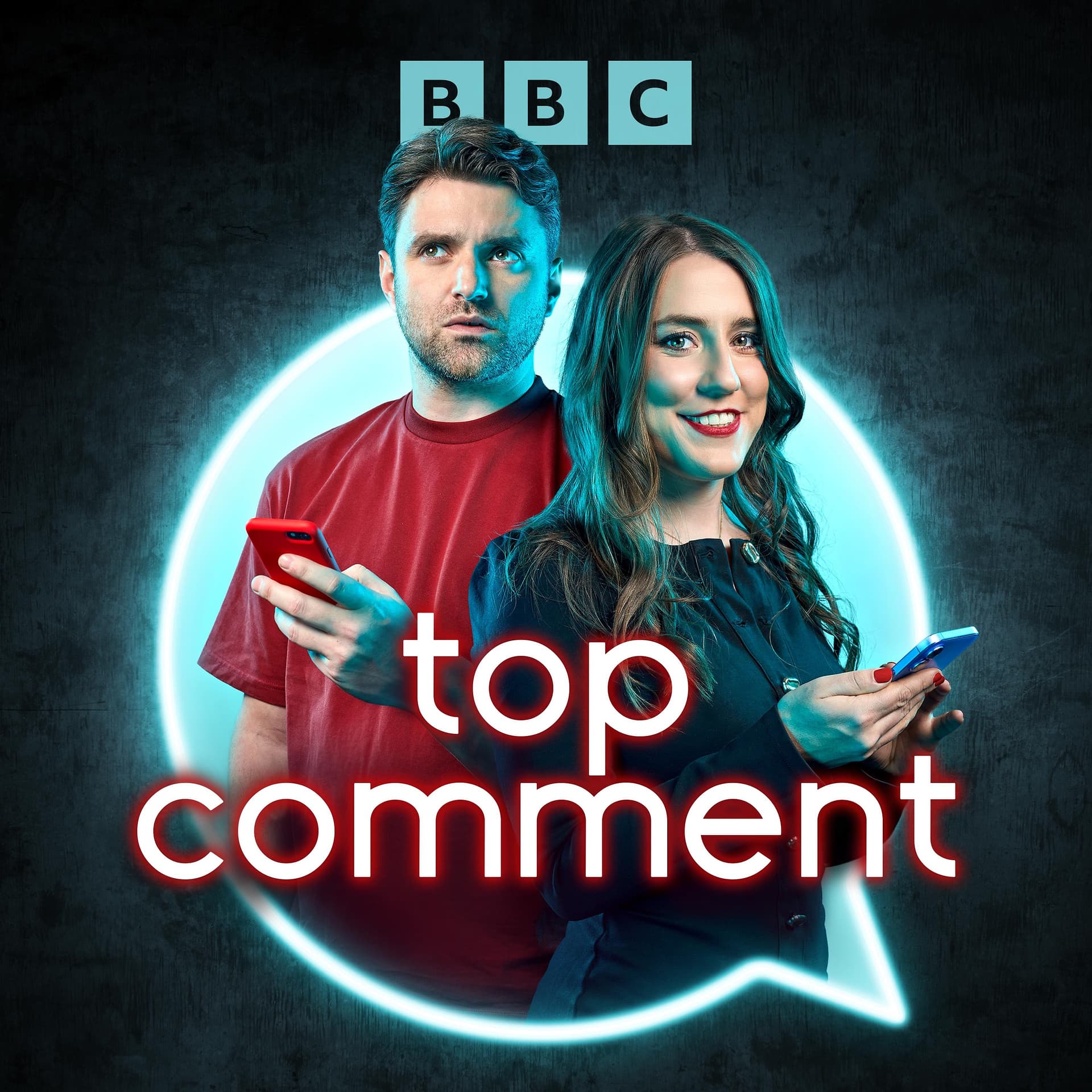
Top Comment is hosted by Marianna Spring and Matt Shea. The series producer is Laurie Kalus. The social producer is Sophie Millward. The technical producer was Jack Graysmark. The editor is Justine Lang. The senior news editor is Sam Bonham.
If you want to get in touch about something that's popped up on your feed, our email address is topcomment@bbc.co.uk or you can send us a WhatsApp on +44 330 123 9480.