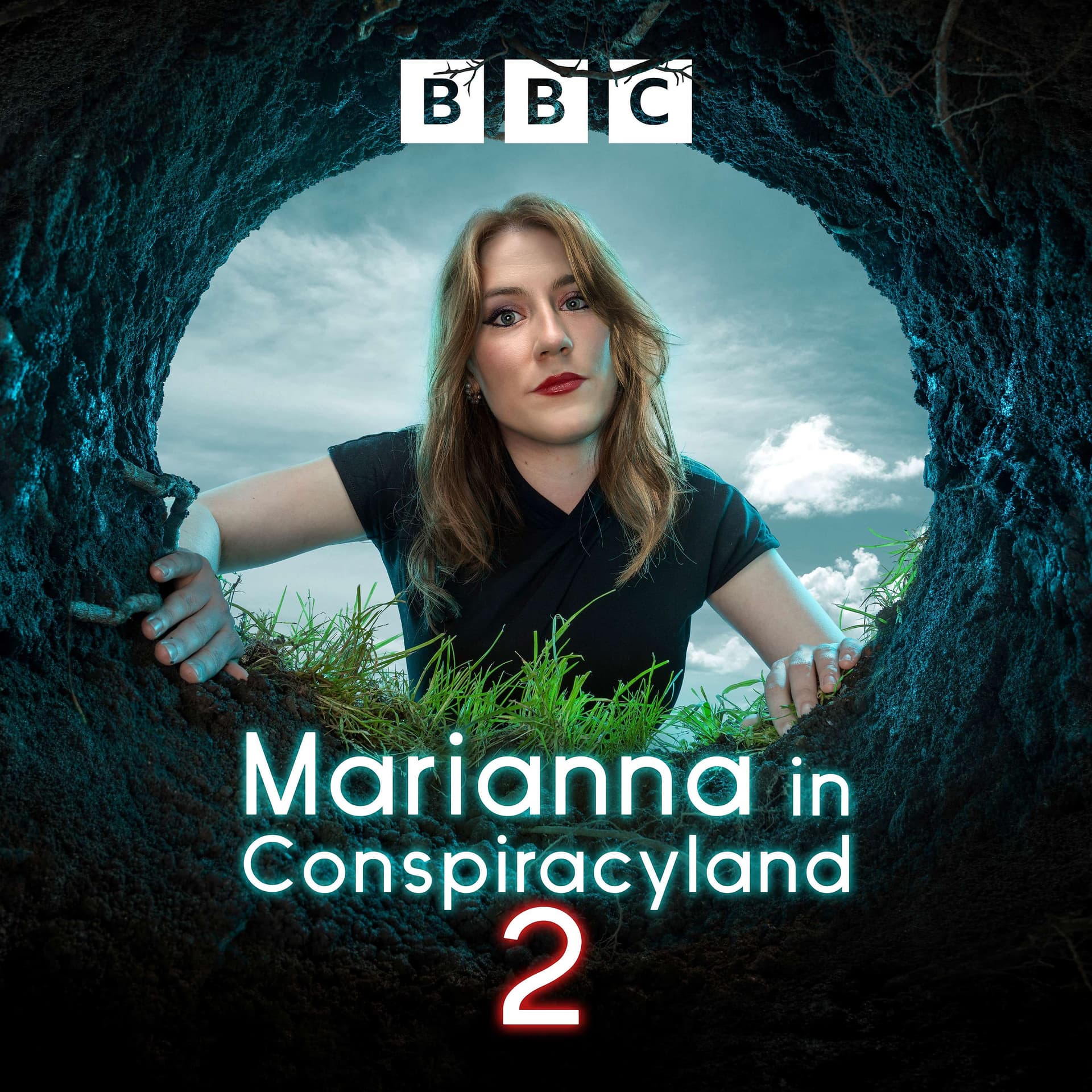
In short
The Maidstone coroner’s inquest into the death of Paloma Shemarani, a 2024 non-Hodgkin lymphoma patient who refused chemotherapy. The episode examines how anti-medicine conspiracy beliefs and family influence may have led to her death and how the inquest process unfolded amid conflict and disputed accounts.
Guests/backgrounds
Marianna Spring (BBC social media investigations correspondent). Gabriel Shemarani (Paloma’s twin brother; argues his mother’s conspiracy beliefs influenced Paloma’s treatment decisions). Kate Shemarani (Gabriel’s mother; prominent UK conspiracy influencer; attended remotely; blamed the NHS). Faramaz Shemarani (Paloma’s father; attended; denies influence/abuse claims). Witnesses include Dr Mohan (diagnosed Paloma), osteopath Nick Gossett (said osteopathy couldn’t cure cancer), paramedics Robin Bass and Karen Clark, and coroner Catherine Wood.
Key claims
Coroner Catherine Wood concluded Paloma’s death could have been avoided; she died from brain injury after cardiac arrest caused by untreated lymphoma, and Kate’s influence contributed more than minimally. Kate denies responsibility and alleges an NHS cover-up; she also claimed adrenaline/paramedics caused decline.
Notable examples
Kate interrupting proceedings; autopsy/pathology testimony that questions lacked medical meaning; Paloma’s statement opposing chemotherapy; a 999 call where Kate acknowledges Paloma was dying while later denying paramedics’ role; testimony about alternative “coffee enemas”; and the inquest’s final verdict and criticism of Kate’s courtroom conduct.
Written by AI. May contain mistakes. Listen to the episode to check what was said.
Chapters
Tap a time to open that second in VOGabriel’s Heartbreaking Discovery
0:42 to 1:40
Gabriel shares the moment he learned about his sister's death.
“I can't say like, you know, in an angry but just sort of like, I wouldn't say pleading, I'd say more like just, you can tell I just wanted an answer.”
The Inquest Unfolds
1:40 to 3:08
Gabriel recounts his experience at the coroner's court regarding his sister's death.
“I just said to her, you know, it's over for you.”
Conflict Between Beliefs
3:08 to 4:33
Tensions rise as Gabriel and his mother clash over conspiracy theories and accountability.
“It's like she's gambling and she's spreading her bets.”
Courtroom Tensions
4:33 to 6:45
The courtroom atmosphere becomes charged as personal and intense questions arise.
“including when their parents or relatives believe anti-medicine conspiracy theories?”
Paloma’s Statements
6:45 to 8:13
Paloma's statements about her treatment choices and her mother's influence are discussed.
“the inquest has also now become wrapped up in this alleged cover-up.”
Investigation Insights
8:13 to 14:01
The investigator shares insights from their research into Paloma's case and the effects of misinformation.
“But Kate Shemarani repeatedly tried to interrupt proceedings.”
Questioning Beliefs and Testimonies
14:01 to 15:24
The inquest raises questions about Paloma's beliefs and the influences on her statements.
“and questioned even having non-Hodgkin lymphoma, calling it, quote, an absurd fantasy with no proof.”
Emergency Response and Criticism
15:25 to 17:15
Details emerge about the emergency response to Paloma's collapse and the controversy surrounding it.
“only in the very same memory to be then killed again, because it's only describing how she died.”
Reflections on Grief and Impact
17:16 to 19:04
Gabriel shares the emotional toll of losing his sister and the impact of misinformation.
“Like, no one ever wants to see their loved one.”
The Role of Conspiracy Theories
19:05 to 23:51
Discussion on how conspiracy theories influenced the health decisions of loved ones.
“as she'd lost her sister to breast cancer in May after she rejected conventional treatment, like Paloma.”
Show all 12 chapters
Inquest Findings and Misinformation
24:42 to 28:00
The coroner's findings on Paloma's death highlight the dangers of misinformation.
“to having just listened to coroner Catherine Wood deliver her findings.”
Reflections on Loss and Identity
28:00 to 30:10
Gabriel shares his emotional journey following Paloma's death, exploring identity and memory.
“especially when their parent or family member believes and shares conspiracy theories.”
Transcript
Automatic transcript. May contain errors.0:00This BBC podcast is supported by ads outside the UK. How did a boycott Jimmy become a billionaire from posting videos? On Good Bad Billionaire, we're going to find out how the world's most popular YouTuber, Mr Beast, made his fortune. He's buried himself in a coffin for days. Counted to 100 ,000 on camera. And even recreated Squid Games, all in an attempt to go viral on the internet. But it all started when he gave a homeless man$10 ,000. So is he a philanthropist reshaping capitalism? Or is he just the king of the attention economy? Find out on Good Bad Billionaire. Listen on BBC.com or wherever you get your podcasts.
0:41The last time I spoke to Kay in person was on the day I found out my sister died, which was seven days after she died. So I called her up. I can't say like, you know, in an angry but just sort of like, I wouldn't say pleading, I'd say more like just, you can tell I just wanted an answer. I was going, is it true? Is it true that Paloma is dead? This is Gabriel Shemarani. He's telling me about the day he found out that his twin sister, Paloma, had died. Kay, the person he spoke to on the phone, is his mum, Kate Shemarani, a prominent British conspiracy theory influencer. She hadn't told him about his sister's death.
1:19He only found out about a week later. and Gabriel thinks his mum's beliefs contributed to Paloma's decision to reject chemotherapy, a treatment that could have saved her life after she was diagnosed with cancer in 2024. And Kay just kind of taunts me. She just goes, who's told you that? Like, who's made you think that? You know, you're crazy. I just said to her, you know, it's over for you. I'm going to, you know, I'm going to, you know, I'm going to hold you accountable. I'm going to bring you to justice. I'm going to make you face justice. In the years since Paloma died, Gabriel hasn't seen his mum.
1:57Until now, at a coroner's court in Maidston, Kent. It was weird, it was just like, I don't know, I was proud to say there was no fear towards her or no apprehension. I was just like, this woman is just someone that needs to be stopped. The purpose of the inquest is to establish the circumstances surrounding Paloma's death. and both Gabriel and his mum have been attending, him in person, her via video link. I've been there too, following every twist and turn. It's been bordering on theatrics, you know, my mum's behaviour towards the coroner where she just completely disrespects the process and she just tries to shout and took over the coroner.
2:36Like, I think my mum's tried to make it theatric and my mum almost sees it as like her Kramer versus Kramer moment. Kate Shemarani has remained adamant she's not trying to disrupt proceedings. She blames the NHS for the death of her daughter and says she wants to get to the bottom of what happened. But at times, it's felt like her version of events exists in a completely different reality to the one recalled by the medics and lawyers in the courtroom. And as the inquest has gone on, tensions have escalated. It's like she's gambling and she's spreading her bets. Because if one doesn't pan out, then let's see what the other one does.
3:14I've come to realise that this is what happens when what I call conspiracy land collides with the real world and people like Gabriel find themselves caught in the middle. It's both difficult but cathartic at the same time. I think more and more since all this has happened, I'm more able to process, like, oh, she's really gone, like, she's actually gone.
3:40I'm Marianna Spring, the BBC's social media investigations correspondent, and I expose the real-world consequences of disinformation, conspiracy theories, trolls and algorithms on social media. My investigation, first revealing what happened to Paloma Shemarani, sparked a public conversation about the impact of anti-medicine conspiracy theories and raised a lot more questions too. If you want to listen to Paloma's story, you can go back to episodes 1 to 5 in the Mariana in Conspiracyland feed on BBC Sounds. Since the series came out, I've received dozens of messages from people impacted by medical misinformation, either on their social media feeds or through their families and friends.
4:26People who they love have been told things that are just untrue. Lots of them have the same questions. can society protect people from being misled by misinformation when they're unwell, including when their parents or relatives believe anti-medicine conspiracy theories? Over the summer, I've been attending the inquest into Paloma's death to look for answers. I've seen medics questioned by people who believe conspiracy theories and tense family feuds playing out in court. This is Marianna in Conspiracyland 2 for BBC Radio 4.
5:10Maidstone Coroner's Court is tucked out of the way in a quiet green corner of Kent's county town. It's about ten minutes away from Maidstone Hospital, where Paloma Chemerani was first diagnosed with a blood cancer called non-Hodgkin lymphoma back in 2023. And it's just over an hour's drive from where she grew up with her twin brother Gabriel and their mum, Kate Shemarani. For Gabriel, this inquest feels like an important step in really grieving his sister. I was in this sort of weird, almost shock-like state. Well, it didn't feel that she was gone. I knew that she was gone. I do know that she's gone, but it didn't feel like she was dead.
5:53Inquests are held when there are queries about how someone died. They can be an opportunity for a family to get answers to questions they have about their loved one's death. It's meant to be very procedural. So I was kind of going into it being like, this is going to be a bit of a damn squib. There's not going to be anything shocking. But the Shemaranis are no ordinary family. And Gabriel and his parents, Kate and Faramaz, don't agree on what happened to Paloma. While Gabriel believes his mum's conspiracy theory beliefs contributed to his sister's decision to reject chemotherapy ultimately costing her her life Kate and Faramaz blame the NHS for Paloma's death She's died because of what they did not because of her collapse It's because of what they did and it's so crystal clear As far as Kate Shemarani is concerned though the inquest has also now become wrapped up in this alleged cover-up.
6:52On a fundraising page set up before it had even started, a friend of Kate's describes the case as, quote, a manipulated inquest designed to bury the truth. I just think that everything is there. It's for us to expose the truth. And the truth is there. And it's incredible the lengths these people will go to. I've still not seen any evidence to support Kate and Faramaz's beliefs. Arriving at the coroner's court, I found that it was fairly small, with benches on either side of an aisle, and the coroner seated behind a large desk, in front of a big screen, which is where Kate Shemarani appeared remotely.
7:34Gabriel and Paloma's dad and Kate's ex-husband, Faramaz Shemarani, also attended in person and via video link. Gabriel says he hadn't seen his dad, for three years. I remember I walked in and I realised he was there and I just kind of told myself, like, whatever happens, I'm just going to look directly at him. I'm not going to look away from his gaze, I'm not scared of his gaze. And I did that, and I found out he was the one that was... couldn't bear to look me in the eye. The inquest began with questions for Dr Mohan, who diagnosed Paloma with non-Hodgkin lymphoma. She said she did feel confident that Paloma had the capacity to make her own decisions and that she initially seemed open to exploring possible treatment options.
8:17But Kate Shemarani repeatedly tried to interrupt proceedings. After the first day of evidence, she accused the coroner and the lawyer for the inquest of partiality on a conspiracy theory podcast. The coroner rudely interrupted me. She also rolled her eyes on two occasions and I had to chastise her and remind her of her position of a coroner and how unprofessional it was. and she was showing partiality. And day number one was not, as it turns out, a one-off. This set the tone for the rest of the inquest, with the coroner having to frequently intervene during Kate and Faramaz's questions to medics and other witnesses, regularly reminding them both not to base their questions in false premises and at times having to mute their microphones when they continued to do so.
9:06For example, one doctor, the pathologist who performed Paloma's autopsy, told Kate Shemarani her question didn't, quote, have any medical meaning, he said. This is just word association. The atmosphere was tense. But when it was time for Gabriel to give evidence, it reached a new level. You know, when I was like, I'd like, I'd like, I'd swear to tell the whole truth. Like, I swear to tell the truth, the whole truth and nothing but the truth. I made sure to look directly into my dad's eyes as I was saying it. No, it was just kind of a statement of intent of, like, I'm not going to be bullied by you to give my testimony.
9:43Gabriel explained to the coroner how he believes his sister's decisions about her treatment were influenced by their mum's conspiracy theories, combined with abuse they experienced from their parents as kids. He described how Paloma became increasingly isolated once she was ill, behaving in a way he considered out of character. It's pretty obvious as someone that's like, you know, growing up 23 years with her twin brother, I know incredibly well. So like, I was able to see the actions that she was making externally. It caused me great concern, the selling of the car, the giving up of the flat.
10:17Gabriel's parents then had a chance to ask him questions. The questions, and their responses, were intense and personal. At times, it felt like a scene from a TV show. I had to keep reminding myself how absurd this was. Gabriel, who says he hasn't spoken to his parents in months and months, being quizzed by them about his twin sister's death. You know, when my dad started asking me questions, again, it was nice to be able to address him face-to-face, and essentially, like, in a pretty legalistic way, to basically say to him, like, you're talking out your arse, and I'm not scared of you. A lot of the questions focused on a legal case Gabriel brought before his sister died.
10:59He says he was not arguing that Paloma did not have capacity, but that he wanted an assessment of the appropriate medical treatment for her. His father questioned Gabriel's own mental health. So I just said to him, I was like, yeah, I've had my struggles in the past, as anyone would growing up with you as parents, but it doesn't make me any weaker and it doesn't make me any less of a man. Before, ultimately... He said something to the effect of, like, I hope whatever demons possessed you are excised, which I think he was saying it thinking like oh this is my few good men moment when I was going to burst and go you can't handle the truth but I think to the rest of the court everyone else was just kind of thinking like what planet is this man on so he said that and I just laughed it was an emperor with no clothes trying to clutch at straws to scare his son In her questioning Kate accused Gabriel of not respecting Paloma's choices and called him a, quote, inveterate liar.
11:59At one point, she asked Gabriel if he was a psychologist and he replied asking if she was a nurse, alluding to how she was struck off in 2021 for sharing pandemic misinformation. Kate Shemarani became increasingly frustrated, both during Gabriel's testimony and when he asked questions of other witnesses, especially when he referred to allegations of abusive behaviour when they were children, which both of his parents strongly denied. I think that really rattled her. I think it's, in the same way that a young child whenever they're caught doing something wrong they try and point everyone else to do the other thing.
12:36I think that was when she was like, oh, I've got to try and distract people. At one time, for example, she wrote on a piece of paper suggesting medics were responsible for Paloma's death and held it up for the coroner and court to see while she was on mute. At various points, the coroner had to remind everyone particularly Kate and Faramuz, about how they are expected to behave in the courtroom. And the coroner basically says, like, Miss Shemarani, this is completely unacceptable, you carry on with this kind of thing, we will have to hold you in contempt of court. In her own statement to the inquest, Kate Shemarani strongly denied any accusations of influencing her daughter or allegations of abuse, as did her ex-husband, Faramuz.
13:15Kate said that any suggestion that she influenced her daughter's decision-making or was in any way responsible for her death was slanderous. Paloma's dad, Faramaz, also said that his son Gabriel had been, quote, coached by external forces to cover up the NHS's medical misdeeds. They both turned down my request to interview them for this podcast. But as well as growing angry and frustrated, at other points, Kate cried and held up pictures of her daughter, including when statements from the High Court were read out. Paloma's statement was read. It's the only time I had to cry because it brought it very real for me.
13:56Paloma's statement was read. In the statements, Paloma said she did not want to have chemotherapy and questioned even having non-Hodgkin lymphoma, calling it, quote, an absurd fantasy with no proof. She also defended her mum's beliefs. The statements were signed by Paloma, but not all of them were dated. and at points, the lawyer questioning Kate Shemarani on behalf of the coroner asked whether Paloma had written them herself. The coroner also heard emails from people involved in a high court case before Paloma's death, which was brought by Gabriel to assess the appropriate medical care for his sister.
14:34These suggested that people, including Paloma's mum, had had the opportunity to feed into or change Paloma's statements. Kate Shemarani strongly denied the suggestion. Over the course of my investigation into what happened to Paloma, I've spoken to dozens of people connected to her. But as Paloma became more and more unwell, her circle became increasingly small. And it's been harder to find out firsthand what happened to Paloma right at the end of her life. So some of the most striking moments at the inquest have come from testimony about Paloma's final days, which Gabriel hadn't heard before either.
15:16When you hear information that you never knew about someone that's died, it feels like they're alive again because you're finding stuff out about them that you were never privy to, so it brings them back to life. But then the thing that's incredibly difficult is she's being brought back to life, only in the very same memory to be then killed again, because it's only describing how she died. One of those people was a cranio-osteopath called Nick Gossett. Initially I thought, because osteopathy is adjacent to alternative health, I was prepared for him to basically say, like, no, what Kay was doing was right.
15:45But I was extraordinarily presently surprised at how objective he was and how brave he was. And just, you know, sort of saying that my treatment couldn't treat Paloma and I told her that. Osteopathy is a complementary therapy offered by the NHS. Nick Gossett told the court that, from his perspective, osteopathy could be a useful, supportive therapy that can help you feel better when you're sick. but ultimately would never have been able to cure Paloma's cancer. He also described how unwell she was. In emails heard by the court sent to a different alternative practitioner, Paloma described having difficulty swallowing and trouble carrying out coffee enemas, which were part of the therapeutic regime she was following.
16:33At home, several hours after her appointment with Nick Gossett, Paloma collapsed and had a heart attack. The court heard how her mum phoned a friend who came round to the house before calling 999. Then a recording of the call was played. It was harrowing to listen to. Kate had inserted an airway and was giving Paloma CPR. The paramedics arrived and continued giving life support, including administering adrenaline in keeping with protocol. Paramedic Robin Bass told the court how Kate Shemarani, quote, kept interrupting while the crews were carrying out care. I found this when I read the post-mortem on my sister as well.
17:17Like, no one ever wants to see their loved one. They never want to see stuff or hear stuff which, like, reminds them that, like, to some people, their loved one is just a body. My mum's whole testimony since has been, like, the NHS killed her. She was fine before. It's, you know, it's not cancer. And then you hear my mum on the call going, you know, she's shouting, she's dying, she's dying. So even when there and then my mum acknowledges that my sister's dying. Crucially, these comments from Kate, saying that Paloma's dying and acknowledging how critical her condition was before paramedics even treated her, conflict with other unproven theories she has since shared, including accusations that paramedics caused Paloma's decline by administering the adrenaline to help restart her heart.
18:05Paramedic Karen Clark told the inquest,
18:12She also said she would have called an ambulance before calling a friend, as Kate Shemarani did. While she was being questioned, Kate Shemarani told the court that she had only said Paloma was dying to encourage the ambulance to come faster, and she said she didn't call an ambulance immediately as she wasn't sure if it was necessary. After that 999 call was made, Paloma was taken to hospital. where doctors, including one in intensive care who gave evidence, assessed her condition and found that the likelihood of her having suffered irreversible brain damage was very high. Her life support was switched off a few days later.
18:54Gabriel has told me how difficult it's been to process his sister's death, given everything that happened in the build-up to it. And he's not alone. One woman approached me at the inquest to explain how she'd come along as she'd lost her sister to breast cancer in May after she rejected conventional treatment, like Paloma. I'd listened to the podcast and I was actually so grateful because I thought, oh, here's someone who's talking about this because, you know, we felt desperate. I don't know, like I said, I woke up one morning and I was looking at my news feed and I was reading about the inquest and I just thought, I need to go there today and see what Kate Shemirani is saying.
19:48I just wanted to see what was happening, really. I'm calling her Lucy because, while she's speaking with her family's permission, she wants to protect their privacy. Lucy is one of many people who've approached me since I first investigated Paloma's story to share how someone they love has been impacted by medical misinformation and in the most extreme cases, lost their life. In Lucy's case, she says her sister became more open to these kinds of conspiracy theories during the pandemic. She started sort of changing. very much with Covid and she became a lot more serious and really
20:47really caught up in ideas and her sort of personality and her beliefs really changed. So when she was diagnosed, Lucy says her sister, rather than trusting and talking to family and friends, instead turned to alternative health practitioners or influencers on social media. When I went into her photos, there were hundreds and hundreds of screenshots of all sorts of things, but there were quotes. You can do this, you can believe in the power of yourself. I mean, hundreds of screenshots of things she'd seen on Instagram. Lucy says, while scrolling online, her sister was exposed to lots of the same conspiracy theory narratives and alternative ideas that Paloma also seemed to have encountered.
21:47And she says that, over time, her sister hid more details from the rest of the family about how serious her illness was and became harder and harder to reason with. She said, oh no, I've seen a doctor, it's nothing to worry about. But then she said, you need to feel pain to work through the tumour. So any pain I feel is helping me heal. Only that is evil.
22:28because if you'd seen her at the end, the pain, and she was at home with her children in excruciating pain, the cancer had gone into her brain, her spleen, her liver, her stomach and her lymph and there was an enormous mass protruding out of her right breast. Also like Paloma, Lucy's sister doesn't fit the stereotype of a conspiracy theorist. She's an intelligent woman and it's just, you know, it's just a beggar's belief really that she, I mean, she clearly totally believed it. She had a lot to lose. New research from Bath University suggests there is not one type of person who can believe conspiracy theories.
23:29Negative experiences that have weakened someone's trust in medics or institutions, combined with the sense of hope and community these ideas can foster, explain, in part, why people turn to them. And from all the messages and emails I've received from those affected, that appeal can increase when you're unwell and looking for answers. The outcome of this inquest doesn't just have ramifications for the Shemarani family, but for those like Lucy's, who also want to ensure this doesn't happen again. How did a boycott Jimmy become a billionaire from posting videos? On Good Bad Billionaire, we're going to find out how the world's most popular YouTuber, Mr Beast, made his fortune.
24:16He's buried himself in a coffin for days. Counted to 100 ,000 on camera. And even recreated Squid Games, all in an attempt to go viral on the internet. But it all started when he gave a homeless man$10 ,000. So is he a philanthropist reshaping capitalism? Or is he just the king of the attention economy? Find out on Good Bad Billionaire. Listen on BBC.com or wherever you get your podcasts.
24:41Now, after months of hearings, I'm stood outside the court, to having just listened to coroner Catherine Wood deliver her findings. In her conclusion, she found that Paloma's death, quote, could have and should have been avoided. She said that Paloma died of a brain injury caused by the cardiac arrest she suffered at home as a result of her untreated non-Hodgkin lymphoma, a cancer that she said was not only treatable, but in Paloma's case should have been curable, making her death unnatural. The coroner was highly critical of Paloma's mother, Kate Shemarani, whose behaviour she called incomprehensible on several occasions.
25:19She said that, while she accepted that Paloma did have capacity to make her own decisions, that she was, quote, an exceptionally vulnerable young woman from December of 2023, and she questioned her ability to make an informed decision because she was, quote, highly influenced by others, including some of the alternative practitioners who advised and saw her, as well as her mum and dad. She said that this influence contributed more than minimally to Paloma's death. The coroner also considered, but stopped short of, ruling the death as an unlawful killing by Mrs Shemarani because while she recognised Kate Shemarani had clearly taken control over events and acted beyond her mother's duties and in doing so failed to meet the duty of care, she said that Paloma was not just adversely influenced by Kate Shemarani alone and that unpicking the influence around Paloma would be impossible.
26:13The most striking of all was how the coroner underlined that. Had Paloma not been influenced and misinformed, had she been properly advised and supported, she had no doubt that she would have chosen to live, to have chemotherapy. That is a stark omission about the very real impact misinformation can have, especially at a time when someone is fearful and making important life decisions. I found watching the coroner deliver her verdict tough. Paloma's brothers, Gabriel and Sebastian, were visibly frustrated and speaking afterwards told me that they felt that their mum had been allowed to get away with influencing and ultimately contributing to their sister's death because of her beliefs and behaviour.
26:53Kate Shamrani has repeatedly denied this. They fear others affected by anti-medicine conspiracy theories aren't protected. I asked Gabriel whether the inquest has brought him what he needed. I feel like, you know, I think as a brother, like, an inquest of this kind can, like, never be enough about them because my sister has so much more to her than the man that she died in. Like, she was incredibly intelligent. She was, you know, she was funny, but, you know, she was embarrassing at the same time. But, you know, she was goofy. And, like, there's so much more to her as a person. Does it focus on how she died enough?
27:25I think the coroner, to the best of their ability, has tried to keep it, like, focused on that. And then my parents, to the best of their ability, have tried to sort of, like, change the discussion away.
Read the full transcript
27:36The inquest has laid bare the inner workings of a family fractured by conspiracy theories. It's offered some very personal answers for Paloma's brothers and friends, and filled in some gaps for those who loved her, but couldn't see her in her final weeks and days. It's also started to answer the wider questions. How can we protect people from being misled by misinformation when they're unwell, especially when their parent or family member believes and shares conspiracy theories. It's complex and it feels like we're still in a diagnostic phase, identifying the weak points in our social systems.
28:18Paloma's death feels like a turning point, opening more people's eyes to the dangers these ideas pose and how society is not yet equipped to stop it happening again. Anti-medicine conspiracy theories can contribute to someone losing their life and ultimately undermine how the systems designed to protect us work, even when they're not perfect.
28:45I ask Gabriel, now that the inquest is over, how will he remember Paloma? I don't really know. I'm figuring it out because I feel like the thing for me is like when you You grow up as a twin. You never relate to yourself as one person. You come as a pair. So your identity, your ego is tied to them. I'm on my own in a sense that I haven't been before. I mean, the stuff that I try to do to bring her to life. I listen to music that makes me think of her, or music that like, it wouldn't even necessarily be songs that we listen to together. It would just evoke a feeling of Paloma to me. But like Use Somebody by Kings of Leon, it always makes me think of her I guess for me it's like I guess the way my life's going I've tried to shape my life around my sister it's important that like I take the opportunities there in front of me but also like seize the life that she didn't get to have I know I said at her funeral I've got to live I've got to live a double life now so that you know when I do see her again I can give her back the life that was taken from her I guess it's sort of my only The only way I have to remember is just by living my life the fullest I can and doing whatever I can to appreciate every day that comes.
30:10Hello, I'm Amol Rajan and from BBC Radio 4, this is Radical. We are living through one of those hinge moments in history when all the old certainties crumble and a new world struggles to be born. So the idea behind this podcast is to help you navigate it. What's really changed is the volume of information. That has exploded. And also by offering a safe space for the radical ideas that our future demands. Go to the Chancellor and say, radically cut the taxes of those with children. Telling our stories is powerful and a radical act. Listen to Radical with Amol Rajan on BBC Sounds. How did a boycott Jimmy become a billionaire from posting videos?
30:58On Good Bad Billionaire, we're going to find out how the world's most popular YouTuber, Mr Beast, made his fortune. He's buried himself in a coffin for days. Counted to 100 ,000 on camera. And even recreated Squid Games, all in an attempt to go viral on the internet. But it all started when he gave a homeless man$10 ,000. So is he a philanthropist reshaping capitalism? Or is he just the king of the attention economy? Find out on Good Bad Billionaire. Listen on BBC.com or wherever you get your podcasts.
From the publisher
Can Coroners' courts cope with conspiracy?
It’s been more than a year since Paloma Shemirani died after rejecting chemotherapy in favour of alternative methods. Her brother Gabriel blames the beliefs of their mum Kate - who is a prominent British conspiracy theorist - for his sister’s death. This summer, he’s found himself face to face with his mum for the first time since Paloma died at an inquest into how and why she lost her life. After investigating - and revealing - what happened to Paloma for the first time almost four months ago, the BBC’s social media investigations correspondent Marianna Spring is back following the twists and turns of an inquest that has felt like Conspiracyland colliding with the real world. In the coroner’s court she see’s medics questioned by conspiracy theorists and tense family feuds unfolding in real-time. Could Paloma have been saved? And can society handle Conspiracyland?