Ask ChatGPT

 TRIGGERnometry
25 Jun 2025 · 1h 34m · 40 chapters

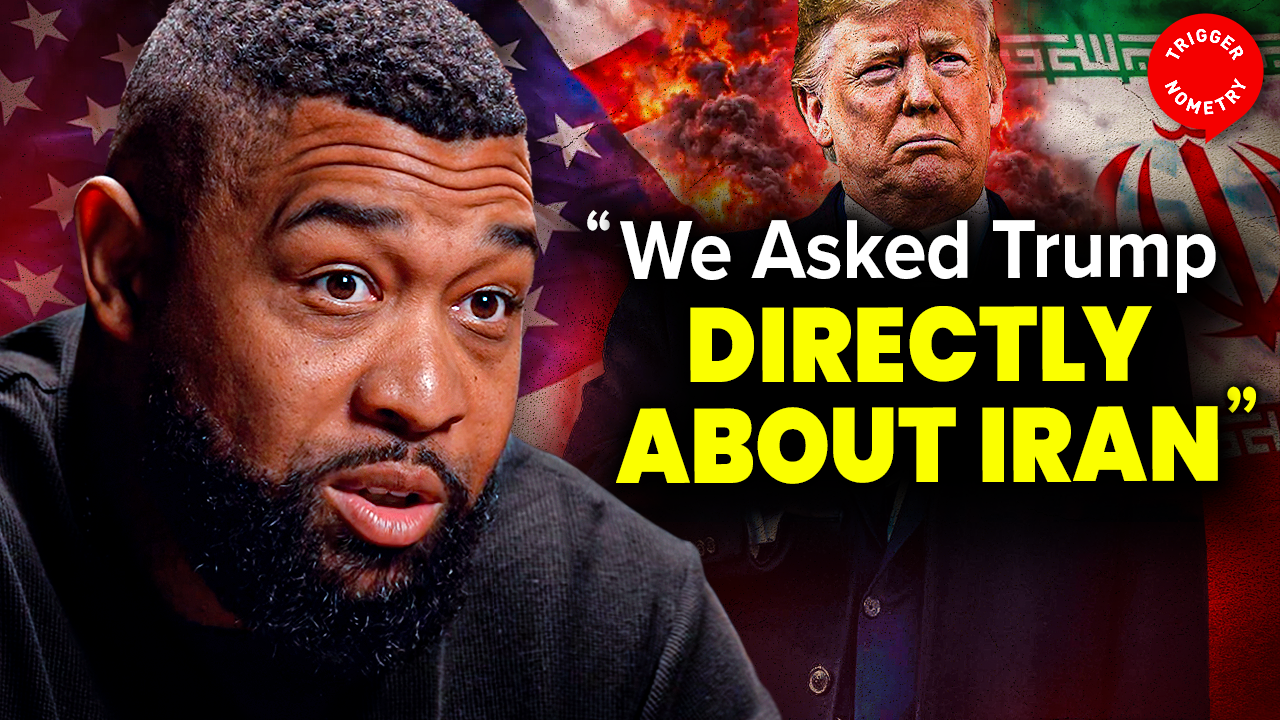
Glenn Greenwald argues the U.S. and Israel’s bombing campaign against Iran’s nuclear program is likely to escalate into a broader war, and that Iran’s nuclear ambitions are better understood as leverage and deterrence rather than an imminent plan to destroy Israel with nukes. He also claims Western media and policymakers apply inconsistent standards to Iran versus other state sponsors of violence.
Glenn Greenwald is described as a prominent anti-war voice. The host frames him as having an “alternative view” to pro-Israel perspectives.
Written by AI. May contain mistakes.
Discussion on Iran's nuclear capabilities and the U.S. response.
“The dual pouch system separates and supports everything properly.”
Discussion on Iran's nuclear capabilities and the U.S. response.
“For him, he always said there are only two options, a diplomatic resolution to ensure no nukes or a war.”
Exploration of the consequences of U.S. military strikes on Iran.
“But you agreed that Israel was also funding Hamas, right?”
Introduction of Glenn Greenwald and his views on the Middle East conflict.
“I couldn't recommend Hillsdale courses more highly.”
In-depth analysis of Trump's decision to withdraw from the Iran deal and its repercussions.
“You are one of the most prominent, I would say, anti-war voices at the moment, talking about the conflict in the Middle East.”
Learn about Trump's perspective on negotiation and the withdrawal from the Iran deal.
“And you go back and you see him 34 years ago mocking the United States, saying we're getting killed on every deal.”
Explore the argument regarding Iran's funding of proxies and the implications of the nuclear deal.
“Well, if you want to ask Iran to take on obligations that no other country has, there's only four countries in the world that aren't signatories to the NPT, India, Pakistan, South Sudan, and Israel.”
Discuss the role of U.S. military financing and its moral implications in the Middle East.
“they put it into Hamas and Hezbollah and the Houthis.”
Analyze the inflammatory language used by Iran and its consequences for diplomacy.
“No, I was just saying that's why he pulled out of the deal in 2018, because he recognized that this was a state sponsor of terrorism in the Middle East.”
Understand the historical context of Iran's views on Israel and regional politics.
“and incinerate Israel, even knowing that that would mean the incineration of their entire country.”
Discuss the double standards in how Western countries view funding of proxies.
“So we constantly, and Iran already proved that they're willing to give up their nuclear weapons.”
Explore the influence of fundamentalist ideologies in both Western and Middle Eastern politics.
“at any time to start a civil war, including MEK, which is like an apocalyptic, terrorist occult of Iranian exiles.”
Learn about the importance of understanding media bias and varied narratives.
“We're supposed to dislike Russia, but not other countries that have been aggressive in the past, including the United States.”
Examine why anti-American sentiment manifests differently in various countries.
“Get holiday guests ready at Wayfair.com or on the Wayfair app today.”
Exploration of the reasons behind anti-American sentiment in Iran compared to other nations.
“Why is it that they don't call America the great Satan?”
Discussing the influence of religion and nationalism on sacrifices made in conflicts.
“The United States has spoken openly about war with Iran for many years.”
Analyzing why certain non-Muslim countries are not targeted by extremists in the same way as Muslim countries.
“I'm not saying it's unique to Islam, but if you kind of know history, you know that the entire Middle East didn't used to be Islamic.”
Examining Iran's behavior in the region, including negotiations and funding of proxy groups.
“But the reason I'm asking you this, Glenn, I think this is, you know, one of the things you are very good at is encouraging people to see things through the eyes of people on the other side of any conflict.”
Engaging in a nuanced discussion about definitions of terrorism and national defense actions.
“So we're told that the Islamic Republic of Iran, of all the kind of Muslim countries, is the most dangerous from a fundamentalist religious perspective, that it's like an apocalyptic cult.”
Discussion on Iran's involvement in regional destabilization and comparisons to U.S. actions.
“I have seen what fundamentalist Islam has done to where the country of my grandfather.”
Analysis of funding relations between Iran, Hamas, and Israel as part of broader strategic interests.
“But you agreed that Israel was also funding Hamas, right?”
Exploration of the destabilizing effects of U.S. and Israeli actions in Syria.
Discussion on the potential escalation of conflict following recent U.S. bombings and Iranian responses.
“use whataboutism and justify what Iran is doing.”
Discussion on the potential escalation of conflict following recent U.S. bombings and Iranian responses.
“The global landscape is increasingly unstable, and over$4.2 trillion has just vanished from retirement accounts.”
Discussion on global powers' reluctance to engage in Middle Eastern conflicts and the implications for U.S. society.
“You know my favorite compliment during the holidays?”
Examination of the financial implications of military actions, focusing on oil prices and economic stability.
“The concern that I have is, and it's not just Trump's base, The United States has been really damaged by fighting these forever wars, obviously, over the last 25 years.”
Discusses how military actions against Iran could disrupt global oil prices and the economy.
“even easier and more threatening is that they perceive, which of course is true, that the Emiratis or the Qataris or even the Saudis have provided any sort of assistance or participation in the U.S.”
Explores the dichotomy in perceptions of Iran's behavior and decision-making regarding nuclear weapons.
“And although they have the capability to close the strait or to attack U.S.”
Debates the implications of aggressive U.S. actions encouraging other nations to pursue nuclear arms.
“And he is the one that said, well, if Iran gets a nuclear weapon, then we are going to have to.”
Emphasizes the importance of understanding foreign nations before making interventionist decisions.
“Because by that very logic, Ukraine should be pursuing a nuclear weapon as rapidly as possible so that it can't get invaded.”
Explore the complexities of U.S. intervention in foreign governments.
“But this is the difference, is it's precisely because of my humility about understanding other societies and not understanding societies that I don't think that I want to or that the U.S.”
Delve into the necessity of understanding regional dynamics before intervention.
“to the west of Iran, which countries to the east of Iran, how it's surrounded, the regional dynamics.”
Examine the responsibilities of those advocating for intervention in foreign nations.
“I would say, but you didn't know that Armenia is to the northwest and you forgot this country.”
Analyze the implications of U.S. intervention in foreign countries with historical examples.
“If your view is we shouldn't interfere in that country, we shouldn't manipulate that country precisely because it's on the other side of the world.”
Discuss the importance of understanding ethnic dynamics in foreign policy decisions.
“That immediately puts the world into having to make a decision either way.”
Critique the motivations and consequences behind advocating regime change.
“The majority of them are Slavic or Ukrainian.”
Emphasize the need for humility and understanding in foreign policy.
“I find it incredibly depressing that the vast majority of people in the US government would not have learned their lesson from Iraq, Afghanistan, Syria, et cetera, et cetera.”
Explore the current state and dynamics within the MAGA political base.
“What's the regime change that ended up being good either for the West or for the people of that country that the United States has sponsored or favored over the last 25 years?”
Explore how Trump's actions impact loyalty among his supporters and the potential political outcomes of military interventions.
“But you could destabilize a country and destroy its government through airstrikes.”
Discuss the tension between Trump's promises to his base regarding deportations and the influence of business interests on his policies.
“And what he ends up doing there, I think, has been kind of buried in a way that's been favorable to him.”

Get the gist, explore an idea or ask about something said.
 Claude
On TRIGGERnometry, what are the key points of this episode?
Searching your listeningAutomatic transcript. May contain errors.
0:00I want to talk about something that men collectively pretend isn't an issue and collectively know absolutely it is. Uncomfortable underwear. Sheath sorted it. Sheath.com. The dual pouch system separates and supports everything properly. So you're not making constant adjustments or dealing with chafing that by 3pm has become genuinely distracted. Trusted by fighters, athletes and veterans who don't have patience for gear that doesn't hold up. Speaking of veterans, Sheath was founded by Robert Patton, who developed it during his second tour. That's not a marketing angle. That's just the actual story.
0:36And 10 ,000 five-star reviews from men who tried them and didn't go back suggest the product delivers on the idea. 100 % money-back guarantee on the first pair. There is no downside scenario here. Sheath.com, code Trigonometry for 20 % off. Try them once and the underwear you own right now will feel like a punishment by comparison. That's 20 % discount code again. It's trigonometry at sheath.com. Hey y 'all, Kelly Clarkson here with Wayfair. You know my favorite compliment during the holidays? Your house feels so cozy. That's when I know everyone's comfortable enough to kick off their shoes, grab more dessert, and stay a little longer.
1:17Wayfair makes it easy with everything from dining furniture to festive guest room essentials all in one place. So whether you're hosting for an afternoon or all weekend, everyone feels right at home. Get holiday guests ready at Wayfair.com or on the Wayfair app today. Wayfair, every style, every home. For him, he always said there are only two options, a diplomatic resolution to ensure no nukes or a war. And Iran already proved that they're willing to give up their nuclear weapons. This idea that they're hellbent on destroying Israel with nukes is completely inconsistent with their behavior, despite what they chant.
1:53Tucker used in that interview where he effectively caught out Ted Cruz not knowing some particularly fairly basic fact. The fact that he had no idea and is an advocate of regime change is what made that so relevant. They don't fund Hamas and fund Hezbollah out of some benevolence or malevolence. They fund it because they view it in their national self-interest. But Iran isn't solely interested in self-defense. It's interested in destabilization. But you agreed that Israel was also funding Hamas, right? You know that Netanyahu and Israel were also funding Hamas? How much money did they give to Hamas?
2:28I don't know what the Anand is. The world was shocked when Israel and America attacked Iran. Do you know who wasn't shocked? The people who watched Trigonometry. So you think they're going to attack Iran? Yes. Yes, it's a question of when. This side of a U.S. election. or after the US election. How close are the Iranians to getting a nuclear weapon? It's more a matter of months than years. Months? We are months away. Unless something can be said or done that interrupts their obvious march towards it. Iran is a very powerful and big country. How does this end? If you think that the head of the snake is Iran and you really can't solve this problem of the endless war, you have to have America on the side.
3:20No question about that. The United States needs Israel because Israel is one of the top three wealthiest countries in the Asian subcontinent. They have incredible trade and buying power for our weapon systems, our technology, our security interests, right? There's lots of reasons why the United States wants and needs to continue being partnered with Israel. The final prophet emerges once justice and equality has been achieved in the world. And the thing that achieves this justice is that the last drop of blood of Israel falls. So the end of Israel brings back the final prophet. So they need to destroy Israel.
4:03They need to destroy Israel. Do you want to know what's happening and why? Subscribe to Trigonometry today. A few weeks ago, we pointed you toward Hillsdale's free course on the Odyssey. The course has been so popular that when they told us they'd built a follow-up course on Homer's Iliad, we wanted you to hear about it first. Hillsdale College's new free online course is taught by Professor Stephen Smith. It's not a highlight reel, and it's not Homer for beginners. It's a proper walk through the text. Honor, courage, leadership, friendship, sacrifice, and what it means to live a noble life. You come away understanding why Achilles' real fight isn't with the Trojans, it's with himself.
4:43This is one of more than 40 free courses Hillsdale offers on the Constitution, the Roman Republic, the American Founding, Genesis, the Second World War, and more. All built the same way, taught properly, and not dumbed down. I couldn't recommend Hillsdale courses more highly. Go to hillsdale.edu slash trigger to enroll for free. That's hillsdale.edu slash trigger. This interview was recorded hours before President Trump secured a ceasefire between Israel and Iran. In many ways, that makes the conversation we had with Glenn Greenwald even more interesting. Glenn Greenwald, welcome back to Trigonometry.
5:20It's great to be back. Thanks for having me. Good to have you on. You are one of the most prominent, I would say, anti-war voices at the moment, talking about the conflict in the Middle East. And we've obviously had people talking from a more pro-Israel perspective. So it's great to have you on to give an alternative view. And what have you made of the events of the last week? I know there was a lot of talk originally about separating the question of whether the Israelis are justified in attacking Iran from the question of whether the U.S. should be involved in this conflict. And if so, to what extent?
5:53And obviously, the U.S. was involved in the beginning in standard ways, providing arms to Israel, intelligence to Israel, using U.S. military assets to shoot down ballistic missiles to protect Israel from retaliation. But the question had been debated pretty vigorously. Would the U.S. actually get involved in a very direct way, making itself a belligerent to the conflict? A lot of debate about that. And it turns out President Trump, and I think he had been signaling this for a while, decided the U.S. should fight alongside Israel. and sent B-52 bombers and used submarines to shoot tomahawks at Iran's nuclear sites.
6:29And the U.S. is now hoping, I guess, that Iran will just say, hey, no problem. We don't really mind. We don't intend to do anything about it. Let's sit down at the negotiating table. And so there's a sense that, well, it's OK, because this is just a limited one night precision strike. And of course, the problem is the U.S. doesn't get to decide that that decision is in the hands of Iran. And this morning, there are reports, which I think are to be expected, that Iran is planning on attacking U.S. bases, U.S. assets in the region within the next 24 to 48 hours. And obviously, if that happens, which I think was very likely and anticipated, now you're talking about a war that has to escalate in terms of U.S.
7:08involvement. And the question of where that goes is very alarming. But I guess time will tell. Well, it sounds like your dog is very pro-Israel in the background there, disagreeing vehemently with everything you're saying. But why do you why do you think President Trump made the decision to attack Iran's nuclear enrichment facility as the way that he did? I mean, we've all seen how President Trump operates for quite a while now. I don't think he's a detailed oriented kind of person. I want to get to that in a second, because I think it's actually crucial to the whole thing that happened here. But he's often a byproduct of whoever he chooses to listen to at the moment.
7:47And for a while, things seemed positive in terms of the signal set, at least in terms of those of us who don't want the U.S. to get involved when Mike Waltz was fired as his national security advisor, by all accounts, due to his very ardent and vocal advocacy for a war with Iran. the perception, at least according to President Trump, that he met behind his back with the Israelis to plan that sort of thing. So I think President Trump, this is, I think, crucial to the entire series of events. And I think it's so important because a lot of this has gotten obscured. The whole idea of a diplomatic resolution with Iran, which I genuinely believe President Trump wanted to pursue, intended to pursue, was hoping to pursue.
8:29From the start, the idea was Iran, of course, is entitled to have a nuclear energy program, but they can't have a nuclear weapons program. That was the basis of the first Iran deal that President Trump withdrew. And at the very beginning, Steve Whitcoff, his primary envoy negotiator, said in an interview publicly with Fox, yeah, of course, Iran needs to have the ability to enrich at low levels consistent with nuclear energy, three to four percent. And that's, of course, going to be the basis of how we proceed with the agreement. The problem is that there was a big faction inside the Republican Party and, of course, in Israel, and they adopted this tactic of saying, oh, no, we agree with President Trump.
9:06We really encourage him to seek an agreement first. Of course, diplomacy should be tried. But their argument from the beginning was the only acceptable deal is one that entails the complete dismantling of Iran's nuclear program, not nuclear weapons program, their nuclear program, meaning no enrichment, no nuclear facilities, no centrifuges or anything. And along the way, I think in Trump's mind, a deal that prevented them from getting nukes did not mean any longer ensuring that they don't enrich beyond 4%. It became no enrichment whatsoever. And so when the Iranians were steadfastly refusing to give up their right that every country has to nuclear energy, that in Trump's mind began to be understood as Iran refuses to negotiate to the point where I 10 days ago, he was saying something like on that first one.
9:55I don't know what got into Iran. I thought we were headed toward a deal. Something changed with them. And so in Trump's mind, the Iranians refused to negotiate a deal when in reality, Iran didn't change anything. But change was Trump's understanding of what an effective deal was. And so I think once he got convinced that the Iranians wouldn't sign a deal for him, He always said there are only two options, a diplomatic resolution to ensure no nukes or a war with Iran or bombing campaign. And I think that's what happened. It isn't what happened. I'm not trying to argue with it for the sake of arguing, but I think most people sensed that there was military action coming when we saw the IAEA report, which said that not only was Iran enriching uranium to 60 percent and using its 20 percent stock to make 60 percent, which is a clear indication of the path towards nuclear weapons and also, you know, not fully complying with inspections and so on.
10:52Isn't that the reason that the Israelis and then the Americans became very concerned about where this was going? Well, Trump said the reason that he, I think, decided to use military force or support the Israeli option was because he gave them 60 days and there was no deal done in 60 days. I think had a deal been done despite that 20 and 60 % enrichment problem, then it could have been inverted. Because let's remember the key fact here that I think so often gets overlooked. We had a deal in place since 2015 that was painstakingly negotiated by the entire world, basically, that limited Iran's enrichment to three and a half percent, four percent.
11:27And everybody, U.S. and tele-agencies, the IAEA, surveillance mechanisms, the Europeans, the Russians, everybody, agreed that Iran had not been enriching beyond three to four percent. Once Trump removed, withdrew unilaterally from that deal, declared it null and void, Iran no longer has any obligation to keep its enrichment below four percent. So the fact that they were enriching at 20 percent or 60 percent still is within their rights legally under the NPT. They don't have any obligation at that point to keep it to three to four percent. Yeah, but that's not what I'm saying. I don't think people are concerned about whether legally they're in compliance.
12:05What people are concerned about is that they might be trying to get nukes. That's what everyone worries about, right? Okay. So Iran has already proven, I don't mean like 40 years ago under a different government, I mean within the last decade of the same government, that they're willing to give up their ability to develop nuclear weapons. They don't want nuclear weapons. They're happy to have an agreement that integrates them into the financial system, that lifts sanctions. They've proven that, not just by entering that deal, but by complying with it. So once Trump withdraws from that deal, sanctions go back in on Iran.
12:36And now the question is, how does Iran have any leverage to get the West back to a deal? So I think part of the strategy was to enrich, as they have the right to do now, to 20 percent, 60 percent. It doesn't mean that they're actually pursuing nuclear weapons, but I think part of that was the leverage. Like, hey, we'll give up this 20 and 60 percent enrichment to get a decent deal back in place. It can be a little more rigorous. So you say you got more than Obama got, but that's the same basic framework. And also, I do think there's a deterrence aspect when you see the Israelis bombing Libya, bombing Lebanon, bombing Syria, taking land from them, being much more aggressive in the West Bank.
13:12We know what they did in Gaza to say we need some more deterrence until a deal is in place. And I think going to 60 % is a way of saying like we can get a nuclear weapon if we choose. But everybody agrees, Tulsi Gabbard and the I see that a decision had not been made to actually go to nuclear weapons. But I think those are the two reasons why. And had we just kept that deal in place or gotten a new deal like it, we wouldn't have had this problem in the first place. And what's your perspective on why Trump pulled out of the Iran deal in the first place? When Trump was running in 2016, Obama was president, of course, and Trump needed a way to kind of build himself up as a change, as somebody who would be better.
13:55And key to Trump's self-image for decades has been his unique ability to negotiate really good deals. And you go back and you see him 34 years ago mocking the United States, saying we're getting killed on every deal. We make stupid deals. This is central to Trump's worldview. And so part of the strategy when he was running was to say, look at how weak Obama is. He's such a weak negotiator. He got this terrible deal that's so one sided and unfair to the U.S. It was like a campaign plank. And I think obviously there are a lot of people who wanted him to take that position who could help in his campaign.
14:29And so once he won, he was almost it was almost inevitable that he had to withdraw from the Iran deal because that was what he campaigned on, withdrawing from the Iran deal and getting a better deal. The problem is he withdrew and then never got a better deal. And that has that is what has led us to this problem. Had that deal been in place or had they implemented a new deal like it, we would have 24-7 surveillance of every Iranian nuclear facility, inspectors there all the time, all the assurance that we wanted that they weren't going into breakout capability. That's what caused the problem in the first place, not just withdrawing in 2018, but then the inability, refusal, whatever you want to call it, to negotiate a similar deal like it that gave Iran 3 % to 4 % enrichment but not the ability to break out.
15:13Isn't the reason that he was concerned, and many people were concerned about that deal, was that it freed up billions and billions of dollars that Iran then used to fund its proxies around the Middle East, like Hezbollah, Hamas, and others? Well, if you want to ask Iran to take on obligations that no other country has, there's only four countries in the world that aren't signatories to the NPT, India, Pakistan, South Sudan, and Israel. So the entire world has signed on to the NPT, including Iran. And under that agreement, every country in the world has the right to enrich uranium as much as they want.
15:48They just can't get a nuclear weapon. So if you want Iran to give up that right, obviously, they need to have something in return. And it's not like we're not doing with Iran. We didn't do what we did do with Israel, which is to say, hey, here's billions of dollars for whatever you need. You can buy U.S. weapons with it. You can when you have a new war, we're going to give you more money. We weren't transferring our money to Iran. I know, but what I'm saying is, isn't the reason that the U.S. is concerned is that when Iran gets extra money, instead of putting it into making the Iranian people better off, they put it into Hamas and Hezbollah and the Houthis.
16:23That's what I'm asking. OK, President Trump just announced very proudly that we're going to have the first ever trillion dollar a year budget. The United States spends, you know, three times as much as China, more than the next 15 countries combined. We're going to lecture other countries about the evils of spending money on proxies and weapons to defend themselves at a region where they have all kinds of threats. That's supposed to be a hallmark of evil. And those proxies don't threaten America. Those proxies at the most defend Lebanon against Israeli incursions. Hezbollah was created, of course, after the Israeli invasion of bombing campaign in South Lebanon in 1982.
17:02Two, Hamas is there for all kinds of reasons as a government of Gaza. It's the reason Netanyahu gave them money. So I think this idea that, oh, Iran can't do what the United States and Israel does constantly throughout the region. We fund militias and proxies all throughout that region. And we have for many, many years. No, I don't think that is. At least that's not the argument, right? Our government is not saying we have to go to war with Iran or bomb Iran to stop them from funding proxies. The argument is we have to go to war with Iran to prevent their nuclear program. No, I was just saying that's why he pulled out of the deal in 2018, because he recognized that this was a state sponsor of terrorism in the Middle East.
17:42But do you think when Trump was saying we're going to get a new deal that he thought Iran would sign a deal that wouldn't entail the lifting of sanctions or the unfreezing of their money? We're not talking here about giving Iran money. We're talking about letting them have their money, the money that they get from selling oil and the like. That was always going to be a part of a deal. Yeah. Sorry, Francis, you go ahead. No, I think also one of the elements that we're missing here, Glenn, is the inflammatory language used by Iran, to put it mildly when describing Israel, a cancerous tumor should be wiped off the face of the earth.
18:15It's just one particular quote. We're going to treat Iran very differently to another country, I don't know, like Romania, for example, if they didn't play by the rules. Do you see what I'm saying? Yeah, I think this wiping Israel off the math language has been grossly distorted and weaponized to imply that Iran is some kind of maniacal suicidal regime that the second they have the opportunity, they're going to bomb Israel and incinerate Israel, even knowing that that would mean the incineration of their entire country. For a long time, for many years, all of those Gulf states that we loved also didn't recognize Israel.
18:51They wouldn't even use the word Israel. They didn't allow Israelis to enter their country. There's always been, since 1948, a big pervasive view in that region that Israel is an illegitimate occupying country, that that was imposed on the Palestinians, that was imposed on the land. And so, you know, a lot of people in the West also don't believe in Zionism, don't believe the virtue of having a Jewish supremacist ethnostate in that region, but that doesn't mean they want to obliterate Israel. And I think Iran's behavior over the years is very inconsistent with the idea that there's some kind of completely irrational, aberrational, uniquely destructive power.
19:33In fact, the whole strategy that we're using now after bombing Iran is to say to them, look, we know that you act in your enlightened self-interest and we're telling you it's better for you to come to the negotiating table than for you to attack our forces. So we constantly, and Iran already proved that they're willing to give up their nuclear weapons. This idea that they're hellbent on destroying Israel with nukes is completely inconsistent with their behavior, despite what they chant. Well, hang on a second, then. There'll be people who go, look, you know, you've just made this point, but Iran funded Hamas.
20:04Hamas committed, you know, October 7th, which was a horrific crime. We can all agree the slaughter of innocent women and citizens and civilians. Those two things can't be consistent, surely. Well, there's another country in the region that also funded Hamas and that country is called Israel. We know that as recently as a month before October 7th, Netanyahu was ensuring that funding flow continued to go to Hamas for all sorts of reasons that the Israelis believed were in their interest. But we also, yes, Iran does fund proxies in the region that do horrible things. The United States and Israel fought in Syria alongside al-Qaeda and ISIS, knowing that a lot of weapons we were sending to Syria were falling into the hands of al-Qaeda because we were on the same side as them in trying to remove Bashar al-Assad.
20:53We have funds, we funded proxies, and Israel does as well, all throughout the region. In Lebanon, Israel heavily funds anti-government forces in Iran that are ready at any time to start a civil war, including MEK, which is like an apocalyptic, terrorist occult of Iranian exiles. So I think one of the things that we do in the West, and this is, I know, I've heard Constantine say before, one of the problems we have in the West is that we can't imagine that other countries have - We don't understand the fundamentalist mindset, yeah. Exactly, yes, exactly. And I think, I'm not so sure about that. I mean, there are, certainly the Israelis have a lot of fundamentalists in their government now, far more than they used to.
21:38There's a lot of people in the U.S. Congress who have a very fundamentalist view of messianic end times ideology that they say shapes their foreign apology. I'm not trying to equate those. I'm just saying we have fundamentalists in the West and long have as well. But the bigger point, I think, is that for me, I think the problem in the West is that what we're incapable of doing is when we criticize the countries we're supposed to dislike, Like we're supposed to dislike Iran, but not Saudi Arabia. We're supposed to dislike Russia, but not other countries that have been aggressive in the past, including the United States.
22:10We have a very hard time thinking about when we impose these standards of behavior that condemn these other countries that are our enemies. How do we fare under those same standards? That's what I think is the thing we have the hardest time doing in the West. The world is changing fast, and it's not enough to just know what the news is. you have to know how it's being reported, because the truth often depends on where you're standing. That's why I use Ground News. It's the only website and app that gathers and compares news from over 50 ,000 sources around the world. It doesn't just show you the headlines.
22:44It also breaks down the political bias and who owns the media outlet you're reading or watching. When you know where the money is coming from, you start to understand how power and influence shape the stories we see. Their Blindspot feed is my favorite feature. It shows you which stories are being ignored by either the left or the right, so you can actually spot media bias as it's happening and stay ahead of the narrative. They surface around 20 of these a day, and some of them are pretty eye-opening. This story on the UK developing a predictive tool to determine if someone will become a killer barely showed up in left-leaning outlets.
23:17It's a major story when you think about how far governments might go with AI and surveillance. And on the other side, this story about how more than 60 % of CEOs expect a recession in the next six months currently has no coverage in right-leaning media at all. That's a pretty big blind spot when you're trying to understand where the economy might be headed. If you're someone who values nuance over noise, Ground News is essential. It's no wonder they have over 10 ,000 five-star reviews. Right now, Trigonometry viewers can subscribe and get 40 % off their vantage plan. That's the same one I use.
23:49Click the link in the description and visit ground.news slash trigonometry. Start thinking for yourself and subscribe at ground.news slash trigonometry.
24:19or all weekend, everyone feels right at home. Get holiday guests ready at Wayfair.com or on the Wayfair app today.
24:28Look, it's a really good point, but also as well, you know, I mean, when you talk, when you hear Ron use words like the great Satan, we're the little Satan, which I actually find quite offensive, considering we helped to create your fine nation. Um, those words, you know, they build and they escalate. And as a result, what they do is, unfortunately, they it's more likely that it will lead to conflict because there is a lack of trust there. How can you expect to negotiate with a country that ultimately compares you to Satan? We did negotiate with them. We negotiated very, very successfully with them just 10 years ago in 2015 in a deal that they didn't nullify that we nullified.
25:13But let me let me ask you this. OK, they called the United States the Great Satan. I'm sorry you guys are kind of little now, but still, you're big enough to be a Satan. So at least take that. But why do they why is that? Why, for example, I live in Brazil. It's a country that is very, very large. It's the sixth most populous country on the planet. It's strategically important, has lots of oil, has major environmental reserves. uh it's a very free country women walk around in bikinis all the things that were told that that the muslims uh extremists hate about the west and yet they don't chant death to brazil or death to japan or or call you know norway the great satan why in your mind does iran call the united states the great satan or death to america like why why america and not any of the other number of countries that are liberal democracies.
26:05Because America, they see as the number one force in the number one force in the world. They fund Israel. They have also, let's be fair, been involved in regime changes, illegal invasions, which have been absolutely horrific. And everybody in this conversation accepts that what happened in Iraq was disgraceful. But I think that's such an important, I do think this is such an important point because here in Brazil, which has always had a close relationship with the United States because of the hemisphere at proximity. Brazil is the second largest country in the hemisphere. Nonetheless, there was a huge amount of anti-American sentiment in Brazil because in 1964, there was a perception that the democratic government of Brazil started to become a little bit too left wing, tilt a little bit toward Moscow, basically very mild, like rent control and land redistribution measures, nothing remotely communist.
26:57But at that time, especially in the early 1960s, there was a huge sensitivity to any country in this region getting too close to Moscow or leaning a little bit in the more socialist direction. And we helped overthrow the CIA, did the democratically elected government of Brazil and imposed on Brazil a vicious, brutal military dictatorship that lasted and ruled for the next 25 years, 24 years. And it was, you know, obviously most people have a memory of that. Certainly people in the political class do. And so we create this anti-Americanism with their action. The CIA has a term for that, blowback, that if we interfere in another country.
27:34Glenn, I understand. I'm half South American. Okay, Glenn. So let me ask you about that. And there's a counter question because it's a fair point. I definitely think both Britain and America have done a lot in the Middle East to engender resentment, particularly during the colonial period with this country, which is why we're still a Satan, little as we might be. But let me ask you something else. Why is it that people in Brazil don't strap suicide vests to themselves and blow up Americans? Why is it that they don't call America the great Satan? What's the difference? Well, because there was a CIA overthrow in 1974, but there hasn't been aggression toward Brazil since.
28:13If you look at things from the perspective of Iran— But you said there's anti-American sentiment. Why isn't that manifesting itself in suicide bombings, martyrdom, the great Satan chance of death to America? Is there perhaps some kind of difference culturally? I mean, I think that has the first of all, Al Qaeda, suicide vest, all of that has come a lot more from Sunni, the Sunni countries than it has from Shia and the Shiites. And we're very close to Saudi Arabia, the country that probably produced more terrorists, certainly in terms of 9-11 and the subsequent ones. But you can see what I'm getting at, right?
28:45No, yeah, yeah, yeah, yes, I do. But I think the difference is that we have, it's not like our interest and interference in that region, you have to go back to 1954 to find it. The United States has launched major wars, destabilizing regime change major wars in Iran's two biggest neighbors in Saudi Arabia, in Iraq and Afghanistan, right on either side of it. The United States has spoken openly about war with Iran for many years. I remember when I first started writing about politics, 2005, at the height of the war on terror, the plan of the neocons was not to stop in Baghdad. Their phrase was real men go to Tehran.
29:24We've been threatening regime change against that country for a long time. We have military bases surrounding them all over. We've imposed very harsh sanctions on them. I'm not, again, justifying any things that Iran does. I'm just saying I understand from Iran's perspective why it is that they regard the United States as a unique threat. It's because of our behavior in that region. Of course, our behavior in that region is explained by both the presidents of Israel and the massive amount of oil reserves that exist there. And what do you think is the role of religion and particularly Islamism in all of this?
30:00I think that in order to, I mean, certainly in the West, we've long had people, young men in particular, who have volunteered to go and fight and die for their nation. And you have to have some kind of passionate, fervent belief to sacrifice your life for a cause. It could be religion. And I think a lot of what has motivated the West is the view that we have a Western civilization that we value that certainly includes Christianity. But a lot of it is nationalisms, indoctrination. And I think, of course, when you have a big religious view that God is on your side, that you are a religious fundamentalist, you believe that you are justified, in fact, required to sacrifice your life to kill your enemies.
30:46I think that's what the Israelis are doing as well. They believe God gave them not just what is internationally recognized as Israel, but also the West Bank, Gaza, parts of Syria, parts of Lebanon. And they are motivated as well by a kind of religious fanaticism. That's one way that you can get human beings to sacrifice their lives to fight for a cause. But that's not like it's unique to Islam. I'm not saying it's unique to Islam, but if you kind of know history, you know that the entire Middle East didn't used to be Islamic. It became Islamic through conquest. And if you understand anything about Islam, you know that tolerance of Christians and Jews and others, you know, it happens, but it's within a hierarchical system where they're second class citizens.
31:25And really the opposition to the existence of Israel is partly about land, but it's also partly a religious thing, which is one of the reasons that Christians who used to be very prominent in that region have been driven out of all of the Middle East and no longer the majority in Egypt, no longer the majority in Lebanon. So is it not the case that you're downplaying the role of religion in this quite a bit every time you compare it to Americans fighting for their country or Israel believing it has a right to exist? No, I think obviously in Islamic countries, Islam is important. Islam is very important to a lot of Muslims and it drives them to do all sorts of things that if you were just agnostic or atheist, believe in nothing, or nihilist, you would never do.
32:07You would prioritize your material life and the prolongation of your existence as the highest priority. People who are religious don't have that view, especially if they're fundamentalists. So I absolutely do think it's important. I would never downplay the importance of Islam in the Muslim world, but here's the question that I have for you. There's so many non-Muslim countries all over the world. All of Europe is, for now at least, non-Muslim, certainly non-majority Muslim. All of South America is non-Muslim majority. Why is it that they pick and choose certain countries to attack? I mean, why don't they hate Japan or Korea, which is not a Muslim country?
32:47Why don't they hate Argentina or Uruguay, which are non-Muslim countries? I think there are two important reasons as well. If you're asking, of course, and those geopolitical reasons are that America and Britain in particular have a history of being the dominant forces of Western civilization and therefore are represented in that area in that way. In the same way that if the Islamic civilization was the dominant civilization in the world, there'd probably be a lot of countries that would be very unhappy with the strongest Islamic countries to the extent that they were interfering in events elsewhere.
33:22So I don't deny that. But the reason I'm asking you this, Glenn, I think this is, you know, one of the things you are very good at is encouraging people to see things through the eyes of people on the other side of any conflict. And I genuinely think that that's a strength of yours. But I think about, say, the leaders of Hamas, for example. We know that many of them are billionaires, many of them living outside of Gaza in safety and comfort and plenty. And yet we see time and again that they're willing to lay down their lives and those of their children for this cause. Now, as I look around at other conflicts around the world, as you know, I have a background from Eastern Europe and Russia.
34:01The leaders of Russia are not laying down their lives in Ukraine. They're not sending their sons to the front line. And likewise in America, in all of these places where religion is not as strong, people tend to sort of act in their own personal self-interest. But in places like the Middle East, particularly on the Islam side of things, there is this very strong belief in laying down your life. And we know that there's scriptural reasons and kind of indoctrination reasons for why that is. And I just think it's possible that you're seriously underestimating the importance of that in this conflict.
34:35So two things about that. I understand your point. I understand. I want to stress, I don't think Islam is just like an afterthought to the region. It's absolutely central to the worldview of religious Muslims, especially in more fundamental societies. And you do have like reform type Islam in various places, in the United States, in the West, in Lebanon, et cetera. But so I'm not downplaying it. But I think, first of all, between the two societies that you just drew out, I actually prefer the one where leaders who advocate for war and send their country to war put their families and themselves at risk in that war rather than just sending other families to go and die in them.
35:20And that has been the history of Western civilization. European monarchs would be at the front lines of the wars that they would fight. And I think that actually is a more virtuous society. the American founders, obviously, all laid down their lives and risked their lives in the American Revolution. They didn't just have this kind of political class that sent poor people and their families to go fight them. I think that's actually quite virtuous. But this is what I think is so important to recognize. So we're told that the Islamic Republic of Iran, of all the kind of Muslim countries, is the most dangerous from a fundamentalist religious perspective, that it's like an apocalyptic cult.
35:56You hear all kinds of claims about the version of Islam they believe in being uniquely dangerous and the like. But I have to keep going back to this, that if you look at how Iran has behaved in the region, and yes, they fund proxies that do terrible things, including October 7. You know the history of the blood that the United States and Britain have on their hands, not in the past, but recent from the proxies we fund. But if you look at what their behavior was, they negotiated an agreement. And, you know, the Persians are considered very civilized, very rational to work with, including Muslim Persians.
36:32And the entire world worked on a framework that the Iranians participated in with a lot of sophistication and political skill to reach an agreement with the entire world that governed their nuclear program. Their attitude wasn't like North Korea's, like we're this freakish, isolated state that's going to get nuclear weapons. They gave up their nuclear weapons voluntarily. They let the entire world - But that's why I asked you the question about what they did with the money that that deal freed up. And what they did with the money that that freed up is they plowed it into funding terrorism, right?
37:04Well - Right? I mean, what is terrorism? Let's be honest. That's what they did. What is terrorism and what isn't terrorism, I think, is something that often is debated and we switch sides a lot on that. But are you saying they didn't plow it into terrorism? I just I want to have a definition of terrorism, but they certainly plowed it into. They gave it to Hamas, Hezbollah, the Houthis and others. Right. Groups that the United States for the moment considers to be terrorist organizations, but not everyone in the world considers them to be. But they let's agree. Do you not? No, but let's do I. Do you consider Hamas and Hezbollah terrorists?
37:40In the sense that it would also include things that lots of other countries and groups do that aren't considered terrorists. I don't think there's unique things that Hamas and Hezbollah does that we in the West don't do or that other countries in the world don't do. I'm just asking whether you consider them terrorists. I just don't. I think it's just I want to get away from the semantic point because I think we would have to then arrive at an agree to definition of terrorism. I'm not being pedantic for the sake of it. It's just you challenged what I said. I said that Iran took the money freed up by the deal that you're praising and they started plowing it into terrorism.
38:13And you kind of winced at my use of the term. So I'm just trying to establish whether you agree with me that Hamas and Hezbollah are terrorist organizations. I will agree. I mean, I think we can agree on the facts, which is that Iran took some of that money and funded Hamas and Hezbollah. We can have a signed debate about... So therefore, that's the concern about allowing them... You know, you say they just did this deal and everything was hunky-dory. And a lot of people will say, well, the deal happened. And the reason Trump withdrew from it is because he realized effectively what we were doing is freeing up money for Iran to invest in terrorist activity.
38:47That would be the argument. I know, but the United States doesn't have the right to go around the world stealing money and freezing assets of whatever country spends money in its perceived defensive national self-interest. The Chinese spend massive amounts more than Iran does on proxies, on various military and intelligence assets. And the ones who spend the most of all is the United States. And this is why I have a hard time getting worked up over the fact morally or pragmatically or in any other way over the fact that Iran spends some of its money on forces that it considers necessary to their national self-interest when we do that more than anybody.
39:28And there are a lot of most countries do that. Take a portion of the money that they get from their monetizing their national assets or their economy and spend it on military use. The UK does it. The US does it. Israel does it. So I just I don't. Yes, Iran, if they have money, they're going to spend some of it on their security. They'd be crazy not to, given who they're surrounded by and what threats they get every day. But it's not like that's a crime to spend money on proxies or on national defense. There's quite a lot of difference between national defense and giving money to Hamas and Hezbollah, isn't there?
40:05I mean, you can look at some of the groups that the United States has funded and continues to fund in the Middle East, including some fundamentalist groups in Syria. That's a fair point. That's a fair point. I'm just saying there's a big difference between national security and funding Hamas and Hezbollah. And most big countries do both. Most big countries buy weapons. You said national security. That's why I'm picking it up. No, but that's because— You're kind of making an equivalence between the two. No, but I think that Iran considers this network of proxies or allies in the region to be a fundamental way that they defend themselves, part of their deterrence, part of their extension of influence in the region.
40:44They don't fund Hamas and fund Hezbollah out of some benevolence or malevolence. They fund it because they view it in their national self-interest. Same with the Houthis who fought the Saudis. And I guess what I'm saying is at the end of the day, I know we have this caricature of Iran as being this uniquely evil, you know, kind of fanatical religious cult that doesn't operate according to the same principles. We were told that about Saddam Hussein. We basically get told that about every country that we go to war with. They all get equated to Hitler. We're all told they don't operate in the same way.
41:18We were told the Vietnamese don't value life and don't mourn their children's death because they don't value life in the same way that white people in the West do. This is always part of war propaganda. But if you look at their behavior, I don't think they're operating according to significantly different rules than we in the West operate by or that countries in that region operate by. They know they have a lot of threats to their security, like most countries in that region do, and spend part of their money on what they think is necessary to defend the Iranian people and Iranian sovereignty. So, I mean— Carry on, Glenn.
41:52Sorry. No, no. That's—go ahead. because to me and what a lot of people listening to this would think is that the defense point isn't wholly accurate because not only is iran and you look you can say the same thing about the fair enough but iran isn't solely interested in self-defense it's interested in destabilization okay if you look at their their funding and the way that they have funded these groups these The purpose of these groups, and this coming from somebody who has family in Lebanon, by the way, I have seen what Hezbollah has done to Lebanon. I have seen what fundamentalist Islam has done to where the country of my grandfather.
42:34So what Iran is really interested in is destabilization. Surely it's not just about self-defense. I mean, I think the most destabilizing force in the world is the United States. Yes, Lebanon, Hezbollah has brought problems to Lebanon. Nowhere near what we brought to Iraq, which even Tony Blair, despite being an advocate, says that invasion of Iraq and the removal of Saddam Hussein is what gave rise to ISIS. We wouldn't have had ISIS had we not invaded Iraq. We were both against the war in Iraq. No, no, I know you guys were. You don't need to convince me. No, I know you guys were. I'm just saying, like, in terms of the destabilization point, we removed Gaddafi, created anarchy that to this day continues in Libya.
43:16There's a lot of destabilizing forces going on. At the end of the day, you guys can think it's just or not as whatever you want to call it, preemptive war, preventative war. This war that just began, that's now destabilizing the Middle East in a potentially unique and incomparable way, was started by the United States and Israel and not by Iran. Again, I understand you can make the argument what Iran did was provocative or that it made it somehow just, but there's no doubt that the bombs began falling and that the war began by Israeli and American military assets being used to attack Iran. That's extremely destabilizing.
43:52Well, hang on a second, Glenn. Someone would say, look, the fact that Iran had been funding Hamas, who then were responsible for October the 7th, over 1 ,000 civilians being slaughtered and massacred, that's the thing that really started this conflict. But you agreed that Israel was also funding Hamas, right? You know that Netanyahu and Israel were also funding Hamas? How much money did they give to Hamas? Not as much as Iran did, but they gave them... So how much? I don't know what the amount is. Because Iran gives Hamas about$100 million a year, according to the State Department. I can't imagine Israel gives them that much money or anything like that much money.
44:29Why is Israel funding Hamas? I have no idea. And I thought it was more like they talked to Qatar about it, but perhaps you can tell us more. You're probably better informed. No, I mean, one of the strategies that Netanyahu has had and that the Israelis have had for a long time is to keep the Palestinians divided. That's number one. And so they like the fact that there's no unifying force. You have the Palestinian Authority in the West Bank. You have Hamas in Gaza. But the other bigger strategic benefit that the Israelis get from having Hamas there is that it dilutes the pressure on Israel to give the Palestinians their own state.
45:09They love Hamas. Hamas is who they get to point to and say, look, how can we do a deal and give a state to people who are under the control and governed by Hamas, which is why Israel is helping Hamas stay in power by financing them and funding them. So Israel also, and I would say the biggest destabilizing event in the Middle East until what just is happening now over the last, say, decade is the regime change war that the United States and Israel fought in Syria that completely destroyed that country that ushered in a leader who up until six months ago had a$10 million bounty on his head from the Justice Department because of his long affiliation with Al Qaeda and potentially even ISIS.
45:50that was a massively destabilizing campaign at the heart of the Middle East that was primarily funded by and sponsored by the United States fighting alongside al-Qaeda and ISIS to remove Bashar al-Assad and it completely destabilized everything. So I'm not, this is not in order to use whataboutism and justify what Iran is doing. What I'm trying to do is object to this notion that Iran is somehow aberrational, that there's some sort of unique or uniquely dangerous or threatening regime that does things that no other country does. And what gives me the most confidence in Iran's rational self-interest is the deal that they entered into to give up nuclear weapons.
46:31Why would an apocalyptic suicidal cult hell-bent on destroying Israel purposely enter into a deal, the only purpose of which is to ensure that they cannot develop and enrich uranium to the point where they can have nuclear weapons? That seems so inconsistent to me. Okay. So Glenn, Now that this has happened, the events of Sunday morning, where do you think we go from here? Because you get people on the internet saying, oh, this is the beginning of World War III, and I don't think anybody would realistically entertain that particular idea. But where do you think it goes now? I think everything hinges now on the reaction of the Iranians to the U.S.
47:12bombing, which is somewhat ironic, right? That the argument has always been, this is a crazy insane, unhinged, fanatical regime. And now the entire objective of preventing further escalation, including greater U.S. involvement, depends upon Iranian restraint. There's all sorts of very vulnerable U.S. assets, including service members in that region, that Iran could easily attack. Probably the most vulnerable are the U.S. service members in Iraq who are working with the Iraqi security forces still to train them, to give them weaponry and teach them how to use it. And a lot of the Iraqi military, a lot of the Iraqi armed forces are loyal to Iran.
47:58They're the Shia militias, which is why Iran in so many ways was the biggest beneficiary of the Iraq war. Iran could easily use those militias inside Iraq, as they've done before, to attack U.S. bases to attack U.S. personnel in Iraq. They could use missiles to attack not the bigger bases like the one in Qatar that are pretty protected, but a lot of smaller bases and kill U.S. service members, which they've done. They can close the Strait of Hormuz, jeopardizing the world. So if Iran does any of those things, you guys agree with me, right? Trump would feel compelled and arguably would be compelled, I guess, to go to war even more extensively with Iran than he has already done.
48:35And that's what I've always considered so alarming about you don't start a war of this kind with a major country because you may have an idea in your head of how you want it to go, but usually that's not how wars go. And so that is the biggest concern is if I were a betting person and I hope I'm wrong, I hope I lose the money that I would bet. It's hard for me to imagine how this war doesn't escalate further, not just between Israel and Iran, but between Iran and the United States. Do you have at least$50 ,000 in your 401k or another retirement account? If so, listen up. The global landscape is increasingly unstable, and over$4.2 trillion has just vanished from retirement accounts.
49:18That's why many people, me included, are turning to gold as a hedge against these challenges, and thousands are turning to Augusta precious metals. They help you move part of your retirement into physical gold, Something real. Something that holds value when everything else is falling apart. And the best part? Augusta makes it simple. I've met them and seen how they work. There's no pressure. There's no games. Just a team that actually takes the time to walk you through it. Thousands trust them. They've got an A-plus rating with the BBB. And they're all about education further. Don't just take my word for it.
49:51Mike, who compared a dozen other gold companies, said on Trustpilot, none of them come close to Augusta. Justin said he was very cautious about moving a significant portion of her retirement funds, but Augusta's team was professional, honest, and patient, leaving him very happy with his choice. That's what sets Augusta apart. No pressure, just expertise, and real trust earned the old-fashioned way. So, if you're serious about protecting what you've earned, click the link in the description of this episode, or go to triggergold.com and grab Augusta's free gold IRA guide. That's It's TriggerGold.com.
50:27It's your retirement. Make sure it's protected. Hey, y 'all. Kelly Clarkson here with Wayfair. You know my favorite compliment during the holidays? Your house feels so cozy. That's when I know everyone's comfortable enough to kick off their shoes, grab more dessert, and stay a little longer. Wayfair makes it easy, with everything from dining furniture to festive guest room essentials all in one place. So whether you're hosting for an afternoon or all weekend, everyone feels right at home. Get holiday guests ready at Wayfair.com or on the Wayfair app today. Wayfair, every style, every home. So I guess the counter argument is this, Glenn.
51:03It's really in nobody's interest to see this war escalate. So, for instance, from the America side, you've got Trump's promises to MAGA and the MAGA base that he is not going to be involving troops in the Middle East. so he does not want to alienate the core the fan the hardcore of MAGA you've got Russia who aren't going to want to really want to get involved because they're already involved into their up to their eyeballs in Ukraine you've got Iran and the Ayatollah and his regime who are hanging on to power by fingertips at the moment now and are actually cracking down extremely hard on their own citizens in order to prevent some kind of revolution and then you've got China who really don't want to get involved because it's not in their interest.
51:51And then in a couple of years down the line, however you see it, they're looking more covetously at Taiwan. What would you say to that? Yeah, I agree. I think the World War III threat is not zero or close to zero, but I agree it's unlikely for the reasons that you just said, namely that the countries that might be inclined to side with Iran, that are siding with Iran, are highly unlikely to get involved in an all-out conflict with Israel or the United States, like a shooting war of some kind. Russia, for the reason that you said, that they're very tied down with not just Ukraine, but the entire, all of NATO backing Ukraine.
52:26China just doesn't fight wars. China hasn't fought a war in the last 46 years. They boast about the fact that while the United States wastes trillions of dollars in Middle East wars that do nothing, they use their resources to build up their country, build infrastructure, build their military. And to the extent they do have offensive designs militarily, it's within their region, including Taiwan, not fighting a faraway war in the Middle East. So I think Chinese and Russian involvement in this war are unlikely. I think the Houthis are going to get more active, but that doesn't make a world war.
52:58So it's not a world war that I'm concerned about. World War III, that's, I agree, is not likely. The concern that I have is, and it's not just Trump's base, The United States has been really damaged by fighting these forever wars, obviously, over the last 25 years. But you go back to Vietnam, it's torn the fabric of our country apart. It's put us into massive debt. It's made us an overly militarized society. Countries that fight war lose civil liberties. We've certainly lost a lot of civil liberties because of the idea of war. You're already seeing this rhetoric that now we have Iranian sleeper cells in the United States.
53:31We have to increase our domestic surveillance and law enforcement. And what we have seen is that the more we get involved in Middle East wars, especially ones that become very difficult to extricate ourselves from, the worse it is for our country. And so even if it's something short of a world war, which I would also bet it would be, the bigger concern I have is that just like the and this is the other problem is just like I said before, that Trump would be bound if we the Iran kills service members or blows up American assets. the country's going to demand. You can't let them do that. I think the Iranian regime is more incentivized to show its strength and its weakness precisely because of those domestic concerns that you cited.
54:14Namely, the Iranian regime has been about projecting strength and to be able to say, oh, the United States just flew over our country without permission, violated our sovereignty, bombed out of three different nuclear facilities in addition to helping Israel. But we're not going to do anything back to the United States. We're going to be just OK, you bombed us now. It's time to sit down at the Gushcheon table. I don't think Iranian leaders could survive that. And not just politically, but also in terms of having any credibility domestically and internationally, militarily. Like what who would respect a country that lets another country bomb them and does nothing?
54:48That's the concern I have is we almost force the Iranians now to retaliate in some way against the United States. Hopefully they'll be very restrained in what they do. There can be coordination between the two countries. But that's the big danger that I see here. I think that one of the things that people aren't talking, look, and that's a very real danger. And it's a good point well made. I think one of the things that people aren't talking enough about this conflict is going to be the financial implications. Because you talked about the Strait of Hormuz. And I think that is a very, very interesting situation, particularly when you factor in Iran's production of oil, how that affects us.
55:27Can we talk about that a little bit? Yeah, I'm so glad you asked about that. you know, Americans are more or less in the posture that they don't necessarily love the idea of wars from air bombing perspectives. But if American, you know, men and women aren't coming back in caskets and we're not fighting a major ground war, even if they say we don't like it, they don't really care. Right. Like it's something that but what they do care about, and we've seen this over and over, is the any impact on negative impact on their on their lives economically. And if it's not just closing the Strait of Hormuz, what the Iranians could do that's even easier and more threatening is that they perceive, which of course is true, that the Emiratis or the Qataris or even the Saudis have provided any sort of assistance or participation in the U.S.
56:19attack by letting them fly over their country or use the bases that we have there. These are, especially in the case of Qatar and the United Arab Emirates and Bahrain and Jordan, These are tiny, fragile little kingdoms that have a massive amount of oil that are easily attacked and destroyed. You could really disrupt the world economy through that kind of an attack. Obviously, if the Israelis can strike Israel, they can strike those much closer in smaller countries as well, closing the strait. So if Americans start to have a significant spike in gas prices, which Americans obviously are going to notice immediately, that's when they're going to start asking, wait a minute, why are we in war with Iran?
56:59Why do we have to now pay double or triple or worse for our gas prices? And that kind of economic disruption, I think, is perhaps as alarming and disruptive as the military escalation. And how likely it is, do you think, that Iran are going to engage in these types of tactics? Because if you were being smart as the Iranians, that's a fight that you're doomed to lose, which is the military physical fight. There's no way you're going to beat the Goliath that is America. It doesn't matter what they do. And any type of escalation will mean further punishment. But that would be the smart option, wouldn't it?
57:41Well, so here we are at the contradiction that we kind of began with, for me at least, which is that on the one hand, we've been told for so long that, OK, North Korea has proven safe with nukes, India, Pakistan, all these other countries, but not Iran. Iran can't have nukes because the minute they can get one, they're going to use it, even if they know it's going to mean their own obliteration, because they're such wild, death-loving, fanatical, fundamentalist, apocalyptic cultists. And then on the other hand, you know, the argument that we're kind of relying on now is, look, Iran is a rational actor who which which operates in its enlightened self-interest.
58:16And although they have the capability to close the strait or to attack U.S. assets in the region that will send oil prices skyrocketing, we hope they don't. And we think they won't because they know that that would invite a even greater and further American attack. You have Trump in there who's liable to do anything. He's far less predictable than previous presidents. And I do think that's how Iran is thinking. But if Iran were this fundamentalist apocalyptic cult that we're always told on the nuclear side they are, they wouldn't be thinking this way. They would be thinking, this is our jihad.
58:48This is the thing we are met. God sent us to die for against the non-Muslims. And they've attacked us. And now we have to go die in order to cause as much damage as possible. And I don't think anyone expects the Iranians to do that. But I think, like I said before, I think the problem is we put Iran in the position. And this is why I believe there are a lot of people who told Trump, look, all you're going to have to do is just bomb a few nuclear sites. It's going to take one night and then you're done. No more U.S. involvement, knowing that full well, that doing that entails a great risk, if not a likelihood, that it's going to drag the American military further into this conflict, because now Iran is basically obligated to respond in some way against the United States.
59:32I'm interested in what you guys think Iran would and should do in this case. Well, we'll find out. Nobody knows. But the interesting thing that I think you make some very good points about the potential risks. And I've said this when I've discussed this issue with other people, too. The only thing I have that bothers me always is it seems to me that people who lay out the position that you do, they kind of lay out the risks of the thing that they don't want to happen, but they never really talk about the risks of doing things the other way. And that's where I think if we're being honest, we would say that both options involved a lot of risk.
1:00:08The risk of Iran continuing to enrich uranium, for example, and continuing to fund proxies also involves all sorts of other risks, both for the region and elsewhere. And for example, you mentioned the point about how there are lots of other countries that have nuclear weapons and they haven't used them, etc. But the difference is that, you know, we don't just, like, first of all, I don't think any of us, the three of us, would want North Korea or Pakistan or lots of other countries, frankly, to have nuclear weapons if that could be prevented today. So there's still a good reason to not want Iran to get a nuke.
1:00:41But more than that, we know that, For example, Mohammed Bill Salman, MBS of Saudi Arabia, he said he is the one that's comparing Iran to Nazi Germany. And he is the one that said, well, if Iran gets a nuclear weapon, then we are going to have to. So part of the reason that people want to prevent Iran getting close to getting nukes is that it destabilizes the entire region. And suddenly you've got several countries with nuclear weapons. And I think that's a very realistic thing that's also a massive concern, don't you think? i would definitely prefer that no countries that don't have nuclear weapons get them i would prefer no further proliferation that would be safer for the world i'd actually prefer that some countries all countries that have them give them up but let's just begin with the one about preventing the ones that don't have it from getting them so i'm i'm absolutely with you on that this is i i get your point which is that you can talk about the risks of the war but then you also have to talk about the risks of not doing anything which is that iran proliferates gets a nuclear weapon destabilizes the region, incentivizes other countries, including Saudi Arabia, to then proliferate as well.
1:01:44I think what has happened, though, is the opposite, namely that we have created a framework in the world where every country sees if you have nuclear weapons, either nobody will mess with you or if somebody does mess with you, they're going to be extremely careful. We just saw in Pakistan, two countries that have hated each other forever, deep-seated hatreds that go back a long time. And they had a very real war, but it ended pretty quickly. They were pretty careful about not escalating it further because both sides have nuclear weapons and it creates a deterrent. And what we have seen over the last 25 years is that if you don't have a nuclear weapon, the United States is very willing to bomb you, to invade you, to overthrow your government, Gaddafi being the number one example where he was developing nuclear weapons and other kinds of weapons because he was concerned about attacks.
1:02:40He was convinced to give them all up with promises of reintegration. And 10 years later, not only was he deposed, but he got raped to death by a mob in the street after NATO bombed that country for a long time because they didn't have nuclear weapons. So my concern is that if I were Iran and I just got attacked by Israel in a way that at least from a UN perspective, wasn't a legal war. I didn't attack Israel first. I wasn't threatening to attack Israel. I get the whole point about proxies, but I'm just saying, if I were Iran, my thinking now would be, well, we probably should have gotten nuclear weapons when we have the chance, because had we gotten nuclear weapons, then this wouldn't be happening.
1:03:17No country would mess with us. And that's the concern I have, is we're incentivizing proliferation through aggressive action against countries that are vulnerable precisely because they don't have a nuclear weapons program. So how does that square with your position to supporting Ukraine? Because by that very logic, Ukraine should be pursuing a nuclear weapon as rapidly as possible so that it can't get invaded. Well, I mean, I think a lot of people in Ukraine are thinking that. I think a lot of people in Ukraine are thinking we got persuaded to give up our nuclear weapons that we had because of promises for security guarantees.
1:03:52And as it turns out, if we had nuclear weapons, Russia wouldn't be doing to our country what they're doing to our country now. I think that's exactly right. So wouldn't that have been a very good reason to support Ukraine's defense so that other countries don't feel like in order to be safe in the world, they need nuclear weapons because their allies will actually help them? No, I mean, the reason why I don't think that it was a good idea for the West to support Ukraine, but obviously never be willing to go and fight in Ukraine, go put troops in Ukraine, is that all it was going to do was ensure a prolongation of that war and the destruction of Ukraine, the elimination of men for an entire generation.
1:04:31Ukraine has paid by far the biggest price, and they're going to end up losing territory, certainly have lost 25 percent of their country already, easily could end up losing more. I think it was a terrible thing from the perspective of the West and Ukraine. But as it pertains to the nuclear weapons point, I think, yes, every time one country impacts and invades another where that one country has nuclear weapons and the other doesn't, it sends a signal to other countries, which is, OK, you should be getting nuclear weapons yourself. Glenn, I wanted to talk. It's a bit of a side issue, but we are coming at this from very different perspectives and that's why it's great to have you on the show to hash them out.
1:05:10But one thing that I messaged you a while ago, because you and I kind of go back at it on Twitter every now and again and sometimes certainly I've said things I don't mean, but I did say to you, messaging you privately, that whatever else has gone on, I do respect your journalistic integrity. You're someone who's willing to criticize the administration today and back them up the next day and vice versa. So I wanted to talk to you about a more journalistic issue very briefly, which is I saw that you did a very long video covering Tucker Carlson's interview with Ted Cruz and discussing the tactics that Tucker used in that interview, where he effectively caught out Ted Cruz not knowing some fairly basic facts about Iran.
1:05:56And you seem to think that that That was a legitimate thing for him to do and not some kind of gotcha. Do I have that right? Yeah, for sure. Here's here's the point that I think Tucker was making. I mean, if Tucker had asked Ted Cruz, like, what's the how many people live in Iran? And he got it wrong by like 10 million one way or the other, like 80 million, 100 million or even like 60 million, 120, like in the range of understanding that it's a big country relative to most other countries. The much important, more important point is something I've said. and I'm not a U.S. senator responsible for voting on wars probably 150 times or not more in the last years that Iran has more than three times the population that Iraq had when we attacked it.
1:06:35And everyone knows how that war went. That's something you absolutely have to know, not just in order to decide. I mean, obviously, the size of a country is crucial for understanding what the implications are if you attack them and bomb them and go to war with them. I mean, the size of Russia relative to the size of Ukraine has been a major factor in how that conflict has gone. Just the fact that Russians can replenish their troops for a lot longer than Ukraine has simply because there's so many more people. Imagine voting on whether to fund that war without having any understanding of what the size of Russia is relative to Ukraine.
1:07:14I mean, you have no competence to do that. And we're not talking about obscure, you know, like, hey, what's 130 miles due north of Tehran in some little village? We're talking about just a very basic fact that you would learn if all you ever did was read Wikipedia. And I think one of the problems with the Iraq War, and if you go back and look at, as I did recently, some of the 2002-2003 discourse, was there were a lot of promises being made about how the Iraq war would go once we removed the central government under Salah Hussein that were based on utter and complete ignorance of a very complex, long-developed society on the other side of the world that American policymakers just didn't understand.
1:07:56And Ted Cruz is - Well, what's interesting on that is that it was Israel that was actually warning about what would happen in the aftermath of that invasion. And they were saying, you're going to cause a civil war. Be very careful. interestingly enough. Ariel Sharon was very, very insistent on trying to get that message across to the Americans. But the reason I ask you is, it seems to me, like I said at the time, I think two things should be true at once. It was not a good look for Ted Cruz. But at the same time, I think anyone who comments on these issues could be caught out in this sort of way.
1:08:28Like, would you be able to rattle off the full list of Iran's neighbors, including the ones across the Persian Gulf off the top of your head? I mean, I've talked before about, I just talked before about the two biggest and most important neighbors from the perspective of geopolitics that the U.S. tried to induce regime change in, but no, I couldn't. And that, but I'm not... Right, but you were commenting on this issue with exactly the level of authority as Ted Cruz, right? No, but this is the difference, is... Being sleep-deprived messes with everything. Reaction time, memory, decision-making, even your emotions.
1:09:02It's like walking around legally drunk and the long-term effects just as bad as smoking. Most people reach for melatonin, but here's a problem. Melatonin is a hormone and most supplements give you doses 10 to 50 times higher than your body naturally produces. That's why you wake up groggy. Your sleep gets worse over time and your body stops making melatonin on its own. That's why I use Evening Being by Verso. It's melatonin-free using clinically studied ingredients to help you fall asleep faster, stay asleep longer, and get more deep end REM sleep without messing with your hormones. I've been taking it myself, and honestly, I'm falling asleep faster, and my mind actually switches off at night, which used to be a battle.
1:09:50Shut it. Of course it did. Head to ver.so and use code TRIGGER to get 15 % off your first order. or click the link in the description. That's V-E-R dot S-O, code TRIGGER. But this is the difference, is it's precisely because of my humility about understanding other societies and not understanding societies that I don't think that I want to or that the U.S. government should go around the world interfering in and manipulating and trying to change the governments of other countries that we don't understand. I don't think we should be doing that. But what you're talking about is a decision that has to be made either way, right?
1:10:32We either do this intervention or we don't. And in order to make that decision, you have to understand the region in order to make either of those decisions. Even if you advocate your position, which is non-intervention, you have to understand the region. You have to understand which countries to the west of Iran, which countries to the east of Iran, how it's surrounded, the regional dynamics. And you're saying as one of the most prominent journalists commenting on this that you don't, and yet you think it's fair for Tucker to behave that way with Ted Cruz? I mean, first of all, what I'm saying is I may not be able to name every border and country if there's a country that has a border, but I've talked about the geography of Iran relative to their two most important neighbors and why they feel threatened, the surrounding of the base, where they are in the region, the proximity to places like Saudi Arabia, the United Arab Emirates, to Qatar, to the Persian Gulf, the Strait of Hormuz, all the geo-sertitude.
1:11:22strategic. I'm just saying, if you ask me a trivial task, I may not be able to name every. But it's not trivial. Glenn, with all respect, I'm not trying to catch you out. I'm merely trying to apply the principles that you think is good journalism to you, right? You're a very significant contributor to this debate. And you think to asking people about the region and their in-depth knowledge of that region is important. So what I'm saying is, wouldn't you expect somebody commenting at this level about this issue to understand, to have a map of the region in their head and to be able to say, look, Iraq is to the west of Iran.
1:11:57Then you've got Turkey. Then you've got Armenia. Then you've got Azerbaijan. Then you've got Turkmenistan. Then you've got Afghanistan and Pakistan. And then you've got the Gulf countries across the Gulf. Like that's pretty basic stuff. And I'm not trying to catch you out. I'm not saying I'm not trying to say you should have known this, but I am applying your standard of journalism to you, which I think, I do think this has got your bullshit personally. And that's why I'm kind of testing you out. No, it's, it's, I understand your point. I think of the seven or eight neighboring countries that you've mentioned, I've mentioned five of them of the seven or eight, five of the seven or eight in just the discussion, the course of the discussion that we've had, including its importance to Iran.
1:12:37It's the fact that they're bordering countries, neighboring countries. So I do have a good in-depth knowledge of the geography of that region. But if I was Tucker, I would nail you on this, right? I would say, but you didn't know that Armenia is to the northwest and you forgot this country. Well, you don't know anything. That's what Tucker did, right? No, I don't think that he did. First of all, I think that if you are somebody who is advocating that the United States go in and change the government of that country, which is what Ted Cruz is advocating he's not just one of the people saying we should be limited to to to bombing their nuclear facilities he wants to engineer and foster regime change in Iran using U.S.
1:13:19military and intelligence assets that in order to advocate something that to that level of interference the only conceivable way that you can know what the out the likely consequences of that would be is if you have a basic understanding of the country and he and again and what I also said is that, have he been wrong, but like wrong, you know, by 10 million or 20 million or whatever, which I think is the same thing as saying, oh, I can name five or six of the borderland countries, but not the seventh and eighth, which are relatively small and unimportant countries that don't matter that much to you strategically.
1:13:53Nobody would have had a problem. The problem is that he had no idea like what the range was. It wasn't until Tucker said 90 million and he said, oh, it could be 80 or 100. Had Tucker said the population size is 20 million, he would have said, fine. What's the difference? Fifteen million. He had no idea about the size of the country, probably the most basic fact. But I do think you ought to know a lot more about a regime and a country. If you're advocating interfering in that country from the other side of the world, then you have as a responsibility. If your view is we shouldn't interfere in that country, we shouldn't manipulate that country precisely because it's on the other side of the world.
1:14:28We don't know nearly as much about that country as we do our own. And I'll just give you one example, you know, I've lived in Brazil for 20 years. For the first 10 or 12 years, even though, you know, I was a prominent journalist, like, covering the United States, and I was often asked, like, why aren't you weighing in more on Brazilian politics? You're here, you have a platform. I would always say, I don't feel like I have a sophisticated enough understanding. It took me, you know, 13, 14, 15 years before I felt like I understood this country enough to comment on its politics. That's just a basic humility.
1:15:00And so I do think that part of why we should be a lot more humble and a lot more avert, have a greater aversion to interfering in countries on the other side of the world is because we don't understand them well. We don't, they're very complex histories and societies there that there's no way we can understand enough to understand what the consequences of our actions are going to be if we intervene. No, I certainly agree with you on that. But what I'm also saying is the non-intervention option requires exactly the same level of expertise for people to express a strong opinion. Would you not agree with that?
1:15:35I do. I do think advocating any position requires a good understanding of what you're talking about. Right. But I think there's an extra burden on people who want to go in and change the country, fix the country, change the government, because it would be like, you know, if I I don't know if like the plumbing in my house didn't work. I expect the person who's coming in, who's here to intervene in it and fix it, to know a lot more about it than I do, saying to someone, I'm going to stay out of this because I don't know anything about it. I think there's a much greater, are you going to fly a plane?
1:16:09You should know a lot more about the plane than someone who doesn't. That's not the right example. The right example would be you call two plumbers and one of them says, we don't need to do anything about this problem. And the other one says, no, no, we've got to do this. And you are applying a different standard to them because the problem exists, right? Everyone recognizes IAEA comes out with a report saying 60 % enrichment, right? That immediately puts the world into having to make a decision either way. And whoever is trying to fix that problem, either by not doing anything or by doing something, has to have a high level of expertise in being able to understand that problem, right?
1:16:44I explained to you what the relevance is of the population size in terms like the U.S. stability. But what's the relevance of Azerbaijan being a bordering country? Well, if you take Tucker's second question to Ted Cruz, the second largest minority in Iran are Azerbaijanis. So the fact that there's a neighboring country with a very strong interest would be very relevant. But what about, do you know the ethnic breakdown of Ukraine? First of all, I'm an advocate of not intervening in Ukraine. But I know in the East, there's a lot of ethnic russians who have a great deal so what's the breakdown the exact percentage i don't know i mean i could pull up wikipedia so you're ted cruz you're the same nope again constantine i'm not somebody who's saying that we ought to go into ukraine and fix you but you're saying but again i have a rough understanding like not to the number and that's why i said had ted cruz said oh it's 75 million or it's 110 million so give me a rough breakdown of ukraine's ethnic ethnic diversity.
1:17:48You mean in terms of like ethnic Russians and ethnic Ukrainians in Polish? Yeah, the same question that Tucker asked Ted Cruz. The same question. Again, I'm not the one who wants to go and intervene there. And that was Tucker's point is you want to go topple the government. You have a responsibility to know what the basic facts about the country. But I don't know. I think it's like something like 25 to 30 % are ethnic Russians. The majority of them are Slavic or Ukrainian. And then there's some Poles. Then there's some other Eastern European, people of other Eastern European lineage. I mean, that's a rough breakdown.
1:18:16I mean, you're not massively far off. It's more like 17 % to 77, something like that. I was very close. And that's what I'm saying. Had Ted Cruz, like I have a good understanding of Ukraine. I don't have numbers off the top of my head. Had Ted Cruz known that Iran is a very big country relative to other countries in the region, that it was in that general range? Had he even been off by 30 million, no one would have minded. The fact that he had no idea and is an advocate of regime change is what made that so relevant. Okay, good. And I'm glad actually that we've mentioned the word regime change, the words regime change so many times, because this is what I actually wanted to talk to you about.
1:18:49How many people in the Republican Party at the moment do you think are advocating and chomping at the bit to institute regime change in Iran? I mean, I do think there's some ambiguity surrounding this. Even Donald Trump yesterday spoke about regime change, but he didn't necessarily say, I want to go in and forcibly remove the government the way we did in Iraq. So what is it that he meant by that? I think he kept it deliberately vague. I think most Republicans will say, yeah, I think it'd be good for us if Iran was governed by a different set of people with a different set of views. We would love to have the installation of the new installation of the Shah of Iran's son because he was a U.S.
1:19:31and Israeli puppet. And that's why we supported him and propped him up. We would, of course, love that. The question is, what are you willing to do to make that happen? And again, I would point to the example of Syria, which I think comes closest, where we had an official policy of regime change, of removing the Assad regime. And what ended up happening is that country got completely destroyed and destabilized. And it ended up with a leader who we had a$10 million bounty on their head, who had a lifelong affiliation with al-Qaeda. So I think most Republicans would say they want regime change. What they're willing to do to make that happen, I think, is unclear.
1:20:08We're probably going to be having that debate very soon. Because you would hope, and I'll just put my cards, I am incredibly anti-regime change. I think the Ayatollah and his regime is awful, barbaric, all the words that you want to use. And I fully support the Iranian people wanting to overthrow their government. But that's what I mean. I support the Iranian people. I find it incredibly depressing that the vast majority of people in the US government would not have learned their lesson from Iraq, Afghanistan, Syria, et cetera, et cetera. Right. And this gets back to the point I was just talking with Constine about is I think one of the problems when you say, I want to go and have regime change another country, I want to interfere with them.
1:20:59And Constantine's point about Ariel Sharon, I think, is a good one. Benjamin Netanyahu did come to Congress in 2002 and assure, his word was guarantee, the American people in the U.S. Congress that if we change the regime of Saddam, it would spread democracy and stability and peace all throughout the region. That is what he told the U.S. Congress. If you take out Saddam, Saddam's regime, I guarantee you that it will have enormous positive reverberations on the region. And I think that people sitting right next door in Iran, young people and many others will say the time of such regimes, of such just bots is gone.
1:21:37There is a new age. Something new is happening. But I do think that the Israelis have a better understanding of Iraqi society because they're much closer to it. They understand it better. It's much more in their interest. Same with Iran than the United States is on the other side of the world. And it's one of the problems that we've had in trying to go into other countries and shape them and manipulate them to our own liking. We have done and are doing various programs to facilitate regime change in Iran. Like I said, we fund anti-government groups and agitators, including the MEK, which Israel funds as well.
1:22:14if there were some sort of collapse of the central authority in iran mi-6 the cia the massad would all be in there backing the forces that they want to so probably would turkey so might saudi arabia there would be all sorts of involvement this would not be a revolution of the the the iranian people despite how many of them dislike this government just like happened in syria i mean there were a lot of syrians who rose up to overthrow assad But had it not been for the constant bombing, the dirty war, the CIA backing of various factions, the Israeli backing of various factions, the Assad regime would not have collapsed.
1:22:51So we are doing things to interfere in Iran already. And this is what I think is the problem is that if you're going to do that, you basically need to study Iran, be a scholar in Iran. But to say, you know what, that's not our society. There's no way for us to have an expertise in Iran sufficient to successfully and effectively remove their government, understand the consequences. That I don't think takes as much understanding. That's a humility about what you don't understand about a country that I think is very healthy and that we're lacking. And I agree with you completely. What's the regime change that ended up being good either for the West or for the people of that country that the United States has sponsored or favored over the last 25 years?
1:23:30it's very difficult to think of one. Because I do wonder, I don't think Trump can justify to the MAGA base putting boots on the ground. But I don't think anyone's considering doing that either, right? Is that fair? Yeah, you could do regime change just through airstrikes, right? I mean, we didn't have boots on the ground per se in Syria, but we had a lot of US personnel on the ground, intelligence agents, some military bases, but it wasn't like a full-on ground war. So I can't imagine Trump authorizing, say, an invasion of Iran. But you could destabilize a country and destroy its government through airstrikes.
1:24:08You could kill its leaders. You could, you know, make it ungovernable. Well, speaking of the MAGA base plan, what's your assessment of the politics of all of this? Because it's always sad to talk about the politics of this stuff, but we kind of have to. you know that if you if you go on social media you might get the impression that you know that the MAGA base is fracturing and splitting into tiny little pieces but that isn't my sense of where America is at at the moment what's your what's your perspective I totally agree with you oftentimes x or other forms of social media are accurate reflections of what the society at large is thinking.
1:24:47I also think, as we've seen with these, you know, sort of podcasters led by Joe Rogan and others, that there is a much more diffuse system of how influence functions, how opinion making works. So what happens on X may be unrepresentative, but it can ultimately, you know, kind of trickle down and start changing how people think because these people are people who have built up credibility. But at the end of the day, I think it's President Trump's party and especially Republicans will be very inclined to be loyal to what President Trump does to the point that you've seen a lot of these big MAGA influencers who, let me fix this dog issue.
1:25:29Yeah, yeah. To the point where you've seen these kind of big MAGA influencers spend the last two months, three months banging the table. This is not what we voted for. We don't want involvement in the board. This is not our war with Iran. And the minute President Trump starts involving the U.S., it kind of starts retreating and saying, I trust President Trump. As long as it's just this, then he does more. As long as it's just that, I don't think this is going to fracture the MAGA base at all. I think the MAGA base is a base that is primarily loyal to Trump. Some people have enough integrity to say, even though I'm part of MAGA, even though I support President Trump, I'm going to criticize him when I think it's necessary.
1:26:06But the broad population of people who voted for President Trump, I think still trust President Trump, still like him, are convinced by him. And I think, as you said, Constantine, on that thing you did with Dave Smith on Pierce Morgan, it's not that hard to convince Americans to support bombing campaigns and wars against, you know, demonized governments. I put it in a slightly more favorable and also humorous way. I don't think he did, because I never agreed with that, and it wasn't that nuanced. No, no, no. What I said is Americans love winning, and they like bombing. And this is actually the question that I was going to put to you, because my sense is politically, this has obviously been a big decision for President Trump.
1:26:46And the way I see it could kind of go two ways from here. One, this intervention is successful. The Iranian counterstrike is, if it happens at all, not particularly significant. There is no boots on the ground. Maybe there is no regime change. Or if there is, it's kind of like successful. Someone takes over. There's no civil war. That's one option, in which case President Trump's popularity is going to go stratospheric, I would imagine. The other option is this becomes a much more involved affair. The regime collapses. There's a brutal civil war, in which case this will be the albatross around his neck.
1:27:21Do you share that view? Yeah, I'm not so sure that even if it goes best case scenario, that it's going to mean that President Trump's approval rating is going to become a stratospheric. because although it's true that most Americans are willing to be okay with bombing campaigns, I really don't think Americans are waking up every day thinking about Iran very much, caring about Iran very much, feeling threatened by Iran very much, like we talked about before. I think the big question is how their lives economically go. We've seen that. That's what the Democrats ignored for the most part throughout the Biden years, and they paid a huge price from it.
1:27:54So I don't think it's going to have a big effect on President Trump positively. I don't think it has the potential for that. There's also the question that we've kind of skipped over about whether this has really set back the Iranian nuclear program in meaningful ways. There's possibilities that all of this highly enriched uranium has been moved or some of it has been moved. The U.S. government is acknowledging it doesn't know necessarily where it is, so it could be elsewhere. It could have the opposite effect of driving Iran to proliferate. I just don't think Americans care that much about, like I said, they'll care if there's a ground invasion that I think will harm President Trump a lot.
1:28:28And that's why he won't do it. I think the question is, and the biggest risk to Trump politically really, is if it starts to spike the price of oil and therefore other commodities in meaningful ways. And that I do think will happen if Iran engages in some of the retaliatory strikes that we've discussed. That is what I think is the biggest danger politically to Trump. But MAGA, this MAGA rift, it's really a small phenomenon at best. And what would you say to you? I mean, there are people who have been rumblings, for instance, Marjorie Taylor Greene has, you know, one of Trump's biggest supporters has come out and, you know, criticize, you know, the attacks on the Houthis, etc.
1:29:09What would happen if a Marga firebrand like Marjorie Taylor Greene came out and openly criticized Trump? Do you think that is a possibility. She's because there have been rumblings. Yeah, well, she's also been very, she was not only very vocal about the bombing of the Houthis, which she opposed, but also very vocal about the bombing of Ron, which I have to say, no matter what you think of Marjorie Taylor Greene, I really respect that a lot. I think that's one of the things that enabled Constantine and I to have a kind of, you know, positive discussion after a few months of some serious and very personal and effective was I saw Constantine on Joe Rogan making a, I thought, very compelling case about something that I radically oppose, which is the sending of illegal immigrants, not just back to their country, which is fine, but to a prison in El Salvador based on allegations of violent gang membership with no due process of any kind and no opportunity to ever get out.
1:30:02And despite my criticism of him, I posted it on X with his name and said, please listen to this because I thought he made a very good point. And I think the fact that I was criticizing Trump as well, despite having a good size MAGA audience vehemently criticizing Trump, I think we both respect that. So for Marjorie Taylor Greene, someone whose entire political identity is founded in alliance with President Trump, a loyal member of the MAGA movement, to be so outspoken about crucial decisions by President Trump to bomb the Houthis first and now to join the Israelis in the war against Iran. I really respect that.
1:30:39I think it's not easy to do. but I don't think at the end of the day that most Trump voters are inclined to follow Marjorie Taylor Greene more than they are to follow Donald Trump. I still think he has a very significant hold on Trump voters. Well, there's a note of relief right there, Glenn, in a broader respect. Anyway, listen, good to have you on the show. We're going to ask you questions from our subscribers on substack in a minute. But before we do head over there, as you know, we always end with the same question, which is what's the one thing we're not talking about that we should be? I think the one thing that has disappeared from the public news cycle is that right before the Israelis attacked Iran, President Trump stood up and pretty much retreated on what I do think the MAGA base regards as his core commitment, way more than bombing Iran or whatever, which is mass deportations by essentially saying, oh, I have a lot of friends in the big ag industry, in the hotel industry, who are saying that we cannot deport all these people here illegally because they're such good workers working for industry, which of course is why the United States never wanted to engage mass deportation and wanted immigration in the first place.
1:31:52And what he ends up doing there, I think, has been kind of buried in a way that's been favorable to him. But at some point, we're going to get back to that. And he's going to be stuck between the MAGA base that wants full deportations and the business interests that he cares a lot about, insisting that their workers not be deported. And we saw that similar debate right before he was inaugurated about H-1B visas, and he ended up siding with Elon Musk and Vivek and Silicon Valley over his own base, saying, yeah, we want to increase the number of H-1B visas and foreign workers who are skilled. That, I think, is going to be a much bigger factor in whether the MAGA base stays loyal to him than Iran.
1:32:28And at some point, we're going to get back to that. Glenn, thanks for coming on the show and for being such a great sport. Make sure to head over to Substack, where you'll be able to ask Glenn your questions. Do you believe anti-Zionism and anti-Semitism are different? And how would you have acted differently in Israel's response to October 7th and Iran's threats?
1:33:02Hey, y 'all. Kelly Clarkson here with Wayfair. You know my favorite compliment during the holidays? Your house feels so cozy. That's when I know everyone's comfortable enough to kick off their shoes, grab more dessert, and stay a little longer. Wayfair makes it easy, with everything from dining furniture to festive guest room essentials all in one place. So whether you're hosting for an afternoon or all weekend, everyone feels right at home. Get holiday guests ready at Wayfair.com more on the Wayfair app today. Wayfair, every style, every home.
Glenn Greenwald is an American journalist, author, and former lawyer best known for his work on civil liberties and national security issues. | SPONSOR. We use Ground News to escape the echo chamber and stay fully informed. Go to https://ground.news/triggernometry to save 40% on the Ground News unlimited access Vantage plan.
SPONSOR. Sponsored by Augusta Precious Metals: Protect Your Retirement with Physical Gold. Rated #1. Click to learn more: https://bit.ly/triggergold
SPONSOR. Try Evening Being by Verso. Get 15% with code TRIGGER at https://ver.so
Join our exclusive TRIGGERnometry community on Substack! https://triggernometry.substack.com/
OR Support TRIGGERnometry Here:
Bitcoin: bc1qm6vvhduc6s3rvy8u76sllmrfpynfv94qw8p8d5
Shop Merch here - https://www.triggerpod.co.uk/shop/
Advertise on TRIGGERnometry:
Find TRIGGERnometry on Social Media:
https://twitter.com/triggerpod
https://www.facebook.com/triggerpod/
https://www.instagram.com/triggerpod/
About TRIGGERnometry:
Stand-up comedians Konstantin Kisin (@konstantinkisin) and Francis Foster (@francisjfoster) make sense of politics, economics, free speech, AI, drug policy and WW3 with the help of presidential advisors, renowned economists, award-winning journalists, controversial writers, leading scientists and notorious comedians.
00:00 Introduction
07:54 Why Did Trump Take The Decision To Bomb Iran?
15:35 Iran's Inflammatory Language Toward Israel
24:39 Why Do We Not See This Kind Of Resentment Towards The US Around The World?
33:55 What Is Terrorism? Do You Consider Hamas And Hezbollah To Be Terrorists?
40:55 Israel Also Funded Hamas
47:32 It's In Nobodies Interest For This War To Escalate
56:20 The Risks Of Iran Continuing To Enrich Uranium
01:06:39 The US Shouldn't Be Making Interventions
01:15:13 How Many In The Republican Party Want Regime Change?
01:20:44 Is The MAGA Base Fracturing?
01:27:27 What's The One Thing We're Not Talking About That We Should Be?
Learn more about your ad choices. Visit megaphone.fm/adchoices