Ask ChatGPT

 TrumpWorld
3 Nov 2026 · 29m · 19 chapters
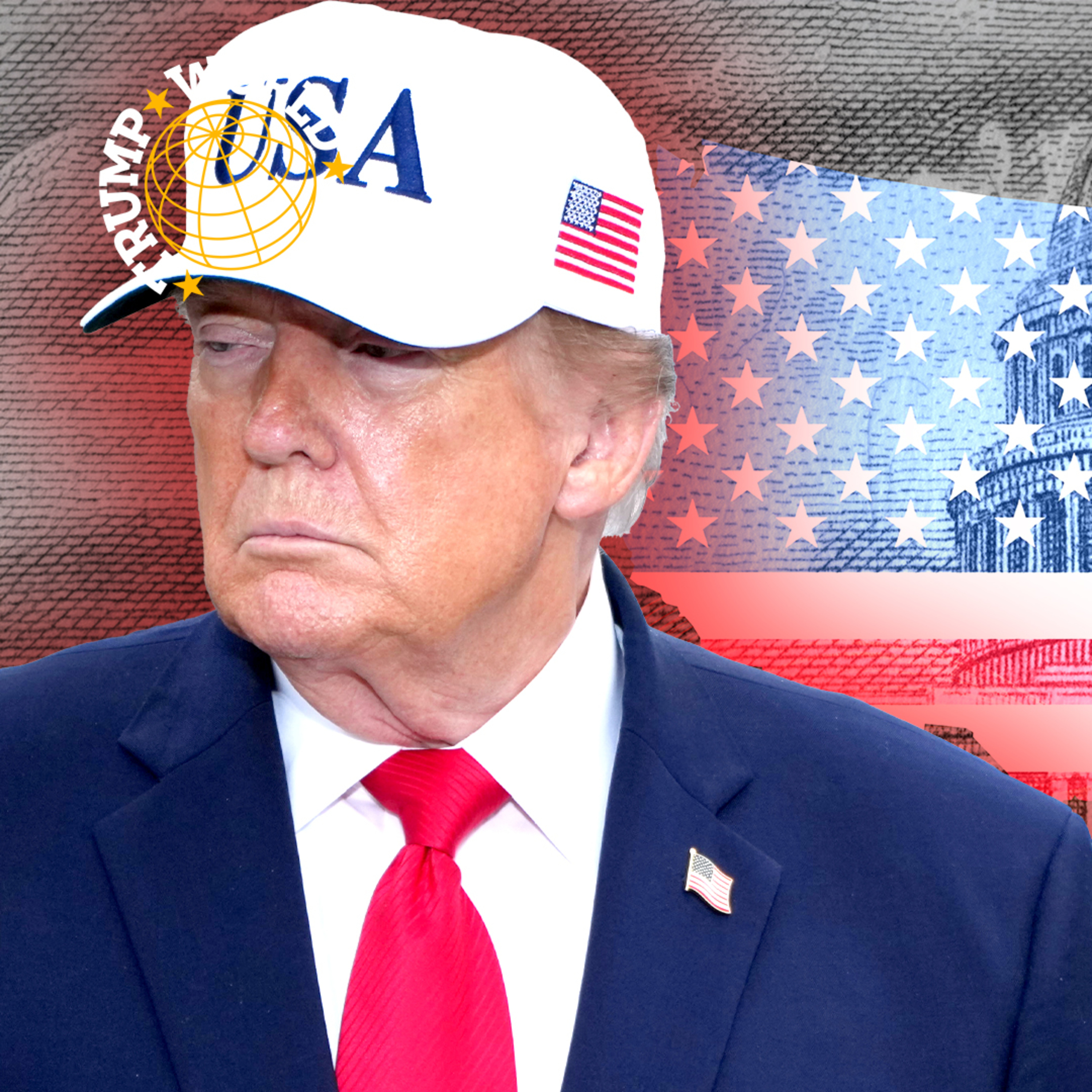
The episode is a midterm-election preview focused on how Trump’s campaign messaging and current voter priorities could “haunt” him. Hosts argue Trump’s late claim he’ll stop $4B in annual aid to Israel may backfire, while Democrats’ Israel-related attacks on candidates like Abdul El-Sayed are framed as potentially anti-Semitic by opponents. They also say cost of living—especially gas prices tied to the Iran war, plus inflation and tariffs—dominates voter concerns more than symbolic issues like lawn control and White House “vanity” projects. They highlight key races: Michigan Senate (Abdul El-Sayed vs. Mike Rogers; Haley Stevens’ surprise endorsement of Rogers), and Texas governor (James Tallarico vs. Ken Paxton).
Nathaniel Rakich, managing editor of Votebeat (nonpartisan polling analysis).
Democrats are favored nationally for House; Senate outcomes hinge on small polling errors; early voting is unreliable; attack ads may backfire (example: an Ohio ad involving a candidate’s mother).
AIPAC’s shift away from direct support; 2016/2020 polling errors; Alaska runoff threshold; Ohio backlash ad.
Written by AI. May contain mistakes.
Discussion on the current political climate and Trump's communication style.
“And you kind of think, what planet is he on, frankly?”
Hosts discuss Trump's comments about Israeli aid and its implications.
“And lo and behold, I heard President Trump on the phone.”
Analysis of Abdul El-Sayed's rally and his stance on U.S. aid to Israel.
“It is a point that has caused this huge split this week between him and his Democratic primary opponent, Hayley Stevens, who thinks some of those type of attacks are anti-Semitic.”
Discussion on potential Democratic gains in Texas and the impact of candidates.
“Now, with Lincoln staring down on him, you know, this was not exactly the Gettysburg address that Trump gave us.”
Insights on polling reliability and the public's feelings about issues impacting elections.
“He was obviously doing a bit of expectation management, essentially saying, you know, whether presidents are good or bad, they always get a thumping at the midterms.”
Detailed overview of significant races to watch in the midterms across the U.S.
“the answer to that for quite some time because the candidate there has to get over 50 % of the vote.”
Examination of Trump's messaging strategy and its effect on voter perceptions.
“And the fact that, you know, Americans just, you know, don't really feel that the country is heading in a direction that they voted for very broadly when he was elected in 2024.”
Discussion on the potential outcomes of the midterms and their significance for Trump and the Democrats.
“But this is the language that he uses all the time.”
Introduction of Nathaniel Rakich and discussion on the significance of upcoming elections.
Discussion on final polling data and its implications for Democrats and Republicans.
“who is the managing editor of Votebeat, a non-partisan organisation that takes a nuanced look at the polls.”
Examining historical polling errors and their potential impact on current elections.
“It's important to know that polling error can go in either direction.”
Exploring how cost of living issues may influence voter behavior in the upcoming elections.
“I'm quite interested often in some of the underlying factors that might tell us how people are feeling, you know, what might be going on.”
Discussion on the current motivation of Trump's voter base and its implications for Republican candidates.
“I mean, despite all that, wherever you go, you always find people who love Trump.”
Examining the reliability of early voting data in predicting election outcomes.
“I think when you look at the again, the polls, you know, not just the who's going to win polls, but kind of how excited are you polls?”
Discussion on the effects of attack ads in the current political climate and their perceived efficacy.
“So, you know, I think that people who people read into the early vote in their at their own peril.”
Analyzing how endorsements impact the electoral chances of candidates, particularly in Michigan.
“And I think a lot of takes will be written about, you know, which attack ads were the most effective.”
Exploring how recent redistricting might affect election results, particularly for House seats.
“I think it's important to note that, you know, as you mentioned, you know, early voting has been going on for a while.”
Discussion on election security concerns and Trump's rhetoric surrounding potential election fraud.
“You know, it's interesting to see something like Mississippi in play in polling numbers when it comes to the Senate.”
The discussion covers the anticipation of election results and their implications for Trump and the Democrats.
“Nathaniel Rakich, thank you very much for joining us.”

Get the gist, explore an idea or ask about something said.
 Claude
On TrumpWorld, what are the key points of this episode?
Searching your listeningAutomatic transcript. May contain errors.
0:00And you kind of think, what planet is he on, frankly? Americans just, you know, don't really feel that the country is heading in direction that they voted for very broadly when he was elected in 2024. Whatever else you say about Trump, he has got a way of communicating that certainly persuades quite a lot of Americans to support him. Republicans are like, you know, maybe they still love Trump personally, but they're not enthusiastic about Republican rule. Whereas Democrats are just really, really energized because they're angry about a lot of the things that are happening. This result is really going to define what happens next.
0:33It's nonstop, frankly, politics in this country, but it'll be an absolutely fascinating night.
0:41Hello and welcome to Trump World. I'm Anoushka Astana and I am in Detroit, Michigan. And I am Matt Fry and I'm still in Austin, Texas, but not for much longer. I'm here for the voting day. And I've just switched on Fox News as you do. And lo and behold, I heard President Trump on the phone. he does that quite a lot, he rings into Fox and Friends in the morning, say that aid to Israel, all four billion annual dollars of it, would stop by the end of the year. Excuse me, Mr. President. Anyway, he then explained that they don't really need the money because they're, you know, they're very wealthy and their economy is going gangbusters and that he and Bibi had talked about it months ago, which is true, by the way, because the Prime Minister of Israel had flagged it up.
1:23But to drop this bombshell on election day is quite something. And the most amazing thing in Rushka is he then said, you know, by getting rid of this money, it also gets rid of a really annoying talking point, I'm paraphrasing here, which is what the Democrats have been using on the campaign trail, especially the man where you are, Abdullah al-Sayed, you know, saying that America is spending far too much money on military and other financial aid to Israel. Well, to be honest, Mr. Trump, if this was going to get you a few votes on election day in the midterms, you might have mentioned it a few days or even weeks earlier.
1:55What do you think, Anushka? Well, I do think that those in Abdul El-Sayed's team will be feeling pretty chuffed this morning, because as you say, this has been a talking point for him. He generally wants to move the issue away from Israel and talk about Medicare, talk about the cost of living. But he has very, very strong views when it comes to Israel. He has repeatedly argued that he doesn't think that money should be going to Israel, money that should be, he says, diverted back to the US. It is a point that has caused this huge split this week between him and his Democratic primary opponent, Hayley Stevens, who thinks some of those type of attacks are anti-Semitic.
2:33But look, I went to Abdul El-Sayed's final rally last night. It was in a concert hall in Detroit, set up like a gig. out he came, the crowd was all going crazy for him. Obviously, the biggest believers are the ones who turn up at the rally. There was, you know, Senator Elizabeth Warren was there, other local candidates were there, and his wife actually introduced him, Sarah. But he very much made this argument again. And he made almost exactly the argument that you've now heard from Donald Trump, which is that we shouldn't be sending aid to Israel from the US. And this is the argument. You know, a lot of people have criticised that.
3:10They've said, you know, that he's anti-Semitic, something that he completely disagrees with. But the difficulty for Republicans is that public opinion has shifted quite heavily on the issue of Israel. The lobbying organisation AIPAC has now said it's going to not directly support candidates in the future because it's come quite controversial. And so, yeah, it's quite a bombshell on voting day. Although here in Michigan. Still lots of nerves, I think, on both sides about the way this will go, because obviously it will be a very key race. Well, and the same thing in Texas. I mean, if the Democrats win this race, if James Tallarico wins, if Gina Hinojosa becomes the Democrat governor of Texas, that would be massive news because Texas was always thought to be solidly, staunchly red Republican.
3:56And the opinion polls, you know, the latest ones are in Tallarico's favour. I mean, he's ahead by five, six points which is astonishing in itself but also we all know anushka that in america you you you you treat the opinion polls very cautiously you know you add bucket loads of salt because they've got these things wrong in the past and i spoke to someone yesterday who said you know whispered into my ear don't forget all the the shy trump voters and there are plenty of them out there but i just want to say something anushka quickly about the president i mean i i don't know if you watched the full thing that he did yesterday at the Reflecting Pool in front of the Lincoln Memorial in Washington.
4:35Now, with Lincoln staring down on him, you know, this was not exactly the Gettysburg address that Trump gave us. These are the final comments of a feverish campaign, which is really all about him, even though he's not on the ballot. And he knows that. So what does he do? He slags off the Democrat candidates like the guy where you are, Abdel al-Sayed, and he calls them all jihadists and communists and Marxists, the usual sort of insults. But what he really, really, really wants to talk about, what's really at the top of his mind is lawn control. You know, the piping and the reflector pond, the plumbing, the plumber-in-chief, you know, pats himself on the back for having changed that.
5:13And you kind of think, what planet is he on, frankly? This is something that not only do Americans not care about it, but if they do care about it, they care about it in the wrong way, because they see all these vanity projects the triumphal arch, the new ballroom, the reflector pond that was fixed by a mate of his and so on. They see all that as signs of his exuberant corruption, you know, or flamboyance, a bit like, you know, let them eat cake, let them eat hot dogs, a touch of Marie Antoinette. While at the same time, of course, he doesn't seem to care that much about the lack of affordability that's hitting most American households.
5:49I mean, I find it astonishing. I just wonder who's in charge of comms at the moment in the White House? Well, they do seem to have an opening there, Matt. Maybe you could put yourself forward. The president sounded very defeated. He was obviously doing a bit of expectation management, essentially saying, you know, whether presidents are good or bad, they always get a thumping at the midterms. Democrats I speak to are very, very nervous because, as you were saying, there's a long history here of being nervous about the polls, which can get it wrong. Republicans don't always speak as, you know, openly to the pollsters as others do.
6:23You know, Abdul El-Sayed on stage was very much like, I'm going to be the next senator. I then, you know, as we do, went and waited by the back door for him to pop out. And as he did, I said, you know, Abdul, do you think you're going to win? He wasn't saying absolutely, definitely. He said, God willing. So obviously, very hopeful. Now, the one thing I would just say on that is years of kind of covering polls and elections like you, I always think the underlying data is what's really important. So, you know, rather than the kind of top line, who's going to win here? What are the issues that are really bothering people.
6:55And the thing that has absolutely stood out everywhere we have gone, and very much here in Michigan, has been the cost of living. And I thought it was so interesting to hear Republican Ron DeSantis yesterday seem to actually say, look, stop gaslighting people. Gas prices, petrol prices are up. And it is because of the Iran war. So I do think ultimately, although I don't like to make predictions, that that is the underlying data that really matters, even though we still meet people everywhere who love Trump. I just kind of set up the kind of important races tonight and then just kind of ask you about some of them.
7:29So obviously every seat in the House of Representatives is up. That's why, given the polls, people are quite confident that the Democrats will take that. If they don't take that, that will be an absolutely terrible night for them. A third of Senate races are up, so it's harder to flip the Senate. And that's why we're focusing on races like where you are, like where I am, but also, you know, places like Kansas, places like Iowa, places like Ohio. Obviously, the results will come in at differing times. A lot of focus on Alaska. It is worth saying if it comes down to Alaska, we won't necessarily know the answer to that for quite some time because the candidate there has to get over 50 % of the vote.
8:10And if they don't, we're looking at a runoff on the 18th of the month. So don't get overly excited if it's very, very close, although it is interesting. Some people think it won't be. It's a wonderful place. It's a great place to sit out. You can do lots of salmon fishing. If that's your thing, you should go. It's going to be cold out there. It's a very beautiful place. I've only been there once and only very briefly, and that was last summer for the extraordinary Putin-Trump summit. But that's, I mean, it would be amazing if it came down to Alaska and the two Dan's. But I just want to say something about the, you know, you mentioned the polls.
8:44And of course, everyone is right to be nervous about the polls always. But the big example, the big comparison here in Texas, the last time a Democrat thought that he had it nailed here was Beto O 'Rourke, who you interviewed on the podcast not so long ago. And, you know, he was a very charismatic speaker. He was a great candidate. He, you know, in some ways was more convincing on the stump than James Tallarico is, frankly. But he was just at his best. He was like one or two points ahead of his Republican rival. and he didn't do it. Tallarico is a bit more ahead than that. And that's partly, and I hear this from Republicans, that his opponent, Ken Paxton, the Lieutenant General of Texas, who was impeached by his own party and the Democrats in the Texas state capital, which is behind me, and was then later acquitted.
9:35But, you know, he's got a sleaze written all over him, which, of course, he denies. But that is the way he's perceived. So Tallarico has a very weak component. I just went to a thing last night at the Historical Society in Austin, you know, full of good old boys, you know, half Republican, half Democrat. I couldn't find a single Republican there who liked Ken Paxton. And they're his kind of people. So I do think that Tallulah Week has a real chance of winning Texas. And symbolically, that would be so important because of the size of the state, the importance of its economy, what it represents for America, what it represents to the rest of the world.
10:14And that would be a true humbling of Donald Trump's imperial presidency, because whether it's it's not just affordability, it's also linking affordability or the lack of it to his perceived corruption, to the forever wars, to all the lies that are being acted out every day, all the broken promises from the campaign trail. And the fact that, you know, Americans just, you know, don't really feel that the country is heading in a direction that they voted for very broadly when he was elected in 2024. So when they cling on to James Tallarico's view of, you know, genders or, you know, the trans issue, you know that they're desperately clutching at straws here.
10:57Desperately clutching at straws. But I thought it was absolutely fascinating watching the piece you made in Texas, which shows that, you know, some of those straws seem to have a bit of an impact in terms of the way people feel. And actually, we've heard the same thing here in Michigan. It's one thing to go to the Abdul El-Sayed rally and see the kind of true believers who absolutely love him, who are motivated more than ever by Hayley Stevens' perceived betrayal. But when I was at a, you know, car racing track, just talking to, you know, normal Michiganders about their lives, actually, some of that kind of political stuff wasn't cutting through as much.
11:29And, you know, one person was saying to me, yeah, I don't want a Muslim as a senator. Some of the Islamophobic attacks had really had an impact. And actually, some of the Democrats I spoke to, they weren't enthused about Abdul El-Sayed. They were sort of only voting for him because they were on the ticket. And I think it is so important, isn't it, to just get out there, talk to people. And you realise that polls can give you a kind of image of the country, but they can't ever get into the kind of nuance or the headline polls can't. the nuance of what you find all over America and the issues that really are effective.
12:04And whatever else you say about Trump, he is, you know, he has got a way of communicating that certainly persuades quite a lot of Americans to support him. Totally. And also, I think the one thing that I mean, we find it incredibly tedious, because we do this stuff all the time, when you hear the same phrase trotted out over and over again, especially when the phrase is fundamentally untrue, you know, calling Abdul El-Sayed a jihadist or a Marxist. You know, it's nonsense. But this is the language that he uses all the time. This is the language in the election ads. And this is the language you hear on the street or at campaign rallies.
12:36So there is this sort of power of a simple message that is hammered home over and over again. And people remember those phrases and they just blurt them out. And often they've probably not thought about them, but they blurt them out. And it kind It becomes almost a kind of electoral muscle memory. And then you set against that the reality of their lived lives. And I think this is where the Republicans do have a problem. The reality of the lived life of the ordinary American is that it's more expensive, that it costs twice as much to fill up your car. Food is shockingly expensive in so many places.
13:11And then you see these images of ridiculous corruption or just irrelevance, like the Reflector Pond or the Triumphal Arch or the Borum at the White House. All that feeds into the mind of the voter as well. So given this sort of very complicated cake mix, you know, add hot water and stir, you know, I wouldn't like to make a prediction. Maybe you would, Anoushka. But I think that, you know, if they don't lose the Senate, I think the House is probably gone, right? I think we can all agree on that. But if they hold on to the Senate for Trump, this will be construed in his own mind and in other people's as an astonishing victory.
13:47And the last time he had a midterm election in 2018, remember what happened. The Democrats gained 45 seats in the House. That was big. But the Republicans gained two seats in the Senate. So, you know, watch this space. And look, whatever happens, there's still two more years of the Trump presidency, although I think this result is really going to define what happens next, both in terms of whether the Democrats shift to the left or the centre-left, with, you know, everyone watching Michigan very closely on that front, and also whether Republicans actually reject Trumpism going forward. Well, I discussed all of that and more with our guest, Nathaniel Rakich, who is the managing editor of Votebeat, a non-partisan organisation that takes a nuanced look at the polls.
14:35Nathaniel, thank you for joining us. So what do the final polls tell us about where these races are right now? Well, the final polls are good for Democrats as they have been all cycle long. I would say, you know, overall nationally, it looks like the House popular vote is going to be about nine points in Democrats' favor, at least if the polls are right, which, of course, sometimes they're not. But that would be more than enough for them to flip the House. The Senate, of course, is going to be fought over in certain specific states, so places like Texas, Ohio, Iowa, Alaska. And the polls have generally shown Democrats with a clear but small lead in those states.
15:16So I would say that they are favored to take the Senate, but it really wouldn't take much of a polling error for Republicans to win those seats and also the Senate. And let me ask you about polling errors, because America has had a few. I mean, whenever you're looking at a poll result, there's obviously a confidence interval. I mean, how far out would they need to be for it to be a totally different night than people have been expecting? I think a normal polling error would be enough to, you know, either, you know, have Democrats be massively disappointed and lose the Senate, although they probably still hold the House, or for Democrats to have an even better night and win, you know, maybe 55, 56 Senate seats.
15:56It's important to know that polling error can go in either direction. Right. But, you know, a normal election has a polling error of about, say, four or five points. And so, again, you know, with those kind of small leads, I think, you know, you're looking at like a three point lead in states like Texas for Democrats. Obviously, that is smaller than five. But what are the biggest errors we've seen in recent years? The biggest error, I believe, was in the 2020 election, where polls said that Joe Biden was going to win that presidential election like in a landslide. He ended up winning, of course, but it was relatively narrow.
16:30I think people cared a little bit less about that polling error because obviously the polls were directionally correct. I would say the most high profile polling error was, of course, in 2016 when the polls indicated that Hillary Clinton was going to win and Donald Trump, of course, won. But that was actually a closer contest than I think a lot of people gave a credit for. Hillary Clinton won the popular vote, of course. So the polls were that was a more normal polling error, but it just happened to flip the outcome. Yeah. And, you know, a lot of Democrats I speak to because of what's happened in the past are pretty nervous about what they're seeing.
17:03But, you know, there's all this talk of a blue wave, particularly in Washington, D.C., and they're just nervous that that's not actually what's taking place on the ground. I'm quite interested often in some of the underlying factors that might tell us how people are feeling, you know, what might be going on. And it seems to me that wherever I go, cost of living is incredibly dominant. Are we able to tell how much affordability is going to determine the outcome of these races? Yeah, I mean, we're going to get exit polls at the end of the night, which will ask people, among many other things, you know, what was your top issue?
17:38You know, why did you vote the way that you did? I do expect that cost of living will be number one. If you look at the pre-election polls when people have been asked about that, that has been what they have said. You know, I think that that is a combination of the kind of lingering inflation from the post-COVID times that obviously also caused Joe Biden to be unpopular and probably brought Trump back to the White House. But in addition, you have the increase in gas prices specifically that seems to be tied to the Iran war. And you also have the effect of tariffs, which have increased prices on various goods here in the U.S.
18:12So, yes, I think in general, all of these factors, you know, Trump has kind of he's now he now owns the economy in a way that, you know, maybe he didn't when he first started his term. I mean, despite all that, wherever you go, you always find people who love Trump. I mean, really, really love him. I was always quite amazed that, you know, opinions on him are rarely down the middle, are they? You get people scoring him zero out of 10 for his performance. You get people scoring him 10 out of 10, despite the situation with the economy. How motivated do you think his base still is? That's a good question.
18:46And I think, you know, there's a difference, right, because Trump himself is not on the ballot this year. Right. And, you know, I think in the past he has shown an ability to get out voters. Pretend he is. Yeah, right. Well, that's there's a reason that he's saying that. Right. You know, it's because that, you know, in 2024 in particular, he was able to turn out voters that really haven't turned out for any other candidate, Democrat or Republican. But, you know, right now he's asking people to vote for Republican candidates for Senate and House who are a lot more traditional than he is and maybe, you know, don't have the same charisma.
19:16So I think that that is going to be an important difference. I think when you look at the again, the polls, you know, not just the who's going to win polls, but kind of how excited are you polls? Republicans are like, you know, like, you know, I think they understand that things maybe aren't going so great in the country, but maybe they still love Trump personally, but they're not enthusiastic about Republican rule. Whereas Democrats are just really, really energized because they're angry about a lot of the things that are happening. And, you know, I've seen wildly different takes on early voting and what we should take from it.
19:44You know, some people saying, you know, if you just look at Texas, for example, Tala Roko is definitely going to lose because of this. Others say he's going to absolutely storm it because of this. Can we actually tell what the early voting data tells us? I mean, I know we've not got that long to wait, but just as we do. No, we can't. Early voting data is not really a reliable way to read election outcomes. The, you know, first of all, we don't know who people voted for, right? No actual election results are reported until all polls close in a given state at the end of the night. And, you know, you can look at, you know, turnout among certain demographic groups in certain areas of the state.
20:24So I think, you know, Democrats are excited at the fact that their early voting numbers are high in places that tend to vote Democratic. But the issue is that, you know, we are missing a big part of the picture, which is the Election Day vote. Right. And historically, Democrats have been the ones who have voted by mail and early and Republicans are the ones who turn out on Election Day. So even if the early vote is really good for Democrats, it just takes a big turnout among Republicans on Election Day to erase that lead. So, you know, I think that people who people read into the early vote in their at their own peril.
20:55And can I ask you something? I mean, it's become very, very vicious, some of this. I mean, the attacks on Tallarico in terms of comments he made about the gender of God have been extremely vicious, but also potentially quite powerful. The attacks on Abdul El-Sayed, where I am here in Michigan, have been extremely vicious and Islamophobic. The Republicans have clearly decided to go on the attack. We've had some of our own polling done by the organization PF Global, which says, look, people see nasty attacks on both sides, but largely they think that the Republicans have been nastier in these elections.
21:30Do we know whether those type of attacks are actually cutting through, whether they're working? That's interesting. I mean, I think we don't know for sure, right? It's difficult to establish that causation. But obviously, if you look at the polls, Republicans tend to be trailing. It seems like a lot of the money that they've spent and a lot of those attack ads that they have aired have not necessarily moved the needle and in some cases may be backfiring. So if you look at the situation in Ohio, the governor's race there, the Republican candidate Vivek Ramaswamy ran an ad essentially, you know, quoting the Democratic candidate's mother who turned out had been estranged from the candidate because of allegations that her stepfather had raped her.
22:13And so that kind of garnered backlash of like, you know, this was, this crossed a line for a lot of voters, the Republican ad did. And so I think the conventional wisdom is that that actually hurt Republicans there. So, you know, obviously we'll, we'll, we'll know who won soon. And I think a lot of takes will be written about, you know, which attack ads were the most effective. But I do think that at the end of the day, we're really just guessing. It was really interesting. We were at a kind of car racing event here. And when you were talking to people, a lot of people were just saying, we just want everyone to be nicer to each other.
22:47We just want a bit more kindness. We want the two sides to work together. It was very much a centrist take from a lot of people who we were talking to, although at the same time, I heard someone say, I don't want a Muslim senator, because I think that all these negative things about Islam, which was exactly what the Republican attacks had been trying to get people to do. But as you say, people will interpret it afterwards. In fact, I think it could be a really massive turning point because it will tell people, won't it, if you're on the Republican side, whether Trumpism is still working. And it will also tell people on the Democratic side, which of the arguments might be strongest on taking that on.
23:23Yeah, definitely. And, you know, I think the Michigan Senate race is really interesting, too, because I think it will be a test, particularly for the progressive wing of the party. If Abdul El-Sayed is able to win Michigan, a swing state, I think that could bolster the argument of progressive presidential candidates in 2028, that maybe progressives are electable after all, which is a charge that's been leveled against them. Like, oh, you're too far left. We can't risk nominating a progressive because, you know, you'll lose in November. Do you think that the fact that his primary opponent, Democratic Congresswoman, Haley Stevens came out at the 11th hour to back his Republican opponent, Mike Rogers, will have helped Abdul El-Sayed or harmed him?
24:04Yeah, that's another great question. And something I think that people might be able to make an argument for either way, depending on how the election turns out. You know, I tend to think that it probably would hurt El-Sayed, but probably not by a lot. I think it's important to note that, you know, as you mentioned, you know, early voting has been going on for a while. Two million votes have already been cast in Michigan as of when Haley Stevens issued that surprise endorsement. So I think to a large extent, the cake had already been baked. But I wouldn't be surprised if that did end up hurting El Saeed a little bit, but perhaps not enough to actually change the outcome of the election.
24:38It is really interesting when you talk to voters, isn't it? That actually, whilst a lot of politicos will be following every twist and turn, essentially, to some of the people we spoke to, it was just, you know, a Democrat is supporting the Republican because she thinks that El-Sayed is anti-Semitic and they didn't look at anything deeper than that, including democratic fury. So it will be really interesting to see how that plays out. Just two other things I wanted to ask you. The first, we saw a lot of redistricting before this happened. We've seen the Voting Rights Act be gutted. We spent some time in Memphis where they'd obviously broken up what was a safe democratic congressional seat to turn it into three, what ought to be safe Republican seats.
25:17Is there any sense yet how redistricting might affect these results? Yeah, I mean, I think that it's certainly changed the House battleground to be slightly more favorable to Republicans. But I think the key point here is that you can only move the needle so much with redistricting. And if you have this kind of massive upswell of voter anger against Republicans, it is going to deliver Democrats the House even without regard to the districts. That said, I do think it has affected the campaign because maybe it has caused Democrats to spend more money and campaign harder in seats that they otherwise wouldn't have had to do, which obviously is money that you can't spend elsewhere.
25:54So I wouldn't say that redistricting has had no impact on the election, but I would say that Democrats will probably be able to win the House even in spite of it. And do you think there could even be a backlash? You know, it's interesting to see something like Mississippi in play in polling numbers when it comes to the Senate. You know, 40 percent of the state is black. It's always been solidly Republican. But could there be a backlash to the attempts to redistrict in a state like Mississippi? Yeah. You know, I think that a state like Mississippi or South Carolina is probably too red even in this environment to outright vote for a Democrat.
26:27But I would not be surprised if you saw high turnout among black voters, for instance, who were kind of the ones who were protected by the Voting Rights Act before it was gutted. I think that's one of the things I'll be looking out for today. And just finally, Donald Trump has, you know, started to give some of the similar music that we've heard from him in the past. The idea that they're trying to rig elections, talking about voter fraud in areas where there isn't any significant evidence. Talking maybe slightly more fairly in Alaska about dirty tricks campaigns in terms of putting up another guy with the same name, Daniel J.
27:02Sullivan, against their Dan S. Sullivan. Although you might say that's dirty tricks. So far, the courts have rejected any sense that it could change the results. But do you expect to see issues around election security, issues around claims that the elections haven't been fair afterwards? And would it actually have an impact? Yeah, I mean, Trump is already raising these issues, as you mentioned. So I wouldn't be surprised to see legal challenges even more than the ones that have already been filed. But it is worth noting that that challenge in Alaska and the challenges that we've seen in places like California have so far been rejected by the courts.
27:39The legal arguments just aren't very strong. So in Alaska, right, there's a difference between a dirty campaign tactic and something that is outright illegal. Right. It may be unseemly, but it is not illegal. And the courts have so far agreed with that. So I think that you might see a lot of smoke in the air around the aftermath of the election, saying that, you know, these races were unfair and some legal challenges. But I don't think there'll actually be any fire in terms of any results actually getting overturned. Nathaniel Rakich, thank you very much for joining us. We will soon know the results and I'm sure you will be analyzing them furiously at VoteV.
28:16Thank you. Thank you. That was Nathaniel Rakich, the managing editor on Votebeat. And very soon, Matt, we are going to know, aren't we, the actual results? Well, yeah, I mean, we're both going to have a long night. You and Michigan, I'm actually going to be travelling back to D.C. We'll be watching this all night long. I think by tomorrow dawn, we'll have a clear idea of how much Donald Trump's wings have been clipped or whether the phoenix can rise again. And of course, this is so important, not just for how he will define the next two years, the last two years of his presidency, but also, as you said earlier, which direction the Democrats will head in.
28:53The election campaign to take over from Trump, the nomination campaign, starts literally on Wednesday morning. And, you know, just heard J.D. Vance the other day talking a lot about his own CV and barely mentioning the president at a rally in Texas. So the race, the next race begins already. It's nonstop, frankly, politics in this country, but it'll be an absolutely fascinating night. And we will, of course, be back to talk about it on Trump World. Bye from Michigan for now. Goodbye from Texas. See you soon.
After months of campaigning and billions of dollars spent, it’s the day we’ve been waiting for. America has gone to the polls in midterm elections that could reshape President Trump’s final two years in the White House.
In a last ditch attempt to claw back voters President Trump dropped a bombshell today - that America will stop its four billion dollars of aid to Israel, by the end of the year.
But is it too little too late? The polls suggest it could be. Democrats are hoping to capitalise on the cost-of-living crisis, soaring gas prices, the war with Iran and unpopular immigration politics to take control of the House from Republicans - and potentially make gains in the Senate too.
So can the polls be trusted? Will key battlegrounds like Texas and Michigan hold the clues for the future direction of both parties - and could Alaska have the final say?
In this episode of TrumpWorld Matt Frei and Anushka Asthana are joined by Nathaniel Rakich - managing editor of non-partisan VoteBeat - a nonprofit news organisation reporting on voting access.
They discuss why we can’t fully trust exit polls, why Democrats shouldn't feel like a win is a done deal and how many are already looking towards the next presidential race in 2028.