
 Ask ChatGPT


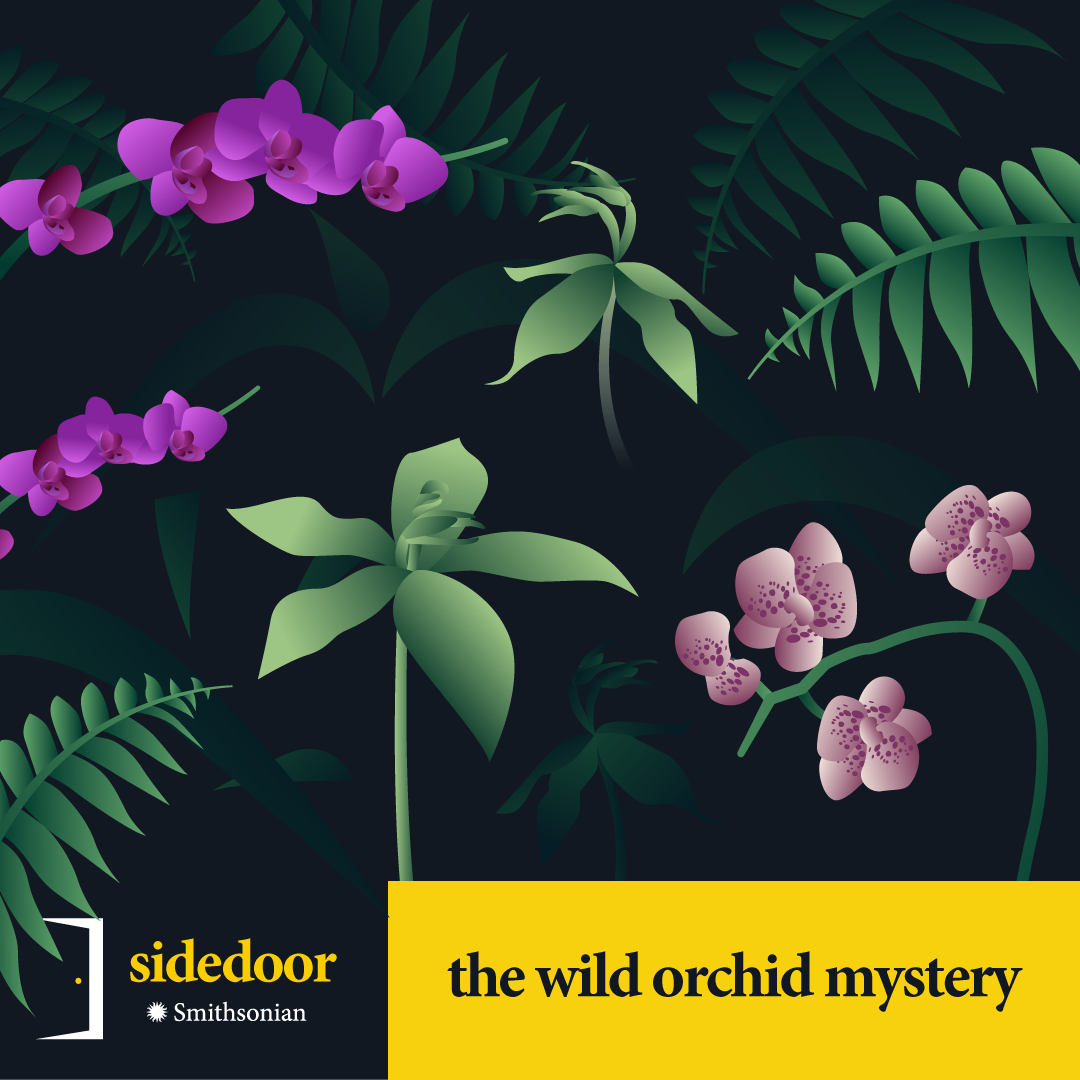
The “wild orchid mystery” explores why orchids are disappearing and how Smithsonian researchers are trying to reestablish the small whorled pagonia (a rare North American orchid) in the wild by solving its complex dependence on specific soil fungi.
Rob Griesbach is an accredited American Orchid Society judge (over 40 years judging; took six years to become fully accredited). Dennis Wiggum is a senior botanist at the Smithsonian Environmental Research Center focused on forest ecology. Melissa McCormick is a Smithsonian Environmental Research Center research scientist studying orchid ecology and fungi.
Orchid seeds can’t grow without fungal partners; orchids can act as “canaries” for ecosystem health. Small whorled pagonia is extinct in some areas but reappeared after a fallen tree, likely due to fungi. Germinating it in captivity has never been achieved because both seed and the needed fungus (tied to living tree roots) are hard to replicate.
Monthly D.C. orchid judging; reemergence of 49 plants after a tree fell; orchid poaching by digging up plants; NAOC seed/fungus banking with the U.S. Botanic Garden.
Written by AI. May contain mistakes.
An exploration of the orchid judging event and its criteria.
“I was on the low end, although I was not the lowest score.”
The diversity and environmental significance of wild orchids.
“A single orchid plant can be as tiny as an ant or weigh as much as a rhinoceros.”
Understanding the symbiotic relationship between orchids and fungi.
“If a suburban windowsill is home to the orchid chihuahuas, then a muggy, buggy forest is home to the orchid wolves.”
Smithsonian scientists work on replicating orchid growth in the lab.
“Unscrupulous people who decide that this is a rare orchid and they want one for their yard will come and dig them up.”
Discover the challenges facing orchid conservation and research.
“We're back and we made it out of the forest.”
Explore the complex dependencies between orchids and fungi.
“They're basically creating a collection of eligible young orchid suitors.”
Learn about broader orchid conservation initiatives and their goals.
“Next, Melissa and Dennis and their team are experimenting with tweaking the orchid food recipe, refrigerating seeds to simulate seasonal changes, and even exposing them to smoke to imitate forest fires.”
Understand the vision for reintroducing orchids into ecosystems.
“And they can create environments in their gardens and things like that where they can grow these orchids.”

Get the gist, explore an idea or ask about something said.
 Claude
On Unexplainable, what are the key points of this episode?
Searching your listeningAutomatic transcript. May contain errors.
0:00Support for the show comes from TikTok. If you listen to this show, you probably enjoy discovering new things. It is built into the DNA of the show that curiosity is its own reward and that there's always a deeper dive to do. And one place to explore some of the topics we've covered here is TikTok. Whether it's how to forecast volcanic eruptions, strange phenomena that the James Webb Space Telescope picked up near the beginning of time, or a literal deep dive on the ocean's deepest reefs, TikTok has a wealth of fascinating videos just waiting to be discovered. Your next discovery is waiting on TikTok.
0:40Learn more at tiktok.com slash discover more.
1:10Get started at go.amex slash Amex Corporate. Terms apply.
1:20This is Unexplainable. I'm Bird Pinkerton. And today we have an episode from a show I have listened to for years. Side Door from the Smithsonian. The host, Lizzie Peabody, takes you into the Smithsonian's incredibly rich collection of scientific and historical and artistic artifacts. And this episode in particular felt like a great fit for our show because it looks at a cool mystery that's hiding in plain sight. The mystery of orchids. These are beautiful flowers, my mom's favorite, obviously, but they are also far more than something you might give as a housewarming gift. They're delicate barometers of the ecosystems around us, and they have a secret relationship to the underground world.
2:02So here is Side Door.
2:12Okay, we need some discussion. The spread is 77 to 86. Gordon, are you in or out? I was on the low end, although I was not the lowest score. It is a smaller flower.
2:26Lizzie Peabody: This is the sound of a flower beauty contest. It does have good color, but it is not as dark. I'm eavesdropping on an event that happens every month. The National Orchid Society's D.C. area orchid judging. People drive or ship their orchid plants from as far away as Florida to have them evaluated by the 12 or so judges in this room. So what kind of orchid is this? This is a Phalaenopsis. This is a species that's related to the ones that you buy in the grocery store. Rob Griesbach gave me a hushed play-by-play at the back of the room, like we were watching a major golf tournament. He's an accredited American Orchid Society judge.
3:07Lizzie Peabody: But even if you're a novice like me, you'd probably still recognize an orchid from the plant aisle at the grocery store. They have long, thin stems, usually attached to a wooden stick with what looks like a tiny hair clip, and delicate, alien-looking flowers. These flowers are one of the things that judges are looking at as they pass each orchid around the table. One plant coming up. Very nice. They consider color, size, texture, form. Well, the petals are, though not flat, are at least symmetrical. Symmetrically wavy. Asymmetry is a killer in flowers. Becoming an orchid judge is no casual process.
3:48Lizzie Peabody: It took Rob six years to be fully accredited. I started my Ph.D. program at the same time I started doing orchid judging, and I got my Ph.D. two years sooner. Rob Griesbach has now been an orchid judge for over 40 years. And just like in fashion or architecture, he's seen the aesthetics of flowers evolve over time. But judges are always looking for beautiful anomalies. So what we're looking at is we're trying to improve Mother Nature for artificial traits we say are superior. So orchid judging is a little like judging a dog show. The winners get bread for their superior traits. And it's flowers like these that later end up in the grocery stores.
4:33Lizzie Peabody: But there's another side to orchids. A wild side. Orchids are everywhere, not just in beauty pageants or at your local grocery store. They're up in the trees, underground, even in the Arctic. And they're incredibly varied. A single orchid plant can be as tiny as an ant or weigh as much as a rhinoceros. And those little specks in your vanilla ice cream? Orchid seeds. But wild orchids are disappearing. Over half of orchids worldwide are thought to be endangered or threatened. And this is important because for ecologists, orchids are the canary in the coal mine. When environments change, orchids are often the first plants to disappear.
5:17Lizzie Peabody: They hint at environmental changes we might not notice. So how close are these orchids that are being judged to native orchids found in the wild? They're not at all. Rob says, like dogs and wolves, they're related but still very different. You know, a chihuahua is not very close to the wolf. So this time on Side Door, we leave the chihuahuas at home and set off in search of the wolves of the orchid world. Or rather, a lone wolf. The small world pagonia. a secretive flower that Smithsonian ecologists have been working to reestablish in the wild. But to do it, they have to solve a pesky problem they've been working on for 15 years.
6:00Lizzie Peabody: How to grow one.
6:11Lizzie Peabody: If a suburban windowsill is home to the orchid chihuahuas, then a muggy, buggy forest is home to the orchid wolves. It gets all the ticks, chiggers. Mosquitoes are kind of bad today, so I hope you put on the right perfume. And that's where I headed with Dennis Wiggum. He's a senior botanist at the Smithsonian Environmental Research Center, where a lot of research focuses on forest ecology, especially how plants growing on the forest floor respond to natural changes, as well as those caused by people. One of those forest plants is the small, whorled, pagonia. Whorl Not whorl Whorl Whorl W-H-O-R-L Whorl The small whorled pagonia is one of over 200 orchid species native to North America.
7:05Lizzie Peabody: It grows from Georgia to Maine, but like most native orchids, it's rare and getting rarer in the wild. The small whorled pagonia is now extinct in some places where it used to be found, like Maryland and D.C. but there's a secret grove of them here in Virginia. It is so beautiful and lush out here. We walked down a dirt trail, and soon the noise of the highway died away, and all we could hear were the birds and the sound of our own feet. Well, mostly Dennis' feet. Dennis, your boots are very musical. Are they? Makes for great audio. Does that sound good? Yeah. Okay, we're going to turn left here now and walk in the woods.
7:45Lizzie Peabody: Ooh, all right. If I hadn't been following Dennis, I'd probably still be in those woods. Dennis, how do you even remember where you're going out here? Well, I've been here a few times. Hang on, I'm caught up. My cord, there we go. I got snagged. Our destination was a forest glade, where Smithsonian researchers have studied a population of small-world pagonia for decades. A few years ago, this group of orchids was down to just a handful of plants. Then, something surprising happened. A tree fell. And the very next spring, 49 new small world begonia sprang up. Okay, here we are. And Dennis wants to know why.
8:37Lizzie Peabody: Wow. This is it. And that's the tree we were telling about that died. Wow, this feels like a really magical place. This is magical. I mean, this is so far above anything we've seen in the 15 years we've been working with this species. This is amazing. We stood in a clearing speckled with dozens of tiny flags, each one marking a little green plant. This is an orchid? That's the small world Pagonia. That's what we focus on. It doesn't look anything like the orchids that I have seen before. The small world pagonia looks like a little green star-shaped umbrella. The top of the umbrella where the leaves spread out is called the whorl.
9:23Lizzie Peabody: And it's a small world, after all. When the small world pagonia blooms, which only happens for about 10 days a year, it produces a white flower that looks to me like a little dragon's mouth. With the mustaches on either side. A green dragon. I could see that. But it's a green dragon that's wearing a skirt made of five leaflets. Yeah, it's a dragon with a tutu. Yes. Melissa McCormick is a research scientist at the Smithsonian Environmental Research Center. She was already at the site when we arrived, counting orchids and marking each newfound plant with a flag. She and Dennis have also put wire cages around the plants to stop deer from snacking on them.
10:04Sometimes deer will definitely seek out orchids. I think this is one that they like because it's nice and soft and juicy, and deer can just nip the whole thing off in one bite.
10:14Lizzie Peabody: But the greatest danger to these orchids isn't deer. It's actually people. That's why this site is top secret. Have there been instances of people finding out where rare orchid populations are and then coming and disturbing them? Yes, that happens all the time. So there are orchid poachers, essentially. There are absolutely orchid poachers. Frighteningly many. What kinds of people do you think? I mean, who are the orchid poachers? Unscrupulous people who decide that this is a rare orchid and they want one for their yard will come and dig them up. And digging up one of these orchids means certain death.
10:53Lizzie Peabody: For the orchids, not the people. So the people who are seeking these out know a lot about orchids, presumably, and they would know that digging one up is a death sentence. Well, one would hope they would know that. But there's knowing it in your head and there's knowing it in your heart. And there's thinking, oh, but I can make it right for this one. It won't die on me. But it will. It will die because the small world pagonia has an unlikely but necessary bedfellow called fungus. Here's what we know about that relationship. Orchid seeds are as fine as dust. They are so small, there's not enough food inside the seed for the orchid to begin to grow on its own.
11:41Lizzie Peabody: It needs to be fed by something else. Enter our friend, the fungus.
11:49Lizzie Peabody: In a single teaspoon of soil, there are about 150 different kinds of fungi. And some of them will form relationships with orchids. So is it the fungus that chooses the orchid or the orchid that chooses the fungus? It seems to be the orchid that chooses the fungus. Okay. And orchids are choosy. To put it in terms of a romantic relationship, some orchids are monogamous. They'll partner with one kind of fungus their whole life. And if that type of fungus isn't around, they can't grow. Other orchids are polygamists. They'll form relationships with several different kinds of fungi. And others are serial monogamists.
12:27Lizzie Peabody: They partner with one fungus to grow from a seed, and then later in life, invite a different fungus to grow into their roots and be eaten. And why the fungus grows in there, we don't know. So it does seem like a kind of a one-sided relationship. Come into my house, I won't eat you. Just kidding. Exactly. I think it's kind of a nice turnaround. I mean, for anybody who's grown plants, you know that fungal pathogens are the bane of your existence. Yeah. In this case, we have a plant parasitizing the fungus, and as far as I'm concerned, turnabout is fair play. So, not exactly the model of a healthy romantic relationship, but orchids will be orchids.
13:09Lizzie Peabody: And it's because of this relationship that orchids are able to give us information about subtle environmental changes. And a good way to think about it is that orchids, because of this adaptation they have in interacting with fungi, If the fungi are there, which means it's a healthy ecosystem, then the orchids are going to be there. So if you start to change things around, then the orchid will suffer from that. It's a group of plants that if they're present, you have a healthy ecosystem. Dennis and Melissa are pretty sure that the sudden reemergence of the small world pagonia near the fallen tree has to do with the presence of fungi in the soil.
13:46Lizzie Peabody: But as a scientist, the only way to be sure you understand a process in the wild is to replicate it in the lab. And that's exactly what Melissa and Dennis are trying to do, combining orchid seeds with fungus to try to raise little orchid wolves in captivity. So it's a good thing the Smithsonian just so happens to have the largest bank of orchid fungi in the world. And that's where we'll meet you after the break.
14:19This episode is brought to you by Google Chrome. You think you know a browser, but Gemini and Chrome, that's new. It can help you with practically anything on the web, like restoring a vintage motorcycle from a 50-page restoration block, or finally break down that long article you've had open for weeks. Gemini and Chrome is here for it. Ready to make anything online make sense? There's no place like Chrome. Check responses set up required, compatibility and availability varies 18+. Is your home wish list just sitting in your cart? Well, get ready to hit checkout, because Wayday at Wayfair starts October 24th with up to 80 % off everything home.
14:54That new sofa, the rug you've been eyeing, the upgrades you've been putting off, they could all be way less during Wayday. It's Wayfair's biggest sale of the year, so make your list and mark your calendar. Shop Wayday starting October 24th for up to 80 % off everything home at Wayfair.com. Wayfair, every style, every home. When you're building a company, you learn that trust is what closes deals. You may have the best product, But buyers won't sign without proof that your product is secure, especially if it has AI. Vanta gets you compliant fast with SOC 2, ISO 27001 and more, and keeps you secure with continuous monitoring.
15:31Hyperbound, a YC-backed startup, used Vanta to unlock the Fortune 100 in under a year. Snowfire got audit ready in a month and closed a multi-million dollar deal. Trust matters. Get started at Vanta.com.
15:49Lizzie Peabody: We're back and we made it out of the forest. As you can hear, I'm still following Dennis Wiggum, this time down the hall at the Smithsonian Environmental Research Center in Edgewater, Maryland. He's leading us to the Plant Ecology Lab, which is currently Orchid Central. We're here because the world has an orchid problem.
16:11Lizzie Peabody: Over half of the world's orchids are endangered or threatened. Smithsonian scientists are working to reestablish healthy populations in the wild. And to do that, they need to better understand how they grow.
16:26Lizzie Peabody: I thought I knew how plants grow. You plant a seed, give it water and light, and presto. But for orchids, it's not that simple. because orchids in the wild have evolved complex relationships with fungi in their environment. If you take them out of the environment where those fungi live, they die. So Dennis Wiggum and Melissa McCormick have a very simple goal for the small world pagonia. The goal is to bring the fungus and the seed together and watch the magic happen. Exactly. That's the ultimate goal. Except no one yet has figured out how to germinate the seeds of small world pagonia. No one, anywhere, has done it.
17:08Lizzie Peabody: At least not yet. But Smithsonian scientists have something others don't. What you're looking at right there is the largest collection in the world of orchid mycorrhizal fungi. This vast collection of orchid fungus looks a lot like a stack of Tupperware containers on a shelf. That's because it is. But even if you're someone who gets extra mushrooms on your pizza, This fungus collection doesn't look like anything you'd want to eat. Oh, that's gross looking. Melissa eventually will want to identify what these things are. Can I hold it? Dennis handed me a clear plastic container, and inside was a poof of fuzzy white fungus.
17:50And that's what they look like when they first start to grow out, is they look like a little white or slightly cream snowflake.
17:55Lizzie Peabody: Melissa and Dennis have amassed this collection by pulling little fungus balls from the roots of orchids. then placing each fungus ball in its own container to grow. Then they can identify the fungus through DNA sequencing. They've done this with hundreds of different kinds of fungi. And side note, 99 % of these fungi are completely new to science. They're basically creating a collection of eligible young orchid suitors. So you are essentially a fungus-orchid matchmaker. Yeah, that's what I'd like to become when I grow up, yeah.
18:39Lizzie Peabody: And for the small world begonia, that match is made. Through the fungus banking process, Dennis and Melissa have learned that our little orchid forms a relationship with a fungus that is actually pretty common in the forest. So, good news. Except. There's a little bit of a problem with the small world Pregonia fungus because it's one of these that interacts with tree roots. Specifically, living tree roots. They are dependent on that tree. And then the orchid is dependent on that fungus. I see. So you have to bring the whole chain into the lab. And last time I checked, trees don't fit in labs very well.
19:19Lizzie Peabody: This is not a hypothetical. Melissa and Dennis already tried bringing oak trees into the lab. We put the fungus with the oak roots and tried to get it established there, and it just didn't work. This may have been because they were baby trees, and young trees don't have nutrients to spare the way that mature trees do. But mature trees are too well established in the ground to be relocated. So they tried growing the fungus without the tree, by feeding it the nutrients it would have gotten from the roots. That didn't work either. So it makes it very challenging. That happens to be a very challenging species to work with.
19:54Lizzie Peabody: So what do you do when half of a couple is not cooperating? Well, like any single person done with dating, you forge ahead solo. Footloose and fungus-free. And it is possible to trick some orchid seeds into growing without the partner fungus by placing the seed on a bed of orchid food. But even though this approach has worked with other kinds of orchids, So far, the small world begonia will not be tricked into sprouting sans fungus. But every failure is a step closer to a solution. So you have a two-part problem. One is that you cannot get the seed to germinate. Right. And the second is that the fungus that you believe you need in order to get the seed to germinate in the lab, you are having difficulty growing in the lab because it needs to be attached to a tree root.
20:45Exactly. But we haven't given up. There are a variety of approaches we can still use that we haven't exhausted yet.
20:56Lizzie Peabody: Next, Melissa and Dennis and their team are experimenting with tweaking the orchid food recipe, refrigerating seeds to simulate seasonal changes, and even exposing them to smoke to imitate forest fires. And through all of this, they learn more about the environment necessary for the small world pagonia to grow. This means they'll have a better understanding of what it's not getting in the places where it's disappearing.
21:28Lizzie Peabody: While Melissa, Dennis, and their team will continue to work on solving the puzzle of the small world pagonia, that's just one piece of a much bigger problem. Over 100 orchid species are disappearing from North America. and like the small world pagonia, each has its own unique preferences. At this rate, a lot of these orchids may be lost to science before there's time to figure out how they grow. So Dennis has done what we all do when a project is just too big, called in friends. In partnership with the United States Botanic Garden, he created the North American Orchid Conservation Center, also called NAOC.
22:05Lizzie Peabody: It's a network of collaborators all over the U.S. and Canada, all working to conserve native orchids. We know that one orchid is not the same as another orchid. And if we're going to conserve orchids, we need to make sure that we do all the right things to capture their genetic diversity and have it available for future efforts to restore and conserve the species. The idea is to safeguard orchid seeds and orchid fungi, so that even if it takes a few more decades to figure out how to make the orchids grow, And even if, during that time, the orchid goes extinct in the wild, they'll still have the genetic material they need to bring it back.
22:44Lizzie Peabody: So all those fungi in the bank... You're going to freeze them like Han Solo style? Yeah. Yeah, we're going to put them onto something where they're happy, and when somebody brings them out some years later, they will start growing again. That's the ultimate goal. Dennis says when an ecosystem is healthy, orchids are there. But when they're not, it hints at some invisible breakdown. So Dennis wants to see them back in the places where they once were. Part of, at least my vision for the long-term conservation, is once we know how to create the environment in which the fungus and the orchid are both happy, we can give those to homeowners.
23:23And they can create environments in their gardens and things like that where they can grow these orchids. And they probably will be able to put orchids back in places where they probably were until we made them into houses and shopping malls and things like that. So the more we can repopulate orchids in the landscape, the greater the chance they can respond on their own to changing climate, to changing conditions and survive. So the holy grail for you might be walking past somebody's house
23:52Lizzie Peabody: and looking down and seeing the small world Pagonia growing in their front yard. You got it. I'd buy them a beer. That round of beers is still some years away. But for now, Dennis, Melissa, and their team will continue to study the small world pagonia and keep trying to make it grow. It's not a question of if at this point. It's a question of when. And when that day comes, I plan to fill my own yard with a ballet full of little white dragons in tutus.
24:36Lizzie Peabody: You've been listening to Side Door, a podcast from the Smithsonian with support from PRX. If you'd like to see snapshots from the orchid judging competition or get a few tips on how to keep your orchid chihuahua alive, you can find them in our newsletter. Subscribe at si.edu slash side door. That's si.edu slash side door. and tell us what you think of the show if you enjoy Side Door leave us a review in Apple Podcasts that means you mom we love hearing what you think of the show and the reviews help us reach new listeners Side Door is made possible with help from people like you your generous support helps make all the amazing work you hear about at the Smithsonian possible our podcast team is Justin O 'Neill, Jason Orfanen Michelle Harvin, Caitlin Schaefer Jess Sadek and Lara Koch Episode artwork is by Greg Fisk.
25:30Lizzie Peabody: Extra support comes from John Barth and Genevieve Sponsler. Our show is mixed by Tarek Fouda. Our theme song and other episode music are by Breakmaster Cylinder. If you want to sponsor our show, please email sponsorship at prx.org. I'm your host, Lizzie Peabody. Thanks for listening.
25:55I don't know. It's just not reaching me. Very sad. It doesn't curve back at the base, which is what a lot of the coclepedal and hybrids. It's trying to. It just, you can't see it. Is your home wish list just sitting in your cart? Well, get ready to hit checkout because Wayday at Wayfair starts October 24th with up to 80 % off everything home. That new sofa, the rug you've been eyeing, the upgrades you've been putting off, they could all be way less during Wayday. It's Wayfair's biggest sale of the year, so make your list and mark your calendar. Shop Wayday starting October 24th for up to 80 % off everything home at Wayfair.com.
26:37Wayfair, every style, every home. When you're building a company, you learn that trust is what closes deals. You may have the best product, but buyers won't sign without proof that your product is secure, especially if it has AI. Vanta gets you compliant fast with SOC 2, ISO 27001 and more, and keeps you secure with continuous monitoring. Hyperbound, a YC-backed startup, used Vanta to unlock the Fortune 100 in under a year. Snowfire got audit ready in a month and closed a multi-million dollar deal. Trust matters. Get started at Vanta.com.
More than just beautiful flowers, wild orchids have been confounding scientists for years. Our friends at Sidedoor — a podcast from the Smithsonian — set out to find a rare specimen for themselves.
Guest: Lizzie Peabody, host of Sidedoor
For show transcripts, go to vox.com/unxtranscripts
For more, go to vox.com/unexplainable
And please email us! [email protected]
We read every email.
Support Unexplainable (and get ad-free episodes) by becoming a Vox Member today: vox.com/members
Learn more about your ad choices. Visit podcastchoices.com/adchoices