 Unfamous with Justin Tranter
4 Nov 2026 · 25m

 Add vo to ChatGPT or Claude to ask about everything you hear
vo listened to this episode to put together the overview and transcript, so there may be the odd mistake.
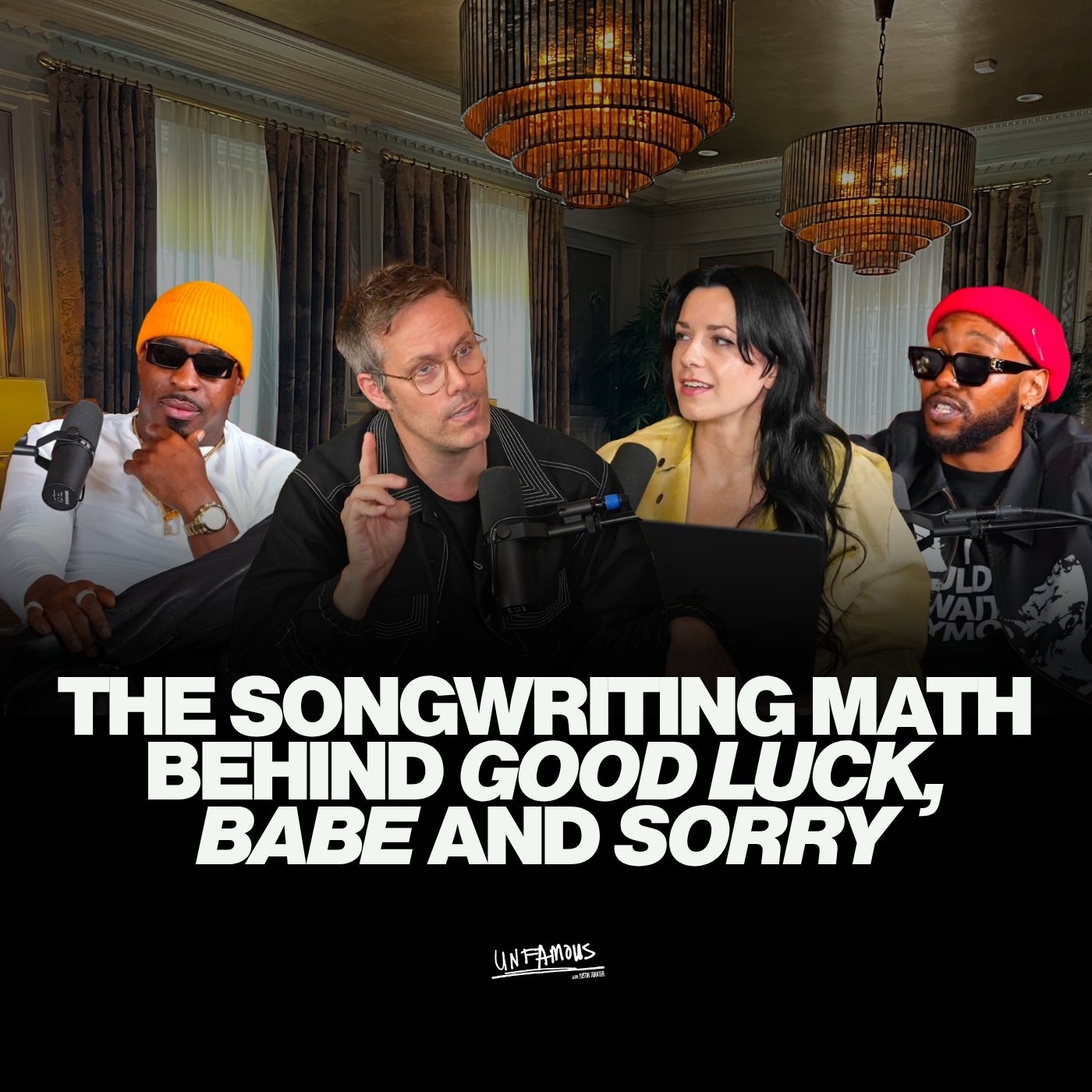
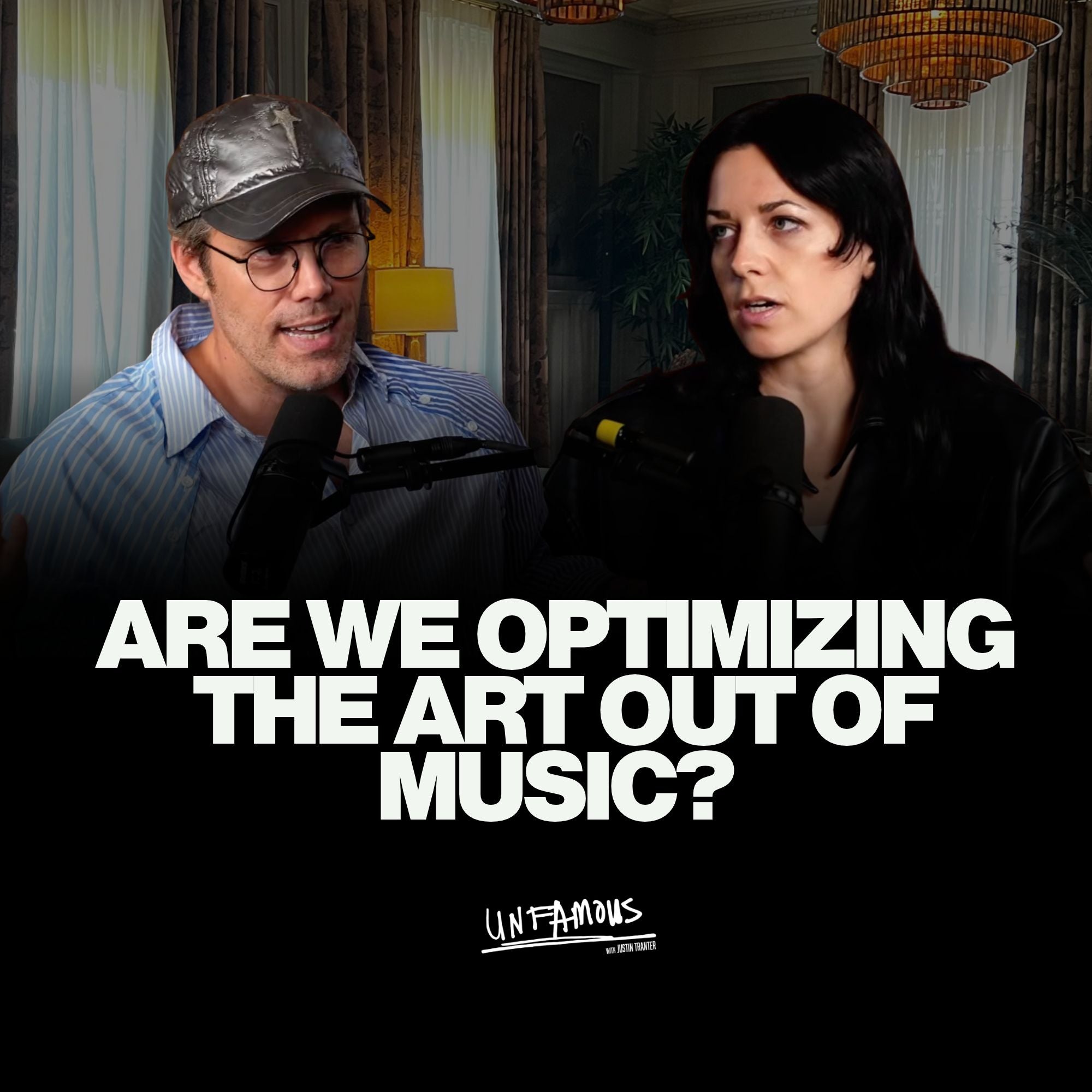
Whether modern songwriting and music marketing are “optimizing the art out of music,” balancing craft/structure/math with instinct/creativity, and how promotion/attention tactics (including TikTok) affect pop songwriting.
Justin Tranter (pop songwriter; co-wrote Fall Out Boy “Centuries,” Justin Bieber “Sorry,” and Chapel Roan “Good Luck, Babe”; also hosts Unfamous). Morgan (his podcast friend/collaborator, co-hosting the discussion).
Structure and “song math” can make songs more effective, but they can’t replace the initial “spark”/magical idea; a bad song won’t become great via techniques. Promotion has always existed; social media changes the form, not the need. For global pop smashes, the first five seconds should grab listeners, but that’s not the same as rushing the whole song.
Wendy Goldstein’s “first five seconds” idea; Gershwin-era songs being ~2 minutes; Madonna’s 1984 music-video stance; Patti Griffin’s lyric/guitar-hook approach; TikTok enabling bolder lyrics; pre-chorus too similar to chorus example (notes/rhythm similarity reduces chorus impact).
0:00Ugh, I hate Mondays.
0:02Justin Tranter: King's Hawaiian Cinnamon Swirl Bite? Taylor Hanson? Sure, I'll try one. Mmm. Hey, let's get back to work, please. But Taylor Hanson's making my day way better with these new soft and swirly King's Hawaiian Cinnamon Bites. Taylor Hanson? Nice. Try one. Mmm.
0:22Justin Tranter: King's Hawaiian Cinnamon Bites. There's nothing like it. Sweet swirling is all good. Knowing techniques of songwriting are not going to make a bad song amazing just because I know the mathematics of melodies. Are we optimizing the art out of music? You still have to be naturally gifted at writing songs, and the structure is just there to help you. We hear all these stories about people getting dropped from labels and then feeling like they're left with nothing and they have to start from zero. Learn it now, especially if you have help. Look at what they're doing. Learn their formulas. Learn how to post.
1:05Figure out what feels right to you. You do have the capability of being self-sufficient.
1:10Justin Tranter: Promotion has always been a part of the music business. Yeah. Promotion always looks different. Does a song have to win you in five seconds? When Wendy says, and I agree with her, that the first five seconds should grab you, that question is specifically about trying to have a global smash. What part of the creative process do you think has to be protected from this new idea of everything has to be just analyzed and optimized? A thing that can never be like data-driven or optimized or any of these things is...
1:48Justin Tranter: Hello, welcome to Unfamous. I am Justin Tranter, pop songwriter. I have co-written songs like Fall Out Boy's Centuries, Justin Bieber's Sorry, Chapel Roan, Good Luck, Babe. And I love the conversation of collaboration. I love getting geeky and in the weeds about how people make art together. So I have made a podcast in collaboration with my friend Morgan about the art of collaboration. We have had a couple very specific clips from our podcast about song structure and about how the music business works and about how other creative industries work. And some very specific things have triggered lots of conversation.
2:40A lot of discourse. A lot of discourse, which we love.
2:42Justin Tranter: That's what we're here for. So we thought we should dive deeper into that discourse so that you can all cite in the comments even more. Yeah, I think sometimes the internet is really reactive without having a lot of context or understanding. We created this because we actually care about picking the brands of people who are in positions of power and have expertise and helping us navigate these ever-changing industries in music, entertainment. Of course, heavy on music, but, you know, even like writing or going further into business. And something that I saw that was coming up, a big question out of that discourse is, are we optimizing the art out of music?
3:26These debates that we see online, it always comes back to the same tension, which is craft versus instinct, strategy versus feeling, and then knowing what works without letting the knowledge flatten the work. Whenever we talk about song math, some people hear a formula. But there is still that creativity and that care and that feeling. And I know from our friendship and then seeing you work with other people, seeing how we work together, like you really fucking care. Like you're very passionate about the art. So like talk to me about like the balance between those things and how it's just because you do use structure and formula, that doesn't necessarily mean that there's no craft or creativity there.
4:08Justin Tranter: No matter how much I know about formula, about structure, about song history, about what has worked in many hit songs in the past, all these different technical things, whether it's because I have a degree in songwriting or it's just because I've written at this point, no bullshit over 10 ,000 songs. If you don't have the magical seed that no one can plan, that amazing topic you want to write about, that amazing magical melody that just fell from the fucking sky out of somebody's mouth, the intuition, the gut, the God, whatever the fuck you want to call it. Knowing techniques of songwriting are not going to make a bad song amazing just because I know the mathematics of melodies.
5:00Justin Tranter: A terrible song isn't all of a sudden going to be great because I know some cool tricks about rhyming. You still have to have the magic. You can't have structure without talent. And so like whenever people are really mad in the comments because I'm breaking down the math of a song and saying that I don't care about art. I'm like, no, no, you have to have the magical art. And the structure is just there to help you. Like a house, if it's fucking ugly, it doesn't matter that it is structurally perfect. Right. It's still an ugly fucking house. Yeah. And having like a perfect 90 degree angle. I don't know about house things, but you know, some isn't going to all of a sudden make the house pretty.
5:50Justin Tranter: Right. So there has to be something gorgeous about the art. And then you can apply the structure to just make it way more effective. I think for creatives, you're doing yourself a disservice if you don't try out different ways of communicating your ideas more clearly or just in a variety of ways. I think in order to make something great, you need to challenge yourself. And so maybe a strict structure that isn't what's best for your particular piece of art, or maybe it is. Maybe you need to try that out just to know that this is where you need to push the boundaries, or this is exactly why you need to break those traditional rules.
6:31But to not challenge yourself and to think that everything is just going to fall out of you and just be perfect, honestly, I think is a little bit lazy.
6:38Justin Tranter: There are so many songs that even I have written where we're not thinking about, is this mathematically perfect in terms of the melodies and blah, blah, blah. Everything is just feeling so good. But for the most part, if you go back and look at the song, it is following these subconscious rules of music. and that's where I think the discourse that we've had around some of these conversations is really interesting because it's like, well, so-and-so never studied music and they were just feeling true. But if I were to break down the song, that could be an interesting thing actually. Leave me comments of songs that you want me to look at the math of and I could break it down because it could be somebody who has never studied music.
7:27Justin Tranter: They're just so naturally gifted and the chances are if it is a song that has become a global hit, nine times out of 10, the math is going to accidentally follow rules that the person who wrote it had no idea those rules existed. Right. And I know rules is a tricky word. Sorry, I used it. But this is not coming from Swedish pop music. This is not coming from Motown. This is fucking Beethoven and Bach. This is fucking pagan folk songs. Like these innate melodic structures that are, they're in us as people. It's like a human math that we want to hear when it comes to melodic and musical structure.
8:18Justin Tranter: That even people who don't know that they are following these rules, nine times out of ten, they are. It's okay to use a blueprint to get to reach your end goal, to know where, you know, where does this feel good for you at the end? You know, when I really, really lean into like the melodic math of it all or really pulling apart the rhyme structure and things like that is when one part of the song feels so amazing by itself. but then in the context of the whole song, you're like, well, wait, when I sing the chorus just by itself, just the chorus, no verse, no pre-chorus, just the chorus, it feels amazing.
9:01Justin Tranter: But when I sing it in the context with the whole song, all of a sudden the chorus feels lackluster. Why is that? Chances are it is way too similar, specifically the vocal part, the vocal melody, which makes up notes and rhythm. Probably what you're singing before it in the pre-chorus is way too similar to the chorus. So similar rhythms, similar phrasing across the bar line and similar actual notes. Like you're singing the same notes over and over. So by the time you sing the chorus, it has lost all impact because you kind of gave away the magic of the chorus. You sang like half of it accidentally right before it.
9:50Justin Tranter: So by the time you hear the chorus, what does the pre-chorus need to do? If the chorus notes are all up here, let's sing notes down here for the pre. Or if the chorus notes are all down here, let's sing notes up here in the pre so the chorus feels exciting. So that's when I really lean on all the amazing things I learned in literal songwriting school.
10:17Something else people really, really love, but also had very strong opposing opinions about is, does a song have to win you in five seconds, in the first five seconds? And what I thought was interesting, some people heard it as like this proof that music is being shortened or optimized for algorithms. It doesn't mean that like that hook just lasts those five seconds. It just has to get you in the first five seconds. And also, I don't think like grabbing attention and rushing are necessarily the same thing.
10:45Justin Tranter: So a couple of things about that conversation, which is a great conversation to have. One is that conversation that I had with the genius Wendy Goldstein. The question was specifically about a song that is hoping to be a global smash hit. The music I listen to in my personal life for the joy of music barely follows any of these fucking rules I talk about. So when Wendy says, and I agree with her, that the first five seconds should grab you, that question is specifically about trying to have a global smash. Pop songs, when what we consider pop songs started, You can look at like the Gershwins in the 20s, but then again, you can look at the pop rock stars of the 60s and, you know, what we call pop music starts in different places depending on who you talk to.
11:44Justin Tranter: But those songs were, everyone brace yourselves, a lot shorter. A minute and a half, sweetie. Two minutes. In and out. The Great American Songbook. I'm a huge Gershwin fan, so I'm going to just focus on the Gershwins. George Gershwin, composer, Ira Gershwin, lyricist, brothers, icons, best friends, fabulous. They are, you know, a minimum a quarter of what we consider the great American songbook. The original versions of those songs are verse refrain, verse refrain, bridge, verse refrain, over. Maximum two minutes. Hello, I... I hate Mondays. King's Hawaiian Cinnamon Swirl Bite? Taylor Hanson? Sure, I'll try one.
12:29Mmm.
12:32Justin Tranter: Hey, let's get back to work, please. But Taylor Hanson's making my day way better with these new soft and swirly King's Hawaiian Cinnamon Bites. Taylor Hanson? Nice. Try one. Mmm.
12:45Justin Tranter: King's Hawaiian Cinnamon Bites. There's nothing like it. Sweet swirly is all good.
12:56Justin Tranter: Now, a lot of those songs got turned into jazz standards, which then like someone would like, you know, sax masturbate. I was like, where are you going with that motion? Okay. They would like do like a masturbatory sax solo and turn a two minute song into a seven minute song. Right. Yeah. So we've had pop music started very short. And then we had all the art rock bands of the 70s. And all of a sudden we had seven minute songs, which I love those too. And in fact, Ethel Kane is my favorite modern artist and she has many seven minute songs. But when it comes to trying to write a global pop smash, a lot of them have been pretty short.
13:38Back to the part about people saying that, like this is just the music industry's response to like playing to the algorithms. I actually remember you saying one time that how TikTok has put us in the upside down. It's flipped the way a lot of people approach music, but also has created a lot of freedom for you because people are like, well, we actually don't really know. We can't fully predict what's going to take off on the Internet. So, yeah, let's try this crazy line. Let's try this song.
14:12Justin Tranter: I love crazy lyrics. I love taking big fucking lyric swings. now executives, even basic boring executives are like, ooh, let's try it. Because executives are thinking about lyrics a lot more post TikTok. Now in a post TikTok world, every executive is like, oh, that's a pretty insane lyric. Maybe that could work. Which to me is one of the positives of it. Yeah. Is like, let's have more fun. Let's be more absurd. Or just be more bold. It can be a really depressing lyric, but let's be really bold with it to try to get attention. And Patti Griffin is one of my favorite songwriters of all time. If you're a songwriter geek, you're a Patti Griffin fan.
14:53Justin Tranter: We all are. And she is so highbrow and so nuanced. Patti Griffin, who's considered like the singer-songwriter's songwriter, right? She's still thinking about a lyric that's going to fucking knock you off your chair. She's still thinking about a guitar part that is hookier than just a chord. Some of her songs are just simple chords with an amazing vocal lyric melody on top of it. But some of them are, she is trying to grab your attention right from that riff at the beginning. So I think that, yes, there are so many dark sides to art and social media in every art form. But also some of these things have always been there.
15:41Justin Tranter: Trying to grab people's attention, whether it's with your song on TikTok or it's your song at the Newport Folk Festival, isn't the goal to make something great that makes people stop in their tracks? Hasn't that always been the goal?
16:02I think that just comes back to people being resistant to something new, telling them that they have more work to do that is outside of like the artistic focus that they have. Like we've, we've discussed, you brought up like Madonna leaning into music videos while other people were resistant to it. And now it's like the new evolution of that is social media, which it's, we all get sick of it, but we also understand that, you know, there are benefits to creating pieces of content that help market your work. And also, especially now, since it's harder and harder to, we hear all these stories about people getting dropped from labels and then feeling like they're left with nothing and they have to start from zero.
16:48To me, I look at social media as something where it's like, learn it now, especially if you have help, you have these labels, you have hopefully a marketing team that's helping contribute, but look at what they're doing. Learn their formulas, learn how to post, figure out what feels right to you. Because in this world that we're living in, where something could be ripped from you at any moment, you want to know that you do have the capability of being self-sufficient because you have that knowledge. So you don't have to start from zero every single time something out of your control is taken away from you.
17:27Justin Tranter: Where the conversation gets me about, you know, goes viral every time someone makes a meme of like, imagine telling Kurt Cobain he had to make content. Promotion has always been a part of the music business. Promotion always looks different, right? So there's the famous clip of Madonna at the New Music Seminar in 1984, I think, saying that she thinks videos are art and it's cool. And a bunch of older white straight men being like, well, you know, how dare you? I just wanted to play my guitar and now I have to be an actor. Back then, people were furious that they had to make videos now. But the people who saw it as a way to communicate with their fans, which Madonna says very beautifully in this clip, the people who saw music videos as a way to be artistic and communicate with their fans and it's not just promotion, it is promotion, but it also could be art.
18:18Justin Tranter: Yeah. Those artists soared in that era. And again, all the conversations that we are having are trying my hardest to give advice as an expert in the music business of how to climb to the top of the music business. If you're just trying to fucking make the purest, most amazing art, please fucking DM me with it because that's the shit I listen to on my free time. Yeah. But this, all the advice I'm giving is,
18:52Justin Tranter: because the only reason to ask me for advice is to try to climb to the top of the music business. Because if you're trying to make art for art's sake, you don't need any advice. Go fucking slay. I can't wait to be your number one fan. But if you're trying to be a pop star, promotion has always been a part of the business.
19:13what do you think should never be optimized i guess because everything can be measured now like the streams the skips the shares the whatever like what part of the creative process do you think has to be protected from this new idea of everything has to be just analyzed and optimized
19:31Justin Tranter: a thing that can never be like data driven or optimized or any of these things is or even like using melodic math and all these things, whether your data is century old music structure or your data is social media or Spotify analytics, the initial spark of a song, the initial heart of a song is always going to just be people vibing. And one person in that writing session, one person in that hangout where you write a song accidentally or the scheduled session, one person has something they really want to say. Yeah. And everybody gathers around them for that day to write a great song. That initial spark, no social media data, no Spotify analytic and no melodic math can help that initial spark.
20:29Justin Tranter: That part of it is precious and priceless and no data is going to help you with that initial spark. Yeah, totally. Yeah, I love that because I think I am like a deeply emotional person in terms of like I really like to understand the way people are feeling and their points of view on like what their life experience are. Like I'm ruled by curiosity and like connection with other people. And this applies to anybody I work with, a person, an artist, a brand, any type of creative, whatever. And if that's not there, I'm like, what are we even doing? Yeah. Why do we need to do this? Like, so I, yeah, I agree.
21:08I think that's really important. And then I think that's also why trying to apply structure and having some sort of blueprint is important because these are usually like big feelings and deep conversations. and you need to make sense of it and being able to distill it in different ways to make sure that this very important thing to this creative is taking every opportunity to try to connect with other people, to be heard and understood and build a community. It's like, just try it.
21:40Justin Tranter: Whether you studied music or not, there's so much subconscious structure. Yeah. We all know certain chords feel like the phrase has just begun and other chords feel like the phrase is ending. We all know that singing really high and loud in your voice is going to sound like the climax of the song. Yeah. All of these things that we all just assume is all based in structure and there's something to learn from all of it. So why not dig a little deeper and learn even more? But also that initial spark, Like that's, no one can teach us that. And I could study for years and years and I still need an idea.
22:30Justin Tranter: No math is going to teach me about an idea. Yeah. Unless you're a scientist and I can't help you. Right. You're way too smart for me. Let me leave. Please get me out of this. I'm so glad that we did this kind of episode because this is the goal of Unfamous is to get this real-time feedback in our comments that mainly Morgan reads because I have to protect myself. But to see what conversations we've had on the show that are actually sparking their additional conversation in the comments. And I want to keep doing more episodes where we recap the conversations that our listeners are having and try to add more context to it and try to create more discourse about art and what makes art valid and what makes collaboration important.
23:22Amazing.
23:24Justin Tranter: Hello, hello, everyone's favorite part of every podcast where we say please follow and subscribe to this podcast wherever you listen so you don't miss future conversations. And also, pretty please take a cute little second to rate the show. It's one of the biggest ways you can support us. See you next Wednesday. I hate Mondays. King's Hawaiian cinnamon swirl bite? Taylor Hanson? Sure, I'll try one. Mmm. Hey, let's get back to work, please. But Taylor Hanson's making my day way better with these new soft and swirly King's Hawaiian cinnamon bites. Taylor Hanson? Nice. Try one. Mmm.
24:10Justin Tranter: King's Hawaiian cinnamon bites. There's nothing like it. Sweet swirling is all good.
Does understanding what works make the art stronger, or can knowing too much flatten the feeling?
In this Unfamous minisode, Grammy-nominated hit songwriter Justin Tranter and co-creator Morgan T. Stuart dig deeper into some of the debates sparked by clips from the show: song math, the first five seconds of a hit, TikTok, artist promotion and whether the pressure to optimize everything is changing the art itself.
Justin explains why understanding melodic structure can make a great song more effective but can never manufacture the original idea, why naturally gifted songwriters often follow musical patterns without realizing it, and why grabbing someone’s attention is not the same thing as rushing a song.
They also look at the business surrounding the art. Has TikTok actually made executives more willing to take creative risks? Should artists learn how their own marketing works before they lose access to the team doing it? And is today’s pressure to “make content” really that different from the resistance artists once had to making music videos?
From the Gershwins and Patty Griffin to Madonna, Kurt Cobain and the modern pop machine, Justin and Morgan ask where structure and strategy can help, and where optimization has to stop.
Chapters
0:00 Are We Optimizing the Art Out of Music?
1:14 Welcome to Unfamous
1:52 Why We’re Having This Conversation
3:38 CRAFT: Do the Rules Kill the Feeling?
6:08 The Subconscious Rules Behind Great Songs
7:54 Why a Great Chorus Can Still Feel Weak
9:46 ATTENTION: Does a Song Have to Win You in 5 Seconds?
10:59 Were Pop Songs Always This Short?
11:50 A Word From Rula
14:16 From Two-Minute Songs to Seven-Minute Songs
14:58 SOCIAL MEDIA: Has TikTok Made Big Creative Swings Safer?
17:22 PROMOTION: Hasn’t This Always Been Part of the Job?
18:47 Kurt Cobain, Madonna and “Making Content”
20:33 CREATIVITY: What Should Never Be Optimized?
21:57 Why Structure Still Matters
24:00 Why We Want to Make More of These Minisodes
24:44 Follow, Subscribe + See You Next Wednesday
Credits
Unfamous is hosted by Justin Tranter
Created by Justin Tranter & Morgan T. Stuart
Produced by Justin Tranter & Morgan T. Stuart
Written & Researched by Morgan T. Stuart
Director: Morgan T. Stuart
Co-Director + Cinematographer: Olivia McCrary
Audio Engineer: Mike Sabri
Camera Assistant: Julia Gargano
Special thanks to Mark Beavan and Jimmy Knehans.
Chat with the Unfamous team: https://tr.ee/XMEBI7
Learn more about your ad choices. Visit megaphone.fm/adchoices
Scan the code with your iPhone camera
Listen in the app.